
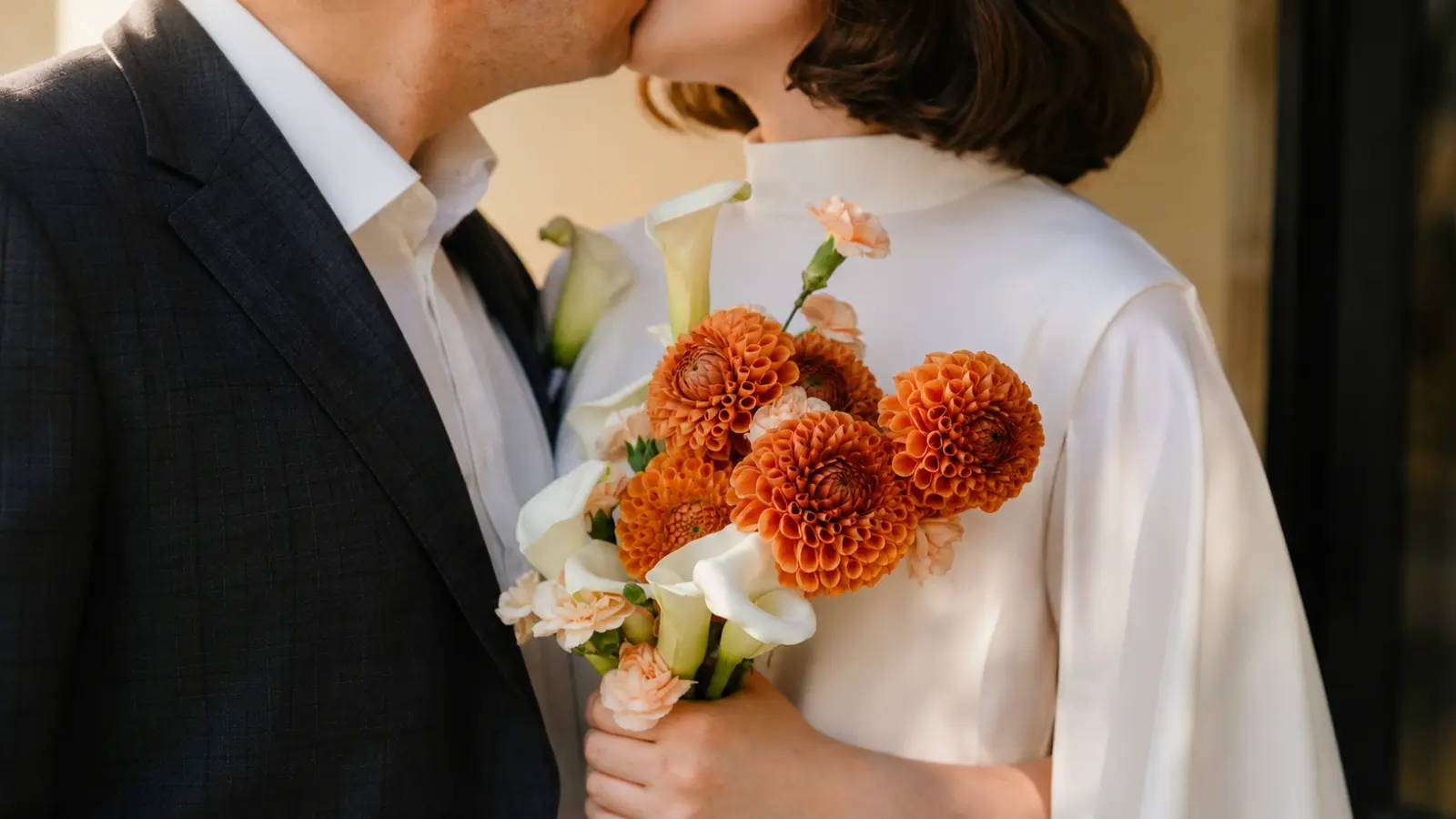
Dahlia wedding bouquets are a beautiful choice for brides who want rich color, dramatic texture, and unforgettable floral designs. With their layered petals, remarkable variety of sizes, and one of the widest natural color ranges of any wedding flower, dahlias create bouquets that feel both romantic and visually striking, especially for late summer and fall celebrations.
While their beauty is undeniable, dahlias also have characteristics that every bride should understand before choosing them. Seasonal availability, temperature sensitivity, and proper flower care all influence how well a bouquet performs throughout the wedding day. Knowing these details early helps you decide whether dahlias are the right fit for your venue, season, and overall floral vision.
This guide explores dahlia wedding bouquets in detail, including popular colors, flower pairings, seasonal availability, styling ideas, bouquet care, and practical tips for creating a bouquet that looks beautiful from the ceremony through the final photographs.
Why Choose Dahlias for a Wedding Bouquet?
Part of what makes dahlias so compelling for wedding bouquets is how much range they have within a single flower type. A dinner plate dahlia — the large, flat-petaled variety that can measure eight inches across — makes a completely different visual statement than a pompon dahlia, which is compact and nearly spherical. Between those two extremes, you have ball dahlias, decorative dahlias, café au lait types, and water lily dahlias, each with a distinct shape and texture. Most flowers give you one version of themselves. Dahlias give you dozens.
Visually, dahlias photograph exceptionally well. The layered petals create depth and dimension that reads clearly on camera, whether in close-up detail shots or full ceremony photos where the bouquet is a smaller element in the frame. For brides who care about how their flowers translate in photos — and most do — this is a meaningful practical advantage, not just an aesthetic one.
The color range is also genuinely unusual. Dahlias come in shades that many other flowers simply do not offer: deep burgundy, burnt copper, coral that verges on orange, dusty mauve, white-tipped bicolors, and tones that photograph almost black in certain lighting. This makes them particularly useful when a bride’s color palette does not align neatly with what roses or ranunculus naturally offer.
What dahlias ask in return is some consideration for temperature and timing. They are not as forgiving as roses when conditions are warm, and they require proper conditioning to perform well on the wedding day. Understanding that trade-off upfront — the visual payoff versus the handling requirements — is what lets brides make the right call for their specific wedding.
Dahlia Wedding Bouquet Colors
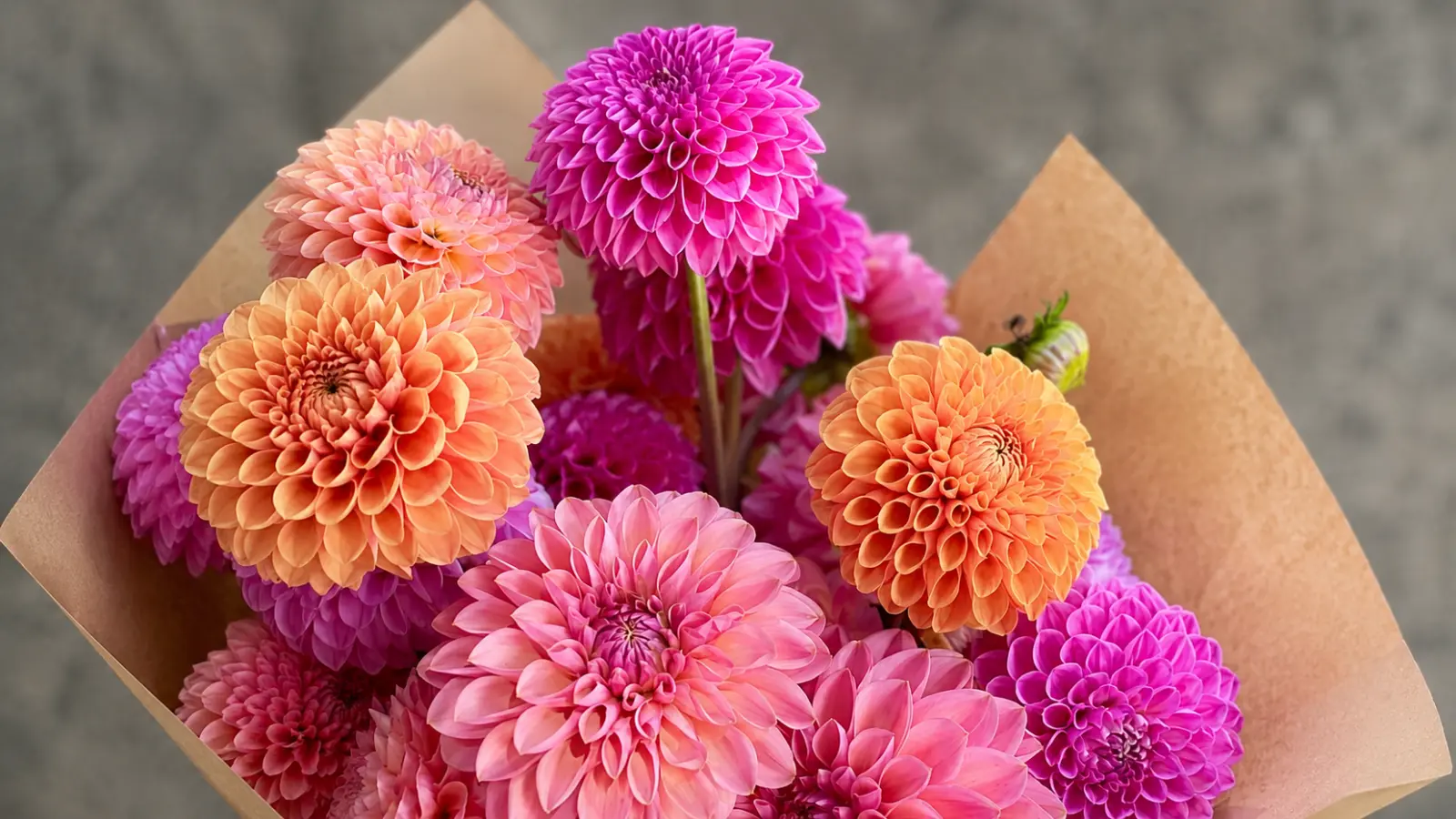
Color is one of the strongest arguments for choosing dahlias. The range available across varieties covers nearly every palette direction, and many of the most sought-after shades in wedding flowers — the warm dusty tones, the moody deep burgundies, the soft peach-to-coral range — are naturally available in dahlias without needing to dye or force color.
| Color Family | What It Delivers | Works Well With |
|---|---|---|
| White and cream | Clean, classic, versatile | Any palette; works with greenery-forward designs |
| Blush and soft pink | Romantic, soft, widely flattering | Garden roses, ranunculus, dusty miller |
| Peach and coral | Warm, textured, earthy-modern | Burnt orange accents, terracotta, cream |
| Dusty mauve and lavender | Moody, sophisticated, editorial | Deep burgundy, sage greenery, scabiosa |
| Burgundy and deep red | Dramatic, rich, fall-forward | Blush accents, seeded eucalyptus, cosmos |
| Café au lait (warm tan-bronze) | Earthy, neutral, uniquely textured | Terracotta, white, ivory, dark greenery |
Café au lait deserves a specific mention because it has become one of the most requested dahlia varieties for weddings — and for good reason. The color is a warm, muted tan that photographs beautifully and pairs with nearly any palette direction, from earthy terracotta to soft ivory and white. It is genuinely hard to find that neutral-warm tone in another flower at the same visual scale. If your palette sits somewhere in the warm neutral range, café au lait dahlias are worth asking your florist about specifically.
Dahlia Bouquets for Fall Weddings
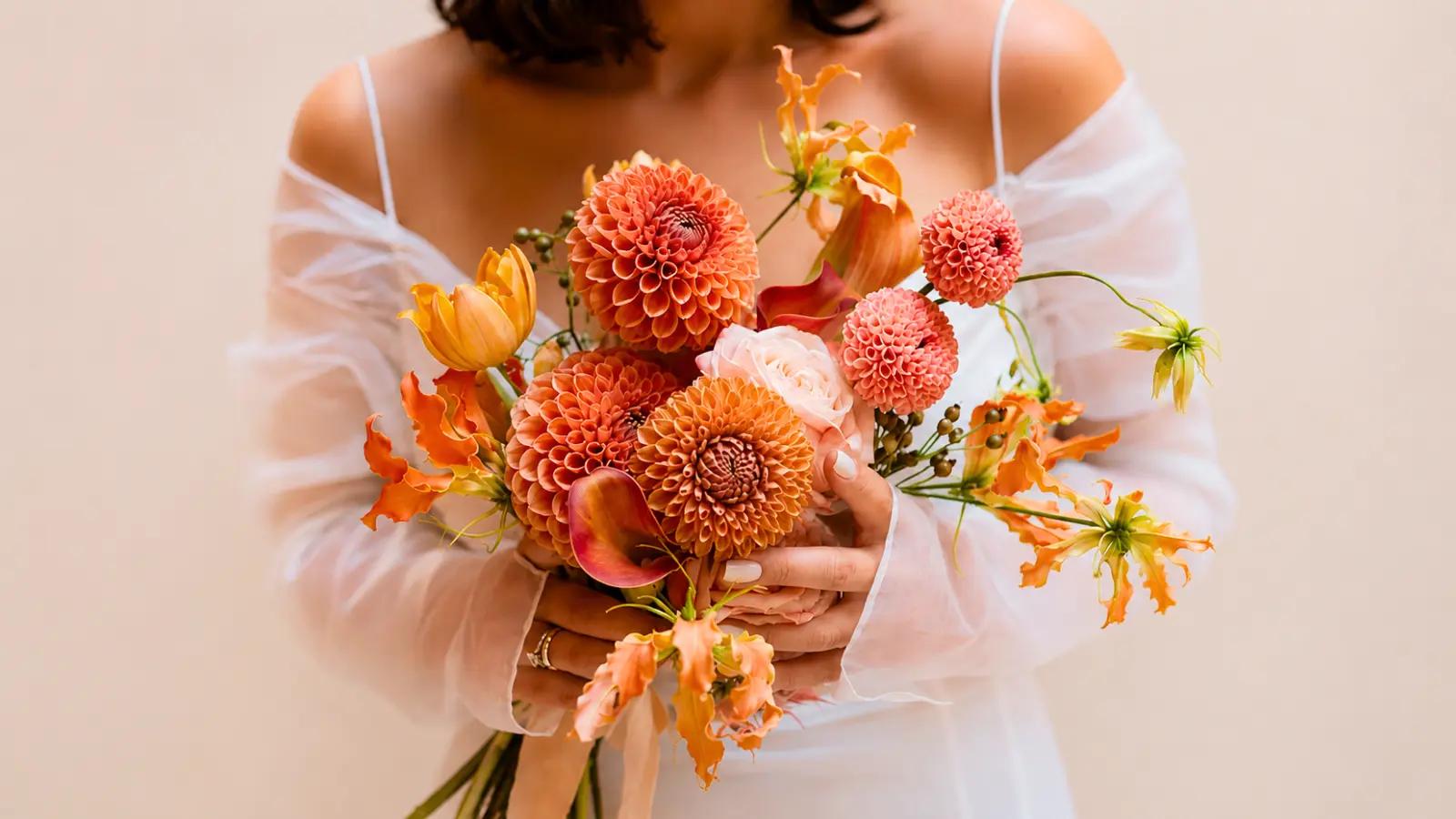
Fall is where dahlias are most at home, and this is not just a matter of seasonal sentiment. Dahlias are naturally in season from late summer through October, which means fall weddings have access to the widest variety, the best quality, and the most favorable pricing. More practically, the cooler temperatures of fall — especially in the Northeast and Midwest — are genuinely better conditions for dahlias to perform well throughout a wedding day.
The visual match is strong too. The warm palette range that dahlias offer — burgundy, copper, burnt orange, rust, deep plum — aligns naturally with what most fall weddings are already working with in terms of venue, décor, and overall aesthetic. A bouquet built around café au lait, burgundy, and blush dahlias with seeded eucalyptus and dark Italian ruscus does not need to try hard to feel fall-appropriate. It simply does.
For October and early November weddings in particular, dahlias can anchor the entire floral story of the day: not just the bridal bouquet, but bridesmaid bouquets, ceremony arrangements, and centerpieces. Using the same flower at different sizes and colors across the wedding creates a cohesive look that photographs well and avoids the scattered feel that sometimes happens when too many different flowers are pulled together.
The one fall consideration worth flagging: if your ceremony is outdoors and temperatures are still on the warmer side — as they can be in September across much of the South and Southwest — talk to your florist about timing. Dahlias assembled early and left in warm outdoor conditions will struggle. Keeping them hydrated and shaded until the last possible moment is more important with dahlias than with most other bouquet flowers.
Dahlias With Roses and Greenery
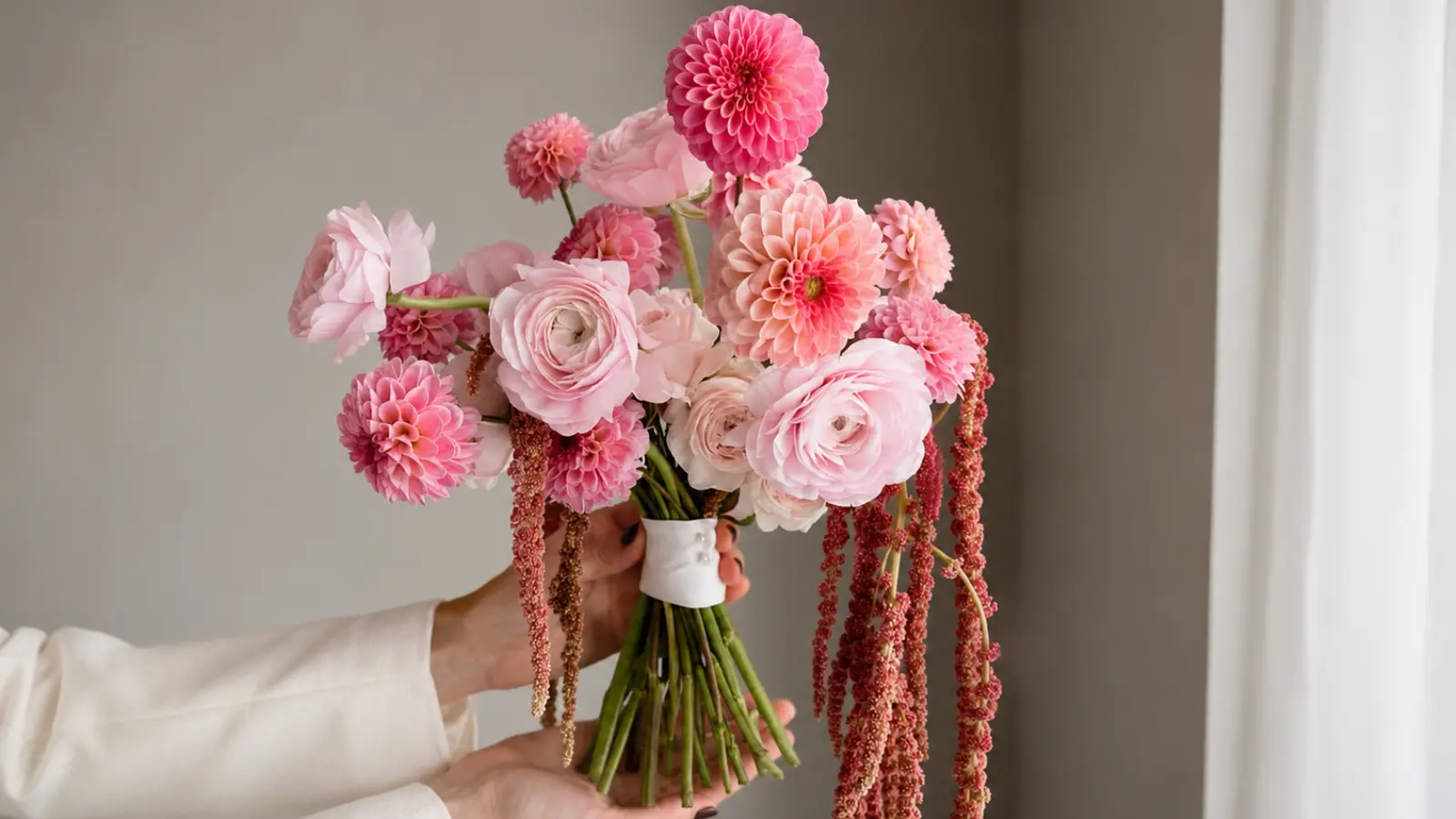
Dahlias are strong enough visually that they can carry a bouquet on their own, but most bridal bouquets benefit from some supporting elements — both to add depth and texture and to give the eye somewhere to rest between the more demanding dahlia blooms. The flowers and greenery you choose to pair with dahlias make a significant difference in whether the final arrangement feels intentional and editorial or crowded and busy.
Roses are the most natural pairing. Garden roses in particular share dahlias’ layered petal structure, which creates visual continuity rather than contrast. A bouquet mixing café au lait dahlias with blush garden roses and silver dollar eucalyptus is one of the most reliably beautiful combinations in current bridal floristry — the flowers complement without competing, and the greenery provides a soft frame. Spray roses are also useful as a secondary element when you want more volume without the weight of full garden roses.
Ranunculus work similarly well. They are smaller and more delicate than dahlias, which makes them useful as a transitional element between large focal dahlias and fine greenery. The texture contrast between a large decorative dahlia and a tightly coiled ranunculus bud reads clearly in photos and adds visual interest at close range.
For greenery, the most useful options alongside dahlias are seeded eucalyptus, silver dollar eucalyptus, Italian ruscus, and chocolate lace flower. Seeded eucalyptus adds a natural, slightly wild quality; Italian ruscus provides dark, structured foliage that grounds the arrangement; chocolate lace flower adds fine, lacy texture that fills space without adding visual weight. These three together cover most of what a dahlia bouquet needs to feel complete.
What to avoid: flowers that are visually similar to dahlias in size and petal density — like large chrysanthemums or big open anemones — tend to compete rather than complement. The goal is to let the dahlias be the clear focal point, with other elements playing a supporting role.
Are Dahlias Good for Bridal Bouquets?
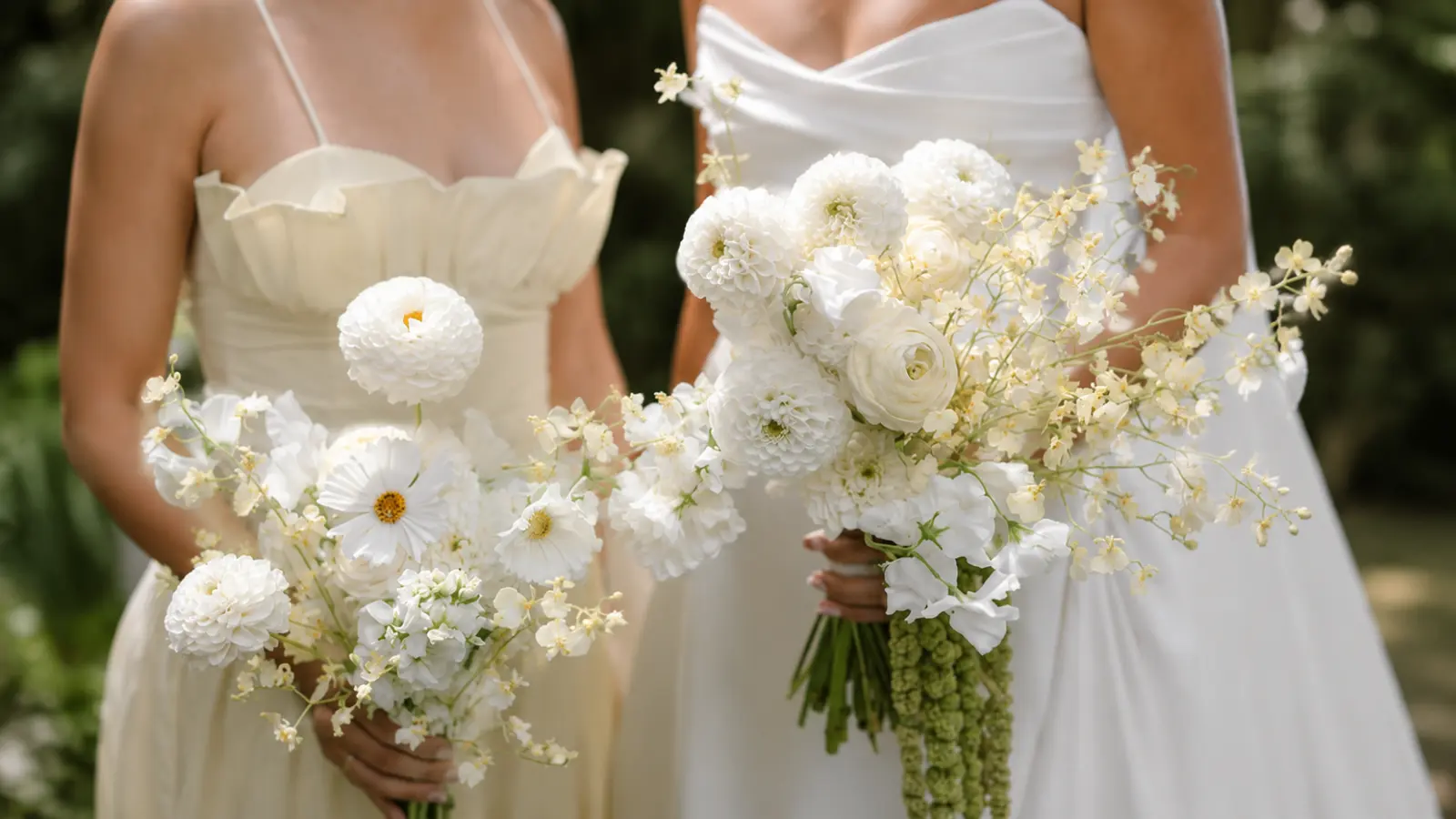
The honest answer is yes — with conditions. Dahlias are genuinely beautiful in bridal bouquets and offer visual qualities that few other flowers match. But they are not the most forgiving choice, and whether they are the right choice depends on specific factors that are worth thinking through before you commit.
The primary consideration is temperature sensitivity. Dahlias have hollow stems, which makes them more prone to wilting than solid-stemmed flowers like roses. When conditions are cool and the bouquet is properly hydrated, dahlias perform well for a full wedding day. When temperatures are warm or the bouquet spends extended time away from water, they show the stress faster than most flowers. This is not a reason to avoid them — it is a reason to plan around it.
A few practical factors that work in dahlias’ favor: they condition well when handled correctly, they come in sizes that work for nearly any bouquet style from a small nosegay to a full round bouquet, and they are widely available through wholesale flower suppliers and even well-stocked grocery store florists during their season. For brides who want something with real visual impact and are willing to handle the flowers with a bit more care, dahlias deliver something roses alone do not.
Dahlias are a strong choice when:
- Your wedding is in late summer or fall, when dahlias are naturally in season
- The ceremony and reception are air-conditioned or in cooler outdoor conditions
- Your palette includes warm, earthy, or moody tones that dahlias express naturally
- You or your florist are comfortable with careful day-of hydration and handling
Worth a conversation with your florist first if:
- Your wedding is in a warm climate or during summer heat
- The ceremony is outdoors with limited shade
- You are planning a DIY bouquet and have limited experience with conditioning flowers
Dahlia Bouquet Mistakes to Avoid
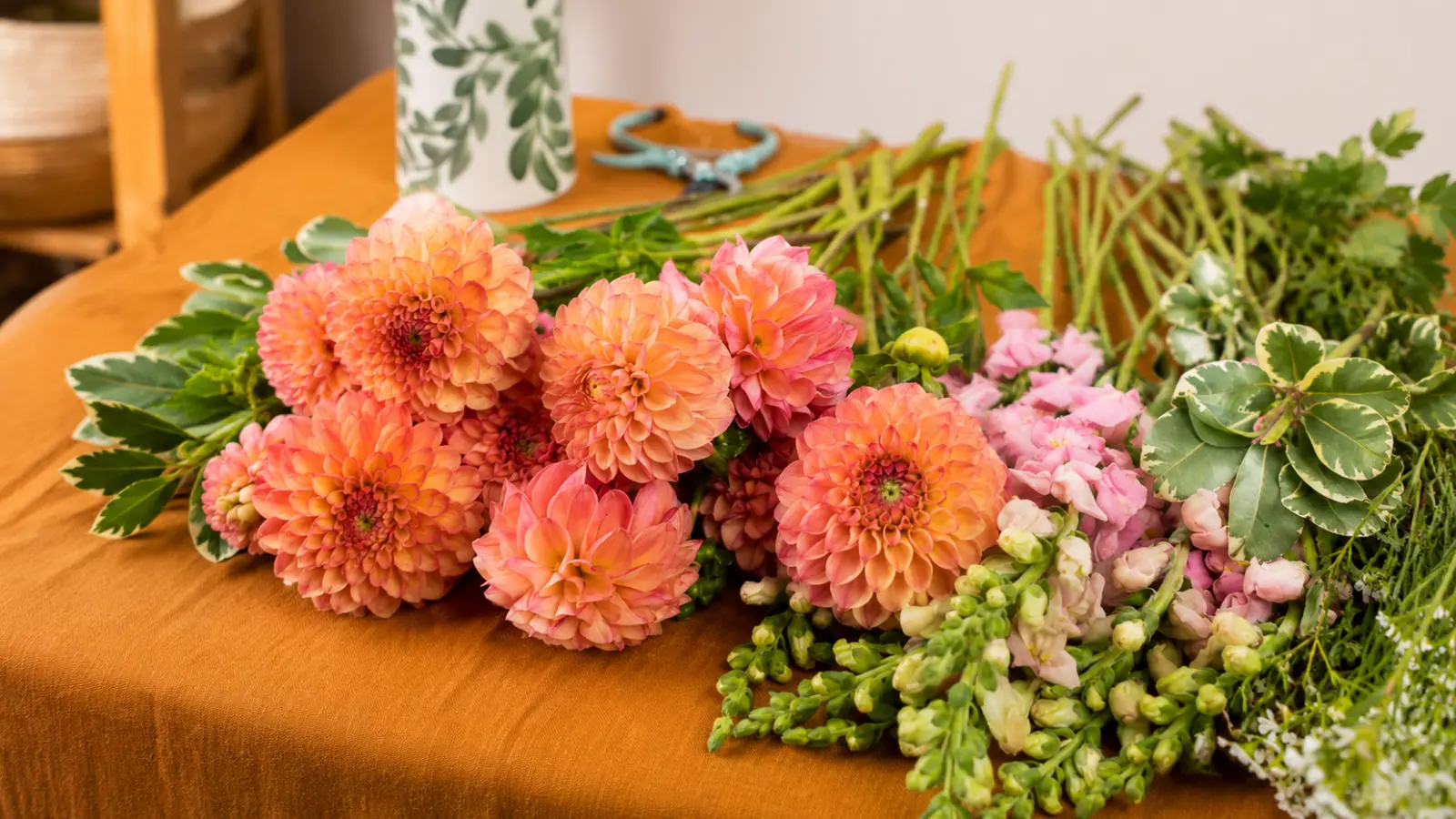
Most dahlia bouquet problems come down to handling and timing rather than the flowers themselves. The mistakes brides and even some florists make with dahlias are predictable — and avoidable once you know what to watch for.
Skipping the conditioning step. Dahlias need at least 12 hours in cool, clean water before they go into a bouquet. This is more important with dahlias than with most other flowers because of their hollow stems. Dahlias that have not been properly conditioned will wilt faster and look tired within hours of assembly. If you are buying dahlias yourself, factor this timing into your schedule.
Using dinner plate dahlias in large quantities. The large, dramatic varieties are visually impressive, but one or two is usually enough to make the statement. Filling an entire bouquet with dinner plate dahlias creates a crowded, unbalanced look and is harder to handle practically — the sheer volume of petals and stem weight makes the bouquet heavy and difficult to hold naturally. One or two dinner plate dahlias as focal points, with smaller dahlias or supporting flowers around them, tends to produce a better result.
Ignoring the season window. Brides who fall in love with dahlias and then plan a spring wedding sometimes discover availability problems close to the date. Dahlias can be sourced outside their natural season, but the variety narrows considerably and costs increase. If dahlias are important to your vision and your wedding is outside the August through October window, confirm availability and pricing with your florist well ahead of time.
Leaving the bouquet unhydrated. The most common day-of mistake: the bouquet is assembled, it looks beautiful, and then it sits on a table or in a car without water for several hours before the ceremony. Dahlias do not have the resilience to recover from that easily. Keep the stems in water until the last moment before you need to hold it, and have someone responsible for getting it back in water during any gaps between ceremony and reception photos.
Choosing dahlias primarily for trend reasons. Dahlias have been popular in wedding floristry for several years, and while they remain beautiful, the best reason to use them is because they genuinely fit your palette, your season, and your aesthetic — not because they are having a moment. A bouquet built around flowers that actually suit your wedding will always outlast whatever is trending in any given year.
Dahlia Wedding Bouquet Inspiration
Discover romantic dahlia wedding bouquets featuring café au lait dahlias, rich fall colors, elegant flower pairings, seasonal bouquet ideas, and timeless floral inspiration for brides planning a late summer or fall wedding.
Dahlias Reward Thoughtful Planning
Dahlias are among the most distinctive flowers a bride can choose, offering exceptional texture, remarkable color variety, and a natural presence that few blooms can match. When they are selected for the right season, paired with complementary flowers, and cared for properly, they create bouquets that feel both timeless and unforgettable.
The best dahlia bouquet is one that works with your wedding rather than against it. Consider the season, your venue, and the overall style you want to create, then work closely with your florist to choose varieties that will perform beautifully throughout the day. With the right planning, dahlias can become one of the most memorable details of your celebration.
Frequently asked questions (FAQ)
Are dahlias a good choice for wedding bouquets?
Yes. Dahlias are a beautiful choice for wedding bouquets when the season and conditions are right. They offer dramatic texture, a wide color range, and strong visual impact in photos. They are especially well suited to late summer and fall weddings, but they need careful hydration and protection from heat because they are more delicate than flowers such as roses or ranunculus.
When are dahlias in season for weddings?
Dahlias are naturally in season from late summer through fall in most parts of the United States. Peak availability typically runs from late summer until the first frost, although exact timing varies by region. This is when they are easiest to source, most affordable, and at their best quality. Outside this window, availability becomes more limited and prices may increase.
Do dahlias hold up well in wedding bouquets?
Dahlias can hold up well when they are properly conditioned and kept cool, but they are not the most heat-tolerant wedding flower. Their hollow stems make them more vulnerable to wilting than sturdier blooms. They perform best in cooler weather, air-conditioned venues, shaded ceremonies, and timelines that keep the bouquet in water until close to the ceremony.
What flowers pair well with dahlias in a wedding bouquet?
Dahlias pair beautifully with garden roses, ranunculus, cosmos, scabiosa, astilbe, eucalyptus, Italian ruscus, and chocolate lace flower. Because dahlias are visually strong, the best pairings support their shape and color without competing for attention. Smaller blooms and structured greenery usually create the most balanced result.
What size dahlia is best for a bridal bouquet?
Medium dahlias, including ball and decorative dahlias, are usually the most versatile for bridal bouquets. Dinner plate dahlias create a dramatic focal point but should be used sparingly because they are large and visually dominant. Pompon dahlias work well as smaller accent flowers that add texture without overwhelming the bouquet.
Can you use dahlias in a DIY wedding bouquet?
Yes, but dahlias require more careful handling than some beginner-friendly flowers. They need proper conditioning, clean stem cuts, cool water, and protection from heat. A DIY bride can use dahlias successfully, especially for a fall wedding, but a practice bouquet is strongly recommended before using them for the actual wedding day.