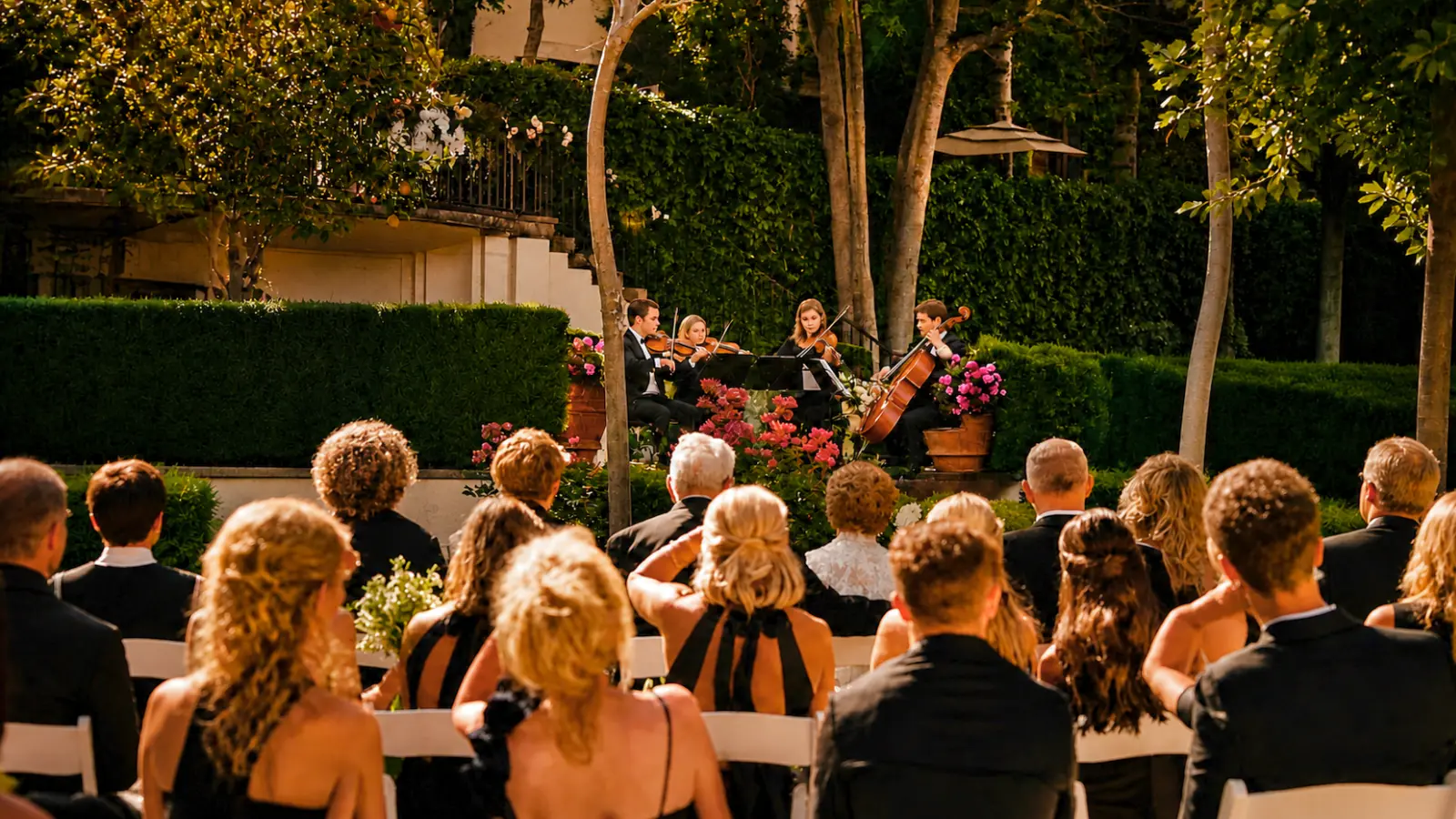
Black wedding songs carry a different kind of emotional weight than most wedding music.
From gospel and soul to R&B wedding songs, hip hop, Motown, and modern love songs, the music at Black American weddings is rarely just background sound. It creates atmosphere, movement, community, celebration, and some of the most memorable moments of the entire day.
This guide covers the best Black wedding songs as part of a complete collection of wedding songs for every moment of the day — including processionals, first dances, grand entrances, parent dances, reception floor classics, gospel ceremony songs, and the tracks that continue to define Black American weddings across generations.
Why This Music Works So Well at Weddings
The genres at the center of Black American music — soul, R&B, gospel, and hip-hop — were built to carry weight. Gospel music developed as a language for the most profound human experiences: grief, joy, faith, and community. Soul music translated that emotional directness into the secular. R&B refined it into romantic precision. Hip-hop brought celebration, identity, and cultural pride into a form that fills a dance floor like nothing else.
All of that lives at a Black American wedding. The ceremony can move through Stevie Wonder and a gospel choir in the same hour. The reception can open with a hype entrance track, settle into neo-soul slow jams, and end with everyone on the floor for the Electric Slide and “Before I Let Go.” No other cultural tradition in American weddings covers that range while keeping every generation in the room.
The multi-generational rule: A Black wedding playlist earns its place by making the grandparents feel it and the cousins lose it. Those are different songs. Plan for both. A DJ who understands how to move between those registers — and when — is worth every dollar.
The other thing that distinguishes Black wedding music is the communal quality of the moments it creates. Songs like “Before I Let Go,” “My Body,” and the Electric Slide are not just background music at a reception — they are organized participation events. Every person in the room who knows the steps is on that floor simultaneously. That kind of moment doesn’t happen by accident. It’s built into the playlist by people who know how to sequence it.
Black Wedding First Dance Songs
The first dance at a Black American wedding draws on one of the richest romantic music catalogs in American history, which is why first dance wedding songs in this tradition can feel deeply personal and culturally specific. R&B and soul have produced more genuinely moving first dance songs than any other genre, and the best of them are specific and emotionally precise in a way that generic pop ballads rarely reach.
Best Part — Daniel Caesar ft. H.E.R.
[Spotify Embed: Best Part — Daniel Caesar ft. H.E.R.]
The most requested Black wedding first dance song right now, and its position is completely earned. The production is minimal — guitar, voice, space — and the lyric is direct and specific: you are the best part of my day. The collaboration between Daniel Caesar and H.E.R. gives the song a dual-vocal warmth that makes it feel like a conversation between two people who genuinely mean it. The slow tempo is ideal for dancing without choreography. Works for intimate indoor venues and large receptions equally — the stripped-down production holds at any scale.
A Ribbon in the Sky — Stevie Wonder
[Spotify Embed: A Ribbon in the Sky — Stevie Wonder]
One of the most beloved wedding songs in Black American music — Stevie Wonder wrote it specifically about love and marriage, and the lyrical imagery of a ribbon in the sky as a sign that this love was meant to be carries a spiritual weight that makes it work at both the ceremony and the first dance. The production is lush without being heavy, and the tempo gives the couple a natural slow-dance rhythm. A choice that every generation in the room responds to simultaneously — because Stevie Wonder is a language everyone in that room speaks.
Always and Forever — Heatwave
[Spotify Embed: Always and Forever — Heatwave]
A classic soul first dance that has appeared at Black American weddings for decades without losing any of its warmth. The opening piano figure is immediately recognizable, and the lyric is a direct, unambiguous declaration of permanence. Works for any generation in the room — parents and grandparents will feel it the moment it starts, and the groove is accessible enough that younger guests find their rhythm quickly. A choice that doesn’t require explanation because everyone already loves it.
All My Life — K-Ci & JoJo
[Spotify Embed: All My Life — K-Ci and JoJo]
The defining Black wedding ballad of the 1990s — and it has retained its emotional power completely. The build from the quiet opening verse to the full-voice chorus is one of the most effective emotional arcs in R&B history, and in the context of a first dance, it arrives exactly when the couple needs it to. Guests who grew up with this song will feel every note. Works at any reception style, any venue, any formality level. If the couple is looking for the song that produces visible emotion across the broadest possible demographic in a Black American wedding room, this is one of the strongest choices on this list.
Nothing Even Matters — Lauryn Hill ft. D’Angelo
[Spotify Embed: Nothing Even Matters — Lauryn Hill ft. D’Angelo]
From The Miseducation of Lauryn Hill — one of the most culturally resonant albums in Black American music history, and this track is its most intimate love song. The conversation between Lauryn Hill and D’Angelo’s voices gives the song a warmth and specificity that studio-produced ballads rarely achieve. The message — that when they are together, nothing else matters — is simple and absolute. Best for couples who want the first dance to feel genuinely personal rather than ceremonially polished.
Heaven — Jamie Foxx ft. Charlie Wilson
[Spotify Embed: Heaven — Jamie Foxx ft. Charlie Wilson]
A modern R&B slow dance built around the image of a relationship that feels transcendent. The Charlie Wilson feature gives the song an old-school soul quality that makes it feel timeless rather than trendy — it bridges the generations in the room in a way that purely contemporary choices sometimes don’t. Strong tempo for dancing, warm production, and a lyric that holds up across the full song. One of the most underused first dance choices in this category.
Spend My Life With You — Eric Benét ft. Tamia
[Spotify Embed: Spend My Life With You — Eric Benét ft. Tamia]
A late-90s R&B duet built for exactly this moment — the voices of Eric Benét and Tamia balance in a way that makes the song feel like it belongs at a wedding without ever becoming generic. The message is direct: I want to spend my life with you. For couples who want a first dance that sounds unmistakably like a specific era of Black American music without being dated, this is one of the most precise choices available.
Love on Top — Beyoncé
[Spotify Embed: Love on Top — Beyoncé]
An upbeat first dance option for couples who want energy and joy rather than quiet intimacy on the dance floor. The key changes in the final section are one of the most joyful moments in contemporary R&B, and dancing to them at a first dance creates a natural escalation of emotion that slower ballads can’t match. Works best when the couple is comfortable dancing to something with real tempo, and when the reception’s overall energy skews toward celebration rather than formal ceremony.
Black Wedding Processional Songs (Walk Down the Aisle)
The processional is the emotional peak of the ceremony, so wedding processional songs should carry the bride’s entrance without overpowering the room. Black American music has produced some of the most powerful processional songs available, from Stevie Wonder’s gospel-adjacent ballads to contemporary R&B that brings the moment something classical music simply cannot.
A Ribbon in the Sky — Stevie Wonder
[Spotify Embed: A Ribbon in the Sky — Stevie Wonder]
Already listed as a first dance option — it is equally powerful as a processional, particularly because Stevie Wonder wrote it with a spiritual dimension that classical wedding music evokes but rarely achieves in contemporary form. The opening is immediately recognizable and signals to the room that something meaningful is happening. Works in church ceremonies, outdoor venues, and any setting where the cultural context of the music matters to the family.
You Are So Beautiful — Joe Cocker / Ray Charles version
[Spotify Embed: You Are So Beautiful — Ray Charles / Joe Cocker]
Short, direct, and emotionally immediate — at under three minutes it plays nearly at full length for most aisles, and the message is exactly what a processional should say. The Ray Charles version has a soul quality that works specifically well at Black American weddings where the soulful texture of the production carries cultural meaning beyond the melody itself.
At Last — Etta James
[Spotify Embed: At Last — Etta James]
One of the most recognized processional songs in American wedding history — and specifically one of the most requested at Black American weddings because Etta James’s delivery is as emotionally full as any instrument in the arrangement. At last, my love has come along — the message lands immediately and completely in the context of a bride walking toward the altar. Every generation in the room knows it. Every generation feels it.
Endless Love — Diana Ross & Lionel Richie
[Spotify Embed: Endless Love — Diana Ross and Lionel Richie]
A processional option for couples who want the ceremony music to feel like a declaration from both sides simultaneously. The duet structure — two voices, one commitment — gives it a bilateral quality that works when the couple is walking in together, or when the groom is already at the altar and the bride’s entrance is underscored by the full opening of the song. The scale of the production fills large church sanctuaries and outdoor venues with equal authority.
I Believe in You and Me — Whitney Houston
[Spotify Embed: I Believe in You and Me — Whitney Houston]
One of Whitney Houston’s most tender recordings — the quiet confidence of the vocal and the message of unconditional belief in a relationship makes it one of the most genuinely moving processional choices in the Black American music catalog. The opening is immediate and emotionally clear. For a bride who grew up with Whitney Houston as a cultural touchstone, this song carries personal and communal weight that few other choices can match.
You Are the Best Thing — Ray LaMontagne
[Spotify Embed: You Are the Best Thing — Ray LaMontagne]
A soul-influenced processional that crosses genre lines — warm, organic, and built on a groove that gives the bride a natural walking rhythm without the song feeling like a pop track at a ceremony. The mid-tempo feel is one of the best matches for the length of a typical American church or outdoor aisle. Strong at any ceremony style and particularly effective at outdoor venues where the acoustic warmth of the production carries naturally.
Hype Black Wedding Entrance Songs (Reception Grand Entrance)
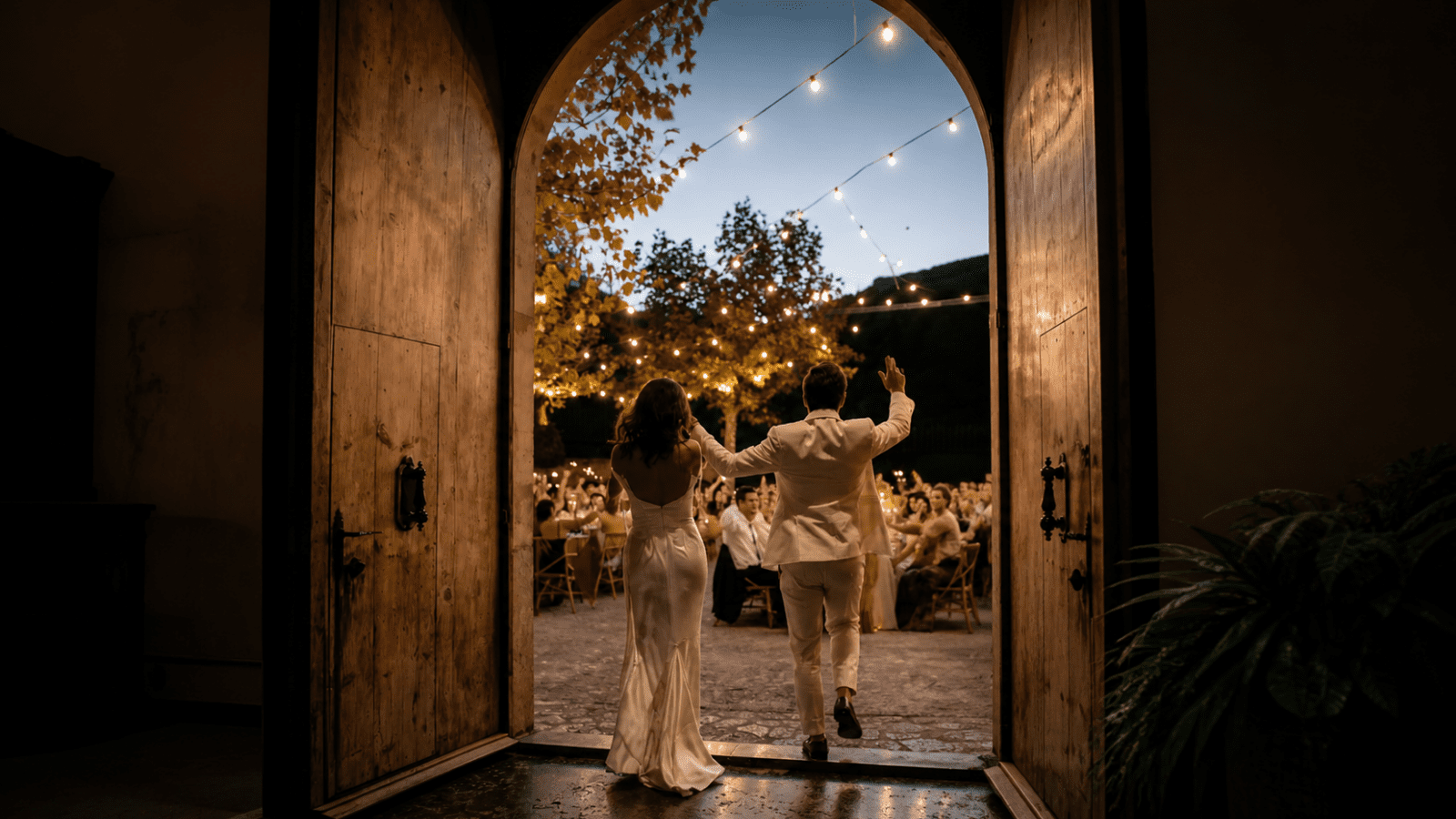
The grand entrance at a Black American wedding reception is a full production moment, so wedding reception entrance songs need to match that level of energy and presence. The couple is introduced for the first time as husband and wife, they walk through their guests, and the song choice sets the tone for the entire reception that follows. Hype entrance songs at Black weddings tend to be louder, more commanding, and more celebratory than at other receptions — because the expectation is that the room is already on its feet and ready.
All I Do Is Win — DJ Khaled ft. T-Pain, Ludacris, Snoop Dogg, Rick Ross
[Spotify Embed: All I Do Is Win — DJ Khaled]
The most requested hype entrance song at Black American weddings right now. The hook — all I do is win, win, win no matter what — lands with a triumphant energy that is exactly right for a couple walking into their reception for the first time as married people. Every guest in the room who knows the song raises their hands on cue, which creates one of the most visually dramatic entrance moments in any wedding format. Walk-in pace should be confident and unhurried — let the verse build before the hook arrives.
Crazy in Love — Beyoncé ft. Jay-Z
[Spotify Embed: Crazy in Love — Beyoncé ft. Jay-Z]
The horn intro is one of the most commanding opening moments in contemporary American music — the room reacts the instant it starts. The cultural resonance of Beyoncé and Jay-Z as a married couple gives the song an additional layer of meaning for Black couples choosing it for their own entrance. The tempo is fast enough to energize the room but controlled enough for a grand entrance walk that doesn’t feel rushed. One of the most versatile entrance songs in this category — works for any reception formality level.
Started From the Bottom — Drake
[Spotify Embed: Started From the Bottom — Drake]
For couples who want their entrance to feel like a personal victory lap — now the whole team here. The energy is triumphant and communal simultaneously, which is the right register for walking into a room full of people who have been supporting you your entire life. Works especially well when the couple has a story of perseverance or when the wedding guest list includes people who were there from the beginning. The hook is impossible not to respond to.
Forever — Drake ft. Kanye West, Lil Wayne, Eminem
[Spotify Embed: Forever — Drake ft. Kanye West, Lil Wayne, Eminem]
A high-octane entrance option for couples who want something that hits hard from the first second. The opening — last name ever, first name greatest — is a statement, and walking into a reception to it is a statement. Best for couples with a guest list that skews younger or for receptions where the energy from the start is meant to be at full volume.
Jump On It — Sir Mix-a-Lot (Apache)
[Spotify Embed: Jump On It — Sir Mix-a-Lot / Apache]
One of the most crowd-participation-ready entrance songs at Black American weddings — the call-and-response structure and the recognizable hook create an immediate communal response. Works best when the couple is prepared to commit to the energy the song demands. A reliable choice for couples who want the entrance to feel like a celebration and a performance simultaneously.
Coming Out Strong — Future ft. The Weeknd
[Spotify Embed: Coming Out Strong — Future ft. The Weeknd]
A contemporary entrance choice for couples who want the grand entrance music to feel current without going full hype-anthem. The production is dark and cinematic — more dramatic than celebratory — which creates a different kind of entrance energy: the couple arriving with presence and weight rather than party energy. Strong at more formal or upscale receptions where a commanding entrance is more fitting than a high-energy crowd moment.
Black Wedding Reception Songs
The Black American wedding reception is a full party — from cocktail hour through last call. These are the songs that keep the floor moving, build the energy across the night, and make every guest feel included regardless of age.
High-Energy Reception Dance Songs
| Song | Artist | Why It Works |
|---|---|---|
| Before I Let Go | Beyoncé (Maze cover) | The definitive Black American wedding reception song — the moment it starts, every person in the room who knows it is on the floor. A cultural event rather than just a song. |
| Electric Slide | Marcia Griffiths | The most universal line dance at Black American receptions — grandparents and grandchildren on the floor simultaneously |
| Wobble | V.I.C. | A line dance that pulls in guests who don’t normally dance — the steps are simple enough to learn on the spot |
| Cupid Shuffle | Cupid | Consistent floor-filler at Black weddings nationally — the call-and-response instruction structure means no one has an excuse to sit this one out |
| My Body | LSG (Gerald Levert) | The late-reception energy song that brings the older crowd fully onto the floor — a classic |
| No Scrubs | TLC | Every woman in the room who grew up in the 90s knows every word — communal singalong energy |
| Versace on the Floor | Bruno Mars | Late reception, couples-only energy — the tempo and the production shift the room into a more intimate register |
| Adorn | Miguel | The most romantic of the contemporary R&B reception songs — works as both a slow dance and a background track during dinner |
| Ignition (Remix) | R. Kelly | One of the most reliable reception songs in Black American wedding history — note that many DJs and couples now opt for alternatives given the artist’s history |
| In My Feelings | Drake | The viral dance challenge origin — brings the younger crowd together for a moment of shared culture |
| Bust It Baby — Part 2 | Plies ft. Ne-Yo | Slow jam energy for mid-reception floor time |
| Make Me Better | Fabolous ft. Ne-Yo | A classic couple’s slow dance that the 30+ crowd will feel immediately |
Old School and Classic R&B Reception Staples
| Song | Artist | Era |
|---|---|---|
| Ain’t Nobody | Chaka Khan | 1983 — a floor-filler that never ages |
| I Want You Back | The Jackson 5 | 1969 — every generation knows every note |
| Let’s Stay Together | Al Green | 1971 — one of the most perfect love songs ever recorded |
| September | Earth, Wind & Fire | 1978 — the single most crowd-reliable floor song in Black American music history |
| Got to Give It Up | Marvin Gaye | 1977 — the tempo is built for dancing and the energy is impossible to resist |
| Best of My Love | The Emotions | 1977 — joyful, fast, and completely timeless |
| I Will Survive | Gloria Gaynor | 1978 — crowd singalong that transcends every demographic in the room |
| Sexual Healing | Marvin Gaye | 1982 — best placed mid-to-late reception when the mood has shifted to more intimate |
Black Gospel Wedding Songs
Gospel music is the foundation of Black American music — the tradition from which soul, R&B, and every genre descended. At Black American weddings where faith is central, the gospel ceremony carries as much or more emotional weight than any other moment of the day. These are the songs that have defined those moments.
I Love the Lord — Whitney Houston
[Spotify Embed: I Love the Lord — Whitney Houston (The Preacher’s Wife soundtrack)]
Whitney Houston’s gospel recordings from The Preacher’s Wife soundtrack represent the apex of her vocal power applied to sacred music — and “I Love the Lord” is the peak of that peak. For a church ceremony where the music is meant to feel like worship as much as celebration, this is the gold standard. The choir arrangement gives it a communal weight that solo gospel recordings rarely achieve. Guests who hear it in this context will feel the ceremony as an act of devotion rather than a cultural performance.
Total Praise — Richard Smallwood
[Spotify Embed: Total Praise — Richard Smallwood / Vision]
One of the most beloved hymns in contemporary Black gospel — the melody is simple and devastating, and the choir arrangement builds from quiet to overwhelming in a way that matches the emotional arc of a wedding ceremony. Best for the prelude, the processional, or the offertory moment during a church ceremony. For families with deep roots in Black church tradition, this song is a statement of faith and community that exceeds any secular music choice.
Order My Steps — GMWA Women of Worship
[Spotify Embed: Order My Steps — GMWA Women of Worship]
A prayer for guidance — the message (order my steps in your word) is exactly what a couple beginning a marriage under faith wants to express. Works as a ceremony prelude or processional for deeply religious weddings. The tempo is steady and the arrangement is accessible enough for guests across denominations to recognize it as a worship song even if they don’t know it by name.
The Lord’s Prayer — various artists (Andrea Crouch version)
[Spotify Embed: The Lord’s Prayer — Andrea Crouch / Mahalia Jackson]
For the most formal and traditional Black church wedding ceremonies, a gospel arrangement of The Lord’s Prayer establishes the spiritual register of the ceremony immediately. The Mahalia Jackson version is the most historically resonant choice; the Andrea Crouch arrangement is the most liturgically full. Either establishes a ceremonial tone that classical music achieves in other contexts — but with the specific cultural and spiritual authority of the Black church tradition.
You Are So Beautiful (Gospel arrangement) — various
[Spotify Embed: You Are So Beautiful — Gospel / Choir Arrangement]
A secular song with a lyric that works in a sacred context — several gospel artists and church choirs have produced arrangements that give the song a full worship quality. Works as a processional for couples who want the ceremony music to bridge sacred and secular without choosing a hymn that might feel inaccessible to non-religious guests.
Gospel Songs for the Ceremony — Quick Reference Table
| Song | Artist | Moment |
|---|---|---|
| I Love the Lord | Whitney Houston | Prelude or offertory |
| Total Praise | Richard Smallwood | Processional or prelude |
| Order My Steps | GMWA Women of Worship | Processional |
| He’s Done Enough | Commissioned | Prelude or ceremony background |
| Encourage Yourself | Donald Lawrence | Recessional |
| Something About the Name Jesus | Kirk Franklin | Prelude |
| Great Is Your Mercy | Donnie McClurkin | Prelude or processional |
| We Fall Down | Donnie McClurkin | Quiet ceremony moment or prelude |
Black Father Daughter Wedding Songs
The father daughter dance at a Black American wedding draws on soul, R&B, and classic music, which makes father daughter wedding songs feel reflective, grateful, and deeply personal. These are the songs that work at this specific moment.
Dance With My Father — Luther Vandross
[Spotify Embed: Dance With My Father — Luther Vandross]
Luther Vandross wrote this song about his own late father — the emotional origin is specific and real, which gives the recording an authenticity that studio-commissioned songs rarely match. For brides dancing with a living father, the song is a tribute to presence. For brides honoring a father who has passed, it is one of the most direct and honest expressions of that specific grief and love in American music. In both contexts, few songs carry more weight at this moment.
Brown Skin Girl — Beyoncé ft. Blue Ivy, SAINt JHN, WizKid
[Spotify Embed: Brown Skin Girl — Beyoncé ft. Blue Ivy, SAINt JHN, WizKid]
A contemporary celebration of Black feminine beauty, written by Beyoncé for her daughter and for every Black girl watching. For a father dancing with his daughter on her wedding day, the message — you are beautiful exactly as you are — carries specific and personal weight in a cultural context where that message has not always been said loudly enough. A newer choice that is appearing with increasing frequency on DJ request lists as its meaning in this specific context becomes recognized.
Isn’t She Lovely — Stevie Wonder
[Spotify Embed: Isn’t She Lovely — Stevie Wonder]
Written by Stevie Wonder the day his daughter was born — the connection to a father’s love for his daughter is literally embedded in the song’s creation. The warmth of the harmonica lead and the celebratory energy make it more joyful than heavy, which is a rare quality in father daughter songs. Works for father daughter pairs who want the dance to feel like a celebration rather than a farewell. Every generation in the room knows it and loves it simultaneously.
My Girl — The Temptations
[Spotify Embed: My Girl — The Temptations]
The most requested father daughter dance song in the United States regardless of background or region — and its resonance at Black American weddings is particular, because this song comes from the same cultural tradition as the family in the room. The Motown production is warm and communal, the tempo is natural for dancing, and every generation present responds simultaneously. Under three minutes at full length — no editing required.
You Are So Beautiful — Joe Cocker / Ray Charles
[Spotify Embed: You Are So Beautiful — Ray Charles]
Short, direct, and immediately emotional. The message is unmistakable in this context. The Ray Charles version has a particular soul texture that works specifically at Black American weddings. At under two and a half minutes, it plays at nearly full length without editing.
Black Mother Son Wedding Songs
The mother son dance at a Black American wedding often carries an emotional charge that exceeds the formal moment, so mother son wedding songs need to honor that bond without making it feel performed.
A Song for Mama — Boyz II Men
[Spotify Embed: A Song for Mama — Boyz II Men]
The most directly titled and emotionally precise mother son dance song in Black American music. The a cappella opening, the gospel-influenced harmonies, and the lyrical message — every word addressed to a mother who gave everything — make it one of the most genuinely moving two and a half minutes at any Black American reception. Boyz II Men’s vocal performance is the standard against which every other mother son song is measured in this tradition.
Mama — Boys II Men / Boyz II Men
[Spotify Embed: Mama — Boys II Men / Boyz II Men]
A direct companion to “A Song for Mama” with an equally specific address to a mother’s love. Works for grooms who want the dance to feel personal and unambiguous. The Boyz II Men tradition of vocal harmony gives both songs a communal quality — the emotion is not performed by one voice but held by several, which makes the room feel it rather than just observe it.
In My Life — The Beatles (or any soulful cover)
[Spotify Embed: In My Life — Aretha Franklin / Soul Cover]
A reflective song about the people and places that shaped a life. For a groom at his wedding, the emotional context transforms the lyric: the person who has been there longest, who shaped him most, who he will always love. The Aretha Franklin or any soul-inflected cover gives the song a register that lands more naturally in a Black American wedding context than the Beatles original. Under two and a half minutes; plays at full length.
You Raised Me Up — Fantasia version
[Spotify Embed: You Raise Me Up — Fantasia Barrino]
The Fantasia version of this gospel-adjacent song gives it a soul quality that the more commonly used Josh Groban recording doesn’t have — the vocal power and the Baptist church influence make it land specifically in a Black American wedding context. For mothers who raised sons through difficult circumstances, the message is exact and personal. The orchestral build over its runtime creates a natural emotional arc across the dance.
Slow Jams for the Reception
The slow jam portion of a Black American wedding reception is its own art form — a specific sequence of songs that shift the energy from high to intimate, bring couples together, and create the kind of extended slow-dance floor moment that becomes the memory people talk about for years after. The sequencing matters as much as the individual songs.
| Song | Artist | Era / Energy |
|---|---|---|
| Slow Motion | Juvenile ft. Soulja Slim | 2004 — the classic slow jam floor transition song |
| Differences | Ginuwine | 2001 — intimate and direct; the couples-only portion of the night |
| My Body | LSG (Gerald Levert, Keith Sweat, Johnny Gill) | 1997 — the song that reliably brings the 35+ crowd to the floor |
| Let’s Stay Together | Al Green | 1971 — one of the most perfect love songs ever recorded; works at any point in the night |
| Climax | Usher | 2012 — contemporary slow jam for the younger generation on the floor |
| Adorn | Miguel | 2012 — the most romantic contemporary R&B slow dance |
| You & I (Nobody in the World) | John Legend | 2013 — warm and direct; works as both a slow dance and background during dinner |
| Say Yes | Michelle Williams ft. Beyoncé & Kelly Rowland | 2014 — gospel-inflected R&B; a recent slow jam with faith context |
Line Dance and Group Dance Songs
Line dances and group dances are a distinct tradition at Black American weddings — organized participation events that function differently from general open dancing. They require specific songs, a DJ who knows when to drop them, and a floor that knows what to do. When it works, it is the most communal moment of the entire reception.
| Song | Dance | When to Use |
|---|---|---|
| Before I Let Go — Beyoncé | Gotta Let Go / Before I Let Go line dance | The opening of the line dance set — the most universally known Black American wedding line dance of the current era |
| Electric Slide — Marcia Griffiths | Electric Slide | Multi-generational — grandparents and grandchildren share the floor simultaneously |
| Wobble — V.I.C. | Wobble | Early-to-mid reception when the floor needs energy and inclusive steps |
| Cupid Shuffle — Cupid | Cupid Shuffle | Mid-reception; the call-and-response instruction format means no one can claim they don’t know the steps |
| Cha Cha Slide — DJ Casper | Cha Cha Slide | Works across every generation and every background — one of the most universally accessible line dances in American wedding history |
| Knuck If You Buck — Crime Mob | Various | Late reception, high energy, younger crowd — not for every wedding, but devastating when it fits |
| Candy — Cameo | Candy dance | Classic floor moment for the 40+ crowd — the group dance that proves every generation was once young |
Most Popular Black Wedding Songs Right Now
Based on DJ request lists, streaming data, and wedding planning platform searches, these are the songs Black American couples are actually choosing across every category heading into 2026.
“Best Part” by Daniel Caesar ft. H.E.R. leads first dance requests by a significant margin — its combination of minimal production, specific lyrical content, and the cultural resonance of both artists makes it the defining Black wedding first dance song of the current era. “A Ribbon in the Sky” by Stevie Wonder follows closely for couples who want something with more classic weight.
For the reception grand entrance, “All I Do Is Win” by DJ Khaled and “Crazy in Love” by Beyoncé share the top position nationally among Black American wedding couples. “Started From the Bottom” by Drake has risen significantly on request lists among couples who married after a long journey together.
“Before I Let Go” by Beyoncé — her cover of the Maze classic — has become the definitive reception floor moment at Black American weddings since its 2019 release on Homecoming. It functions less like a song choice and more like a scheduled community event: a DJ who doesn’t know to drop it, and to drop it correctly, is not fully prepared for this reception.
In the gospel category, Whitney Houston’s recordings from The Preacher’s Wife soundtrack remain the most requested ceremony music, followed by Richard Smallwood and Donnie McClurkin. Kirk Franklin’s crossover work — particularly tracks from The Rebirth of Kirk Franklin — is gaining traction as ceremony prelude music.
How to Build Your Black Wedding Playlist
A Black American wedding playlist covers more musical ground in a single day than almost any other wedding format in the country — gospel in the ceremony, neo-soul at cocktail hour, R&B slow jams for the family dances, and hip-hop and Motown for the reception floor. The challenge is not finding songs. It’s sequencing them in a way that feels intentional rather than accidental.
The Sequence That Works
Gospel or soul ceremony → R&B cocktail hour → Grand entrance (hype) → First dance and family dances (intimate) → Early reception (classic R&B and Motown to warm the floor) → Mid-reception (contemporary hip-hop and R&B to build energy) → Line dances (organized floor moments) → Slow jam set (bring couples together) → Final high energy (everything left in the tank) → Last song. Each phase has its own energy requirement. Plan them explicitly with your DJ.
Tell Your DJ These Things Specifically
Give your DJ the exact song, artist, and version for every named moment. “A Song for Mama” by Boyz II Men tells your DJ the song. “A Song for Mama” by Boyz II Men from the II album, starting at 0:00, with the a cappella intro, tells your DJ how to play it. The difference between those two briefs is the difference between the moment landing and the moment almost landing.
Specifically request that “Before I Let Go” be dropped at a specific time rather than left to their judgment — and request the full Beyoncé Homecoming version, not the Maze original or any other version. If the group dance requires the DJ to cue the crowd, confirm that your DJ knows the standard call for that dance. Not all DJs who work primarily outside Black American wedding culture know these cues. It is worth asking directly.
The Multi-Generational Balance
A Black American wedding reception typically spans three or four generations, and each generation has a distinct canon. The grandparents’ floor is Motown, Earth, Wind & Fire, and Al Green. The parents’ floor is New Edition, Anita Baker, Keith Sweat, and Boyz II Men. The cousins’ floor is Drake, Beyoncé’s recent catalog, and whatever is streaming right now. A great DJ serves all three in a single night — building playlists that move between those registers without clearing the floor each time. Walk through those three canons with your DJ in the planning meeting, not just a list of songs.
Black Wedding Songs Playlist
Listen to the full playlist of Black wedding songs below, featuring timeless soul classics, R&B first dance songs, gospel ceremony music, hip hop reception favorites, family dance songs, and the tracks that continue to define Black American wedding celebrations across generations.
Final thoughts
The best Black wedding songs do more than soundtrack a reception.
They carry history, culture, family, celebration, faith, romance, and community all at the same time often within the same song.
That is why the music at Black American weddings feels different. The playlist is not just entertainment. It becomes part of the identity of the celebration itself, connecting generations through songs everyone in the room already understands emotionally before the first note even finishes playing.
And when the right song hits at the right moment, the entire room moves together.
Frequently asked questions (FAQ)
What are the best Black wedding songs?
Popular choices include “Best Part,” “A Ribbon in the Sky,” “Before I Let Go,” “At Last,” and “All My Life.” These songs are widely used because they combine emotional depth, cultural familiarity, and strong dance-floor energy.
What songs are commonly played at Black wedding receptions?
Songs like “Before I Let Go,” “Electric Slide,” “Cupid Shuffle,” “September,” and classic R&B slow jams are staples at Black American wedding receptions because they bring multiple generations onto the dance floor together.
What are good Black wedding songs for walking down the aisle?
Popular processional choices include “A Ribbon in the Sky,” “At Last,” “I Believe in You and Me,” and gospel songs like “Total Praise.” These songs work because they feel emotional, elegant, and culturally resonant.
What are the best Black wedding first dance songs?
“Best Part,” “Always and Forever,” “A Song for Mama,” “Nothing Even Matters,” and “All My Life” are among the most requested Black wedding first dance songs in the United States.
Why does R&B and soul work so well at Black weddings?
R&B and soul focus on emotion, intimacy, family, faith, and celebration — all central parts of Black American wedding culture. The music creates shared emotional moments across generations.

About the Author
Débora Justo
Founder and editor of EVORÉ, creating practical wedding planning resources, thoughtful inspiration and useful tools for the decisions that shape a celebration.
Read more about the author →