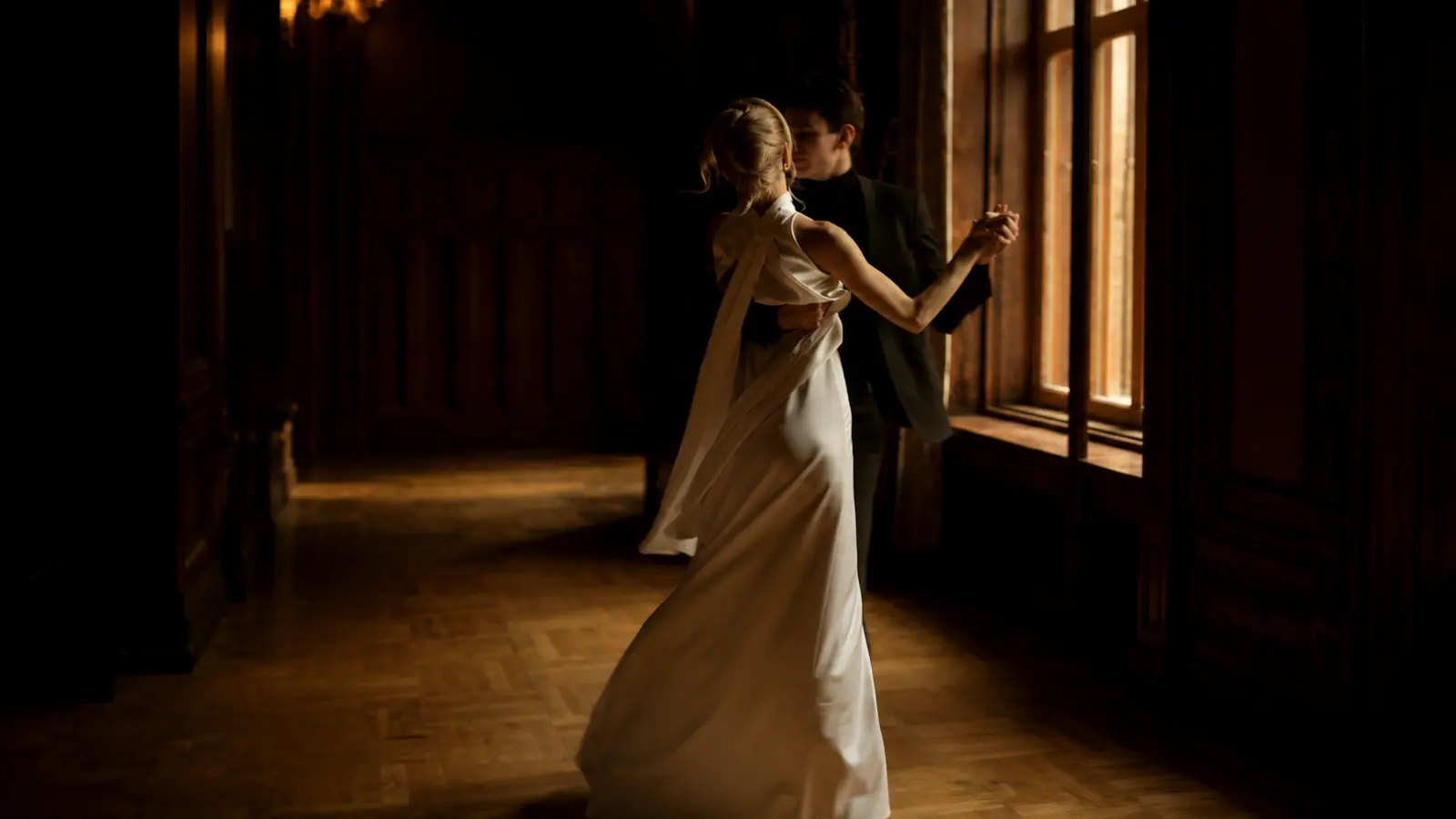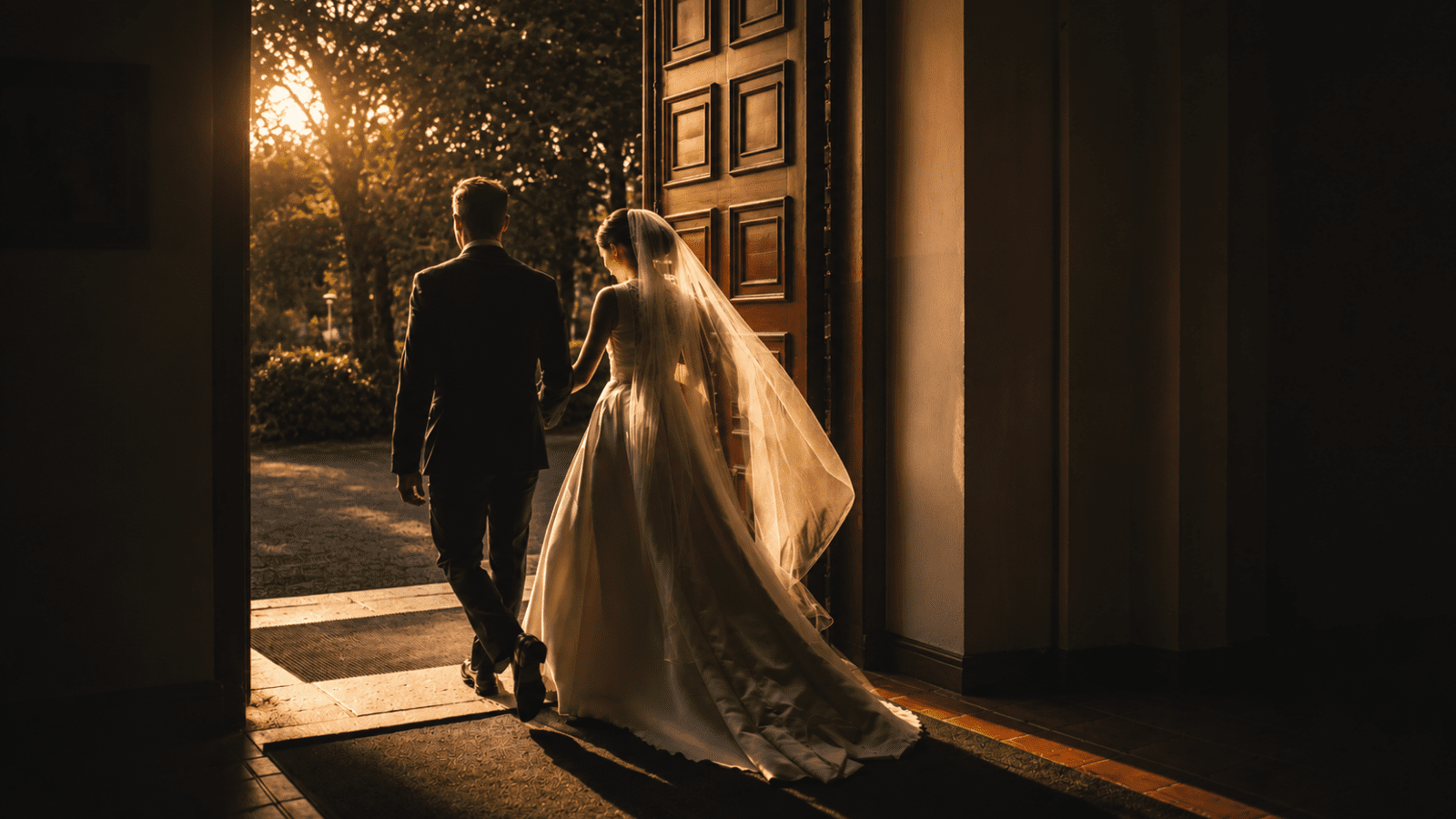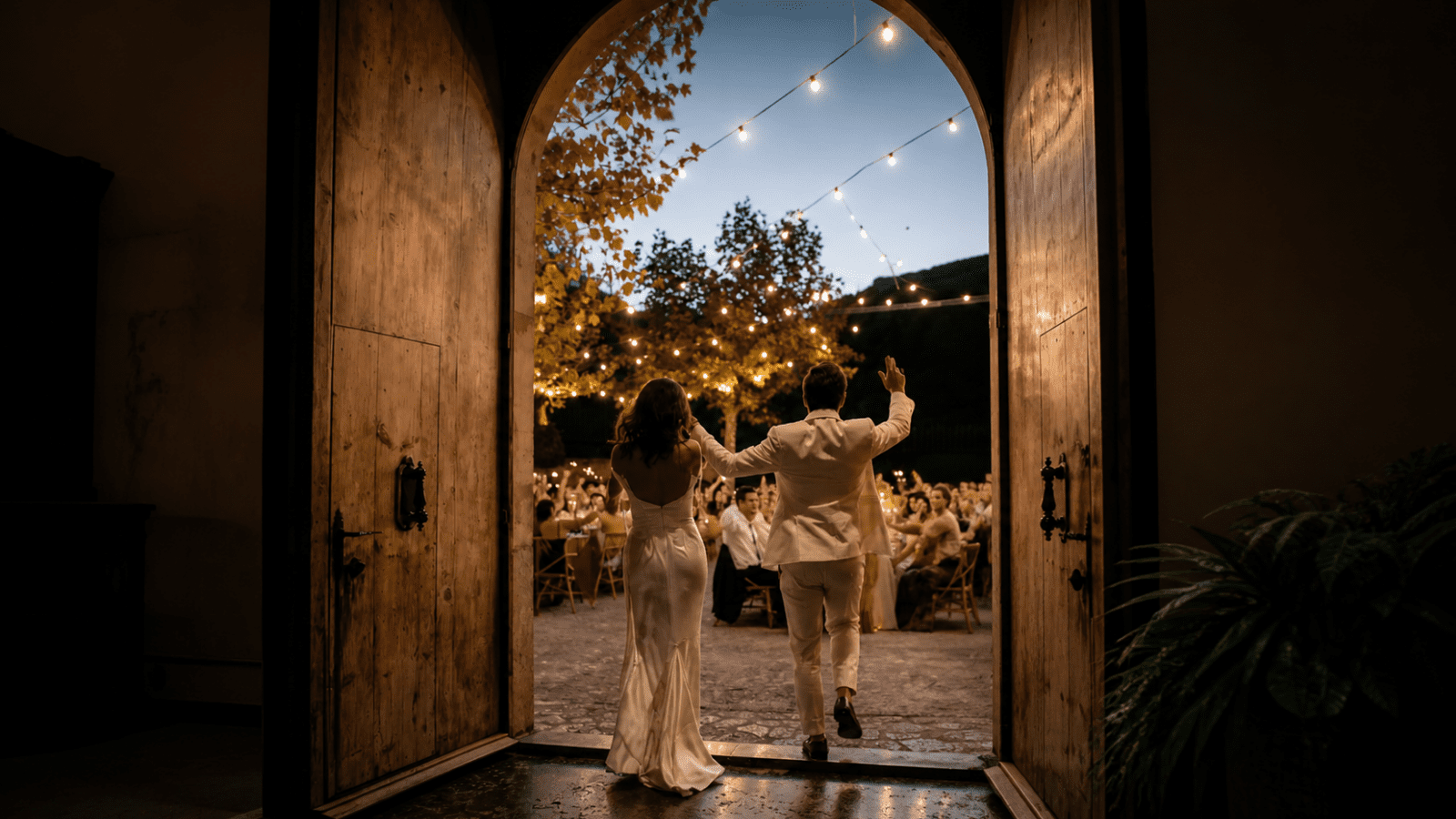
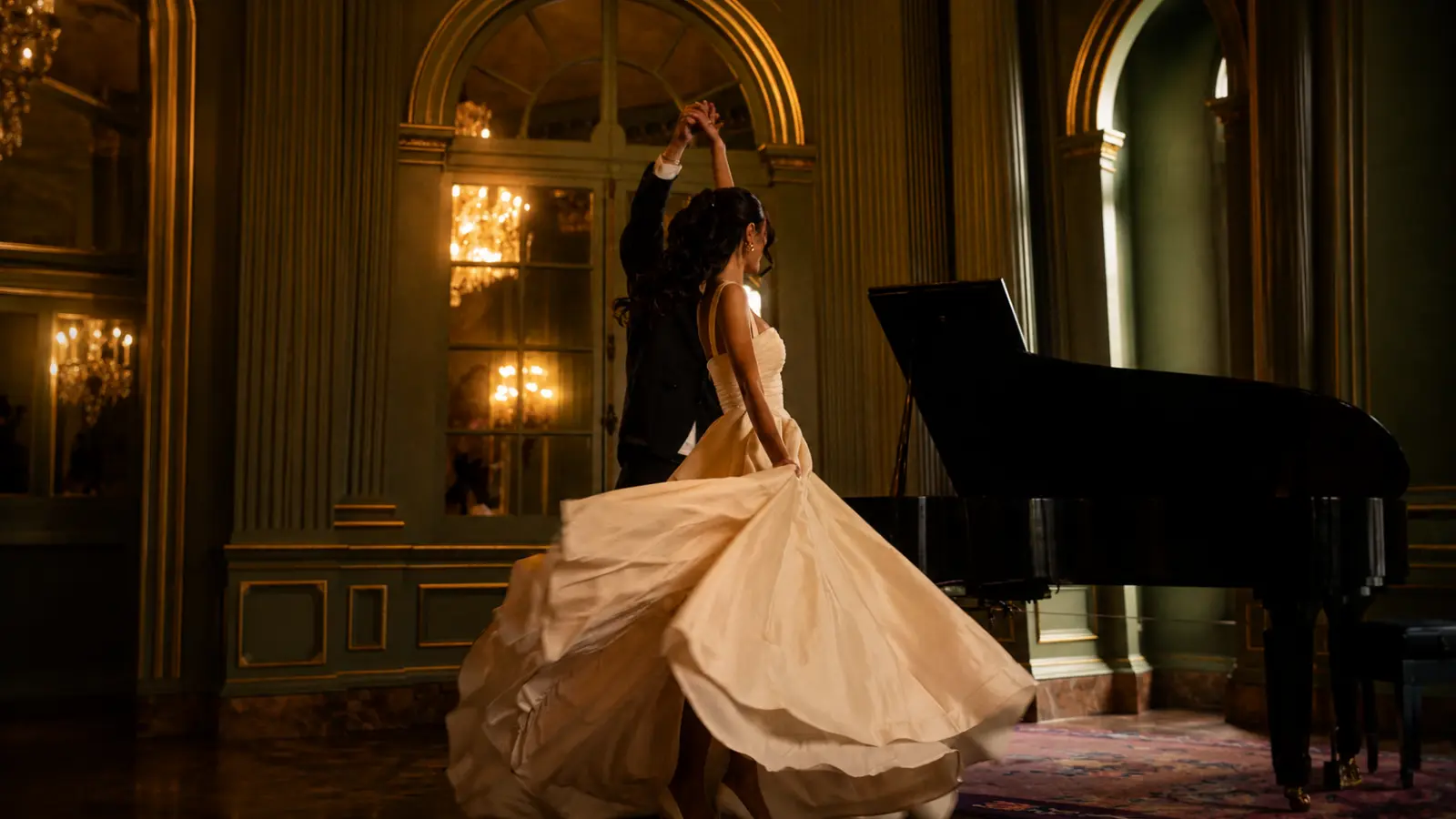
Classical wedding songs have remained part of American weddings for centuries because they create something modern music often struggles to replicate: atmosphere that feels timeless.
From Canon in D and Clair de Lune to Sinatra, Etta James, and Nat King Cole, these songs continue to appear at ceremonies and receptions because they hold emotional weight across generations. They do not depend on trends, nostalgia, or familiarity alone. They simply work.
This guide brings together the best classical and classic wedding songs for every moment of the day as part of a complete collection of wedding songs for every moment of the day — including processionals, recessionals, first dances, cocktail hour music, family dances, and timeless reception songs that still feel elegant decades after they were recorded.
Classical vs. Classic Wedding Songs — The Distinction That Matters
These two terms are often used interchangeably in wedding planning, but they mean different things — and understanding the distinction helps you make better choices for each moment of your day.
Classical wedding songs refers specifically to Western art music composed roughly between 1600 and 1900. Pachelbel’s Canon in D, Bach’s Jesu Joy of Man’s Desiring, Handel’s Water Music, Wagner’s Bridal Chorus, Mendelssohn’s Wedding March — these are classical pieces. They are almost always performed live by a musician or ensemble: a string quartet, a pianist, an organist, a harpist, a trumpet soloist. The performance context is as much a part of the effect as the composition itself.
Classic wedding songs is a much broader category: any song that has proven itself as a wedding staple across generations of American couples. Elvis Presley’s “Can’t Help Falling in Love.” Etta James’ “At Last.” Frank Sinatra’s “The Way You Look Tonight.” Nat King Cole’s “Unforgettable.” These are not classical compositions — they are pop, jazz, soul, and R&B recordings from the 20th century that have accumulated decades of emotional association at American weddings and become genuine standards.
The practical difference: classical music dominates the ceremony (processional, prelude, recessional) where the formal, acoustic quality of live performance matches the gravity of the moment. Classic songs dominate the reception — the first dance, the family dances, the open floor — where the recordings themselves carry decades of meaning for the couple and their guests.
Most wedding music plans use both. The ceremony is classical. The reception is classic. That combination is not default — it is intentional, and it works because the emotional register of each moment matches the music designed for it.
Why Classical and Classic Songs Work at Weddings
The reason couples keep returning to these songs — across decades, across generations, across every shift in popular taste — is not nostalgia. It is because they were genuinely written and performed at the highest level of their respective forms, and that quality holds up in a way that most contemporary choices cannot match.
Canon in D has been played at weddings since the 17th century because Pachelbel wrote a harmonic progression that produces a specific physiological response — a sense of gentle, building resolution — that is almost universally associated with ceremony and significance. It works because it was designed, by a genius, to work. The fact that it has also been played at 50 million weddings since is not a reason to avoid it. It is evidence of how well it works.
The same logic applies to classic popular songs. “The Way You Look Tonight” works as a first dance because Jerome Kern and Dorothy Fields wrote a lyric that is simultaneously specific and universal — it describes the feeling of looking at someone you love so precisely that every couple recognizes themselves in it. Frank Sinatra’s arrangement is the best version of a perfect song. That is a high bar, and it holds.
The practical advantage of classical and classic songs at a wedding is guest recognition. When Canon in D begins, every person in the room knows what moment is coming. When “At Last” plays, every person who has ever been to an American wedding knows exactly what it means and why it was chosen. That collective recognition creates a shared emotional experience — the room moves together — which is something no newly released song can manufacture. Recognition is earned, and these songs have earned it across generations.
The other advantage is permanence. The song playing during your first dance will be the song you hear for the rest of your life and associate with that moment. A song that is popular in 2026 may feel dated in 2036. A song that has already survived 60 years has demonstrated it will survive 60 more.
Classical Processional Songs — Walking Down the Aisle
The processional is the most acoustically exposed moment of the entire wedding, which is why wedding processional songs need to create the right atmosphere from the first notes. The room goes quiet when the music begins. Every guest turns. Everything that follows depends on whether the song creates the right emotional atmosphere in the first eight bars. Classical processional music has been solving this problem for centuries.
| Piece | Composer | Tempo & Feel | Best For |
|---|---|---|---|
| Canon in D | Pachelbel | Slow, building, deeply familiar | Any ceremony style; universally recognized; works for the full bridal processional |
| Bridal Chorus (“Here Comes the Bride”) | Wagner | Stately, ceremonial, unmistakable | Traditional church ceremonies; formal venues; many couples now avoid it for its operatic baggage |
| Wedding March (from A Midsummer Night’s Dream) | Mendelssohn | Triumphant, bright, uplifting | Recessional more than processional; signals celebration rather than solemnity |
| Trumpet Voluntary (Prince of Denmark’s March) | Clarke | Bold, fanfare-like, regal | Formal church ceremonies; venues with high ceilings; requires a trumpet soloist to land correctly |
| Air on the G String | Bach | Slow, serene, profound | Intimate or outdoor ceremonies; smaller venues where the quieter arrangement works |
| Jesu, Joy of Man’s Desiring | Bach | Flowing, devotional, warm | Christian ceremonies; church settings; particularly suited for an organist or pianist |
| Spring (from The Four Seasons) | Vivaldi | Bright, joyful, energetic | Outdoor spring and summer ceremonies; couples who want the processional to feel celebratory rather than solemn |
| Ave Maria | Schubert / Bach-Gounod | Slow, reverent, emotionally full | Catholic and Christian ceremonies; often sung by a soloist; among the most emotionally powerful processional pieces |
| Water Music (Air) | Handel | Elegant, flowing, stately | Formal or waterside ceremonies; a less common choice that feels distinguished without being obscure |
| Ode to Joy | Beethoven | Triumphant, anthemic, familiar | Recessional; signals joy and new beginning; works best played after the pronouncement |
A note on Canon in D: it is the most-used processional piece in the United States for a reason — it is genuinely extraordinary music, and its slow harmonic progression creates exactly the emotional atmosphere a processional needs. The fact that it is widely used is not a reason to avoid it. If anything, the collective recognition it carries means every guest in the room will know what moment has arrived the instant the first notes play. That is not a weakness. That is what the best processional music does.
A note on the Bridal Chorus: many modern couples have moved away from it — partly because of its association with Lohengrin (an opera in which the marriage ends catastrophically) and partly because the phrase “Here Comes the Bride” is not how most contemporary couples want to be announced. If you love the piece, use it. If you are on the fence, Canon in D does everything it does without the historical footnotes.
Classical Prelude Songs — As Guests Are Seated
The prelude plays for 20 to 45 minutes as guests arrive and take their seats, so wedding prelude songs should feel elegant without demanding full attention. It is the first musical impression of the ceremony — the piece that sets the atmosphere before anything formal begins. Classical prelude music works because it is designed to be heard in the background without demanding full attention, while still signaling that something significant is approaching.
Most couples use a string quartet, a pianist, or a harpist for the prelude. A playlist through a speaker system works for outdoor venues or budget ceremonies, but live music for the prelude produces a qualitatively different atmosphere — guests respond to the presence of live musicians even when they are not consciously tracking the music.
Strong classical prelude choices: Bach’s Cello Suite No. 1 in G Major (one of the most beautiful pieces of music ever written, and works as background without being distracting), Debussy’s Clair de Lune (soft, impressionistic, creates immediate atmosphere), Satie’s Gymnopédie No. 1 (simple and deeply atmospheric — one of the most effective prelude pieces for an intimate ceremony), Handel’s Largo (warm and dignified), and Chopin’s Nocturne in E-flat Major (romantic and unhurried).
For outdoor or less formal ceremonies, the prelude can expand to include classical crossover pieces — instrumental versions of contemporary songs arranged for string quartet or piano. This bridges the classical ceremony and the more contemporary reception without a jarring transition.
Classical Recessional Songs — The Exit
The recessional plays as the couple exits after the pronouncement, and the best wedding recessional songs turn that first married walk into a joyful release. While the processional needs gravity and ceremony, the recessional needs triumph. Guests are already celebrating before the couple reaches the end of the aisle. The right recessional music accelerates that celebration.
| Piece | Composer | Energy Level | Note |
|---|---|---|---|
| Wedding March (A Midsummer Night’s Dream) | Mendelssohn | Triumphant, bright | The most iconic recessional piece; signals pure joy from the first note |
| Ode to Joy (Symphony No. 9) | Beethoven | Anthemic, powerful | One of the most emotionally overwhelming recessionals available; works best at larger venues |
| Arrival of the Queen of Sheba | Handel | Bright, fast, celebratory | Energetic and joyful; less commonly used than Mendelssohn, which makes it feel more personal |
| Crown Imperial March | Walton | Majestic, grand | For couples who want the recessional to feel genuinely regal |
| Trumpet Voluntary | Clarke | Bold, fanfare | Works as both a processional and recessional; the trumpet carries immediately through any space |
| Canon in D (up-tempo arrangement) | Pachelbel | Joyful, familiar | If used for the processional, skip this for the recessional — the contrast matters |
One increasingly popular approach: use a classical piece for the processional and a classic pop or rock song for the recessional — a song that captures exactly how the couple feels walking out of the ceremony as a married couple. “Don’t Stop Me Now” by Queen, “September” by Earth Wind & Fire, and “Happy” by Pharrell Williams are among the most requested non-classical recessionals. The tonal contrast between the solemnity of the ceremony and the joy of the exit is itself a statement.
Classic First Dance Songs — Timeless Picks
The classic first dance songs below have been chosen at American weddings for decades because the strongest first dance wedding songs carry emotion across generations. They endure because they are emotionally complete — great melodies, great lyrics, great arrangements — and because they have accumulated meaning through repetition at thousands of ceremonies. Every guest in the room already has a feeling associated with these songs before the couple takes the floor.
| Song | Artist | Why It Endures |
|---|---|---|
| Can’t Help Falling in Love | Elvis Presley | The most universally accepted first dance song in American history — works at every venue, every age group, every style of wedding; the lyric is a literal wedding vow set to melody |
| At Last | Etta James | The opening is one of the most recognized sounds in wedding music; soulful, slow, and emotionally devastating in the best way |
| Unforgettable | Nat King Cole | Elegant and timeless; the word itself is the aspiration of a first dance |
| The Way You Look Tonight | Frank Sinatra | One of the greatest love songs ever written; the arrangement is the standard against which all others are measured |
| La Vie en Rose | Édith Piaf | Cinematic and romantic; works for couples who want the first dance to feel like a film |
| Unchained Melody | The Righteous Brothers | One of the most emotionally powerful slow dance songs ever recorded; every generation knows it |
| Stand by Me | Ben E. King | Simple and universally understood; the lyric is the vow put to music |
| Your Song | Elton John | One of the most genuinely romantic first dance songs ever written; the lyric is specific and honest — “how wonderful life is now you’re in the world” |
| Endless Love | Diana Ross & Lionel Richie | Operatic commitment; the duet version works especially well for couples who want the song to feel like a declaration |
| L-O-V-E | Nat King Cole | Lighter and more joyful than most classic choices; works for couples who want timeless without being heavy |
| What a Wonderful World | Louis Armstrong | Short, warm, and tonally joyful; plays at under two-and-a-half minutes without editing; every generation loves it |
| The Best Is Yet to Come | Frank Sinatra | Forward-looking and celebratory — one of the most on-theme classic first dances for a wedding day |
A note on choosing: classic first dance songs carry collective recognition that contemporary songs do not yet have. When “Can’t Help Falling in Love” plays, every person in the room has a feeling — a memory, a moment — attached to that song. The couple is not just dancing to their choice. They are dancing inside decades of meaning that the room already holds. That is something worth choosing deliberately.
Classic Motown Wedding Songs
Motown is the genre that crosses every generation at an American wedding. The sound is immediately familiar to guests in their 20s and guests in their 70s simultaneously — which is rare, and which makes Motown one of the most reliable wedding music categories in existence.
Classic Motown songs work at every moment of the reception. They are warm enough for the first dance, joyful enough for the reception entrance, and energetic enough to fill a dance floor at 9pm. No other genre of American popular music covers that range as reliably.
| Song | Artist | Best Moment |
|---|---|---|
| Ain’t No Mountain High Enough | Marvin Gaye & Tammi Terrell | Reception entrance · recessional · dance floor · almost any moment |
| My Girl | The Temptations | Father-daughter dance · first dance · reception |
| How Sweet It Is (To Be Loved by You) | Marvin Gaye | First dance · parents entrance · reception |
| Signed, Sealed, Delivered I’m Yours | Stevie Wonder | Reception entrance · cocktail hour · dance floor |
| You Are the Sunshine of My Life | Stevie Wonder | First dance · cocktail hour · ceremony recessional |
| I Can’t Help Myself (Sugar Pie Honey Bunch) | The Four Tops | Dance floor · reception · bridal party entrance |
| My Cherie Amour | Stevie Wonder | First dance · cocktail hour · prelude |
| Ribbon in the Sky | Stevie Wonder | First dance · ceremony — slower and more intimate than most Motown choices |
| I Was Made to Love Her | Stevie Wonder | Reception · dance floor · upbeat entrance |
| Dancing in the Street | Martha Reeves & The Vandellas | Dance floor · late-night reception energy |
| You’ve Really Got a Hold on Me | The Miracles | Cocktail hour · first dance for couples who want something less familiar |
| Reach Out I’ll Be There | The Four Tops | Reception · dance floor · the lyric is a literal wedding promise |
“Signed, Sealed, Delivered I’m Yours” deserves special mention as a reception entrance song. The three-word title is the entire message of a wedding day — and the crowd reacts the moment they recognize it, before the couple is even through the door. Few songs create that immediate participatory energy as reliably.
Classic Rock Wedding Songs
Classic rock wedding songs work when the couple’s musical identity is genuinely rooted in the genre — when a slow ballad by someone they have never listened to would feel like performing a version of their relationship rather than expressing it. The best classic rock wedding choices are not the most obvious ones. They are the ones where the guest who knows the song immediately understands something true about the couple.
| Song | Artist | Moment & Why It Works |
|---|---|---|
| More Than Words | Extreme | First dance — the most broadly accessible classic rock first dance; an acoustic ballad from a rock band that works for every guest in the room |
| Wonderful Tonight | Eric Clapton | First dance — slow, beautiful, and genuinely romantic; a rock song that sounds like a love song because it is |
| Here, There and Everywhere | The Beatles | First dance · processional — one of the most quietly romantic songs ever written; works for couples who want classic rock without the electric guitar |
| Something | The Beatles | First dance — George Harrison’s greatest song; Frank Sinatra called it the best love song of the past 50 years |
| With or Without You | U2 | First dance — haunting and emotionally intense; for couples who want the first dance to carry real weight |
| Don’t Stop Believin’ | Journey | Recessional · reception entrance — the singalong quality means every guest participates; one of the most reliably crowd-unifying songs in American wedding music |
| Open Arms | Journey | First dance — pure commitment; the older crowd will feel this one viscerally |
| Can’t Fight This Feeling | REO Speedwagon | First dance — epic and committed; every guest over 40 will sing along |
| Time After Time | Cyndi Lauper | First dance — slow and bittersweet in the best way; works for couples whose relationship has navigated real difficulty |
| Head Over Feet | Alanis Morissette | First dance — unexpectedly romantic given the artist; the lyric is specific and honest in a way most first dance songs are not |
| Everything | Lifehouse | First dance — one of the most popular classic rock first dance songs at American weddings; slower tempo, universally romantic |
| Don’t Stop Me Now | Queen | Recessional · reception entrance — celebratory and fast; one of the most effective non-classical recessionals in American wedding music right now |
The Beatles deserve particular attention as a wedding music category. Their catalog contains more songs suitable for wedding ceremony and reception use than almost any other artist — “Something,” “Here, There and Everywhere,” “In My Life,” “All You Need Is Love,” “The Long and Winding Road,” and “When I’m Sixty-Four” all work in different wedding contexts. “All You Need Is Love” is especially effective because the singalong quality means the crowd participates, which gives the moment a communal energy that private first dance songs do not produce.
Classic R&B Wedding Songs
Classic R&B produces some of the most musically distinguished moments at any American wedding, especially when R&B wedding songs bring groove, warmth, and emotional depth to the reception. The genre’s tradition of slow, soulful romanticism — from Sam Cooke through Al Green through Etta James — is naturally suited to the emotional register of a wedding day. R&B first dances also tend to result in couples moving more confidently on the dance floor, because the groove gives them something physical to respond to rather than just swaying to a melody.
| Song | Artist | Feel |
|---|---|---|
| At Last | Etta James | The standard-bearer for R&B first dances; the opening alone justifies every choice that led to this song; the most iconic R&B wedding song in American history |
| You Send Me | Sam Cooke | Simple, perfect, and deeply warm; one of the most underused R&B first dance choices — which makes it feel more personal when a couple discovers it |
| Let’s Stay Together | Al Green | The title is the vow; the groove is one of the most natural slow-dance tempos in classic soul |
| Ribbon in the Sky | Stevie Wonder | One of Stevie Wonder’s most intimate songs; written specifically about falling in love — the lyric maps directly onto a wedding moment |
| Endless Love | Diana Ross & Lionel Richie | Operatic in its commitment; the duet quality makes it feel like both partners are already in the song |
| Nothing Even Matters | Lauryn Hill & D’Angelo | Intimate and quietly powerful; for couples who want the first dance to feel like a private moment that happens to be witnessed |
| Golden | Jill Scott | Uplifting and soul-forward; one of the most underused first dance songs in this category |
| Spend My Life with You | Eric Benét | Title says everything; a slow R&B standard of the late 90s that holds up completely |
| A Sunday Kind of Love | Etta James | Less recognizable than “At Last” but equally beautiful; for couples who want Etta James without the most obvious choice |
| My Funny Valentine | Various (Ella Fitzgerald, Chet Baker) | Jazz-adjacent R&B; one of the most emotionally complex love songs ever written — the lyric acknowledges imperfection and loves more because of it |
Classic Country Wedding Songs
Classic country handles love and commitment more directly than almost any other genre, which is why country wedding songs still work so well for first dances, family dances, and reception slow songs. The tradition of country songwriting — where the lyric carries a specific story, a named emotion, a scene the listener can see — produces songs that feel immediately personal in a wedding context. Country classics also tend to be explicitly about marriage and permanence in a way that pop songs rarely are.
| Song | Artist | Why It Works |
|---|---|---|
| I Will Always Love You | Dolly Parton | The original version — slower and more emotionally complex than the Whitney Houston recording; written as a farewell, but reread as a wedding song it becomes about unconditional love regardless of what comes |
| Amazed | Lonestar | The definitive 90s country first dance; the lyric is specific and sensory; still works completely |
| When You Say Nothing at All | Alison Krauss | About the kind of love communicated without words — the quiet knowledge that exists between two people who know each other completely; one of the most genuinely romantic country first dance songs |
| I Cross My Heart | George Strait | One of the most direct and honest wedding songs in country music; the lyric is a vow — “our love is unconditional, we knew it from the start” |
| Forever and For Always | Shania Twain | Upbeat and romantic; the tempo works for couples who want country without a slow ballad |
| Always on My Mind | Willie Nelson | A song about the imperfect expression of love — the things we feel but do not always say — that resonates for any long-term couple |
| Bless the Broken Road | Rascal Flatts | About the journey that led to finding the right person; resonates for couples who dated others before finding each other |
| Tennessee Whiskey | Chris Stapleton | Soul-country hybrid; the slow groove is ideal for a first dance; the lyric is sensory and specific |
| Could I Have This Dance | Anne Murray | The lyric is literally about a wedding dance; for older couples or couples with a strong connection to the era |
| My Best Friend | Tim McGraw | About a partner who is genuinely the person’s closest friend; one of the most sincere friendship-as-love songs in country |
Classic Jazz Wedding Songs
Classic jazz wedding songs occupy a specific and underused category. Jazz recordings carry a warmth and intimacy that no other genre quite replicates — the sound of a room, a live performance, a moment captured. They work especially well at cocktail hour, as prelude music, and for couples whose relationship has a genuine connection to the jazz tradition.
For cocktail hour and prelude: Chet Baker’s “Almost Blue,” Miles Davis’ “It Could Happen to You,” Billie Holiday’s “The Very Thought of You,” Ella Fitzgerald’s “Bewitched, Bothered and Bewildered,” Duke Ellington’s “In a Mellow Tone,” and Louis Armstrong’s “What a Wonderful World” create an atmosphere that no contemporary playlist replicates. A live jazz trio at cocktail hour is one of the most effective investments in wedding music ambiance that exists.
For first dance: Ella Fitzgerald’s “The Very Thought of You,” Tony Bennett’s “The Best Is Yet to Come,” Billie Holiday’s “I’ll Be Seeing You,” and Frank Sinatra’s “Fly Me to the Moon” all work as first dance songs for couples who want something with genuine musical sophistication. The tempo of most jazz standards is natural for a slow dance without requiring choreography.
Classic Songs for Family Dances
Classic Father Daughter Wedding Songs
The classic choices for the father-daughter dance carry a specific emotional arc — the weight of a father releasing his daughter into the next chapter of her life. The songs that endure in this category are the ones that acknowledge that specific feeling: pride, love, and the bittersweet quality of a transition that is genuinely both a celebration and a goodbye.
“My Girl” by The Temptations remains the most widely chosen classic father-daughter dance song at American weddings — warm, joyful, and specific in a way that works for almost every father-daughter relationship. “Isn’t She Lovely” by Stevie Wonder is similarly effective. “What a Wonderful World” by Louis Armstrong works for fathers whose relationship with their daughter is defined by gratitude and quiet joy rather than the weight of letting go. “You Are the Sunshine of My Life,” also by Stevie Wonder, is another reliable choice.
For more emotionally heavy choices: “My Wish” by Rascal Flatts (a parent’s forward-looking hope for a child’s future), “I Hope You Dance” by Lee Ann Womack (the same emotional content, from a mother’s perspective but equally used by fathers), and “Butterfly Kisses” by Bob Carlisle (one of the most specifically father-daughter songs ever written — the lyric is about exactly this moment).
Classic Mother Son Wedding Songs
The classic mother-son dance has a different emotional register than the father-daughter — less about formal release and more about acknowledging a bond that shaped the groom. The songs that work best here are warm, specific about the mother-child relationship, and not so slow that the dance feels interminable.
“My Wish” by Rascal Flatts is the most commonly used mother-son song at American weddings — the message is a parent’s hope for a child, and it works equally for both parent dances (coordinate with the father-daughter song if both are happening). “You Are the Best Thing” by Ray LaMontagne is used for mother-son dances because its warmth and groove make the dance easier than most ballads. “What a Wonderful World” by Louis Armstrong, “Stand by Me” by Ben E. King, and “Simple Man” by Lynyrd Skynyrd (for families with a rock orientation) are all reliable choices.
Classic Reception Songs — The Dance Floor Standards
Classic reception songs are the wedding reception songs that reliably fill a dance floor, produce crowd singalongs, and stay with guests for years after the wedding. They work because every generation in the room knows them, and because they were written and recorded at a level of craft that most contemporary songs have not yet matched — or may not match for another 20 years when they become classic themselves.
The most reliable classic reception dance floor songs at American weddings: “Don’t Stop Me Now” by Queen, “September” by Earth, Wind & Fire (the opening note gets everyone moving before the second beat), “Uptown Girl” by Billy Joel, “Brown Eyed Girl” by Van Morrison, “Sweet Home Alabama” by Lynyrd Skynyrd (for certain regional and family demographics), “Living on a Prayer” by Bon Jovi, “I Wanna Dance with Somebody” by Whitney Houston, “Respect” by Aretha Franklin, “Dancing Queen” by ABBA (every generation knows every word), “Shout” by Tears for Fears, and “Jump” by Kris Kross (for early 90s-raised crowds who will feel that bass line with their whole body).
A note on ABBA: “Dancing Queen” is the most crowd-inclusive song in American wedding reception history. It requires no introduction, no context, and no demographic targeting — every person in the room from age 8 to 80 knows it and participates. If your DJ is not playing it at some point in the evening, brief them explicitly to include it.
Classic reception songs for cocktail hour (background rather than dance floor): Anything from the Great American Songbook — Sinatra, Nat King Cole, Tony Bennett, Ella Fitzgerald — creates a warm, elegant atmosphere during cocktail hour that transitions naturally into the more energetic reception. A playlist of swing-era standards is one of the most underused and effective cocktail hour strategies at American weddings.
How to Build Your Wedding Music Plan Around Classical and Classic Songs
The couples who end up happiest with their wedding music are the ones who think about it as a progression — a full arc from the first note of the prelude to the last song of the night — rather than a series of individual decisions made in isolation. Here is how to build that arc around classical and classic songs.
Start with the ceremony. Decide whether you want live musicians (strongly recommended for the ceremony — the difference is significant) or a playlist. If live musicians: a string quartet is the most versatile option, capable of playing classical pieces for the processional and prelude as well as contemporary arrangements for the cocktail hour. A pianist or harpist is effective for smaller or indoor venues. A trumpet soloist transforms the recessional. Brief your musicians with the exact pieces and the exact moments — give them a written cue sheet, not a verbal conversation.
Map the ceremony music to the moments. Prelude: 20 to 45 minutes of background classical music as guests arrive. Wedding party processional: a different piece than the bride’s processional — consider using something lighter for the wedding party and Canon in D or your primary piece for the bride’s entrance. Bride’s processional: your primary piece, full arrangement. Interlude (during readings or unity ceremony): a shorter, softer piece that does not compete with spoken words. Recessional: the most triumphant classical piece you have — this is the exit of a married couple and it should sound like one.
Choose the first dance before anything else in the reception. The first dance song determines the emotional register of the entire reception. A slow, intimate first dance signals a romantic evening. A joyful, upbeat one signals a party. Either is right — but decide which, choose your song accordingly, and brief your DJ on the arc of the evening you want to create.
Build the reception around the dance floor standards. After the first dance and family dances, the goal is a room that wants to dance. Classic songs are your most reliable tool — Motown, classic rock, classic R&B, and ABBA are the genres that cross every demographic. Brief your DJ with the specific songs you want to hear and the songs you want excluded. A do-not-play list is as important as a must-play list.
Match the last song to the first dance. The song playing at the end of the night should feel connected to the song that opened the evening — either in genre, artist, or emotional register. If your first dance was a Sinatra classic, ending the night with another Sinatra or with “New York, New York” creates a satisfying arc. If your first dance was country, ending the night with the classic country song that means most to your guests gives the evening a sense of completion.
Classical Wedding Songs Playlist
Listen to the full playlist of classical and timeless wedding songs below, featuring elegant processionals, romantic first dances, classic jazz and Motown favorites, orchestral ceremony music, and timeless reception songs that continue to define American weddings across generations.
Final thoughts
The best wedding songs are rarely the newest ones. They are the songs that survive generations because they continue to create the same emotional response decade after decade — the songs that still sound elegant, romantic, meaningful, and alive long after trends disappear.
That is why classical and classic wedding music continues to matter. Not because it is traditional for the sake of tradition, but because great songs never stop working.
And when the right timeless song plays at the right moment, the entire wedding feels elevated because of it.
Frequently asked questions (FAQ)
What are the most popular classical wedding songs?
Popular choices include “Canon in D,” “Bridal Chorus,” “Wedding March,” “Air on the G String,” and “Jesu, Joy of Man’s Desiring.” These songs remain popular because they create a timeless and ceremonial atmosphere.
What is the difference between classical and classic wedding songs?
Classical wedding songs are traditional orchestral or instrumental compositions by composers like Bach, Pachelbel, and Beethoven. Classic wedding songs are timeless popular songs by artists like Elvis Presley, Frank Sinatra, and Etta James.
What classical music is commonly played at weddings?
Classical music is most often used during the prelude, processional, and recessional. String quartets, pianists, and harpists commonly perform pieces like “Canon in D” and “Ave Maria.”
What are the best classic first dance wedding songs?
Popular choices include “Can’t Help Falling in Love,” “At Last,” “Unforgettable,” “The Way You Look Tonight,” and “Stand by Me.” These songs remain wedding favorites because they are romantic and recognized across generations.
Should you use live musicians or recorded music for classical wedding songs?
Live musicians usually create a more elegant and emotional atmosphere during the ceremony. However, recorded classical music can still work beautifully for couples with smaller budgets or outdoor venues.

About the Author
Débora Justo
Founder and editor of EVORÉ, creating practical wedding planning resources, thoughtful inspiration and useful tools for the decisions that shape a celebration.
Read more about the author →