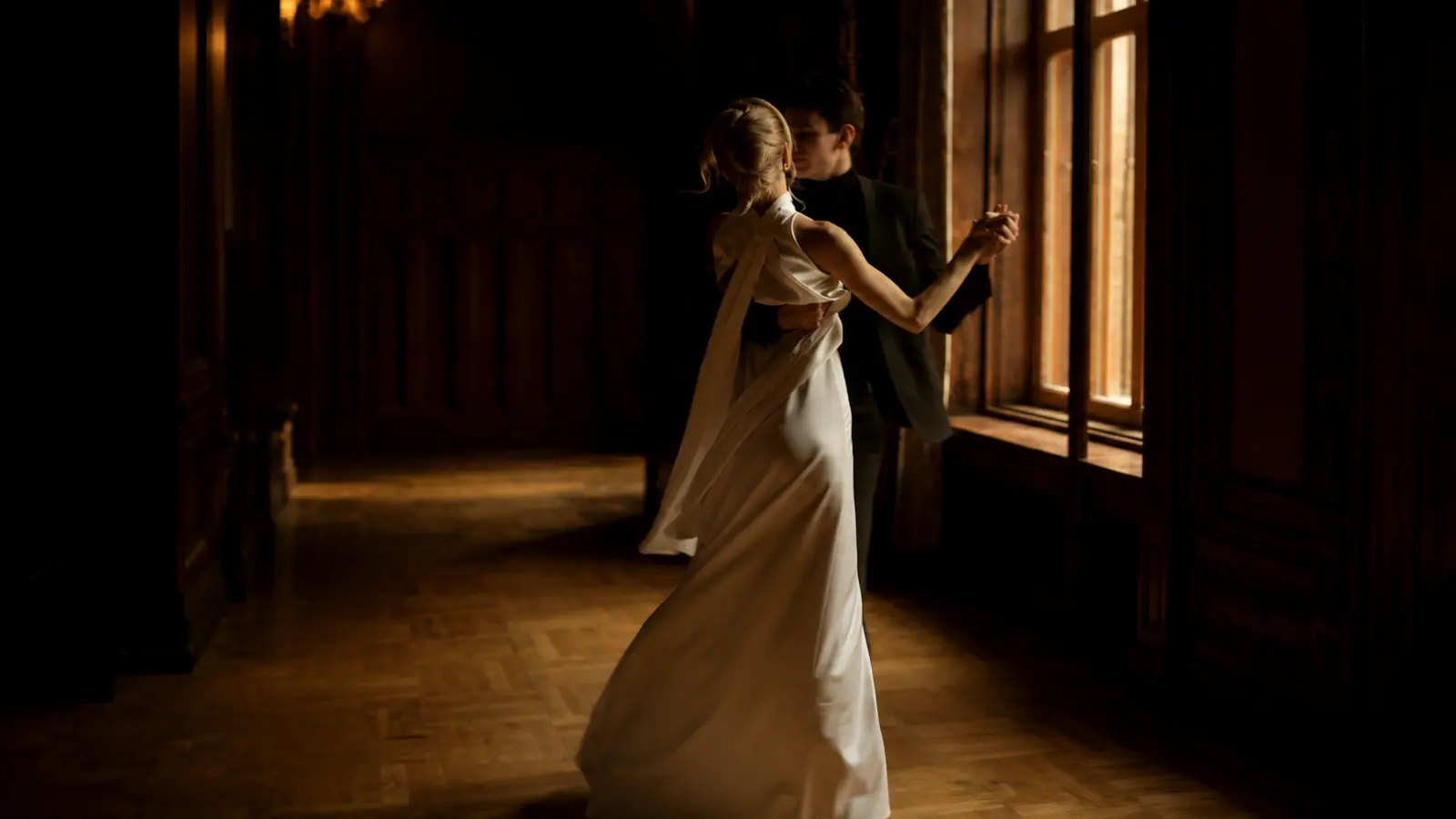
Instrumental wedding songs create a different kind of atmosphere than songs with lyrics.
Without vocals competing for attention, the music supports the moment instead of explaining it — which is why instrumental pieces work so beautifully during ceremony entrances, quiet emotional pauses, and elegant wedding settings where the focus should stay entirely on the people in the room.
This guide covers the best instrumental wedding songs for every part of the day as part of a complete collection of wedding songs for every moment of the day, including processionals, recessionals, preludes, ceremony interludes, cocktail hour music, and modern instrumental arrangements that work across classical, country, Christian, and contemporary weddings.
Why Instrumental Music Works at Weddings
Most people default to songs with lyrics because they are easier to identify and easier to justify. You can say exactly why “A Thousand Years” by Christina Perri is the right processional song — you can explain the lyrics, point to the meaning, and connect it directly to the relationship. Instrumental music requires a different kind of reasoning, which is why it often gets overlooked.
The case for instrumental is practical as much as emotional. Lyrics can distract. During a ceremony entrance, if guests are listening to the words of a song, they are processing language — meaning, story, the singer’s voice — at the same moment they are trying to absorb a purely visual and emotional moment. Instrumental music provides the emotional atmosphere without the cognitive load. The room hears something beautiful and directs all of that feeling toward what is happening in front of them rather than the speaker.
Instrumental music also solves the venue restriction problem. Most religious venues — Catholic churches, mainline Protestant denominations, many synagogues — have policies about secular music during the ceremony itself. Lyrics about romantic love are often not permitted during the service. An instrumental arrangement of the same song — no words — frequently satisfies the requirement and allows the couple to have the music they want in the form the venue will accept.
Finally, instrumental music scales to the setting in a way vocal tracks do not. A string quartet playing in a cathedral fills the space with authority. A solo acoustic guitar at a beach ceremony creates intimacy without fighting wind and ambient noise. The same song in the same arrangement rarely works equally well in both settings. Instrumental pieces, chosen for their acoustic fit with the space, consistently outperform vocal tracks in terms of auditory quality at live ceremonies.
When to Use Instrumental Songs — by Ceremony Moment
Instrumental music is appropriate at every point in the ceremony — but it performs differently at each one. Understanding what it is supposed to do in each moment makes the choice easier.
The prelude. The 20 to 30 minutes before the ceremony begins, and instrumental wedding prelude songs are often the cleanest choice while guests are being seated. This is the moment where instrumental music is most clearly the right choice — background music that creates atmosphere without demanding attention. Guests are talking, finding their seats, greeting each other. A vocal track during the prelude feels like it is competing for attention it will not get. Instrumental prelude music sets a mood without making a demand. Plan 4 to 6 pieces, each 3 to 5 minutes, at a moderate volume.
The wedding party processional. Is the music that plays as the wedding party walks in before the bride’s entrance, and instrumental wedding processional songs can set the tone without pulling attention away from the aisle. An instrumental here works particularly well because it sets the emotional tone for the main entrance without using the piece you have reserved for the bride. Many couples use a classical or semi-classical instrumental for the wedding party, then switch to a pop song (with or without lyrics) for the bride.
The bridal entrance. The most emotionally loaded moment of the ceremony. Both options work — instrumental and vocal — but they work differently. A vocal track gives the room something to connect to through lyrics; an instrumental piece keeps all attention on the bride. For couples who want the entrance to be purely visual and emotional, instrumental is the cleaner choice.
The ceremony interlude. Music played during the ring exchange, unity ceremony, signing of the marriage license, or a pause in the liturgy. This is where instrumental music is almost always the right choice. The moment has its own emotional weight — the music should hold the atmosphere, not compete with it. A quiet piano piece or string arrangement during the ring exchange creates a silence-without-silence that is very hard to achieve with a vocal track.
The recessional. Is the couple’s first walk out as married partners, so instrumental wedding recessional songs should feel joyful, immediate, and celebratory. Unlike the processional, the recessional is a celebration — instrumental choices here should be joyful, energetic, and immediate in their impact. Classical recessional pieces (Ode to Joy, the “Wedding March” from Mendelssohn, Trumpet Voluntary) provide that impact reliably. Upbeat instrumental arrangements of pop songs work for couples who want something contemporary without vocals.
Classical Instrumental Wedding Songs
Classical pieces have dominated American wedding ceremonies for over a century — not because couples default to tradition, but because the best classical wedding pieces were genuinely composed to be performed at significant events and do exactly what a wedding moment requires.
Canon in D — Johann Pachelbel
[Spotify Embed: Canon in D — Pachelbel]
The most requested instrumental wedding processional in the U.S. — and it has held that position for decades because the piece is genuinely exceptional for this purpose. The gradual harmonic build over the repeated bass line creates a sustained emotional rise that peaks exactly when the bride reaches the altar. Available in string quartet, solo piano, guitar, and full orchestral arrangements — each version creates a slightly different atmosphere in the same key of timeless formality. Works in any ceremony venue from cathedral to garden to beach.
Clair de Lune — Claude Debussy
[Spotify Embed: Clair de Lune — Debussy]
The most elegant piano piece in the wedding repertoire, and one of the most recognizable. The impressionistic quality — light and shadow, shifting harmonies — creates an atmosphere that feels simultaneously intimate and cinematic. Best used during the ceremony interlude rather than the processional, because the piece ebbs and flows rather than building steadily toward a peak. Works for indoor ceremonies with a quality acoustic piano available, or as a recorded track at any venue. One of the most requested pieces for wedding video soundtracks as well.
Air on the G String — Johann Sebastian Bach
[Spotify Embed: Air on the G String — Bach]
One of the most serene pieces in the classical repertoire — the sustained string melody over a walking bass line creates a gravity that suits the processional perfectly. Less commonly chosen than Canon in D, which makes it feel more personal without sacrificing the formal weight a wedding entrance requires. Works for string quartet and also for violin solo with piano accompaniment. Best for couples who want something classical but less ubiquitous.
Bridal Chorus (Here Comes the Bride) — Richard Wagner
[Spotify Embed: Bridal Chorus — Wagner]
The most recognized bridal entrance piece in Western culture. Some couples avoid it because it is expected; others embrace it for exactly that reason — it signals to every guest in the room that the moment has arrived, before the bride appears. The piece works best when the processional is short and the emotional impact needs to be immediate rather than built. Note: some churches restrict its use due to its operatic (non-liturgical) origin — confirm with your venue in advance.
Ode to Joy — Ludwig van Beethoven
[Spotify Embed: Ode to Joy — Beethoven]
The definitive classical recessional piece — the triumphant energy of the main theme is ideally suited to the couple’s first walk out as married partners. The piece is universally recognized, requires no introduction, and creates an immediate crowd response of joy and celebration. Works for any ceremony setting and with any ensemble from solo organ to full string orchestra. One of the cleanest instrumental recessional choices available because its emotional purpose is unambiguous.
Trumpet Voluntary — Jeremiah Clarke
[Spotify Embed: Trumpet Voluntary — Clarke]
Often attributed to Purcell but written by Clarke, this piece is a processional and recessional standard at formal American weddings. The bright trumpet tone creates an immediate sense of occasion — the piece announces the moment before it arrives. Works particularly well for outdoor ceremonies where the clear, projecting quality of the trumpet carries without amplification. Best suited to traditional and formal ceremonies; less appropriate for casual outdoor or beach settings.
Wedding March — Felix Mendelssohn
[Spotify Embed: Wedding March — Mendelssohn]
Written for A Midsummer Night’s Dream and used as a recessional since Queen Victoria’s daughter’s wedding in 1858, this is the most historically established recessional in the American wedding tradition. The triumphant march quality and the unmistakable opening bars create an instant shared recognition across every generation in the room. Some religious venues restrict Wagner’s Bridal Chorus but allow Mendelssohn’s Wedding March — confirm both before planning either.
Modern Instrumental Wedding Songs
Modern instrumental wedding songs bridge the emotional language of contemporary pop with the ceremony-appropriate quality of music without lyrics. The best ones are either instrumental versions of songs the couple already loves, or original pieces by contemporary composers who write specifically for this emotional register.
A Thousand Years (Instrumental) — Christina Perri
[Spotify Embed: A Thousand Years Instrumental — Christina Perri]
The most popular modern instrumental wedding processional in the U.S. — the original is already the most-requested pop processional, and the instrumental version satisfies both couples who want the song and venues that restrict lyrics. The tempo is ideal for a measured walk, and the emotional arc of the piece — the gradual swell toward the chorus — makes it one of the most structurally sound processional pieces in contemporary music. Available on most streaming platforms as a separate track from the original.
Perfect (Instrumental) — Ed Sheeran
[Spotify Embed: Perfect Instrumental — Ed Sheeran]
The waltz-like 3/4 time signature that makes the original so danceable translates directly to the instrumental version. For couples who want Ed Sheeran’s composition without vocals — particularly for religious ceremony settings — this is one of the most straightforward substitutions in wedding music planning. The piano arrangement is particularly effective; the guitar fingerpicking version suits outdoor ceremonies.
Turning Page — Sleeping at Last
[Spotify Embed: Turning Page — Sleeping at Last]
One of the most genuinely contemporary wedding processional pieces in the modern instrumental category. Sleeping at Last occupies a space between classical composition and indie singer-songwriter — the string arrangements and piano lines in Turning Page were clearly influenced by the kind of emotional arc that works for a ceremony entrance. Increasingly popular among couples with an indie or alternative sensibility who want something modern without the pop-cover quality of instrumental Ed Sheeran.
River Flows in You — Yiruma
[Spotify Embed: River Flows in You — Yiruma]
A contemporary piano piece that has become one of the most recognized instrumental works of the past two decades, particularly among couples who discovered it through YouTube covers or Twilight associations. The unhurried melody and the gentle repeated motif make it one of the most accessible modern instrumental ceremony pieces. Works for prelude, processional interlude, or ceremony quiet moment — less appropriate as a bridal entrance piece because it lacks the dynamic build that piece requires.
Experience — Ludovico Einaudi
[Spotify Embed: Experience — Ludovico Einaudi]
Einaudi has become the contemporary classical composer most associated with emotional ceremony music, and Experience is his most consistently used wedding piece. The building repetition and the gradual harmonic intensity create a processional quality that few contemporary pieces match. For couples who want something distinctly modern — not a pop cover, not traditional classical — but with the same structural purpose as Canon in D, this is the clearest equivalent.
Golden Hour (Instrumental) — JVKE
[Spotify Embed: Golden Hour — JVKE]
The original became one of the fastest-rising processional songs at American weddings in 2023 and 2024. The instrumental version works for religious venues or couples who want the warmth of the production without the vocal. The piano and string arrangement that underlies the original is already wedding-appropriate without any lyrical content — the instrumental version simply makes that explicit.
Instrumental Country Wedding Songs
Country instrumental wedding music works for couples who want the warmth of country wedding songs in a ceremony-friendly form that still fits formal venues and acoustic settings. The best options are either original acoustic guitar or fiddle pieces, or instrumental arrangements of country songs the couple already loves.
Acoustic Guitar Arrangements of Country Standards
The most effective country instrumental choices are fingerpicking or flatpicking acoustic guitar arrangements of songs couples already know. “Die a Happy Man” by Thomas Rhett, “From the Ground Up” by Dan + Shay, and “Then” by Brad Paisley all translate naturally to solo acoustic guitar — the chord progressions are simple enough that a skilled guitarist can render them recognizably without vocals. For couples using live musicians, request the specific country song as a guitar arrangement rather than searching for a pre-recorded instrumental version.
Fiddle-Driven Instrumental Pieces
Original fiddle pieces — reels, waltzes, and slow airs from the American country and Celtic-influenced tradition — work particularly well for outdoor and rustic ceremony settings. They do not require the guest to recognize a specific song; they create an atmosphere of warmth and heritage that reads as authentically country without depending on lyrical familiarity. Ask a local country or folk musician for their processional repertoire — many have pieces specifically composed for this purpose.
Tommy Emmanuel — Acoustic Guitar
[Spotify Embed: Angelina — Tommy Emmanuel]
Tommy Emmanuel’s acoustic fingerstyle recordings are not wedding songs in the traditional sense, but his warm, melodic approach to acoustic guitar creates exactly the kind of atmospheric background that a country-influenced ceremony prelude or cocktail hour needs. For couples who want live acoustic guitar with a distinctly American character, Emmanuel’s recordings are a useful reference point for briefing a guitarist on the style and tone you are looking for.
The Tennessee Waltz — Pee Wee King (instrumental)
[Spotify Embed: Tennessee Waltz Instrumental]
One of the most recognizable American country standards in an instrumental arrangement — the waltz form is inherently well-suited to ceremonial music, and the melody is sufficiently familiar that most American guests will recognize it without needing the lyrics to connect to it. Works for couples with Southern roots or who want something that honors American country music heritage in a formal ceremony context.
Christian Instrumental Wedding Songs
Christian instrumental wedding music serves two purposes: it honors the faith context of Christian wedding songs while satisfying venue requirements for liturgically appropriate ceremony music. The best choices in this category are either classical hymns arranged instrumentally, or contemporary worship songs rendered without vocals.
Great Is Thy Faithfulness — Thomas Chisholm (instrumental)
[Spotify Embed: Great Is Thy Faithfulness Piano Instrumental]
One of the most beloved hymns in American Protestant Christianity, and one of the most appropriate for a wedding ceremony prelude or processional. The piano arrangement is the most common form for ceremony use — it creates an atmosphere of reverence and gratitude without the congregational quality of the full choral version. Works for traditional and evangelical Protestant ceremonies alike.
Be Thou My Vision — Irish traditional (instrumental)
[Spotify Embed: Be Thou My Vision Instrumental]
An ancient Irish hymn with one of the most beautiful melodies in the Christian musical tradition. The harp arrangement is particularly appropriate — the instrument has historical and cultural resonance with the hymn’s Celtic origin. Works for ceremonies that emphasize the spiritual depth of the marriage covenant, and for couples with Irish or Celtic heritage who want to honor both their faith and their background simultaneously.
How Great Thou Art (instrumental)
[Spotify Embed: How Great Thou Art Piano Instrumental]
The traditional melody, in piano or string arrangement, creates one of the most solemn and beautiful ceremony interludes available for a Christian wedding. Works best as a prelude piece or during the ring exchange rather than as a processional, because the melodic arc of the piece is reflective rather than building toward an entrance. The arrangement matters significantly — request the specific instrumentation from your musician in advance.
Oceans (Where Feet May Fail) — Hillsong United (instrumental)
[Spotify Embed: Oceans Where Feet May Fail Piano Instrumental — Hillsong United]
The most widely used contemporary worship song in instrumental form at American Christian weddings. The piano and cello arrangement removes the congregational sing-along quality of the original and replaces it with something more private and meditative — appropriate for a ceremony where the couple’s faith is being expressed rather than performed for the audience. Works for evangelical, Pentecostal, and contemporary non-denominational settings.
Here I Am to Worship — Tim Hughes (instrumental)
[Spotify Embed: Here I Am to Worship Instrumental]
A contemporary worship standard that translates naturally to instrumental — the melody is simple and recognizable enough that a piano or string arrangement communicates the emotional content without requiring vocals. Works for modern church settings where the congregation is familiar with the song and will recognize the melody as an act of worship even without the lyrics.
Choosing by Instrument Type
The instrument matters as much as the piece. The same song sounds completely different on a string quartet versus a solo guitar versus a piano — and one of those will fit your venue and setting significantly better than the others.
String quartet. The most versatile and most formal live ensemble for a wedding ceremony. Works for any size venue, any repertoire from Bach to Bruno Mars, and any ceremony style from traditional Catholic to outdoor non-denominational. The sound fills a space without amplification and has a physical presence — you feel the strings as well as hear them. The most expensive live music option; book 6 to 12 months in advance for premium ensembles. Good for: formal indoor ceremonies, large venues, couples who want the broadest repertoire flexibility.
Solo violin or viola. More intimate than a quartet, less expensive, and better suited to smaller venues where a full ensemble would overwhelm the space. The solo violin carries the melody clearly without accompaniment, though a piano or guitar accompanist adds harmonic warmth. Good for: intimate ceremonies, smaller chapels, outdoor settings with limited acoustic support.
Solo acoustic guitar. The most versatile single instrument for non-classical settings. Works for outdoor ceremonies, casual venues, bohemian and rustic weddings, and any setting where a string ensemble would feel out of place. A skilled fingerstyle guitarist can cover everything from classical pieces to contemporary pop covers with genuine facility. Less formal than strings; more personal and warm. Good for: outdoor weddings, beach ceremonies, barn and vineyard settings, couples with a folk or indie aesthetic.
Piano. Works best in indoor venues with a quality acoustic piano available — a digital piano or keyboard does not create the same acoustic presence and registers as forced in settings where a baby grand would be natural. For venues with a quality instrument, solo piano is one of the most emotionally resonant ceremony music options available. Good for: church ceremonies with quality instruments, formal indoor venues, prelude and ceremony interlude music.
Harp. The most elegant and least portable option. Works beautifully for formal indoor ceremonies and conveys an atmosphere of refinement that few other instruments match. The practical limitations — weight, tuning requirements, venue access — make it a less common choice than strings or piano, but for the right ceremony in the right setting, a solo harp is distinctive in a way that other instruments are not. Good for: formal ballroom ceremonies, high-end wedding venues, couples who want something memorable and unusual.
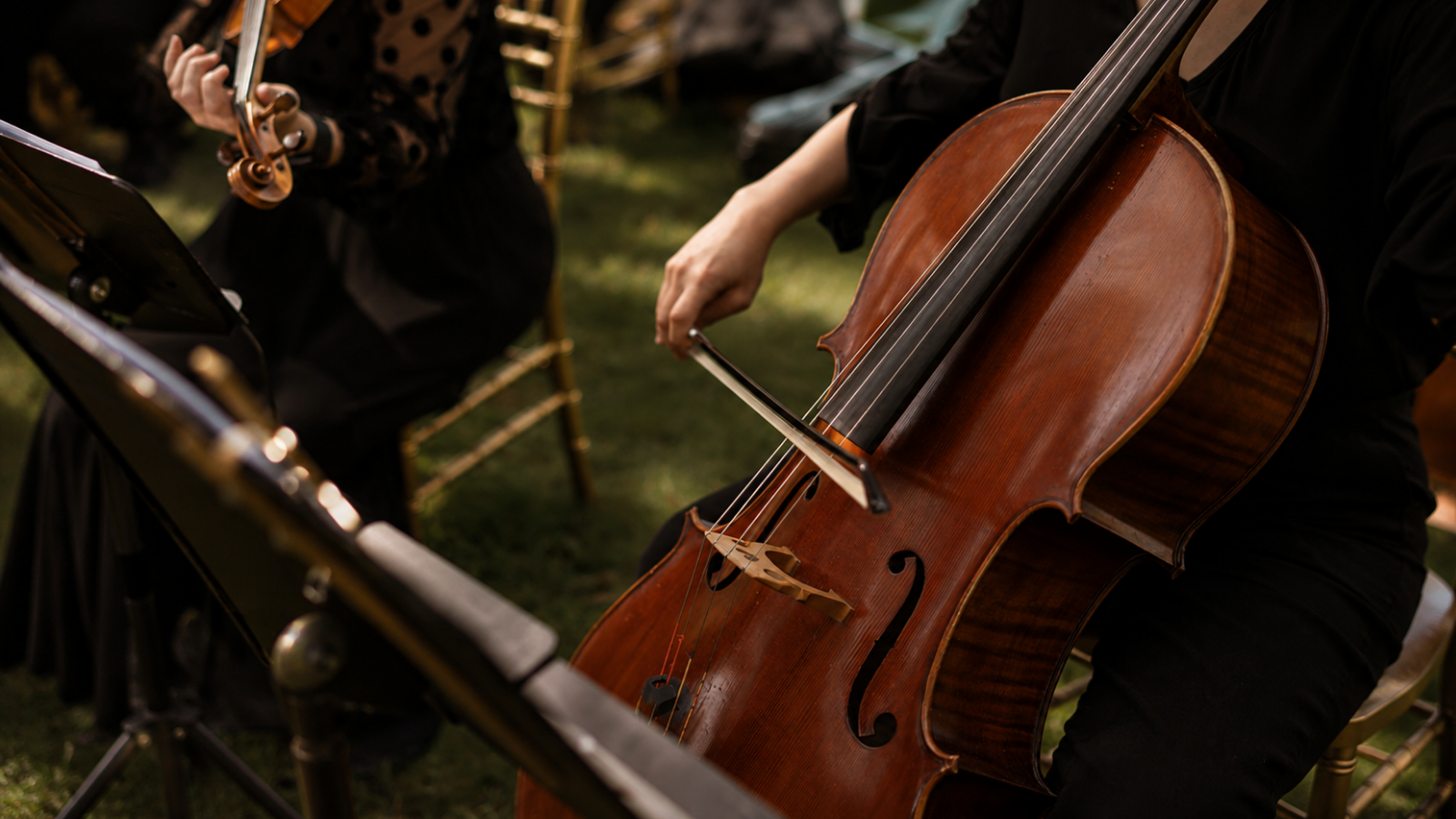
Cello. The cello has a warmth and depth that makes it unusually effective as a solo ceremony instrument. The lower register creates a grounded, full sound that solo violin lacks, and cello solos have a particular resonance for ceremony interludes and prelude music. A cello and piano duo is one of the most effective small ensemble combinations for intimate ceremonies. Good for: ceremony interludes, prelude music, smaller indoor venues, couples who want something quieter and deeper than violin.
Live Musicians vs. Recorded Instrumental Tracks
This is the most practical decision in planning instrumental wedding music, and the answer depends on four factors: budget, venue acoustics, the repertoire you want, and how much coordination you are willing to do before the wedding day.
Live musicians create an atmosphere that recordings cannot replicate. The physical presence of performers in the space, the slight imperfections and dynamics of live playing, and the ability for musicians to adjust tempo in real time for the actual pace of the processional walk are all significant advantages. A wedding officiant who slows down, a flower girl who lingers, a bride who takes longer than rehearsed — a live musician adapts. A recorded track does not.
Recorded tracks offer more repertoire options and more reliability. Any song that exists in an instrumental version is available as a recorded track. The performance will be exactly as planned regardless of nerves, weather, or last-minute changes. The cost is significantly lower than live musicians. For outdoor weddings with amplification systems already in place, the quality difference between a well-produced instrumental recording and live musicians is smaller than couples often assume.
The hybrid approach is increasingly common. Live musicians for the ceremony (processional, interlude, recessional), recorded music for the cocktail hour and reception. This concentrates the budget where the live performance has the most impact — the moments guests are seated and listening — and uses recorded music for the reception where DJ mixing and song variety matter more than live performance.
For budget planning: string quartets at American weddings typically cost between $800 and $2,500 for a 2-hour ceremony booking, depending on location, experience level, and travel requirements. Solo musicians run $300 to $1,000 for the same window. Book premium musicians 9 to 12 months in advance; mid-tier 6 months out.
Instrumental Wedding Songs Playlist
Listen to the full playlist of instrumental wedding songs below, featuring classical processionals, modern instrumental covers, piano ceremony music, string quartet arrangements, acoustic guitar pieces, and elegant instrumental songs that create atmosphere without distracting from the moment itself.
Final thoughts
The best instrumental wedding songs do something vocal music often cannot: they allow the emotion of the moment to exist without interruption.
Instead of telling guests what to feel through lyrics, instrumental music creates space for the ceremony, the room, and the people inside it to carry the meaning themselves.
That is why instrumental wedding music continues to endure across every wedding style — from formal cathedral ceremonies to intimate outdoor celebrations. When chosen well, it makes the atmosphere feel timeless rather than simply beautiful.
Frequently asked questions (FAQ)
Do wedding processional songs have to be instrumental?
No. Many couples use songs with lyrics during the processional, but instrumental versions are often preferred because they create atmosphere without distracting from the ceremony itself.
What is the most popular instrumental wedding song?
“Canon in D” by Pachelbel remains the most popular instrumental wedding song in the United States, especially for the bridal processional.
What instruments are most commonly used at weddings?
String quartets, solo violin, piano, harp, cello, and acoustic guitar are the most common live instruments used during wedding ceremonies and cocktail hours.
What are good modern instrumental wedding songs?
Popular modern choices include instrumental versions of “A Thousand Years,” “Perfect,” “Golden Hour,” and “Turning Page.” These songs combine contemporary emotion with a ceremony-friendly atmosphere.
Should you use live musicians or recorded instrumental music at a wedding?
Live musicians usually create a more emotional and elegant atmosphere, while recorded music is more affordable and easier to manage logistically. The best choice depends on budget, venue, and ceremony style.
About the Author
Débora Justo
Founder and editor of EVORÉ, creating practical wedding planning resources, thoughtful inspiration and useful tools for the decisions that shape a celebration.
Read more about the author →