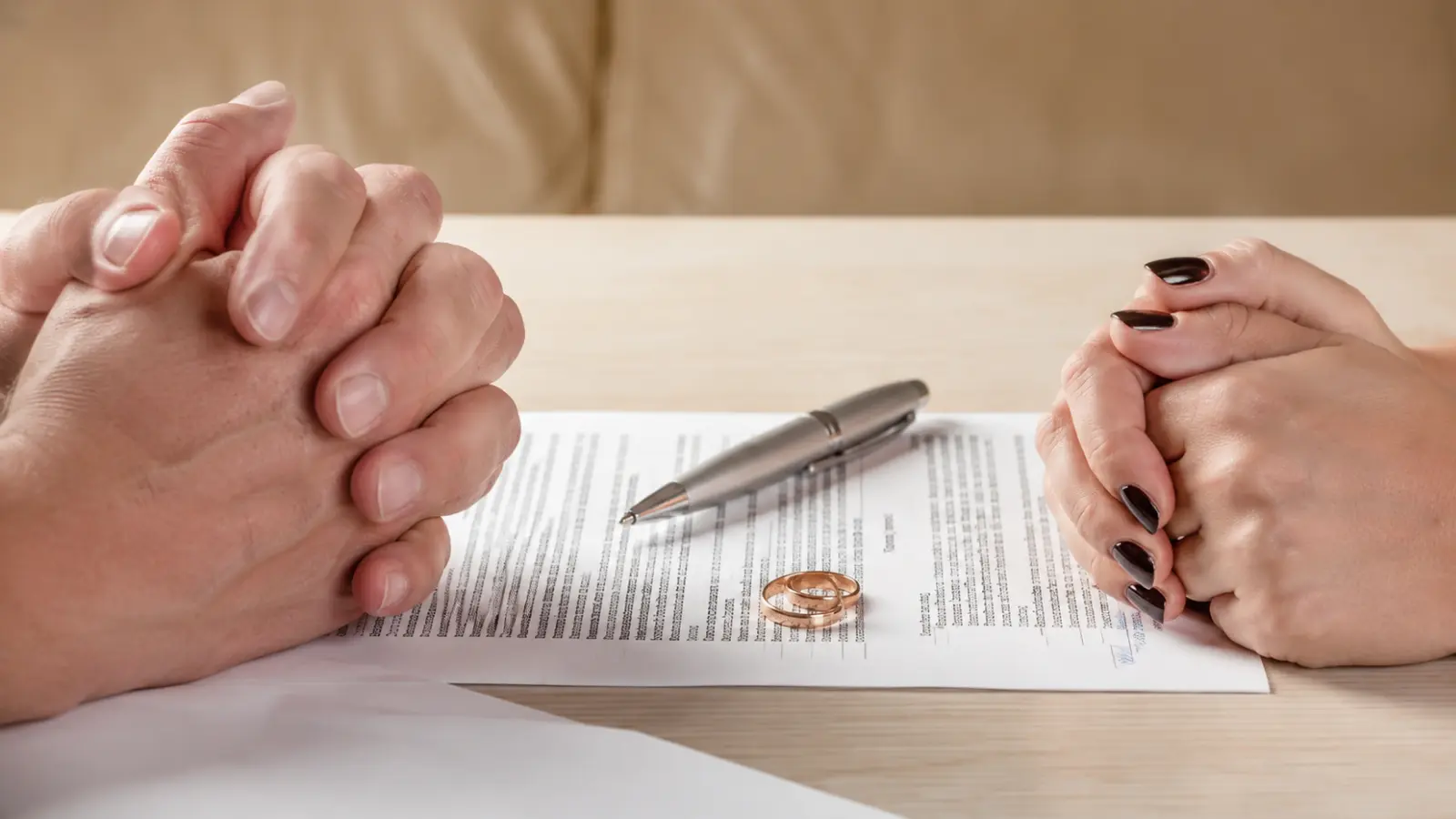

An uncontested divorce is a divorce case in which no issue required for final judgment remains disputed. The spouses may have a complete agreement, qualify for a joint filing procedure, or use another non-disputed route recognized by the court, but agreement alone does not eliminate the legal process.
Even when both spouses agree, the case may still require residency and jurisdiction, approved court forms, filing fees, valid service or waiver, financial disclosure, child-related documents, a settlement agreement, waiting periods, judicial review, and a final divorce decree. The exact procedure depends on state law and the court handling the case.
This guide explains how uncontested divorce works, what makes a case truly uncontested, which issues generally must be resolved, how filing, service, disclosure and settlement fit together, what happens when children are involved, whether the process can be completed online or without a lawyer, and what must happen before the divorce is legally final.
What Is Uncontested Divorce?
The common search “what is uncontested divorce” has a simple starting answer: it is a divorce the court can finish without deciding a live dispute between the spouses. The exact procedural category depends on state law.
A case may be treated as uncontested because:
- both spouses sign a complete settlement agreement;
- both spouses file jointly under an available procedure;
- the responding spouse consents and makes no competing request;
- the responding spouse defaults after legally valid service, where the court classifies that route as uncontested.
The last category is important. Default does not necessarily mean the spouses reached an agreement. It means the served spouse failed to respond or appear as required, and the filing spouse asks the court to proceed under default rules. Some jurisdictions group this with uncontested matters; others use separate terminology and procedures.
The official New York Courts uncontested-divorce resource, for example, identifies consent, default, written settlement, and qualifying joint filing as possible uncontested routes. That definition should not be copied into another state’s case without checking its law.
Uncontested vs Contested Divorce
The difference in uncontested vs contested divorce is whether a material issue remains for the court to decide.
In an uncontested case, the required terms are resolved or the matter qualifies for an authorized default or joint route. The court reviews documents and may hold a short hearing, but it does not conduct a trial to decide competing positions.
What Makes a Case Contested
In a contested case, the spouses disagree about at least one required issue, such as property, debt, support, parenting, legal grounds where relevant, or the wording of the proposed judgment. The case may need additional disclosure, conferences, motions, mediation, evidence, and trial.
A case can change categories. It may start contested and become uncontested after a complete settlement. It may start as agreed and become contested when new information appears, a spouse withdraws from an unsigned proposal, or the court rejects incomplete terms.
Who May Qualify?
Basic eligibility still begins with jurisdiction. At least one spouse must usually meet the state’s residency requirement, the case must be filed in the proper court, and the petition must state a legally accepted ground.
Finding the Right Procedural Route
The spouses also need a route recognized by that jurisdiction. Massachusetts, for example, provides a joint no-fault process when both spouses agree that the marriage has irretrievably broken down and have a written agreement addressing the required issues. The official Massachusetts 1A divorce guide lists the state-specific documents and court steps.
Distinguishing Uncontested Divorce From Similar Legal Statuses
A legal separation or annulment should not be mislabeled as an uncontested divorce merely because both spouses agree. The comparison of legal separation vs divorce explains whether the marriage ends, while the guide to annulment vs divorce addresses the different legal basis for asking a court to treat a marriage as invalid or voidable.
Ending a registered domestic partnership may also require a different filing route. The comparison of domestic partnership vs marriage explains why the legal status and creating jurisdiction must be identified before using divorce forms.
An uncontested route is most workable when both spouses have reliable information, understand the documents, can participate voluntarily, and have resolved every issue necessary for judgment. It may be inappropriate when agreement results from intimidation, incomplete disclosure, misunderstanding, or inability to negotiate safely.
What Must Be Agreed?
Agreement on the desire to divorce is not always enough. The spouses generally must resolve every issue the court is required to include in the judgment or follow the jurisdiction’s authorized default procedure.
| Issue | Must Be Agreed? | Typical Document | Court Involvement |
|---|---|---|---|
| Ground and requested divorce | Usually no dispute | Petition, complaint or joint petition | Confirms jurisdiction and legal basis |
| Property and debt | Yes, if they require allocation | Settlement and judgment terms | Reviews and incorporates approved terms |
| Spousal support | Yes, including any lawful waiver | Agreement and financial forms | Reviews requested order |
| Children | Parenting and support terms usually resolved | Parenting plan and support worksheet | Applies legal standards independently |
| Name restoration | Requested by the person changing a name | Petition and proposed judgment | Includes approved restoration language |
| Final language | Yes in an agreed case | Proposed decree or judgment | Signs, rejects or requests correction |
A prenuptial or postnuptial contract may affect which terms require special attention. A prenuptial agreement should be disclosed and reviewed rather than summarized from memory or assumed automatically enforceable.
The Uncontested Divorce Process
The uncontested divorce process generally follows these stages:
- confirm residency, jurisdiction, venue, grounds, and the available uncontested route;
- gather financial, property, debt, insurance, agreement, and child-related information;
- complete the petition, complaint, or joint filing and all required accompanying forms;
- file with the proper court and pay the fee or request a waiver;
- complete service, acknowledgment, waiver, consent, or another authorized notice procedure;
- exchange and file required disclosures or certifications;
- prepare and sign the settlement and proposed judgment where required;
- complete the waiting period, class, review, or hearing;
- obtain the entered final decree and confirm its effective date.
The sequence can change for a joint petition or default. Official instructions control which documents are filed together, which are exchanged privately, which signatures require notarization, and when the proposed judgment may be submitted.
Before You File Uncontested Divorce Papers
Before spouses file uncontested divorce papers, they should identify whether the court accepts an individual petition, a joint petition, or both. A joint filing may use a different packet and may require a completed agreement at the beginning.
The opening documents commonly provide basic information about the marriage, separation, residence, children, property, support, prior cases, and requested relief. Local cover sheets, confidential-information forms, insurance notices, statistical forms, and automatic-order notices may also be required.
Do not use a universal packet. A correct document from another state can still be invalid in the court where the case belongs.
Service, Acceptance and Waiver
An agreed case does not automatically eliminate notice. When one spouse files as petitioner, the other may still need to receive formal service or sign an authorized acknowledgment, acceptance, appearance, consent, or waiver.
A waiver of service usually addresses the delivery method. It should not be treated as a waiver of property, support, parenting, notice, appeal, or other legal rights unless the document expressly and lawfully has that effect.
Service rules identify who may deliver the papers, what must be served, when it must happen, and how proof reaches the court. A spouse’s informal statement that the papers were received may not satisfy those requirements.
Default Requires Particular Caution
The filing spouse normally must prove valid service, wait for the response deadline, submit default documents, and establish the requested relief. A judge can reject unsupported, incomplete, unlawful, or one-sided proposed terms even when no response was filed.
Financial Disclosure Still Matters
Agreement is meaningful only when both spouses understand the relevant facts. Many courts require financial disclosures even in an uncontested case.
What Disclosure Typically Includes
Disclosure may include income, expenses, bank accounts, investments, real estate, vehicles, businesses, retirement benefits, insurance, taxes, debts, and supporting records. Some forms are filed with the court; others are exchanged between the spouses with only proof or certification filed.
The official California Courts financial-disclosure guide illustrates how one state treats disclosure as a separate required stage. The local court’s instructions determine the documents and deadlines elsewhere.
Existing Agreements Don’t Replace Disclosure
A postnuptial agreement or prior financial arrangement does not necessarily replace current disclosure. Its effect and enforceability may themselves require review.
The Settlement Agreement
A settlement agreement records the terms the spouses want incorporated into the final judgment. Depending on the case, it may address property, debt, support, insurance, taxes at a general allocation level, children, fees, name restoration, and implementation steps.
The agreement should be complete, internally consistent, signed as required, and compatible with the proposed decree. Vague language can produce practical disputes even when both spouses intended to agree.
From Signed Agreement to Court Approval
California Courts provides an official example of the next procedural step: spouses who agree on all issues can ask the court to finish the case based on their written divorce agreement. Court review and final forms remain necessary.
This article does not recommend settlement positions, percentages, waivers, or division methods. Independent review may be valuable before signing terms that affect long-term rights.
When the Spouses Have Children
An uncontested case with children usually requires agreement on parenting schedules, decision-making, exchanges, communication, support, health coverage, expenses, and any other issue required by state law.
The judge does not approve child-related terms only because both parents signed. The court applies the jurisdiction’s legal standards, required calculations, and child-focused review. Missing terms or unsupported departures can delay judgment.
Parenting jurisdiction may also depend on where the child has lived, not only where a spouse meets divorce residency. Recent interstate or international moves, existing orders, safety concerns, or disputed parentage can make a supposedly uncontested case inappropriate for a simple packet.
Waiting Periods and Court Review
Uncontested does not mean immediate. A state may impose a minimum period that runs from filing, service, separation, or another event. Court processing time is separate from the legal waiting period.
The judge or court staff may review jurisdiction, service, disclosures, signatures, agreement terms, child-support calculations, parenting provisions, and the proposed judgment. Missing information can lead to rejection or a correction request rather than approval.
A court may finalize an agreed case on papers, require a brief hearing, or use a remote appearance. The hearing may confirm identity, residency, voluntariness, the breakdown of the marriage, disclosure, and understanding of the agreement.
The Final Divorce Decree
The marriage remains legally intact until the court enters the required judgment and any state-specific finality condition is satisfied. A filed petition, signed agreement, completed waiting period, or hearing is not necessarily the end date.
The guide to divorce decree vs divorce certificate explains why the detailed court order and the shorter vital-record proof available in some states are different documents. Keep the entered decree and obtain certified copies when needed.
Read the effective date and post-judgment instructions before remarrying, transferring property, changing beneficiaries, or updating legal records. When the decree restores a former name, the agency-by-agency sequence is similar to the record updates described in EVORÉ’s legal name-change guide, although the supporting court document is different.
Uncontested Divorce Online
Uncontested divorce online can mean online form preparation, electronic filing, fee payment, case tracking, remote hearings, or a commercial document service. These are separate functions.
An official online interview may prepare forms without filing them. E-filing may submit documents without completing service. A remote hearing may still require advance exhibits and signed originals.
Two State Examples of How This Works
New York Courts offers an official DIY uncontested-divorce program for eligible users, while Massachusetts separately identifies divorce case types that may use its Probate and Family Court e-filing system. Those examples show why users must verify both eligibility and function.
A commercial service cannot guarantee jurisdiction, enforceability, court acceptance, complete disclosure, or a particular result. Confirm the website domain and court instructions before entering personal or financial information.
Uncontested Divorce Without Lawyer Representation
An uncontested divorce without lawyer representation is possible in many courts through self-representation. Official packets and self-help centers can explain forms and procedure, but they do not provide individualized legal judgment.
Legal review becomes more important when the case includes:
- real estate, retirement benefits, a business, trust, inheritance, or substantial debt;
- children, unusual support terms, relocation, or another existing order;
- a prenup, postnup, separation agreement, or disputed disclosure;
- domestic violence, coercion, fear, or inability to participate equally;
- military, tribal, immigration, bankruptcy, interstate, or international issues;
- unclear language, missing information, or pressure to sign quickly.
A lawyer may review only part of the case where limited-scope services are allowed. People who cannot afford private counsel can check court self-help programs and the official USAGov legal-aid directory.
When Uncontested Stops Being Appropriate
The streamlined route may stop fitting when:
- a spouse disputes any required term;
- financial information is missing, inconsistent, or concealed;
- one spouse cannot understand or voluntarily accept the agreement;
- service is disputed or the other spouse cannot be located;
- the proposed terms do not comply with law or court requirements;
- child jurisdiction, safety, or another complex legal issue appears;
- the court rejects the packet and the spouses cannot agree on corrections.
That change does not necessarily mean the entire case will go to trial. The unresolved issue may later be settled, mediated, corrected, or decided by the court. It does mean the spouses should stop representing the matter as fully uncontested until the problem is resolved.
Uncontested Divorce Checklist
- Confirm jurisdiction. Verify residency, venue, grounds, and the correct court.
- Identify the route. Determine whether the court recognizes joint, agreed, consent, or default procedures.
- Gather complete information. Include property, debt, income, benefits, insurance, agreements, and child-related records.
- Resolve every required issue. Agreement to divorce alone may not qualify.
- Use current official forms. Check edition dates, signatures, notarization, and accompanying documents.
- Complete lawful notice. Follow service, acceptance, appearance, or waiver rules exactly.
- Exchange disclosures. Do not assume agreement removes financial duties.
- Submit final papers. Include the agreement, proposed judgment, and required certifications.
- Confirm finality. Read the entered decree and effective date before relying on divorced status.
Working through this list before filing is what actually keeps a case uncontested, rather than assuming agreement alone will carry it to judgment.
Agreement Simplifies the Case, but the Court Still Finalizes It
An uncontested divorce can make the process more streamlined because the court may not need to decide disputed issues, but it does not remove the legal requirements that apply to the case. Jurisdiction, approved forms, service, disclosure, required agreements, waiting periods, judicial review, and the final judgment still matter.
Before relying on an uncontested route, confirm that every issue required for judgment has been resolved or otherwise qualifies for the court’s authorized procedure. Then follow the official court instructions through finalization and verify the effective date of the entered divorce decree before treating the marriage as legally ended.
Frequently asked questions (FAQ)
What is an uncontested divorce?
An uncontested divorce is a divorce case in which no issue required for final judgment remains disputed. The spouses may have a complete written agreement, use an authorized joint procedure, or proceed through another route the jurisdiction treats as uncontested. The court still requires the correct forms, procedure, review, and final decree.
What do spouses have to agree on for an uncontested divorce?
The spouses generally need a lawful resolution of every issue the court must address before entering judgment. Depending on the case, that may include property and debt division, spousal support, parenting arrangements, child support, insurance, name restoration, and the language of the final judgment. Agreement only on ending the marriage may not be enough.
Is an uncontested divorce always faster?
It is often more streamlined than a contested divorce because the court may not need to decide disputed issues at trial. However, residency requirements, service, financial disclosures, mandatory waiting periods, parenting requirements, hearings, incomplete paperwork, judicial review, and local court schedules can still affect how long the case takes.
Can you get an uncontested divorce without a lawyer?
Many courts allow spouses to represent themselves and use official forms or self-help resources. Legal review can still be important when the divorce involves real estate, retirement accounts, a business, substantial debt, support, children, a prenuptial or postnuptial agreement, incomplete financial information, abuse, or interstate or international issues.
Can an uncontested divorce be completed online?
Sometimes. A court may offer online form preparation, electronic filing, online fee payment, remote hearings, or only some of those services. Online access does not eliminate requirements such as service, financial disclosure, signatures, waiting periods, settlement documents, court review, or entry of the final judgment.
What happens if spouses stop agreeing during an uncontested divorce?
If a required issue becomes disputed, the case may no longer qualify for the uncontested procedure. The court may move the case into a contested process involving additional responses, disclosure, negotiation, mediation, motions, hearings, or trial. The case can become uncontested again if all necessary issues are later resolved.

About the Author
Débora Justo
Founder and editor of EVORÉ, creating practical wedding planning resources, thoughtful inspiration and useful tools for the decisions that shape a celebration.
Read more about the author →