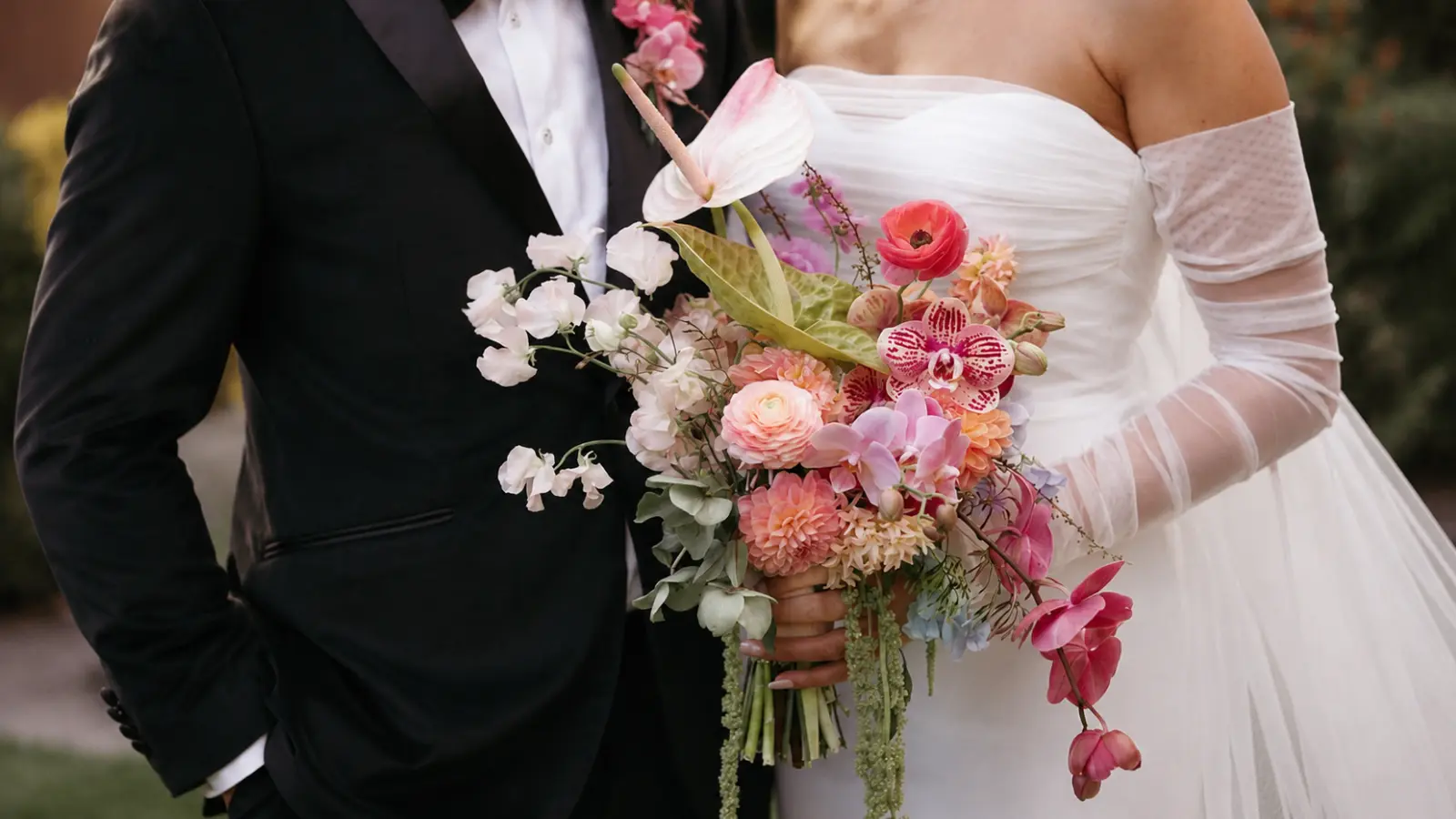
Wedding bouquets are one of the most important floral elements of a wedding, bringing together your dress, color palette, venue, and personal style. From timeless round bouquets to dramatic cascading designs, the right bouquet becomes part of your wedding story and appears in nearly every photograph throughout the day.
Choosing a bouquet involves much more than selecting beautiful flowers. Shape, size, seasonal availability, color, budget, and even how the bouquet complements your dress all influence the final result. Understanding these decisions before meeting with your florist makes the entire planning process easier and helps you create a bouquet that feels cohesive with the rest of your celebration.
This complete guide covers everything you need to know about wedding bouquets, including bouquet styles, the best flowers, color palettes, seasonal ideas, bridesmaid bouquets, fresh versus artificial flowers, realistic costs, preservation options, and practical advice for choosing the perfect bouquet for your wedding.
What Is a Wedding Bouquet?
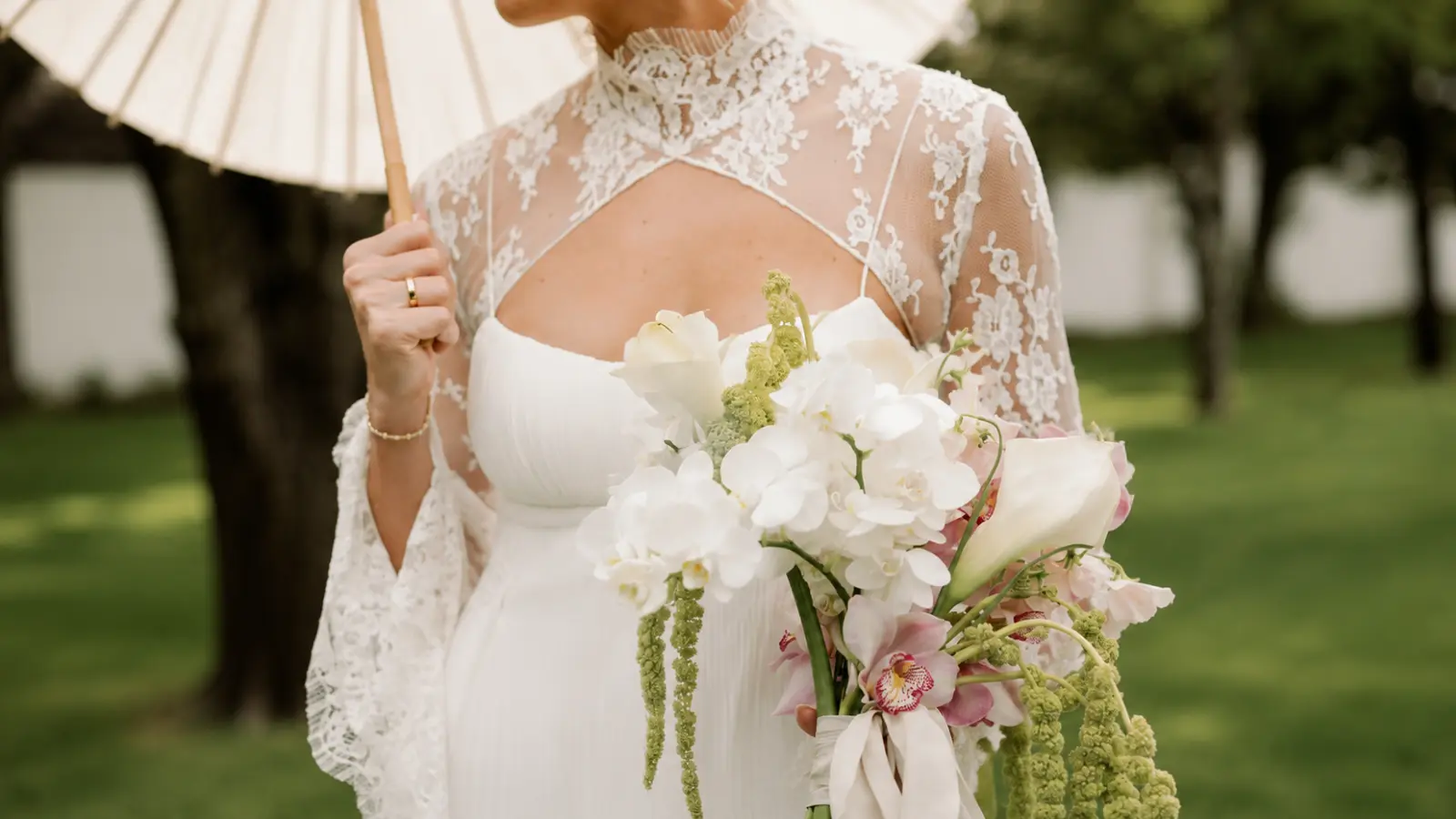
A wedding bouquet is an arrangement of flowers — and sometimes greenery, ribbons, branches, or other elements — carried by the bride and members of the wedding party during the ceremony. It’s one of the oldest traditions in weddings, with roots going back centuries across many different cultures.
But beyond the history, the bouquet serves a very practical role in modern weddings. It adds vertical visual interest to the bridal look, gives the bride something to do with her hands during the ceremony, and anchors the overall floral story of the day. A well-chosen bouquet connects the dress, the venue, the season, and the color palette in a way that no other single element does.
What makes a wedding bouquet different from a regular flower arrangement is intention. Every flower, color, and texture is chosen to support a specific aesthetic — and to hold up beautifully for several hours under lights, cameras, and the warmth of a full room.
Wedding Bouquet vs. Bridal Bouquet
These two terms get used interchangeably, and in most conversations that’s fine. But if you want to be precise about it: a bridal bouquet refers specifically to the bouquet carried by the bride. Wedding bouquets, as a broader category, includes all the personal flower arrangements at a wedding — the bride’s, the bridesmaids’, and the flower girl bouquet.
When you’re talking to a florist, they’ll understand either term. When you’re searching online for inspiration, using “bridal bouquet” tends to return results focused on the bride’s arrangement specifically, while “wedding bouquets” may include bridesmaids and other wedding party flowers. Both are useful searches, just for slightly different purposes.
Types of Wedding Bouquets
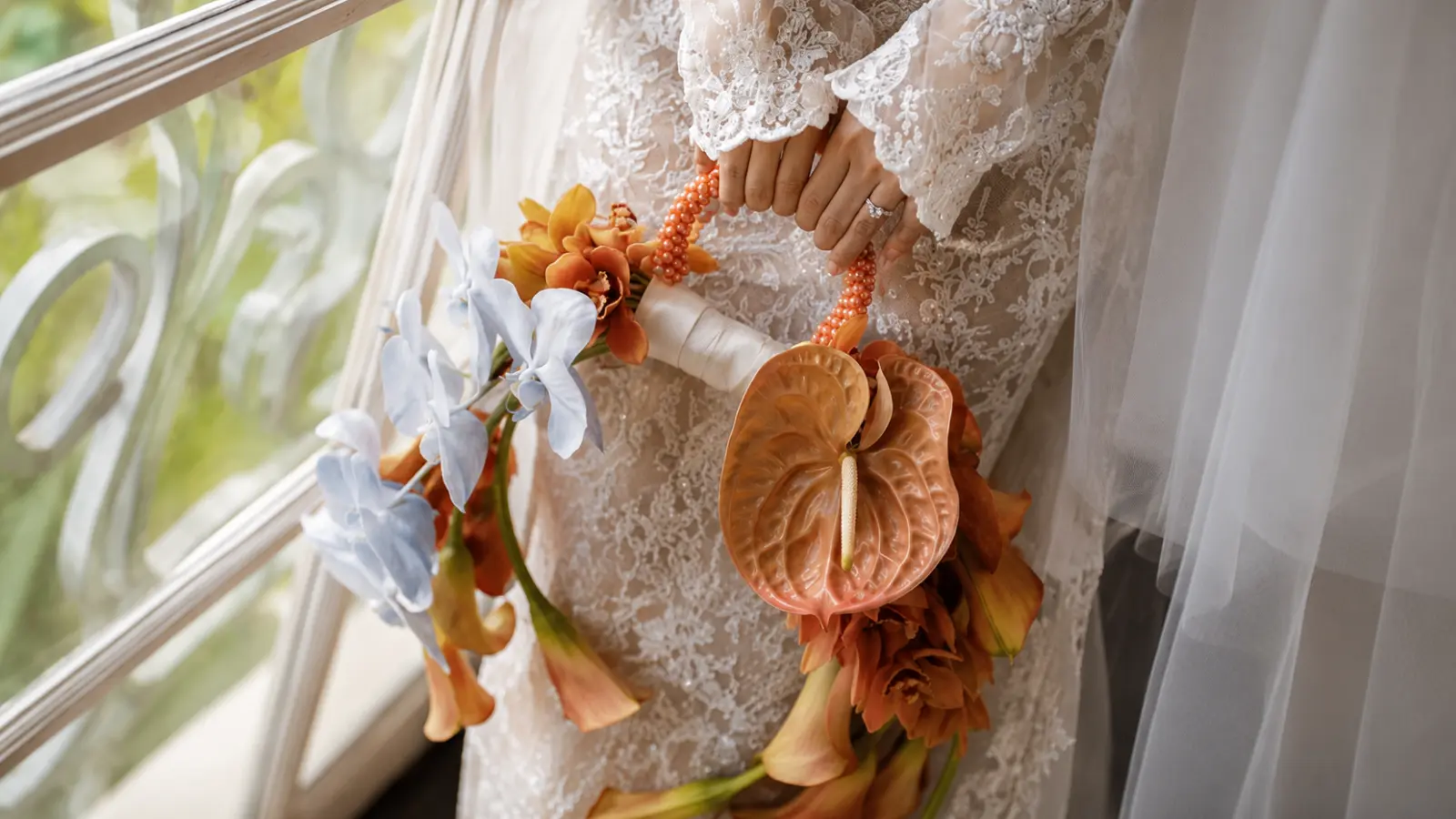
Bouquet shapes have evolved considerably, but a handful of bridal bouquet styles remain consistently popular because they work across a wide range of wedding aesthetics. Understanding the difference between them before your florist appointment will make the conversation much more productive.
| Style | Shape | Best For |
|---|---|---|
| Round / Posy | Compact, dome-shaped | Most dress styles; clean, classic look |
| Cascade / Waterfall | Flowing downward, structured or loose | Ball gowns, formal ceremonies |
| Hand-Tied / Garden | Loose, slightly asymmetrical | Outdoor, garden, or relaxed weddings |
| Nosegay | Tight, small round cluster | Minimalist looks; also popular for bridesmaids |
| Arm Sheaf / Presentation | Long stems cradled in the arm | Sheath or minimalist gowns; editorial aesthetic |
| Crescent | Curved, asymmetric, C-shaped | Formal or vintage-inspired weddings |
| Single Stem | One or a few dramatic blooms | Minimalist, modern, or micro-wedding brides |
The most-requested style by far is the round bouquet — and for good reason. It’s balanced, it photographs well at almost any angle, and it works with nearly every dress silhouette. Cascading wedding bouquets have had a quieter moment recently, but it’s making its way back in formal settings with a more organic, less architectural feel than the structured cascades of the past. The arm sheaf, also called a presentation bouquet, has grown in popularity among brides who want something that feels less like a prop and more like an extension of their style.
When choosing between styles, let your dress lead. A ball gown can support a larger cascade or structured round bouquet. A sleek column dress pairs better with a single stem, nosegay, or loose arm sheaf — something that doesn’t compete with the clean lines of the silhouette.
Best Flowers for Wedding Bouquets
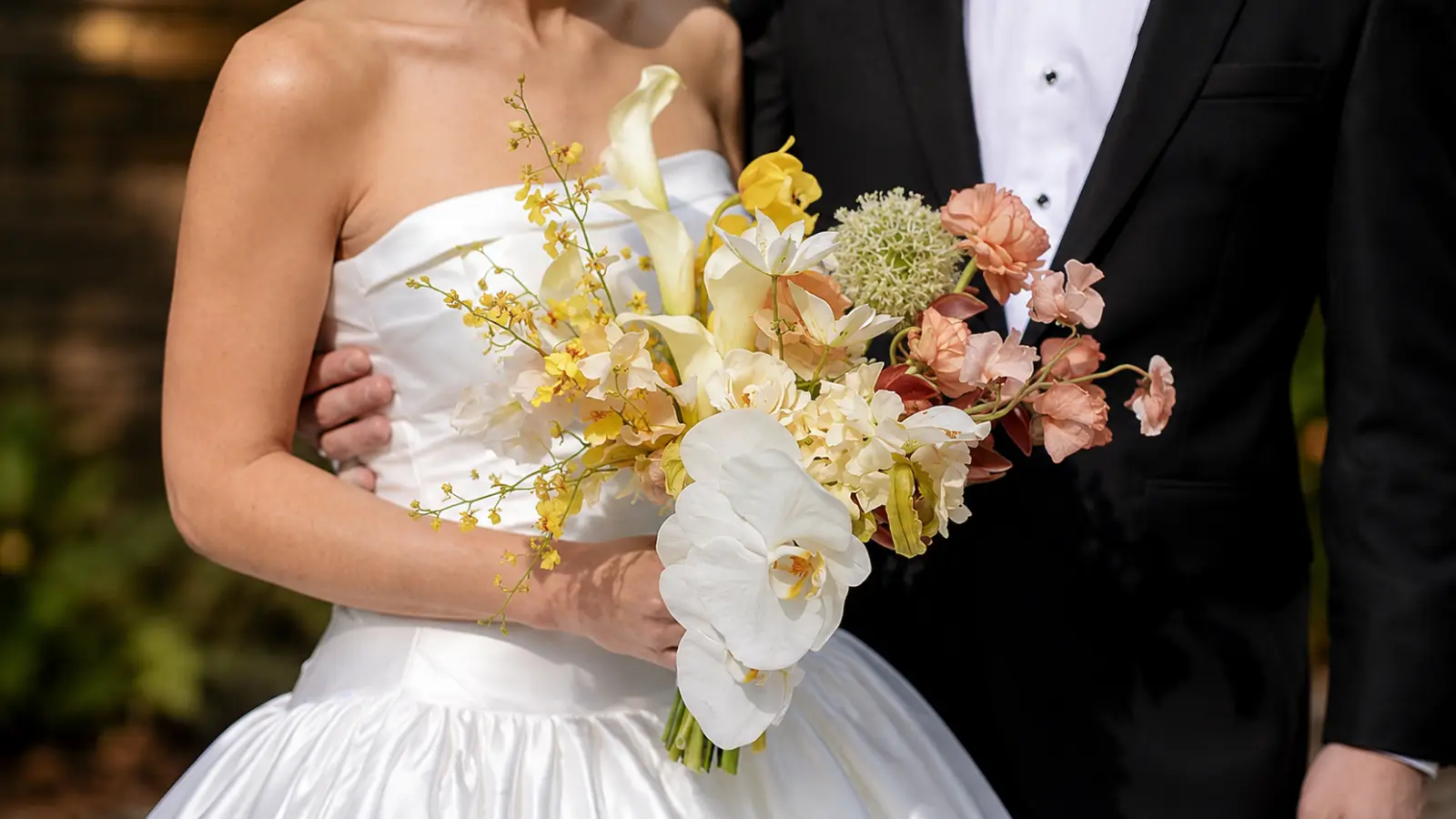
There are hundreds of wedding bouquet flowers that can work beautifully in a bridal bouquet, but some earn their reputation for good reasons: durability throughout a long day, how they read on camera, and their availability across seasons. Here’s an honest look at the most commonly chosen blooms and what actually makes them worth considering.
Roses remain the most versatile flower in bridal florals. Garden roses, specifically, have a fuller, more ruffled look than standard roses and a fragrance that spray roses rarely have. They come in nearly every color and hold up well throughout a ceremony and reception.
Peonies are a consistent favorite for their lush, layered petals and soft fragrance. They’re available primarily in late spring and early summer, so if peonies are important to you, your wedding date should factor that in. They do bruise more easily than roses, which is worth discussing with your florist for a long outdoor ceremony.
Ranunculus look similar to peonies at first glance but are generally more affordable and available for a longer window. They layer beautifully in mixed bouquets and come in a wide range of colors, including some soft coral and blush tones that photograph especially well.
Dahlias offer a completely different shape — bold, graphic, and dramatic. Café au lait dahlias have become especially popular in dahlia wedding bouquets in the past decade for their warm, neutral, slightly vintage tone. They’re a late summer and fall flower, so they align naturally with September and October weddings.
Sweet peas, anemones, and lisianthus are worth mentioning for couples who want something less conventional. Sweet peas add delicate texture and fragrance. Anemones bring a graphic contrast with dark centers. Lisianthus is often used as a peony substitute for couples working with tighter budgets — the silhouette is similar enough that many guests won’t notice the difference in photos.
For greenery wedding bouquets, eucalyptus (especially silver dollar or seeded varieties), dusty miller, ferns, and trailing ivy are staples. Italian ruscus and olive branches have grown in popularity for their more structured, architectural feel.
Wedding Bouquet Ideas by Style
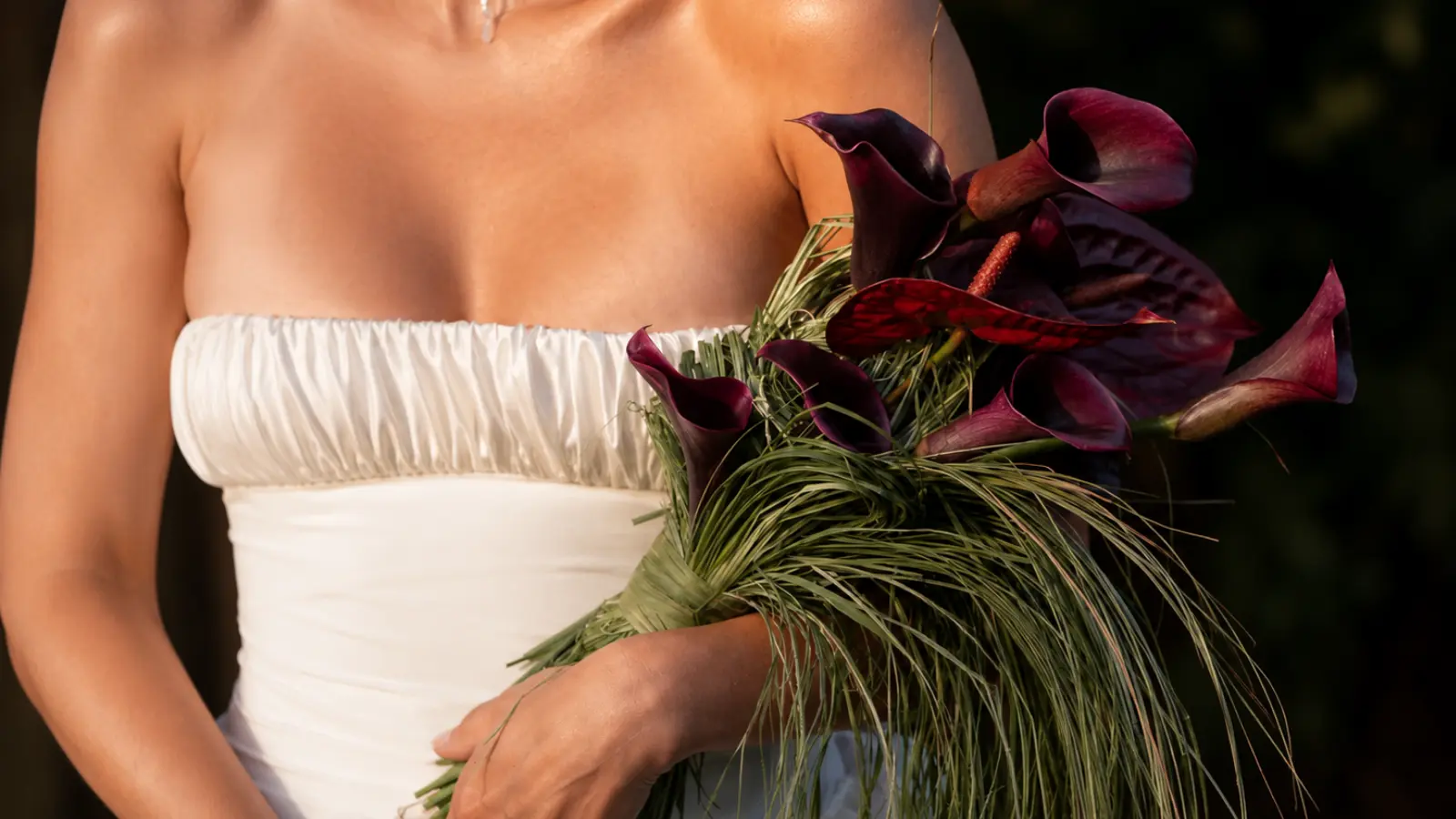
One of the most useful ways to approach bouquet inspiration is to start with your overall wedding aesthetic rather than the flowers themselves. The flowers you choose should feel like a natural extension of the world you’re building for the day.
Romantic and garden-inspired bouquets lean into soft, layered blooms — peonies, garden roses, ranunculus, sweet peas — in blush, cream, dusty rose, and lavender. Loose, slightly asymmetric shapes work best. Think of a handful of flowers gathered from a cottage garden at peak bloom.
Modern and minimalist bouquets work in the opposite direction. A single large bloom, a tight nosegay of one flower type, or a monochromatic arrangement in white or deep burgundy can feel more intentional and striking than a mixed bouquet. The arm sheaf carried with long stems visible is another strong minimalist option.
Bohemian and outdoor bouquets often incorporate dried elements — pampas grass, dried citrus slices, wheat — alongside fresh flowers like protea, wildflowers, and herbs. The palette tends to be earthy: terracotta, rust, ivory, sage. This style works especially well in fall and for outdoor venues.
Classic and formal bouquets benefit from structure — tight round or cascade shapes, roses, calla lilies, stephanotis, and gardenia. White, ivory, and blush are the most traditional color choices, though deep jewel tones work in formal settings during fall and winter.
Colorful and bold bouquets are having a real moment. Brides are increasingly moving away from all-white arrangements toward bouquets that make a statement — sunflowers mixed with dahlias, hot pink peonies, orange ranunculus, wildflower combinations that feel joyful rather than restrained. If this appeals to you, trust it. There are no rules that say a bridal bouquet must be soft-toned.
Wedding Bouquet Colors
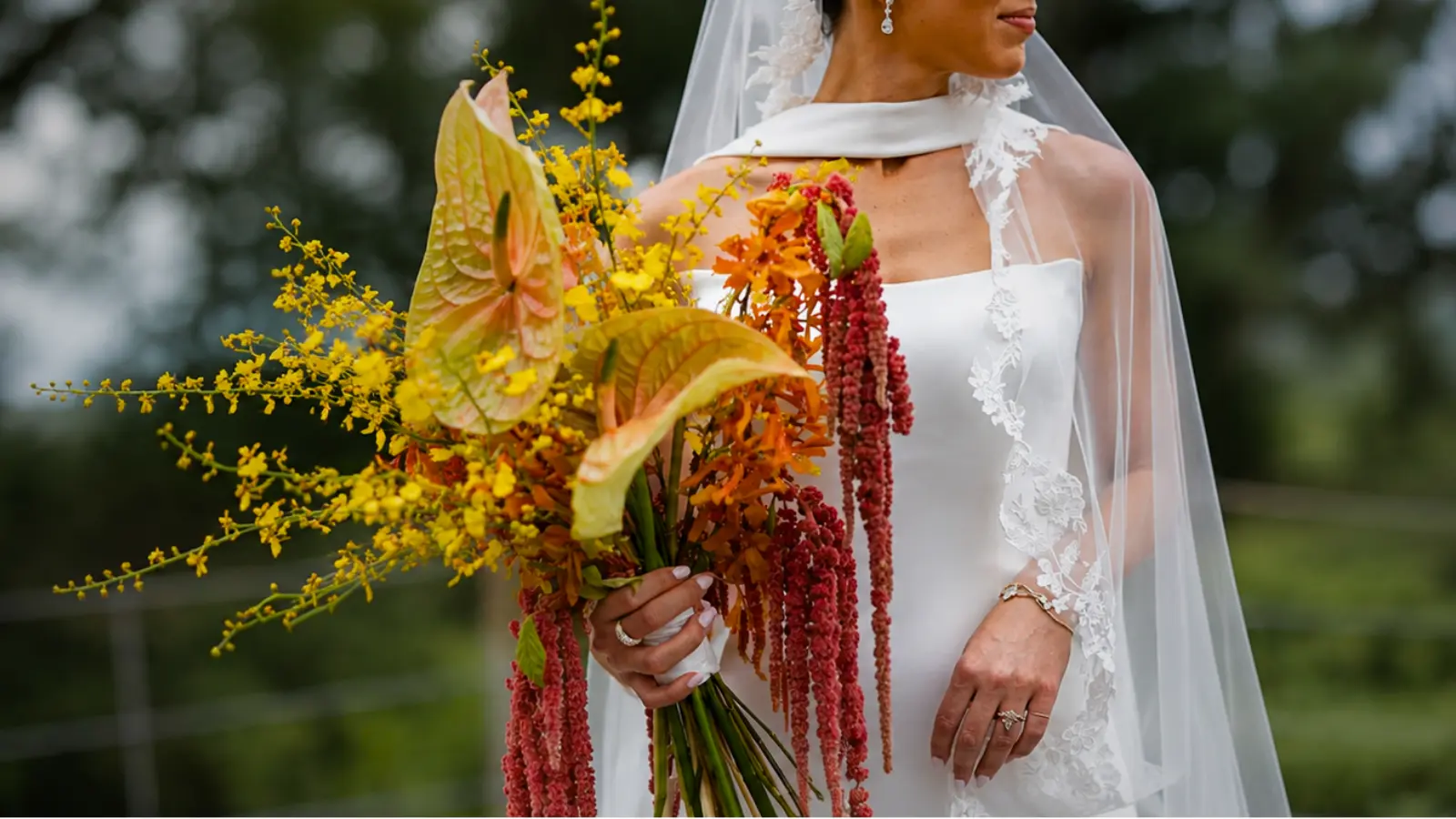
Wedding bouquet colors are often where brides feel the most pressure to make the “correct” choice, but the honest editorial truth is that almost any color can work in a wedding bouquet when it’s chosen with intention. The question isn’t which color is most popular — it’s which color tells the right story for your wedding day.
That said, a few color principles are worth understanding before you build your palette.
White and ivory remain the most timeless options, largely because they photograph beautifully in almost any light and work with virtually every dress. But white can also feel flat in all-white bouquets without enough texture variation — dusty miller, greenery, and varied petal shapes help enormously.
Blush and soft pinks are consistently requested and for practical reasons: they’re versatile across spring, summer, and fall, they work in both formal and relaxed settings, and they photograph warmly. The range within “blush” is actually quite wide, from almost-white to deeper antique rose, so being specific with your florist (and bringing color swatches rather than just verbal descriptions) matters.
Deeper tones — burgundy, plum, deep navy, forest green — work particularly well in fall and winter weddings and in formal venues. They add richness to photos and contrast beautifully against white dresses.
Warm, earthy tones like terracotta, rust, peach, and caramel have grown significantly in popularity and are especially natural for outdoor and bohemian weddings. Café au lait dahlias, coral charm peonies, and burnt orange garden roses are go-to choices for this palette.
Monochromatic bouquets — all-white, all-blush, all-red — can be incredibly striking when the variation in texture and shape is prioritized. Multicolor bouquets with a clear lead color and 1–2 accent tones tend to photograph better than arrangements that try to include too many competing colors.
Wedding Bouquets by Season
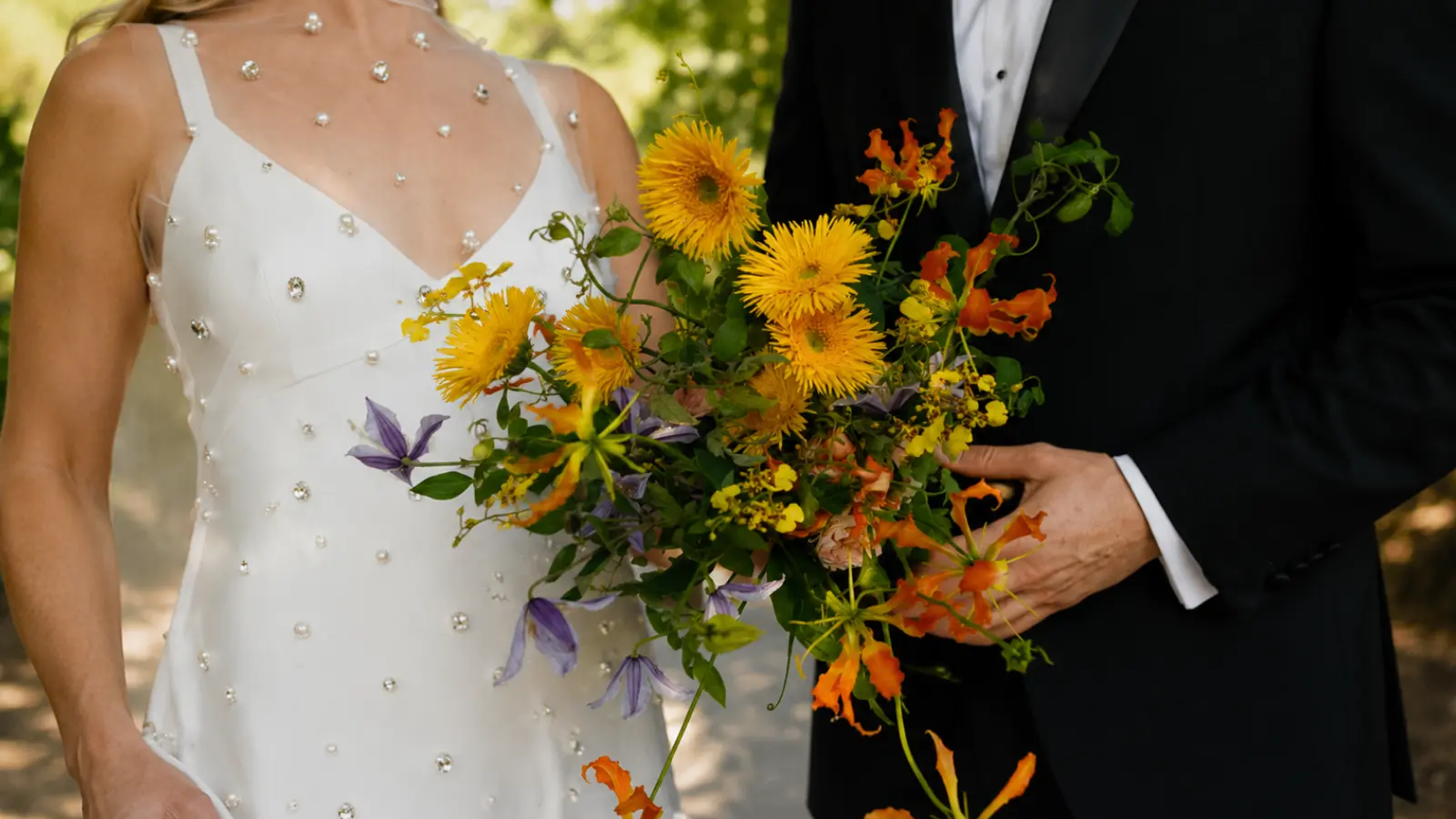
Seasonal availability isn’t just a florist concern — it directly affects the cost and quality of what you’ll get. Flowers that are in season are fresher, less expensive, and easier for your florist to source. Flowers that are out of season may be available, but they’ll typically cost more and may not look as vibrant.
| Season | Peak Flowers | Notes |
|---|---|---|
| Spring | Peonies, tulips, sweet peas, ranunculus, lilac, anemones | Peak availability for lush, romantic blooms |
| Summer | Garden roses, hydrangeas, lavender, sunflowers, zinnias | Widest flower variety; heat can wilt delicate blooms |
| Fall | Dahlias, marigolds, chrysanthemums, cosmos, dried elements | Rich, warm palette; excellent for textured, earthy bouquets |
| Winter | Amaryllis, hellebores, anemones, evergreen branches, berries | More sourcing from greenhouse or imports; plan ahead |
While some flowers are available year-round, spring wedding bouquets offer the widest selection of naturally blooming romantic flowers because they’re produced at scale in greenhouse operations. These can be reliable anchors for any season’s bouquet. If you have your heart set on peonies for a December wedding, your florist can likely source them, but at a higher cost and with slightly less predictability than if you were getting married in May.
One practical tip: when you book your florist, share your wedding date early and ask which flowers on your wish list will be at their natural peak. A good florist will suggest seasonal alternatives that give you the same visual effect at a more accessible price.
Wedding Bouquets for Bridesmaids
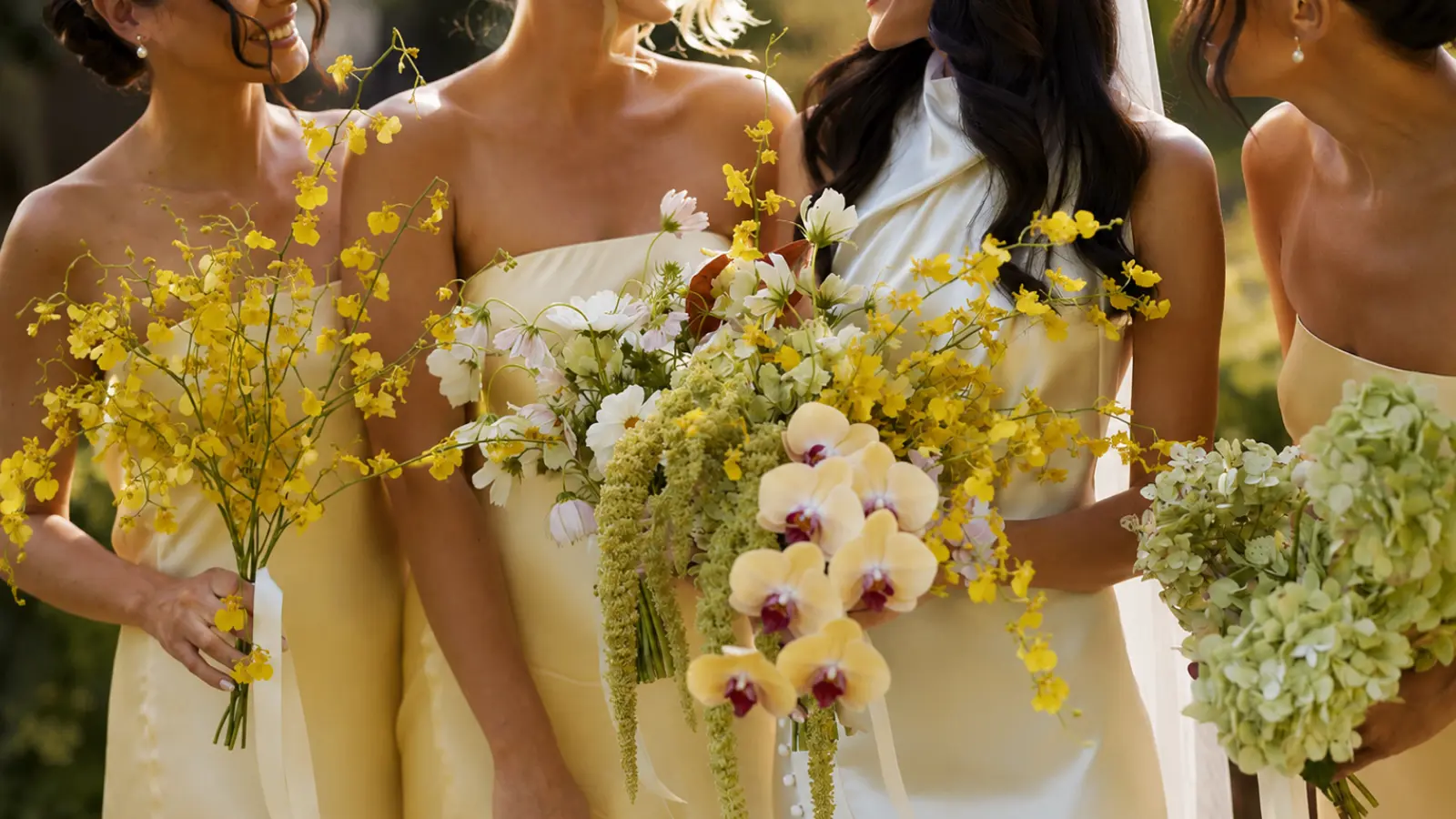
Wedding bouquets for bridesmaids should feel cohesive with the bridal bouquet without competing with it. The bride’s bouquet is meant to stand out — so the goal is to create visual harmony across the wedding party while keeping the hierarchy clear.
The most common approach is to use the same flower varieties as the bridal bouquet in smaller, simpler arrangements. If the bridal bouquet is a lush mixed garden round, the bridesmaid version might be a tighter nosegay using two or three of the same flowers rather than five or six. Matching the color palette is typically more important than matching the exact flowers.
Some couples choose a different color or flower entirely for bridesmaids — for example, a bride with an all-white bouquet might have her bridesmaids carry something with color to add visual contrast in photos. This can work beautifully when the colors are pulled from the bridesmaid dresses and the overall palette of the day.
Single-stem bridesmaid bouquets have grown in popularity, especially for more casual or minimalist weddings. A single calla lily or garden rose can feel intentional and elegant without the cost of full arrangements for each member of the party.
Budget note: bridesmaid bouquets add up quickly. If you have six bridesmaids and each arrangement runs $75–$125, that’s a meaningful line item in the floral budget. If you’re looking to manage costs, consider simpler bridesmaid designs or reducing the size of individual arrangements rather than cutting from the bridal bouquet.
Fresh vs. Artificial Wedding Bouquets
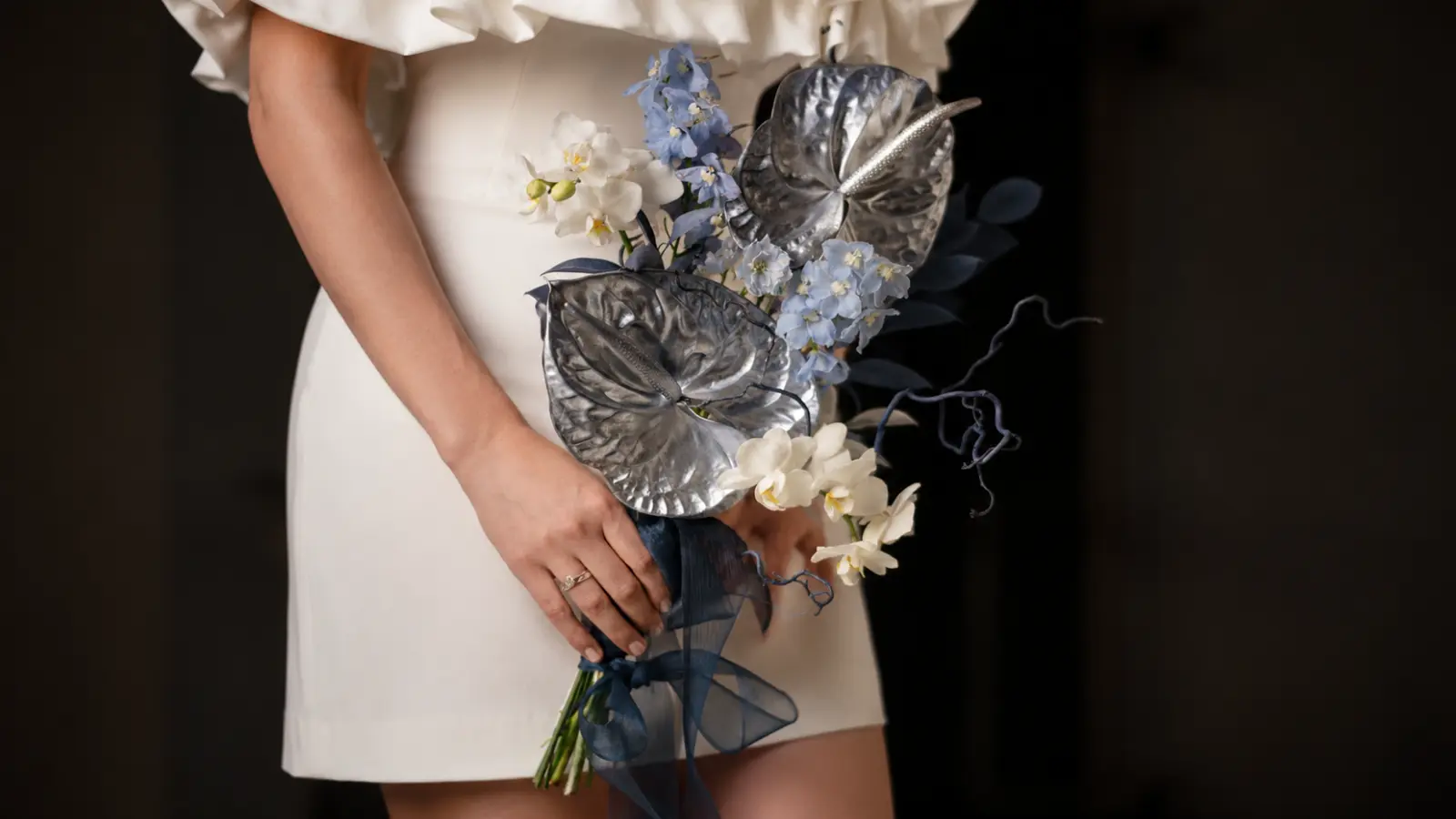
Choosing between fresh vs. artificial wedding bouquets is genuinely a decision worth thinking through rather than defaulting to what feels expected. Fresh flowers have an undeniable beauty, fragrance, and a quality that photographs in a particular way — but they’re not the only option, and for some brides, they’re not even the best one.
Fresh flower bouquets are the traditional choice. They smell like flowers, they have a natural softness and imperfection that reads beautifully in photos, and they allow you to work with a florist to create something completely tailored. The downsides: they’re time-sensitive (they need to be delivered and handled correctly on the day), they can wilt in heat, and they won’t keep without professional preservation after the wedding.
Dried flower bouquets have moved from boho niche to genuinely mainstream. Dried pampas grass, dried roses, preserved eucalyptus, and other elements create arrangements that have real texture, longevity, and a warm, earthy quality. They don’t wilt, they can be made months in advance, and they serve as a ready-made keepsake. They don’t have fragrance, and the color palette leans warm and muted — which may or may not match your aesthetic.
Silk and high-quality artificial bouquets have a broader range than they used to. High-end silk flowers, particularly from artisan makers, can be genuinely difficult to distinguish from fresh flowers in photos. They’re practical for destination weddings, for brides with severe allergies, or for anyone who wants a perfect keepsake without preservation costs. The quality range is wide, so this option rewards careful sourcing.
How to Decide:
Fresh flowers make sense if fragrance matters to you, if you want the most natural photographic quality, or if you’re working with a florist who can create something truly custom. Dried or artificial options are worth serious consideration if you’re getting married outdoors in summer heat, if you have a destination wedding with travel involved, or if keeping your bouquet matters more than the day-of experience. Both can be beautiful — the right choice depends on your priorities, not a hierarchy of what’s more “real.”
How Much Do Wedding Bouquets Cost?
Wedding bouquet cost is one of the areas where couples most commonly underestimate expenses — so it’s worth being specific about what you’re likely to spend and what drives those numbers.
A bridal bouquet typically starts around $150–$250 for a simple, fresh arrangement using accessible flowers with minimal design complexity. Mid-range bouquets with premium flowers, more elaborate structure, or a specific aesthetic typically fall between $250 and $500. For larger, more complex designs — a full cascade, a lush garden bouquet with specialty flowers, or a high-design florist in a major market — $500 to $700 or more is common.
| Bouquet Type | Typical Range | What Affects Cost |
|---|---|---|
| Bridal bouquet (simple) | $150–$250 | Fewer flowers, accessible varieties, smaller size |
| Bridal bouquet (mid-range) | $250–$500 | Premium blooms, mixed varieties, thoughtful design |
| Bridal bouquet (high-end) | $500–$800+ | Rare flowers, large size, cascade style, specialty market |
| Bridesmaid bouquet | $65–$150 each | Size, flower types, number ordered |
| Flower girl arrangement | $35–$75 | Petals, small nosegay, or simple pomander |
Several factors drive cost beyond flower choice alone. Florist expertise and market (a boutique florist in New York or Los Angeles charges differently than one in a smaller market), the number of varieties in the arrangement, the size of the bouquet, and whether specialty or out-of-season flowers are requested all make a meaningful difference. Setup fees and delivery are typically separate from the flowers themselves.
One practical way to manage your floral budget: be clear with your florist about what you’re working with from the beginning. Most experienced florists can work within a range — but only if they know what that range is. Coming in with a specific number and asking what’s possible within it is far more productive than asking for a dream bouquet and hoping the cost is manageable.
How to Choose Your Wedding Bouquet
With this many options, it’s easy to feel like every decision opens five more. Here’s a straightforward framework for narrowing things down without losing what matters to you.
Start with your dress. The silhouette of your gown should be the first filter. A voluminous ball gown can carry a larger, structured bouquet — a cascade or a full round. A sleek sheath dress pairs better with simple wedding bouquets, such as a single stem: a single stem, a small nosegay, or a loose arm sheaf. A bouquet that fights your dress will always look off, regardless of how beautiful either element is on its own.
Then consider your venue. A formal ballroom reads differently than a barn, where rustic wedding bouquets often feel more appropriate, a beach, or a garden. The flowers that feel right in one setting may look mismatched in another. A heavily structured bouquet with calla lilies can feel slightly stiff in a relaxed outdoor ceremony; a loose wildflower bunch can feel underdressed in a cathedral.
Anchor to 2–3 colors, not a flower list. Most brides come to florists with a list of specific flowers rather than a clear color story. Florists typically find it easier to build a cohesive bouquet when they understand the color palette first. Give your florist a palette and let them choose the blooms that best achieve it — especially when you’re open to seasonal substitutions.
Think about scale in photos. It’s worth briefly considering how your bouquet will read at portrait distance versus close-up. Bouquets that are too small can disappear in full-length photos. Bouquets that are too large can overpower your look. Asking your florist to show you a rough size reference before confirming your order is always a reasonable request.
Bring photos of what you don’t like. This sounds counterintuitive, but showing a florist three or four examples of bouquets that don’t appeal to you is often more useful than showing them five you love. Knowing you don’t want something tight and structured, or you don’t want anything trailing, narrows the design space quickly.
What to Do With Your Bouquet After the Wedding
Deciding what to do with your wedding bouquet after the wedding goes far beyond the bouquet toss tradition, but it’s far from the only option — and plenty of brides prefer to keep their flowers rather than launch them into a crowd. Here are the most practical approaches for what happens to your bouquet once the ceremony is over.
Keep it at the reception. Many brides place their bouquet on the sweetheart table or head table during the reception, where it continues to add to the decor. This is the simplest option and lets you enjoy it throughout the evening without worrying about damage.
Press individual flowers. Pressing is one of the most accessible preservation methods. Choosing a few meaningful blooms and pressing them between parchment paper and heavy books is something you can do yourself. Pressed flowers can be framed, used in stationery, or incorporated into albums.
Dry the bouquet at home. Hanging the bouquet upside down in a dry, dark space for several weeks is a simple way to dry it. The colors will shift (whites may yellow, blush may deepen), and the texture will change, but many couples find that dried bouquets have a beautiful, organic quality. This works better with flowers like roses and lavender than with more delicate blooms.
Have it professionally preserved. If you plan to preserve your wedding bouquet, freeze-drying is the most common professional preservation method and tends to retain the shape and color of flowers better than air-drying. Resin preservation — encasing blooms in clear resin as paperweights, jewelry, or framed art — has become popular as well. Professional preservation typically costs several hundred dollars depending on the method and scale.
Donate the flowers. Several nonprofit organizations accept fresh wedding flowers after receptions and redistribute them to hospitals, hospice facilities, shelters, or senior centers. It’s a meaningful way to let your flowers continue bringing beauty to others, and many florists can connect you with local organizations that participate.
Wedding Bouquet Mistakes to Avoid
A few common missteps show up consistently in the planning process — and almost all of them are avoidable with a bit of advance thought.
Booking your florist too late. Experienced wedding florists in most markets book out six to twelve months in advance, and in some cities longer than that. If you’re getting married in a popular season (May through October), treat the florist as a vendor to lock in early — similar to your venue and photographer.
Choosing flowers without checking seasonal availability. Falling in love with a flower that’s out of season for your wedding date doesn’t mean you can’t have it, but it does mean you should have that conversation with your florist early. Understanding what’s naturally in season gives you the best combination of quality and value.
Making your bouquet too small. Brides consistently underestimate how much a bouquet needs to be present to read in photos. A bouquet that feels substantial in person can disappear in a full-length shot. If you’re unsure, err slightly larger rather than smaller — your florist has experience with what reads well.
Choosing flowers based on photos without context. Inspiration photos are helpful, but the lighting, processing, and styling of a photo can make a bouquet look very different from what you’d actually receive. Ask your florist to help you understand which elements of an inspiration photo are achievable and which are specific to that photo’s context.
Overlooking fragrance. Some flowers that look beautiful have strong fragrances that not everyone finds pleasant — paperwhites, stargazer lilies, and gardenia, for example. If you’re sensitive to fragrance, or if your ceremony will be in a small enclosed space, it’s worth factoring this into your flower selection.
Waiting until the wedding day to figure out preservation. If you want to keep your bouquet, have a plan before the wedding. Know who will be responsible for getting it somewhere cool and safe during the reception, and have your preservation method or appointment arranged in advance.
Wedding Bouquet Inspiration
Choosing the perfect wedding bouquet starts with discovering the styles, flowers, and color palettes that match your wedding vision. Explore our wedding bouquet inspiration board featuring classic bridal bouquets, modern floral designs, seasonal arrangements, romantic garden styles, and elegant bouquet ideas for every type of celebration.
The Right Bouquet Brings Your Wedding Style Together
Your wedding bouquet is much more than a beautiful arrangement of flowers. It connects your dress, your venue, your color palette, and the overall atmosphere of your celebration while becoming one of the most recognizable details in your wedding photographs. Choosing it thoughtfully means creating a floral design that feels timeless rather than simply following current trends.
As you explore different bouquet styles, flowers, colors, and seasonal options, focus on what feels authentic to your vision of the day. A bouquet that complements your personality and your wedding style will always feel more meaningful than one chosen simply because it’s popular. With thoughtful planning and the right florist, your bouquet becomes a lasting part of the memories you’ll carry long after the celebration ends.
Frequently asked questions (FAQ)
How do you choose a wedding bouquet?
Choose your wedding bouquet by starting with your dress silhouette, venue, season, and color palette. A large ball gown can support a fuller bouquet, while a sleek sheath or minimalist dress often works better with something smaller or more structured. Your bouquet should feel connected to the flowers, colors, and formality of the wedding without competing with your dress.
What is the difference between a wedding bouquet and a bridal bouquet?
A bridal bouquet refers specifically to the bouquet carried by the bride. Wedding bouquets is a broader term that can include the bride’s bouquet, bridesmaid bouquets, flower girl arrangements, and other personal flowers used throughout the wedding. In everyday planning, many people use the two terms interchangeably.
How much does a wedding bouquet cost?
A bridal bouquet can vary widely in price depending on the flowers, size, season, location, and floral designer. Simple fresh bouquets often start around $150 to $250, while fuller or more elaborate designs with premium flowers can cost $400 to $700 or more. Bridesmaid bouquets are usually smaller and less expensive than the bride’s bouquet.
What are the most popular wedding bouquet styles?
The most popular wedding bouquet styles include round, posy, cascade, hand-tied, nosegay, garden-style, and arm sheaf bouquets. Round and hand-tied bouquets are especially versatile, while cascade and arm sheaf designs create a more dramatic or editorial look. The best style depends on your dress, venue, and overall wedding aesthetic.
What flowers are best for wedding bouquets?
Roses, garden roses, peonies, ranunculus, dahlias, lisianthus, and sweet peas are popular wedding bouquet flowers because they photograph beautifully and work in many styles. The best flowers for your bouquet also depend on your wedding season, budget, color palette, and how well the blooms hold up throughout the day.
Should bridesmaids carry the same bouquet as the bride?
Bridesmaids usually carry smaller, simpler versions of the bride’s bouquet rather than identical arrangements. The bouquets can share the same color palette, flower types, or overall style, but the bride’s bouquet should feel slightly more special in size, detail, or composition.