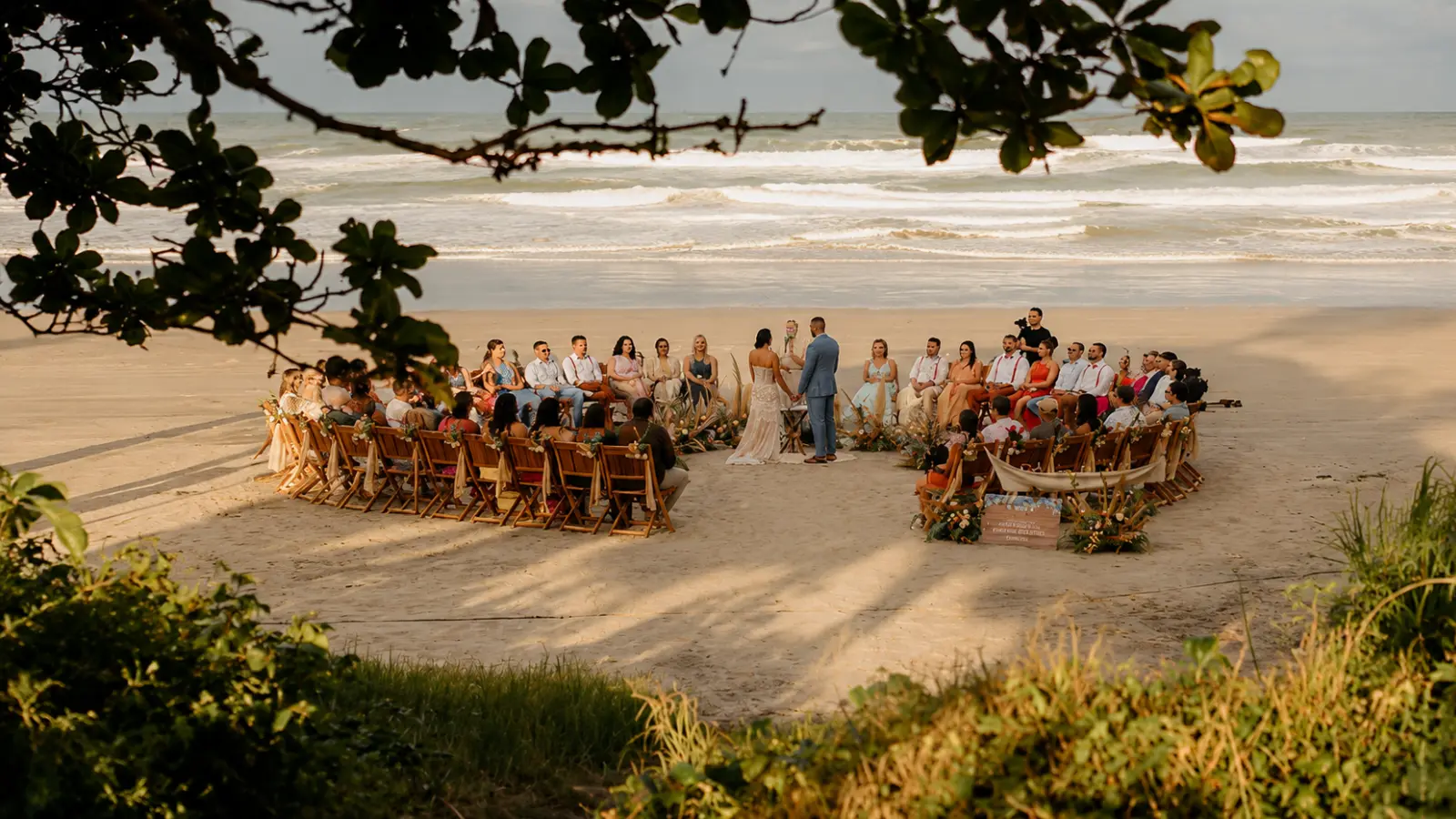

Destination Wedding Vendors require a different sourcing strategy because every booking sits inside a travel and logistics system. For each category, you may be choosing between a professional who already understands the destination and one whose creative fit, specialty, or established relationship makes bringing them in worth the additional travel risk.
The right answer is rarely to hire everyone locally or fly in every favorite vendor. Local professionals can offer venue familiarity, regional sourcing, language fluency, local equipment, and easier logistics, while travel-in vendors may bring a specific style or level of trust that is difficult to replace.
This Destination Wedding Vendors guide explains how to compare local and travel-in professionals, research vendors remotely, evaluate process on video calls, document travel-dependent terms in contracts, manage currency and payment friction, plan travel fees and equipment, decide when site visits are worthwhile, and bring the full vendor team into one operating plan before travel week.
Choose Local vs Travel-In Vendor by Risk
The best vendor model depends on what can go wrong if the professional is unfamiliar with the destination—or if travel prevents them from arriving at all.
Local vendors can bring venue familiarity, destination-specific sourcing, language fluency, knowledge of regional working practices, and a lower travel footprint. Travel-in vendors may bring established trust, a highly specific style, or continuity with a professional you already know.
Ask four questions for every category:
- How valuable is local knowledge? Does the work depend on venue access, rentals, local power, delivery restrictions, weather, or regional suppliers?
- How valuable is creative or personal fit? Would replacing this professional materially change the wedding experience?
- How much travel risk are you adding? Flights, baggage, equipment, immigration or customs issues, weather disruption, and travel days all matter.
- How replaceable is the service locally? If a travel-in vendor cannot arrive, is there a realistic backup?
The stronger the local dependency, the more valuable destination fluency becomes.
Local vs Travel-In Vendors at a Glance
This table is a decision framework rather than a rule. The same vendor category can reasonably fall on either side depending on the wedding.
| Vendor Choice | Local | Travel-In | Risk |
|---|---|---|---|
| Planner / Coordinator | Strong local network and venue fluency | Continuity with one planning team | Who owns local communication and on-site decisions? |
| Photographer / Videographer | Knows local light, access, permits or movement patterns | Specific style and trusted relationship | Flight delay, gear transport, unfamiliar venue |
| Florist | Understands local product, seasonality, sourcing, setup | Useful only when design control justifies complex logistics | Product transport and local sourcing dependency |
| DJ / Band | Local equipment and venue familiarity | Known performer or highly specific entertainment fit | Equipment, power, sound rules, baggage |
| Hair / Makeup | No vendor travel and local product access | Established trust with the couple | Arrival timing, kit transport, trial availability |
| Rentals / Production | Usually strongest for inventory, labor, delivery, setup | Rarely efficient unless highly specialized | Freight, customs, setup labor, local compatibility |
The practical question is not “Which side is cheaper?” It is “Which side creates fewer unresolved dependencies for this particular service?”
Use the Local Planner as a Market Translator
A local or destination-experienced planner can be especially valuable because they understand more than vendor names. They can explain how the market actually works.
That may include which vendors are reliable, how fast people typically respond, what services are usually bundled, which rentals are easy or difficult to source, how venue access works, and which communication or payment practices differ from what you expect at home.
Use that expertise as a filter, not as an instruction to stop evaluating vendors yourself. The planner can shorten the market; the couple still needs to understand scope, fit, and contract.
Research Vendors Beyond the Portfolio
Destination wedding vendor planning should verify operational reliability as carefully as visual quality.
Review recent work, testimonials, website details, service descriptions, and examples from weddings with similar logistical demands. If possible, look for full galleries or complete event coverage rather than only social-media highlights.
For local vendors destination wedding planning, ask whether they have worked at your venue or comparable properties. Venue familiarity can be useful, but it is not automatically required if the vendor has a strong process for learning the site. Also verify who actually performs the service—a studio portfolio can represent several photographers, planners, artists, or teams, so make sure you understand which person is assigned to your wedding.
Use Video Calls to Test Process and Fit
Remote planning makes the consultation more important because you may not meet the vendor in person until a site visit or even the wedding week.
Use video calls to evaluate how the vendor thinks, not just whether the conversation feels pleasant. Ask how they work with remote couples, how they coordinate with the venue and planner, what they need from you, and how they handle changes when the couple is in another time zone.
After the call, you should understand the workflow better than you did before it. Chemistry is useful; process clarity is more useful.
Make the Contract More Specific Than the Sales Call
A destination vendor contract should document every travel-dependent promise that influenced your decision.
Confirm the service date and location, deliverables, start and end times, staffing, setup and breakdown responsibility, travel terms, lodging, transportation, equipment, overtime, cancellation, substitution, payment schedule, and any destination-specific fees.
If the vendor is local, clarify what happens if the venue changes access times or the event moves to a backup space. If the vendor travels, clarify what happens if the flight is canceled, luggage or equipment is delayed, or the vendor becomes unable to travel. Do not assume a verbal “travel is included” answers every question—the contract should tell you exactly what the quoted fee includes.
Plan for Currency and Payment Friction
When vendors invoice in another currency, your U.S.-dollar planning estimate can change even if the contracted local-currency fee stays the same.
Record both amounts: the actual contract amount in the vendor’s currency and the working dollar estimate used in your budget. Update the estimate as major payments approach rather than pretending the original conversion rate is permanent.
Also ask how payments are made. Bank transfers, payment platforms, card processing, intermediary banks, and foreign-transaction charges can create additional costs, and the exact fees depend on the payment route and financial institutions involved. Currency is not a reason to avoid a local vendor—it is a reason to make the payment system visible before the first deposit is due.
Understand Travel Fees Before You Bring a Vendor In
If you bring vendors in for a destination wedding, your planning needs to account for much more than airfare.
Travel terms may include:
- Flights or mileage: and who books them.
- Lodging: number of nights, room standard, and whether the couple or vendor reserves it.
- Ground transportation: airport, hotel, venue, and equipment movement.
- Baggage or equipment fees: particularly for photo, video, music, beauty, or production teams.
- Meals or per diem: when included in the contract.
- Travel days: whether non-event travel time carries a fee.
Planners and other traveling vendors commonly require coverage for flights and lodging, and a per diem is sometimes added depending on the team and the length of the trip.
The travel budget should be attached to the vendor decision before booking, not discovered after the creative fee has already been accepted.
Coordinate Shipping and Equipment Early
Travel-in vendors sometimes need to move equipment, product, printed material, tools, or supplies. Local vendors may also need imported items depending on the design.
Before anything ships, define who owns:
- Courier selection and tracking
- Customs or import documentation when applicable
- Taxes, duties, or receiving fees where applicable
- Hotel or venue receiving instructions
- Storage before the event
- Return shipping or disposal after the wedding
For international shipping, verify current courier and customs requirements instead of relying on past wedding examples. The most expensive shipping mistake is assuming someone else is handling the final handoff.
Decide Which Vendors Need a Site Visit
Not every vendor needs to attend every site visit. Invite the people whose work materially depends on understanding the property in person.
A planner, venue manager, designer, florist, rental or production lead, photographer, or entertainment provider may benefit when layout, power, lighting, access, weather backup, load-in, or guest flow affects their work.
Do not fly in a vendor for a site visit simply because it feels thorough. The trip should solve a decision that cannot be resolved well through plans, photos, video, and local coordination.
Build a Time-Zone Communication System
Time zones make ordinary vendor communication feel slower unless the team agrees on a rhythm.
Choose one primary written channel, define normal response expectations, and use shared documents for decisions that should not disappear inside email chains. When scheduling calls, state the time zone explicitly rather than assuming everyone interprets “3 p.m.” the same way.
For a vendor team spread across several regions, the planner should know who can answer urgent local questions while another vendor is offline, since time-zone gaps are one of the most common friction points in remote wedding planning. Good remote communication does not require everyone to be available constantly—it requires the right person to know when and how a decision will be made.
Create One Vendor Handoff Before Travel Week
Before travel week, bring every vendor into the same operating version of the wedding.
Your final handoff should include:
- Master timeline: arrivals, setup, ceremony, reception, breakdown, and surrounding events.
- Contact sheet: couple, planner, venue, vendor leads, and emergency contacts.
- Venue information: access, load-in, floor plans, backup spaces, parking, power, and restrictions.
- Travel status: which vendors are local, who is traveling, arrival dates, lodging, and transportation.
- Shipping status: what has arrived, what is in transit, and who physically owns each shipment.
- Payment status: final balances, due dates, and any on-site payment responsibility.
The destination becomes easier to run once local and travel-in vendors stop operating as two separate teams.
Choose the Vendor Who Removes the Bigger Risk
Destination Wedding Vendors should be chosen by the dependencies each professional removes, not simply by where they are based. Local vendors can reduce sourcing, venue, language, equipment, and logistics risk, while travel-in professionals may be worth the added complexity when their creative fit, specialty, or established relationship matters enough.
Whichever model you choose, make travel, currency, arrival timing, equipment, site access, communication, backup responsibility, and payment terms explicit before booking. The strongest destination vendor team is the one that operates as one system before anyone arrives at the destination.
Frequently asked questions (FAQ)
How do you choose destination wedding vendors?
Evaluate each vendor category based on how much the work depends on local knowledge, venue familiarity, regional sourcing, language, equipment, and on-site logistics versus how much you value a particular professional’s style, specialty, or existing relationship. Then compare availability, process, scope, travel requirements, backup responsibility, communication, and total cost before signing. The best choice may be local for one category and travel-in for another.
Is it better to hire local vendors for a destination wedding?
Not automatically. Local vendors can offer destination knowledge, easier sourcing, venue familiarity, and less travel exposure, while travel-in vendors may provide a specific creative style, specialty, or trusted relationship. Choose based on the operational needs of each service rather than applying one rule to the entire vendor team.
Which wedding vendors are most worth flying in?
There is no universal category. A photographer, videographer, planner, beauty professional, or entertainer may justify travel when a specific relationship, style, or specialty is difficult to replace locally. Florals, rentals, and production often depend more heavily on local inventory, labor, delivery, and infrastructure. The deciding question is whether the benefit of that particular professional outweighs the additional travel risk and cost.
Who pays vendor travel expenses for a destination wedding?
The contract should determine responsibility. When couples bring vendors to the destination, agreed expenses may include flights or mileage, lodging, ground transportation, baggage or equipment fees, meals or per diem, and sometimes travel-day charges. Confirm exactly what is included, who makes each reservation, and which expenses remain variable before booking.
How do you pay international destination wedding vendors?
Follow the payment method and currency specified in the contract. Record the contracted amount in the vendor’s original currency as well as a working estimate in your home currency, and account for potential bank-transfer, card-processing, intermediary-bank, conversion, or foreign-transaction costs. Update your working estimate as major payments approach because exchange rates can change.
Should destination wedding vendors attend the venue site visit?
Only when being on-site will materially improve their work or resolve decisions that cannot be handled effectively through floor plans, photographs, video, and local coordination. Planners, designers, florists, production teams, photographers, or entertainment providers may benefit when access, layout, lighting, power, load-in, weather backup, or guest flow directly affects their responsibilities.

About the Author
Débora Justo
Founder and editor of EVORÉ, creating practical wedding planning resources, thoughtful inspiration and useful tools for the decisions that shape a celebration.
Read more about the author →