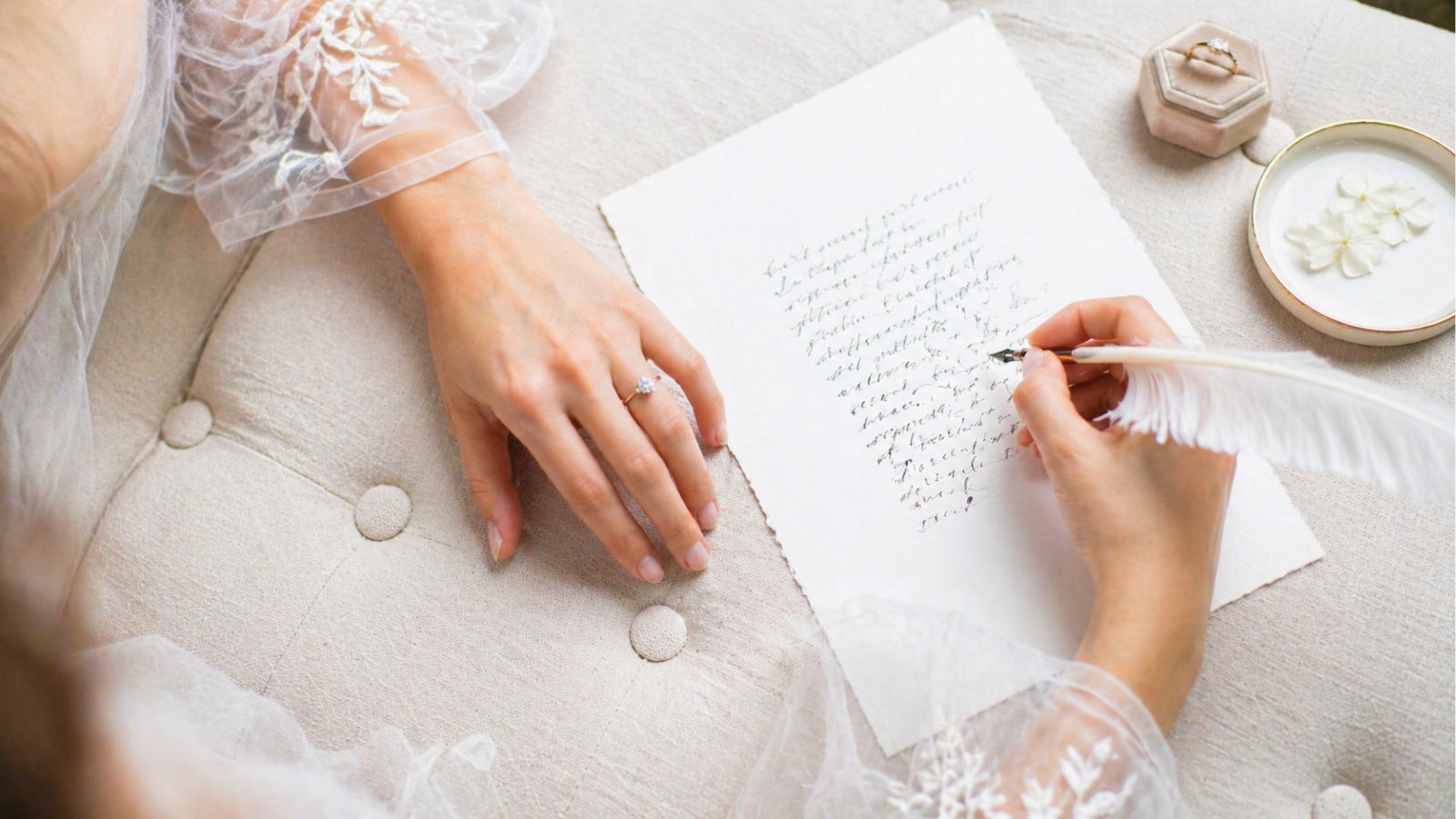
There is a reason the same words that your grandparents said, and their grandparents before them, continue to be chosen by couples who have access to every possible alternative. Traditional wedding vows carry something that no personally written vow can replicate: the accumulated weight of millions of promises made and kept. When you say “to have and to hold, from this day forward”, you are not just making a promise — you are joining a lineage of people who meant it.
This is the most complete guide to traditional wedding vows available. It covers every version, every denomination, every script format, and every question couples actually ask — including the ones most guides avoid, like the history of “obey,” what the Bible actually says about marriage vows, and how to use traditional language in a modern ceremony without it feeling stiff or out of place.
Whether you are planning a formal religious ceremony, a simple civil wedding, or something in between, this guide gives you everything you need.
1. What Are Traditional Wedding Vows?
Traditional wedding vows are pre-written marriage promises with established, widely recognized language that has been used in wedding ceremonies across generations. Unlike personal vows — which each partner writes themselves — traditional vows follow a fixed script that the couple repeats after the officiant, or recites from memory.
In the United States, the most commonly used traditional wedding vow script comes from the Anglican and Protestant tradition and contains the following key phrases:
- “To have and to hold” — a commitment to physical and emotional presence
- “From this day forward” — marking the ceremony as the beginning of the covenant
- “For better or for worse” — an acknowledgment that difficulty will come
- “For richer, for poorer” — a promise not contingent on financial circumstance
- “In sickness and in health” — a commitment that extends through physical hardship
- “To love and to cherish” — the emotional core of the promise
- “Till death do us part” — the duration of the covenant
These phrases are the foundation of the most recognized wedding vow in the English-speaking world. Different denominations adapt the language — adding theological framing, removing certain phrases, or supplementing with scripture — but the core commitment remains consistent across nearly all traditional forms.
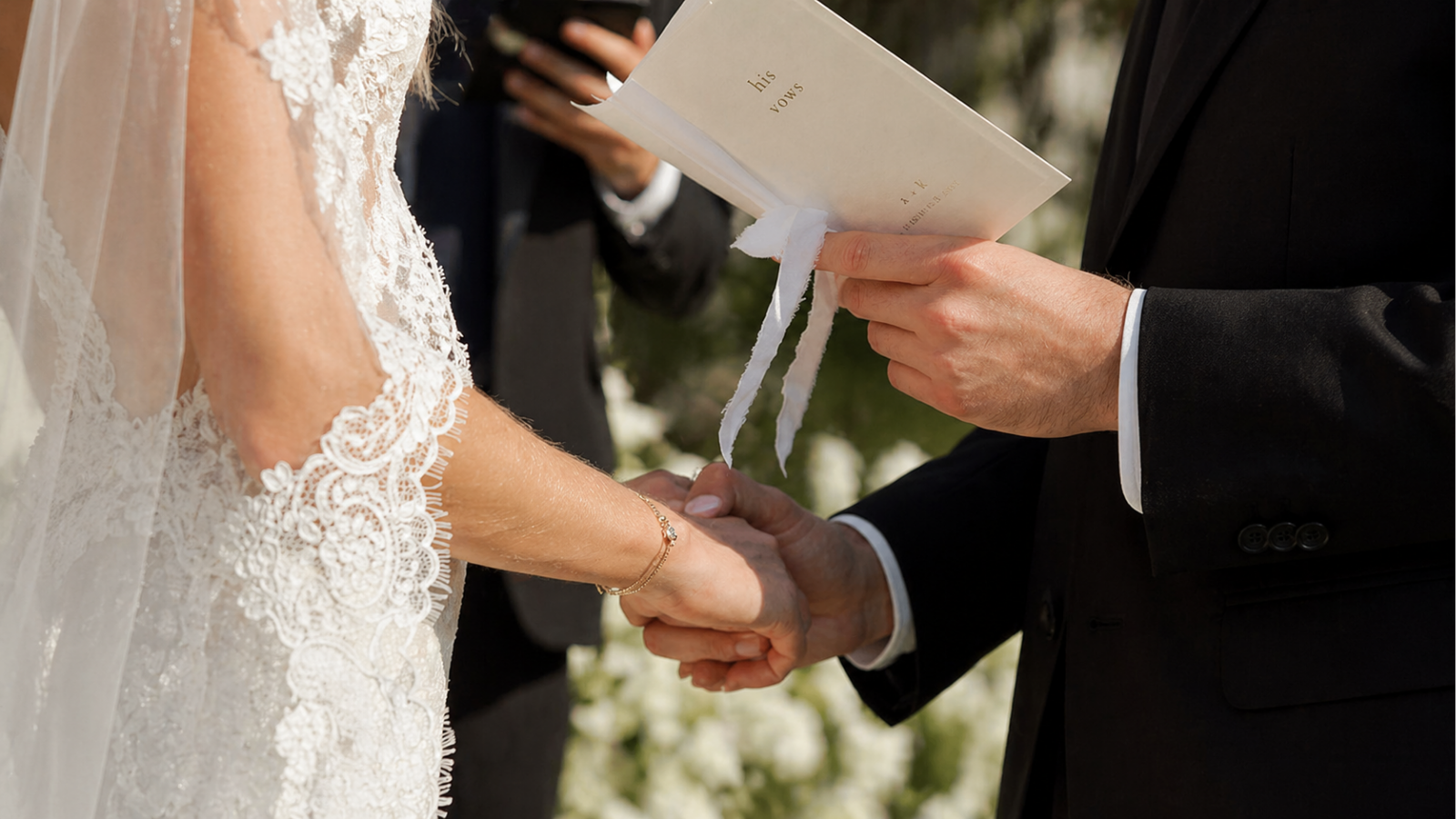
2. The History and Origin of Traditional Wedding Vows
Understanding where traditional wedding vows come from adds a dimension to the words that purely modern language cannot replicate. When you say these vows, you are using language with nearly five centuries of history.
The Book of Common Prayer (1549)
The foundational text of the modern English wedding vow is the Anglican Book of Common Prayer, compiled in 1549 under Thomas Cranmer, Archbishop of Canterbury. Cranmer’s ceremony — the first in English rather than Latin — introduced the phrases that remain standard today: “to have and to hold,” “for better or for worse,” “in sickness and in health,” and “till death us do part.”
The 1549 script was written in the plain language of ordinary people, deliberately accessible. Cranmer’s intent was that everyone present — not just the clergy — could fully understand and participate in the ceremony. That accessibility is still the greatest strength of the traditional form.
Catholic Roots — Before 1549
Before the Anglican Reformation, marriage vows in England were conducted in Latin by the Catholic Church, following the Sarum Rite — a regional variation of the Roman Rite used in Salisbury Cathedral. Some of the same emotional commitments appear in this earlier tradition, but the modern English form traces directly to Cranmer’s 1549 revision.
The Word “Obey” — A Brief History
In the original 1549 script, brides were asked to “love, cherish, and to obey” while grooms were asked only to “love, cherish, and to worship.” This asymmetry reflected the legal and social status of women in 16th-century England, where a wife was legally considered her husband’s property upon marriage.
The word “obey” began disappearing from mainstream Protestant wedding ceremonies in the United States through the early 20th century, accelerating significantly in the 1960s and 1970s. Today it appears only in ceremonies where couples specifically request it or in certain traditional religious traditions. (See Section 7 for the full discussion.)
Evolution Through the 20th Century
American wedding vow language evolved throughout the 1900s in parallel with social change. Key shifts include:
- 1920s–1940s: “Obey” removed from most mainline Protestant ceremonies
- 1960s–1970s: Gender-equal language becomes standard in most non-Catholic ceremonies
- 1980s–1990s: Personal vows gain mainstream acceptance as an alternative
- 2000s–present: Personal vows become the majority choice, but traditional scripts remain deeply meaningful in religious contexts
3. The Classic Traditional Wedding Vow — Complete Script
This is the most widely recognized traditional wedding vow script in the United States. It is used in non-denominational, Protestant, and civil ceremonies and represents the standard against which most other traditional vow forms are measured.
Many couples today still use this traditional structure as the foundation before adapting the wording into something more personal and modern.
Most Common U.S. Version (Gender-Neutral Language)
PARTNER 1 SPEAKS FIRST:
“I, [Name], take you, [Name], to be my lawfully wedded partner — to have and to hold from this day forward, for better or for worse, for richer, for poorer, in sickness and in health, to love and to cherish, until death do us part. This is my solemn vow.”
PARTNER 2 REPEATS:
“I, [Name], take you, [Name], to be my lawfully wedded partner — to have and to hold from this day forward, for better or for worse, for richer, for poorer, in sickness and in health, to love and to cherish, until death do us part. This is my solemn vow.”
Classic Version with “Husband/Wife” Language
“I, [Name], take you, [Name], to be my lawfully wedded husband/wife — to have and to hold from this day forward, for better or for worse, for richer, for poorer, in sickness and in health, to love and to cherish, till death do us part. According to God’s holy ordinance, I pledge thee my troth.”
Original Anglican Version (1549 — Historical Reference)
For historical context, the original 1549 Book of Common Prayer wording for the man’s vow was:
“I, [Name], take thee, [Name], to my wedded wife, to have and to hold from this day forward, for better for worse, for richer for poorer, in sickness and in health, to love and to cherish, till death us depart, according to God’s holy ordinance; and thereto I plight thee my troth.”
📌 Note on “Troth”
“I pledge thee my troth” is Middle English for “I give you my faithfulness.” The word “troth” comes from the same root as “truth” and means fidelity and loyalty. It appears in some traditional scripts today as a nod to the historical language, though many modern ceremonies replace it with “this is my solemn vow” or simply end without it.
4. Traditional Wedding Vows — The “I Do” Format (Complete Script)
The traditional wedding vows “I do” format is the most commonly used in American civil and non-denominational ceremonies. Rather than reciting a vow statement, each partner answers a question posed by the officiant. This format is simpler, requires no preparation from the couple, and is fully legally recognized in all U.S. states.
Full “I Do” Script for the Officiant
OFFICIANT TO PARTNER 1:
“[Name], do you take [Name] to be your lawfully wedded husband/wife/partner? Do you promise to love and comfort them, honor and keep them, in sickness and in health, and forsaking all others, be faithful to them, for as long as you both shall live?”
[Partner 1 responds:] “I do.”
OFFICIANT TO PARTNER 2:
“[Name], do you take [Name] to be your lawfully wedded wife/husband/partner? Do you promise to love and comfort them, honor and keep them, in sickness and in health, and forsaking all others, be faithful to them, for as long as you both shall live?”
[Partner 2 responds:] “I do.”
Extended “I Do” Format — With Additional Promises
OFFICIANT — EXTENDED VERSION:
“[Name], do you take [Name] to be your lawfully wedded partner — to have and to hold, from this day forward, for better or for worse, for richer or for poorer, in sickness and in health, to love and to cherish, and forsaking all others, to be faithful, for as long as you both shall live?”
[Partner responds:] “I do.”
📌 Legal Note
In most U.S. states, the “I do” declaration — when spoken in a legal ceremony with a licensed officiant and the required witnesses — constitutes the binding legal act of marriage. The specific words are less legally critical than the setting: licensed officiant, valid marriage license, and witnesses where required by state law. Always confirm your state’s specific requirements before the ceremony.
5. Traditional Wedding Vows and Ring Exchange — Complete Script
The traditional wedding vows and ring exchange script includes specific language spoken while placing the ring on the finger. This is a separate, brief vow that follows the main exchange of promises and precedes the pronouncement.
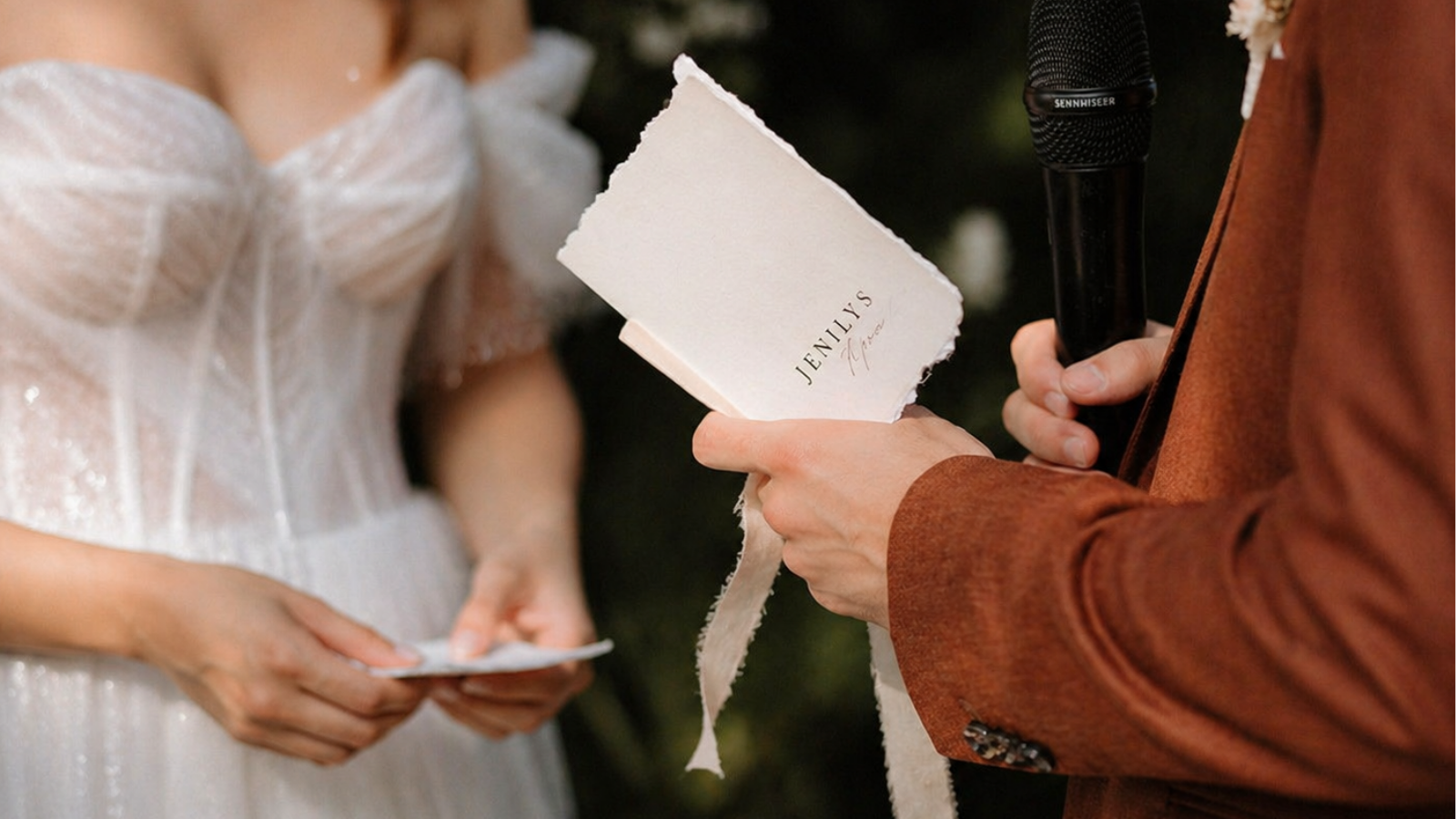
Standard Ring Exchange Script
OFFICIANT INTRODUCES THE RINGS:
“These rings are a symbol of the vows you have just made — endless circles, with no beginning and no end, representing the eternal nature of your love and commitment. [Partner 1], please place the ring on [Partner 2]’s finger and repeat after me:”
PARTNER 1 PLACES RING AND SAYS:
“With this ring, I thee wed. With my body, I thee honor. And with all my worldly goods, I thee endow.”
PARTNER 2 PLACES RING AND SAYS:
“With this ring, I thee wed. With my body, I thee honor. And with all my worldly goods, I thee endow.”
Modern Non-Denominational Ring Vow
“I give you this ring as a symbol of my love — a circle with no end, representing a commitment with no conditions. Wear it as a reminder that you are loved, chosen, and never alone.”
Many modern couples prefer non-religious wedding vows that keep the emotional weight of traditional language without including specific religious references.
Simple Traditional Ring Vow
“With this ring, I thee wed.”
💡 Pro Tip for Officiants
The phrase “With this ring, I thee wed” is the oldest surviving line of the English marriage ceremony — appearing in the 1549 Book of Common Prayer. Many couples who write entirely personal vows still choose to use this line for the ring exchange, because no personal vow has ever improved on it.
6. “Forsaking All Others” — What It Means in Traditional Wedding Vows
The phrase “forsaking all others” appears in the extended call-and-response version of the traditional vow and is one of the most searched individual lines in the entire vow. Couples want to understand exactly what they are promising before they say it.
The Full Phrase in Context
“…and forsaking all others, keep thee only unto him/her, so long as ye both shall live?”
What “Forsaking All Others” Actually Means
“Forsaking all others” is a promise of exclusive romantic commitment — fidelity in all its dimensions, not just physical. In its original 16th-century context, it was also a legal statement: a woman forsook the legal protection of her father’s household and transferred that claim to her husband. That legal dimension no longer applies, but the moral and relational promise remains the same: this person, above all others, for the rest of your lives.
In contemporary ceremonies, the phrase is understood as a commitment to:
- Sexual fidelity — the most direct meaning
- Emotional priority — placing the spouse first above all other relationships
- Covenantal exclusivity — in religious contexts, a promise made before God
Some modern couples who use “I do” format vows choose to omit this phrase, feeling it sounds archaic. Others keep it precisely because of its weight. Both are valid choices — speak to your officiant about which version of the script you prefer.
7. Traditional Wedding Vows With “Obey” — The Full Story
No word in the history of wedding vow language has generated more discussion, more controversy, and more internet searches than “obey.” Couples ask about it constantly — and deserve a clear, complete answer.
The Original Language
In the 1549 Book of Common Prayer, the bride’s vow included the word “obey” while the groom’s did not:
[Bride’s original 1549 vow:] “I, [Name], take thee, [Name], to my wedded husband, to have and to hold, from this day forward, for better for worse, for richer for poorer, in sickness and in health, to be bonny and buxom at bed and at board, to love and to cherish, and to obey, till death us depart…”
[Groom’s original 1549 vow:] “…to love and to cherish, and with my body I thee worship, and with all my worldly goods I thee endow…”
Note that the groom promised to “worship” — to honor and revere his wife’s body — while the bride promised to “obey.” This asymmetry was not accidental. It reflected the legal reality of 16th-century English marriage, in which a wife had essentially no independent legal identity. The vow language encoded the social order of its time.
When “Obey” Disappeared — and Why
| Era | What Changed |
|---|---|
| 1920s–1930s | Some mainline Protestant denominations in the U.S. begin offering versions without “obey” as women’s suffrage changes public consciousness |
| 1960s | Second-wave feminism accelerates the removal; most mainstream Protestant churches officially revise their ceremony books |
| 1970s | The Episcopal Church revises the Book of Common Prayer (1979), formally removing the gendered asymmetry from both vow scripts |
| Today | Almost entirely absent from mainstream U.S. wedding ceremonies; retained in some conservative evangelical and traditional Catholic contexts where it carries a specific theological meaning (mutual submission, as in Ephesians 5:21) |
Traditional Wedding Vows With “Obey” — Who Still Uses It
Some couples in 2026 choose to include “obey” deliberately and theologically — not as a statement of subjugation but as an expression of the biblical teaching of mutual submission in marriage (Ephesians 5:21: “Submit to one another out of reverence for Christ”). In some of these ceremonies, both partners include “obey” or “honor and submit” language as an equal, mutual commitment.
The Version With “Obey” (For Reference)
I, [Name], take you, [Name], to be my lawfully wedded husband, to have and to hold from this day forward, for better or for worse, for richer, for poorer, in sickness and in health, to love, cherish, and to obey, until death do us part.
📌 Bottom Line
“Obey” is not a required word in any legally valid U.S. wedding vow. Its inclusion or exclusion is entirely the couple’s choice. If you are having a denominational ceremony, your pastor, priest, or minister will advise you on whether it appears in their official ceremony script.
8. Traditional Christian Wedding Vows — Complete Guide
Traditional Christian wedding vows are among the most searched vow types in the U.S. — because Christianity is the most common religious affiliation among American couples getting married, and because there is significant variation in what “traditional Christian vows” means across different denominations.
The unifying principle of Christian wedding vows — across all denominations — is that marriage is understood as a covenant before God, not merely a civil contract between two people. This theological foundation changes the weight of the vow: the promises are made not just to each other, but witnessed and upheld by God himself.
Core Traditional Christian Vow (Non-Denominational / Broadly Protestant)
PARTNER 1:
“I, [Name], take you, [Name], to be my lawfully wedded wife/husband. Before God and these witnesses, I promise to be a faithful and devoted husband/wife, to love and cherish you in prosperity and in need, in joy and in sorrow, in sickness and in health, and to be true to you in all things, until death parts us.”
PARTNER 2 REPEATS.
Traditional Christian Wedding Vows Script — Call and Response
PASTOR/MINISTER ASKS:
“[Name], will you have [Name] to be your husband/wife? Will you love them, comfort them, honor and keep them, in sickness and in health, and forsaking all others, be faithful to them, so long as you both shall live?”
Response: “I will.”
THEN THE COUPLE EXCHANGES VOWS:
“I, [Name], take thee, [Name], to be my wedded wife/husband. And I do promise and covenant, before God and these witnesses, to be your loving and faithful husband/wife — in plenty and in want, in joy and in sorrow, in sickness and in health, as long as we both shall live.”
Scriptural Framing — Traditional Christian Ceremony Opening
In most traditional Christian wedding ceremonies, the officiant frames the vows with scripture before the couple speaks. The most commonly used passages for this purpose are:
- Genesis 2:24 — “Therefore a man shall leave his father and his mother and hold fast to his wife, and they shall become one flesh”
- 1 Corinthians 13:4–7 — “Love is patient, love is kind…” — the most-read wedding passage in the U.S.
- Colossians 3:14 — “And over all these virtues put on love, which binds them all together in perfect unity”
- Ephesians 5:25 — “Husbands, love your wives, as Christ loved the church and gave himself up for her”
Methodist Wedding Vows — Traditional Script
“I, [Name], take you, [Name], to be my wife/husband — to have and to hold from this day forward, for better for worse, for richer for poorer, in sickness and in health, to love and to cherish, until we are parted by death. This is my solemn vow.”
Traditional Wedding Vows for a Christian Ceremony — With God Language
“Before God and these witnesses, I, [Name], take you, [Name], to be my husband/wife. I promise to be true to you in good times and in bad, in sickness and in health. I will love you and honor you all the days of my life.”
9. Traditional Catholic Wedding Vows — Complete Guide
The traditional Catholic wedding vow is one of the most precisely defined in all of Christianity. Unlike Protestant denominations — where significant variation is permitted — Catholic marriage vows follow a script approved by the Roman Catholic Church. They cannot be replaced entirely by personal vows in a Sacramental marriage, though personal vows may supplement them in some cases with the presider’s permission.
Why Catholic Vows Are Different
In Catholic theology, marriage is one of the seven Sacraments — a visible sign of God’s invisible grace. This means the form of the vow is not merely traditional convention; it carries sacramental weight. The specific words matter theologically because they constitute the Sacrament itself. The couple, not the priest, are understood to administer the Sacrament to each other — making their spoken vow the sacramental act.
The Official Catholic Wedding Vow (U.S. Approved Form)
FORM A — The Most Commonly Used:
I, [Name], take you, [Name], for my lawful wife/husband, to have and to hold from this day forward, for better, for worse, for richer, for poorer, in sickness and in health, until death do us part. I will love you and honor you all the days of my life.
FORM B — Question and Answer Format:
[Priest/Deacon asks:] [Name], do you take [Name] for your lawful wife/husband, to have and to hold, from this day forward, for better, for worse, for richer, for poorer, in sickness and in health, until death do you part?
[Response:] “I do.”
The Pre-Vow Questions (Declaration of Intent)
In a Catholic ceremony, before the vows are exchanged, the priest or deacon poses three questions that establish the couple’s freedom and intent. This is called the Declaration of Intent:
Question 1: “Have you come here freely and without reservation to give yourselves to each other in marriage?”
Response: “I have.”
Question 2: “Will you love and honor each other as husband and wife for the rest of your lives?”
Response: “I will.”
Question 3: “Will you accept children lovingly from God and bring them up according to the law of Christ and his Church?” (for couples open to children)
Response: “I will.”
Catholic Ring Exchange
[Priest blesses the rings, then each partner says:]
“[Name], take this ring as a sign of my love and fidelity. In the name of the Father, and of the Son, and of the Holy Spirit.”
⚠️ Always Confirm With Your Parish
Catholic vow language can vary by diocese, and some parishes are more flexible than others about supplementing the approved script with personal elements. Your priest or deacon will provide the approved wording for your specific ceremony. Never assume online scripts are identical to what your parish requires.
10. Traditional Biblical Wedding Vows — What the Bible Actually Says
One of the most common questions couples ask is: what are traditional wedding vows in the Bible? The honest answer is that the Bible does not contain a specific wedding vow script. There is no “official” biblical marriage ceremony, and no passage in scripture prescribes the exact words couples should say at a wedding.
What the Bible does contain is a rich theological framework for marriage — passages about love, covenant, faithfulness, and mutual commitment that have shaped every tradition of Christian wedding vows.
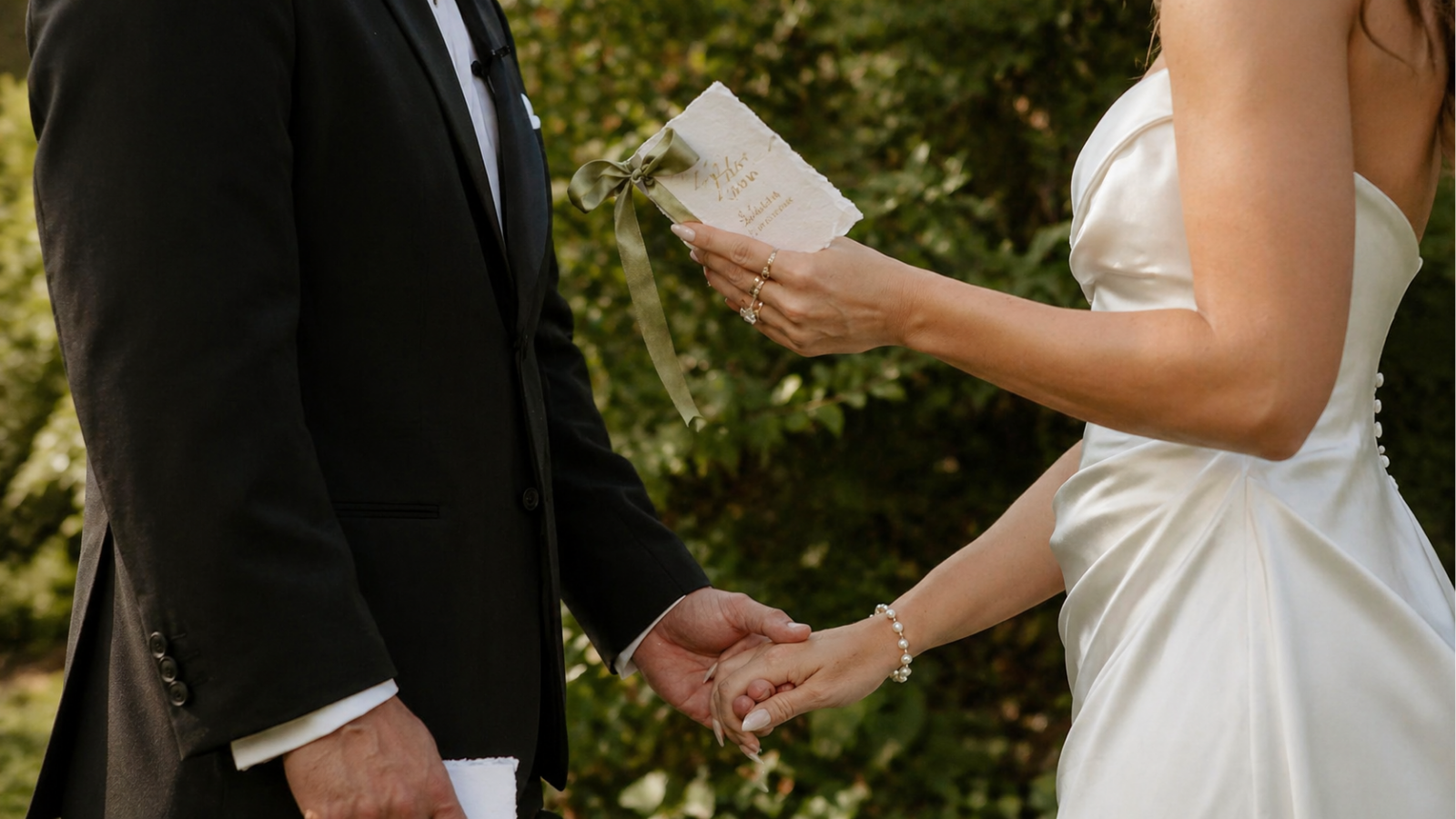
The Key Biblical Passages That Inform Traditional Vows
Ruth 1:16–17 — The Most-Used Wedding Scripture in the U.S.
“Where you go I will go, and where you stay I will stay. Your people will be my people and your God my God. Where you die I will die, and there I will be buried.”
Originally spoken by Ruth to her mother-in-law Naomi, this passage has been adapted into wedding vow language for generations. Its language of unconditional accompanying — “where you go I will go” — captures the essence of marital commitment in words that no modern vow writer has improved upon.
1 Corinthians 13:4–8 — The Love Chapter
“Love is patient, love is kind. It does not envy, it does not boast, it is not proud. It does not dishonor others, it is not self-seeking, it is not easily angered, it keeps no record of wrongs. Love does not delight in evil but rejoices with the truth. It always protects, always trusts, always hopes, always perseveres. Love never fails.”
The most-read passage at American weddings. Many couples personalize it into vow language: “I promise to be patient with you, to be kind to you, to keep no record of wrongs…”
Genesis 2:24 — The Foundation of Marriage
“That is why a man leaves his father and mother and is united to his wife, and they become one flesh.”
Song of Solomon 3:4 / 6:3
“I am my beloved’s and my beloved is mine.” (Song of Solomon 6:3)
Often used as a closing line for biblically-grounded personal vows. Brief, profound, and impossible to improve.
Traditional Biblical Wedding Vow — Full Sample
“Before God and these witnesses, I take you to be my husband/wife. As Ruth said to Naomi: where you go, I will go. Where you stay, I will stay.
I promise to be patient with you and kind — to keep no record of wrongs and to protect, trust, and hope always. I will love you not because you are perfect, but because you are mine, and I am yours. I am my beloved’s and my beloved is mine — from this day forward, until death do us part.”
11. Traditional Non-Denominational Wedding Vows
Traditional non-denominational wedding vows use the classic structure and language of the traditional form — “to have and to hold,” “in sickness and in health,” “till death do us part” — without any specifically religious or theological framing. They work equally well for couples of faith who want their vows to be universally inclusive, and for secular couples who are drawn to the weight and gravitas of traditional language without the doctrinal content.
Classic Non-Denominational Script
“I, [Name], take you, [Name], to be my partner in life — to have and to hold from this day forward, for better or for worse, for richer, for poorer, in sickness and in health, to love and to cherish, for as long as we both shall live. This is my promise to you.”
Traditional Non-Religious Wedding Vows — Extended Version
OFFICIANT ASKS:
“[Name], do you take [Name] to be your lawfully wedded partner? Do you promise to love and respect them, to stand by them through all that life brings, in times of joy and in times of hardship, and to remain faithful to them as long as you both shall live?”
Response: “I do.”
12. Traditional Baptist Wedding Vows
Traditional Baptist wedding vows follow the Protestant tradition closely, with an emphasis on the covenant nature of marriage before God and the congregation. Baptist ceremonies are led by a pastor or minister and typically include scriptural framing, a charge to the couple, and the formal exchange of vows.
Baptist denominations do not prescribe a single official vow script the way the Catholic Church does — vow language varies by congregation and pastor. However, the following scripts represent the forms most commonly used in Southern Baptist and broadly Baptist ceremonies across the U.S.
Traditional Baptist Wedding Vow — Standard Form
PASTOR TO GROOM FIRST, THEN BRIDE:
“[Name], will you have [Name] to be your wife/husband? Will you love her/him, comfort and keep her/him, in sickness and in health, and forsaking all others, keep yourself only unto her/him, so long as you both shall live?”
Response: “I will.”
COUPLE THEN EXCHANGES VOWS:
“I, [Name], take you, [Name], to be my wedded wife/husband. And I do promise and covenant, before God and these witnesses, to be your loving and faithful husband/wife — in plenty and in want, in joy and in sorrow, in sickness and in health, as long as we both shall live.”
13. Traditional Celtic and Irish Wedding Vows
Traditional Celtic wedding vows and traditional Irish wedding vows represent some of the most poetic and visually distinctive vow forms used in American weddings. They draw from Gaelic tradition, Irish literature, and the ancient practice of handfasting — and their imagery of land, seasons, and elemental love gives them a quality that no other tradition quite matches.
What Makes Celtic Vows Distinctive
Celtic wedding traditions emphasize the cyclical nature of time and the elements — the language of seasons, of rivers and mountains, of cycles that outlast any individual life. Celtic vows typically include:
- Elemental imagery: References to the sun, moon, earth, and seasons
- Duration language: Promises that extend beyond a single lifetime — “as long as love shall last,” “until the seas run dry”
- Handfasting: The binding of hands with cord or ribbon as the vow is spoken
- Gaelic blessings: Often incorporated before or after the formal exchange
Traditional Celtic Wedding Vow — Classic Form
“You cannot possess me for I belong to myself. But while we both wish it, I give you that which is mine to give. You cannot command me, for I am a free person. But I shall serve you in those ways you require, and the honeycomb will taste sweeter coming from my hand.
I pledge to you that yours will be the name I cry aloud in the night, and the eyes into which I smile in the morning. I pledge to you the first bite of my meat and the first drink from my cup. I pledge to you my living and my dying, each equally in your care. I shall be a shield for your back and you for mine. I shall not slander you, nor you me. I shall honor you above all others, and when we quarrel — as all couples do — we shall do so in private and tell no strangers our grievances.
This is my wedding vow to you. This is a beginning. Keep it with your heart.“
Traditional Irish Wedding Blessing (Often Spoken Before or After Vows)
“May you never forget what is worth remembering, nor ever remember what is best forgotten.
May the road rise to meet you. May the wind be always at your back. May the sun shine warm upon your face, the rains fall soft upon your fields and, until we meet again, may God hold you in the hollow of his hand.“
Traditional Irish Wedding Vow — Simple Form
“I, [Name], take you, [Name], to be my husband/wife. In the presence of God, our families and friends, I offer you my solemn vow to be your faithful partner in sickness and in health, in good times and in bad, in joy as well as in sorrow. I promise to love you unconditionally, to support you in your goals, to honor and respect you, to laugh with you and cry with you, and to cherish you for as long as we both shall live.“
Handfasting Vow — Spoken During the Cord Binding
“With this cord I bind myself to you — not as a constraint, but as a choice. Your joys become mine to share. Your burdens become mine to carry. As this knot is tied, so too is our love — strong, flexible, and made to last through every season of this life.“
14. Non-Traditional Wedding Vows — How They Compare
Non-traditional wedding vows are any vow format that departs from the established language and structure of the classical scripts. In 2026, this category includes personal/written vows, creative formats like lists or letters, themed vows, and hybrid approaches that blend traditional phrases with original language.
The decision between traditional and non-traditional vows is not a question of which is better — it is a question of which serves the couple and their ceremony better. Here is an honest, complete comparison:
| Factor | Traditional Vows | Non-Traditional Vows |
|---|---|---|
| Source of power | Continuity — weight of generations | Specificity — uniqueness of the couple |
| Preparation required | Minimal — pre-written | High — weeks of writing and practice |
| Best setting | Religious, formal, large ceremonies | Intimate, outdoor, themed weddings |
| Risk of going wrong | Very low | Medium — quality depends on writing |
| Guest connection | Universal — everyone knows the words | Unique — guests hear something new |
| Denominational requirement | Required in Catholic; preferred in most religious ceremonies | Fully available in civil and most Protestant ceremonies |
| Trend in 2026 | Steady — chosen by ~26% of couples | Dominant — chosen by ~74% of couples |
Non-Traditional Vow — Example for Reference
“From the moment I knew, something settled in me — the feeling of a question that had been running through my life finally finding its answer. Today I am making that answer official. I promise to love you without conditions, to choose you deliberately every day, and to build a life with you that we are both proud of. You are my person. That is not changing.“
Non-Traditional Vows for the Officiant
If a couple chooses non-traditional vows, non-traditional wedding vows for the officiant still require a legally sufficient declaration of intent. Even when personal vows are entirely original, the officiant typically includes a brief legal declaration before or after the personal exchange:
OFFICIANT:
“[Name] and [Name], having heard your promises to each other, I now ask: do you each take the other as your lawfully wedded partner, to love and to cherish, for as long as you both shall live?“
Both respond: “I do.”
15. All Traditional Wedding Vow Scripts — Side by Side
For easy reference and comparison, here are the essential traditional wedding vow examples from every major tradition covered in this guide.
| Tradition | Core Vow Text | Key Features |
|---|---|---|
| Classic Protestant | “I, [Name], take you, [Name]…to have and to hold…for better or worse…till death do us part.” | Most widely used in U.S.; works in any ceremony |
| Catholic | “I, [Name], take you, [Name], for my lawful wife/husband…I will love you and honor you all the days of my life.” | Sacramentally required; preceded by Declaration of Intent |
| Methodist | “I, [Name], take you…to have and to hold…until we are parted by death. This is my solemn vow.” | Closes with “solemn vow” rather than “I pledge my troth” |
| Episcopal | “I, [Name], take thee, [Name]…to love and to cherish, till death us do part…thereto I plight thee my troth.” | Closest to 1549 original; uses “thee” and “plight my troth” |
| Baptist | “I promise and covenant, before God and these witnesses, to be your loving and faithful husband/wife…” | Covenant language; “before God and these witnesses” prominent |
| Non-Denominational | “I, [Name], take you…to have and to hold…for as long as we both shall live. This is my promise to you.” | No religious language; fully secular-friendly |
| Celtic/Irish | “You cannot possess me for I belong to myself. But while we both wish it, I give you that which is mine to give…” | Poetic; elemental imagery; often paired with handfasting |
16. Full Traditional Wedding Vows Officiant Script
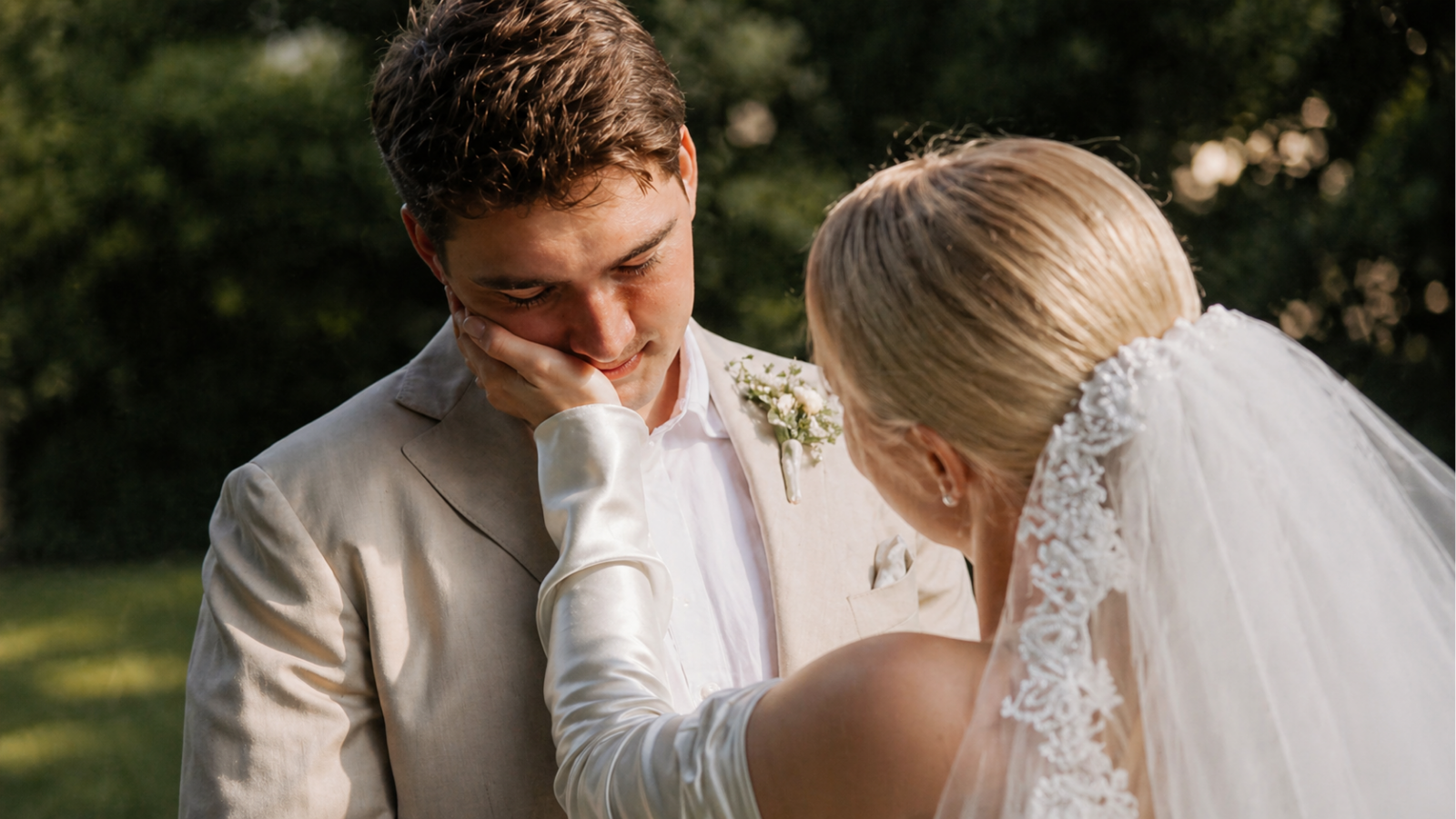
For officiants conducting a traditional non-denominational or civil ceremony, here is a complete, ready-to-use traditional wedding vows script for the officiant — from opening to pronouncement. Copy, adapt, and personalize as needed.
📜 Complete Officiant Script — Traditional Ceremony
[OPENING]
We are gathered here today in the presence of family and friends to celebrate the marriage of [Partner 1] and [Partner 2]. Marriage is one of the most significant commitments a person can make — a public promise of love, faithfulness, and partnership. [Partner 1] and [Partner 2] have chosen to make that promise here, today, in the presence of the people they love most.
[CHARGE TO THE COUPLE]
[Partner 1] and [Partner 2], you are about to make the most solemn and binding promises of your lives. These vows are not made lightly, and they are not forgotten easily. They will carry you through the seasons ahead — the good ones and the difficult ones — and hold you to each other when everything else changes. I ask that you speak them with full intention and full presence.
[DECLARATION OF INTENT — “I WILL”]
[To Partner 1:] [Name], do you come here freely and without reservation, to give yourself in marriage to [Name]?
[Response: “I do.”]
[To Partner 2:] [Name], do you come here freely and without reservation, to give yourself in marriage to [Name]?
[Response: “I do.”]
[EXCHANGE OF VOWS — REPEAT AFTER ME]
[Partner 1], please repeat after me:
“I, [Name], take you, [Name], to be my lawfully wedded wife/husband — to have and to hold from this day forward, for better or for worse, for richer, for poorer, in sickness and in health, to love and to cherish, until death do us part. This is my solemn vow.”
[Partner 2], please repeat after me:
“I, [Name], take you, [Name], to be my lawfully wedded husband/wife — to have and to hold from this day forward, for better or for worse, for richer, for poorer, in sickness and in health, to love and to cherish, until death do us part. This is my solemn vow.”
[RING EXCHANGE]
These rings are the outward symbol of the inward promises you have just made — a circle with no beginning and no end, representing love without conditions. [Partner 1], place the ring on [Partner 2]’s finger and repeat: “With this ring, I thee wed.”
[Partner 2], place the ring on [Partner 1]’s finger and repeat: “With this ring, I thee wed.”
[PRONOUNCEMENT]
[Name] and [Name], by the power vested in me by the State of [State], and in the presence of all who are gathered here today, I now pronounce you married.
You may kiss.
[INTRODUCTION]
Ladies and gentlemen, family and friends, it is my great honor to present — for the first time as a married couple — [Partner 1] and [Partner 2]!
Final thoughts
Traditional wedding vows are not powerful simply because they are old. They endure because, generation after generation, they have been chosen by people standing in the same place you are now—people who felt the weight of the moment, who understood that they were making a promise without fully knowing what the future would hold, and who chose to say the words anyway.
Over time, those words became more than tradition. They became a shared language of commitment—simple, direct, and strong enough to carry meaning across centuries. If you choose to use them, you are not just repeating a script. You are stepping into something that has already proven itself, again and again.
And that is precisely why they still matter.
Frequently asked questions (FAQ)
Can you write your own version of traditional wedding vows?
Yes, you can personalize traditional wedding vows by keeping the core structure and adapting the language to fit your relationship. Many couples keep phrases like “to have and to hold” while simplifying or modernizing the rest.
Are traditional wedding vows still popular in the United States?
Yes, traditional wedding vows are still widely used, especially in religious ceremonies. While many couples choose personal vows, a significant percentage still prefer traditional scripts for their timeless language and emotional weight.
Do both partners say the same traditional wedding vows?
In modern ceremonies, both partners typically say the same vows with only names adjusted. Earlier versions included different wording for each partner, but most current scripts use equal and identical language.
What is the difference between “I do” vows and repeating vows?
“I do” vows are a call-and-response format where each partner answers questions from the officiant. Repeating vows involve each partner speaking a full vow statement. Both are legally valid and commonly used in the U.S.
Do traditional wedding vows have to be religious?
No, traditional wedding vows do not have to include religious language. Many non-denominational versions use the same classic structure without references to God, making them suitable for secular ceremonies.