Wedding prelude songs are the background music that plays as guests arrive and are seated before the ceremony begins typically 20 to 30 minutes before the processional.
Most couples don’t realize how important this moment actually is. The prelude is the very first impression your guests have of your wedding before the vows, before the entrance, before anything officially starts. It quietly sets the tone, shapes the atmosphere, and signals what the entire ceremony will feel like.
This guide brings together the best wedding prelude songs for every style as part of a complete collection of wedding songs for every moment of the day from classical and instrumental to modern, country, Catholic, and Christian along with exactly how to choose the right music, how many songs you need, and how to create a calm, intentional atmosphere that feels right from the moment guests walk in.
What Is Prelude Music at a Wedding?
Wedding prelude music also called wedding ceremony prelude songs is the background music that plays as guests arrive, find their seats, and wait for the ceremony to begin. It starts approximately 20 to 30 minutes before the processional and ends when the ceremony officially begins.
The prelude is not music guests actively listen to — it is music guests hear while doing other things: greeting family, getting settled, reading programs, whispering across pews. Its job is atmospheric. It tells the room: something significant is about to happen here, and the tone of that something is this.
The difference between prelude and processional music is the difference between background and foreground. The processional commands attention — guests stand, phones come out, the room goes quiet. The prelude asks for nothing except that it be consistent with what the ceremony is about to feel like. That is why choosing prelude music that fits the ceremony’s tone matters when learning how to choose wedding music with intention even though guests are not consciously focusing on it. They feel it even when they are not listening.
How Many Songs Do You Need for the Prelude?
For a standard 20 to 30 minute prelude, plan for 8 to 12 songs. At an average of 3 to 4 minutes per song, 8 songs covers roughly 28 minutes — enough buffer for a ceremony that starts slightly late without running out of music. Most couples give their DJ or musicians a playlist of 10 to 12 songs and let them manage the flow.
Unlike the processional, you do not need to plan the prelude song-by-song with specific cues. A style brief — “soft, instrumental, romantic, nothing upbeat” — plus a curated list is enough. Your DJ or musicians can read the room and adjust pace and selection accordingly.
One practical note: as the venue fills up, people absorb sound — the room will feel noticeably quieter with 150 guests than with 20. Ask your DJ to monitor volume throughout the prelude and raise it slightly as more guests arrive. A prelude that feels appropriately atmospheric when the first guests arrive can feel nearly inaudible by the time the room is full.
Instrumental vs Vocal Prelude Music
This is the prelude’s most important stylistic decision — and the answer is almost always instrumental.
Vocal songs during the prelude pull guests’ attention toward the music and away from each other. Guests arrive wanting to greet people they have not seen in years, find their seats, and settle in. If a recognizable song with lyrics comes on, the instinct is to listen to it — which interrupts the natural social behavior the prelude period is designed to support. Instrumental wedding songs are absorbed without demanding attention, which is exactly what a 25-minute waiting period needs.
The exception: if you want to use a specific song with personal meaning during the prelude — a song that represents your relationship in a way you want guests to hear — include it. Just do not center the entire prelude around vocal tracks. One or two meaningful vocal songs in a primarily instrumental playlist is the right balance.
The most effective prelude formats:
- Classical instrumental only — the safest and most universally appropriate choice; works at any venue and ceremony style
- Instrumental covers of modern songs — familiar melodies without lyrics; guests recognize the songs without being pulled into listening
- Acoustic guitar or piano playlist — warm, intimate, works especially well at smaller ceremonies
- Mixed: mostly instrumental with 1 to 2 meaningful vocal tracks — the most personalized approach without sacrificing atmosphere
Classical Wedding Prelude Songs
Classical wedding songs used as prelude music are the most universally appropriate choice — it works at formal and informal venues, religious and secular ceremonies, and it requires no lyrical vetting. These pieces have been used as wedding background music for generations, which means they carry an inherent sense of occasion without feeling dated.
| Piece | Composer | Mood / Character |
|---|---|---|
| Clair de Lune | Debussy | Dreamlike, intimate, deeply romantic — one of the most beautiful prelude pieces available |
| Gymnopédie No. 1 | Erik Satie | Gentle, unhurried, creates a serene atmosphere effortlessly |
| Jesu, Joy of Man’s Desiring | Bach | Warm and flowing; appropriate for religious and secular ceremonies alike |
| Canon in D | Pachelbel | Also works as a processional, but in a slower arrangement functions well as prelude background |
| Air on the G String | Bach | Meditative, elegant, suits formal venues particularly well |
| Pavane pour une infante défunte | Ravel | Quietly beautiful; less common than Bach or Pachelbel, which makes it feel more personal |
| Prelude in C Major | Bach | Bright and gently moving; one of the most peaceful pieces in the classical repertoire |
| The Swan (Le Cygne) | Saint-Saëns | Graceful and romantic; works beautifully on cello or piano |
| Water Music Suite | Handel | Stately and warm; appropriate for a range of ceremony styles |
| Nocturne in E-flat Major | Chopin | Intimate and emotional; particularly effective at smaller ceremonies |
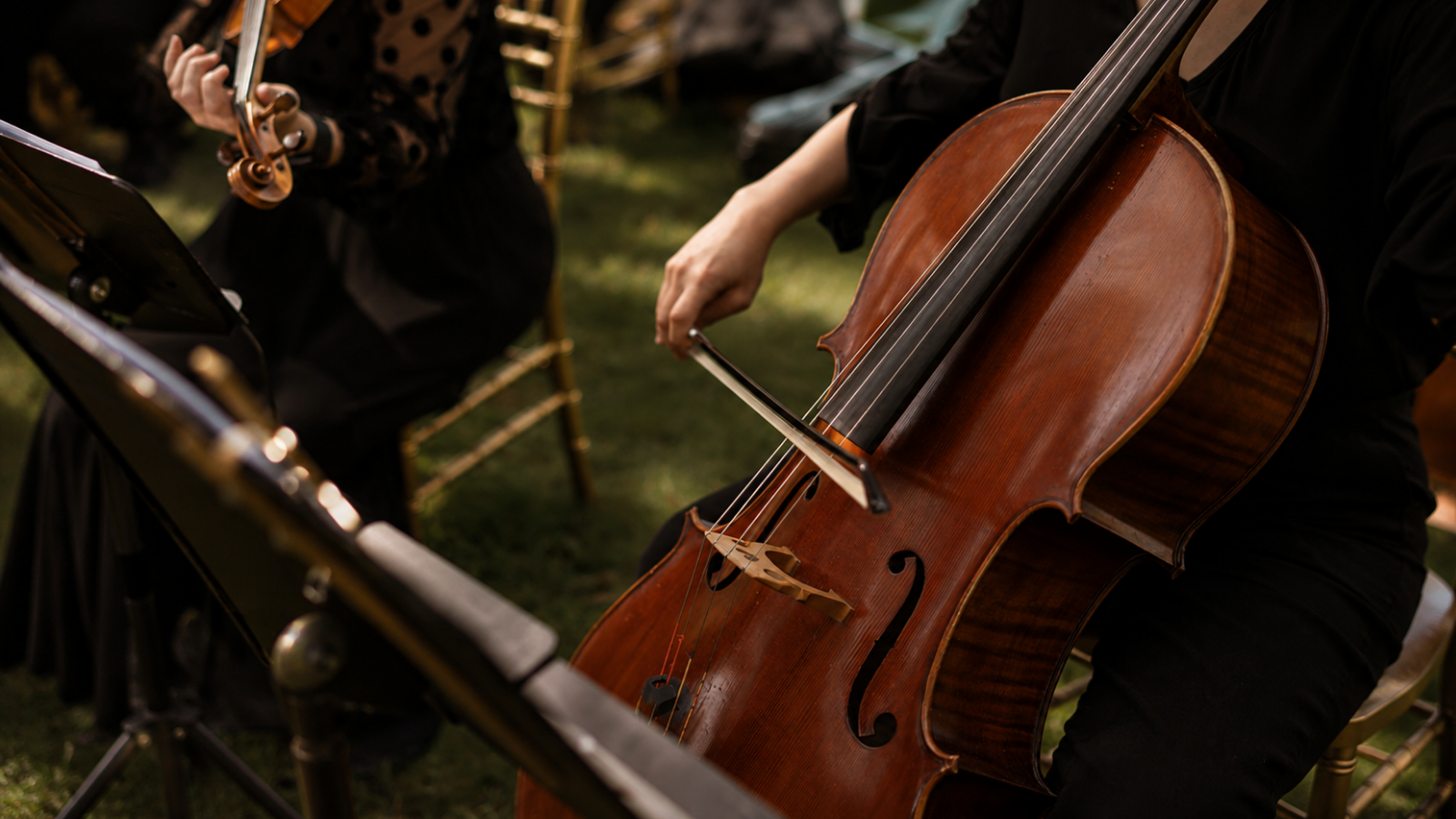
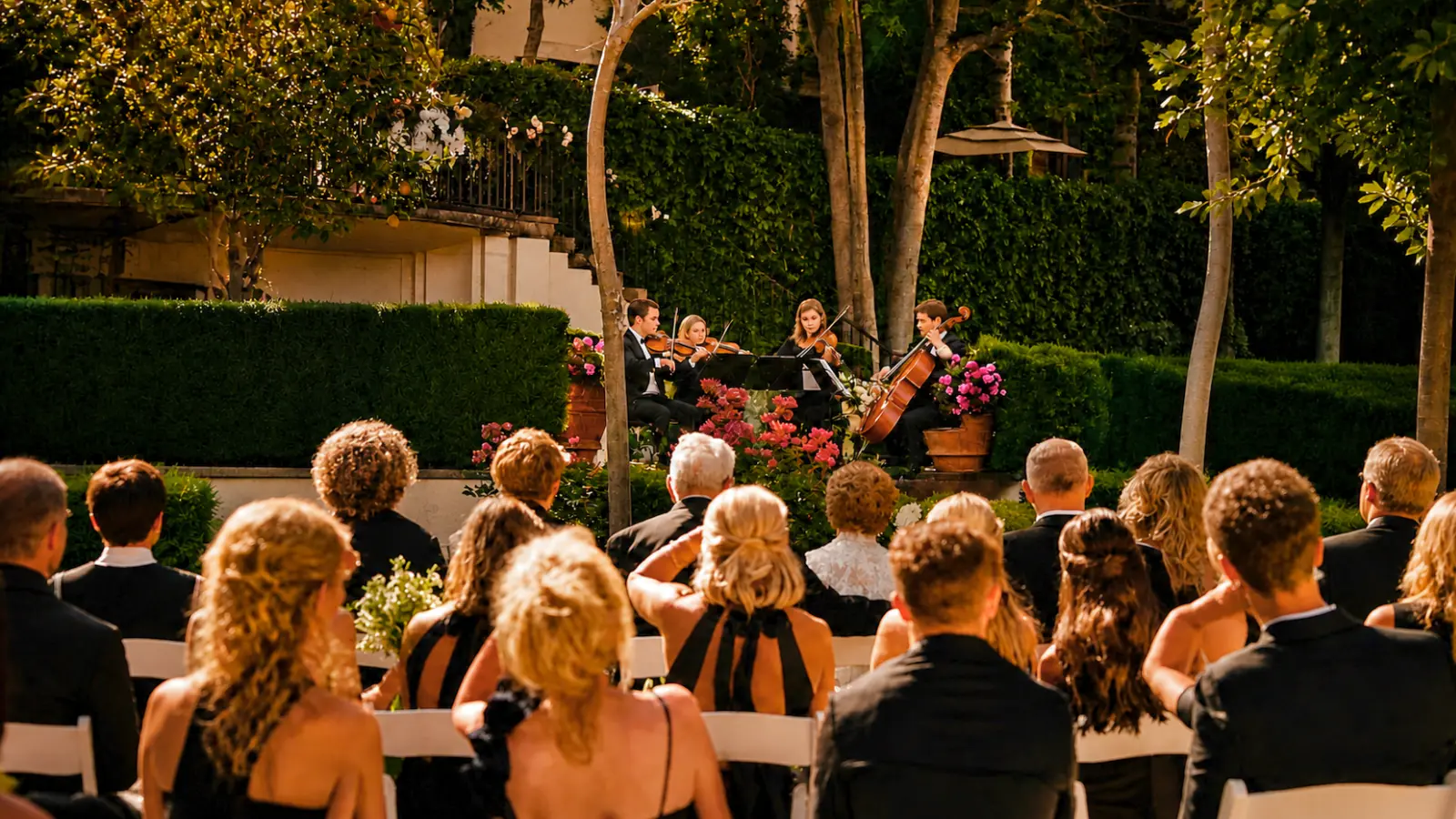
Pro tip: If you are having live musicians for the ceremony, the prelude is where they can play freely without worrying about cues. Give them a style brief and a list of 10 to 15 approved pieces, and let them fill the 20 to 30 minutes as the mood requires. Live string quartets in particular shine during the prelude — the sound fills a room in a way a recording rarely does.
Modern and Pop Wedding Prelude Songs
Modern prelude songs work best in instrumental or acoustic arrangements — familiar melodies that guests recognize without lyrics pulling their attention. A piano cover of “Perfect” by Ed Sheeran creates atmosphere in a way the original recording does not, because the absence of lyrics lets the melody do its work without demanding an audience.
The following modern songs are consistently effective as prelude choices, either in their original form (for slower, quieter tracks) or in instrumental arrangements:
| Song | Artist | Format / Notes |
|---|---|---|
| Perfect (piano cover) | Ed Sheeran / arr. | The most requested modern prelude piece; stripped down beautifully |
| All of Me (piano) | John Legend / arr. | Piano melody is gentle enough to work as background; familiar without being intrusive |
| A Thousand Years (piano) | Christina Perri / arr. | Works as both prelude and processional; confirm you want both uses before committing |
| Turning Page | Sleeping at Last | Soft enough to use in its original form; instrumental feel even with vocals |
| Grow Old With Me | Tom Odell | Quiet original; works as prelude without arrangement |
| Experience | Ludovico Einaudi | Modern classical; increasingly popular as wedding prelude music |
| Comptine d’un autre été | Yann Tiersen | Cinematic and intimate; from Amélie; works beautifully as background |
| Make You Feel My Love (piano) | Adele / Bob Dylan, arr. | Emotional melody holds up well without lyrics |
| Bloom | The Paper Kites | Soft indie-folk; gentle enough to use in original form |
| Golden Hour (slowed) | JVKE, arr. | Contemporary; instrumental cover works well for modern ceremonies |
Country Wedding Prelude Songs
Country prelude wedding songs work well at outdoor ceremonies, barn venues, and any celebration where the overall tone is warm and informal. Slower country songs and country ballads in acoustic arrangements are the most effective — high-energy country tracks are too present for a prelude setting.
| Song | Artist | Vibe |
|---|---|---|
| Yours | Russell Dickerson | Quiet and sincere; works in original form as prelude |
| Bless the Broken Road | Rascal Flatts | Slower arrangement works as prelude; meaningful for couples with a longer road to each other |
| From the Ground Up | Dan + Shay | Gentle enough for prelude use; modern country-pop crossover |
| God Gave Me You | Blake Shelton | Warmly romantic; appropriate for Christian country weddings |
| Then | Brad Paisley | Quiet acoustic arrangement works as background |
| Tennessee Whiskey | Chris Stapleton | Soulful and slow; particularly effective at outdoor evening ceremonies |
| Better Together | Jack Johnson | Relaxed and warm; acoustic feel works naturally as prelude |
| Turning Home | David Nail | Understated country romantic; less common and therefore more personal |
Catholic and Christian Wedding Prelude Songs
Catholic prelude wedding songs are subject to the same considerations as all Catholic ceremony music — many parishes require sacred or at minimum reverential music throughout the entire ceremony, including the prelude. Confirm requirements with your parish music director early; policies vary significantly between dioceses and individual churches.
Christian wedding songs used during the prelude at non-Catholic churches typically have more flexibility, with pastors often permitting contemporary Christian music alongside classical sacred pieces.
| Song / Piece | Composer / Artist | Use / Notes |
|---|---|---|
| Ave Maria | Schubert | Deeply reverent; accepted at virtually every Catholic parish |
| Panis Angelicus | César Franck | Sacred and beautiful; frequently approved at Catholic ceremonies |
| Jesu, Joy of Man’s Desiring | Bach | Standard across Catholic and Protestant ceremonies; warm and moving |
| Air on the G String | Bach | Meditative and sacred; appropriate at formal religious venues |
| How Great Thou Art (instrumental) | Traditional hymn | Recognizable hymn that works as instrumental background in Christian ceremonies |
| It Is Well With My Soul (piano) | Traditional hymn | Meditative hymn; particularly effective in quieter, intimate ceremonies |
| God Gave Me You | Blake Shelton | Contemporary Christian-adjacent; appropriate at most Protestant churches |
| Bless the Broken Road | Rascal Flatts | References God in the final verse; appropriate at most Christian ceremonies |
| In This Very Room (piano) | Ron Harris | Common in evangelical and non-denominational settings as prelude background |
Note for Catholic couples: The prelude period — music before the Mass begins — is often where parishes give couples more flexibility than during the liturgy itself. Some churches permit romantic or contemporary music during the prelude while requiring sacred music once the processional begins. Confirm this distinction with your music director, as it significantly affects your options.
How to Create the Right Atmosphere with Prelude Music
The prelude’s purpose is atmospheric — it shapes how guests feel before a word is spoken. These are the factors that most directly determine whether your prelude creates the right mood.
Volume
Background music that is too loud becomes foreground music — and foreground music at the wrong time pulls guests out of conversation and into passive listening when they should be greeting each other and settling in. The test: from the back of the venue, you should clearly hear the music. In the front rows, guests should be able to speak at normal conversational volume without competing with it. As the room fills, have your DJ raise the volume gradually — people absorb sound, and a full venue needs more volume than an empty one.
Tempo
Prelude music should have a slower, unhurried tempo. Anything with a driving beat — even at low volume — creates a subconscious sense of urgency that works against the atmosphere you want guests in before a ceremony. Stick to 60 to 80 BPM for prelude selections. If a song feels too upbeat at full volume, it will feel equally out of place at half volume.
Consistency of style
A prelude playlist that jumps between classical pieces and upbeat pop songs and slow country ballads creates a disjointed atmosphere. Choose a single stylistic lane — classical only, or acoustic pop only, or country acoustic only — and stay in it. Your guests will not consciously notice the consistency, but they will notice the inconsistency.
The final song before the processional
The last prelude song — the one playing as guests settle and the ceremony is moments away — should be the quietest and most intimate of the entire prelude. Some couples choose a specific song for this moment that is different from the general prelude playlist; others simply let their DJ select something appropriately low-key from the approved list. Either works, but pay attention to what is playing in the two minutes before the processional begins. That transition — prelude to silence to processional — is the most important musical transition of the ceremony.
What to Tell Your DJ About the Prelude
Most DJs will ask about processional and first dance songs. Very few ask specifically about the prelude — so you need to brief them proactively. Here is what to include in writing:
- Style brief — classical, soft acoustic, modern instrumental, country acoustic. One or two words that establish the lane
- A curated playlist — 10 to 12 approved songs they can use in any order; this prevents them from defaulting to their generic wedding prelude playlist
- Any songs to avoid — if a song appears on their standard prelude playlist but would feel wrong for your ceremony, name it explicitly
- Start time — when the prelude begins, not just when the ceremony starts
- Volume instructions — “start at background level, raise gradually as the venue fills”
- The cue for the processional — what signal tells them to stop the prelude and begin the processional music; this should be a specific, reliable cue (officiant’s entrance, doors closing, wedding coordinator’s signal) not “when it feels right”
Wedding Prelude Songs Playlist
Listen to the full playlist of wedding prelude songs below, featuring soft instrumental pieces, classical selections, and modern acoustic tracks designed to create a calm and welcoming atmosphere before the ceremony begins. Use it to set the tone — not to demand attention.
Final thoughts
The prelude is one of the simplest parts of your wedding to plan and one of the easiest to get wrong. You don’t need perfect songs. You need the right atmosphere.
A well-built prelude playlist doesn’t draw attention to itself it creates a feeling. Guests walk in, settle down, and without realizing it, they’re already inside the emotional tone of your ceremony. Get that right, and everything that comes after feels more intentional.
Frequently asked questions (FAQ)
What are wedding prelude songs?
Wedding prelude songs are the background music played as guests arrive and are seated before the ceremony begins. They usually start 20 to 30 minutes before the processional and help set the tone of the event.
How many songs do you need for a wedding prelude?
Most wedding preludes require 6 to 10 songs for a 20 to 30 minute window. Many couples prepare a playlist of 10 to 12 songs to give flexibility to the DJ or musicians.
Should wedding prelude music be instrumental or vocal?
Instrumental music is usually the best choice because it creates atmosphere without distracting guests. Vocal songs can be used sparingly, but too many can interrupt conversation.
What is the difference between prelude and processional music?
Prelude music plays in the background while guests arrive, while processional music is the main song played when the wedding party walks down the aisle. The prelude sets the mood, and the processional creates the emotional moment.
When should wedding prelude music start?
It is Wedding prelude music should begin about 20 to 30 minutes before the ceremony starts, ideally before the first guest arrives, so the space never feels silent.

About the Author
Débora Justo
Founder and editor of EVORÉ, creating practical wedding planning resources, thoughtful inspiration and useful tools for the decisions that shape a celebration.
Read more about the author →