Wedding reception dance songs are the songs played during the party portion of your wedding but what actually keeps a dance floor full is not just the songs themselves, it is when and how they are played.
Most couples focus entirely on building a wedding songs playlist and almost none think about sequencing, energy flow, or how different groups of guests respond to music. That is why so many receptions start strong and slowly lose momentum as the night goes on.
This guide breaks down both: the songs that consistently work at real weddings and the strategy behind a dance floor that stays full from the first song to the last, as part of a complete collection of wedding songs for every moment of the day.
Why Dance Floors Empty — and What Actually Causes It
Most couples blame their song list when a floor empties. The songs are usually not the problem. The problem is almost always sequencing — what comes after what, and when.
The most common floor-killer is playing two or three slow wedding songs consecutively during peak hours. The floor does not empty immediately — it empties gradually, table by table, as people decide the music has shifted away from dancing and return to their seats. Getting them back is harder than keeping them there in the first place. One slow song followed by two or three upbeat tracks keeps people in place; three consecutive slow songs during peak hours loses a portion of the floor for the rest of the night.
The second most common cause is playing songs that are specifically loved by one demographic in a room that contains multiple. Forty minutes of current pop that older guests do not recognize, followed by forty minutes of Motown that younger guests treat as background music, produces two separate audiences instead of one crowd. The songs that keep a floor full are almost always the ones that cross the generational divide — the ones where a 65-year-old and a 25-year-old are both moving to the same track.
The third cause is going too hard too early. If the highest-energy songs play in the first hour before the crowd is warmed up, there is nowhere to go. The floor is full early and noticeably less full later, which feels like a slow failure even if the total dancing time was substantial. Build toward energy; do not start at the peak.
The Three Phases of a Reception Dance Floor
Experienced DJs and wedding planners consistently describe reception energy in three distinct phases, each requiring different music strategy.
Phase 1: The Warm-Up (First 45–60 minutes of dancing)
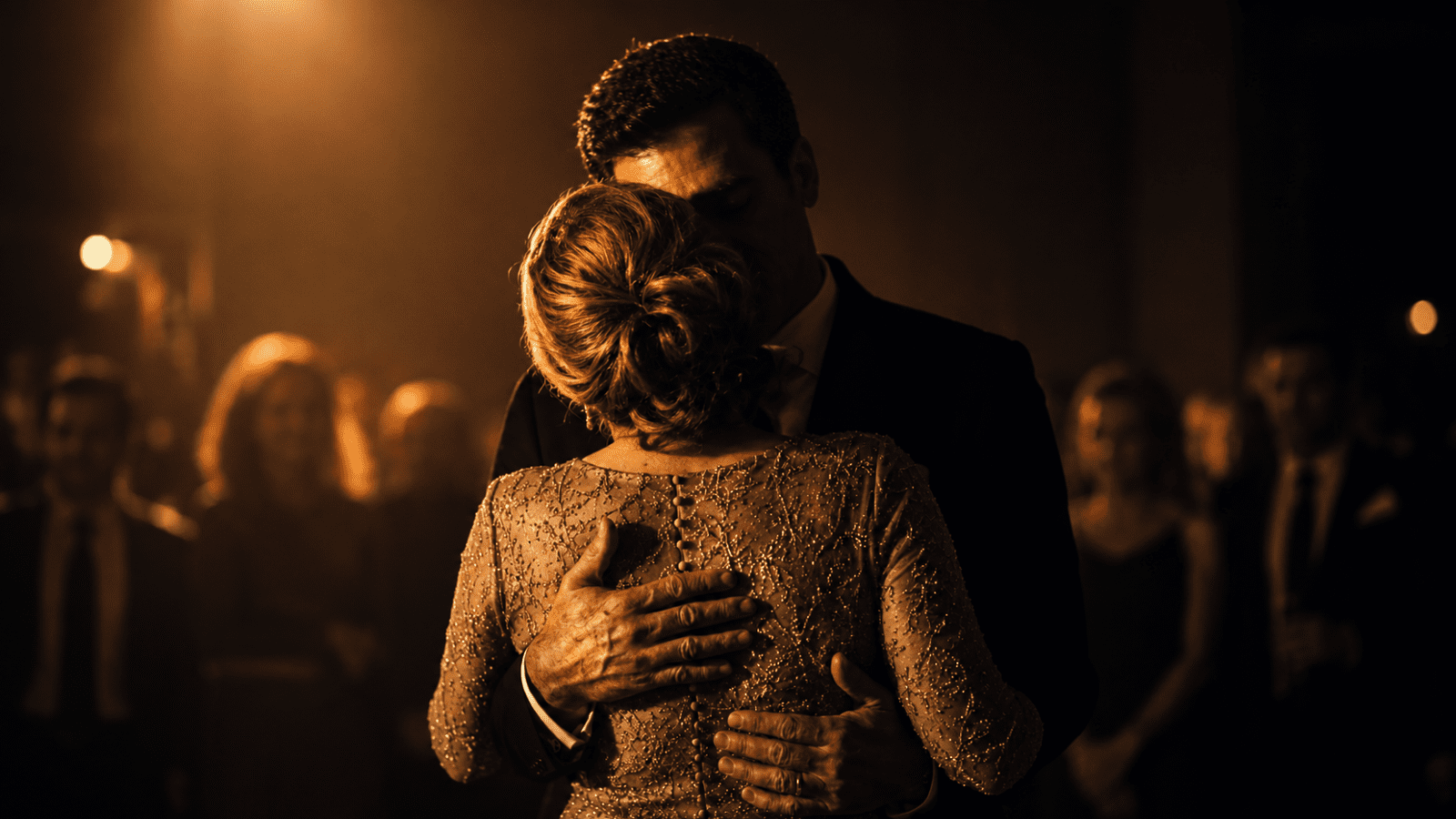
After the parent dances and the opening of the floor, the first hour is about getting the right people up without scaring the reluctant ones away. Play songs that are universally recognizable and moderately upbeat — not aggressive, not demanding, but something everyone in the room knows. This is where crowd-favorite classics earn their place: songs that have been filling floors at American weddings for 20 to 30 years because they work every single time regardless of crowd composition.
The goal in Phase 1 is not maximum energy — it is maximum participation. A half-full floor dancing freely beats a quarter-full floor that looks amazing while three-quarters of the guests watch from tables.
Songs that reliably open the floor without demanding too much:
- “September” — Earth, Wind & Fire — The single most reliable floor-opener at American weddings; 70-year-olds and 22-year-olds move to this simultaneously
- “Dancing Queen” — ABBA — Opens the floor to dancers who would not otherwise move; the crowd is already singing along by the second line
- “Shut Up and Dance” — WALK THE MOON — Gets reluctant dancers up better than almost any other modern song; the lyric is practically an invitation
- “Signed, Sealed, Delivered I’m Yours” — Stevie Wonder — Motown that crosses every generational line
- “Don’t Stop Believin'” — Journey — Singalong quality means participation even from guests who are not dancing
Phase 2: Peak Energy (Middle 60–90 minutes)
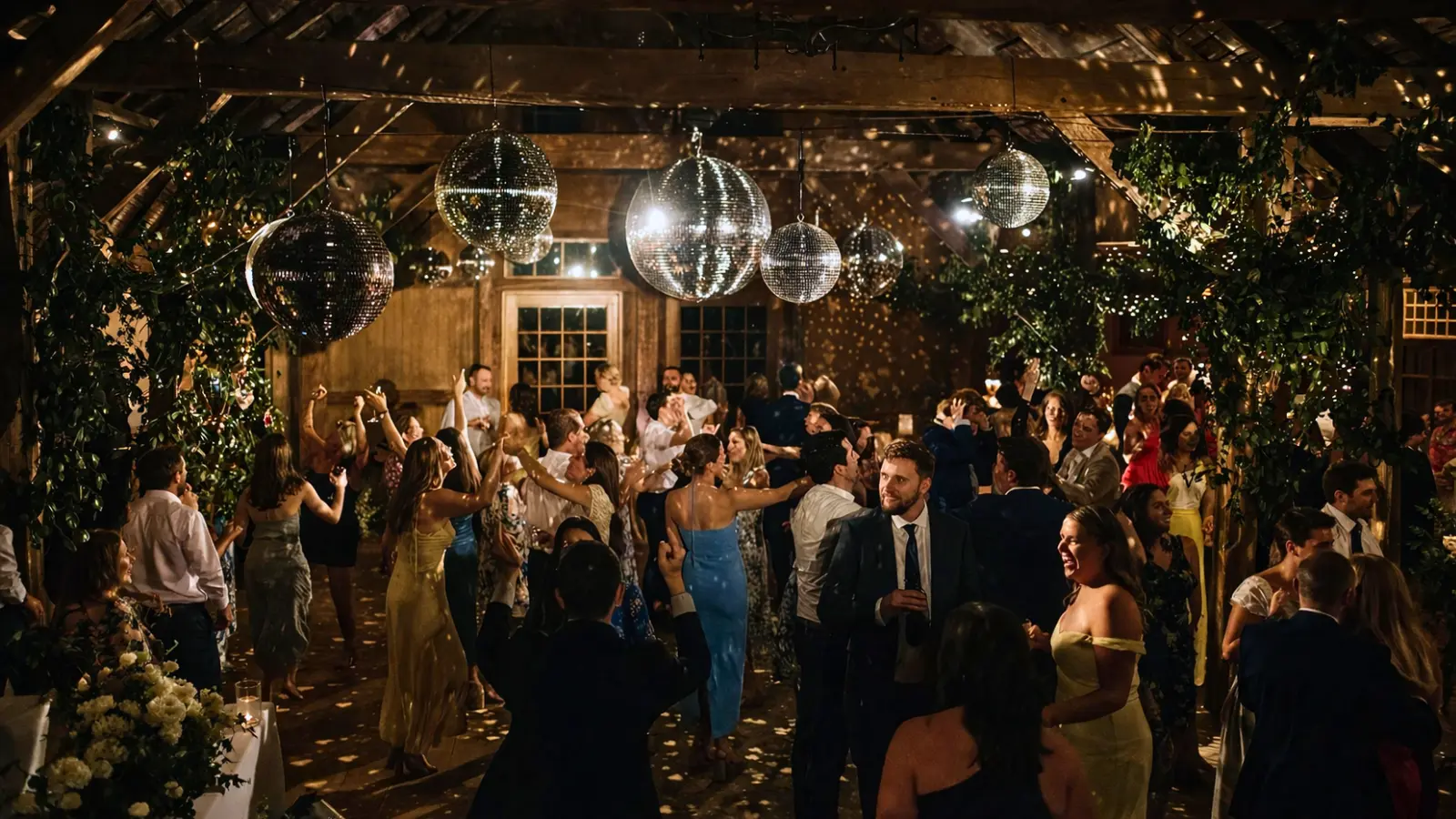
This is where your highest-energy songs live — the ones that demand the floor rather than invite it. By this point, dancers are warmed up and the non-dancers have found their positions. The floor is as full as it is going to be, and the music’s job is to keep it that way.
Peak hour songs should have strong beats, high recognition, and immediate dance-ability. This is also where current hits earn their place alongside classics — younger guests are fully engaged and will respond to songs they know from this year.
- “Uptown Funk” — Bruno Mars & Mark Ronson
- “I Wanna Dance with Somebody” — Whitney Houston — The floor clears of non-dancers; everyone else goes harder
- “Don’t Stop Me Now” — Queen — Energy that builds across 3.5 minutes; room is fully engaged at the end
- “Mr. Brightside” — The Killers — Younger crowds go wild; older guests do not know it but feel the energy
- “Shake It Off” — Taylor Swift — Works across age groups more than most current songs
- “Livin’ on a Prayer” — Bon Jovi — The singalong elevates the room; people who are not dancing participate anyway
- “Waterloo” — ABBA — Second ABBA entry for a reason
- “Good as Hell” — Lizzo — Confidence and energy; modern crowd-pleaser
Phase 3: The Wind-Down (Final 30–45 minutes)
Late-reception energy naturally softens. Guests who have been dancing for two hours are tired; some have left. This is where slow songs earn their place — not to kill the floor, but to transition intentionally. The guests still on the floor at this point are the ones who want to be there. Give them something to dance to that acknowledges the night is winding toward a close.
The last dance especially matters. Last dance wedding songs create one of the most remembered musical moments of the entire reception. Choose something deliberate — either a romantic song that sends the night out beautifully, or an anthemic crowd-pleaser that produces one final shared moment before the lights come up.
Songs That Fill the Floor — Analyzed by Why They Work
Instead of a long generic list, here is a smaller set of songs analyzed for the specific reason each one works at a wedding reception. Understanding the mechanism helps you make better choices for your specific crowd.
| Song | Artist | Why It Works (the actual mechanism) |
|---|---|---|
| September | Earth, Wind & Fire | The opening brass riff is recognized by virtually every American regardless of age; the impulse to move is involuntary |
| Dancing Queen | ABBA | The lyric “you are the dancing queen” addresses the listener directly and creates a permission structure — you are supposed to dance to this |
| Shut Up and Dance | WALK THE MOON | The opening lyric is literally a command to dance; combined with an irresistible guitar riff, reluctant guests have no psychological exit |
| Don’t Stop Believin’ | Journey | The singalong pulls non-dancers into participation, which lowers their social barrier to actually dancing |
| Livin’ on a Prayer | Bon Jovi | Same singalong mechanism as Journey; also benefits from 40 years of being played at American group events |
| Uptown Funk | Bruno Mars & Ronson | The opening drum pattern triggers a physical response before the melody arrives; works on people who claim they cannot dance |
| I Wanna Dance With Somebody | Whitney Houston | Directly states the desire the audience is already feeling; the emotional directness of Whitney’s vocal makes staying seated feel wrong |
| Cupid Shuffle | Cupid | The song contains its own instructions, which removes the social anxiety of not knowing what to do — this is why line dances work |
| Mr. Brightside | The Killers | Guitar intro creates anticipatory recognition; younger guests treat it as an anthem and older guests are swept up in the energy |
| Africa | Toto | Irony has become sincerity — everyone who knows this song now genuinely loves it; the crowd response is warm and participatory |
Songs That Work Across All Generations
The most strategically valuable songs in a wedding reception playlist are the ones where a 65-year-old and a 25-year-old are doing the same thing on the dance floor at the same time. These are the songs that unify a crowd rather than segment it — and a unified crowd produces more energy and more memorable moments than a segmented one.
What these songs share: they are old enough that older guests know them deeply, but have been culturally present enough in the past decade that younger guests also know them. They also tend to be emotionally uncomplicated — joyful, celebratory, or anthemic in ways that do not require specific cultural context to feel.
- “September” — Earth, Wind & Fire — 1978; universally known across every generation at a U.S. wedding
- “Dancing Queen” — ABBA — 1976; Mamma Mia renewed it for younger generations
- “Don’t Stop Believin'” — Journey — 1981; Glee renewed it; it crosses every line
- “Livin’ on a Prayer” — Bon Jovi — 1986; still requested at virtually every American wedding
- “YMCA” — Village People — 1978; participatory format means everyone joins
- “Signed, Sealed, Delivered” — Stevie Wonder — 1970; Motown that no generation resists
- “Happy” — Pharrell Williams — 2013; the rare modern song that works for all ages immediately
- “Shake It Off” — Taylor Swift — 2014; broader age appeal than most current pop
- “Shut Up and Dance” — WALK THE MOON — 2014; modern enough, classic enough
- “Can’t Stop the Feeling” — Justin Timberlake — 2016; broad appeal; few guests actively dislike it
How to Use Slow Songs Without Killing the Energy
Slow dance songs at a wedding reception have a specific problem: they empty the floor of most guests and fill it with couples. The guests who sit down during a slow song are not gone — they are waiting. But if two or three slow songs play consecutively, they stop waiting and start a conversation or get another drink, and bringing them back is harder than if you had kept them moving.
The rule most experienced DJs follow: one slow song maximum during peak hours, followed immediately by something upbeat that brings the seated guests back. Two slow songs in a row is a deliberate choice; three in a row is a mistake.
The best moments for slow songs at a reception:
- Immediately after the parent dances — the emotional tone is already established, and a slow song feels continuous rather than disruptive
- One song per hour during the early reception — gives couples their moment without losing the floor permanently
- Late in the evening as a transition toward the last dances — guests who want to dance slow are still there; others have settled into end-of-night mode
Reliable slow dance songs for the reception (not the first dance — songs that work in the broader reception context):
- “Can’t Help Falling in Love” — Elvis Presley
- “Unchained Melody” — The Righteous Brothers — One of the most emotional slow dance songs in use
- “Stand by Me” — Ben E. King — Recognizable, warm, and works at any point in the evening
- “La Vie en Rose” — Édith Piaf / various — Romantic and cinematic
- “Thinking Out Loud” — Ed Sheeran — Modern slow dance; couples specifically come to the floor for this
- “At Last” — Etta James — Soulful and beautiful; the most elegant slow reception song available
Line Dances — The Underrated Strategy
This is the single most underutilized tool for filling a dance floor, particularly among guests who are self-conscious about dancing. Line dances work because they solve the core problem most reluctant dancers face: not knowing what to do with their body in relation to other bodies. The song tells you exactly what to do. The structure removes the social anxiety.
You may personally find line dances cheesy. Your guests who would not otherwise dance will be on the floor doing them. The data from DJs consistently supports: one or two well-placed line dances during the warm-up or early peak phase produces the largest floor count of the entire reception.
The most reliable line dances at American wedding receptions:
- “Cupid Shuffle” — Cupid — The most universally participated line dance at current U.S. weddings; older guests often know it better than younger ones
- “Cha Cha Slide” — DJ Casper — Every generation knows this; it has been played at American events for 20 years
- “Electric Slide” — Marcia Griffiths — The classic; guests over 45 are often waiting for it
- “YMCA” — Village People — Not a true line dance but produces the same participatory structure
- “Cotton Eye Joe” — Rednex — Regional; works much better at some weddings than others; know your crowd
The Last Dance — How to Close the Night
The last dance is the final musical moment of your wedding, and it is remembered with a clarity that most songs from the evening are not. Guests who leave mid-song will tell you what the last song was. Photographers will document the moment specifically. Make it deliberate.
There are two effective approaches to the last dance, and they produce completely different but equally valid experiences:
Option 1 — The romantic close: A slow, emotionally resonant song that sends the night out beautifully. The dance floor is the couple and the guests who want to share one final moment. The energy is intimate rather than celebratory. Common choices: “La Vie en Rose,” “Can’t Help Falling in Love,” “All You Need Is Love.”
Option 2 — The anthem close: One final high-energy song that produces a shared crowd moment — everyone in the room participates, and the night ends at its emotional peak rather than winding down. Common choices: “Don’t Stop Believin’,” “Bohemian Rhapsody,” “Africa,” “September.”
Both work. The choice depends on the tone the couple wants to close with — intimate and romantic, or collective and celebratory. Choose one and tell your DJ explicitly. “Last Dance” should be in your written DJ brief.
How to Brief Your DJ for a Full Floor
The single most impactful music decision you make for the reception is choosing your DJ and briefing them well. A great DJ with broad latitude will outperform a detailed song list in the hands of an average DJ every time — because the floor requires real-time reading that no playlist can replicate.
Here is what your DJ brief should include beyond the named moment songs:
- Must-play songs: 10 to 15 specific songs you definitely want played at some point during the reception
- Do-not-play list: Songs you specifically do not want — the songs you should not play at a wedding because they feel wrong for the event.
- Demographic notes: Ages of the crowd, what genres they respond to, whether this is primarily a younger or older guest list
- Latitude statement: Explicit permission (or not) to take requests, and how much creative freedom they have beyond the must-play list
- Slow song limit: “No more than one slow song per 45 minutes during peak dancing” is a reasonable instruction that prevents the most common floor-emptying mistake
- Last dance: The specific song you want to end the night — do not leave this to chance or DJ judgment
Wedding Reception Dance Songs Playlist
Listen to the full playlist of wedding reception dance songs below, featuring crowd favorites, dance floor classics, modern hits, and songs that work across all generations. Use it to build momentum throughout the night not just to fill a list.
Final thoughts
A full dance floor is never an accident. It is the result of pacing, timing, and understanding how real people respond to music in a shared space.
The best receptions are not the ones with the longest playlists — they are the ones where the right song plays at the right moment, which is the foundation of how to build a wedding playlist that actually works, keeping people exactly where you want them: on the floor.
Give your DJ the structure, not just the songs. Define your must-plays, your do-not-play list, your crowd, and your final moment — and then trust them to read the room. Because no playlist, no matter how perfect, will ever outperform a well-read dance floor.
Frequently asked questions (FAQ)
What are wedding reception dance songs?
Wedding reception dance songs are the songs played during the party portion of the reception to keep guests dancing. They are usually upbeat, recognizable, and chosen to match different moments of the night.
What are the best songs to keep a dance floor full at a wedding?
Songs like “September,” “Dancing Queen,” “Uptown Funk,” “Shut Up and Dance,” and “I Wanna Dance with Somebody” consistently keep dance floors full because they are widely recognized across all age groups.
How do you keep people dancing at a wedding reception?
Start with familiar songs, avoid playing too many slow songs in a row, mix different genres, and allow the DJ to adjust the music based on the crowd’s reaction.
How many songs are needed for a wedding reception?
A typical 4-hour reception needs around 50 to 70 songs. Most couples choose key songs and let the DJ handle the rest based on the energy of the room.
When should slow songs be played at a wedding reception?
Slow songs work best after emotional moments, during early dancing, or near the end of the night. Playing too many in a row during peak hours can empty the dance floor.

About the Author
Débora Justo
Founder and editor of EVORÉ, creating practical wedding planning resources, thoughtful inspiration and useful tools for the decisions that shape a celebration.
Read more about the author →