Choosing wedding music becomes much easier once you stop thinking about songs first and start thinking about moments.
Every part of a wedding day has a different emotional purpose — the ceremony processional, the first dance, the reception entrance, cocktail hour, parent dances, the dance floor, and the final song of the night all require completely different kinds of music to work well.
This guide explains exactly how to choose wedding music as part of a complete collection of wedding songs for every moment of the day, including how to build a playlist, avoid common mistakes, balance personal taste with guest experience, work with DJs and live musicians, and create a wedding soundtrack that actually feels intentional from beginning to end.
Start with the Wedding Moments, Not the Songs
Before you open a streaming app or a wedding music list, map every moment in your day that needs music. Not just the ceremony and the first dance. Every moment — because each one has a different job, a different audience, and a different emotional requirement. The map comes first. The songs come second.
Here is what a complete wedding music map looks like:
| Moment | Duration | Music Job | Who Chooses |
|---|---|---|---|
| Prelude | 30–45 min | Set the atmosphere as guests arrive and are seated; signal that something significant is approaching | Couple (genre direction) → musician or DJ fills |
| Wedding party processional | 3–6 min | Open the ceremony with energy; bring in the bridal party; often lighter than the main processional | Couple chooses specific piece |
| Bride’s (or couple’s) processional | 1–3 min | The single most emotionally charged musical moment of the day — the room turns, everyone stands, the ceremony begins | Couple chooses specific piece — this is non-negotiable to get right |
| Ceremony interlude | 3–8 min | Background during readings, unity ceremony, or ring exchange; supports without distracting | Couple or musician |
| Recessional | 2–3 min | The triumphant exit of a married couple — should feel like a celebration, not a continuation of the ceremony | Couple chooses specific piece |
| Cocktail hour | 60 min | Sophisticated background; guests mingle; energy is conversational, not danceable yet | Couple (genre direction) → musician or DJ fills |
| Reception entrance | 1 song | The couple enters the reception as married — should be joyful, high-energy, crowd-engaging | Couple chooses specific song |
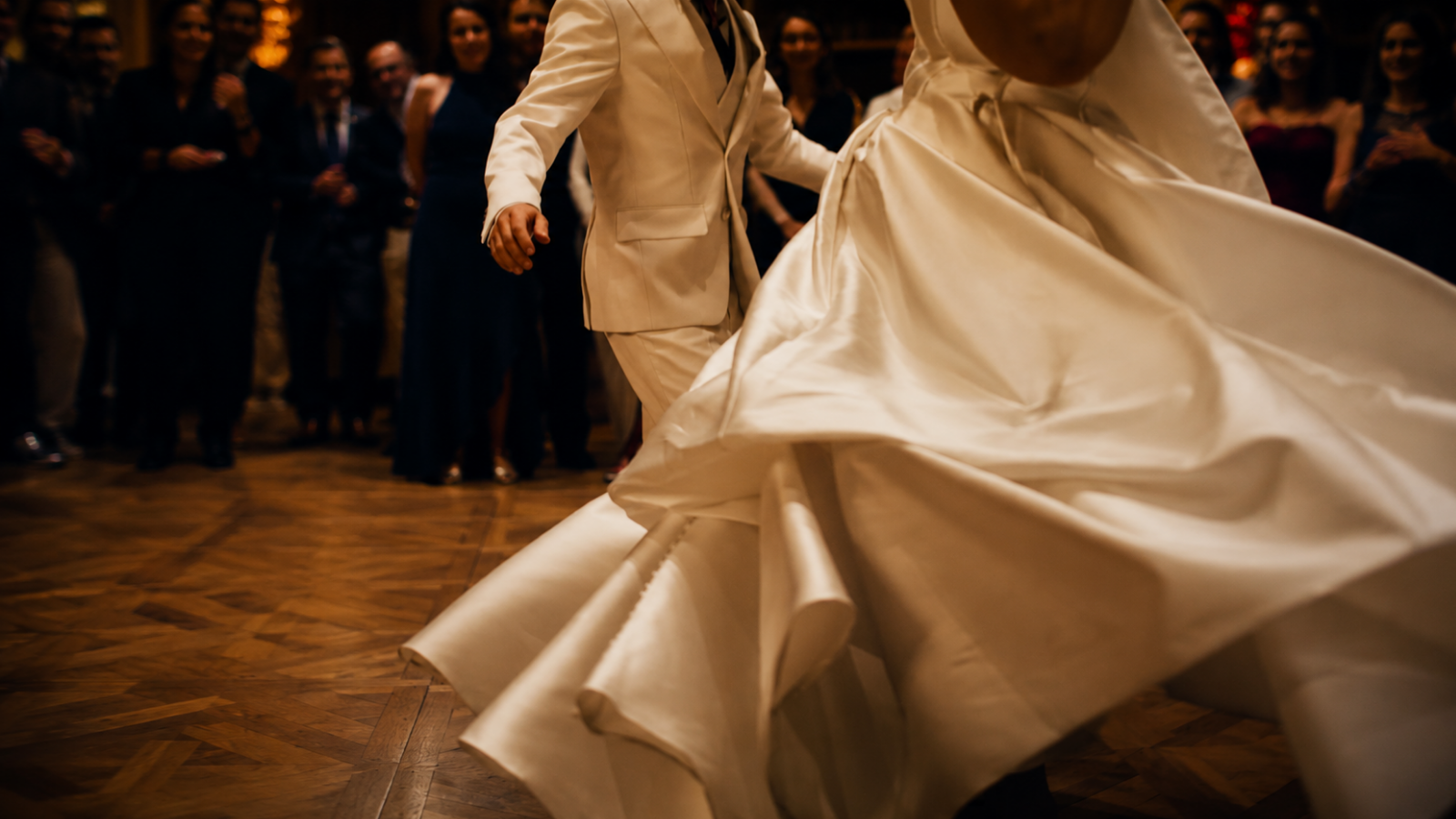
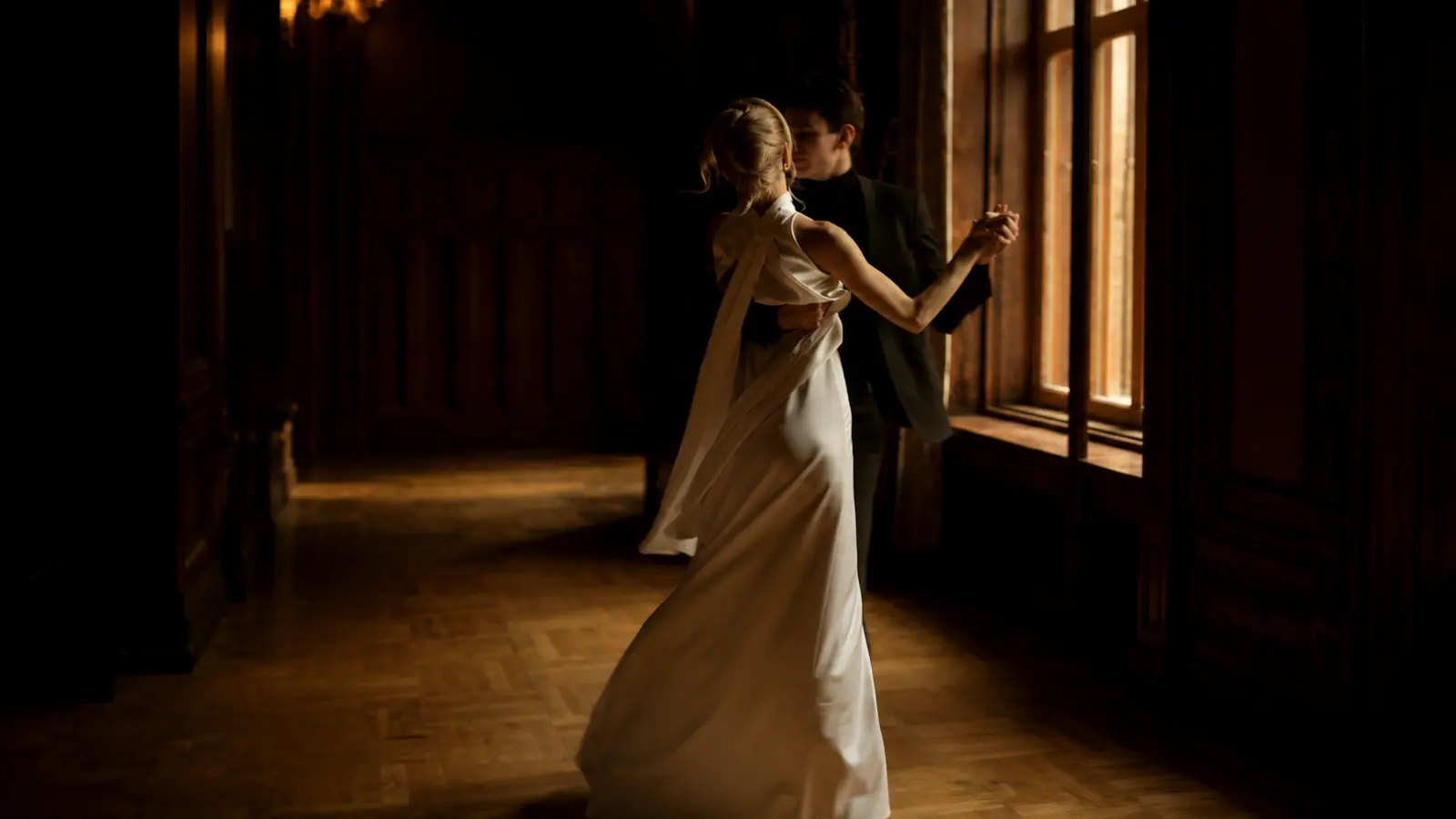
| First dance | 1 song (2:30–3:30) | The most personal musical statement of the reception; the room watches; every lyric lands | Couple chooses specific song |
| Parent dances | 1–2 songs | Father-daughter, mother-son, or both; emotionally significant for the families | Couple in consultation with parents |
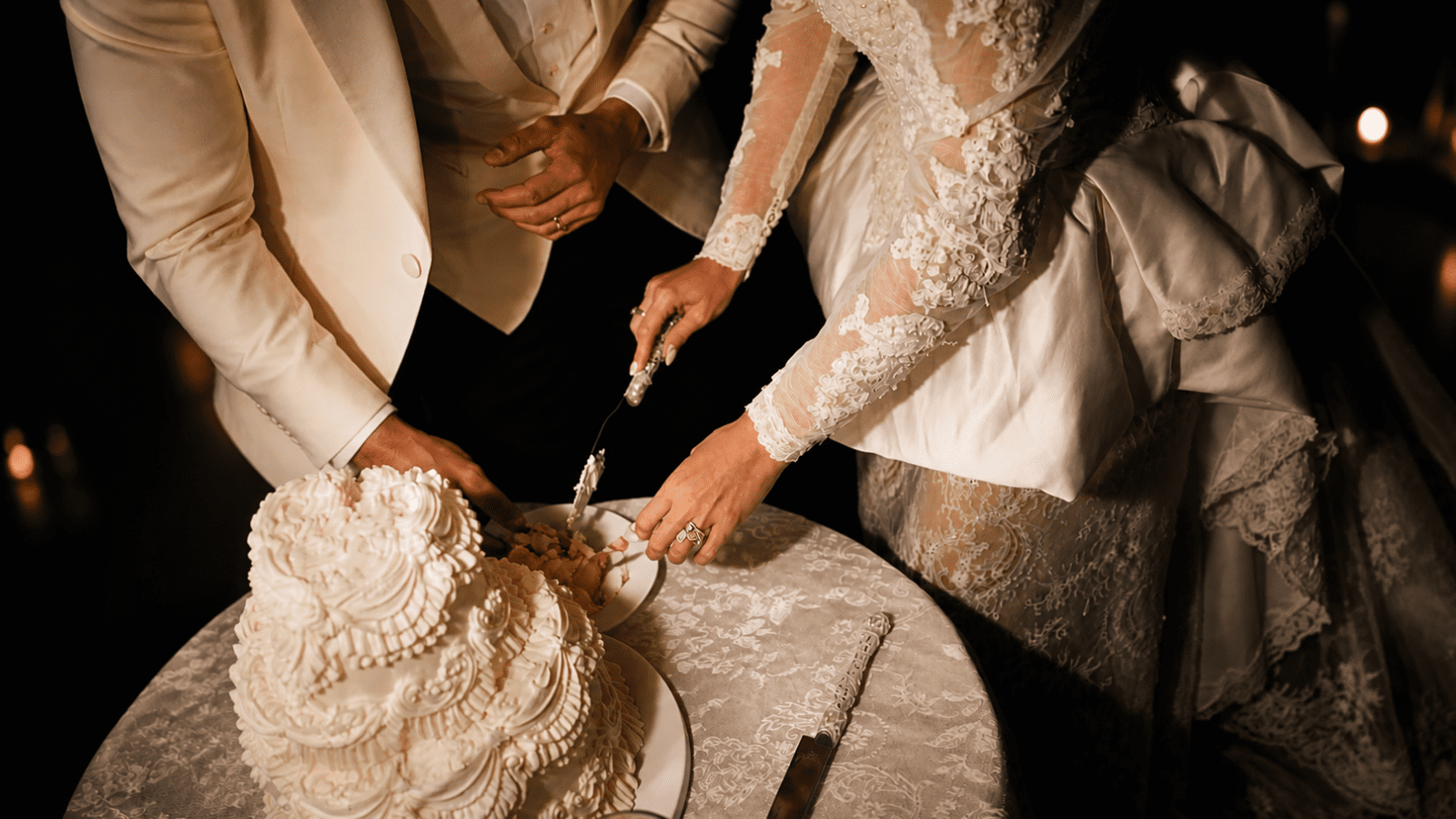
| Cake cutting | 1 song | Background for a visual moment; often lighthearted or personally meaningful | Couple or DJ default |
| Open dancing | 90–120 min | Fill the dance floor and keep it full; energy builds through the night | Couple (must-play list + direction) → DJ fills |
| Last dance | 1 song | Close the evening — the final emotional note of the night; guests remember this one | Couple chooses specific song |
The reason this map matters: couples who skip it end up making song choices in a vacuum. They choose a first dance and two reception songs and hand the rest to a DJ with no direction — and then are surprised when the night feels generic. The map gives every musical decision a context and a job. Once you know what each moment needs, the right song becomes much easier to identify.
The moments that require a specifically chosen song — not just a genre direction — include wedding processional songs, the recessional, the reception entrance, the first dance, the parent dances, and the last song. Everything else can be a direction: “jazz standards for cocktail hour,” “Motown and classic rock for the dance floor,” “no country after 10pm.” Your DJ or musician fills the rest. The map tells you which decisions are yours to make and which ones you can delegate.
Choose Songs That Reflect Your Relationship
The best first dance wedding songs are specific. Not specific in the sense of obscure — in the sense of true. A song that genuinely reflects your relationship, your history, or your understanding of each other will always land harder than the most popular first dance song on the internet chosen because it seemed right for a wedding in general.
The question to ask about every intentional song choice — processional, first dance, last dance — is: why this song, for us, right now? If the honest answer is “because it’s a wedding song,” that is a reason to keep looking. If the answer is “because this is the song that was playing the first time we danced” or “because these are the exact lyrics we both feel on this day,” that is a song worth choosing.
This does not mean every song has to have a personal backstory. The reception dance floor songs can just be great songs that make people dance. But the five to eight moments that call for a specifically chosen song — the ones where every guest is paying full attention — are the ones that benefit from being genuinely yours.
Songs with history. If there is a song that is already part of your relationship — something playing on the first date, on a road trip that mattered, in a year that was hard — it belongs on the short list for one of the intentional moments. The familiarity cuts both ways: it is already full of meaning before you even play it.
Songs that age well. This is the most practical filter for the first dance song. A song that is currently trending has not yet proven it will hold up. A song that has been widely loved for 20 or 40 years has demonstrated it will survive another 20. In 2040, your first dance song will play somewhere — at an anniversary dinner, on a random playlist — and it will take you immediately back to this day. Make sure the song you hear is one you chose deliberately, not one you chose because it was popular in the year you got married.
Songs that are honest. Wedding music has a tendency toward the grandiose — songs that are beautiful in a way that gestures at emotion without containing any specific feeling. The songs that actually move people at a wedding are usually the ones that are honest about something specific: about the particular way this person shows up, about the difficulty of getting here, about what this day actually means. Honesty in a lyric lands differently in a room full of people who know both of you.
Think About Energy and Flow
A wedding is not one event. It is a sequence of events across five to eight hours, and the emotional energy of those events changes dramatically from the first guests arriving to the last song of the night. The music has to change with it. Couples who choose songs without thinking about energy and flow end up with a wedding that feels flat, disconnected, or exhausting in the wrong places.
The ceremony and the reception are different events with different music requirements. The ceremony calls for restraint, gravity, and formality — music that serves the moment rather than competing with it. Wedding reception songs call for celebration, energy, and participation — music that invites the room to feel something together. The processional is not a dance floor moment. “Don’t Stop Me Now” is not a processional. These seem obvious until you see how many couples blur the two.
Energy should build across the reception, not start at maximum. The cocktail hour is background — sophisticated, warm, designed for conversation rather than dancing. The dinner portion of the reception (if applicable) is low-to-medium energy — guests are seated, the music is ambient. The dancing begins after the first dance, and from there the energy should build in waves, peaking in the last 30 to 45 minutes before the end of the night. Your DJ knows how to build this arc — but they need to know what peak looks like for your crowd. A 75% over-60 guest list needs a different energy arc than a crowd of 28-year-olds.
Timing is not a minor detail. Songs play at specific moments — the processional begins when the doors open, not when you finish the previous conversation. Coordinate with your officiant and your musician or DJ on exact cues. Who signals the processional to begin? What happens if the wedding party moves faster or slower than expected? A musician playing live can adjust in real time. A DJ playing a pre-set playlist cannot. Know which you have and plan accordingly.
The transition points are where weddings lose momentum. The gap between the ceremony ending and the cocktail hour beginning. The silence when the first dance ends and the DJ recalibrates. The dead space after the parent dances before open dancing starts. Every one of these is a moment where guests check their phones or start leaving the dance floor. Brief your DJ explicitly on how to handle transitions — what plays the instant the first dance ends, how the parent dances flow into open dancing, what the energy level should be 30 minutes into the dance floor. Transitions are where a great DJ earns their fee.
Lyrics Matter More Than Couples Realize
This is the most consistently underestimated element of wedding music planning. A song can be melodically perfect — slow, beautiful, emotionally resonant — and lyrically disastrous for a wedding context. It happens more than most couples realize, because music is often experienced as sound first and meaning second. At a wedding, meaning is everything. Every lyric plays in a room full of people who are fully paying attention.
Some of the most popular “wedding songs” at American weddings are, at the lyrical level, examples of songs you should not play at a wedding:
“Tears in Heaven” by Eric Clapton is one of the most beautiful slow songs ever recorded. It is also a song Eric Clapton wrote about the death of his four-year-old son after falling from a window. The lyric “Would you know my name if I saw you in heaven?” is about grief so profound it cannot be articulated in any other way. It is not a love song. It should not be played at a wedding under any circumstances — and yet it appears on wedding playlists regularly because of how the melody sounds.
“Someone Like You” by Adele is a song about watching someone you loved marry another person. The specific lyric “Nevermind, I’ll find someone like you” is the phrase of someone who did not get the love they wanted. Beautiful song. Wrong wedding.
“My Way” by Frank Sinatra is one of the great performance recordings in American music — and a song about a man looking back on a life lived on his own terms, alone, with no mention of love or partnership. As a last dance, it is elegant. As a first dance, it is a song about independence rather than union.
“Every Breath You Take” by The Police is the most commonly misused song in American wedding history. Sting has said explicitly that it is a song about surveillance and obsession, not love. The lyric “I’ll be watching you” is not romantic — it is controlling. Every year it is played at American weddings as a first dance or background love song.
Viral songs with truncated edits. A growing category: songs that are used in wedding reels and TikTok clips using a 15-second clip that is romantic, while the full song tells a different story. Always listen to the full song — beginning, middle, bridge, and all — before you choose it for a wedding moment.
The rule: read every lyric of every song you are considering for an intentional wedding moment. Read it on paper, without the music playing, like it is a letter someone is sending you. If it holds up — if the meaning is what you thought it was — the song passes. If it does not, keep looking. There are enough genuinely great wedding songs that you do not need to use ones that require ignoring their own words.
Balance Your Taste with Your Guests
Your wedding is your wedding. The music should reflect who you are. And also: it is a social event, not a concert, and the music has to function socially — meaning it has to move people, create a shared experience, and keep the room feeling like a celebration rather than a listening session.
This is not a reason to abandon your taste. It is a reason to think about where your taste is non-negotiable and where you can flex. The processional, the first dance, the reception entrance, and the last song — those are yours entirely. They are the specific moments where your choices as a couple are the point. The rest of the evening — the cocktail hour, the open dancing — is where the social function of the music becomes more important.
The practical question is: who is in the room, and what do they share? A guest list that spans ages 8 to 78 needs music that crosses generations — Motown, classic rock, ABBA, and standards that everyone recognizes. A guest list that is 90% in their 20s and 30s has more range. A guest list with a strong regional identity (certain parts of the South, for instance) will respond differently to certain genres than a coastal urban crowd.
A useful filter: would your 70-year-old grandmother and your 25-year-old college roommate both be on the dance floor at some point during the night? If the answer is yes, the music is working socially. If the grandmother sits in her chair for the entire reception because nothing in the genre catalog speaks to her, that is a signal the music plan is too narrow. She does not need to dance to every song. But she should have moments when she recognizes what is playing and feels included in the celebration.
The specific tension most couples navigate: one partner’s taste is significantly different from the other’s, and both are different from the guest demographics. The solution is not compromise — it is sequence. The ceremony music reflects one identity. The first dance reflects another. The first 45 minutes of the reception might lean one direction. The last hour might lean another. Sequencing gives both partners genuine ownership of specific moments without making either feel like the night belongs entirely to someone else.
Decide What Moments Matter Most to You
Not every couple cares equally about every musical moment. Some couples have agonized over the first dance for six months and genuinely do not care what plays during cocktail hour. Some couples have a very specific vision for the reception dance floor and are happy to let the DJ handle everything else. Knowing which moments matter most to you allows you to invest your attention where it will have the most impact.
If the processional matters most: Hire live musicians for the ceremony. A string quartet, a pianist, or a harpist changes the processional experience in a way no speaker system can replicate — the physical presence of live performance raises the emotional register of the room before a note is played. Choose your processional piece intentionally, rehearse the cue with the musician, and walk at the tempo the music sets rather than your own pace.
If the first dance matters most: Choose a song with a story — something that is genuinely yours — and consider taking a few dance lessons so you feel confident rather than just swaying. The first dance is the moment every camera in the room is pointed at the two of you. If you feel self-conscious, the song choice matters more, not less: a song both of you know completely, that you can close your eyes and feel, will carry you through the moment more effectively than choreography.
If the reception entrance matters most: Choose a song that signals energy from the first note — something the crowd recognizes immediately and reacts to before you are fully through the door. The entrance is the moment the reception begins, and the right song turns 150 people into a crowd that is already celebrating before the couple takes their place.
If the parent dances matter most: Choose these songs in consultation with the parents, not as a surprise. A father who has a specific song in mind for his daughter’s wedding has probably thought about it for years. Asking first costs nothing and often produces a more meaningful choice than the couple would have landed on independently.
If the dance floor matters most: Build the must-play list more carefully than anything else. Identify the 15 to 20 songs that will absolutely play — the ones you will regret not hearing — and give them to your DJ with explicit timing guidance (this song by 10:30, this one near the end of the night). Everything else is direction.
Live Band vs. DJ — What Actually Changes
The live band vs. DJ decision is framed as a question of taste or budget, but it is actually a question of what you are optimizing for. They produce fundamentally different experiences, and the right choice depends on which differences matter to your specific wedding.
What a live band does better: A live band creates physical energy that a speaker system cannot replicate — the sound fills the room differently, the visual of musicians performing changes how guests relate to the music, and the band can respond to the crowd in real time in ways no playlist can. A great wedding band reads the room and extends a song when the dance floor is full, cuts it short when it is not landing, and builds tension and release through a live performance arc. For receptions where the dance floor is the priority and budget is not a constraint, a strong live band is the superior choice.
What a DJ does better: A DJ plays the original recording of any song ever made, which means every guest hears the exact version they know and associate meaning with. A cover of “At Last” is not Etta James. A cover of “Can’t Help Falling in Love” is not Elvis Presley. For couples whose music choices are deeply tied to specific recordings — the particular sound of a voice, an arrangement, a production — a DJ is the only way to deliver that experience. DJs also play continuously (no breaks), cost significantly less, take up less space, and are not subject to the quality variance of a band hired sight-unseen.
The most effective hybrid approach: Hire live musicians for the ceremony (string quartet, pianist, harpist, or trumpet soloist) and a skilled DJ for the reception. This captures the irreplaceable atmospheric quality of live performance at the ceremony — when it matters most — while keeping the full catalog access and reliability of a DJ for the reception. Budget-wise, a string quartet for two hours costs $800 to $2,000 at most price points, which is often less than the premium between a DJ and a live band for a full reception.
What to ask when hiring either: For a DJ — ask to see their setup, hear their mixing style (transitions matter), and confirm they take do-not-play lists seriously. Ask how they handle requests from guests. Ask what happens if a song is not in their library. For a live band — ask for a full setlist and a video of a recent performance (not a highlight reel). Ask how they handle song requests. Ask how many breaks they take and how long the gaps are. Ask who covers if a musician is sick the morning of your wedding.
| Live Band | DJ | |
|---|---|---|
| Cost (typical U.S. range) | $3,000 – $10,000+ | $1,000 – $3,500 |
| Song selection | Limited to band’s repertoire | Any song ever recorded |
| Original recordings | No — covers only | Yes — always the original |
| Energy & atmosphere | Irreplaceable — live performance changes the room | Excellent sound, no live presence |
| Breaks | Yes — typically 15 min per hour | No — continuous |
| Crowd responsiveness | High — can adjust live | High — skilled DJs read rooms |
| Best for | Dance-floor-priority receptions, unlimited budget | Most weddings — versatile, reliable, full catalog access |
| Ceremony | Excellent (string quartet, pianist, organist) | Works — but live is meaningfully better |
Build a Must-Play and Do-Not-Play List
These two documents are the most practical deliverables in wedding music planning — and the most consistently underused. Every couple should give their DJ or band both lists in writing, confirmed received, before the event.
The must-play list is not a full setlist. It is the 10 to 20 songs that absolutely, non-negotiably play at your reception — songs you will regret missing, songs that matter to your guests, songs that belong to specific moments. Organize it by moment: these play during cocktail hour, these are for the first hour of dancing, these are for the peak of the night, these are for the last 30 minutes. A skilled DJ uses the must-play list as the spine of the evening and fills around it with genre-appropriate choices.
When building the must-play list, think beyond your personal taste to your guest list: the song that will get your parents on the dance floor, the song that is the anthem for your college friend group, the song every person at the wedding knows every word to. Those crowd-unifying moments are as important as the songs that matter personally to the couple — because those are the moments guests describe to people who did not attend.
The do-not-play list is, if anything, more important. Without explicit direction, DJs default to popular choices — which may include songs connected to painful memories, songs whose lyrics are wrong for a wedding, songs an ex is associated with, or entire genres that feel out of place at the tone you are creating. The do-not-play list prevents all of this.
A comprehensive do-not-play list covers:
- Specific songs — any song connected to a former relationship, a painful period, a death in the family, or a complicated family dynamic. Be specific. “No Sinatra” is too broad. “No ‘My Way’ — that was my grandfather’s song and it will upset my mother” is exact and actionable.
- Songs with wrong lyrics for the context — any breakup song, any song about loss, any song whose lyrics run counter to what the wedding moment is expressing. See the Lyrics section above for examples.
- Artists you genuinely do not want at your wedding — if there is an artist whose work you cannot separate from a particular association, put them on the list.
- Genres that do not fit the tone — if your wedding is a sophisticated seated dinner and you do not want stadium rock, say so explicitly. Your taste is not obvious to a DJ who does not know you.
- Guest request policy — decide in advance whether guests can make requests, and if so, whether the DJ honors them automatically or clears them with you first. An unlimited open-request policy can derail a carefully planned music arc. Most couples are happiest with a policy of “DJ uses judgment — plays requests that fit the vibe, politely declines those that do not.”
Give both lists in writing — email is fine — and confirm receipt. Then follow up with your DJ one week before the wedding to confirm they have both lists and that nothing has changed.
Common Mistakes Couples Make with Wedding Music
These are the mistakes that produce the most regret — and the most preventable.
Starting with songs instead of moments. The most common error. Couples open a “best wedding songs” list, pick songs they love, and hand them to a DJ without any structure. The result is a reception that feels like a random playlist rather than a scored event. The fix: build the moment map first, then fill each moment with the right song.
Not reading the lyrics. Covered at length above — but worth repeating because it is that consistent. “Tears in Heaven.” “Someone Like You.” “Every Breath You Take.” All genuinely beautiful songs. None of them wedding music. Listen to the full song, read the words on paper, and ask: does this lyric mean what I want it to mean in front of everyone I love?
Underestimating the processional. Couples spend months choosing a venue and a dress and sometimes less than an afternoon choosing the processional music. This is the wrong allocation of attention. The processional moment — the doors opening, the music starting, the room turning — is the one moment of the entire day that cannot be recovered if the music is wrong. It is also the moment that most guests carry as their strongest visual memory of the ceremony. Invest in it accordingly.
No do-not-play list. Without one, you have delegated every music decision to a DJ who does not know your relationships, your history, or your family dynamics. The do-not-play list costs nothing to create and prevents the specific category of wedding regret that is impossible to fix in real time: the song that played when it absolutely should not have.
Choosing trending songs over enduring ones. This applies most directly to the first dance. A song in its cultural peak in the year of your wedding will be in your wedding photos, your videos, and your memory for the rest of your life. In 20 years, a song that has already been proven over decades will sound like a deliberate, elegant choice. A song that was popular in a particular year will sound like a specific year.
Treating the last song as an afterthought. The last song of the night is what every guest walks out carrying. A great last song — one that is genuinely closing rather than just stopping — creates the feeling that the evening had an arc, a shape, an intention. “New York, New York” by Sinatra works because it signals unmistakably that the night is complete. “September” by Earth, Wind & Fire works because the energy lifts one final time before the lights come up. Choose it on purpose.
Not briefing the DJ on crowd demographics. A DJ who does not know that 40% of your guests are over 60 will default to a mix that works for 30-year-olds. Tell your DJ the age range of your guest list, whether there are children, whether any demographic dominates, and what genres you know land with specific groups. This information changes the evening.
Forgetting about the ceremony altogether. Reception music gets all the attention. Ceremony music is often the last thing couples plan and the first thing guests experience. The prelude sets the tone before anyone says a word. The processional marks the single most significant transition of the day. The recessional is the first musical statement of your life as a married couple. These are not logistics. They are music — and they deserve the same intentionality as everything else.
Final thoughts
The best wedding music choices are rarely random.
They come from understanding how each part of the day should feel, which moments deserve the most emotional weight, and what kind of atmosphere the couple wants people to remember long after the wedding is over.
That is why planning wedding music matters more than most couples expect. The right songs shape the emotional rhythm of the entire day — from the quiet moments before the ceremony to the final song of the night.
And when those choices are made intentionally, the music stops feeling like background sound and starts becoming part of the memory itself.
Frequently asked questions (FAQ)
How do you start choosing wedding music?
Start by planning the moments first — ceremony, processional, cocktail hour, first dance, parent dances, reception, and last dance. Once the structure is clear, choosing songs becomes much easier.
How many songs do you need for a wedding?
Most weddings need around 50 to 80 songs for the full day, including ceremony music, reception songs, dance floor tracks, and special moments like the first dance.
What songs should you avoid at a wedding?
Avoid songs about breakups, cheating, heartbreak, or toxic relationships — even if they sound romantic. Always listen carefully to the full lyrics before choosing a wedding song.
Should you hire a DJ or a live band for a wedding?
A live band creates a more immersive atmosphere, while a DJ offers more song variety and flexibility. Many couples choose live musicians for the ceremony and a DJ for the reception.
What is a wedding do-not-play list?
A do-not-play list is a list of songs, artists, or genres you specifically do not want played during your wedding. It helps avoid awkward moments and keeps the music aligned with your vision.

About the Author
Débora Justo
Founder and editor of EVORÉ, creating practical wedding planning resources, thoughtful inspiration and useful tools for the decisions that shape a celebration.
Read more about the author →