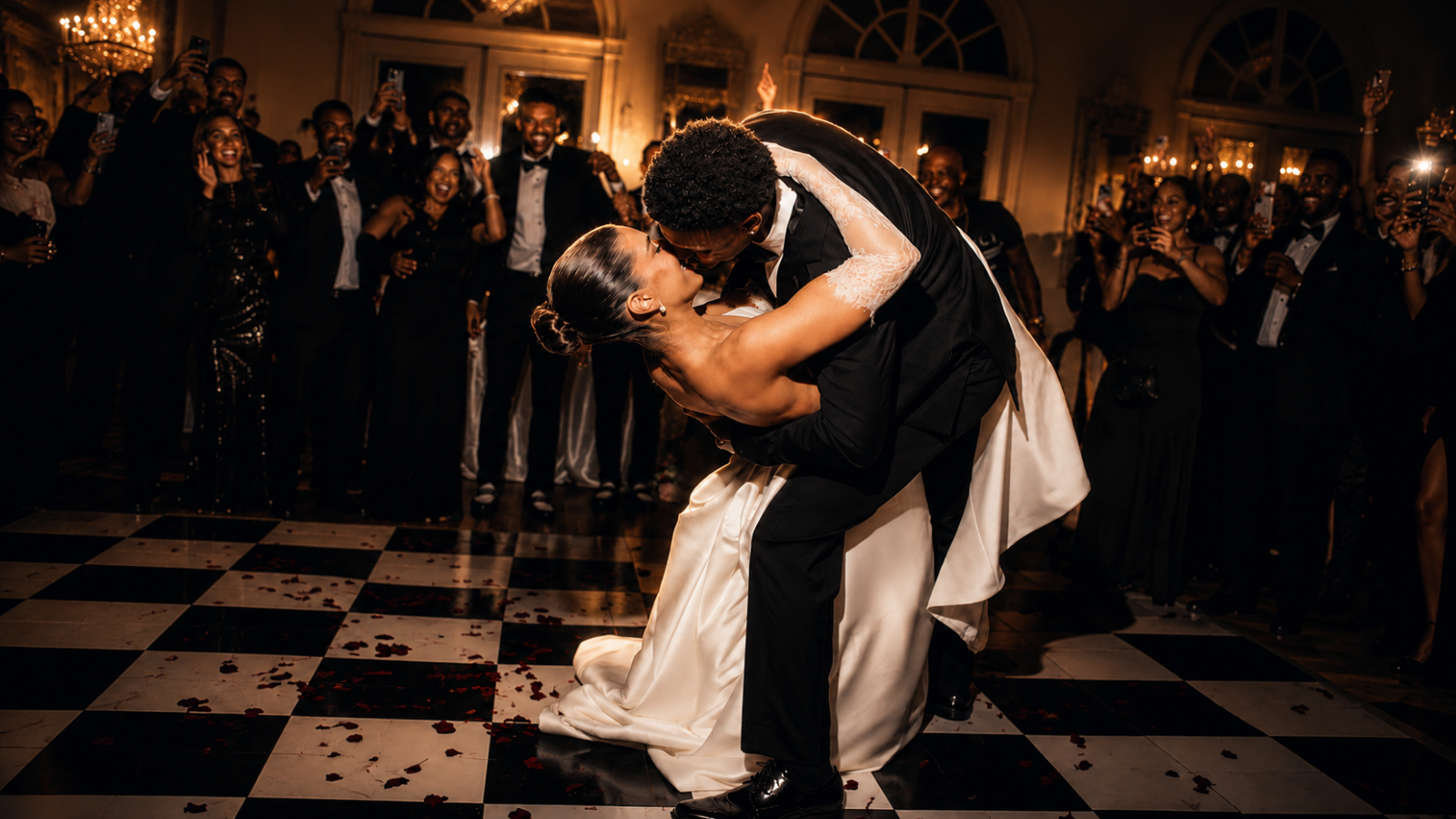
Jewish wedding songs carry tradition, celebration, spirituality, and community all at the same time. From the emotional processional under the chuppah to the joyful energy of the hora, Jewish wedding music is not simply background sound it helps shape the rhythm and identity of the entire celebration itself.
This guide covers the best Jewish wedding songs as part of a complete collection of wedding songs for every moment of the day, including traditional ceremony music, hora dance songs, modern Jewish wedding songs, reception favorites, interfaith celebrations, and the songs that continue to define Jewish weddings across generations.
What Makes Jewish Wedding Music Different
Most wedding music is chosen for personal taste. Jewish wedding music carries an additional dimension: it connects the couple to a living tradition that spans cultures, centuries, and continents. A song like “Hava Nagila” is not simply a dance song — it is a communal act, a declaration of joy that has been repeated at Jewish celebrations across the world for more than a hundred years.
Understanding this context does not require a particular level of religious observance. It simply means approaching Jewish wedding music with the awareness that the songs carry meaning beyond their melody — and that the couples, families, and guests in the room often feel that meaning deeply, whether or not they could explain exactly why.
Jewish wedding music also operates across a uniquely wide cultural spectrum. Ashkenazi tradition (rooted in Eastern European Jewish culture) brought the hora, Hava Nagila, and the Yiddish songs that most Americans associate with Jewish weddings. Sephardic tradition (rooted in Spanish, North African, and Middle Eastern Jewish culture) brings a different musical language entirely — different melodies, different instruments, different emotional register. Mizrahi Jewish music from Iraq, Iran, and Yemen has its own distinct character. And Israeli pop has produced a generation of contemporary Jewish music that sounds nothing like any of these traditions while still carrying cultural identity clearly.
The guide below focuses primarily on Ashkenazi traditions — which represent the majority of American Jewish weddings — while noting Sephardic and Israeli traditions where relevant.
Traditional Jewish Wedding Songs
These are the songs that have defined Jewish weddings for generations — the melodies that grandparents recognize in the first bar, that carry the weight of family memory, and that signal to every guest in the room that this celebration belongs to a specific, living tradition.
The essential traditional songs
| Song | Language / Origin | When It’s Used | Why It Matters |
|---|---|---|---|
| Hava Nagila | Hebrew / Hasidic origin | Hora, opening of reception dance | The most recognized Jewish celebration song in the world; signals communal joy |
| Siman Tov u’Mazel Tov | Hebrew / Yiddish | Hora, post-ceremony celebration | “A good sign and good luck” — the traditional congratulatory song sung at Jewish celebrations |
| Od Yishama | Hebrew | Ceremony, processional, hora | Based on the Sheva Brachot (Seven Blessings); one of the most spiritually significant Jewish wedding melodies |
| Erev Shel Shoshanim | Hebrew | Processional, ceremony | “Evening of Roses” — a romantic Israeli folk song widely used as a chuppah processional |
| Dodi Li | Hebrew (Song of Songs) | Processional, ceremony | Text from Song of Songs (“My beloved is mine and I am his”); deeply meaningful for religious couples |
| Mazel Tov | Hebrew / Yiddish | Post-glass breaking, hora | The traditional congratulatory shout; often incorporated into dance songs |
| Tzena Tzena | Hebrew | Hora, reception dancing | A lively Israeli folk song that has been part of Jewish celebrations since the 1940s |
| Hinei Ma Tov | Hebrew (Psalm 133) | Ceremony, hora | “How good and pleasant it is for brothers to dwell together” — a communal song well-suited to celebrations |
| Am Yisrael Chai | Hebrew | Reception, hora | “The people of Israel live” — a declaration of cultural pride and continuity |
| L’Chaim (To Life) | Yiddish / Hebrew | Toasts, reception | The traditional Jewish toast; “to life” — used in the song from Fiddler on the Roof and at real celebrations |
| Sunrise, Sunset | English (Fiddler on the Roof) | Parent dances, ceremony | One of the most emotionally resonant parent-child wedding songs in American Jewish culture |
| Matchmaker, Matchmaker | English (Fiddler on the Roof) | Reception, celebration | Lighter and more playful; works at receptions with a theatrical or musical-loving guest list |
Yiddish songs with a place at Jewish weddings
Yiddish songs represent the Eastern European Jewish musical tradition and carry a distinct emotional character — a combination of joy, longing, humor, and resilience that is specific to Ashkenazi culture. They appear less frequently at modern American Jewish weddings than Hebrew songs, but remain meaningful at traditional and family-focused celebrations, particularly when grandparents or older relatives are present.
| Song | Meaning | Character |
|---|---|---|
| Tumbalalaika | A riddle song about love and nature | Romantic, contemplative; works as background or ceremony music |
| Bay Mir Bistu Sheyn | “To me you are beautiful” | Playful and warm; the most crossover-friendly Yiddish song in American popular culture |
| Raisins and Almonds (Rozhinkes mit Mandlen) | A lullaby about love and prosperity | Tender; sometimes used during parent moments |
| My Yiddishe Momme | A tribute to the Jewish mother | Deeply emotional; occasionally used for mother-son dances at traditional Jewish weddings |
Hora Dance Songs — The Heart of the Jewish Wedding Reception
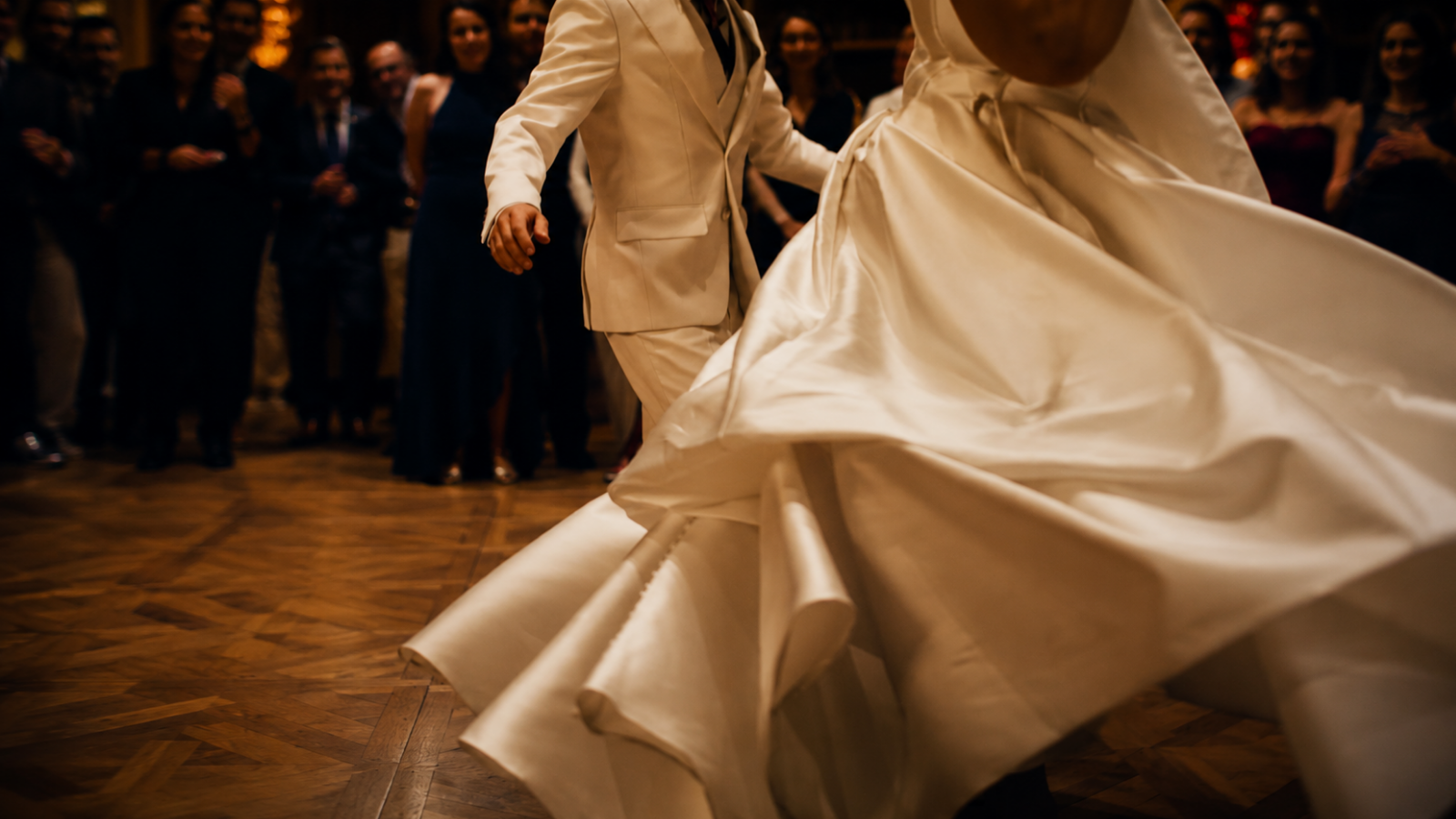
The hora is not just a dance. It is the defining communal moment of a Jewish wedding reception — the moment when the couple is physically lifted above the crowd, when every generation joins the circle, and when the celebration becomes something that belongs to everyone in the room, not just the couple.
No other wedding tradition — in any culture represented at American weddings — produces the kind of universal, joyful participation that a well-executed hora does. Guests who have never attended a Jewish wedding before know what to do within 30 seconds. The circle pulls people in. The energy is immediate and real.
What happens during the hora
The hora typically begins within the first 30 to 45 minutes of the reception, often directly after the grand entrance or the first dance. Guests form one or more concentric circles and dance in a rotating, step-kick pattern. The bride and groom are brought to the center of the circle, seated on chairs, and lifted into the air — sometimes once, sometimes several times — while the dancing continues around them. The couple traditionally holds the ends of a napkin or handkerchief between them while being lifted, symbolizing their connection to each other and to the community celebrating them.
The hora set typically runs 10 to 20 minutes and is managed by the DJ or band as a continuous medley. It begins with Hava Nagila — always — and transitions through additional traditional and contemporary songs that keep the circle moving. A skilled Jewish wedding DJ knows how to build the hora set so energy peaks during the chair lift and sustains through the closing songs.
The hora medley: songs that work
| Song | Role in the Medley | Notes |
|---|---|---|
| Hava Nagila | Opening — always first | The signal that the hora has begun; recognized universally; the chair lift typically happens here |
| Siman Tov u’Mazel Tov | Second song — sustains momentum | Transitions naturally from Hava Nagila; guests who know both songs feel the joy deepen |
| Am Yisrael Chai | Energy builder | Adds cultural pride to the joy of the hora; strong and singable |
| Tzena Tzena | Mid-medley energy sustain | Lively and rhythmically strong; keeps the circle moving |
| Od Yishama | Mid-medley emotional peak | Adding the Sheva Brachot melody to the hora gives it spiritual resonance; especially powerful at religious weddings |
| Hinei Ma Tov | Communal sing-along | Simple melody that guests can sing even without knowing the words; strengthens the circle |
| David Melech Yisrael | Traditional closer | “David, King of Israel, lives and endures” — a traditional circle song with strong rhythmic drive |
| Uptown Funk (transition) | Bridge to contemporary floor | Some DJs use a high-energy contemporary song as the hora’s final beat — transitioning the circle into the open dance floor |
The chair dance song question
The chair dance — the moment when the bride and groom are lifted on chairs — happens during Hava Nagila, almost always during the song’s most energetic passage. This is the moment most guests photograph. This is the moment that appears in family albums for decades.
Some couples ask whether they can use a different song for the chair lift. The answer is yes — the tradition is the lifting, not the specific song. Some modern couples use a beloved contemporary song during the chair lift while keeping Hava Nagila for the opening circle. Either works. The important thing is briefing your DJ or band on exactly when and how the chair lift happens, who is responsible for bringing the chairs, and how long you want to be in the air. A chair lift that goes wrong because of poor planning is a memory of a different kind.
Hora tips for non-Jewish guests
At interfaith weddings or receptions with many non-Jewish guests, the hora benefits from a brief introduction — either from the DJ, the bandleader, or a family member — explaining what is about to happen and inviting everyone to join the circle. Non-Jewish guests who understand what they are participating in join enthusiastically. Non-Jewish guests who are confused stand at the edge of the room.
The explanation does not need to be long: one sentence about the circle, one sentence about the chair lift, and an invitation to join. The hora does the rest.
Jewish Wedding Ceremony Songs
The Jewish wedding ceremony is structured around specific rituals, and the music at each moment should serve the ritual rather than overpower it. Unlike receptions — where energy management and dance floor dynamics drive song selection — ceremony music is about creating an atmosphere of reverence, joy, and meaning for a room that is completely focused on what is happening at the chuppah.
The chuppah processional
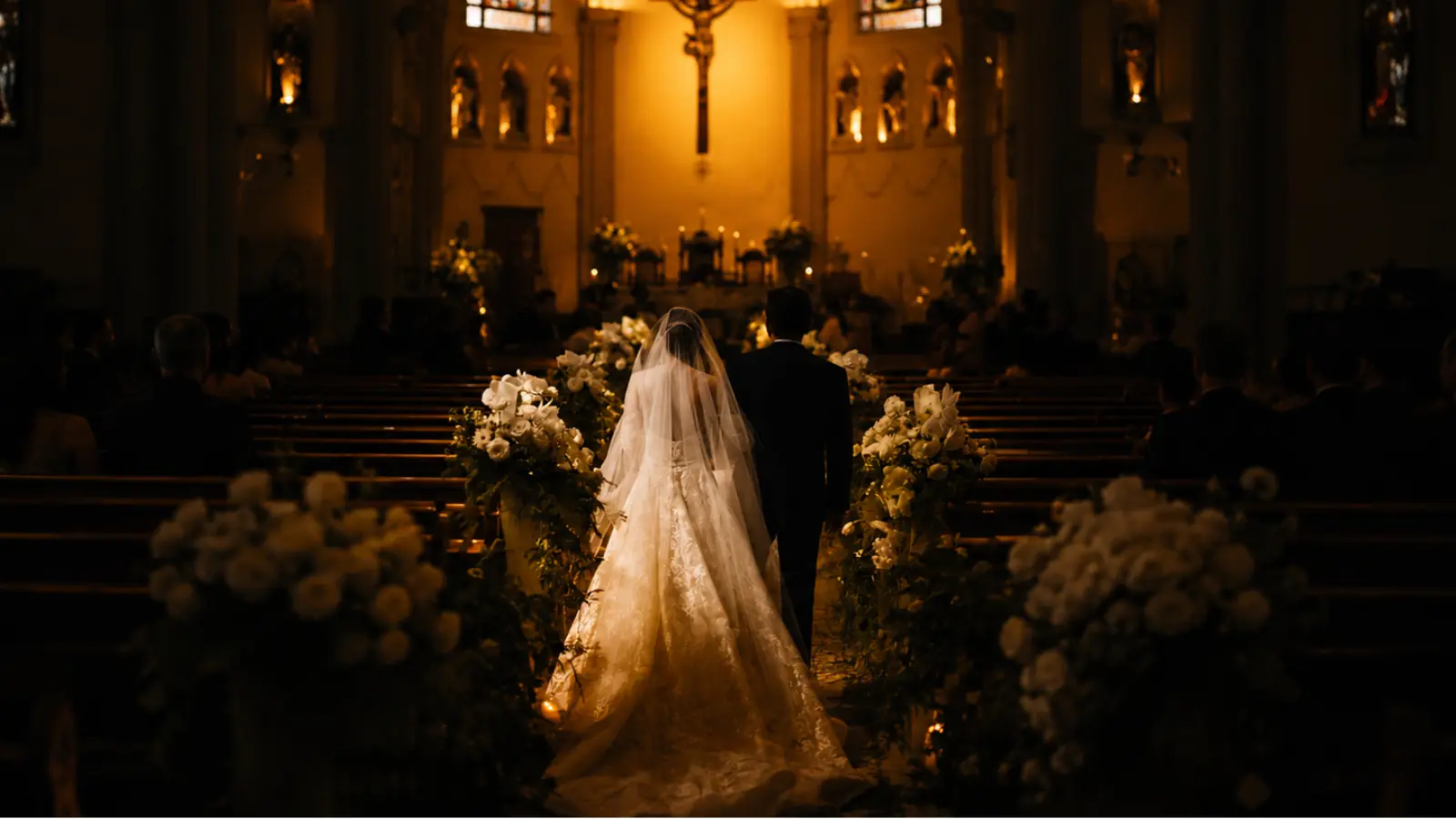
Jewish wedding processional songs need to support a longer, more family-centered entrance, since both parents traditionally escort the bride and groom to the chuppah. This means the processional often involves multiple family units walking in sequence, and the music needs to sustain emotional continuity across a longer entrance than most ceremonies use.
Processional options range from traditional Hebrew melodies to classical instrumental pieces to contemporary songs. The most important structural requirement is the same as any wedding processional: a strong, clear opening that anchors the moment from the first note.
| Song | Style | Why It Works for a Jewish Processional |
|---|---|---|
| Erev Shel Shoshanim | Traditional Hebrew / Israeli folk | Romantic and unhurried; the melody is warm without being overwhelming; one of the most-used chuppah processionals |
| Dodi Li | Traditional Hebrew (Song of Songs) | Text from scripture; deeply meaningful for religious couples; available in many beautiful contemporary arrangements |
| Od Yishama | Traditional Hebrew (Sheva Brachot) | The melody from the Seven Blessings used as processional music creates a deeply ceremonial atmosphere |
| Jerusalem of Gold (Yerushalayim Shel Zahav) | Israeli | One of the most beloved Israeli songs; works for couples with strong Israeli cultural identity |
| Canon in D | Classical | Universally recognized; works at Jewish weddings where the couple wants classical rather than traditional Hebrew music |
| A Thousand Years | Contemporary pop | The most-used contemporary processional at American weddings of all traditions; also common at modern Jewish weddings |
| Hallelujah (various) | Contemporary / Leonard Cohen | Leonard Cohen was Jewish; the song carries Hebrew religious resonance in its title; works at modern Jewish ceremonies |
| L’Chi Lach | Contemporary Jewish / Reform | A beloved Debbie Friedman song widely used in Reform communities; the text is from the call of Abraham; emotionally powerful |
Music during the ceremony
In traditional Jewish ceremonies, there are several moments where music plays a natural role beyond the processional:
During the ketubah signing. If the ketubah signing happens before the ceremony in a separate room (a common practice), soft background music — acoustic guitar, instrumental melodies, or a vocalist performing quietly — creates an intimate atmosphere for this private ritual moment.
During the Sheva Brachot (Seven Blessings). Some couples incorporate music between or around the seven blessings — either a vocalist singing the blessings themselves or musical interludes between each blessing. “Od Yishama,” which draws its melody from one of the blessings, is particularly appropriate here.
After the glass is broken. The breaking of the glass at the end of the ceremony is followed immediately by a shout of “Mazel Tov!” from the entire room. Some couples arrange for the DJ or band to begin playing an upbeat song at exactly this moment — the transition from ceremony to celebration. The energy shift is instant and powerful when the music lands on the Mazel Tov.
The recessional
Jewish wedding recessional songs are often joyful and upbeat — the moment of pure celebration after the solemnity of the ceremony. Common choices include uptempo arrangements of traditional songs, Israeli folk songs, or contemporary upbeat songs that signal the party has officially begun.
| Song | Energy | Notes |
|---|---|---|
| Siman Tov u’Mazel Tov | Joyful / traditional | The natural recessional choice for traditional Jewish ceremonies; everyone knows it |
| Hava Nagila (uptempo) | Celebratory | If not saving it for the hora, the uptempo version works beautifully as a recessional |
| Uptown Funk | High energy / contemporary | Increasingly common at modern Jewish weddings; signals the party has started |
| Best Day of My Life | Upbeat / contemporary | Works for couples who want the recessional to feel modern without being jarring |
| Od Yishama (uptempo arrangement) | Traditional with energy | A contemporary uptempo arrangement of the Sheva Brachot melody; deeply meaningful and joyful simultaneously |
Modern Jewish Wedding Songs
The most vibrant space in Jewish wedding music right now is the intersection of tradition and contemporary sound — songs that carry Jewish cultural identity in their language, text, or emotional resonance while sounding entirely at home at a modern American wedding. These are the songs that satisfy both grandparents and guests in their twenties, that honor tradition without requiring fluency in it, and that reflect the genuinely diverse ways Jewish identity is expressed in 2026.
Contemporary songs with Jewish roots or resonance
| Song | Artist | Why It Works at a Modern Jewish Wedding |
|---|---|---|
| L’Chi Lach | Debbie Friedman | The most beloved song of the Reform Jewish movement; based on the text of Abraham’s call — “go forth” — and reimagined as a love song about journeying together |
| Olam Chesed Yibaneh | Rabbi Menachem Creditor | “I will build this world from love” — a contemporary Hebrew song that has become widely used in progressive Jewish spaces; accessible and deeply moving |
| Od Yishama (contemporary arrangements) | Various artists | Modern orchestral and acoustic arrangements of this traditional Sheva Brachot melody have made it fresh and widely used at both traditional and modern Jewish ceremonies |
| Ilu Finu | Various / Becca Stevens arrangement popular | Based on the Dayenu passage; contemporary arrangements bring this deeply familiar text into modern musical language |
| Jerusalem | Dan Bern | A folk-rock meditation on Jerusalem and Jewish identity; works for culturally Jewish couples who want the identity without the traditional form |
| You Are the Reason | Calum Scott | Not specifically Jewish, but widely used at modern Jewish weddings for its emotional clarity and broad appeal |
| Golden Hour | JVKE | Contemporary pop with the warmth and romantic sincerity that works at Jewish weddings across denominations |
Israeli pop at Jewish weddings
Israeli pop represents its own distinct tradition within Jewish wedding music — contemporary in sound but deeply rooted in Israeli cultural identity. For couples with Israeli family, significant Israel connections, or strong Zionist cultural identity, Israeli pop is an essential part of the reception playlist.
| Artist / Song | Character | When to Use |
|---|---|---|
| Idan Raichel — “Bo’ee” | Warm, multicultural Israeli pop with Ethiopian and Middle Eastern influences | Cocktail hour, dinner, or first dance for couples with Israeli roots |
| Subliminal — Israeli hip-hop | Contemporary Israeli hip-hop; strong Israeli cultural identity | Reception dancing for younger crowds with strong Israeli cultural connection |
| Sarit Hadad — various | Israeli Mizrahi pop; upbeat and celebratory | Reception dancing, particularly for Sephardic and Mizrahi Jewish couples |
| Ivri Lider — various | Contemporary Israeli pop; romantic and introspective | Background at dinner or cocktail hour; first dance for couples with Israeli roots |
| Eyal Golan — various | Mizrahi Israeli pop; energetic and danceable | Reception dancing for Mizrahi and Sephardic celebrations |
Songs for the Reception and Celebration
After the hora winds down, Jewish wedding reception songs need to balance cultural tradition with the same cross-generational energy as any American reception. The dance floor needs cross-generational songs, the energy needs careful management, and the DJ needs to know what the couple wants. What makes a Jewish wedding reception distinct is the layer of cultural music woven into the contemporary playlist — the moments where a traditional song appears in the middle of a contemporary set and the room responds in a way it would not at any other wedding.
Parent dances at Jewish weddings
“Sunrise, Sunset” from Fiddler on the Roof is one of the most culturally specific parents dance wedding songs in American Jewish wedding tradition. It is not the only option — but it carries a weight that no other song in the English-language Jewish repertoire quite matches. If your parents (or your partner’s parents) have any connection to the tradition, hearing those opening notes will likely produce a visible emotional response in everyone who knows what is coming.
| Song | Artist / Source | Why It Works |
|---|---|---|
| Sunrise, Sunset | Fiddler on the Roof | The definitive American Jewish parent dance song; the lyrics about time passing and children growing are universally felt by parents at weddings |
| My Yiddishe Momme | Traditional Yiddish | For mother-son dances at traditional Ashkenazi weddings; deeply emotional; expect tears |
| In My Life | The Beatles | Universally loved and emotionally appropriate; works for any parent dance regardless of tradition |
| What a Wonderful World | Louis Armstrong | Warm, timeless, and broadly accessible; works at Jewish and interfaith weddings equally |
| L’Dor V’Dor (from generation to generation) | Various Jewish settings | The concept of generational continuity is central to Jewish identity; for couples who want parent dance music with explicit Jewish meaning |
Cross-generational dance floor anchors
A Jewish wedding reception dance floor operates on the same cross-generational dynamics as any American reception — with the addition that many Jewish weddings have guests who know and love traditional songs that would empty a non-Jewish dance floor. A skilled Jewish wedding DJ builds the dance floor set with both registers in mind: contemporary songs that every generation knows, and periodic returns to traditional songs that Jewish guests specifically respond to.
| Song | Artist | Cross-Generational Appeal |
|---|---|---|
| September | Earth, Wind & Fire | The most reliable cross-generational floor-filler at any American wedding, Jewish or otherwise |
| Uptown Funk | Bruno Mars & Mark Ronson | Universal; every guest under 80 knows it |
| Hava Nagila (reprise) | Traditional | A short reprise in the middle of the contemporary dance set re-energizes Jewish guests and brings the cultural identity back into the room |
| Don’t Stop Believin’ | Journey | The sing-along quality works across every demographic and pairs naturally with a Jewish wedding’s communal energy |
| Sweet Caroline | Neil Diamond | Neil Diamond is Jewish; this is a subtle choice with strong cultural resonance and universal dance floor appeal |
| Shake It Off | Taylor Swift | Works at every American wedding with younger guests; Jewish weddings are no exception |
| Dancing Queen | ABBA | ABBA’s Benny Andersson has Jewish heritage; more importantly, this song fills every floor regardless of demographic |
| Siman Tov u’Mazel Tov (reprise) | Traditional | Like Hava Nagila, a reprise mid-reception energizes Jewish guests specifically and creates moments of cultural recognition |
Music for Interfaith Jewish Weddings
Interfaith weddings — where one partner is Jewish and one is not — represent a significant portion of American Jewish weddings, and they present a distinct musical opportunity: a reception that honors Jewish tradition authentically while also welcoming guests who may have never attended a Jewish wedding before.
The hora is the most important moment to manage at an interfaith reception. A brief introduction — explaining the circle dance, the chair lift, and the tradition behind it — produces enthusiastic participation from non-Jewish guests rather than confused observation. Non-Jewish guests who understand what they are participating in almost always join the hora with genuine joy. The tradition is accessible; it just needs a door.
For the ceremony, interfaith couples typically choose music that honors both traditions or is neutral enough to belong to both. Classical pieces, contemporary love songs, and acoustic versions of universally known songs all work. If the couple wants Hebrew music in the ceremony, “Erev Shel Shoshanim” and “Dodi Li” are both melodically beautiful in ways that do not require the listener to understand Hebrew to feel their meaning.
For the reception, the standard recommendation is: honor the Jewish tradition fully at its designated moments (hora, Mazel Tov after the glass breaking, traditional songs during the hora medley) and build the dance floor set with cross-generational universality that serves both halves of the guest list equally. Do not dilute the Jewish moments in an attempt to make them more accessible — diluted tradition serves no one. Execute them fully, with context, and they land for every guest in the room.
Music by Denomination: Orthodox, Conservative, Reform
Jewish wedding music is not one size fits all. The level of traditional music, the role of Hebrew songs, the presence of mixed-gender dancing, and the structure of the celebration all vary significantly across Jewish denominations — and understanding these differences helps couples make music choices that are authentic to their community.
Orthodox Jewish weddings
Orthodox Jewish weddings traditionally include separate dancing for men and women — the mechitza separates the two dance floors, and the DJ or band must manage two simultaneous celebrations. The music on both sides of the mechitza is typically traditional Jewish music: hora, Hava Nagila, Siman Tov, and a full set of traditional Jewish dance songs throughout the reception. Contemporary pop is less common, though modern Orthodox weddings increasingly blend traditional and contemporary music in the second half of the reception.
At Orthodox weddings, the live band is often preferred over a DJ — and many Orthodox wedding bands have specific repertoires of traditional songs, nigunim (wordless melodies), and contemporary Jewish music that non-Orthodox couples may not be familiar with.
Conservative Jewish weddings
Conservative weddings typically blend traditional and contemporary music more fluidly than Orthodox celebrations. The hora and traditional Jewish songs are central, but the dance floor set will include mainstream American music alongside them. The DJ has more creative latitude than at an Orthodox wedding, and the guest list is usually comfortable with both registers.
Reform and Reconstructionist Jewish weddings
Reform and Reconstructionist weddings have the most flexibility in music choice. The hora remains nearly universal — even at the most secular Reform wedding, the hora is usually present — but the surrounding music may be almost entirely contemporary. Reform ceremonies often use Debbie Friedman’s music (“L’Chi Lach,” “Mi Shebeirach”) as ceremony songs, reflecting the Reform movement’s specific musical tradition. The reception playlist may be indistinguishable from a non-Jewish contemporary American wedding, with the exception of the hora set.
Secular and culturally Jewish weddings
Couples who identify culturally as Jewish but do not practice religiously often want to honor the tradition without the religious content. The hora is almost always present — it is cultural rather than religious. Hava Nagila, Siman Tov, and one or two other traditional songs during the hora set serve as cultural anchors. The rest of the reception is a contemporary American wedding playlist. This is among the most common approaches at American Jewish weddings today, and it works well when the hora and traditional moments are executed with intention rather than as an afterthought.
Jewish Wedding Songs Playlist
Listen to the full playlist of Jewish wedding songs below, featuring traditional hora songs, modern Jewish wedding music, ceremony processionals, chuppah songs, joyful reception dance tracks, and timeless songs that continue to define Jewish wedding celebrations across generations.
Final thoughts
The best Jewish wedding songs do more than accompany the ceremony and reception.
They connect the couple to generations of tradition, family memory, celebration, and community — often through melodies and rituals that guests recognize emotionally before they even recognize them consciously.
Whether the wedding is Orthodox, Reform, secular, interfaith, or culturally Jewish, the right music helps create a celebration that feels rooted, joyful, and unmistakably alive.
And when the hora begins and the entire room moves together, the meaning of the music no longer needs explanation.
Frequently asked questions (FAQ)
What is the most famous Jewish wedding song?
“Hava Nagila” is the most famous Jewish wedding song in the world. It is traditionally played during the hora, the circle dance where guests celebrate and lift the bride and groom on chairs.
What is the hora at a Jewish wedding?
The hora is a traditional Jewish wedding dance where guests form circles around the bride and groom while dancing to songs like “Hava Nagila.” It is one of the most joyful parts of the reception.
What songs are played during a Jewish wedding ceremony?
Popular ceremony choices include “Erev Shel Shoshanim,” “Dodi Li,” “Od Yishama,” “Canon in D,” and modern songs like “A Thousand Years” or “Perfect.”
Do Jewish weddings have to use traditional songs?
No. Many modern Jewish weddings combine traditional Hebrew songs for the hora and ceremony with contemporary pop, R&B, or dance music during the reception.
What is the chair dance at a Jewish wedding?
The chair dance happens during the hora when guests lift the bride and groom on chairs while everyone dances around them. It is one of the most iconic Jewish wedding traditions.
About the Author
Débora Justo
Founder and editor of EVORÉ, creating practical wedding planning resources, thoughtful inspiration and useful tools for the decisions that shape a celebration.
Read more about the author →