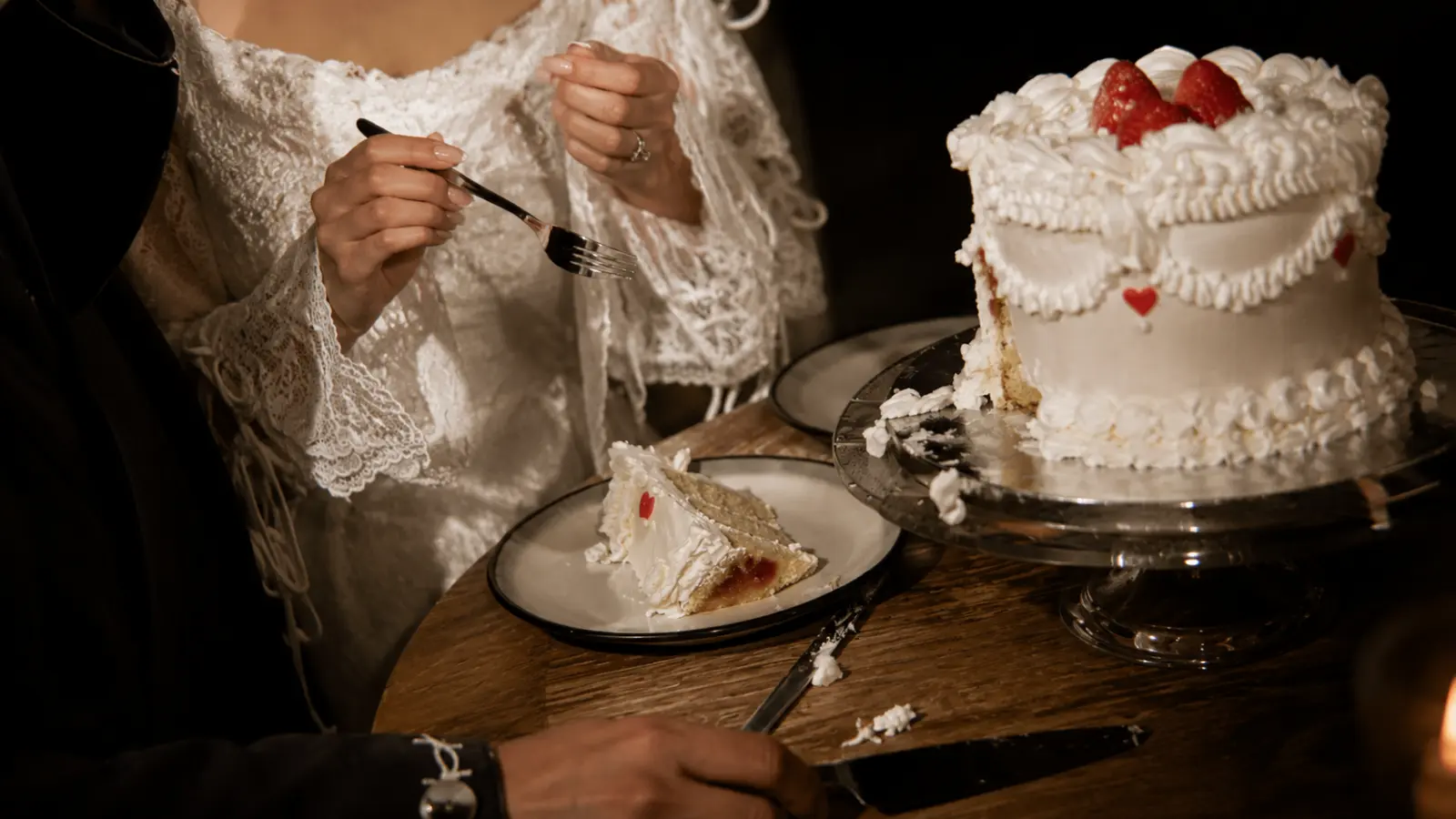
Small wedding cakes are wedding cakes designed for intimate guest counts, micro-weddings, elopements, and smaller celebrations where scale matters just as much as style. Rather than serving hundreds of guests, these cakes focus on creating a meaningful centerpiece that fits the size, atmosphere, and priorities of the wedding.
One of the biggest advantages of a small wedding cake is freedom. When a cake no longer needs to serve a large crowd, couples can focus on design, flavor, and presentation without making compromises purely for volume. A small cake can be elegant, modern, floral, minimalist, dramatic, or highly customized while still feeling perfectly proportioned to the celebration.
In this wedding cakes guide, you’ll discover small cake ideas ranging from one-tier and two-tier designs to floral cakes, simple buttercream styles, mini cakes, cupcake pairings, and sheet cake solutions. You’ll also learn how many servings you actually need, how much a small wedding cake typically costs, and which format works best for your guest count and budget.
Small Wedding Cake Ideas
The range of what qualifies as a small wedding cake is broader than most couples realize. A single 6-inch tier with dried citrus slices and a linen ribbon is a small wedding cake. So is a two-tier black cake with gold leaf and a dramatic topper. So is a tower of individual frosted cakes, each one a guest’s own. The category is defined by scale — not by simplicity, not by budget, and not by style.
The best starting point for wedding cake ideas is deciding what the cake needs to do. Does it need to be photographed prominently as part of the ceremony space? Does it need to feed everyone, or is a separate sheet cake handling guest servings? Is it a flavor-forward centerpiece or a visual one? Those questions will define the format before the aesthetic decisions even begin.
The formats worth knowing
There are five distinct formats that work well for small weddings, each with a different relationship between appearance, servings, and cost:
- Single-tier cake: One-tier wedding cakes usually feature one layer, any size from 4 inches to 10 inches. The purest format — simple to execute beautifully, scales down naturally to very small guest counts.
- Small two-tier cake: Small two-tier wedding cakes use two tiers in smaller dimensions than a traditional wedding cake. The look of a wedding cake without the scale. Typically 6 inches over 8 inches, or 4 inches over 6 inches for very small weddings.
- Decorative cake plus sheet cake: A visually impressive small cake for display and the couple’s cutting, paired with an unfrosted sheet cake in the kitchen to serve guests. The most practical format for weddings of 30 or more people on a tight cake budget.
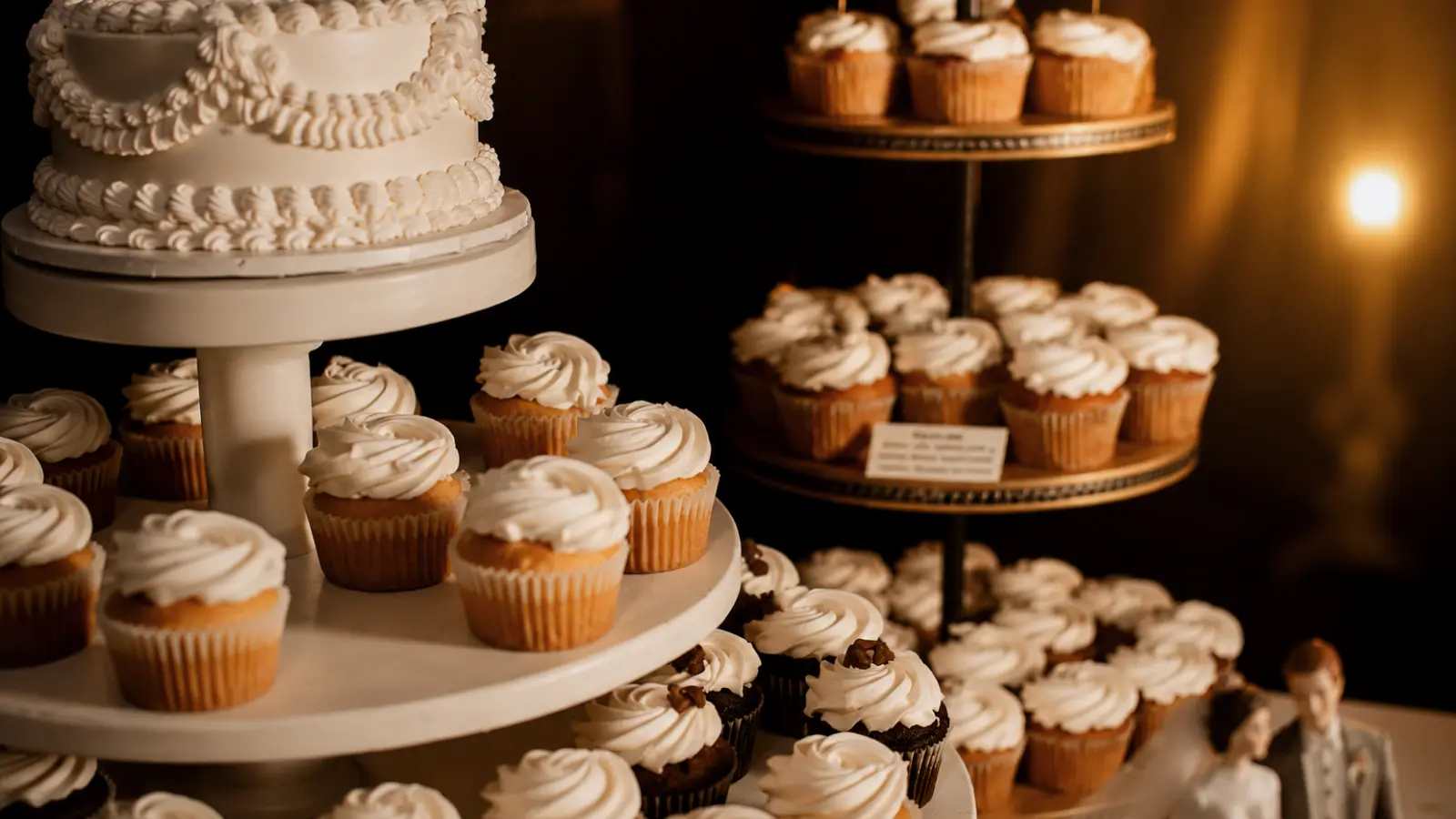
- Cake plus cupcakes: A small central cake flanked by cupcakes in the same flavors. Highly customizable, no slicing required for the cupcakes, and a tiered cupcake tower is visually effective in photographs.
- Individual mini cakes: Each guest receives their own miniature cake, typically 3 to 4 inches in diameter and two or three layers tall. They usually have the highest cost per serving, but they can create one of the most memorable guest experiences.
One-Tier Wedding Cakes
A single-tier wedding cake can be one of the strongest choices for a small or intimate wedding — and it is often underestimated. The single tier forces a commitment to exactly one thing: the decoration. There are no tiers to balance, no structural dowels, no worrying about height. Every decision — the texture of the frosting, the flowers, the topper, the color — exists at eye level, fully visible, undiluted.
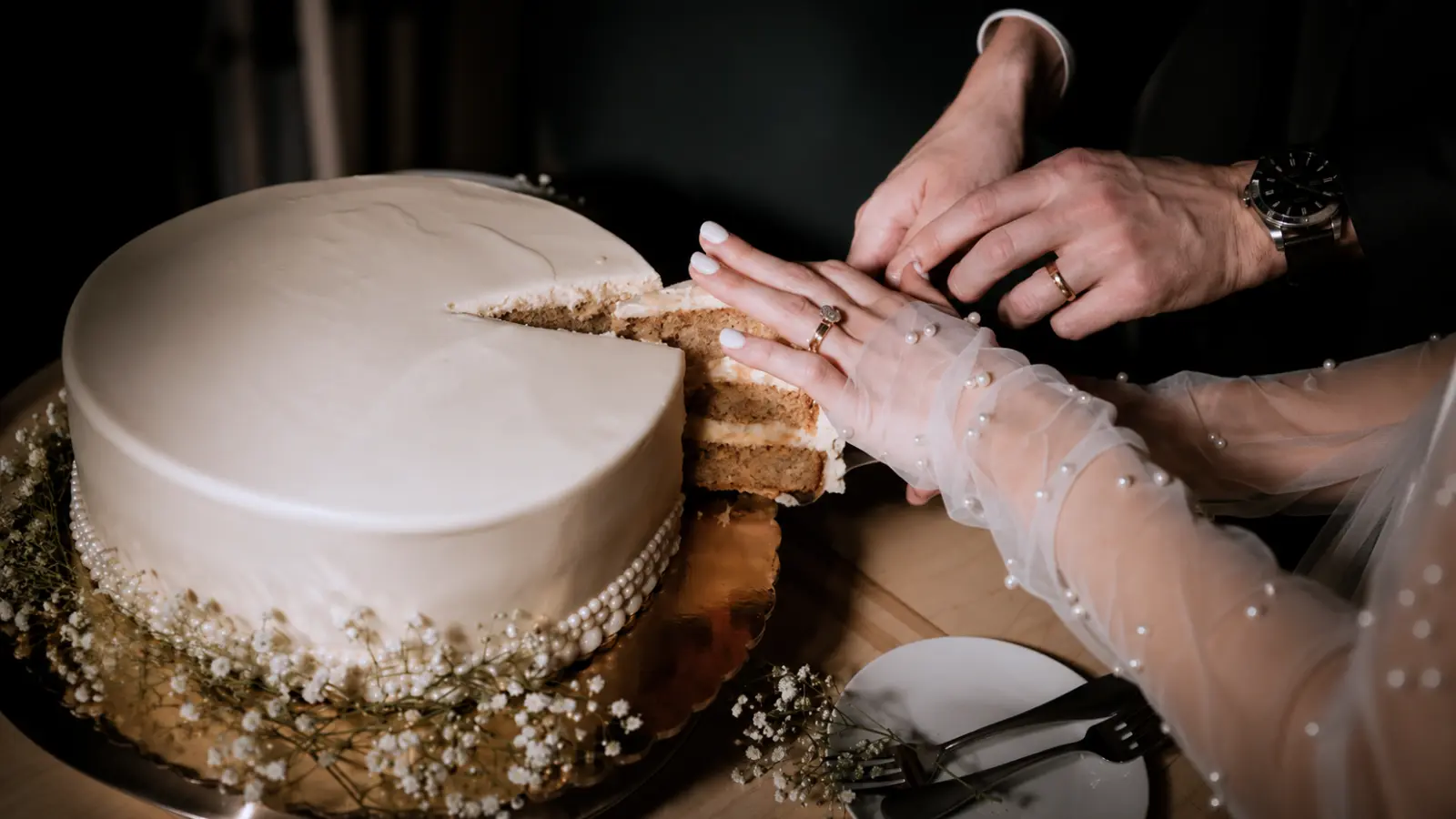
For a small wedding, a single-tier cake in the 6-inch to 8-inch range can often serve a micro-wedding or elopement guest count, depending on the bakery’s serving chart and how the cake is cut.
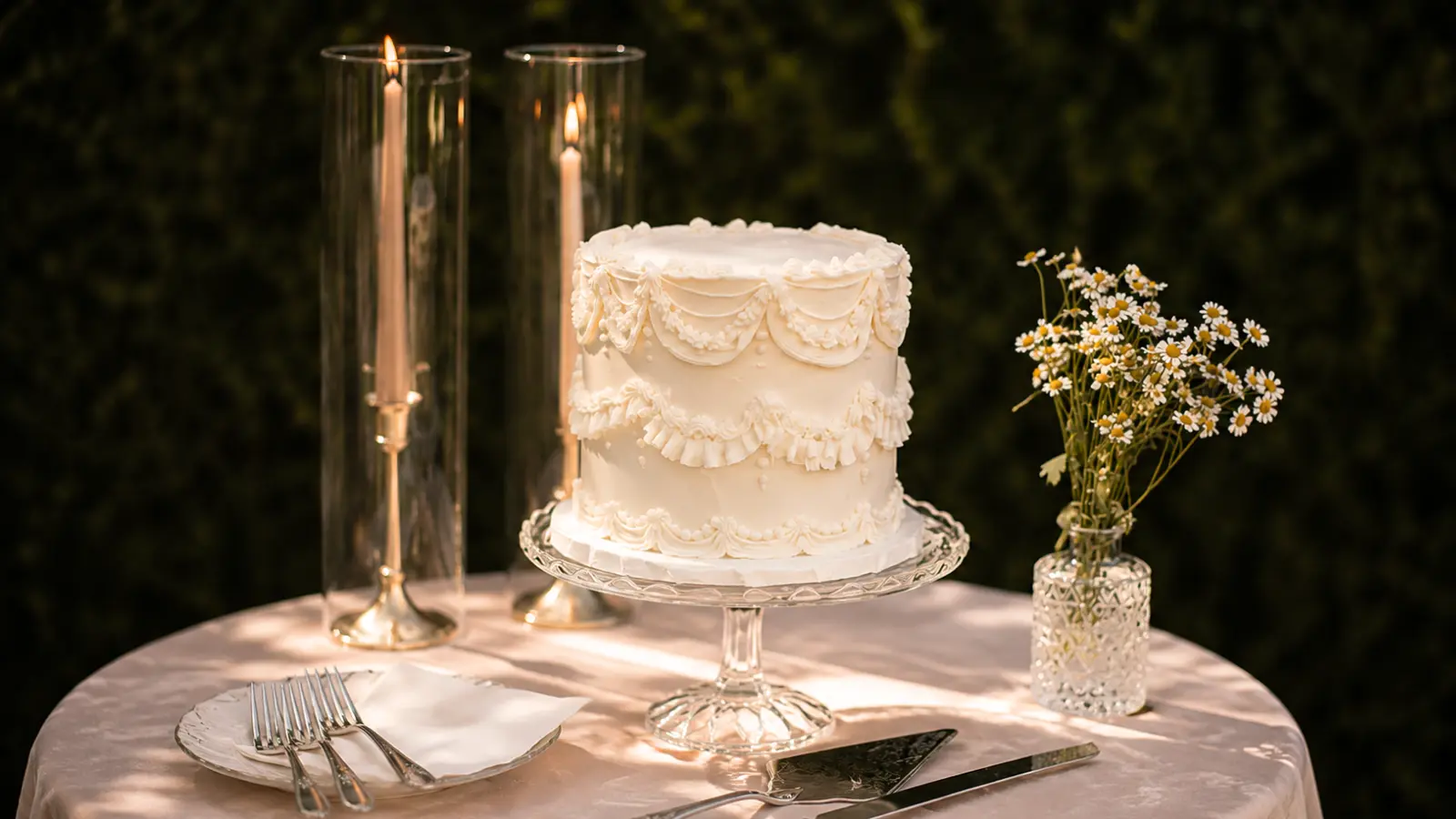
What a one-tier wedding cake looks like in practice
- Tall single tier: A single cake baked in three or four layers, creating a taller profile — typically 5 to 6 inches in height — that reads as substantial and intentional on the table. The height compensates visually for the single-tier format and creates a strong presence in photographs.
- Wide single tier: A single layer in a larger diameter — a 10-inch or 12-inch cake with a lower profile — that suits a more organic, rustic, or naked cake aesthetic. Works particularly well with floral arrangements that extend across the top.
- Drum-style single tier: Equal height and diameter, creating a drum or cylinder shape. Very architectural, works well with minimal decoration — a single botanical element, a monogram, or a geometric texture.
Sizing reference for a single-tier wedding cake
| Cake Diameter | Estimated Servings | Best For |
|---|---|---|
| 4 inch | 4–6 servings | Elopements, couple only, symbolic cut |
| 6 inch | 10–12 servings | Under 15 guests |
| 8 inch ← most popular | 20–24 servings | 15–25 guests, sweet spot for micro-weddings |
| 10 inch | 30–38 servings | 25–35 guests, or paired with small second tier |
The 8-inch single tier is the most commonly ordered small wedding cake for a reason — it covers a full micro-wedding guest count, photographs beautifully on a standard cake stand, and leaves enough visual surface area for meaningful decoration without feeling crowded.
Small Two-Tier Wedding Cakes
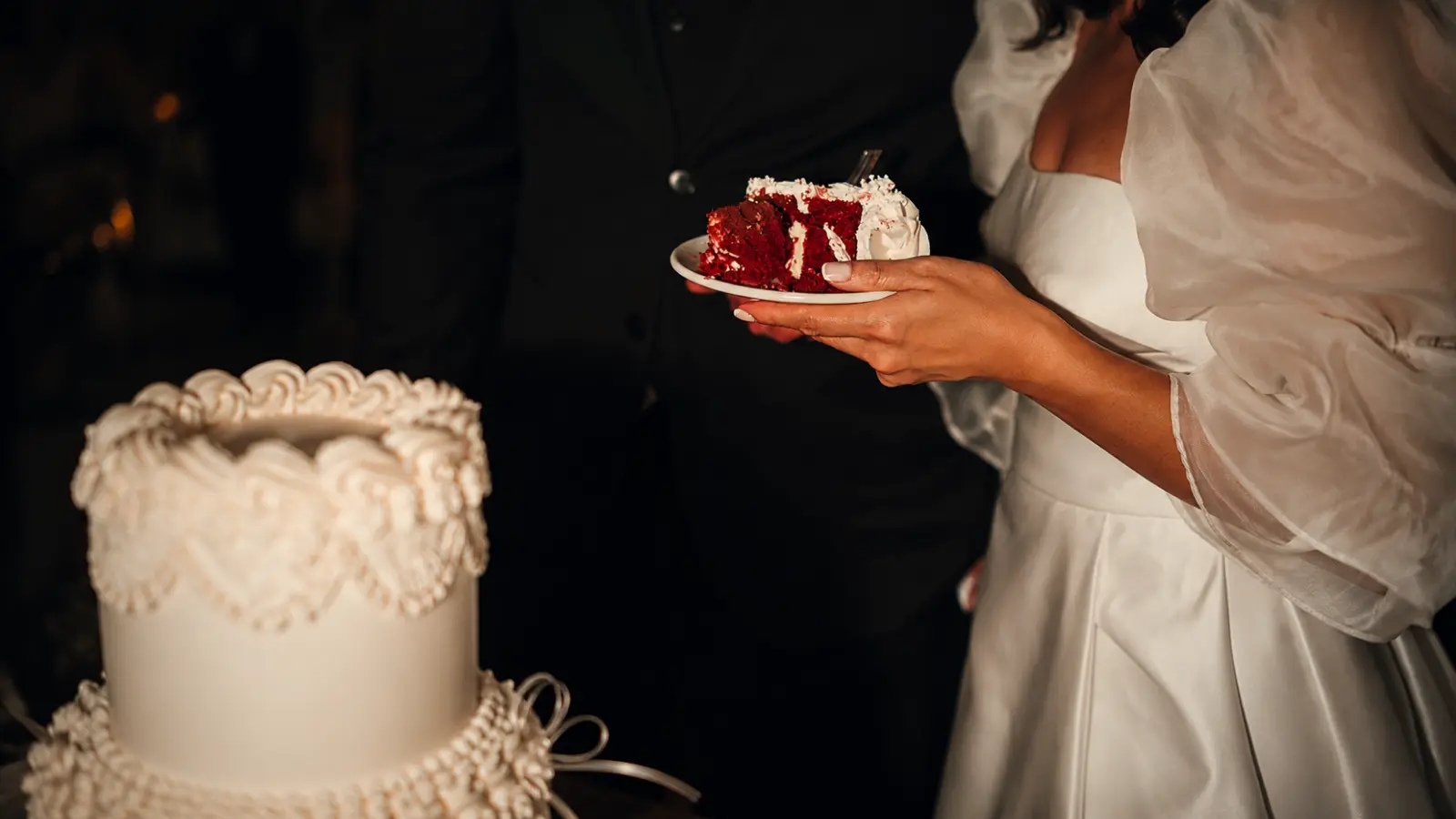
If the single tier is the minimalist’s wedding cake, the small two-tier is its more traditional sibling — and it remains one of the most elegant formats available for weddings under 50 guests. Two tiers signal wedding cake in a way that a single tier does not always. For couples who want the visual language of a wedding cake — the stacked silhouette, the presence, the ceremony of the cut — a scaled-down two-tier achieves it without the scale of a large event cake.
A small two-tier typically means a 6-inch tier over an 8-inch tier, or a 4-inch tier over a 6-inch tier for very intimate celebrations. The key structural requirement that changes at this scale: both tiers still need internal supports (dowels or bubble straws) even when the top tier is small. A 4-inch cake sitting unsupported on a 6-inch cake will sink into the bottom tier over the course of a warm reception. Any reputable bakery will handle this automatically — but if you are ordering from a non-specialist, it is worth confirming.
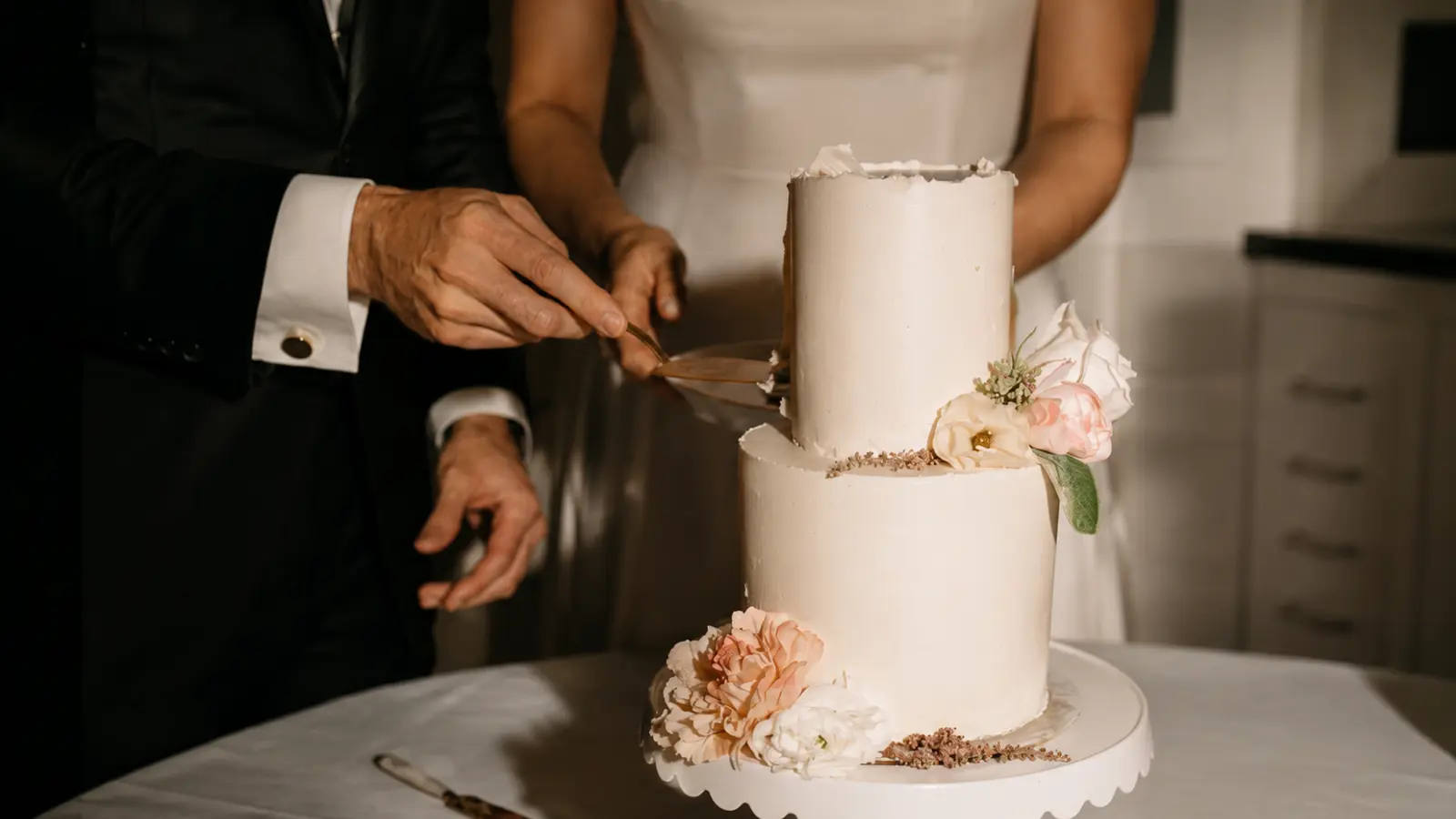
Small two-tier styles that work especially well
- Offset stacked tiers: The top tier is placed slightly off-center rather than centered on the base tier. This creates a modern, editorial aesthetic and leaves room for asymmetric floral or botanical arrangements.
- Floating tier with spacers: The top tier appears to float above the lower tier, separated by a small gap or clear acrylic rods. The gap is often filled with fresh flowers, greenery, or a decorative element. More complex to execute but visually dramatic for the scale.
- Same-diameter stacked tiers: Both tiers share the same diameter, creating a tall column-like cake. Works beautifully for an architectural, minimalist, or highly textured finish like ribbed buttercream or pleated fondant.
Sizing reference for a small two-tier wedding cake
| Tier Combination | Estimated Servings | Best For |
|---|---|---|
| 4″ + 6″ | 14–18 servings | Under 20 guests |
| 6″ + 8″ ← most popular | 30–36 servings | 20–40 guests |
| 6″ + 10″ | 44–52 servings | 35–50 guests |
Small Wedding Cakes with Flowers
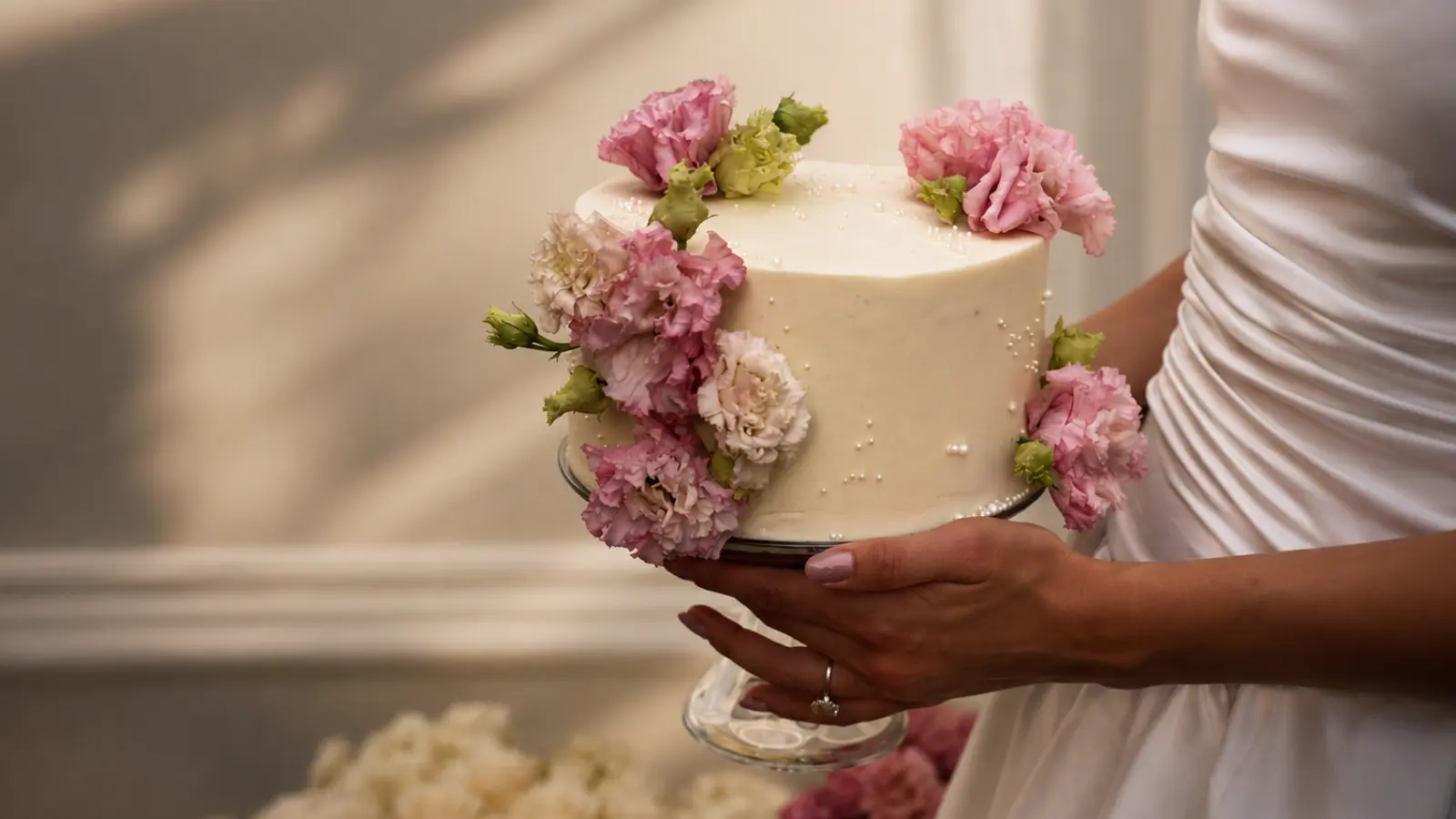
Floral wedding cakes can be one of the most effective design choices available at a smaller scale — particularly because the smaller surface area concentrates the floral arrangement rather than spreading it thin across multiple tiers. A tight cluster of garden roses, peonies, and eucalyptus on a 6-inch single tier has more visual impact per square inch than the same flowers spread across the base tier of a five-layer cake.
There are two distinct directions for floral decoration on a small wedding cake, and they produce very different results:
Fresh flowers
Fresh flowers from a florist placed on the cake by either the florist or the bakery at setup. Lower cost than sugar flowers, can be matched exactly to the wedding bouquet or ceremony flowers, and photograph extraordinarily well. The important caveat: not all fresh flowers are food-safe. Flowers placed directly on frosting — rather than on a decorative pick or small vase insert — need to be food-safe, pesticide-free, and non-toxic. Confirm with both your florist and your baker which flowers are safe for direct cake contact. Common wedding flowers that are generally food-safe: roses, lavender, chamomile, pansies, and orchids. Flowers to avoid direct cake contact: lily of the valley, hydrangea, daffodils, and sweet peas.
Sugar flowers
Handcrafted sugar flowers made from gum paste or fondant by the cake artist. Higher cost — because detailed sugar flowers can require hours of skilled labor — but they last indefinitely, can be applied before the event, and are made from food-safe materials. On a small wedding cake, even one or two exceptional sugar flowers create a focal point that elevates the entire piece. Sugar flowers are the defining detail that separates a premium bespoke cake from a beautiful but generic one.
Dried and preserved flowers
A third option that has become increasingly popular: dried or preserved botanicals applied to the cake. Dried pampas grass, dried rose buds, preserved eucalyptus, and dried citrus slices all create a warm, textural effect that works particularly well with naked or semi-naked cake styles.
Dried flowers can work well decoratively when they are kept off the frosting surface or handled with proper food-safe barriers. They are often lower cost than sugar flowers and suit the organic, unfussy aesthetic that defines many small and intimate weddings.
Floral placement styles by cake format
- Cascade: Flowers trail from the top of the cake down one side. Works on both single and two-tier, creates movement and asymmetry. Suits romantic and garden wedding aesthetics.
- Crown or halo: A ring of flowers around the base of the top tier or around the top edge of a single tier. Clean, contained, symmetrical. Works beautifully for classic and traditional aesthetics.
- Full top coverage: The top of the cake is entirely covered with flowers, creating a garden-style or overflowing floral effect. Especially striking on a single tier where the entire top is visible.
- Single statement bloom: One large, exceptional flower — a garden rose, a peony, a dahlia — placed on the top of the cake. For the minimalist approach that trusts one extraordinary element over a collection of smaller ones.
Simple Small Wedding Cakes
The simplest small wedding cakes are often the most timeless — and for couples who feel uncertain about elaborate decoration, simplicity is not a compromise. It is a direction. A cake finished in perfectly smooth ivory buttercream with nothing but a monogram and a candle on top is a deliberate aesthetic choice, not a budget constraint. The challenge with simplicity is that it demands execution. A textured or heavily decorated cake can absorb minor imperfections. A smooth, minimally decorated cake cannot.
Simple finishes that work exceptionally well at small scale
- Smooth buttercream: The classic. Works in almost any color. Requires a skilled hand — perfect smoothness is technically demanding — but the result is clean, elegant, and flattering in many wedding photographs. Off-white, ivory, and champagne are the standard choices; sage green, dusty rose, and French gray have become increasingly popular for modern small weddings.
- Textured buttercream: Deliberately applied texture — palette knife swipes, raked lines, rustic smear — that looks intentional and hides imperfections simultaneously. Easier to execute than smooth buttercream and photographs very well. Suits organic, garden, and rustic wedding aesthetics.
- Naked cake: Little to no frosting on the exterior, with the cake layers and filling visible from the sides. A warm, informal aesthetic that works with fresh berries, fresh flowers, and powdered sugar finishes. Very popular for outdoor and destination weddings. Practical note: naked cakes dry out faster than frosted cakes and are more weather-sensitive.
- Semi-naked: A thin, deliberately uneven coat of buttercream that reveals some of the cake beneath. Warmer than a naked cake, better protected from drying and weather. The most approachable finish for non-specialist bakers who are making their own wedding cake.
- Ribbed or fluted buttercream: Vertical ribs applied with a cake comb create a textural pattern that photographs as deliberate and polished. A technique that looks complex but is achievable with basic equipment. Works in any color and creates a clean, architectural profile.
Simple toppers that elevate a small cake
On a simple cake, wedding cake toppers carry significant visual weight. The right topper makes the simplicity feel intentional; the wrong one — or no topper at all — can leave the cake looking unfinished. Options that work particularly well on simple small wedding cakes: a single candle in a complementary taper, a personalized acrylic initial or monogram, a dried botanical spray, a small sculptural topper in ceramic or resin, or a fresh flower laid on its side.
Small Cake Plus Cupcakes
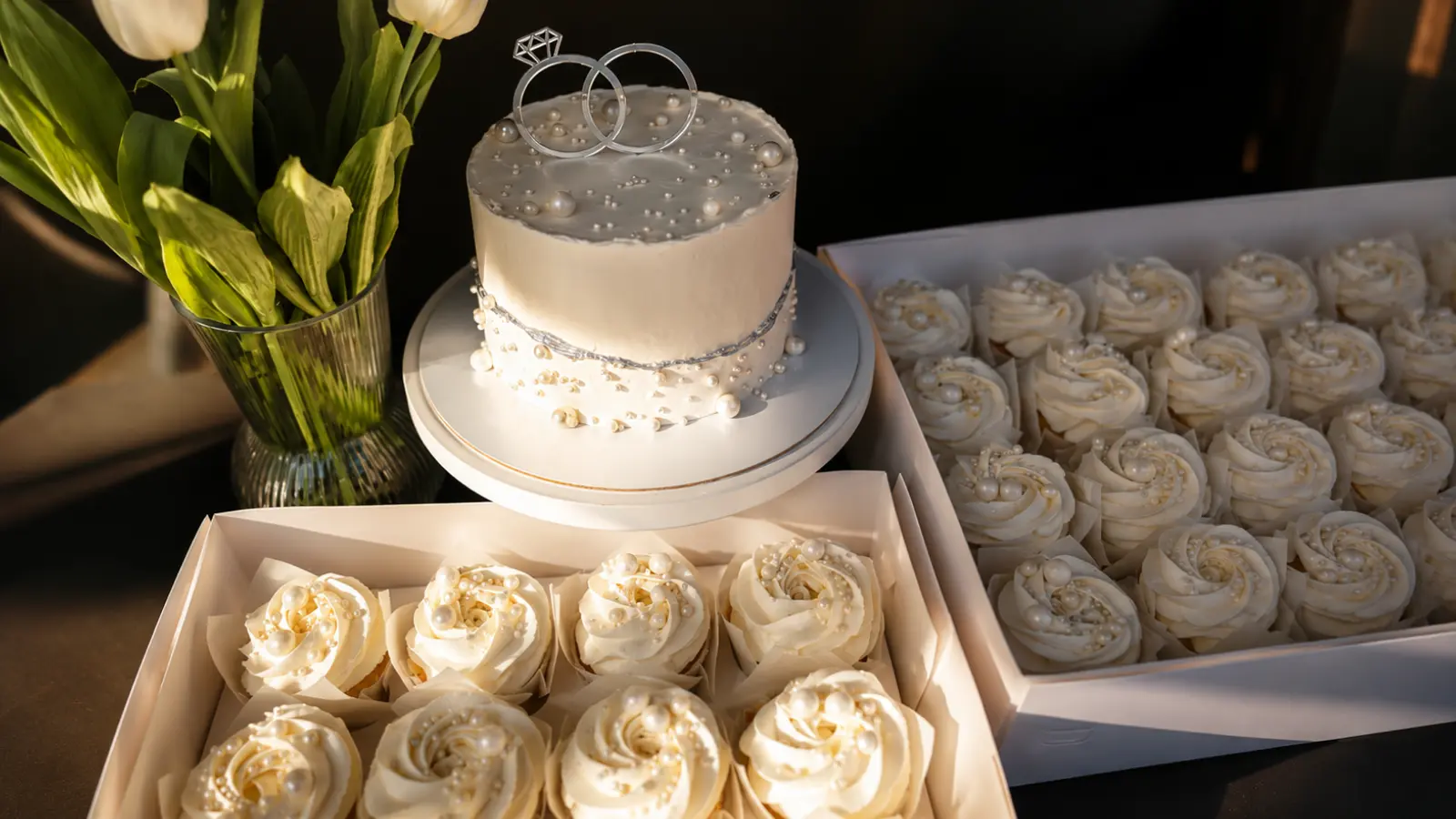
The small cake and wedding cupcakes combination is one of the most practical formats for weddings that need more servings than a small cake can provide without abandoning the visual and ceremonial function of a wedding cake entirely. The setup is straightforward: a central cake — typically a 6-inch or 8-inch single tier — serves as the display piece and the cutting cake for the couple, while tiered stands of cupcakes in the same flavors provide servings for guests.
There is no slicing required for the guest portion. No server needed to portion the cake. No awkward logistics around cutting a cake while guests wait. Guests select their own cupcake, which also allows for flavor variation — something the traditional single-cake format rarely accommodates.
Making the combination look cohesive
The risk with a cake-and-cupcake setup is that it can look like a birthday party rather than a wedding. The details that prevent this:
- The cupcake frosting finish should match or closely complement the central cake — same color palette, same technique (all smooth or all textured), same decoration style (all flowers or all minimal).
- Wedding cake stands matter. A tiered stand in marble, acrylic, or natural wood reads as wedding. A plastic party stand does not. The investment in the right stand — which can be rented — transforms the visual entirely.
- Keep the central cake clearly elevated or centered so the eye is drawn to it first, then to the cupcakes as extensions of it rather than separate elements.
How many cupcakes do you need?
Plan one cupcake per guest for the guest servings, plus the servings from the central cutting cake for the couple and any additional family members receiving a slice. Standard wedding cupcakes are in the 2.5-inch base range — full-size, not mini. Mini cupcakes require two per guest and are better suited as dessert table additions than primary servings.
Small Cake Plus Sheet Cake
The decorative cake and wedding sheet cake combination is the single most practical solution for couples who want an impressive, beautifully designed wedding cake but have a guest count that would require more tiers than the budget or aesthetic allows. It is also the least visible solution — and that is entirely the point.
How it works: a small, fully decorated display cake is placed on the dessert table for all photographs, the ceremonial cutting, and the couple’s first slice. In the kitchen, a plain sheet cake — baked with the same flavor and filling as the display cake — is pre-cut into portions and plated by the catering staff. Guests receive their slice without ever knowing the piece did not come from the beautiful cake on the table.
This is not a deception — it is an industry-standard setup used by professional wedding caterers, particularly for large weddings and weddings with elaborate display cakes. The term used in the industry is sometimes “kitchen cake” or “cutting cake.”
The cost case for this setup
A decorated 6-inch or 8-inch display cake can keep the visual budget focused on design, while a matching sheet cake from the same baker can add guest servings at a lower per-serving cost than extending the display cake through additional tiers. The display cake budget goes entirely into the aesthetic; the guest servings budget goes into flavor and volume.
What to tell your baker
Most professional bakeries and wedding cake artists are completely comfortable with this setup and will suggest it themselves if your guest count and budget don’t align with a full display cake. When you place the order, specify: the exact flavor and filling for the sheet cake to match the display cake, the number of guests the sheet cake needs to serve, and whether the sheet cake should be delivered frosted or plain (plain is standard — it will never be seen).
Mini Wedding Cakes and Individual Cakes
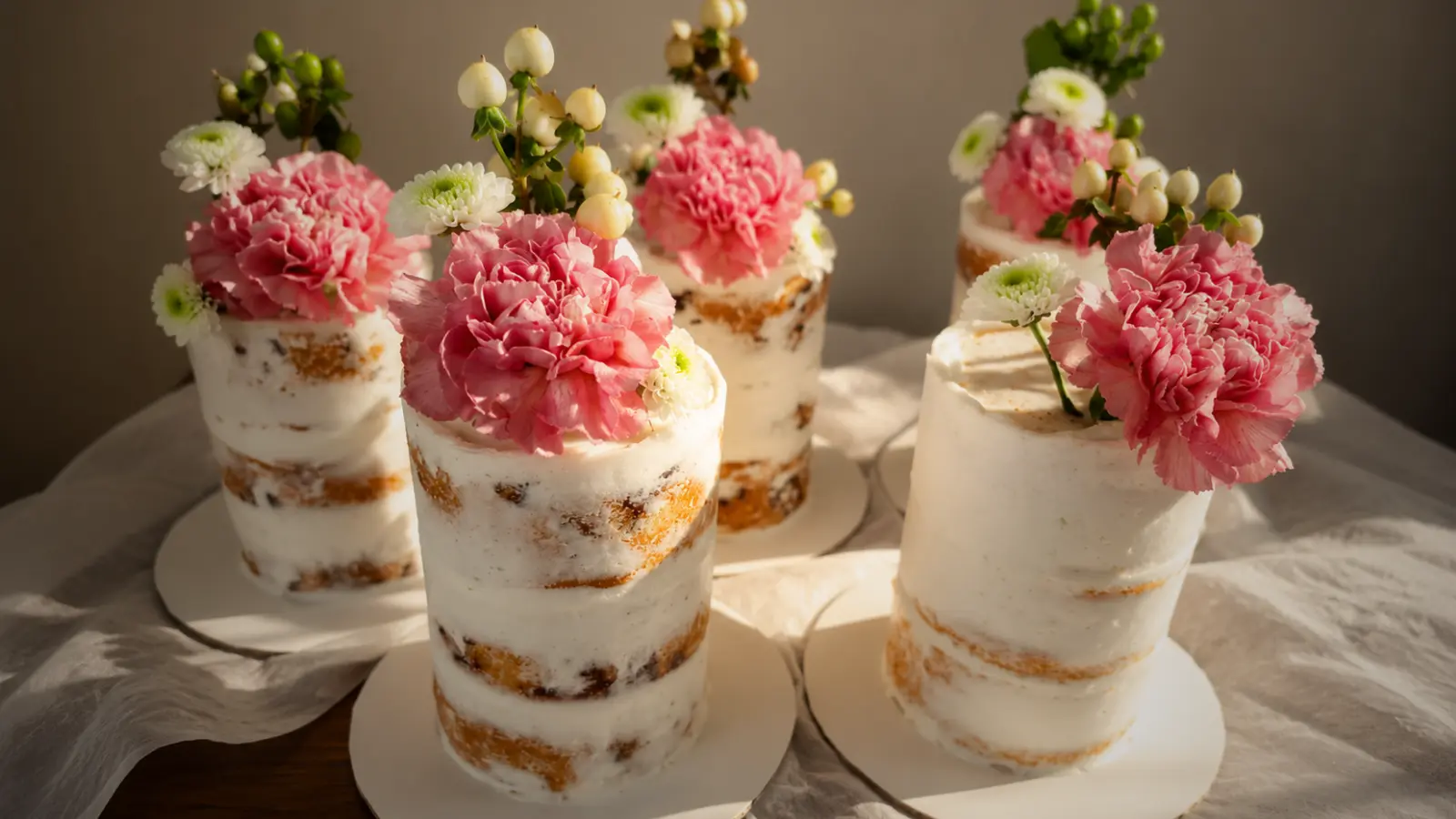
At the far end of the small cake spectrum are individual wedding cakes — one per guest, each a fully decorated mini cake in its own right. The format eliminates cutting, eliminates portion inequality, and creates a visual impact on a dessert table that a single large cake rarely matches. A long table lined with individual frosted cakes, each one a slightly different flower arrangement or the same design repeated with precision, is one of the more memorable wedding table setups possible.
Mini wedding cakes are typically 3 inches to 4 inches in diameter and two to three cake layers tall. They can be fully frosted, semi-naked, or finished with any technique that works on a larger cake — the execution is more delicate at smaller scale but the aesthetic range is the same. Each mini cake usually sits on its own small board and is placed directly on the table or on a rented display surface.
When mini cakes make sense
- Guest counts under 30, where the per-unit cost does not become prohibitive
- Weddings with a strong dessert table concept where individual cakes are one of several dessert offerings
- Situations where dietary restrictions or preferences make variety desirable — different flavors can be distributed across the table without a conversation about slicing
- Events where the cake visual is a priority but a traditional large cake does not fit the aesthetic
Cost of mini wedding cakes
Individual mini cakes from a professional bakery usually cost more per serving than a standard tiered cake because each one requires separate assembly, finishing, and decoration. For a wedding of 30 guests, that is $450 to $1,050 for the mini cakes alone — generally higher per serving than a standard wedding cake of the same total size. The premium is for the labor: decorating 30 individual cakes takes considerably longer than decorating one large cake with the same total number of tiers.
How Many Servings Do You Need?
The serving size question is the one that most couples get wrong — either dramatically over-ordering or under-ordering in ways that are not obvious until the reception. The actual number of servings you need depends on three variables that the online serving calculators rarely account for: how the cake is being cut, what else is being served for dessert, and how many guests actually eat cake at weddings.
Standard bakery serving sizes
| Tier Size | Party Servings | Wedding Servings* |
|---|---|---|
| 4 inch round | 4–6 | 4–6 |
| 6 inch round | 10–12 | 10–12 |
| 8 inch round | 20–24 | 20–26 |
| 10 inch round | 30–38 | 38–44 |
| Sheet cake (9×13) | 20–24 | 24–30 |
| Half sheet (12×18) | 36–48 | 48–60 |
*Wedding servings are cut slightly smaller (approximately 1″ × 2″ per slice) than party servings (1.5″ × 2″). Confirm cutting size with your caterer.
How many guests actually eat cake
At many American weddings, not every guest eats the wedding cake. Some guests are not dessert eaters. Some leave early. Some children receive smaller portions. The standard industry practice is to order cake for your full guest count — but if you are budget-conscious and have other dessert options on the table, ordering for 75 percent of your guest count is a reasonable calculation that rarely results in shortage.
The calculation
As a practical planning rule, order closer to your full guest count if cake is the only dessert, and consider a slightly lower serving count if you are offering a full dessert table. Confirm the final number with your baker and caterer, then round up rather than down.
How Much Does a Small Wedding Cake Cost?
Wedding cake cost follows the same pricing structure for small and full-size cakes — base price per serving plus decoration labor — which means small cakes are not always proportionally cheaper than large ones. The decoration labor on a 6-inch cake with intricate sugar flowers is similar to the same decoration on a 10-inch cake; the savings come from the reduced amount of baked product, not from the artistry.
General price ranges by cake format
These are general planning ranges only. Final pricing depends on bakery location, design complexity, ingredients, delivery, setup, and the level of custom decoration.
| Format | Price Range | Notes |
|---|---|---|
| Simple single tier (8″) | $150–$280 | Buttercream, minimal decoration |
| Decorated single tier | $250–$500+ | Fresh flowers, textured finish, topper |
| Small two-tier (6″+8″) | $350–$700 | Varies widely by decoration level |
| Sugar flower accent | +$50–$200 per piece | Each handcrafted flower priced separately |
| Sheet cake add-on | $75–$175 | Plain, same flavor as display cake |
| Mini cakes (per cake) | $15–$35 each | Higher per-serving than standard tiers |
| Grocery store wedding cake | $75–$200 | Limited design, standard flavors |
What drives cost up
- Sugar flowers: The single biggest cost driver after the base cake. Three handcrafted sugar peonies can add $150 to $300 to the total.
- Hand-painted elements: Watercolor effects, gold leaf, or botanical illustrations applied directly to the cake require skilled artistry that is charged accordingly.
- Delivery and setup: Most custom bakeries charge a delivery and setup fee — typically $50 to $150 depending on distance — that is separate from the cake price.
- Specialty flavors: Earl grey, brown butter, yuzu, or other specialty flavor combinations often carry a per-tier surcharge over vanilla or chocolate.
How to budget strategically
Couples who want a beautiful cake on a tighter budget have two effective levers. First: invest in the display cake’s shape and frosting finish rather than the decoration. A perfectly smooth sage green buttercream cake with a single fresh flower is visually exceptional and far less expensive than the same cake with $300 in sugar flowers. Second: use the sheet cake method to decouple serving cost from display cost. Order the most beautiful small cake your decoration budget allows, then add a plain sheet cake for guest servings at a fraction of the per-serving cost.
Small Wedding Cake Inspiration Board
Before choosing your final design, it helps to see how small wedding cakes can prove that beautiful design does not depend on size. Explore our small wedding cake inspiration board for one-tier cakes, elegant two-tier designs, floral wedding cakes, minimalist styles, mini wedding cakes, and creative display ideas for intimate weddings, micro-weddings, and elopements.
Final thoughts
The best small wedding cakes succeed because they feel proportionate, intentional, and fully connected to the celebration around them. A cake that fits the guest count, table size, venue, and overall aesthetic will always feel more meaningful than a larger design chosen only because tradition suggests a wedding cake should be tall.
Whether the right choice is a single-tier buttercream cake, a small two-tier floral design, a decorative cutting cake with a sheet cake in the kitchen, or individual mini cakes for every guest, the goal is the same. A small wedding cake should serve beautifully, photograph well, and feel exactly right for the scale of the day.
Frequently asked questions (FAQ)
Do small wedding cakes look less impressive in photos?
Not at all. In many cases, they photograph better. A smaller cake allows photographers to capture more detail, texture, and styling without the visual clutter that often comes with oversized designs. Scale matters less than presentation.
What makes a small wedding cake feel intentional instead of budget-driven?
Proportion and styling. A beautifully displayed small cake with thoughtful florals, candles, linens, or a statement cake stand feels purposeful. A small cake only feels like a compromise when it looks disconnected from the rest of the celebration.
Is it better to have a beautiful small cake or a larger simple cake?
For most intimate weddings, a beautiful small cake creates a stronger visual impact. Guests rarely remember how many tiers a cake had, but they often remember whether it felt special and suited to the event.
What is the biggest mistake couples make when ordering a small wedding cake?
Focusing only on guest count. The cake is not just dessert—it is also part of the décor, the photography, and the overall experience. Choosing a cake solely based on servings often leads to designs that feel too small for the space.
Do guests care if part of the cake comes from a sheet cake?
Almost never. Guests care far more about flavor than presentation logistics. As long as the sheet cake matches the display cake, most guests will never know the difference.
What do professional cake designers notice first about a small wedding cake?
Usually the silhouette. Because there is less scale to distract the eye, proportion, height, texture, and overall balance become even more important. A well-designed small cake often reveals craftsmanship more clearly than a large one.