
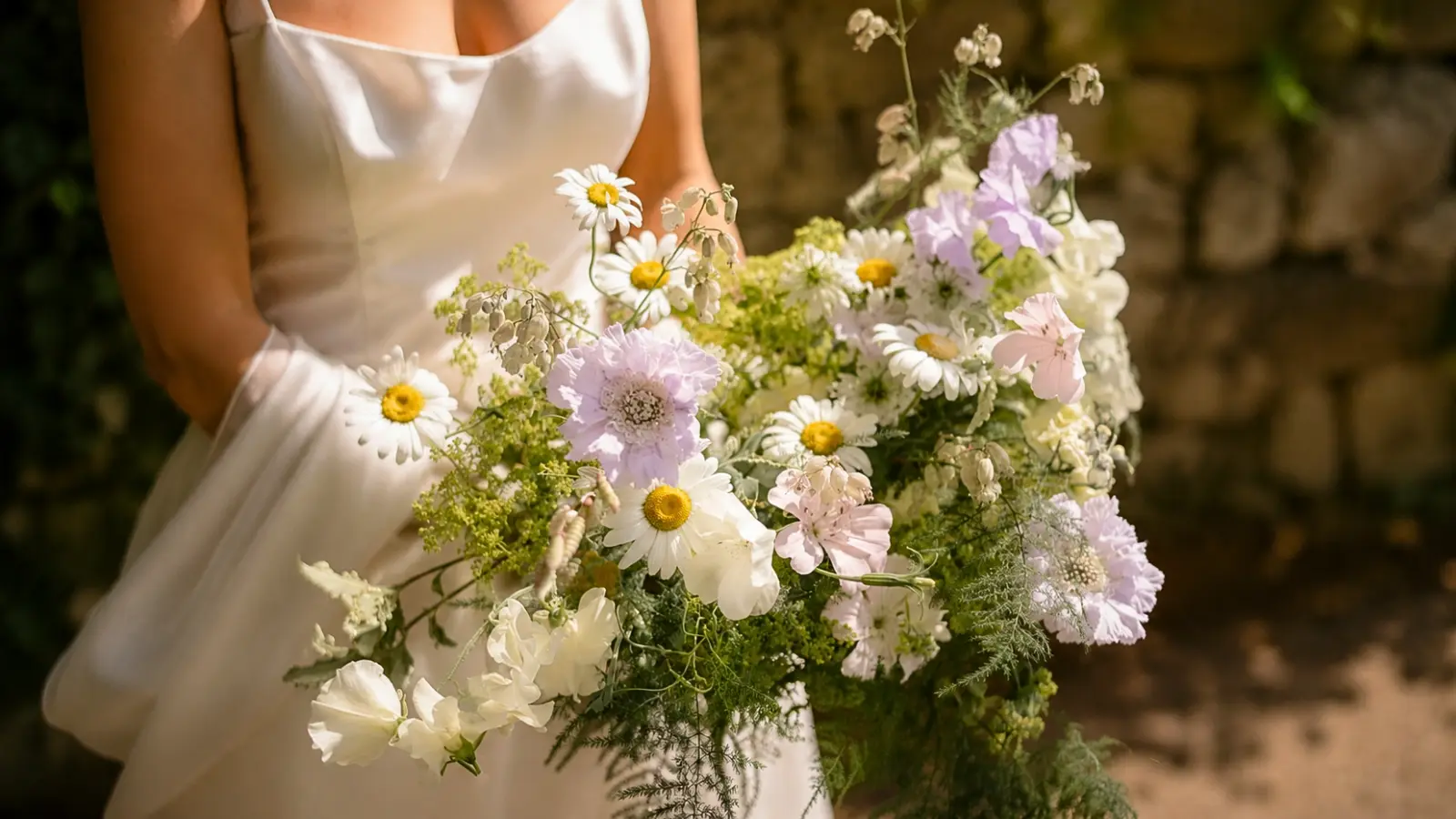
Wildflower wedding bouquets are perfect for brides who love natural texture, relaxed elegance, and flowers that feel freshly gathered rather than formally arranged. With their loose shapes, seasonal blooms, and effortless movement, these bouquets suit everything from rustic barns and garden weddings to boho celebrations and outdoor ceremonies.
Although they appear spontaneous, the most beautiful wildflower bouquets are carefully designed. Color palette, flower selection, greenery, and bouquet shape all work together to create an arrangement that feels organic while remaining polished enough for professional wedding photography.
This guide explores wildflower wedding bouquets in detail, including rustic and boho styles, seasonal flower choices, color palettes, bouquet structure, and practical tips for creating a bouquet that looks naturally beautiful without feeling unfinished.
What Is a Wildflower Wedding Bouquet?
A wildflower wedding bouquet is defined less by which specific flowers it contains and more by the feeling it creates. The silhouette is loose and slightly asymmetrical. The flowers are small to medium in scale, varied in shape, and mixed in a way that suggests gathering rather than arranging. There is visible greenery, often including grasses or trailing stems. Nothing looks forced into position.
What separates a wildflower bouquet from a garden-style bouquet is the absence of a dominant focal flower. A garden bouquet centers on a large rose or peony, with supporting elements built around it. A wildflower bouquet distributes attention more evenly — cornflowers alongside Queen Anne’s lace alongside cosmos alongside sweet peas, without any single bloom claiming priority. That balance is also what makes it more technically interesting to assemble than it looks.
The style works across a wide range of weddings, from casual outdoor ceremonies to boho celebrations to relaxed garden receptions. With the right flower selection and finishing, it can also read as elegant — which is worth knowing if your venue or dress leans more formal than your bouquet inspiration.
Rustic Wildflower Bouquets
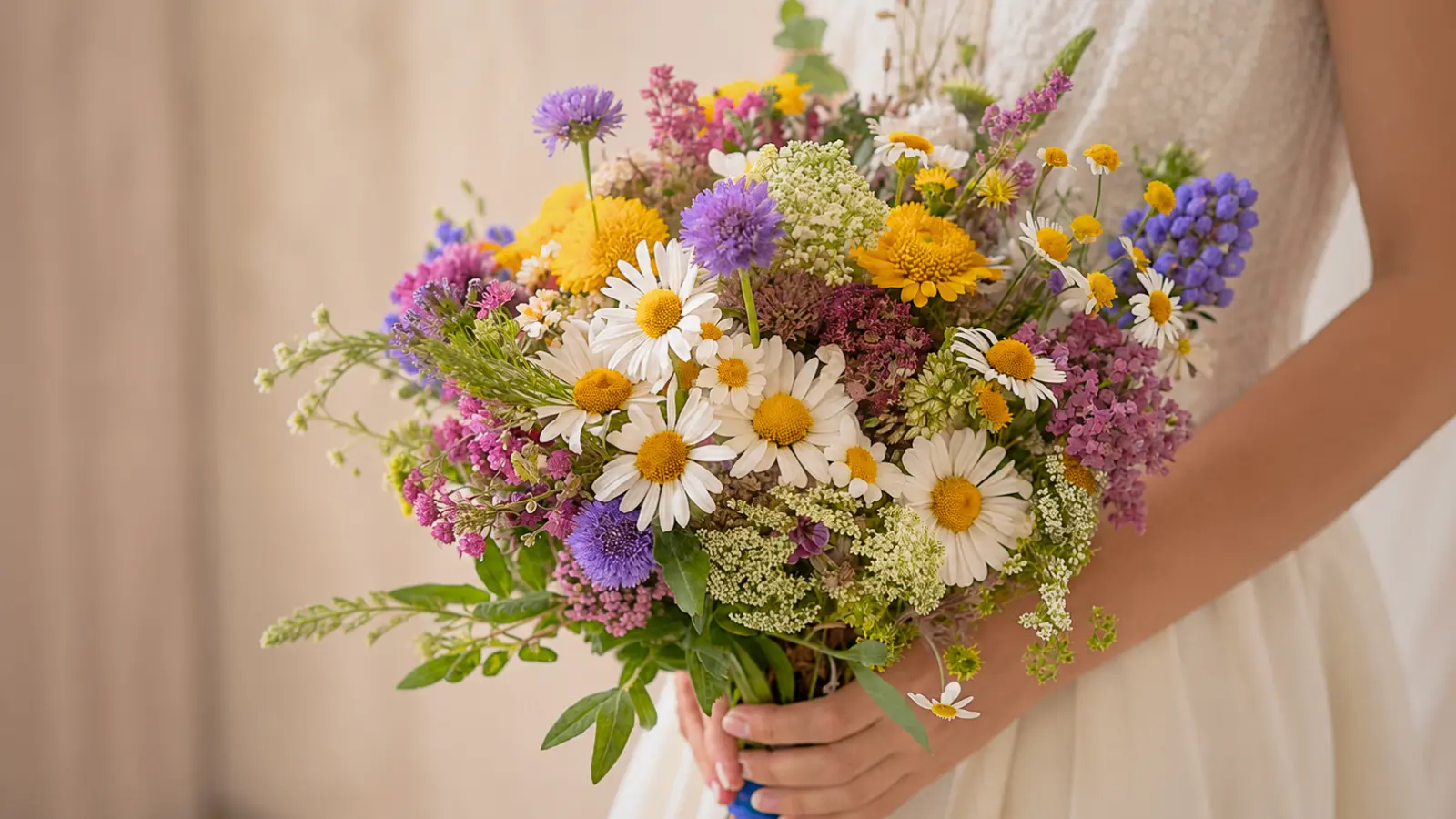
Rustic wildflower bouquets emphasize texture and warmth over delicacy. The palette runs toward earthy tones — burnt orange, dusty rose, sunflower yellow, cream, sage green — and the impression is abundant and slightly unrefined in a way that feels intentional rather than careless. This is the aesthetic most associated with barn weddings, outdoor meadow ceremonies, and receptions where the décor leans toward wood, linen, and candlelight.
The flowers that work well here include black-eyed Susans, yarrow, zinnias, chamomile, and dahlias in warm tones, paired with ferns, eucalyptus, grasses, and dried elements like wheat stalks or lavender. One of the defining qualities of the rustic style is that dried and fresh flowers coexist naturally — the dried components can be assembled weeks ahead, with fresh flowers added the morning of the wedding, which makes this one of the more practical approaches for DIY brides.
The handle treatment matters more than it might seem. The same flowers wrapped with rough twine read very differently from those finished with a wide linen ribbon. Neither is wrong, but the choice signals the overall aesthetic intention — and it is worth deciding that intentionally rather than as an afterthought.
Boho Wildflower Bouquet Ideas
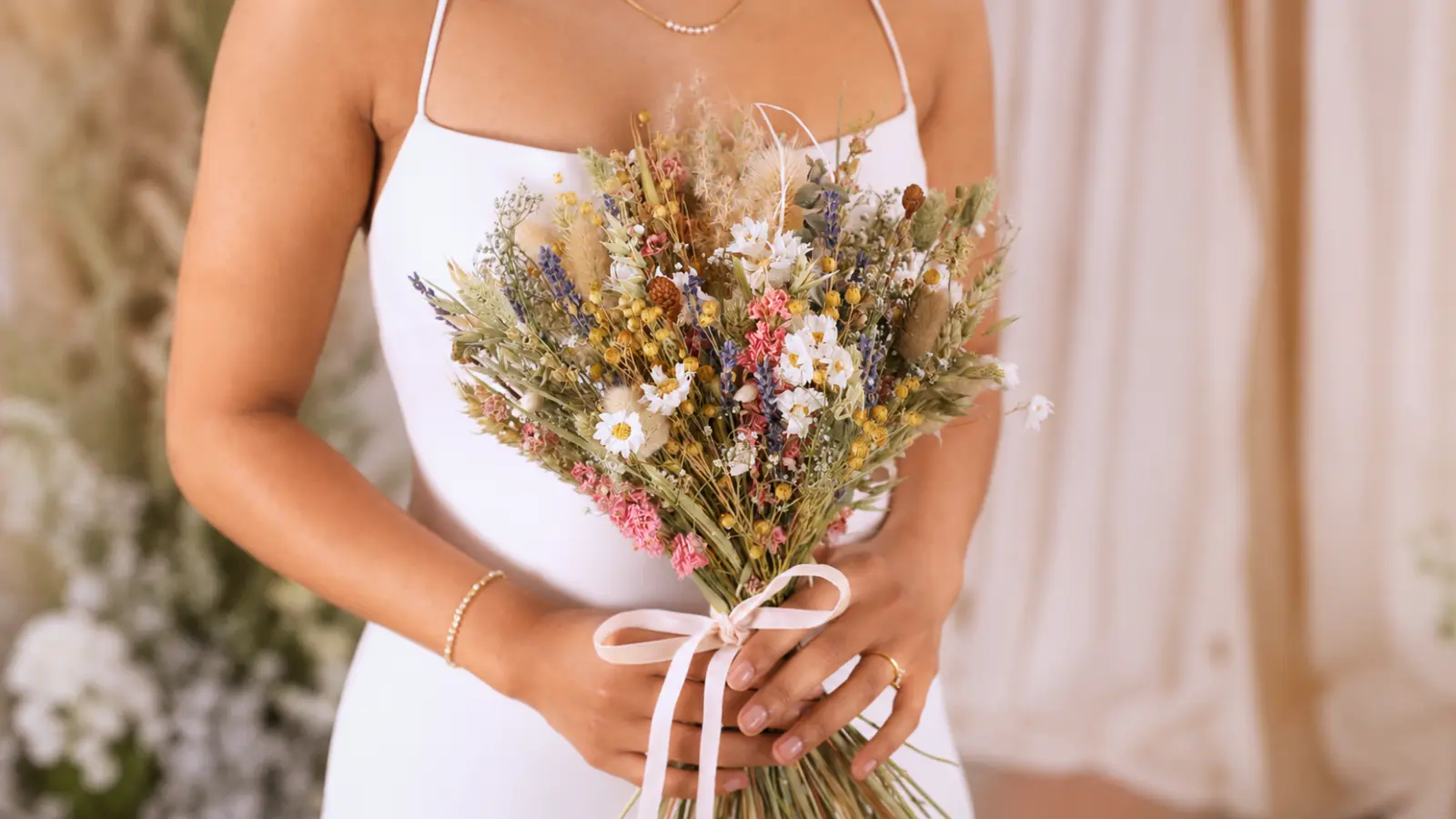
Bohemian wildflower bouquets share the looseness of the rustic style but tend to be more eclectic in flower choice and more deliberately layered in texture. Where rustic leans warm and earthy, boho is comfortable with unexpected combinations — dusty mauve next to terracotta next to white, pampas grass alongside ranunculus and trailing ribbon. The palette is often more muted, the greenery more varied.
Flowers that feel genuinely at home in boho arrangements: anemones with their graphic dark centers, scabiosa for its pin-textured detail, thistle and dried seed pods for structural interest. Pampas grass works as a single feathery accent — one or two stems that add softness and movement. Used in larger quantities, it flattens the composition and overwhelms the smaller flowers around it.
Trailing ribbons in multiple lengths and textures — silk, velvet, linen — are one of the few finishing details that genuinely photographs differently from a standard handle wrap. If editorial movement shots are a priority for your photographer, this is worth considering when you plan the finishing of the bouquet.
Simple Wildflower Wedding Bouquets
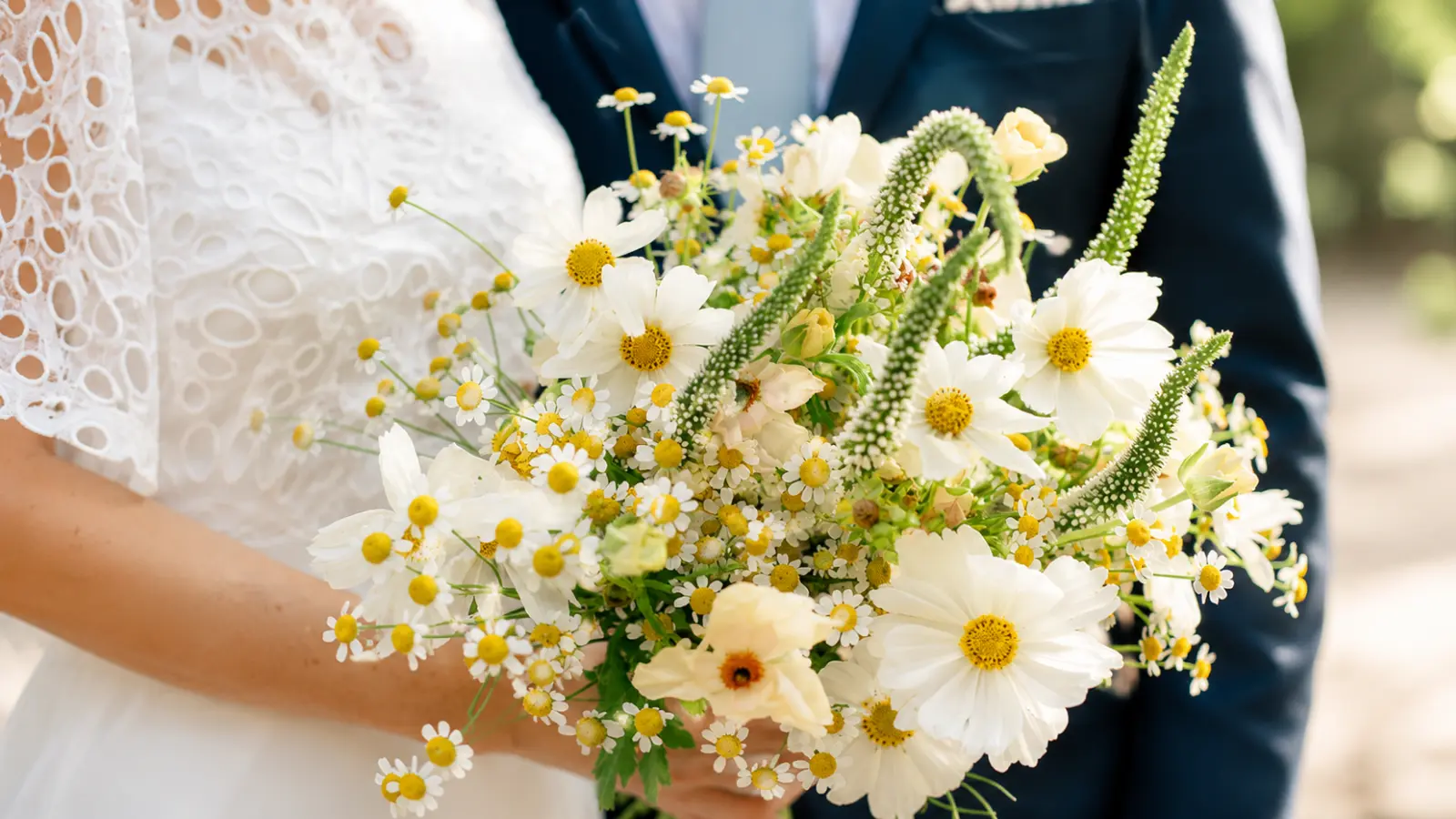
Not every wildflower bouquet needs to be abundant. A handful of sweet peas with a few grass stems, a loose cluster of cosmos in one color, a small nosegay of lavender tied with twine — these can be exactly right for certain brides and certain dress silhouettes. Simple wildflower bouquets work particularly well with slip dresses, tea-length gowns, and casual boho silhouettes where a fuller arrangement would compete with the dress rather than complement it.
The approach that works best for simple bouquets: commit to a single variety, or limit the mix to two flower types and one greenery. The discipline is resisting the urge to add more. A single-variety arrangement — all chamomile, all lavender, all sweet peas — looks considered precisely because it commits to its restraint. It is also, practically speaking, one of the most accessible options for DIY brides, since the assembly is genuinely straightforward with fewer stems and a more forgiving silhouette.
Wildflower Bouquets by Season
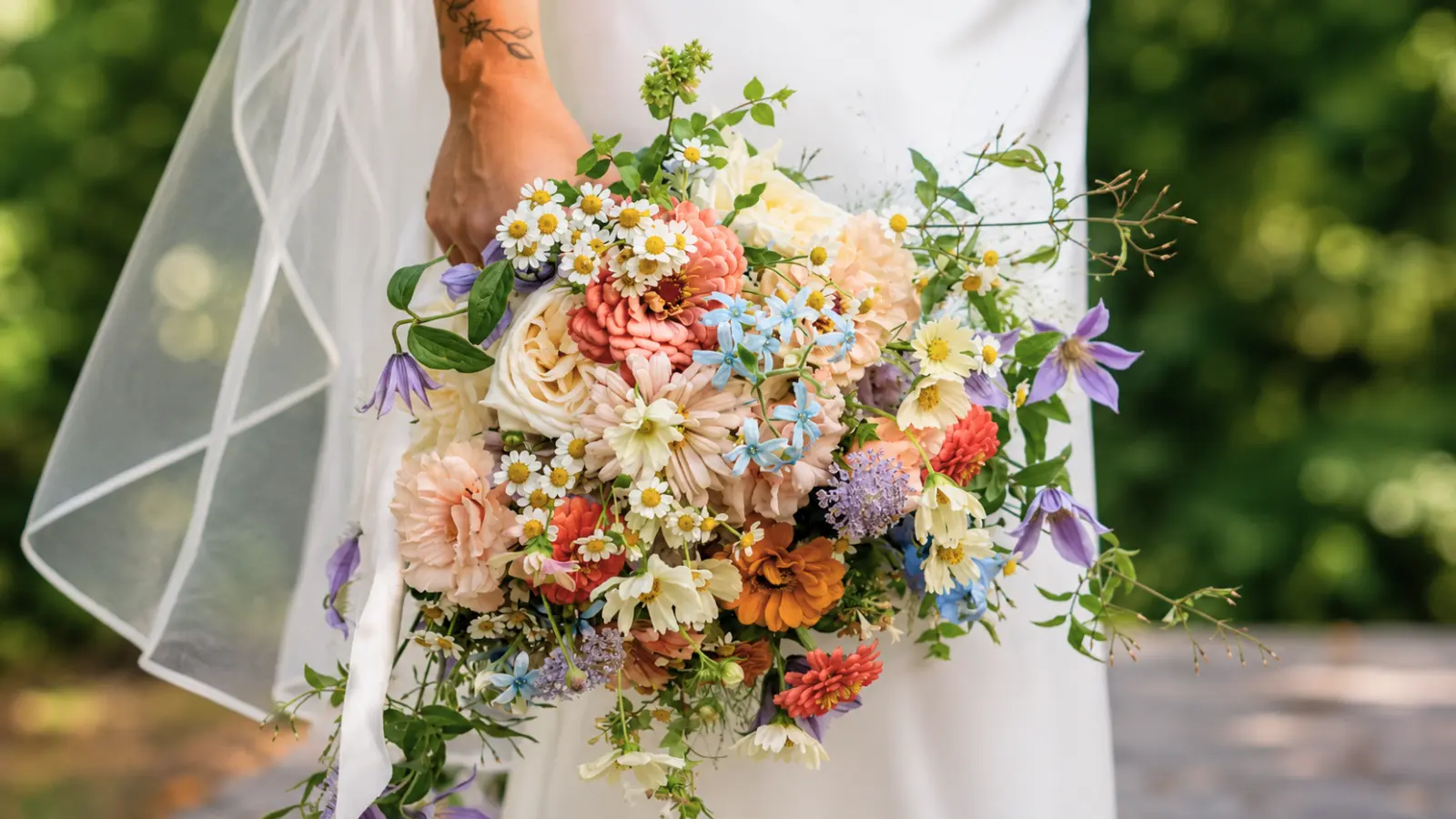
One genuine advantage of the wildflower aesthetic is how naturally it adapts to seasonal availability. Because these bouquets are not built around a specific premium flower that needs to be sourced regardless of time of year, they can be composed primarily from whatever is at peak quality locally. That typically means better flowers, lower cost, and a more authentic natural look.
| Season | Strong Wildflower Choices | Palette Direction |
|---|---|---|
| Spring | Sweet peas, ranunculus, anemones, tulips, lilac, fritillaria | Blush, lavender, white, soft yellow |
| Summer | Cosmos, Queen Anne’s lace, black-eyed Susans, lavender, zinnias, chamomile | Warm whites, yellow, coral, mixed brights |
| Fall | Dahlias, asters, yarrow, late cosmos, scabiosa, dried grasses | Burgundy, copper, rust, dusty mauve, cream |
| Winter | Dried wildflowers, dried grasses, eucalyptus, cotton stems, hellebores | Cream, ivory, muted sage, warm neutrals |
Winter is worth a specific note. A fully dried wildflower bouquet — pampas grass, dried lunaria, lavender, cotton stems, preserved eucalyptus — is a genuine primary option for winter brides with a boho or rustic aesthetic, not a fallback. It looks organic and complete, and it requires no preservation effort after the wedding.
Best Flowers for a Wildflower Bouquet
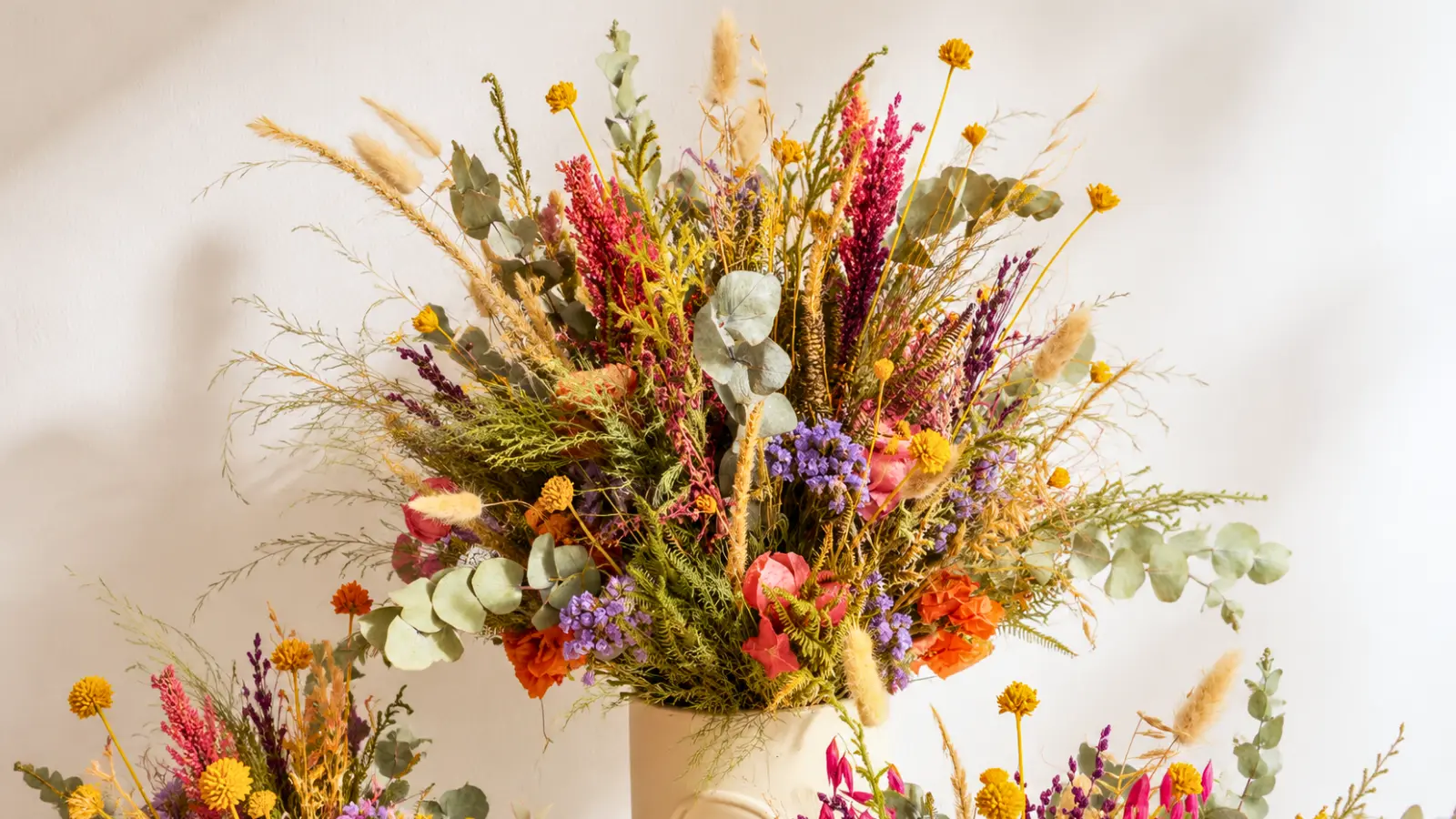
The best wildflower bouquet flowers share a few practical qualities: an informal shape, reasonable durability outside of water, and the ability to mix well without dominating. Here is what actually works, and why.
Queen Anne’s lace is one of the most useful ingredients in a wildflower arrangement. The flat, lacy white clusters fill space, add airiness, and make every other flower around them look better. It is widely available, affordable, and genuinely difficult to misuse.
Cosmos bring movement and informality to any arrangement. They come in white, pink, burgundy, and bicolor options, and their thin stems and delicate petals move slightly in a way that reads as alive rather than arranged.
Sweet peas add color, fragrance, and a trailing quality nothing else quite replicates. They are fragile and spring-specific, but properly conditioned they hold up well for a ceremony and reception. Outside their season, availability narrows considerably.
Scabiosa (pincushion flower) is one of the most versatile secondary flowers for this style. The pin-like texture at the center of each bloom adds visual interest at close range, and the lavender, white, and dark burgundy varieties cover a wide palette range.
Ranunculus, while technically cultivated, reads naturally in wildflower arrangements because of its layered, informal appearance. It also has better durability than many true wildflower types — useful in a mix where other flowers are more delicate.
Ornamental grasses — not leaf-based greenery, but actual fine grass stems — add movement and texture that nothing else provides. A few stems woven through the arrangement make it look more gathered and less assembled. This small detail separates wildflower bouquets that look genuinely natural from those that simply use informal flowers in a structured way.
How to Make Wildflowers Look Intentional
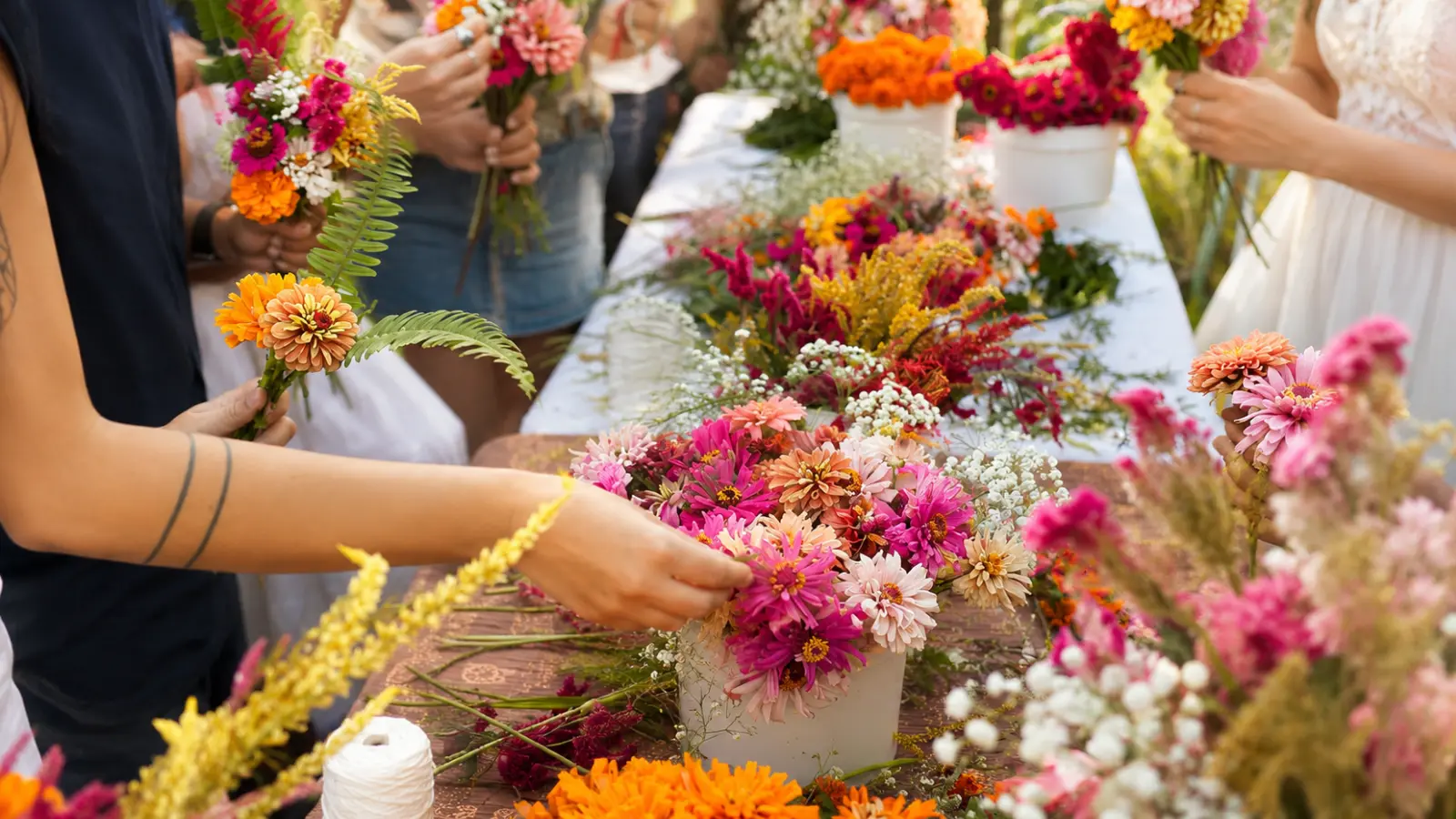
This is the section most wildflower bouquet guides skip, and it is the most useful one. The aesthetic goal is to look naturally gathered — but flowers actually gathered from a field would wilt in an hour and look chaotic in photographs. What you want is a bouquet that achieves the impression of being gathered while being assembled with enough care to last a full wedding day and read clearly on camera. The gap between those two things is almost always traceable to the same set of specific decisions.
Start with the palette, not the flowers. Wildflower bouquets fail most often when flower selection comes before the color story. Starting with two or three color anchors and then finding flowers that fit them produces a more cohesive result than picking flowers you like individually and hoping the colors work together. The flowers should vary in shape and texture. The colors should feel like they belong to the same conversation.
Limit variety. Five or six flower types is a workable maximum. Every additional variety increases the visual noise and makes it harder for the arrangement to read as intentional. If you find yourself wanting to add a seventh or eighth flower, ask whether a second stem of something already in the bouquet would serve better.
Use one anchor bloom. Even in a style that deliberately avoids a dominant focal flower, having one bloom type that is slightly larger or more present than the others creates visual cohesion — it gives the eye somewhere to land. It does not have to be a traditional focal flower. A cluster of ranunculus used in higher quantity than the other flowers works. So does a small dahlia variety. The point is a quiet center, not a structured one.
Control the silhouette. Wildflower bouquets should be loose at the edges but not shapeless. Before tying the stems, look at the overall outline and make sure it has a clear shape — even if organic and irregular rather than round. A small amount of intentional asymmetry reads as natural. Significant imbalance reads as unfinished.
Finish the handle cleanly. This is where wildflower bouquets most often lose their credibility. An informal arrangement with a messy handle looks accidental. The same arrangement with a neat twine wrap, a simple ribbon, or a clean floral tape finish looks considered. The handle does not need to be elaborate. It just needs to be deliberate.
Use greenery as structure, not fill. A few stems placed intentionally — to define the silhouette, create depth between the flowers, and give the arrangement a frame — work better than greenery added loosely everywhere as filler. Too much random greenery makes a wildflower bouquet look like a bundle of herbs. Too little leaves the flowers exposed and unanchored. The balance is more deliberate than it looks.
Wildflower Wedding Bouquet Inspiration
Explore beautiful wildflower wedding bouquets featuring rustic, boho, and garden-inspired designs, seasonal flowers, soft color palettes, natural greenery, and relaxed bridal bouquet ideas for every wedding style.
Natural Beauty Comes From Thoughtful Design
Wildflower bouquets have a unique ability to feel relaxed, romantic, and deeply personal while still looking elegant in wedding photographs. The secret isn’t using more flowers—it’s choosing the right combination of colors, textures, and movement so the bouquet feels naturally gathered without appearing unfinished.
Whether you’re planning a rustic celebration, a bohemian wedding, or a romantic garden ceremony, let the season guide your flower choices and keep the design intentionally simple. When every bloom has a purpose, a wildflower bouquet captures the effortless beauty that makes this style so timeless.
Frequently asked questions (FAQ)
What makes a wildflower wedding bouquet look natural?
A natural-looking wildflower bouquet is carefully designed, not randomly assembled. The most successful bouquets combine a cohesive color palette, varied flower shapes, balanced textures, and loose movement while maintaining a clear overall silhouette. The goal is to create the feeling of flowers gathered from a meadow while still looking polished and intentional.
What flowers are used in a wildflower wedding bouquet?
Wildflower bouquets often include Queen Anne’s lace, cosmos, chamomile, cornflowers, black-eyed Susans, lavender, sweet peas, ranunculus, anemones, and scabiosa, along with natural greenery such as eucalyptus, grasses, or ferns. The exact flower selection changes with the season, but the overall look should feel light, varied, and naturally gathered.
What is the difference between a wildflower bouquet and a garden bouquet?
A garden bouquet usually features larger focal flowers such as garden roses or peonies arranged in a loose composition. A wildflower bouquet spreads attention across many smaller flowers, delicate textures, and natural movement instead of emphasizing one dominant bloom. Both styles feel organic, but wildflower bouquets lean further toward an informal, meadow-inspired appearance.
Can wildflower bouquets work for elegant weddings?
Yes. A refined color palette, quality flowers, and a controlled silhouette allow wildflower bouquets to complement formal weddings beautifully. White, ivory, blush, and soft neutral palettes create an elegant interpretation of the style, while thoughtful ribbon finishes and carefully chosen greenery keep the bouquet polished rather than rustic.
What season is best for a wildflower wedding bouquet?
Wildflower bouquets adapt naturally to every season, but spring and summer usually offer the widest variety of fresh blooms. Fall creates beautiful warm-toned arrangements featuring dahlias, asters, and grasses, while winter often relies on dried flowers and preserved foliage to maintain the same relaxed aesthetic.
How do you keep a wildflower bouquet from looking messy?
Start with a limited color palette, use no more than five or six flower varieties, include one slightly larger anchor flower, and let greenery define the bouquet instead of filling empty spaces. Keeping the handle neatly wrapped and maintaining a consistent stem length also helps the bouquet look intentionally designed rather than randomly assembled.