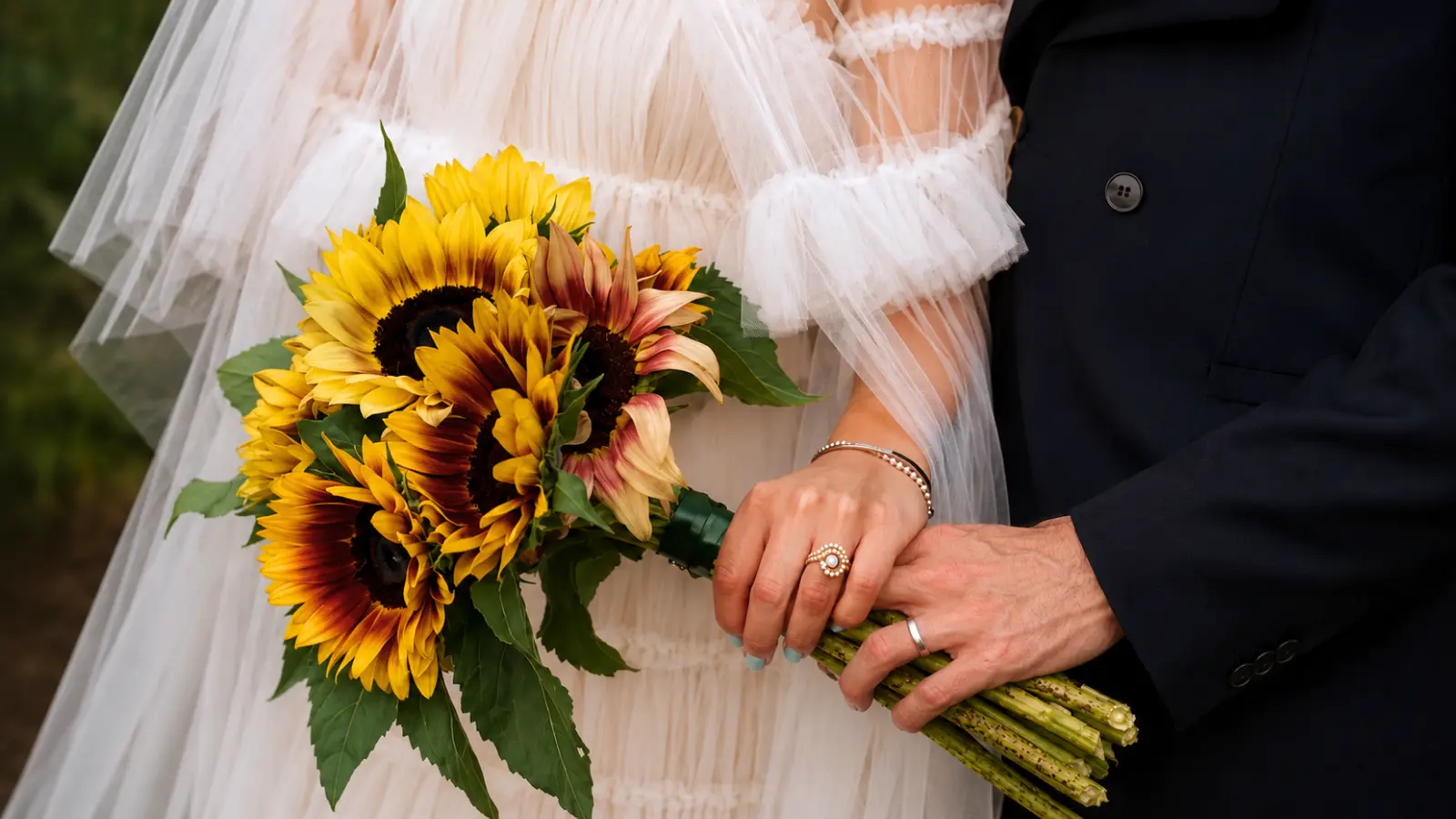
Sunflower wedding bouquets are a bold and cheerful choice for brides who want warmth, personality, and natural beauty in their wedding flowers. Although they’re often associated with rustic celebrations, sunflowers can also create elegant, modern, and garden-inspired bouquets when paired with the right flowers, colors, and bouquet shape.
The secret to a sophisticated sunflower bouquet isn’t changing the flower itself—it’s choosing thoughtful pairings, a cohesive color palette, and a design that complements your venue, dress, and wedding style. With careful planning, sunflowers can become the standout feature of a bouquet that feels refined rather than overly casual.
This guide explores sunflower wedding bouquets as one distinctive approach to choosing a wedding bouquet, including rustic and fall styles, the best flower pairings, color combinations, seasonal availability, pricing, and practical tips for creating a design that looks timeless and beautifully balanced.
Sunflower Wedding Bouquet Ideas
Sunflowers lend themselves to a wider range of wedding aesthetics than most people give them credit for. The starting point is deciding what role the sunflower plays: a single dramatic statement, one bloom type among several, or the dominant flower that sets the tone for everything else. That decision shapes the whole direction of the bouquet more than any other.
For brides who want the sunflower to be unmistakable, a tight round bouquet built primarily around sunflowers — with eucalyptus and ivory spray roses for fill — makes a strong, cohesive statement. The sunflower does the work; everything else exists to frame it.
For brides who love sunflowers but want something less obvious, mixing them in equal proportion with dahlias, garden roses, or ranunculus produces a bouquet where the sunflower contributes warmth and texture without dominating. At portrait distance, the viewer sees a beautiful mixed arrangement first — and sunflowers second.
Single-stem or small cluster presentations are also worth considering for minimalist brides or bridesmaids’ arrangements. One large sunflower with a few stems of greenery and a clean ribbon wrap can feel intentionally graphic rather than rustic. That contrast — simplicity with a bold bloom — is harder to pull off than a full mixed bouquet, but when it works, it’s memorable.
Rustic Sunflower Wedding Bouquets
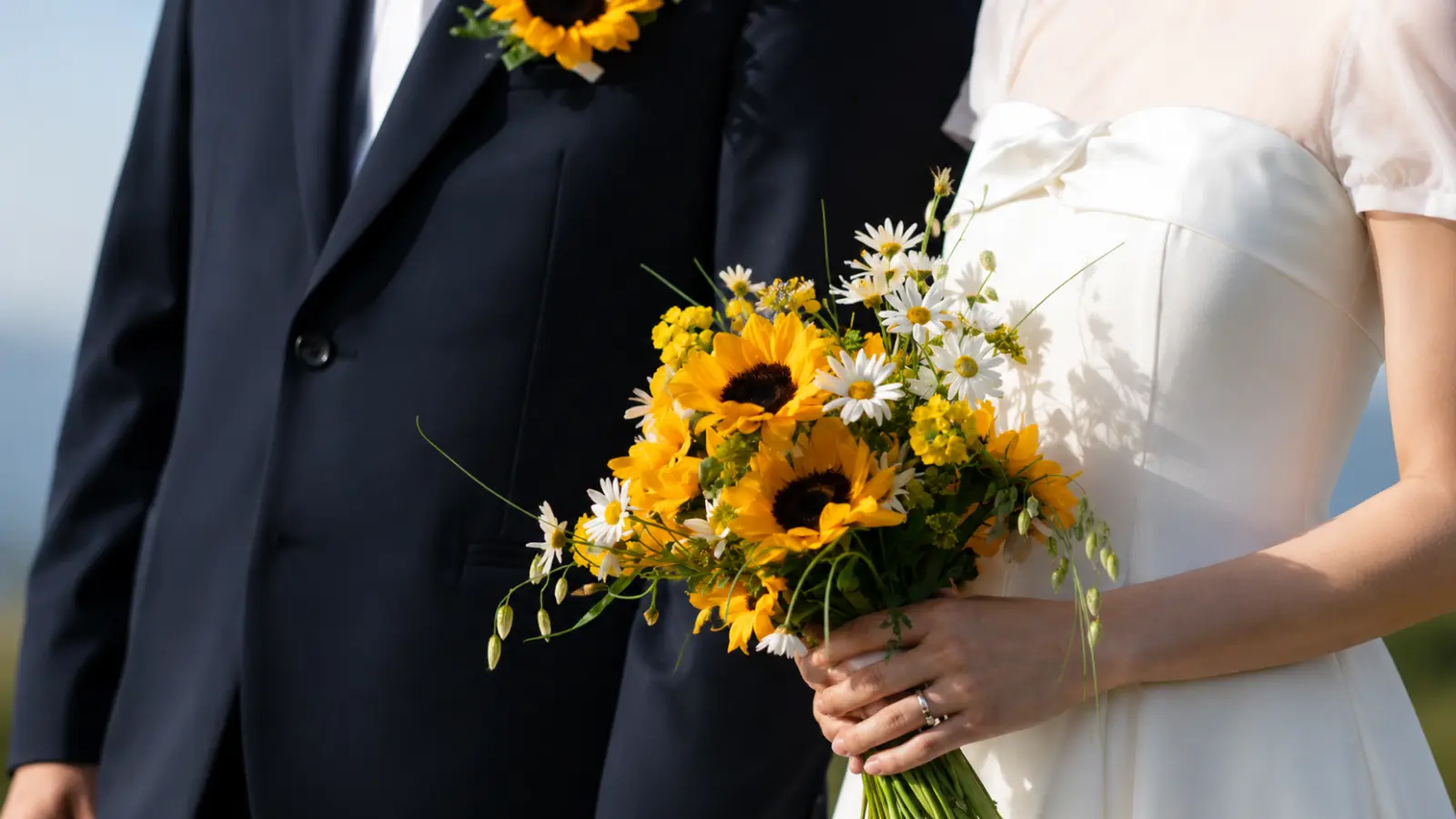
For rustic wedding bouquets, sunflowers are a natural anchor. The question is how to make a rustic bouquet feel considered rather than thrown together. The answer is almost always about what surrounds the sunflower rather than the sunflower itself.
Rustic sunflower bouquets that read as intentional typically share a few characteristics: a loose, hand-tied shape rather than a tight round; a varied stem count with different flower heights rather than a uniform dome; greenery that has texture and movement — herbs like rosemary or lavender, wildflowers like Queen Anne’s lace, or trailing ivy.
| Rustic Pairing | Visual Effect | Best For |
|---|---|---|
| Sunflowers + wheat + lavender | Dry, warm, harvest-inspired | Fall barn or outdoor ceremonies |
| Sunflowers + baby’s breath + wildflowers | Light, airy, meadow-like | Summer outdoor or garden weddings |
| Sunflowers + eucalyptus + ivory roses | Rustic but polished | Barn or vineyard weddings with some formality |
| Sunflowers + dried pampas + cotton stems | Textured, earthy, modern-boho | Desert or fall outdoor ceremonies |
One thing worth knowing about fully rustic sunflower bouquets: they photograph best in natural light and in venues where the surroundings reinforce the aesthetic. In a ballroom, even a well-made rustic bouquet can look slightly out of place. If your venue is formal, it’s worth softening the rustic elements or adjusting the pairing strategy before committing to the full look.
Fall Sunflower Wedding Bouquets
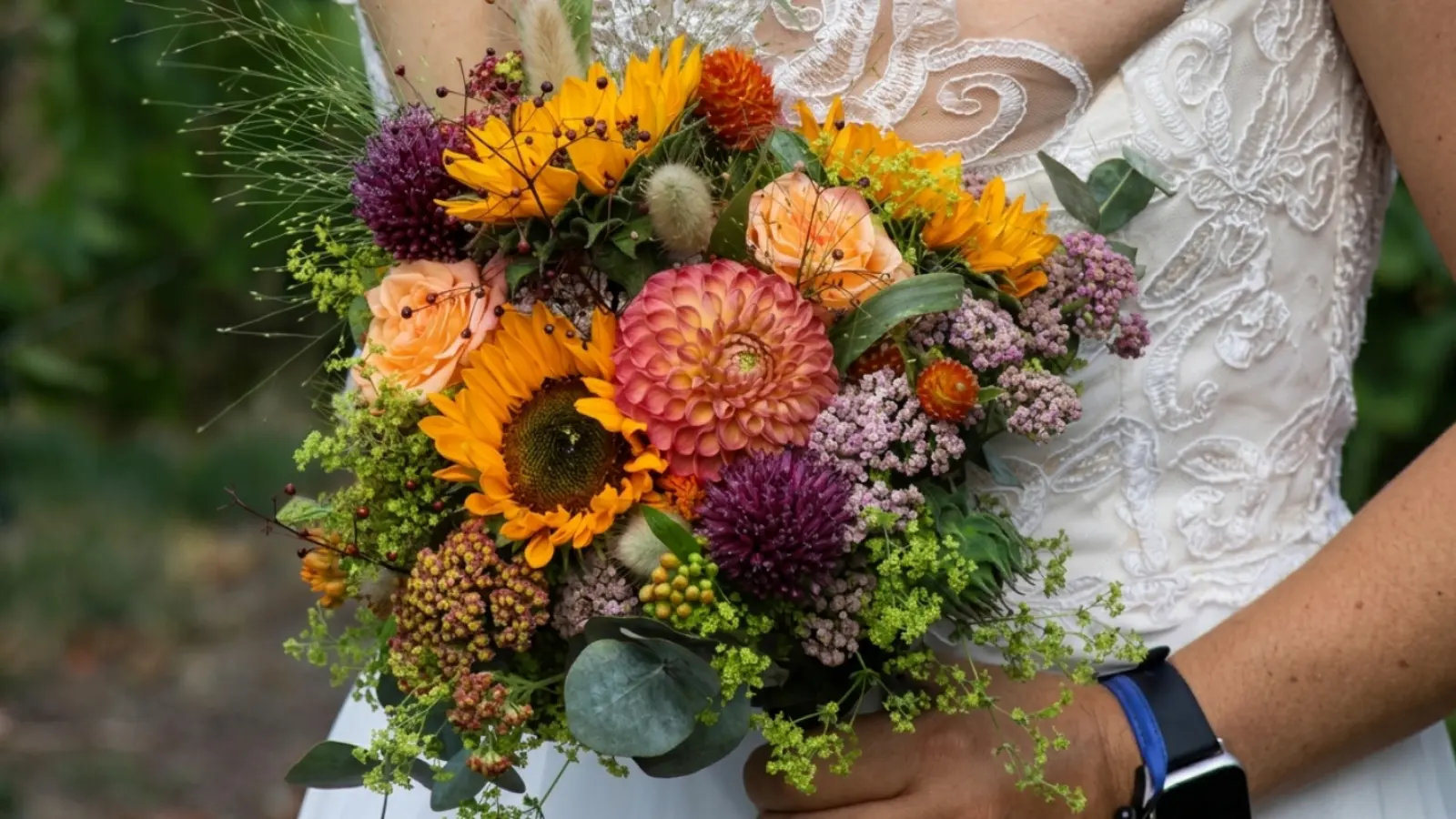
Sunflowers genuinely shine in fall wedding bouquets. The natural overlap between sunflower season and the earthy, warm palette of autumn ceremonies makes this one of the most effortless seasonal combinations in wedding florals. The challenge isn’t making it work — it’s making it feel distinct rather than predictable.
The most common version of a fall sunflower bouquet is yellow sunflowers paired with orange and burgundy dahlias, warm-toned roses, and seeded eucalyptus. That combination works because the colors reinforce each other without competing. But it’s also common enough that florists see it constantly from September through November.
A few directions that push past the obvious:
- Deep tone contrast: Pair sunflowers with plum, eggplant, or near-black dahlias for an arrangement that feels dramatically rich rather than warmly autumnal. The contrast between yellow and deep jewel tones is striking in photos.
- Monochromatic warmth: Build the entire bouquet in the warm spectrum — amber sunflowers, terracotta ranunculus, rust-toned spray roses, burnt orange zinnias — for a look that feels cohesive and deeply seasonal without being predictable.
- Green-led arrangements: Heavy eucalyptus, olive branches, and lush greenery with just a few sunflowers as accents creates a more garden-forward, less rustic feel. The sunflowers read as color pops rather than the dominant character.
Fall sunflowers are also among the freshest and most affordable options, which can help reduce your overall wedding bouquet cost. If your wedding date falls between late August and late October, that’s worth factoring into both quality expectations and budget planning.
Sunflower and Rose Bouquets
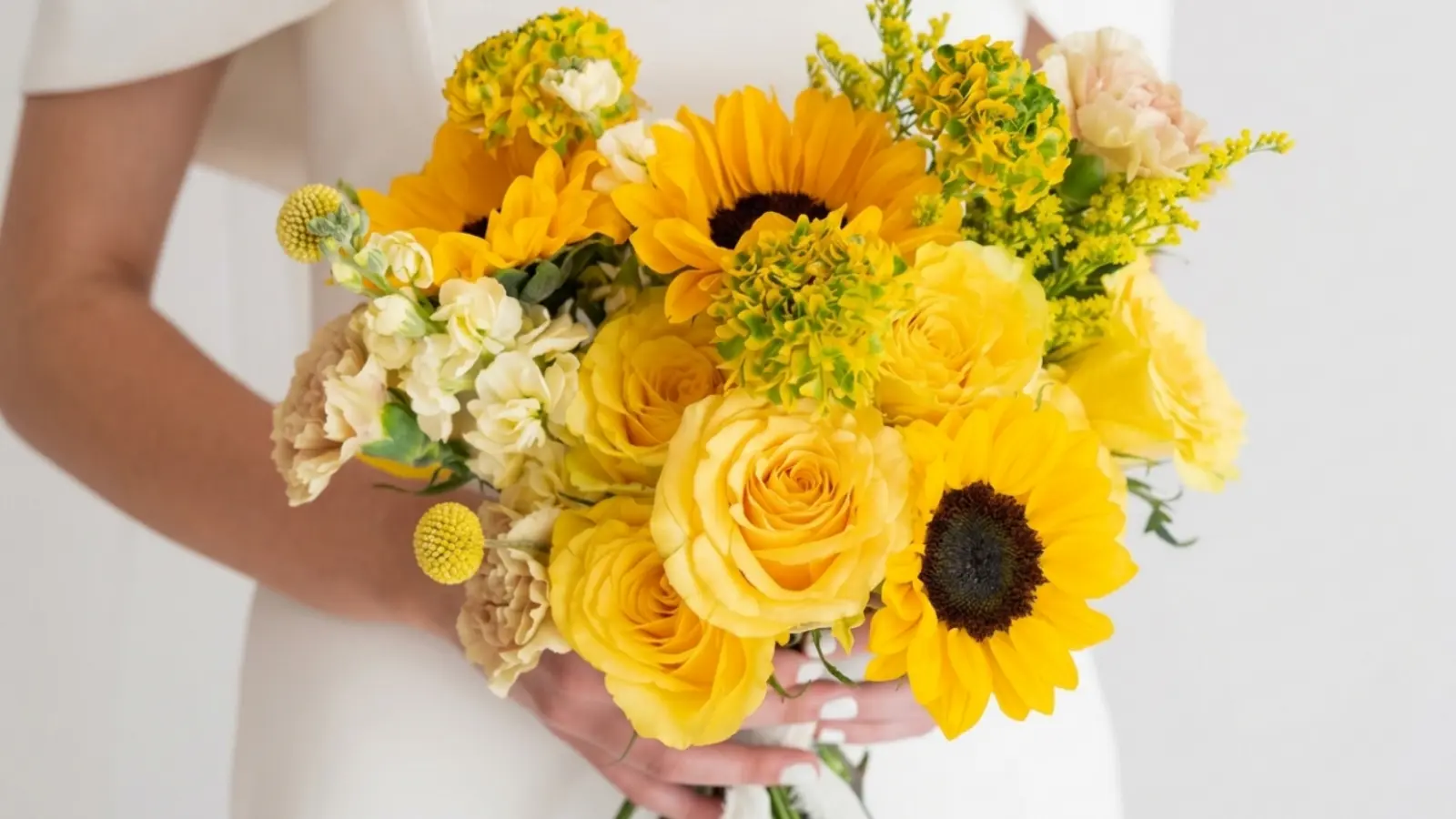
Sunflowers and roses are probably the most common combination in sunflower bouquets — and for practical reasons. Roses add softness to the sunflower’s boldness, come in almost every color that complements yellow, and are reliably available year-round. When the two are balanced thoughtfully, the result is a bouquet that feels more layered and complete than either flower would achieve alone.
The pairing works differently depending on what kind of rose you choose and what ratio you use.
| Rose Type | Effect with Sunflowers | Color Recommendations |
|---|---|---|
| Garden roses | Elegant, full, refined — softens without competing | Ivory, blush, champagne, warm white |
| Spray roses | Adds volume and texture without overpowering | Peach, coral, cream, soft yellow |
| Standard roses | Clean contrast, strong color impact | Burgundy, deep red, rust, ivory |
One editorial note worth sharing: ivory or champagne roses alongside sunflowers tend to produce more interesting results than white. Pure white can look stark next to the warm yellow of a sunflower; ivory bridges the tones and makes the overall arrangement feel more cohesive. If you’re working with a florist, specifying a warm white rather than a cool or bright white is worth the conversation.
For brides who want a sunflower-rose bouquet that reads as elevated rather than casual, the ratio matters: fewer sunflowers, more roses, with the sunflowers positioned as accents rather than the primary flower. A medium round bouquet with four to five sunflowers and twelve to fifteen garden roses in ivory and blush is a very different visual statement than the reverse.
Sunflower Bouquet Colors
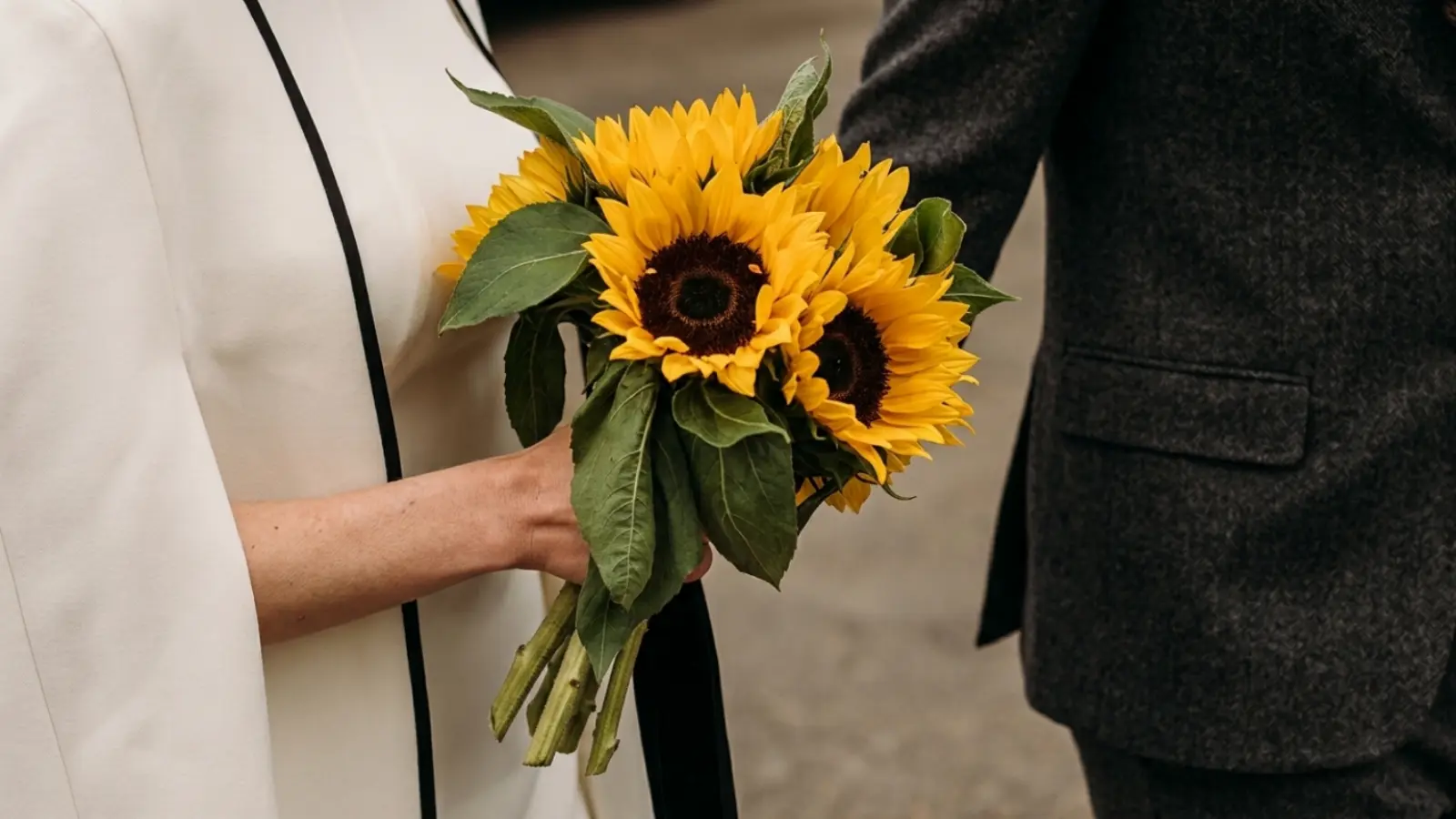
Choosing the right wedding bouquet colors is where many sunflower arrangements succeed or fall short. The yellow of a standard sunflower is warm and saturated — which means it doesn’t play well with cool or pastel tones. Building the rest of the arrangement around that constraint rather than against it is what separates a cohesive sunflower bouquet from one that looks slightly off.
Colors that work reliably alongside sunflowers fall into two broad categories: warm neutrals that support the yellow, and deep tones that contrast it dramatically.
| Color Direction | Works Well With | Avoid |
|---|---|---|
| Warm neutral | Ivory, champagne, warm white, peach, soft coral | Bright white, cool pink, lavender |
| Deep contrast | Burgundy, plum, deep rust, chocolate brown, near-black | Pastel tones, sky blue, mint |
| Full warm palette | Orange, terracotta, amber, rust, burnt yellow | Cool or muted tones that fight the warmth |
| Green-forward | Eucalyptus, olive, sage, fern — sunflowers as accent | Bright or neon greens |
Sunflower varieties also matter more than most people realize. Standard sunflowers have bright yellow petals and dark brown or black centers. But there are varieties with paler, almost lemon-yellow petals, varieties with rusty orange tones, and varieties with fully double petals that look almost like dahlias. Asking your florist specifically about sunflower variety options — rather than just requesting “sunflowers” — can meaningfully change the overall color story of your bouquet.
Are Sunflowers Good for Bridal Bouquets?
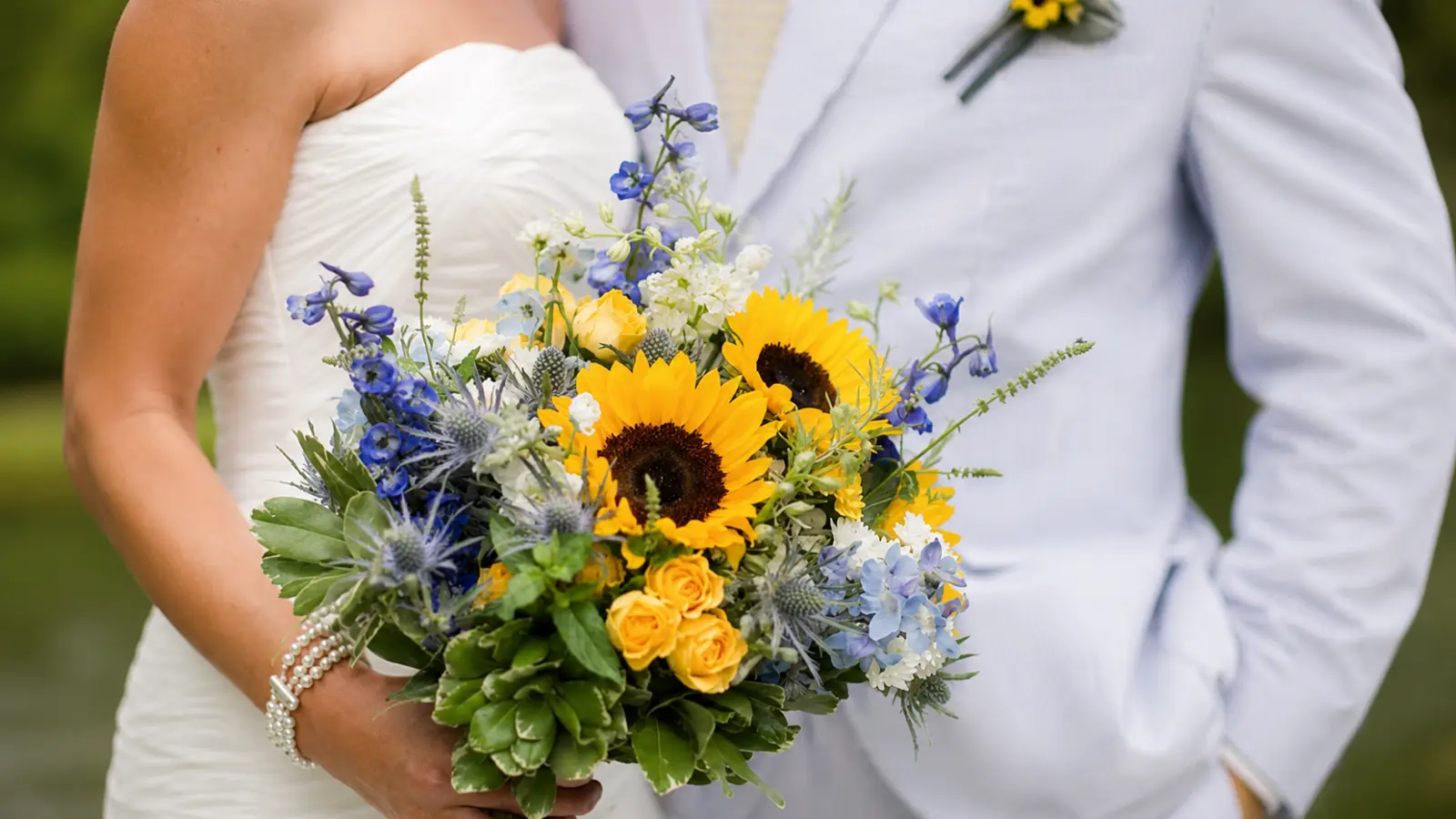
The honest answer: yes, with caveats that are worth understanding before you commit.
Sunflowers hold up well over a long day. They’re structurally sturdy, they don’t bruise as easily as peonies or sweet peas, and they’re not as moisture-sensitive as hydrangeas. From a purely practical standpoint, they’re a reasonable choice for brides who need a bouquet that performs through a multi-hour outdoor ceremony in summer or early fall heat.
The aesthetic caveat is the real consideration. Sunflowers have a strong visual identity — warm, bold, distinctly country or summer in feel. That works perfectly for some weddings and less so for others. Before committing, it’s worth asking honestly: does a sunflower feel right for my venue, my dress, and the overall tone of the day? If the answer is yes, there’s no reason to second-guess the choice. If there’s hesitation, that’s worth exploring with your florist before flowers are ordered.
One practical consideration across different bridal bouquet styles is size: standard sunflower heads are often three to four inches across. In a bridal bouquet, that scale can be imposing, particularly for smaller frames or fitted dresses. Smaller sunflower varieties solve this almost entirely, and they’re worth asking your florist about specifically if scale is a concern.
How to Make Sunflowers Look Elegant
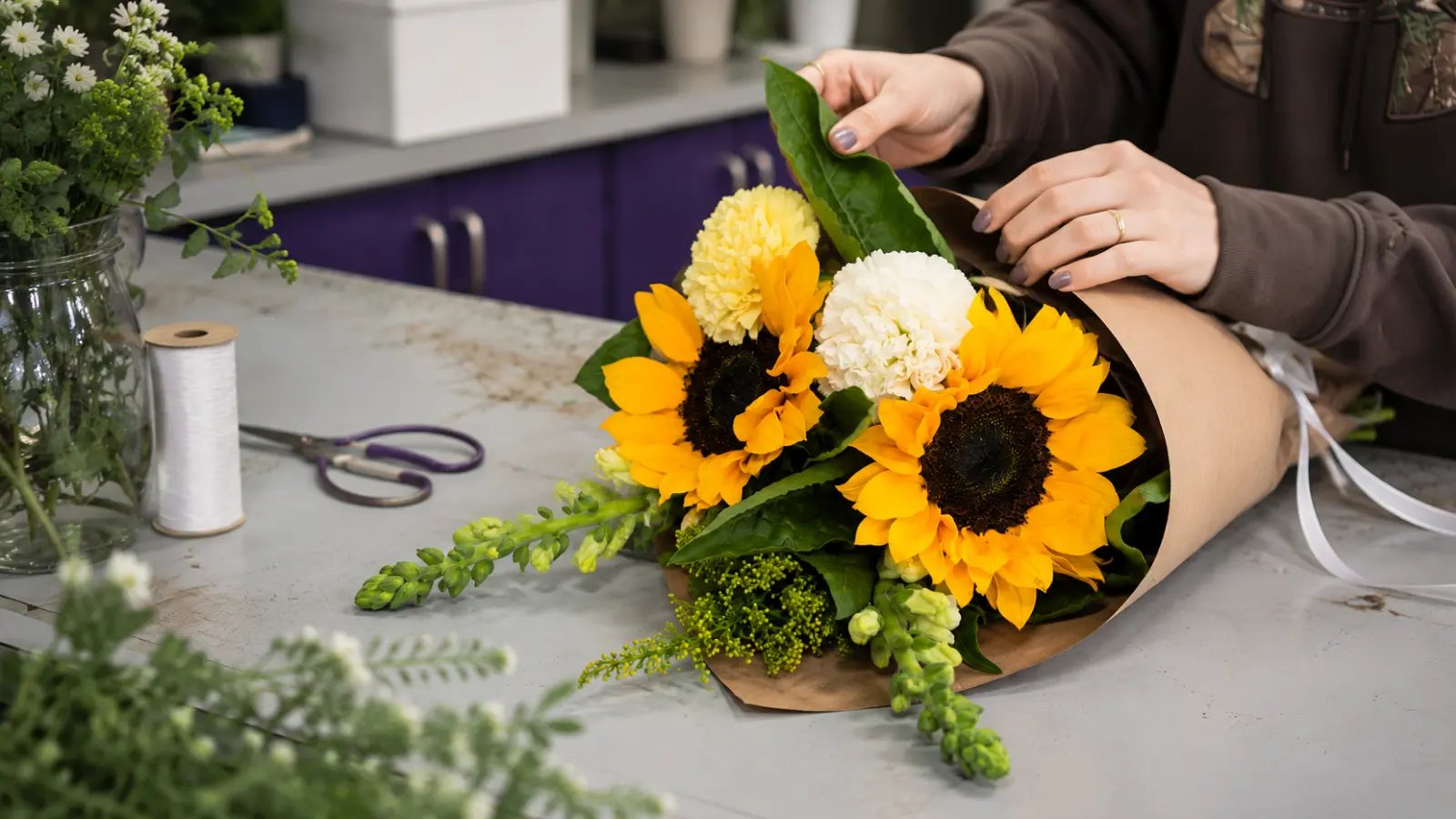
This is the question that most sunflower bouquet guides skip past, and it’s the one that actually matters for brides who love the flower but want something that reads refined rather than relaxed. The good news: the path to an elegant sunflower bouquet is well-defined, and none of the steps require giving up what you love about the flower.
Choose smaller varieties
Scale is the single most effective lever for changing how a sunflower reads in a bouquet. A large standard sunflower head dominates any arrangement and reinforces the casual, garden-party feel. A smaller or dwarf variety — teddy bear sunflowers and smaller lemon-drop types are good examples — works within a mixed bouquet the way a garden rose does: as a full, beautiful focal flower that doesn’t overwhelm everything around it.
Control the color story
An elegant sunflower bouquet almost always has a disciplined palette. Two or three colors maximum, with a clear hierarchy: the sunflower yellow, one supporting tone (ivory, burgundy, or deep rust work particularly well), and greenery. Introducing too many competing colors — pink, peach, lavender, and yellow together — pulls the arrangement in too many directions at once and creates the casual, slightly thrown-together quality that brides are often trying to avoid.
Choose a structured shape
Bouquet shape does significant work in determining how formal an arrangement reads. A tight round or garden-style bouquet reads more formally than a loose, asymmetric bunch. If elegance is the goal, discuss shape with your florist before discussing specific flowers — the structure of the arrangement sets the tone that the flowers then fill.
Refine the pairings
What surrounds the sunflower changes how it reads entirely. Garden roses, ranunculus, and lisianthus add a layered, soft quality that frames the sunflower as part of a considered arrangement. Pairing sunflowers with only baby’s breath and greenery, while beautiful in a casual context, reinforces the informal quality. The secondary flowers are doing more aesthetic work than they typically get credit for.
Elevate the handle finish
Ribbon choice and wrap quality matter more in photos than most brides anticipate. A clean velvet or dupioni silk wrap in ivory, champagne, or deep green reads significantly more polished than a basic satin ribbon. The handle is visible throughout the ceremony and in a large proportion of close-up photos — it’s worth treating it as part of the overall aesthetic rather than an afterthought.
Done right, a sunflower bouquet can hold its own against any other bridal flower. The difference between a sunflower bouquet that reads as informal and one that reads as intentional usually comes down to these five decisions made before a single stem is purchased.
Sunflower Wedding Bouquet Inspiration
Discover sunflower wedding bouquets featuring rustic, fall, and elegant designs, beautiful rose pairings, warm seasonal color palettes, and inspiring bouquet ideas for country, garden, and outdoor weddings.
Sunflowers Can Be Both Bold and Elegant
Sunflowers bring a warmth and personality to bridal bouquets that few flowers can match. While they’re naturally associated with rustic and fall weddings, thoughtful flower pairings, refined color palettes, and a well-planned bouquet shape allow them to feel just as beautiful in elegant garden celebrations and sophisticated outdoor ceremonies.
The key is embracing what makes sunflowers unique rather than trying to hide it. Choose complementary flowers that soften their bold character, let the season guide your palette, and focus on creating balance throughout the arrangement. With the right design, a sunflower bouquet becomes far more than a seasonal trend—it becomes one of the most memorable details of your wedding day.
Frequently asked questions (FAQ)
Are sunflowers a good choice for a bridal bouquet?
Yes. Sunflowers are an excellent choice for brides who want a bouquet that feels warm, joyful, and full of personality. When paired with complementary flowers such as garden roses, ranunculus, or dahlias and arranged with a refined color palette, they can suit everything from rustic celebrations to elegant fall weddings. The key is thoughtful styling rather than the flower itself.
How do you make a sunflower wedding bouquet look elegant?
Choose smaller sunflower varieties, limit the color palette, pair them with refined flowers such as garden roses or ranunculus, use structured bouquet shapes, and finish the stems with a high-quality ribbon wrap. These details shift the bouquet from casual and country-inspired to polished and intentional without losing the cheerful character that makes sunflowers unique.
What flowers pair well with sunflowers in a wedding bouquet?
Garden roses, standard roses, dahlias, ranunculus, lisianthus, zinnias, eucalyptus, dusty miller, olive branches, and seeded greenery all pair beautifully with sunflowers. Soft neutral flowers balance the sunflower’s bold appearance, while burgundy and deep rust blooms create dramatic seasonal contrast for fall weddings.
When are sunflowers in season for weddings?
Sunflowers are naturally in season throughout much of summer and early fall, making them one of the best flowers for seasonal weddings. While greenhouse-grown sunflowers are often available year-round, locally grown blooms during their natural season typically offer the best quality, strongest stems, and the best value.
Do sunflower bouquets work for elegant weddings?
Absolutely. Sunflowers are often associated with rustic weddings, but they can also look sophisticated when paired with a restrained color palette, premium supporting flowers, and a structured bouquet design. Ivory roses, warm neutrals, and deep burgundy accents help create a more refined overall look.
How much does a sunflower wedding bouquet cost?
A professionally designed sunflower bridal bouquet generally costs between $120 and $300, depending on bouquet size, flower combinations, season, and local florist pricing. Designs featuring premium flowers such as garden roses or dahlias typically fall toward the higher end of that range, while DIY bouquets can often be created for significantly less.