
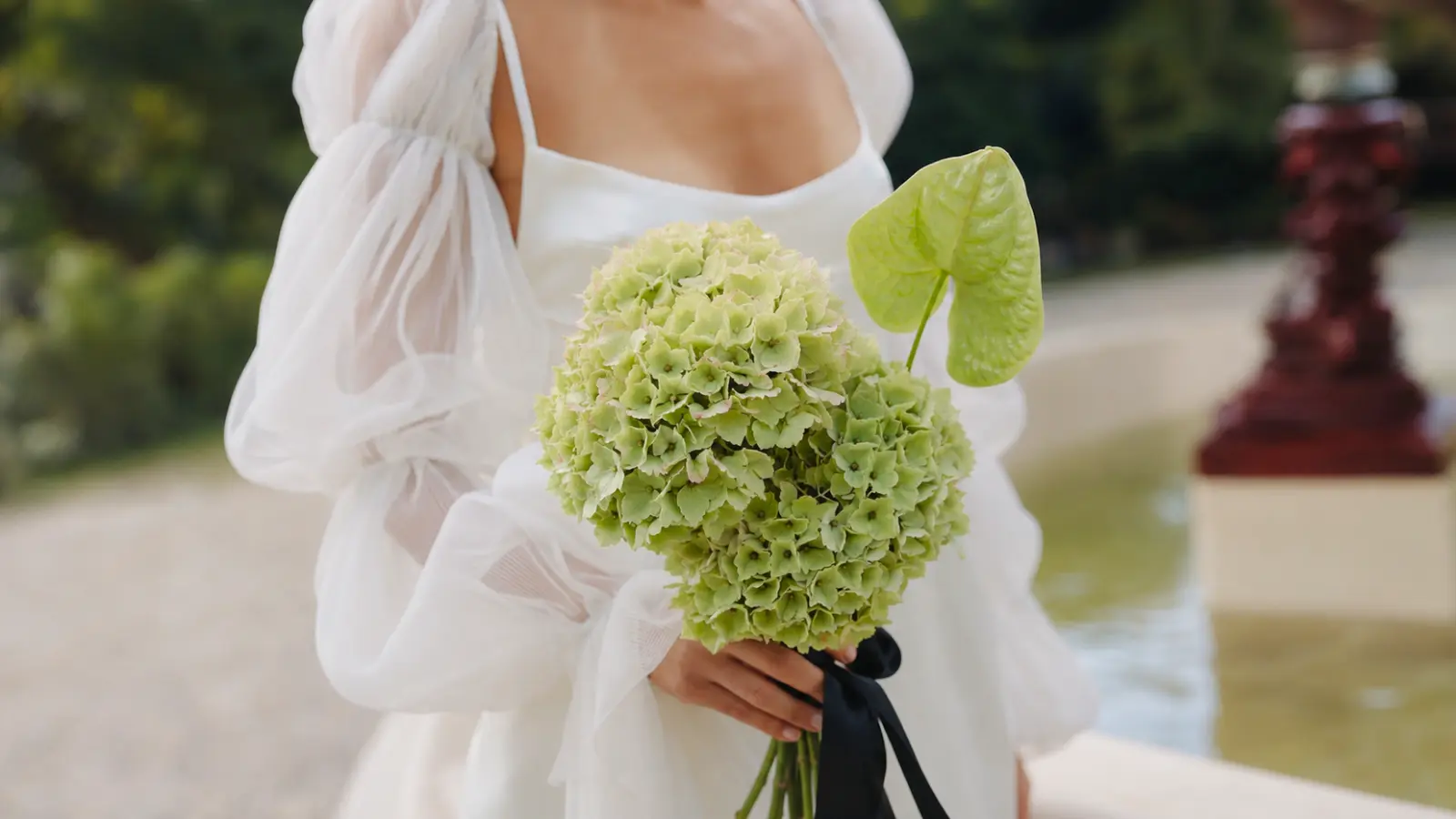
Hydrangea wedding bouquets are loved for their soft volume, romantic texture, and ability to create full, luxurious floral arrangements with relatively few stems. Whether used as the main flower or as a supporting bloom alongside roses, ranunculus, or peonies, hydrangeas bring a sense of abundance that suits classic, garden, and romantic wedding styles.
Their beauty, however, comes with a few practical considerations. Hydrangeas are more sensitive to heat and dehydration than many popular bridal flowers, making proper care, flower pairings, and bouquet size especially important. Understanding those details before choosing them helps ensure your bouquet looks fresh from the ceremony through the final photographs.
This guide explores hydrangea wedding bouquets as one distinctive approach to choosing a wedding bouquet, including popular color options, flower combinations, seasonal availability, bouquet care, styling ideas, and practical tips for creating an arrangement that performs well throughout your wedding day.
Hydrangea Wedding Bouquet Ideas
The way a hydrangea functions among other wedding bouquet flowers depends almost entirely on how much of the arrangement it occupies. That’s the first creative decision worth making — and it determines the entire direction of everything that follows.
As a dominant flower, hydrangeas create a full, rounded bouquet that almost builds itself. Two or three heads of white hydrangea with trailing eucalyptus and a few garden roses tucked in for focal interest can produce a lush, complete-looking arrangement with relatively little material. This works especially well for brides who want a large-feeling bouquet while keeping their wedding bouquet cost under control.
As a supporting flower, hydrangeas act as living filler — providing softness, movement, and the sense of abundance that separates a full bouquet from a sparse one. In this role, they sit behind and around the focal flowers, visible but not dominant. The arrangement feels richer and more layered without the hydrangea competing for the eye’s first attention.
There’s also a third option that doesn’t get discussed enough: a single large hydrangea head, wrapped simply and carried as a statement. It’s a genuinely modern choice — graphic, minimal, and confident. The flower is dramatic enough to carry a bouquet on its own, and the simplicity of the presentation reads as intentional rather than underdone.
Blue Hydrangea Wedding Bouquets
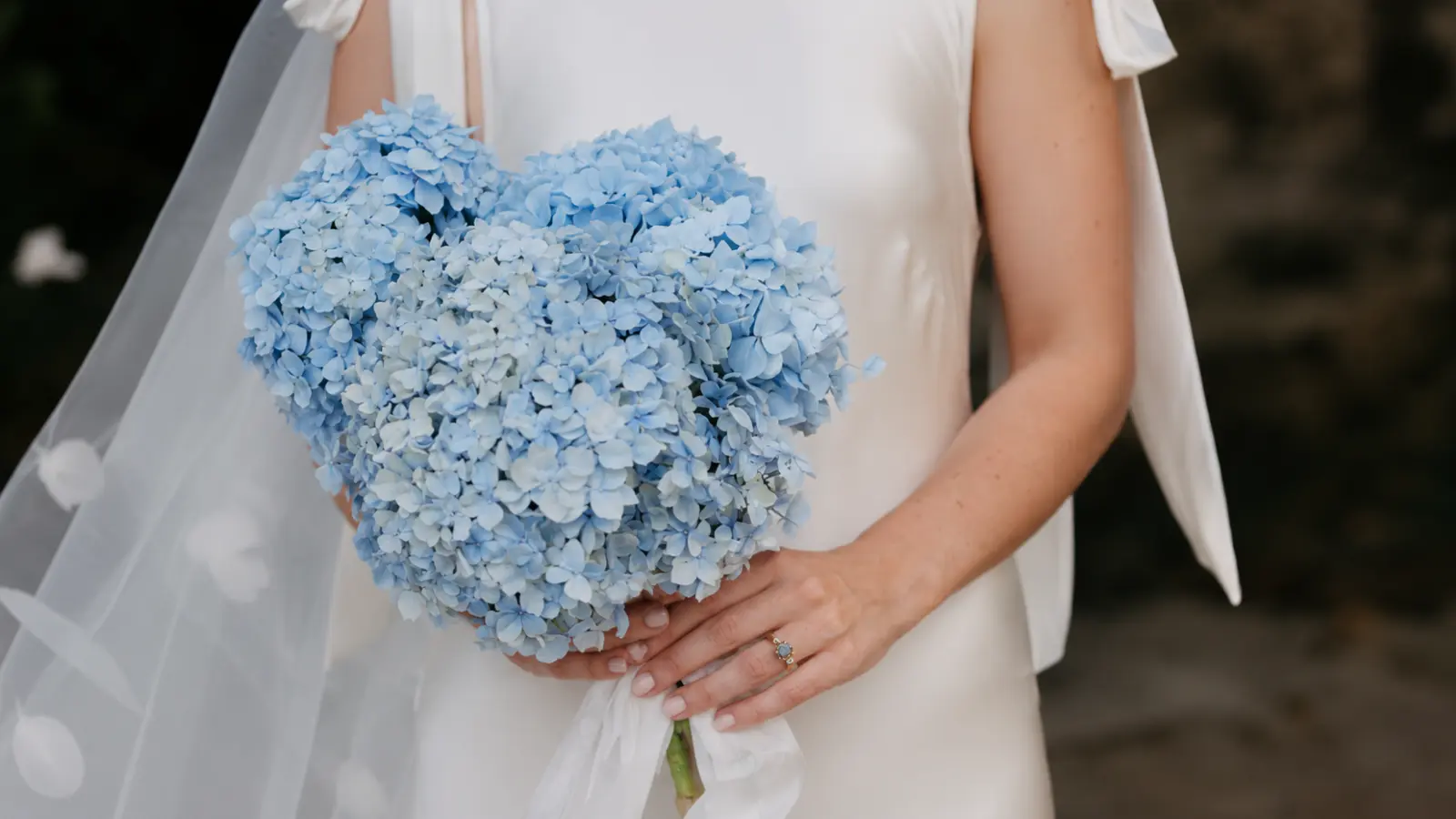
Blue hydrangeas occupy a specific space within blue wedding bouquets that no other flower quite fills. They’re not the saturated blue of a delphinium or the cold blue of a bachelor’s button — they’re softer, more atmospheric, often reading as blue-violet or dusty periwinkle depending on the light. That quality makes them genuinely romantic without being predictable.
The most useful thing to understand about blue hydrangeas is that “blue” covers a wide spectrum. What a florist calls blue might be a soft lavender-blue, a deeper violet-blue, or a muted antique blue that photographs as almost grey in certain light. Asking to see the specific variety — or requesting a photo from your florist before the wedding — prevents surprises on the day.
| Blue Hydrangea Tone | Pairs Well With | Aesthetic |
|---|---|---|
| Soft periwinkle blue | Ivory roses, silver dusty miller, white lisianthus | Romantic, ethereal, spring or summer |
| Dusty blue-violet | Blush ranunculus, garden roses, pale greenery | Garden wedding, slightly vintage |
| Deep antique blue | Ivory, champagne, warm white — no competing color | Dramatic, editorial, formal ceremony |
Blue hydrangeas photograph differently than they look in person — the camera often shifts them slightly more purple or more grey depending on the light source. If photos are a priority (and for most brides, they are), asking your photographer whether they’ve shot blue florals in your specific venue before is a useful question. Natural light tends to capture the blue most accurately; warm indoor lighting pulls it toward lavender.
White Hydrangea Wedding Bouquets
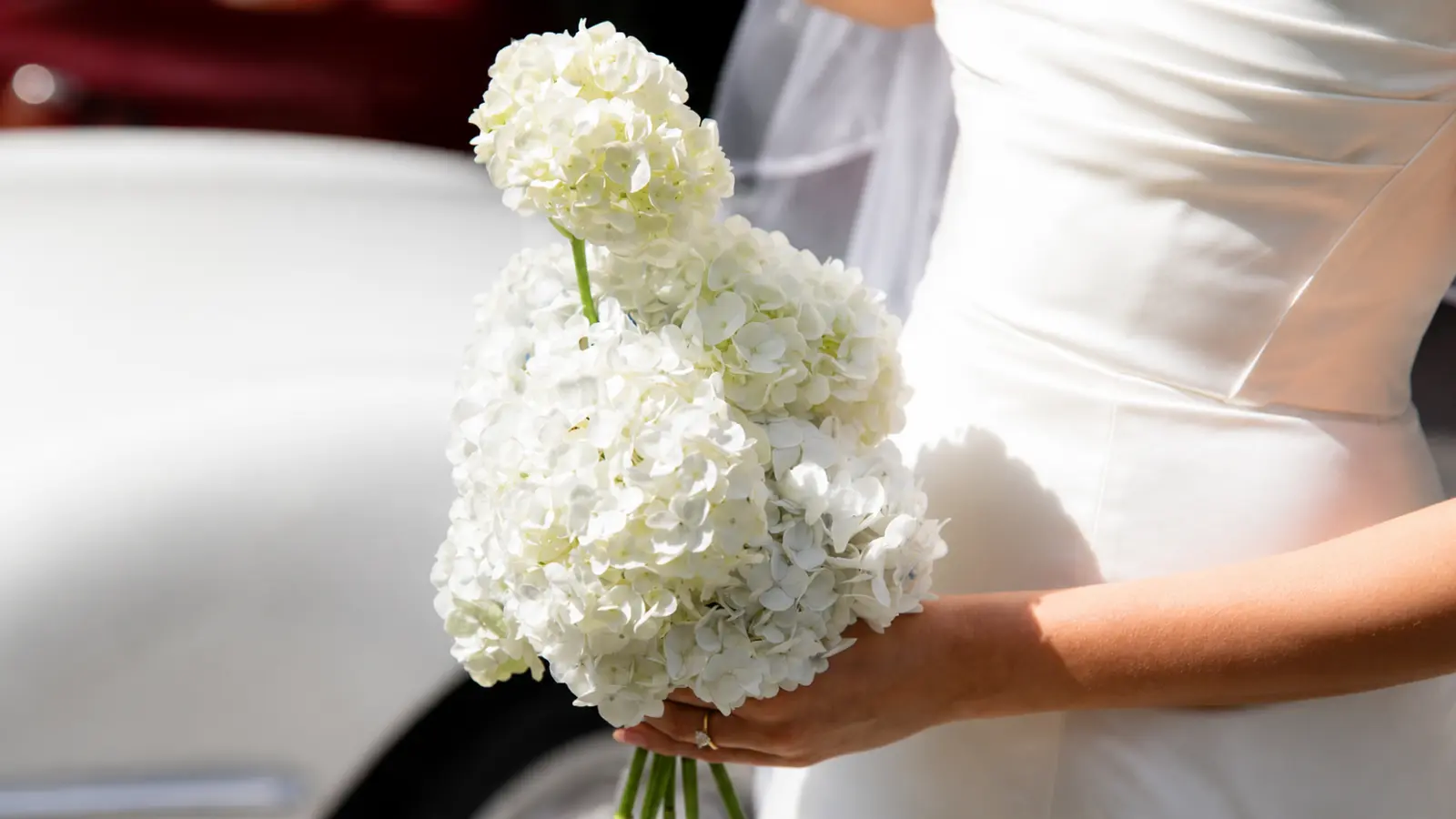
White hydrangeas are, for good reason, among the most versatile flowers for white wedding bouquets. They don’t impose a color direction on the rest of the arrangement, they work in every season, and they photograph cleanly in almost any light. For brides who want the hydrangea’s volume and softness without committing to a specific palette, white is the safest and most reliable choice.
That said, “white” in hydrangeas isn’t always the same white. Some varieties lean ivory or cream, particularly as they age — which can be an asset if the rest of the bouquet is in warm tones, or a subtle mismatch if everything else is a cooler white. Specifying whether you want a bright white or an ivory-tinged white when ordering is worth the conversation with your florist.
Hydrangeas naturally vary in color depending on the variety and growing conditions, including soil chemistry while the plant is growing. Florists may also use professionally tinted hydrangeas when a specific shade is needed for a wedding palette. If you’re hoping to match very particular wedding bouquet colors, ask your florist whether the result will require a naturally colored variety or a professionally tinted bloom.
For all-white or ivory bouquets, white hydrangeas do structural work that few other flowers can: they create depth and visual interest through texture alone, without requiring color variation to hold the eye. A bouquet of white hydrangeas, white garden roses, white ranunculus, and silvery dusty miller is a complete color story built entirely within a single tone family — and it’s a strong one.
Hydrangea and Rose Bouquets
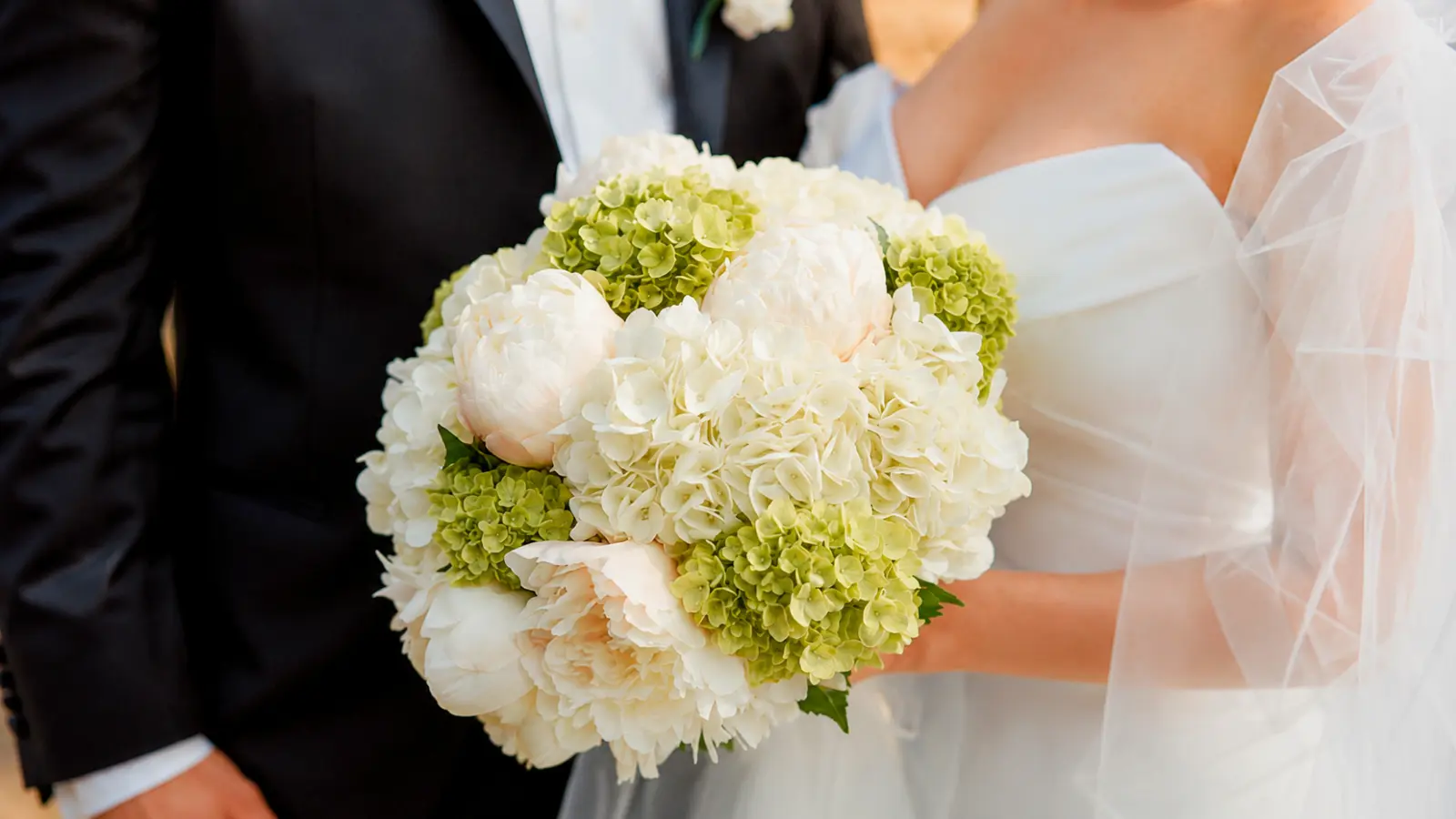
Hydrangeas and roses are one of the most natural pairings in wedding florals, and there’s a practical reason for it beyond aesthetics: each flower solves a problem the other creates. Roses provide focal structure — a clear visual anchor that draws the eye in. Hydrangeas provide volume — the soft, full background that makes the focal flowers look more abundant than they would on their own. Together, they produce an arrangement that reads as generous and considered.
The ratio between the two shapes the character of the whole bouquet. More hydrangea, fewer roses produces something cloudlike and romantic where the roses surface as points of detail. More roses, fewer hydrangeas produces something more structured where the hydrangea contributes texture and softness to a focal-forward arrangement. Neither ratio is wrong — they produce genuinely different results, and the right one depends on the look you’re after.
| Combination | Visual Character | Best Suited For |
|---|---|---|
| White hydrangea + ivory garden roses | Soft, full, deeply romantic | Garden ceremonies, spring and summer |
| Blue hydrangea + blush roses | Romantic, slightly vintage, layered color | Outdoor or garden weddings with soft palette |
| White hydrangea + burgundy roses | Contrast-driven, bold, classic | Formal ceremonies, fall or winter |
| Blush hydrangea + champagne spray roses | Monochromatic warmth, full texture | Romantic or garden weddings, any season |
One pairing worth noting that often gets overlooked: hydrangeas with garden roses in the same color family rather than contrasting tones. An all-blush arrangement of blush hydrangeas and blush garden roses, with varied petal textures carrying all the visual interest, can be more striking than a two-color combination — and it’s a direction that photographs beautifully in natural light.
Are Hydrangeas Good for Wedding Bouquets?
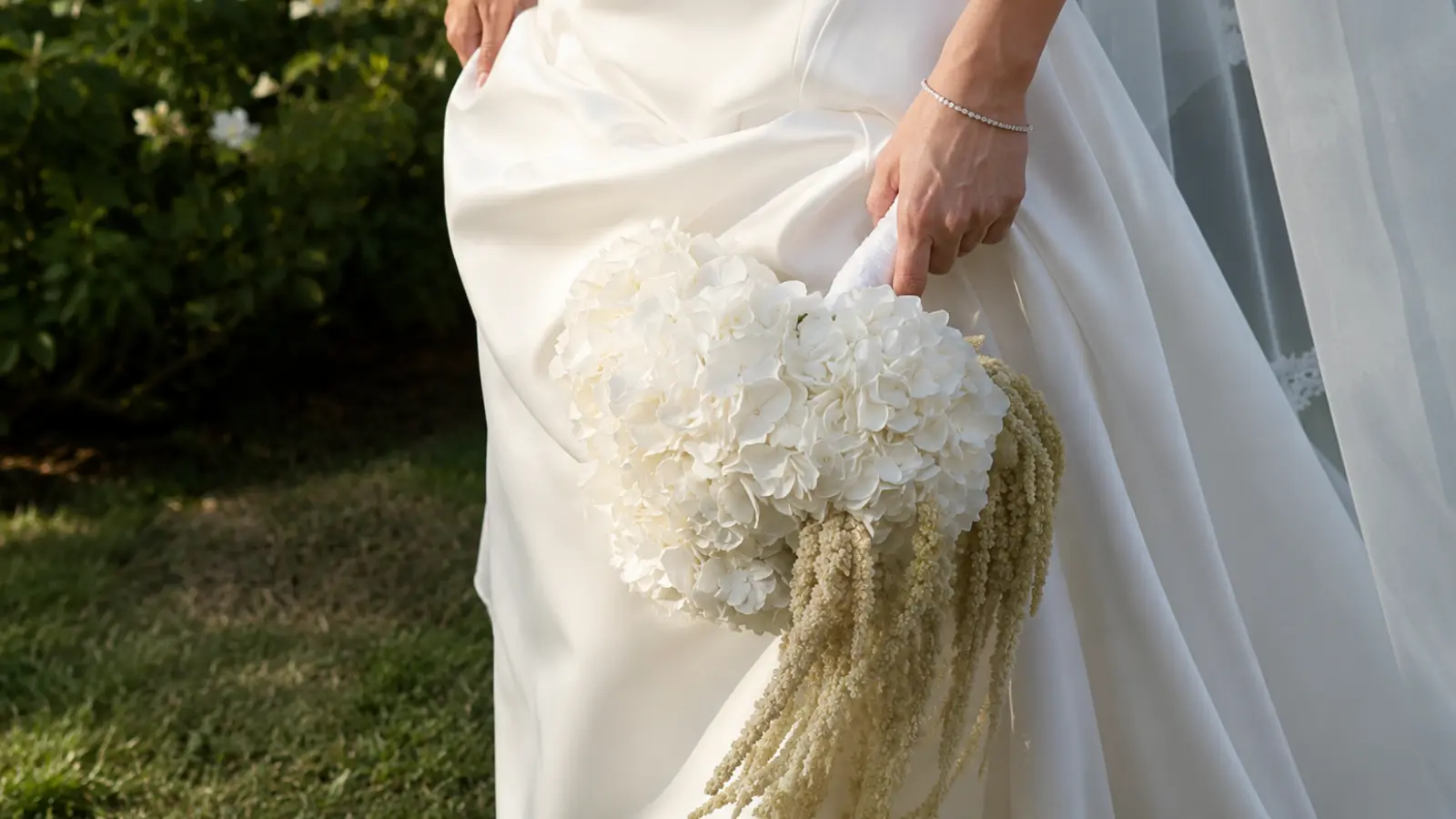
The honest answer is: yes, with clear-eyed awareness of what you’re working with. Hydrangeas are not the most forgiving bridal flower. They’re moisture-sensitive, heavier than they look, and more affected by heat than roses or ranunculus. But they’re also genuinely irreplaceable in what they bring to an arrangement — that quality of soft, abundant volume isn’t something you can replicate with a different flower. The question is whether those trade-offs are worth it for your specific situation.
Where they work best
Hydrangeas perform best in indoor venues with climate control, in cooler weather ceremonies, and in bouquets where they share the arrangement with sturdier flowers rather than standing alone. A spring or fall indoor wedding with good air conditioning and a bouquet that uses hydrangeas as supporting volume alongside garden roses is close to ideal conditions. The flower will look beautiful through the ceremony and well into the reception.
Where the risk increases
Outdoor summer ceremonies in heat, venues without air conditioning, and long outdoor portrait sessions between ceremony and reception are the conditions that stress hydrangeas most. If your wedding involves any of those, it’s worth discussing with your florist whether to use hydrangeas sparingly — a single head or two as accents — rather than as the primary flower. A bouquet that’s mostly roses with one hydrangea head for softness will hold up far more reliably than the reverse.
Weight is the other honest consideration. A bouquet built around three or four large hydrangea heads is genuinely heavy to hold for several hours. For brides who are sensitive to this — or who have a long aisle or ceremony — keeping the hydrangea count lower and the overall bouquet size medium rather than large makes a real practical difference.
Hydrangea Bouquet Care and Mistakes to Avoid
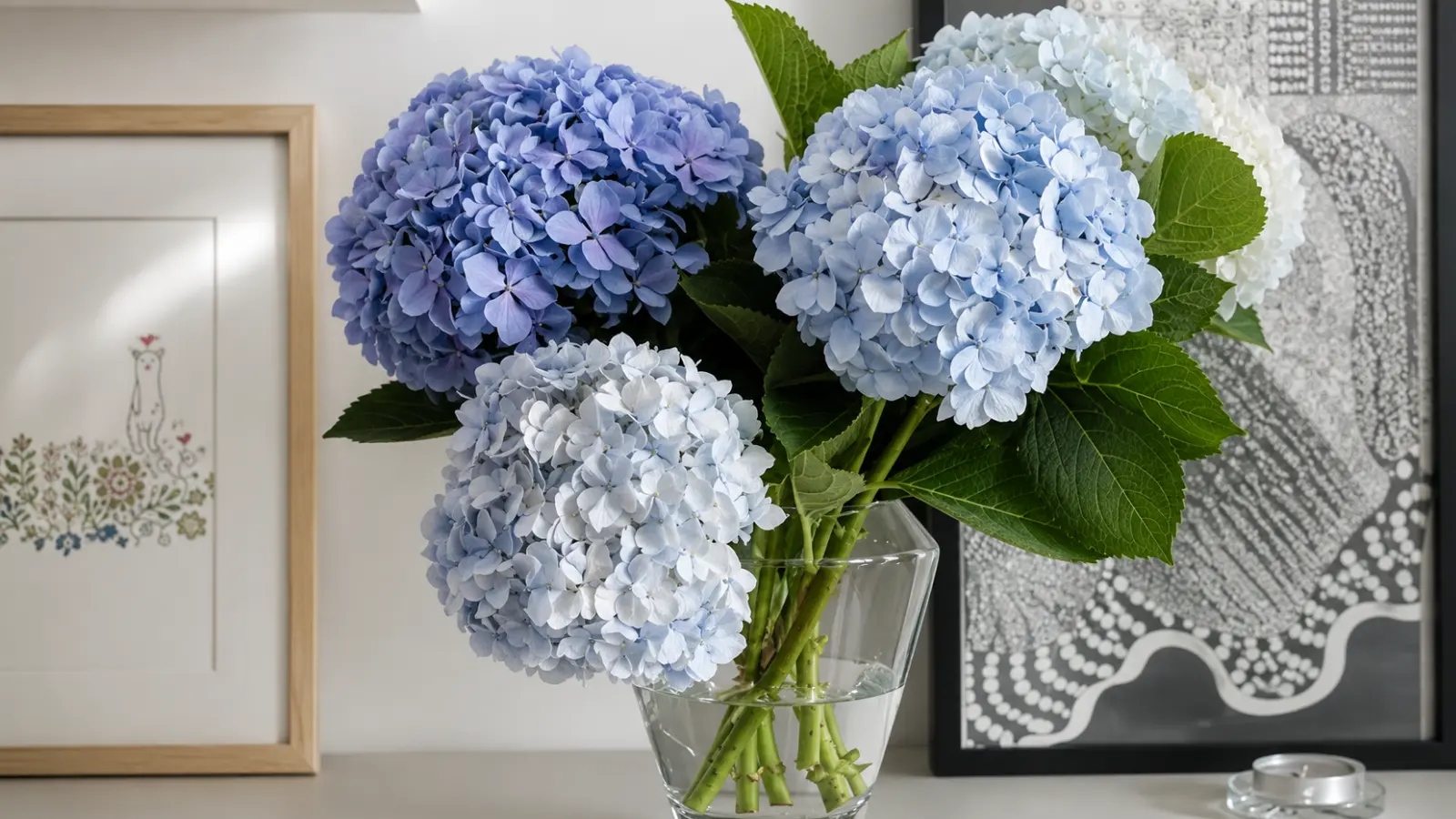
Most hydrangea bouquet problems are preventable. They almost always trace back to conditioning and timing rather than anything that happened during the ceremony itself. Knowing what to do — and when — changes the outcome significantly.
Conditioning properly
Hydrangeas absorb water through their stems and also through their petals, which is what makes them more demanding than most flowers. When you receive them, cut the stems at a steep angle — some florists also score or crush the bottom inch of the stem to maximize water uptake. Place them immediately in a deep container of cool, clean water with floral preservative, and leave them to fully hydrate for at least four to six hours before assembly. Hydrangeas that go into a bouquet under-hydrated will begin wilting within an hour or two of leaving the water.
Timing the assembly
Assemble the bouquet as close to the ceremony as reasonably possible. Hydrangeas held assembled and out of water for more than two to three hours in warm conditions will show it. If you’re working with a florist, they’ll typically deliver the bouquet the morning of the wedding rather than the night before — that timing exists specifically because of flowers like this one.
Mistakes worth knowing before you make them
Refrigerating hydrangeas with fresh produce is one of the most common errors. Ethylene gas from fruit — even small amounts — accelerates the wilting process significantly. If refrigeration is needed overnight, use a beverage fridge or a drawer separated from any produce. A cool room without refrigeration is often the better option for a single overnight.
Misting the blooms lightly with cool water during a long reception can revive them noticeably — particularly in warm or dry indoor air. It’s a small step that many brides and coordinators don’t know to do, and it makes a real difference when the flowers start to look tired after several hours.
Finally, placing the bouquet flat on a hard surface between ceremony and reception — something that happens constantly at weddings — puts pressure on the petals in a way that bruises hydrangeas faster than any other handling issue. A short vase with an inch of water, or a designated spot where the bouquet rests upright, keeps the blooms in the best condition through the evening.
Hydrangea Wedding Bouquet Inspiration
Explore romantic hydrangea wedding bouquets featuring white, blue, blush, and ivory blooms, elegant rose pairings, garden-inspired arrangements, and timeless bouquet ideas for every wedding style.
Hydrangeas Reward Beautiful Planning
Hydrangeas offer something few wedding flowers can match: remarkable volume, soft texture, and an effortlessly romantic presence that transforms even simple bouquets into elegant arrangements. When paired thoughtfully with complementary flowers and cared for properly, they create bouquets that feel timeless, full, and beautifully balanced without requiring an overwhelming number of stems.
The key to success is respecting what makes hydrangeas unique. Plan around the season, protect them from heat, and let their natural fullness work alongside carefully chosen focal flowers rather than competing with them. With thoughtful preparation, a hydrangea bouquet becomes one of the most graceful and memorable floral details of your wedding day.
Frequently asked questions (FAQ)
Are hydrangeas a good choice for a wedding bouquet?
Yes, when used with realistic expectations and proper preparation. Hydrangeas create unmatched volume and softness, making bouquets look full and luxurious with relatively few stems. However, they require more hydration than many bridal flowers and perform best when paired with sturdier focal flowers such as garden roses or ranunculus. For indoor weddings or cooler weather, they are an outstanding choice.
Why do hydrangeas wilt so quickly in wedding bouquets?
Hydrangeas lose moisture faster than many other wedding flowers because of their large bloom heads and high water demand. Without proper conditioning and hydration, they can wilt within a short period after leaving water. Keeping the bouquet hydrated until the ceremony and protecting it from heat and direct sunlight greatly improves their performance throughout the wedding day.
What flowers pair well with hydrangeas in a wedding bouquet?
Garden roses, standard roses, ranunculus, peonies, lisianthus, and spray roses all pair beautifully with hydrangeas. These flowers provide focal structure while hydrangeas create fullness and softness. Eucalyptus, dusty miller, and Italian ruscus complete the arrangement by adding texture and gentle movement.
What color hydrangeas are best for weddings?
White and ivory hydrangeas remain the most versatile choices because they complement almost every wedding style and color palette. Dusty blue varieties are especially popular for romantic and garden weddings, while blush and antique mauve hydrangeas create a softer vintage-inspired look. The best color ultimately depends on the wedding palette and venue.
Do hydrangeas make a bridal bouquet too heavy?
They can. Hydrangea blooms hold a significant amount of water, making them heavier than many brides expect. Using one or two blooms to create fullness instead of building the entire bouquet around hydrangeas keeps the arrangement comfortable to carry while preserving their signature lush appearance.
Are hydrangeas available year-round for weddings?
Yes. Hydrangeas are available throughout the year through greenhouse production and imported growers, although their natural peak season runs from late spring through early fall. During peak season they are usually fresher, more consistent in quality, and more affordable than during the winter months.