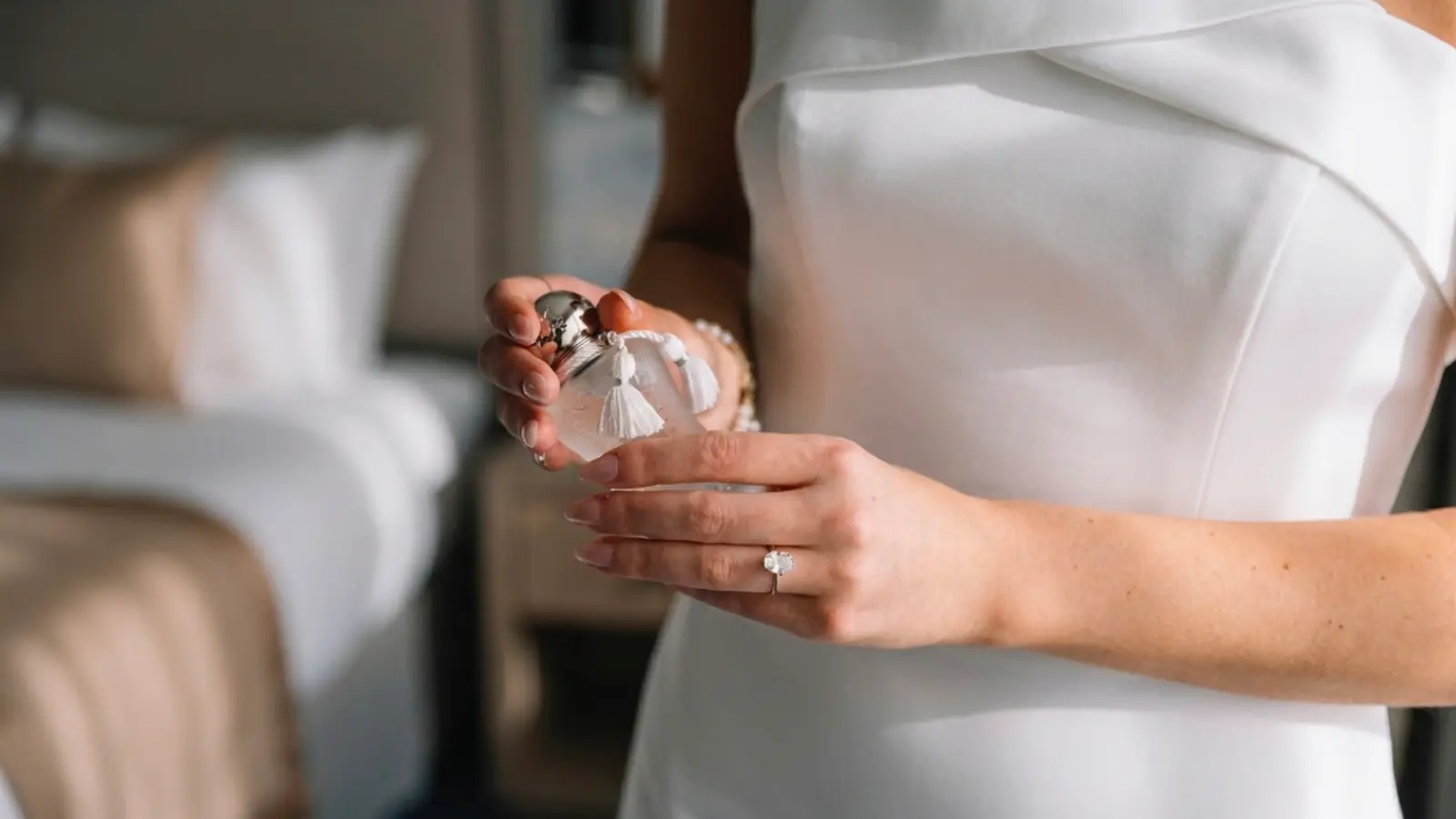
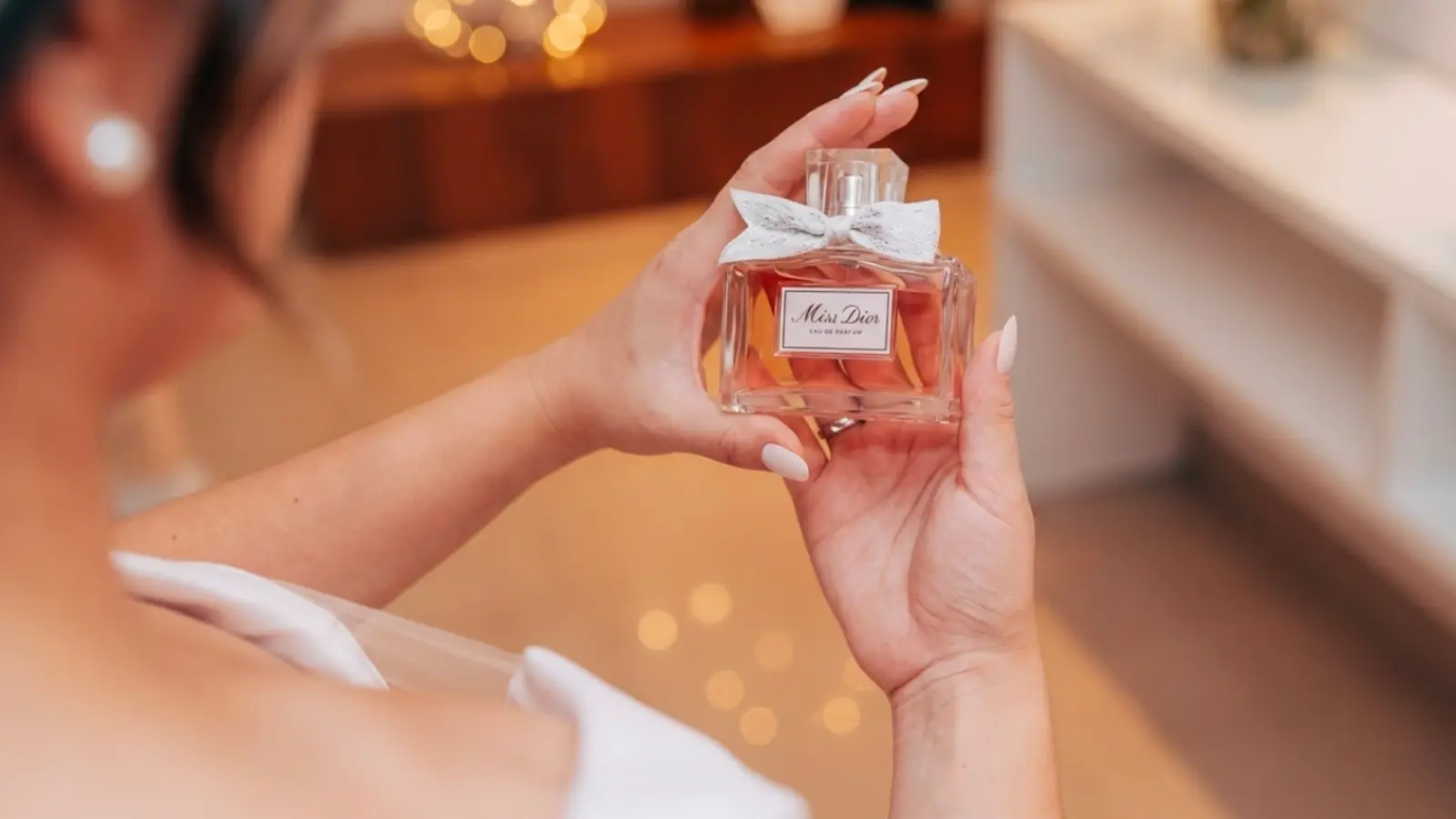
A wedding perfume is more than just another fragrance—it becomes part of the memories you’ll carry long after the celebration is over. The scent you wear while getting ready, walking down the aisle, hugging loved ones, and sharing your first dance can become permanently linked to one of the most meaningful days of your life.
Choosing the right perfume means balancing emotion with practicality. Your fragrance should suit your venue, season, wedding style, and personality while lasting comfortably through hours of celebration without becoming overwhelming during close moments with your partner and guests.
This complete guide explains how to choose a wedding perfume, understand fragrance families, match scents to different wedding styles and seasons, improve longevity, coordinate fragrances as a couple, and avoid the most common mistakes before your wedding day.
What Is a Wedding Perfume?
A wedding perfume is simply the fragrance chosen specifically to wear on the wedding day, whether that means a favorite scent worn for years or something selected for the occasion itself. Unlike an everyday fragrance, a wedding day perfume gets tied permanently to the memory of the day — the person you hugged first, the smell in the air during the first dance, the scent your partner will associate with that morning for years afterward.
That emotional weight is part of why so many brides and grooms think more carefully about this choice than they would about a typical fragrance purchase. It is also why the practical side matters just as much as the emotional one: a wedding day perfume has to survive real conditions — heat, nerves, tears, dancing, and close contact with dozens of people — not just smell good in the bottle.
Why Choose a Special Fragrance for Your Wedding Day?
Not everyone needs a new fragrance for their wedding. Plenty of couples wear their everyday signature scent and are perfectly happy with that choice. But there are a few real reasons couples consider something different for the occasion.
Scent is one of the strongest triggers for memory, more so than sound or image in many cases. Choosing a fragrance intentionally for the wedding means that, years later, catching that same scent unexpectedly can bring the entire day rushing back — the way it felt to get dressed, the walk down the aisle, the first dance. That kind of sensory anchor is difficult to build with almost anything else.
There is also a practical case for reconsidering your everyday scent. A fragrance that works well for a normal day at the office may behave differently under wedding conditions — outdoor heat, extended wear time, layered with hairspray and other products, mixed with the natural warmth of nerves and excitement. A perfume chosen with the actual day in mind tends to perform better than one chosen out of habit.
How to Choose a Wedding Day Perfume
With so many fragrance options available, it helps to narrow the decision down to a few concrete factors rather than trying to evaluate everything at once. Four questions cover most of what actually matters.
What is your venue and season? An indoor ballroom wedding in winter calls for a different fragrance weight than an outdoor beach ceremony in July. Heat intensifies fragrance, so lighter concentrations and fresher notes tend to hold up better outdoors and in warm months.
What is the overall mood of your wedding? A romantic garden wedding, a modern minimalist celebration, and a classic ballroom affair each suggest a different fragrance direction, the same way they suggest different color palettes or floral styles.
Do you want something familiar or something new? Both are valid, and the choice comes down to personal preference rather than any fixed rule — this is covered in more depth further down this guide.
How long do you need it to last? Most wedding days run eight to twelve hours from getting ready through the reception. A fragrance’s staying power should factor into the decision as much as how it smells in the first twenty minutes.
Wedding Perfume by Scent Family
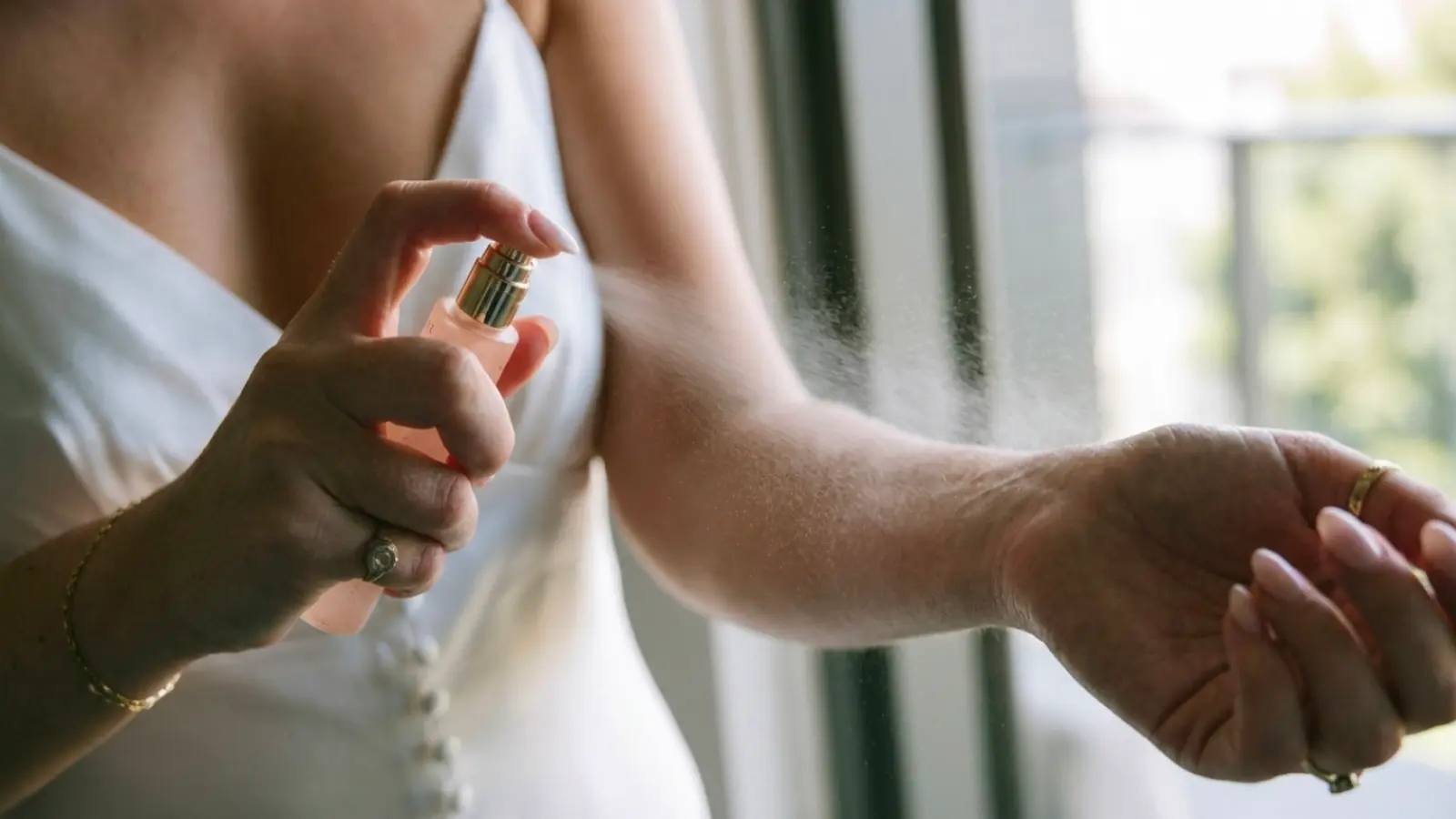
Fragrances are generally grouped into families based on their dominant character. Understanding these broad categories makes it much easier to describe what you want, whether you are shopping alone or working with a fragrance counter associate.
Floral Wedding Fragrances
Floral fragrances are the most traditional choice for weddings, and for good reason — they read as romantic, feminine, and timeless without trying too hard. Rose, jasmine, peony, and orange blossom are common building blocks, often softened with a touch of musk or a hint of citrus at the top. Floral fragrances tend to suit classic, romantic, and garden-style weddings especially well, and they photograph as “expected” in the best sense — nothing about them reads as a surprising choice.
Fresh and Clean Wedding Fragrances
Fresh fragrances lean on citrus, green notes, light aquatic accords, and airy florals. They tend to feel effortless rather than heavy, which makes them a strong match for daytime ceremonies, outdoor settings, and warmer months. A fresh fragrance rarely dominates a room, which some couples specifically want — a scent that is present up close but not announced from across it.
Warm, Amber and Vanilla Wedding Fragrances
Warm fragrances built around amber, vanilla, and soft spice bring a cozy, intimate quality that suits evening receptions, fall and winter weddings, and couples who want something that reads as more sensual than sweet. These fragrances tend to develop slowly over several hours, which can work in your favor for a long event, since the scent evolves rather than staying static from morning to night.
Woody and Musky Wedding Fragrances
Woody and musky fragrances — built around sandalwood, cedar, vetiver, or soft skin-like musks — bring depth without excessive sweetness. They work particularly well for modern, minimalist weddings and for couples who want a fragrance that feels grounded rather than overtly romantic. This family is also a common bridge point for couples choosing his and hers fragrances, since woody and musky notes tend to sit comfortably in both traditionally feminine and masculine perfumes.
How to Match Perfume to the Wedding Style
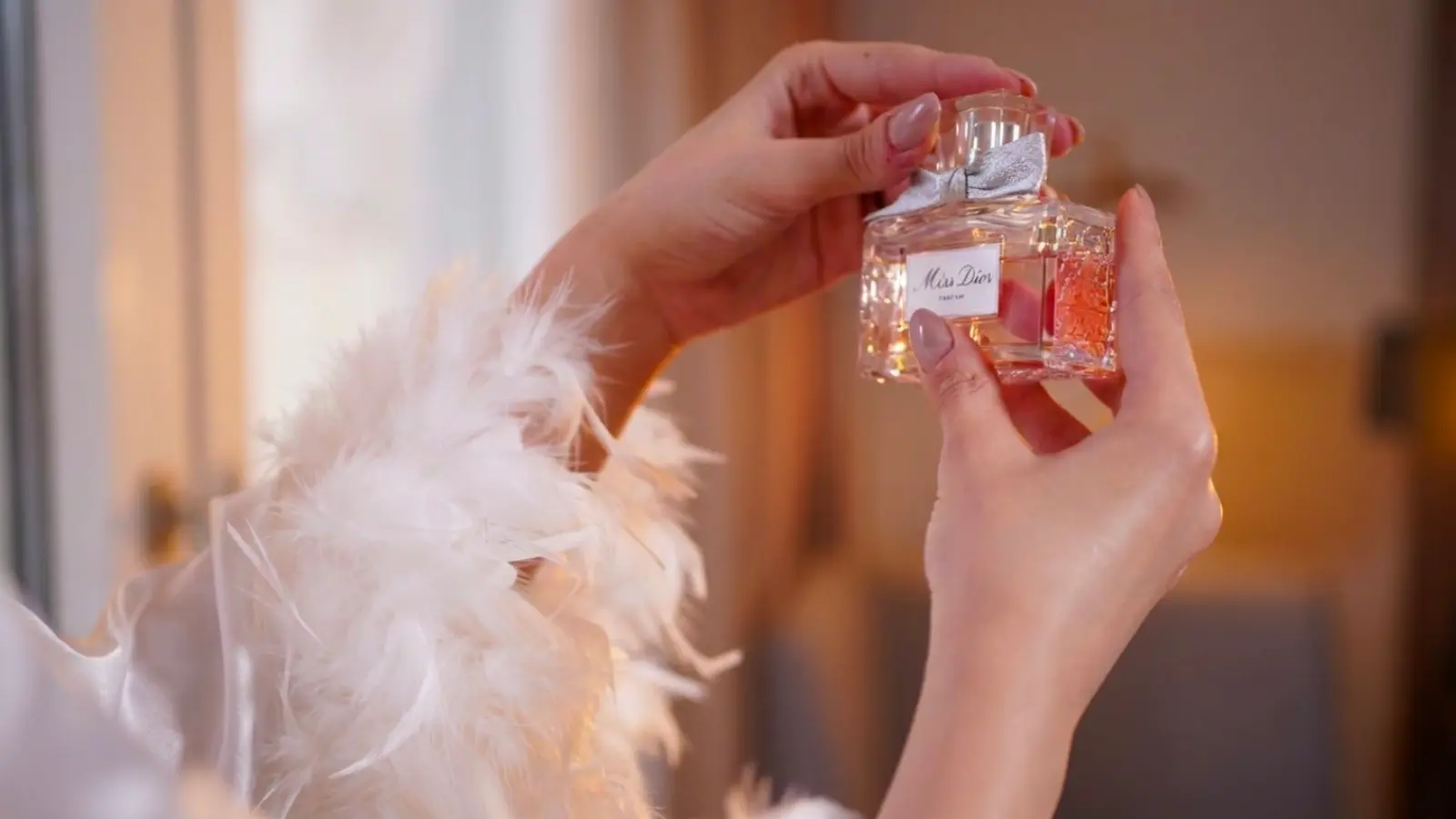
Beyond scent family alone, the overall aesthetic of your wedding gives useful direction for narrowing the field further. These are starting points rather than strict rules — plenty of brides choose a fragrance that contradicts the “expected” pairing and are thrilled with it.
Perfume for a Classic Wedding
Classic, timeless weddings pair naturally with traditional florals — rose, peony, and orange blossom — often finished with a soft powdery or musky base. The goal here is elegance without anything unexpected: a fragrance that would feel just as appropriate in a photograph taken decades from now as it does today.
Perfume for a Romantic Wedding
Romantic weddings, with their soft color palettes and abundance of florals, suit fragrances that lean fuller and more sensual — think jasmine, tuberose, or a rose paired with warm vanilla. This is a category where a slightly bolder floral choice tends to work better than something too restrained.
Perfume for a Modern Wedding
Modern, minimalist weddings tend to pair well with cleaner, more structured fragrances — woody, musky, or citrus-forward scents that feel intentional rather than ornate. A fragrance that reads as understated but distinctive fits the aesthetic of a wedding built around clean lines and negative space.
Perfume for a Garden Wedding
Garden weddings, outdoors and surrounded by greenery and blooms, call for fragrances that feel like a natural extension of the setting — soft florals, green notes, and light fruit accords all work here. Avoid anything too heavy or synthetic-smelling, since it will compete with the natural scent of the flowers around you rather than complementing it.
Perfume for a Beach Wedding
Beach weddings call for the lightest fragrances on this list. Marine and aquatic notes, citrus, and airy florals hold up best against heat, humidity, and salt air, all of which intensify heavier fragrances in ways that can feel overwhelming by the middle of the ceremony.
Wedding Perfume by Season
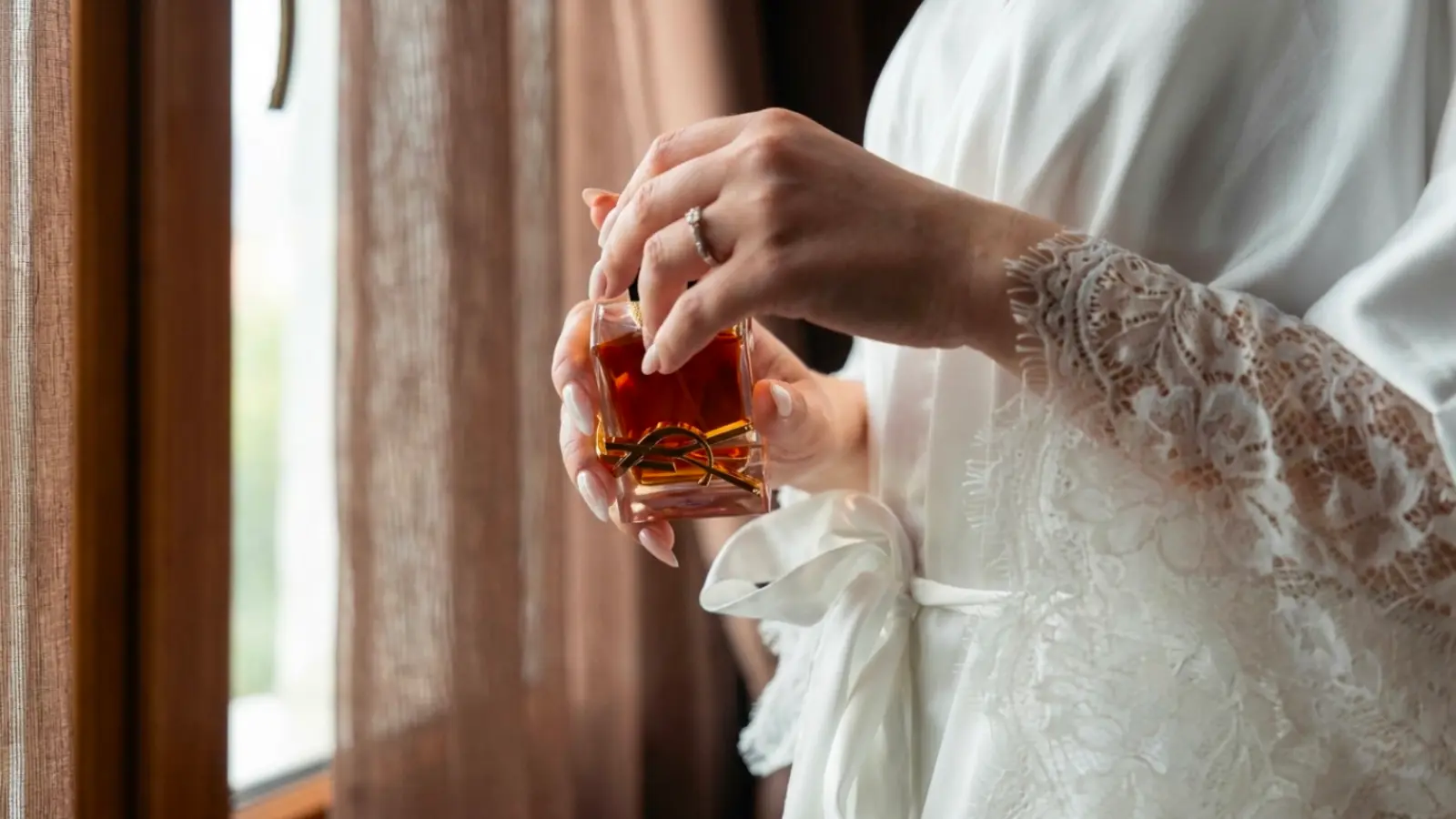
Season affects fragrance in a very literal, physical way: heat amplifies a scent’s projection, and cold air mutes it. Choosing with your wedding’s season in mind is one of the most practical decisions you can make in this whole process.
Spring Wedding Perfume
Spring pairs naturally with fresh florals — think peony, lily of the valley, and soft green notes. Moderate temperatures make this one of the more forgiving seasons, since both lighter and slightly richer fragrances tend to perform well.
Summer Wedding Perfume
Summer heat calls for restraint. Citrus, aquatic, and light floral fragrances hold up better than anything heavy, both because they feel more comfortable to wear and because intense heat can turn richer fragrances sharp by midday. Apply with a slightly lighter hand and refresh once during the day rather than relying on one heavy morning application.
Fall Wedding Perfume
Fall is where warmer, richer fragrance families genuinely shine. Amber, vanilla, soft spice, or woody notes read beautifully against the season’s cooler air and deeper color palette — a good moment to lean into something you might consider too rich for a hot summer day.
Winter Wedding Perfume
Winter weddings can support the boldest fragrances on this list. Cold air mutes projection, so richer, more concentrated fragrances read as inviting rather than overpowering, especially for indoor evening receptions.
The table below brings the style and season guidance together into one reference, useful for narrowing your options before a shopping trip or fragrance counter appointment.
| Wedding Style or Season | Best Fragrance Family | Suggested Mood | What to Avoid |
|---|---|---|---|
| Classic Wedding | Traditional floral, soft powdery | Elegant, timeless | Overly experimental or sharp notes |
| Romantic Wedding | Full floral, warm vanilla | Soft, sensual | Fragrances that feel too clinical or sharp |
| Modern Wedding | Woody, musky, citrus-forward | Clean, intentional | Overly sweet or ornate florals |
| Garden Wedding | Soft floral, green, light fruit | Natural, effortless | Heavy or synthetic-smelling fragrances |
| Beach Wedding | Marine, citrus, airy floral | Fresh, light | Rich amber or heavy woods |
| Spring | Fresh floral, green | Light, blooming | Very heavy, cold-weather-only scents |
| Summer | Citrus, aquatic, light floral | Cool, breezy | Dense amber or heavy spice |
| Fall | Amber, vanilla, soft spice | Warm, cozy | Very light, purely citrus scents |
| Winter | Deep amber, dark wood, warm spice | Rich, intimate | Very light fragrances that disappear in cold air |
Treat this table as a starting direction, not a strict assignment. Plenty of couples successfully wear a fragrance outside its “expected” category — the guidance above simply reflects what tends to perform most comfortably given real weather and mood conditions.
Wedding Perfume Profiles to Sample
Knowing your fragrance family and season narrows things down, but it still leaves a wide field to search through on your own. The profiles below translate that guidance into something more concrete — a description you can bring to a fragrance counter or use as a starting search term, without tying the choice to one specific product that may be reformulated or discontinued by the time you actually shop.
| Wedding Style | Fragrance Profile | Main Character | Best For |
|---|---|---|---|
| Classic Ballroom | Timeless Floral | White florals, soft powder, light musk | Formal and classic weddings |
| Romantic Garden | Soft Peony & Suede | Peony, soft fruit, suede-like musk | Garden and spring weddings |
| Modern Minimalist | Clean Musk | Clean musk, soft amber, subtle wood | Minimalist and modern weddings |
| Warm Evening | Warm Amber & Vanilla | Vanilla, warm amber, orange blossom | Evening and fall weddings |
| Fresh Outdoor | Fresh Citrus Blossom | Citrus, orange blossom, light florals | Summer and beach weddings |
| Rich Romantic | Romantic Rose & Musk | Rose, soft fruit, musk | Luxury-leaning romantic weddings |
| Woody Modern | Sandalwood & Citrus | Sandalwood, citrus, soft spice | Modern weddings, and a natural starting point for his and hers pairing |
| Soft Daytime | Soft Powdery Rose | Rose, powder, light vanilla | Romantic daytime weddings |
These fragrance profiles are not perfume names. They describe the scent style to look for when testing different fragrances, making it easier to compare options without limiting yourself to one specific brand or bottle. Bring a description like this to a fragrance counter, test it on your own skin, and let it develop over several hours before deciding it belongs on your wedding day. For a deeper, bride-focused selection organized by scent family and wedding style — including specific fragrances worth sampling — the bridal perfume guide goes further into that ground.
How to Choose a Long-Lasting Wedding Perfume
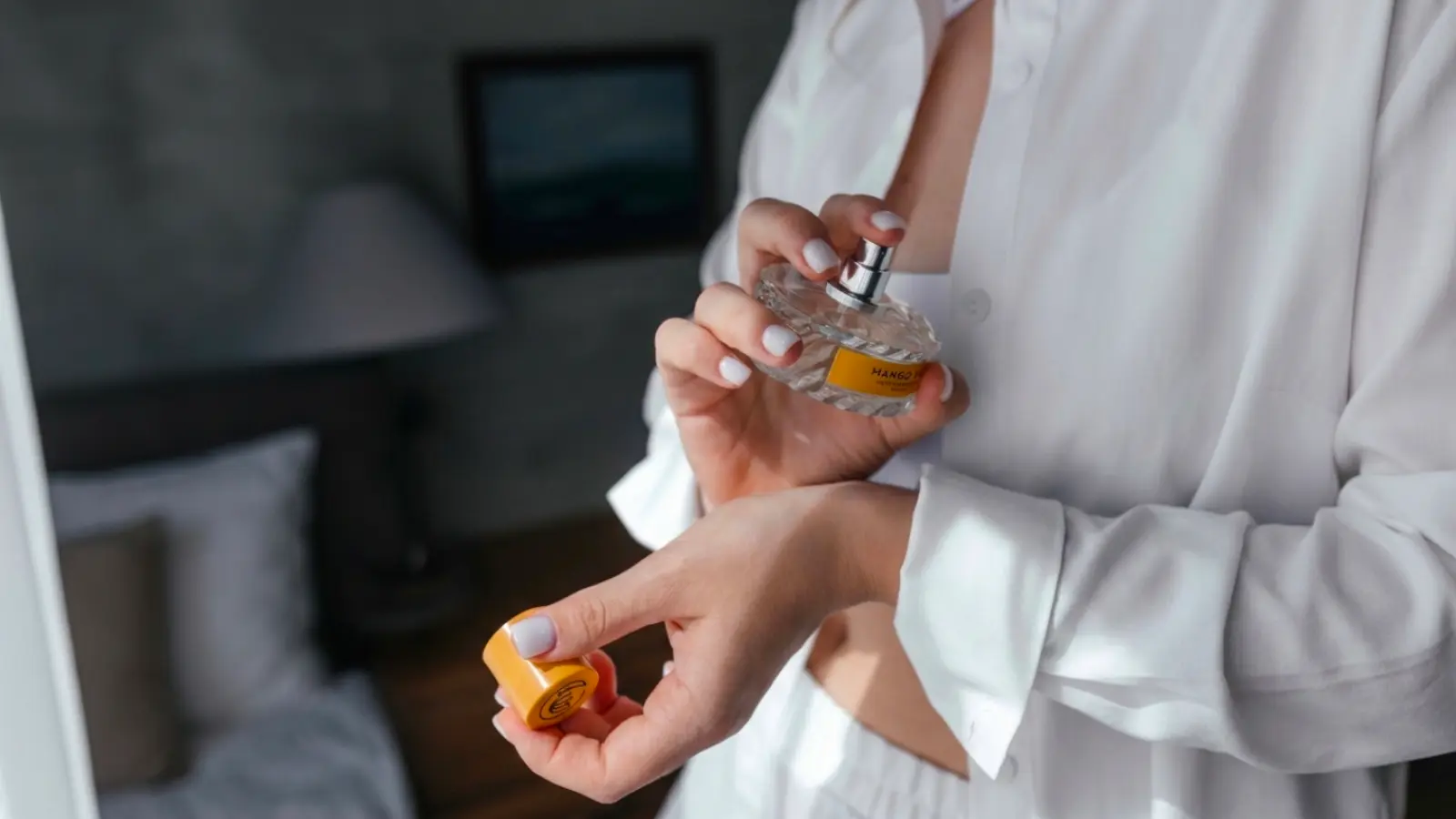
A wedding day is one of the few occasions where you genuinely need a fragrance to survive eight, ten, or twelve consecutive hours without a full reapplication. A few practical factors determine how well that actually happens.
Concentration matters more than almost anything else. Eau de parfum contains a higher percentage of fragrance oil than eau de toilette or cologne, which generally translates to longer wear. If you are choosing specifically for longevity, an eau de parfum or parfum concentration is usually the safer bet over a lighter formulation.
Skin type plays a role too. Drier skin tends to hold fragrance less well than oilier skin, since natural oils help a scent bind and evaporate more slowly. If you know your skin runs dry, layering an unscented or lightly scented lotion underneath the perfume gives the fragrance something to hold onto.
- Choose eau de parfum or parfum concentration over lighter formulations when longevity matters
- Apply to pulse points — wrists, neck, and behind the ears — where body heat helps release the scent gradually
- Layer an unscented moisturizer underneath on dry skin to extend wear time
- Pack a small travel version for a midday touch-up rather than assuming one application will carry the whole day
- Avoid rubbing wrists together after application, which can break down the top notes faster than letting them settle naturally
None of this means a lighter fragrance is off the table — it simply means planning for a touch-up rather than expecting one application to carry twelve hours on its own. A nice perfume for the wedding day paired with a realistic reapplication plan will outperform a heavier scent worn without any backup at all.
How and Where to Apply Perfume on the Wedding Day
Where and how you apply perfume affects both how long it lasts and how it is experienced by the people around you throughout the day — which matters more at a wedding than almost any other occasion, given how much close contact is involved.
Pulse points are the classic application spots for a reason: wrists, the base of the neck, and behind the ears all generate warmth that helps release the fragrance gradually over the day. Some people also add a light spritz to the collarbone area or the hem of a veil, which creates a subtle scent trail without concentrating too much fragrance in one spot.
Spray from a moderate distance rather than directly against the skin, and resist the urge to reapply heavily throughout the day. A light refresh at pulse points is almost always more effective, and more pleasant for the people around you, than a full second application on top of the first.
How Much Perfume Should You Wear?
This is a place where more is not better, especially on a day involving hours of close contact — hugs, first dances, portraits taken inches from someone’s face. A fragrance that feels perfectly balanced in an open room can feel intense in a tight embrace.
A good general approach is two to four sprays for a lighter fragrance and one to two for something richer or more concentrated, applied at pulse points rather than sprayed broadly across clothing or hair. If you are wearing a new fragrance for the first time, err on the lighter side — you can always add a touch more later in the day, but you cannot easily undo an overly heavy application once photos have started.
Should You Wear a New Perfume or Your Signature Scent?
There is a genuine case for both approaches, and neither is objectively better than the other.
Your everyday signature scent carries history. It is the fragrance your partner already associates with you, the one that shows up in years of memories that have nothing to do with the wedding. Wearing it on your wedding day simply adds one more layer to a scent that already means something.
Choosing something new creates its own kind of memory — a fragrance that will forever be tied specifically to that one day, worn for the first time as you walked down the aisle. Some brides and grooms find that meaningful in a way a familiar scent cannot replicate. Others prefer the certainty of something they already know and trust.
If you do decide to go with something new, give yourself real time to live with it before deciding — this is covered in more detail in the testing section below.
Wedding Fragrance for the Bride and Groom
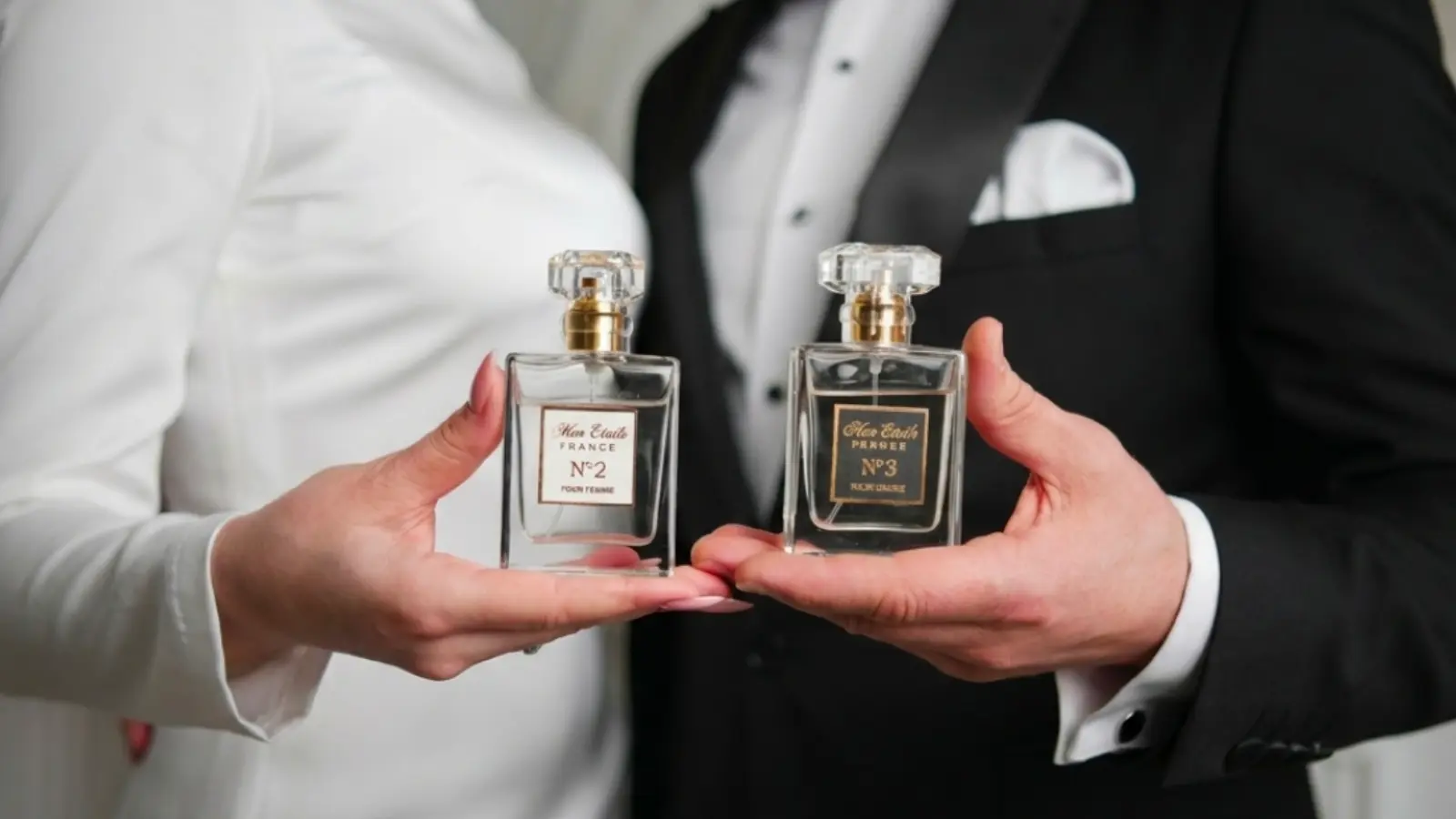
Fragrance is not only a bridal decision. More couples are thinking through the groom’s fragrance with the same intention as the bride’s, and increasingly considering how the two scents will work together during close moments throughout the day.
Wedding Perfume for the Bride
The bride’s fragrance tends to draw the most attention in this whole conversation, and for good reason — it is worn closest to the veil, the bouquet, and the moments most photographed throughout the day. The considerations already covered in this guide — venue, season, longevity, and personal meaning — apply most directly here. For a deeper, bride-specific breakdown of options and recommendations, a dedicated bridal perfume covers that ground in more detail.
Wedding Fragrance for the Groom
A groom’s wedding fragrance deserves the same intentionality as the bride’s, even though it often gets far less planning time. Men’s wedding fragrance tends to lean toward woody, spicy, or citrus-forward families, though there is no rule requiring that split — venue, season, and longevity matter equally here.
A fragrance with some depth — a woody or spiced base — tends to hold up well through a long day of handshakes, close conversations, and the same extended wear time the bride is managing.
His and Hers Wedding Fragrances
Couples increasingly think about how their two fragrances will interact rather than choosing each in isolation. His and hers perfume for a wedding does not need to mean matching scents — two distinct fragrances sharing one connecting note often works better than an identical pairing, since each person keeps something that feels personally theirs.
How to Make Bride and Groom Fragrances Work Together
The simplest approach is finding a shared note between two otherwise different fragrances — a common vanilla, a shared citrus top note, or a similar musky base. That thread creates a sense of cohesion during close moments like the first look and first dance, without either person compromising on their own preferences.
Testing both fragrances together at close range before the wedding is worth the extra step. A pairing that smells fine independently can occasionally clash once combined, and trying both at once on skin is the most reliable way to know ahead of time.
When and How to Test Your Wedding Perfume
Testing matters more for a wedding fragrance than almost any other purchase, precisely because you are committing to wearing it for an entire long day — and because a scent can genuinely change once it interacts with your skin chemistry.
Start testing at least two to three months before the wedding. Apply a fragrance to your skin rather than relying on a paper strip alone, and let it develop over several hours rather than judging it in the first ten minutes. A perfume’s opening notes are often quite different from how it settles later, which is exactly the phase that matters most for a long wedding day.
Test any finalist more than once, ideally on different days, since diet, stress, and even weather can subtly affect how a fragrance wears on your skin. If coordinating with your partner, do at least one joint test together at close range, the condition you will actually be in for much of the day.
Some perfume counters and boutiques offer the option to create a custom fragrance blend for the occasion. This can be a meaningful route if you want something entirely unique to the day, though it typically requires committing to the testing timeline above even more carefully, since a custom blend has no history of how it wears over time.
Wedding Perfume Mistakes to Avoid
A handful of avoidable missteps show up repeatedly in how couples approach this decision — worth flagging before you make a final choice.
Choosing a brand-new fragrance the week of the wedding. Skin chemistry takes time to reveal itself. A fragrance that smells wonderful on day one can develop differently after a few wears, and the wedding is not the moment to discover that.
Overapplying out of nervousness. Wedding morning nerves can lead to spraying more than usual “just to be sure.” Apply a normal, moderate amount instead, and keep a travel size on hand for a light midday refresh.
Ignoring the venue and season entirely. A fragrance well suited to an evening winter reception can feel heavy and out of place at a midday beach ceremony in July. Matching weight and intensity to your day’s actual conditions makes a real difference.
Skipping the joint test for couples coordinating fragrances. Two fragrances that smell fine separately can behave unexpectedly once combined. Test together rather than assuming they will pair well.
Forgetting a backup application. Even the longest-lasting fragrance fades somewhat over eight to twelve hours. Packing a small travel version, alongside the rest of your wedding emergency kit, means a quick refresh is available without any scrambling.
The Right Fragrance Becomes Part of the Memory
A wedding perfume isn’t simply another finishing touch—it becomes part of the story you’ll remember for years to come. Long after the flowers have faded and the photographs have been placed in albums, a familiar fragrance can instantly bring back the emotions, people, and moments that made your wedding day unforgettable.
Whether you choose your signature scent or discover a new fragrance just for the occasion, the best wedding perfume is the one that feels authentic to you. By choosing thoughtfully, testing it in advance, and wearing it with confidence, you’ll create a memory that lasts far beyond the celebration itself.
Frequently asked questions (FAQ)
How do you choose the right perfume for your wedding day?
Choose a wedding perfume by considering your venue, season, ceremony time, personal style, and how long the fragrance needs to last. Lighter citrus, aquatic, and airy floral scents usually suit warm outdoor weddings, while amber, vanilla, spice, and woody fragrances perform better in cooler weather and evening settings. The right perfume should feel recognizable as you, remain comfortable during close contact, and develop beautifully on your skin over several hours.
What type of perfume is best for a wedding?
Soft florals, clean musks, warm skin-like scents, light woods, and balanced amber fragrances are among the most versatile choices for weddings. The best fragrance family depends on the mood of the celebration. Florals suit romantic and classic weddings, citrus and aquatic scents work well outdoors, musks and woods complement modern settings, and richer amber or vanilla fragrances fit fall, winter, and evening receptions.
How long should a wedding perfume last?
A wedding perfume should ideally remain noticeable for eight to twelve hours, from getting ready through the reception. Eau de parfum and parfum concentrations usually last longer than eau de toilette or cologne, although performance also depends on skin type and fragrance composition. Applying unscented moisturizer first and carrying a travel-size version for a light midday refresh can help the scent last without overapplying.
Should you wear a new perfume or your signature scent on your wedding day?
Both choices can be meaningful. A signature scent already carries personal history and is familiar on your skin, while a new fragrance can become permanently associated with the wedding. If you choose something new, test it several times on your own skin and wear it for a full day before deciding. Avoid choosing a completely unfamiliar perfume during the final week before the wedding.
Should the bride and groom wear matching fragrances?
The bride and groom do not need to wear identical fragrances. Two different scents often work better when they share a connecting note such as vanilla, citrus, sandalwood, amber, or musk. This creates harmony without requiring either person to give up an individual style. Test both fragrances together before the wedding to make sure they remain pleasant at close range.
What perfume works best for a summer or beach wedding?
Citrus, aquatic, marine, green, and airy floral fragrances usually work best for summer and beach weddings. Heat and humidity intensify fragrance, so heavy amber, dense vanilla, or strong spicy scents can become overwhelming outdoors. Apply a moderate amount in the morning and refresh lightly later instead of using one heavy application.