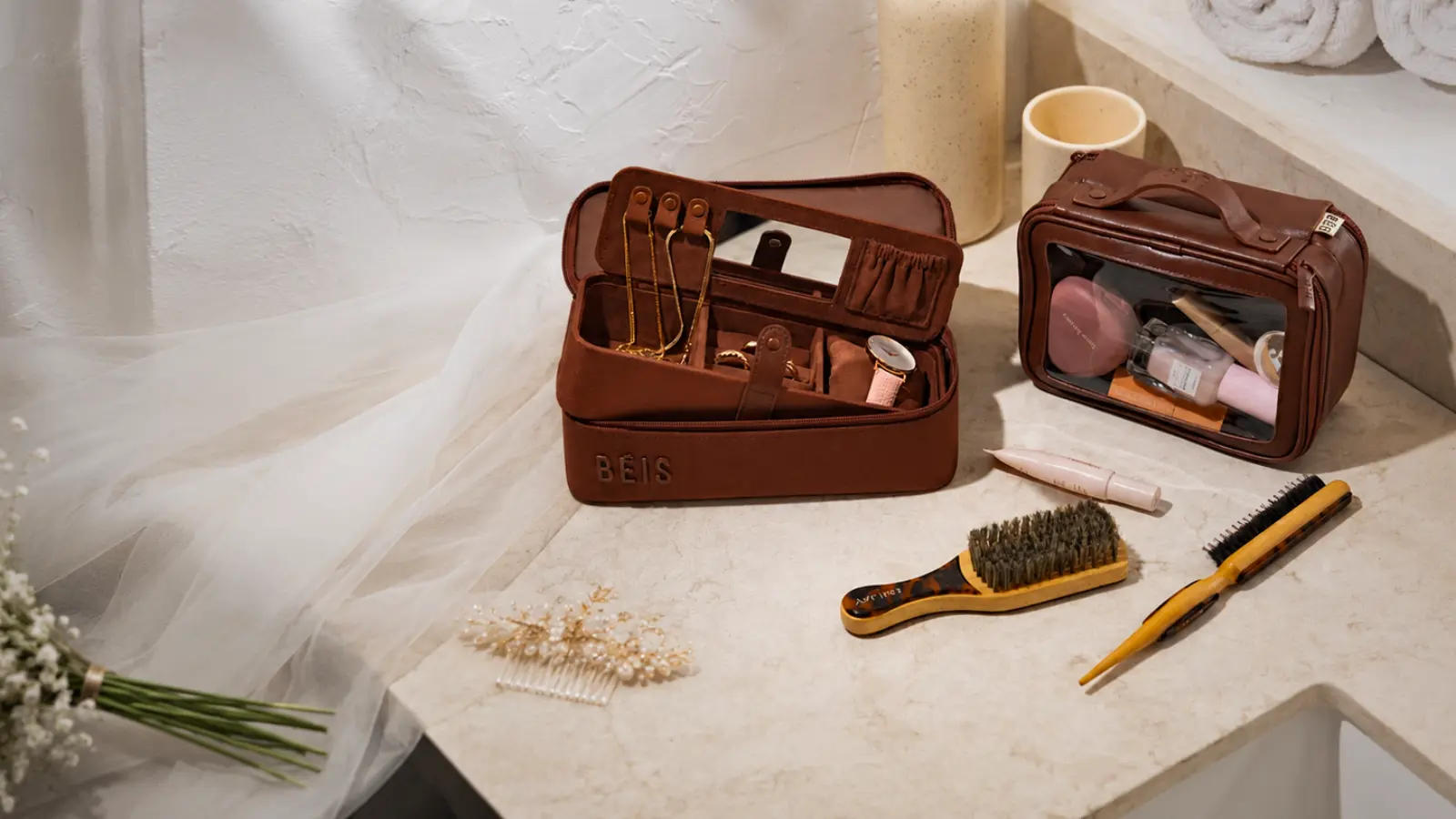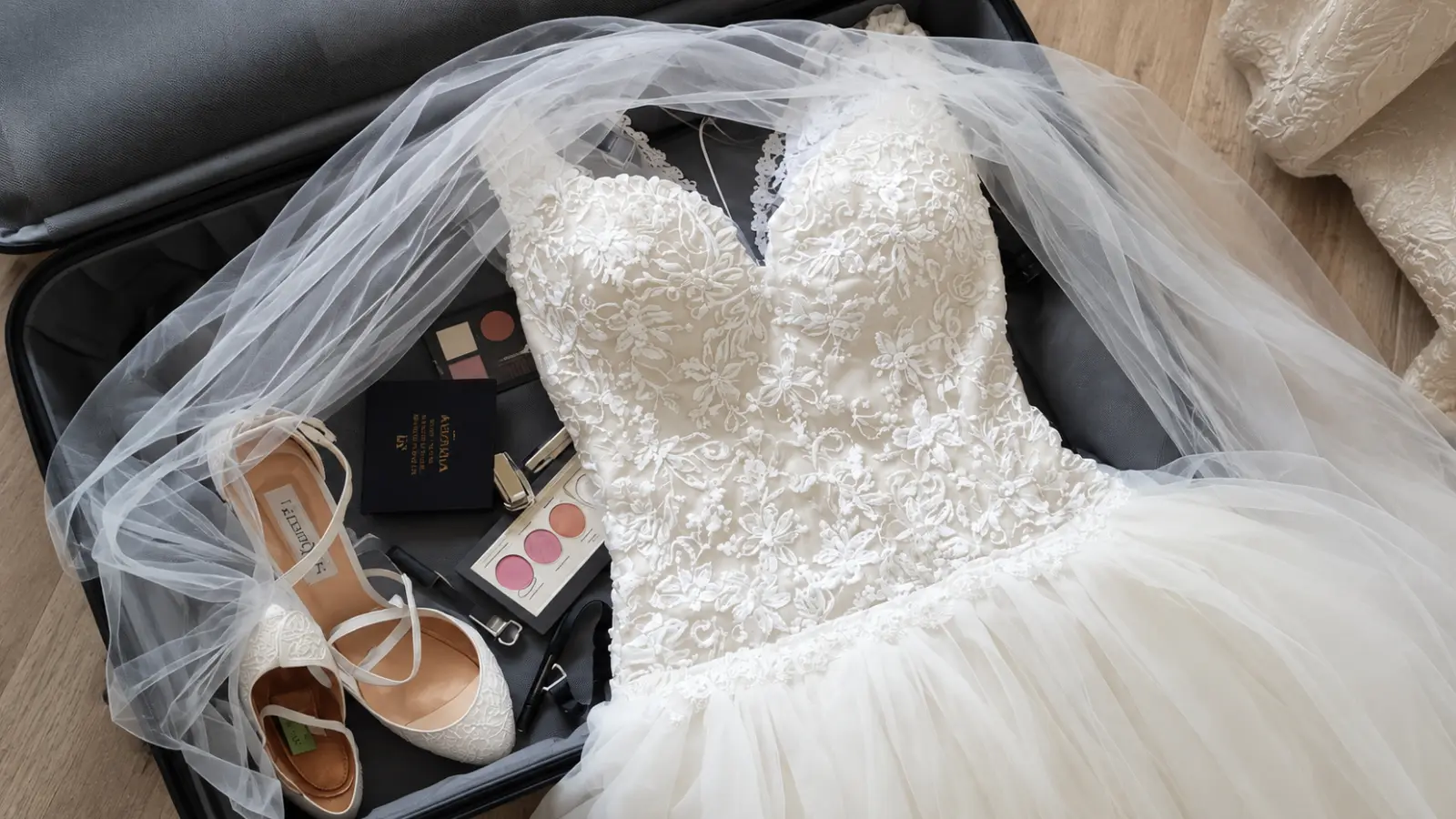
A bridal emergency kit is designed specifically for the bride, helping her stay comfortable, confident, and prepared from getting ready until the last dance. Unlike a general wedding emergency kit, every item inside is chosen around one person—her dress, her makeup, her hairstyle, her shoes, and the small details that can make a big difference throughout the day.
While most weddings never face true emergencies, nearly every bride experiences little moments that are easier to handle with the right supplies close by. A loose button, sore feet, smudged lipstick, a broken nail, or a stain on the dress can all be resolved in minutes when the kit is thoughtfully prepared in advance.
This guide explains exactly what to pack in a bridal emergency kit, how to organize it, what the maid of honor should know, which items belong in the bridal suite, and what the bride should keep in her own clutch during the reception.
What Is a Bridal Emergency Kit?
A bridal emergency kit is a curated, bride-specific collection of items kept accessible throughout the wedding day to handle the small problems that can interrupt the look, the comfort, or the schedule. The dress. The makeup. The shoes. The personal care needs of one specific person who will be photographed, hugged, and on her feet for ten consecutive hours.
The distinction from the larger wedding emergency kit matters in practice. A wedding emergency kit serves the full party — groomsmen included — and covers logistics like vendor contact printouts, portable chargers, and cash for tips. The bridal kit is narrower and more personal. It holds the bride’s exact lip shade, not a generic tinted balm. It has needle and thread in ivory and blush to match her gown, not black thread that works for a suit. It includes items specific to her dress construction — whether that is bustle pins, boob tape for a plunging neckline, or heel protectors for an outdoor venue.
The two kits often travel together under the maid of honor’s care, but building them separately ensures nothing falls through the gap between “general” and “the bride’s specific situation.”
Who Should Carry the Bride’s Kit?
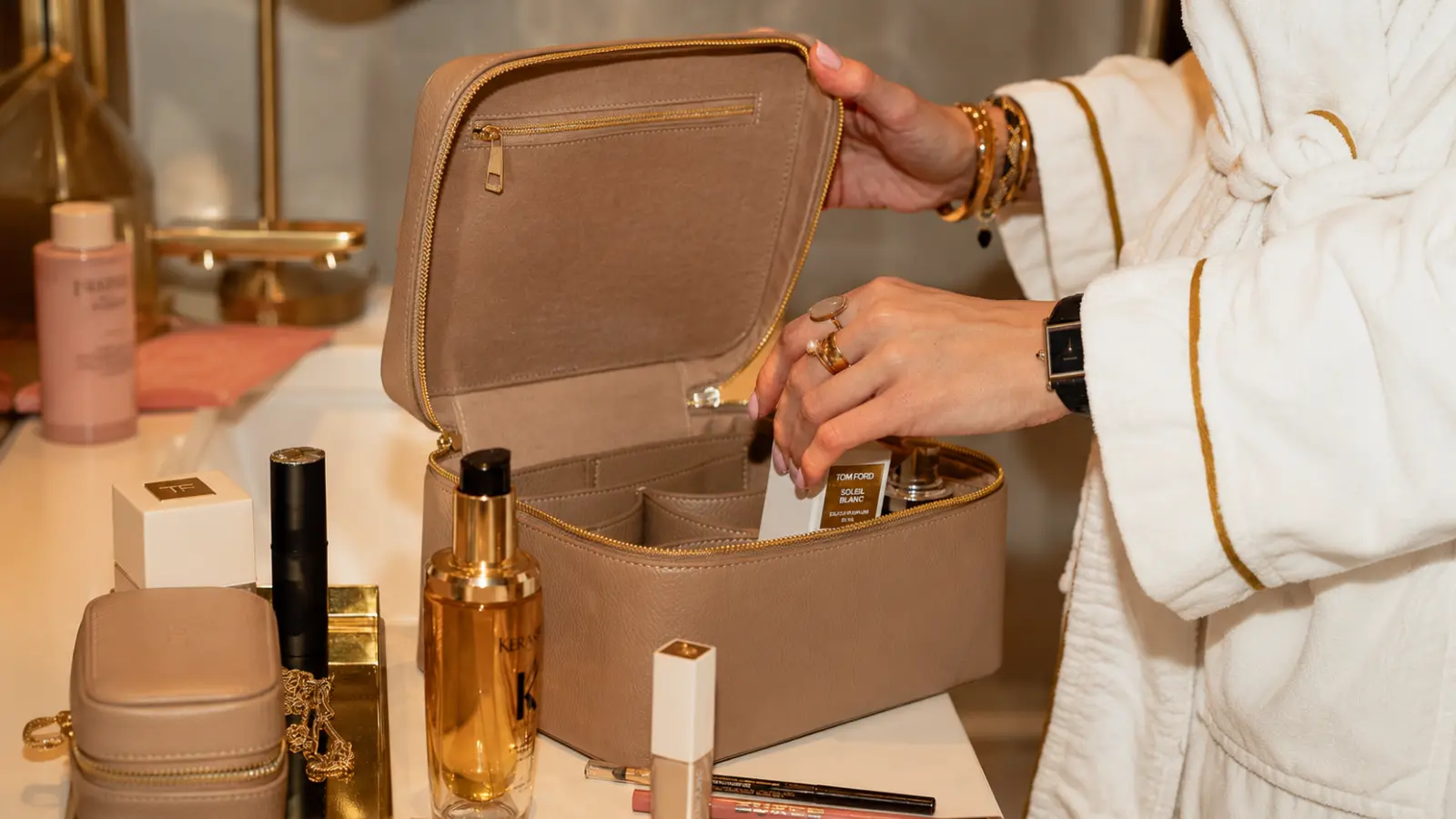
The maid of honor is the natural choice, and for reasons that go beyond proximity. She is the person who will already be managing small logistical details throughout the day — knowing where the bag is, knowing what is in it, and being the first point of contact when something small needs solving. That role is easier when there is only one person responsible for it, with no ambiguity.
The maid of honor should be briefed on the contents before the wedding day. Not a casual handoff — a five-minute conversation about what the priority items are, where they are in the bag, and what to do if something specific comes up. She should know where the bride’s lip color is, that there are multiple sizes of safety pins, and that the blister pads go in the getting-ready bag alongside the shoes so the reminder is built into the routine.
If there is a wedding coordinator or day-of planner on site, she can hold the bridal kit alongside her professional bag, which is often more efficient — coordinators are already managing the timeline and are less likely to be pulled away by a toast or a family photo. For couples without a coordinator, the maid of honor handles both the bridal kit and her portion of the shared wedding party kit. In that case, a clearly labeled, organized bag with both sets of items is more useful than trying to keep them physically separate.
Bridal Emergency Kit Checklist
The table below organizes the bride’s kit by need category, with notes on who typically carries each item and when it tends to be most useful. Not every item applies to every bride — treat this as a complete reference to select from, not a list where everything is mandatory.
| Bride’s Need | Essential Item | Who Should Carry It | When It May Be Needed |
|---|---|---|---|
| Makeup touch-up | Lip color (exact shade), blotting papers, setting spray, concealer, Q-tips | Maid of honor | After ceremony, before portraits, during reception |
| Hair fix | Bobby pins (matching hair color), clear elastics, travel hairspray, fine comb | Maid of honor | Getting ready, between events, outdoors |
| Nails and hands | Nail file, nail polish (exact shade), clear nail polish | Bridal suite bag | Before portraits, ring shots |
| Dress emergency | Safety pins, mini sewing kit, stain remover pen, fashion tape, boob tape | Maid of honor | Getting ready, ceremony, reception |
| Veil and accessories | Extra veil comb or pins, earring backs, spare stud earrings | Maid of honor | Before ceremony, during portraits |
| Shoe and foot comfort | Blister pads, heel protectors, foldable backup flats | Maid of honor or bride’s clutch | Ceremony, reception, outdoor events |
| Freshness | Deodorant wipes, breath mints, floss, tissues, perfume rollerball | Maid of honor or bride’s clutch | Throughout the day |
| Basic wellness | Pain reliever, anti-nausea tablets, antacids, bandages | Maid of honor | Getting ready, ceremony, reception |
| Personal needs | Feminine hygiene products, extra underwear, feminine wipes | Maid of honor or bridal suite bag | Throughout the day |
| Hydration and energy | Protein bar or snack, drinking straw, electrolyte packets | Maid of honor | Getting ready, between ceremony and reception |
The sections below go through each category in depth, including the details that make the difference between a generic kit and one that is actually built for this specific bride on this specific day.
Bridal Beauty Touch-Up Essentials
The goal of the beauty section of the bridal kit is not to redo makeup — it is to maintain the work the artist already did. This distinction changes what you pack. Products that are different from what the artist used will not match. Products that require skill to apply under pressure are not kit items. What belongs here is a short list of targeted items that refresh without requiring full reapplication.
The most important step in building this section happens before the wedding day itself: ask your makeup artist during the trial what lip color she is using, and request a small amount to keep in the kit. Most makeup artists will provide this without hesitation when asked. Do the same for setting spray — ask which one she uses and pick up a travel size. These two items alone mean that any touch-up during the day matches the original application rather than competing with it.
Setting spray deserves a specific note beyond just “refreshes the look.” One or two spritzes throughout the day hold makeup in place, reduce the appearance of shine without adding product, and can revive foundation that has started to settle into fine lines after several hours. It works on top of everything without disturbing the original layers — which is exactly what a touch-up item should do.
Wedding Makeup Touch-Up Items
Keep this list short and targeted. Every item should be the exact match for what is being worn, not a close approximation from a different brand or formula.
- Lip color in the bride’s exact wedding day shade — ask the makeup artist for the specific product or a small vial of what she used
- Setting spray in travel size — the same formula the artist used, or a universally compatible alternative
- Blotting papers for oil control throughout the day — start here before reaching for powder, since blotting removes oil without adding product or disrupting foundation
- Translucent powder for touch-ups after blotting, if the bride typically needs it
- Concealer in the bride’s shade for any areas that shift or need refreshing
- Q-tips for mascara smudges, liner adjustments, or lipstick precision
- Small folding mirror — one the maid of honor can hold steady while the bride checks her look
- Eye drops for dryness or for the moment happy tears need clearing before portraits
- False lash glue, if the bride is wearing falsies
Blotting papers before powder is a sequence worth communicating to whoever is holding the kit. The instinct is often to reach for powder first, but powder on top of oil creates a patchy, textured look in photos. Blotting first removes the oil, then a light dusting of translucent powder settles everything back into place.
Wedding Hair Emergency Items
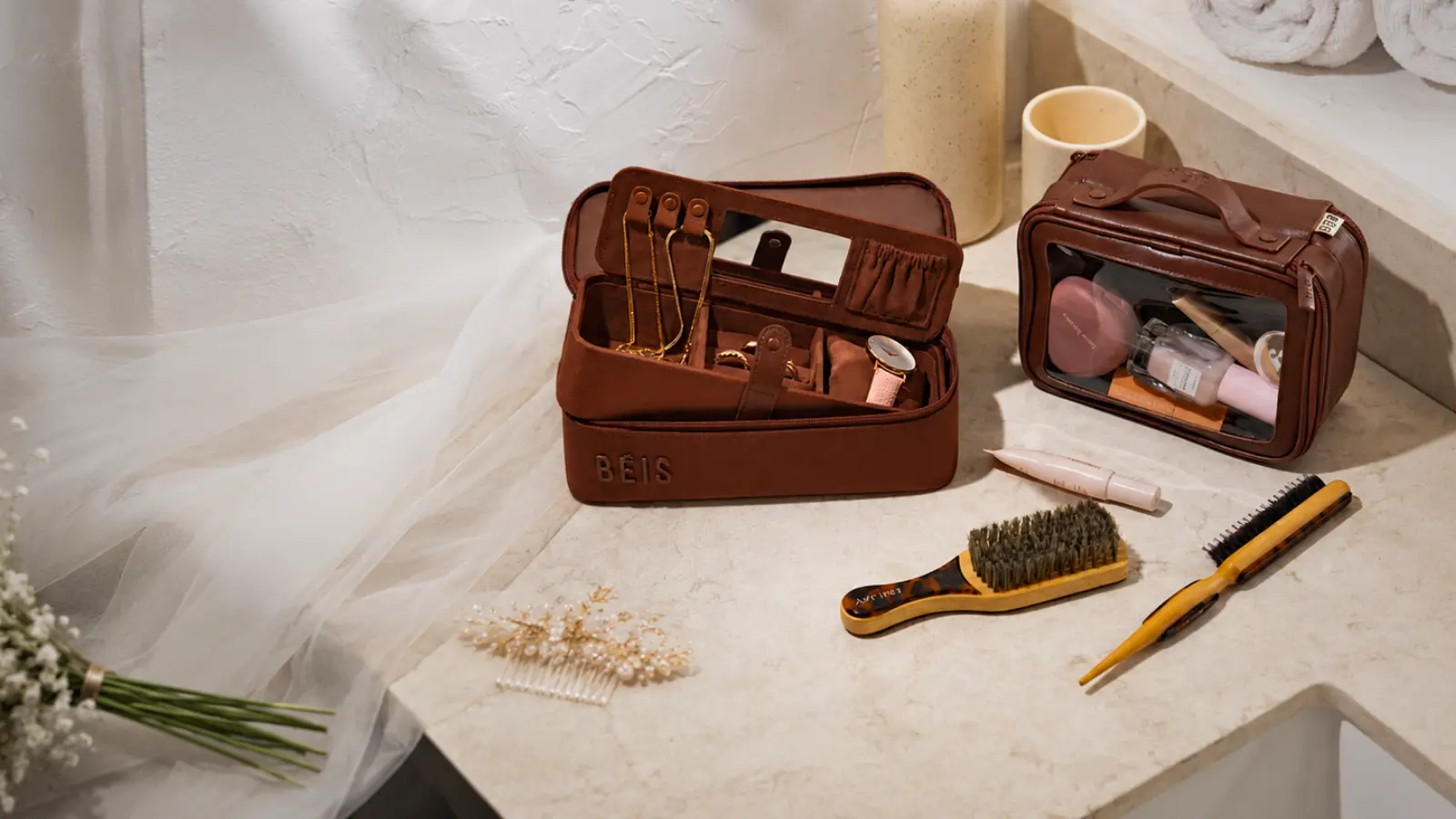
Hair will hold through most of the day with a good stylist and the right products — but humidity, wind, hours of movement, and the physical reality of wearing a veil and then removing it all create small shifts that are worth being ready to address. The hair section of the bridal kit is not about restyling. It is about keeping loose pieces in place and maintaining what was done in the morning.
The detail most kit lists skip: bobby pins should match the bride’s specific hair color. A dark pin against light hair or a silver pin against dark hair shows up clearly in close-up ceremony and portrait photos. If the bride has highlighted hair, test a few shades in the getting-ready space before the day to find the one that disappears. Clear elastics serve the moment when the bride wants to pull hair back without it looking improvised — they are more discreet than fabric elastics and hold without leaving a mark.
- Bobby pins in the bride’s hair color — pack more than you think you need, at least 15 to 20
- Clear hair elastics for any moment hair needs to be pulled back
- Travel-size hairspray for flyaways and holding loose sections — the same formula the stylist used if possible
- Fine-tooth comb or small teasing brush for minor reshaping
- Dry shampoo for root touch-ups or flattened volume, particularly useful if the hair is down and the reception runs long
- Extra veil comb or U-shaped pins, if the veil uses them — worth having replacements in case one loosens or gets lost during the ceremony
The veil comb note is worth making explicitly: veil hardware fails more often than people expect, particularly after hours of wear. If the bride’s veil uses a comb, check its grip during the trial and confirm the kit includes a spare of the same type. A veil that partially detaches mid-ceremony is fixable in seconds with the right replacement piece; without one, it becomes a visible issue in photos.
Nail and Hand Care Essentials
The bride’s hands appear in nearly every photo from the wedding day — vow exchanges, ring shots, bouquet holds, cake cutting, first dance. A chipped nail in a close-up ring photo is not a disaster, but it is the kind of small thing that shows up clearly and is completely preventable with two items in the kit.
Nail polish in the bride’s exact shade is the obvious one. Less obvious: clear nail polish, which works both as a chip seal and as an emergency fix for a run in pantyhose. The nail file matters because a break or snag — not just a chip — can catch on fabric or scratch the partner’s hand during the exchange of rings. A small file handles this in under a minute.
- Nail polish in the bride’s exact wedding day shade — bring the same bottle used at the salon if possible
- Clear nail polish for sealing chips and pantyhose runs
- Nail file for breaks, snags, or rough edges
- Hand lotion, applied after getting ready and again before portraits — dry hands photograph differently than moisturized ones
One practical note on timing: nail touch-ups for the bride are best handled during the window between the ceremony and portraits, not during getting ready when there is still risk of smudging before everything is set. The maid of honor should know where the polish is and be ready to handle a quick chip fix in a few minutes if needed.
Wedding Dress Emergency Items
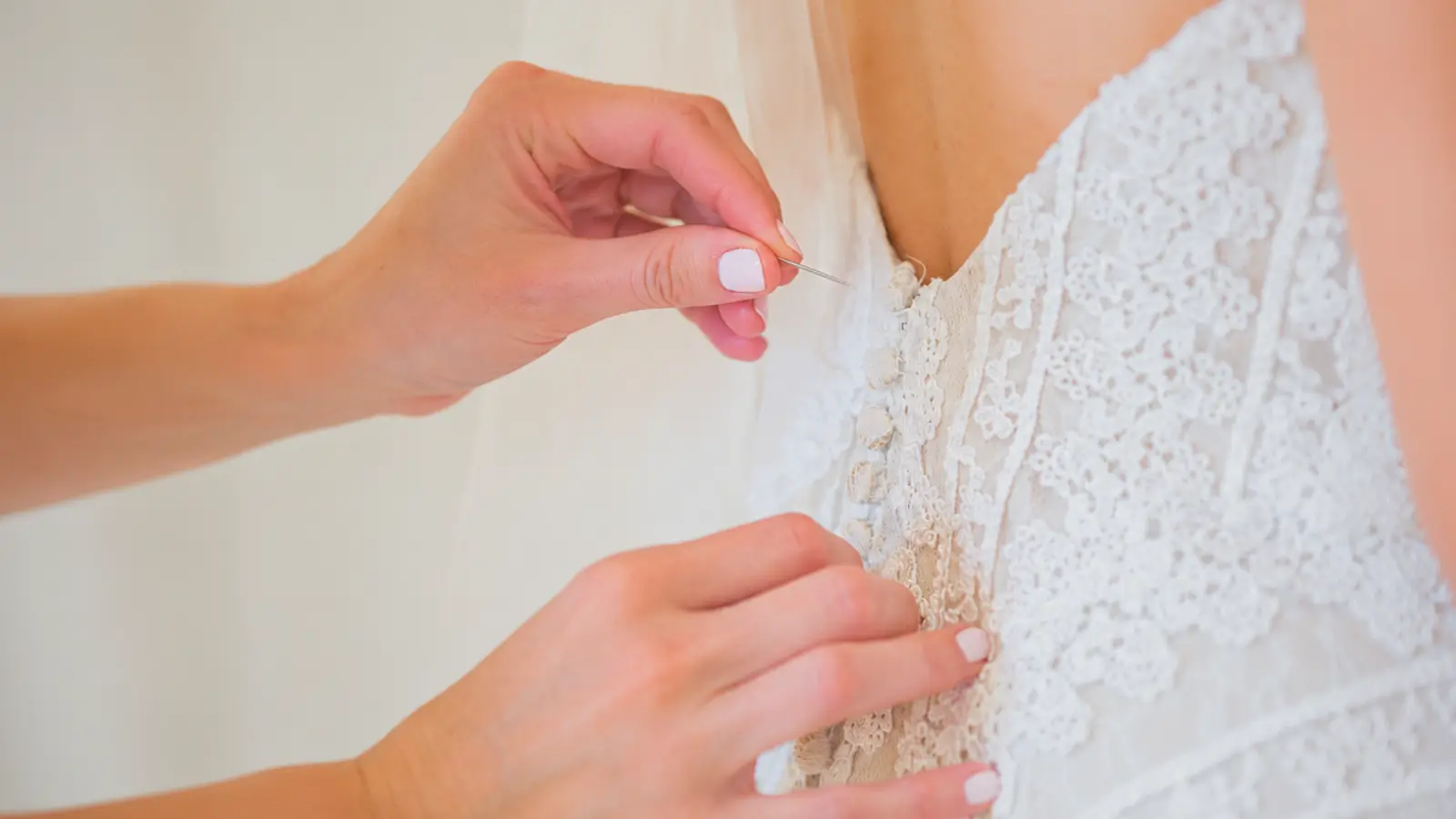
Wedding dress emergencies cover a wide range — from a coffee spill on ivory silk during getting ready to a bustle that comes undone during the first dance. Most of them are fixable if the right items are on hand. The category splits roughly into two types of problems: fabric damage (stains, tears, snags) and structural failures (broken zippers, fallen hems, collapsed bustles).
For fabric damage, the stain remover pen is the single most used item in any bridal kit. Wedding photographers and coordinators cite it more consistently than anything else. The action it can take varies by stain type — it handles most food and drink spills quickly, works less reliably on oil-based stains or color transfer from other fabrics — but having it available prevents a small spill from becoming a visible problem in photos. Pack two: one for the bridal suite and one in the reception bag.
For structural problems, the approach depends on the dress construction. Knowing a few things about your specific gown before the day makes the kit more targeted and more useful.
Pack for Your Specific Dress
- Bustle style: Know whether your bustle uses buttons, loops, or hooks, and bring spare versions of whichever fastening it uses. Bustles fail more often than any other dress construction element — particularly after dancing begins.
- Zipper: A stuck zipper responds to a light application of clear lip balm along the teeth. A broken zipper pull often needs a safety pin to hold it closed from the inside.
- Buttons: A crochet hook is the correct tool for looping dress buttons — it takes seconds with the right tool and several frustrating minutes without one. Add one if your gown has more than a few buttons.
- Strapless or plunging neckline: Boob tape is non-negotiable. Fashion tape alone is not enough for active movement through a long reception.
- Full skirt or train: Dress weights are worth adding if the ceremony or any portraits take place outdoors in wind-prone conditions.
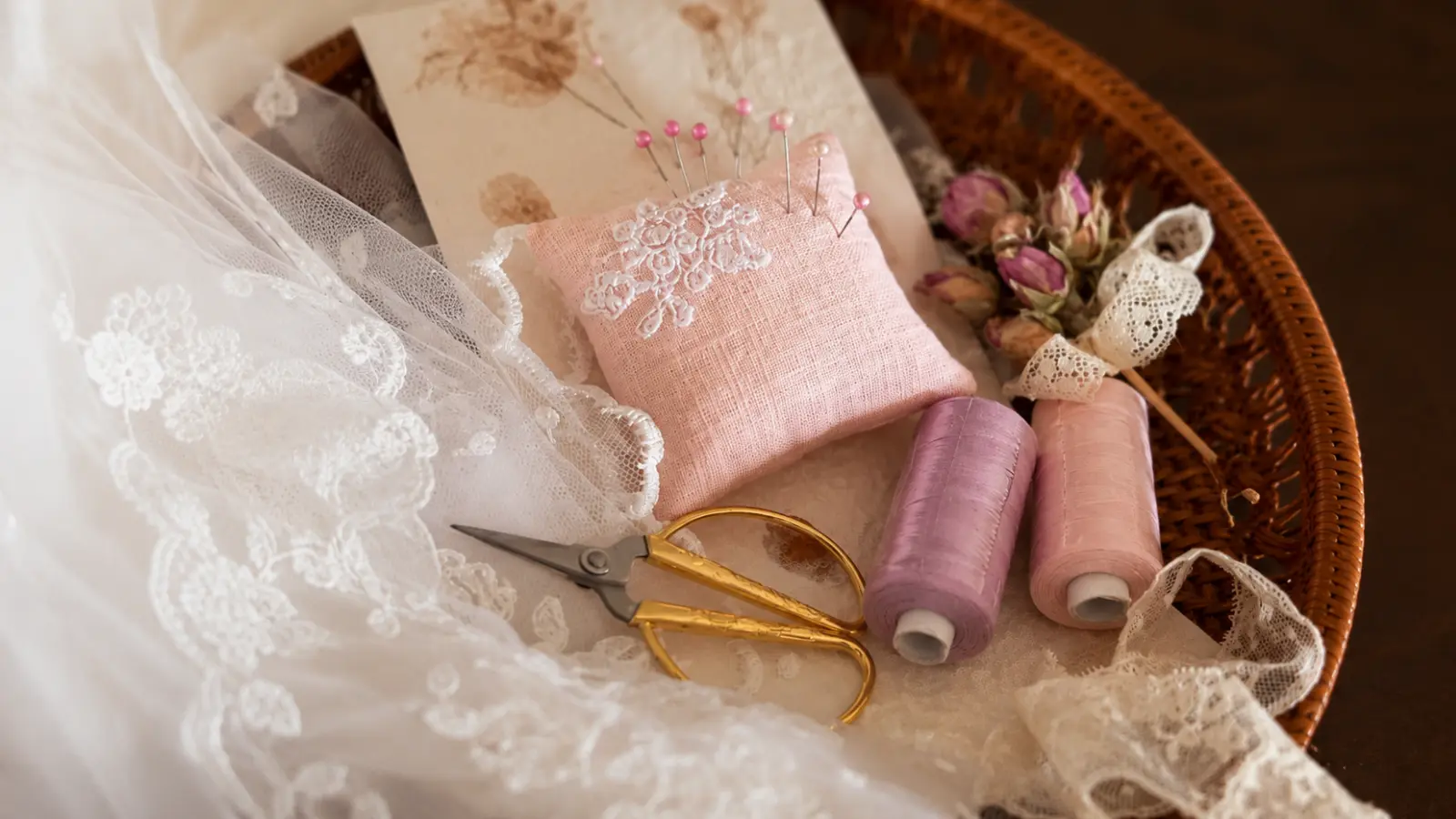
The core dress emergency kit — regardless of gown style — includes safety pins in multiple sizes, a mini sewing kit with thread in white, ivory, blush, and nude, a stain remover pen, fashion tape in strip form, boob tape, and a lint roller. Everything else is added based on the specific dress construction.
Veil, Shoes and Accessory Fixes
Accessories fail at inconvenient moments for reasons that are almost always predictable. Veil hardware gets jostled during the processional. Earring backs get caught in hair during the getting-ready process. Shoe straps loosen over hours of dancing. The fix for most of these is inexpensive and small — which makes them easy to include and easy to overlook until the moment they are needed.
For the veil: bring spare combs or U-shaped pins that match the hardware your veil uses. If the veil is attached with elastic loops and pins, bring both. A veil that starts to separate from the hair mid-ceremony is the kind of visible problem that registers in photos and in the moment — having the right spare piece means a thirty-second fix rather than a decision about whether to remove it early.
For shoes: the bridal kit should include both prevention and relief. Prevention means heel protectors if any portion of the ceremony or portraits takes place on soft ground, cobblestones, or grass — heels sink without them, and the resulting stumble or tilt in photos is not easily corrected in editing. Relief means blister pads in the getting-ready bag alongside the shoes, applied before anything starts rather than after pain sets in, and a pair of foldable backup flats for the late reception.
- Spare veil comb or pins in the style used on the veil
- Earring backs — pack extras beyond what is on the earrings
- Spare pair of simple stud earrings in case the originals break or are lost
- Heel protectors for outdoor surfaces
- Blister pads — gel cushions, not fabric bandages
- Foldable backup flats or flip flops in the bride’s size
- Shoe insoles or gel cushions if the shoes do not already have padding
The backup shoe conversation tends to feel hypothetical during planning and becomes urgently real around hour six of a reception. The foldable flats are not for walking down the aisle. They are for the moment when the original shoes have done their job and the bride wants to keep dancing without thinking about her feet. Pack them without apology.
Personal Care and Hygiene Essentials
A ten-hour wedding day involves a lot of close contact — with the partner, with guests, with the wedding party — and a lot of physical activity. Personal care items in the bridal kit are about maintaining the same freshness at the end of the reception that existed at the start of the ceremony.
Breath is worth its own attention here, beyond just mints. The ceremony itself involves close proximity to the partner during vows and the first kiss, both of which are photographed at short range. After dinner — where the food is often more interesting than whatever is available in a pre-ceremony suite — a travel toothbrush and toothpaste are more effective than mints alone. Mints handle the immediate moment; brushing handles the rest of the evening.
- Deodorant — travel size or single-use wipes for discretion and ease during the reception
- Breath mints or strips for immediate freshness
- Dental floss or mini flossers
- Travel toothbrush and toothpaste for after dinner
- Tissues — for the ceremony, for touch-up moments, and for general use throughout the day
- Hand sanitizer wipes
- Hand lotion — dry hands photograph visibly differently
- Feminine hygiene products — tampons and pads
- Feminine wipes
- Extra underwear
- Perfume in travel size or rollerball — for refreshing the scent after hours of dancing and hugging
- Sunscreen if any portion of the day is outdoors, in an SPF that does not leave a cast on the face
The perfume rollerball is worth including specifically because it is compact and wrist-applied — no risk of overspray landing on the dress. Applied lightly at pulse points before portraits and again before the first dance, it handles the natural fade that happens over a long day without requiring a full bottle.
Comfort and Basic Wellness Items
Wedding day nerves produce real physical effects: headaches, nausea, stomach tension, and the particular exhaustion that comes from being emotionally and physically active for hours without adequate food or rest. This category is not about medical preparation — it is about having the basic items that handle the common physical experiences of the day without requiring anyone to leave the venue.
Pain reliever should be in the kit regardless of whether the bride expects to need it. Headaches from dehydration, tight hair, emotional intensity, or simply being on for ten consecutive hours are common enough that packing it is genuinely useful rather than overprepared. Anti-nausea medication is worth including for the same reason — wedding day nerves affecting the stomach is not rare, and having something available prevents a pre-ceremony wave of nausea from becoming a longer problem.
- Pain reliever — ibuprofen, acetaminophen, or the bride’s preference
- Anti-nausea medication for wedding day nerves or motion sensitivity
- Antacid tablets for heartburn or stomach discomfort
- Blister pads — gel cushions in multiple sizes
- Bandages in a few sizes
- Antihistamine if the bride has seasonal allergies or a known sensitivity
Antihistamines deserve a note about timing: non-drowsy formulas are the only appropriate choice on a wedding day, and even those should be tested in advance rather than taken for the first time the morning of. A bride who discovers she reacts differently to a medication than expected is not in a position to easily manage that discovery mid-ceremony.
Food, Water and Energy for the Bride
The bride consistently underestimates how little she will eat on the wedding day. Getting ready runs long. Photos start immediately after the ceremony. Cocktail hour is spent greeting guests rather than actually eating. By the time dinner is served, the combination of an empty stomach, adrenaline, and champagne has been running the show for several hours — and the physical and visible effects show up by the reception.
The drinking straw is not optional if the bride is wearing lipstick. Drinking from a glass or bottle rim lifts color on the first sip. Straws keep the lip look intact through cocktail hour and dinner. Electrolyte packets added to a water bottle are more effective than plain water for replacing what nerves, exertion, and champagne deplete over a long day — dehydration affects skin, energy, and alertness in ways that show in both photos and how the bride actually feels by the end of the evening.
- Protein bars or a small bag of nuts — something with real sustenance, not just sugar
- Drinking straws to protect lip color throughout the day
- Electrolyte packets or tablets added to the water bottle
- Water bottle that the maid of honor refills consistently — assign this responsibility explicitly
- Gum for after eating, separate from the ceremony mints
The water bottle refill responsibility is worth stating clearly to whoever holds the kit. The bride is unlikely to remember to drink consistently on her own — there is simply too much else happening. Handing her water between events and keeping the bottle filled is one of the most practical things the maid of honor can do throughout the day, and it costs nothing to plan for.
Items for the Bridal Suite
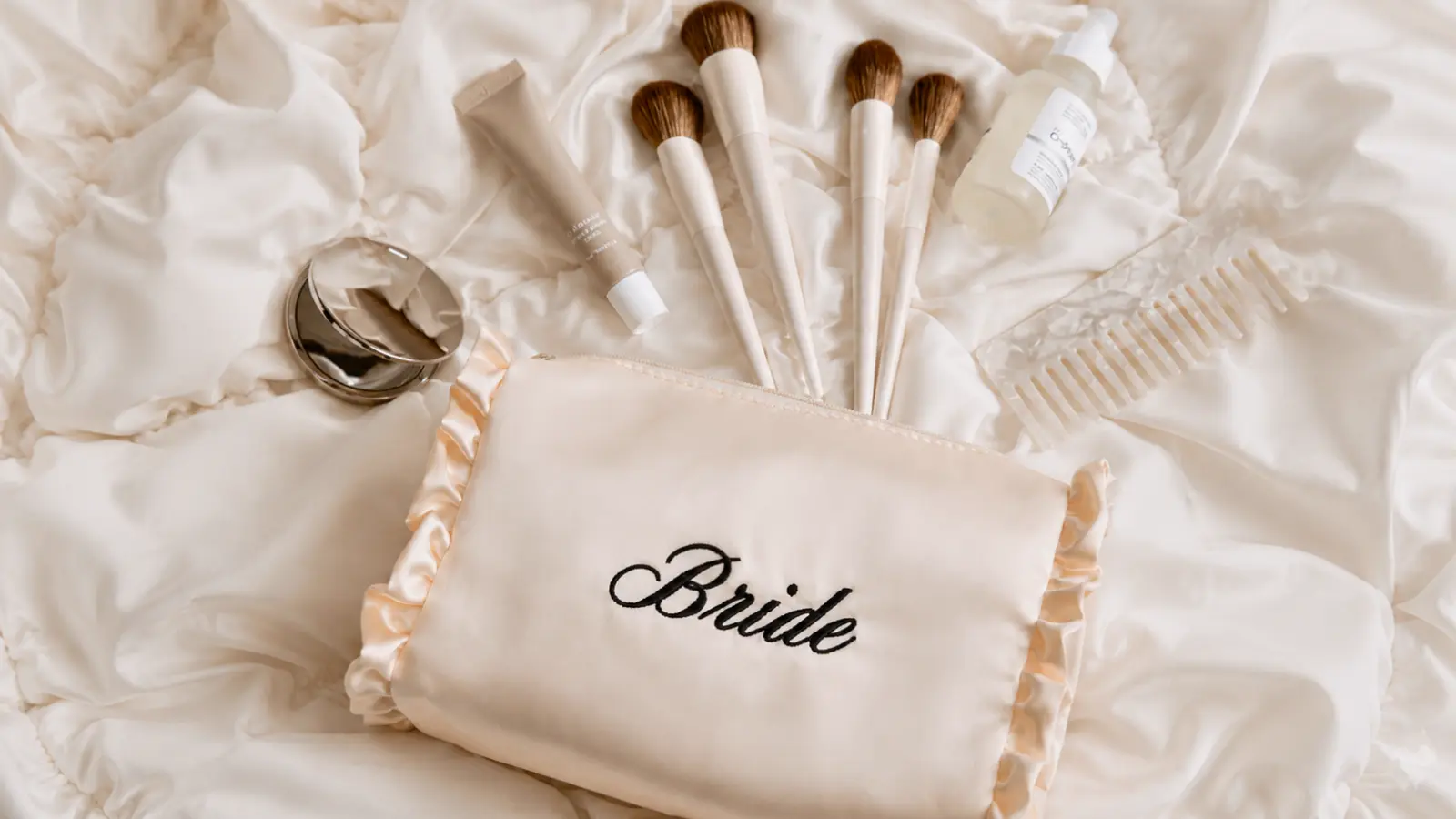
The bridal suite phase has its own specific needs — things that belong in the getting-ready space rather than in the bag that travels through the rest of the day. These are typically larger, shared-use, or one-time items that serve their purpose during the morning and stay behind when the party moves to the ceremony.
A steamer is the most important bridal suite item that often gets overlooked in kit lists. Even dresses that have been preserved and stored carefully can arrive at the suite with compression wrinkles — and a steamer resolves this in minutes without the risk of an iron scorching fabric. Most coordinators carry one, but confirming in advance is worth doing.
- Garment steamer for last-minute dress and veil wrinkles — confirm whether the coordinator carries one, and bring one if not
- Fashion tape in multiple widths for initial dress placement before getting dressed
- A large hand mirror for the bride to review her full look from every angle before leaving the suite
- White bath towel or robe to wear during hair and makeup so the dress is not put on until everything else is set
- Button-front robe or cover-up so the bride can change into the dress without disturbing hair and makeup
- Garment bag for the bride’s getting-ready outfit, stored safely until after the reception
- Light snacks and beverages for the getting-ready room — the morning goes longer than expected, and the bride needs to eat before it starts
- Phone charger and portable charger, fully charged the night before
The robe or button-front cover-up is worth mentioning explicitly because pulling a T-shirt over styled hair and a completed face is one of the most reliable ways to undo both. A robe or zip-front jacket stays on through hair and makeup, comes off safely when the dress goes on, and protects the look through the getting-ready process. Add it to the packing list the week before.
What to Pack in a Small Bridal Bag
The bridal clutch carried through the reception is not the full kit — it is a curated selection of the items the bride herself might reach for between moments, without requiring her to find the maid of honor or dig through a larger bag. The goal is to keep it light enough that carrying it does not become something she thinks about.
The full bridal emergency kit stays with the maid of honor. The clutch holds the immediate layer: the things the bride herself wants to access during the dancing, at the dinner table, or right before the cake cutting.
- Lip color in the exact shade
- Blotting papers
- Breath mints
- Two or three safety pins
- One stain remover wipe in a foil packet
- Two or three tissues
- One blister pad
- Phone
- Small amount of cash
If the clutch has room, a folded drinking straw and a rollerball perfume take up almost no space and cover two real needs — protecting the lip color through the bar and refreshing the scent before the first dance. Keep everything else in the maid of honor’s bag, where it is accessible within seconds but not the bride’s logistical responsibility to track.
What the Maid of Honor Should Carry
The maid of honor’s job with the bridal kit is not just holding the bag. It is knowing what is in it, staying aware of where it is at each phase of the day, and being ready to respond before the bride needs to ask twice. That requires a brief before the morning of the wedding — ideally during the rehearsal dinner or a conversation a few days before — not an improvised handoff at the venue.
The items she should be ready to access immediately, without searching, are the stain remover pen, safety pins in multiple sizes, the bride’s lip color, blotting papers, blister pads, and tissues. These are the items called for most often and usually with some urgency. Everything else — nail polish, backup shoes, the sewing kit, health items — can take a moment to find, but the first-response items should be at the top of the bag, not buried underneath everything else.
- Full bridal emergency kit, organized by category
- Bride’s backup shoes, carried in a separate tote or bag that also travels to the reception
- Water bottle for consistent hydration throughout the day — she refills it, not the bride
- Small amount of cash for any unexpected incidentals the bride should not be managing herself
- The bride’s phone charger or portable charger
- A clear mental map of where the bag is at each stage of the day: getting ready, ceremony, cocktail hour, reception
The backup shoes and water bottle are listed separately here because they tend to be forgotten in the transition from the bridal suite to the ceremony space. The bag with the kit goes with the party. The backup shoes often stay in the suite unless someone specifically picks them up. Naming this responsibility in advance — “you have the backup shoes, they travel with us” — is the kind of detail that avoids a last-minute problem during the reception when no one wants to go back to the suite.
What the Mother of the Bride May Keep
The mother of the bride often takes on a version of the kit-keeper role independently, particularly during the getting-ready phase when she tends to be physically present and emotionally involved. Rather than duplicating items, the most useful approach is to give her a short, specific list of things to hold separately that naturally belong in her care.
What works well in the mother’s kit: items that are sentimental or document-related, a few comfort items specifically for her own needs, and anything she will naturally have on her person throughout the day. What does not work well: giving her a version of the full bridal kit and hoping it does not overlap with what the maid of honor is carrying.
- A small, meaningful item the bride might want access to during quiet moments — a note, a photo, a piece of jewelry with sentimental value
- Her own personal care items and medications, separate from the shared kit
- Tissues, since the mother of the bride is one of the people most likely to need them throughout the ceremony
- Contact information for the venue and coordinator, in case she needs to reach someone and cannot find the maid of honor
- Cash for any small gratuities she wants to give personally
The mother of the bride is not the secondary kit keeper — the maid of honor holds that role clearly. But she tends to be resourceful and prepared by temperament, and a short, specific list of what she is personally responsible for channels that instinct usefully rather than creating parallel systems that confuse the morning.
Bridal Emergency Kit Mistakes to Avoid
A few consistent patterns show up in how bridal kits go wrong — not through dramatic oversights, but through small decisions that seem reasonable at the time and create friction on the day.
Packing generic items instead of the bride’s exact products. A lip color that is “close enough” will not look the same as the artist’s application in photos taken thirty minutes later. The concealer that does not match will be visible. Take the time before the day to confirm exact shades and product names, and pack those specifically.
Not briefing the maid of honor on the contents. Handing someone a bag and saying “keep this with you” is not the same as making her effective as a kit keeper. A five-minute conversation about the priority items and their location in the bag makes an actual difference when something needs solving quickly.
Building a kit for every possible scenario. A bag so heavy and comprehensive that it becomes inconvenient to carry is not more useful — it is less useful. The bridal kit covers the most likely problems for this specific bride. Wardrobe fixes, beauty touch-ups, foot comfort, freshness, and basic wellness cover the majority of what actually happens. Everything else is added based on known specific needs, not theoretical ones.
Leaving the backup shoes in the bridal suite. The shoes that save the reception have to travel to the reception. This is the most frequently forgotten practical detail, and it requires a specific name assignment before the day, not a hope that someone will think of it.
Skipping the nail polish match. The hands appear in more photos than any other part of the body other than the face. A chipped nail in a ring shot is a visible problem in a photo that exists for decades. One bottle of matching polish in the kit prevents it entirely.
Assembling it the week of the wedding. Two to three weeks out is the right timeline. The final week is already full — last vendor calls, final payment, rehearsal, rehearsal dinner, and the emotional weight of everything converging at once. A kit assembled under those conditions usually has gaps. Assemble it early, review it the night before, and move on.
Ideas Worth Saving
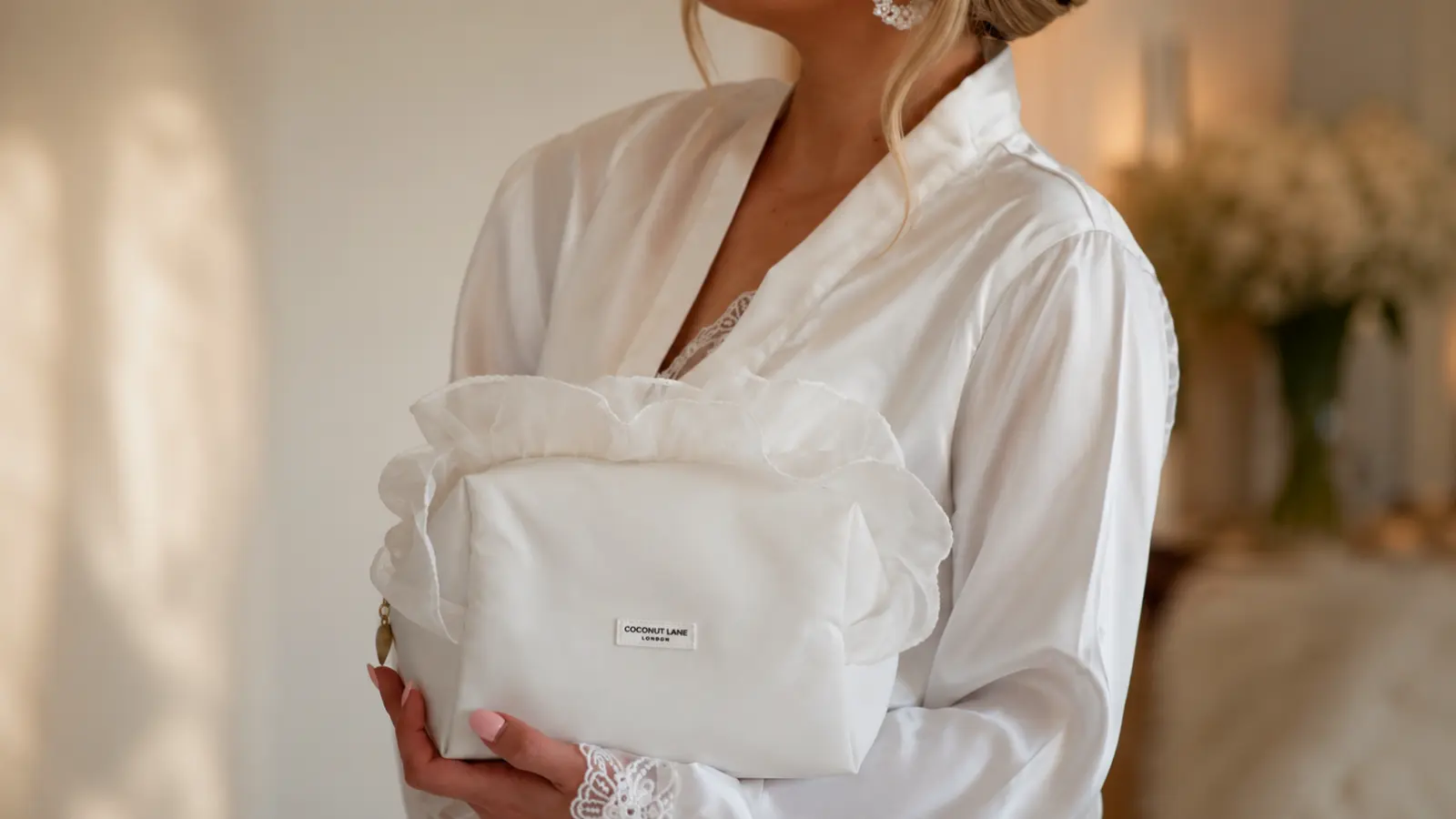
A few additions that elevate the bridal kit from functional to thoughtful — and photograph particularly well when the getting-ready morning is documented.
- A small personal note from the partner, sealed and placed in the kit for the bride to read during a quiet moment before the ceremony — something the maid of honor adds without mentioning in advance
- A meaningful piece of jewelry kept in a velvet pouch in the kit, separate from what is being worn, so it is accessible without being at risk
- A single dried flower or sprig of greenery from the wedding bouquet variety, slipped into the clutch as a small keepsake from the day
- A handwritten card from the maid of honor tucked into the bag alongside the practical items — a small gesture that takes nothing to add and tends to mean something significant in the moment
These are not emergency items. They do not solve a problem. But the morning of the wedding involves a lot of practical management, and a moment of something personal amid the logistics is the kind of detail that people remember more clearly than whether the stain remover pen was easy to find.
A Personalized Kit Makes Every Difference
A bridal emergency kit is most effective when it’s built around one person rather than a generic checklist. The products that match your makeup, the supplies that fit your dress, and the comfort items you know you’ll actually use are what transform a simple bag into something genuinely helpful throughout the wedding day.
Preparing your kit early, organizing it carefully, and making sure your maid of honor knows exactly where everything is allows you to focus on enjoying the celebration instead of worrying about small unexpected moments. The goal isn’t to prepare for disasters—it’s to make sure nothing minor distracts you from one of the most important days of your life.
Frequently asked questions (FAQ)
How do you build a bridal emergency kit for the bride?
Start by personalizing the kit around the bride’s exact wedding-day needs rather than following a completely generic checklist. Consider the makeup products and shades she will wear, her hair color and hairstyle, the construction of her dress, the type of shoes she has chosen, the venue conditions, and any personal care or wellness needs. A bridal emergency kit is most useful when every item has been selected for that specific bride.
What should be in a bridal emergency kit?
A bridal emergency kit should include the bride’s exact lip color, blotting papers, setting spray, concealer, Q-tips, bobby pins that match her hair color, travel hairspray, safety pins, a mini sewing kit, stain remover, fashion tape, boob tape when needed, matching nail polish, blister pads, backup shoes, deodorant, breath mints, tissues, pain reliever, and personal hygiene products. Add dress-specific items such as spare bustle fasteners, a crochet hook, or veil pins when appropriate.
Who should carry the bridal emergency kit?
The maid of honor is usually the best person to carry the bridal emergency kit because she remains close to the bride throughout the day. A wedding planner or day-of coordinator can also manage it alongside their professional supplies. Whoever carries the kit should know how it is organized, where the priority items are located, and where the bag needs to move during getting ready, the ceremony, portraits, and the reception.
What is the difference between a bridal emergency kit and a wedding emergency kit?
A bridal emergency kit is designed specifically for the bride’s appearance, dress, comfort, and personal needs. It includes exact makeup shades, dress-specific repair items, matching nail polish, hair accessories, and products chosen for her. A wedding emergency kit is broader and serves the entire wedding party, with shared items for wardrobe repairs, logistics, technology, basic wellness, and venue-related problems.
What should the maid of honor keep ready for the bride?
The maid of honor should have immediate access to the bride’s lip color, blotting papers, stain remover, safety pins, blister pads, tissues, backup shoes, and water bottle. She should also know where the sewing kit, dress-specific repair items, medication, and personal care products are stored. Her role is not only to carry the bag, but to solve small problems quickly without making the bride manage the details.
What should go in a small bridal clutch for the reception?
A small bridal clutch should include only the items the bride may want to reach for herself: lip color, blotting papers, breath mints, tissues, a few safety pins, one stain remover wipe, a blister pad, her phone, and a small amount of cash. The full emergency kit should remain with the maid of honor so the clutch stays light and easy to carry.
When should you put together a bridal emergency kit?
Build the bridal emergency kit about two to three weeks before the wedding. This gives you time to confirm exact product shades, understand the dress construction, purchase any missing items, and organize everything without the pressure of the final week. Review the kit the night before and hand it to the maid of honor or coordinator on the wedding morning.