
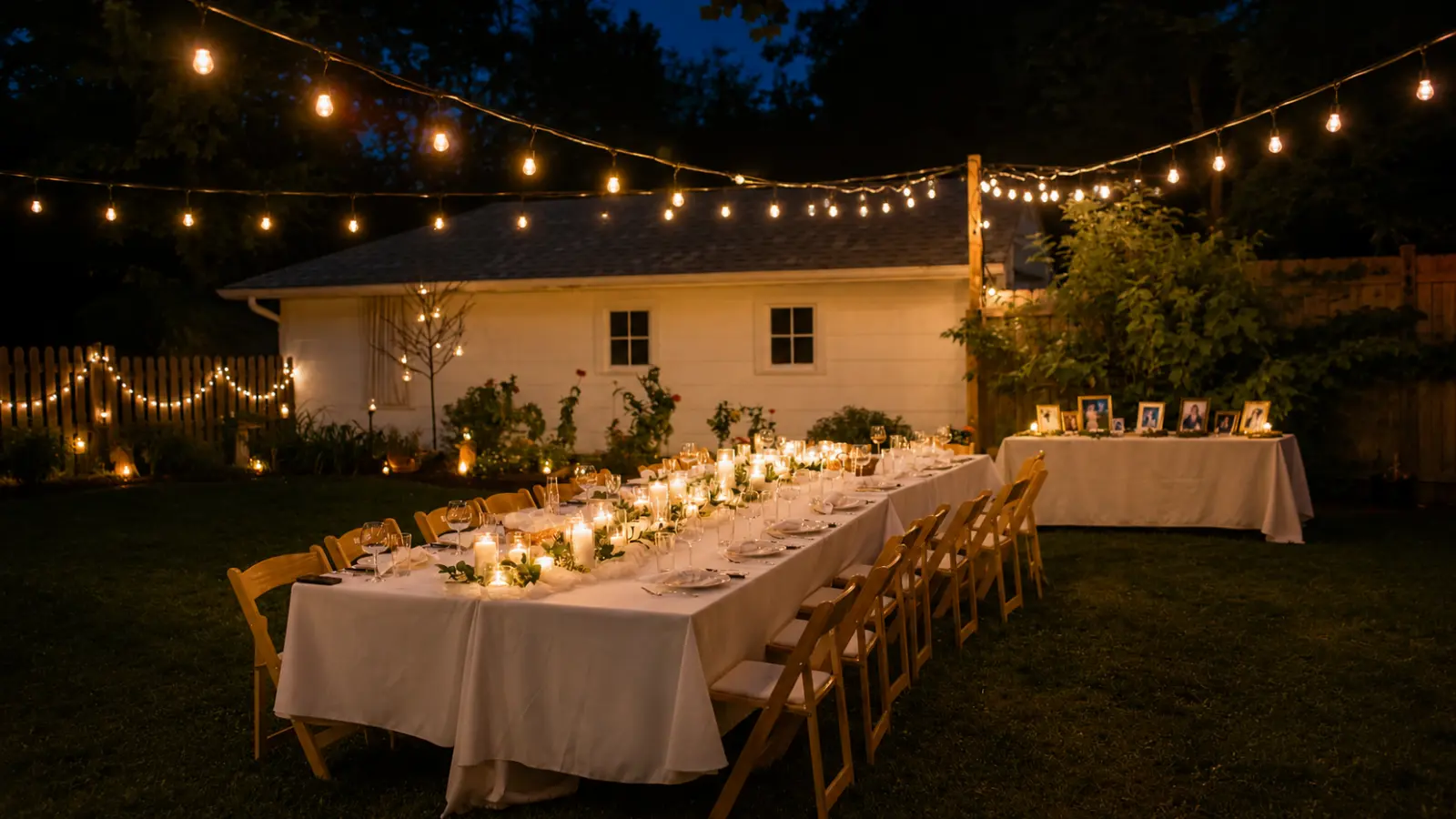
Learning how to plan a backyard wedding starts with one important mindset shift: the house is not simply the setting. For the wedding day, it becomes a temporary venue — and that means many of the systems a professional venue normally provides have to be created, confirmed, or rented specifically for the event.
Before florals, signage, string lights, or tablescapes, make sure the property can safely and comfortably support your guest count, weather backup, catering, entertainment, electrical needs, bathrooms, rentals, parking, vendor access, local rules, and cleanup.
This guide shows how to plan a backyard wedding from the infrastructure up, including capacity, permits and restrictions, tenting, weather, power, restrooms, catering, deliveries, parking, neighbors, and post-event recovery. Once those systems work together, the décor can enhance the space instead of trying to hide logistical problems.
Treat the House Like a Temporary Venue
Home wedding planning becomes easier once you stop evaluating the property as a residence and start evaluating it as an event site. A backyard may feel spacious during a family dinner but function very differently once you add ceremony seating, dining tables, a bar, catering, restrooms, dance space, equipment, staff, and guest circulation.
Walk the property with the event layout in mind. Identify guest entrances, vendor access, catering work areas, electrical sources, restroom routes, tent placement, parking, emergency access, waste staging, and where rain would change movement.
The property should be able to support the event operationally before you ask how beautiful it can become.
Backyard Wedding Infrastructure at a Glance
Use this table to audit what already exists at the property and what must be rented, reinforced, relocated, or backed up before the wedding.
| Need | Existing? | Rental/Plan | Backup |
|---|---|---|---|
| Guest Capacity | Usable lawn, indoor space, paths | Final layout and maximum comfortable count | Reduce count or change layout |
| Weather Cover | Porch, pavilion, indoor rooms | Tent, sides, flooring, climate control as needed | Viable indoor or alternate-site plan |
| Power | Residential circuits | Electrical assessment, dedicated circuits, generators | Backup generator / essential lighting plan |
| Bathrooms | House bathrooms | Portable or trailer restrooms if needed | Accessible alternate facilities |
| Catering | Kitchen / water access | Prep tent, refrigeration, handwashing, service path | Simplified menu or off-site prep model |
| Tables / Chairs / Linens | Usually limited | Rental inventory and delivery schedule | Rental substitution plan |
| Parking | Driveway / street / nearby lots | Parking plan, shuttle, valet, rideshare guidance | Overflow location |
| Noise | Residential setting | Local limits, sound placement, end time | Earlier music cutoff / indoor transition |
| Waste / Cleanup | Household system | Trash, recycling, rental pickup, cleanup crew | Next-day cleanup access |
A backyard becomes a viable venue only when these systems can operate at the same time without competing for the same space or infrastructure.
Confirm Capacity Before Guest Count Becomes Emotional
Capacity is not the number of people who can physically stand on the property. It is the number who can arrive, sit, eat, use restrooms, move safely, and evacuate if necessary while vendors still have room to work.
Measure the actual event zones and sketch a realistic layout. Include ceremony seating, reception tables, dance floor, bar, catering area, tent posts or weights, walkways, restrooms, vendor staging, and accessible routes.
Do not use every square foot simply because it exists. Slopes, septic areas, landscaping, pools, narrow gates, fragile lawns, low branches, and poor drainage can remove space from the usable footprint—the correct guest count is the one the property can host comfortably under the backup plan, not only under ideal weather.
Check Local Rules, Noise, and Property Restrictions
Before signing rentals or entertainment, verify the rules that apply to the property. Local jurisdictions, homeowners associations, leases, insurance policies, fire rules, or other property restrictions may affect event size, tenting, parking, alcohol, amplified sound, structures, or end times.
Because requirements vary widely, do not rely on a generic blog checklist as legal proof. Contact the appropriate local authority or property administrator for rules that apply to your address.
This is one of the few planning areas where “we have hosted parties here before” is not enough information.
Decide Whether You Need a Tent
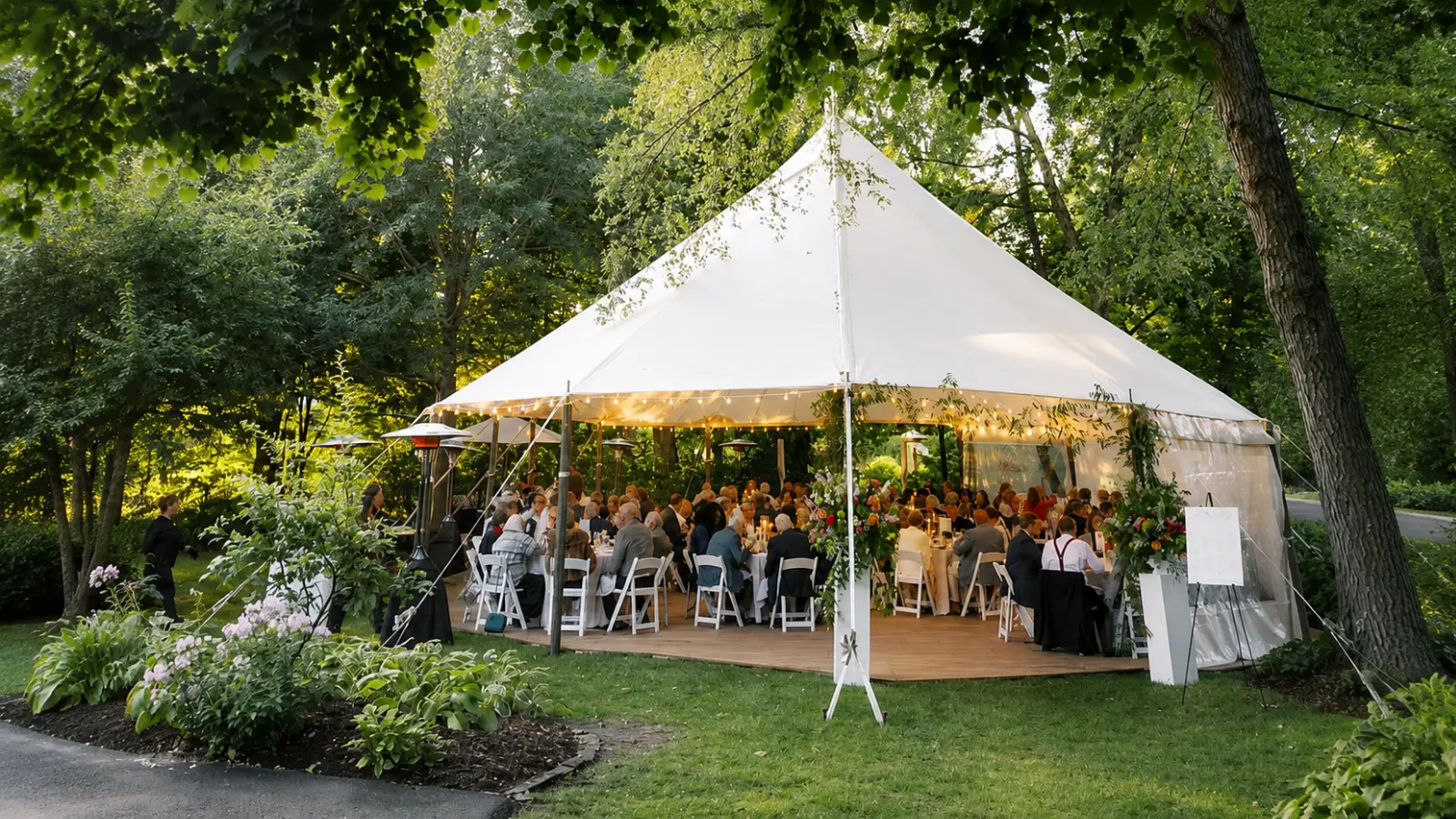
A tent is not simply rain insurance. It can define the reception space, provide shade, support lighting, and make weather planning more resilient—but it also creates engineering, access, power, flooring, and setup requirements of its own.
Ask a professional tent company to evaluate the property. They need to know the guest count, table layout, dance floor, catering needs, terrain, underground utilities, staking limitations, access, wind exposure, and whether sidewalls, flooring, heating, or cooling may be needed.
If the tent itself cannot function safely in the weather you are planning for, you still need another backup.
Build a Weather Plan That Actually Works
A weather plan should protect the entire event, not just the ceremony. Ask where guests eat, where vendors work, how walkways function, and how people reach bathrooms if the ground is wet.
Plan for rain, wind, heat, cold, and the effect those conditions have on flooring, tent sides, lighting, electrical runs, food service, guest comfort, and setup timing.
The backup plan should be good enough that you would still be comfortable hosting the wedding if it became the primary plan.
Plan Electrical Power Before Vendors Arrive
Residential electrical service may not be designed for catering equipment, refrigeration, band or DJ sound, lighting, restroom trailers, climate control, and other event systems operating simultaneously.
Ask each vendor what they need, then have the property setup evaluated appropriately. Large outdoor events may require dedicated generators or professionally planned power distribution.
Do not solve power with an improvised collection of household extension cords after rentals arrive. Electrical planning belongs early.
Confirm Bathroom Capacity and Accessibility
House bathrooms may be sufficient for a very small event, but residential plumbing, guest volume, accessibility, privacy, and circulation can make rented facilities a better option as the wedding grows.
Evaluate the number and location of existing bathrooms, whether guests must walk through private bedrooms or family spaces, septic or plumbing limitations, accessibility, lighting, and how bathroom traffic interacts with catering or the dance floor.
If you rent restrooms, include water, power, servicing, delivery access, and screening in the site plan rather than placing them wherever empty space remains.
Make Sure Catering Can Operate at the Property
A residential kitchen should not automatically be treated as a commercial catering kitchen. Ask the caterer what they need to safely prepare, hold, plate, serve, and clear the meal.
They may require refrigeration, prep tables, water, handwashing, power, waste access, a cooking area, a service tent, or a separate staging zone. Delivery vehicles also need a route that does not conflict with guest arrival.
Menu design should reflect the property. Food that can be prepared largely off-site and finished efficiently may work better than a plan that depends on extensive on-site cooking in a limited backyard—the right home wedding menu is one the caterer can execute well in the infrastructure you actually have.
Map Rentals, Deliveries, and Setup Access
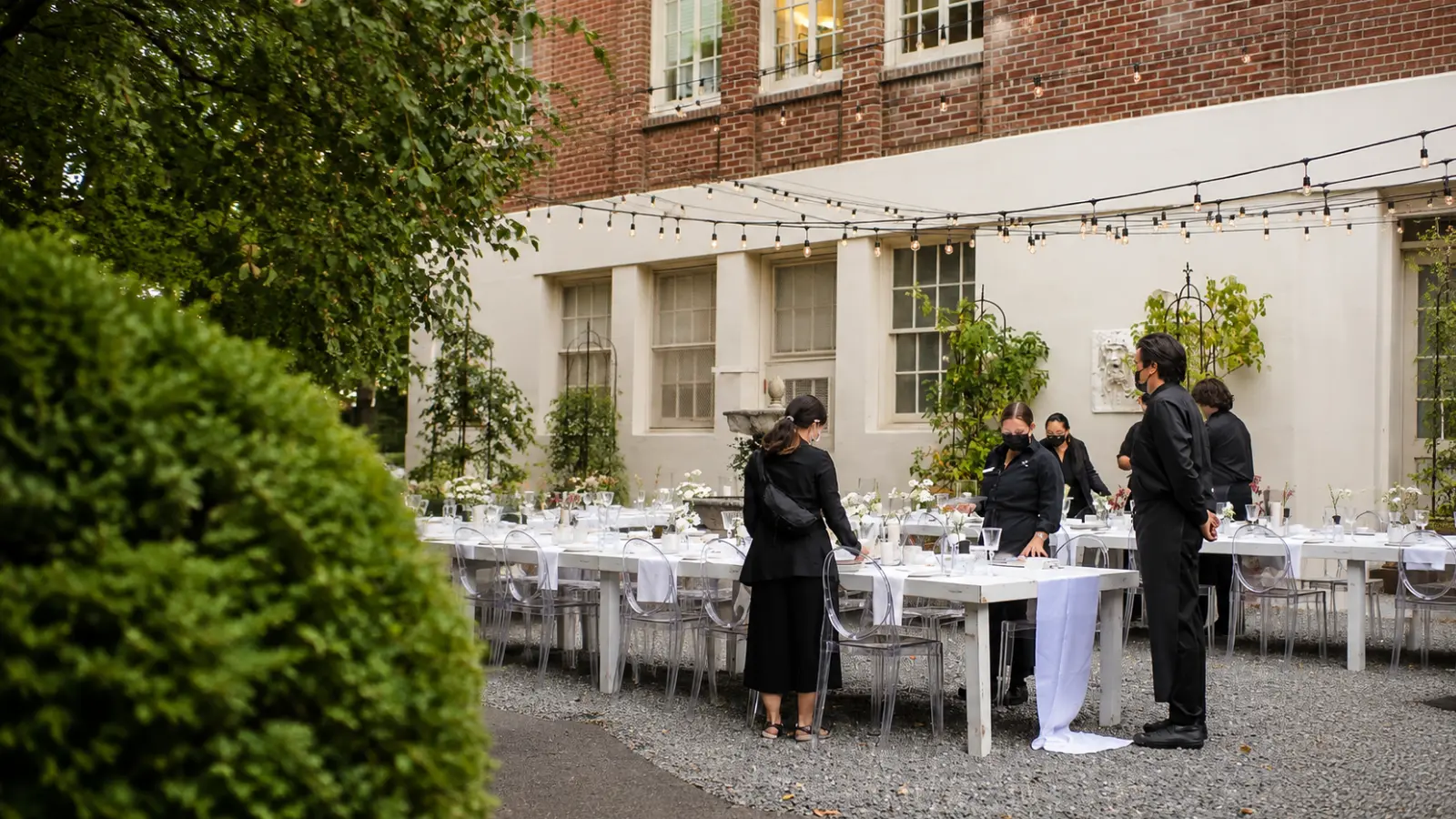
A backyard wedding often requires more rental categories than a traditional venue because tables, chairs, linens, glassware, lighting, flooring, bars, catering equipment, restrooms, and tenting may all need to arrive independently.
Before ordering, ask how trucks enter the property, where they unload, whether gates are wide enough, whether branches or overhead lines limit access, and how early each vendor can set up.
Create a delivery schedule that keeps vendors from blocking one another. The backyard may be large enough for the wedding and still too constrained for five trucks arriving at once.
Solve Parking and Guest Arrival
Parking is often one of the clearest signs that a home is not automatically an event venue. A residential street may not support dozens of cars without affecting neighbors, access, or emergency routes.
Map how many vehicles the property and surrounding area can legally and practically handle. Consider a nearby lot, shuttle, valet, rideshare drop-off zone, hotel transportation, or carpool guidance when on-site parking is limited.
Also protect access for vendors, older guests, guests with mobility needs, and emergency vehicles. Do not fill every driveway and road shoulder simply because space appears available—the guest experience begins at arrival, and parking chaos is one of the fastest ways to make the property feel unprepared.
Treat the Neighbors as Part of the Logistics Plan
Neighbors do not need to become wedding planners, but they should not discover a large event only when delivery trucks arrive or amplified music begins.
Communicate the date, expected event window, parking plan, and any likely disruption early enough to address practical concerns. Make sure vendors know property boundaries and that guests are not directed to block private driveways or lawns.
A cooperative neighborhood is not a substitute for following local rules, but good communication reduces avoidable friction.
Plan Cleanup Before the Wedding Starts
Cleanup at home has two parts: event cleanup and property recovery. Both need named owners before the reception begins.
Decide who removes trash and recycling, packs personal items, returns rentals, clears catering equipment, stores leftover alcohol or food where appropriate, removes signage, handles restroom pickup, and supervises tent or rental breakdown.
Then think one day further: lawn damage, mud, landscaping, furniture movement, flooring marks, pool areas, indoor bathrooms, and neighbor-facing debris may need attention after vendors leave. The homeowner should not wake up after the wedding with a venue teardown nobody agreed to manage.
Backyard Wedding Checklist Before You Sign Contracts
This backyard wedding checklist is the minimum infrastructure review to complete before committing to the property as the wedding site.
- Capacity: confirm a realistic maximum under both the preferred and weather-backup layouts.
- Rules: verify local, property, HOA, insurance, noise, and event restrictions that may apply.
- Weather: decide whether the plan requires a tent, flooring, sidewalls, heating, cooling, or another indoor alternative.
- Power: collect vendor requirements and establish safe electrical distribution and backup.
- Bathrooms: confirm quantity, plumbing limits, accessibility, and guest routes.
- Catering: verify prep, water, refrigeration, power, service, and waste needs.
Then confirm rentals, delivery access, parking, neighbor communication, cleanup, and who owns each system. If any of those answers are still “we’ll figure it out later,” the property is not ready to function as a venue yet.
Build the Venue Before You Decorate It
A backyard wedding works best when the property is treated like a real event venue before it is treated like a beautiful backdrop. Capacity, weather protection, power, bathrooms, catering access, rentals, parking, neighbor impact, and cleanup all need workable answers before décor becomes the priority.
Once guests can arrive safely, move comfortably, eat, use the restroom, hear the ceremony and music, stay protected from the weather, and leave without creating problems for the property or neighborhood, the foundation is ready. Then the flowers, lighting, signage, and tablescapes finally have a venue strong enough to support them.
Frequently asked questions (FAQ)
How many guests can you realistically have at a backyard wedding?
There is no universal guest limit because the answer depends on the usable space, layout, parking, bathrooms, catering setup, weather backup, and local rules for the property. Count only the space that can safely support seating, dining, vendor access, walkways, and emergency routes. The realistic maximum is the number the property can host comfortably under both the preferred plan and the backup plan.
Do you need a permit for a backyard wedding?
Possibly. Requirements can vary by city, county, property type, event size, tenting, parking, alcohol, amplified sound, and other local rules. Check directly with the appropriate local authorities and review any HOA, lease, insurance, or property restrictions that apply to the address before signing contracts.
Do you need a tent for a backyard wedding?
Not necessarily, but you do need a weather plan that can support the full event. A tent can provide rain or sun protection and define the reception space, but it may also require professional sizing, anchoring, flooring, sidewalls, power, heating, or cooling. If the tent cannot operate safely in the conditions you are preparing for, you still need another backup.
Can you use the house bathrooms for a backyard wedding?
Sometimes, particularly for a smaller guest count, but evaluate plumbing or septic capacity, accessibility, privacy, and how much guest traffic will move through the home. If the existing bathrooms cannot comfortably support the event, rented restroom facilities may provide a more practical solution.
How do you handle parking for a backyard wedding?
Start by counting the legal and practical parking spaces available without blocking neighbors, driveways, vendor access, or emergency routes. If the property cannot accommodate everyone, consider a nearby lot with shuttles, valet service, rideshare drop-off areas, carpooling, or hotel transportation. Plan overflow before guests receive arrival instructions.
Is a backyard wedding cheaper than a venue wedding?
Not automatically. A home may eliminate a traditional venue rental fee, but you may need to create infrastructure that a professional venue already provides, including tents, restrooms, tables and chairs, lighting, temporary power, catering support, parking solutions, rentals, cleanup, and property preparation. Compare the total cost of making the home event-ready rather than assuming the location itself makes the wedding less expensive.