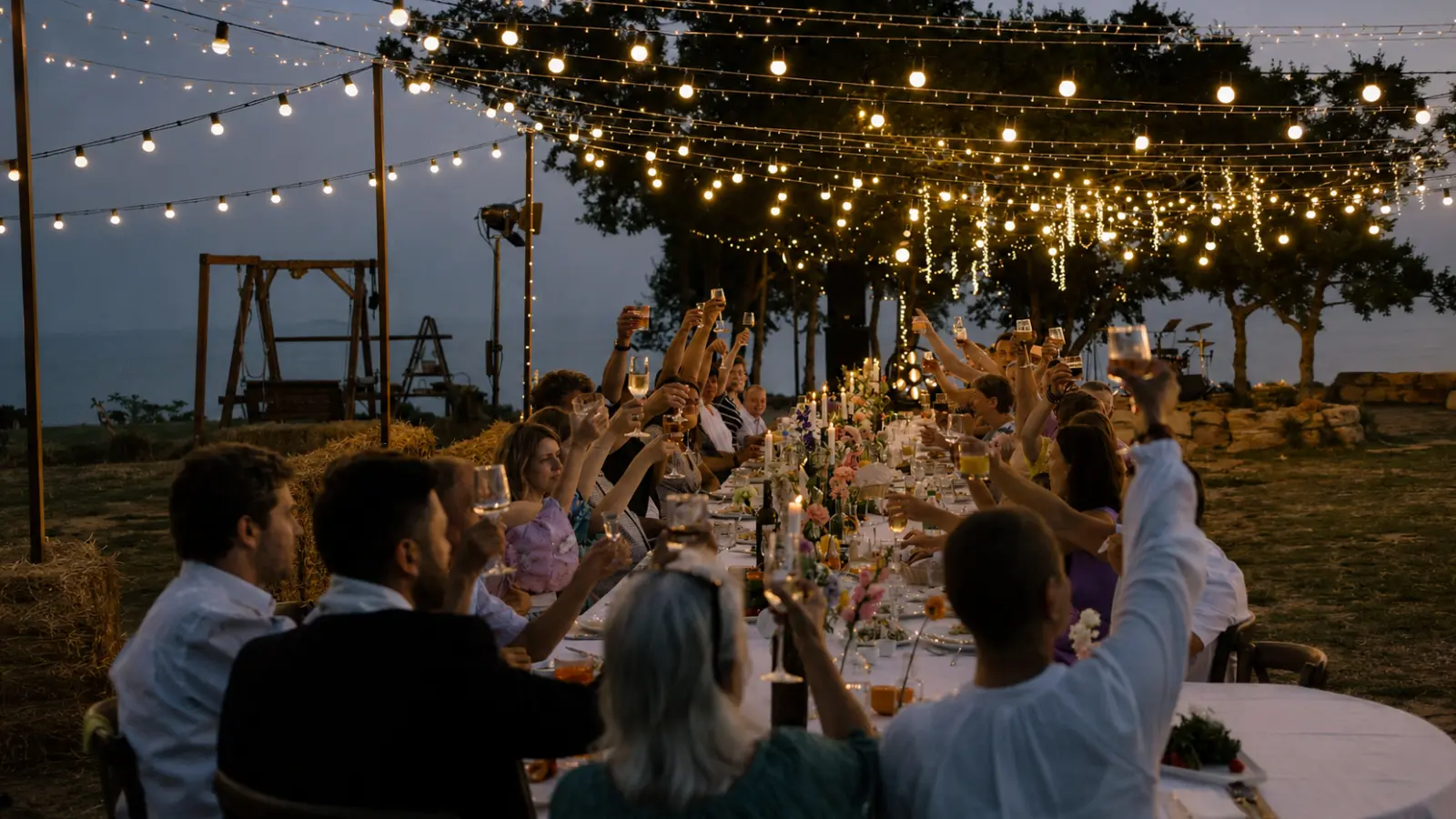

Learning How to Plan a Wedding on a Budget starts with the decisions that control the biggest costs, not with hunting for small discounts. Guest count, venue structure, date and time, catering scope, bar service, rentals, and vendor complexity can change the total far more than saving a few dollars on favors, signage, or decorative extras.
The goal is not to make every category as inexpensive as possible. It is to decide what matters most to you, protect those priorities, and reduce spending where the tradeoff has the least effect on the experience you actually want. A smaller guest list or a venue with stronger inclusions may preserve far more of the wedding than cutting several meaningful details one by one.
This guide explains How to Plan a Wedding on a Budget by reducing structural costs first, then simplifying food, bar, rentals, flowers, stationery, attire, and photography where it makes sense. The strongest savings come from reducing scale, complexity, and duplication before sacrificing the parts of the day you care about most.
Set a Real Spending Ceiling First
Wedding planning on a budget starts with a number you are willing and able to spend, not with a list of what weddings “usually” cost.
Decide the total amount available, separate any contingency, and confirm that family contributions are firm commitments before you count on them. From there, identify the two or three areas you most want to protect—if photography, guest experience, or a specific venue style matters most, that priority should shape the rest of the plan.
A budget only becomes useful when it gives you permission to spend more in one place because you intentionally chose to spend less somewhere else. The wedding budget guide covers the full financial framework; this page focuses on where to reduce cost without damaging the parts you value.
Where the Biggest Savings Usually Come From
The table below separates high-impact savings levers from the tradeoffs they create. The last column is the most important: every budget cut should protect something intentionally.
| Decision | Savings Lever | Tradeoff | Protect |
|---|---|---|---|
| Guest Count | Invite fewer people before contracts scale up | Smaller social circle at the event | People you genuinely want present |
| Venue | Choose more inclusions or less infrastructure | Less customization in some venues | Guest comfort and event function |
| Date / Time | Consider lower-demand dates or daytime formats | Different guest availability or atmosphere | Convenience for priority guests |
| Catering | Simplify menu/service scope | Fewer courses or service layers | Enough food, quality, dietary access |
| Bar | Reduce package complexity or service duration | Fewer drink choices | Clear, hospitable beverage service |
| Rentals | Use venue-included inventory | Less bespoke styling | Comfort and functionality |
| Flowers | Fewer installations, more focal moments | Less floral coverage | High-visibility areas |
| Stationery | Simplify paper pieces and production | Less elaborate printed experience | Essential guest information |
| Attire | Fewer looks and accessories | Less fashion variety | Fit, comfort, alterations |
| Photography | Reduce extras before core coverage | Fewer add-ons or hours | Coverage of priority moments |
The pattern is simple: the strongest savings usually come from reducing scale, complexity, or duplication—not from making every individual item cheaper.
Control Guest Count Before Cutting Details
Guest count is often the highest-leverage decision because it affects food, bar, rentals, stationery, favors, transportation capacity, staffing, and sometimes venue size.
If the budget feels tight before contracts are signed, review the guest list before trimming the categories you care about most. Removing guests you barely know may protect better photography, a more comfortable meal, or a venue you prefer. This does not mean smaller is always better—it means every additional guest should be intentional, since one name on the list can trigger several costs at once.
Choose a Venue That Reduces Extra Contracts
A lower rental fee does not automatically mean a lower total wedding cost. Some venues require couples to bring in nearly everything; others include tables, chairs, linens, staffing, catering infrastructure, or coordination.
Compare the complete event cost. Ask what you would still need to rent, deliver, staff, install, or remove after paying the venue fee. A simple restaurant, private dining room, community space, or venue with strong inclusions can sometimes reduce the number of separate contracts and delivery fees.
A blank-slate venue can still be a good choice, but only when the customization is worth the extra infrastructure it requires—a venue that solves problems tends to save more than one that simply charges less.
Use Date and Time as Cost Levers
Date and time can create meaningful flexibility because demand varies by market, season, weekday, and time of day.
Ask venues and priority vendors whether pricing or minimums change for less in-demand dates or daytime events. Do not assume a particular month or weekday is cheaper everywhere; availability and pricing are local. A daytime wedding may also change the scale of bar service, lighting, entertainment, or total event hours.
The tradeoff is that the atmosphere and guest availability can feel different from an evening celebration, so it’s worth choosing the lower-cost format only if the resulting wedding still feels like yours.
Simplify Catering Scope Before Quality
When catering is a major expense, reduce complexity before reducing hospitality.
Fewer courses, a simpler service style, a narrower menu, or fewer late additions can create savings without making guests feel underfed. The right lever depends on the caterer and venue.
Protect adequate portions, dietary accommodations, service logistics, and the overall meal experience. Cutting essential staffing, or choosing a service format the venue cannot execute well, can create operational problems that outweigh the savings. This section stays at the planning level; local catering prices belong in local vendor research, not here.
Reduce Bar Complexity, Not Hospitality
Bar savings often come from simplifying what is offered rather than making the experience feel restrictive.
Depending on the venue and contract, that may mean a shorter service window, a curated beer-and-wine program, fewer signature drinks, or a package with less premium inventory.
Protect water, nonalcoholic options, clear service, and enough staffing for the guest count. Also verify what the venue allows before assuming an outside purchase or alternative setup will actually save money.
Avoid Paying for Infrastructure Twice
Rental savings come from using what already exists before upgrading every visible element.
Check venue inventory first: tables, chairs, linens, tabletop, bars, lounge furniture, lighting, and ceremony seating. Then upgrade only where the change materially affects comfort or the visual priorities you care about.
A rental that looks inexpensive on a product list can become less attractive once delivery, setup, pickup, minimums, and labor are added—so the most efficient plan is usually the one with the fewest unnecessary layers, not the lowest sticker price per item.
Reduce Floral Scale Strategically
Flowers can be reduced without making the room feel unfinished if you concentrate them where they have the most visual impact.
Prioritize personal flowers, ceremony focal points, reception areas guests see most, or one statement installation instead of spreading the budget thinly across every possible surface. Ask the florist which pieces can be repurposed and which installations require enough labor that reuse isn’t practical.
The savings should come from scope, not from assuming flowers themselves are interchangeable—and this stays a design-allocation decision, not a DIY project.
Keep Stationery Focused
Stationery becomes expensive when the suite expands into multiple layers of specialty production, inserts, signage, menus, place cards, and decorative paper pieces.
Protect the information guests need, then decide which printed details are genuinely important to the visual experience. Digital communication can replace some informational pieces when appropriate.
If paper design matters deeply to you, spend there and simplify elsewhere. If it does not, this is often a low-impact place to reduce complexity.
Protect Fit and Cut Excess
Attire savings should protect fit, comfort, and necessary alterations before protecting multiple looks or accessories.
One well-fitted outfit often serves the day better than several looks that create extra purchases, tailoring, shoes, jewelry, and timeline changes. Renting, ready-to-wear options, sample sales, pre-owned pieces, or fewer accessories can all reduce spending depending on the couple’s preferences.
The objective isn’t to make the outfit feel budget—it’s to spend on what will actually be worn and noticed.
Protect Photography Hours That Matter Most
If photography is a priority, reduce add-ons before cutting the core coverage you care about.
Albums, extra sessions, additional hours, second shooters, or certain deliverables may be adjustable depending on the photographer’s package structure. The right change is specific to the contract.
Map the moments you most want documented—getting ready, ceremony, portraits, reception formalities, dancing, exit—and see whether the coverage can be shaped around them. Saving money only pays off if the final package still records the parts of the wedding you wanted to remember.
How to Plan a Wedding on a Tight Budget
On a tight budget, work top-down: rank decisions by how many categories they touch, not by how easy they are to change. Guest count and venue model move first because they affect nearly everything else; favors and décor upgrades move last because they affect almost nothing beyond themselves.
Use this order:
- Lock the ceiling. Do not raise the budget to solve the first difficult quote.
- Reduce guest count if needed. This can lower several categories at once.
- Choose the simplest workable venue model. Minimize extra rentals, staffing, and logistics.
- Use date and time strategically. Ask what actually changes in your market.
- Protect two or three priorities. Let those categories keep more of the budget.
- Simplify service scope. Reduce layers before reducing quality.
- Cut low-impact extras last. Favors, upgrades, additional décor, and secondary paper pieces come after the structure is right.
Followed in this order, the event gets simpler first, and the parts you actually care about stay protected instead of getting cut by default.
Cut Complexity Before Meaning
Planning a wedding on a budget works best when you reduce the parts of the event that create the most cost without automatically cutting the parts that create the most meaning. Start with guest count, venue structure, date and time, service complexity, rentals, and overlapping contracts before chasing small savings in low-impact details.
Protect the two or three priorities that matter most, then let everything else become simpler around them. The strongest budget wedding is not the one with the most discounts or the fewest professional vendors — it is the one where every dollar has a reason to be spent and unnecessary complexity is removed before meaningful experiences are sacrificed.
Frequently asked questions (FAQ)
How do you plan a wedding on a budget?
Start with a firm spending ceiling, separate a contingency reserve, and choose the two or three parts of the wedding you most want to protect. Then reduce the biggest structural cost drivers first, especially guest count, venue model, date or time, catering scope, bar complexity, rentals, and unnecessary vendor layers. Small savings should come later, after the overall structure already fits the available money.
What is the first thing to cut when a wedding budget is too high?
Start with structural costs rather than small decorative items. Review guest count, venue requirements, service scope, date or time, rentals, and any element that creates multiple additional expenses. One structural change can reduce several categories at once, while cutting favors or minor décor usually has a much smaller effect on the total.
How can you save money on a wedding without making it feel cheap?
Reduce complexity instead of reducing quality everywhere. Fewer guests, fewer service layers, fewer décor installations, simpler stationery, fewer outfit changes, and a venue with useful inclusions can lower the total while preserving strong food, comfortable logistics, good photography, and the parts of the day guests actually experience.
Should you choose the cheapest wedding venue?
Not necessarily. Compare the total event cost created by the venue, not just its rental fee. A lower-priced venue may require separate tables, chairs, linens, staffing, catering infrastructure, delivery, setup, cleanup, or other rentals, while a higher-priced venue may already include many of those services.
Is a smaller guest list always the best way to save money?
It is one of the strongest savings levers because guest count can affect food, drinks, rentals, stationery, transportation, staffing, and venue needs. But it is not automatically the right choice. Protect the people who genuinely matter to you before cutting meaningful relationships simply to preserve a lower-priority upgrade elsewhere.
What should you never cut from a wedding budget?
There is no single category every couple must protect. Preserve your own highest priorities along with basic guest comfort, adequate food and beverage, safe and workable logistics, accessibility needs, and contractual or legal requirements. Everything else can be evaluated according to how much value it adds relative to its cost.

About the Author
Débora Justo
Founder and editor of EVORÉ, creating practical wedding planning resources, thoughtful inspiration and useful tools for the decisions that shape a celebration.
Read more about the author →