

If you are trying to figure out how to plan a wedding without stress, the goal is not to create a planning process where nothing goes wrong, nobody disagrees, and every decision feels easy. The goal is to build a system that absorbs ordinary problems before they become constant emergencies.
Most wedding planning stress comes from a small number of structural issues: too many open decisions, an unclear budget, family expectations without boundaries, vendors waiting on answers, responsibilities with no owner, and late changes that force several other decisions to be revisited.
This guide shows how to reduce wedding planning stress through clearer priorities, decision limits, budget certainty, family boundaries, predictable communication, focused planning sessions, delegation, simplification, buffers, and a final-week freeze. The practical solution is not simply to “relax more” — it is to reduce the number of unresolved things competing for your attention at the same time.
Wedding Planning Stress at a Glance
Stress becomes easier to manage when you can name the source. The table below separates common planning pressures from the operational fix that prevents each one from spreading into the rest of the wedding.
| Stress Source | Planning Fix | Owner | Deadline |
|---|---|---|---|
| Too many options | Set criteria and a decision limit before researching | Decision owner | Before comparison begins |
| Budget uncertainty | Set a spending ceiling and update commitments immediately | Budget owner | Before major bookings |
| Family pressure | Define which decisions are open for input | Couple | Before opinions become commitments |
| Vendor follow-up | Use one contact trail and one owner per vendor | Vendor owner | From first inquiry |
| Planning taking over daily life | Use scheduled planning sessions and a short priority list | Couple | Weekly |
| Unclear responsibilities | Assign one owner to each meaningful task or decision | Planning lead | When task is created |
| Last-minute changes | Use a final-week freeze for nonessential redesign | Couple / coordinator | Before final week |
The useful question is not “How do we remove all stress?” It is “Which part of the system is creating unnecessary pressure, and what can we close, clarify, or delegate?”
Identify the Real Sources of Planning Stress
The most stressful part of wedding planning is different for every couple, but stress usually increases when a problem remains open for too long. An unresolved guest-count ceiling affects the budget and venue. A vague family expectation affects invitations. An unconfirmed vendor scope creates timeline questions later.
When the planning feels crowded, separate the pressure into three categories: decisions you have not made, work that needs to be completed, and uncertainty you cannot resolve yet. These require different responses.
Decisions need criteria. Work needs an owner. Uncertainty needs a follow-up date—not repeated discussion every day. That simple distinction keeps one unresolved issue from occupying more attention than it deserves.
Put Limits on Wedding Decisions
Decision fatigue grows when every category has unlimited research, unlimited opinions, and no clear stopping rule. Before comparing options, decide what would make an option good enough to choose.
For a venue, that might be capacity, total practical cost, location, weather backup, accessibility, and an acceptable date. For a photographer, it might be style, coverage, budget fit, communication, and availability. Once an option meets the criteria, comparing another fifteen choices may not improve the decision enough to justify the extra work.
Use limits that fit the importance of the decision. Major commitments deserve more research than napkins, favors, or decorative signs. The goal is not to rush; it is to stop treating every choice as if it carries the same consequences.
Create Budget Certainty Early
Budget uncertainty creates stress because every new idea feels possible until the real total appears. Set a spending ceiling early, then update the record whenever a decision changes the amount committed.
Separate planned amounts from contracted costs, deposits, balances, and uncommitted money. A category can look affordable on paper while several signed contracts have already reduced the flexibility elsewhere.
When a new expense appears, decide what changes to make room for it rather than simply adding it to the total. That turns the budget into a boundary instead of a running record of expanding wishes.
The wedding budget calculator can help build the initial framework, but once quotes and contracts exist, use your actual commitments as the source of truth.
Set Family Boundaries Before Conflict Builds
Family involvement becomes stressful when nobody knows which decisions are open for input and which are not. Set those boundaries before a disagreement forces you to create them in the middle of a specific choice.
Decide together which areas belong to the couple, which can include family input, and which are being shared because someone else has a defined responsibility or financial contribution. If money is involved, discuss expectations before accepting the contribution rather than assuming everyone interprets it the same way.
You do not need to announce a formal policy to every relative. You do need consistency. If a topic is closed, stop reopening it because a new opinion arrives. If input is genuinely welcome, define when you need it and who makes the final decision.
Make Vendor Communication Predictable
Vendor communication becomes stressful when messages are scattered, both partners reply separately, or important questions stay buried in long threads. Give each vendor one primary contact and keep final decisions easy to find.
Before sending a message, know what you need back: a quote, confirmation, deadline, recommendation, or revised scope. Batch related questions when practical instead of sending a stream of small messages that creates more follow-up for everyone.
Record final answers in your planning system, not only in email. The wedding vendor tracker can hold status, contacts, contracts, balances, and pending decisions so communication does not become its own separate project.
Use Short, Focused Planning Sessions

Planning becomes exhausting when it is always happening. Instead of discussing the wedding every time a new thought appears, keep a running list and handle most nonurgent decisions during scheduled planning sessions.
Start each session with three questions: What is due soon? What decision is blocking other work? What can wait? Choose a short list of outcomes for that session instead of trying to “work on the wedding” generally.
When the session ends, record the decisions, assign the follow-up, and stop. A defined planning window protects the rest of your week from becoming a permanent wedding meeting.
Delegate Outcomes, Not Vague Tasks
Delegation reduces stress only when the person receiving the task knows exactly what they own. “Can you help with transportation?” creates another conversation. “Please confirm the shuttle pickup points and final schedule by Friday” creates an outcome.
Give each delegated task five things: the result you need, the deadline, the relevant information, any budget or decision boundary, and whether the person can make a final choice without coming back to you.
Do not delegate work simply because a relative is available. Match the task to the person and make sure they have actually agreed to own it. The purpose is to remove a responsibility from the couple, not create another responsibility that still requires constant supervision.
Simplify the Wedding Before You Simplify Yourself
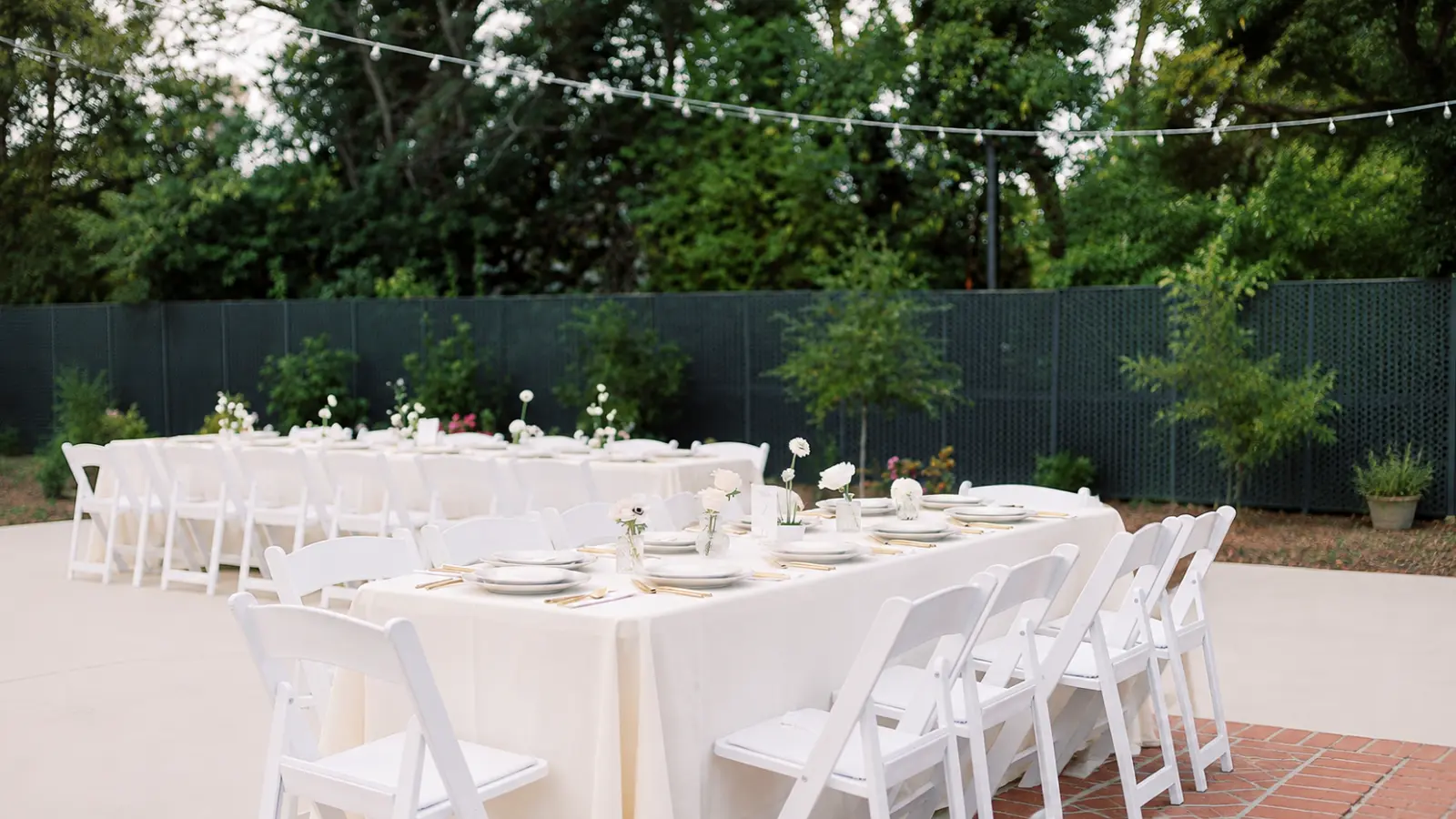
When a plan feels too heavy, couples often try to become more efficient instead of reducing the amount of wedding they are managing. Sometimes the better fix is structural simplification.
Look for choices that remove multiple dependencies at once: one venue instead of several locations, fewer custom elements, fewer separate transportation movements, a shorter vendor list, simpler rentals, a clearer ceremony structure, or fewer decorative projects that require setup and pickup.
Protect the two or three experiences you care about most and simplify around them. Cutting complexity is not the same as making the wedding less meaningful; it is choosing where the planning energy actually belongs.
Build Buffers Into the Planning Process
Buffers prevent ordinary delays from becoming emergencies. They matter both in the months before the wedding and in the wedding-day timeline.
Do not schedule important decisions for the same day a vendor needs the answer. Give yourselves enough time to review, ask questions, and recover if a response is late. Build margin around deliveries, travel, setup, photography, and transitions instead of assuming every part of the day will run at its fastest possible pace.
The wedding day timeline generator can create a first draft, but the final version should reflect actual venue access, travel, vendor setup, and realistic transition time rather than an idealized schedule.
Create a Final-Week Freeze
The final week should be for confirmation, preparation, and handoff—not redesign. Unless a change solves a real problem, avoid adding new vendors, replacing major décor, reopening settled seating decisions, or introducing new logistics.
By this point, the useful work is operational:
- Confirm final vendor timing and contacts.
- Verify payments, balances, and required documents.
- Prepare attire and personal items.
- Finalize transportation and handoffs.
- Distribute the current timeline.
- Confirm who handles questions on the wedding day.
A final-week freeze protects the plan you already built. The closer the wedding gets, the more expensive a “small” change becomes because more people and decisions are connected to it.
Reduce the Number of Open Loops
A less stressful wedding plan is usually not the one with fewer emotions. It is the one with fewer unresolved responsibilities, fewer unclear decisions, and fewer tasks without an owner.
Close what can be decided, protect the budget, set boundaries where outside opinions are creating pressure, simplify where complexity is not serving a priority, and build enough margin for normal delays. By the final week, the goal is not to keep improving the wedding — it is to have a plan stable enough to hand off and enjoy.
Frequently asked questions (FAQ)
How do you make wedding planning less stressful?
Reduce the number of open decisions competing for attention at the same time. Set clear priorities, establish a real spending ceiling, assign ownership for tasks and vendors, limit how long you compare options, and keep important decisions in one planning system. As the wedding gets closer, protect the plan from unnecessary changes instead of continuing to add complexity.
Why is wedding planning so stressful?
Wedding planning combines money, deadlines, family expectations, vendors, logistics, and emotionally important decisions in one project. Stress usually increases when too many of those areas remain unresolved at once, when responsibilities are unclear, or when one decision keeps creating additional work elsewhere.
What should you do when wedding planning feels like too much?
Stop adding optional decisions and identify the few unresolved issues that are creating the most pressure. Focus first on structural items such as budget, guest count, venue, contracts, deadlines, or vendor decisions. Then simplify, postpone, or remove lower-priority details until the plan feels manageable again.
How do you handle too many opinions about your wedding?
Decide which areas are genuinely open for input and which decisions belong to the couple. You can acknowledge someone’s suggestion without reopening a choice that is already settled. When you do want help, ask a specific question instead of inviting broad opinions about the entire wedding.
Is it okay to simplify your wedding to reduce stress?
Yes. Reducing the number of locations, custom elements, vendors, transportation movements, décor projects, or other moving parts can remove several dependencies at once. Simplification works best when you protect the two or three experiences that matter most to you and reduce complexity around them.
When should you ask for professional wedding planning help?
Consider outside help when coordination, logistics, family complexity, available time, or wedding-day execution exceeds what you can reasonably manage. You do not necessarily need full-service planning; partial planning, consulting, or coordination can solve a specific pressure point while you continue managing the rest yourselves.