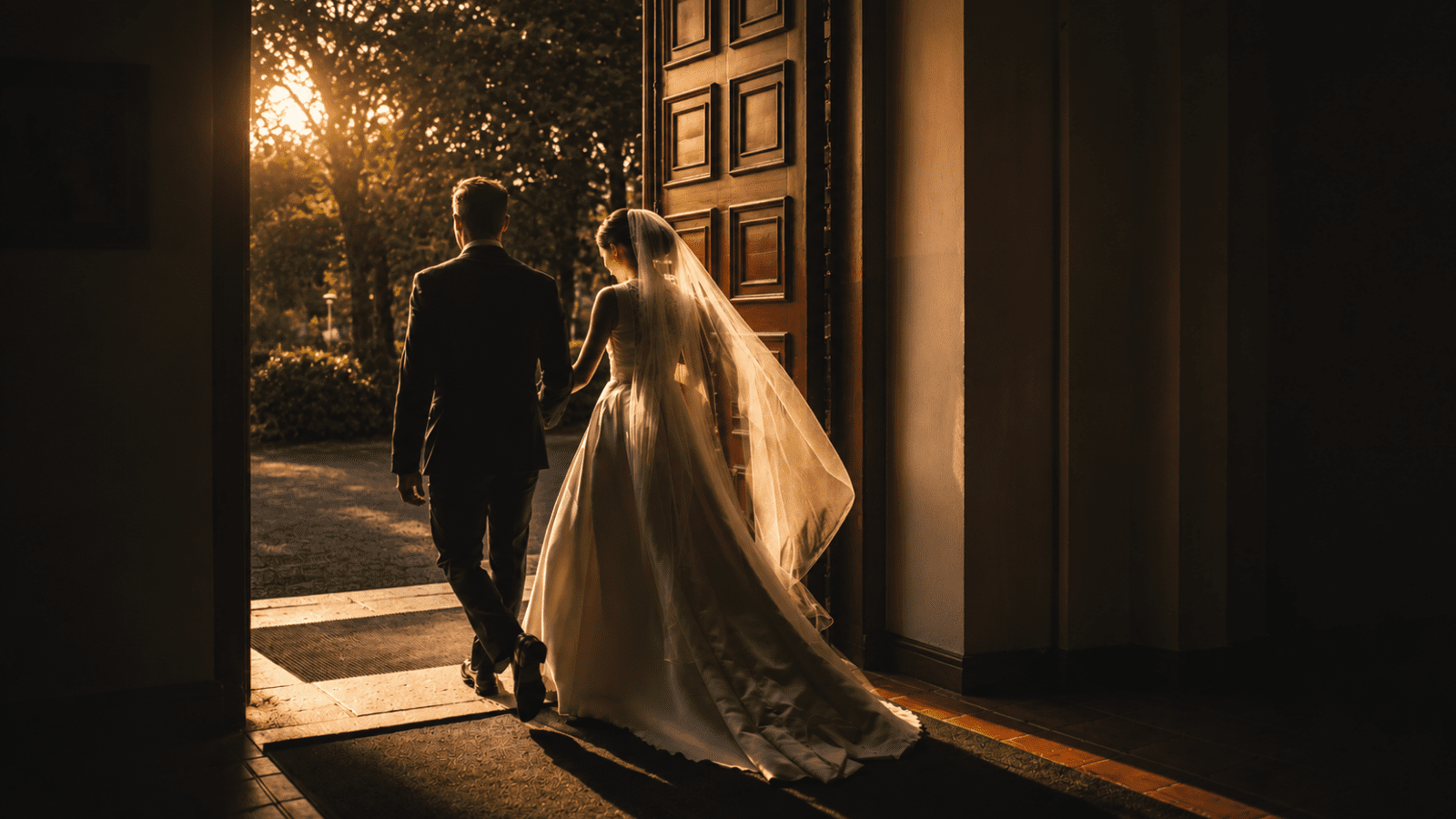
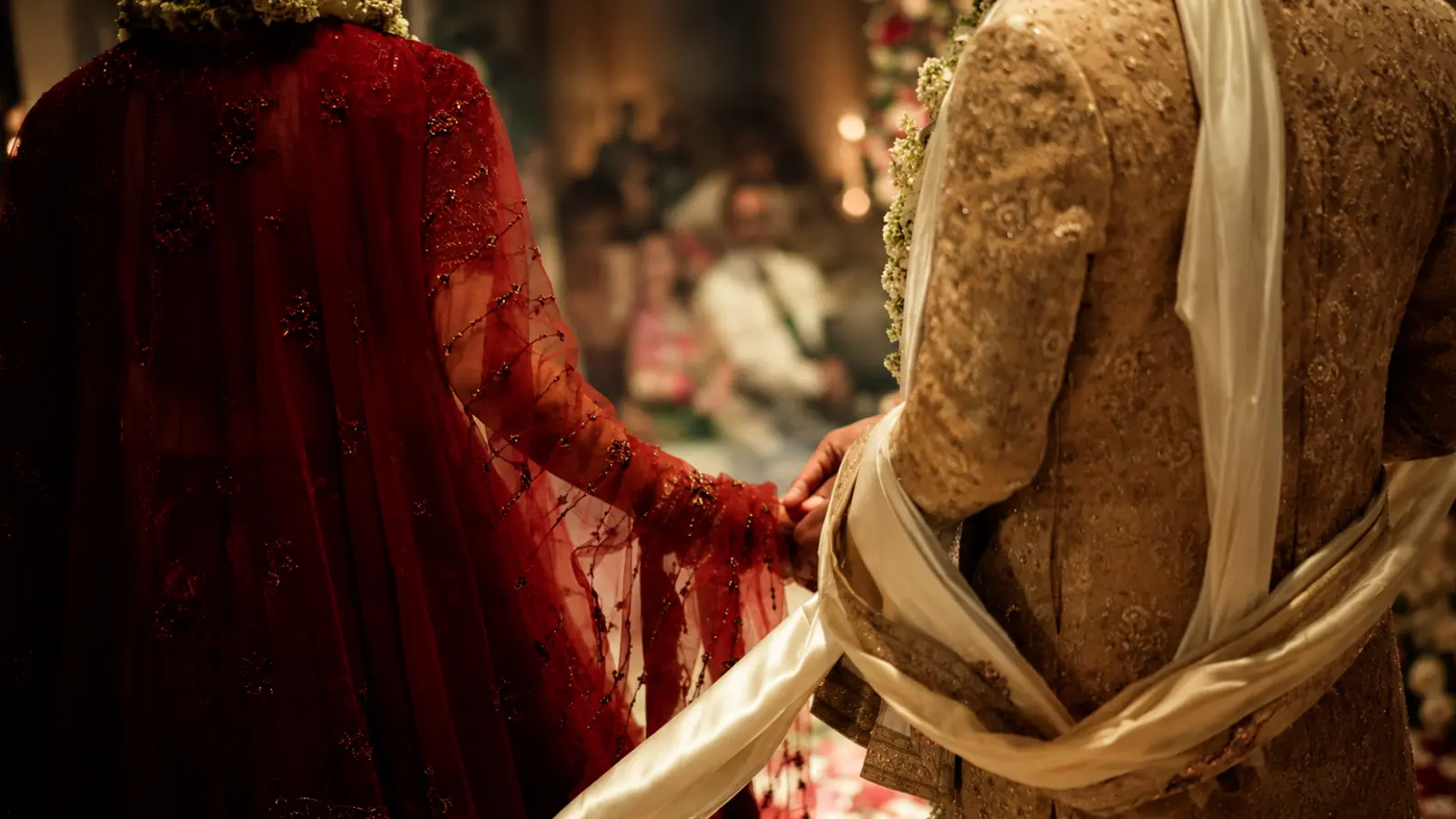
Indian wedding songs do more than soundtrack the ceremony and reception. From emotional Bollywood love songs and traditional wedding rituals to bhangra dance floors, sangeet performances, and family-centered celebrations that last for days, music at an Indian wedding shapes the emotional rhythm of the entire experience.
This guide covers the best Indian wedding songs and Bollywood music as part of a complete collection of wedding songs for every moment of the day, including romantic first dances, bride entrances, ceremony songs, sangeet performances, high-energy reception tracks, traditional Indian wedding music, and the songs that continue to define Indian-American weddings across generations.
The Musical World of an Indian Wedding
An Indian wedding in the United States is not a single event — it is three to five days of ceremony, celebration, and ritual, each with its own musical identity. The mehndi night has its own songs. The sangeet has its own performances. The baraat — the groom’s procession — arrives to dhol drums and bhangra. The ceremony itself may include Sanskrit shlokas, classical ragas, or completely different music depending on the family’s religion and regional background. The reception has a first dance, a dinner hour, and a dance floor that builds to something the other guests will still be talking about three weeks later.
Understanding this structure is the first step in how to choose wedding music for an Indian celebration, because a song that is perfect for the sangeet may be wrong for the ceremony. The emotional logic of each event determines the music. And at an Indian wedding, that emotional logic is specific, layered, and deeply connected to both the family’s cultural roots and the couple’s own relationship to Bollywood and contemporary Indian music.
Bollywood occupies a unique position in this landscape. Film songs — from DDLJ to Kuch Kuch Hota Hai to Yeh Jawaani Hai Deewani to the latest Arijit Singh releases — have become the shared musical language of Indian weddings across all regional backgrounds and across generations. A family from Kerala and a family from Punjab who might not share regional folk music will both know “Tum Hi Ho.” A grandmother and her twenty-four-year-old granddaughter who might not agree on anything else will both stand up when “Bole Chudiyan” starts. Bollywood is the cultural common ground, and at an Indian wedding in America, that common ground is vast.
What distinguishes Indian wedding music from every other tradition in this guide: the sheer volume, energy, and cultural specificity of it. An Indian wedding reception at full capacity — dhol player in the room, two families competing to out-dance each other, the floor packed with four generations moving to music they all know — is one of the most electrically joyful environments in wedding culture anywhere in the world. The music is not a backdrop. It is the event.
Bollywood Songs for the Wedding Entrance
The entrance at an Indian wedding is a performance. It is choreographed, anticipated, and designed to announce the arrival of something important — the groom’s baraat, the bridal party, the couple’s reception entry. The song chosen for each entrance carries the emotional signal for what happens next: high energy for the baraat, grandeur for the bride, joy and celebration for the couple entering the reception together.
The baraat — the groom’s procession, typically arriving on horseback or in an open vehicle with his family and friends dancing behind him — is the most public and visually dramatic entrance in Indian wedding culture. Music here must be maximally energetic. Dhol drums, live musicians, and high-BPM Bollywood or bhangra tracks are all used. The groom does not sneak in. He arrives.
| Song | Film / Artist | Best For |
|---|---|---|
| Gallan Goodiyaan | Dil Dhadakne Do | Reception entrance · sangeet — one of the most joyful, high-energy ensemble songs in recent Bollywood; every guest in every generation knows it and feels something when it starts |
| London Thumakda | Queen | Baraat · sangeet · reception — irresistibly danceable; the tempo and energy make this the first choice for groups who want to enter with genuine celebration energy |
| Desi Girl | Dostana | Bride’s entry (fun version) · bridesmaids entrance — one of the most recognizable and beloved “girl power” Bollywood anthems; works for bridal parties who want their entrance to be fun and confident rather than emotional |
| Morni Banke | Badhaai Do | Bride’s entry · sangeet — modern, joyful, and culturally resonant; the imagery of the morni (peahen) is traditionally associated with a bride in North Indian culture |
| Aaj Ki Raat | Don 2 | Groom’s reception entry · baraat — dramatic and high-energy; for grooms who want their arrival to feel like a statement |
| Bom Diggy Diggy | Sonu Ke Titu Ki Sweety | Baraat · groom’s entry — infectious energy; one of the most popular baraat songs of the past five years for younger couples |
| Mehndi Laga Ke Rakhna | Dilwale Dulhania Le Jayenge | Bridal party entrance · mehndi ceremony — from the most iconic Bollywood wedding film; any guest over 25 will recognize it within two seconds and feel the emotion before the first line plays |
| Piya Re Piya | Ek Paheli Leela | Bride’s entry (dramatic version) · sangeet — grand and emotionally rich; for brides who want their entrance to feel cinematic |
| Nachunga Aaj Hum | Wedding special playlist staple | Reception entrance (couple together) — celebratory and warm; for couples who want their joint entrance to set the tone for a night of dancing |
| Tum Hi Ho | Aashiqui 2 · Arijit Singh | Bride’s entry (emotional version) · first dance — for brides whose entrance is designed to be a genuine emotional moment rather than a high-energy performance |
| Kuch Kuch Hota Hai | Kuch Kuch Hota Hai | Bridal party entrance · sangeet performance — one of the most beloved Bollywood wedding themes of the 90s generation; produces instant nostalgic recognition across the guest list |
| Dulhe Ka Sehra | Hum Aapke Hain Koun (orchestral version) | Groom’s baraat · ceremony arrival — traditional and grand; the orchestral arrangement gives the groom’s entrance the ceremonial weight it carries in Indian tradition |
Romantic Bollywood Wedding Songs — Ceremony & First Dance
Romantic Bollywood first dance wedding songs sit in a completely different emotional register from the entrance and dance numbers. These are the songs that slow the room down — that produce stillness in a crowd that has been in motion, that make guests put their phones down and actually watch. Arijit Singh’s voice has come to define this moment at contemporary Indian-American weddings more than any other single artist: his ability to communicate vulnerability and devotion simultaneously makes his songs among the most emotionally effective romantic wedding music in any tradition.
The best romantic Bollywood songs for ceremonies and first dances share the qualities of their counterparts in every other wedding music tradition: a clear melodic line that communicates emotion without requiring the listener to know the lyric, a tempo slow enough for a meaningful slow dance, and an emotional register that is romantic and serious rather than playful. The great Bollywood romantic wedding songs — from Lata Mangeshkar’s classics to the contemporary Arijit Singh catalog — deliver all three.
| Song | Film / Artist | Feel & Why It Works |
|---|---|---|
| Tum Hi Ho | Aashiqui 2 · Arijit Singh | The defining romantic Bollywood wedding song of the past decade — “you are everything, my life, my breath” — produces an emotional response in Indian-American guests that is close to Pavlovian; Arijit Singh’s voice communicates complete romantic devotion |
| Suraj Hua Maddham | Kabhi Khushi Kabhie Gham · Sonu Nigam & Alka Yagnik | Grand, cinematic, and emotionally complete; one of the most beloved romantic Bollywood songs of the 2000s — for couples whose first dance should feel like a film moment |
| Tujhe Dekha To | Dilwale Dulhania Le Jayenge · Lata Mangeshkar & Kumar Sanu | The most iconic romantic moment from the most iconic Bollywood wedding film; if DDLJ is part of the couple’s story, this song brings the entire film and everything it means into the room |
| Lag Jaa Gale | Woh Kaun Thi · Lata Mangeshkar | The most emotionally profound romantic song in the Lata Mangeshkar catalog — simple, devastatingly beautiful, and as appropriate at a wedding in 2026 as it was in 1964; for couples who want a timeless rather than contemporary sound |
| Raabta | Agent Sai Srinivasa Athreya · Arijit Singh | Spiritual and romantic simultaneously — about a connection that feels fated; works for couples whose love story feels like it was meant to happen |
| Kesariya | Brahmastra · Arijit Singh | One of the most played Bollywood romantic songs of the past three years; modern, emotionally open, and accessible for younger Indian-American couples who want a first dance song from their own cultural moment |
| Pehla Nasha | Jo Jeeta Wohi Sikandar · Udit Narayan & Sadhana Sargam | The song of first love — innocent, completely sincere, and genuinely beautiful; for couples who want their first dance to feel tender rather than dramatic |
| Teri Meri | Bodyguard · Rahat Fateh Ali Khan & Shreya Ghoshal | One of the most romantic duets in contemporary Bollywood; “yours and mine, a love story” — communicates the partnership of marriage beautifully |
| Tere Liye | Veer-Zaara · Lata Mangeshkar & Roop Kumar Rathod | Epic romantic love across time and distance — for couples whose relationship has included genuine difficulty or separation; emotionally overwhelming in the best way |
| Agar Tum Saath Ho | Tamasha · Arijit Singh & Alka Yagnik | A duet about presence and absence — “if you are with me, what do I lack” — for first dances where both partners want to feel the weight of the commitment they are making |
| Ek Ladki Ko Dekha To Aisa Laga | 1942: A Love Story · Kumar Sanu | The classic “I saw a girl and this is how it felt” song — for grooms who want their first dance to tell the story of seeing the bride for the first time; nostalgic, warm, and cinematically Indian |
| Ve Maahi | Kesari · Arijit Singh & Asees Kaur | A longing, passionate Punjabi-inflected romantic song; for couples with Punjabi heritage or for anyone who wants their first dance to feel both romantic and culturally rooted |
High-Energy Dance Songs for the Reception
Indian wedding reception songs are not built in a single moment — they are constructed across an evening, song by song, energy level by energy level, until the room reaches the kind of collective abandon that guests will describe to people who were not there. The songs that produce that moment are not chosen at random. They are the result of a DJ who understands that the floor needs to be warm before it can be hot, and that the highest-energy songs — the ones that pull the reluctant uncles off their chairs and keep the youngest cousins moving until the venue turns the lights on — need to arrive at the right moment in the arc of the night.
These are the songs that do that work.
| Song | Film / Artist | Genre | Why It Works Every Time |
|---|---|---|---|
| Gallan Goodiyaan | Dil Dhadakne Do | Bollywood Ensemble | The song with the widest cross-generational reach on this list — grandparents and college students know it equally; the ensemble singing creates an instinctive feeling of collective celebration |
| Badtameez Dil | Yeh Jawaani Hai Deewani · Pritam | Bollywood Dance | Pure energy from the first beat; Ranbir Kapoor dancing to this in the film created a cultural image that every Indian-American guest in their 20s and 30s has internalized |
| Dhoom Machale | Dhoom · Sunidhi Chauhan | Bollywood Dance | Two decades old and still filling floors — “create havoc” as an instruction from the DJ is exactly what this song delivers; one of the most reliable late-night reception tracks in the Bollywood catalog |
| Kala Chashma | Baar Baar Dekho · Badshah | Bollywood / Urban | Became a cultural phenomenon beyond the film itself; the Katrina Kaif choreography created a dance template that guests at Indian weddings across North America have been performing ever since |
| London Thumakda | Queen · Neha Kakkar | Bhangra-Bollywood | The tempo, the energy, and the collective singalong quality make this one of the most versatile Indian wedding songs — it works at the sangeet, the reception, and anywhere else you need a floor that is not moving to start moving immediately |
| Lovely | Happy New Year · Shah Rukh Khan | Bollywood Item | The bass drop at the start of this song does to an Indian wedding dance floor what “Suavemente” does to a Latin one — instant, unambiguous, floor-filling |
| Illegal Weapon | Garry Sandhu ft. Jasmine Sandlas | Punjabi Pop | One of the most played Punjabi wedding songs at Indian-American receptions — the crossover from Punjabi pop into the mainstream Indian wedding playlist has been complete for several years |
| Kar Gayi Chull | Kapoor & Sons · Badshah | Bollywood / Hip-Hop | The Bollywood-hip-hop hybrid that signals the modern Indian wedding playlist has arrived at its contemporary phase; works well in the second half of the night when the floor is ready for maximum energy |
| Jhoome Jo Pathaan | Pathaan · Arijit Singh | Bollywood Dance | The rare Arijit Singh song that is fully dance-floor appropriate rather than romantic; the Shah Rukh Khan association guarantees a response from the entire guest list over 25 |
| Lat Lag Gayi | Race 2 · Benny Dayal | Bollywood Dance | One of the most specifically dance-floor-designed songs in the Bollywood catalog; the rhythm is built to make people move, not to make them feel — which is exactly what the peak of a reception needs |
| Dilli Wali Girlfriend | Yeh Jawaani Hai Deewani | Bollywood Dance | From the single most influential “youth Bollywood” film for the millennial Indian-American generation; the film’s entire soundtrack is a reliable reception playlist |
| Bhaag DK Bose | Delhi Belly | Rock-Bollywood | The song that sounds like it should not be at a wedding and then somehow becomes the moment everyone remembers — for reception playlists where the couple has a strong sense of humor and a crowd that will run with it |
| Lungi Dance | Chennai Express · Honey Singh | Bollywood / Rap | A tribute to Rajinikanth built over a Honey Singh rap beat — produces a collective enthusiasm at Indian weddings that crosses regional lines completely; Tamil, Punjabi, Bengali, and Gujarati guests all know this one |
A note on DJ timing: the songs that fill an Indian wedding floor fastest are not the songs that should open the reception. A skilled Bollywood DJ builds the energy arc deliberately — the first 45 minutes are slower Bollywood and romantic numbers, the middle period introduces moderate dance energy, and the final 90 minutes are where the floor-fillers and bhangra tracks belong. Playing “Dhoom Machale” at 7:30pm when guests are still eating will produce a polite response. Playing it at 10:30pm when the room is ready will produce the moment the couple remembers.
Traditional Indian Wedding Songs
Traditional Indian wedding songs are not Bollywood — they predate Bollywood by centuries, and they serve a different function. Where Bollywood songs are chosen for emotional resonance or dance energy, traditional Indian wedding songs are performed as part of the ritual itself. They mark specific moments in the wedding ceremony, they are often sung by the bride’s female relatives rather than played through a speaker, and they carry meanings that are specific to the ceremony rather than to general romantic expression.
The specific songs and chants used at traditional Indian wedding ceremonies vary significantly by religion, region, and community. A Hindu Punjabi wedding sounds entirely different from a Hindu Tamil wedding, which sounds different from a Bengali wedding, a Gujarati wedding, or a Marathi wedding. What they share is the use of music as ceremony — not as entertainment but as the structure of the ritual itself.
Hindu wedding ceremony — key musical moments
The Mangalashtak — chanted Sanskrit shlokas recited during the ceremony itself, marking each of the seven steps (Saat Phere) taken by the couple around the sacred fire. Each step represents a vow: for food, for strength, for wealth, for wisdom, for children, for health, and for lifelong friendship and companionship. A pandit leads the chanting; the couple may repeat specific phrases. The Mangalashtak is not entertainment — it is the ceremony itself expressed in sound.
Ghorian — traditional songs sung by the groom’s sisters as the groom prepares to leave for the wedding ceremony. Playful and teasing in tone, they celebrate the groom while creating a structured farewell from his birth family. In Punjabi Hindu and Sikh weddings, the Ghorian are among the most culturally specific musical traditions associated with the wedding.
Suhaag — songs sung by the bride’s female relatives at various stages of the pre-wedding and wedding rituals, celebrating her transition into married life. The lyrics traditionally focus on the beauty of the bride, the blessing of marriage, and the bittersweet nature of leaving her family home.
Carnatic devotional music — at South Indian Hindu weddings, the Nadaswaram (a large oboe-like wind instrument) and Thavil (a percussion instrument) are traditional wedding instruments played during the ceremony and the entry of the bride and groom. The music is not chosen for individual songs but for the continuous ceremonial sound it creates.
Sikh weddings — Gurbani Shabad
At a Sikh wedding ceremony (Anand Karaj), the ceremony itself is conducted at the Gurudwara with Gurbani Shabads — hymns from the Guru Granth Sahib — sung by Ragis (devotional musicians). The most central musical element is the Lavan — four hymns composed by Guru Ram Das that the couple circles the Guru Granth Sahib to, one circle for each hymn. The music of the Anand Karaj is devotional, not celebratory, and it is performed by the Gurudwara’s appointed Ragis rather than chosen by the couple.
Classic Bollywood from the golden era
For Indian-American couples who want to honor traditional sentiment through Bollywood rather than folk music, the golden era of Hindi film music — the 1950s through the 1970s — offers compositions that have become de facto traditional wedding songs through decades of use. Lata Mangeshkar’s recordings of “Lag Jaa Gale,” “Aaj Phir Jeene Ki Tamanna Hai,” and “Ajeeb Dastan Hai Yeh” carry the cultural weight of the traditional at this point — they are older than most guests’ parents and have been at Indian celebrations long enough to feel like part of the ritual.
Songs for the Sangeet
The sangeet is unlike anything in Western wedding culture. It is the most musically creative, most socially participatory, and most distinctly Indian event in the entire wedding sequence — a night of choreographed performances, family competitions, and communal celebration that happens the night before the wedding itself. Understanding what the sangeet is changes how you approach its music entirely.
At a sangeet, both families prepare and perform choreographed dances for each other. The bride’s family performs for the groom’s family. The groom’s family performs for the bride’s family. Individual cousins, siblings, and friends prepare solo or group numbers. The couple themselves often perform. The entire evening is structured around these performances, which means the music chosen for the sangeet is chosen primarily for its choreographic potential — can you build a 3-minute group routine to this song? Can your 65-year-old aunt learn the basic steps? Will the groom’s cousins recognize it, or will they lose the shared cultural reference?
The most effective sangeet songs share specific qualities: a clear, repetitive rhythm that makes choreography accessible for non-dancers, widespread cultural recognition across both families and both generations, and an energy level that builds throughout the evening. The sangeet opens with group numbers and closes with open dancing — the music arc mirrors a reception, but the center of the evening is the performance, not the floor.
| Song | Film / Artist | Why It Works for Sangeet |
|---|---|---|
| Gallan Goodiyaan | Dil Dhadakne Do | The most universally choreographed sangeet song in Indian-American weddings right now — the ensemble quality of the song makes it naturally suited for group performances, and every family member in every generation knows it |
| Bole Chudiyan | Kabhi Khushi Kabhie Gham · Udit Narayan, Alka Yagnik & others | The definitive sangeet group performance song of the KKHH generation — if anyone in the family grew up with this film (and at Indian-American weddings, nearly everyone did), the choreography practically suggests itself |
| London Thumakda | Queen | Fast enough to be exciting, structured enough to choreograph; works for performances where the family wants to show energy and skill without needing formal dance training |
| Badri Ki Dulhania | Badrinath Ki Dulhania · Dev Negi & Palak Muchhal | Specifically about a bride — the lyric makes it ideal for performances that center the bride, performed by bridesmaids or female relatives celebrating her |
| Nachde Ne Saare | Baar Baar Dekho · Jasleen Royal | “Everyone dances” — the title is the instruction; a song designed for group celebration that makes its choreographic purpose explicit |
| Sweetheart | Kedarnath · Dev Negi & Nikhita Gandhi | Gentle, romantic, and choreographically versatile; works for softer sangeet numbers from the bride’s side that want warmth over energy |
| Morni Banke | Badhaai Do · Rekha Bharadwaj & Ash King | The bride-as-peahen imagery makes this ideal for a performance centered on the bride; the folk-Bollywood hybrid sound gives it cultural depth beyond standard dance music |
| Mehendi | Fanaa · Sunidhi Chauhan | The mehndi night anthem — for sangeet celebrations that begin with the henna ritual; the lyric is specifically about the pre-wedding celebration and the emotion of the impending marriage |
| Dholida | Gangubai Kathiawadi · Shreya Ghoshal | A dhol-forward Gujarati-flavored dance song with classical Indian dance elements; for families with Gujarati heritage or for sangeet performances where the choreography incorporates traditional dance forms |
| Gori Gori | Classic Bollywood standard | One of the oldest continuously used sangeet songs — for families where the grandparents and the grandchildren performing together is the goal, this song bridges the gap because every generation has heard it |
| Tenu Suit Suit Karda | Hindi Medium · Guru Randhawa | Modern, fun, and instantly recognizable; works for younger family members’ sangeet performances and for the open dancing portion of the evening |
| Kuch Kuch Hota Hai | Kuch Kuch Hota Hai · Kavita Krishnamurthy | A tribute to the film that defined the romance of an entire generation of Indian-Americans; for sangeet performances that want to make parents and older guests emotional while the younger ones dance |
How to build a sangeet music program
The sangeet typically runs three to four hours and follows a loose structure: welcome, performances by each family in turn, intermission, more performances, and then open dancing to close the evening. The music program should account for all three phases.
For the performance phase, work with each performing group to find out which songs they are choreographing to — the DJ needs to have clean versions of each performance track ready, timed to the exact length the group has rehearsed. Surprises during the performance phase create chaos. For the open dancing phase, the sangeet functions like a mini-reception: build from moderate energy to high energy, use the most recognizable Bollywood dance numbers, and save the bhangra for the last 45 minutes when the formal performances are done and the floor belongs to everyone.
Bollywood Songs Trending Right Now (2026)
Bollywood wedding music moves faster than almost any other wedding music genre in the world — a song can go from cinema release to sangeet standard in under six months if it catches on social media. TikTok and Instagram Reels have accelerated this dramatically: a bride entering to a newly released song that has gone viral creates a recognition response in younger guests that no classic can replicate, because the response is not just “I know this song” but “I have seen 500 versions of this on my phone and now I am watching it happen in real life.”
These are the Bollywood songs that Indian-American couples are choosing for their weddings in 2026 — both the recently released and the songs that have built sustained momentum over the past two to three years.
| Song | Film / Artist | Best Moment |
|---|---|---|
| Kesariya | Brahmastra · Arijit Singh | First dance · bride’s entry — one of the most widely used Bollywood romantic songs at Indian-American weddings over the past three years; the saffron-wedding imagery in the lyric makes it particularly apt |
| Tere Vaaste | Zara Hatke Zara Bachke · Varun Jain & Sachin-Jigar | First dance · sangeet romantic number — “for you” as the lyric concept is the most direct wedding message available; warm, accessible, and emotionally open |
| Rasiya | Rocky Aur Rani Kii Prem Kahaani · Arijit Singh | Romantic ceremony · first dance — from one of the most culturally significant Bollywood films about family and love from recent years; brings the emotional resonance of the entire film |
| Jhoome Jo Pathaan | Pathaan · Arijit Singh | High-energy reception · baraat — the Shah Rukh Khan effect guarantees a reaction; the energy is maximally celebratory |
| Besharam Rang | Pathaan · Vishal & Sheykhar | Late-night reception · high-energy dancing — bold and unapologetic; for reception moments when the floor is ready for something that commands total commitment |
| Tu Jhoothi Main Makkaar (title track) | Tu Jhoothi Main Makkaar · Arijit Singh | Sangeet · reception — playful and romantic simultaneously; works for couples whose relationship has a fun, teasing quality they want reflected in their wedding music |
| Teri Baaton Mein Aisa Uljha Jiya | Teri Baaton Mein Aisa Uljha Jiya · Tanveer Evan | Sangeet · reception moderate energy — 2024’s most replayed romantic Bollywood track; the melody is immediately familiar to anyone under 35 in the Indian-American community |
| Nain Matakka | Rocky Aur Rani Kii Prem Kahaani | Sangeet performance · reception dance — high energy and fun; from the same film as Rasiya but in an entirely different register — celebratory where Rasiya is romantic |
| Dil Ko Karaar Aaya | Neha Kakkar & Yasser Desai | First dance · romantic moment — about finding peace in someone’s presence; gentle and genuinely romantic |
| Ranjha | Shershaah · B Praak & Jasleen Royal | First dance · emotional ceremony moment — about longing and waiting for someone; for couples whose story involved patience |
Songs for the Vidaai — The Bride’s Farewell
The Vidaai is one of the most emotionally intense moments in an Indian wedding — the formal farewell of the bride from her family home, when she leaves with her new husband. In traditional Hindu wedding culture, the Vidaai marks the bride’s transition from her birth family to her husband’s family, and the grief of this separation — however joyful the overall celebration — is acknowledged rather than suppressed. Guests weep. Parents weep. The bride weeps. The songs chosen for this moment must hold all of that.
The Vidaai is not the place for Bollywood dance energy or contemporary pop. It calls for songs that are specifically about leaving — about the love between a daughter and her parents, about the bittersweet nature of new beginnings, about the courage it takes to step into a new life.
“Babul Ki Duaen Leti Ja” (Neel Kamal · Lata Mangeshkar) is the most iconic Vidaai song in the Bollywood tradition — a daughter leaving her home with her father’s blessings. It has been used at Indian weddings for more than 50 years and carries the accumulated weight of every farewell it has accompanied.
“Bida Karo” and similar folk songs are used in Punjabi and North Indian Vidaai rituals — sung by the bride’s female relatives as she leaves, these folk farewell songs are among the most culturally specific and emotionally raw moments in the entire wedding sequence.
“Tujhse Naraz Nahin Zindagi” from Masoom — not traditionally a wedding song — has been adopted by some couples for the Vidaai because its lyric, about accepting life’s bittersweet nature with grace, matches the emotional register of the moment.
“Alvida” from Kal Ho Naa Ho (Shankar Mahadevan) is used at Vidaais where the family wants a more contemporary sound — the lyric is about farewell and the hope that carries through it.
Bhangra at the Indian Wedding
Bhangra is the sound of an Indian wedding reaching its peak. It is a Punjabi folk music and dance tradition — originally a harvest celebration — that has become the defining high-energy genre of the Indian wedding reception across all regional backgrounds in the United States. When the dhol starts and the bhangra begins, the floor fills in a way that nothing else produces — because bhangra is not music you listen to. It is music you physically respond to before you have consciously decided to.
At Indian-American weddings, bhangra occupies the same position as cumbia at a Latin wedding or the Motown block at an American reception: it is the genre that crosses generational lines most reliably, that pulls reluctant guests off their chairs, and that produces the collective energy the entire evening has been building toward. The grandparents who have been sitting since dinner know the bhol beat. The cousins who have been on the floor since the first song also know the dhol beat. It reaches everyone.
Classic bhangra artists at Indian weddings include Daler Mehndi (“Bolo Ta Ra Ra,” “Tunak Tunak Tun”), Jazzy B, Sukhbir (“Ho Jayegi Balle Balle”), and Gurdas Maan for more traditional Punjabi folk. Bollywood bhangra — film songs produced in the bhangra style — has expanded the genre into every Indian wedding regardless of regional background: “Punjabi Wedding Song” from Band Baaja Baaraat, “Nagada Sang Dhol” from Ram-Leela, and “Dholida” from Gangubai Kathiawadi all carry the bhangra energy within the Bollywood framework.
For couples who want a live bhangra experience rather than recorded music, hiring a live dhol player for the baraat and for 45 minutes of the reception peak is one of the most effective investments in the energy of the evening. The dhol drum live — in a room — is a physically different experience from a recording, and guests who have danced to a live dhol player at a wedding report that difference in terms of the evening’s overall energy for years afterward.
Mixing Bollywood and Western Music at an Indian-American Wedding
The question at most Indian-American weddings is not whether to mix Bollywood and Western music — it is how to do it without the transitions feeling like a cultural apology. The goal is a wedding music program that honors both identities fully and treats neither as an add-on to the other.
The most effective approach is the same logic that works at any bilingual wedding: let the emotional function of each moment determine the genre, not an abstract rule about cultural balance. The ceremony is Bollywood or classical Indian — this is the moment where cultural tradition is primary and where family connection is established through shared musical recognition. The bride entering to “Tum Hi Ho” communicates something specific about her cultural identity that “A Thousand Years” cannot. The baraat is bhangra and Bollywood — this is not a moment for Western music. The sangeet is entirely Indian.
The reception is where the mix happens most naturally — because the guest list at an Indian-American wedding typically includes people whose musical identity spans both cultures, and a reception that plays exclusively Bollywood for four hours will leave some guests unable to connect, while one that plays predominantly Western will erase the cultural center of what is fundamentally an Indian celebration. The most effective Indian-American wedding DJs move between both without the transition feeling abrupt — a Bollywood dance track flows into a current hip-hop or pop song, the energy level stays consistent, and the floor does not clear when the genre shifts.
Brief your DJ specifically: open dancing begins with Bollywood, introduce Western songs in the second set, and alternate from there with sensitivity to how the floor is responding. A good Bollywood DJ in the United States knows how to do this — it is the defining skill of the Indian-American wedding DJ market. A general wedding DJ who is not specifically experienced with Indian weddings may not, regardless of how large their music library is. For an Indian wedding, a Bollywood-specialist DJ is not optional.
Indian Wedding Songs & Bollywood Playlist
Listen to the full playlist of Indian wedding songs and Bollywood music below, featuring romantic Bollywood love songs, traditional ceremony music, sangeet favorites, bhangra dance tracks, emotional family songs, and high-energy reception anthems that continue to define Indian weddings across generations.
Final thoughts
The best Indian wedding songs do more than create energy or emotion.
They carry family history, cultural identity, celebration, spirituality, romance, and community all at the same time — often within the same evening, and sometimes within the same song.
That is why Indian wedding music feels different from almost every other wedding tradition. The music is not simply part of the celebration. It becomes part of the ceremony itself, shaping how the wedding feels for everyone in the room across generations.
And when the right Bollywood song or bhangra track finally hits at the right moment, the entire celebration moves together.
Frequently asked questions (FAQ)
What are the best Bollywood wedding songs?
Popular choices include “Tum Hi Ho,” “Gallan Goodiyaan,” “London Thumakda,” “Kesariya,” and “Tujhe Dekha To.” These songs remain wedding favorites because they combine romance, celebration, and cultural familiarity.
What are the best songs for an Indian wedding entrance?
Popular entrance songs include “Desi Girl,” “Morni Banke,” “Gallan Goodiyaan,” and “Dulhe Ka Sehra.” Couples usually choose between emotional grandeur and high-energy celebration depending on the moment.
What is a sangeet at an Indian wedding?
The sangeet is a pre-wedding musical celebration where family and friends perform choreographed dances and songs for the couple. It is one of the most energetic and social events of the wedding.
What songs always fill the dance floor at an Indian wedding?
Songs like “London Thumakda,” “Kala Chashma,” “Badtameez Dil,” “Gallan Goodiyaan,” and classic bhangra tracks consistently fill the dance floor because every generation recognizes them.
Can you mix Bollywood and Western music at an Indian-American wedding?
Yes. Most Indian-American weddings combine Bollywood, bhangra, hip-hop, pop, and Western dance music throughout the reception to reflect both cultures naturally.

About the Author
Débora Justo
Founder and editor of EVORÉ, creating practical wedding planning resources, thoughtful inspiration and useful tools for the decisions that shape a celebration.
Read more about the author →