
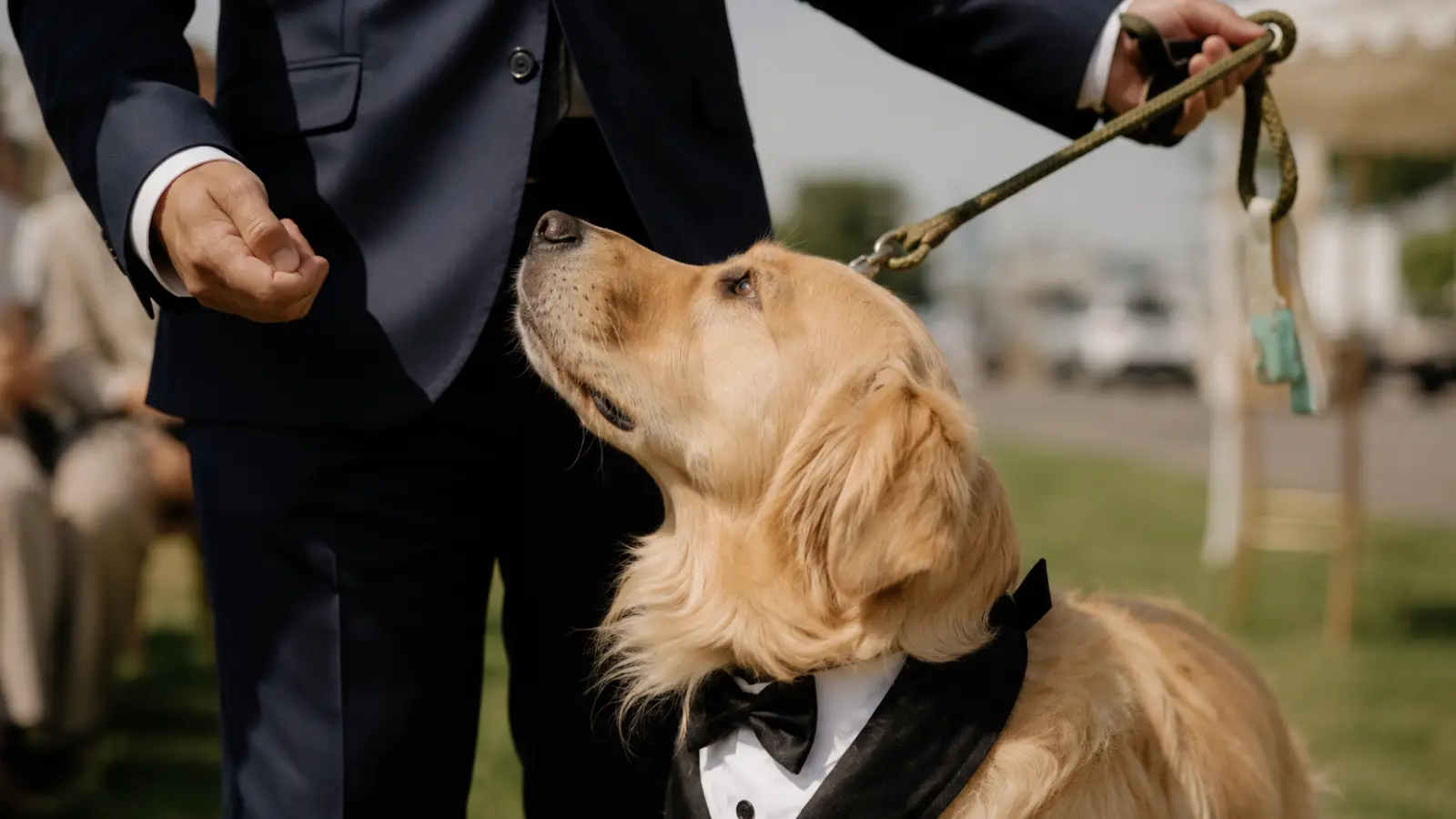
Pet-friendly wedding venues can have very different policies, even when they all describe themselves as welcoming to pets. Some allow dogs only for outdoor portraits, others permit ceremony participation but not the reception, and a few genuinely accommodate pets throughout the entire celebration. Understanding those differences before booking can save unnecessary stress later.
The most important question is not simply whether pets are allowed. It’s where they are allowed, under what conditions, and whether those permissions are clearly written into the contract. Asking detailed questions before signing helps avoid misunderstandings and makes planning much easier.
This guide explains how to evaluate pet-friendly wedding venues, the essential questions to ask before booking, common venue restrictions, contract details, and practical ways to make sure your pet can safely be part of your wedding day as you plan pets at weddings.
What “Pet-Friendly” Actually Means at a Wedding Venue
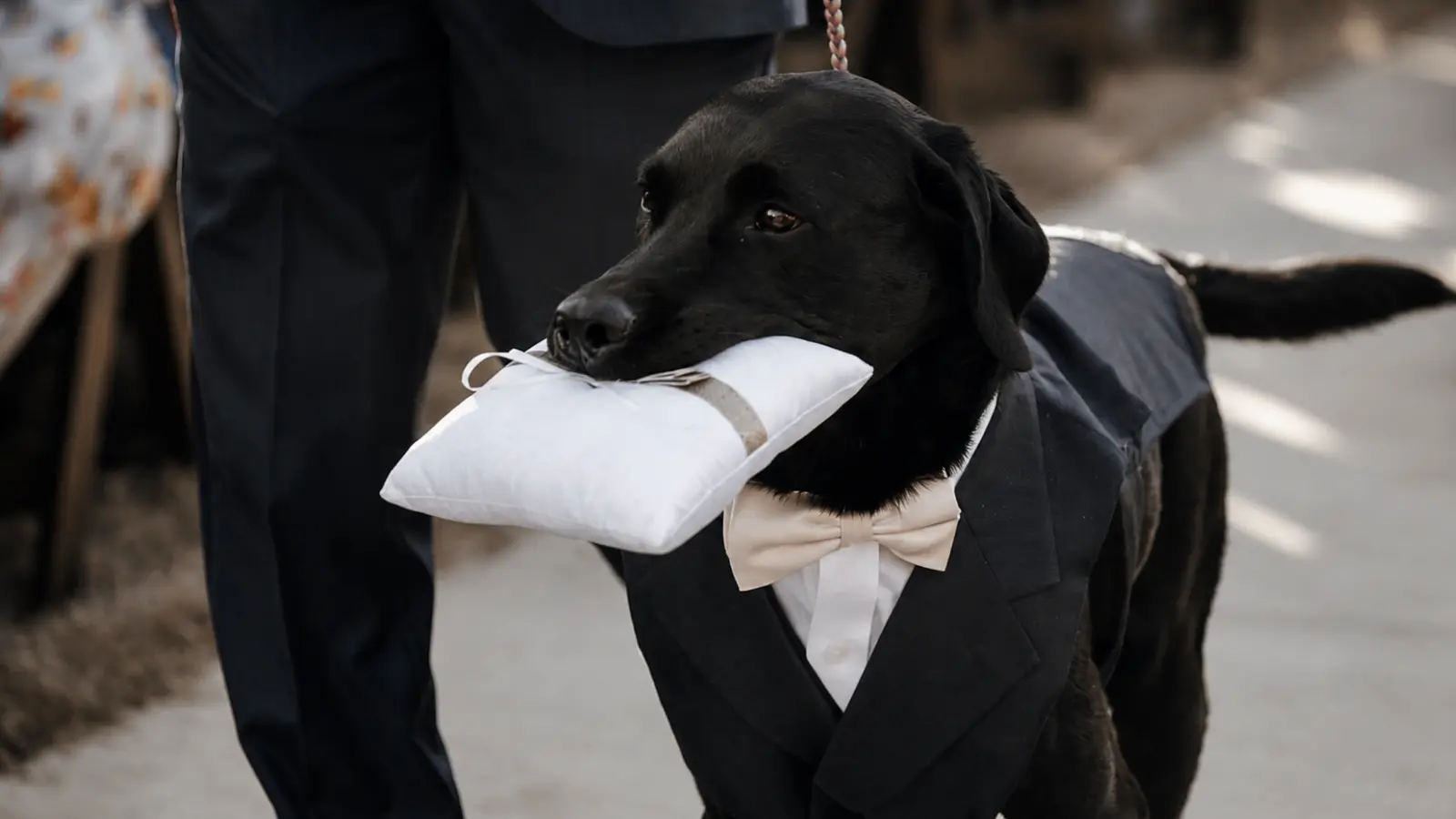
There is no industry standard for what makes a venue pet-friendly. A venue that markets itself as welcoming to animals might mean they allow leashed dogs on the outdoor grounds during portrait sessions. Or it might mean a full ceremony and reception with a dedicated pet handler space and a quiet room for the animal between moments. Or it might mean something in between — and you won’t know which unless you ask directly.
The term also tends to mean different things for different animals. A venue that is comfortable with dogs may have never considered a cat, a rabbit, or a bird. Some venues have breed or size restrictions that only come up when a specific animal is mentioned. Others require liability waivers that they don’t volunteer unless asked. None of this is unusual — weddings are a relatively new frontier for live animals, and venue policies are often being written in real time, based on what couples ask for.
That’s actually useful information. It means the couple who asks the right questions before booking is almost always better positioned than the couple who assumes a yes means yes across the board.
Quick Guide: Questions to Ask Every Pet-Friendly Venue
Before any venue conversation goes further than a general inquiry, these are the specific questions worth having answered. Use this as a starting checklist — the sections below go into the detail behind each one.
| Question | Why It Matters |
|---|---|
| Are pets allowed at the ceremony? | Some venues only permit animals in outdoor areas or for photos |
| Are pets allowed at the reception? | Food, noise, and crowd movement may trigger different rules |
| Is a leash or carrier required at all times? | Nearly always yes — but the specific rule varies |
| Can the pet be in photos throughout the venue? | Access and timing need to be built into the day’s schedule |
| Is there a quiet room or holding space? | Critical for managing stress between the animal’s moments |
| Who handles cleanup, and are there fees? | Responsibility must be clear in writing before the day |
| Are there breed, size, or species restrictions? | Many venues have rules they don’t volunteer upfront |
| What is the rain or weather contingency? | Outdoor pet access plans can change entirely with weather |
| Can all of this go in the contract? | A verbal yes from a coordinator is not binding |
Getting clear answers to all of these before signing is the single most important thing couples can do when planning how to include their pet in their wedding. The rest of this guide breaks each area down in detail.
Are Pets Allowed at the Ceremony?
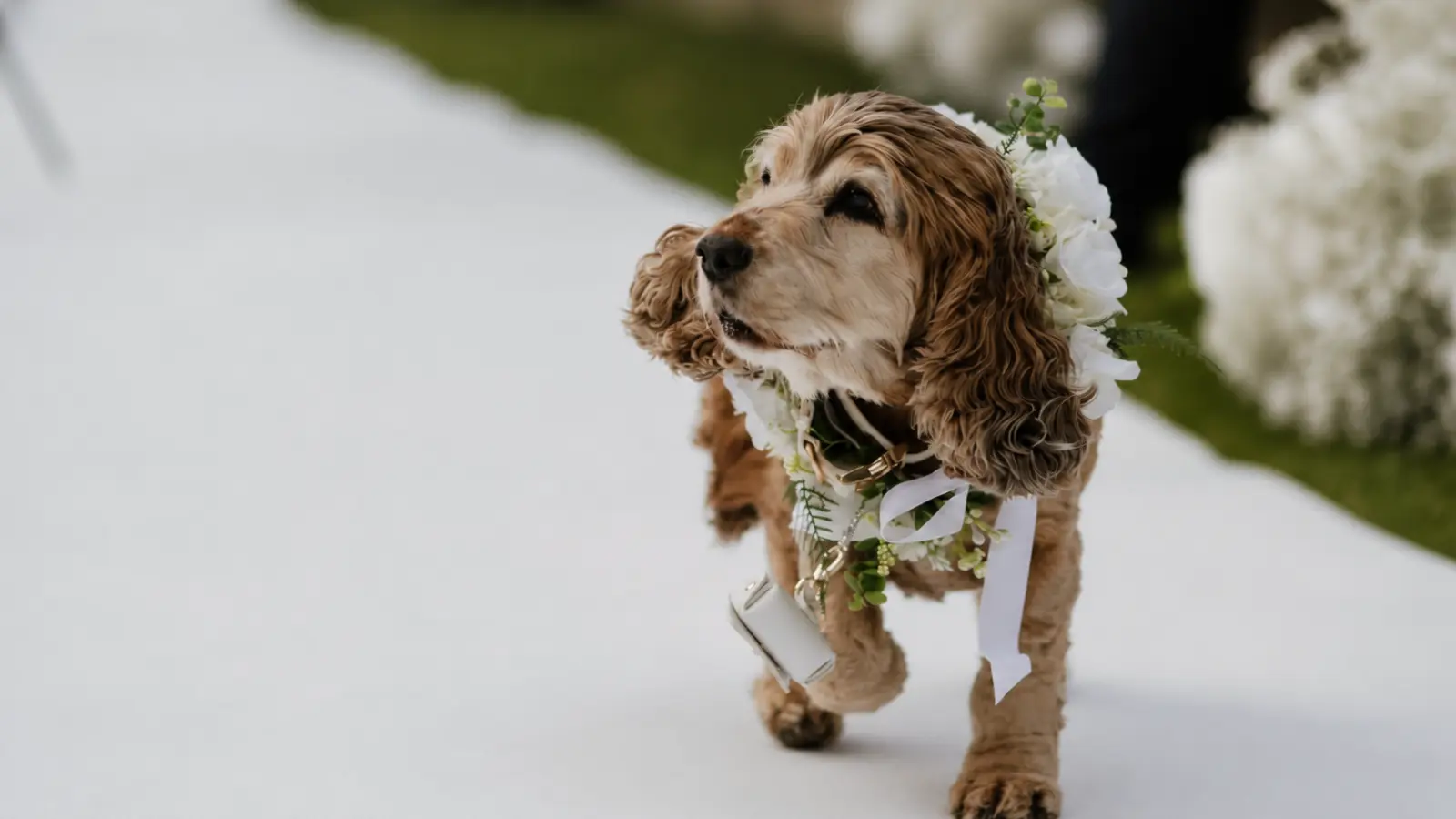
This is the question most couples lead with — and the answer is rarely as simple as yes or no. A venue may allow your dog on the property while restricting access to the ceremony space itself. An outdoor pavilion may permit pets; the indoor hall directly beside it may not. A historic estate might welcome animals on the grounds but have specific rules about which areas fall under their event insurance coverage.
When you ask whether pets are allowed at the ceremony, follow up immediately with where, specifically. Ask whether the ceremony space — the exact room or outdoor area where the vows are happening — is included. Ask whether the dog can walk the aisle as a dog ring bearer, or whether access is limited to a moment near the entrance and exit. Ask whether a handler can stand at the front or to the side during the ceremony, or whether the animal needs to be removed immediately after their moment.
A venue that hasn’t thought through these details yet isn’t necessarily a bad option. It means you’re setting the terms of the conversation — which gives you more control, not less. Come in with specific asks and a clear picture of what your ceremony moment looks like, and most venue coordinators will work through the logistics with you.
Are Pets Allowed at the Reception?
The reception is a harder environment for animals than the ceremony, and venues often treat the two differently even when they don’t say so upfront. Food is more accessible — appetizer trays at cocktail height, buffet tables, wedding cake within reach, guest plates on low surfaces. The noise level is higher. The crowd is moving more freely and unpredictably. The timeline is longer. All of that adds up differently than a twenty-minute ceremony walk.
Some venues that allow pets at the ceremony restrict them from the reception space entirely. Others permit animals during cocktail hour but not the dinner portion. A few allow pets through the full event with a dedicated handler present. Ask specifically about each phase — ceremony, cocktail hour, dinner, and dancing — rather than asking about the reception as a whole.
It’s also worth having an honest internal conversation about whether reception access is actually in your pet’s best interest. Many couples who bring their dog to the ceremony find that sending the animal home before cocktail hour is the right call — the ceremony moment and the portraits are done, and the rest of the day is harder for everyone to manage. Knowing what the venue allows helps you make that decision deliberately rather than discovering limitations after the fact.
Indoor vs. Outdoor Pet Rules
Venue pet policies frequently follow a simple dividing line: outdoor spaces are more permissive, indoor spaces are more restricted. Understanding which parts of your wedding happen where — and where those lines fall — is essential before booking.
Outdoor ceremonies on private estates, vineyard grounds, or open-air pavilions tend to have more flexible pet policies. There’s no flooring to protect, no indoor air quality concerns, and the general atmosphere of an outdoor setting is more forgiving if something unexpected happens. Ceremonies in indoor ballrooms, historic buildings, or religious spaces are more likely to have firm restrictions, both because of the venue’s own rules and because of their insurance and liability frameworks.
If your ceremony is partially indoor and partially outdoor — a common setup where guests move between spaces during cocktail hour — ask specifically about each transition. Can the dog accompany you from the indoor ceremony to the outdoor cocktail space? Can they come back inside for family portraits? The answer may differ for each movement, and knowing in advance means you can plan the handler’s routing accordingly.
Church Weddings and Pet Restrictions
If a religious ceremony is part of your plan, the pet question requires an entirely separate conversation — not with a venue coordinator, but with the officiant and the congregation’s leadership directly.
Most traditional churches do not permit animals inside the sanctuary during a ceremony. This is true across most denominations and is typically a matter of both religious tradition and practical facility management. Some churches will allow a pet on the exterior grounds for a brief photo moment or the exit. Others have no flexibility on this point at all.
The important thing here is not to assume. A church with a beautiful outdoor garden does not automatically extend that to the ceremony space. A church that has hosted outdoor weddings is not necessarily the same as one that welcomes animals near the altar. Contact the officiant directly, explain your specific request, and ask what is and isn’t permitted before you make any commitments to a photographer or handler about what the ceremony moment will look like.
For couples committed to both a religious ceremony and a meaningful pet inclusion, a practical solution is to plan a separate portrait session — either before the ceremony at a different location or at the reception venue afterward — where the pet can participate fully without the restrictions of the church space.
Leash, Carrier and Handler Requirements
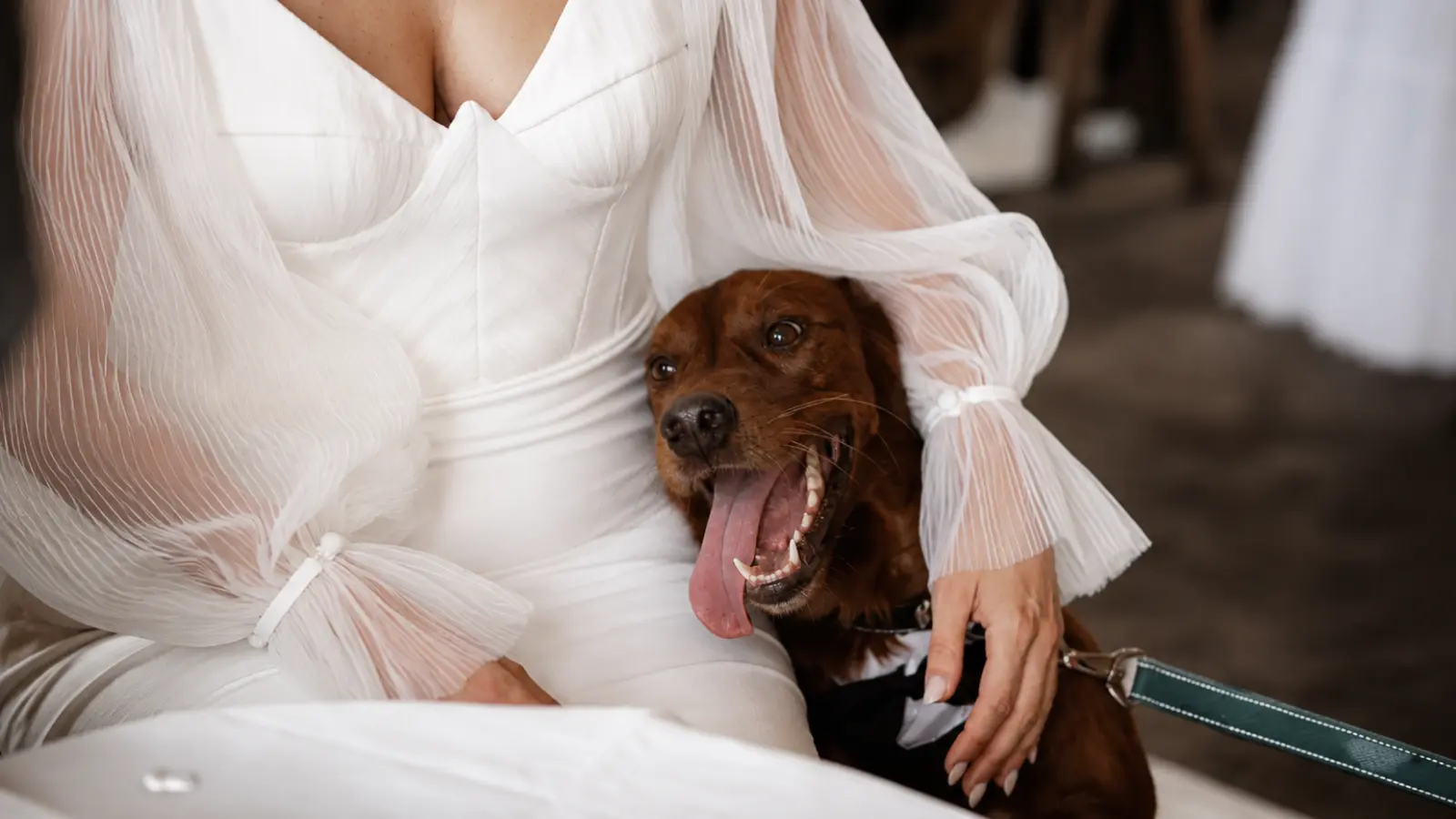
Nearly every venue that allows pets requires the animal to be leashed or in a carrier at all times. This is standard, and for good reason — it protects other guests, protects the venue, and gives the couple and their handler real control over where the animal is and what it’s doing at any given moment.
But leash and handler requirements vary in the details, and those details matter. Some venues require that the handler be a hired wedding pet attendant rather than a family member or friend. Others simply require that a dedicated person be responsible for the animal throughout the event — not a bridesmaid who is also standing in the processional, not a guest who is also trying to enjoy cocktail hour. A dedicated handler means one person whose only job for the day is the pet.
Ask the venue whether they have any specific requirements about who can serve as the handler and whether they need to be present for a walkthrough before the wedding day. Ask whether the handler needs to remain outside the ceremony space during the vows or whether they can stand inside with the animal. And ask whether there are any areas of the venue — the bridal suite, the catering prep area, the main hall during dinner service — where even a leashed animal with a dedicated handler is not permitted.
Getting this right in advance means your handler can plan their full day, from arrival to departure, without discovering restrictions in the middle of the ceremony.
Food, Cake and Catering Considerations
Wedding food and animals are a combination that requires real planning, not just a general awareness that “food can be an issue.” Several things commonly served at American wedding receptions are toxic to dogs and cats: grapes, raisins, onions, garlic, chocolate, alcohol, anything containing xylitol, macadamia nuts, and certain herbs used in catering seasoning. These aren’t edge cases — they’re staples of cocktail hours and buffet tables.
Talk to your caterer before the wedding day, not the day of. Let them know a pet will be present and ask whether they can flag any items that might be within the animal’s reach during service. Ask specifically about the cocktail hour setup — hors d’oeuvres passed at tray height, charcuterie boards at low tables, or passed items that guests hold while moving around are all potential hazards for a curious dog.
Some venue catering teams have policies that restrict animals from areas near food service, even when they allow pets elsewhere on the property. This isn’t unreasonable — it protects other guests and the event itself. But it needs to come up before you’ve finalized where the pet will be during each phase of the day, not after the timeline is set.
The wedding cake is worth a specific mention. Xylitol, a sweetener used in some baked goods, is severely toxic to dogs in very small amounts. Even without that ingredient, sugar and fat in the quantities found in a wedding cake can cause gastrointestinal distress. Keep the pet well away from the dessert area, and brief the handler on exactly where the cake table is so they can route around it.
Noise, Music and the Pet’s Stress Level
Weddings are loud in ways that sneak up on couples who haven’t thought about it from the animal’s perspective. The ceremony processional music. Applause when the bride enters. The officiant’s amplified voice. Cocktail hour background sound. A live band or DJ during the reception. Toasts through a microphone. Fireworks or sparklers at the send-off.
Each of those is a potential stress event for a sound-sensitive animal — and many dogs who seem perfectly calm in everyday settings find specific sounds at certain volumes genuinely stressful. A dog who startles at sudden applause in the middle of the aisle walk is a problem that’s very difficult to recover from gracefully.
Before the wedding day, ask the venue coordinator about the sound setup for the ceremony and reception. Is there amplification in the ceremony space? Where are the speakers positioned? What is the typical volume level for the cocktail hour? If your dog is sound-sensitive, this information helps you decide whether a ceremony walk is realistic or whether limiting the pet’s appearance to a quieter portrait session is the smarter call.
It also shapes the quiet room conversation — which is where the next section goes.
Quiet Space for Your Pet
A quiet room is not a luxury accommodation for an animal at a wedding. It’s a functional requirement for managing the pet’s stress throughout the day and ensuring their presence doesn’t become a disruption.
The ideal quiet space is a separate room — not a bathroom, not a supply closet, not a corner of the bridal suite — that the handler can access easily, that has a door that closes fully, and that is away from the main event areas where music and crowd noise are concentrated. It should have water, a comfortable surface for the animal to rest on, and enough space for the handler to sit comfortably with the pet between the moments when the animal is needed.
When you ask the venue about this, be specific. Ask whether there is a dedicated space available for the pet before the ceremony, between the ceremony and photos, and after any portrait session before the animal is taken home. Ask whether the space is climate controlled — particularly for outdoor summer weddings where heat management is a real safety consideration. And ask whether the handler can bring the animal’s own crate or bed if it helps the pet settle.
A venue that has genuinely thought through pet inclusion will have an answer to this question without much hesitation. A venue that pauses and starts improvising on the spot is one where you need to nail down the specifics more carefully.
Cleanup and Liability
Cleanup responsibility should be documented before the contract is signed, not discussed in the moment if something happens on the wedding day. Most venues expect the couple to be fully responsible for any accidents caused by their pet — which is completely reasonable — but the terms of that responsibility vary in ways that matter.
Some venues charge a cleaning fee that is added to the overall contract when a pet is included. Others require a separate deposit that is returned if there are no incidents. Some have no fee structure at all but expect the handler to manage any situation immediately and completely. Ask which of these applies, and get the answer in writing alongside the rest of the pet policy.
Liability is the other side of this conversation. If another guest has an allergic reaction, if a child is startled and falls, or if the pet causes any kind of property damage, whose insurance covers what? This is not a question most couples think to ask, and venue coordinators don’t always volunteer the information. It’s worth a direct question — and worth checking with your own homeowner’s or renter’s insurance provider to understand what coverage, if any, extends to a pet at an event.
Breed, Size, Species and Number Restrictions
Venue pet policies are more varied on this point than most couples expect. A blanket pet-friendly policy may come with restrictions that only surface when you describe your specific animal — a large breed, a cat, a rabbit, two dogs instead of one.
Breed restrictions are the most common. Some venues have policies that mirror the breed restrictions found in building and insurance coverage — restrictions on certain large or historically stigmatized breeds that have nothing to do with the individual dog’s temperament. These policies may feel arbitrary, and sometimes they are, but they’re usually tied to the venue’s liability coverage rather than their personal preference. Asking upfront, with your dog’s breed named specifically, prevents a conversation you don’t want to have after the contract is signed.
Size restrictions come up less frequently but do exist — particularly at indoor venues with concerns about space management or flooring. Species restrictions are worth raising if your pet is anything other than a dog. A cat, a rabbit, a bird, or any other animal may fall entirely outside what the venue has considered, and their answer may be a genuine first conversation rather than a policy they already have. That’s not a no — it’s an opportunity to work through specifics.
If you’re planning to include more than one pet, mention that explicitly. A venue that is comfortable with one calm dog may not have thought through the logistics of two, and the handler situation changes significantly when there are multiple animals to manage.
Dog-Friendly Wedding Venues: How to Find Them
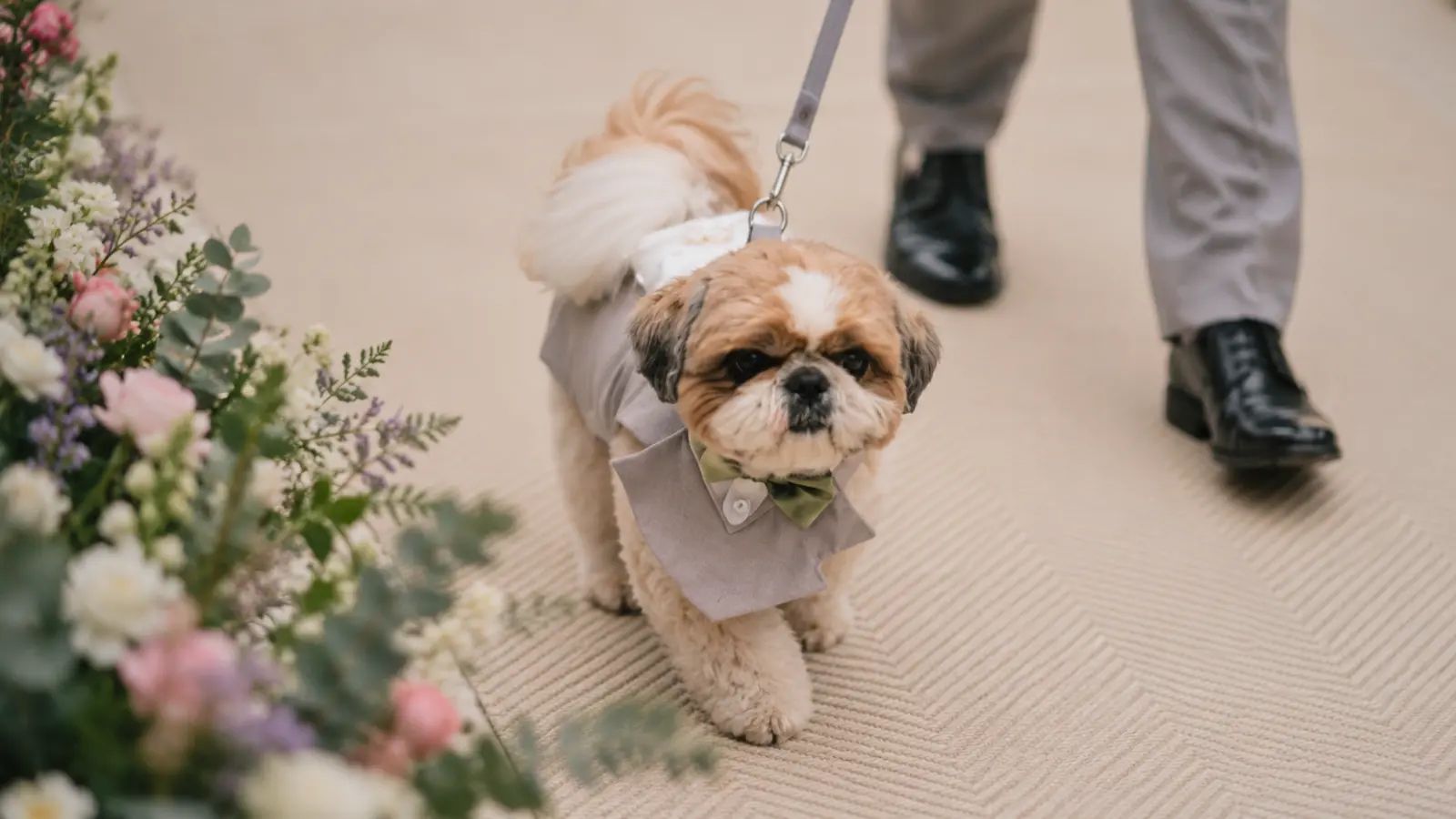
Searching for dog-friendly wedding venues near you is a reasonable starting point, but the search results require a critical eye. A venue listed as pet-friendly on a wedding directory may have updated their policy since the listing was created, or may have a more restricted policy than the listing implies. Always go directly to the venue to confirm current rules rather than relying on third-party descriptions.
The venues that tend to be most genuinely dog-friendly — with the infrastructure and experience to support it — include outdoor spaces like vineyards, farms, ranches, and private estates where animals are part of the environment’s natural character. National park ceremony permits sometimes allow leashed pets on the grounds. Privately owned event spaces built specifically for weddings often have more flexibility than historic buildings or hotel ballrooms, where the physical space and insurance frameworks create more restrictions.
When you contact a venue, your initial inquiry matters. Rather than asking “are you pet-friendly?” — which invites a vague yes — lead with your specific situation: “We have a 60-pound Labrador that we’d like to include in our ceremony walk and first look photos. Can you tell me what your pet policy covers and what restrictions apply?” A specific question gets a specific answer, and it also signals to the coordinator that you’ve thought about this seriously and are not expecting to manage the situation on your own.
Pet-Friendly Elopements
For couples whose top priority is including a pet without the logistics of managing a full venue’s rules, an elopement is worth serious consideration — not as a compromise, but as a genuinely strong option.
Elopements typically involve two to ten people in a setting that is chosen specifically for what it offers, rather than selected from a list of available event spaces. National parks, state parks, beaches, private land, urban rooftops — many of these locations allow leashed pets as a matter of policy rather than exception. Because the guest count is small, the environment is less structured, and the couple has significantly more control over timing and setting, the pet can participate in a way that’s actually more natural than a ceremony at a traditional venue.
A dog at an elopement in a redwood forest or on a winter coastline isn’t a logistics challenge to be managed — it’s part of the visual and emotional story of the day. Planning wedding photos with pets in these natural settings often creates some of the most memorable images of the celebration. And the couple doesn’t spend the morning before their ceremony negotiating with a venue coordinator about which doors the handler can use.
If an elopement is on the table, the main practical check is confirming the specific location’s rules for animals. National Park Service rules, for example, allow pets in many outdoor areas but restrict them from certain trails and most buildings. State and local parks vary significantly. A quick call or check of the relevant land management agency’s website will confirm whether pets are permitted and whether leash requirements apply.
What to Put in the Contract
A verbal confirmation from a venue coordinator that pets are welcome is not a pet policy. It’s a starting point for a conversation that needs to end with written terms in the contract before you sign anything.
This matters more than most couples realize. Venue staff change. Coordinators leave between booking and the wedding date. The person who said yes on a Tuesday walkthrough in February may not be the person running your event in October. The contract is what holds up when the personnel changes — and it’s the document that protects you if the venue’s understanding of “pet-friendly” turns out to be more limited than yours.
Here is what the written pet policy in your contract should specify:
- Which areas of the venue the pet is permitted in, named specifically — ceremony space, cocktail area, portrait locations, reception room, and any outdoor areas.
- Leash, carrier, or handler requirements, including whether a professional handler is required or whether a designated friend or family member qualifies.
- Cleanup responsibility, including who handles any incident and whether a cleaning deposit or fee applies.
- What happens in the event of an incident — whether that means an accident, a bite, property damage, or a guest complaint.
- The rain or weather contingency, specifically for any outdoor pet access that may shift to an indoor alternative.
- Timing limitations, if any — whether the pet is permitted only during specific windows and must be off the property before or after certain hours.
If the venue is reluctant to put any of this in writing, that reluctance is information. A venue confident in its pet policy will have no problem documenting it. If they push back, ask why — and consider whether you want to proceed without those terms formalized.
Backup Plan
Even when everything is confirmed in writing, a backup plan for the pet portion of the day is worth having before the wedding morning arrives. Not because something will go wrong — but because a prepared couple handles surprises without disrupting their own ceremony.
The most common scenarios that require a plan B: rain moves an outdoor ceremony to an indoor space where the pet policy is different, the dog becomes visibly stressed during the processional and needs to exit before the walk is complete, or a vendor on-site the day of the wedding has an animal allergy that wasn’t accounted for in advance.
For each of these, decide in advance what happens. If the ceremony moves indoors and pets aren’t permitted, where does the dog go and who is responsible for them? If the dog needs to exit early because of weather, stress, or uncomfortable pet wedding attire, who steps in and where do they go? If the pet can’t do the ceremony walk at all, is there a human fallback for the ring bearer role?
Brief the handler on all of these scenarios before the wedding day. Brief the officiant on what the backup looks like so they can keep the ceremony moving without improvising. The couples who plan these contingencies almost never use them — but when they do, the wedding goes on without the guests noticing anything at all.
Pet-Friendly Wedding Venue Ideas
Looking for a wedding venue that welcomes your pet? Explore outdoor venues, vineyards, private estates, ceremony locations, contract tips, and practical questions to ask before booking a pet-friendly wedding venue.
The Right Venue Makes Everything Easier
A truly pet-friendly wedding venue is more than a location that says yes to animals. It’s a place with clear policies, realistic expectations, and a willingness to help you create a safe and enjoyable experience for both your guests and your pet. Asking detailed questions before booking gives you confidence long before the wedding day arrives.
The best venue is the one whose policies genuinely support the way you want your pet to be part of the celebration. When expectations are clear from the beginning, you can focus on creating meaningful memories instead of solving avoidable problems on the day of your wedding.
Frequently asked questions (FAQ)
What makes a wedding venue truly pet-friendly?
A truly pet-friendly wedding venue does more than simply allow animals on the property. It clearly explains where pets are allowed, whether they can attend the ceremony or reception, if a handler is required, what safety rules apply, and how the pet fits into the event timeline. The best venues have a written pet policy rather than relying on verbal agreements.
How do you know if a wedding venue is really pet-friendly?
The best way is to ask detailed questions before booking. Find out exactly where your pet is allowed, whether there are breed or size restrictions, if indoor and outdoor rules are different, and whether everything can be included in the contract. A venue that answers these questions clearly is usually much easier to work with on the wedding day.
What questions should you ask a wedding venue before bringing a pet?
Ask whether pets are allowed during the ceremony, reception, cocktail hour, and portraits, whether a leash or handler is required, if there is a quiet room available, who is responsible for cleanup, what restrictions apply, and whether every detail of the pet policy will be written into the contract before booking.
Are dogs allowed at wedding receptions?
Sometimes, but not always. Many venues that welcome dogs during the ceremony do not allow them to remain for the reception because of food service, louder music, and larger crowds. In many cases, bringing the dog for the ceremony and photos before returning them home is the safest and most practical option.
Can dogs attend a church wedding?
Most traditional churches do not allow animals inside the sanctuary during the ceremony. Some churches permit pets on the grounds for portraits or the wedding exit, while others do not allow them at all. Always confirm the policy directly with the officiant before making plans.
What should be included in a wedding venue’s pet policy?
A written pet policy should specify where the pet is allowed, leash and handler requirements, cleanup responsibilities, any additional fees, liability rules, weather contingency plans, and the exact times the pet may be present. Having these details in writing helps prevent misunderstandings on the wedding day.