Pet wedding attire should make your pet look like part of the celebration without sacrificing comfort or safety. Whether you’re considering a simple bandana, a floral collar, a tuxedo, or a wedding dress, the right choice depends primarily on your pet’s personality and experience than on current trends.
Many pets look happiest wearing only a lightweight accessory, while others are completely comfortable in formal outfits they’ve worn and practiced with before. The goal is not to create a costume but to choose attire that feels natural, photographs beautifully, and allows your pet to move comfortably throughout the wedding.
This guide explains the best pet wedding attire options for pets at weddings, including collars, bow ties, bandanas, harnesses, tuxedos, dresses, leashes, pet-safe flowers, and practical tips for choosing an outfit that fits both your wedding style and your pet’s wellbeing.
Pet Wedding Attire Options at a Glance
There’s a wide range of attire options for pets at weddings, from a simple bandana to a full formal outfit. The right choice depends on the animal’s temperament, the formality of the wedding, and how much the pet has been introduced to wearing things before. Here’s a quick overview.
| Option | Best For | Watch Out For |
|---|---|---|
| Bandana | Most dogs, including those sensitive to clothing | Loose fit, breathable fabric, nothing tight around the neck |
| Bow tie | Simple formal look with minimal coverage | Secure attachment without pressure on throat |
| Floral collar | Garden, outdoor, and romantic wedding styles | Every flower must be confirmed pet-safe |
| Harness | Dogs walking in the ceremony or needing handler control | Correct fit, tested before the wedding day |
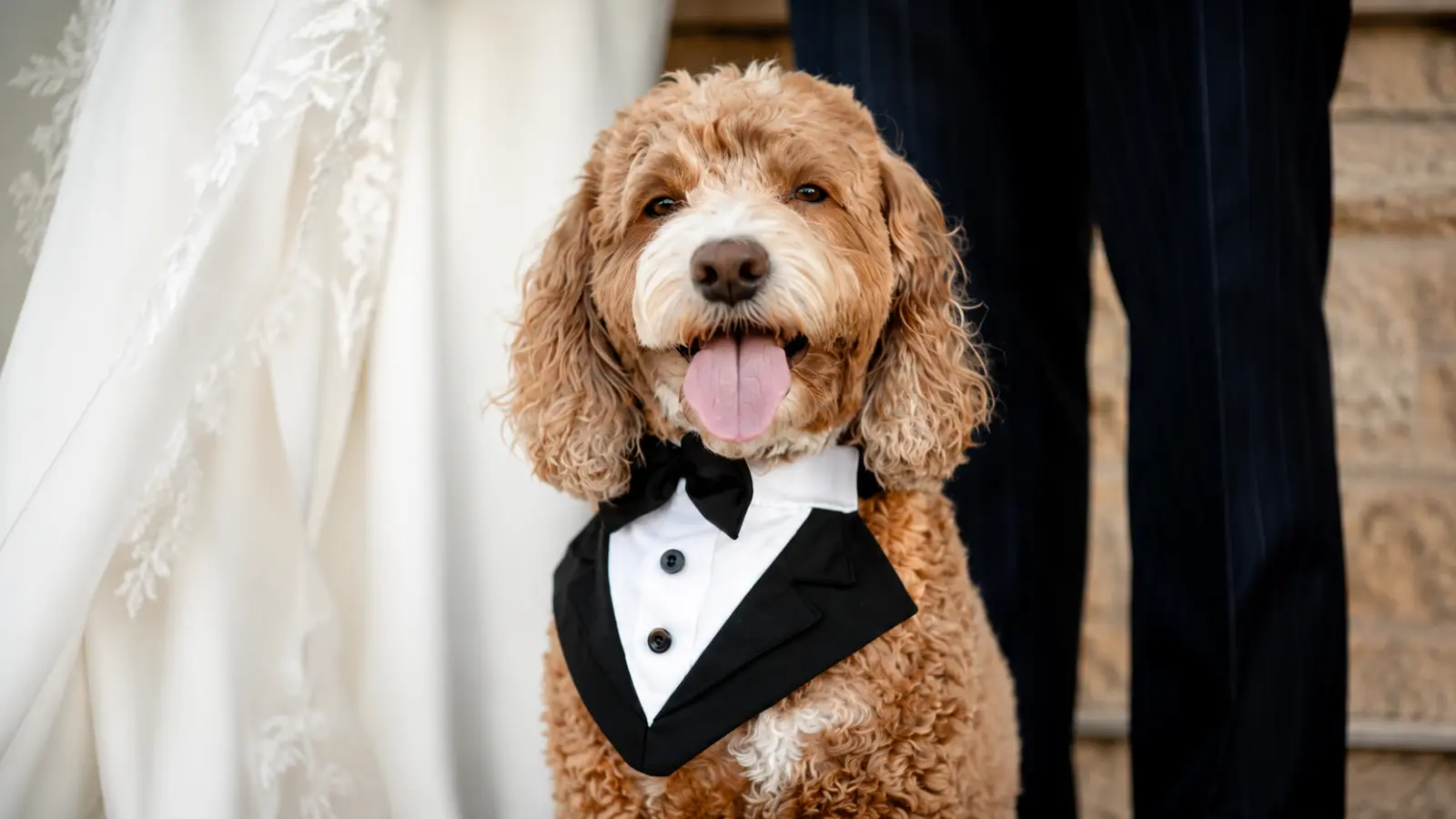
| Tuxedo or suit | Calm dogs already comfortable wearing clothes | Overheating, restricted movement, stiff fabric |
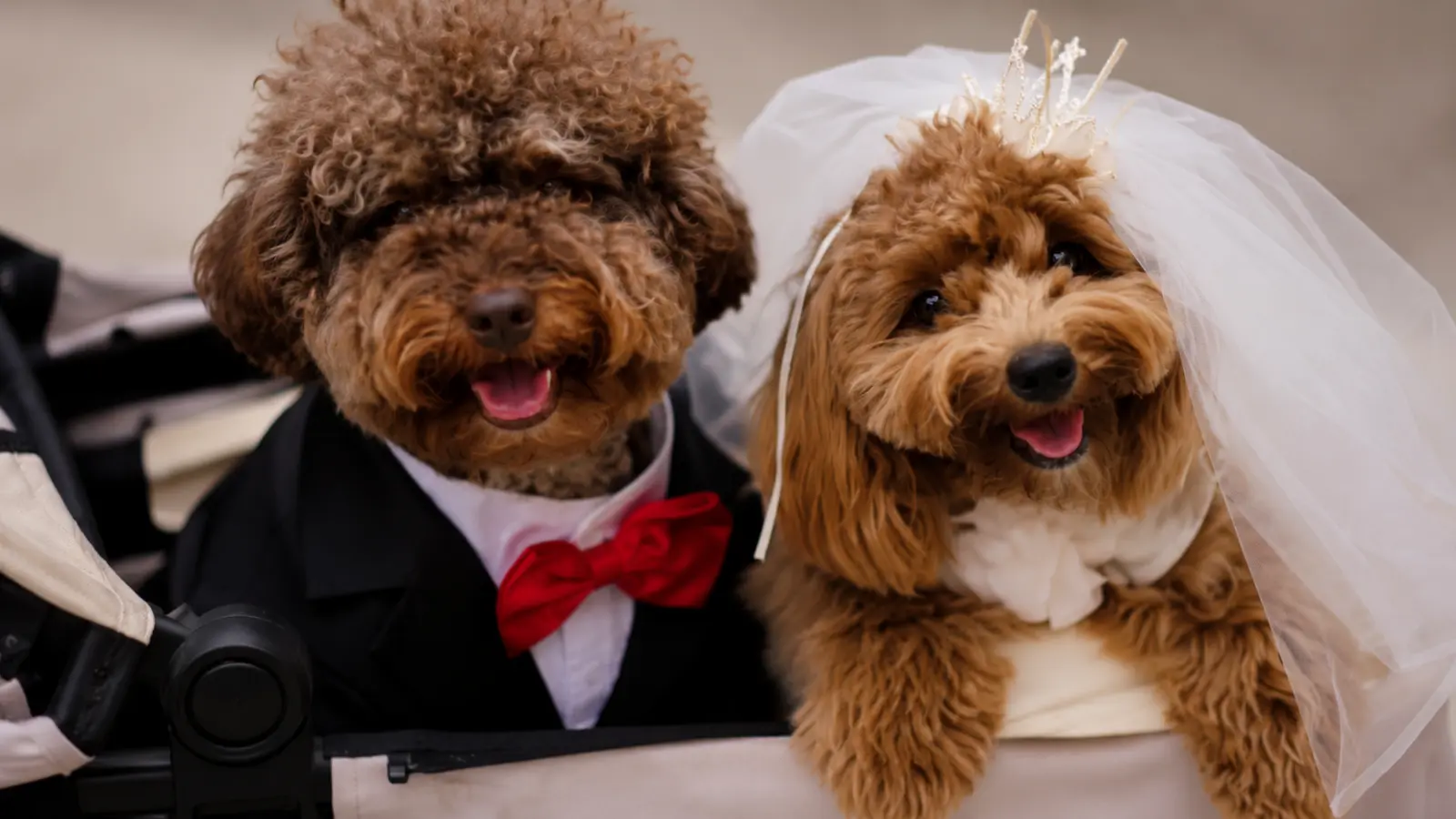
| Dress or gown | Dogs who tolerate clothing without distress | Length that catches on paws, limited mobility |
| Decorated leash | Any dog attending the wedding | Handler grip and control come before aesthetics |
| No outfit | Anxious pets, sensitive animals, most cats | Comfort always comes first — a clean, well-groomed pet is enough |
The sections below go into the details of each option — what works, what to watch for, and how to make the choice that actually fits your pet.
What Should a Pet Wear to a Wedding?
The answer starts with the animal’s baseline relationship with clothing. Some dogs wear sweaters, raincoats, and harnesses regularly and think nothing of it. Others have never worn anything beyond a collar and find the sensation of fabric on their body genuinely alarming. These two dogs often need very different approaches to wedding attire — and treating them the same way produces very different results on the day.
For a dog who is comfortable with clothing, a full outfit — a suit, a dress, a formal harness with accessories — is a realistic option, provided it fits correctly and is tested well in advance. For a dog who is new to wearing anything, start simpler. A bandana, a bow tie clipped to the collar, or a floral collar is enough to make the dog look like they belong in the wedding photos without asking them to tolerate something they’ve never experienced before.
The other question worth answering early when deciding how to include your pet in your wedding is whether the outfit needs to work for the full ceremony, or just for photos. A dog who comes only for wedding photos with pets and then goes home can wear something slightly more elaborate than one who needs to stay comfortable for two or three hours in a busy environment. Knowing the answer shapes every choice that follows.
Pet Wedding Bandana
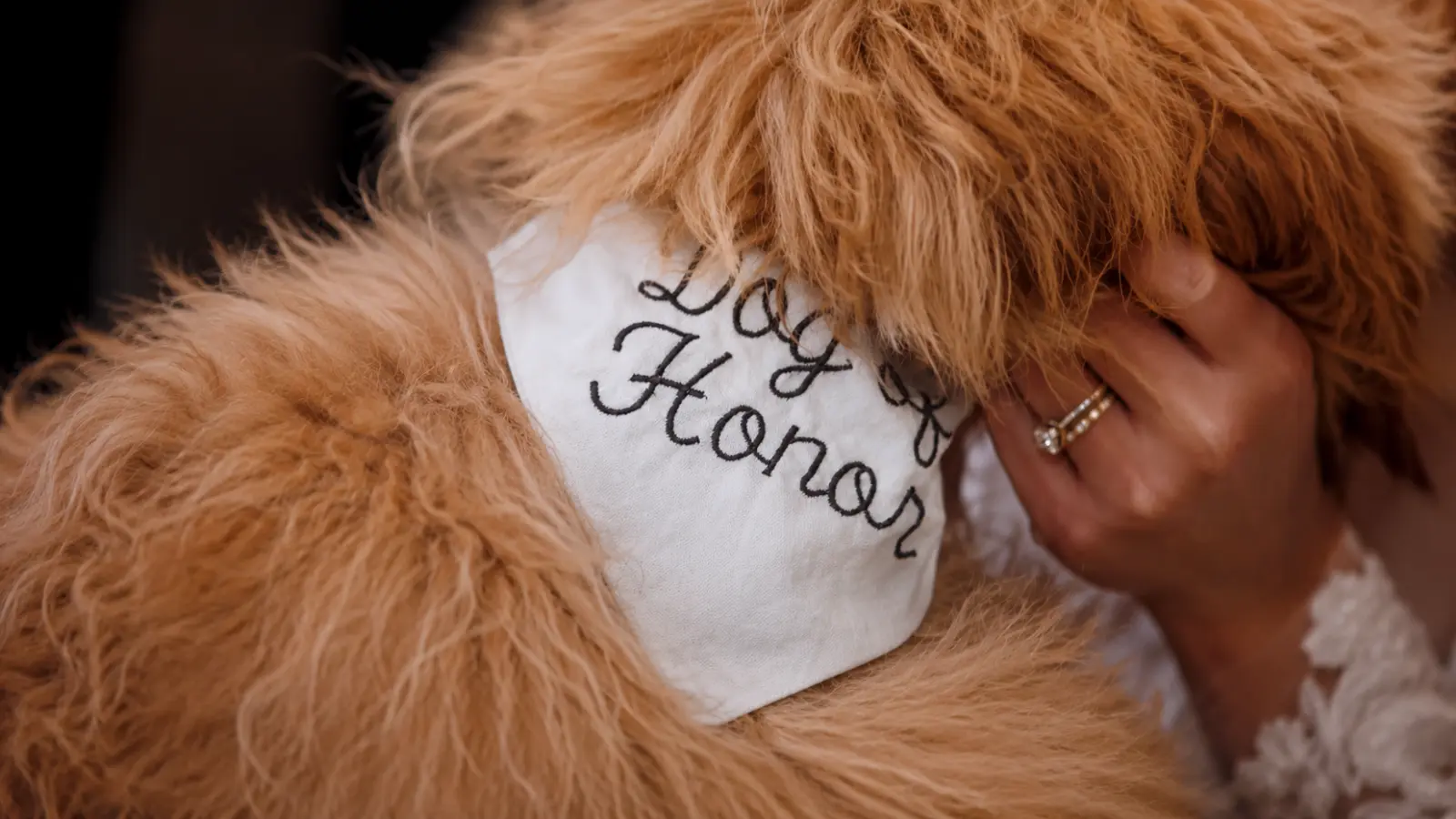
The bandana is the most versatile and widely appropriate option for dogs at weddings. It requires no adjustment period, works for nearly every body type and size, and can be made in any fabric and color to match the wedding palette exactly. Folded and tied loosely around the neck, it reads as intentional and polished in photographs without restricting movement or causing any discomfort.
The key word in that description is loosely. A bandana tied too tightly around the neck creates pressure, restricts breathing, and causes the dog to paw at it — which is both uncomfortable for the animal and counterproductive for the photos. There should be room for two fingers between the bandana and the neck at all times. Test it at home, watch the dog move around naturally for ten minutes, and check that nothing shifts or tightens during normal activity.
Fabric matters too. Lightweight linen, cotton, or satin in a breathable weave works well. Heavy fabric that traps heat, synthetic materials that don’t breathe, or anything with embellishments that could catch on fur or irritate the skin should be avoided. For outdoor summer weddings in warm climates, a lighter fabric is not just a comfort preference — it’s a practical safety consideration.
Pet Wedding Bow Tie
A bow tie offers a more formal look with even less coverage than a bandana, which makes it a good option for dogs who are sensitive to anything around their neck but still need a visual detail for the wedding. Most pet bow ties clip directly to an existing collar, which means no adjustment period and no new sensation for the dog — just a small addition to something they already wear every day.
The attachment method matters here. A bow tie that clips on securely but without pressure on the collar or throat is the right choice. Avoid styles that require threading through the collar in a way that creates tension, or that are attached with elastic that can tighten unpredictably when the dog moves. The bow tie should sit flat, stay in place without adjustment, and not shift position during normal movement.
In terms of scale, the bow tie should be proportional to the dog. A small bow tie on a large dog disappears in photos; an oversized bow tie on a small dog looks costume-like rather than formal. Most suppliers offer size ranges — check the dimensions against the dog’s collar width before ordering, and allow enough time to exchange if the scale is off.
Pet Wedding Collar
A collar upgrade for the wedding day — something more considered than the everyday version — is one of the cleanest attire choices available. A collar in a fabric, color, or material that coordinates with the wedding palette requires no adjustment from the dog, since they’re already used to wearing one, and it photographs well in close-up portraits without requiring the animal to wear anything unusual.
Options range from satin ribbons sewn or wrapped around an existing collar to fully custom collars in leather, velvet, or embroidered fabric. Whichever approach you take, the fit standard remains the same as any collar: snug enough that it won’t slip over the head, loose enough that two fingers fit comfortably underneath. Check the fit after any decoration is added, since added fabric or embellishment can subtly change how the collar sits.
For the ceremony walk or any moment where the handler needs reliable control, the collar also needs to be genuinely secure — not just decorative. A beautiful collar that doesn’t hold up to a dog pulling or shaking their head is a safety issue, not just an aesthetic one.
Floral Pet Collar
A floral collar — fresh or dried flowers arranged around the neck — is one of the most photographed pet wedding details, and it’s easy to understand why. Done well, it integrates the dog directly into the floral design of the wedding, creates a cohesive visual with the bridal bouquet and ceremony flowers, and looks genuinely editorial rather than costume-like.
Done carelessly, it’s a safety issue. This is not a category where you can choose flowers based on how they look and figure the rest out later.
Every flower, greenery element, and filler used in the collar needs to be confirmed non-toxic to the specific animal wearing it before any order is placed. Pet-safe options commonly used in floral collars include roses, sunflowers, chamomile, orchids, and snapdragons. Elements to avoid include lilies (severely toxic to cats, harmful to dogs), tulips, hydrangeas, baby’s breath, azaleas, and ranunculus.
Bring this conversation to your florist early. A good florist will know which elements in their standard palette are pet-safe and will work with you to design something beautiful within those constraints. If your florist isn’t familiar with pet-safe florals, that’s a conversation worth having before the collar is designed — not after it arrives the morning of the wedding.
Beyond toxicity, the collar should be light enough that the dog doesn’t feel the weight, constructed on a base that sits without pressure, and tested on the dog before the wedding day. Most florists will deliver the floral collar the morning of the wedding alongside the bridal bouquet — make sure there’s time for a brief fitting and observation period before the ceremony begins.
Pet Wedding Harness
For dogs participating in the ceremony — walking the aisle, serving as a dog ring bearer, or being handled by someone other than their primary owner — a harness often makes more practical sense than a collar alone. A harness distributes pressure more evenly across the body, gives the handler better control without pulling on the neck, and provides more secure attachment points for a ring bearer pillow or other accessories.
A harness can also look intentional and polished. A well-fitted harness in a neutral tone — cream, ivory, tan, or a color that coordinates with the wedding palette — decorated with a small floral detail, a satin ribbon, or an embroidered name reads as considered rather than purely functional. The functional purpose and the aesthetic purpose don’t have to conflict.
Fit is everything with a harness. A harness that is too loose shifts during movement and can allow the dog to back out of it. One that is too tight restricts breathing and creates discomfort that will be visible in the dog’s body language throughout the ceremony. Measure carefully, follow the manufacturer’s sizing guide, and do a test walk — including with any attached accessories — well before the wedding day. The dog should move freely, breathe normally, and show no signs of trying to escape the harness during the test.
Pet Wedding Leash
The leash tends to be an afterthought in wedding attire planning, which is a mistake. It appears in almost every ceremony and portrait photo involving the dog, and a leash that clashes with the overall aesthetic — a worn nylon everyday leash against a satin-dressed dog — registers immediately in photographs.
That said, function is not optional here. A leash that looks beautiful but gives the handler no real grip is a safety problem. Slippery satin, very thin cord, or a leash that is too long for the handler to manage in a crowd all introduce risk that outweighs the aesthetic gain. The goal is a leash that works reliably and looks appropriate — not one that sacrifices one for the other.
Practical options that photograph well for a wedding pet attendant to manage include a standard leather leash in cream, tan, or a neutral that coordinates with the wedding palette; a cotton rope leash with a clean, simple look; or an everyday leash wrapped with satin ribbon or fresh greenery at the handle. The wrapping approach works particularly well because it allows you to keep a familiar, trusted leash while giving it a visual upgrade for the day.
Dog Tuxedo and Wedding Suit
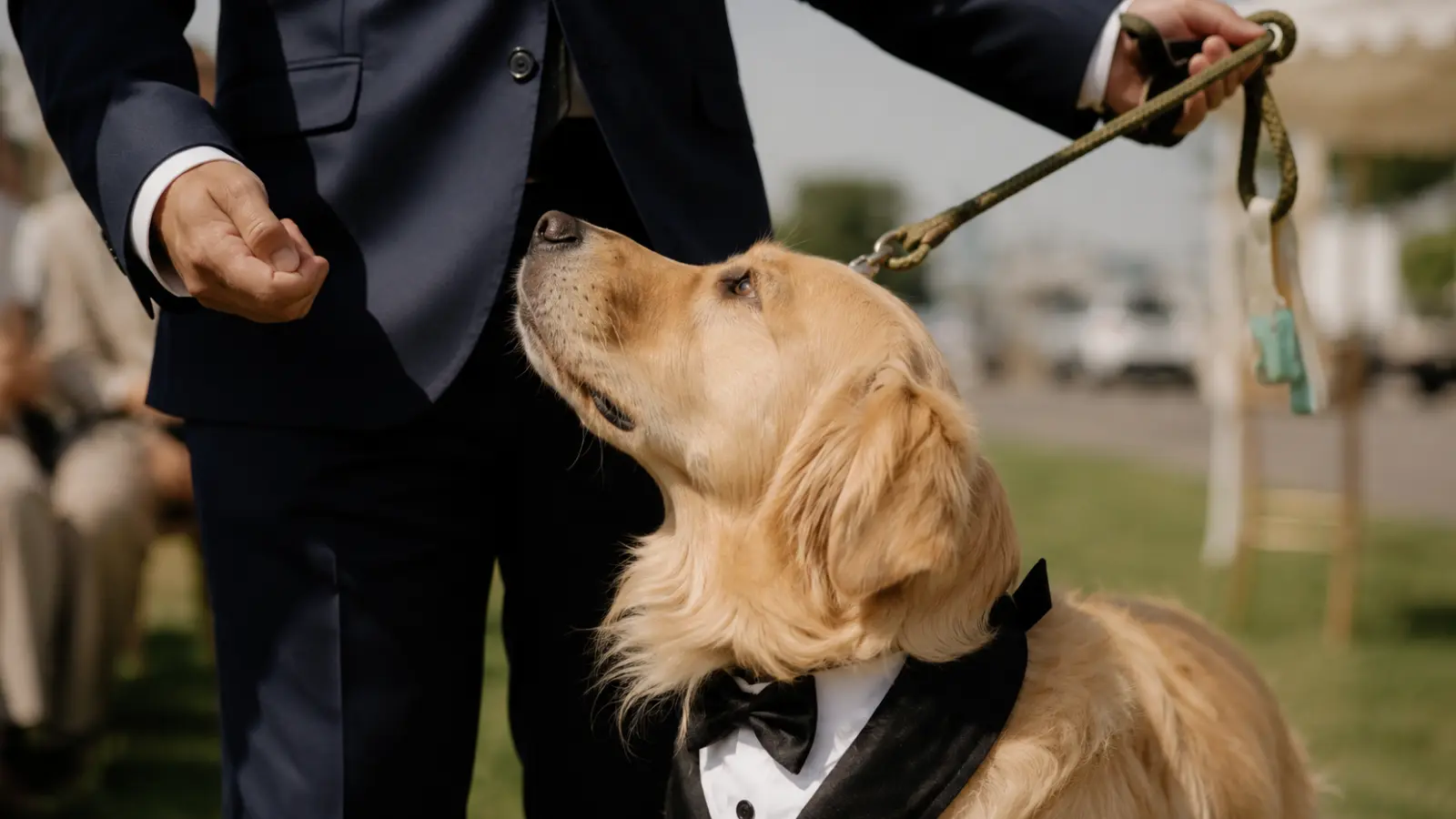
A dog tuxedo or wedding suit is the option most people imagine when they picture a dog at a formal wedding, and it can absolutely be the right choice — for the right dog. That qualification matters more here than anywhere else in this guide.
A dog who has never worn clothing before should not be introduced to a full tuxedo on the morning of the wedding. The sensation of fabric covering the body, restricting the legs, and sitting against the skin is genuinely unfamiliar for a dog who hasn’t experienced it, and the stress response to that unfamiliarity — freezing, trying to remove the garment, refusing to walk normally — is not something you want to manage during a ceremony. If a tuxedo is part of the plan, the dog needs to have been wearing clothing regularly for weeks before the wedding day.
Fit is the second major consideration. A well-fitted tuxedo allows the dog to sit, stand, walk, and shake without the garment bunching, pulling, or restricting movement at the shoulders or legs. A poorly fitted one creates exactly those problems, and also tends to look visibly wrong in photos rather than formal. Measure carefully, order with enough lead time to exchange if the fit is off, and do a full test — including movement, sitting, and a short walk — before the wedding day.
Overheating is a real concern for any full-coverage dog outfit, particularly at outdoor weddings in warmer months or for dogs with heavier coats. Monitor the dog’s breathing and body temperature during any fitting session. If the dog pants heavily, seeks shade, or becomes visibly uncomfortable, the outfit is too warm for the conditions.
Dog Wedding Dress
A dress or gown for a female dog follows the same fundamental rules as any other full-coverage outfit: it works only for dogs who are already comfortable wearing clothing, and it needs to be tested thoroughly before the day. There are a few additional practical considerations specific to the dress format.
Length is the main one. A dress that falls below the dog’s belly or drapes across the paws will catch during movement — the dog will step on it, it will bunch at the chest, and the garment will shift constantly in a way that looks messy in photos and frustrates the animal. A dress designed to sit just at or slightly above the belly line tends to move more cleanly with the dog’s body.
The back opening or closure also needs attention. A dress secured with Velcro, snaps, or a simple tie is easier to put on and take off quickly than one with buttons or hooks, which matters when you’re dressing a dog who may not cooperate indefinitely during the process. Test the full dressing sequence at home — putting it on, having the dog move around, and removing it — so you know exactly what you’re working with before the wedding morning.
Outfit Considerations by Dog Size
Size shapes what’s practical for a dog in wedding attire — not just in terms of how things look, but in terms of what the animal can comfortably wear and move in.
Small Dogs
Small dogs often have an easier time finding fitted attire because the pet clothing market skews toward smaller sizes. The risk is proportion: a heavily embellished outfit on a small dog can look more like a costume than a wedding detail. A simple, well-made piece in a fabric that coordinates with the wedding — rather than the most elaborate option available — tends to photograph more elegantly. Small dogs also tend to overheat more easily, so breathable fabrics are especially important.
Large Dogs
Large dogs are underserved by most pet formalwear options, which means finding a well-fitted tuxedo or dress in a larger size requires more searching and often more lead time. A bandana, floral collar, or bow tie is typically easier to scale up and will photograph just as well. For large dogs who are strong and active, comfort and the handler’s ability to manage the dog reliably should take clear priority over the formality of the outfit.
What Cats Should Wear to a Wedding
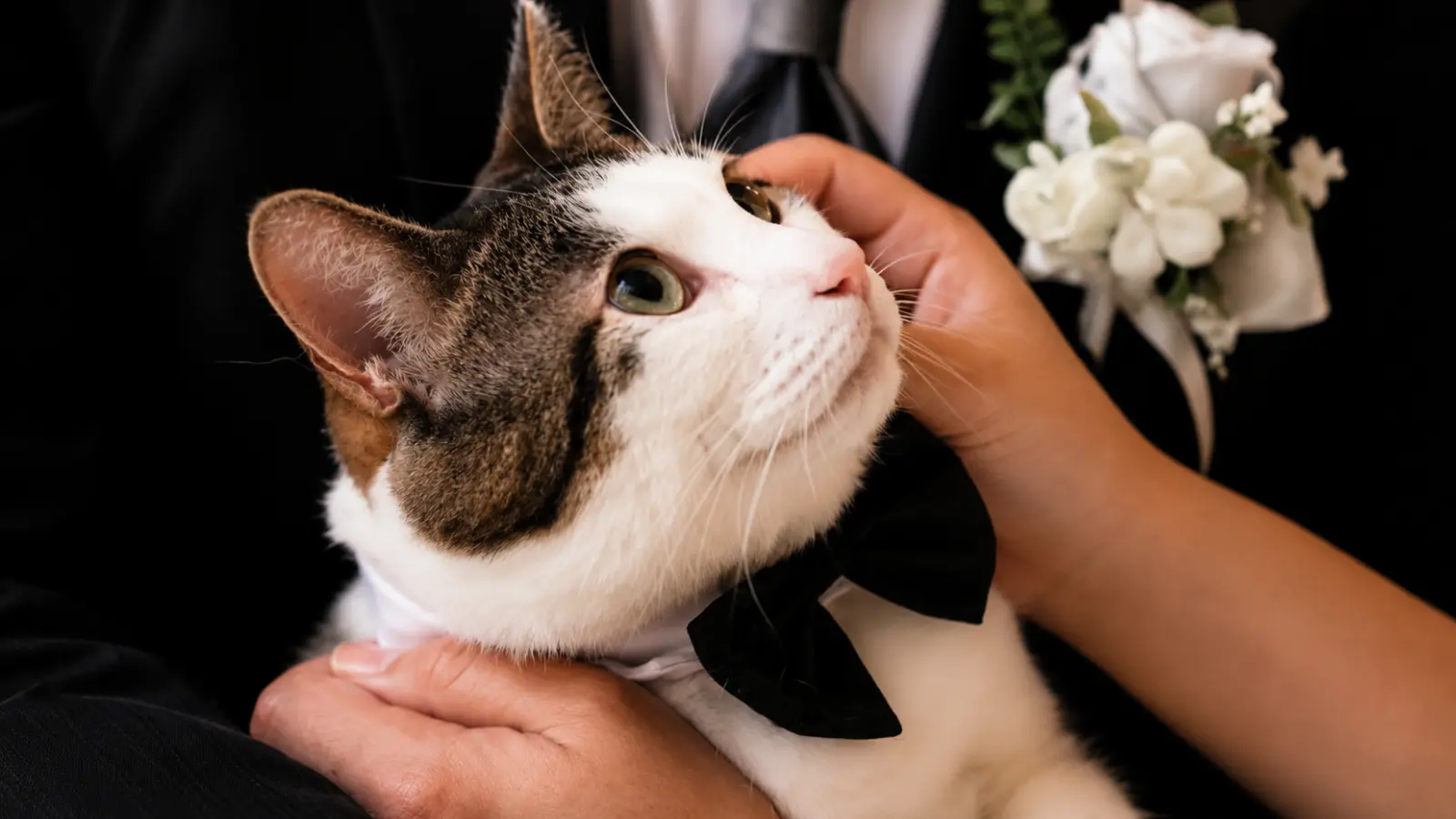
The short answer: as little as possible, and only if the cat tolerates it without visible stress.
Most cats find clothing genuinely distressing. The sensation of fabric on the body, the restriction of movement, and the inability to groom normally are all stressors that many cats respond to by freezing, hiding, or becoming agitated. A cat who appears to be “tolerating” an outfit may actually be in a stress response — immobility in cats is not the same as comfort.
For cats who are unusually relaxed and sociable, a lightweight collar with a small decorative element — a ribbon, a small bow, a single flower — is about as far as is reasonable. Full outfits, harnesses on cats who aren’t already trained to wear one, and any item that covers the face or ears should be avoided entirely.
If the cat is attending the wedding at all, which is a separate decision worth making carefully, keep attire minimal and familiar. If the cat is being honored symbolically — through a photo, an illustration, a bouquet charm — the attire question is moot, and the cat is almost certainly more comfortable at home.
Pet-Safe Flowers and Materials
Any floral or botanical element used in pet attire — collars, crowns, harness decorations, leash accents — needs to be confirmed safe before it goes anywhere near the animal. This applies to fresh flowers, dried flowers, and artificial florals treated with scents, dyes, or preservatives.
The safest approach is to bring a specific list of the flowers and greenery you’re considering to your veterinarian or to cross-reference against the ASPCA’s toxic plant database before finalizing the order. Your florist should also be part of this conversation — not just informed after the collar is designed, but included early enough to make substitutions if needed.
Beyond flowers, check any fabric, dye, or embellishment used in clothing or accessories. Some synthetic dyes and fabric treatments can cause skin irritation in dogs, particularly those with sensitivities. If the dog is wearing something new, watch for scratching, redness, or persistent pawing at the garment during the test period at home.
Comfort Checklist Before the Wedding Day
Every piece of attire the pet will wear should pass through this checklist before the wedding morning — not on the day of, and not based on how it looked in a product photo.
Before any outfit or accessory goes on the pet at the wedding, confirm:
- The pet has worn this specific item at home for at least one full test session
- The pet moves, sits, and walks normally while wearing it
- Nothing restricts breathing, vision, hearing, or leg movement
- Two fingers fit comfortably under any collar, bandana, or neck accessory
- The item stays in place during normal movement without constant adjustment
- All flowers or botanicals have been confirmed non-toxic to this specific animal
- The outfit is appropriate for the temperature conditions of the wedding venue, especially if you are comparing pet-friendly wedding venues with outdoor ceremony spaces
- The pet shows no signs of stress during or after wearing it — no excessive panting, pawing, freezing, or attempts to remove the item
If anything on this list produces a no, revisit the choice before committing to it. A pet who is visibly uncomfortable in their outfit will not photograph well, will not behave as expected during the ceremony, and is not having a good time — regardless of how the outfit looks in isolation.
What to Avoid
A few categories of pet wedding attire look appealing in product listings and cause real problems in practice. These are worth knowing before you order anything.
Anything introduced for the first time on the wedding day. The wedding morning is not the moment to find out how your dog responds to wearing a tuxedo. Test everything in advance — ideally multiple times, in different environments — so there are no surprises.
Outfits that restrict the neck or throat. A collar, bandana, or any neckline that fits tightly restricts breathing and creates sustained discomfort. The two-finger rule should always be followed.
Full coverage for dogs who are not used to clothing. A dress, suit, or costume on a dog who doesn’t normally wear anything is a stress event, not a photo opportunity. For these dogs, a simple collar detail or bandana is genuinely the better choice.
Footwear, unless medically necessary. Dog shoes or boots at weddings are almost universally uncomfortable for dogs who aren’t already trained to wear them. They affect gait, cause frustration, and tend to be removed by the dog within minutes. Skip them.
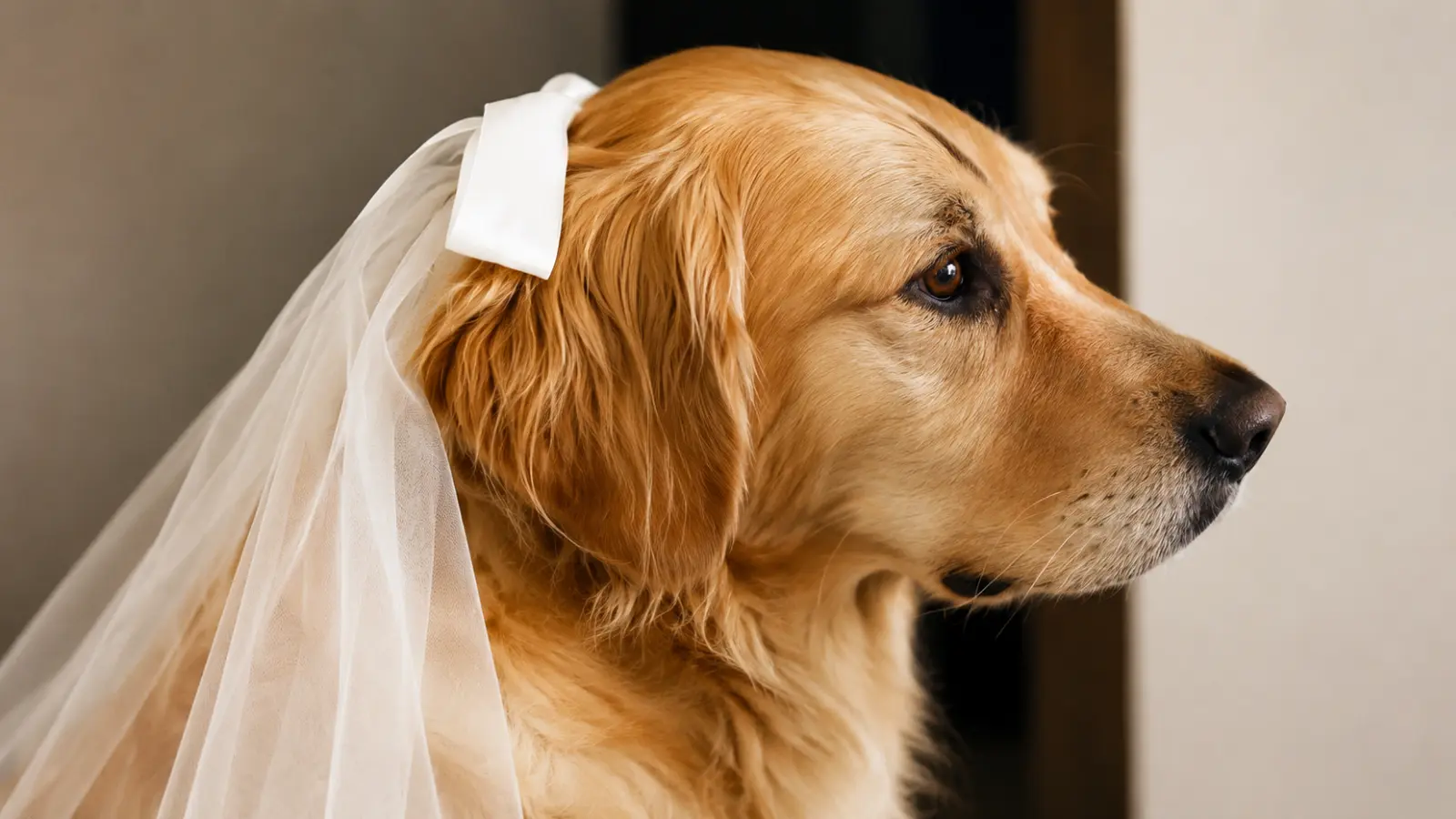
Anything that covers the face, ears, or eyes. Hats, hoods, veils, and headpieces that sit over or near the dog’s sensory organs are almost always distressing and can affect the animal’s awareness of their surroundings in a way that creates unpredictable behavior.
Garments designed only for the photo, not for the day. If an outfit looks beautiful hanging on a hanger but requires the dog to be held still to stay in place, it is not the right choice for a wedding ceremony. The animal needs to move, sit, be handled, and exist in the outfit for however long the appearance lasts.
Pet Wedding Attire Ideas
Looking for the perfect pet wedding attire? Explore elegant bandanas, floral collars, bow ties, tuxedos, wedding dresses, stylish leashes, and comfortable accessories to help your dog or cat look beautiful while staying happy throughout the celebration.
The Best Outfit Is the One Your Pet Enjoys Wearing
The most memorable wedding photos rarely come from the most elaborate outfit. They come from pets that look relaxed, comfortable, and confident because what they’re wearing feels familiar and allows them to move naturally. A simple bandana or floral collar often creates a more timeless look than a complicated costume that causes stress.
Choose attire that reflects your wedding style without asking your pet to become someone they’re not. When comfort, safety, and thoughtful styling come together, your pet becomes part of the celebration in the most natural and beautiful way possible.
Frequently asked questions (FAQ)
What should a pet wear to a wedding?
The best wedding attire depends on the pet’s comfort, experience with clothing, and role during the celebration. Many dogs look great in a simple bandana, bow tie, floral collar, or decorative harness, while pets already accustomed to wearing clothes may also be comfortable in a tuxedo or dress. Whatever you choose, the outfit should never restrict movement, breathing, or vision.
How do you choose the right wedding outfit for a pet?
Start with your pet’s personality rather than the style of the wedding. Consider whether they have worn clothing before, how long they will be wearing the outfit, the weather, and whether they will participate in the ceremony or only in photos. The best outfit is the one your pet can wear comfortably without showing signs of stress.
Are dog tuxedos and dresses safe for weddings?
Yes, if they fit correctly and the dog is already comfortable wearing clothing. The outfit should allow normal walking, sitting, and breathing without overheating or restricting movement. Dogs who have never worn clothing should not be introduced to a full tuxedo or dress on the wedding day.
What flowers are safe for a pet floral collar?
Pet-safe flowers commonly include roses, orchids, sunflowers, chamomile, and snapdragons. Toxic flowers such as lilies, tulips, hydrangeas, azaleas, and baby’s breath should be avoided. Always confirm every flower with your florist before placing it on any pet accessory.
Can cats wear wedding outfits?
Most cats are happiest with little or no attire. A lightweight collar or small bow attached to their regular collar is usually the safest choice for cats that tolerate accessories. Full outfits are rarely appropriate because many cats become stressed when clothing restricts their movement or grooming.
What should you avoid when choosing pet wedding attire?
Avoid outfits that are too tight, heavy, hot, or unfamiliar to the pet. Never introduce new clothing for the first time on the wedding day, avoid anything that covers the eyes or ears, and make sure every accessory has been tested well in advance. If your pet appears uncomfortable, simplifying the outfit is always the better choice.