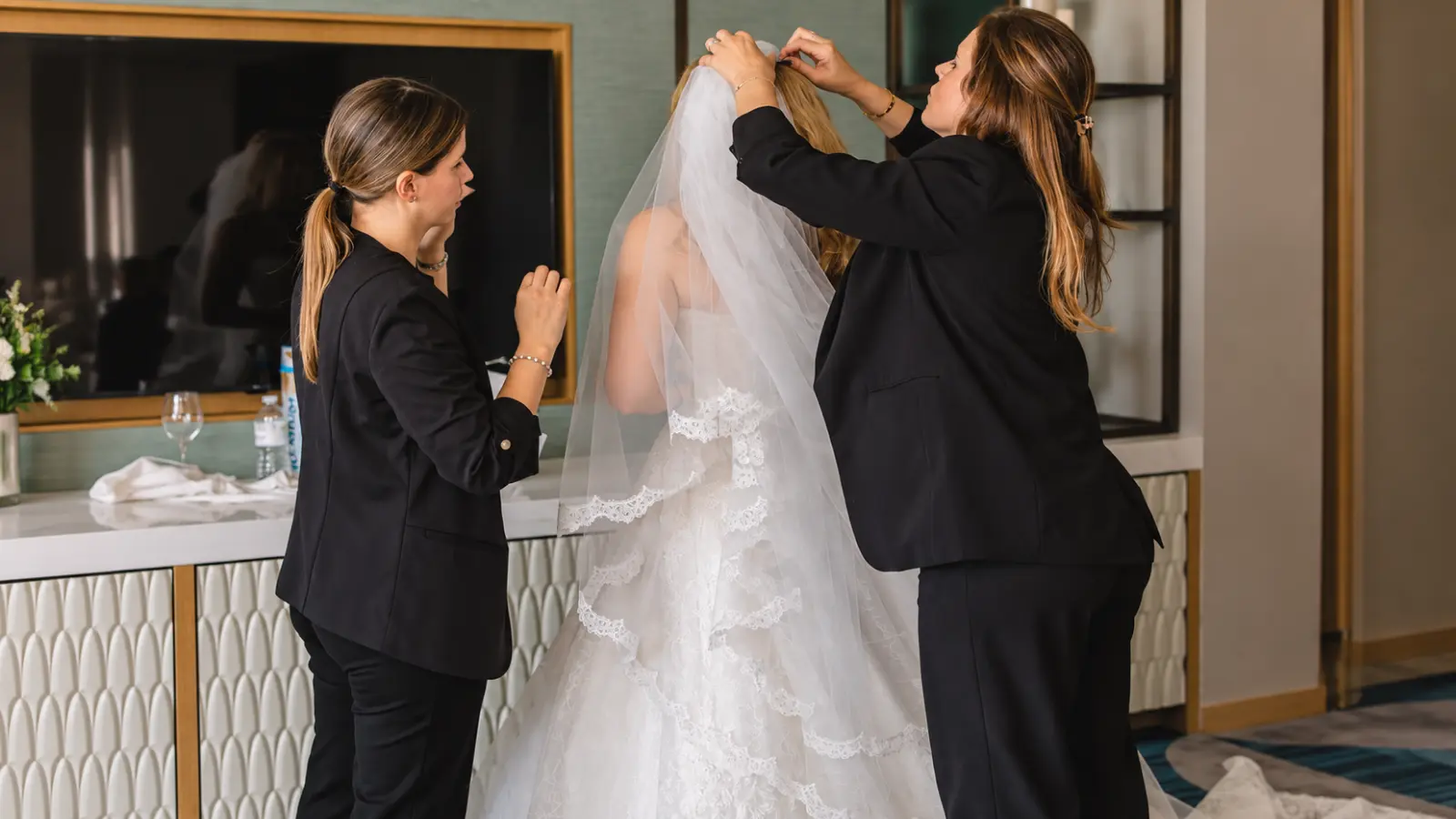

The most useful Questions to Ask Wedding Vendors are the ones that reveal exactly what you are buying, what can change the final price, who will actually perform the service, and what happens if the wedding plan changes. A good consultation should leave you with fewer unknowns, not just a positive impression.
Start with four universal areas: availability, scope, money, and logistics. Then confirm the contract details that can create problems later, including deposits, payment schedules, cancellation and postponement, staffing, insurance, travel, setup, overtime, substitutions, and backup plans.
This guide covers the Questions to Ask Wedding Vendors before you book across almost every category, with a focus on answers that should become clear written terms rather than promises you are expected to remember after the consultation ends.
Know What You Need Before the Consultation
Vendor consultations are more useful when you arrive with enough event information for the provider to answer accurately.
Bring the confirmed wedding date if you have one, venue or location, approximate guest count, service window, event format, and the specific job you expect the vendor to perform. If the venue has known access, insurance, load-in, or approved-vendor requirements, have those available too.
You do not need every wedding decision finished. You do need enough context to avoid comparing quotes built around different assumptions.
Clear inputs produce clearer answers.
Universal Wedding Vendor Questions at a Glance
The table below turns the most important universal questions into a practical review tool: why the answer matters, what should make you pause, and what deserves written contract follow-up.
| Question | Why | Red Flag | Contract Follow-Up |
|---|---|---|---|
| Are you available for our date and full service window? | Confirms actual commitment, not partial availability | Vague timing or unresolved overlap | Date, arrival, start, finish |
| What exactly is included in this proposal? | Prevents scope assumptions | Broad promises without listed deliverables | Itemized scope and exclusions |
| What can increase the final price? | Reveals variable costs | Unclear or open-ended extras | Rates, triggers, approval process |
| What are the deposit and payment terms? | Clarifies cash timing and reservation status | Conflicting verbal and written terms | Deposit, due dates, payment method |
| What happens if we cancel or postpone? | Shows financial exposure | No clear policy | Cancellation, postponement, refund terms |
| Who will actually work our wedding? | Confirms staffing and substitutions | Unknown team until the event | Named lead or substitution policy |
| Do you carry the insurance our venue requires? | Avoids compliance problems | Vendor cannot document required coverage | Insurance obligations if applicable |
| What travel, setup, delivery, or breakdown fees apply? | Captures logistics costs | Fees defined only after booking | Travel area, setup, delivery, pickup fees |
| What is your overtime policy? | Prepares for schedule extensions | No rate or authorization process | Overtime rate and approval authority |
| What happens if you cannot perform? | Tests contingency planning | No backup or substitution process | Replacement, refund, notification terms |
A good answer is not just reassuring; it is specific enough to translate into a contract term, deliverable, price rule, or contingency process.
Availability and Date Commitment
Start by confirming more than “Are you free that day?”
Ask whether the vendor is available for the full service window, whether they have another event before or after yours, when they expect to arrive, and what time their contracted service ends.
If the vendor uses multiple teams, ask whether your date is being held for a specific person or simply for the company. If availability depends on a deposit or signed contract, clarify exactly what secures the date.
Availability should mean a defined commitment, not a casual calendar opening.
Scope and Deliverables
Scope is where many vendor misunderstandings begin.
Ask what is included, what is excluded, how many hours or units are covered, what setup and breakdown responsibilities belong to the vendor, what deliverables you receive, and what services require an upgrade or add-on.
If a proposal uses broad phrases such as “full service,” “complete package,” or “day-of coverage,” ask the vendor to define those terms in practical detail.
Knowing what to ask wedding vendors about scope is less about collecting features and more about identifying the edge of the contract.
Pricing, Fees, and What Changes the Total
The quoted price is only useful if you know what can move it.
Ask whether pricing is fixed, hourly, per person, per unit, or based on another variable. Then ask about service charges, administrative fees, delivery, travel, setup, breakdown, overtime, staffing, rentals, taxes, minimums, and optional upgrades.
Do not assume the lowest proposal is the lowest final cost if the scopes are different.
The important question is not “How much is it?” but “What is included in this number, and what can increase it?”
Deposit, Payment Schedule, and Cancellation
Before paying anything, understand what the payment does and what happens if plans change.
Ask how much is due to reserve the date, whether the initial payment is refundable, when future payments are due, what forms of payment are accepted, and whether missed deadlines affect the reservation.
Then ask separately about cancellation and postponement. These are not necessarily the same policy. Confirm what happens to amounts already paid and whether payments can transfer to a new date.
The contract should answer these questions without requiring interpretation.
Staffing and Who Actually Works the Wedding
Ask who will physically perform the service on the wedding day.
The person selling the service may not be the person executing it. That can be completely normal for larger companies, but you should know whether a specific lead is guaranteed, how assistants or team members are assigned, and what qualifications or supervision apply.
Also ask what happens if the assigned person becomes unavailable.
You are hiring the person who executes on the day, not just the name on the proposal, so this is worth confirming early.
Insurance and Venue Requirements
Insurance questions should be tied to the venue’s actual requirements rather than used as a generic box to check.
Ask whether the vendor can provide any documentation the venue requires and whether there are deadlines or costs associated with certificates, additional insured requests, or other compliance steps.
Requirements vary by venue, service, and jurisdiction, so confirm them with the venue rather than assuming every wedding vendor needs the same coverage.
If the venue requires documentation, make that obligation explicit early enough to solve any problem before the event.
Setup, Travel, and Access
Logistics can create unexpected cost and timeline pressure even when the core service is straightforward.
Ask how much setup time the vendor needs, when they require access, who provides loading or parking access, whether stairs or long carries affect service, and what travel radius is included.
If the wedding uses multiple locations, ask whether travel time counts against contracted service hours and whether mileage, lodging, parking, tolls, or other travel costs apply.
These are the questions couples most often skip in a consultation, and the ones that cause the most stress on the wedding day itself.
Overtime and Schedule Changes
Weddings can run late, so overtime should be understood before the decision becomes emotional at the end of the night.
Ask the overtime rate, billing increment, who is authorized to approve the extra time, whether staff can legally or practically stay later, and when the decision must be made.
Also ask what happens if the wedding-day schedule shifts earlier rather than later. Some services may require additional arrival time even if the total coverage does not change.
A clear overtime process keeps a timeline change from becoming a surprise invoice.
Backup Plans and Substitutions
Every vendor category has different failure points, but every vendor should be able to explain what happens if they cannot perform as contracted.
Ask whether they use substitute staff, partner companies, backup equipment, replacement inventory, or refund provisions. You do not need to demand an unrealistic guarantee that nothing can go wrong; you need to understand the process if something does.
The strongest answer explains communication, replacement authority, timing, and financial responsibility.
Ask this before you sign, not after something has already gone wrong.
Turn Verbal Answers Into Contract Follow-Up
The consultation is where you discover the terms; the contract is where important terms should become enforceable obligations.
After the call, compare your notes with the proposal or agreement. Look for:
- Scope: are promised services and deliverables actually listed?
- Money: are deposit, payment dates, variable fees, and overtime rates clear?
- People: does the agreement address the lead person, team, or substitution policy when that matters?
- Logistics: are travel, setup, access, delivery, and breakdown responsibilities defined?
- Contingency: does the contract explain cancellation, postponement, inability to perform, or replacement?
If the answer to an important question matters to your decision, do not rely on memory alone. Ask for the contract or written proposal to reflect it.
Make Sure the Important Answers Survive the Consultation
Questions to Ask Wedding Vendors are most useful when the answers change what you understand about scope, price, responsibility, or risk. Confirm exactly what is included, what can increase the total, who will perform the service, how setup and travel work, and what happens if the schedule or wedding itself changes.
Then compare those answers with the proposal or contract before you book. If an important promise affected your decision, it should not exist only in a conversation. The strongest vendor consultation is the one that turns uncertainty into clear written expectations before money changes hands.
Frequently asked questions (FAQ)
What questions should you ask a wedding vendor before booking?
Ask about date availability, exact scope, deliverables, total pricing structure, additional fees, deposit and payment terms, cancellation and postponement, who will actually work the wedding, insurance requirements, travel and setup, overtime, and what happens if the vendor cannot perform. Any answer that materially affects your decision should also be reflected in the written contract or proposal.
Should you ask every wedding vendor the same questions?
Use the same core questions for availability, scope, pricing, payments, logistics, staffing, and contingency plans, then add technical questions specific to that service. A photographer, caterer, florist, DJ, and rental company will need different category-specific follow-up, but the universal contract and responsibility questions still apply to all of them.
What is the biggest red flag during a wedding vendor consultation?
Consistent vagueness around scope, pricing, extra fees, staffing, cancellation, or backup responsibility is a significant warning sign. You do not need every answer to match your preference, but important terms should become more precise as the consultation progresses rather than remaining unclear until after booking.
Should wedding vendor promises be written into the contract?
If a promise materially affects why you are hiring the vendor, ask for it to appear in the contract, proposal, scope of work, or another written document incorporated into the agreement. Important details such as deliverables, hours, staffing, fees, overtime, setup, substitutions, or special commitments should not depend only on memory of a conversation.
Can you ask a wedding vendor about insurance before booking?
Yes. If the venue requires specific insurance documentation or coverage, confirm before signing that the vendor can meet those requirements. Ask what documentation they can provide, whether additional insured requests are possible when required, and whether any related deadlines or costs apply.
What should you bring to a wedding vendor consultation?
Bring the wedding date, venue or location, approximate guest count, expected service window, event format, relevant venue requirements, and a clear description of what you want the vendor to provide. Those inputs help vendors give more accurate answers and make it easier to compare proposals built around the same assumptions.

About the Author
Débora Justo
Founder and editor of EVORÉ, creating practical wedding planning resources, thoughtful inspiration and useful tools for the decisions that shape a celebration.
Read more about the author →