
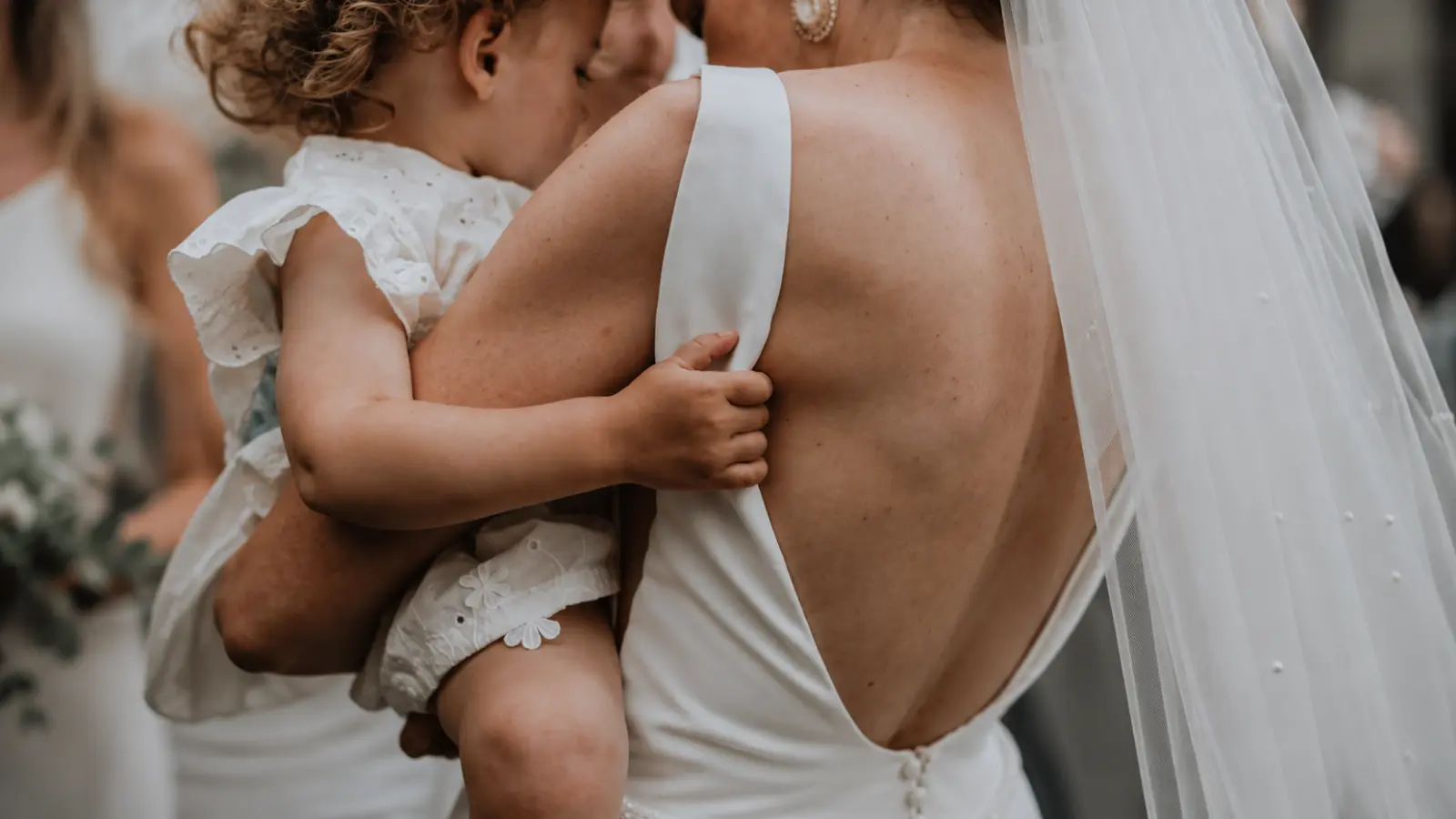
Should You Invite Children to Your Wedding? The decision is usually much easier when you choose one clear policy before discussing individual families: invite all children, invite selected children under a defined rule, or plan an adults-only wedding.
None of those options is automatically more correct than the others. The best choice depends on the type of celebration you want, the number of families involved, your venue, catering and seating logistics, and how consistently the policy can be applied across comparable households.
This guide compares the three main approaches, explains how to handle wedding-party children and infants, and shows how your child policy affects guest count, meals, seating, venue planning, and communication.
Start With One of Three Clear Policy Options
Before discussing individual families, decide which overall approach best fits the wedding.
The three clearest options are:
- Invite all children: every invited household is welcome to bring their children, with no separate approval needed.
- Invite selected children: only children who meet a specific rule are included, such as immediate family or wedding-party children.
- Adults-only: the guest list excludes children except for any narrowly defined exceptions the couple decides in advance.
Choosing the category first keeps the conversation focused on policy rather than on individual pressure.
Children-at-Wedding Policies Compared
The table below shows the strengths and tradeoffs of each approach, along with the communication challenge that comes with it.
| Policy | Pros | Challenges | Communication |
|---|---|---|---|
| All Children | Simple rule, family-inclusive, fewer exception debates | Higher guest count, more seating and meal variables | Straightforward because households follow one rule |
| Selected Children | Protects capacity while including priority children | Requires a clear threshold and careful consistency | Needs the rule to be applied predictably |
| Adults-Only | Reduces head count and simplifies some logistics | May affect some families’ ability or willingness to attend | Must be clear early enough for guests to plan |
No option eliminates tradeoffs. The best policy is the one that fits the wedding structure and can be applied without constant exceptions.
Option 1: Invite All Children
Inviting all children is the simplest policy to explain because the rule is broad and easy to apply.
This approach can make sense when the wedding is strongly family-centered, when many close relatives have children, or when excluding children would affect a large share of the guest list.
The tradeoff is structural. Children still occupy capacity, affect seating, may require different meal planning, and can change the number of tables or household configurations you need.
If you plan to invite children, wedding planning should count them from the start rather than treating them as an add-on after the venue is booked.
Option 2: Invite Selected Children
Selected-children policies can work well when the rule is based on a recognizable category rather than individual preference.
Examples include inviting only children in the immediate family, only children participating in the wedding party, or only children within another clearly defined family grouping.
This approach protects capacity while still including children who are especially connected to the couple or ceremony.
The challenge is consistency. If the rule appears to change from household to household, the policy can feel personal even when the original goal was logistical.
Option 3: Plan an Adults-Only Wedding
Adults only wedding planning can simplify head count, seating, and some meal logistics, but it also creates a planning burden for guests with children.
An adults-only policy may fit a formal evening reception, a very limited venue, a small guest-count target, or a celebration where the couple wants to prioritize adult socializing.
It should not be framed as a judgment about children or parenting. It is a format choice for the event.
A child free wedding guest list is easiest to manage when the policy is settled early and exceptions are intentionally limited.
Build Exceptions into the Rule, Not Around It
Exceptions are sometimes necessary, but they should be part of the policy design rather than created one family at a time.
For example, a couple may decide on an adults-only reception with exceptions only for children who are in the wedding party. Another couple may allow nursing infants while keeping the broader event adults-only.
The narrower and more explainable the exception, the easier the policy is to maintain.
If every exception creates three more exceptions, the original rule may not be workable.
Wedding-Party Children
Children serving as flower girls, ring bearers, junior attendants, or other wedding-party roles may reasonably be treated differently from the general guest list.
They have an assigned function in the ceremony, which gives the couple a clear reason for including them even when the rest of the event is adults-only or limited to selected children.
Decide whether those children are staying for the full reception or participating only in specific portions of the day.
The key is to define the exception as “wedding-party children,” not as a one-off favor for one household.
Infants and Babies
Infants are one of the most common gray areas because families may not view a very young baby the same way they view an older child.
If the couple wants to allow infants as an exception, define that category clearly enough that similar families are treated similarly.
Venue setup, stroller space, seating, sound, and feeding needs can also affect whether the exception is practical.
The couple does not need a universal rule that applies to every wedding; they need a rule that fits their own event and guest list.
Check the Venue Before Finalizing the Policy
The venue can influence the child policy more than couples expect.
Check total capacity, stairways, balconies, pools, open water, transportation access, late-night restrictions, and any site-specific rules that could affect younger guests. If the venue has policies that matter, use those verified rules when finalizing the list rather than assuming every space treats children the same way.
The venue should not be the only factor, but it can make one policy much easier to execute than another.
Guest-list policy and venue selection should support each other.
Catering and Meal Planning
Children can affect catering even when they do not receive the same meal as adults.
Some caterers may offer children’s meals, age-based pricing, or different service options, while others may not. Because those policies vary by vendor, verify them directly rather than assuming there is a universal standard.
Track each invited child as an actual guest in the master list so the final count reflects the people the caterer needs to serve.
The wedding guest list pillar should remain the master record for attendance and final head count.
Seating and Table Planning
Children should be included in seating decisions as early as the household structure becomes clear.
You may seat children with their parents, group older children together where appropriate, or keep wedding-party children close to the adults responsible for them.
The right approach depends on age, family relationships, table sizes, and the event format. Do not assume a separate “kids’ table” is necessary or desirable.
Seating should reflect the real households and supervision structure already present in the guest list.
Communicate the Policy Clearly and Consistently
A clear policy becomes much easier to manage when guests can understand it without guessing.
The most important communication decisions are timing and consistency: settle the child policy before invitations are addressed, make sure the guest list reflects the intended household members, and keep the same rule across comparable families.
If there are narrow exceptions, make sure the couple understands exactly why they exist before communicating with guests.
This page does not cover invitation wording in detail, but the underlying principle is simple: guests should not have to infer who is included.
Choose the Policy Before You Choose the Exceptions
Should You Invite Children to Your Wedding becomes much easier to answer when the policy is decided before individual households are reviewed. Choose all children, selected children under a clear rule, or an adults-only format, then test that decision against venue capacity, catering, seating, wedding-party children, and any narrow infant exceptions.
The goal is not to create a rule that pleases every family. It is to create one that fits the wedding and can be applied consistently enough that guests understand who is included without having to guess.
Frequently asked questions (FAQ)
Should you invite children to your wedding?
There is no universal answer. Choose the policy that best fits the type of celebration you want, the number of families involved, your venue, guest-count limit, catering and seating logistics, and how consistently you can apply the rule. The clearest options are to invite all children, invite selected children under a defined category, or plan an adults-only wedding.
Is it okay to have an adults-only wedding?
Yes. An adults-only wedding is a valid event-format choice as long as the policy is decided before invitations are finalized, communicated clearly, and applied consistently across comparable households. Keep any exceptions narrow and intentional so the rule does not become difficult for guests to understand.
Can you invite some children but not others?
Yes, when the distinction follows a clear rule such as immediate-family children, wedding-party children, or another defined category. Avoid deciding family by family without a consistent standard, because a selected-children policy becomes much harder to explain when similar households are treated differently.
Should flower girls and ring bearers be invited to an adults-only reception?
They can be. Children with an assigned wedding-party role are a logical exception to an adults-only policy because their presence is connected directly to the ceremony. Decide in advance whether they will remain for the entire reception or participate only in specific parts of the day.
Do children count toward the wedding venue guest limit?
Generally, every person attending should be included in your planning count, including children. However, venue capacity and fire-code policies can vary, so confirm the property’s actual rules before relying on assumptions. Children should also be included when planning seating, catering, and other attendance-dependent services.
How do you keep a wedding child policy fair across families?
Choose the policy before evaluating individual households, then apply the same rule to comparable families. Define any exceptions clearly, record invited children individually in the master guest list, and make sure the policy remains consistent from invitations through catering, seating, and the final count.

About the Author
Débora Justo
Founder and editor of EVORÉ, creating practical wedding planning resources, thoughtful inspiration and useful tools for the decisions that shape a celebration.
Read more about the author →