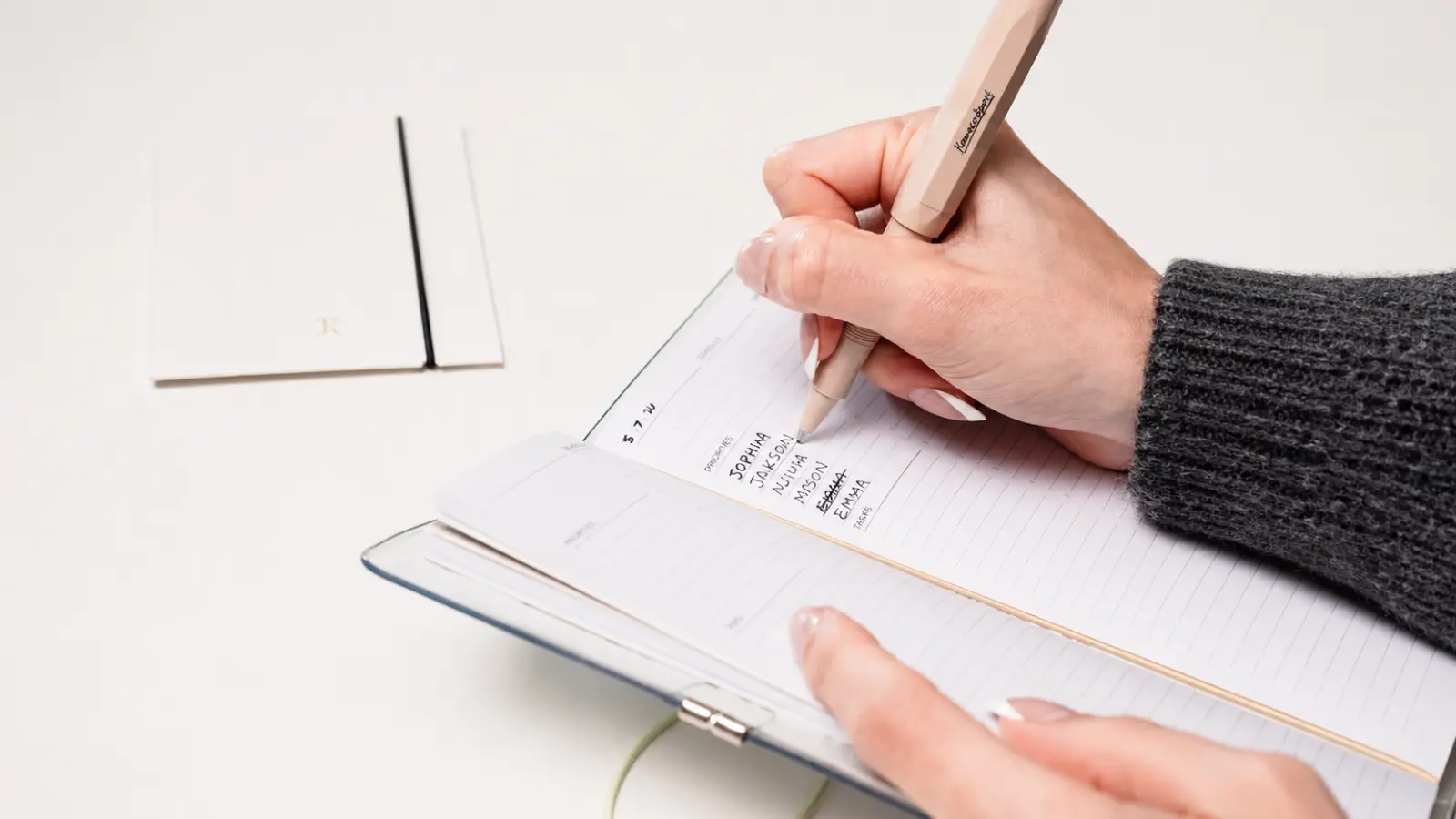

A Wedding A-List and B-List system can help when your guest list is close to capacity and you genuinely want to invite additional people if confirmed declines create room. It works much less well when second-wave guests receive invitations so late that the timing feels obvious or leaves too little time for travel, lodging, childcare, or a normal RSVP decision.
The important distinction is that A-list and B-list should describe invitation timing, not personal worth. Your A-list receives the first invitation wave, while your B-list contains people you would sincerely be happy to host if real capacity becomes available.
This guide explains how to manage a Wedding A-List and B-List using capacity limits, save-the-date rules, invitation waves, RSVP timing, travel considerations, stop dates, and clear tracking. It also shows when skipping the B-list entirely is the cleaner choice.
A-List vs. B-List: What the Difference Really Means
The A-list contains the guests you are ready to invite in the first wave. The B-list contains guests you would like to invite if A-list declines create capacity.
The distinction should be operational, not emotional. A B-list guest is not necessarily less important as a person; the list may simply reflect a venue ceiling, budget limit, or a decision to prioritize immediate family and closest relationships in the first wave.
The system becomes risky when couples use a wedding invitation b list as a holding zone for people they are unsure they actually want there. If you would feel uncomfortable receiving a “yes” from someone, they do not belong on either list.
Start With Capacity, Not Hope
Do not build invitation waves around the assumption that “some people probably won’t come.” Start with the number of guests your venue and budget can actually absorb.
If your maximum is 120, your first invitation wave should reflect the possibility that the invited group could accept. Sending 145 first-wave invitations because you expect declines is not a capacity strategy; it is an over-invitation risk.
The wedding guest list pillar should hold the master count, while the A/B system controls when invitations move from considered to sent. Capacity should be the fixed boundary that makes invitation waves useful rather than speculative.
A-List and B-List Timing at a Glance
The table below shows the functional difference between the two lists. Exact mailing dates vary by wedding, travel needs, and stationery timeline, so the important comparison is relative timing.
| List | Invite Timing | RSVP Deadline | Risk |
|---|---|---|---|
| A-List | First invitation wave | Early enough to leave decision time | Over-inviting if capacity is ignored |
| Early B-List | As soon as real A-list declines create seats | Normal, usable response window | Can feel secondary if timing is visibly compressed |
| Late B-List | Close to final vendor deadlines | Shortened response window | High risk of awkward timing and travel difficulty |
The safest B-list invitation is the one that still feels like a normal invitation, not an emergency seat-fill.
Handle Save-the-Dates Carefully
Save-the-dates create one of the biggest complications in an A/B strategy because they signal a clear intention to invite.
Send save-the-dates only to guests you are confident will receive an invitation. Do not send one to a possible B-list guest simply to “keep the option open.” That creates an expectation the later capacity plan may not be able to honor.
For B-list guests, the absence of a save-the-date can make a later invitation more noticeable, especially for destination or travel-heavy weddings. That does not automatically make the system inappropriate, but it makes timing more sensitive — the more planning a guest must do to attend, the less suitable they are for a late invitation wave.
Plan Invitation Waves Before You Mail Anything
Invitation waves work better when they are designed in advance rather than improvised after RSVPs begin arriving.
Before the first invitations go out, define:
- A-list size: how many seats are represented in the first wave.
- B-list order: which guests move first if capacity opens.
- Minimum planning window: the latest point at which a second-wave invitation would still feel reasonable.
- Stop date: the point when you will stop issuing new invitations even if late declines appear.
This prevents the couple from making a fresh emotional decision every time one RSVP changes.
Use RSVP Timing to Open Real Seats
A B-list invitation should be triggered by a real decline, not by silence.
A pending RSVP still represents a possible occupied seat. If you invite someone from the B-list before the first guest has declined, you risk exceeding capacity if both accept.
This is why the first-wave RSVP process needs enough time to produce useful information before the second wave becomes impractical. If the wedding timeline is too compressed to create that window, the B-list strategy may not be a good fit.
Be Extra Careful With Travel Guests
Travel guests need more consideration because attendance may require flights, lodging, time off work, childcare, or ground transportation.
A late B-list invitation can be technically possible while still being impractical for the person receiving it. If a guest would need substantial travel planning, place them higher in the invitation sequence or do not rely on them as a late-wave invite.
Destination weddings and holiday weekends make this issue even more pronounced because travel inventory and personal schedules may be less flexible. Timing should respect the work required to say yes.
Who Belongs on a B-List?
B list wedding guests should be people you genuinely want at the wedding, not people you are inviting only because another seat became available.
Good B-list candidates are often relationships that are meaningful but fall just outside the first-wave capacity: extended friends, some family friends, newer but real friendships, or other people the couple would happily host if the room allowed.
Avoid placing someone on the list if you would feel relieved if they declined. That is a sign the issue is not capacity; it is whether the invitation should exist at all. A B-list is a timing tool, not a politeness list.
When Not to Use a B-List
A B-list is not appropriate for every wedding.
Skip it when:
- The timeline is already short: second-wave guests would have too little time to respond or plan.
- Most guests must travel: late invitations would create unreasonable logistics.
- The first-wave RSVP deadline is close to vendor deadlines: there is no meaningful second-wave window.
- The social circle overlaps heavily: guests are very likely to compare invitation timing.
- You do not actually want the B-list guests there: capacity should not manufacture invitations.
In those situations, a smaller final list from the beginning is cleaner than an invitation-wave strategy.
Track Waves Without Mixing Statuses
The A/B system should live inside the same master guest list, not in two disconnected spreadsheets.
Use separate fields for Priority List, Invitation Status, Invitation Sent Date, RSVP Status, and Notes. A guest can be “B-list” in priority but later become “Invited” and then “Accepted.” Those are different pieces of information.
This matters because “B-list” should describe the invitation sequence, not remain as the guest’s permanent status after they are invited. Clean tracking keeps the process operational rather than personal.
Use a B-List Only While the Invitation Still Feels Real
A Wedding A-List and B-List can help manage limited capacity, but only when confirmed declines create genuine openings early enough for another guest to receive a normal invitation experience. Build the first wave around the maximum number you can actually host, treat unanswered RSVPs as occupied seats, and stop issuing new invitations once the remaining planning window becomes unreasonable.
The B-list should contain people you would truly be happy to see accept, not names held in reserve simply because a seat might become available. When timing, travel, or social overlap makes the second wave feel more like filling vacancies than inviting guests, a smaller final list is the better system.
Frequently asked questions (FAQ)
How do you manage an A-list and B-list for a wedding?
Start with the maximum number of guests your venue and budget can support. Send the first invitation wave only to a group that could all accept without exceeding capacity, then move B-list guests into the invited group only after confirmed declines create real seats. Track priority list, invitation status, sent date, and RSVP status separately so the B-list remains a timing tool rather than a permanent label.
Is it rude to have a B-list for a wedding?
Not automatically. The main risk is making the second invitation wave feel rushed or obviously secondary. A B-list works best when later guests still receive enough time to respond, arrange travel if needed, and make normal plans to attend. If the remaining window is too short, it is usually better to stop sending invitations.
Should B-list guests receive save-the-dates?
Usually not. Send save-the-dates only to guests you are confident will receive a formal invitation, because a save-the-date creates a reasonable expectation that an invitation will follow. For guests who may only be invited if capacity opens later, wait until a real seat is available.
How soon should you invite someone from the B-list after a decline?
Invite them as soon as the seat is genuinely available and there is still enough time for a normal response and planning window. There is usually no advantage to holding confirmed openings for weeks just to send several second-wave invitations together if the remaining timeline is becoming tighter.
Can you invite B-list guests before all A-list RSVPs are in?
Yes, but only when confirmed declines have already created enough capacity. Unanswered invitations should still be treated as potentially accepted seats. Inviting against pending responses can push the wedding over the venue or budget limit if both groups ultimately say yes.
Should out-of-town guests be on the B-list?
They can be, but they are usually less suitable for a late invitation wave because flights, lodging, time off work, childcare, and transportation may require more lead time. Guests with significant travel needs are better placed earlier in the invitation sequence when possible.

About the Author
Débora Justo
Founder and editor of EVORÉ, creating practical wedding planning resources, thoughtful inspiration and useful tools for the decisions that shape a celebration.
Read more about the author →