Wedding cake cost depends on several factors, including guest count, cake size, design complexity, frosting type, location, and the bakery you choose. While some couples spend a few hundred dollars on a simple wedding cake, custom tiered designs with detailed decoration, specialty flavors, and professional delivery can cost significantly more.
Wedding cake pricing surprises many couples because the final quote is not based on ingredients alone. A custom wedding cake includes design planning, baking, decorating time, structural work, transportation, and setup. Two cakes that serve the same number of guests can have completely different prices depending on details like handmade sugar flowers, fondant work, multiple tiers, or intricate finishes.
In this guide, you’ll learn how much wedding cakes typically cost, average prices by guest count, price per slice, two-tier and three-tier cake costs, what affects pricing, and practical ways to save money while still choosing a cake that feels beautiful and intentional for your wedding.
Average Wedding Cake Cost in the U.S.
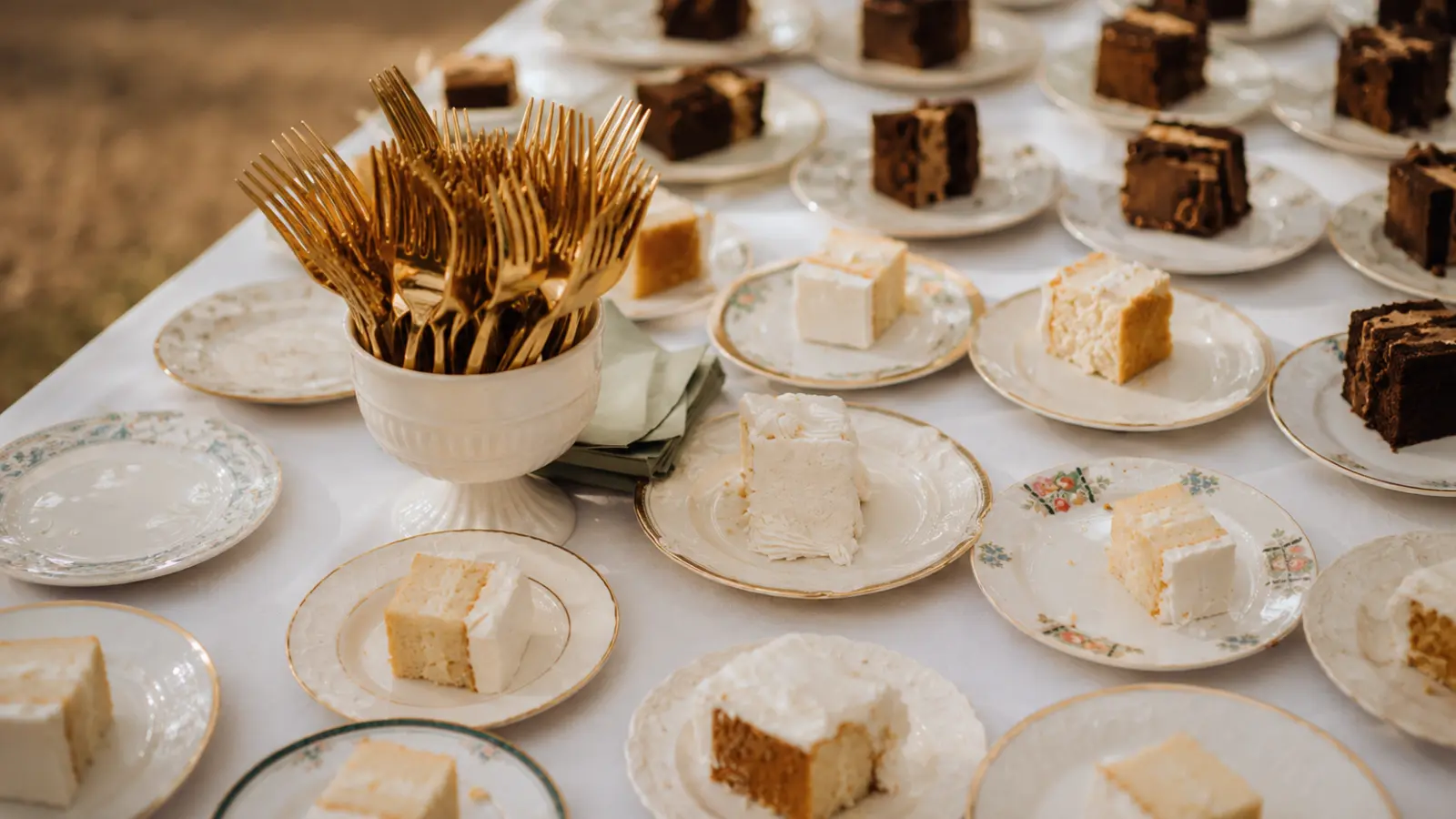
The most honest answer to “how much does a wedding cake cost?” is: it depends on who is making it. That is not a deflection — it is the single most important variable in the price.
A grocery store wedding cake can sometimes cost a few hundred dollars, depending on the bakery, size, and level of customization. A regional bakery that regularly makes wedding cakes will usually fall into a higher range, while a sought-after specialty cake designer in a major market can cost significantly more for a fully custom creation. The cake you see in magazines usually comes from the higher-design end of the market.
For couples working with a custom bakery, a wedding cake that serves around 75 guests often falls somewhere in the mid-hundreds to low four figures, depending on the bakery, location, design complexity, and delivery needs. That number shifts significantly by geography. Major markets such as New York, Los Angeles, and San Francisco often price higher than smaller cities and rural areas because labor, rent, delivery, and demand are different.
Many couples don’t realize that the quote they get from a bakery is rarely for a “basic” cake in the grocery store sense. A custom wedding cake involves design consultation, custom flavor and filling combinations, structural engineering for stacked tiers, and skilled decoration that takes hours. The price reflects that work — not just ingredients.
These ranges are planning estimates only. Final pricing depends on bakery location, ingredients, design complexity, delivery, setup, and the level of customization.
| Baker Type | General Planning Range | Best For |
|---|---|---|
| Grocery store / supermarket bakery | $150–$400 | Very small weddings, tight budgets, simple design |
| Local custom bakery | $400–$900 | Most weddings — good quality and reasonable price |
| Specialty wedding cake designer | $900–$2,500+ | Couples with specific design vision and higher budget |
| Celebrity / destination cake artist | $2,500–$10,000+ | High-end weddings, very elaborate custom designs |
Wedding Cake Cost by Guest Count
Guest count is the most straightforward variable in wedding cake pricing. More guests means more servings, which means more cake, which means more cost. Most bakeries price primarily by the number of servings — so understanding the per-serving rate in your market is the most reliable way to estimate what your cake will cost.
The table below uses mid-range pricing from custom bakeries — not grocery stores and not high-end designers. These are general planning ranges for a custom cake with moderate decoration.
| Guest Count | Estimated Cost Range | Typical Tier Count |
|---|---|---|
| Under 25 guests | $200–$400 | Single tier or small two-tier |
| 25–50 guests | $350–$600 | Two tier |
| 50–75 guests | $500–$800 | Two or three tier |
| 75–100 guests | $700–$1,100 | Three tier |
| 100–150 guests | $900–$1,500 | Three or four tier |
| 150–200 guests | $1,200–$2,000 | Four tier or multiple cakes |
| 200+ guests | $1,800–$3,500+ | Multiple tiers or sheet cake supplement |
One thing many couples don’t plan for: large weddings often use small wedding cakes as the display piece for the ceremonial cutting, with sheet cakes cut in the kitchen to serve the full guest count. This approach keeps the display cake visually impressive while reducing cost because sheet cakes usually cost less per serving than fully decorated tiered cake servings.
Wedding Cake Price Per Slice
Price per slice is the most useful number for comparing bakery quotes, because it removes the variable of guest count and lets you evaluate what you are actually paying for the work involved.
In many U.S. markets, wedding cake price per slice may fall into general ranges like these:
- $4–$6 per slice: grocery store or supermarket bakery, very simple design, limited flavor options
- $6–$9 per slice: local custom bakery, moderate design, buttercream finish, standard flavors
- $9–$12 per slice: experienced wedding cake specialist, more complex design, premium flavors and fillings
- $12–$15+ per slice: high-end designer, sugar flowers, fondant work, elaborate detail, custom color matching
When you receive a quote from a bakery, divide the total by your guest count to get the per-slice rate. If it feels high, ask what is driving the price — a reputable baker will be able to tell you exactly which elements are costing what. If they cannot, that is worth knowing before you book.
A note on portion size: bakeries typically quote based on a standard wedding slice, which is smaller than a restaurant slice — usually about 1 inch by 2 inches by 4 inches tall. If cake is the only dessert or your guests are likely to want larger portions, ask your baker and caterer whether you should order a small serving buffer.
Two-Tier and Three-Tier Cake Cost
Tier count is one of the clearest proxies for cost — more tiers mean more cake, more structural work, and typically more decorating time. But the relationship is not perfectly linear: a heavily decorated two-tier cake can cost more than a simple three-tier, because design complexity often matters more than height alone.
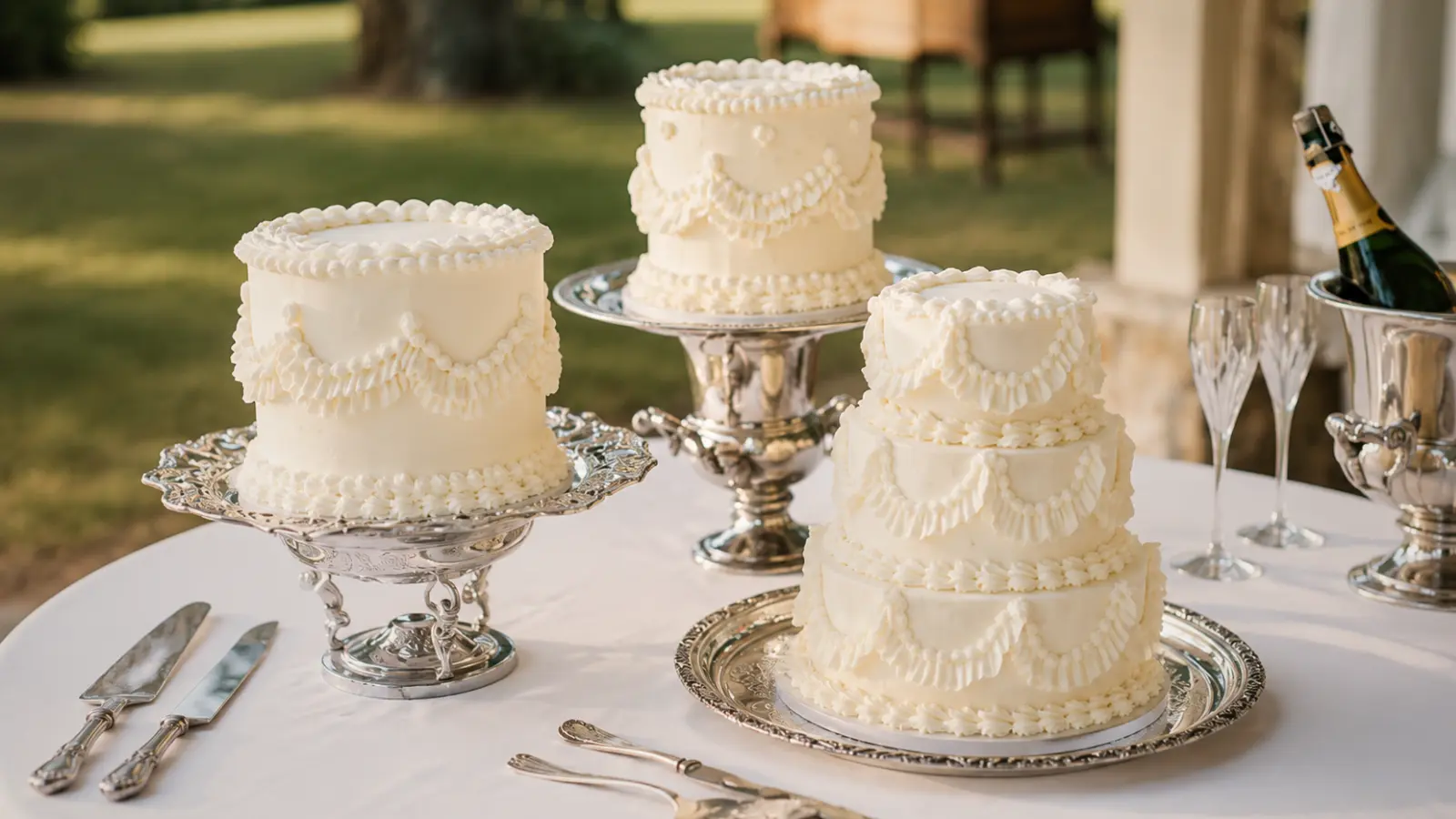
Two-tier wedding cake cost
A two-tier wedding cake from a custom bakery typically runs $300 to $700 for 25 to 50 guests. The wide range reflects the difference between a simple buttercream finish with minimal decoration ($300 to $450) and a more detailed design with piping, fresh flowers, or patterned texture ($500 to $700).
Two-tier cakes are the most common choice for intimate weddings and elopements — they look proportionate for smaller gatherings and photograph well without requiring the height of a three-tier. For guest counts under 50, a two-tier cake is often sufficient and can be more cost-effective than ordering a larger display cake.
Three-tier wedding cake cost
A three-tier wedding cake from a custom bakery typically runs $700 to $1,500 for 75 to 125 guests. Again, design complexity is the biggest variable: a clean three-tier buttercream with fresh flowers costs less than a three-tier with fondant panels, sugar flowers, or hand-painted details.
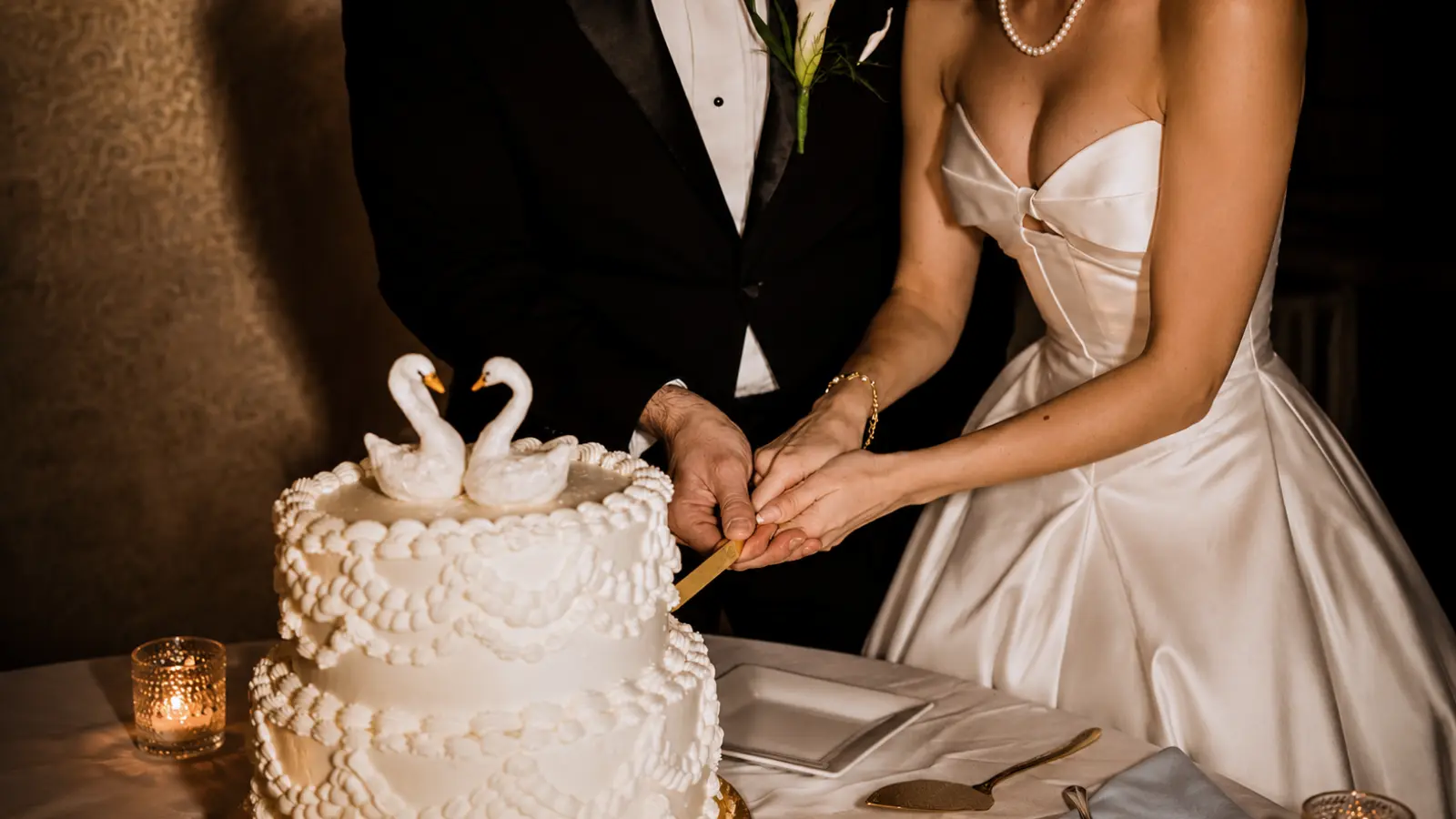
Three tiers are one of the most classic wedding cake configurations because the height creates drama, the visual hierarchy reads well in photos, and the baker has enough surface area to work with meaningful design elements. For many weddings with 75 or more guests, a three-tier cake is a common starting point.
Four-tier and beyond
Four-tier cakes become relevant for guest counts above 150 and for couples who want a statement piece regardless of size. Pricing typically starts around $1,500 and can reach $3,000 or more depending on design. Structural requirements increase with height — internal supports, proper refrigeration, and experienced delivery become more critical the taller the cake gets.
What Affects Wedding Cake Prices?
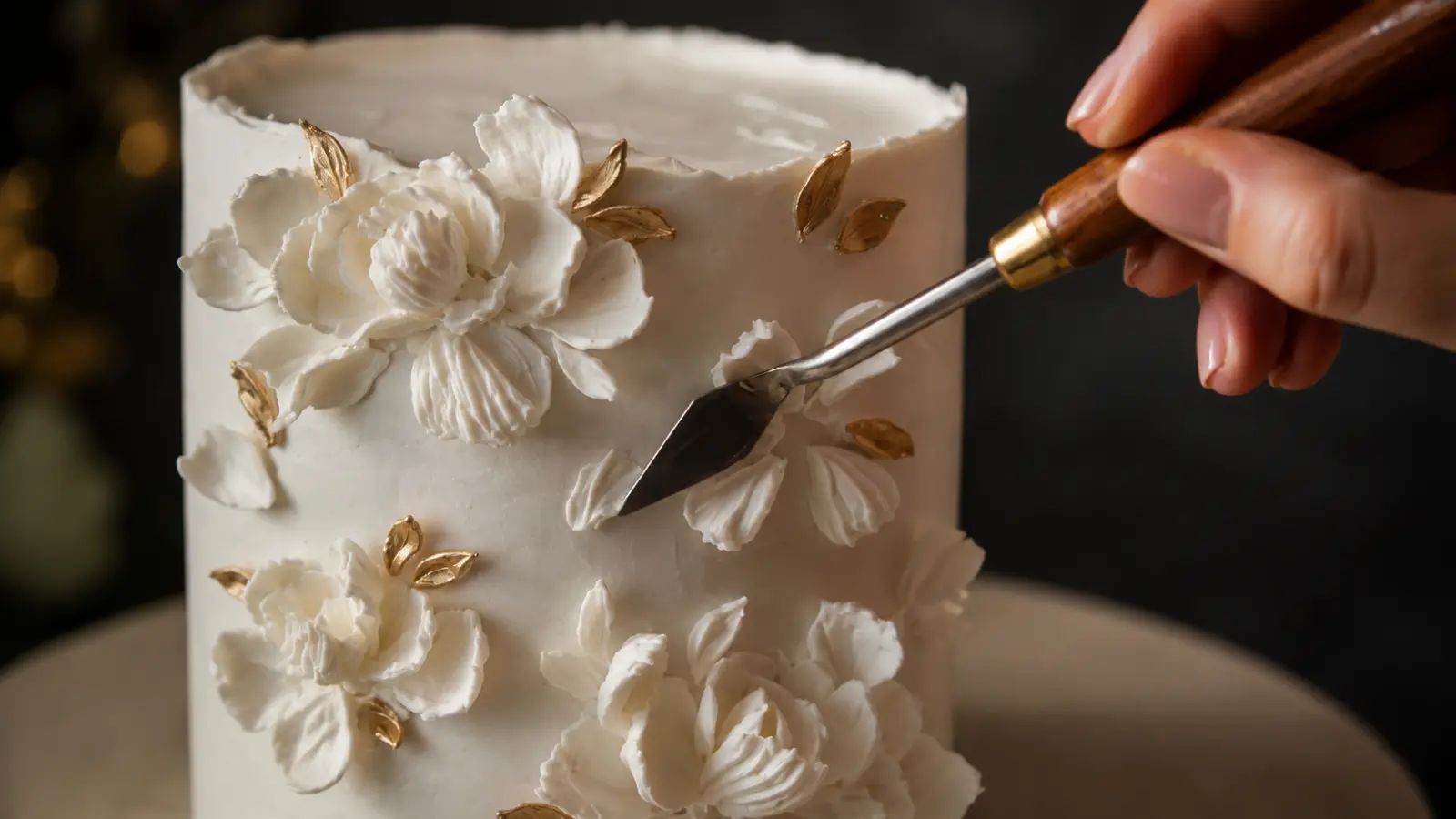
Wedding cake pricing is more granular than most couples expect. Understanding what drives cost up — and what does not — is the most useful thing you can do before your first bakery consultation.
Design complexity
Wedding cake designs are one of the largest cost variables after guest count because detailed decoration requires more time, skill, and planning. A smooth buttercream finish with a few fresh flowers takes a skilled baker perhaps two hours to decorate. A fully fondant-covered cake with hand-piped lace, sugar flowers, and hand-painted details can take ten or more hours. That labor difference is reflected directly in the price.
Specific design elements that often add cost include sugar flowers, fondant work, hand-painting, metallic leaf application, and intricate piping patterns like Lambeth or bas-relief. These details increase the price because they require more skilled labor, more time, and more precise finishing.
Frosting type
Buttercream vs fondant wedding cake decisions can affect the final cost because the two frosting options differ meaningfully in appearance, labor, and taste. Fondant often costs more than buttercream, not only because of the material itself, but because working with fondant requires additional time, skill, and finishing precision. Many guests prefer the taste and texture of buttercream, which is worth factoring into the decision alongside price and design needs.
Flavors and fillings
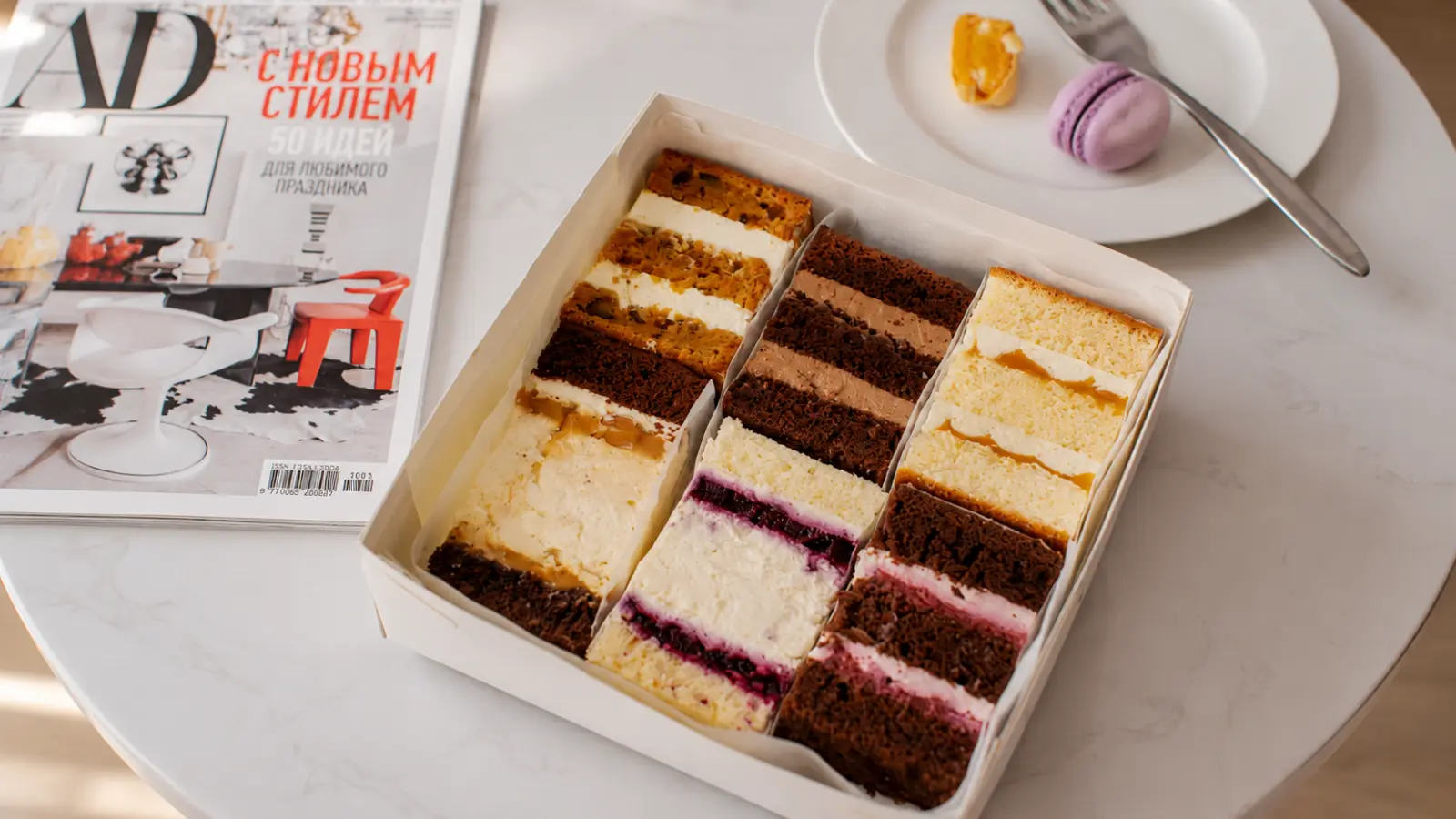
Many classic and modern wedding cake flavors — including vanilla, lemon, chocolate, and carrot — are priced into base quotes at most bakeries. Premium flavors and fillings can add cost, especially options like champagne cake, lavender honey, matcha, brown butter, salted caramel, and fresh fruit fillings that require more expensive ingredients or extra preparation. If you want different flavors in each tier, that also typically adds to the total.
Number of flavors and tiers
Each tier requiring a different flavor or filling adds setup time and cost. A three-tier cake with three different flavor combinations costs more than the same cake in a single flavor, even if the total volume of cake is identical. Most bakeries offer two to three flavor options at their base price; beyond that, expect a small upcharge per tier.
Fresh flowers vs sugar flowers
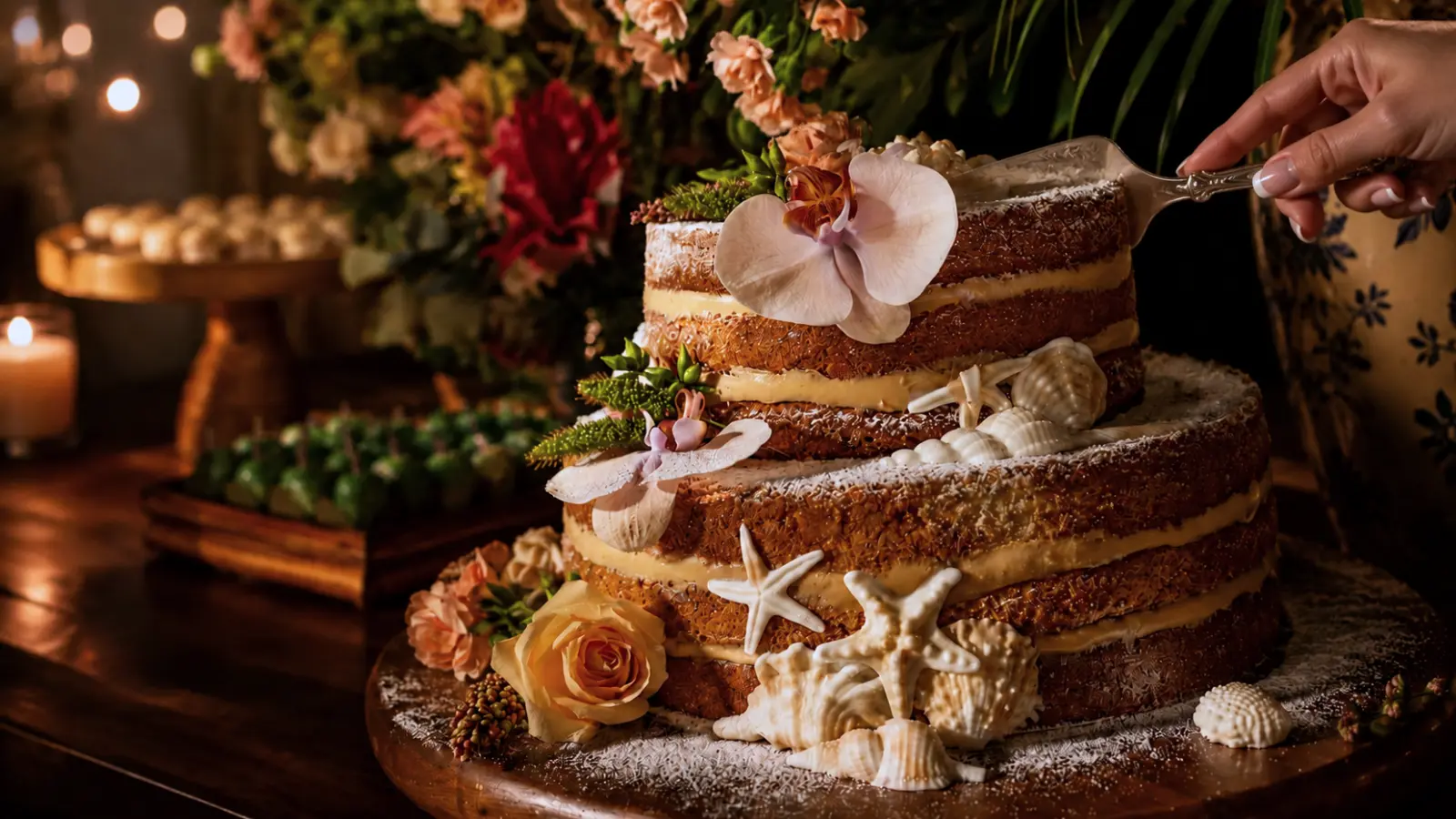
This is where many couples save significant money without the difference being visible in photographs. Fresh flowers on a wedding cake, coordinated with the florist and handled with proper food-safe preparation, often cost less than handmade sugar flowers. Sugar flowers require skilled handcrafting, drying, coloring, shaping, and placement, so they can add a meaningful labor charge to the final cake price. They are beautiful, archiveable, and last forever — but for couples on a budget, fresh flowers are almost always the right call.
Delivery and setup
Many couples budget for the cake and forget about delivery. Many specialty bakeries charge separately for delivery and setup, and the final fee depends on distance, venue access, setup complexity, delivery timing, and whether the cake requires on-site assembly. Setup — meaning the baker places the cake, adds any fresh elements, and ensures stability before leaving — is sometimes included and sometimes quoted separately. Confirm this at booking.
Market and geography
Where you live matters more than most couples realize. Wedding cake prices in New York City, Los Angeles, San Francisco, and other major metropolitan areas often run higher than prices in smaller markets. The same cake can cost more in a high-overhead city because labor, rent, demand, delivery logistics, and vendor availability all affect the final quote.
Booking lead time and popularity
Sought-after cake designers book up fast — in major markets, the best wedding cake bakers are often fully booked 12 to 18 months out for peak wedding season dates. Booking last-minute does not usually cost more, but it significantly limits your options. The bakers available on short notice are not always the ones you would choose with more time.
Buttercream vs Fondant — The Price Difference
The buttercream vs fondant decision comes up in almost every bakery consultation, and it has real budget implications. Here is what actually matters.
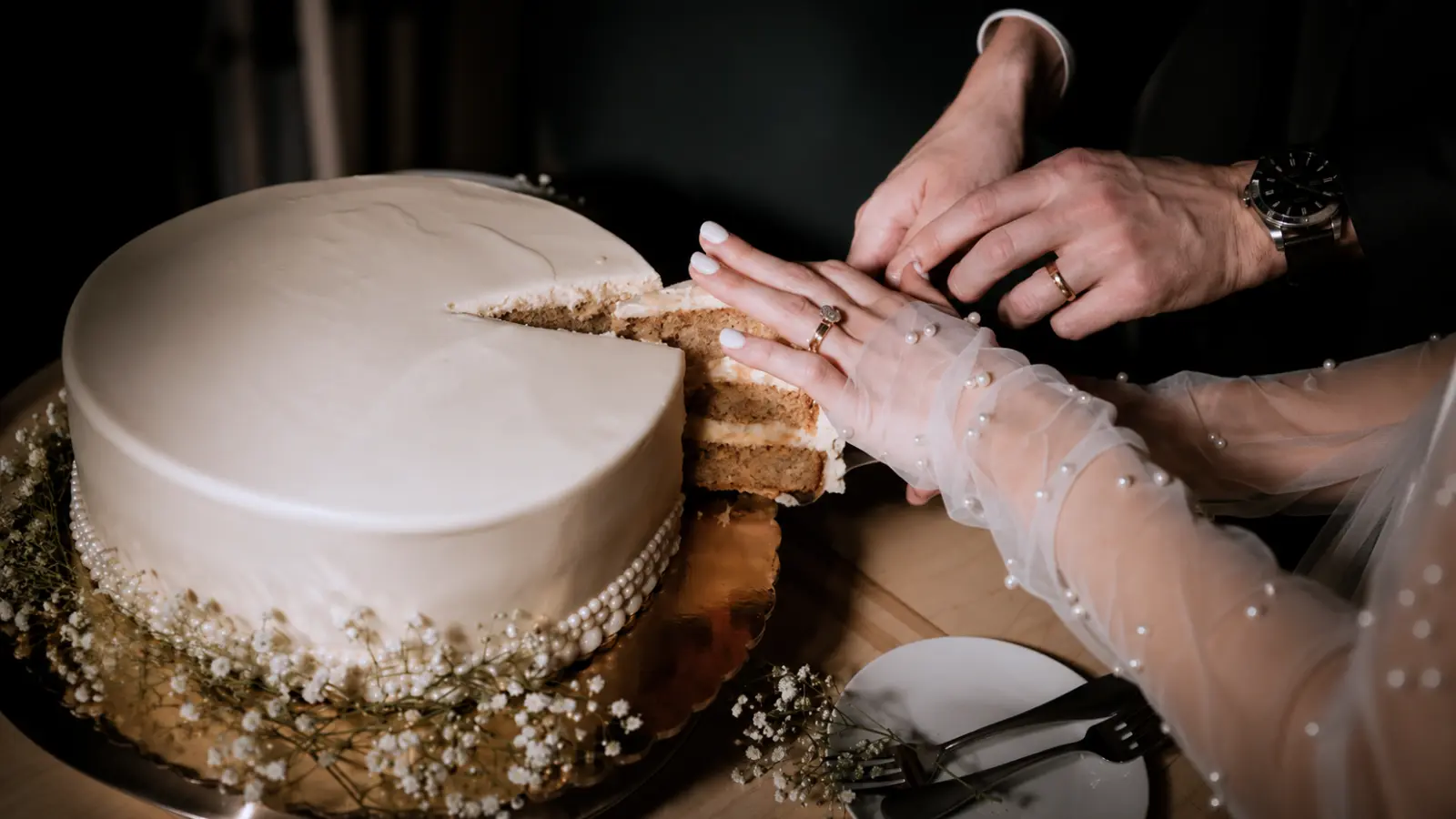
Buttercream is a fat-and-sugar frosting applied with a spatula or palette knife. It can be smooth (almost mirror-like with the right technique), textured, rustic, or ruffled. It tastes better than fondant to most people. It is less tolerant of heat and humidity — a concern for outdoor summer weddings. And it costs less. At many custom bakeries, buttercream costs less than fondant because it usually requires less additional finishing time.
Fondant is a rolled sugar paste applied in sheets over the cake. It creates an ultra-smooth, matte or satin finish that is difficult to achieve with buttercream. It holds up better in heat. It enables certain design techniques — perfectly sharp edges, embossing, wafer paper appliqués — that are not possible with buttercream. And it costs more, both in materials and in labor. Many guests also find it less pleasant to eat — it is typically peeled off and left on the plate.
What tends to work better for most couples: buttercream finish with fresh flowers. It photographs beautifully, costs less, tastes better, and suits most wedding styles from rustic to contemporary. Fondant makes sense when the design specifically requires it — very geometric shapes, sugar flower arrangements, or extremely precise textural patterns.
How to Save Money on a Wedding Cake
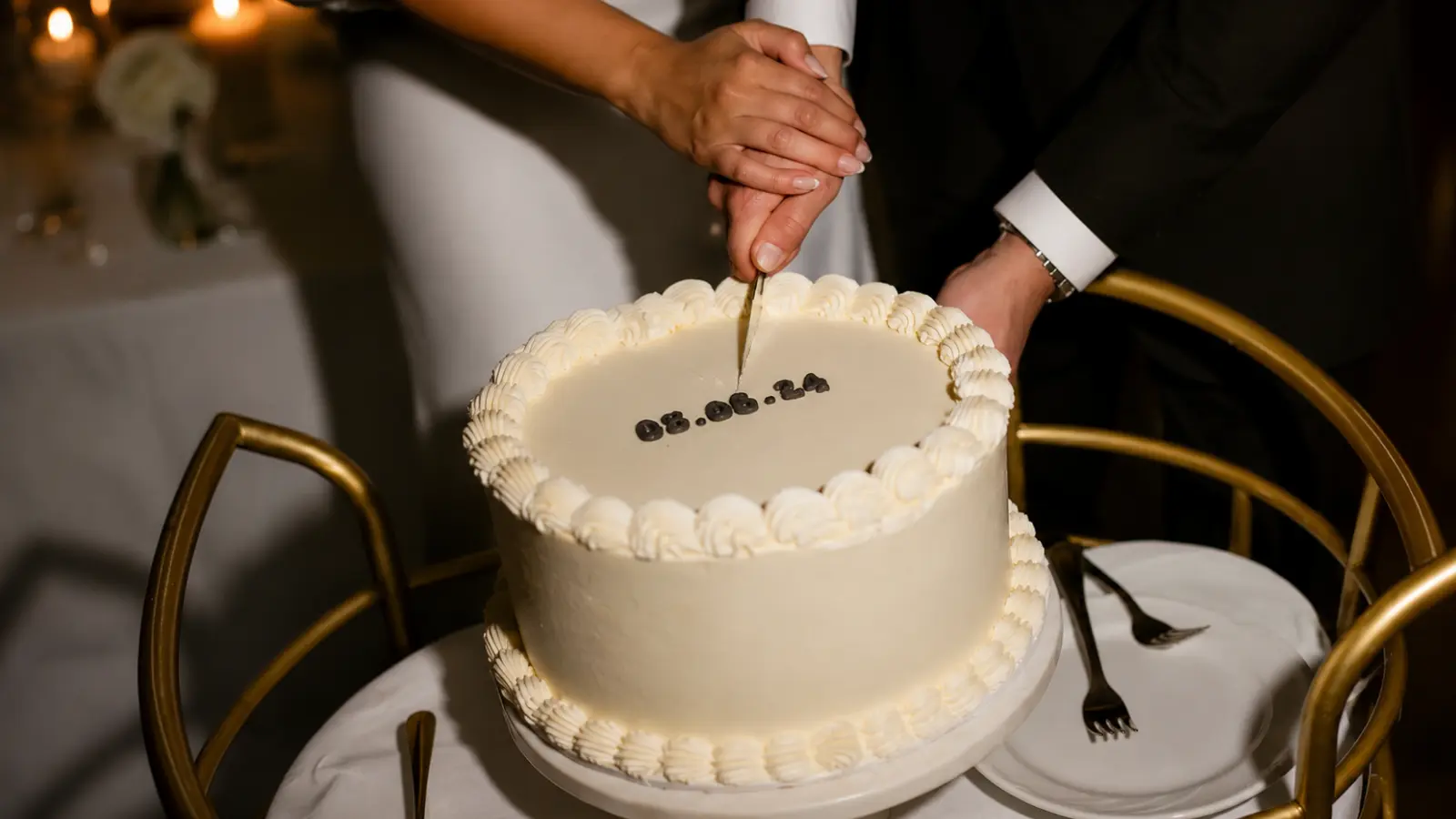
There are real ways to reduce wedding cake costs without ending up with a cake that looks like a compromise. Most of them involve making design choices rather than quality sacrifices.
Choose buttercream over fondant
This one decision can save $1 to $3 per slice — which adds up to $100 to $300 on a 100-person cake. Buttercream looks beautiful and photographs well. Unless your design specifically requires fondant, buttercream is often the better balance of taste, cost, and visual flexibility.
Use fresh flowers instead of sugar flowers
A simple arrangement of fresh flowers coordinated with your florist costs a fraction of hand-made sugar flowers. The visual effect in photographs is comparable — and in many cases, fresh flowers look more natural and less “wedding-cake-ish” than elaborate sugar arrangements. Confirm with your bakery that fresh flowers will be applied on-site at the venue rather than in transit.
Downsize the display cake and supplement with sheet cake
This is the most effective cost-saving strategy for large weddings. A smaller, visually stunning two or three-tier display cake is used for the ceremonial cutting and photographs. Sheet cakes — prepared in the same flavor in the bakery kitchen — serve the remaining guests at $2 to $4 per serving rather than $8 to $12. Guests typically cannot tell the difference, and the savings on a 150-person wedding can be $500 to $1,000.
Simplify the design
Simple wedding cakes with clean lines, beautiful execution, and minimal decoration often cost significantly less than an elaborately decorated equivalent. And a simple cake from a skilled baker often photographs better than a complex cake from a less experienced one. The decoration is not where quality lives — the structure, flavor, and execution are.
Book early
This does not directly reduce price, but it maximizes your options. The most skilled bakers at every price point tend to book first. Booking early, especially for popular wedding seasons, gives you access to more options in your market rather than only the bakers who still have availability.
Consider a local bakery over a wedding specialist
Not all excellent wedding cakes come from wedding-only bakeries. Many high-quality local bakeries and pastry shops produce beautiful wedding cakes at lower prices than dedicated wedding cake designers. The trade-off is typically less experience with delivery logistics and on-site setup — which matters for larger, more complex cakes but is less of a concern for simpler designs.
Skip the cake cutting fee
Some venues charge a per-plate fee to cut and serve a cake brought in from an outside bakery. If you are considering cupcakes, a dessert table, or a sheet cake strategy, ask whether the venue charges any dessert service or cake-cutting fee and whether that fee can be adjusted based on your serving plan.
Questions to Ask Before Booking a Wedding Cake Baker
Learning how to choose a wedding cake baker starts with understanding that a consultation is not just a tasting — it is an opportunity to know exactly what you are paying for and what is included. These are the questions worth asking before you sign anything.
“Is delivery and setup included in this quote?” Many bakers quote cake price and delivery separately. A $700 cake with $150 delivery is a $850 cake. Know the total before comparing quotes.
“What happens if the cake is damaged in transit?” Accidents happen. Understand what the baker’s policy is if something goes wrong between the bakery and the venue. The best bakers carry insurance and have a plan. Those without insurance or a clear policy are worth noting before booking.
“How far in advance do you make the cake?” A quality custom cake is typically baked two to three days before the wedding and decorated closer to the event. Understanding the timeline helps you coordinate with venue setup and delivery logistics.
“Can I see photos of cakes in the same style as what I am requesting?” Most bakers maintain a portfolio. Seeing their actual work in the style you want — not just their best work overall — is essential before committing. A baker who excels at modern minimalist cakes may not be the best choice for an elaborate floral design.
“What is included in the tasting, and is there a fee?” Most specialty bakeries charge $25 to $75 for a tasting, applied as a credit toward the final balance if you book. Understand what flavors are available to taste and whether you can request specific combinations.
“What is the payment and cancellation policy?” Many bakers require a deposit at booking, with the remaining balance due closer to the wedding date. Understand what happens to your deposit if you cancel, and what happens if the baker has an emergency.
“Do you work with fresh flowers, and how do you coordinate with my florist?” If you plan to use fresh flowers on the cake, the baker needs to coordinate with your florist on timing and food-safe flower selection. Not all bakers handle this coordination themselves — some require you to arrange it directly with the florist.
Wedding Cake Cost Inspiration Board
Before choosing your final cake budget, it helps to compare different wedding cake styles, sizes, finishes, and design options visually. Explore our wedding cake cost inspiration board for affordable wedding cakes, simple designs, small cakes, tiered cakes, floral decorations, buttercream finishes, and beautiful ideas that help you find a cake style that matches both your vision and your budget.
Final thoughts
The right wedding cake budget is not about choosing the cheapest option or assuming the most expensive cake will create the best experience. It is about understanding which details actually affect the final price and deciding where those details matter most for your specific wedding.
A beautiful wedding cake comes from balance: a realistic guest count, a trusted baker, a design that fits the celebration, and choices that match your priorities. When you understand what influences wedding cake cost, you can make confident decisions and choose a cake that feels special without creating unnecessary stress in your overall wedding budget.
Frequently asked questions (FAQ)
Why do two wedding cakes that look similar have completely different prices?
Because most of the cost is hidden in the work you do not see. Two cakes can look similar in photos but require completely different levels of skill, structure, ingredients, design time, and setup. A simple-looking cake from an experienced designer may involve more precision than a heavily decorated cake from a less experienced bakery.
Is an expensive wedding cake actually worth the money?
It depends on what you value most. A higher price often reflects customization, design expertise, premium ingredients, and a more reliable wedding-day process. However, a beautifully made simple cake from a talented local bakery can be a better choice than paying more for details that are not important to you.
What wedding cake upgrades are usually worth paying for?
The upgrades guests notice most are usually flavor, texture, and overall presentation. Investing in a better baker, quality ingredients, and a design that photographs well often creates more impact than expensive details like excessive decoration or complicated finishes.
What wedding cake expenses surprise couples the most?
Delivery, setup, rentals, and decorative details are the costs couples most often forget. A cake quote is not always just the cake itself, so it is important to understand what is included before comparing prices between bakeries.
What is the average cost of a wedding cake?
The average cost of a wedding cake varies widely by guest count, location, bakery, and design complexity. A simple cake from a local bakery may cost a few hundred dollars, while a custom tiered cake from a specialty designer can cost much more. The best way to compare quotes is to look at the price per serving and ask what is included in delivery, setup, decoration, and rentals.
How much does a wedding cake cost for 100 guests?
A wedding cake for 100 guests can vary widely depending on the bakery, design, flavors, frosting, and whether you use sheet cake to supplement servings. A simple buttercream cake from a local bakery will usually cost less than a custom tiered cake with fondant, sugar flowers, or hand-painted details. Ask each baker for a full quote that includes delivery and setup before comparing prices.