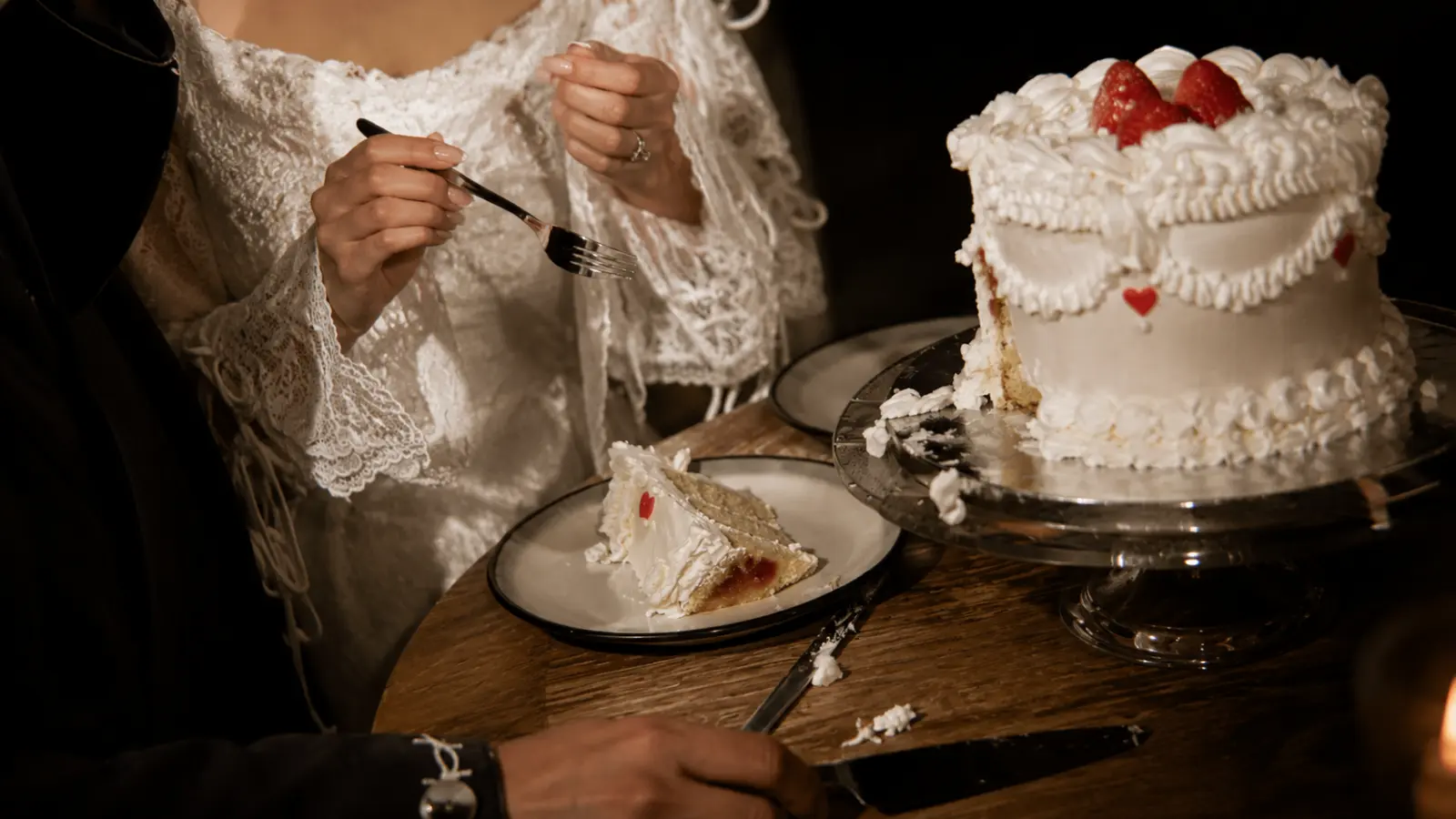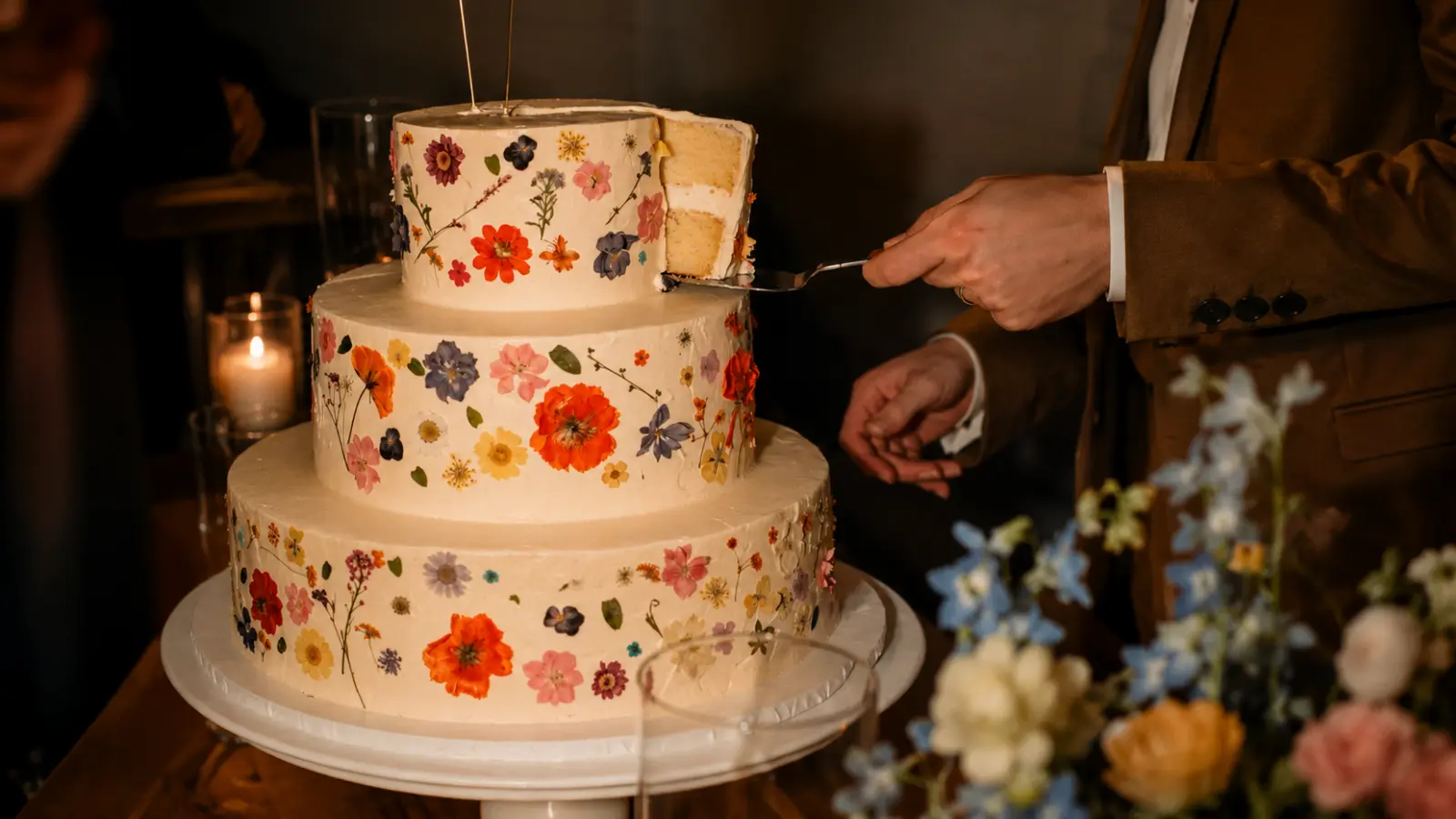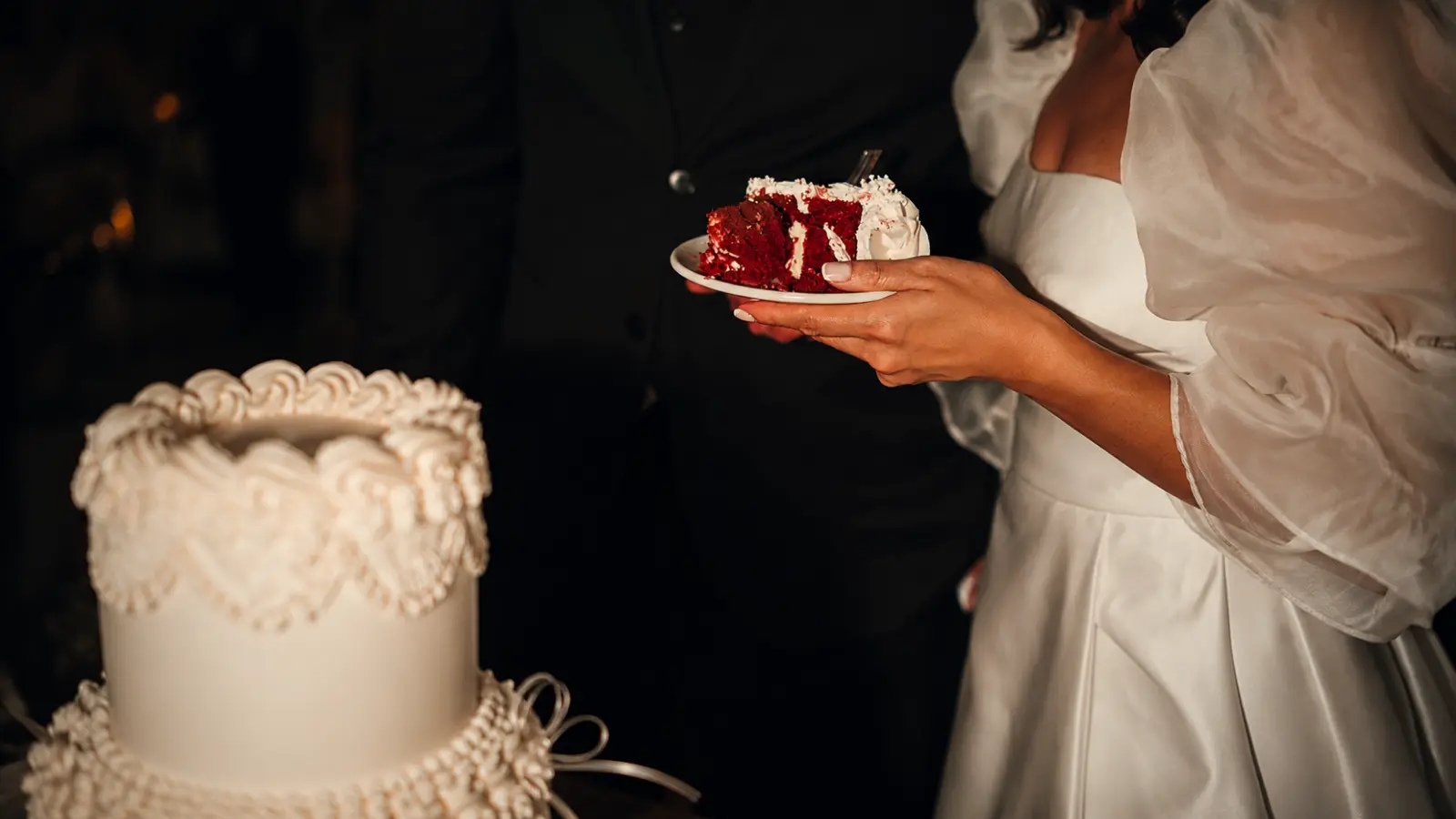
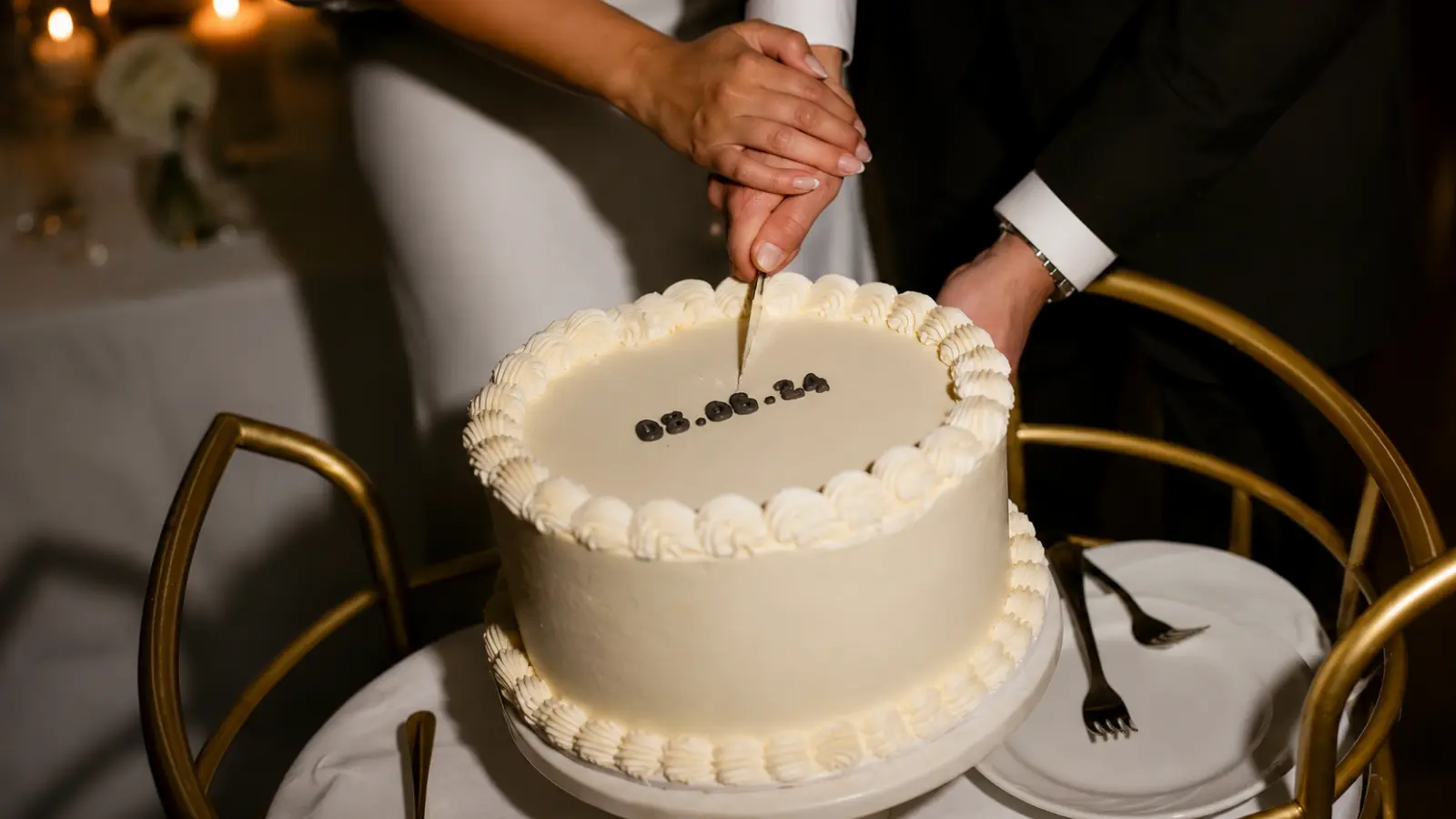
Affordable wedding cakes are wedding cakes designed to reduce unnecessary costs while preserving the elements that create strong visual impact, such as proportion, finish quality, presentation, and thoughtful styling. Saving money does not mean choosing a cake that looks less beautiful — it means understanding which choices affect the price and which choices affect the final look.
The biggest misconception about affordable wedding cakes is that a lower budget automatically means sacrificing the design. In reality, wedding cake pricing is often driven by labor-intensive details like handmade sugar flowers, complex decoration, fondant work, and oversized displays. By simplifying the right elements and protecting the details guests actually notice, couples can create a cake that feels intentional, elegant, and worthy of the celebration.
In this guide, you’ll discover affordable wedding cake ideas, the difference between cheap and budget-smart choices, the small cake plus sheet cake strategy, grocery store cake options, simple designs that look expensive, and the decisions that help you save money without losing the look you want.
Cheap vs. Affordable: Why the Distinction Matters
These two words describe different strategies, and confusing them produces different results.
Cheap means reducing cost across the board — fewer tiers, less decoration, a lower-tier baker, a grocery store cake without any styling, skipping delivery and pickup yourself. Cheap works when the goal is purely to minimize spending and the visual result is genuinely secondary. There is nothing wrong with that priority. But “cheap” without a strategy can produce a cake that looks like cost was the only consideration — and that can show in photographs and in the room.
Affordable means identifying exactly which decisions drive cost, reducing those specifically, and protecting the decisions that drive visual impact. Affordable wedding cakes can look indistinguishable from more expensive wedding cakes when the right choices are made in the right places. The couples who pull this off are the ones who understood the cost structure before they started cutting.
Where wedding cake cost actually comes from
Understanding wedding cake cost starts with knowing that most of the price comes from labor, not ingredients. Flour, butter, and sugar are cheap. The skilled hours required to apply a flawless buttercream surface, hand-craft individual sugar flowers, build a structurally sound three-tier cake, and transport it to a venue without incident are not. Understanding this changes the entire approach to saving money.
| Cost Driver | Why It Costs | Can You Reduce It? |
|---|---|---|
| Sugar flowers | Each flower requires skilled handcrafting; a full cascade can represent many additional hours of detailed work | Yes — replace with fresh flowers from your florist, dried botanicals, or a single simple decoration |
| Guest count / number of tiers | More servings = more cake = more time = higher base price | Yes — the small cake + sheet cake strategy addresses this directly |
| Fondant finish | Fondant requires more labor to apply cleanly than buttercream — rolling, draping, smoothing, repairing | Yes — buttercream costs less, photographs just as well, and tastes better |
| Custom piping and painted detail | Intricate piping, hand-painting, and detailed surface work are skilled artisan hours billed accordingly | Yes — a clean, simple finish requires skill but not the same time investment as elaborate decoration |
| Delivery and setup | Transporting a tiered cake safely requires a skilled person, a vehicle prepared for it, and time | Sometimes — pickup is cheaper but carries real risk; see below |
| Baker’s reputation and market | Bakers in saturated wedding markets in major cities charge more than bakers in smaller markets for equivalent work | Yes — looking outside the immediate area or asking about lower-demand dates can sometimes reduce the final quote |
Affordable Wedding Cake Ideas
The most useful frame for affordable wedding cakes is this: the design decisions that make a cake beautiful are largely free. The labor decisions — how many hours the baker spends executing the design — are what cost money. Choosing a design that requires less labor without sacrificing visual impact is the entire art of the affordable wedding cake.
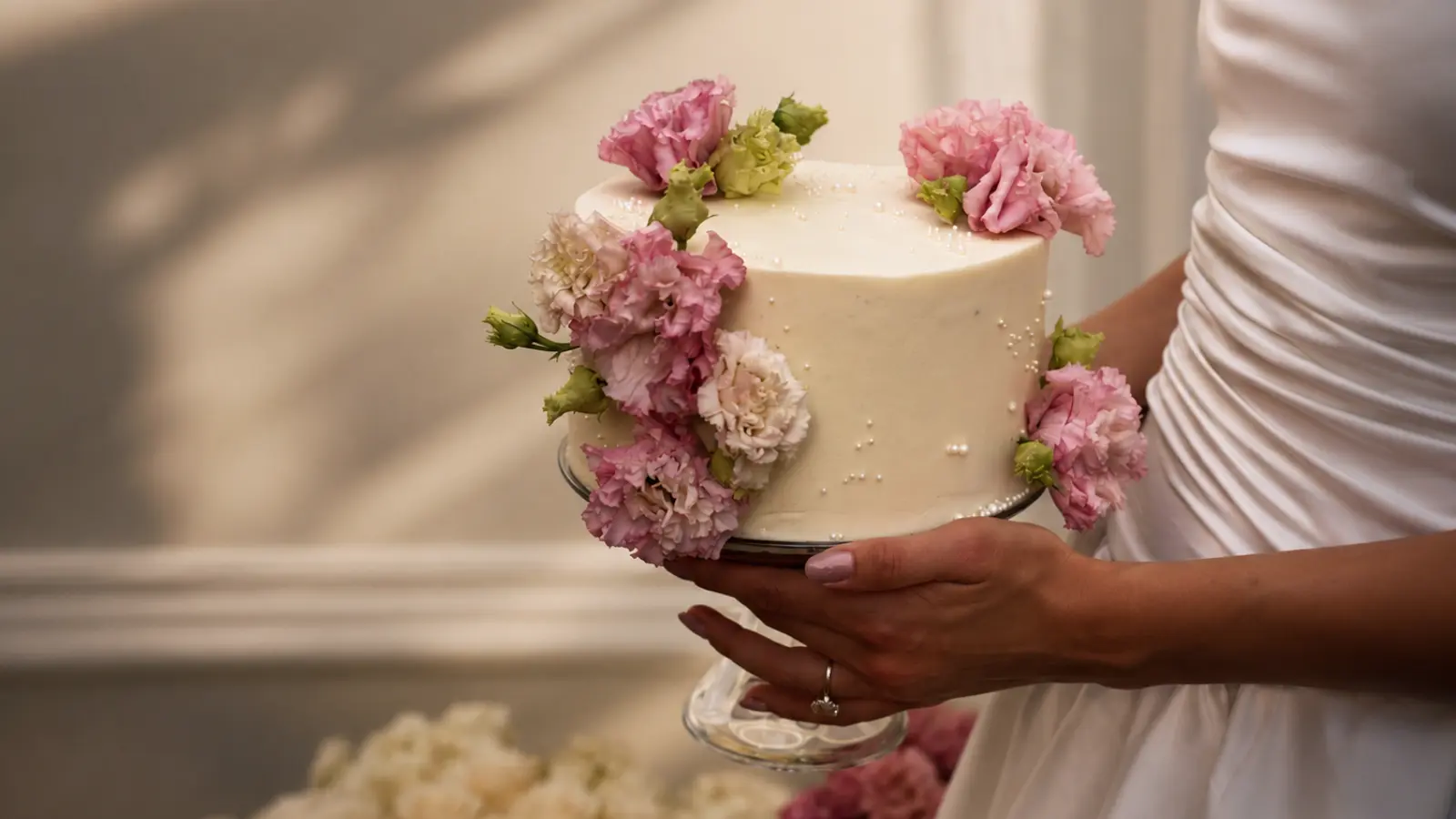
Designs that deliver impact without high labor cost
- Textured buttercream with fresh flowers. The buttercream vs fondant wedding cake decision matters because a palette-knife or ruffled buttercream finish usually takes significantly less time to apply than a smooth fondant surface — and photographs with more warmth and organic character. Fresh flowers from the florist can create the same romantic effect seen in many floral wedding cakes while adding visual richness without major additional cost. This combination can be one of the most beautiful and budget-smart wedding cake approaches because it creates visual richness without requiring heavy decoration. It works across many venue types and seasons.
- Semi-naked cake with dried botanicals. A semi-naked finish — a thin, deliberately incomplete coat of buttercream that allows the cake layers to show through — requires less buttercream and less time than a fully covered cake. Dried botanicals can cost less than fresh flowers, require less day-of coordination, and photograph with a warm, textural quality that reads as designed rather than budget-constrained. This is one of the clearest affordable approaches because the relaxed finish looks intentional rather than disguised.
- Two-tier cake with a single statement element. Choosing two-tier wedding cakes instead of larger designs can reduce both the cake cost and the serving count — which the sheet cake strategy (covered below) resolves separately. A two-tier cake with one deliberate design element — a hand-painted detail, a single sugar flower as a topper, or a structured fresh flower arrangement — costs significantly less than three tiers of equivalent decoration and often photographs with more visual focus.
- Single-tier statement cake. One-tier wedding cakes can use a single large tier — 12 to 14 inches in diameter — with an elaborate design that would be impractical to execute at scale. This is the design approach that makes most sense for small weddings under 50 guests. The display portion is small, but the design can be genuinely spectacular. The sheet cake handles the guest count. The single tier carries the visual impact.
- Monochromatic buttercream in an unexpected color. One color, one finish, no decoration. A sage green or dusty terracotta cake in a flawless matte buttercream costs less than the same cake with elaborate decoration — and reads as a stronger design statement. This is one of the cases where simpler genuinely produces a better result, not just a cheaper one.
Small Cake Plus Sheet Cake: The Strategy That Actually Works
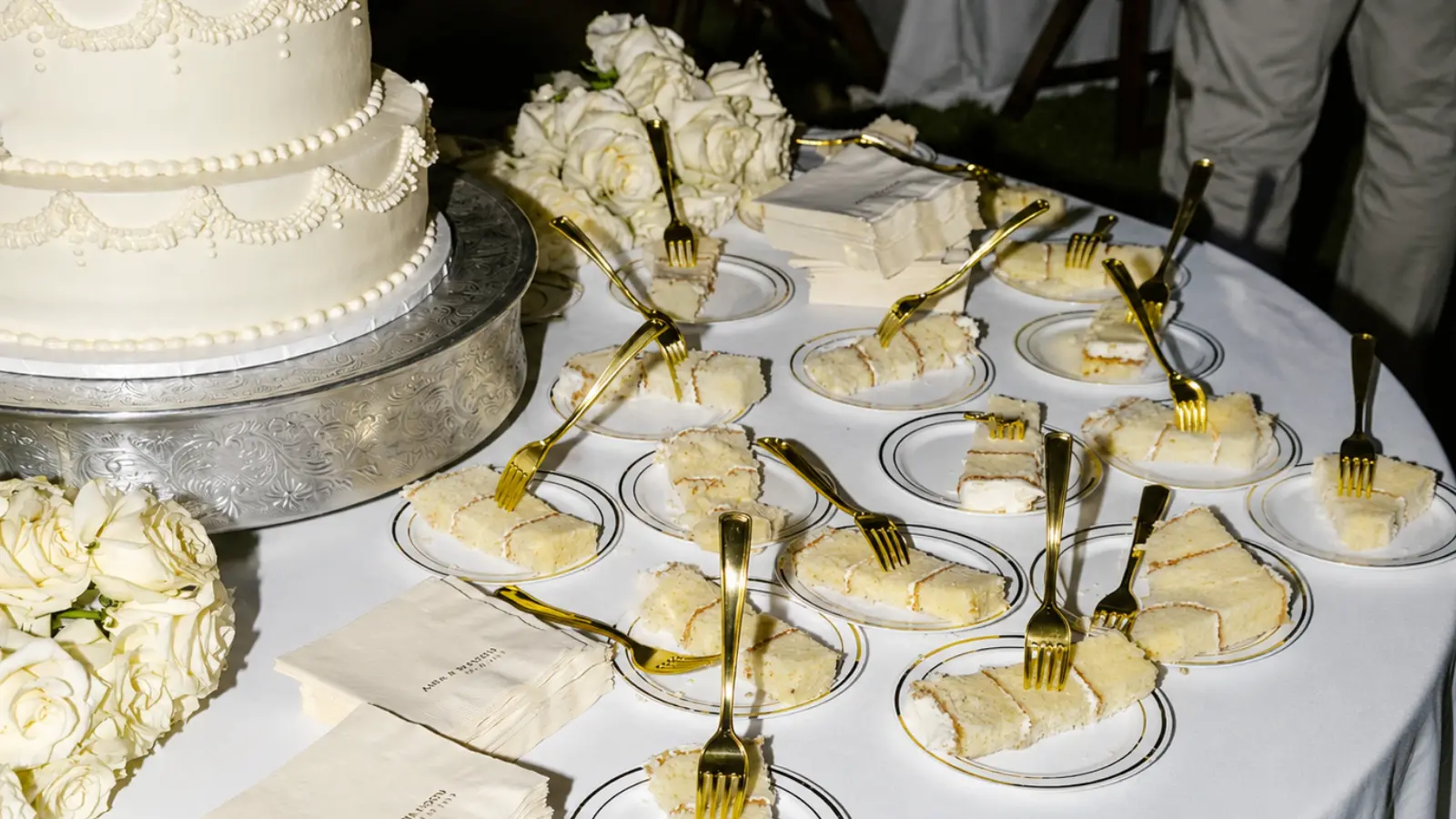
This is one of the most effective strategies in the affordable wedding cake toolkit, and it is often underused because couples have a visual association with “sheet cake” that does not match what this approach actually looks like to guests.
Here is how it works in practice. The couple orders a small, beautifully designed display cake — typically one or two tiers serving 20 to 30 guests. This is the cake that sits on the cake table, gets photographed, appears in every album and social post, and is cut ceremonially by the couple for the traditional cake-cutting moment. It is the visual and emotional centerpiece of the cake experience.
Separately, the couple orders a wedding sheet cake in the same flavor from the same baker or from a separate bakery. These cakes stay in the kitchen. When it is time to serve cake to the full guest count, the kitchen staff cuts both the display cake and the sheet cakes and serves them to guests on identical plates. Guests eat the same cake they would have eaten from a fully tiered display — because the flavor is the same. The only difference is they never see the sheet cake version.
A planning example
| Approach | Serves 120 Guests | General Cost Logic |
|---|---|---|
| Traditional three-tier custom cake | Full display cake, 120 servings | $900 – $2,400 depending on design complexity and market |
| Small display cake + sheet cake | Two-tier display (serves ~30) + sheet cakes (serves ~90) | Lower total cost because most servings come from sheet cake rather than a fully decorated display cake |
| Grocery store sheet cakes only | Sheet cakes, no display element | $100 – $250 — but no visual centerpiece |
What to tell the baker
Not every baker will advertise this option, but most will accommodate it when asked. The conversation is simple: explain that you want a display cake of a specific size for the cake-cutting ceremony and photographs, and that you will be ordering separate sheet cakes for the full guest count. Ask whether they offer sheet cakes in matching flavors, or whether you should source those separately. Many bakers offer both and can price the combination clearly.
When this strategy works best — and when it requires more thought
It works best when: the couple genuinely wants a beautiful, designed display cake and the guest count makes a fully tiered display cake expensive. It can work across many venue types and aesthetics because the display cake does the visual work while the sheet cake handles the practicality.
It requires more planning when: the couple wants very different flavors for different guests (sheet cakes typically come in fewer flavor options), when the venue has limited kitchen staff to manage cutting and plating two separate sources, or when the cake table is designed to show a very large, impressive display — in which case a two-tier cake may read as visually undersized in the space.
Simple Wedding Cakes on a Budget
Simple wedding cakes and affordable designs overlap more than couples expect — because the design decisions that make a cake simple are often the same decisions that make it cost less. Fewer decoration elements means fewer hours of labor. A clean surface finish means no elaborate sugar work. Fresh flowers instead of sugar flowers means the baker is charging for a well-executed base cake rather than 30 hours of handcraft.
The important nuance: simple does not mean easy to execute. A perfectly smooth matte buttercream surface is one of the most technically demanding finishes in cake work — there is nowhere to hide imprecision when the surface is completely bare. The baker’s skill matters more on a simple cake than on a decorated one, not less. The budget savings in a simple cake should go toward choosing a skilled baker, not toward choosing a less experienced one with a lower rate.
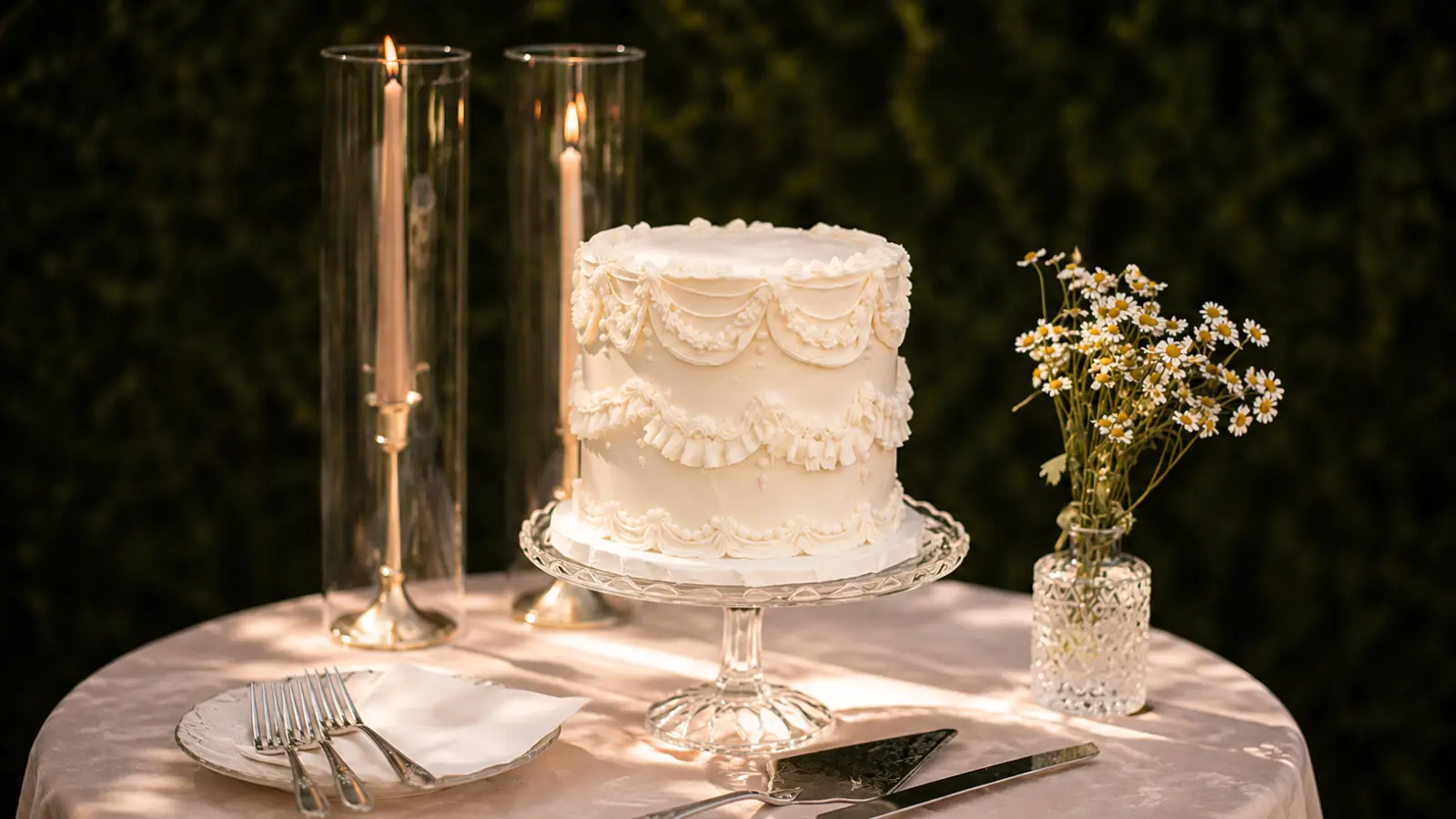
Simple designs that work within a tight budget
| Design | Why It’s Budget-Friendly | What Makes It Look Elevated |
|---|---|---|
| Smooth matte buttercream | No decoration hours; just a very good surface finish | The quality of the finish itself — a flawless surface reads as intentional luxury |
| Semi-naked with fresh herbs | Less buttercream coverage; herbs cost almost nothing from the florist | The organic, handmade quality — looks considered and seasonal rather than budget-driven |
| White buttercream + single ribbon | Clean cake, one material accent; ribbon costs a few dollars | The ribbon color chosen to match the wedding palette exactly — a detail that reads as precision |
| Palette-knife texture, no other decoration | Texture is applied quickly relative to smooth finish; no additional decoration labor | The dimensional surface that catches light differently at every angle — looks artisanal and warm in photographs |
| Two-tier white with one fresh flower topper | Minimal tiers, no sugar flowers; fresh flower from the florist | The proportion and placement of the single flower — one element, perfectly placed, reads as restraint rather than limitation |
For a comprehensive look at this design category — including baker questions and photography tips — see the simple wedding cakes guide.
Grocery Store Wedding Cakes
Grocery store wedding cakes have a reputation problem that is not entirely deserved. The assumption is that they look and taste like what they are — mass-produced, generic, obviously institutional. For some grocery store options, that assumption is accurate. For others, it is genuinely wrong.
The honest reality is this: the best grocery store wedding cakes taste excellent, cost a fraction of custom baker pricing, and can be elevated significantly with minimal additional effort. The trade-off is customization — what they cannot do is produce a bespoke design. What they absolutely can do is provide a well-flavored, well-textured cake at a price that changes the entire budget equation.
Grocery store options worth knowing
| Store | Best Option | Notes |
|---|---|---|
| Costco | White almond sour cream cake — two-tier, serves approximately 100 guests | Consistently among the highest-rated grocery store wedding cakes for flavor; pricing varies by location and order type; limited design customization; best elevated with fresh flowers and a cake stand |
| Sam’s Club | Custom tiered cakes and sheet cakes; more design flexibility than Costco | Pricing comparable to Costco; slightly more customization available; worth calling the in-store bakery directly to discuss options |
| Publix | Custom decorated wedding cakes — genuine design flexibility at grocery store pricing | Publix bakery is widely regarded as a step above most grocery store options in both design quality and flavor; available in southeastern U.S. markets; advance ordering recommended |
| Whole Foods | Custom cakes with organic ingredient options; above-average design quality for a grocery store | Pricing is higher than Costco or Sam’s Club but still below most custom bakeries; ingredient quality is notably higher; good option for couples prioritizing organic or allergen-specific requirements |
| Trader Joe’s | No custom wedding cakes; but individual layer cakes can be repurposed for very small weddings | Not a primary wedding cake source; their vanilla and chocolate layer cakes are well-regarded for flavor if used as a cutting cake for an intimate ceremony |
How to elevate a grocery store cake
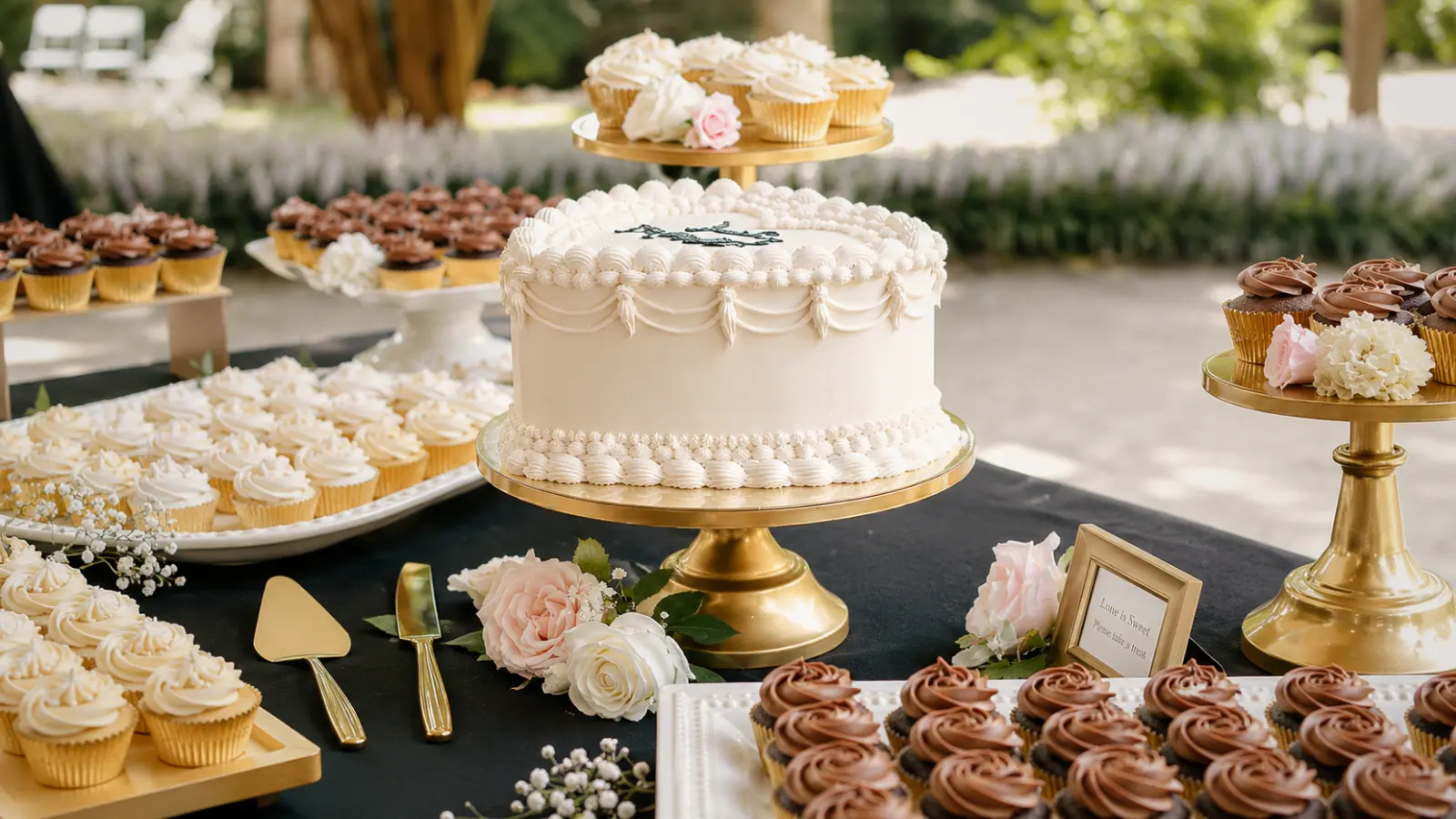
The design limitation of a grocery store cake is real — but it is more solvable than most couples realize. The cake’s surface is the bakery’s work. Everything around it is yours.
- Fresh flowers from the florist. Ask your florist to set aside a handful of the blooms being used in arrangements — a few stems of whatever is in the bouquet — specifically for the cake. The florist or a baker can place them on the day of the wedding. Fresh flowers transform a plain grocery store cake into something that looks genuinely designed.
- A beautiful cake stand. Beautiful wedding cake stands, whether marble, acrylic, or wooden, can elevate the visual context of any cake. The stand and table styling contribute as much to how the cake photographs as the cake itself. A grocery store cake on a beautiful stand reads differently than the same cake on a standard plate.
- A custom topper. A ceramic, acrylic, or brass cake topper — initials, a meaningful symbol, a botanical motif — adds a personal detail that no grocery store cake comes with by default and that photographs clearly in the cake-cutting images.
- Ribbon at the tier base. A satin or velvet ribbon in the wedding’s exact color, wrapped at the base of each tier and finished with a small bow or knot, adds a material element that reads as deliberate and coordinated without requiring any baker involvement.
What Not to Cut Corners On
Saving money on a wedding cake is a completely reasonable priority. But some corners, when cut, create problems that cannot be fixed on the wedding day — and wedding days are not recoverable. Understanding which decisions are safe to reduce and which ones are not is the difference between a budget cake that works and one that becomes a story told for the wrong reasons.
Never compromise on these
- The surface finish quality. A poorly finished cake surface is visible in every photograph. Every ring shot, every cake-cutting image, every table detail photograph will include the cake. A cake that was well-designed but poorly executed reads as a mistake. If budget constraints require simplifying the design, simplify everything before reducing the quality of the execution. A perfectly finished plain cake usually photographs better than a more elaborate design with imprecise execution.
- Food-safe flower handling. Fresh flowers placed directly on a cake without proper food-safe preparation can be a genuine health concern — many commonly used flowers and their pesticide treatments are toxic. Any flowers going on or near a wedding cake should be approved for food-adjacent use, kept pesticide-free when possible, and placed by someone who understands proper safety methods: wrapped stems, floral picks, or a food-safe barrier between the flower material and the cake surface. This is not an area where improvisation is appropriate, regardless of budget.
- Structural integrity for tiered cakes. A tiered cake that is not properly doweled and supported is a structural risk. The dowels that run through the tiers are not decoration — they are the load-bearing infrastructure of a heavy, stacked dessert. A baker who is cutting corners on construction labor may be cutting corners here. Ask specifically: how is the internal structure of the tiered cake built? Any experienced baker will answer this question clearly and confidently.
- Refrigeration and delivery logistics. A buttercream cake that sits unrefrigerated for three hours on a summer wedding day will not hold its finish. A cake transported in a standard car rather than a temperature-controlled vehicle by someone unfamiliar with transporting tiered cakes is a risk. If you are picking up the cake yourself to save the delivery fee, be honest with yourself about whether you have the vehicle, the skill, and the route to do this safely. A delivery fee is often worth paying if it reduces the risk of a damaged cake that cannot be repaired before the reception.
- Booking timeline. Affordable bakers — particularly those who offer genuine quality at lower price points — book up as quickly as high-end bakers. Waiting too long to book because you are still deciding on budget often results in limited options at the last minute, which means accepting whoever is available rather than choosing who is right. Book the cake earlier than feels necessary, even if the final design details are not yet decided. The deposit holds the date; the design can be finalized later.
Safe places to reduce without visible consequence
- Sugar flowers → fresh flowers (similar visual impact with less cake-artist labor)
- Three tiers → two tiers + sheet cake (similar visual moment with fewer decorated servings)
- Fondant → buttercream (lower cost, often better taste, photographs equally well)
- Elaborate piping → clean simple surface (simpler designs executed well cost less and often look better)
- A custom topper → a simple one (the cake is the focal point; the topper is secondary)
- Multiple flavors per tier → one flavor throughout (flavor variety adds consultation and labor time)
How to Make a Budget Cake Look Elegant
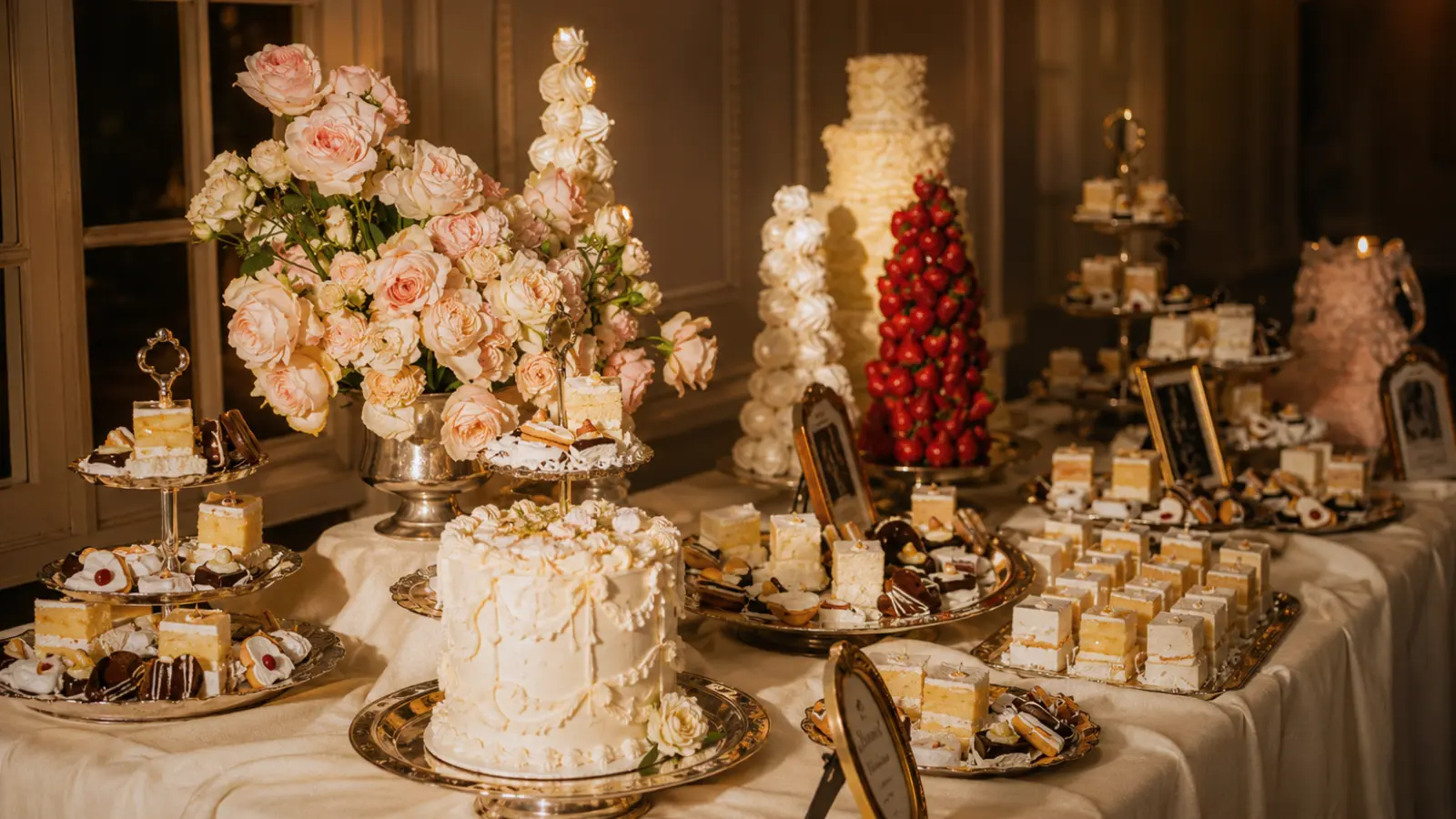
The couples who successfully pull off an affordable cake that looks expensive share one characteristic: they made their decisions with the final photograph in mind, not just the cake in isolation. Wedding cake table ideas matter because the cake will be photographed in context — with florals around it, in a specific light, and at a specific venue. Every element of that context contributes to how the cake reads in those photographs. The cake itself is one part of the picture.
The decisions that photograph as elegant regardless of budget
- Choose a matte finish over a shiny one. Matte buttercream photographs with a quiet, sophisticated quality that shiny finishes do not. A high-gloss fondant cake looks polished in person; in a photograph under direct lighting, it can read as slightly plasticky. A matte buttercream in a soft color photographs with the warmth of a painting. The finish costs the same — the choice is free.
- Use your florist’s flowers. The single most cost-effective way to elevate a simple cake is to place a few fresh blooms from the wedding’s existing florals on or around the cake. The florist is already arranged and paid for as part of the event. A handful of stems set aside specifically for the cake adds essentially nothing to the flower budget and adds significant visual richness to the cake photographs.
- Invest in the cake table, not the cake. A beautiful marble or acrylic cake stand, a velvet or linen table runner in the wedding’s color palette, coordinated smaller florals around the base of the stand, and a clean, well-lit table position contribute more to how the cake area photographs than additional decoration on the cake itself. Many cake photographers cite the table context as the single biggest difference between photographs that look like a wedding magazine and photographs that look like a reception.
- Commit completely to a simple design. A cake that is clearly, fully committed to a simple aesthetic reads as intentional restraint — a design choice, not a budget constraint. A cake that is simple but then has a few small decorative additions that do not quite cohere reads as an unfinished attempt at something more elaborate. If the design is simple, let it be simple. Every element on the surface should have a reason for being there.
- Match the cake’s color to the overall palette precisely. A wedding cake that sits in the same color world as the flowers, the linens, the bridesmaids’ dresses, and the venue reads as part of a designed whole. A cake that is tonally disconnected from its surroundings reads as an afterthought, regardless of how beautiful it is in isolation. If the wedding palette is warm and soft — blush, ivory, champagne — the cake should live in that world. This costs nothing to implement.
- Get a professional photograph of the cake alone. Ask the photographer to take three or four detail shots of the cake before the reception begins — before any cutting, before any guests have gathered around it, in the best available natural light. These photographs are not about the event; they are about the object. A well-photographed simple cake looks extraordinary. A poorly photographed elaborate cake looks like nothing in particular.
The Real Difference
An expensive cake and an affordable cake are distinguished by one thing in photographs: the quality of execution. Not the number of decorations. Not the number of tiers. The precision and skill of the surface finish, the freshness and placement of the flowers, and the quality of the styling context around the cake. These are controllable at any budget. The couple who understands this leaves with a cake that looks like it cost far more than it did — not because they fooled anyone, but because they made the right decisions in the right places.
Affordable Wedding Cake Inspiration Board
Before choosing your final cake direction, it helps to see how affordable wedding cakes can look just as beautiful and memorable as more expensive designs when the right choices come together. Explore our affordable wedding cake inspiration board for simple buttercream cakes, small wedding cakes, floral designs, budget-friendly decorations, sheet cake ideas, and elegant inspiration that proves a beautiful wedding cake does not have to exceed your budget.
Final thoughts
The best affordable wedding cakes are not created by removing every special detail. They are created by understanding which choices truly affect the final result and which expenses can be reduced without changing the overall experience. A thoughtful cake design, beautiful presentation, skilled execution, and smart priorities often matter more than simply choosing the largest or most complicated option.
A wedding cake does not need to be the most expensive part of the reception to become one of the most memorable. When the size, design, flowers, flavors, and budget work together, an affordable wedding cake can still feel personal, intentional, and completely worthy of the celebration.
Frequently asked questions (FAQ)
Can guests tell when a wedding cake was made on a smaller budget?
Usually not. Guests notice the overall presentation much more than the actual price of the cake. A simple cake with a beautiful finish, thoughtful styling, and fresh flowers often looks more expensive than a larger cake where the design choices feel disconnected.
What makes an affordable wedding cake look expensive?
The biggest difference is intention. Clean execution, balanced proportions, a beautiful display area, and details that match the wedding style create a luxury feeling. Expensive-looking cakes are usually well-designed, not necessarily highly decorated.
What is the biggest mistake couples make when trying to save money on a cake?
Cutting quality instead of complexity. Removing unnecessary decoration, extra tiers, or expensive techniques can save money without changing the experience. Choosing poor execution, unstable construction, or low-quality ingredients is where savings become noticeable.
Is it better to have a smaller beautiful cake or a bigger basic cake?
For most weddings, a smaller cake with better design creates a stronger impression. Guests rarely remember the exact size of the cake, but they remember whether the cake table looked beautiful and whether the dessert tasted good.
Can an affordable wedding cake still feel like a centerpiece?
Absolutely. The cake’s role as a centerpiece comes from how it is displayed, photographed, and incorporated into the wedding design. A small, affordable cake styled with flowers, lighting, and the right table setup can still become one of the most memorable reception details.
What do wedding planners notice first about budget-friendly cakes?
They usually notice whether the couple spent strategically. A planner can tell when money went toward the right things: good craftsmanship, strong presentation, and a design that matches the event. Those choices matter more than the final price tag.
What is the cheapest way to have a wedding cake?
The cheapest way to have a wedding cake is usually to choose a small display cake for the cake-cutting moment and serve matching sheet cake from the kitchen. This keeps the visible cake beautiful while reducing the number of fully decorated servings. A grocery store cake or simple local bakery cake can also work well when it is styled with a good stand, fresh flowers, and thoughtful table details.
How can I make a cheap wedding cake look expensive?
Focus on presentation before adding decoration. A clean buttercream finish, fresh flowers, a beautiful cake stand, good lighting, and a styled cake table can make a simple cake look much more elegant. Avoid too many mismatched decorations, because they often make a budget cake look less polished.