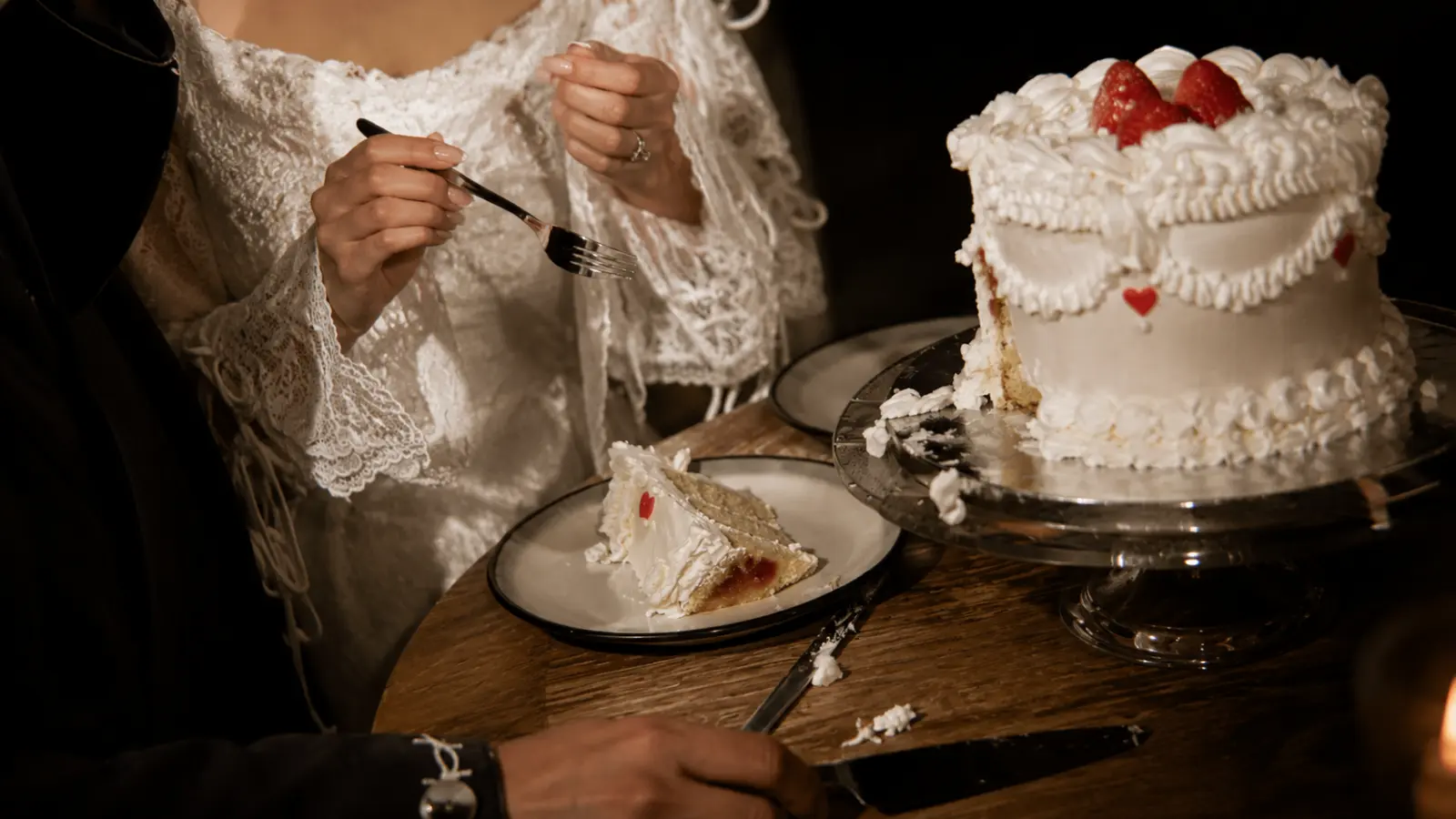
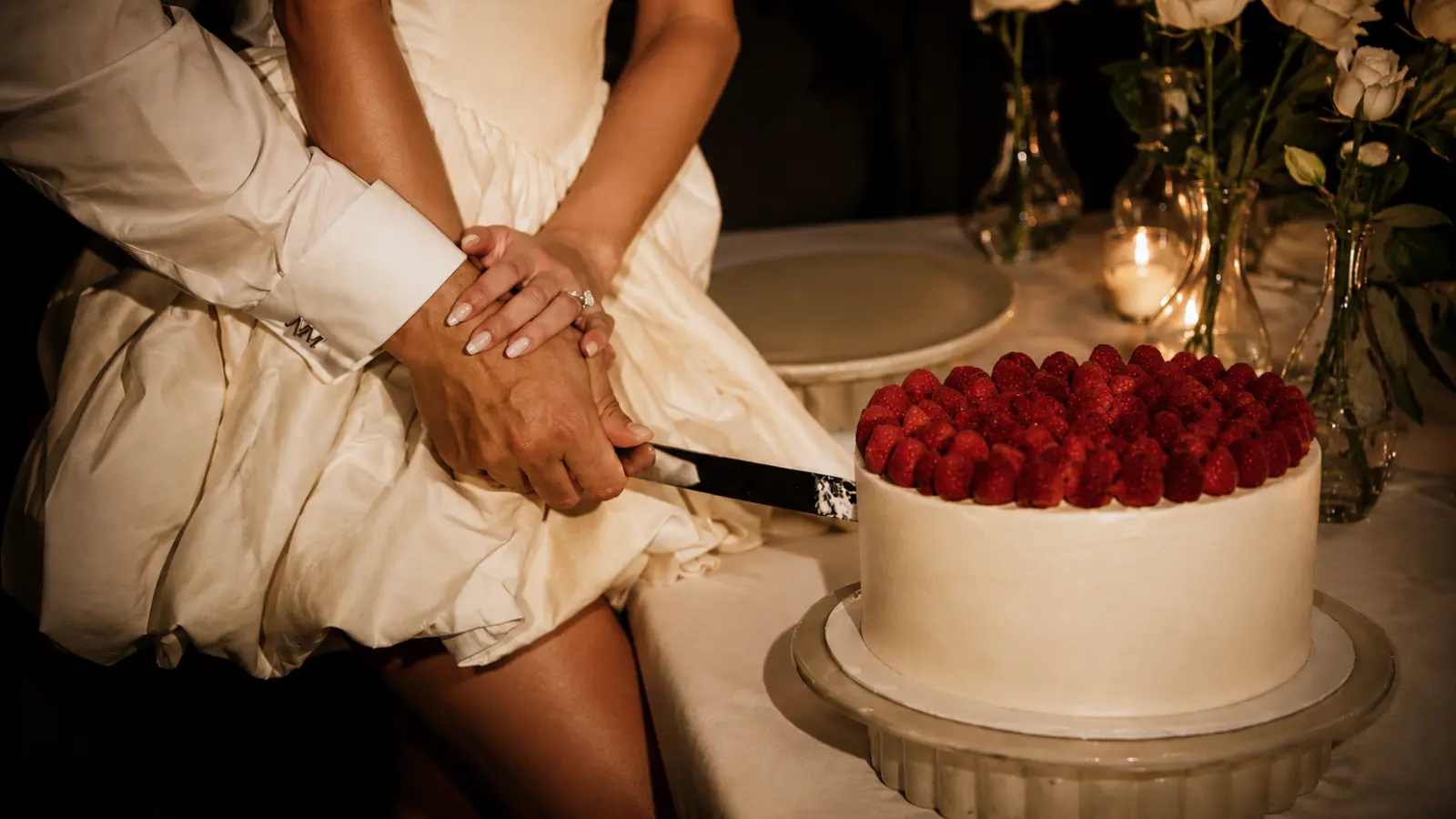
One-tier wedding cakes are wedding cakes designed with a single tier, making them a natural choice for intimate celebrations, micro-weddings, elopements, and small receptions. While they may be smaller in scale than traditional tiered cakes, they can be just as beautiful, intentional, and memorable when thoughtfully designed.
Many couples assume a wedding cake needs multiple tiers to feel special, but a well-designed single tier can feel more intimate, personal, and proportionate to a smaller celebration. A well-designed one-tier cake creates a sense of intimacy that larger cakes sometimes lose. The focus shifts from size to craftsmanship, allowing details like texture, florals, color, and presentation to become the center of attention rather than the cake’s overall scale.
In this guide, you’ll discover one-tier wedding cake ideas ranging from elegant floral designs and modern minimalist styles to rustic, romantic, and contemporary options. You’ll also learn how many guests a one-tier cake can serve, when a sheet cake makes sense, how to style the display, and how to choose the right design for your wedding size and aesthetic.
One-Tier Wedding Cake Ideas
The one-tier wedding cake has more design range than most couples realize when they first start planning, proving that wedding cakes can feel intentional at any size. The single tier is not a constraint — it is a canvas that works differently than a multi-tier cake. Without the visual architecture of stacked tiers to carry the design, the single tier’s impact comes from the quality of its surface, the precision of its shape, the intentionality of any decoration, and the way it is displayed and styled.
These wedding cake ideas span the full range of aesthetics: clean and modern, romantic and floral, elegant and classic, rustic and organic. What they share is that each one treats the single tier as a complete design decision, not a fallback.
Smooth White With a Single Fresh Bloom
Elegant · Timeless
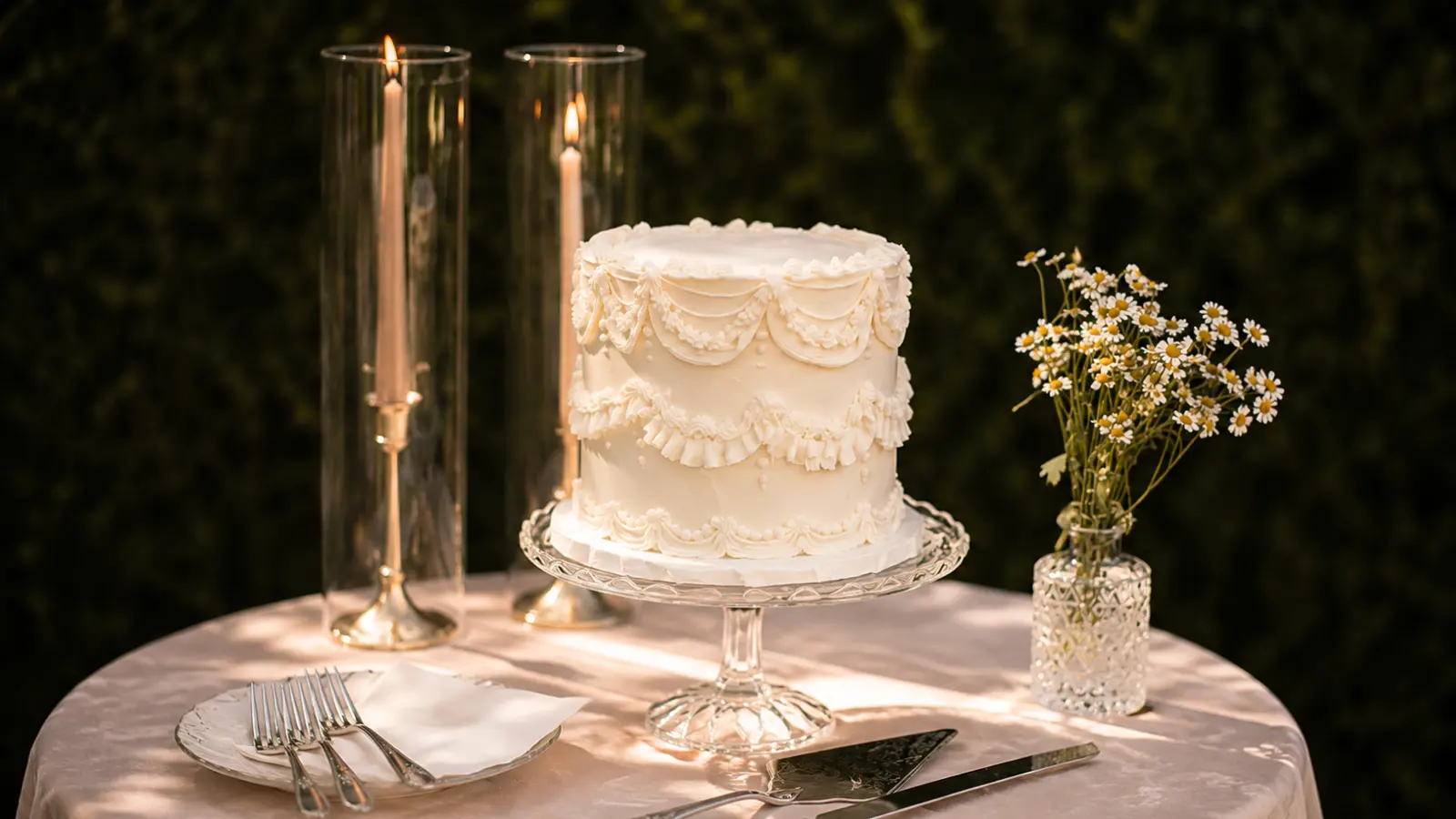
A perfectly smooth ivory or white buttercream tier — 8 inches in diameter, 5 to 6 inches tall for maximum presence — with a single large fresh bloom placed deliberately at the base of the cake on one side. One garden rose. One peony. One protea. The entire design is that choice and its placement. In photographs, this format works beautifully because the clean surface gives the photographer a backdrop, and the single flower gives the image a clear point of focus.
The height matters here more than it does with tiered cakes. A standard 4-inch tier looks short on a table; a 5- or 6-inch tier has real presence. Ask your baker specifically for the taller tier height when ordering. Many bakeries can accommodate this, though pricing depends on the bakery’s serving structure and tier height options.
Textured Buttercream — Palette Knife or Ribbed
Contemporary · Versatile
A single tier in a palette-knife textured buttercream — horizontal strokes in ivory, warm white, or a soft neutral — with no additional decoration beyond the texture itself. The surface does all the visual work. This finish photographs with warmth and dimension that a smooth tier sometimes lacks, and it is more forgiving of any minor imperfections in the application, which is practical at the scale of a single tier where everything is visible.
The ribbed version — vertical or horizontal lines combed into the buttercream with a cake comb — gives modern wedding cakes a graphic, contemporary quality that reads as designed and intentional. Both approaches work at intimate wedding scales and pair well with minimal floral styling at the base.
Semi-Naked With Fresh Herbs and Fruit
Organic · Garden Wedding
A semi-naked single tier — the cake layers visible through a thin veil of buttercream — decorated with fresh herbs (rosemary, thyme, sage) and seasonal fruit (figs, blackberries, small citrus slices). This rustic wedding cake style is particularly strong at outdoor ceremonies, garden receptions, and intimate dinners where the food and the cake are part of the same seasonal, natural aesthetic. At a small gathering, the semi-naked cake’s textured layers add visual richness that a covered cake achieves differently.
One practical note: semi-naked cakes are more temperature-sensitive than fully covered ones. In warm outdoor settings, they need to be added to the table closer to serving time rather than set out for the full reception. Discuss timing with your baker if the ceremony is outdoors in warm weather.
Milky White With Pearl Details
Elegant · Bridal
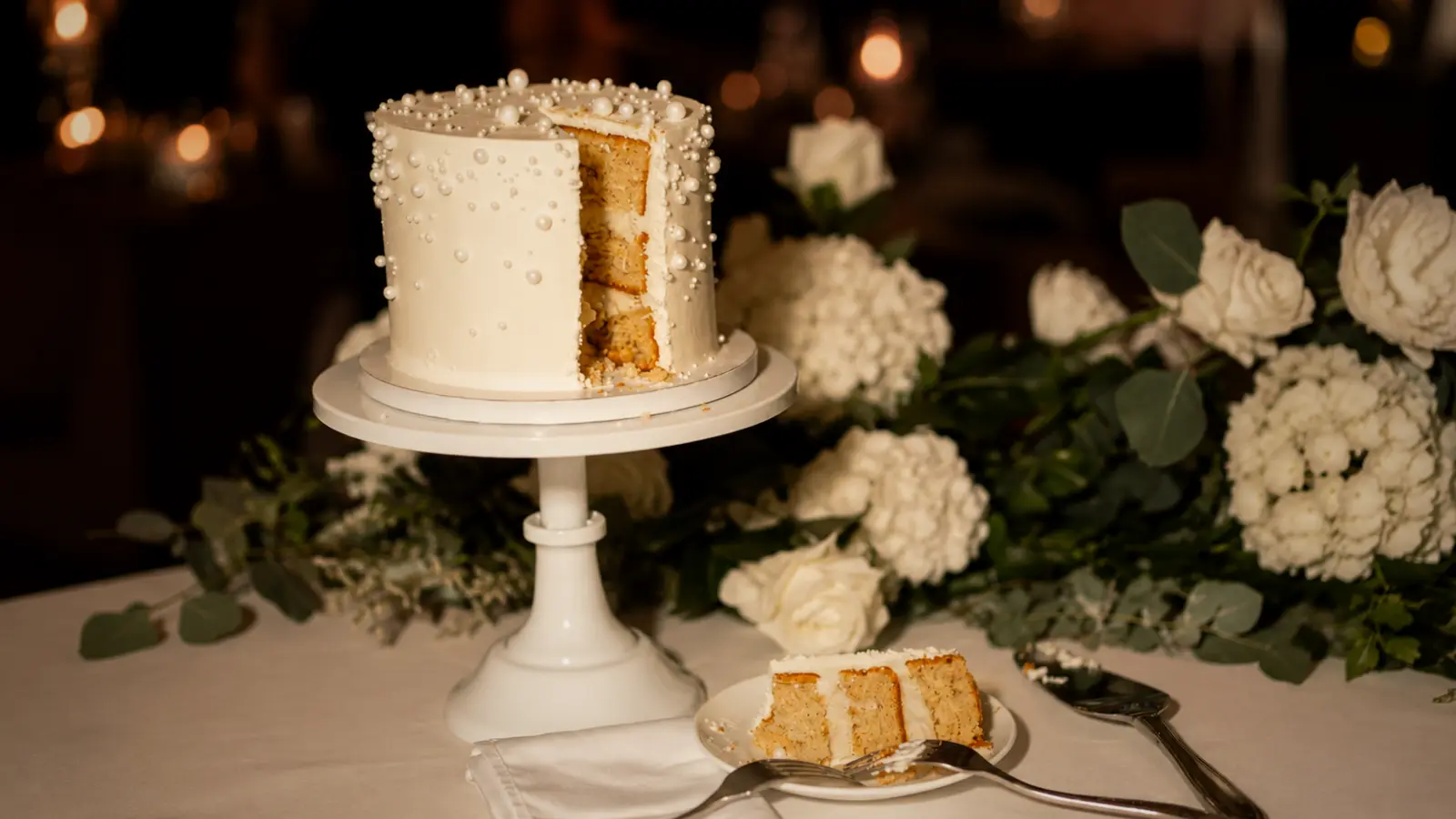
A milky white buttercream or fondant single tier with small edible pearls or pearl dust applied at the base or around the sides in a deliberate pattern. The pearl detail reads as distinctly bridal without being heavy or fussy — it catches light in a way that a plain surface doesn’t, adding dimension without adding visual complexity. Strong choice for couples who want the single tier to feel specifically bridal rather than simply small.
Warm Neutral — Dusty Rose, Terracotta, or Sage
Contemporary · Color-Forward
A single tier in a muted, sophisticated color — dusty rose, warm terracotta, pale sage, stone — applied in a smooth or lightly textured buttercream finish. At small-wedding scale, a single solid color tier is a strong design statement: with no additional tiers to carry the color, the single tier becomes the color. The palette should be consistent with the overall wedding aesthetic — the florals, the table linen, the venue — so the cake reads as part of the composition rather than separate from it.
Classic White Fondant With Gold Edge Detail
Formal · Classic
A fondant-covered single tier in bright or warm white with a hairline of gold painted precisely at the base edge and the top edge — the entire design is two gold lines and a clean white surface. At a courthouse wedding or a formal restaurant dinner, this reads as genuinely elegant and appropriately scaled for an intimate celebration. The fondant surface makes this version of the single tier more formal and polished than a buttercream equivalent, which is the right choice for certain venue and dress contexts.
Naked Cake With Wildflowers and Berries
Romantic · Outdoor
A fully naked single tier — no frosting on the exterior, the cake layers completely visible — topped with a loose arrangement of wildflowers and fresh berries. At an elopement in a natural setting, or a small outdoor ceremony at a vineyard or farm, this cake is perfectly calibrated: unpretentious, beautiful, seasonally specific. The wildflower arrangement can echo the wedding bouquet or ceremony florals, creating a visual thread between the ceremony and the reception table.
Naked cakes need to be consumed relatively quickly — the exposed layers begin to dry within a few hours. For small gatherings where the cake will be cut and served promptly, this is no issue at all. For longer receptions, a semi-naked alternative is more practical.
Chocolate or Moody Dark Tier
Bold · Non-Traditional
A single tier in a deep chocolate buttercream, a rich burgundy, or a near-black charcoal fondant — decorated with a handful of white or blush flowers, a scatter of gold leaf, or left completely unadorned. A dark single tier reads as sophisticated and deliberately non-traditional, which makes it an excellent choice for couples who find the conventional white cake aesthetically unconvincing. The contrast between a dark cake and a white or ivory dress in photographs is striking — and at intimate scale, that contrast is fully visible in every shot.
Single-Tier Wedding Cakes for Small Weddings
The small wedding — fifteen to thirty guests, an intimate dinner reception, sometimes a restaurant or private home rather than a traditional venue — is where the single-tier cake is genuinely the right choice rather than a compromise. A three-tier cake at a table of twenty looks out of proportion and produces significant waste. A beautifully designed single tier, sized correctly for the guest count, looks exactly right.
Several types of small celebrations particularly suit the one-tier cake, and each has its own considerations.
Elopements
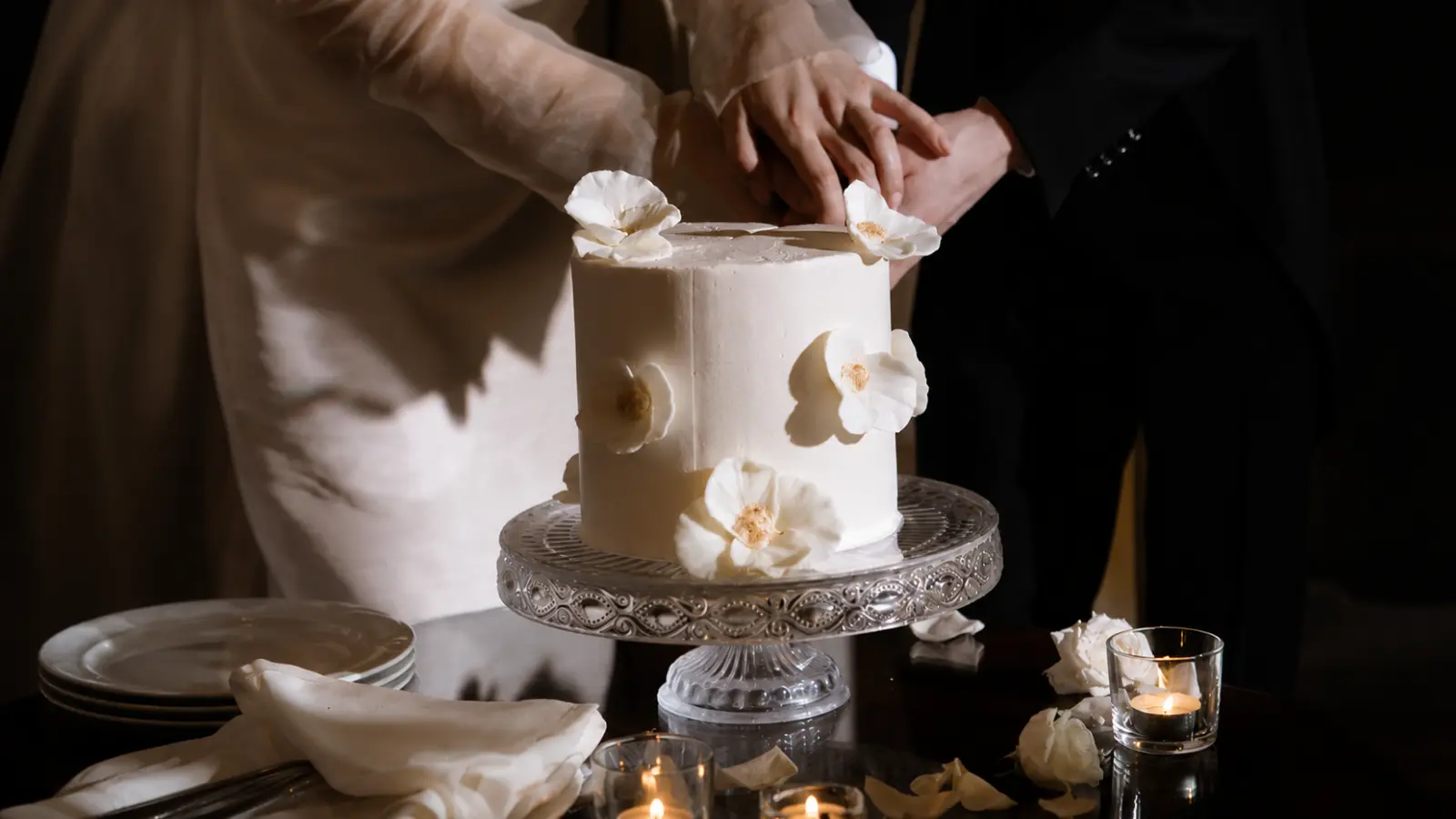
At an elopement — the couple plus possibly a handful of witnesses — the one-tier cake is purely for the two of them: the cutting moment, the photograph, and whatever portion they share that day. Flavor is more important than visual scale; the cake does not need to serve anyone else. An elopement cake can be as small as a 6-inch round and as personally specific as the couple wants — an unusual flavor they love, a decoration that references something meaningful to them, a bakery they discovered together. This is the most personal version of the one-tier wedding cake.
For Elopements Specifically
Many couples who elope do not book their cake until after the ceremony date is confirmed — and then discover that popular local bakeries may still require advance notice even for single-tier orders. Book earlier than feels necessary. The better the baker, the more lead time they require regardless of the order size.
Courthouse Weddings
The courthouse wedding — quick legal ceremony, often followed by a private dinner or small gathering — is one of the most underserved contexts in wedding cake planning. Many couples who marry at a courthouse feel uncertain about whether a cake is appropriate or how to scale it correctly. The answer: yes, completely appropriate, and a single tier is exactly the right size for most courthouse celebration dinners.
The courthouse wedding cake tends to work best in an elegant, restrained style — the celebration is a dinner, not a full reception, and the cake should be proportionate to that context. A smooth ivory buttercream with a single fresh flower, or a clean fondant tier with a gold accent, reads as intentional and appropriately scaled. It is a cake that says “we planned this” rather than “we forgot about the cake.”
Micro-Weddings (20–50 Guests)
The micro-wedding — more guests than an elopement, fewer than a traditional wedding — sits at the outer edge of comfortable single-tier territory. A well-sized single tier (an 8-inch or 9-inch round at 5 to 6 inches tall) serves 20 to 28 guests at standard portions. At 50 guests, the single tier works as a display and cutting cake when supplemented by sheet cakes in the kitchen — the strategy that many wedding planners recommend as the most cost-effective approach regardless of guest count.
Intimate Restaurant Dinners
When the reception is a private dinner at a restaurant rather than a full-service venue, the cake arrives at the table much the way a birthday cake does — carried in, presented to the couple and their guests, cut and served as dessert. In this format, the single tier is the natural choice: it is table-scaled, it can be served from the same table without a separate cake-cutting station, and it does not require the delivery and setup logistics of a multi-tier cake.
Many restaurants that host private dinners have relationships with local bakeries and can arrange the cake directly. Others allow outside cakes with a plating or slicing fee. Confirm the restaurant’s policy early, and if you are bringing your own cake, confirm whether they have refrigeration space if the cake needs to be kept cold before service.
Elegant One-Tier Wedding Cakes
Elegant wedding cakes and single-tier designs are not in tension — they are, when executed well, natural partners. Some of the most elegant wedding cakes in editorial photography are single tiers, because elegance often comes from restraint and proportion rather than scale. A single tier that is the right size for the table, finished with precision, and decorated with one deliberate element is more elegant than a three-tier cake with too much happening on it.
The specific elements that create elegance in a one-tier cake are consistent: the surface quality (smooth and precise, or textured with intention), the shape (an oval or slightly taller-than-standard round reads as more refined than a short, wide tier), the color (neutral, controlled, consistent with the overall palette), and the decoration (one element, chosen and placed with care).
Smooth Ivory With Monogram
Elegant · Classic
A smooth ivory buttercream single tier with a laser-cut acrylic or fine wire monogram of the couple’s initials centered on the front face. No additional decoration. The monogram is sized to fill roughly one-third of the tier’s visible face — enough to be legible and significant in photographs, not so large that it overwhelms the surface. This combination is quietly elegant, timeless, and works across many settings, from a formal hotel to a private home.
Lace-Impression Fondant
Elegant · Traditional
A fondant-covered single tier with a lace impression rolled into the fondant surface — the pattern embossed rather than applied on top, which gives it a refined, textile quality. Lace-impression fondant work is a specific technique that not all bakers offer; look specifically for this in a portfolio before booking. At its best, it reads as genuinely couture — the surface texture is visible only close up, which means the cake presents as clean from a distance and extraordinarily detailed in close-up photographs.
Gold Leaf Accent on Warm White
Elegant · Contemporary
A smooth warm white or ivory tier with 22K edible gold leaf applied in an abstract brushstroke across one side of the cake. The gold catches reception lighting and natural daylight differently, which means the cake looks slightly different in every photograph — occasionally a warm gleam in the background of a wide shot, prominently luxurious in a close-up. This is a versatile elegant one-tier choice because it can work in contemporary venues, formal hotels, garden settings, and restaurant dinners when the rest of the styling supports it.
White Cake With Fine Piped Border
Elegant · Classic-Modern
A smooth white or ivory single tier with a single fine piped border at the base — a thin beaded edge, a simple rope pattern, or a clean petal border in the same color as the cake surface, so it reads as a texture difference rather than a decorative addition. This approach bridges the classic and the contemporary: there is clearly a detail present, but it is so restrained that the overall impression is clean and modern rather than ornate.
One-Tier Cakes With Flowers
Floral wedding cakes use one of the most versatile and widely available decorations for a one-tier wedding cake — and at single-tier scale, the relationship between the flower placement and the cake surface is more intimate than at multi-tier scale. Every flower is closer to every other element. The placement is more visible. The scale of individual blooms in relation to the tier is more significant.
What this means practically: a one-tier cake benefits from more deliberate flower placement than a multi-tier cake, where the florals can be distributed across several surfaces and their individual scale is less apparent. On a single tier, three mismatched flowers placed casually looks unintentional. Three flowers of consistent scale placed with clear compositional thought looks designed.
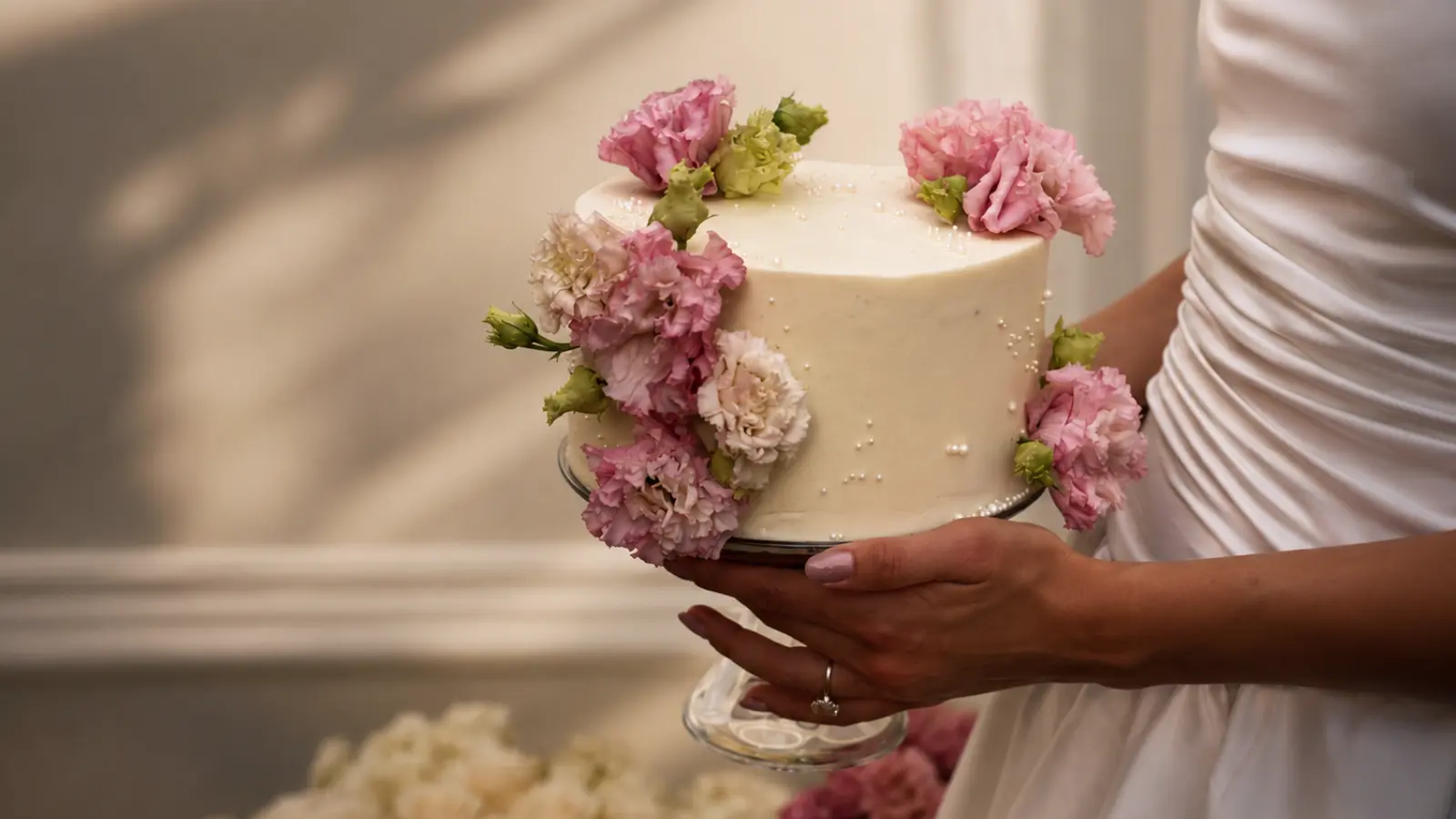
Crown of Flowers — Full Top
Floral · Romantic
Fresh flowers arranged in a crown across the entire top surface of the single tier — the cake top becoming a garden rather than a blank surface. This approach works particularly well at garden weddings, outdoor receptions, and celebrations with a romantic, abundant aesthetic. The crown can echo the bride’s bouquet directly if the flowers are ordered together. The visual effect in photographs is significant: the flower crown on a single tier reads as lush and celebratory rather than minimal, which suits a certain kind of intimate wedding perfectly.
Ensure that all flowers placed directly on the cake are food-safe. Roses, lavender, chamomile, violets, and pansies are commonly used edible options, while flowers such as lily of the valley, hydrangea, and ranunculus should not touch the cake surface directly. Ask your baker to use food-safe picks for any flowers that touch the frosting surface if food-safety is uncertain.
One Large Statement Bloom
Floral · Minimalist
One bloom — a large peony, a full garden rose, a king protea, or a decorative ranunculus handled with proper food-safe barriers — placed on the top or at the base-front of the tier. Nothing else. At single-tier scale, this placement has the quality of a botanical illustration: the flower is large enough to be a genuine design element, and its relationship to the cake surface is close enough to read as considered. This is the most editorial single-tier floral option, and the one that photographs most distinctly in close-up shots.
Wrap of Small Blooms at the Base
Floral · Soft
A ring of small blooms — garden roses, ranunculus, spray roses, sweet peas, or a mix of similar-scale flowers — arranged at the base of the tier where it meets the stand. The placement at the base rather than the top means the flowers rest on the stand or table surface rather than the cake, which is both food-safe and visually grounding. The ring of flowers at the base adds warmth and romance to a clean surface without adding visual complexity to the cake itself.
Sugar Flowers — When It’s Worth It
Floral · Premium
For couples whose budget allows it and whose aesthetic demands it, a few hand-crafted sugar flowers on a single tier produce photographs that cannot be replicated with fresh flowers. Sugar flowers are permanent — they do not wilt over the course of a reception, they survive any temperature, and they can be kept as keepsakes after the wedding. On a single tier, even two or three sugar blooms placed deliberately represent significant investment but create a result that reads as genuinely extraordinary in close-up photographs.
The cost per sugar flower can be significant because each detailed bloom requires separate handcrafting, drying, shaping, and placement. For a single-tier cake, two or three blooms plus the base cake produces a total cost that can rival a simple two-tier fresh-flower alternative. The decision comes down to whether the photographic result — and the ability to keep the flowers — justifies the difference.
Dried Botanicals — Texture and Warmth
Floral · Contemporary
Dried flowers and botanicals — pampas grass, dried lavender, dried cotton, preserved eucalyptus, dried citrus — arranged on or around a single tier. The muted, architectural quality of dried botanicals suits contemporary and quiet-luxury aesthetics in a way that fresh flowers sometimes don’t. They are also temperature-stable — they look identical at hour eight as at hour one, which matters for receptions where the cake may be on display for several hours before cutting. A single-tier cake with a carefully arranged dried botanical placement has a warm, editorial quality that photographs distinctly from fresh-flower alternatives.
How Many People Does a One-Tier Cake Serve?
The serving count for a one-tier cake is the most practical question in this category — and the answer depends on three variables: the diameter of the tier, the height of the tier, and the portion size the bakery uses when cutting. Most bakeries use either a 1×2-inch or a 1×1.5-inch portion as standard; the difference between those two cutting standards can mean four to six additional servings from the same cake.
Diameter × Height
Standard Servings
Best For
6″ × 4″
10–12 servings
Elopements; cutting cake only
6″ × 6″
14–16 servings
Elopements with small witness group
8″ × 4″
20–24 servings
Intimate weddings of 15–25 guests
8″ × 6″
26–30 servings
Micro-weddings up to 30 guests
9″ × 4″
28–32 servings
Micro-weddings of 25–35 guests
10″ × 4″
35–40 servings
Small weddings; paired with sheet cake for 50+ guests
10″ × 6″
45–50 servings
Small weddings of 40–50 guests without supplement
A Detail Most Couples Miss
Bakery serving sizes are not standardized. One bakery’s “standard serving” is another bakery’s “generous serving.” Before trusting any serving count estimate, ask your baker specifically: “What size portion do you consider a standard serving from this diameter?” A 1×1.5-inch slice versus a 1×2-inch slice sounds like a minor difference — it is not. At 24 expected guests, it is the difference between enough and running short.
The Height Variable — Often Overlooked
Most wedding cakes are built at a standard 4-inch tier height. Requesting a 5-inch or 6-inch tier increases the number of servings from the same diameter without increasing the footprint of the cake on the table — which is significant for a single tier where table space and visual proportion both matter. A 6-inch-tall, 8-inch-diameter cake has approximately 25 to 30 percent more cake than a 4-inch-tall, 8-inch-diameter cake. It also reads as taller and more substantial on the table — more presence without more width.
Ask your baker specifically about their available tier heights. Many bakeries default to 4-inch unless asked; the taller option is often available without additional cost or with only a modest increase.
When to Add a Sheet Cake
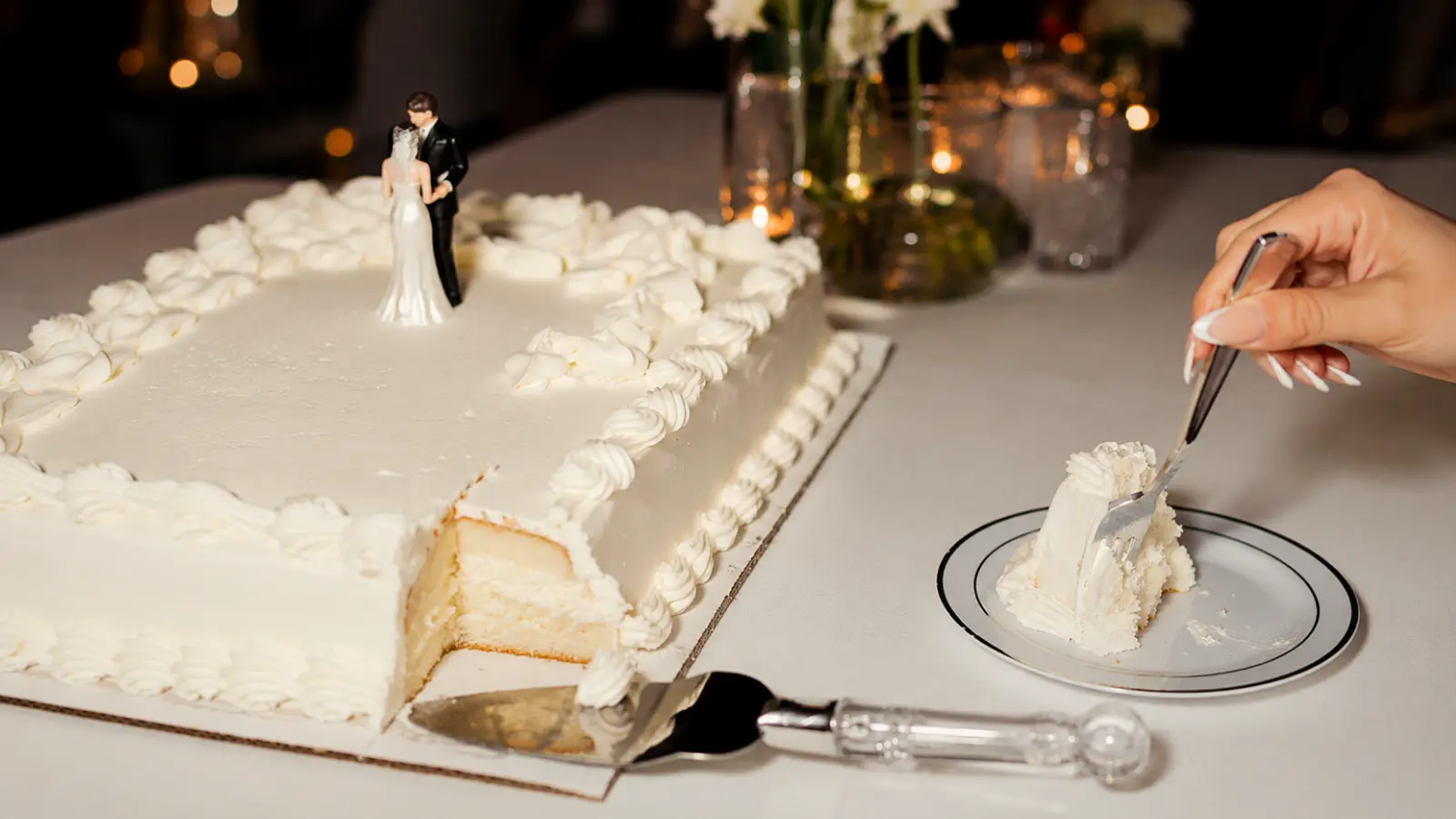
The wedding sheet cake strategy is one of the most practical tools in wedding cake planning — and it is not just for couples with large guest counts. Any couple who has a single-tier display cake but needs to serve more than the tier can comfortably accommodate is a candidate for the strategy. The display cake is cut ceremonially. Sheet cakes in the same flavor and frosting are pre-cut in the kitchen and served to guests. From the guest’s perspective, the experience is identical: they receive a slice of wedding cake, beautifully plated, in the same flavor as the display cake.
When the sheet cake strategy makes most sense:
Guest count exceeds single-tier serving capacity. If you have 60 guests and a beautiful 8-inch single tier that serves 24, sheet cakes in the kitchen close the gap without requiring a second display tier that would change the cake’s visual character.
Budget is limited but visual design is important. A spectacular single-tier display cake plus kitchen sheet cakes is often less expensive than a three-tier cake of similar quality, and the visual impact of the display cake can be designed without the constraint of needing it to serve everyone.
The flavor you love doesn’t scale well as a tiered cake. Some flavors and frosting combinations are more structurally reliable as flat sheet cakes than as stacked tiers. A delicate chiffon, a very moist carrot cake, or a complex layered dessert can be executed better in sheet form than as a tall tiered structure.
The venue or setting makes a large cake impractical. An elopement at a national park, a courthouse celebration, or a destination wedding where transporting a multi-tier cake is logistically complicated — a single display tier that travels easily, supplemented by sheet cakes from a local bakery at the destination, solves the problem cleanly.
How to Order Sheet Cakes to Match Your Display Cake
Order sheet cakes from the same bakery as your display tier whenever possible — the flavor, frosting, and overall quality will be consistent. Specify that the sheet cakes should be in identical flavor and frosting to the display tier, pre-portioned in the kitchen before service rather than brought out whole. Sheet cake servings vary by bakery, pan size, and cutting style, so ask your baker how many servings each sheet size provides and order enough to cover the guests beyond the display cake’s serving capacity.
Confirm with your caterer or venue that the sheet cakes can be stored appropriately (most cakes need refrigeration if buttercream is involved), and that the kitchen has the plating setup to serve them alongside the display cake slices without any visible difference for guests.
Communicating the Strategy to Guests
Most guests at intimate weddings will never know the sheet cake strategy is in use — they receive a slice of cake, it tastes exactly like the display cake, and they have no reason to think otherwise. For couples who feel uncertain about transparency: it is not a deception. It is a logistical approach that the couple decided made sense for their celebration. Many of the most experienced wedding planners recommend it routinely for weddings of all sizes, not just small ones.
How to Style and Display a One-Tier Cake
Wedding cake stands are one of the most important styling decisions for a one-tier wedding cake. A single tier at table height, on a plain surface, reads as a cutting cake. The same single tier elevated on a statement pedestal or marble stand reads as a centerpiece. The stand is doing the architectural work that additional tiers would otherwise do — giving the cake height, visual presence, and a relationship to the rest of the table that makes it feel like a designed element rather than an item placed on a surface.
Cake Stand Options by Aesthetic
| Stand Type | Height It Adds | Best For |
|---|---|---|
| White ceramic pedestal | 6–10 inches | Classic, romantic, garden weddings — clean and universally flattering |
| Marble round pedestal | 6–12 inches | Modern, contemporary, quiet luxury aesthetics — the most editorial option |
| Acrylic or lucite pedestal | 8–14 inches | Contemporary and glamorous; the cake appears to float — strong in photographs |
| Gold or brass metal stand | 4–8 inches | Formal, glamorous, and warm — works with warm-toned cakes and gold accents |
| Wood slice or rustic platform | 1–2 inches | Rustic, organic, barn and garden aesthetics — adds texture rather than height |
| Stacked books or decorative box | Variable | Styled and personalized — particularly appropriate for intimate home settings |
The Table Around the Cake
At a small wedding where the cake table may be more visible and more integrated into the overall decor than at a large reception, what surrounds the single tier matters as much as the cake itself. A small arrangement of the same flowers used in the ceremony. A few pillar candles of varied heights. A scattering of petals. A small framed photograph or meaningful object. These elements turn the cake into a styled vignette that reads as intentional and curated — which is exactly the quality that intimate celebrations reward.
The key is not to overwhelm the cake. The styling around the single tier should support it, not compete with it. If in doubt, fewer elements placed with more intention usually create a stronger result.
The Cake Cutting Moment
At a large wedding, the cake cutting is a moment announced from the microphone, coordinated by the planner, and witnessed by a hundred people with phones raised. At a small wedding, it is more intimate — often quieter, more genuine, and photographed more closely. The single-tier cake cutting moment at an intimate celebration is one of the most genuinely personal moments in wedding photography, because the scale of the gathering means the photographer can be close, the light can be controlled, and the emotion is unfiltered by the performance pressure of a large crowd.
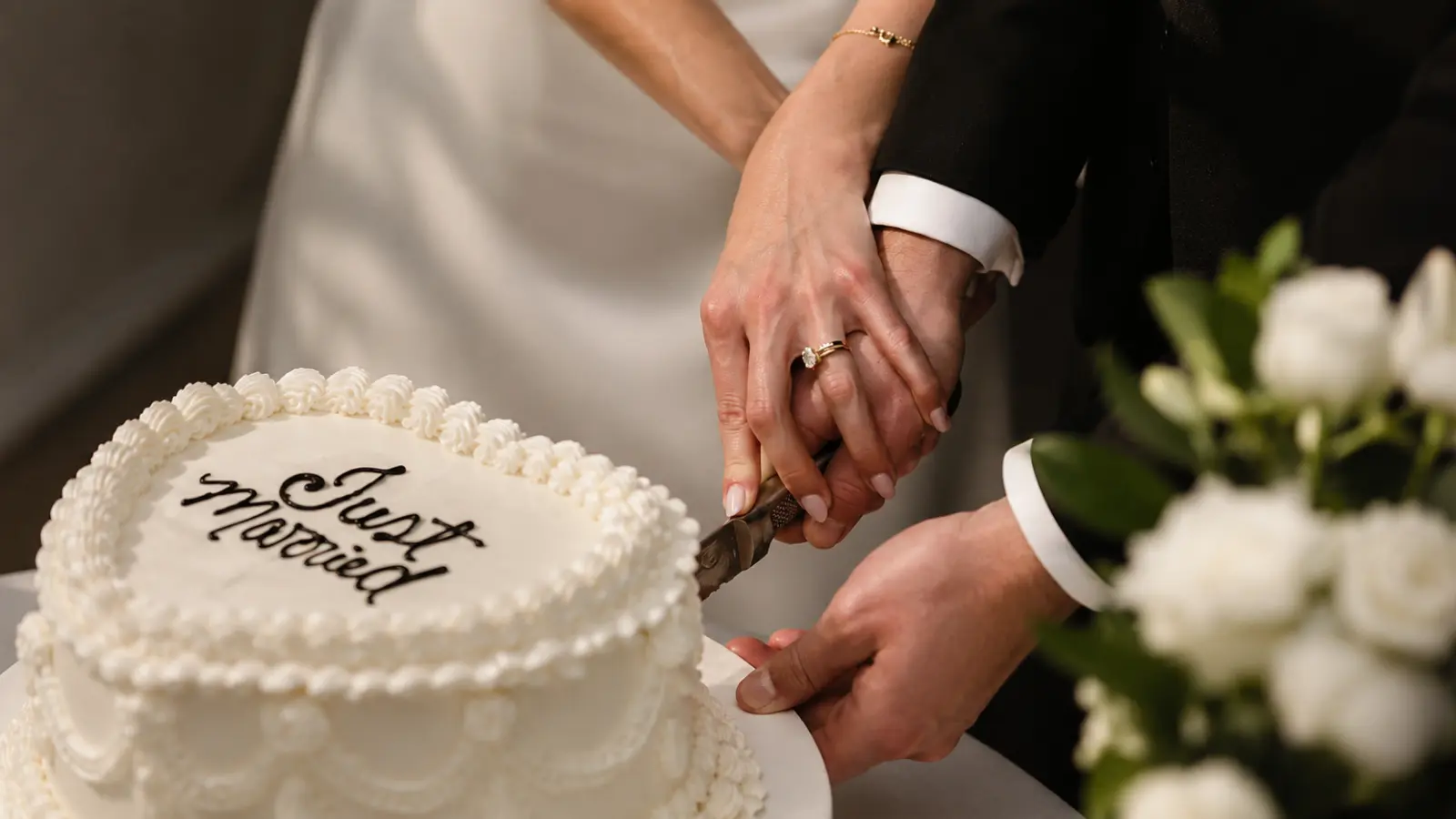
Timing the Cake Cutting
At most small wedding receptions, the cake is cut toward the end of the main course or at the transition to dessert — not earlier, when guests are still eating, and not so late that the energy of the celebration has wound down. At a restaurant dinner, the timing is usually coordinated with the service staff so the cutting happens between the main course and dessert, with the sliced cake returned plated as the final course.
At a more informal gathering, the cake cutting is often a simple and spontaneous moment: the couple cuts, the photographer captures it, and the slices are served immediately. There is no need for a formal announcement or a countdown. The intimacy of the small wedding makes the moment feel natural rather than staged.
The Cake Knife and Server
A cake knife and server set is a small detail that makes a significant visual difference in cutting photographs. The couple’s hands on an ornate handled knife produce a different image than on a standard kitchen knife. Many couples purchase or rent a set for the occasion; others borrow one with sentimental value from family. If the reception is at a restaurant, they will provide their own — but if you have a specific set you want used, bring it and let the staff know in advance.
Music for the Cake Cutting
At an intimate wedding, background music during the cake cutting is usually already playing as part of the reception playlist rather than a specific cued moment. If the celebration is large enough to have a DJ or a band, coordinate one of your favorite wedding cake cutting songs for the transition — something warm, celebratory, and personal enough to signal the moment without requiring a formal announcement. The song should start before the couple approaches the cake so the music is already playing when they cut — not starting cold as they pick up the knife.
Flavor and Finish Options for One-Tier Cakes
The single-tier wedding cake is the format where wedding cake flavors are most worth personalizing, because at small-wedding scale, the couple is not feeding a hundred guests with varied preferences — they are serving people who know them, people they chose to be there, people for whom a cake that reflects the couple’s actual taste is a meaningful detail rather than a logistical concession.
Flavors That Work Especially Well in Single Tiers
| Flavor | Filling | Frosting | Why It Works for One-Tier |
|---|---|---|---|
| Vanilla bean | Fresh raspberry or strawberry jam | Vanilla bean buttercream | Universal, elegant, and genuinely excellent when made with quality ingredients |
| Lemon | Lemon curd | Lemon or vanilla buttercream | Light and refreshing; ideal for spring and summer celebrations |
| Dark chocolate | Salted caramel | Dark chocolate ganache | Rich and distinctive — a flavor statement that suits a small group of people who will appreciate it |
| Almond | Apricot or raspberry jam | Almond buttercream | Sophisticated and underused; pairs beautifully with white or muted aesthetics |
| Champagne | Passionfruit curd or peach jam | Champagne buttercream | Celebratory and specific — a flavor that means something at a wedding |
| Olive oil | Orange blossom cream | Whipped mascarpone | Contemporary and unexpected; suits couples with a culinary sensibility |
| Earl Grey | Lavender honey | Vanilla or honey buttercream | Refined and distinctive — the kind of flavor choice that generates genuine conversation |
Finish Quality Over Decoration Complexity
At single-tier scale, the quality of the frosting finish is more visible than at any other cake format. There is no bottom tier to deflect attention, no cascade of florals to redirect the eye. The surface of the single tier is the entire visual experience — which means investing in a baker with a strong finishing standard matters especially for this format.
The specific detail to confirm: ask your baker about the frosting they use for their smooth-finish cakes. American buttercream (made with powdered sugar and butter) is sweeter and stiffer — it pipes well but does not produce the most refined smooth finish. Swiss or Italian meringue buttercream (made with egg whites and butter) is silkier, less sweet, and produces a more elegant finish that holds its shape without the cloying sweetness some guests find overwhelming. For a celebration where the cake will be eaten close to the table and the quality of the flavor and finish matters, meringue buttercream is worth requesting specifically.
One-Tier Wedding Cake Inspiration Board
Before choosing your final design, it helps to see how one-tier wedding cakes can prove that beautiful design does not require multiple tiers. Explore our one-tier wedding cake inspiration board for elegant floral arrangements, minimalist buttercream finishes, modern designs, intimate wedding cakes, courthouse wedding inspiration, and creative styling ideas that transform a single tier into a memorable centerpiece.
Final thoughts
The best one-tier wedding cakes succeed because they embrace their scale rather than trying to imitate something larger. When the design, flavor, flowers, stand, and setting all work together, a single tier feels intentional, elegant, and completely appropriate for the celebration surrounding it.
Whether you are planning an elopement, a courthouse wedding, a micro-wedding, or an intimate reception with your closest family and friends, the right one-tier cake creates exactly what every wedding cake is meant to create: a beautiful focal point, a shared moment, and a memory that remains meaningful long after the last slice is served.
Frequently asked questions (FAQ)
Do guests think a one-tier wedding cake looks too small?
Rarely. Guests usually judge the overall presentation rather than the cake’s size alone. A one-tier cake displayed on a beautiful stand with thoughtful styling often feels more intentional than a larger cake that looks disconnected from the celebration.
What is the biggest mistake couples make with one-tier wedding cakes?
Treating the cake as an afterthought. Because the cake is smaller, every detail becomes more visible—the finish, the stand, the flowers, and the placement. A one-tier cake succeeds when it is styled deliberately rather than simply placed on a table.
Can a one-tier wedding cake still feel luxurious?
Absolutely. Luxury comes from craftsmanship, ingredients, and presentation. A flawlessly finished one-tier cake with premium flavors and elegant styling can feel more refined than a much larger cake covered in decoration.
Why do photographers love one-tier wedding cakes?
They are easier to photograph beautifully. The entire design fits naturally into the frame, details remain visible, and intimate wedding settings allow photographers to capture the cake as part of the overall atmosphere rather than as a separate object.
Is a one-tier wedding cake only for very small weddings?
Not at all. Many couples use a one-tier cake as a display and cutting cake while serving additional sheet cake from the kitchen. This allows them to keep the elegant simplicity of a single tier without limiting guest servings.
What do professional cake designers notice first about a one-tier cake?
The finish quality. With no additional tiers to draw attention elsewhere, every detail of the surface becomes important. Smooth buttercream, clean edges, balanced proportions, and precise decoration are immediately noticeable.
How many guests does a one-tier wedding cake serve?
A one-tier wedding cake can serve roughly 10 to 50 guests depending on the diameter, tier height, and slice size. A 6-inch cake usually works best for elopements or very small gatherings, while an 8-inch or 10-inch cake can serve many micro-weddings. Always confirm the final serving estimate with your baker.