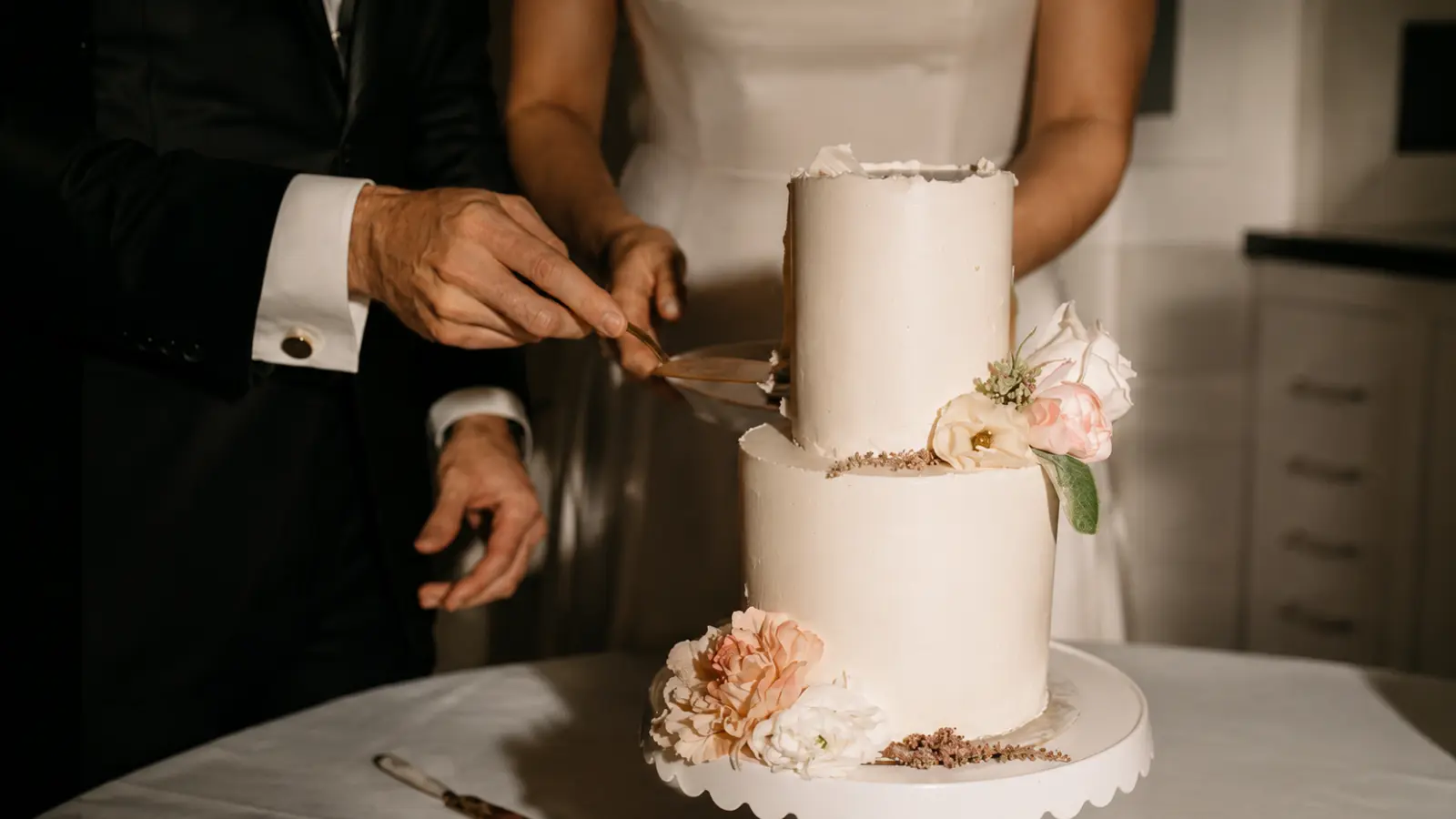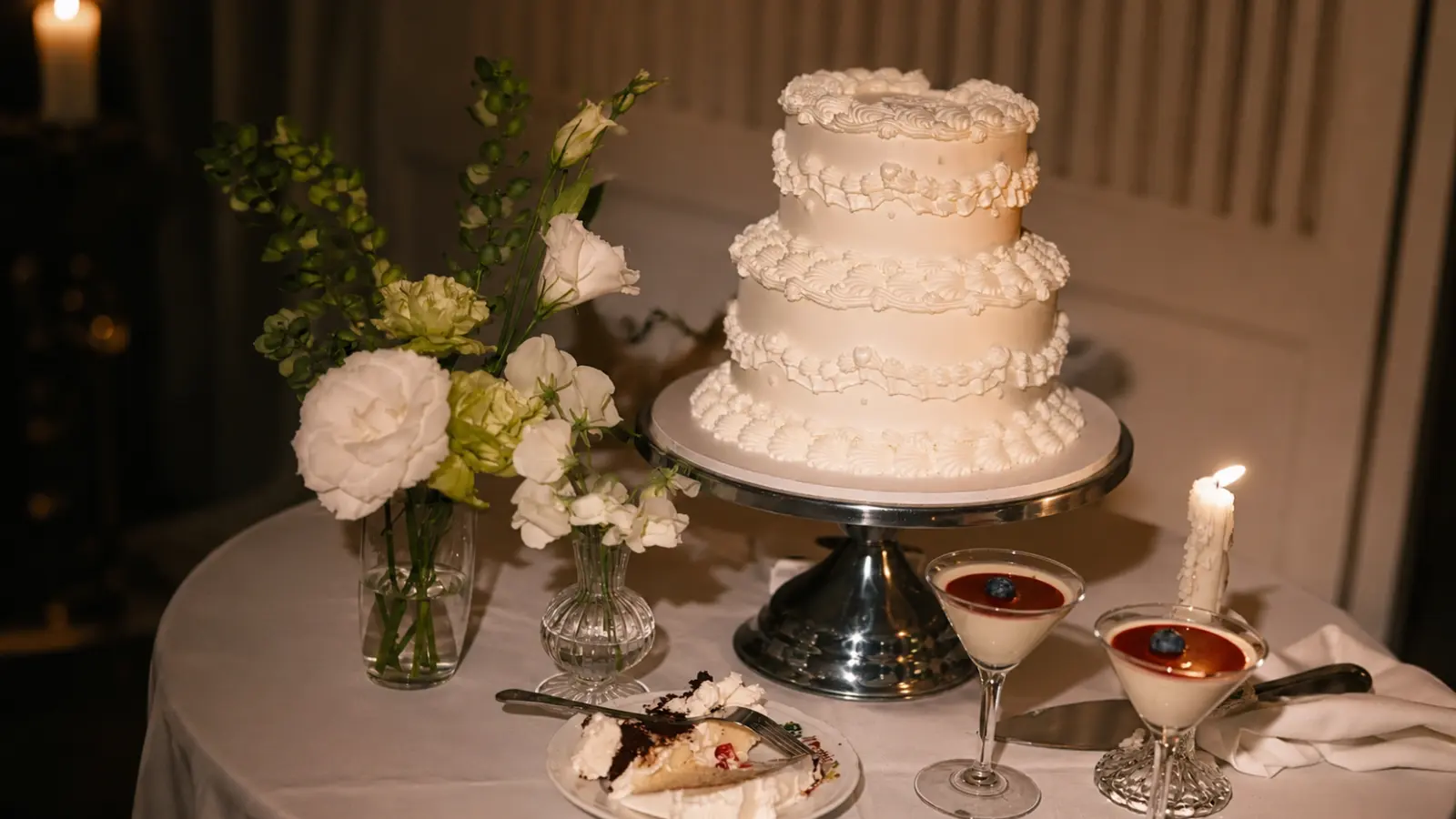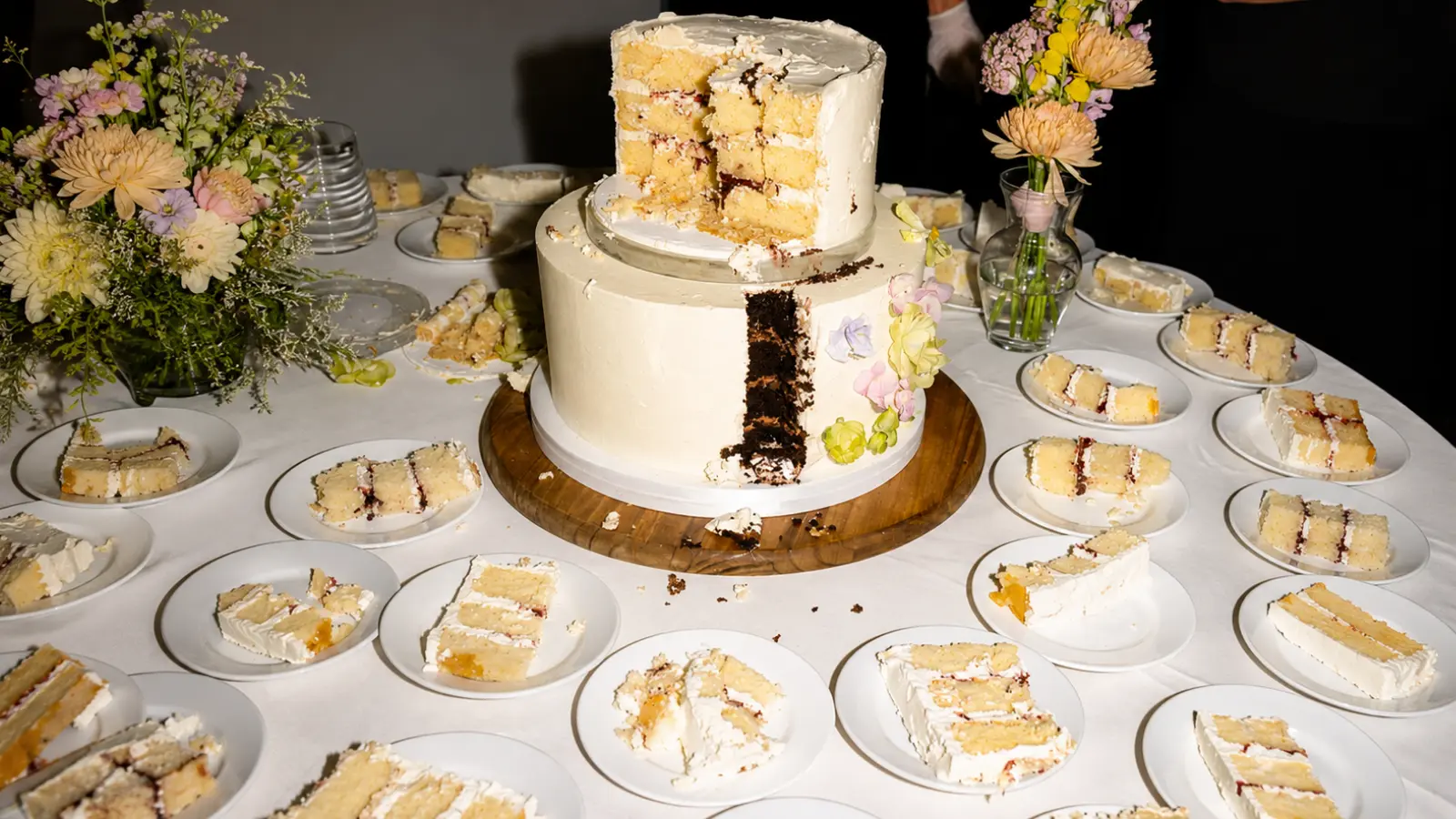
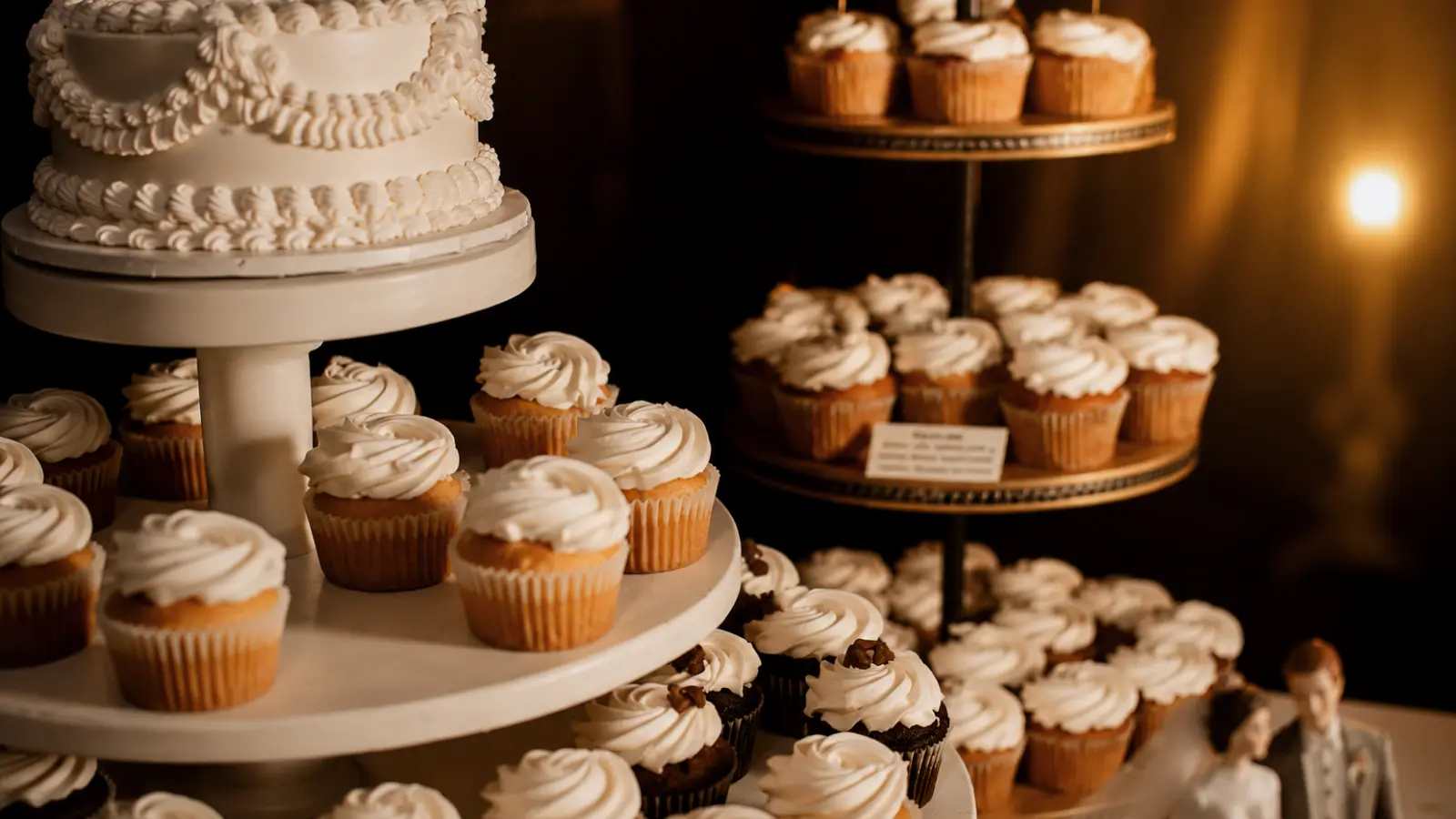
Cupcake wedding cakes are wedding cake displays made with individual cupcakes, often arranged on a tiered stand with a small cutting cake on top. They give couples the visual presence of a wedding cake while making serving easier, offering more flavor variety, and reducing the need for traditional cake cutting service.
The appeal of cupcake wedding cakes is both practical and visual. Guests can choose their own flavors, portions are already separated, and the display can feel abundant, festive, and highly customizable. The key is presentation: cupcakes need intentional styling, coordinated frosting, clear flavor labels, and the right stand to feel like a wedding focal point rather than a casual dessert table.
In this guide, you’ll discover cupcake wedding cake ideas, tower display options, the pros and cons of choosing cupcakes, how many cupcakes to order, flavor planning tips, and how to combine cupcakes with a small cutting cake for a setup that feels beautiful, practical, and fully wedding-ready.
Cupcake Wedding Cake Ideas
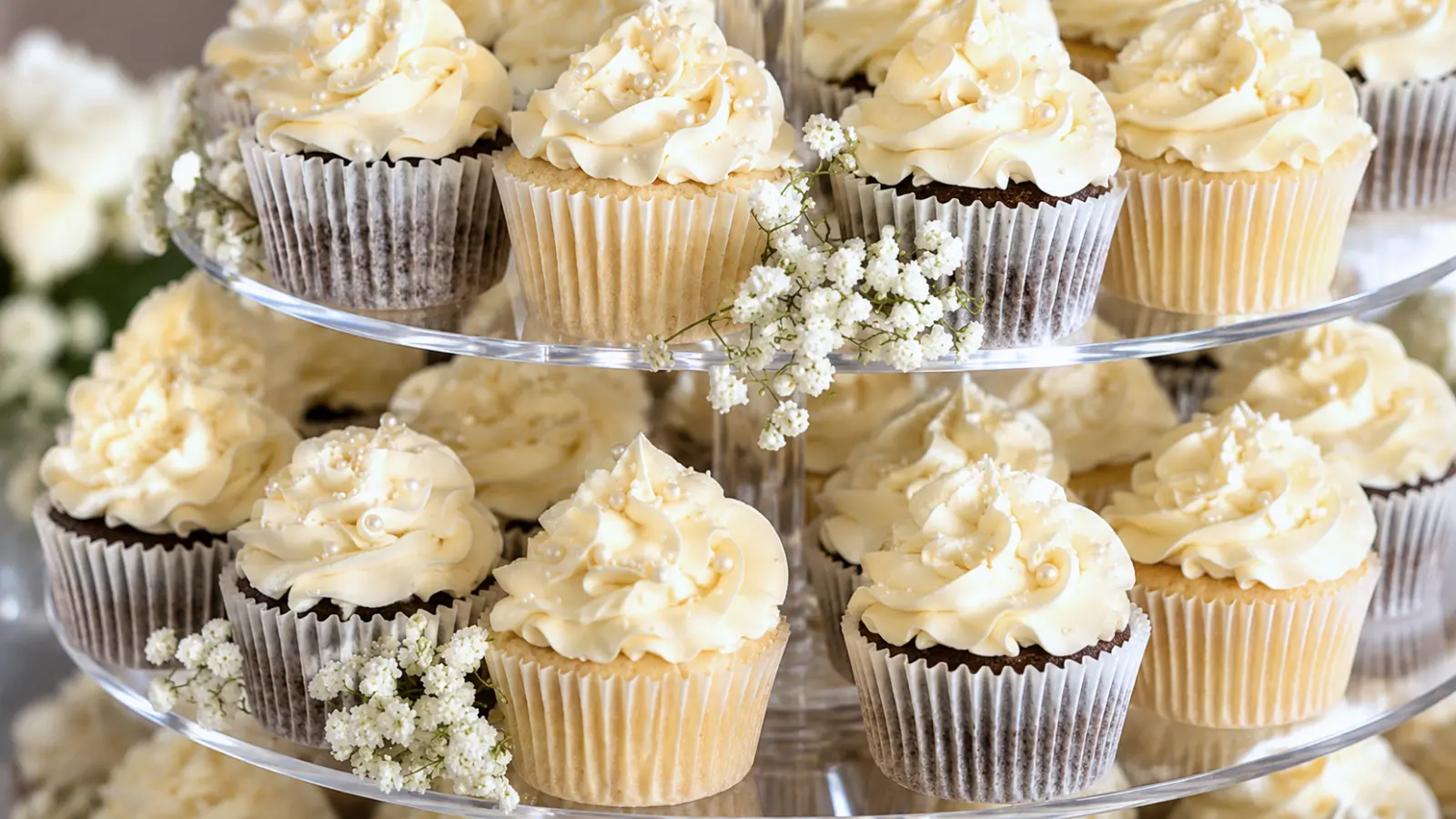
The range of what a cupcake wedding cake can look like is wider than most couples realize when they first consider the option. The mental image of cupcakes on a reception table tends to be informal and improvisational — something assembled without much design thought. The reality, when the display is planned with the same intention as traditional wedding cakes, is quite different.
The classic tower with a cutting cake
One of the most common cupcake wedding cake formats is a tiered display stand, either purpose-built for cupcakes or created from graduated cake stands, with cupcakes arranged across every tier and a small single-tier cutting cake placed at the very top. The one-tier wedding cake used as the cutting cake — usually a 6-inch or 8-inch round — is sized for the couple’s ceremonial first cut and serves 10 to 20 guests. Everything about the visual hierarchy of this arrangement reads as a wedding cake — the pyramid shape, the elevated center piece, the graduated scale — while the individual portions handle themselves.
What makes this format work is the coherence of the frosting decoration across the tower. Cupcakes frosted in a uniform swirl of the same buttercream as the cutting cake, with matching decorative elements (a specific flower, a consistent piping detail, a coordinated color), look designed. Cupcakes frosted in three different styles with no visual thread between them look like they came from separate orders. The tower only reads as a wedding cake when every element belongs to the same visual system.
Rustic cupcake display with a naked cutting cake
A semi-naked or naked small cutting cake placed on a raw wood slice, surrounded by cupcakes frosted in loose swirls of ivory buttercream and decorated with fresh flowers or greenery. The cupcakes are arranged on tiered wood boards or wrought iron stands. The flowers on the cutting cake are echoed in smaller scale on two or three accent cupcakes throughout the display. This can be an especially effective rustic wedding cakes alternative because the individual cupcakes allow the floral decoration to spread across the entire display, creating a different kind of visual scale than a single tiered cake.
Minimalist white cupcakes with a fondant cutting cake
All cupcakes frosted in smooth white buttercream with a single small decoration — a sugar flower, a gold leaf flake, a monogram initial — and a small white fondant cutting cake that matches the finish exactly. Clean, formal, and inspired by modern wedding cakes while still working beautifully for classic weddings. The uniformity of the decoration is what makes this look premium rather than plain — every cupcake is identical, which reads as intentional precision rather than simplicity.
Ombre cupcake tower
Cupcakes frosted in a gradient of colors — from deep blush at the base of the tower through pale pink to almost-white at the top — with the cutting cake in the lightest shade at the apex. The ombre effect is created by tinting the same buttercream recipe in gradually lighter concentrations and assigning each shade to a specific tier. This format photographs especially well because the color gradient gives the camera a clear visual hierarchy to follow up the tower. It works well at spring, summer, and romantic weddings and creates a distinctive look without requiring an overly complex decoration technique.
Floral cupcake meadow display
Instead of a traditional tower, the cupcakes are arranged across a large wooden board or table section at varying heights using small wooden risers and individual stands, interspersed with fresh flowers, candles, and greenery. The result looks less like a wedding cake and more like a dessert garden — abundant, organic, and visually immersive. A small cutting cake sits at the center on a slightly elevated stand. This format works at bohemian and garden weddings where the aesthetic is inspired by floral wedding cakes, creating a cake table that reads as an installation rather than a standard dessert setup.
Wedding Cake and Cupcakes Together
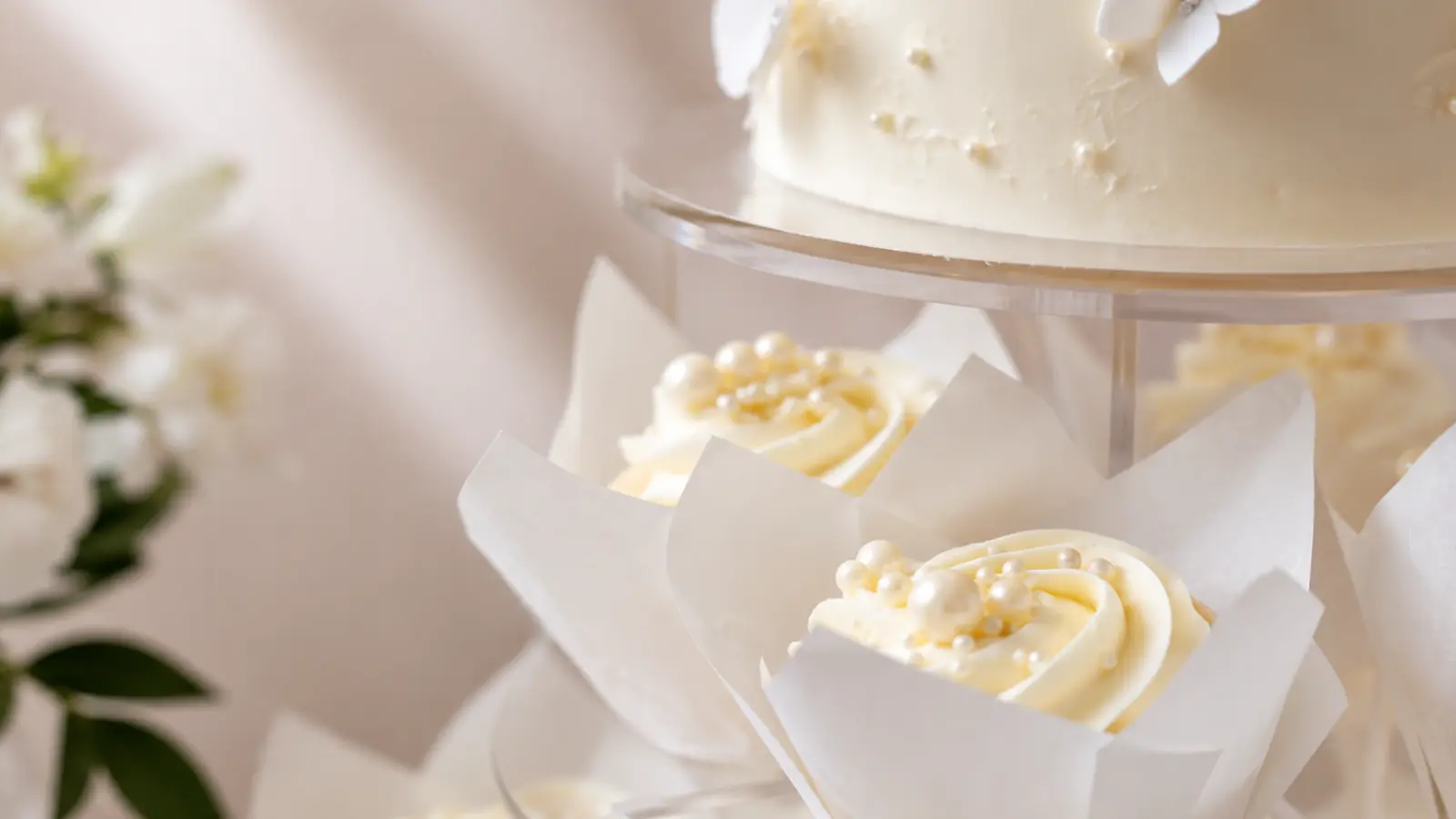
One of the most practical and visually effective approaches is not to choose between a traditional cake and cupcakes — but to use both together. The combination can solve several practical and visual challenges that either option may create on its own.
A traditional tiered wedding cake alone requires a cutting service, produces uneven portions, and cannot offer multiple flavors without internal division that guests never see. Cupcakes alone can lack the visual anchor of a traditional cake and the ceremonial weight of the cake-cutting moment, which many families still expect as part of the wedding reception experience.
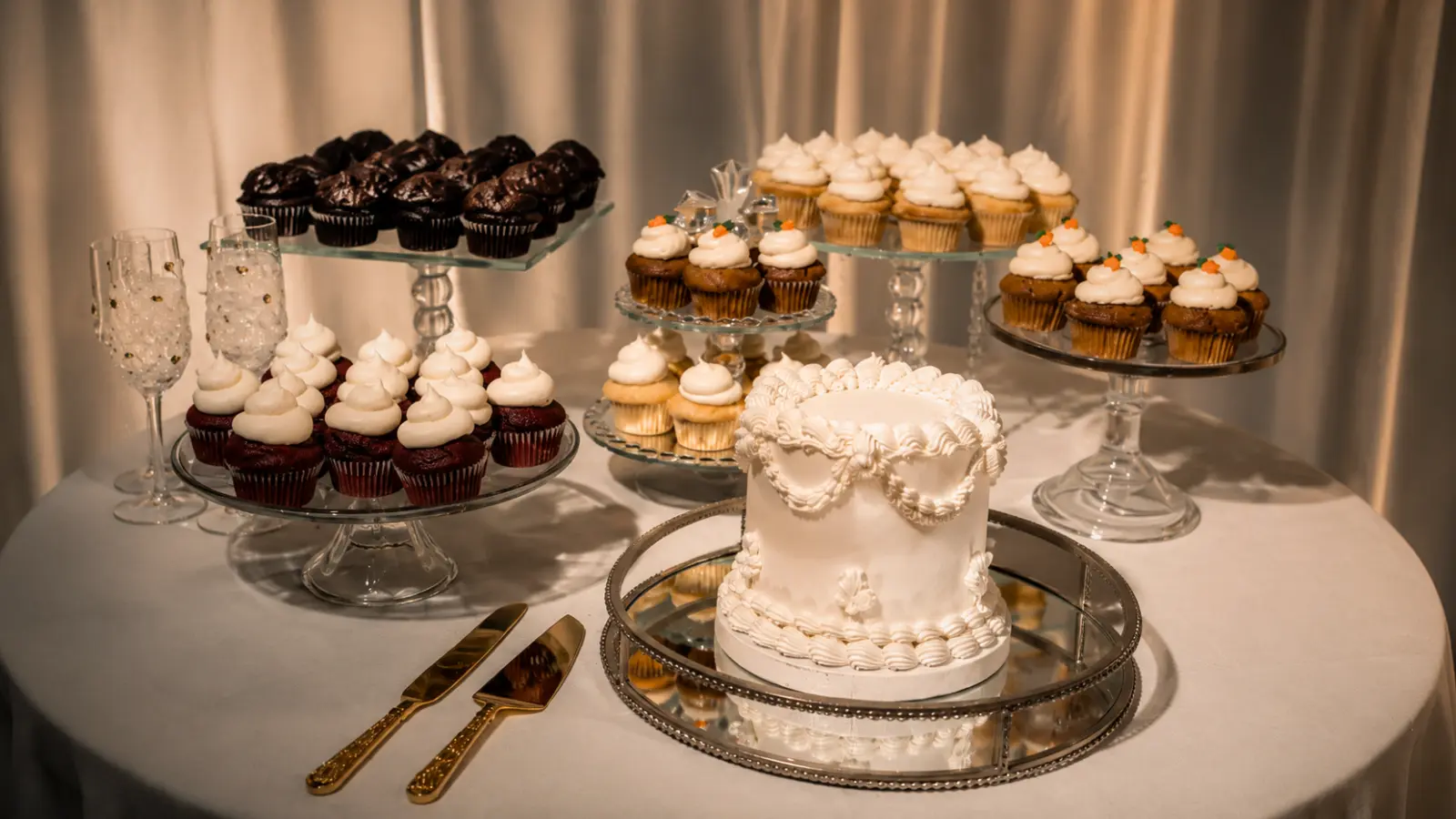
The combination approach: a small display cake (two tiers, modest in size) serves as the visual centerpiece and the cutting cake. Cupcakes — in the same flavor palette, with coordinated frosting — surround the display cake or are arranged on a separate adjacent stand. The couple cuts the display cake for photographs and the symbolic moment. Guests serve themselves from the cupcakes. The cutting cake is then sliced and added to the cupcake service or reserved for the couple and immediate family.
This approach is particularly effective at weddings where:
- The couple wants a genuinely beautiful, photographable cake but also wants the practical advantages of self-serve individual portions
- The guest count is large (150+) and a fully tiered cake would need to be enormous to serve everyone
- The wedding has multi-generational guests where some family members are strongly attached to the traditional cake moment and others genuinely do not care about the format
- The budget calls for a beautiful display cake in a smaller size rather than a large tiered cake that is primarily functional
The key to making cake-and-cupcakes work visually is treating both as a single designed display rather than two separate dessert items that happen to be on the same table. The frosting colors should coordinate. The floral decoration on the display cake should echo in the cupcakes. The stand for the display cake and the cupcake stands should be in the same visual family. When the whole table reads as one cohesive arrangement, the format looks intentional and elegant. When the cake and cupcakes look like they came from different bakeries and different aesthetic decisions, the combination looks like an afterthought.
Cupcake Tower Displays
The cupcake tower is the structural and visual foundation of a cupcake wedding cake setup. Choosing the right wedding cake stands — including the right height and arrangement — is what separates a display that reads as a wedding focal point from one that reads as a dessert table.
Types of cupcake tower stands
Purpose-built cupcake towers. Stands specifically designed to hold cupcakes in a tiered arrangement — typically with circular plates at graduated diameters (the largest at the bottom, the smallest at the top) and a flat or slightly raised top platform for the cutting cake. These are usually the easiest option to arrange because each cupcake has a defined position and the stand is designed specifically for that purpose. They come in acrylic (modern, invisible, lets the cupcakes read without visual interference), white-painted metal (classic and romantic), raw wood (rustic), and chrome or gold (glamorous). Choose the material based on the wedding aesthetic, not convenience.
Graduated cake stands. A series of individual cake stands in different heights and diameters arranged as a group — the largest and tallest in the center with the cutting cake, surrounded by lower stands at decreasing heights. This arrangement is more flexible and more organic than a purpose-built tower, and produces a display that reads as deliberately styled rather than assembled from a kit. It works particularly well for rustic and bohemian cupcake setups where the organic arrangement is part of the aesthetic.
Custom-built structures. Some bakers and event designers build custom cupcake display structures for specific weddings — arched frames, geometric lattice structures, or cascading shelf arrangements that give the cupcake display a dramatic sculptural quality. These are the most visually impactful cupcake displays available and produce photographs that are genuinely distinctive. They are also the most expensive option and require a baker or stylist with specific experience in custom display construction.
Flat meadow display. As described in the Ideas section above — cupcakes arranged across a surface rather than vertically. Less dramatic than a tower but more organic and immersive. Works for specific aesthetics where the vertical tower format would look incongruous.
Stand materials by wedding aesthetic
| Wedding Style | Best Stand Material | Avoid |
|---|---|---|
| Modern / minimalist | Clear acrylic, brushed gold, geometric black metal | Raw wood, heavily ornate designs |
| Rustic / barn / boho | Raw wood slice, reclaimed wood, wrought iron | Shiny chrome, acrylic, mirrored surfaces |
| Classic / traditional | White-painted wood tiers, white ceramic pedestals | Industrial metals, raw unfinished wood |
| Romantic / garden | Antique brass, vintage white ceramic, wrought iron | Highly polished chrome, ultra-modern acrylic |
| Glamorous / black tie | Gold or rose gold metal, crystal-accented stands | Raw wood, matte-finish anything |
Height and scale
A cupcake tower that is too short disappears into the surrounding table décor. The display should be tall enough to read as a focal point from across the room — not merely visible to guests standing directly in front of it. For many reception spaces, a cupcake tower with a cutting cake at the top needs enough height to read clearly from across the room, often around 24 to 30 inches or taller. Larger rooms may need a taller or wider display so the setup does not disappear visually.
The width of the display should scale to the guest count: a tower for 80 guests needs less surface area than one for 200. A tower that is too narrow for the number of cupcakes it holds forces the cupcakes into a dense, crowded arrangement that looks like overcrowding. A tower with too much space for the cupcake count looks sparse. Brief your baker on the exact guest count and ask them to specify the stand dimensions that best accommodate that number.
Pros and Cons of Cupcake Wedding Cakes
Cupcakes are not the right choice for every couple or every wedding — and being clear about the actual advantages and disadvantages, rather than treating the cupcake option as universally better or worse than a traditional cake, is what leads to the right decision.
The genuine advantages
No cake-cutting fee. This is the most straightforward financial advantage. Some reception venues charge a cake-cutting fee to cover the labor of portioning and plating a traditional cake. For couples comparing wedding cake cost, individual cupcakes can reduce or eliminate that fee when guests serve themselves, depending on the venue’s policy. The savings are real and immediate.
Multiple flavors without complexity. A traditional tiered wedding cake can offer different flavors in different tiers, but guests do not choose their flavor — the caterer portions slices from whichever tier is being cut. Cupcakes allow the couple to offer three or four distinct flavors simultaneously, labeled clearly, with guests choosing what they actually want. This is particularly valuable for large guest lists with diverse dietary preferences or for couples whose families have genuinely different flavor traditions.
No portioning waste. A traditional wedding cake is portioned by staff and the portion sizes vary. Cupcakes are individual — each guest takes one (or two), and there is no plated portion that gets left uneaten. Waste tends to be lower, and the per-serving cost is more predictable.
Easier logistics at certain venues. At venues without a full catering staff — barn weddings, outdoor celebrations, micro-weddings hosted at private properties — the self-serve nature of cupcakes reduces the coordination burden. There is no cake-cutting timeline to manage, no signal to the catering team, no delay between the cutting moment and the guest service.
More visual flexibility. A cupcake display can cover more table surface area than a tiered cake of the same guest-count, which creates a larger visual presence on the reception table. For couples who want the cake table to be a genuine focal point of the room, a well-designed cupcake display with a cutting cake, florals, candles, and styled accessories can be more visually impactful than a single tiered cake of equivalent serving capacity.
The real disadvantages
The display requires active design investment. A tiered wedding cake looks like a wedding cake by default. A cupcake display does not — it requires deliberate styling, the right stand, coordinated decoration across every cupcake, and a table setup that frames the display correctly. Couples who order cupcakes and assume the display will organize itself are the ones who end up with a dessert table that looks like a birthday party. The visual investment is non-optional.
Temperature and storage sensitivity. Buttercream-frosted cupcakes are sensitive to heat and humidity in ways that a fully frosted tiered cake can manage slightly better. At an outdoor summer wedding in direct heat, cupcakes frosted in buttercream will begin to soften and lose their shape within an hour of being set out. This is manageable — keep cupcakes in a cool space until 30 to 45 minutes before service, use a more heat-stable buttercream formulation — but it requires explicit coordination with the baker and the venue.
Some families expect a traditional cake. This is a real social consideration that many couples underestimate. For families where the wedding cake is a loaded cultural symbol — where grandparents have attended dozens of weddings where the tiered cake was a centerpiece, where the cake-cutting moment is expected — the absence of a traditional cake can generate genuine disappointment. The small cake used for wedding cake cutting on top of the cupcake tower addresses this significantly but does not fully resolve it for families with very strong attachments to the format. Know your guest list before making the decision.
Per-unit cost can be comparable to traditional cake. Many couples choose cupcakes expecting to save money on the cake itself, and are surprised to discover that professional wedding cupcakes are often priced at a per-serving cost similar to a tiered cake. The labor of piping individual cupcakes, decorating each one, and transporting them without damage is significant. The financial saving on cupcakes, when it exists, is primarily from the cake-cutting fee elimination rather than from a lower baker’s price per serving.
Guest self-service requires the right setup. At formal receptions with multiple courses and a structured timeline, self-serve cupcakes can feel out of register with the formality of the event. Guests accustomed to seated service may not engage with a self-serve cupcake display as naturally as guests at an informal or cocktail-style reception. This is a tone question rather than a logistics one — but it matters.
How Many Cupcakes Do You Need?
The cupcake count for a wedding is more straightforward to calculate than most couples expect — but the calculation has a few variables that are worth understanding before placing the order.
The base calculation
The standard planning estimate is one to one-and-a-half cupcakes per guest. For most weddings, one cupcake per guest is sufficient — but the buffer of the extra half is consistently worth ordering because it accounts for:
- Guests who take two, especially when the flavors are popular
- Vendors who need to eat — photographers, videographers, DJ, and other vendor staff often eat at the reception and should be counted in the total
- Cupcakes damaged during transport or setup that cannot be served
- The cutting cake portion — if you are including a small cutting cake on top of the display, factor its serving capacity into the total count and adjust the cupcake number accordingly
Cupcake count by guest count
| Guest Count | Base Count (1 per guest) | Recommended Order (with buffer) | With 8″ cutting cake |
|---|---|---|---|
| 50 | 50 | 55–60 | 40–45 cupcakes |
| 75 | 75 | 85–90 | 70–75 cupcakes |
| 100 | 100 | 110–120 | 95–105 cupcakes |
| 150 | 150 | 165–175 | 148–160 cupcakes |
| 200 | 200 | 220–230 | 200–215 cupcakes |
| 250 | 250 | 270–285 | 250–265 cupcakes |
Note: An 8-inch cutting cake serves approximately 15–20 guests. Adjust the cupcake count if using a 6-inch (serves 10–12) or 10-inch (serves 25–30) cutting cake instead.
Flavor distribution
When offering multiple flavors, the distribution across the total count matters. A common and effective split for three flavors is to order the largest share in the most familiar flavor, a smaller share in a popular second flavor, and the smallest share in the more distinctive choice. This distribution tends to match actual guest demand — most guests take the familiar option, a significant portion wants the second choice, and the distinctive flavor appeals to a smaller but enthusiastic group.
If offering four flavors, the split roughly becomes 40 / 25 / 20 / 15. Resist the temptation to make it even — an even four-way split often means running out of the popular flavors early while the distinctive ones remain. Skew toward the crowd-pleasers.
What to confirm with your baker
Before finalizing the count, confirm: the size of each cupcake (standard size versus jumbo — the serving count changes significantly), the serving size assumption for the cutting cake, the number of vendor meals to include, and whether the baker’s transport method affects how many extras to build in. Some bakers transport cupcakes already in boxes and experience minimal transport damage; others deliver on open trays and recommend a larger buffer.
Cupcake Wedding Cake Display Tips
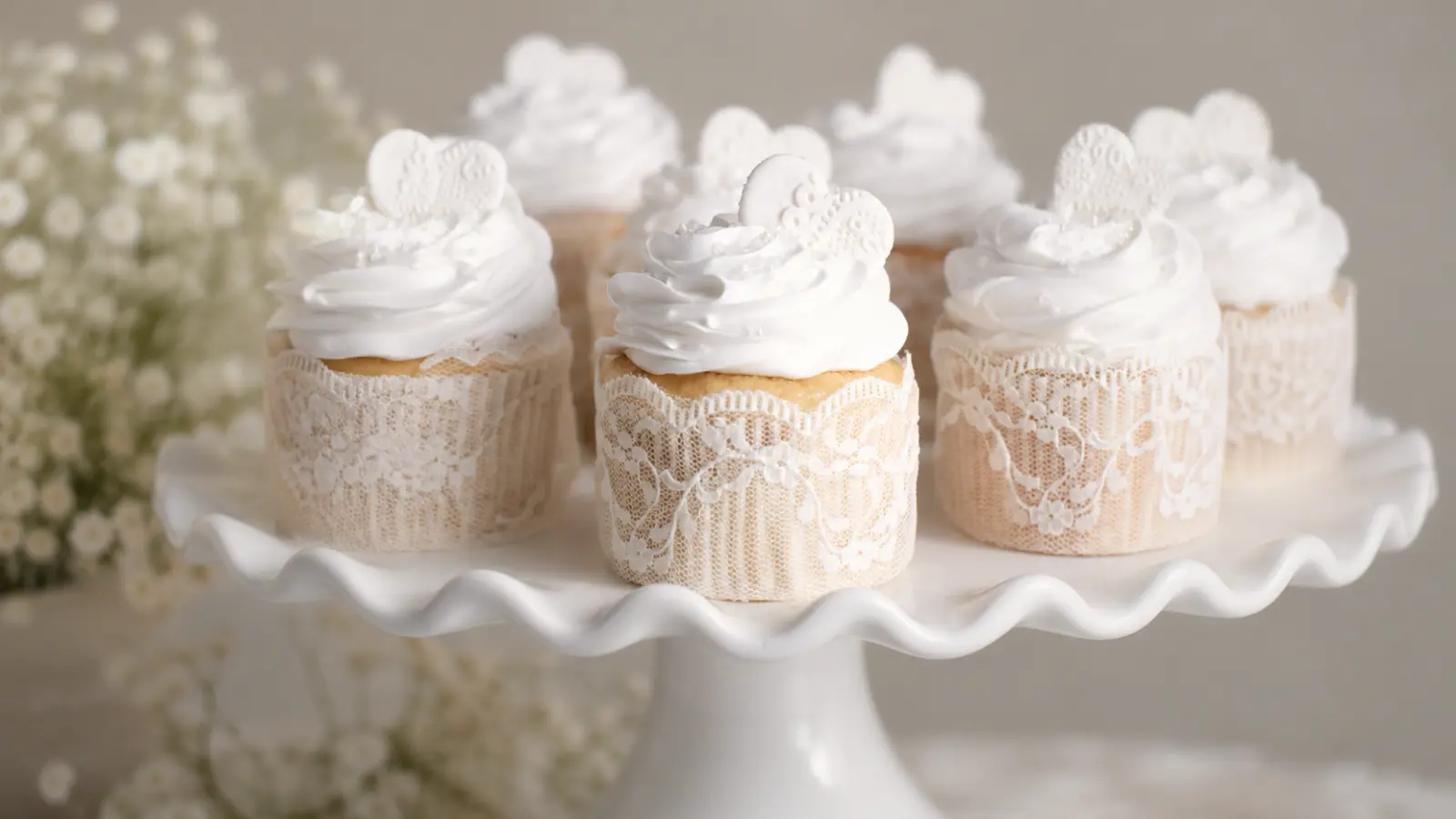
The difference between a cupcake wedding display that looks like a wedding and one that looks like a birthday party is almost entirely in the styling decisions. None of the details below are expensive — most of them are about intention and coordination rather than budget.
Coordinate the frosting across every cupcake
This is the single most important display principle. Every cupcake on the tower should be frosted in the same style — the same swirl height, the same technique, the same color family. Variation in the piping style or color across the cupcakes immediately breaks the visual coherence that makes the display read as designed. If offering multiple flavors, use the same frosting technique for each flavor but differentiate with a subtle detail: a different topper (a fresh flower for vanilla, a lemon zest curl for lemon), a different color liner, or a small labeled flag. The uniformity of presentation signals intention.
Use the cutting cake to anchor the display visually
The cutting cake at the top of the tower is what makes the entire display read as a wedding cake rather than a cupcake stand. It should be visually more elaborate than the cupcakes below it — the flowers, the detail, the decoration should concentrate at the top. The cupcakes can be relatively simple; the cutting cake carries the visual weight. Think of it as the difference between a chandelier and the light bulbs it contains — the chandelier draws the eye and the bulbs do their job without competing.
Label every flavor, clearly and beautifully
Unlabeled cupcakes create a frustrating guest experience — particularly for guests with dietary restrictions or strong flavor preferences. Each flavor group should be clearly labeled with a small sign that is legible from a normal standing distance. The signs themselves should match the wedding aesthetic: hand-lettered on cardstock for rustic and bohemian weddings, printed in a clean serif font on white card for classic events, laser-cut in acrylic for modern celebrations. The label does double duty — it solves the guest communication problem and adds a designed element to the display.
Style the table around the display
The cupcake tower does not exist in isolation — it sits on a table that frames it. A bare table under a cupcake tower reads as unfinished. The table should have: a linen or runner that coordinates with the wedding palette, scattered florals or greenery that echo the cake decoration, candles or votives that add warmth and depth, and potentially a small dessert knife and server for the cutting cake. A hand-lettered flavor menu on a small chalkboard or framed card can also add a designed element that elevates the entire table.
Manage the temperature timeline carefully
Buttercream-frosted cupcakes should not be set out more than one hour before they will be served. In warm or humid conditions, that window shortens to 30 to 45 minutes. Coordinate with your baker on the exact time the cupcakes should be placed on the display — not when they are delivered to the venue, but when they should be arranged and presented to guests. Keep them in the baker’s boxes in a cool, shaded location until the correct time. Brief the venue coordinator or a designated wedding party member on this responsibility — it should not fall through the gap between the baker leaving and the reception beginning.
Consider the angle of photography
Your photographer will spend time at the cake table during the reception — it is one of the standard detail shots at any wedding. Think about what the display looks like from a slight distance, from a slight elevation (most photographers shoot detail shots from just above table height), and from multiple angles. A tower that is beautiful head-on but has an empty or cluttered back is a missed opportunity. Dress the display fully on all sides, not just the side that faces the room.
Flavors and Frosting
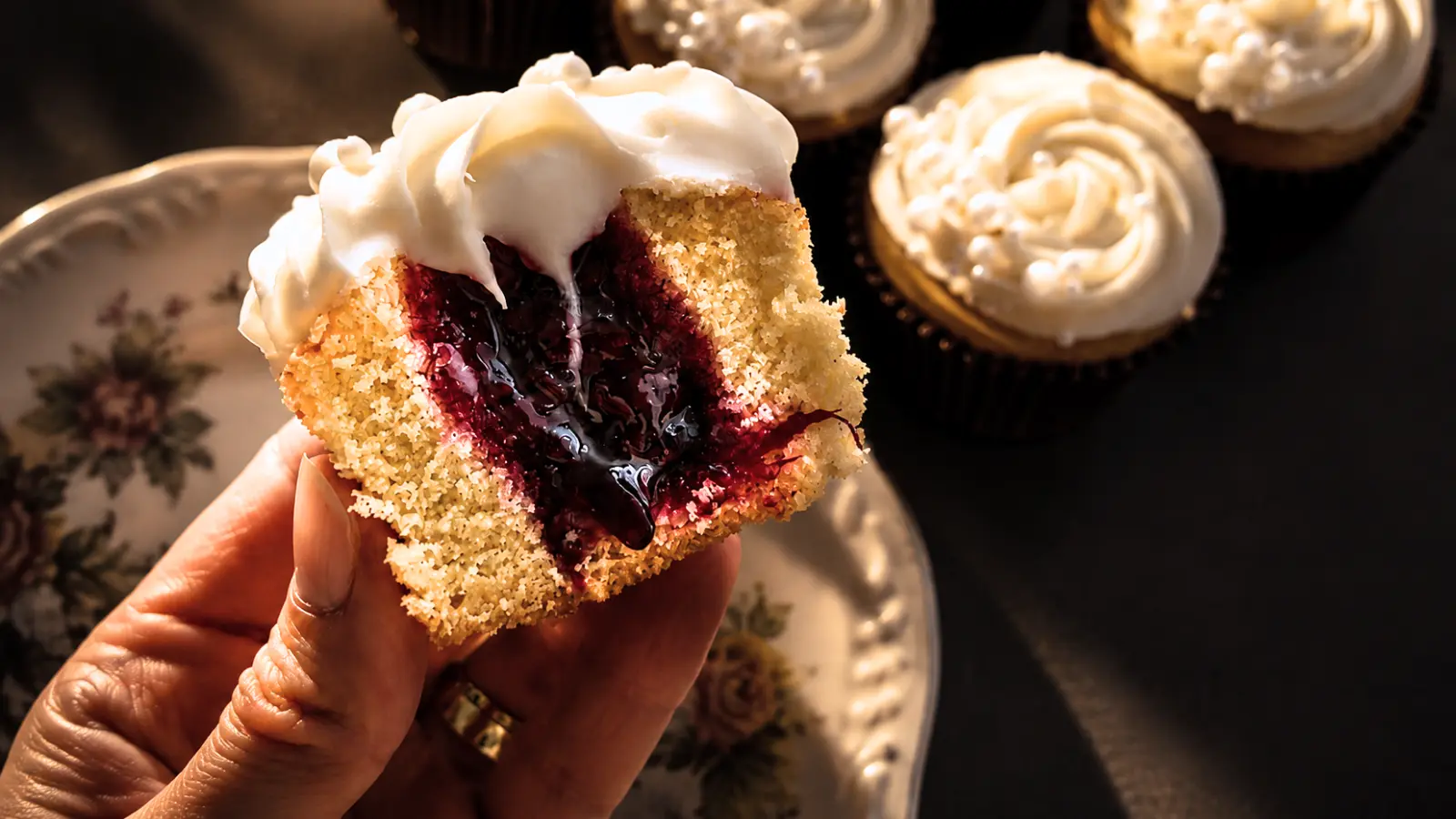
Choosing wedding cake flavors for a cupcake wedding is one of its strongest advantages over a traditional cake — and one of its easiest areas to over-complicate. The goal is a selection that feels thoughtful and generous without creating the decision paralysis that occurs when guests face too many options.
The ideal flavor lineup
Two to four flavors is the consistent recommendation from experienced wedding bakers — enough variety to feel intentional, not so many that the display looks like a bakery case. The lineup should include:
One classic, widely appealing flavor. Classic wedding cake flavors like vanilla bean, classic white cake, or champagne are usually the options many guests reach for first. This should be the plurality of your order — approximately half the total count. Guests who are uncertain or unadventurous will reliably choose this, and it needs to be available throughout the reception.
One crowd-pleasing alternative. Lemon with lemon curd, red velvet with cream cheese frosting, and carrot cake with cream cheese are familiar second-flavor choices that work well at many American wedding receptions. They are familiar enough to feel accessible and distinctive enough to feel like a genuine second option.
One more distinctive choice (optional). Salted caramel, chocolate ganache, strawberry champagne, lavender honey, or espresso are the options that create genuine excitement among the guests who discover them. This flavor should be a smaller portion of the total — it is for the adventurous guests, not the whole room.
One allergen-conscious option (strongly recommended). A gluten-free or dairy-free cupcake that is clearly labeled as such — even if only 10% of guests will eat it — is a gesture of inclusion that costs relatively little and matters significantly to the guests who need it. Confirm with your baker that the allergen-free cupcakes are prepared in a way that prevents cross-contamination, and label them unambiguously.
Frosting choices
Buttercream is one of the most common and visually versatile frosting choices for wedding cupcakes. Swiss meringue buttercream produces the most elegant finish — silkier, less sweet, and more stable in moderate temperatures than American buttercream. American buttercream is more affordable and pipeable into very high, dramatic swirls. Cream cheese frosting is essential for red velvet and carrot cake cupcakes and should not be substituted with buttercream for those flavors — the flavor pairing is part of what makes those cupcakes work.
Fondant toppers on buttercream cupcakes — small decorative fondant elements placed on top of a buttercream base — are one of the most effective ways to create visual uniformity across a large cupcake order while adding a distinct decorative element. A small fondant flower, a fondant monogram initial, or a fondant geometric shape in the wedding color palette applied to each cupcake creates a consistent, polished look without requiring elaborate individual decoration of each one.
Cupcake Wedding Cake Inspiration Board
Cupcake wedding cakes can be styled in countless ways, from elegant cupcake towers with small cutting cakes to rustic displays, floral arrangements, and modern dessert tables. Explore our cupcake wedding cake inspiration board for creative layouts, frosting designs, wedding cupcake stands, flavor ideas, and beautiful ways to turn individual cupcakes into a memorable reception centerpiece.
Final thoughts
The best cupcake wedding cakes work because they are designed as a complete wedding experience, not simply as individual desserts placed on a table. The stand, colors, frosting, flowers, cutting cake, and surrounding decor all work together to create a display that feels intentional and connected to the celebration.
Whether cupcakes replace the traditional cake completely or are paired with a small cutting cake, the goal is balance. When planned thoughtfully, a cupcake wedding cake can offer variety, convenience, and a beautiful reception moment while still feeling just as special as a classic tiered cake.
Frequently asked questions (FAQ)
Do cupcake wedding cakes look less formal than traditional cakes?
Not necessarily. The formality comes from the presentation, not the dessert format itself. A thoughtfully designed cupcake tower with coordinated frosting, a beautiful stand, and a small cutting cake can feel just as intentional and elegant as a traditional tiered cake.
What is the biggest mistake couples make with wedding cupcakes?
Treating cupcakes like individual desserts instead of one complete design. A wedding cupcake display needs the same visual planning as a traditional cake — coordinated colors, balanced height, intentional styling, and a clear focal point.
Why do some cupcake displays look expensive while others look casual?
Usually because of structure and repetition. Professional-looking displays use consistent frosting, matching liners, proper spacing, and a strong visual shape. Random arrangements with too many colors and decorations often feel less polished.
Will guests miss having a traditional wedding cake?
Most guests care more about the experience than the format. If there is still a beautiful display, a cake-cutting moment, and a delicious dessert, many guests see cupcakes as a fun and practical upgrade rather than something missing.
Are cupcake wedding cakes better for the reception flow?
They can be. Cupcakes remove the waiting time between cutting, slicing, plating, and serving a traditional cake. This can keep the energy of the reception moving, especially once dancing and socializing have started.
What do wedding designers notice first about a cupcake display?
The overall composition. Before noticing individual flavors or decorations, designers look at height, symmetry, spacing, and whether the entire display feels like one intentional centerpiece rather than separate cupcakes placed together.
How many cupcakes do you need for a wedding?
A common estimate is one to one-and-a-half cupcakes per guest, depending on whether you are also serving a cutting cake, other desserts, or late-night food. If you include a small cutting cake, you can reduce the cupcake count slightly, but most couples should still order a small buffer for guests who want more than one flavor.