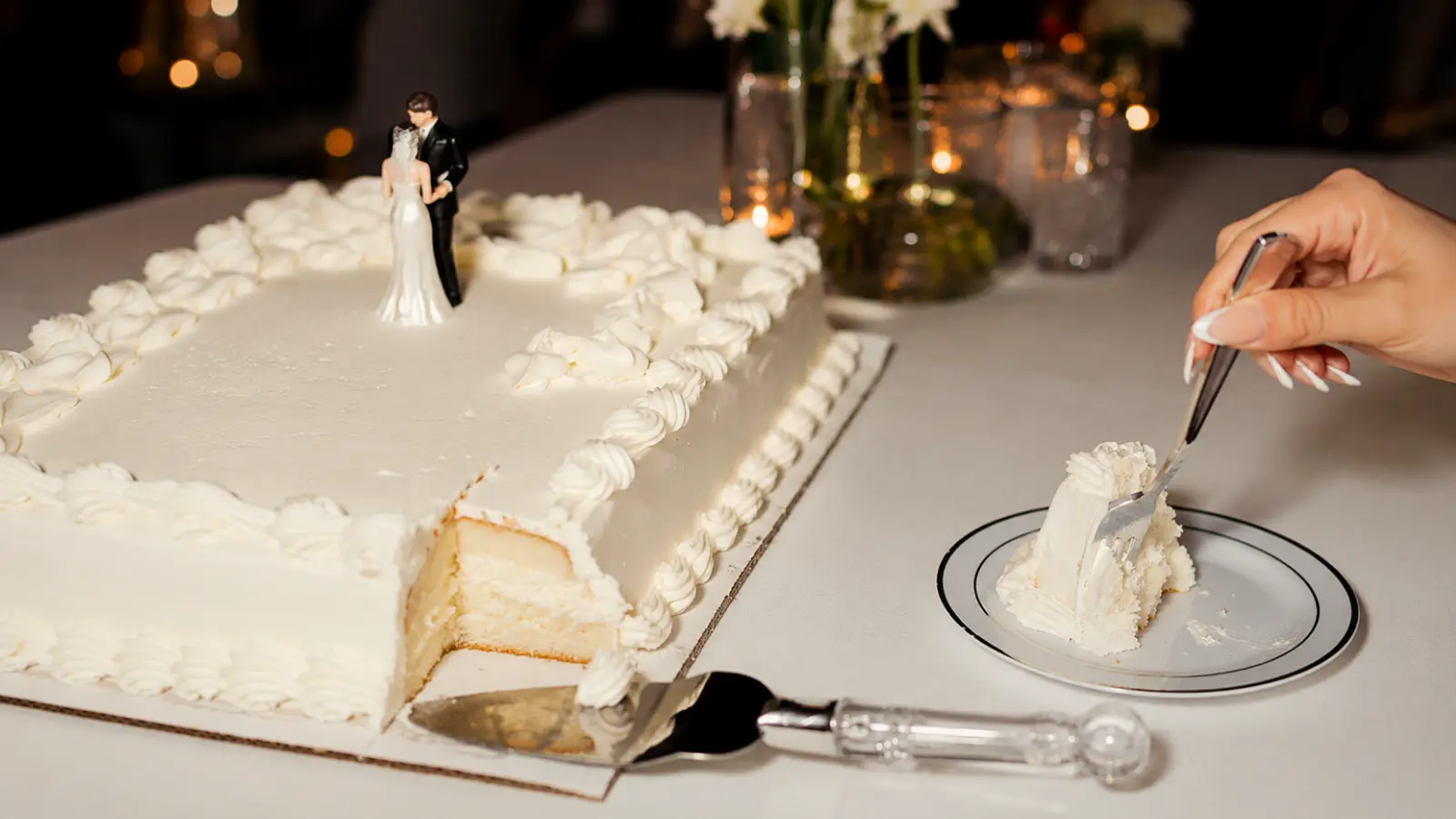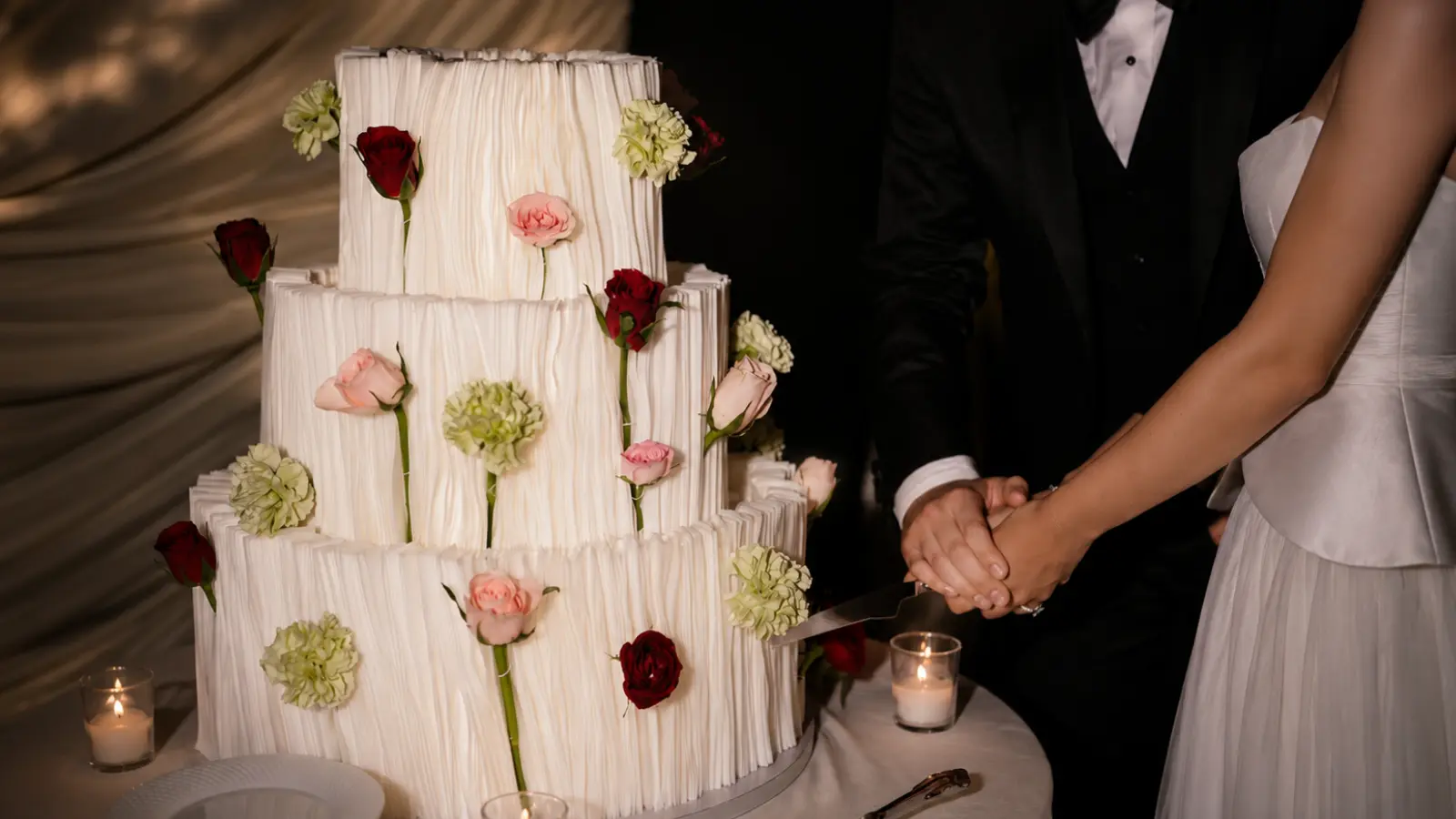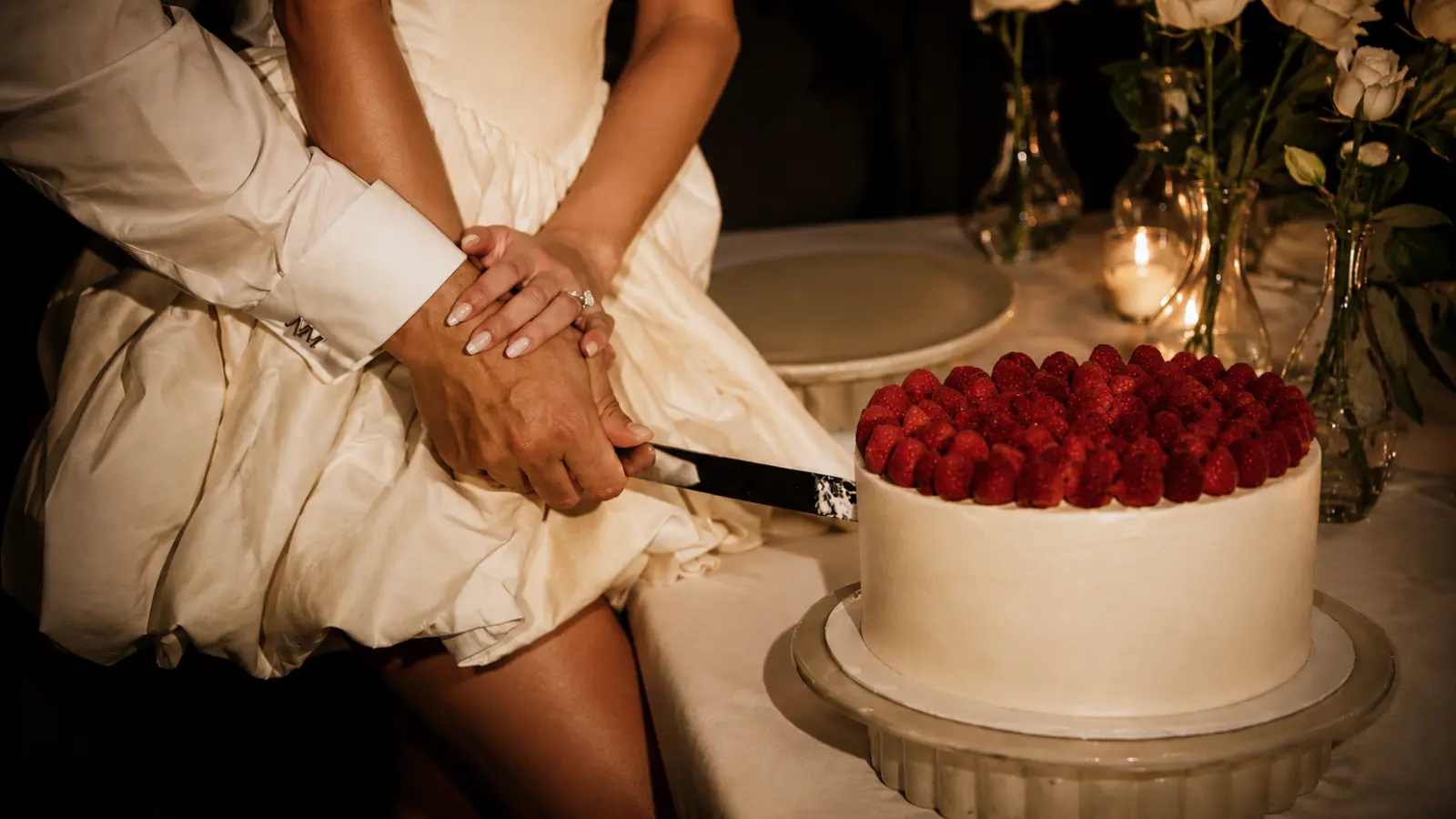
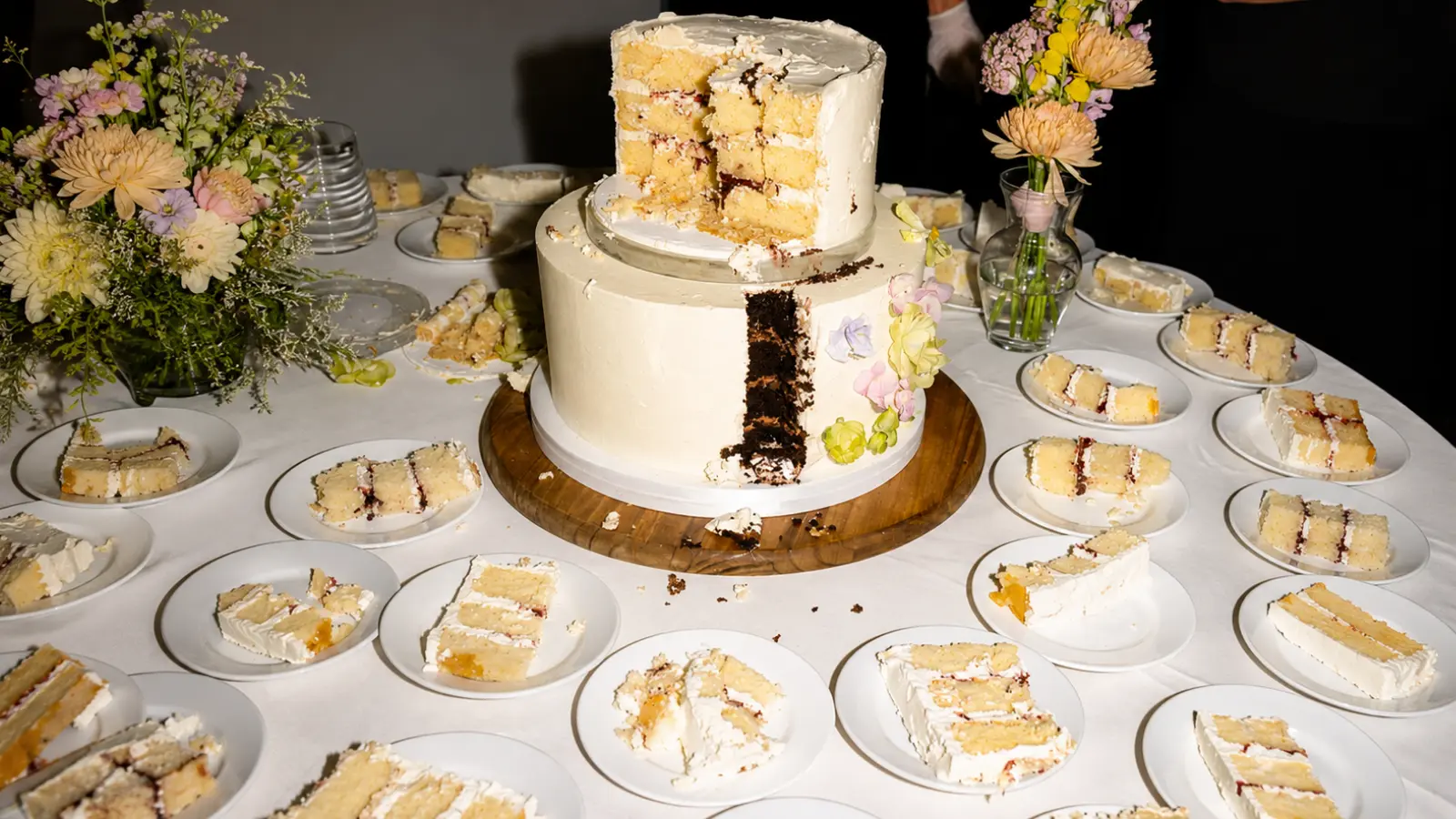
Wedding sheet cakes are flat, rectangular cakes designed to provide wedding servings efficiently, often used alongside a smaller display cake for the cutting ceremony and photos. Instead of replacing the wedding cake experience, a sheet cake helps couples serve more guests, reduce costs, and keep the same cake quality without paying for extensive decoration on every serving.
The biggest misconception about wedding sheet cakes is that they are a cheaper-looking alternative to a traditional tiered cake. In reality, many couples use the same bakery, flavors, and fillings for both their display cake and sheet cakes. The difference is where the money goes: a tiered cake prioritizes visual design and structure, while a sheet cake prioritizes serving guests efficiently.
In this guide, you’ll learn when a wedding sheet cake makes sense, how much money it can save, how many servings different sheet cake sizes provide, how the display cake plus sheet cake method works, and how to make the entire approach feel intentional rather than like a budget compromise.
What Is a Wedding Sheet Cake?
A wedding sheet cake is a flat, rectangular cake baked in a standard sheet pan — as opposed to traditional wedding cakes with round tiered layers stacked vertically — that is used to provide guest servings at a wedding reception. In the most common implementation, the sheet cake never appears on the dessert table at all. It lives in the kitchen, where the catering team cuts and plates it to serve guests while the display cake — the beautiful, decorated tiered cake on the cake table — handles the visual and ceremonial functions of a traditional wedding cake.
This is not a new concept. Professional caterers and wedding planners have been using this approach for decades. The display cake is ordered smaller than the guest count requires, while the remaining servings come from sheet cakes ordered from the same bakery at a lower per-slice cost. Guests receive the same flavor and quality, while the couple avoids paying for full display-cake decoration on every serving.
What has changed is the transparency. Many couples who previously kept this logistical choice hidden from guests are now openly embracing it — placing simply decorated sheet cakes on the dessert table alongside other sweets, or having the sheet cake be the visible, primary cake at casual receptions where a formal tiered display would feel out of place. The wedding sheet cake has become, in some circles, an intentional aesthetic choice rather than a behind-the-scenes logistics solution.
Wedding Sheet Cake vs Tiered Cake
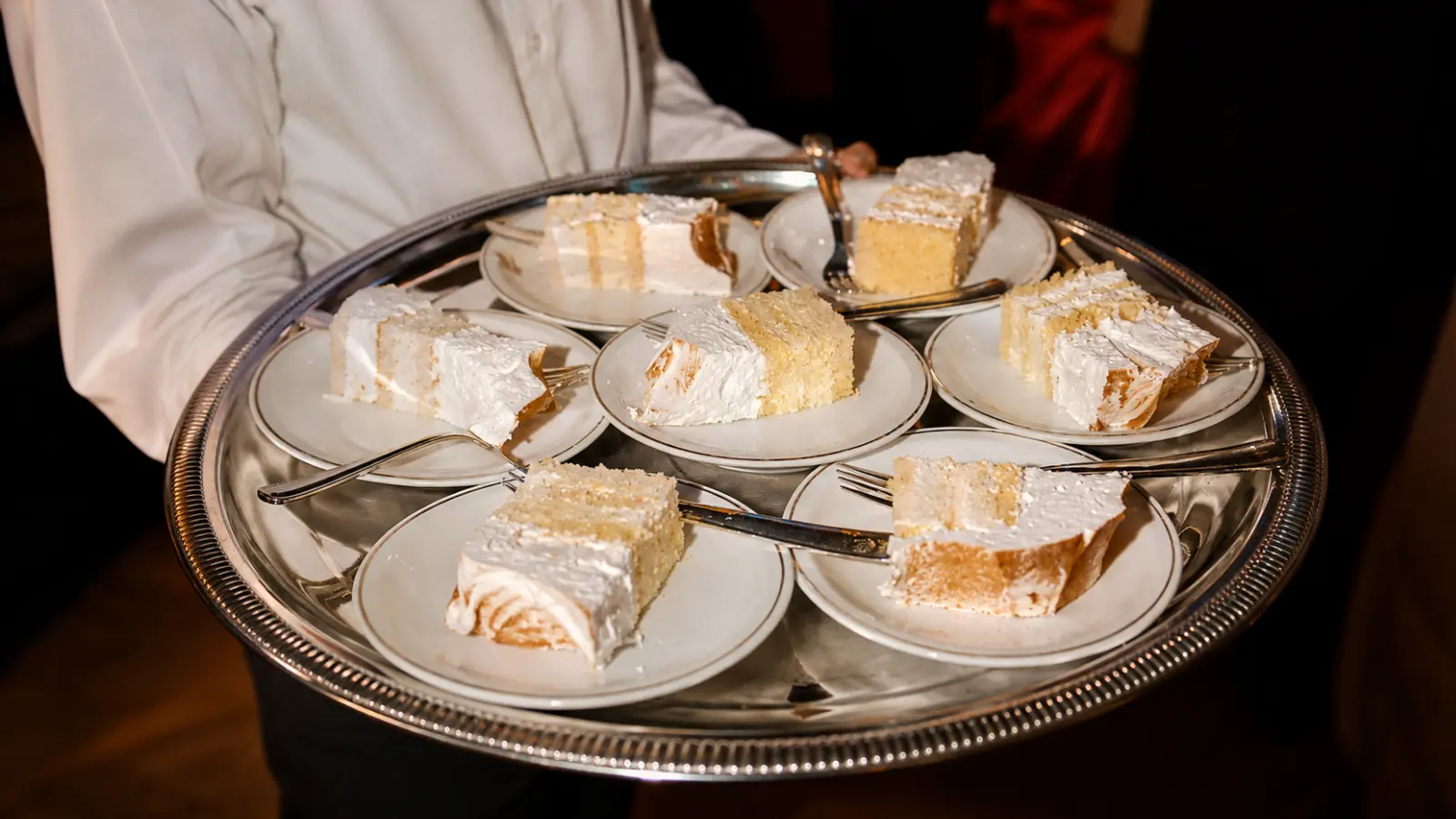
The comparison between a sheet cake and a tiered wedding cake is not really about quality — it is about what each one is optimized for. A tiered cake is optimized for visual impact, ceremony, and photography. A sheet cake is optimized for feeding people efficiently and affordably. Understanding this distinction makes it obvious why the two are so often used together rather than in competition.
| Tiered Wedding Cake | Sheet Cake | |
|---|---|---|
| Visual impact | High — designed for display and photography | Low to moderate — functional form |
| Cost per serving | Higher per serving because of decoration, structure, and assembly | Lower per serving when decoration and structure are minimal |
| Customization | Extensive — flavors, fillings, design | Limited visual design; same flavor options |
| Serving logistics | Complex — round layers require specific cutting | Simple — rectangular cuts are fast and consistent |
| Guest experience | Visible ceremony; photographed moment | Identical if served from kitchen; no ceremony |
| Waste risk | Higher — tiered cakes are harder to portion exactly | Lower — rectangular pans cut cleanly with minimal waste |
| Best role | Display, cutting ceremony, top tier to save | Feeding all guests affordably and efficiently |
The combination — tiered display cake plus kitchen sheet cake — captures the advantages of both: the visual and ceremonial function of the tiered cake, the efficiency and cost savings of the sheet cake. For many weddings, the combination is the strongest approach.
How Sheet Cakes Save Money — Planning Examples
The math on wedding sheet cakes is simple and dramatic, which is why professional wedding planners recommend this approach so consistently. Here is what it actually looks like in practice.
At many U.S. bakeries, a custom decorated tiered cake costs more per serving because the price includes structure, assembly, finishing, and decoration. A sheet cake in the same flavor usually costs less per serving because it does not require the same display-level decoration. The sheet cake costs less because the decoration — the thing guests never eat — accounts for a significant portion of the tiered cake’s price.
A realistic breakdown for 150 guests
| Approach | What You Order | Estimated Cost Range |
|---|---|---|
| Full tiered cake only | 3-tier decorated cake, 150 servings | $1,200 – $2,250 |
| Display + sheet cake | Small 2-tier display cake (40 servings) + 2 full sheet cakes (110 servings) | $500 – $850 |
| Potential savings | $700 – $1,400 |
These are general planning estimates — final pricing depends on your bakery, location, flavor complexity, delivery, and setup fees. But the direction is consistent: switching from an all-tiered approach to a display-plus-sheet strategy can significantly reduce cake costs, especially when the guest count is high.
What couples do with those savings varies. Some redirect it to a more elaborate display cake — ordering a two-tier wedding cake that is exquisitely decorated, which would have been prohibitive as the sole source of 150 servings. Some use it to add a dessert bar alongside the cake. Some simply keep it as savings. The choice the sheet cake strategy opens up is flexibility — the wedding cake cost is no longer held hostage to the guest count.
How Many Servings Do You Need?
Calculating sheet cake servings requires knowing the pan size and how the bakery cuts it. Wedding servings are typically smaller than the portions a grocery store bakery cuts — roughly 1×2 inches or 1×3 inches per slice — which maximizes the number of portions from each pan.
| Sheet Cake Size | Pan Dimensions | Approximate Servings |
|---|---|---|
| Quarter sheet | 9×12 inches | 18–24 servings |
| Half sheet | 12×18 inches | 36–48 servings |
| Full sheet | 18×24 inches | 70–96 servings |
| Two full sheets | — | 140–192 servings |
A practical guide by guest count
- 50 guests: Small display cake (20–25 servings) + one half sheet cake (30–35 servings). Total: 50–60 servings with a small buffer.
- 100 guests: Small display cake (25–30 servings) + one full sheet cake (70–80 servings) or two half sheets. Total: ~95–110 servings.
- 150 guests: Small display cake (30–40 servings) + two full sheet cakes (140–192 servings). Total: ample coverage with buffer for guests who want seconds.
- 200 guests: Small to medium display cake (40–60 servings) + two to three full sheet cakes. Confirm serving size with your bakery and add 10–15% buffer for guest variance.
One thing many couples do not think through: not every guest eats wedding cake. At many receptions, some guests decline dessert, leave early, or choose other sweets if a dessert table is available. If there are other desserts available, some couples choose to order slightly fewer cake servings than the full guest count, but the final number should be confirmed with the caterer and bakery. Confirm this with your caterer, who will have a better sense of what typically happens at your venue size and reception style.
Sheet Cake Ideas for Weddings
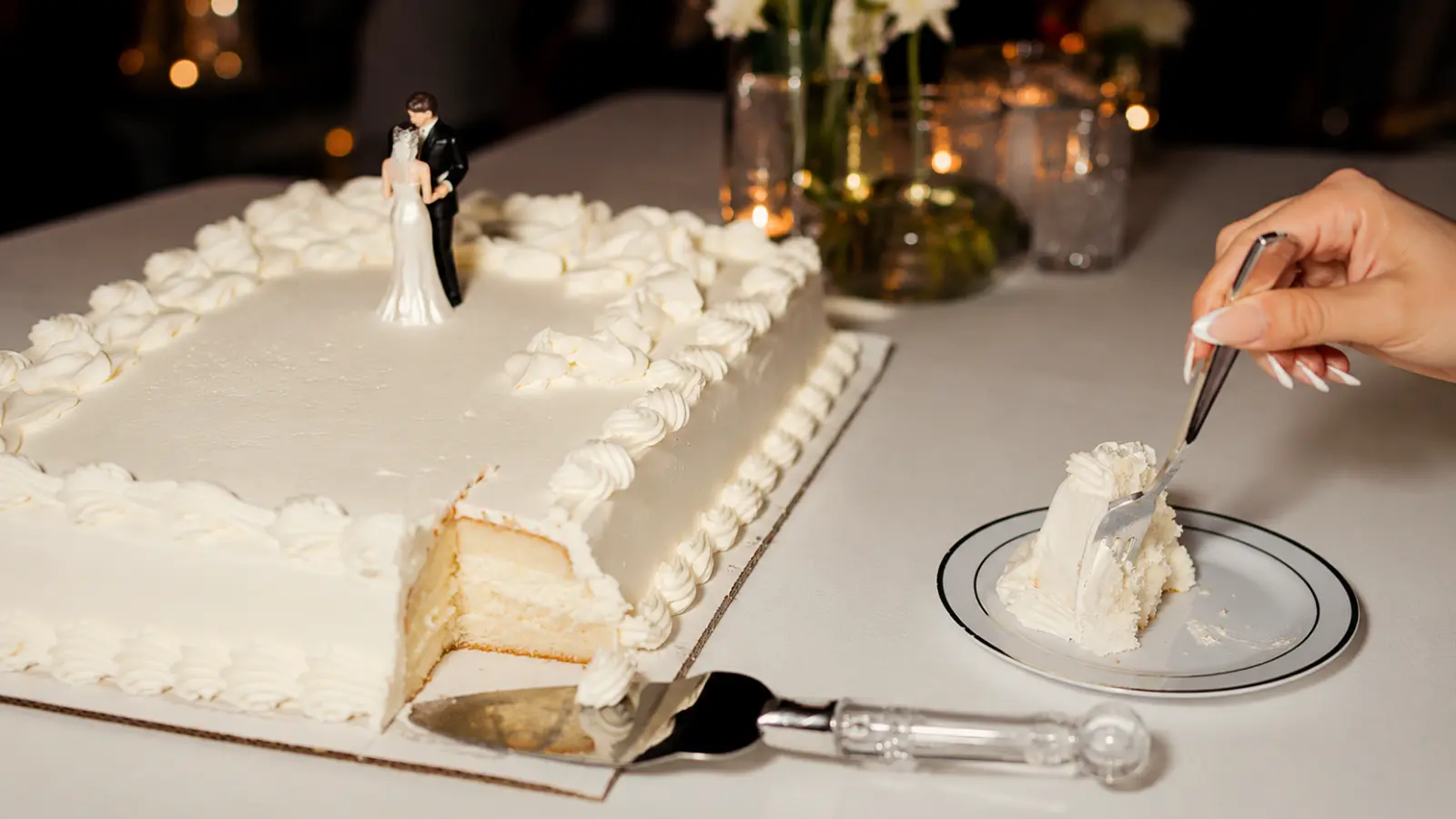
When the sheet cake is invisible to guests — handled entirely in the kitchen — the design is irrelevant and most couples simply order it plain or with a basic smooth finish. But when the sheet cake is displayed or when the couple wants it to feel intentional even if guests do not see it, a few simple wedding cake ideas make a significant difference.
Sheet cakes served from the kitchen (no visual requirements)
If the sheet cake is purely functional — cut and plated by the catering team with no guest-facing display — decoration is a waste of budget. A smooth buttercream finish that is easy to cut cleanly is all that matters. Specify to your bakery that this is a kitchen cake and ask them to prioritize even layers and clean crumb coat over any surface decoration. The savings from omitting decoration on a kitchen sheet cake are real and add up.
Sheet cakes displayed at a dessert table
When the sheet cake is visible — displayed at a dessert table alongside other sweets — simple but intentional decoration elevates it from functional to festive. Options that work without requiring extensive decorator time:
- Smooth buttercream with a single message: A simple phrase piped or printed on the surface — the couple’s names, “Love is Sweet,” the wedding date — reads as intentional and personal without requiring decorative skill
- Fresh flowers on a smooth surface: A scatter of fresh blooms — the same flowers used elsewhere in the reception — can transform a smooth buttercream sheet cake into something that reads as a design choice rather than a pragmatic decision. Ask your baker and florist to use food-safe flowers, wrapped stems, picks, or another proper barrier before placing flowers on the cake
- Rustic finish: A textured, palette-knife-applied buttercream that reads as an intentional aesthetic rather than an unfinished cake. Works particularly well for rustic wedding cakes at barn, outdoor, or casual receptions where a natural quality is consistent with the overall design.
- Sprinkles or edible glitter: A simple coating of fine sprinkles or edible shimmer over a smooth buttercream surface adds festivity without requiring skilled decoration. Works best at fun, informal receptions
- Printed sugar sheet: An edible image printed on a sugar sheet and applied to the top of a smooth buttercream cake — a photograph, a floral design, the couple’s monogram — looks specifically designed without hand-decoration cost
The hybrid display sheet cake
Some couples are now openly displaying a decorated sheet cake as the primary visual element on the cake table — forgoing a tiered display cake entirely and investing the decoration budget in making the sheet cake look beautiful. This works particularly well at casual weddings where a formal tiered cake would feel incongruous: a large, beautifully decorated rectangular cake on an elevated stand, covered in fresh flowers and flanked by small desserts, is genuinely striking. It reads as an intentional aesthetic choice — the anti-tiered-cake — rather than a budget compromise.
When to Serve the Sheet Cake
Timing matters more than most couples realize when sheet cakes are part of the plan, because the logistics of cutting and serving a large volume of cake from the kitchen require coordination with the catering team and a specific moment in the reception’s flow.
The standard timing: The display cake is cut by the couple approximately 45 minutes to an hour after dinner service ends — when most guests have finished eating and the dance floor has opened. The cutting is announced by the MC or DJ, photographs are taken, the couple shares the first slice. The catering team then takes the display cake to the kitchen, where it is cut alongside the sheet cakes and plated for service. Guests typically receive their cake slice 15 to 25 minutes after the cutting moment.
What the catering team needs to know: Brief your caterer specifically on the sheet cake plan — that additional cake will be in the kitchen and should be served alongside the display cake. Some caterers assume all guest servings come from the display cake and will underestimate what needs to be plated. Confirm the sheet cake count, the serving size, and who is responsible for coordinating with the bakery delivery.
Sheet cake at dessert tables: When sheet cakes are displayed at a dessert table rather than served as a plated course, they are typically available for the duration of the reception rather than served at a specific moment. Guests help themselves. This approach requires less catering coordination but also less control over portion size and how quickly the cake is consumed.
The top tier question: Couples traditionally save the top tier of the wedding cake to eat on their first anniversary. If you are using the display-plus-sheet-cake method, the top tier of the display cake is still available for this tradition. Confirm with your bakery that it will be boxed and labeled separately for you to take home at the end of the evening.
Should Guests See the Sheet Cake?
This is the question that makes most couples pause — and the honest answer is that it depends less on whether guests see it and more on how it is framed.
When the sheet cake is in the kitchen, there is nothing to frame. Guests receive a slice of cake on a plate. They do not know or think about where it came from. The experience is very similar to receiving a slice from a tiered cake, and most guests are focused on flavor, service, and the celebration rather than the logistics of cake service. The sheet cake is invisible because the guest’s experience is uninterrupted.
When the sheet cake is displayed — on a dessert table or as the primary cake — the question becomes one of context. A sheet cake displayed openly at a casual outdoor wedding reads as an honest, unpretentious choice that fits the setting. The same sheet cake displayed at a black-tie ballroom reception might create a visual disconnect between the formality of the setting and the informality of the dessert.
The couples who struggle with this decision most are typically those whose concern is about what guests will think, rather than what would actually serve the reception best. A few things worth knowing:
- Guests who are familiar with wedding planning realities usually understand the display-plus-sheet-cake approach
- Guests who are not aware of wedding planning realities will not independently realize that the slice they received came from a sheet cake rather than the tiered display cake
- Very few guests will be disappointed by receiving a delicious slice of cake at a wedding reception. The source is not the point — the cake is
The practical decision is simpler: if the reception is casual enough that a displayed sheet cake feels appropriate, display it. If the reception is formal and the display cake handles the visual function, keep the sheet cake in the kitchen. Either approach is legitimate and neither requires justification to guests.
The Display Cake + Sheet Cake Method, Explained
For couples who want both the ceremony of a traditional wedding cake cutting and the cost savings of sheet cake service, the display-plus-sheet-cake method is one of the most practical approaches planners and caterers use. Here is how it works from booking to reception end.
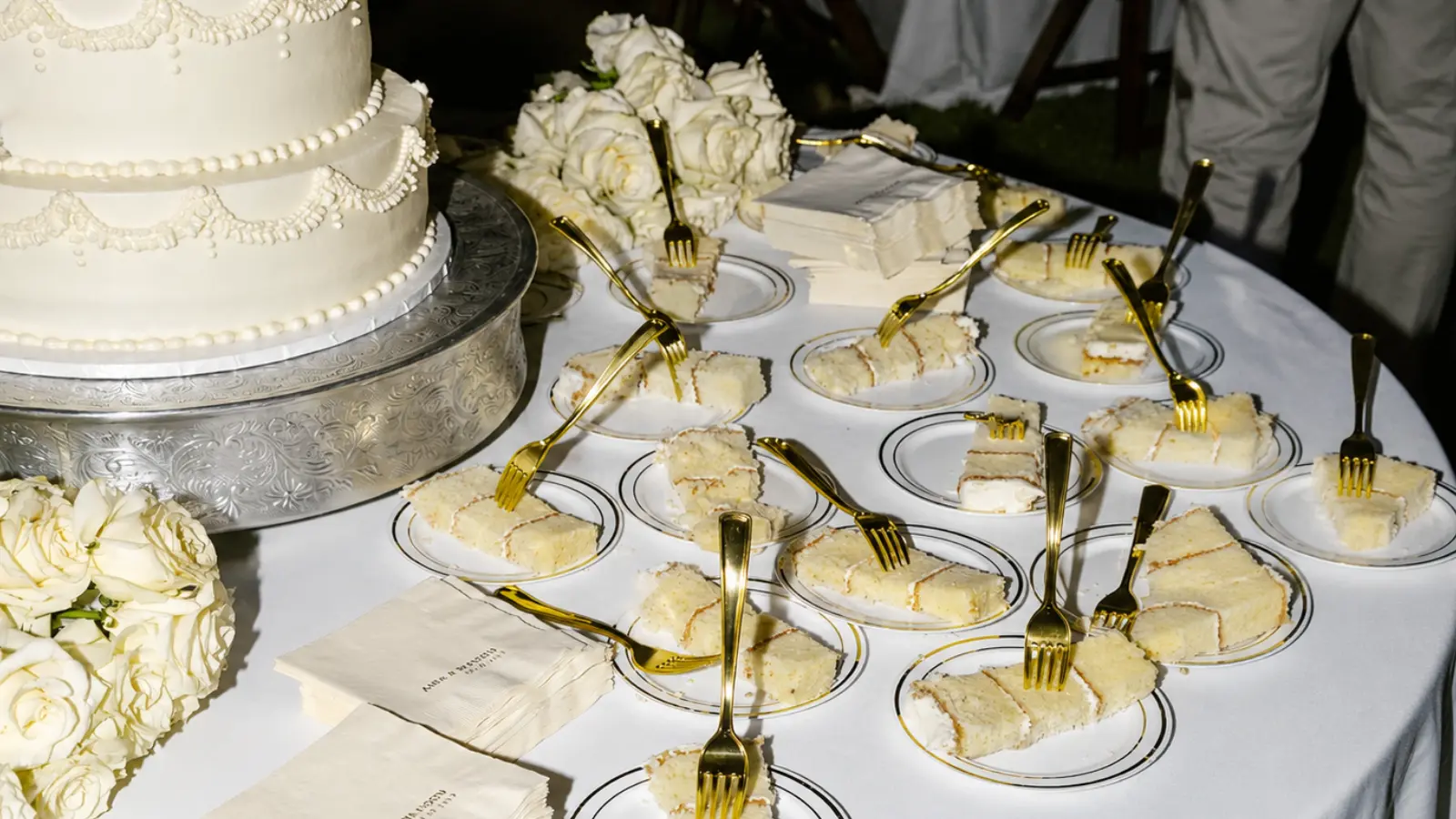
Step 1: Order the display cake for the visual moment, not the full guest count
The display cake only needs to be large enough for the cutting ceremony, photographs, and any portion you plan to save. Ordering a beautifully decorated two-tier cake for 30 to 50 servings gives you everything the ceremony requires without paying for full-guest-count decorating costs. This is also where you can invest in more elaborate decoration — you are decorating a smaller cake, which means the per-cake decoration cost goes further.
Step 2: Order sheet cakes for the remaining servings
From the same bakery, order enough sheet cakes to cover the remaining servings, with a small buffer if your caterer recommends it. Use the same flavor as the display cake so guests receive a consistent experience. Ask your bakery to deliver the sheet cakes alongside the display cake or directly to the venue kitchen, and confirm that they will be stored correctly until service time.
Step 3: Brief the catering team
Your venue’s catering team or your hired caterer needs to know: the sheet cakes exist, where they are stored, how many servings each provides, the intended serving size, and what plating should look like. Providing this information in writing, in advance, as part of your catering brief eliminates the most common failure point in this method — the catering team not knowing the sheet cakes are part of the plan.
Step 4: Coordinate the cutting moment
The wedding cake cutting ceremony happens with the display cake, exactly as it would in a traditional wedding. The MC announces it, the couple cuts together, photographs are taken, the couple takes a bite. Afterward, the display cake goes to the kitchen to be cut alongside the sheet cakes, and plating begins. No announcement or explanation of the sheet cake is necessary.
Step 5: Save the top tier
Remind your bakery, your caterer, and yourself the morning of the wedding that the display cake’s top tier needs to be boxed separately. In the reception logistics, it is easy to forget. Assign one person — usually your day-of coordinator or the catering manager — to be responsible for making sure it goes home with you.
How to Make a Sheet Cake Not Look Like a Budget Afterthought
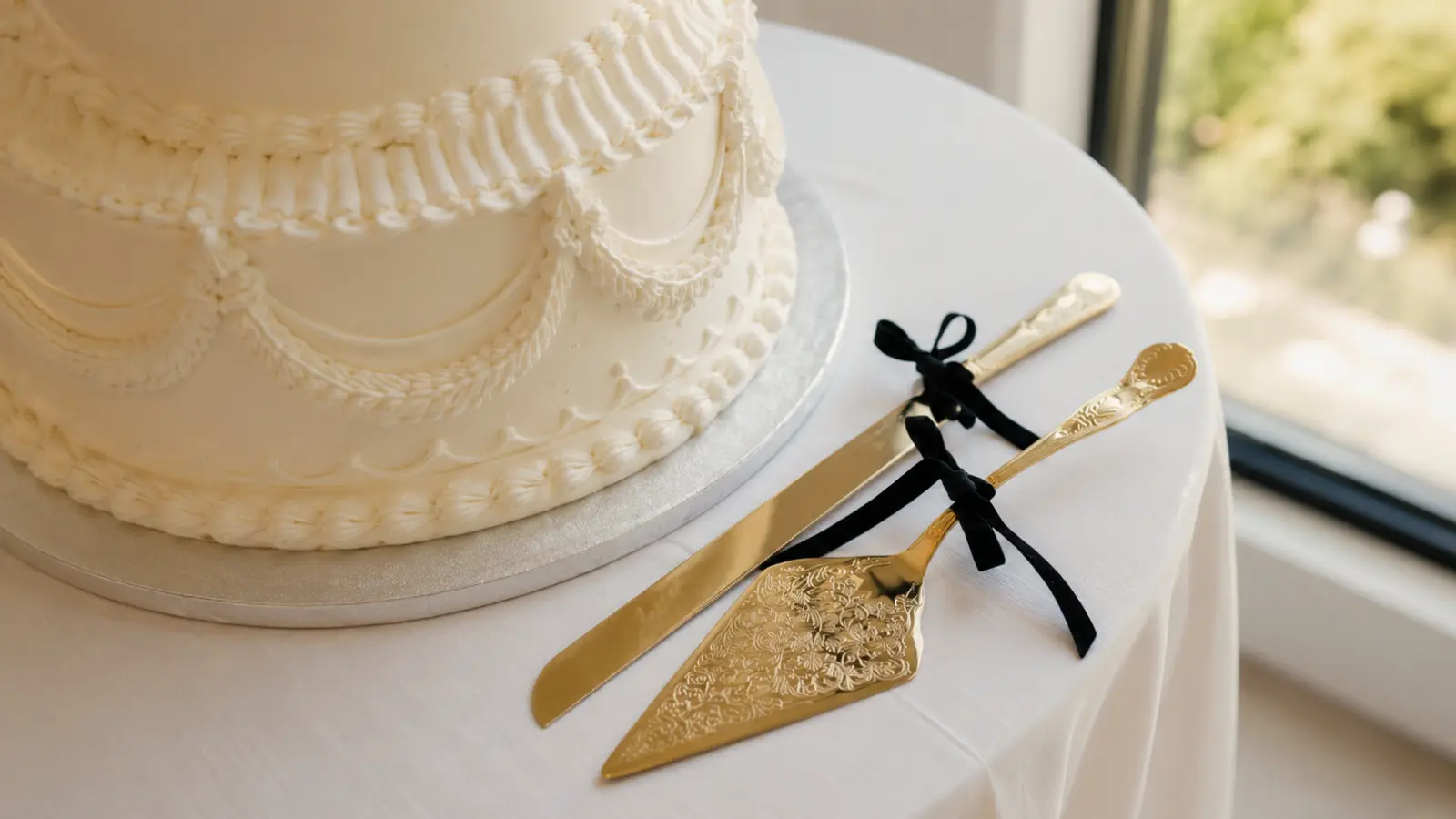
The fear most couples have about sheet cakes is that they will look cheap — that guests will see a rectangular grocery-store-style cake and feel like a cost was cut at their expense. This fear is largely unfounded when the execution is right, but it is worth addressing directly.
If guests do not see it — kitchen service — there is no visual to judge. The cake slice on the plate is the only thing the guest experiences, and a slice of well-made sheet cake is indistinguishable from a slice of well-made tiered cake. Nothing looks cheap because nothing is visible.
If guests do see it, the approach is to make the decision look intentional rather than reluctant. The difference is almost entirely in the presentation:
- Display the sheet cake on elevated wedding cake stands rather than directly on the table — height communicates intentionality.
- Add fresh flowers from your florist — the same blooms you used elsewhere, which visually tie the cake to the overall decor
- Use a clean, smooth buttercream finish in a color consistent with the reception’s palette — even a simple surface looks considered if the color is right
- Frame it with complementary desserts on the same table — macarons, fruit, small chocolates — so the sheet cake is one element in a considered dessert spread rather than an isolated object
- Use a cake board or platter that is proportional and appropriate — a sheet cake on a simple white board reads differently from one on a cake board that looks like it came from a party supply store
Many couples who embraced the sheet cake openly have reported that guests either did not notice, or noticed and were charmed by the unpretentiousness of it. The guest who says “what a beautiful cake” at a wedding is almost never measuring it against a mental checklist of what a proper wedding cake looks like. They are responding to something that looks lovely and tastes good.
Best Flavors for Wedding Sheet Cakes
Wedding cake flavors and filling options for a sheet cake are nearly identical to those available for a tiered cake — and the choice should be guided by the same principle: what will most guests enjoy, and what will travel well from the kitchen to the plate.
- Vanilla bean with vanilla buttercream: One of the most widely liked flavor combinations at American receptions. Simple, reliable, and easy to plate cleanly without structural issues.
- Lemon with elderflower buttercream: Refreshing and seasonal; particularly popular at spring and summer weddings. The tartness of the lemon holds up well at room temperature during a long reception.
- Chocolate fudge with chocolate ganache: For guests who are not vanilla people — and every guest list has them. Offering both vanilla and chocolate covers a wide range of guest preferences.
- Red velvet with cream cheese frosting: A consistent favorite at American weddings; the cream cheese frosting requires refrigeration consideration for warm venues.
- Carrot cake with cream cheese frosting: Less expected than vanilla or chocolate; well-received at casual receptions where a slightly more interesting flavor is appropriate.
One practical advantage of sheet cakes for flavor variety: it is relatively simple to order multiple sheet cake flavors — vanilla and chocolate, for instance — and serve a choice. With a tiered cake, offering two flavors often means alternating tiers, which creates cutting and serving complexity. With sheet cakes, you simply have two pans and plate from whichever each guest prefers. Confirm this plan with your caterer to ensure the serving flow works at your guest count.
Wedding Sheet Cake Inspiration Board
Wedding sheet cakes can be used in many ways, from hidden kitchen cakes that simplify serving to beautifully decorated dessert table displays. Explore our wedding sheet cake inspiration board for buttercream designs, floral decorations, display cake combinations, budget-friendly ideas, and creative ways to make a sheet cake feel intentional and wedding-worthy.
Final thoughts
The best wedding sheet cakes work because they separate what guests experience from what happens behind the scenes. A beautiful display cake can still create the cake-cutting moment, photographs, and visual centerpiece, while sheet cakes provide an efficient way to serve everyone without unnecessary costs.
Choosing a wedding sheet cake is not about lowering expectations. It is about understanding where the cake budget creates the most value. When the flavor, presentation, and serving plan are handled thoughtfully, a sheet cake becomes a smart wedding strategy that protects both the guest experience and the overall budget.
Frequently asked questions (FAQ)
Will guests think a sheet cake is a cheap wedding choice?
Almost never. Most guests care about the taste, freshness, and overall experience — not whether their slice came from a tiered cake or a sheet cake prepared in the kitchen. A well-made sheet cake from a professional bakery feels like a smart planning decision, not a compromise.
What is the biggest mistake couples make when using a wedding sheet cake?
Trying to hide poor quality instead of using the sheet cake strategically. The best approach is choosing the same bakery, flavors, and ingredients as the display cake so the only difference is decoration and structure — not the guest experience.
Why do wedding planners recommend sheet cakes so often?
Because they separate the two jobs of a wedding cake: creating a beautiful visual moment and serving dessert to guests. A display cake creates the photos and ceremony, while sheet cakes make serving large groups easier and more cost-effective.
Is a display cake with sheet cake better than one large wedding cake?
For many weddings, yes. A smaller display cake allows couples to invest more in the details people actually see — flowers, texture, design, and presentation — while the sheet cake handles servings behind the scenes.
Can a sheet cake make the reception feel less traditional?
Only if the couple wants it to. A sheet cake served from the kitchen does not change the reception experience at all. Guests still see the cake cutting, enjoy dessert, and participate in the same traditions.
What do professional bakers care about most with wedding sheet cakes?
Consistency. A great baker focuses on matching the flavor, texture, filling, and quality of the display cake so every guest receives the same dessert experience regardless of which cake their slice came from.
How many servings does a wedding sheet cake provide?
A wedding sheet cake can provide anywhere from about 18 servings to more than 90 servings depending on the pan size and how the bakery cuts each slice. Quarter sheets, half sheets, and full sheets all vary by bakery, so the safest approach is to ask your baker for their exact serving chart before ordering.