Classic wedding cake flavors are traditional cake options couples often choose for wedding receptions, with vanilla, chocolate, and red velvet remaining three of the most recognizable choices. While modern flavors continue to appear on bakery menus, these classics stay popular because they balance taste, familiarity, guest preferences, and beautiful presentation.
Choosing a classic wedding cake flavor does not mean choosing something basic or outdated. A vanilla bean cake with a thoughtful filling, a rich chocolate cake with the right pairing, or a red velvet cake with balanced cream cheese frosting can feel just as elevated and personal as any modern flavor combination.
This guide compares vanilla, chocolate, and red velvet wedding cakes, including the best fillings, frosting pairings, flavor combinations, guest-friendly choices, and simple ways to make classic wedding cake flavors feel fresh, intentional, and memorable.
Vanilla Wedding Cake
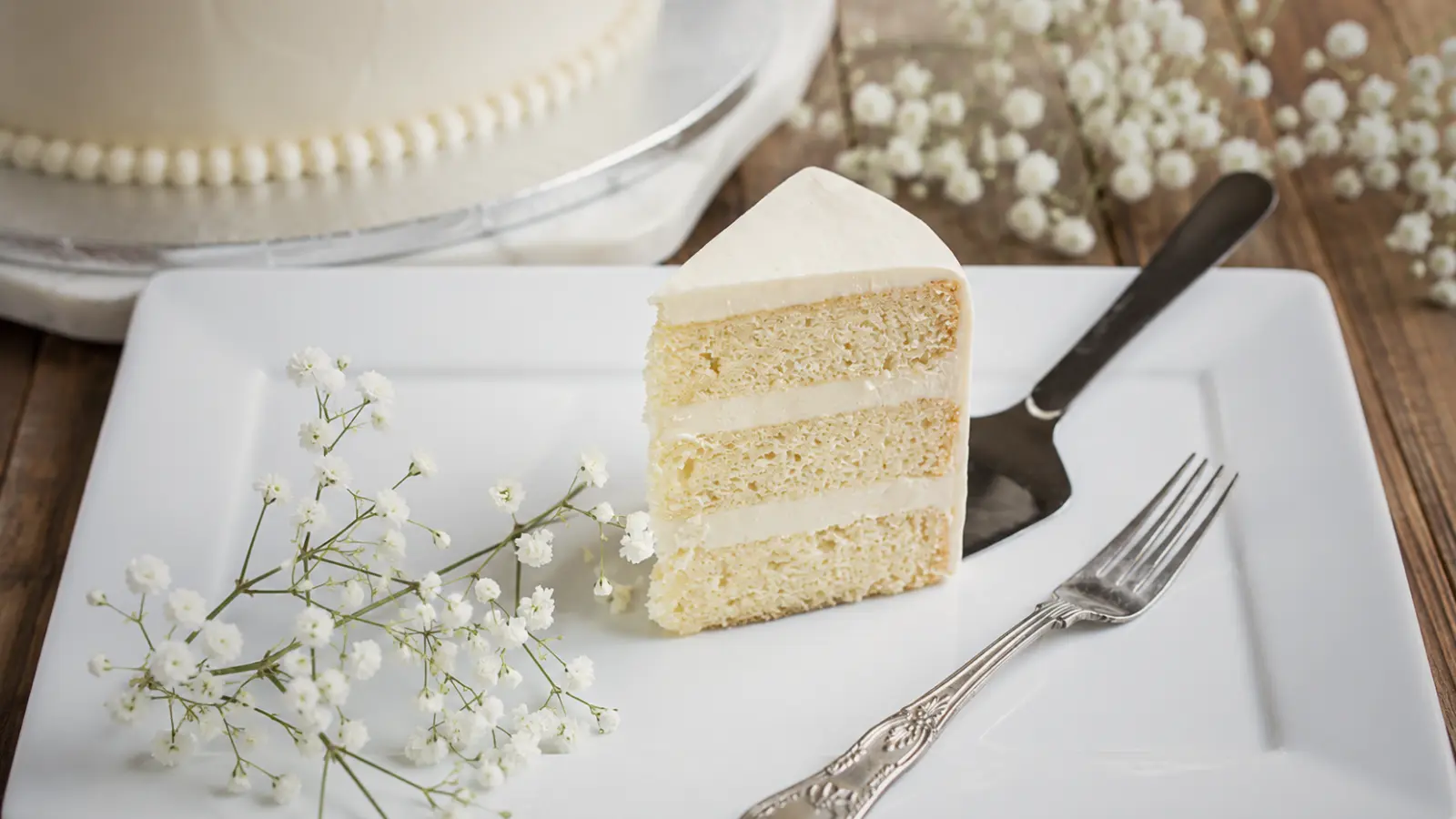
Vanilla has a reputation problem that it does not deserve. It has become synonymous with the generic, the safe, the unimaginative — and none of that reputation applies when the vanilla is actually good. A vanilla bean wedding cake made with quality vanilla, creamed butter, and the right buttercream is not a neutral choice. It is a genuinely elegant dessert that tastes complex, clean, and exactly like what wedding cakes are supposed to taste like.
The reason vanilla remains one of the most reliable American wedding cake choices is simple: it is familiar, flexible, and likely to appeal to a wide range of guests. Not tolerate. Genuinely enjoy. And at a wedding reception — where the cake is being eaten after cocktails, appetizers, and a full dinner by guests with different palates and different relationships to sugar and dairy — broad appeal is not a small achievement. It is the entire goal.
Types of vanilla — and why it matters which you choose
Not all vanilla is the same, and at a wedding cake tasting, the difference between them is clear enough that it is worth asking specifically about. There are three versions you will encounter at quality bakeries:
- Vanilla extract. The most common and most affordable option — a liquid flavoring made by steeping vanilla pods in alcohol. Reliable and consistent. Produces a clean vanilla flavor that reads as familiar and pleasant. Many bakeries use it as their default. The result can be good, although it is usually less complex than a true vanilla bean version
- Vanilla bean (Madagascan). Seeds scraped directly from whole pods and folded into the batter — visible as small black specks in the finished cake. Madagascan vanilla is warm, round, and slightly sweet — the most classic vanilla profile. Noticeably more complex than extract. A common choice at many higher-end bakeries.
- Vanilla bean (Tahitian). A different vanilla species — more floral, more aromatic, slightly more exotic. Less common at U.S. wedding bakeries, but worth asking about if you want a vanilla cake that feels more aromatic and distinctive without becoming unfamiliar. Pairs particularly well with elderflower, peach, and tropical fruit fillings.
- French vanilla. Not a bean variety but a preparation style — a vanilla cake made with egg yolks (rather than whole eggs or egg whites), which produces a richer, more golden crumb with a custard-like quality. Slightly denser than a standard vanilla sponge, more decadent, and a degree warmer in color. Works particularly well for autumn and winter weddings where a lighter spring cake would feel out of season.
What vanilla looks like at a wedding
Visually, vanilla wedding cakes are highly flexible — the neutral base color, from cream to pale gold depending on the preparation, pairs with many frosting colors, decoration styles, and aesthetics from rustic to formal. This is one of vanilla’s underappreciated advantages: it does not impose a visual direction. A chocolate cake at a wedding with a white-and-sage color palette creates a visual tension that a vanilla cake simply does not have.
Vanilla pairs most naturally with:
- White or ivory buttercream (the classic combination — no visual competition between the cake and frosting)
- Blush or dusty rose buttercream (particularly popular at spring and garden weddings)
- Champagne or gold-toned frostings (for formal or glamorous receptions)
- The naked or semi-naked finish (the warm golden crumb of a vanilla cake is genuinely beautiful when exposed)
Vanilla wedding cake — the case for and against
| The case for | The case against |
|---|---|
| Universally liked — the fewest guests who actively avoid it | Can taste generic if the baker uses low-quality extract and American buttercream |
| Most versatile pairing for fillings — works with nearly anything | Does not create a memorable moment the way a more distinctive flavor can |
| Visually neutral — pairs with every aesthetic and color palette | Quality is entirely dependent on ingredient quality — a bad vanilla cake is unmistakably bad |
| Light enough to eat after a full dinner without feeling overwhelming | Guests who strongly prefer chocolate or red velvet may be less excited if vanilla is the only flavor |
The bottom line on vanilla: Choose it because it genuinely tastes good and works for your guest list — not because it is the default. If your bakery offers a vanilla bean version, it is worth asking about during the tasting.
Chocolate Wedding Cake
Chocolate wedding cake is the most passionately debated classic flavor. Its advocates argue that nothing else at a wedding reception produces the same depth of flavor, the same richness, or the same emotional response in guests who genuinely love chocolate. Its critics — often wedding planners and caterers who have watched some guests skip chocolate-only wedding cakes — argue that it is a flavor with real fandom but also real avoidance.
Both sides are right. Chocolate is a spectacular wedding cake flavor. It is also a classic flavor some guests actively avoid — for dietary reasons, flavor preference, sensitivity to richness, or simply because they do not like chocolate. The solution is not to avoid chocolate entirely. It is to position it correctly within the overall cake plan.
Types of chocolate for wedding cakes
The type of chocolate in a wedding cake produces dramatically different flavor profiles — differences that are obvious at a tasting and matter for pairing decisions:
- Milk chocolate. The sweetest and most accessible option — approachable, familiar, and broadly liked by guests who enjoy chocolate casually rather than devotedly. The least common choice at quality wedding bakeries because it lacks the depth to pair interestingly with most fillings and frostings. Best for: couples whose guest list skews younger or whose wedding has a playful, celebratory aesthetic.
- Dark chocolate. A common choice at many quality U.S. wedding bakeries. Rich, complex, and slightly bitter — it creates the contrast needed to make a salted caramel or raspberry filling genuinely interesting rather than simply sweet against sweet. The flavor deepens in photographs the same way it deepens on the palate: you notice more the longer you pay attention to it.
- Bittersweet chocolate (72% and above). For couples and guests who genuinely love chocolate without reservation. More intense, more specific, and more divisive than 60–70% dark. Pairs best with fillings that are sweet or acidic enough to create contrast — salted caramel, passion fruit, raspberry. Works best as the sole flavor on a cake for a smaller, more food-focused wedding group rather than a general reception of 120 mixed guests.
- Dutch-process cocoa cakes. Some chocolate wedding cakes are made with a rich cocoa-based batter rather than melted chocolate — Dutch-process cocoa produces a deeper, more uniform color and a slightly earthier flavor than natural cocoa. This can be the base for dark, dramatically colored chocolate wedding cakes that photograph with deep, rich tones.
What chocolate looks like at a wedding
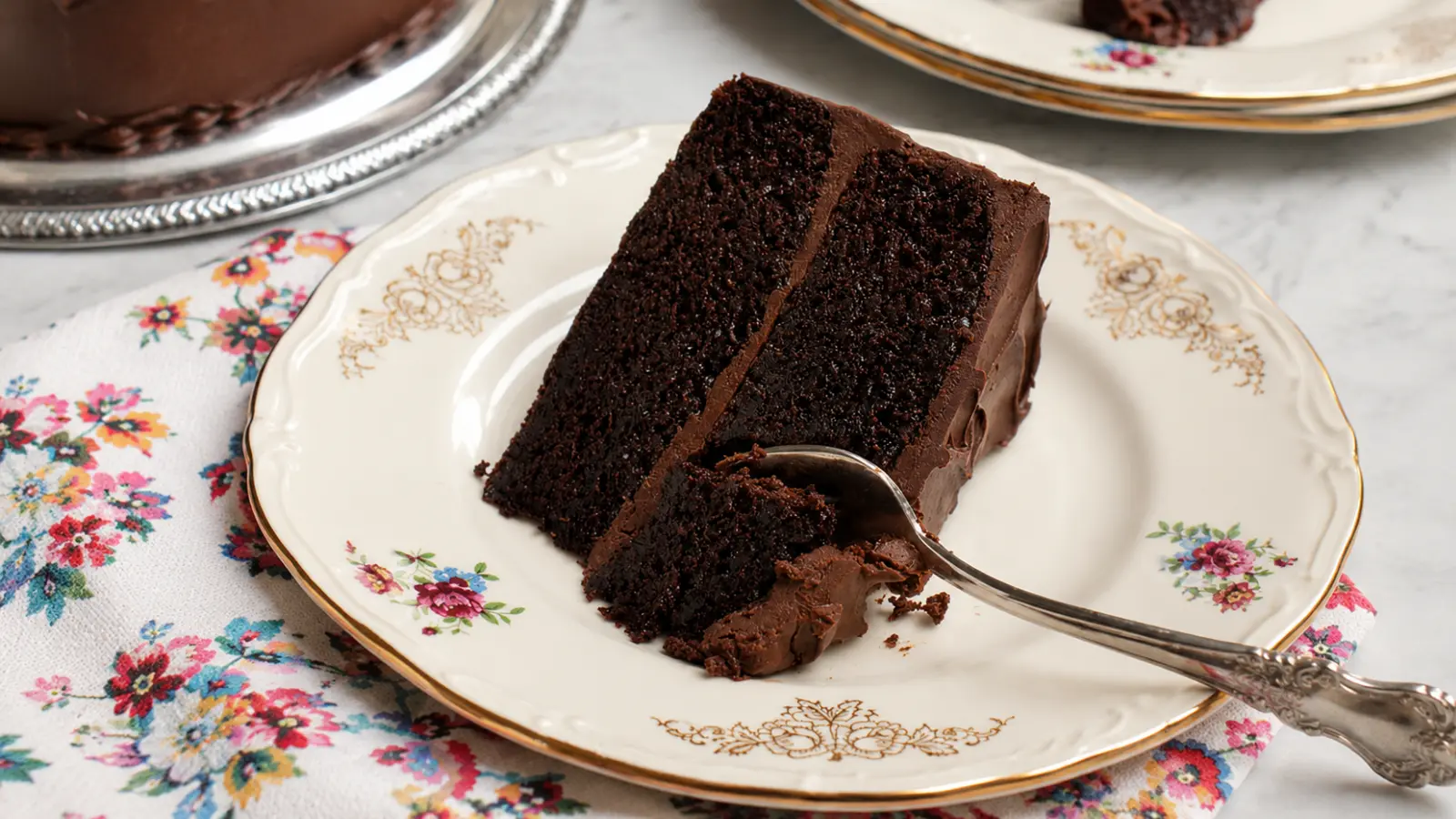
Chocolate wedding cakes have a visual distinctiveness that no other classic flavor has: the deep brown crumb, the dark ganache frosting, the visual drama of a nearly-black tier against white flowers. This is both the appeal and the challenge. A chocolate cake at a white-and-cream wedding needs to earn its place visually — it creates contrast that the other classic flavors do not.
The most photographically striking chocolate wedding cake designs often include:
- Semi-naked chocolate with fresh raspberries and white florals — similar to many floral wedding cakes, the exposed dark crumb against white flowers creates a genuinely beautiful composition
- Smooth dark chocolate ganache finish with gold leaf details — glamorous and editorial; reads as a luxury statement rather than a casual choice
- Chocolate buttercream with a textured palette-knife finish — warm and dimensional; softer than the ganache version and more casually elegant
- Mixed tier configuration — a dark chocolate bottom tier with white or blush upper tiers creates a visual gradient that photographs beautifully from the side
Chocolate wedding cake — the case for and against
| The case for | The case against |
|---|---|
| Produces the most complex and layered flavor of the three classics | Some guests actively avoid chocolate, which makes it slightly more divisive than vanilla or lemon |
| Pairs brilliantly with a wider range of fillings than vanilla or red velvet | Creates visual contrast that can feel out of place at certain wedding aesthetics |
| Deeply satisfying for guests who love it — often generates the most enthusiastic responses | Heavier than vanilla or lemon after a full dinner — some guests feel too full to enjoy it |
| Visually dramatic — the dark crumb and dark frosting photograph with a distinctive richness | Quality variation between bakeries is high — a poorly made chocolate cake is more obviously poor than a poorly made vanilla cake |
The bottom line on chocolate: Include it — as one tier among others, as a groom’s cake, or as the whole cake at a smaller, food-forward wedding. Do not make it the only flavor at a large general reception if you want every guest to have an option they are enthusiastic about.
Red Velvet Wedding Cake
Red velvet is one of the most distinctly American classic wedding cake flavors, with a strong association with Southern celebrations and a long history at weddings, holidays, and family occasions. They know they want it. They are not always sure why.
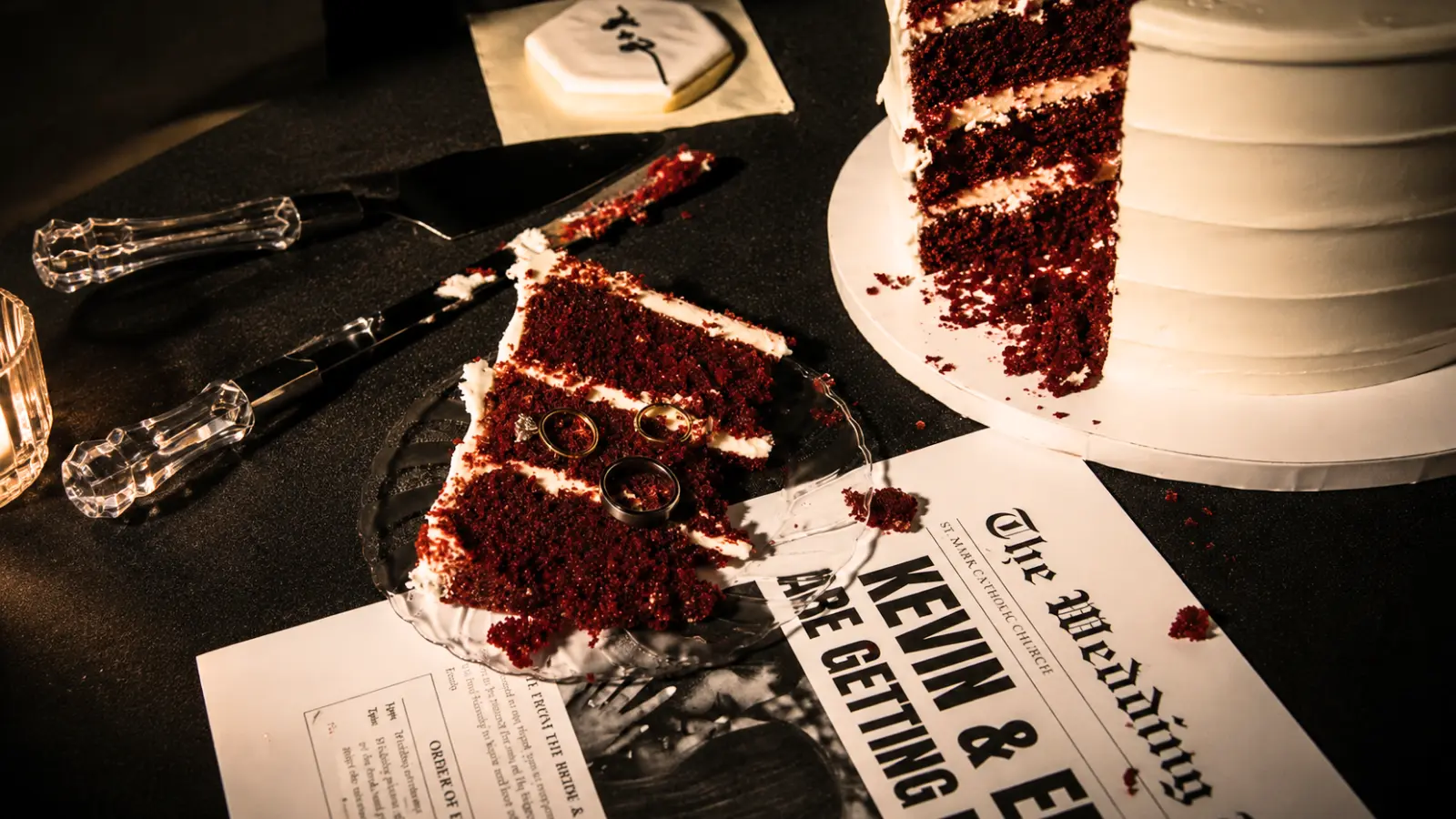
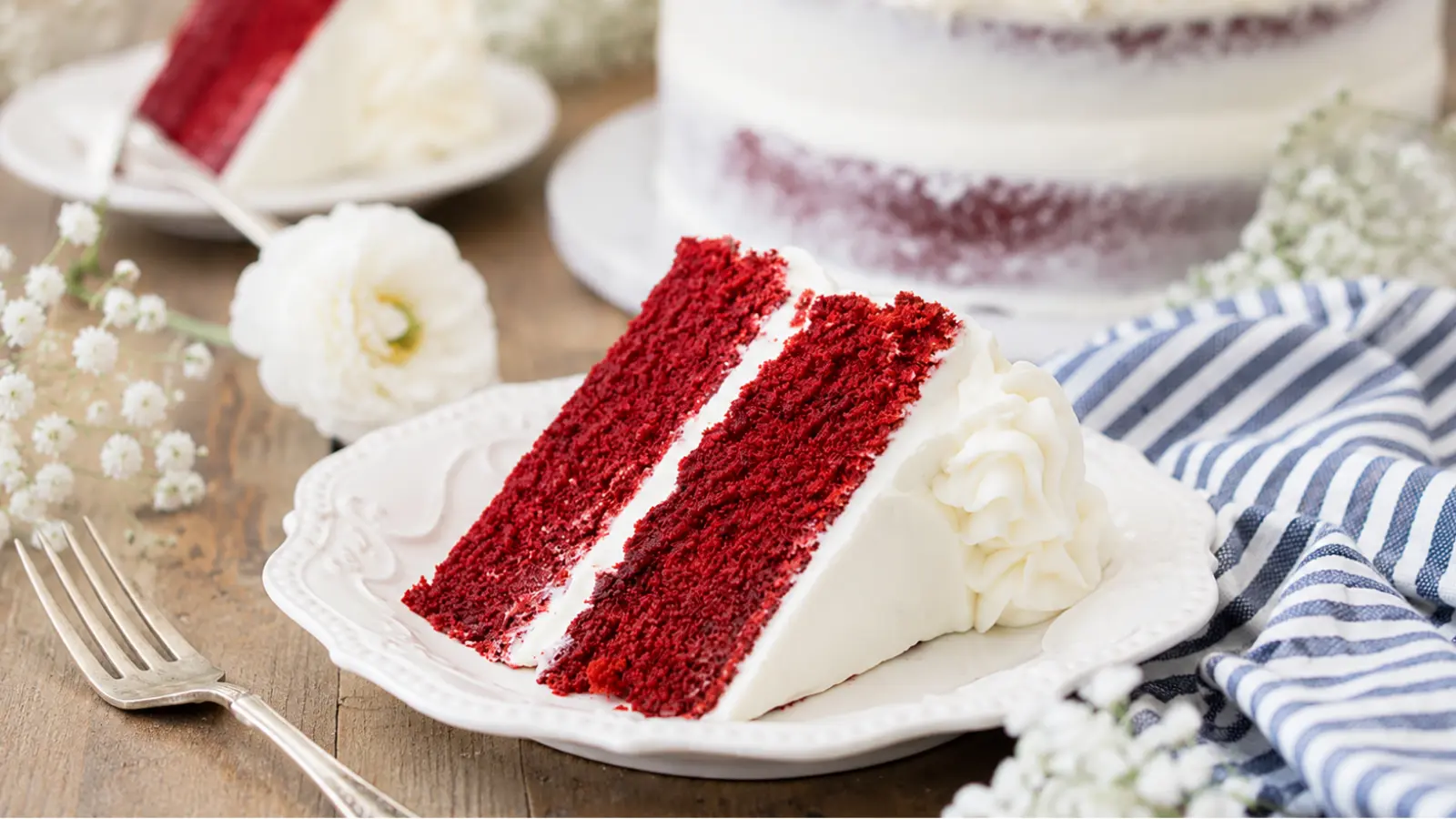
What red velvet actually is: a very mild cocoa cake made with buttermilk, which produces a slight tang that distinguishes the crumb from standard chocolate cake, finished with cream cheese frosting that amplifies the tang and adds a richness that is neither as sweet as American buttercream nor as neutral as meringue buttercream. The flavor is subtle enough that guests who do not like chocolate will often enjoy red velvet without contradiction. It is also distinctive enough that guests who do not like red velvet will know immediately that they do not want a second slice.
Why red velvet works at weddings
Red velvet has three specific advantages at a wedding context that the other classics do not share:
- Visual drama without color constraint. The exposed crumb of a red velvet semi-naked cake — brilliant red against white cream cheese frosting — is one of the most photographically striking wedding cake visuals available. It is the only classic flavor that creates visual drama through the cake itself rather than through frosting or decoration.
- Strong cultural and personal associations. For many American couples, red velvet is the celebratory cake from childhood — birthdays, holidays, family occasions. Choosing it at a wedding creates a specific nostalgic resonance that vanilla and chocolate do not carry in the same way. It feels like home.
- Accessible to guests who avoid chocolate. Because the cocoa content in red velvet is much lower than in a standard chocolate cake, many guests who say they do not like chocolate eat red velvet happily. This gives it a broader appeal than a full chocolate cake while still offering more flavor complexity than a plain vanilla.
The cream cheese frosting question
Red velvet is most strongly associated with cream cheese frosting, and for many guests that pairing is part of what makes the flavor feel complete. The tang of the cream cheese frosting is not decoration — it is the flavor counterpart that makes red velvet taste like red velvet. A red velvet cake finished in vanilla buttercream, Swiss meringue buttercream, or ganache can lose some of the tangy balance that makes the flavor feel classic. The frosting is doing as much flavor work as the cake itself.
The one area of flexibility: the richness and sweetness of the cream cheese frosting. A high-ratio cream cheese frosting (more cream cheese, less powdered sugar, more butter) is tangier, less sweet, and more sophisticated — what an experienced wedding cake baker may use for a more elevated result. A standard cream cheese frosting (higher sugar, less cream cheese) is sweeter and more familiar — what most guests grew up eating. Neither is wrong; they produce different experiences. If you want the red velvet cake to feel modern rather than nostalgic, ask for the high-ratio version.
Red velvet wedding cake — the case for and against
| The case for | The case against |
|---|---|
| The most visually distinctive of the three classics when exposed in a semi-naked style | The red food coloring in traditional recipes is off-putting to some guests — worth discussing a natural-coloring version with the baker |
| Broader chocolate-avoidance tolerance than full chocolate cake | Cream cheese frosting is the classic pairing, which can limit flexibility if the couple wants a very different frosting style |
| Deeply meaningful for couples with Southern American roots or strong personal associations | Cream cheese frosting is slightly less stable than buttercream at warm outdoor venues — worth flagging with the baker |
| The flavor is distinctive enough to be genuinely memorable — guests remember a well-made red velvet | More regionally specific than vanilla or chocolate — less familiar to guests from outside the U.S. or from certain cultural backgrounds |
The bottom line on red velvet: The right choice for couples who genuinely love it and want a flavor that tastes like a celebration — specifically, their kind of celebration. Not the right choice as a default or because it photographs well. The cream cheese frosting means it has both a structural and an aesthetic commitment that the baker needs to be excellent at executing.
Best Fillings for Classic Wedding Cakes
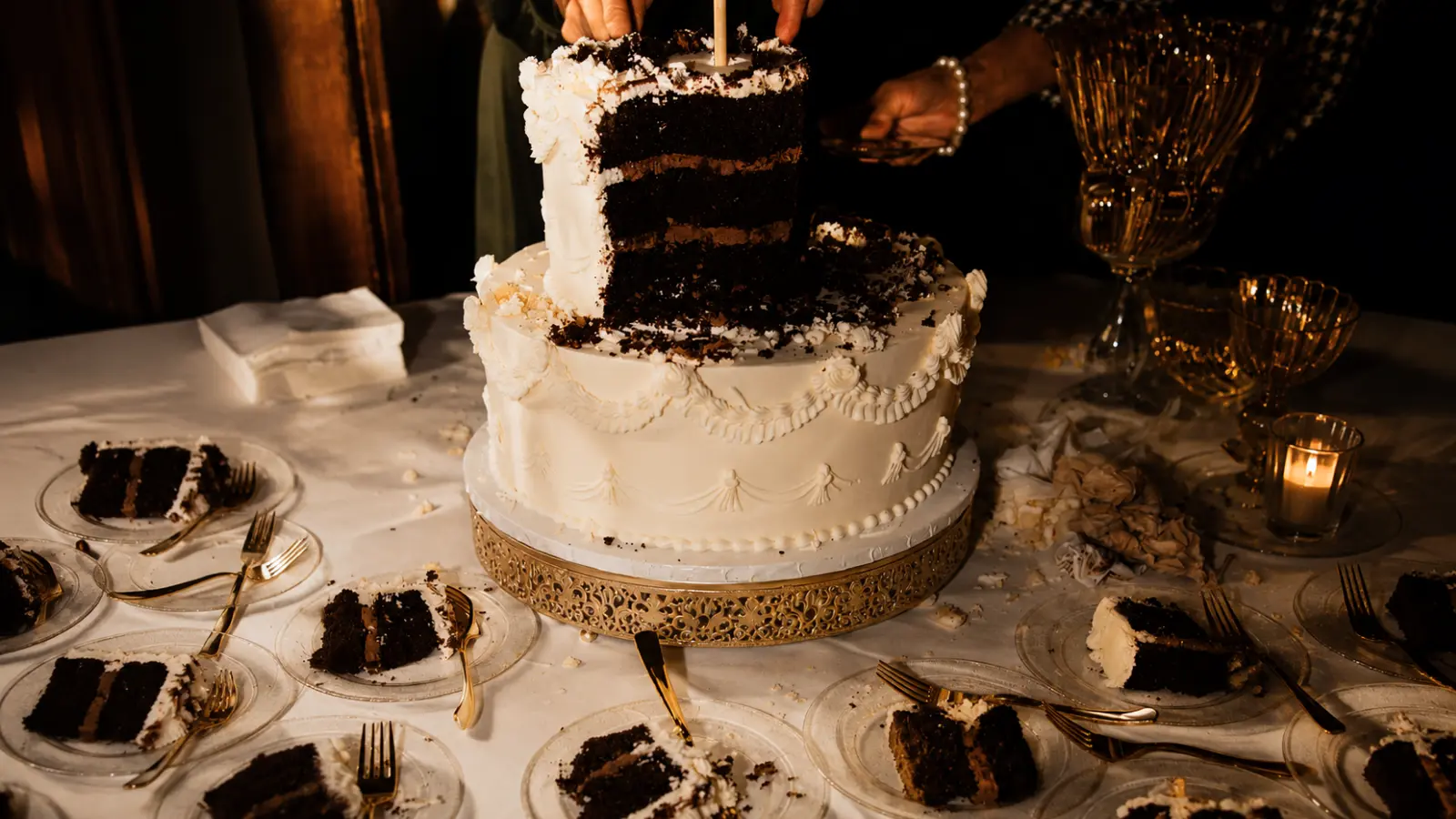
The filling is the most underappreciated element of a wedding cake. Most guests focus on the frosting and the flavor of the crumb — but the filling is often the component they are actually tasting in the highest concentration with each bite. A generous layer of lemon curd between vanilla cake layers does more for the flavor of the slice than any upgrade to the buttercream on the outside.
What many couples also do not realize: the filling is where the most personalization is available without changing the overall flavor profile of the cake. A vanilla bean cake is still a vanilla bean cake whether it is filled with plain vanilla buttercream or with fresh raspberry preserves and a thin layer of elderflower cream. The base flavor reads consistently; the filling creates the character.
Best fillings for vanilla wedding cake
| Filling | Flavor Effect | Best For |
|---|---|---|
| Fresh raspberry preserves | Bright, acidic contrast to the richness of the cake and buttercream | Most popular vanilla filling; spring and summer weddings; universally liked |
| Lemon curd | Cuts richness, adds brightness, makes each slice feel lighter after a full dinner | Spring and outdoor weddings; couples who want a refreshing dessert |
| Vanilla bean pastry cream | Sophisticated same-flavor pairing — more complex and custard-like than the cake crumb alone | Formal weddings; couples who want depth rather than contrast |
| Strawberry preserves | Sweeter and more familiar than raspberry; warmer and more summer-specific | Casual outdoor weddings; couples with a nostalgic aesthetic |
| Elderflower cream | Delicate, floral, and distinctly elegant — the most sophisticated vanilla filling combination | Garden weddings; English-inspired or European-influenced aesthetics |
| Salted caramel | Rich, indulgent, and warm — more of a dessert statement; less refreshing after dinner | Autumn and winter weddings; couples who want a more decadent result |
Best fillings for chocolate wedding cake
| Filling | Flavor Effect | Best For |
|---|---|---|
| Salted caramel | The most popular chocolate filling — the salt amplifies the chocolate and cuts the sweetness simultaneously | Any season; the gold standard chocolate combination; crowd favorite |
| Raspberry jam or fresh raspberry | Classic European pairing — the acidity of the raspberry cuts through the richness of dark chocolate | Formal and European-influenced weddings; spring and summer |
| Chocolate ganache | Intensifies the chocolate experience — for guests who want the most committed chocolate cake possible | Chocolate-devoted couples; smaller, food-forward weddings |
| Espresso buttercream | Coffee amplifies chocolate without competing with it — the mocha effect | Autumn and winter weddings; couples who love both coffee and chocolate |
| Cherry preserves | The Black Forest combination — a heritage pairing that reads as slightly retro in the best possible way | Autumn weddings; couples with German or Central European roots |
| Peanut butter cream | Indulgent and familiar — a crowd-pleasing combination that guests remember | Casual outdoor weddings; younger guest lists; couples with a playful aesthetic |
Best fillings for red velvet wedding cake
Red velvet has significantly less filling flexibility than vanilla or chocolate, because the cream cheese frosting is itself the primary flavor pairing. The filling between layers is typically the same cream cheese frosting used on the outside, or one of these complementary options:
- Cream cheese frosting (same as exterior). The traditional and most common approach. Consistent, reliable, and what most guests expect from red velvet. The only adjustment that matters is the ratio: more cream cheese and less sugar produces a tangier, more sophisticated filling.
- Seedless raspberry jam, thin layer. Applied between cream cheese layers. The raspberry adds brightness and a slight acidity that cuts through the richness of the cream cheese. The most popular modern addition to a traditional red velvet. Does not change the exterior appearance.
- Brown butter cream cheese. A more sophisticated version of the standard filling — the cream cheese frosting made with brown butter rather than standard softened butter, which adds a nutty, caramel note that deepens the flavor significantly. Slightly warmer in color than the standard version.
- Cream cheese with candied pecans. A Southern variation — the pecans add texture and a toasted, caramelized note that is distinctly regional. The right choice for couples with Southern roots who want the cake to taste like home.
Which Flavor Is Safest for Guests?
This question is asked at almost every wedding cake consultation, and it deserves a direct, specific answer rather than the vague “it depends” response it often gets.
For a typical American wedding guest list, these classic flavors generally rank from safest to more divisive:
- Vanilla bean. Usually the safest classic choice because it is familiar, flexible, and less likely to be actively avoided. Even guests who say they “don’t really like cake” may still enjoy a well-made vanilla slice. This is the recommendation for any couple with a large, diverse, or unknown guest list.
- Lemon. A close second and in some contexts preferable to vanilla — the brightness of lemon is particularly welcome after a full dinner. Slightly more divisive than vanilla (a small percentage of guests find citrus desserts too acidic) but enormously popular at spring and summer weddings.
- Red velvet. More popular than chocolate at a general wedding reception because the lower cocoa content makes it accessible to guests who avoid chocolate. The cream cheese frosting is more divisive than buttercream — a small percentage of guests strongly dislike cream cheese in dessert contexts — but overall less avoided than full chocolate.
- Chocolate. The most passionately loved but also the most actively avoided. A non-trivial proportion of guests will not eat a chocolate wedding cake — for allergy-adjacent reasons, dietary preferences, or simply strong personal dislike. At a large and diverse wedding, chocolate works best as one tier of a multi-flavor cake rather than the sole option.
The guest-list factor
The “safest” flavor is not a universal answer — it is specific to the guest list. A wedding where most guests are in their 20s and 30s with shared food values will have different dynamics than a wedding with a broad age range and diverse cultural backgrounds.
- For a diverse, multigenerational guest list: Vanilla. It is the most cross-cultural and cross-generational of the classics. Lemon as a second tier.
- For a younger, food-forward crowd: A more interesting combination is appropriate — dark chocolate with salted caramel alongside vanilla bean, for instance. This guest list appreciates the specificity.
- For guests with a strong regional identity (American South): Red velvet is not just safe — it is expected and warmly received. The nostalgia factor among Southern guests is significant.
- For a smaller, intimate wedding (under 50 guests): The “safest for everyone” logic matters less. At 40 guests who know each other well, the couple can choose the flavor they love without concern for the minority who might prefer something else.
The practical hedge: two flavors in one cake
For weddings of 80 or more guests where the flavor question is genuinely difficult, the simplest and most effective solution is a two-flavor approach with two-tier wedding cakes, or different flavors across three-tier wedding cakes, can be one of the simplest solutions.
| Combination | Why It Works |
|---|---|
| Vanilla + Lemon | Two of the most broadly liked flavors; similar aesthetic (both work in white/cream palette); covers guests who find vanilla too plain |
| Vanilla + Red Velvet | Contrasting flavor profiles with very different visual (white crumb vs. red crumb); the broadest appeal of any two-flavor combination |
| Vanilla + Chocolate | The two most popular flavors overall; chocolate lovers get what they want without imposing it on guests who prefer vanilla |
| Vanilla + Lemon + Red Velvet | The most crowd-pleasing three-tier combination; covers every major preference category without including chocolate |
| Vanilla + Lemon + Chocolate | Maximum variety for guests; the light-to-rich range gives every preference an option |
How to Make Classic Flavors Feel Modern
The most common misconception about classic wedding cake flavors is that making them feel current requires replacing them with something more unusual. It does not. The couples who end up with modern wedding cakes that still feel timeless without being alienating have figured out the same thing: the base flavor stays classic because that is what guests recognize and respond to, and the modernization happens in everything that surrounds it — the frosting type, the filling, the finish, the visual presentation.
A vanilla bean cake with an elderflower buttercream, yuzu curd filling, and a brushstroke of pale blush across the top tier is a contemporary cake. It is also a vanilla cake. Those things are not in conflict.
Modern upgrades for vanilla wedding cake
- Switch to Swiss or Italian meringue buttercream. One of the most impactful upgrades for a vanilla wedding cake. Meringue buttercream is silkier, less sweet, more sophisticated in flavor, and produces a finish that photographs with more luminosity than American buttercream. Most guests cannot articulate why it tastes better; they simply know it does. Ask specifically for this at the tasting.
- Add a specific filling rather than plain buttercream between layers. Yuzu curd, passion fruit curd, elderflower and raspberry, roasted peach — a distinctive filling transforms a vanilla cake from pleasant to memorable without changing what it announces itself as.
- Request a textured finish rather than smooth. A palette-knife textured buttercream on a vanilla cake is more contemporary than a smooth surface. The texture adds dimensionality and makes the cake read as intentional rather than default.
- Specify Tahitian vanilla rather than Madagascan. The more floral, exotic quality of Tahitian vanilla reads as less ordinary than the more familiar Madagascan profile — still recognizably vanilla, but with enough distinctiveness that guests notice something is different.
- Try a vanilla and brown butter combination. Brown butter in the cake batter adds a nutty, caramelized depth that makes the vanilla feel more complex — a simple change at the ingredient level that produces a noticeably more interesting flavor without deviating from the classic profile.
Modern upgrades for chocolate wedding cake
- Specify single-origin or high-quality dark chocolate. The flavor difference between a wedding cake made with commodity chocolate and one made with quality single-origin dark chocolate is immediately obvious at a tasting. Ask the baker what chocolate they use by name or origin.
- Use a miso caramel or tahini caramel filling. Salted caramel is familiar and modern; miso caramel or tahini caramel adds a more distinctive savory depth. The fermented umami quality of white miso added to a caramel filling creates a depth that surprises guests who did not know what to expect.
- Consider a semi-naked finish with the dark crumb exposed. A dark chocolate semi-naked cake with fresh raspberries between exposed layers can be one of the most visually striking wedding cake presentations. The contrast between the dark crumb and the white cream is genuinely beautiful.
- Add espresso to the batter. A small amount of espresso powder or brewed espresso in the chocolate batter amplifies the cocoa flavor without making the cake taste like coffee — it simply makes the chocolate taste more like chocolate. A standard technique at quality bakeries that most couples do not think to request.
Modern upgrades for red velvet wedding cake
- Use brown butter cream cheese frosting. Browning the butter before beating it into the cream cheese frosting adds a nutty, toasty note that elevates the standard cream cheese frosting significantly. The result tastes like a more sophisticated version of the classic without departing from its character.
- Try a semi-naked finish. Exposing the red crumb of a red velvet cake in a semi-naked finish is both more modern than a fully frosted exterior and more visually striking — the red layers visible through the thin cream cheese frosting create a genuinely beautiful layered effect.
- Use natural red coloring. Traditional red velvet gets its color from red food dye. A growing number of quality bakers now use beet powder or beet juice as a natural alternative — the color is slightly less vivid and warmer in tone, but the absence of artificial dye is increasingly preferred by couples with ingredient awareness.
- Add a thin raspberry layer between cream cheese filling layers. A small amount of high-quality seedless raspberry jam between the cream cheese layers adds brightness and acidity that makes the overall flavor more complex without changing what the cake announces itself as.
Flavor Combinations for Multi-Tier Cakes
For a three-tier wedding cake with different flavors per tier, the combination decision involves more than just picking three flavors the couple enjoys. A well-chosen three-tier combination tells a cohesive story across the tiers — light to rich, familiar to distinctive, bright to warm — rather than simply listing three unrelated favorites.
How to build a three-tier flavor combination
The most effective approach: think of the three tiers as a sequence from lightest to richest, moving up the tiers from the base (where the largest serving count is) to the top (often reserved for the couple’s anniversary). Guests typically take from the tier they are most drawn to, so the flavor that suits the broadest preference should be on the largest tier.
- Top tier (smallest, often saved): Vanilla bean — the most sentimental flavor, appropriate for the tier the couple eats on their anniversary; or a more specific choice that is personally meaningful to the couple
- Middle tier: A contrasting flavor — lemon, almond, or champagne — that is complementary in character but distinct from both the top and bottom tier
- Bottom tier (largest serving count): The most crowd-pleasing flavor — vanilla, red velvet, or chocolate depending on the overall cake plan
Tried and tested three-flavor combinations
| Top Tier | Middle Tier | Bottom Tier | Combination Character |
|---|---|---|---|
| Vanilla bean | Lemon curd | Red velvet | The most crowd-pleasing three-tier combination — covers every major preference; light to rich; something for everyone |
| Vanilla bean | Almond raspberry | Dark chocolate | The elegant progression — from delicate to rich; suitable for formal and European-influenced weddings |
| Champagne | Vanilla bean | Red velvet | Celebratory and warm; particularly appropriate at formal evening receptions |
| Vanilla bean | Lemon | Vanilla bean (different filling) | For couples who specifically love vanilla — same base flavor, different fillings per tier; maximizes what they love |
| Red velvet | Vanilla bean | Dark chocolate | Maximum variety; all three classics in one cake; the boldest multi-flavor choice |
Tasting Tips for Classic Wedding Cake Flavors
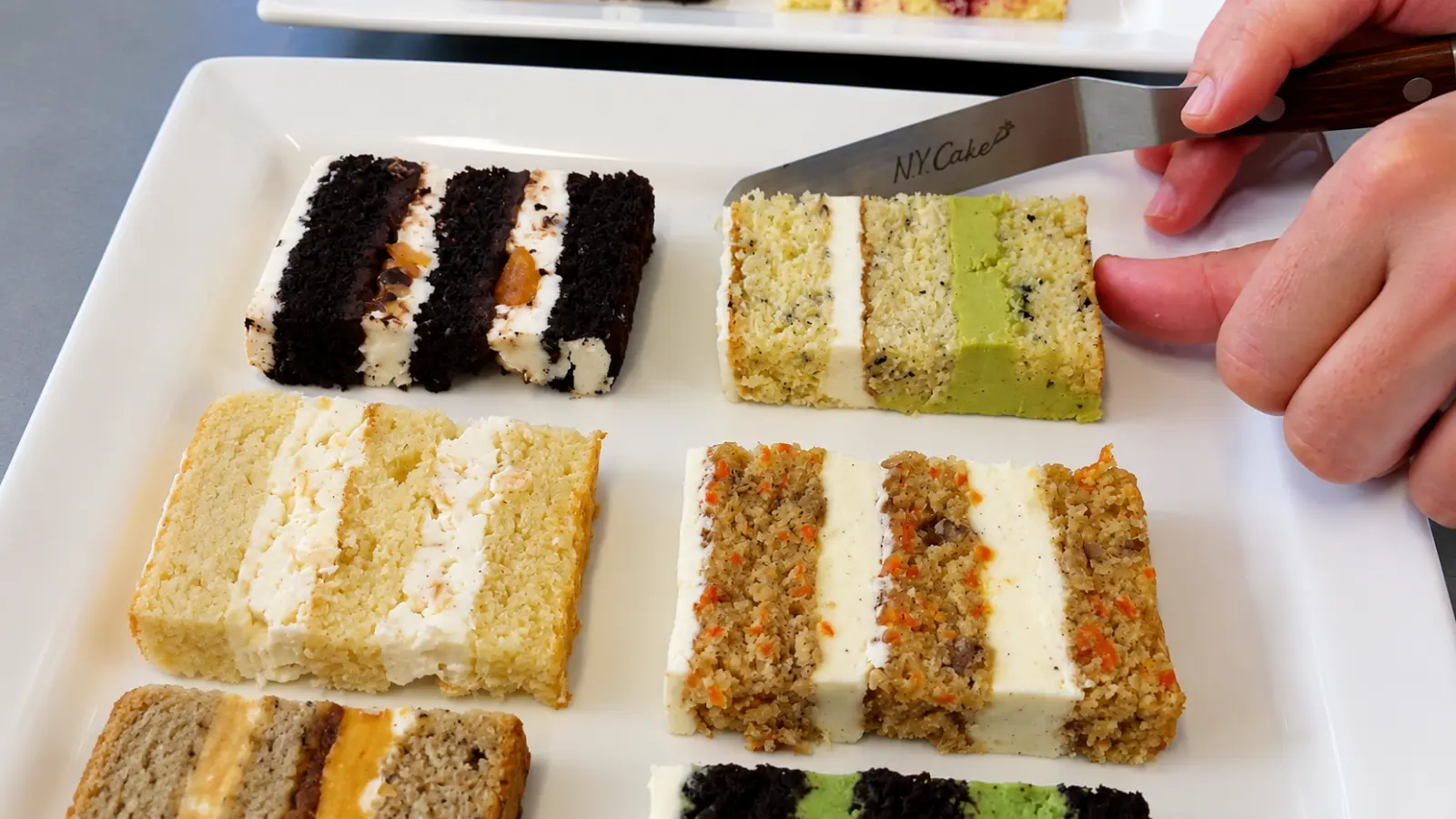
The wedding cake tasting is where most couples discover that what they thought they knew about their flavor preference was based on a memory rather than a recent, considered experience. Red velvet from a boutique bakery that uses high-ratio cream cheese frosting and brown butter tastes nothing like the red velvet from childhood. Vanilla made with Tahitian beans and Italian meringue buttercream bears almost no resemblance to vanilla from a box mix. The tasting is where the difference becomes real.
What to evaluate at the tasting — specifically
- Taste the cake layer alone, without frosting. Cut a small piece and eat it without any frosting. The crumb should be moist but not wet, flavorful without being overwhelmingly sweet, and have enough structure to hold its shape. A dry, dense, or flavorless crumb is not improved by great frosting — it produces a dry, dense, or flavorless slice with good frosting on the outside.
- Taste the filling alone. Ask if you can taste the filling on its own, or sample it from a spoon separately from the assembled slice. The filling should be bright, specific, and flavorful enough to register distinctly — not just a sweet layer that blends into the frosting.
- Taste the frosting type. If you are choosing between American buttercream and meringue buttercream, ask to taste them side by side on a plain cracker or spoon. The difference in sweetness and texture is immediately obvious — and which version you prefer is genuinely important for the overall cake experience.
- Taste the assembled slice last. After evaluating each component separately, eat the complete assembled slice as the baker has designed it. Notice whether the components improve each other — whether the filling brightens the crumb, whether the frosting complements or overwhelms the cake flavor, whether the overall slice is balanced or predominantly sweet.
- Think about when the cake will be served. A flavor that feels rich during a morning tasting may feel different after cocktails, dinner, and dancing. As you taste, ask yourself whether the slice will still feel enjoyable at the point in the reception when cake is actually served.
- Do not taste more than four to five flavor combinations in one appointment. Palate fatigue is real. After five or six cake samples, the ability to distinguish between flavors diminishes significantly. If the bakery offers more options than that, ask to prioritize the ones you are genuinely considering rather than sampling the full menu.
Questions worth asking at every tasting
- “Is this vanilla extract or vanilla bean — and if bean, which origin?”
- “What chocolate do you use, and what percentage cacao?”
- “Is the red food coloring in the red velvet standard dye or a natural alternative?”
- “What type of buttercream do you use for the exterior — American or meringue?”
- “Can I taste what the filling would be like separately from the assembled slice?”
- “If I want a different filling than what you typically use with this flavor, is that possible and does it affect wedding cake cost?”
- “How does this cake hold up at venue temperature? Does the frosting soften or the filling weep?”
That last question is more important than most couples realize. A beautiful vanilla cake with a fresh raspberry filling can produce pink liquid seeping through the frosting if the bakery has not properly stabilized the filling for a warm venue. Ask specifically about weather and temperature performance at every tasting.
Classic Wedding Cake Flavor Inspiration Board
Before choosing your final classic cake flavor, it helps to compare combinations, fillings, textures, and presentation styles. Explore our classic wedding cake flavor inspiration board for vanilla wedding cakes, chocolate designs, red velvet cakes, filling ideas, frosting pairings, cake slices, and beautiful flavor inspiration before your tasting appointment.
Final thoughts
The best classic wedding cake flavor is not simply the one that appears on the most bakery menus. It is the flavor that fits your guests, your season, your design, and the experience you want people to remember when they take their first bite.
Vanilla, chocolate, and red velvet remain wedding favorites because they can be familiar without feeling ordinary. With the right ingredients, fillings, frosting, and baker, a classic flavor can feel just as thoughtful and unforgettable as any new trend.
Frequently asked questions (FAQ)
Why do classic wedding cake flavors never go out of style?
Classic flavors stay popular because they work in a real wedding environment. A wedding cake is not just a dessert for two people — it needs to satisfy guests with different ages, preferences, and expectations. Vanilla, chocolate, and red velvet remain favorites because they are familiar while still allowing endless customization through fillings, frostings, and design.
Does choosing vanilla mean your wedding cake is boring?
Not at all. A basic vanilla cake can feel ordinary, but a well-made vanilla bean cake with quality ingredients, thoughtful fillings, and the right frosting can be one of the most elegant wedding cake choices. The difference comes from execution, not the flavor name.
Should your wedding cake flavor represent you or your guests?
The best choice usually balances both. Your cake should feel personal, but it is also one of the few parts of the wedding everyone experiences. Many couples choose a familiar main flavor for guests and add personality through a second tier, filling, or custom flavor combination.
Why do simple cake flavors sometimes taste better than unique ones?
Simple flavors leave less room to hide mistakes. A great vanilla, chocolate, or red velvet cake depends on ingredient quality, texture, balance, and technique. A creative flavor may sound exciting, but the execution matters more than how unusual the menu description feels.
What are the most classic wedding cake flavors?
The most classic wedding cake flavors are vanilla, chocolate, and red velvet, with vanilla bean often being the safest and most flexible choice for a broad guest list. Lemon, almond, and champagne are also classic-adjacent options that work well for couples who want something familiar but slightly more distinctive.
What is the safest classic wedding cake flavor for guests?
Vanilla bean is usually the safest classic wedding cake flavor because it is familiar, flexible, and easy to pair with many fillings and frostings. For larger weddings, many couples pair vanilla with a second flavor such as lemon, red velvet, or chocolate so guests have more than one option.