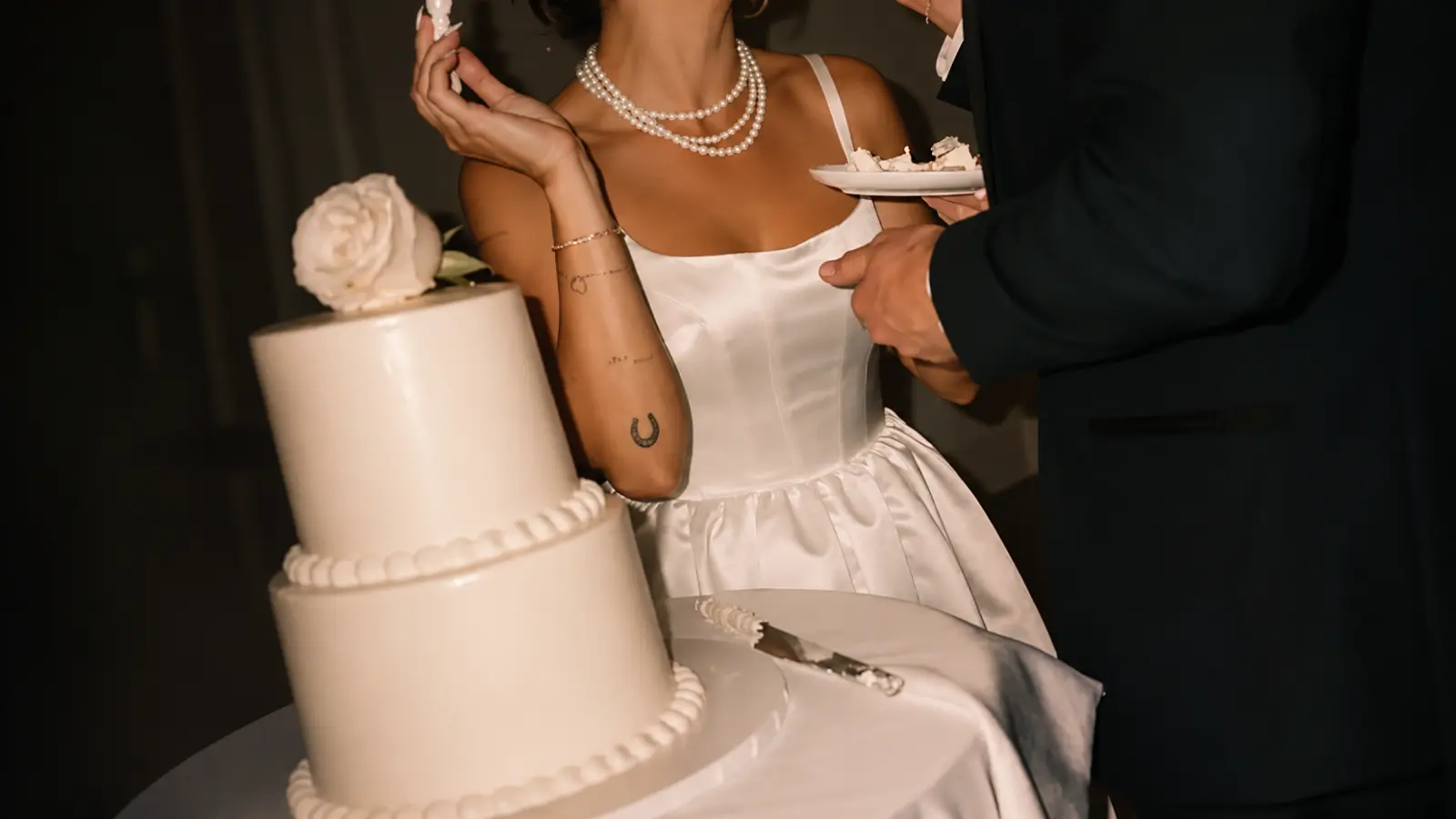
Elegant wedding cakes are wedding cakes designed with refined finishes, balanced proportions, restrained decoration, and timeless details that elevate the reception without feeling overdone. They are not defined by how expensive, tall, or elaborate they are, but by how intentional every choice feels.
Elegance in a wedding cake is easier to recognize than it is to define — and much harder to achieve than it looks. The most elegant cakes at American weddings are often the ones that look like every decision was made deliberately: the finish applied with precision, the decoration limited to what is essential, the color palette committed rather than exploratory, and the stand selected to give the cake presence in the room.
Most couples start the wedding cakes conversation with a visual they love from Instagram or a planning site. That is a reasonable starting point, but what produces an elegant cake in the end is not copying a specific photograph. It is understanding the principles behind the look: restraint, precision, cohesion, and the confidence to commit to one clear aesthetic statement.
What Makes a Wedding Cake Look Elegant
Before choosing a design, it is worth understanding what elegance actually is in the context of a wedding cake — because the word gets applied to almost everything in the wedding industry, which makes it useless as a design principle without unpacking it.
Elegance in a wedding cake is not a category. It is a quality produced by specific decisions. The cakes that consistently read as elegant in photographs share four characteristics regardless of style, tier count, or decoration type:
Commitment to one aesthetic statement. The most elegant cakes never try to do too many things. They do not combine lace piping with gold leaf with fresh florals with pearl borders and a monogram topper. They commit to one central decorative element — and every other choice in the design serves that one element. A cake built around sugar flowers is all about the flowers; everything else (the finish, the stand, the table) recedes so the flowers are seen clearly. A cake built around a smooth monochromatic finish is about the surface; no topper, no ribbon, nothing that competes with the clean geometry.
Precision in execution. An imperfect fondant finish is less elegant than a perfectly smooth buttercream. A slightly uneven pearl border undermines an otherwise beautiful cake in every close-up photograph. A fresh flower placement that looks like it was done in a hurry takes an elegant design and makes it look casual. The elegance of a cake is entirely proportional to the care visible in its execution — which is why the baker’s portfolio, and specifically the close-up photographs in that portfolio, matter more than any other factor in choosing a cake for an elegant wedding.
Color restraint. Elegant cakes almost always have fewer colors than their owners initially imagined. A two-color cake — ivory base with soft blush florals — photographs as more elegant than a five-color design regardless of how tasteful each individual color is. The palette of the most timeless wedding cakes is either monochromatic or built around one neutral and one accent.
Proportional architecture. The tiers should look architecturally balanced — not arbitrarily stacked. A three-tier cake where each tier diminishes in size at a consistent ratio reads as elegant and intentional. A three-tier cake where the tiers are similarly sized, or where the top tier is disproportionately large relative to the overall height, reads as ungainly. Discuss proportions with the baker at the design consultation, not just flavor and decoration.
Elegant White Wedding Cakes
White is the most enduringly elegant wedding cake color for the same reason it is the most enduringly elegant wedding dress color: it reads as formal, intentional, and complete without requiring additional decoration to look finished. A white cake with nothing on it but a perfectly smooth surface and a proportional silhouette is already a beautiful cake. Everything added to it is supplementary — which means every addition needs to earn its place.
What many couples do not realize until they see their cake photographs: there is no single “white” in cake design. The white that photographs most elegantly is almost never the starkest option. It is a warm, slightly creamy white — ivory, cream, or off-white — that reads as luminous rather than cold under both natural and flash photography. A stark, blue-toned white can look clinical in photographs, particularly against warm-toned florals, a champagne dress, or a candle-lit reception space.
The most elegant white wedding cake designs
- Smooth ivory buttercream with a sugar flower cascade. Three tiers in a flawlessly smooth Swiss meringue buttercream in warm ivory, with a cascade of white and blush sugar flowers descending from the top tier across the right side of the cake. The combination — clean surface, sculptural flowers — is the most consistently elegant wedding cake visual in American wedding photography. The constraint that makes it work: no other decoration. The flowers are enough.
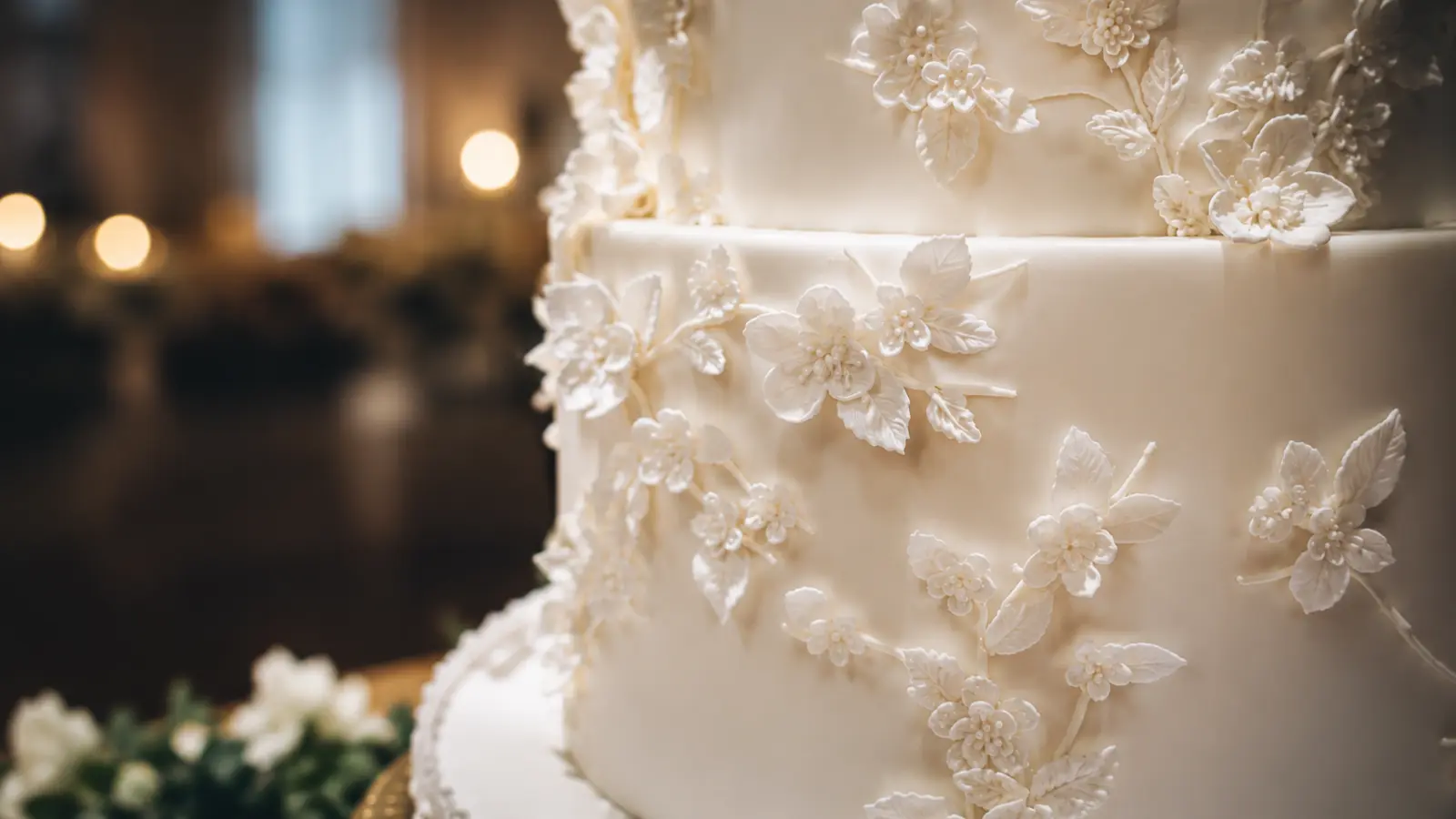
- White fondant with fine lace piping is one of many wedding cake designs where the pattern is visible through texture and shadow, not through color contrast. Subtle, formal, and extraordinarily beautiful in close-up photography. Requires a highly skilled baker; look for this specific technique in the portfolio before booking.
- Smooth white cake with a single gold-leaf tier. Three white tiers, with one tier — typically the middle — finished in edible 22K gold leaf rather than white. The restraint of keeping two tiers white makes the gold-leaf tier feel like an architectural accent rather than a decorative addition. One of the most photographed contemporary elegant cake designs.
- Tall white tiers with minimal fresh florals. A three-tier white cake in 6-inch-tall tiers (rather than the standard 4-inch), giving the overall structure an unusually dramatic height. One cluster of white garden roses and eucalyptus between the first and second tier — nothing else. The height is the statement; the florals are the accent.
- White textured buttercream with ribbon trim. A palette-knife or spatula-textured white buttercream — slightly rough, deliberately organic — finished with a single satin ribbon at the base of each tier in champagne or ivory. One of the most underused elegant details: ribbon is inexpensive, photographs crisply, and creates a finished, composed look on a textured cake that might otherwise read as informal.
- Monochromatic white-on-white piped design. White buttercream base with white-tinted piped rosettes, dots, or ruffles — all the same color, all creating depth through texture rather than contrast. The monochromatic quality is what elevates this from traditional piped work to something genuinely sophisticated.
White cake and dress coordination
Many brides who choose a white cake do not realize that the white of the cake and the white of the dress often do not match — and that this mismatch is visible in photographs where both are in frame. A bright, stark white cake next to a warm ivory gown can look like a mistake rather than a choice. The simplest solution: describe your dress white (ivory, champagne, soft white, bright white) to the baker and ask them to match the undertone of the cake finish to the dress tone. A cake and dress in the same white family photographs as intentional; different white families photograph as an oversight.
Elegant Floral Wedding Cakes
Floral wedding cakes are the most popular wedding cake style in the U.S. for good reason — flowers are the visual language of romantic occasion, they are available in every color and form, and they connect the cake directly to the rest of the wedding’s floral aesthetic. What separates an elegant floral cake from a simply decorated one is not the number of flowers. It is the placement, the quality, and the restraint.
The most common mistake with floral wedding cakes is treating the flowers as fill — adding them liberally to cover surface area rather than placing them deliberately to create a specific visual. An elegant floral cake has negative space: areas of clean cake surface that make the floral placement feel intentional and composed rather than abundant and incidental.
Elegant floral cake approaches by flower type
Fresh flower elegant cakes
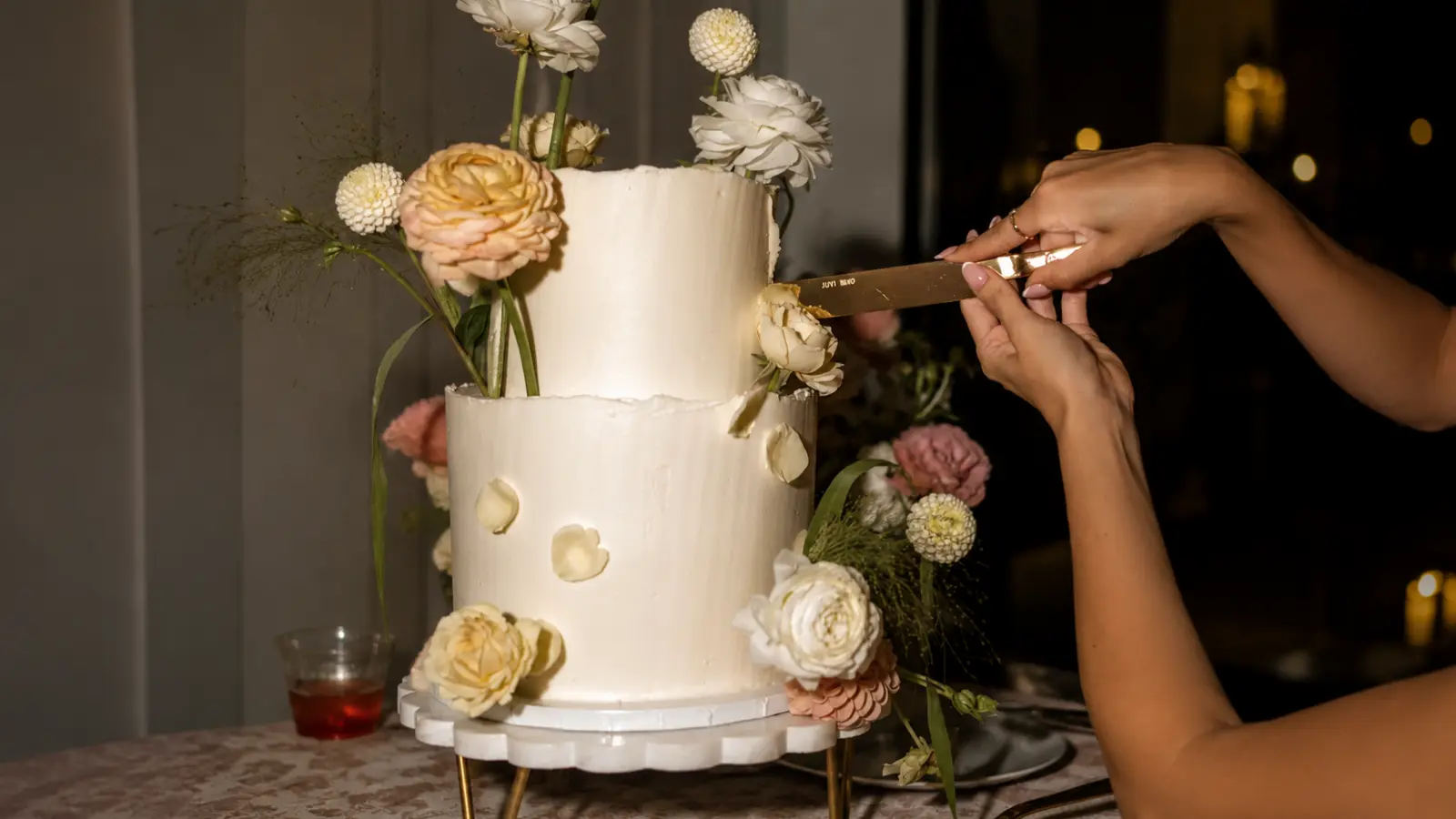
- Garden rose cascade, one side only. Garden roses — full, loose, and layered — placed in a descending arrangement down one side of a white or ivory tiered cake. The asymmetry is part of the elegance. Avoid placing flowers symmetrically on both sides; it looks formal in a dated way rather than elegant in a current one.
- Single cluster between tiers. One generous arrangement of flowers placed between the first and second tier, with nothing on the rest of the cake. The restraint of a single placement — instead of flowers scattered across the entire surface — is what makes it read as sophisticated rather than decorated.
- Flower crown on the top tier. A small, densely arranged crown of flowers around the base of the top tier, functioning as the cake’s only decoration. Clean, architectural, and modern. Works particularly well with orchids, ranunculus, and garden roses.
- Trailing greenery with one dominant bloom. Cascading eucalyptus, ivy, or fresh herbs trailing down the tiers, anchored by one or two oversized focal blooms — a large garden rose, a white peony, or a magnolia blossom. The scale contrast between the trailing greenery and the single oversized flower creates a natural elegance that multiple similar-sized blooms cannot achieve.
Sugar flower elegant cakes
- Full sugar flower cascade. The most formal and artistically demanding option — a designed arrangement of hand-crafted sugar flowers descending across a smooth fondant or buttercream surface. Sugar peonies, roses, ranunculus, and sweet peas are the most commonly requested. Cost reflects the labor, and a full cascade can add a significant amount to the base cake price depending on the flower types, scale, and baker’s level of specialization. The result, when executed by a skilled sugar artist, is arguably the most beautiful wedding cake available.
- Three sugar flower cluster with bare surface. Three to five large sugar blooms arranged in a cluster at the top of the cake, with the remaining surface completely bare. This approach uses the most labor-intensive element of cake decoration sparingly — and the contrast between the detailed flowers and the clean surface makes both look more intentional.
- Sugar flowers matched to bouquet. A specific request that produces a particularly meaningful result: the sugar flowers replicate the exact varieties in the bride’s bouquet. The visual connection between the cake and the bouquet — identical flowers in both — photographs with a cohesion that few other design details can achieve.
Pearl Wedding Cakes
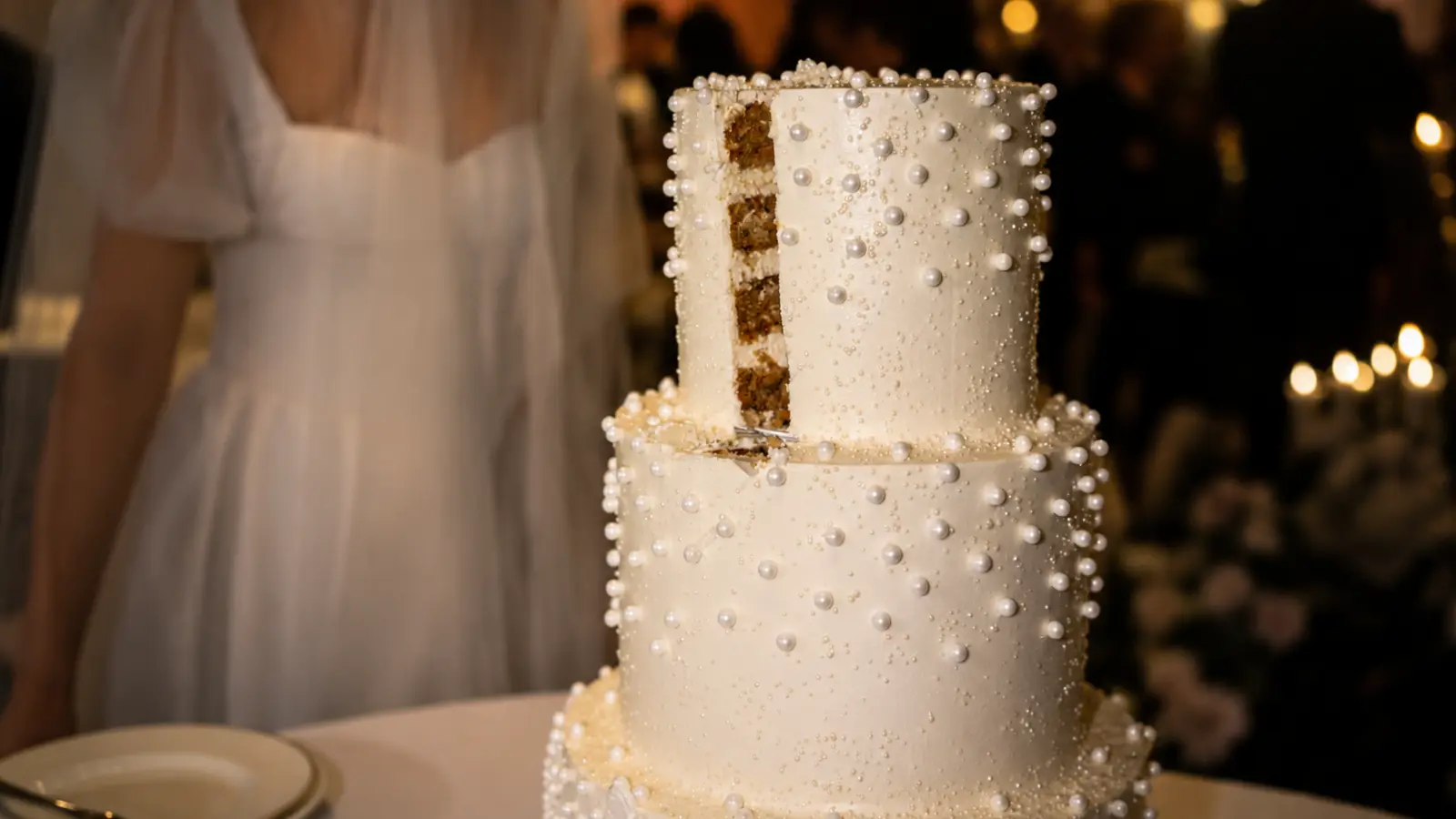
Pearl details on wedding cakes have a long tradition at American weddings, and they continue to feel relevant as part of the broader return to romantic, vintage-inflected wedding aesthetics. Where pearl cake decoration once felt dated or overly fussy, the current versions are more restrained. These vintage wedding cake details often include a single pearl border at the base of each tier, a dot-pattern of small sugar pearls across a smooth surface, or a cluster of oversized pearls used as an accent rather than all-over decoration.
The elegance of pearl details on a wedding cake comes from the same quality as pearl jewelry on a person: they read as refined, feminine, and invested in a kind of beauty that is not subject to trend cycles. A pearl detail on a white or ivory cake will look as appropriate in wedding photographs twenty years from now as it does today.
Pearl cake details that still feel elegant
- Pearl border at the base of each tier. A single row of sugar pearls — ideally in graduated sizes from small to medium — at the base of each tier where the cake meets the stand or the tier below. Visible in close-up photography, subtle from across the room. One of the cleanest and most elegant ways to add a pearl element without committing to a fully embellished design.
- Scattered pearl dot pattern. Small sugar pearls placed across a smooth white or ivory surface in a deliberate but organic-looking arrangement — denser at the base of the top tier and more sparse toward the edges. Particularly beautiful on a smooth fondant surface where the pearls sit flush against the cake. Photographs with a soft, luminous quality in candlelight.
- Pearl and lace combination. Piped lace details on a fondant surface with pearl accents placed at the intersections of the lace pattern — pearls functioning as the punctuation marks of the lace design. A technically demanding decoration that, when well executed, is among the most beautiful formal cake designs available.
- Three-tier cake with pearl cascade on one tier only. Two tiers plain and smooth; one tier (typically the middle) covered in a deliberate pearl dot pattern. The single embellished tier functions as an architectural accent — visually interesting without overwhelming the overall simplicity of the design.
- Oversized pearl topper. A cluster of oversized sugar pearls — ranging from small to very large — arranged at the top of the cake as the only decoration. Modern and graphic; the scale variation between the pearls creates visual interest without the addition of any other decorative element.
- Pearl and fresh flower combination. A pearl border on each tier combined with a single fresh flower cluster between tiers. The pearl adds structure and formality; the fresh flower adds organic warmth. The combination works particularly well for brides wearing pearl jewelry, creating a visual connection between the cake and the bride that photographers tend to notice and photograph.
Elegant Two-Tier Wedding Cakes
Two-tier wedding cakes are often dismissed as “not enough” — not enough presence, not enough grandeur, not enough visual impact for a formal wedding. This is almost always wrong. A beautifully designed and precisely executed two-tier cake on a well-chosen stand, styled on a well-dressed table, is fully capable of being the most elegant element in the reception space. The tier count is not what produces elegance. The execution is.
Two-tier cakes have specific advantages for elegant weddings. The shorter overall silhouette forces more careful design consideration — there is no height to distract from imperfect detail work. The smaller surface area means every decorative element is seen more clearly. And the intimacy of a two-tier cake is appropriate at smaller, more elegant weddings where a towering five-tier cake would feel disproportionate to the guest count and the venue scale.
Elegant two-tier configurations
- Tall 6-inch-tier two-tier cake. Two tiers in 6-inch-tall rounds rather than the standard 4-inch — the total height matches a standard three-tier cake, but the fewer tiers give the silhouette a cleaner, more architectural quality. A useful design choice for couples who want the visual presence of a tall cake without the cost or complexity of a three-tier design.
- Two-tier with a flower crown. A two-tier cake in smooth white buttercream, with a full flower crown at the base of the top tier. No other decoration. The proportional simplicity of two tiers makes the flower crown read as the design — a single bold gesture on a clean canvas.
- Two-tier marble effect. A two-tier cake with a marble-effect buttercream or fondant finish — swirls of ivory and pale grey or pale gold creating the appearance of veined stone. Sophisticated, contemporary, and completely distinctive from any floral or piped cake. Works exceptionally well in modern venues and for couples whose broader wedding aesthetic favors architectural over romantic.
- Two-tier with gold leaf accents. One tier in smooth white or ivory, one tier with edible gold leaf applied across its entire surface. The contrast — one clean, one luxurious — creates a visual interest that a single-finish two-tier cake cannot. Photographs beautifully in both warm and cool light.
- Two-tier with a single large sugar flower. A two-tier cake with one oversized sugar peony or garden rose placed at the junction of the two tiers. The scale of a single large flower against the relatively small surface of a two-tier cake creates a more dramatic effect than the same flower on a three-tier cake where it reads as one element among many.
Elegant Three-Tier Wedding Cakes
Three-tier wedding cakes are one of the most classic configurations at American weddings — the familiar silhouette, the proportional ideal, and the design many people picture when they imagine a traditional wedding cake. The three-tier configuration is not default because of convention alone. It is default because the proportional relationship between a base tier, a middle tier, and a smaller top tier produces the most balanced and architecturally satisfying silhouette available in a wedding cake.
For an elegant wedding, the three-tier cake is the strongest canvas: tall enough to have presence, proportional enough to look classical, and large enough to accommodate any decorative technique from a minimal fresh flower cluster to a full sugar flower cascade.
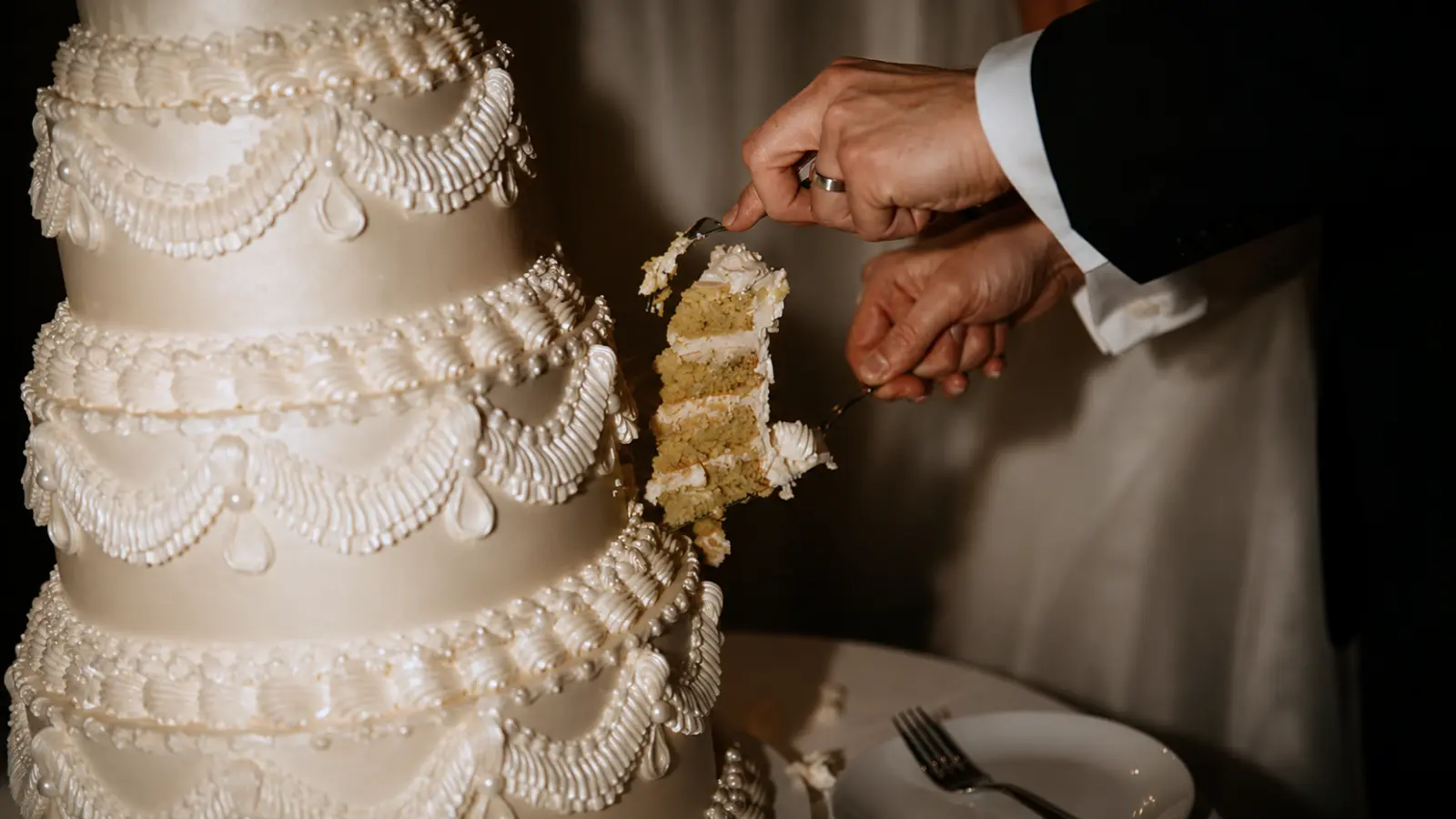
Elegant three-tier designs worth knowing
- Classic white with sugar flower cascade. The three-tier design that has appeared most consistently in American bridal magazines for decades — a smooth white or ivory buttercream surface with a cascade of sugar flowers descending from the top tier along one side. Timeless, formal, and photographically beautiful. The version that feels most current uses flowers that are slightly more loosely arranged, with a mix of open and half-open blooms rather than tight, uniform arrangements.
- Three-tier textured buttercream with coordinated florals. Loose palette-knife strokes in warm ivory buttercream, with fresh or dried florals that mirror the wedding’s floral palette placed between tiers and at the base. Organic and contemporary — elegant in a way that feels specific to the current moment rather than to a timeless tradition. Works beautifully at garden venues, estate weddings, and any outdoor formal reception.
- Three-tier with differentiated finishes. Each tier in a different but coordinated finish — smooth ivory on the bottom, textured palette-knife on the middle, and a pearl dot pattern on the top. The variation between tiers creates visual interest without adding any new color or decoration type. One of the more sophisticated design approaches for a three-tier cake and one that does not require expensive add-ons like sugar flowers or hand-painting.
- Architectural three-tier with geometric separation. Three tiers separated by a thin gold or copper ring at each tier junction rather than the conventional stacking. The ring element — which can be an acrylic ring in a metallic finish or a physical gold-finished separator — creates a floating appearance that photographs as modern and considered. Each tier in smooth white; no other decoration needed.
- Three-tier piped lace with pearl accents. A formal option for ballroom and church receptions: white fondant on each tier with delicate lace piping in the same white, and a pearl border at the base of each tier. The combination of piping and pearls is one of the most technically demanding elegant cake designs — and one of the most rewarding when executed by a skilled baker.
Cake Stands for Elegant Wedding Cakes
A wedding cake stand is one of the most influential and most overlooked decisions in wedding cake planning. Most couples focus on the cake design and treat the stand as an afterthought — and then wonder why the cake looks less impactful in the room than it did in the bakery. The stand changes everything: the height, the material quality, the relationship between the cake and the table surface, and the shadow and light quality in photographs.
There is one principle that overrides everything else in cake stand selection: height. A cake that sits directly on a table at table level reads as a service item. A cake that sits 10 to 14 inches above the table surface reads as a centerpiece. The height creates visual presence from across the room, makes the cake appear in more reception photographs (where table-level objects are often cropped), and allows the full silhouette of the cake to be appreciated rather than just the upper tiers.
The most elegant cake stand options
- Marble or marble-effect pedestal. The material choice that most reliably adds elegance to any cake style. White Carrara marble, black marble, or blush marble — the stone quality adds weight and luxury to the visual without competing with the cake design. Available in every height from 4 to 16 inches. For elegant weddings, a genuine marble stand can be one of the more worthwhile rental investments because it adds height, weight, and a polished material quality to the cake display.
- Tall crystal or acrylic pedestal. A clear crystal or acrylic stand creates the appearance of the cake floating — no visible support between the cake base and the table surface. Particularly effective for formal evening receptions where candlelight can pass through the stand and create a luminous quality around the base of the cake. Heights of 12 to 16 inches are the most elegant; shorter acrylic stands look more like serving plates.
- Brushed gold or brass pedestal. A warm metallic stand pairs beautifully with ivory, champagne, and blush wedding cakes, and coordinates naturally with the warm-toned candles and gold cutlery typical of formal receptions. The brushed finish (as opposed to a polished mirror finish) is more elegant and less distracting in photographs.
- Vintage silver footed cake stand. A silver-plate or sterling footed stand — the kind associated with formal English-style tea service — produces an unmistakably traditional elegant result. Works best with vintage-inspired or formal wedding aesthetics; can look slightly out of place at contemporary minimalist receptions.
- White painted wood or plaster column pedestal. For outdoor and garden weddings where the marble aesthetic might feel too indoor-formal, a white-painted wood or plaster column pedestal creates an architectural quality that suits garden and estate settings beautifully. Available in heights up to 30 inches for dramatic outdoor statements.
What to avoid in stand selection
Stands with visually busy decorative elements — ornate scrollwork, multiple materials, complex shapes — compete with the cake above them rather than supporting it. The stand should create presence and height, then disappear visually so the cake is seen. A simple, quality material in a clean silhouette achieves this. An elaborate stand draws the eye away from the cake it is supposed to present.
Styling the Elegant Cake Table
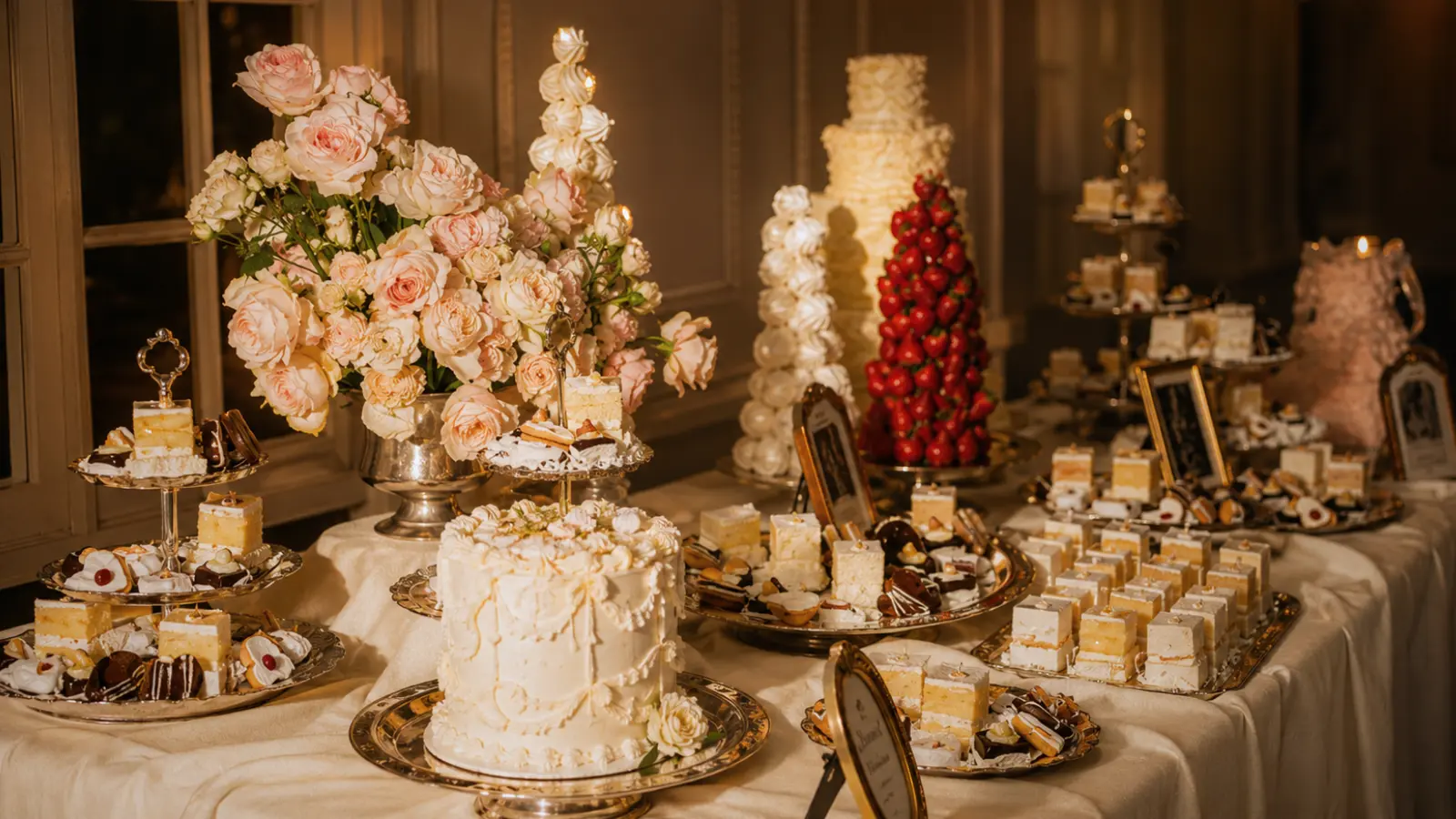
Wedding cake table ideas matter because the cake table is a composition — a still-life that will be photographed dozens of times before the first slice is cut. Many couples invest significantly in the cake and almost nothing in the table around it, and then see reception photographs where a beautiful cake sits in an unstaged context that undermines its visual quality. The table styling is not supplementary to the cake. It is part of the cake’s visual impact.
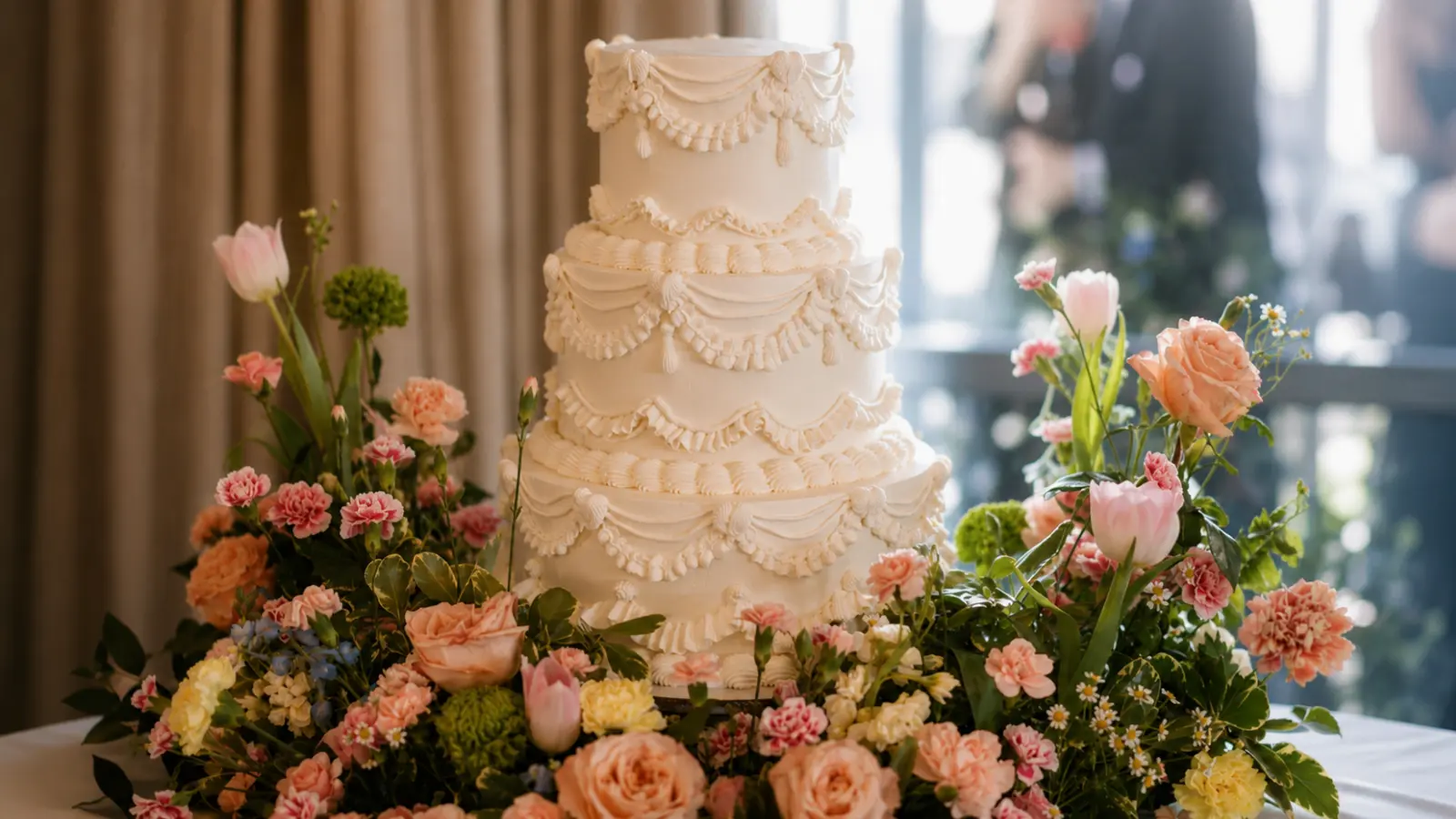
Elements of an elegant cake table
- The table covering. A plain white tablecloth reads as catering equipment. An ivory linen, a soft blush silk, a champagne satin, or a textured cotton in a neutral reads as intentional. The covering should coordinate with the cake’s palette and the rest of the reception linens — a visual extension of the overall table design rather than a separate element chosen for the cake table alone.
- Coordinated florals at the base. Fresh flower heads, scattered petals, or small bud vases at the base of the cake stand create a visual connection between the cake and the reception florals. The quantity matters: too many flowers at the base make the cake look like it is being consumed by the table arrangement. Three to five stem heads, or a modest cluster of petals, is sufficient.
- Candles. Pillar candles at varying heights — in holders that complement the stand material — create warmth and depth in evening reception photographs. They photograph beautifully because the soft light they produce around the cake’s base creates a quality of illumination that neither flash nor overhead lighting can replicate. Use unscented candles near food.
- A flavor card. A small, beautifully designed card listing the wedding cake flavors — particularly important for multi-flavor cakes — is a detail guests appreciate and photographers often capture as a reception detail shot. It reads as considerate and organized, which are both qualities that register as elegant.
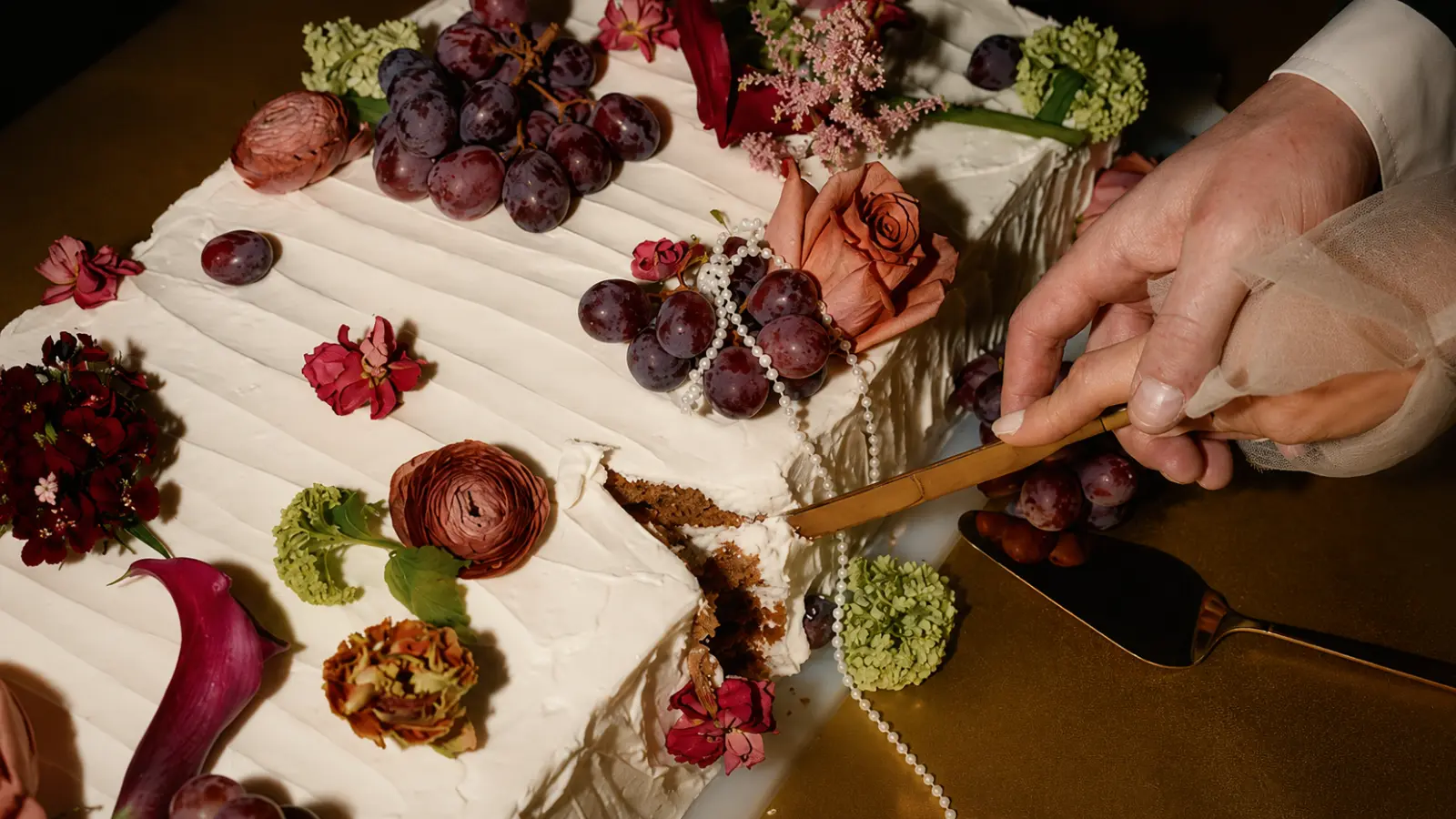
- The cake-cutting set. A custom knife and server with decorated or engraved handles, placed beside the cake on a small linen or marble surface. The cutting set photographs in the ceremony moment and registers as a detail in table shots. Choose a set in a metal that matches the stand — gold handles on a gold stand, silver on marble or silver.
How to Keep a Wedding Cake Timeless
A timeless wedding cake is not the same as a traditional one. Traditional means drawing from historical convention — piped Victorian lace, tiered white fondant, formal figurine toppers. Timeless means a design that does not announce the year it was made: no technique that arrived in the last two years, no color that is specific to a season’s trend forecast, no decorative element that is recognizable as a style rather than a quality.
The couples who look back at their wedding photographs a decade later and still love the cake chose something timeless. The couples who regret their cake chose something trendy — and trend cycles in wedding cakes move faster than many couples expect. A heavily maximalist multi-texture cake can begin to look dated quickly. A smooth white cake with a refined floral cascade often remains beautiful for decades.
Specific decisions that produce a timeless result
- White or ivory, not a saturated color. Saturated cake colors — deep burgundy, sage green, dusty blue — are beautiful in the year they trend. They are also identifiable as belonging to a specific year. White and ivory have been the colors of elegant wedding cakes for longer than anyone currently planning a wedding has been alive. They will remain so after the current trend cycle ends.
- One decorative technique, executed with mastery. The cakes that age the worst are the ones that combined every available decorative technique available in a given year. The cakes that age the best committed fully to one approach — whether that is sugar flowers, smooth finish, lace piping, or pearl detail — and executed it with a level of skill that is not dateable.
- Natural flower shapes, not graphic or editorial ones. Full, open, organically shaped flowers — garden roses, peonies, ranunculus — are timeless. Flowers arranged in graphic formations, or varieties that are specifically associated with a current editorial trend (pampas grass, dried flowers at very high volume, protea), read as more specific to a moment.
- Avoid toppers with current pop culture references. A topper that references a film, a phrase, or an aesthetic specific to this cultural moment will not mean the same thing in ten years. Monogram toppers, simple floral toppers, and heirloom toppers age the best.
- Choose a classic silhouette. Round tiers, graduated in size, stacked cleanly. The variations on this — hexagonal tiers, asymmetrical arrangements, floating tiers — can be beautiful, but they are more specific to the era in which they are popular. The round tiered silhouette has been the silhouette of elegant wedding cakes in Western culture for over a century. It will not become dated before your wedding anniversary.
What Makes an Elegant Cake Photograph Well
An elegant cake and a well-photographed cake are related concepts but not identical ones. Some of the qualities that read as elegant in person — a very smooth surface with no textural variation, a monochromatic all-white design, a minimal single-flower placement — can look flat or underexposed in photographs depending on the light. Understanding how elegance translates into the camera is useful for couples who care about both the room presence and the album.
- Texture photographs better than pure smoothness in some light conditions. A completely smooth surface can look flat under flash photography. A surface with light texture — palette-knife strokes, delicate piping, scattered pearls — gives the camera something to catch. For weddings where the reception is primarily flash-lit (indoor, evening), a slightly textured finish often produces richer photographs than a smooth one.
- Gold accents photograph with particular beauty in warm candlelight. Gold leaf and gold details absorb and reflect warm light in a way that cool metallic finishes do not. In an evening reception environment with candles and warm-toned LED lighting, gold accents create a luminosity in photographs that is difficult to achieve with silver or chrome elements.
- Height matters more in photographs than in person. A cake at table level is often partially cropped out of reception photographs. A cake on a tall stand appears in full in photographs from across the room — the silhouette is visible, the tiers are readable, and the decorative elements can be seen. The camera compresses depth and reduces the apparent height of objects at table level; a tall stand compensates for this compression.
- Ask your photographer about the cake shot before the wedding. Many wedding photographers have specific preferences about how they approach the cake — the light direction, the angle, whether they prefer a close-up detail shot or a full table composition. Knowing what your photographer plans allows you to style the table accordingly. A photographer who prefers natural light near a window shoots the same cake differently than one who uses off-camera flash. The cake looks different in each approach.
Elegant Wedding Cake Inspiration Board
Elegant wedding cakes come in many forms, from classic white tiers and refined floral arrangements to pearl details, architectural silhouettes, and timeless buttercream finishes. Explore our elegant wedding cake inspiration board for sophisticated designs, luxury details, elegant cake tables, and real wedding examples that demonstrate how simplicity, proportion, and thoughtful styling create a truly timeless result.
Final thoughts
The most elegant wedding cakes are rarely the ones with the most decoration. They are the cakes that feel composed, intentional, and perfectly suited to the wedding around them. Whether the design relies on sugar flowers, pearl details, smooth buttercream, or a simple white finish, elegance comes from confidence in a clear design direction rather than the addition of more decorative elements.
When a wedding cake reflects the venue, the floral design, the atmosphere, and the couple’s overall vision, it becomes more than a dessert or a centerpiece. It becomes part of the visual identity of the celebration itself — a detail that feels as beautiful years later as it did on the day it was first displayed.
Frequently asked questions (FAQ)
Can a wedding cake be elegant without looking formal?
Absolutely. Elegance and formality are related, but they are not the same thing. A textured buttercream cake with a few perfectly placed garden roses can feel elegant and relaxed at the same time, while a heavily decorated fondant cake may feel formal without necessarily feeling elegant.
What detail instantly makes a wedding cake look less elegant?
Too many competing ideas. When a cake combines multiple textures, colors, flower styles, metallic accents, and decorative techniques at once, the eye no longer knows where to focus. Elegance almost always comes from clarity rather than complexity.
Will guests remember an elegant wedding cake?
Usually not because of a specific decorative detail, but because of the overall impression it created in the room. The cakes guests remember most often feel balanced, intentional, and perfectly suited to the wedding rather than dramatically oversized or heavily decorated.
Should an elegant wedding cake follow trends?
Not necessarily. Many of the most beautiful wedding cakes are built around timeless principles rather than current trends. Trends can provide inspiration, but elegance tends to last longer when the design is rooted in proportion, craftsmanship, and restraint.
Is a luxury wedding cake always a large wedding cake?
No. Luxury is more often a reflection of execution than size. A small cake made by an exceptional baker, displayed beautifully and finished with extraordinary attention to detail, can feel more luxurious than a much larger cake with average execution.
What do professional wedding photographers notice first about a cake?
Usually the silhouette. Before they see the flowers, pearls, or piping details, photographers notice the overall shape, proportions, height, and how the cake interacts with the surrounding space. Strong proportions often create stronger photographs than elaborate decoration.