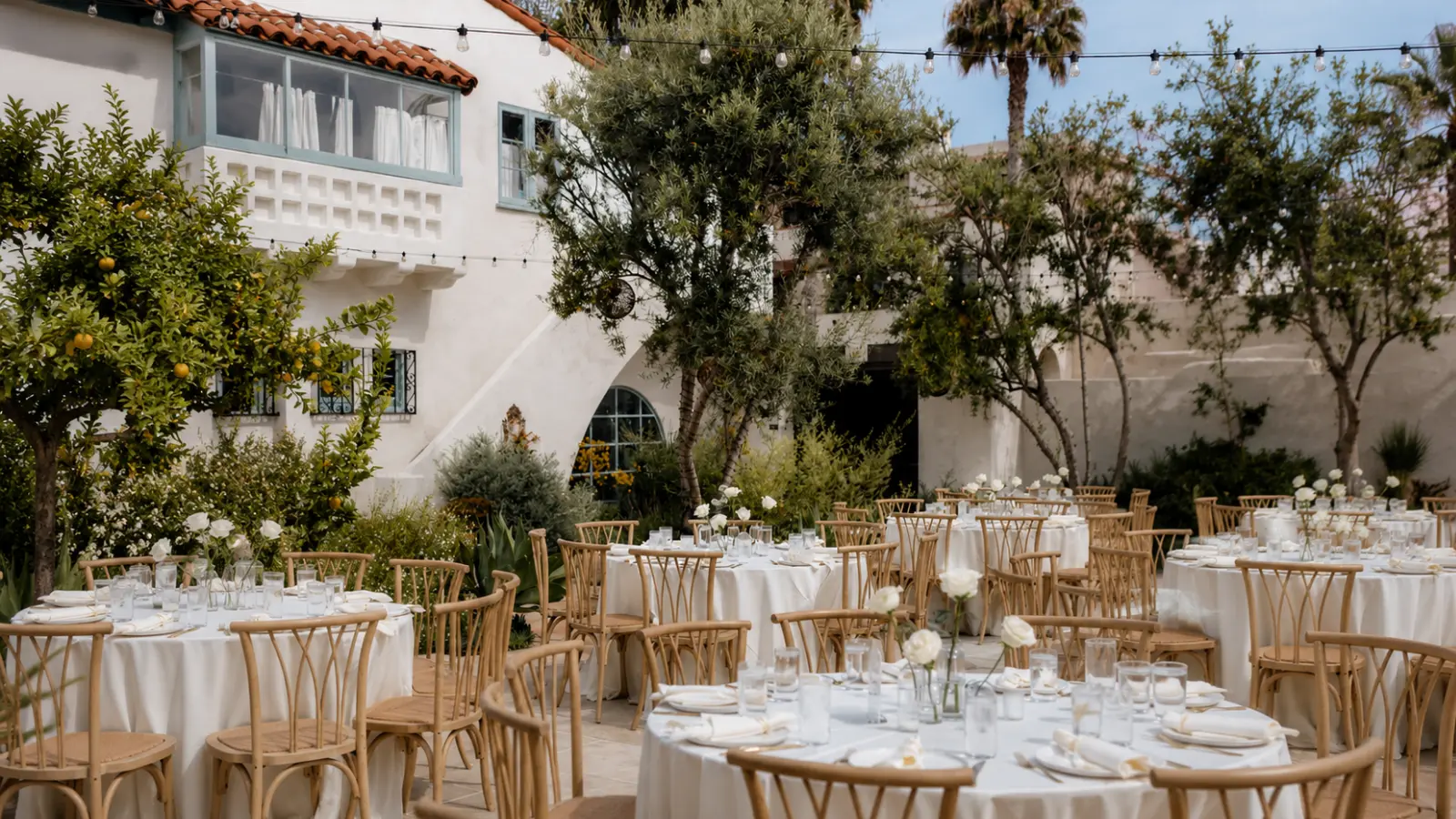
Round vs Rectangular Wedding Tables is not simply a style decision. Table shape changes how guests interact, how efficiently the room uses space, how servers move, where centerpieces fit, what guests can see, and how the reception feels from one area to another.
Round tables create contained conversation groups and softer room geometry, while rectangular tables work especially well in directional spaces and can form flexible rows or longer communal runs. Farm tables and mixed layouts add further options when the venue has distinct zones or unusual proportions.
This guide compares Round vs Rectangular Wedding Tables by conversation, footprint, capacity, sightlines, centerpieces, service flow, and venue shape so you can choose the table configuration that works best for the room before deciding which one looks best in photos.
Start With the Room, Not the Table Style
The venue shape should narrow the choice before décor does.
Wide ballrooms can often support rounds comfortably. Long, narrow spaces may be easier to organize with rectangular or banquet tables wedding layouts. Rooms with columns, alcoves, terraces, or asymmetrical zones may benefit from a mixed approach.
Use the actual wedding floor plan and confirmed table sizes before deciding. A layout that looks elegant in inspiration photos may not work once chair clearance, service routes, and dance-floor access are added.
Before committing to a shape, test the layout with the dance floor, bar, buffet, exits, and service paths already in place — table shape should solve the room first and support the visual concept second.
Round vs Rectangular Tables at a Glance
The table below compares the main shapes by conversation, space use, décor, and the kinds of settings where they tend to work best.
| Shape | Conversation | Space | Decor | Best Setting |
|---|---|---|---|---|
| Round | Balanced within a small group | Broad footprint around each table | Center-focused | Ballrooms and open rooms |
| Rectangular | Strong across and beside guests | Efficient in directional layouts | Linear and modular | Long or narrow venues |
| Farm / Long | Communal but more segmented over distance | Large continuous footprint | Runner-style or repeated décor | Barns, tents, halls, estate spaces |
| Mixed | Varies by zone | Flexible for irregular rooms | Can create visual rhythm | Asymmetrical or multi-zone venues |
No shape wins every category. The right choice depends on how conversation, circulation, and room geometry need to work together.
Round Tables
Round tables create a self-contained social group because guests face inward and have relatively balanced sightlines to the people around them.
They are especially useful when you want each table to feel like a distinct conversation unit. Round tables also soften large square or rectangular rooms visually because they break up hard linear geometry.
The tradeoff is footprint. Rounds use space in all directions, so they can create wider gaps between tables and may be less efficient in long, narrow rooms.
Rectangular and Banquet Tables
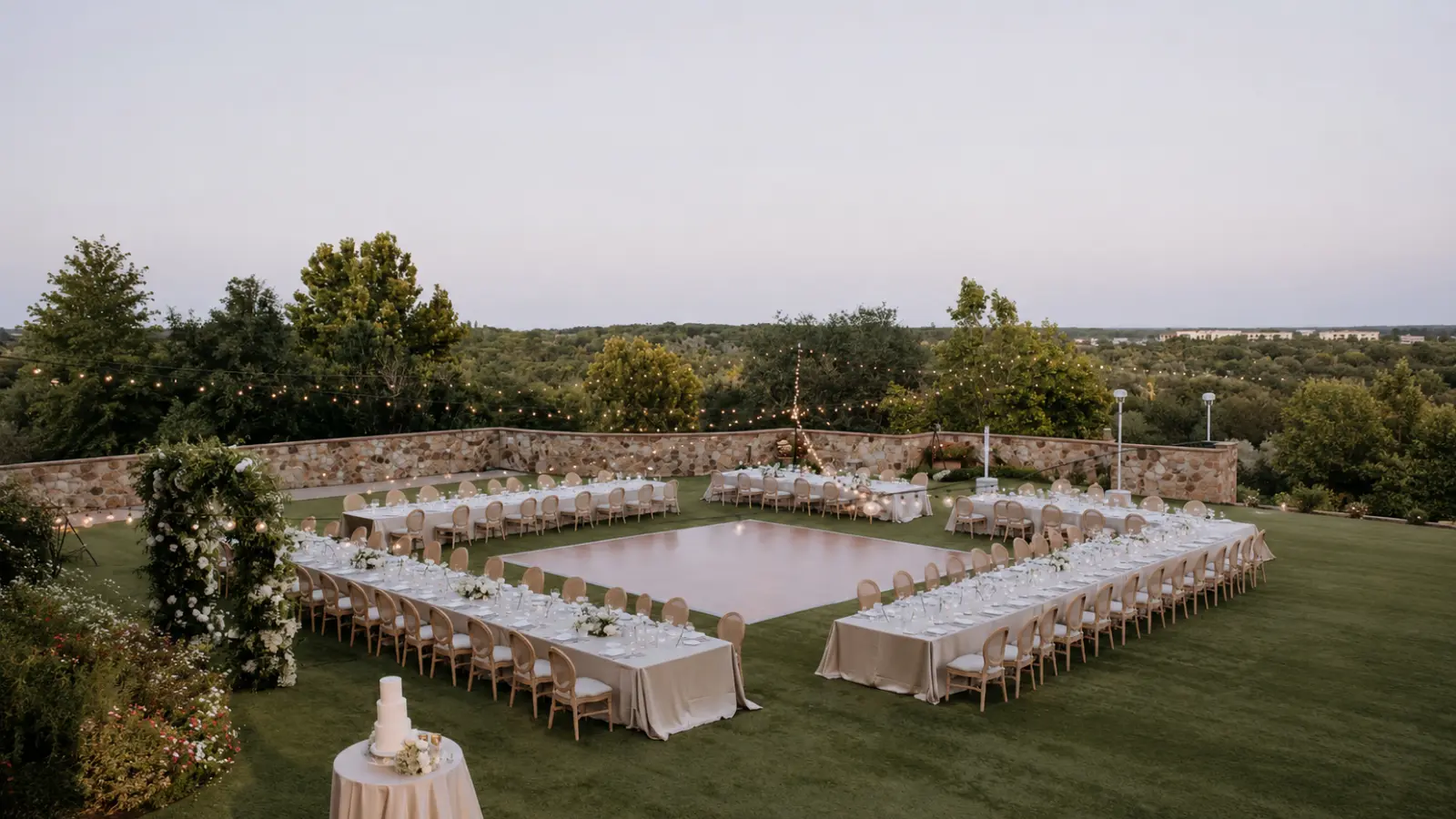
Rectangular tables are flexible because they can stand alone, run in rows, form U- or L-shaped groupings, or connect into longer communal tables.
A rectangular wedding table layout works especially well when the venue has a strong directional shape. It can make better use of walls, long rooms, and spaces where circular footprints would create awkward gaps.
Conversation tends to be strongest with the guests directly opposite and beside each person. At longer tables, people farther down the run are visually connected but not necessarily part of the same conversation.
Banquet tables wedding layouts are highly practical because the same basic table can support many room configurations.
Farm Tables and Long Tables
Farm tables and long tables wedding reception layouts create a more continuous communal visual effect than separate rounds.
They work especially well when the venue architecture already feels linear, such as a barn, tent, hall, courtyard, or long dining room. The table itself becomes part of the room composition.
Long runs can be beautiful, but they should not be treated as one giant conversation group. Social interaction still happens in smaller pockets along the table.
They also require careful planning for aisle access, service points, and how guests enter or leave without disturbing many other seats.
When a Mixed Layout Works Better
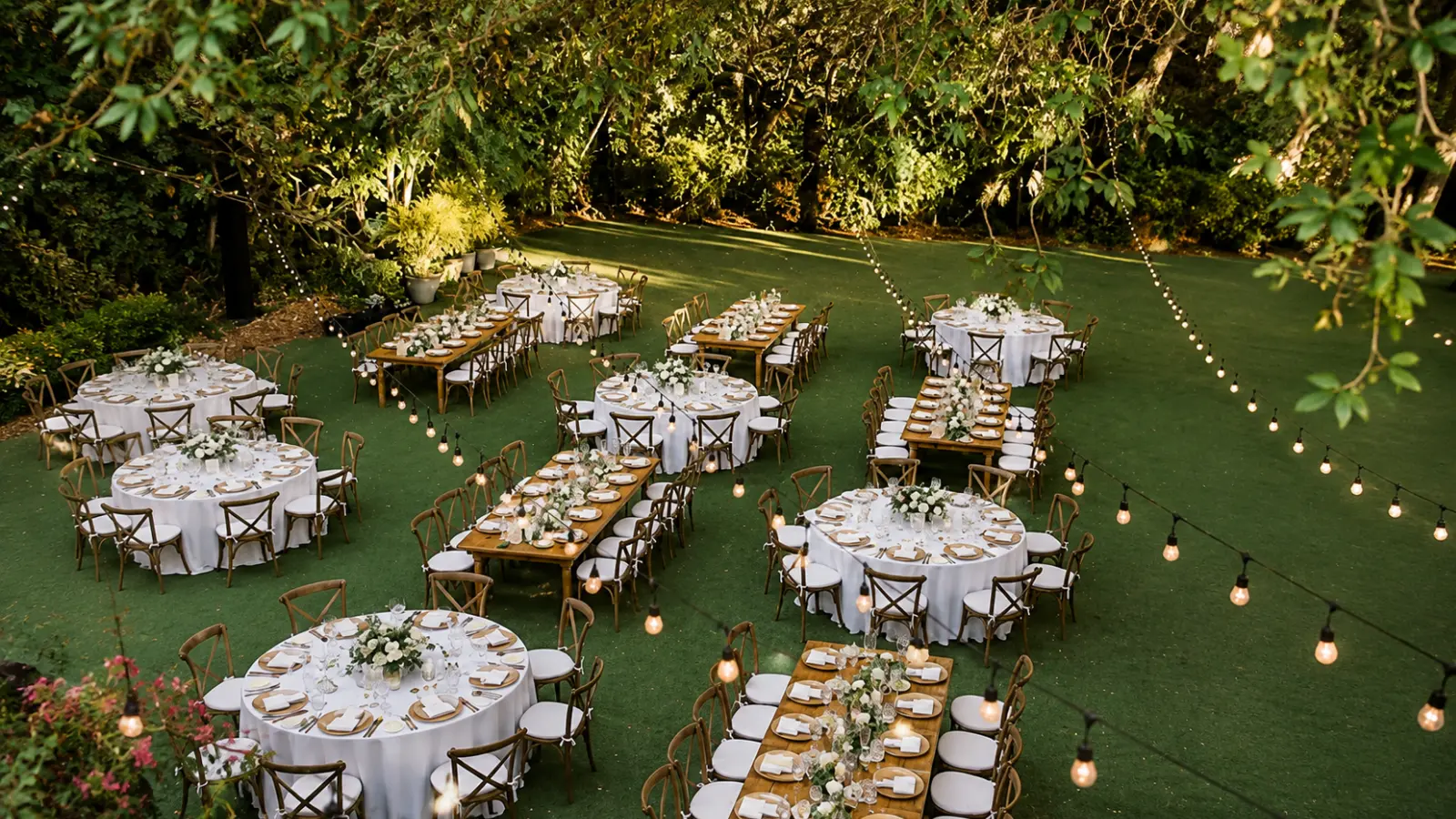
A mixed layout can solve a room that does not want one table shape everywhere.
You might use rounds in the center, rectangular tables along the perimeter, or long tables in one architectural zone and smaller tables in another. The key is that the mix should respond to the venue rather than look random.
Mixed layouts can also help separate functions: family tables near the couple, friend groups around the dance floor, or quieter tables in a secondary area.
If the room has several distinct zones, using one shape everywhere may create more problems than consistency solves.
Capacity and Footprint
Capacity should be based on the exact table dimensions and the setup approved by the venue or rental team.
Do not assume that all rounds seat the same number or that every rectangular table can be extended indefinitely. Chair width, place settings, tableware, centerpieces, and service clearance all affect usable capacity.
Rectangular tables can sometimes use narrow rooms more efficiently because they align with the room’s direction. Round tables may need more surrounding space but can be easier to distribute in open floor plans.
The meaningful comparison is not seats per table; it is seats per usable room configuration.
Sightlines and Room Energy
Table shape changes what guests see while they are seated.
Rounds generally orient guests toward the center of their own table, while rectangular tables often create stronger directional sightlines across the room. Long tables can visually pull attention along their length.
If speeches, formal dances, or a stage are important, test whether guests at the ends or outer edges of the layout can still see comfortably.
Good sightlines are easier to preserve when the table layout and focal areas are planned together instead of independently.
Centerpieces and Table Styling
Centerpieces should follow the geometry of the table rather than fight it.
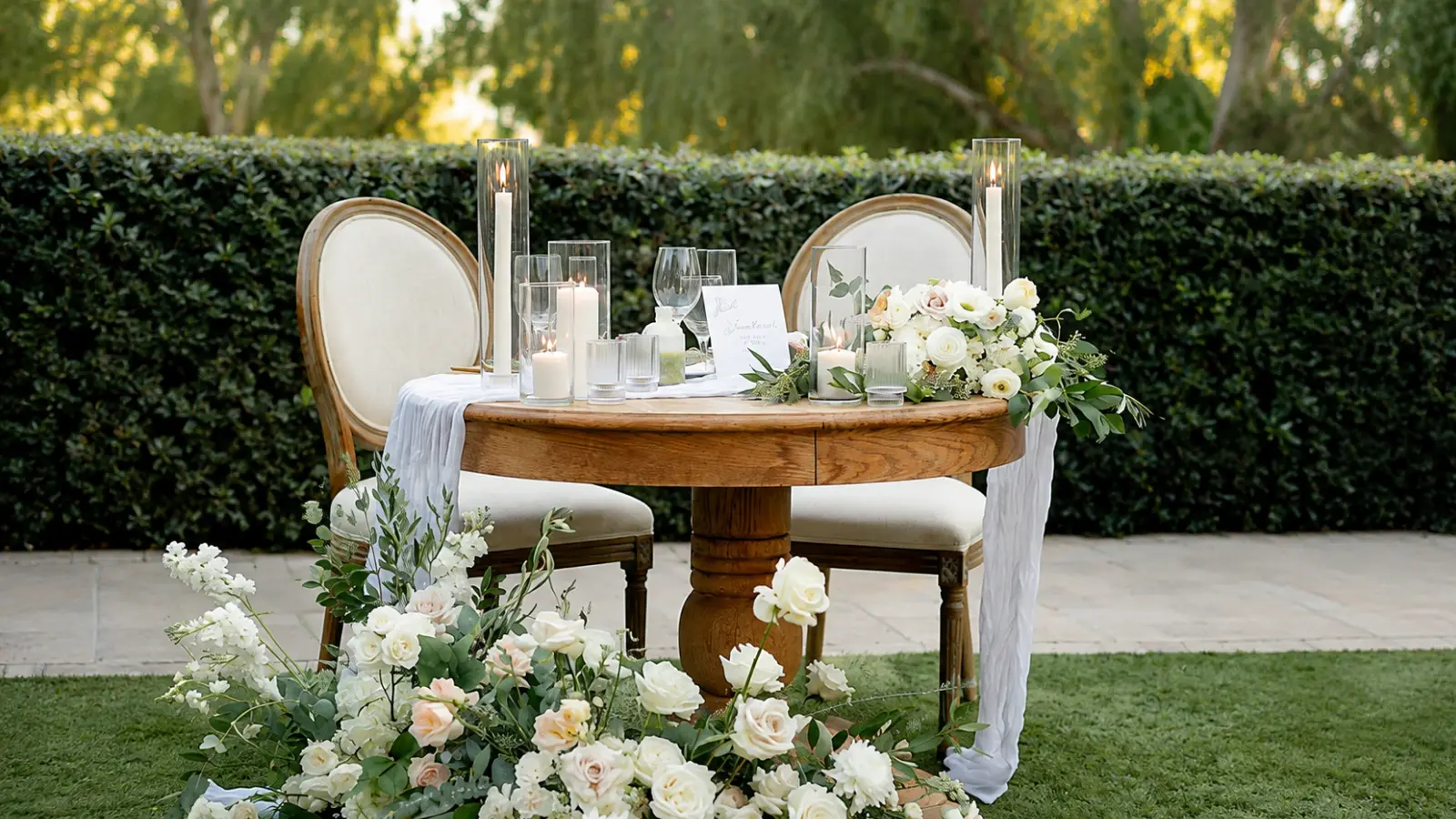
Round tables naturally support a central arrangement or a small cluster of elements. Rectangular and farm tables often work well with runners, repeated low arrangements, grouped candles, or other linear compositions.
The practical concern is visibility and service. Décor should not block conversation, crowd place settings, or make it difficult for staff to serve.
This article does not prescribe décor style; it uses centerpiece geometry only as one factor in choosing the table shape.
Service and Staff Movement
Service flow is one of the most overlooked differences between table shapes.
Rounds create multiple access points around the perimeter but can require staff to weave between circular footprints. Long rectangular tables can create clean aisles when aligned well, but poor placement can trap guests or make inner seats harder to reach.
Ask the caterer or venue team how servers will approach tables, clear plates, refill water, and move through the room.
A table layout that makes service easier usually feels calmer to guests too.
Choose the Shape That Solves the Room
Round vs Rectangular Wedding Tables should be decided by how the reception needs to function before décor enters the equation. Round tables create balanced conversation groups and softer geometry, while rectangular and long tables can make better use of directional rooms and create stronger linear layouts.
Test each option against real table dimensions, guest capacity, circulation, sightlines, service paths, and the venue floor plan. If one shape does not solve every part of the room, a mixed layout can be the better answer. The strongest table plan is the one that makes guests and staff move naturally through the reception while still supporting the atmosphere you want.
Frequently asked questions (FAQ)
Should you choose round or rectangular tables for a wedding?
Choose based on the venue layout and how you want the room to function. Round tables work well for contained conversation groups and open rooms, while rectangular tables often fit long or narrow spaces more efficiently and support linear layouts. Test both options against the actual floor plan, circulation, dance floor, service paths, and guest count before deciding.
Are round or rectangular tables better for conversation?
Round tables generally create balanced conversation within a smaller group because guests face inward. Rectangular tables work well for conversation with people seated directly across or beside one another, while longer tables naturally divide into smaller conversational sections rather than functioning as one large group.
Do rectangular tables fit more guests than round tables?
Not automatically. Capacity depends on the exact table dimensions, chair width, place settings, venue shape, circulation, and service clearance. Rectangular tables can sometimes use narrow or directional rooms more efficiently, while rounds may distribute more naturally in open spaces. Compare complete room layouts rather than seats per table alone.
Can you mix round and rectangular tables at the same wedding?
Yes. A mixed layout can work especially well in asymmetrical venues, rooms with distinct zones, or spaces where one table shape does not fit every area efficiently. The combination should respond to the architecture and circulation rather than appear random.
Which table shape works better in a narrow wedding venue?
Rectangular tables often adapt more naturally to a long or narrow venue because they can align with the direction of the room and create cleaner linear aisles. However, the actual table dimensions, service paths, dance floor, bar, and venue features should still be tested before the layout is finalized.
Do wedding table shapes affect centerpiece choices?
Yes. Round tables naturally support central arrangements or compact clusters, while rectangular and farm tables often work better with runners, repeated arrangements, candles, or other linear compositions. Whatever the shape, décor should preserve guest sightlines, usable place settings, and enough access for service staff.

About the Author
Débora Justo
Founder and editor of EVORÉ, creating practical wedding planning resources, thoughtful inspiration and useful tools for the decisions that shape a celebration.
Read more about the author →