Head Table vs Sweetheart Table is really a question of who you want beside you during dinner and how that choice fits the reception room. A sweetheart table gives the couple a dedicated two-person focal point, while a head table keeps the couple and wedding party together in one prominent setup.
A king’s table creates a larger shared version that can include wedding-party partners, while a family table shifts the focus toward parents, siblings, grandparents, or other close relatives. Each option changes the floor-plan footprint, partner seating, sightlines, photography, and the number of surrounding guest tables you need.
This guide compares Head Table vs Sweetheart Table along with king’s tables and family tables so you can choose the arrangement that best fits your relationships, wedding-party size, reception layout, and available space.
The Short Version: Which Setup Fits Which Wedding?
Each of these setups answers the same underlying question in a different way: how much of the wedding party belongs at the couple’s table, and how much room that arrangement needs. The fastest way to narrow it down is to think about who should sit beside you at the room’s focal point, not which option sounds the most traditional.
Once that’s clear, venue size and wedding-party size tend to settle the rest. A tight reception space or a large bridal party can rule out a king’s table before style ever enters the conversation, while a small, close-knit party often makes a head table an easy fit.
The best choice is the one that solves the room and social structure with the fewest compromises.
Head Table, Sweetheart Table, King’s Table, and Family Table Compared
The table below shows how each setup differs in seat count, strengths, drawbacks, and space use.
| Setup | Seats | Pros | Cons | Space |
|---|---|---|---|---|
| Sweetheart Table | Couple only | Private, compact, flexible wedding-party seating | Separates the couple from their group | Small footprint |
| Head Table | Couple + selected wedding party | Clear focal point, easy group visibility | Can separate attendants from partners | Long directional footprint |
| King’s Table | Couple + larger group | Allows partners, social on both sides | Needs more room and clear circulation | Large central footprint |
| Family Table | Couple + close family | Keeps family relationships central | Wedding party must be seated elsewhere | Depends on family size |
The seat count should come from the real group you want together, not from forcing people into a setup because the name sounds traditional.
Sweetheart Table
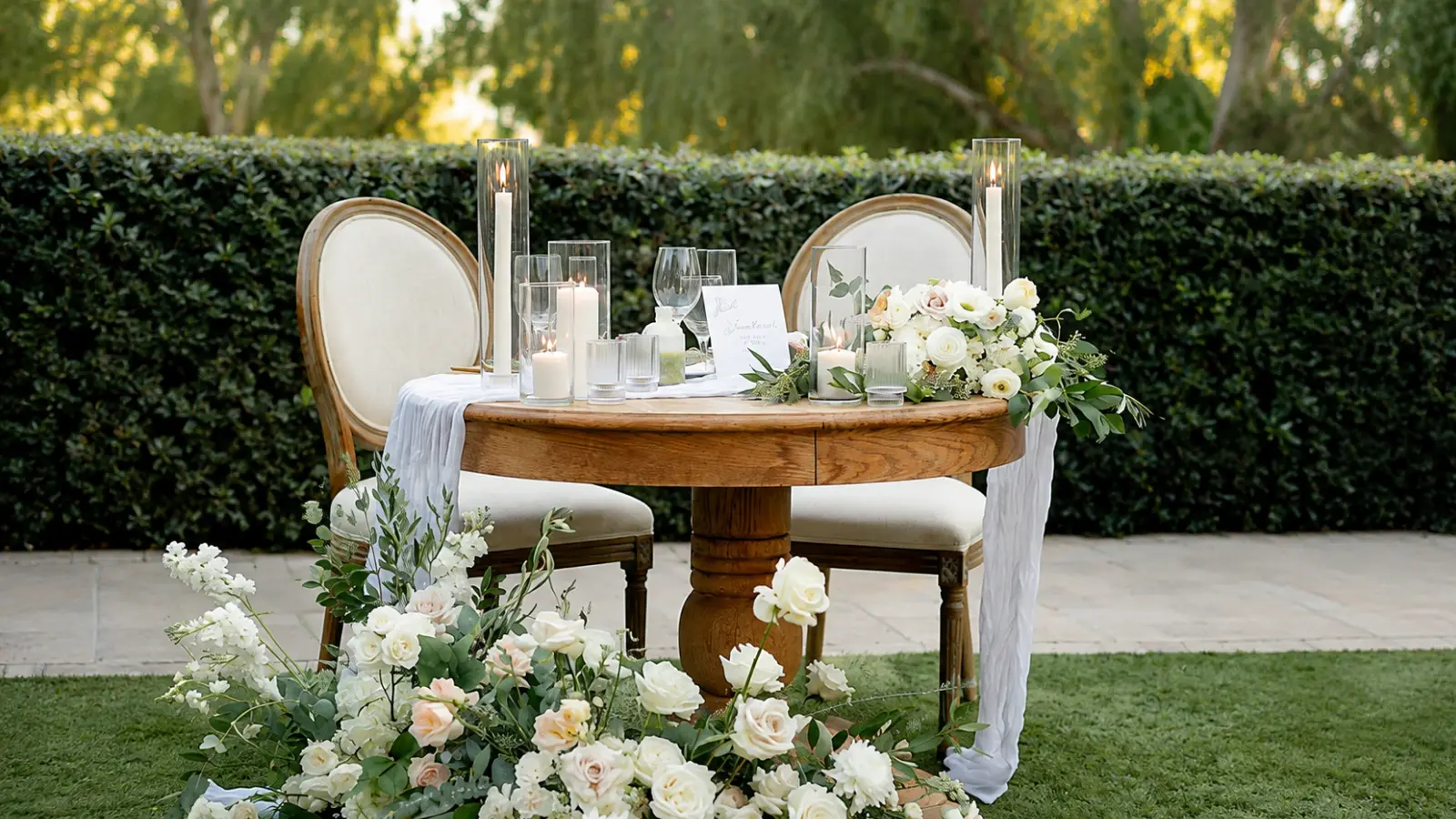
A sweetheart table wedding setup gives the couple their own table, usually positioned where guests can see them easily.
Its biggest advantage is flexibility. Bridesmaids, groomsmen, attendants, and their partners can sit with friends, spouses, or family instead of being locked into one bridal party table.
It also uses relatively little floor space and can make the seating chart easier when the wedding party is large or uneven.
The tradeoff is social separation. The couple is visibly apart from their closest group, which some people love and others find too formal or isolated.
Head Table
A wedding head table places the couple with some or all of the wedding party in a prominent location, often facing the room.
This setup works well when the couple wants the wedding party to remain together through dinner and to function as part of the reception’s visual center.
The main practical question is partner seating. A traditional one-sided head table can leave attendants seated away from spouses or partners, which may feel less natural at weddings where the party is made up of established couples or guests who traveled together.
A head table is strongest when the social benefit of keeping the wedding party together outweighs that separation.
King’s Table
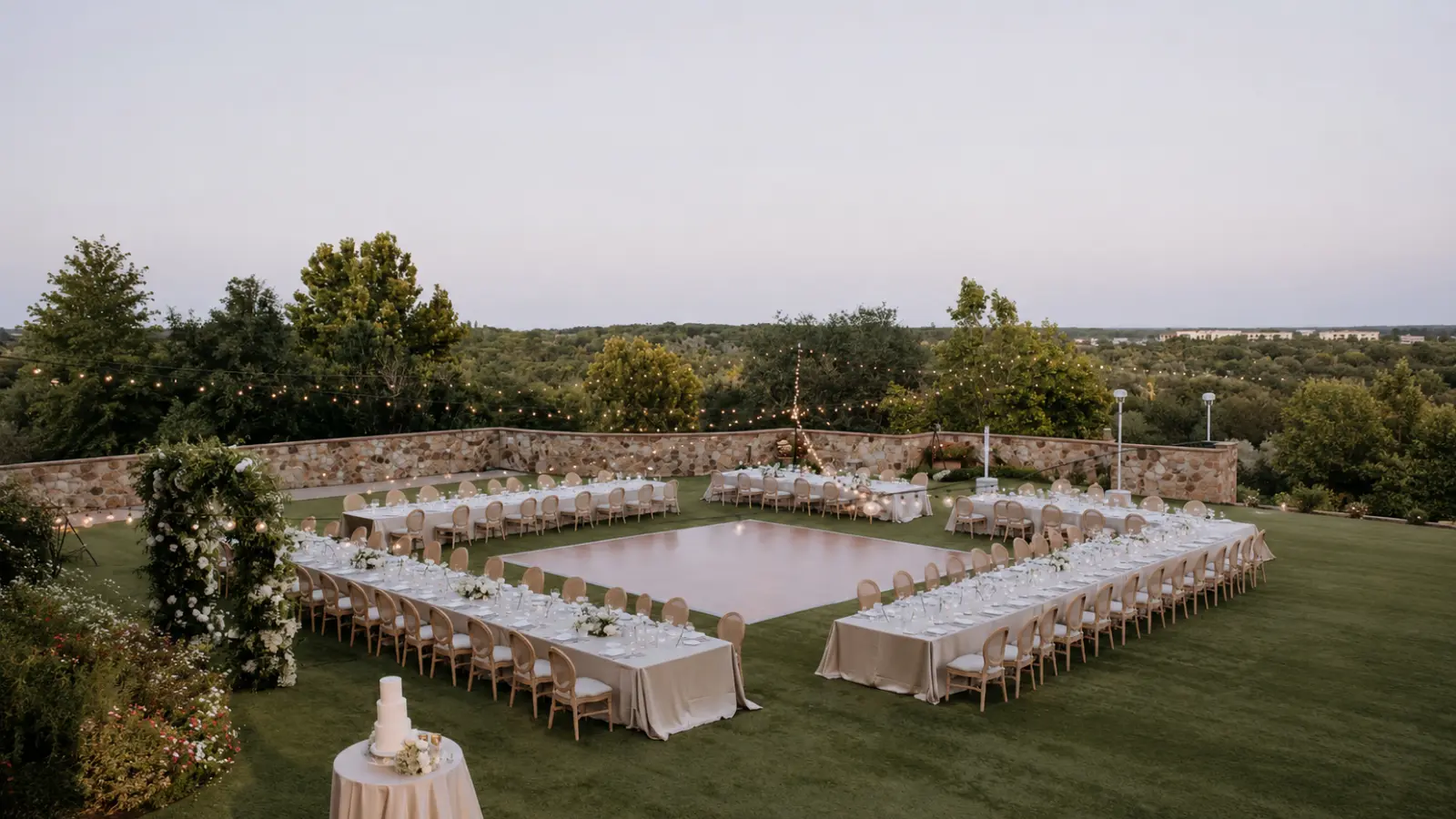
A king’s table is a larger rectangular or banquet-style table with guests seated on both sides, rather than a one-sided presentation-style head table.
It can include the couple, wedding party, and partners while still keeping the group physically connected. This makes it a useful middle ground between a formal head table and ordinary guest tables.
The tradeoff is footprint. A long central table with seating on both sides needs room around it for chairs, circulation, and service.
It works best when the venue can support a large communal table without squeezing the dance floor or surrounding guest tables.
Where Do Wedding-Party Partners Sit?
Partner seating is one of the most practical reasons to choose one setup over another.
With a sweetheart table, wedding-party partners can sit naturally with their spouse or partner at guest tables. With a traditional head table, attendants may be separated from partners during dinner. With a king’s table, there may be enough room to include both wedding-party members and their partners.
If keeping established partners together is a priority, decide that before choosing the head-table format rather than trying to solve it afterward.
The wedding plus-one rules determine who is invited; this page focuses on where those confirmed guests sit.
Family Table as an Alternative
A family table is a strong alternative when the couple wants dinner to feel centered on parents, siblings, grandparents, or another close family group.
It can be especially useful when the wedding party is large, spread across different friend groups, or already sitting with partners and families elsewhere.
The main limitation is that it shifts the visual center away from the wedding party. That is not a problem if the couple prefers family proximity over a formal bridal party table.
The seating choice should reflect the relationships that matter most during dinner, not an assumed hierarchy.
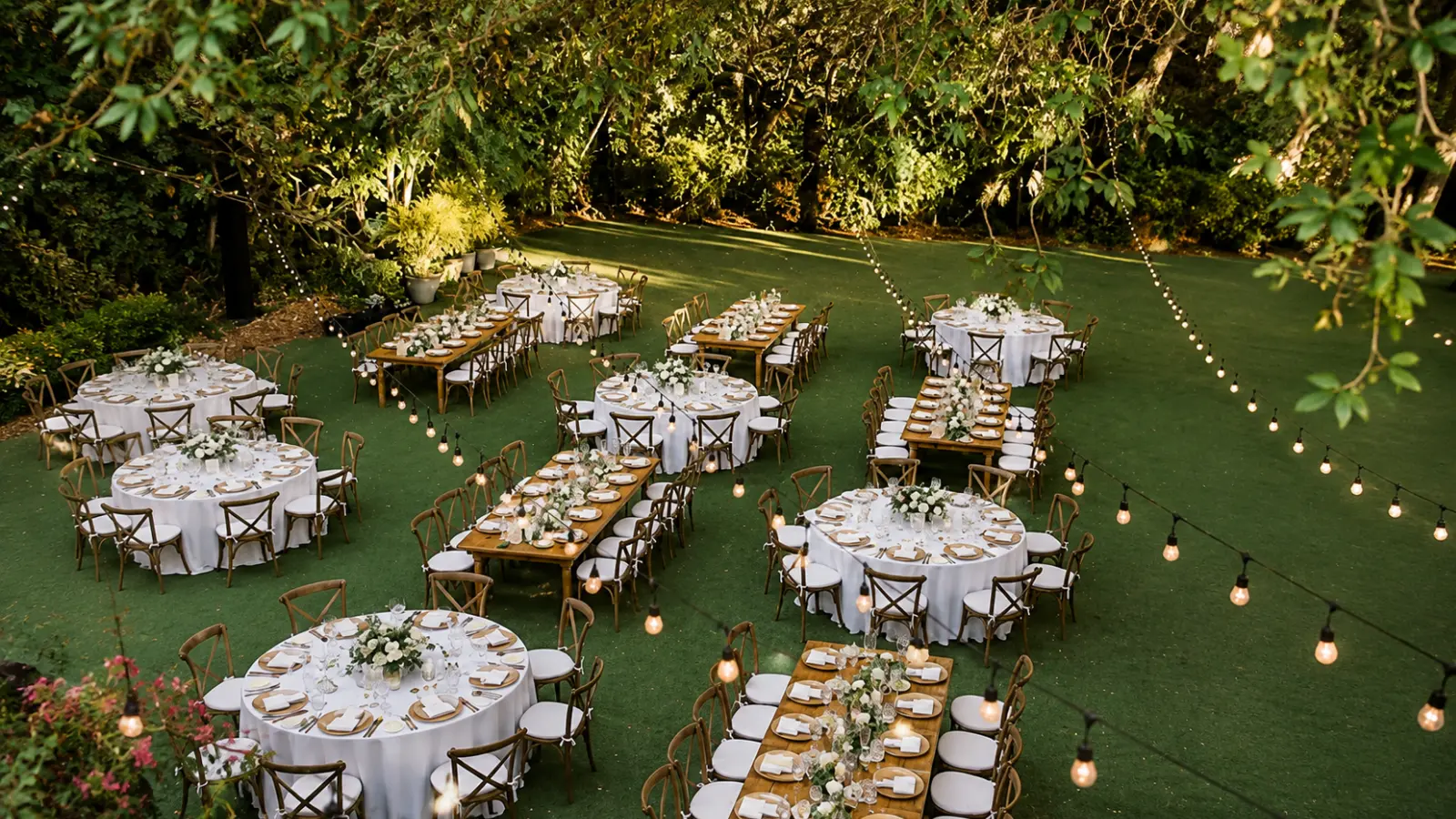
How Each Setup Changes the Floor Plan
The couple’s table choice can change the entire reception map.
A sweetheart table takes up little space and leaves more flexibility for surrounding guest tables. A head table creates a long directional element that often needs a clear wall, stage edge, or front-of-room position. A king’s table may consume more central space but can replace several smaller wedding-party tables.
A family table usually behaves more like a normal guest table and may be easier to integrate into the existing layout.
Test the option inside the actual wedding floor plan before deciding. A setup that works socially still needs to fit circulation and service.
Photography and Sightlines
The couple’s seating position changes how easily guests and photographers can see them during dinner, speeches, and formal moments.
A sweetheart table provides a clean focal point and usually leaves the couple visible from the front. A one-sided head table can also create strong visibility, while a king’s table may place some people with their backs to parts of the room depending on orientation.
Consider where speeches happen, where the dance floor sits, and whether the couple needs to turn repeatedly to see key moments.
Photography should support the floor plan, not force an awkward seating arrangement purely for one image angle.
How to Choose Between the Setups
The decision becomes easier when you ask operational questions rather than stylistic ones.
Use these checks:
- Who do we genuinely want to sit with during dinner? Couple only, wedding party, partners, or family?
- Do we want attendants seated with their partners? If yes, a sweetheart or king’s table may be easier.
- How much room does the setup need? Test the actual footprint, not just the seat count.
- What should be the visual focal point? Couple alone, couple plus wedding party, or a broader family group?
- Does the setup improve or complicate the seating map? The best option should solve more problems than it creates.
Once those questions are answered, the setup usually becomes obvious without relying on tradition.
Choose the People First, Then Test the Table
Head Table vs Sweetheart Table becomes much easier to decide when you start with the people you genuinely want beside you during dinner. A sweetheart table gives the couple privacy and flexibility, a head table keeps the wedding party together, a king’s table can include partners, and a family table centers the people closest to you outside the wedding party.
Once that relationship decision is clear, test the actual footprint inside the reception floor plan. The best setup is the one that supports the people you want near you without creating awkward partner seating, blocked sightlines, difficult circulation, or unnecessary pressure on the rest of the room.
Frequently asked questions (FAQ)
Should you choose a head table or sweetheart table?
Choose a sweetheart table if you want the couple to have a smaller, private focal point and prefer the wedding party to sit with partners, friends, or family. Choose a head table if keeping the couple and wedding party together during dinner matters more. The right option should also fit the actual floor plan, table footprint, partner seating, and sightlines.
What is the difference between a head table and a sweetheart table?
A sweetheart table seats only the couple, while a head table seats the couple with some or all of the wedding party. A sweetheart table uses less space and gives more flexibility to seat attendants elsewhere, while a head table creates a larger wedding-party focal point within the reception.
Do wedding-party partners sit at the head table?
They can, but traditional head tables often do not have enough room for every attendant and partner. If keeping established partners together is important, a king’s table can accommodate a larger group, while a sweetheart table allows wedding-party members to sit naturally with their partners at guest tables.
What is a king’s table at a wedding?
A king’s table is a large rectangular table with guests seated on both sides. It can include the couple, wedding party, and sometimes their partners, creating a more communal setup than a one-sided head table. It requires a larger footprint and enough surrounding space for chairs, circulation, and service.
Can the couple sit with family instead of the wedding party?
Yes. A family table can work well when the couple would rather spend dinner with parents, siblings, grandparents, or another close family group. Wedding-party members can then sit with their partners, families, or friends elsewhere in the room.
Which wedding table setup uses the least space?
A sweetheart table usually requires the smallest footprint because it seats only the couple. A head table needs a longer directional area, while a king’s table can require substantial central space because guests sit on both sides. The final choice should still be tested inside the actual venue floor plan.

About the Author
Débora Justo
Founder and editor of EVORÉ, creating practical wedding planning resources, thoughtful inspiration and useful tools for the decisions that shape a celebration.
Read more about the author →