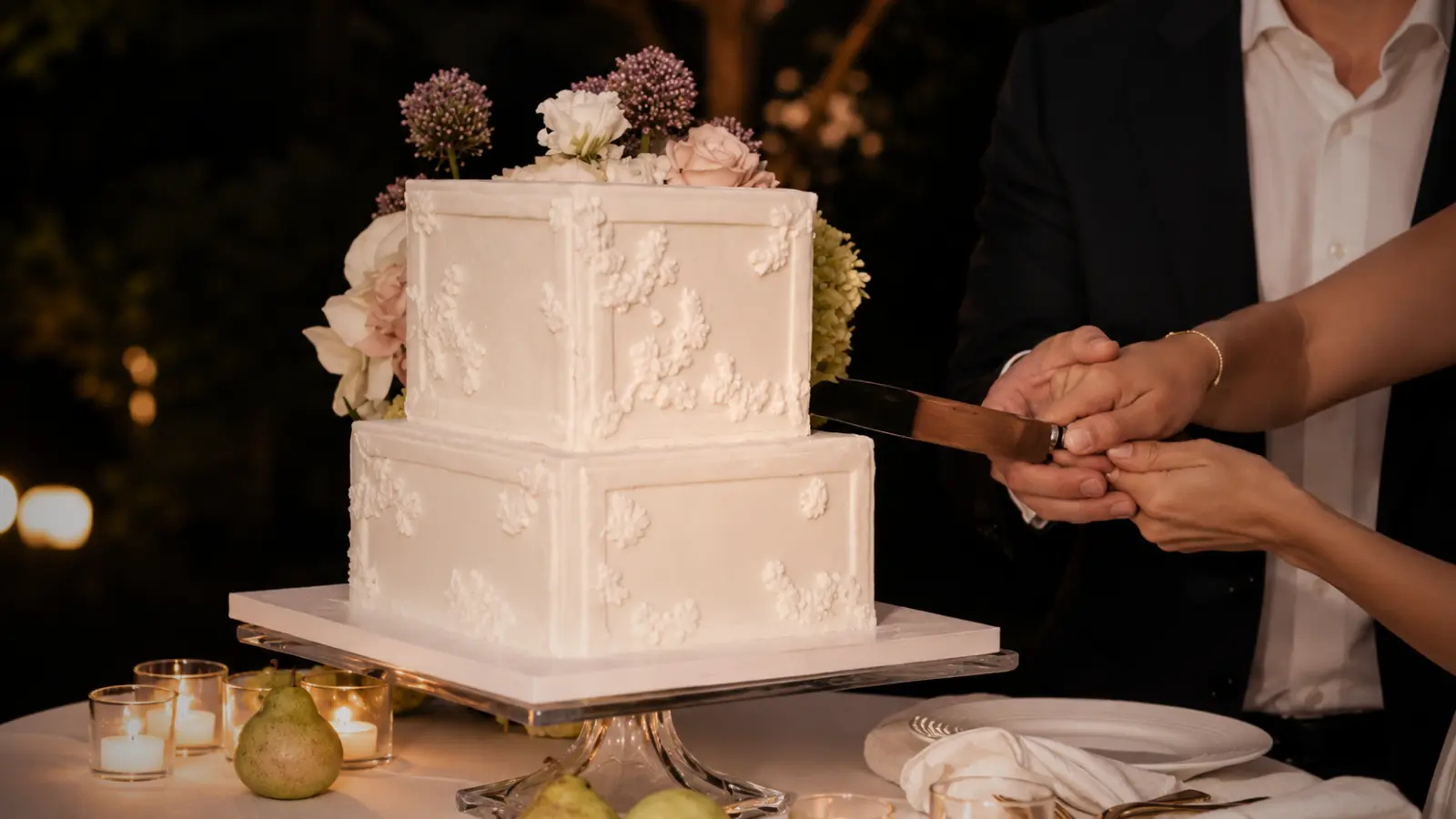
Modern wedding cakes are wedding cakes designed around clean lines, intentional restraint, contemporary styling, and precise execution rather than elaborate decoration. Their appeal comes from structure, proportion, texture, and thoughtful design choices that feel current without relying on short-lived trends.
The modern wedding cake is not the absence of a decision — it is a deliberately edited design choice that depends on clarity, proportion, and execution. A maximalist cake can hide imperfections behind flowers, piping, and decoration. A modern cake cannot. When the entire design depends on smooth surfaces, sharp edges, or carefully controlled texture, every detail becomes visible, making precision the defining characteristic of the style.
In this guide, you’ll discover modern wedding cake ideas ranging from minimalist white cakes and architectural tier designs to contemporary textures, geometric shapes, floral placements, and current design trends. You’ll also learn how to choose a style that fits your venue, how to avoid trends that date quickly, and how to communicate your vision clearly to a baker.
Modern Wedding Cake Designs
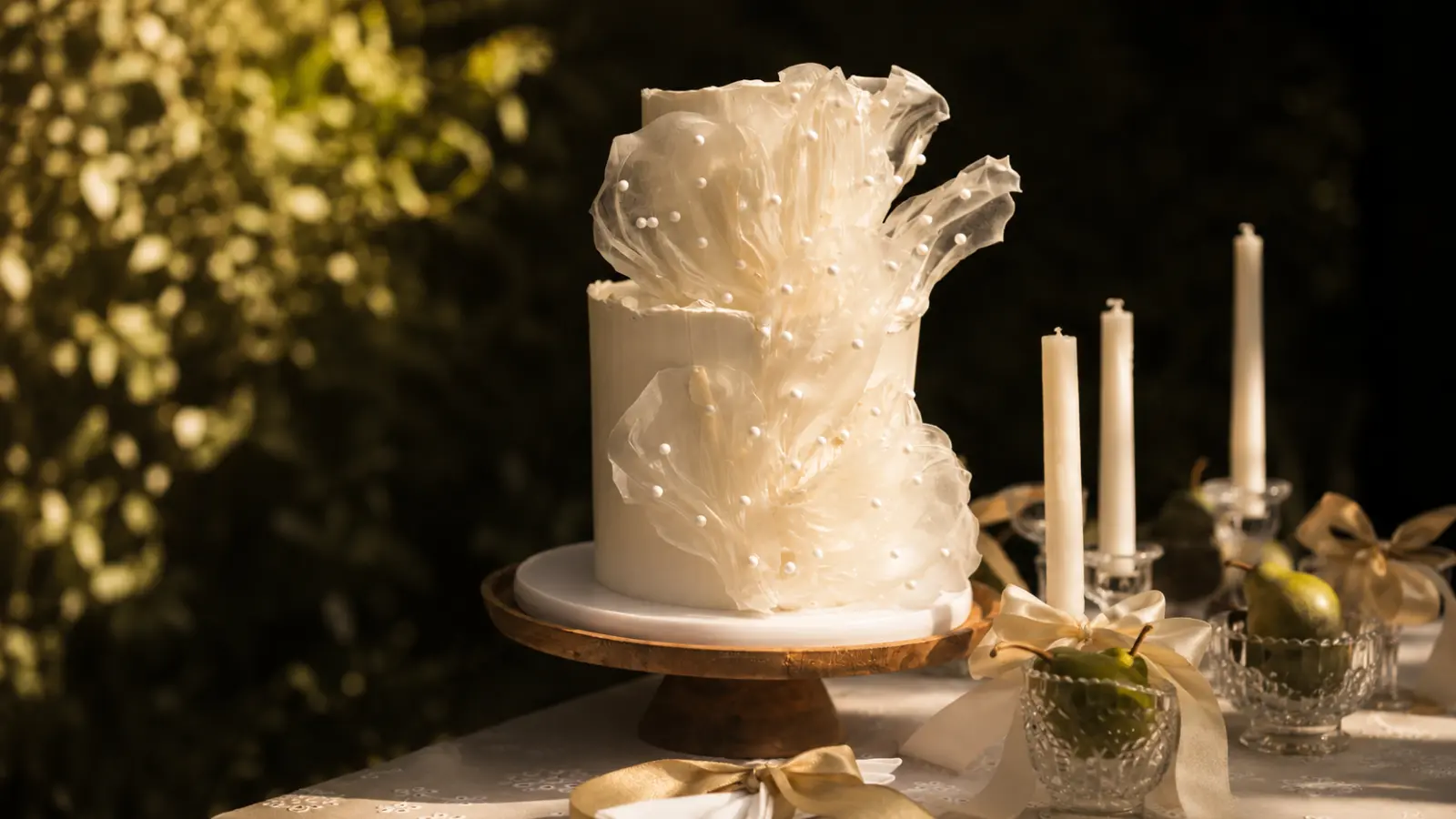
Modern wedding cake designs draw from the same visual language as contemporary architecture, editorial fashion, and quiet luxury interiors: deliberate restraint, precise geometry, and an economy of decoration where every element has a reason to be there. It is the design philosophy of subtraction — removing everything that doesn’t earn its place.
What distinguishes a genuinely modern cake from one that simply has no decoration is intentionality. A blank buttercream surface with an uneven edge and no clear design concept reads as unfinished. The same surface, applied with precision to a cake with a considered silhouette and one deliberate detail, reads as architectural. The design is present in both cases — the difference is that in the second, it was chosen.
Modern wedding cakes in the current moment tend to share a handful of structural qualities: clean horizontal or architectural tier proportions, a surface treatment that communicates polish without ornamentation, a neutral or near-neutral palette, and one design element — a metallic accent, a floral placement, a textural stroke — that does all the expressive work the rest of the cake withholds.
The Architectural Tiered Cake
Modern Classic · Architectural
Three-tier wedding cakes with strict proportions — each tier clearly smaller than the one below, with clean, sharp edges and a perfectly smooth surface. No topper. No florals. Just the geometry of the stacked form and the quality of the finish. This is the cake that the modern architectural aesthetic produces when applied without compromise: a structure that reads as designed rather than decorated.
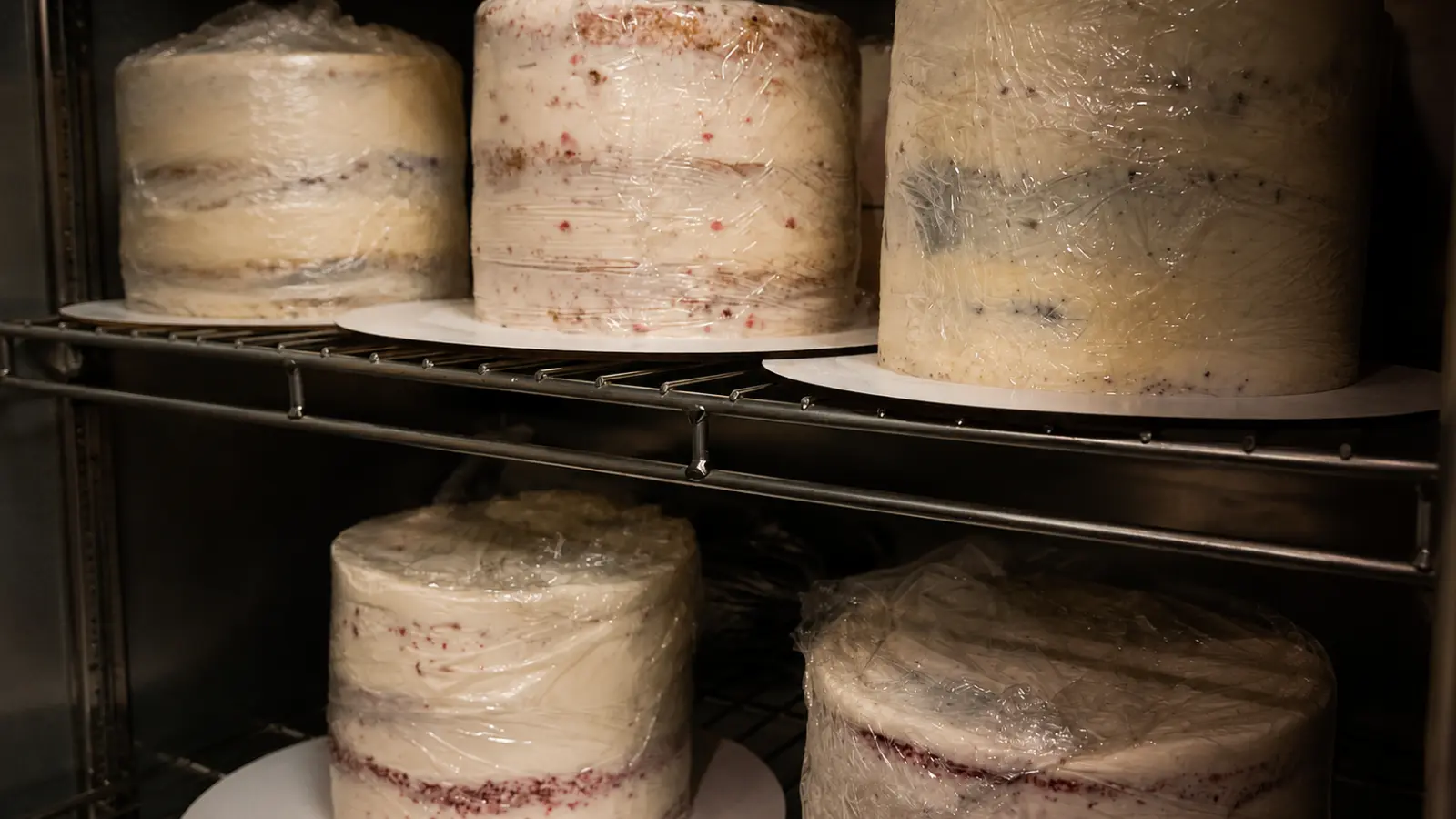
This style requires the highest technical precision of any cake finish. Sharp edges and perfectly smooth surfaces require precise frosting technique, careful chilling, and a baker who has demonstrated this kind of finish repeatedly in their portfolio. When choosing a wedding cake baker, ask to see their portfolio specifically for smooth-finished sharp-edge cakes — not just their most elaborate designs. This one detail separates bakers who can execute it from those who cannot.
Asymmetric Tiers
Contemporary · Statement Silhouette
A stacked cake where the tiers are deliberately misaligned — offset from each other rather than centered — creating a sculptural, intentionally imperfect silhouette. At its best, an asymmetric tiered cake reads as contemporary and considered, like a piece of ceramic sculpture that happens to be edible. The asymmetry needs to be deliberate and precise: each offset must be intentional, measured, and consistent with the overall visual balance of the cake.
This design works best with a clean, smooth surface and no competing decoration — the asymmetry itself is the design. Adding florals or textural elements to an asymmetric cake risks making it look accidental rather than architectural. Many couples don’t realize this is an option at all until they see it in a portfolio. It is among the most genuinely distinctive modern cake designs available.
Single-Tier Statement Cake
Modern · Intimate Weddings
A single, tall tier — 7 to 9 inches tall rather than the standard 4 to 5 — in a clean, smooth finish. What the single-tier modern cake sacrifices in scale it more than recovers in presence: a tall, well-proportioned single tier on a statement wedding cake stand reads as an intentional design decision rather than a small wedding compromise. Small wedding cakes can be particularly strong at micro-weddings and intimate celebrations where the scale is appropriate.
The single-tier modern cake is also where the most interesting shapes become possible: hexagonal, square with perfectly sharp corners, slightly tapered from base to top, or given a hand-sculpted organic form that references contemporary ceramics. A standard round tier is the safe choice; the non-round alternatives are where this format genuinely becomes a design object.
Varied Tier Heights — The Tall-and-Narrow Proportion
Modern · Architectural Drama
Rather than three tiers of standard 4-inch height, a modern cake often uses 6-inch or even 7-inch tall tiers to create a tall, slender silhouette that photographs dramatically and reads as more substantial than a wider, squatter configuration. A three-tier cake in 6-inch-tall tiers at 10–8–6 inch diameters has genuine presence without requiring additional width that pushes the cost up significantly.
This proportion — tall and narrow — is a signature of the modern wedding cake aesthetic in editorial photography, and it is achievable without a significant budget increase if the baker understands the brief. Many couples see these proportions on Pinterest, fall in love with them, and then never specifically request them — their baker produces a standard proportion by default. Be explicit: “I want tall tiers, not wide ones.”
Minimalist Wedding Cakes
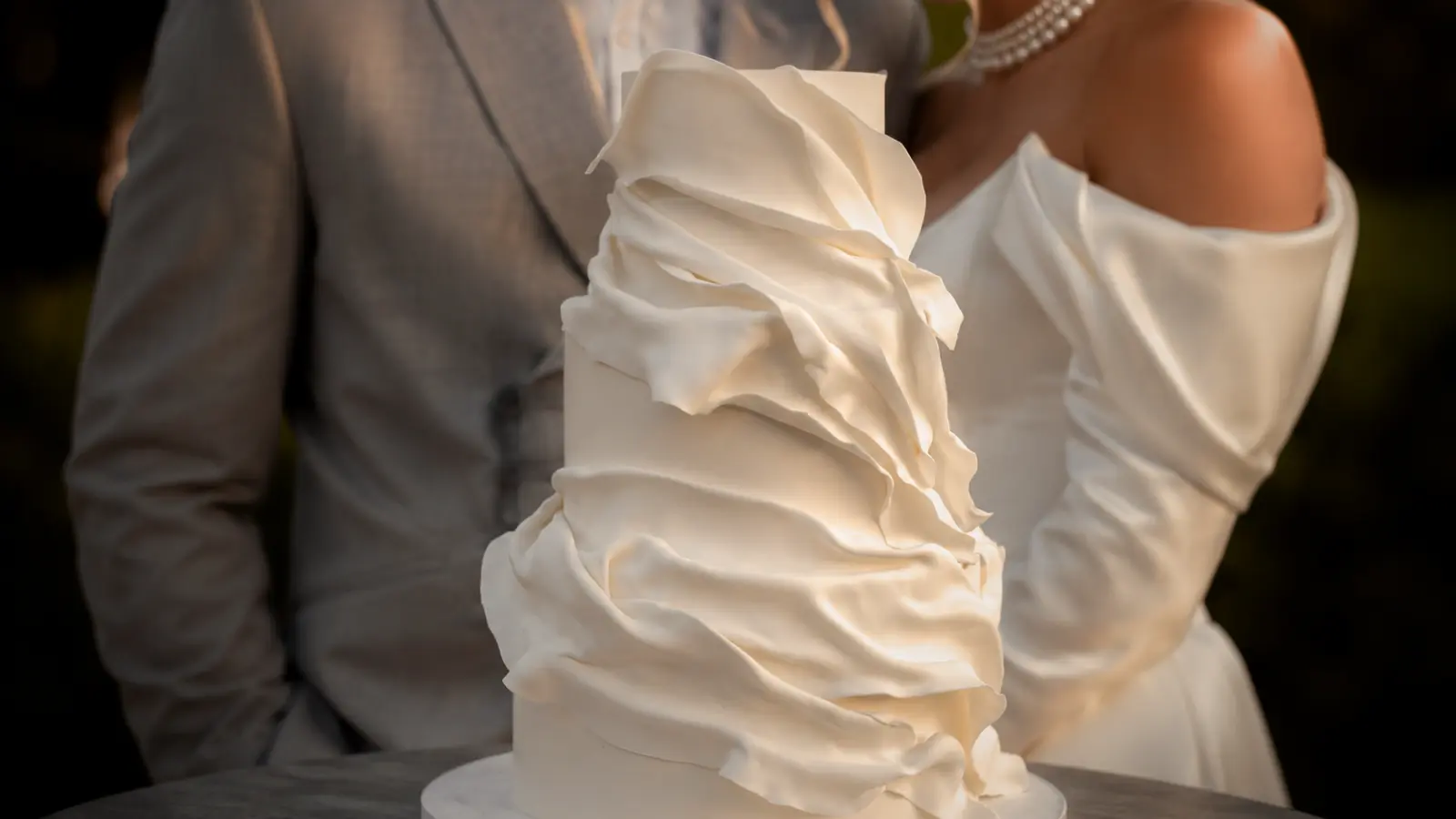
Simple wedding cakes and minimalist designs operate on a different logic than other styles: the design is in the editing. The question is not “what do I add?” but “what can I remove while keeping the cake beautiful?” The answer, when taken to its most refined conclusion, is almost everything — which means what remains has to be exactly right.
Many couples approach minimalism as a budget move and are surprised to discover that a truly excellent minimalist cake is not less expensive than a decorated one. The labor of applying a flawless smooth finish, the precision of a perfectly level tier, the care of the cuticle-work-equivalent in cake — the clean transition between layers, the exact sharpness of each edge — is not less work. It is different work, at the same or higher standard.
What Most Couples Don’t Realize
A minimalist cake is the style that reveals technique most directly. Decorated cakes can hide imperfections under florals, piping, and detail work. A smooth white cake with sharp edges and no decoration cannot hide anything. Before booking a baker for a minimalist design, look specifically at their smooth cakes in their portfolio — not their most elaborate. The smooth cakes will tell you exactly what their technical standard is.
The White Monolith
Minimalist · Maximum Impact
Three tiers. Smooth white or ivory buttercream. Sharp edges. Nothing on top. No florals, no metallic, no topper. The entire design is the form of the cake itself — the proportion of the tiers, the quality of the finish, the cleanness of the surface. This is the hardest version of minimalist to execute well and the most powerful when it succeeds. In the right venue, it reads as a design object rather than simply a cake.
The specific white matters. Pure optical white reads as cold and flat in photographs. A warm ivory, an off-white with the faintest cream, or a barely-there pale grey all photograph with more depth and dimension than white-white. Ask your baker to show you swatches of their white and ivory options in person and in a photograph before confirming the color.
Warm Neutral Monochromatic
Minimalist · Contemporary
A single muted color — warm taupe, dusty sage, pale terracotta, stone, greige — applied consistently across all tiers in a smooth finish. The monochromatic approach is one of the strongest minimalist statements in contemporary cake design, because the color does all the expressive work that decoration withholds. A perfectly smooth three-tier cake in a single warm neutral reads as architectural and editorial in photographs in a way that white cannot always achieve.
The limitation: the color needs to be confirmed against the wedding’s overall palette. A sage cake at a wedding with ivory and white flowers can look intentional or slightly orphaned depending on how deliberately it’s been chosen. Bring your overall palette reference to the baker consultation — not just a reference photo of the cake.
One Element, Everything Else Gone
Minimalist · Edited
A perfectly smooth cake in ivory or nude with one element only — a single fresh bloom at the base of the top tier, or a single brushstroke of gold leaf across one tier, or a hairline of dark chocolate drip along one edge. Everything else is removed. The single element is the entire design, which means it needs to be exactly right in scale, placement, and execution.
What tends to happen without discipline: the single element becomes two, then three, then a designed cake that no longer reads as minimalist. Committing to “one element” requires active restraint at the bakery consultation. Say it explicitly and stick to it.
Contemporary Wedding Cake Ideas
Contemporary wedding cakes live in a slightly different space than pure minimalism — they are current without being strictly restrained. A contemporary cake may have more visual interest than a minimalist one, but the interest is composed rather than accumulated: each element relates to the others, the palette is controlled, and the overall effect reads as editorial rather than decorative.
This is one of the categories where some of the most interesting design decisions happen in American wedding cake design. Not the most elaborate cakes — those are in the editorial sugar-flower category. Not the simplest — those are in the minimalist category. Contemporary is the space between: considered, current, designed.
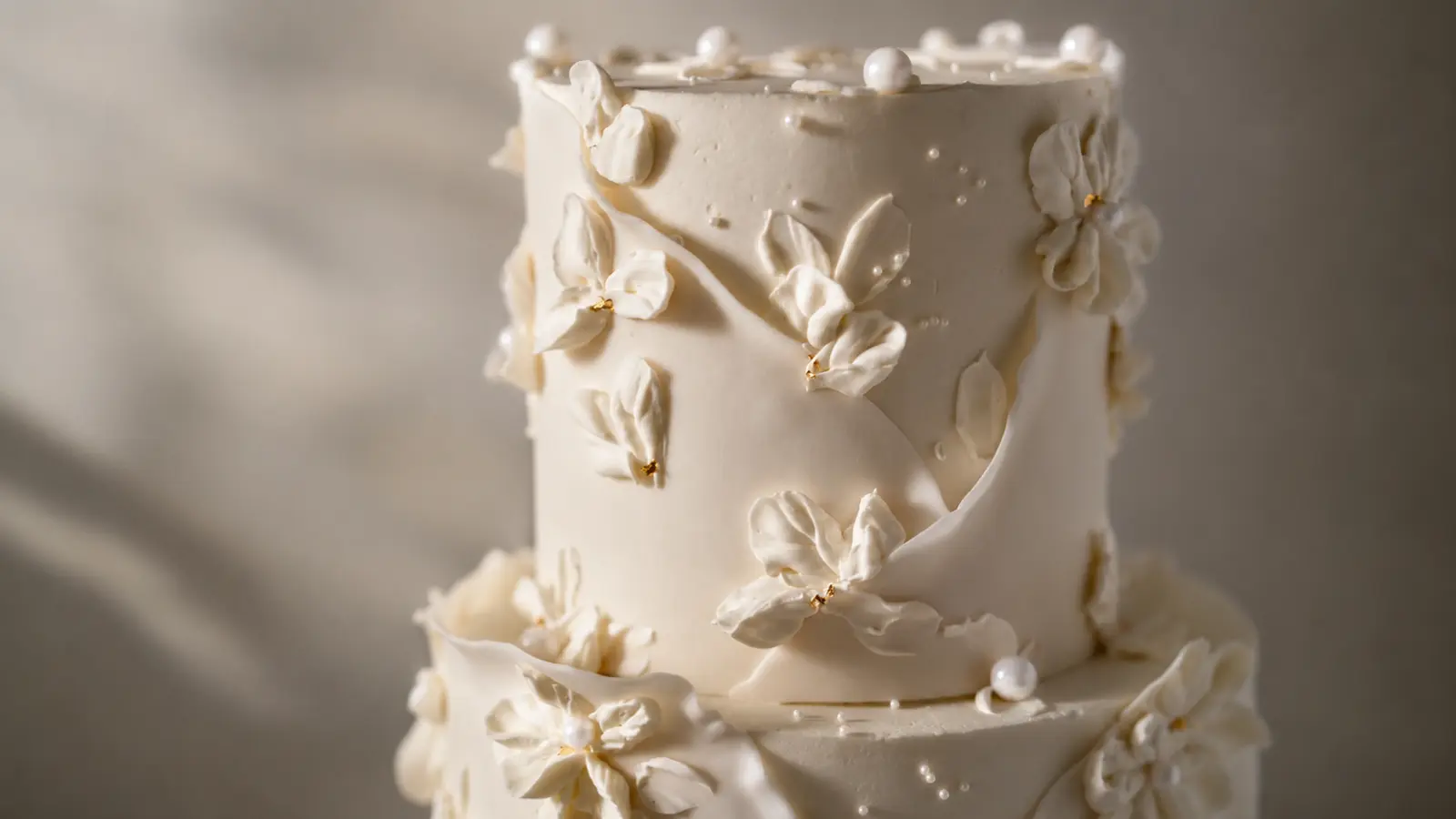
Sculpted Buttercream — Organic Contemporary
Contemporary · Organic Texture
Buttercream applied in loose, deliberate strokes with a palette knife — not perfectly smooth, but not rustic either. The strokes have direction and intention. The surface is textured in a way that reads as chosen rather than approximated. This finish remains a strong contemporary cake choice because it is more forgiving technically than a perfectly smooth finish, photographs with warmth and dimension, and works in a wider range of venues than either pure minimalism or rustic alternatives.
The critical distinction is in the application direction. A palette-knife finish applied randomly in every direction reads as rustic or unfinished. Applied with consistent horizontal or diagonal strokes, it reads as contemporary and composed. The direction is the design. Be specific with your baker about the stroke direction you want — show them a reference photograph rather than relying on descriptive language alone.
Geometric Tiers — Non-Round Shapes
Contemporary · Statement
Hexagonal, square, or rectangular tiers instead of the standard round — often combined in a mixed configuration (a round top tier on a hexagonal base, or a square middle tier between two rounds) to create a more considered geometric composition. These non-standard shapes require slightly more skilled construction — the corners and edges are more technically demanding than the curves of round tiers — and they read as architecturally deliberate in photographs.
A hexagonal tier in particular has emerged as one of the more distinctive contemporary cake shapes — it is uncommon enough to read as considered without being so unusual that it draws attention away from the wedding itself. A three-tier hexagonal cake in smooth ivory buttercream can be one of the most genuinely contemporary wedding cake silhouettes available.
Micro Tiers With Dramatically Different Sizes
Contemporary · Unexpected Proportion
Instead of the standard graduated proportions (10–8–6, with each tier a predictable size difference), a contemporary cake can use dramatically varied proportions: a wide base tier, a very narrow middle tier, and a petite top tier — creating a silhouette that reads as sculptural rather than simply stacked. This proportion variation is common in editorial cake photography and rare at actual weddings, which makes it stand out without requiring elaborate decoration.
The wide-to-narrow-to-petite proportion requires structural consideration: the tiers need internal dowel support to bear the dramatically different weight distributions. Any baker who works in this format regularly will know this. If yours hesitates, it’s worth asking about their experience with non-standard proportions specifically.
Painted Color Block
Contemporary · Artistic
A portion of the cake — one tier, or a diagonal section across two tiers — in a contrasting muted color, while the rest remains white or ivory. The color is applied cleanly, with a hard edge rather than a gradient. The effect is bold without being maximalist: the color block reads as a design decision in the same way that a color block in a room or a garment does. Best in muted, contemporary tones — dusty clay, slate blue, warm sage — rather than saturated or bridal colors.
Modern Floral Wedding Cakes
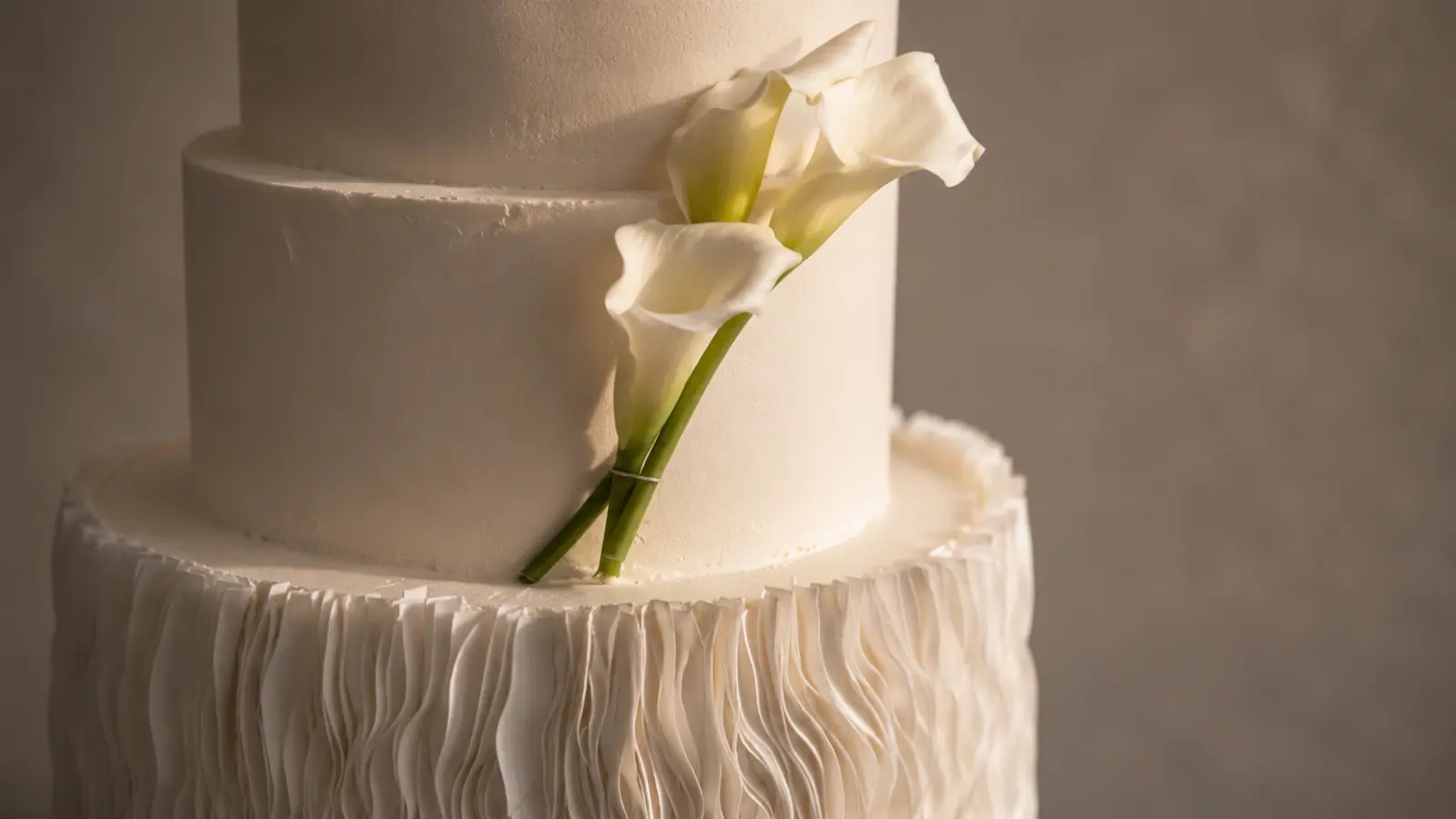
Florals and modernity are not contradictions — but they do require a specific approach to coexist. The traditional floral wedding cake places flowers abundantly: cascades between tiers, arrangements at the base, clusters at every transition. The modern floral cake places them sparingly and structurally, treating each flower as an architectural element rather than a decorative one.
The defining quality of a modern floral placement is that the space around the flowers is as deliberate as the flowers themselves. A single large bloom at the base of the top tier, in a specific position, with no additional decoration, reads differently than three stems loosely gathered at the same tier. Same flowers. Different design logic.
Single Stem Placement
Modern Floral · Purest Version
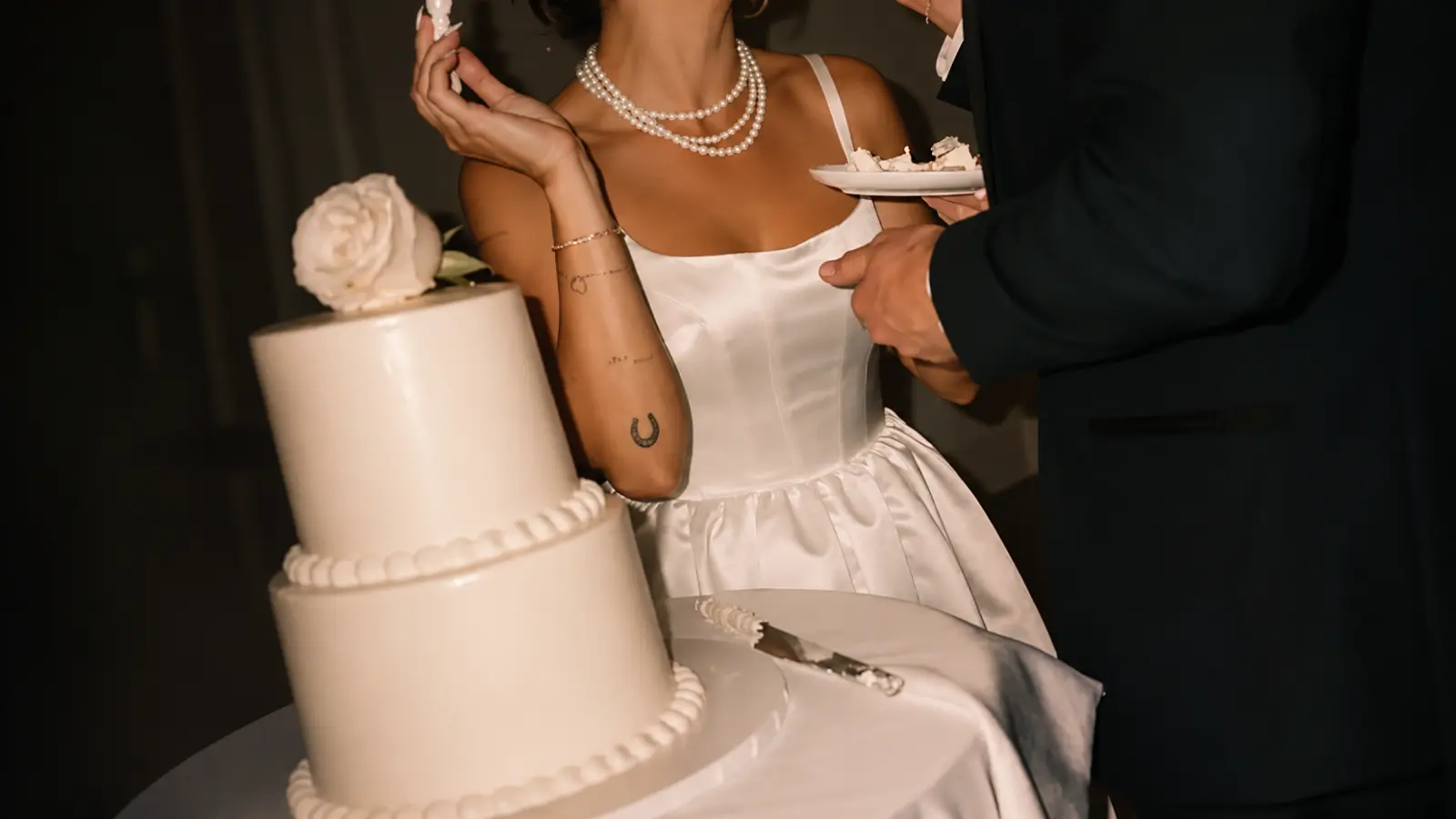
One flower — often a large, structurally bold bloom like a garden rose, a protea, a ranunculus, or a peony — placed deliberately at the base of the top tier or at one side of a tier transition. Nothing else. The restraint makes the flower the entire design statement. In photographs, a single bloom on a smooth white cake reads as editorial in a way that a scattered arrangement cannot.
The flower choice matters significantly at this scale. A bloom with strong graphic qualities — the spiral of a garden rose, the architectural form of a protea, the layered geometry of a peony — rewards the close attention that a single-flower design invites. A small or delicate flower at this scale can look lost. Go bold in the individual bloom; be restrained in the quantity.
Structural Floral Column
Modern Floral · Architectural
Flowers arranged in a tight, vertical column along one side of the cake — from the base tier up through the tiers, in a narrow line rather than a scattered arrangement. The vertical column has an architectural quality that scattered florals don’t: it reads as a design element with direction and intention rather than decoration applied to fill space. It also photographs distinctly from every angle, which matters for a cake that will be photographed throughout the reception.
This arrangement works best with flowers of consistent scale — a mix of blooms that are all medium-sized, or all small. A mix of large and small blooms in a column arrangement can look unbalanced. Keep the color palette narrow: one or two bloom colors against the neutral cake surface.
Dried and Preserved Florals — The Quieter Modern
Modern Floral · Earthy Contemporary
Dried pampas grass, preserved eucalyptus, dried cotton, dried lavender, and preserved dried roses applied sparingly and structurally to a smooth or lightly textured cake surface. Dried botanicals have a quality that fresh flowers don’t: they are inherently muted and architectural. There are no bright saturated petals to compete with the cake’s surface. The palette is automatically controlled. And they are temperature-stable in a way that fresh flowers are not — they will look identical at hour eight of the reception as they did at hour one.
This style is particularly strong for fall wedding cakes, autumn celebrations, and winter weddings at venues with warm earthy interiors, and for couples whose overall aesthetic leans toward natural materials and quiet luxury rather than romantic abundance.
Minimalist Floral With Negative Space
Modern Floral · Graphic
A handful of blooms placed at one corner or one side of the cake, with the rest of the surface deliberately left empty. The empty space is the design — it draws attention to the placed flowers as intentional objects rather than decoration. This approach requires comfort with negative space, which is a genuine design sensibility rather than a default. It appears often in editorial wedding photography but still feels distinctive at real weddings because many couples are hesitant to leave that much negative space.
Modern White Wedding Cakes
White is both the simplest and most technically demanding wedding cake palette. Simple because it requires no color decision. Demanding because every surface imperfection, every slight variation in application, and every subtle structural issue reads clearly on a white canvas that offers no visual distraction.
Modern white wedding cakes succeed when the specific white is chosen deliberately and executed with precision. The range of whites available — pure optical white, warm ivory, off-white with a green or grey undertone, cream — each photographs differently, each relates differently to the dress and florals, and each communicates a slightly different aesthetic register.
Choosing the Right White
| Finish | How It Reads | Best For |
|---|---|---|
| Pure optical white | Crisp, stark, graphic — can read as cold in warm-lit reception spaces | Very modern or industrial venues; cool-toned aesthetics |
| Warm ivory | Classic, soft, warm — the most universally flattering finish; photographs with depth | Any venue; pairs best with ivory and champagne gowns and warm florals |
| Off-white (slight grey undertone) | Contemporary, architectural, cool — reads as intentionally toned rather than neutral | Modern minimalist venues; cool-toned aesthetics; gray-palette weddings |
| Cream / pale champagne | Warm, rich, slightly romantic — not strictly white but reads as white in context | Venues with warm lighting; autumn and winter weddings; champagne gown pairings |
Smooth White With Gold Leaf Accent
Modern White · Most Requested
A smooth ivory or warm white buttercream surface with 22K edible gold leaf applied abstractly — a brushstroke, a scatter of fragments, or a deliberate patch on one tier. The gold reads as warm luxury against the white without adding any visual complexity beyond itself. It photographs with a richness that a plain white surface lacks, and it gives photographers something to work with in close-up reception shots without competing with the ring or the dress.
The application method changes the result significantly: gold leaf applied in fragments looks like gold; gold leaf applied in one large cohesive area looks like a gold panel. Both are valid but communicate very different aesthetics. Specify which you want and ask to see both in your baker’s portfolio before deciding.
White Cake With Dark Chocolate Drip
Modern White · High Contrast
A smooth white or ivory cake with a precisely applied dark chocolate or ganache drip along the top edges — one of the cleanest high-contrast combinations in modern cake design. The darkness of the drip against the whiteness of the cake reads as graphic and deliberate. The drip must be controlled: applied too quickly, it runs too far and looks messy; applied too carefully, it looks stiff. A baker who does this well has mastered the temperature and viscosity of their ganache precisely enough that each drop falls to the right depth and stops.
White Cake With Structural Floral — One Color Only
Modern White · Edited
A smooth white cake with flowers in a single color — all white, all dusty blue, all deep burgundy — placed structurally. The single-color flower palette against the white surface creates a cleaner, more graphic effect than a mixed-color arrangement. The restraint in flower color is the design decision that makes this feel modern rather than traditional. Many florists and bakers default to mixed-color arrangements; request single-color specifically.
Modern Wedding Cakes With Texture
Texture is the tool that allows a cake to be modern without being stark. A textured surface adds visual interest and dimension without adding decorative elements — which means it stays within the modern aesthetic while giving the eye something to move across. The difference between a textured cake that reads as contemporary and one that reads as rustic is almost entirely in the type of texture and the precision of its application.
Modern textures are deliberate and directional. Rustic textures are random and organic. The same physical action — a palette knife moved across buttercream — produces a rustic result when applied freely in multiple directions and a modern result when applied in consistent strokes with a specific direction and pressure.
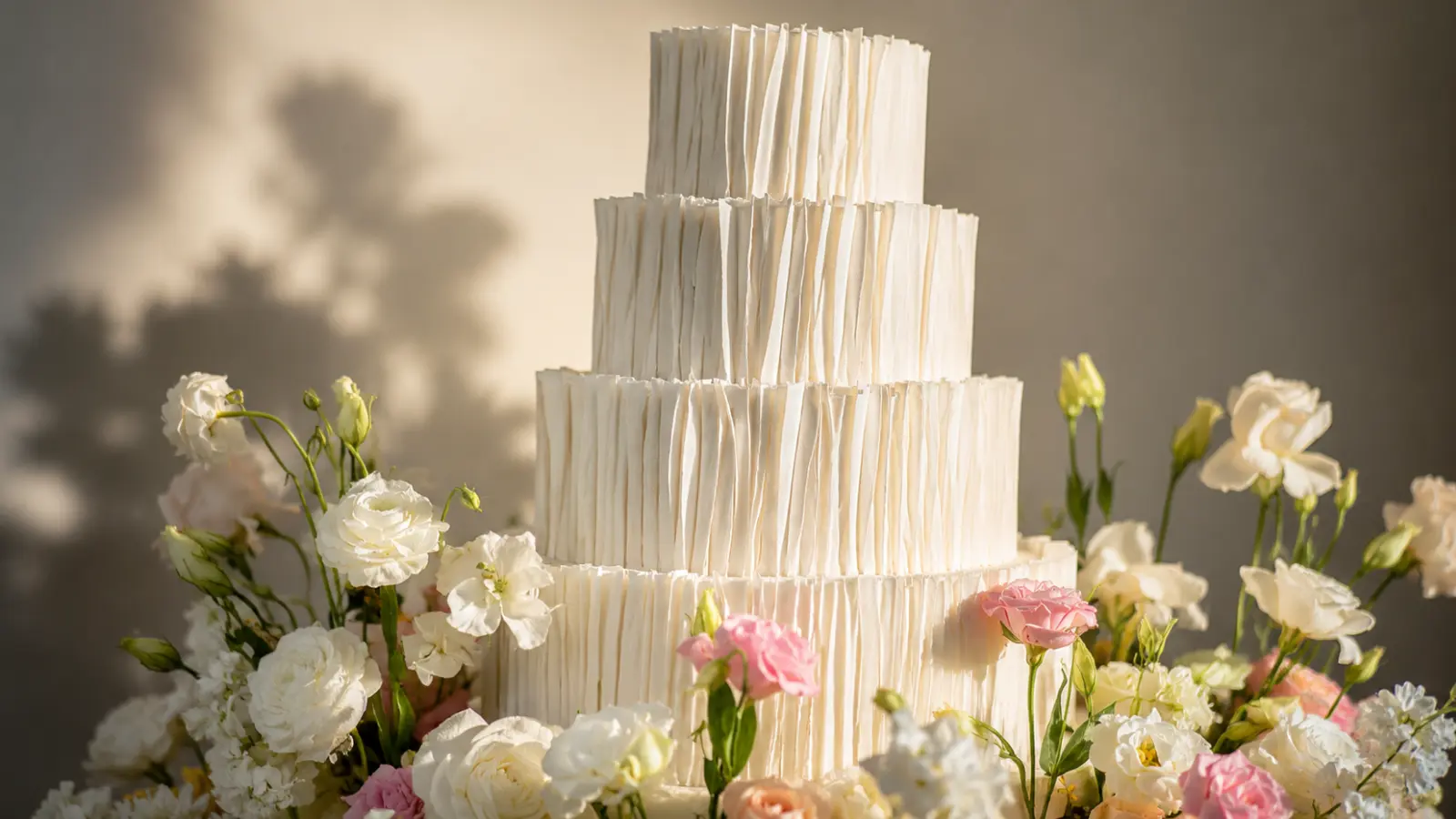
Ribbed Vertical Lines
Texture · Most Contemporary
Vertical lines combed into the buttercream surface with a cake comb — creating a consistent ridged pattern that wraps around each tier. The ribbed surface has a strong graphic quality that reads as contemporary product design: it looks like ceramics, like linen, like intentional surface design. It is one of the cleanest ways to add visual interest to a cake without adding additional decorative elements, especially for couples drawn to a contemporary editorial look.
The lines need to be consistent in depth and spacing. A cake comb achieves this reliably; a fork or improvised tool does not. Ask to see your baker’s ribbed-finish cakes in their portfolio — the quality of the lines is immediately apparent and distinguishes bakers who have mastered the technique from those who are approximating it.
Palette Knife Horizontal Strokes — Consistent Direction
Texture · Contemporary-Warm
Horizontal palette knife strokes applied with consistent pressure and direction — not the random multi-directional application of a rustic finish, but a deliberate horizontal sequence that wraps each tier. The consistency is what makes it contemporary rather than rustic. The strokes are visible as individual marks, but they read as a pattern rather than texture applied freehand. This finish has warmth without losing its modern quality, which makes it more versatile across venue types than a smooth finish.
Linen Texture
Texture · Quiet Luxury
A linen-like texture applied with a specific comb or impressioned roller — creating a crosshatch or woven pattern in the buttercream surface that reads as textile rather than baked surface. The linen texture is quieter than ribbed lines and warmer in aesthetic register, which makes it a strong choice for couples whose overall aesthetic references natural materials and quiet luxury. It pairs particularly well with dried botanical florals and warm neutral palettes.
Smooth With One Textured Tier — Contrast Edit
Texture · Composed
Two tiers in a perfectly smooth finish, one tier in a contrasting texture — ribbed, palette-knife, or linen. The contrast between smooth and textured tiers within a single cake creates a composed, intentional effect that reads as designed rather than decorated. It is one of the more sophisticated contemporary cake design decisions available, and it is rarely achieved by accident: couples who end up with this result typically chose it deliberately after seeing it in a portfolio and deciding it was exactly right for their aesthetic.
How to Make a Cake Feel Current Without Looking Trendy
The fastest way to date a wedding cake is to choose the most popular thing in the year you got married. The glossy black fondant cakes, the extreme geode cakes with crystalized sugar, the mirror-glaze cakes — these were all “what everyone was doing” in their respective years, and they all read now as specifically of that moment in a way that a simple white buttercream from the same years does not.
The distinction between “current” and “trendy” is the same in wedding cakes as in any design discipline: current means the design is informed by contemporary sensibility but not dependent on a specific trend for its existence. Trendy means the design would not be chosen if the trend did not exist, and would not look interesting once the trend passes.
Three questions to ask before committing to a modern cake design:
1. Does this design have a reason beyond “it’s popular right now”? A ribbed buttercream cake chosen because it references the linen and natural texture aesthetic of the whole wedding has a reason. The same cake chosen because it appears on every wedding Instagram account right now does not have the same permanence. Both may look good now. Only one is likely to feel right years from now.
2. Can I describe the design without using the name of a trend? “I want a smooth ivory cake with one structural floral placement and a single brushstroke of gold leaf” is a description that will still make sense in ten years. “I want a cottagecore cake” or “I want a quiet luxury cake” will not — because those are trend labels, not design descriptions. Translate the trend language into specific design decisions before you brief your baker.
3. Does this design fit my venue and overall aesthetic independently of the trend? The strongest modern cake choices are ones that would look right even if they weren’t currently popular. A smooth architectural white cake in a contemporary hotel venue is correct on its own terms. The same cake at a garden wedding is correct because it’s trending, not because it fits — and that’s a different kind of choice.
What Stays Current — Design Decisions With Longevity
Specific “trendy” colors (biscuit, warm beige in any specific year’s pantone)
| Design Element | Why It Lasts | What Dates Faster |
|---|---|---|
| Smooth buttercream in warm white or ivory | No trend dependency; always reads as polished and intentional | |
| Single deliberate floral placement | Restraint has no expiration date; flowers are permanent in wedding aesthetics | Whatever the “it” flower is right now (cosmos, dried pampas at peak saturation) |
| Consistent ribbed or directional texture | References textile and ceramics — permanent design traditions, not wedding trends | Textures tied to a specific Pinterest moment (geode, metallic ombre drip) |
| Gold leaf accent — applied abstractly | Metallic warmth has been part of luxury aesthetics for centuries | Hyper-specific metallic treatments (chrome drip, mirror glaze, silver ombre) |
| Sharp geometric edges or non-round tiers | Architectural precision is aesthetic, not trend | Extreme shapes that only made sense in one trend cycle |
How to Brief a Baker for a Modern Cake
The briefing conversation is where most modern cake intentions get diluted. A couple comes in with a clear vision of a clean, architectural, restrained cake — and leaves with a design that has acquired one extra floral element, one additional texture, and one detail that wasn’t in the original plan. Not because the baker wasn’t listening, but because the brief wasn’t specific enough to hold.
The Brief That Works
A good brief for a modern wedding cake has five elements: the surface (smooth, ribbed, palette-knife direction), the color (the specific white or neutral you want, not just “white”), the single decorative element if any (its specific description, scale, and placement), the shape (round, hexagonal, asymmetric, proportion of tiers), and what you are explicitly not doing (no additional florals, no piping, no topper). That last element — the list of what is not in the design — is often the most useful part of the brief for a modern cake.
The Most Important Phrase
Tell your baker: “This is a complete design. I don’t want anything added.” Most bakers are trained to offer suggestions, to enhance, to add elements that improve the visual. For a modern cake, those instincts work against the brief. Be direct about the fact that the design is finished, not a starting point for additions.
What to Bring to the Consultation
- Three to five reference images — specifically of modern cakes, not a mixed board. If you bring 30 images in multiple styles, you will leave with a compromise between them rather than the design you actually want.
- Your venue photograph — the aesthetic of the space should inform the cake. A cake designed for an art gallery looks different from one designed for a hotel ballroom, even if both are “modern.”
- A photograph of your dress — the clean lines or structure of a contemporary gown often informs the cake design in ways the couple hasn’t consciously connected.
- Your palette — bring specific color references, not just adjectives. “Warm ivory” means something different to every person in the room until you show a swatch.
- A clear statement of what you don’t want — this is the most useful thing you can bring to a modern cake consultation and the thing most couples neglect to prepare.
Modern Wedding Cake Inspiration Board
Modern wedding cakes can range from minimalist white tiers and architectural silhouettes to textured buttercream finishes, contemporary floral placements, and bold geometric designs. Explore our modern wedding cake inspiration board for clean lines, refined details, sculptural forms, and contemporary wedding cake ideas that balance creativity with timeless appeal.
Final thoughts
The best modern wedding cakes are not defined by how little decoration they have, but by how intentionally every decision has been made. From the shape of the tiers and the finish of the surface to the placement of a single flower or metallic accent, modern design relies on clarity rather than excess. When every element serves a purpose, the result feels confident, refined, and memorable.
A truly modern wedding cake should feel connected to the wedding around it rather than designed in isolation. The strongest examples balance contemporary style with lasting appeal, creating a centerpiece that looks current today without feeling tied to a specific trend tomorrow. That balance is what transforms a beautiful cake into a timeless one.
Frequently asked questions (FAQ)
Can a modern wedding cake still feel romantic?
Absolutely. Modern does not mean cold. A modern cake becomes romantic through proportion, color, lighting, and floral placement rather than through traditional decoration. A single garden rose on a clean ivory cake can feel more romantic than an elaborate cake covered in flowers.
What is the biggest mistake couples make with modern wedding cakes?
Treating “minimal” as a lack of decisions. The most successful modern cakes are highly considered. Every proportion, texture, color, and placement is intentional. A cake without decoration is not automatically modern—it still needs a clear design direction.
Will a modern wedding cake look dated in a few years?
Usually less than heavily trend-driven designs. Modern cakes built around strong shapes, quality materials, and restrained details tend to age more gracefully because they rely on design principles rather than temporary trends.
What makes a modern wedding cake look expensive?
Precision. Sharp edges, flawless finishes, balanced proportions, and high-quality ingredients create a luxury appearance far more effectively than adding more decorative elements. In modern design, craftsmanship is often the decoration.
Should a modern wedding cake match the wedding venue?
More than most couples realize. Modern cakes tend to feel strongest when they echo the architecture and atmosphere of the space. A clean, sculptural cake often feels natural in a contemporary hotel or gallery, while a heavily traditional cake may feel disconnected from the environment.
What do professional designers notice first in a modern cake?
Usually the silhouette before anything else. The overall shape, proportions, and balance of the tiers create the first impression. Decorative details are noticed second. That is why modern cakes depend so heavily on structure and precision.