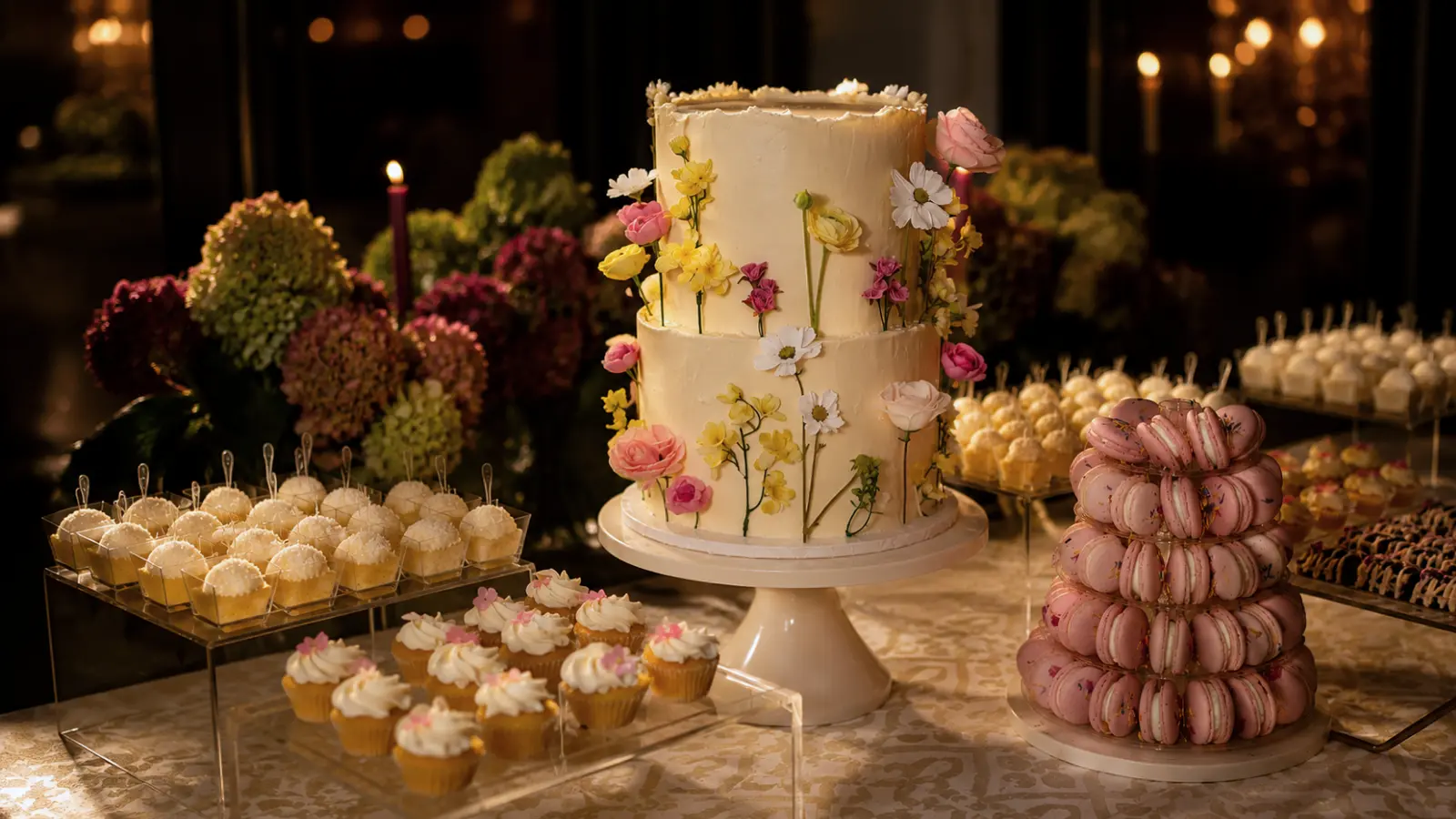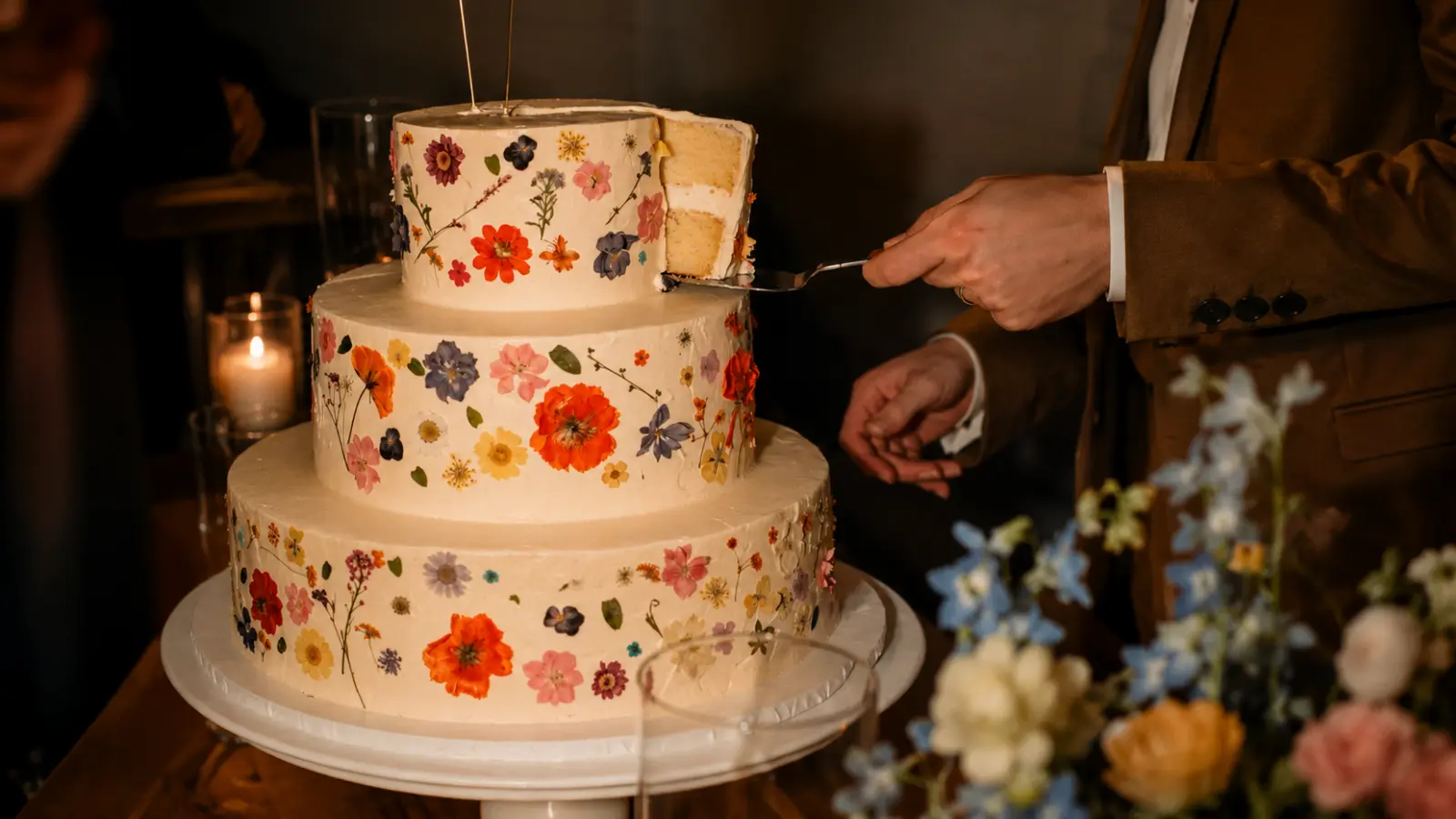
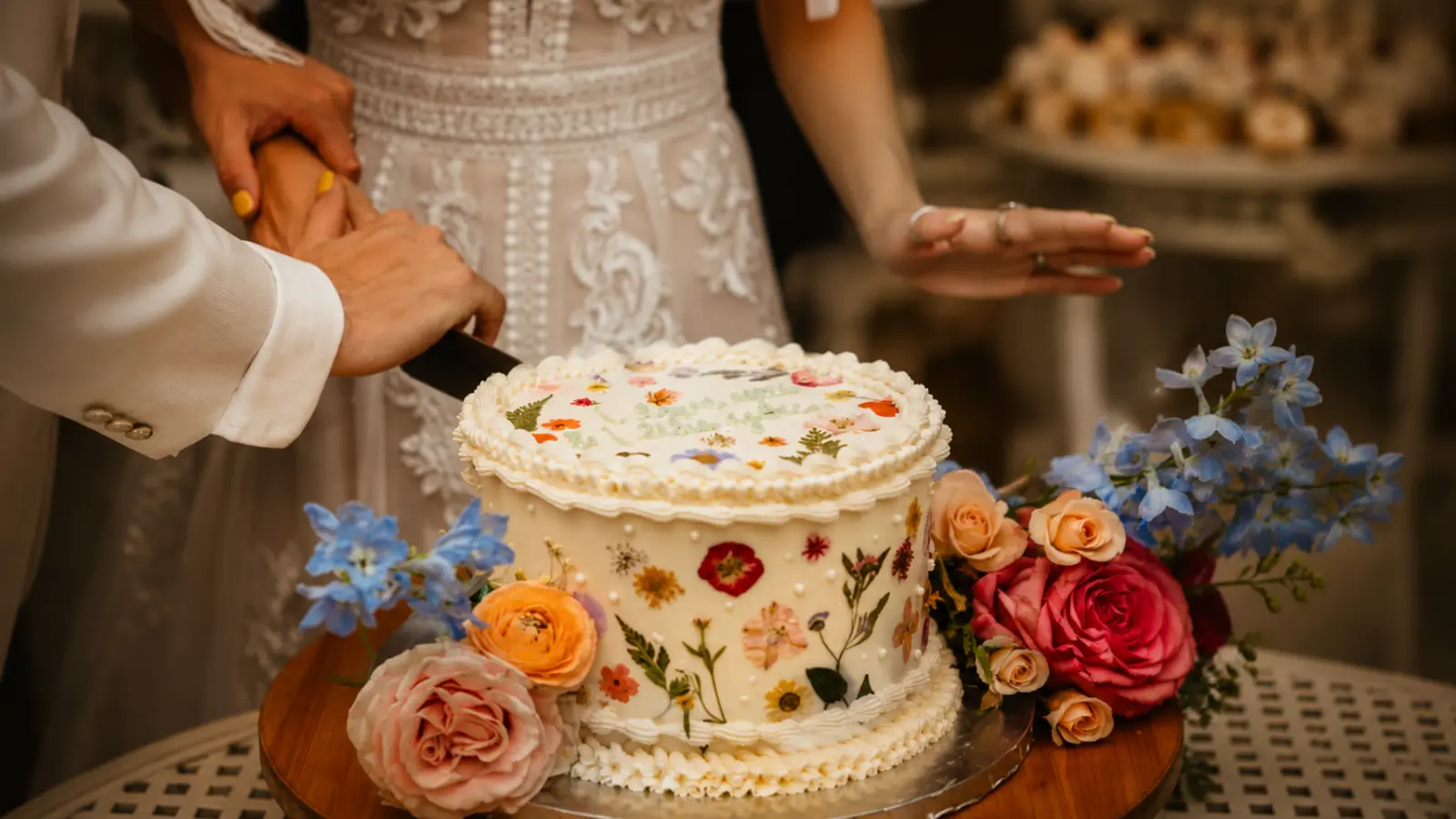
Rustic wedding cakes are wedding cakes designed around natural textures, organic materials, and an intentionally relaxed aesthetic. From semi-naked buttercream finishes and floral wedding cakes with wildflower arrangements to greenery accents and raw wood stands, rustic cakes prioritize warmth, character, and authenticity over polished perfection.
The appeal of a rustic wedding cake comes from how effortless it appears. The best wedding cake designs feel as though they belong naturally within the setting, whether that setting is a vineyard, a garden, a countryside venue, or a candlelit barn reception. Yet what makes these cakes beautiful is not randomness — it is the careful balance of texture, florals, color, and proportion that creates a look that feels organic without looking unfinished.
In this wedding cakes guide, you’ll discover rustic ideas ranging from floral buttercream designs and semi-naked cakes to country-inspired styles, greenery accents, wood cake stands, and intimate two-tier options. You’ll also learn how to choose the right rustic aesthetic for your venue, which flowers work best, and how to keep a rustic cake elegant rather than overly casual.
What Actually Makes a Wedding Cake Rustic
The word “rustic” is one of the most overused terms in wedding planning, which also makes it one of the least precise. Before choosing a rustic wedding cake, it helps to understand what the aesthetic actually means and what separates a cake that feels intentionally rustic from one that simply looks unfinished.
A rustic wedding cake is defined by three qualities: organic texture, natural materials, and deliberate imperfection. Organic texture comes from visible buttercream strokes and hand-finished surfaces rather than perfectly smooth finishes. Natural materials include wildflowers, greenery, herbs, berries, dried botanicals, fresh fruit, and raw wood details. Deliberate imperfection means the cake looks handmade by choice, not because it was carelessly executed.
That distinction is where rustic cakes succeed or fail. A semi-naked cake with visible layers and thoughtful floral placement feels intentional. An unevenly frosted cake with random gaps and wilting flowers feels unfinished. The difference comes down to quality, consistency, and a clear design direction.
Rustic cakes work best in venues that share the same design language, including barn receptions, vineyard weddings, garden ceremonies, and outdoor celebrations. They feel less natural in formal ballrooms or highly polished luxury venues where the overall aesthetic is structured and refined. The most successful rustic cakes are the ones that feel connected to the setting around them.
Rustic Wedding Cake Ideas
The strongest rustic wedding cake ideas are built around one clear visual anchor — a specific texture, a specific flower palette, a specific combination of natural elements — rather than trying to incorporate every rustic element at once. A cake that is naked and has wildflowers and has dried pampas and has wood accents and has greenery cascading down all three tiers can tip from rustic into chaotic. The best rustic cakes are intentional in their restraint.
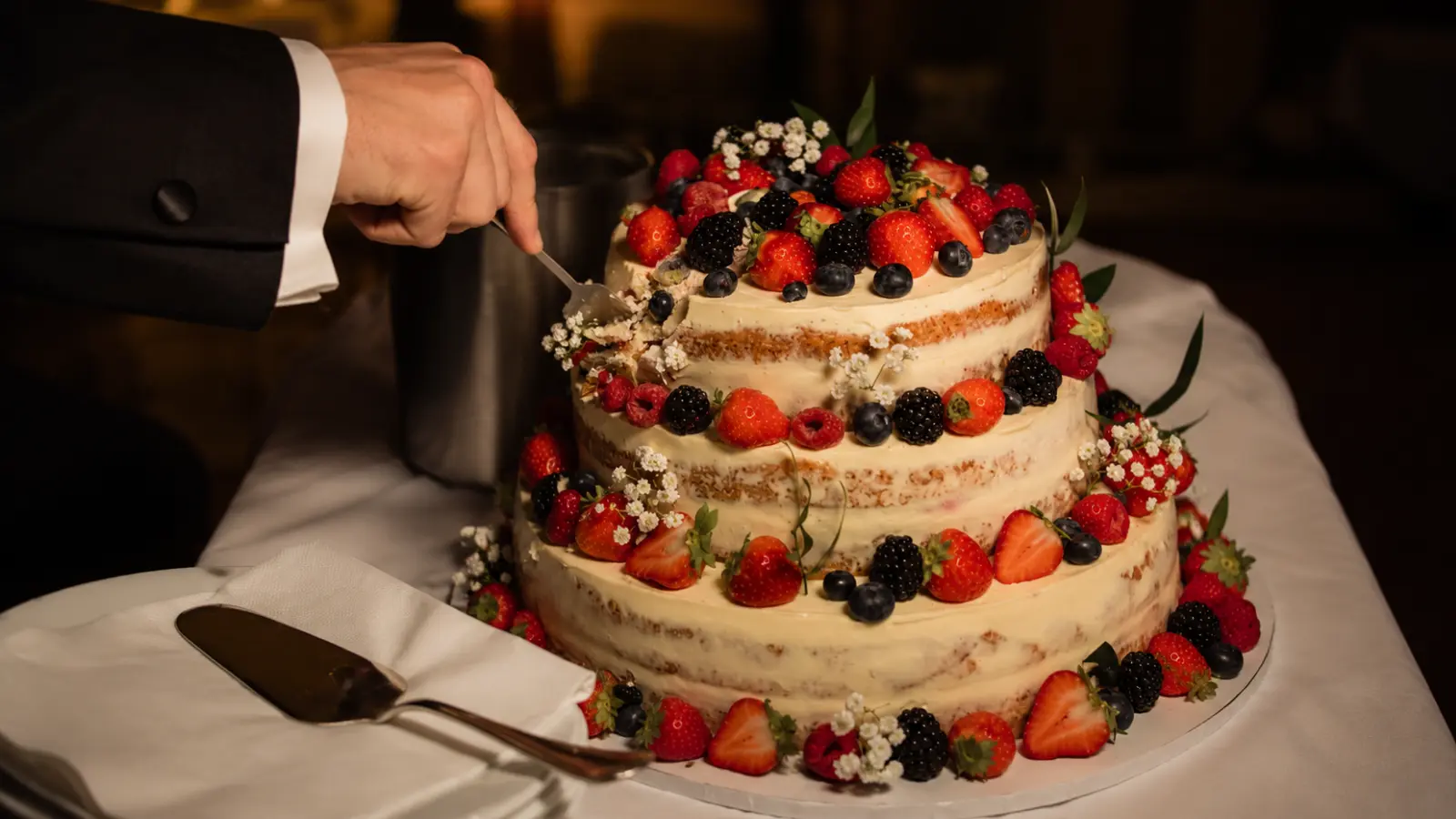
Textured buttercream with a single floral accent
A three-tier cake in Swiss meringue buttercream applied with a palette knife in loose, overlapping horizontal strokes, with a small cluster of fresh garden roses and eucalyptus placed between the second and third tiers. Nothing else. This is one of the most elegant rustic looks because the texture does the visual work, the flowers add color and warmth, and the restraint prevents the cake from looking busy. It photographs beautifully in natural light and works at garden weddings, barn receptions, and vineyard celebrations equally well.
Semi-naked with wildflower cascade
A semi-naked two or three-tier cake — thin buttercream scraped to show the layers — with a loose cascade of wildflowers running from the top tier down through the middle. The cascade is asymmetrical by design: heavier on one side, trailing down and off to the other. Flowers for this look: cosmos, chamomile, anemones, small garden roses, lavender, and whatever is in season from a local grower. This is one of the rustic cake looks that photographs especially well because the combination of visible cake layers and fresh seasonal flowers has a genuinely beautiful, unposed quality.
Ivory buttercream with greenery only
A clean ivory buttercream cake — lightly textured, not fully smooth — decorated exclusively with greenery: eucalyptus, ferns, trailing ivy, and fresh herbs. No flowers. The restraint is what makes this look sophisticated rather than sparse. It works especially well for couples who want a rustic cake but prefer a neutral, almost monochromatic palette where the greenery and the cake color are the entire visual.
Terracotta-toned rustic cake
A textured buttercream cake in warm terracotta or burnt sienna tones, decorated with dried botanicals — dried pampas grass, dried orange slices, dried roses in deep rust and burgundy. This look belongs to fall wedding cakes, autumn celebrations, and late-summer weddings and photographs beautifully against warm candlelight. The earthy tones feel genuinely seasonal rather than trend-dependent, which means it also ages well in photographs.
Naked cake with fresh fruit
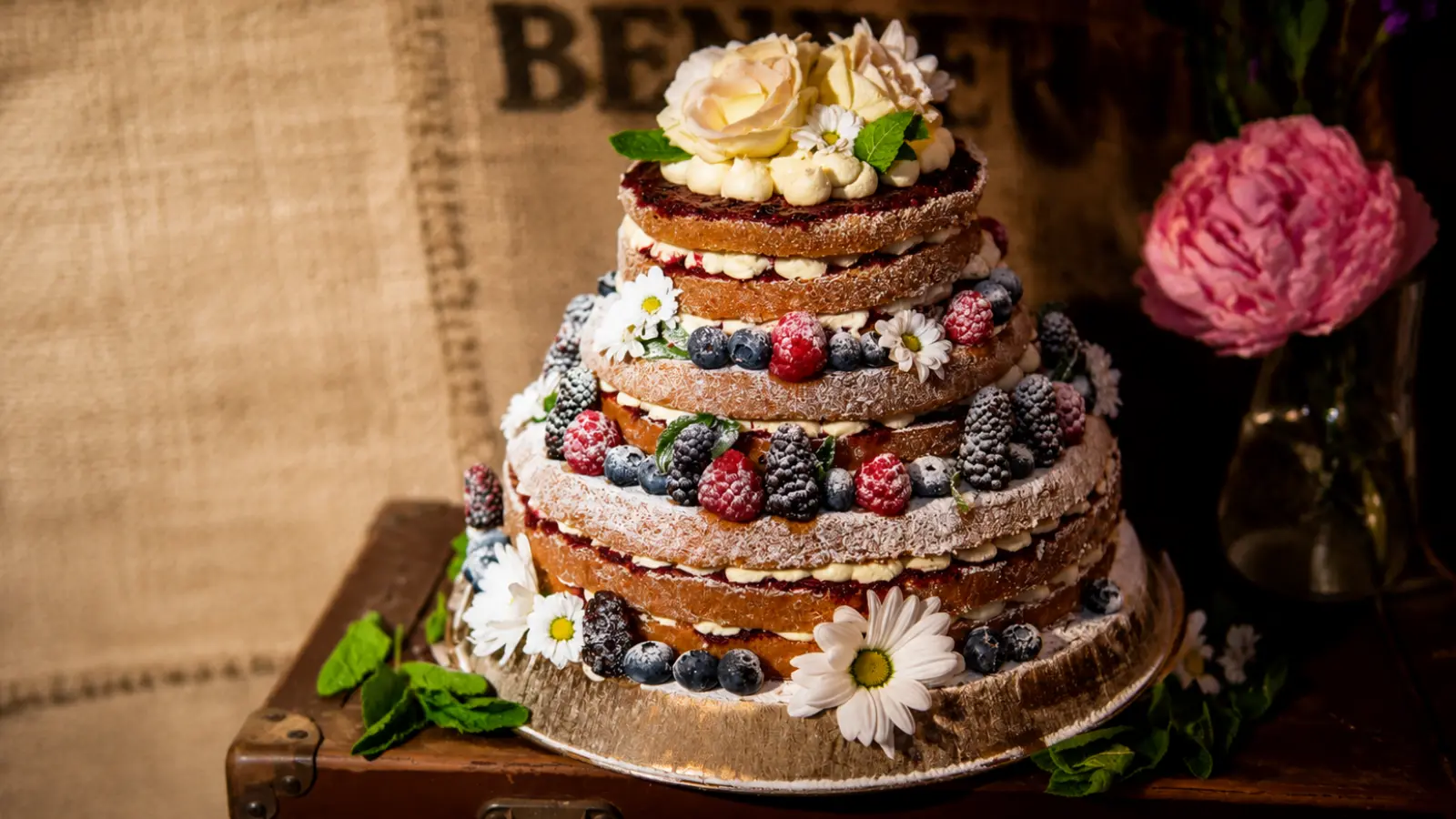
A naked cake — no exterior frosting — with fresh seasonal fruit piled loosely between the tiers and at the top: figs, blackberries, plums, peaches, or a combination. The fruit adds color, texture, and a sense of abundance without requiring floral coordination. This look is best executed at late summer and early fall weddings when the fruit is at peak quality, and it requires a temperature-controlled venue since fruit on an exposed cake is more perishable than flowers.
Quick reference: rustic wedding cake ideas by style
| Look | Key Elements | Best Season / Venue |
|---|---|---|
| Textured buttercream + single floral cluster | Palette-knife strokes, garden roses, eucalyptus | Any season · barn, garden, vineyard |
| Semi-naked wildflower cascade | Visible layers, asymmetric wildflower placement | Spring and summer · outdoor, bohemian |
| Ivory buttercream + greenery only | Eucalyptus, ferns, ivy, herbs — no flowers | Any season · neutral-palette weddings |
| Terracotta + dried botanicals | Warm tones, pampas grass, dried citrus | Autumn and late summer · any warm-tone venue |
| Naked cake + fresh fruit | No frosting, seasonal fruit piled between tiers | Late summer and fall · temperature-controlled venue |
Rustic Wedding Cakes with Flowers
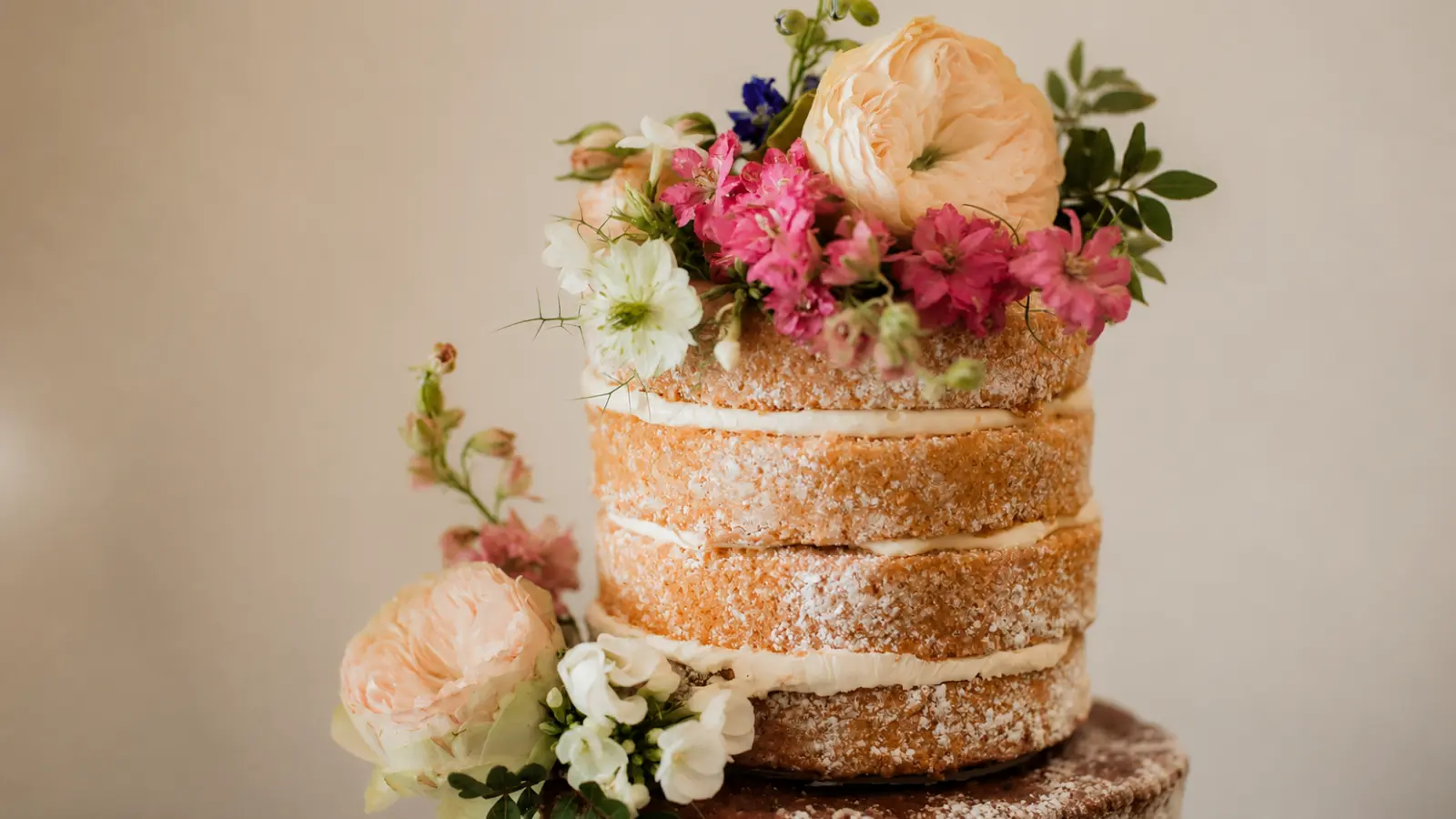
Flowers are the most used and most misused element on rustic wedding cakes. Used well — the right varieties, the right placement, coordinated with the overall florals — they are what makes a rustic cake look genuinely beautiful. Used carelessly — wrong varieties, overcrowded placement, poor coordination with the cake’s color — they turn a potentially elegant cake into something that looks like it was decorated five minutes before the reception.
The right flowers for a rustic cake
Rustic cakes call for loose, garden-style, and wild-looking flowers — varieties that look like they were gathered from a meadow or a cottage garden rather than arranged by a florist. The defining qualities: irregular petals, visible stems and movement, and a palette that draws from nature rather than from a color wheel.
- Garden roses are the most widely used rustic cake flower, and for good reason — they have an open, slightly undone quality that sits naturally on a textured buttercream surface. David Austin roses in blush, cream, dusty mauve, or apricot are particularly effective.
- Ranunculus bring layers of delicate petals that photograph beautifully and hold up well through a reception.
- Anemones — white petals with dark centers — add graphic contrast without looking formal.
- Cosmos and chamomile are the wildflower choices that read as most naturally untended, and they work beautifully on semi-naked cakes where the look is deliberately unstructured.
- Dahlias in rust, burgundy, and blush add a fullness and warmth that works particularly well at autumn and late-summer rustic weddings.
Greenery is as important as the flowers themselves:
- Eucalyptus — particularly seeded eucalyptus and silver dollar eucalyptus — is the most widely used cake greenery and provides both color and a trailing quality that works with asymmetric placements.
- Ferns add a soft, botanical depth.
- Fresh rosemary and thyme are increasingly common on rustic cakes because they add fragrance and texture simultaneously, and they signal a genuine connection to the garden aesthetic rather than a decorative approximation of it.
Placement approaches that work
The most effective flower placement on rustic cakes is asymmetric — heavier on one side, trailing down, or concentrated at one tier rather than distributed evenly across all tiers. Even placement tends to look too controlled for the rustic aesthetic. Asymmetry looks alive.
Three placement approaches that consistently photograph well: a cascade running from the top tier down through the middle tier on one side; a cluster between the second and third tiers with trailing greenery extending below; or a full floral “crown” on the top tier with nothing but greenery between the lower tiers. Each approach gives the cake a clear visual focal point rather than distributing decoration across the entire surface without hierarchy.
What to confirm with your baker before the flowers go on
Not all fresh flowers are food-safe, and this matters more than many couples realize. Lily of the valley, hydrangea, and sweet peas — all popular at weddings — are toxic if ingested and should not contact the cake surface directly. Food-safe flowers for cakes include roses, lavender, chamomile, marigolds, pansies, and violets. For non-food-safe flowers, a skilled baker will use food-safe picks or create a barrier between the stem and the cake. Ask specifically which flowers in your arrangement are safe for direct contact and which require barriers.
Also confirm who is responsible for placing the flowers on the cake. In many cases the florist provides the flowers and the baker places them — but this hand-off can fall through without explicit coordination. Get it in writing: who delivers the flowers, at what time, and who places them on the assembled cake at the venue.
Naked Rustic Wedding Cakes
The naked wedding cake became one of the defining images of the rustic wedding aesthetic and remains one of the most recognizable ways to signal an organic, relaxed cake style. It is still a strong choice — and still the most recognizable visual shorthand for “rustic” in wedding photography — but it comes with practical considerations that many couples do not fully understand before they book it.
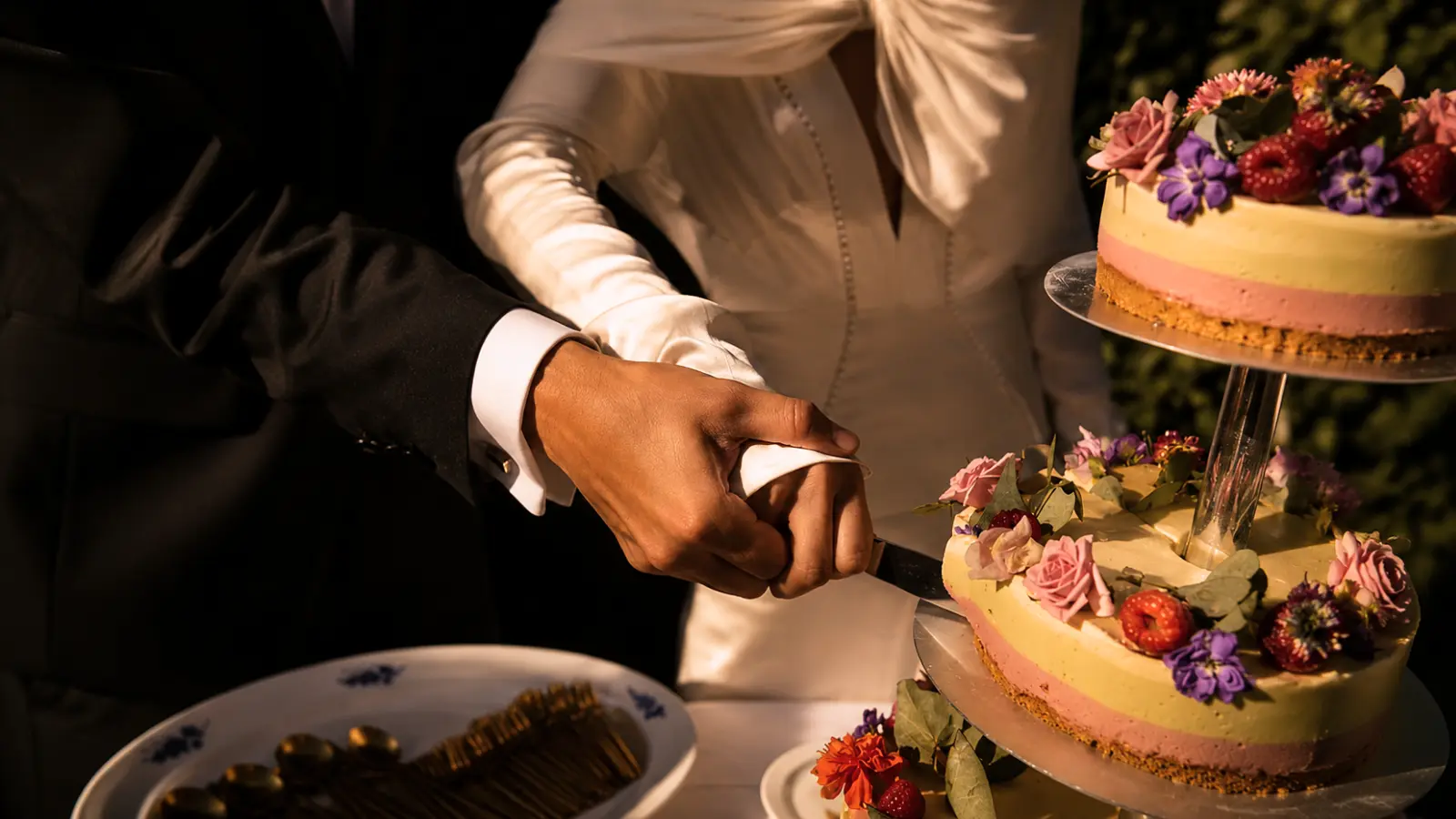
What a naked cake actually is
A naked cake has no frosting on the exterior, or so little that the cake layers and filling are clearly and deliberately visible. The tiers are stacked without any coating between the outside of the cake and the air around it. The result looks like a cross-section of the cake — you see exactly what is inside, which can be beautiful when the layers are even and the filling is attractive in color and texture. A lemon cake with lemon curd filling between each layer looks warm and inviting exposed. A chocolate cake with dark ganache looks rich and decadent. The visual of the naked cake is partially the aesthetic and partially the transparency — the guest can see what they are about to eat.
The practical realities
What many couples discover after choosing a naked cake is that it can be more demanding to execute well than it looks. Exposed cake layers dry out faster than frosted ones — the window between “freshly assembled and beautiful” and “noticeably dry at the edges” is shorter than it is for any other cake style. This means the cake needs to be assembled as close to service time as possible and kept in a cool, low-humidity environment. An outdoor summer wedding in direct heat is genuinely challenging for a naked cake in a way it is not for a frosted one.
The naked cake also requires that the cake layers themselves are visually attractive — even in thickness, even in color, without the air pockets or irregular rises that a frosted cake can conceal. The baker needs to be technically precise about the baking as much as the decorating, because there is nowhere to hide imperfections.
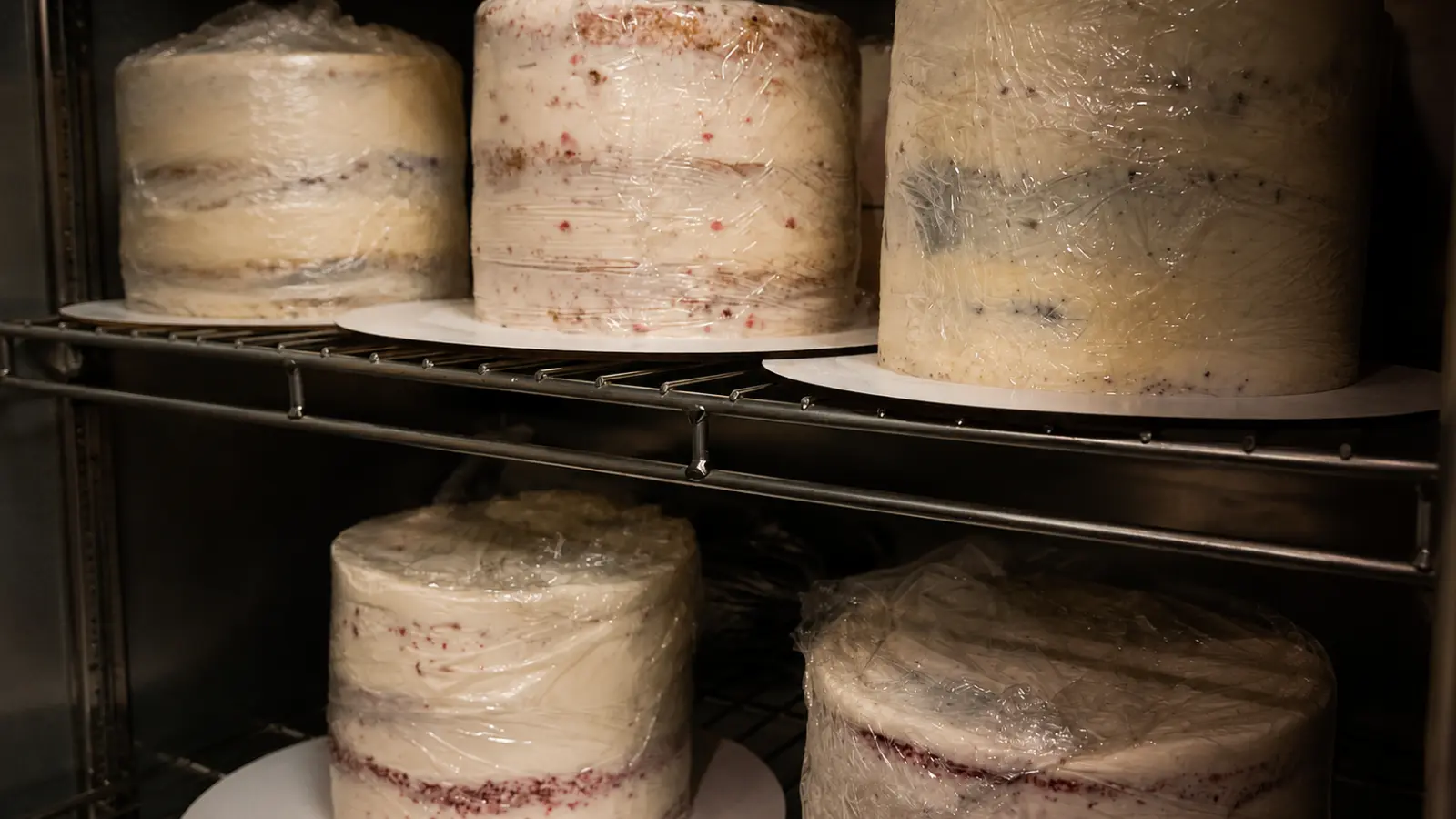
Many experienced cake designers recommend the semi-naked version for most couples who want this look. The semi-naked cake applies a very thin layer of buttercream and deliberately scrapes most of it away — the result looks virtually identical in photographs to a fully naked cake but protects the cake from drying out, survives warmer venues better, and gives the baker more control over the final appearance.
When a naked cake is the right choice
A naked cake is genuinely the right choice when: the venue is temperature-controlled, the delivery and setup window is tight (assembled as close to service as possible), the baker has specific experience with naked cakes (ask to see portfolio examples), and the overall wedding aesthetic is genuinely bohemian or garden-style rather than just “inspired by.” A naked cake at a barn wedding with wildflower centerpieces, wooden farm tables, and candlelight looks exactly right. A naked cake at a wedding where everything else is polished and formal looks like a catering error.
Rustic Two-Tier Wedding Cakes
The two-tier wedding cake is one of the most practical and most consistently beautiful configurations in the rustic category. It serves 50 to 100 guests depending on the tier sizes, produces a visually substantial cake without requiring the structural complexity of a three or four-tier construction, and gives the design enough surface area for a floral cascade or textured buttercream treatment to read clearly without overwhelming the space.
For intimate weddings, micro-weddings, and elopements, a beautifully executed two-tier rustic cake is often more visually effective than a larger cake — it fits the scale of the celebration rather than dwarfing it. A two-tier semi-naked cake with a cluster of seasonal wildflowers on a raw wood slice looks intentional and complete. The same design scaled to five tiers would look excessive at an intimate gathering of 40 people.
Two-tier configurations that work
A common two-tier rustic configuration is a 10-inch bottom tier and an 8-inch top tier, which can serve a medium guest count depending on the bakery’s serving size and how the cake is cut. For smaller gatherings, an 8-inch and 6-inch combination serves around 35 to 45 guests and creates a more delicate, intimate scale. For weddings of 80 to 100 guests who want to keep a two-tier visual, a 12-inch and 10-inch configuration with kitchen sheet cakes in the same flavor is the most practical approach — the display cake is beautiful, the sheet cakes ensure every guest is served, and no one knows the difference.
Height matters with two-tier cakes. Standard tiers are 4 inches tall. Requesting 5 or 6-inch-tall tiers adds visual presence without adding width — the cake reads as more substantial than its footprint suggests. For rustic cakes specifically, taller tiers also give more surface area for the floral or greenery decoration to read clearly rather than feeling crowded into a short space.
Two-tier rustic cakes for smaller budgets
Two-tier rustic cakes tend to be among the most budget-friendly wedding cake options in the market — and one of the few wedding cake categories where the budget version and the premium version look nearly identical in photographs. The difference between a lower-cost two-tier semi-naked cake with fresh wildflowers and a more premium version is often in the quality of the buttercream, the sourcing of the flowers, and the baker’s finishing skill rather than in the basic visual concept. This makes the two-tier rustic one of the strongest value options for couples who want a beautiful cake without a significant budget allocation.
Rustic Cake Stands
The wedding cake stand is not a minor detail on a rustic wedding cake — it is part of the design. A beautifully executed semi-naked cake placed on a shiny chrome stand or a mirrored acrylic disc loses the coherence of its rustic aesthetic immediately. The stand needs to belong to the same visual world as the cake, the florals, and the table it sits on.
The best rustic cake stands
Raw wood slice. A cross-section of a natural tree trunk — the rings visible, the edge raw and unfinished — is one of the most recognizable rustic cake stand choices. It photographs beautifully, belongs unmistakably to the rustic aesthetic, and can often be sourced inexpensively from a local lumber yard, a wood supplier, or a wedding rental company. Sizes typically range from 12 to 18 inches in diameter; choose a size that extends at least 2 to 3 inches beyond the base tier of the cake for visual stability.
Reclaimed wood round. Similar to a raw slice but from reclaimed or weathered wood — the grain is more visible, the surface may be slightly rough, and the overall feel is more aged and textured than a fresh cut. Works particularly well at barn and farmhouse weddings where weathered wood is already present in the venue aesthetic.
White-washed wood. A wood stand treated with a white or pale grey wash — rustic in texture but lighter in palette than natural wood. Works well when the overall wedding color palette is soft and neutral rather than warm-toned, and pairs particularly well with ivory buttercream and white or blush flowers.
Wrought iron or antique brass. A pedestal stand in wrought iron black or aged brass reads as rustic-romantic rather than rustic-farmhouse — it has more formality than a wood slice but still belongs to the organic aesthetic. Works at bohemian and garden weddings where the aesthetic is slightly more polished than a pure barn look.
Vintage ceramic. A white or cream ceramic pedestal with an aged, slightly irregular finish can work for rustic cakes at garden and cottage-style weddings. Less visually dramatic than a wood slice but elegant in a quieter way.
Stand height considerations
A cake stand that is too short places the cake at the same visual level as everything else on the table — it disappears into the surrounding décor. A stand of 6 to 12 inches gives the cake enough elevation to read as a focal point without looking precarious. For smaller cakes (one or two tiers), a taller stand compensates for the reduced visual presence of fewer tiers. For larger cakes (three or more tiers), a lower stand is more structurally stable and still allows the cake’s own height to create the visual impact.
Confirm the stand dimensions with your baker before purchasing or renting. The base tier of the cake needs to sit securely on the stand without overhang — most bakers have strong opinions about stand-to-cake ratios and will advise specifically if the stand you have chosen is not appropriate for the size of cake they are making.
Country Wedding Cakes
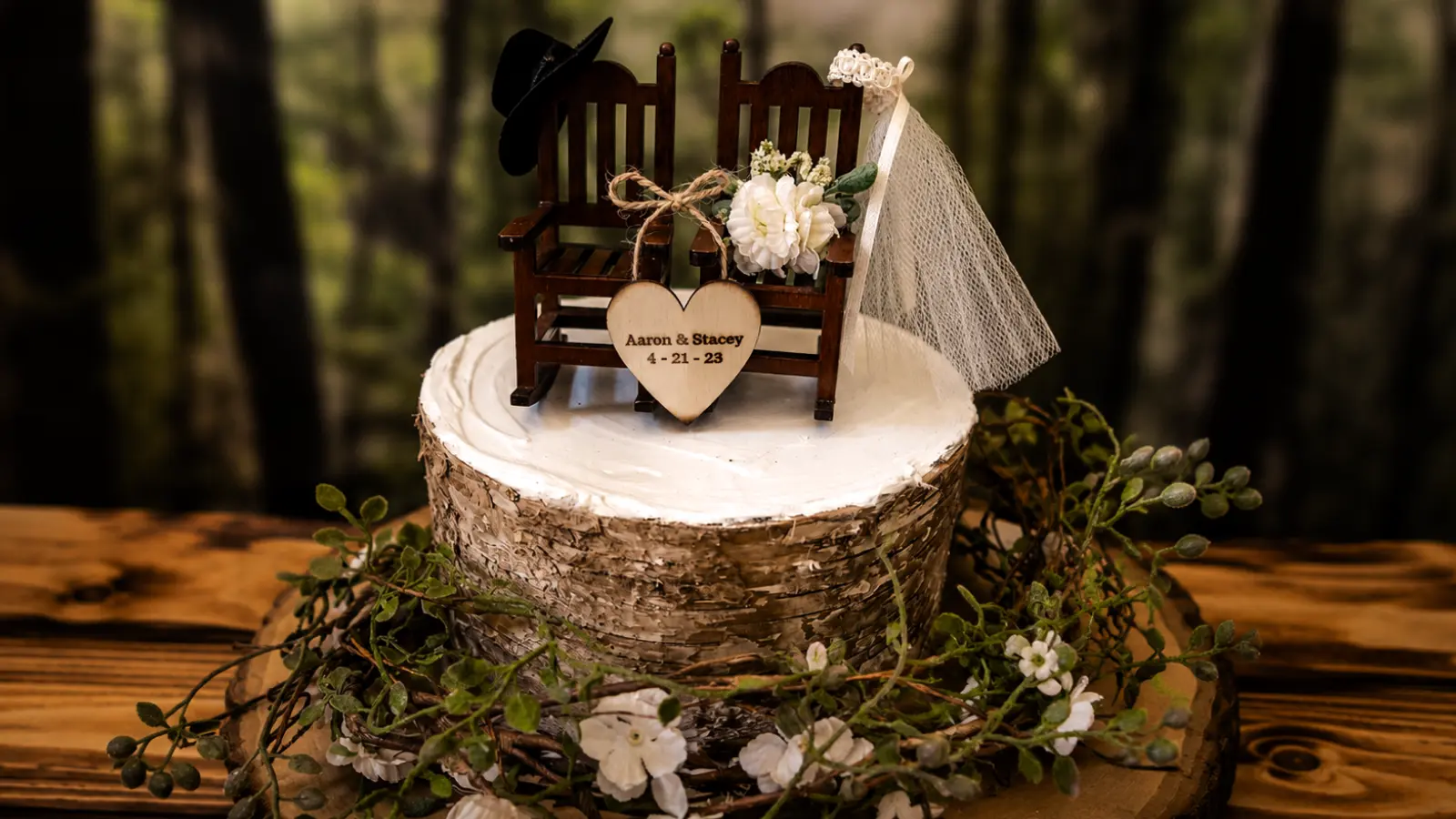
Country wedding cakes overlap significantly with the rustic category but carry a slightly different cultural register — where rustic tends toward bohemian and garden-influenced aesthetics, country leans toward Southern American traditions, farmland imagery, and the visual language of a barn wedding in the American South or Midwest. The cakes share the organic, unfussy quality of rustic cakes but sometimes include elements that are specific to country wedding culture: mason jar accents, burlap ribbon at the tier bases, pecans or pecan pie filling for a Southern flavor profile, and sunflowers as the primary floral.
What defines a country wedding cake
Country wedding cakes tend to be warm-toned rather than neutral: ivory and cream rather than white, warm sage rather than cool green, and floral palettes that favor sunflowers, wildflowers in golden yellow and burnt orange, and late-summer botanical elements. The overall feel is generous and abundant — country wedding culture tends toward celebration that is full rather than restrained, and the cake often reflects that.
Wedding cake flavors are part of the country wedding cake identity in a way they sometimes are not for other rustic styles. Carrot cake with cream cheese frosting, red velvet with cream cheese, pecan pound cake, and lemon cake with honey buttercream are all strongly associated with country and Southern wedding cake traditions. These flavors belong to the heritage of American country cooking and choosing them for a country wedding is a genuine expression of that connection rather than a trend choice.
Country cake details that work
Sunflowers are one of the clearest country wedding cake flowers because they read as warm, abundant, and distinctly country rather than simply rustic. A semi-naked cake with a few large sunflower heads placed between tiers and trailing greenery at the base is one of the most coherent country wedding cake images available. Burlap ribbon at the base of each tier — tied in a simple bow — is an inexpensive detail that photographs cleanly and signals country wedding aesthetic immediately. Mason jar accents on the cake table (filled with small flowers, candles, or simple herb arrangements) extend the country aesthetic from the cake to the entire table display.
How to Keep Rustic Cakes Elegant
The most common failure mode of a rustic wedding cake is not looking too rustic — it is looking inexpensive. The aesthetic deliberately embraces imperfection and natural materials, which means the gap between an intentional rustic cake and an unintentional low-budget one can be narrow. The following principles are what experienced bakers and wedding planners consistently identify as the difference between the two.
Start with the buttercream quality
This is the single most important factor. When comparing buttercream vs fondant wedding cakes, Swiss meringue buttercream and Italian meringue buttercream are often chosen for rustic styles because they are silkier, less sweet, and visually refined. The strokes look more intentional, the color is more muted and elegant, and the overall surface reads as something that was made by a skilled person who chose this finish rather than someone who ran out of time before smoothing.
American buttercream applied in loose strokes can look good, but the higher sugar content means it sets with a more matte, slightly chalky surface rather than the soft lustre of meringue buttercream. If budget allows, specify meringue buttercream. If it does not, ask your wedding cake baker to show you examples of their American buttercream applied in a textured finish before committing — the quality varies significantly between bakers.
Be specific about the flower palette
Generic “wildflowers” from an undirected florist can produce a mix that is beautiful or chaotic depending on what is available that week. Being specific about the palette — three or four varieties, a defined color range, confirmed as seasonal and available — gives the baker and florist the information they need to execute a coherent look. A cake decorated with a specific palette of blush ranunculus, chamomile, and seeded eucalyptus looks designed. A cake decorated with whatever wildflowers were available that morning looks improvised.
Commit to one aesthetic anchor
The rustic cakes that look most elegant are the ones that commit to a single clear visual direction and execute it with precision, rather than incorporating every rustic element simultaneously. Texture or flowers — not both at maximum intensity. Naked layers or greenery cascade — not both competing for attention. Dried botanicals or fresh fruit — not mixed together on the same cake. The restraint of choosing one primary element and letting the others recede is what creates a composed, intentional look rather than a busy one.
Match the cake to the venue precisely
A rustic cake that is slightly too casual for the venue reads as a mismatch. A rustic cake that is perfectly calibrated to the venue aesthetic reads as excellent taste. Before finalizing the design, look at the venue itself — the materials, the lighting, the overall tone — and ask whether the cake you are imagining belongs there. A semi-naked cake with wildflowers belongs at a barn with wooden farm tables. A slightly more polished textured buttercream with a restrained floral accent belongs at a garden venue with linen-covered tables and lanterns. The difference between these two interpretations of “rustic” is significant, and getting it right is what separates a cake that looks thoughtfully chosen from one that looks like a Pinterest selection pasted into the wrong setting.
Style the table with the same intention as the cake
A beautiful rustic cake on a plain folding table with a white polyester tablecloth looks wrong regardless of how well the cake is executed. The table is part of the cake’s visual context. A raw wood slice stand on a linen-covered table with scattered eucalyptus, a few tea light candles, and a small hand-lettered flavor sign creates a complete, composed image. The cake table styling costs very little relative to the cake itself and has a disproportionate impact on how the cake photographs and how guests perceive it when they arrive at the reception.
Rustic Wedding Cake Inspiration Board
Rustic wedding cakes can range from semi-naked buttercream tiers and wildflower arrangements to country-inspired cakes, greenery details, raw wood stands, and warm seasonal textures. Explore our rustic wedding cake inspiration board for barn weddings, garden receptions, vineyard celebrations, and organic cake designs that feel natural, intentional, and beautifully connected to the setting.
Final thoughts
The best rustic wedding cakes are not beautiful because they look imperfect; they are beautiful because every imperfect-looking detail has been chosen with care. The visible layers, textured buttercream, loose florals, greenery, fruit, and natural stands all work best when they feel connected to the venue, the season, and the overall atmosphere of the wedding.
When the rustic style is handled with intention, the result feels warm, personal, and quietly elegant rather than unfinished or overly casual. A rustic cake should look like it belongs exactly where it is — whether that is a barn reception, garden wedding, vineyard celebration, or country-inspired gathering built around natural beauty and meaningful details.
Frequently asked questions (FAQ)
Why do some rustic wedding cakes look elegant while others look unfinished?
The difference is usually intention. Elegant rustic cakes use texture, flowers, and exposed layers deliberately, while unfinished-looking cakes often feel random. Guests can tell when the imperfection is part of the design and when it looks accidental.
Is a rustic wedding cake still a good choice if your wedding is not in a barn?
Yes. Rustic cakes work beautifully in vineyards, gardens, estates, and outdoor venues. The key is matching the cake to the overall atmosphere rather than forcing a farmhouse aesthetic into a space where it does not belong.
What is the biggest mistake couples make with rustic cake inspiration?
Trying to include every rustic element at once. Wildflowers, greenery, naked layers, fruit, wood stands, dried botanicals, and textured buttercream can all work beautifully, but the strongest cakes usually focus on one or two signature elements rather than all of them.
Why do rustic wedding cakes photograph so well?
Texture. The visible buttercream strokes, exposed layers, flowers, greenery, and natural materials create depth and dimension that cameras capture beautifully, especially in outdoor or natural light settings.
Can a rustic wedding cake still feel luxurious?
Absolutely. Luxury comes from quality ingredients, skilled craftsmanship, and thoughtful styling. A beautifully executed semi-naked cake with premium buttercream and carefully chosen florals can feel far more luxurious than a larger cake covered in generic decorations.
What do professional cake designers notice first about a rustic cake?
Usually the overall balance. They look at how the flowers are placed, whether the texture feels intentional, how the proportions of the tiers work together, and whether the cake fits the venue and wedding style as a whole.