
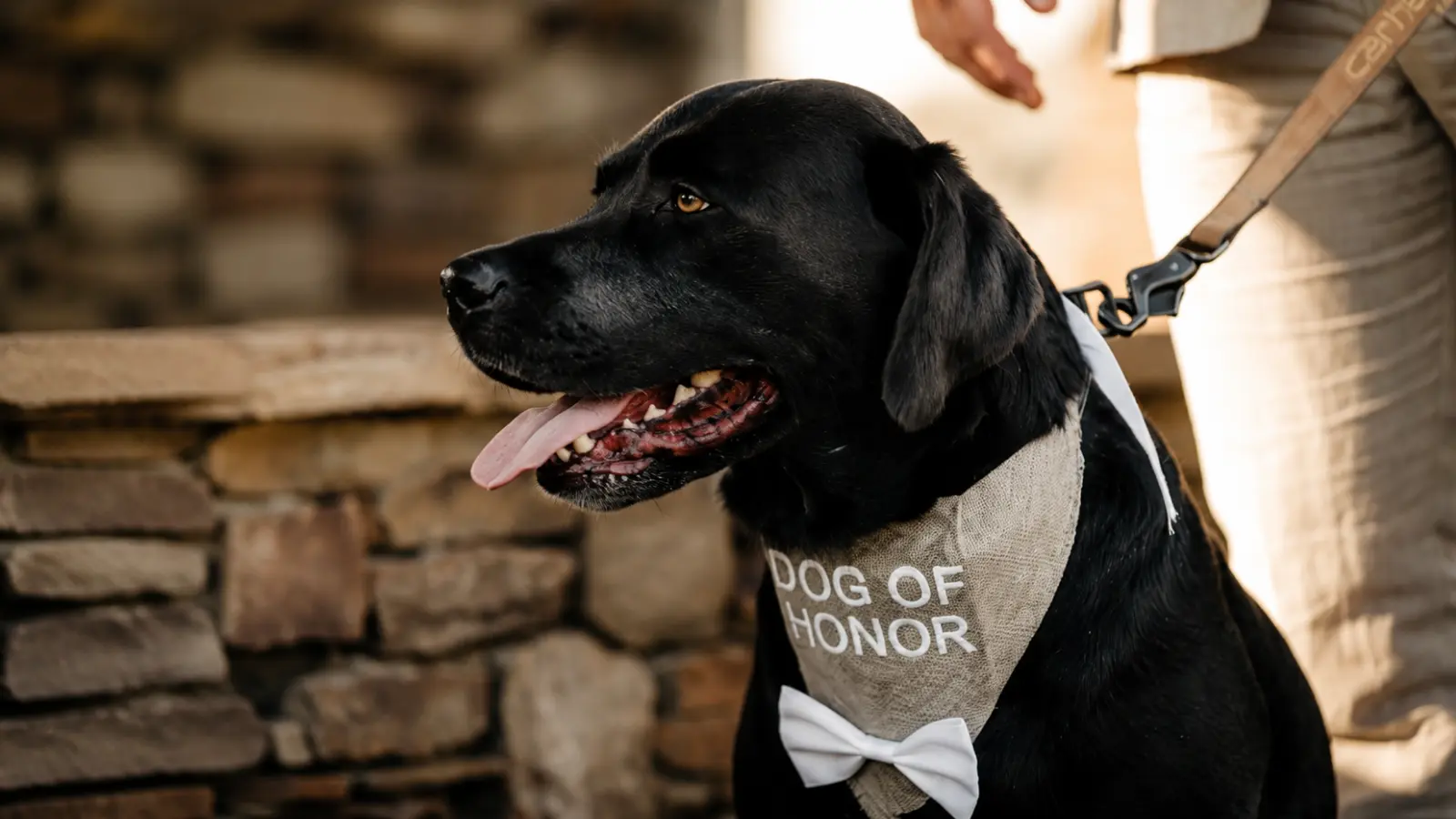
A wedding pet attendant is the person responsible for caring for your pet throughout the wedding day, from arrival to departure. Their job is not simply holding a leash — it includes transportation, calming the animal, managing the ceremony moment, helping with photos, handling bathroom breaks, watching for stress, and taking the pet home when their role is complete.
This role matters because the couple cannot realistically manage a pet while getting married, taking portraits, greeting guests, and moving through the wedding timeline. A pet attendant gives the animal one dedicated person whose only responsibility is their comfort, safety, and behavior during the event.
This guide explains what a wedding pet attendant does, when you need one, whether a friend or professional is the better choice, what to ask before hiring someone, what to pack for your pet, and how this role fits into planning pets at weddings.
What Is a Wedding Pet Attendant?
A wedding pet attendant is not a dog sitter who happens to show up at your venue. The role is specific: one person, fully available, responsible for the pet from the moment the animal arrives until the moment they leave. That covers transport, leash management, the ceremony entrance, portrait positioning, water and bathroom breaks, stress monitoring, and the exit — which often means physically driving the pet home when their part of the day is done.
What makes this role different from a general dog sitter is the environment. A dog sitter manages a pet in a familiar or controlled space. A wedding pet attendant manages an animal in an unfamiliar venue, which is why pet-friendly wedding venues with clear rules, quiet spaces, and realistic access policies make the role much easier. The animal picks up on all of it. The attendant needs to be fully present to manage whatever that produces — not distracted by a glass of champagne, not trying to find their seat, not also serving as a bridesmaid or greeting guests at the door.
The practical definition matters: the attendant has one job. Anyone who has a second job on the wedding day is not the attendant.
Pet Attendant, Dog Sitter, Dog Handler — What’s the Difference?
The titles get used interchangeably, but the distinctions are worth understanding before you start looking for the right person.
A pet attendant or pet handler in the wedding context means the dedicated person responsible for the animal throughout the event. The term covers any species — dogs, cats, or other pets — and implies a full-day or partial-day commitment to the animal’s care. This is the role this guide covers.
A dog sitter or dog walker is typically someone who cares for a pet in their own home or on a regular neighborhood route. Some dog sitters are willing and well-suited to take on a wedding pet handler role, particularly if they already know the animal — but not all of them have experience managing a pet in a high-stimulation event environment. If you’re considering hiring a regular sitter for the wedding day, have an honest conversation about what the day will actually involve before you commit.
A professional wedding pet attendant is someone who specifically offers this service for weddings. This is a niche but growing role, particularly in markets with active wedding industries. The advantage is experience: they’ve managed animals in ceremony settings before, they know how to coordinate with photographers and officiants, and they come with a framework for handling the scenarios that couples don’t anticipate.
The right choice depends on your pet, your wedding, and who is realistically available to take the role seriously.
Do You Actually Need a Pet Attendant?
If the pet is physically attending any part of the wedding day — ceremony, portraits, cocktail hour — then yes, especially when you are planning how to include your pet in your wedding safely and realistically. The question isn’t whether you need someone responsible for the animal. The question is who that person will be and whether they can actually do the job.
Run through this honestly before you decide the role doesn’t apply to your situation:
- You and your partner will be occupied. During the ceremony you’re getting married. During portraits you’re being photographed. During cocktail hour you’re greeting guests. There is no moment in a wedding where the couple can be the primary caregiver for a live animal without splitting their attention from something that matters more.
- Your wedding party has other responsibilities. Bridesmaids and groomsmen are managing their own roles — walking the processional, giving toasts, keeping the couple calm, managing families. Adding “also hold the dog” to any of those jobs means one of them gets done poorly.
- Your parents are guests. Asking a parent to spend the ceremony managing the dog means they’re not watching their child get married. That’s a real cost, and most parents would rather be present for the ceremony than crouched in the back with a leash.
- Vendors have their own jobs. The photographer is shooting. The florist has left. The coordinator is managing the timeline. None of them can absorb a pet management role.
If you work through that list and cannot identify a specific person who has no other function on the day, the attendant role is unfilled — and that’s a planning gap worth closing before the wedding morning arrives.
Quick Guide: What the Attendant Does at Each Stage
The attendant’s responsibilities shift throughout the day. Here’s a practical overview of the full scope, from before the ceremony through the final exit.
| Stage | Pet Attendant Role |
|---|---|
| Before the ceremony | Transports the pet, handles arrival, walks the dog, keeps the animal calm and away from high-traffic areas |
| During the ceremony | Manages the entrance cue, handles the leash or carrier, removes the pet immediately after their moment — before vows begin |
| Portrait session | Positions the pet, offers treats for attention, holds the animal between shots, coordinates timing with the photographer |
| Quiet room or holding area | Keeps the pet settled between appearances, provides water, manages bathroom breaks, monitors for stress |
| Reception (if applicable) | Supervises the pet in a permitted area, keeps them away from food and crowds, or removes them if the environment becomes too much |
| End of day | Transports the pet home, to a hotel, or to a boarding facility — whichever is planned |
| Emergency situations | Handles anxiety, barking, accidents, overheating, or any behavioral issue without pulling the couple out of their own wedding |
The table makes it look clean and sequential. In practice, these stages overlap, and the attendant needs to move between them fluidly. A dog who is calm during the ceremony walk may become anxious the moment they’re back in the holding area. A cat who traveled fine may need 20 minutes to settle before portraits begin. The attendant’s job is to read the animal and adjust — not to follow a rigid schedule.
What the Attendant Does Before the Ceremony
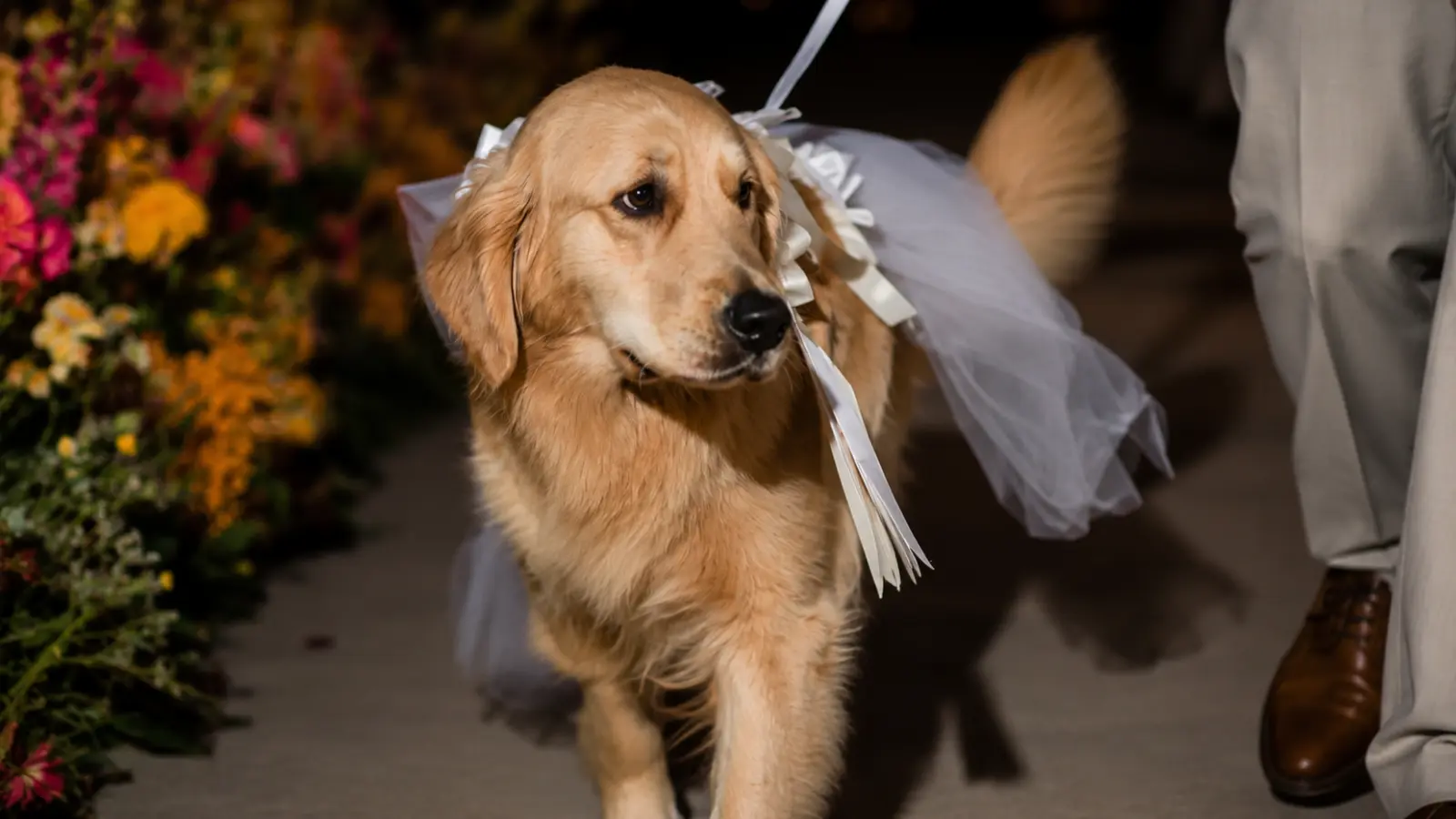
The hour before a ceremony is one of the most chaotic moments of any wedding day. Guests are arriving, the wedding party is being arranged, the couple is managing last-minute details, and the photographer is already shooting. This is precisely when the pet needs the most attention — and when everyone else is least available to give it.
The attendant arrives with the pet early enough to let the animal acclimate before the ceremony begins. For most dogs, that means arriving 30 to 45 minutes before the processional — enough time for a walk, a bathroom break, water, and a chance to settle in the quiet room before the noise level builds. For cats or other small animals traveling in a carrier, that arrival window gives time to let the animal settle in a calm space before any appearance is expected of them.
During this window, the attendant keeps the pet away from the main event areas. The ceremony space before guests are seated, the area near the caterer’s prep station, the main hallway where the wedding party is lining up — these are all high-traffic, high-energy zones that work against a calm animal. The attendant’s goal in the pre-ceremony window is simple: keep the pet quiet, comfortable, and ready.
What the Attendant Does During the Ceremony
The ceremony is the attendant’s highest-stakes moment, and it’s the one with the least room for improvisation. Every element of the pet’s involvement — when they enter, how the leash is managed, where the handler stands, how the rings are retrieved if the dog is a dog ring bearer, and exactly when the animal exits — needs to be decided and rehearsed before the day.
The attendant’s position during the ceremony walk depends on the specific role. If the dog is walking the aisle as a ring bearer or processional companion, the attendant walks alongside and takes the lead the moment the dog reaches the front. If the pet is stationed near the couple for a brief moment, the attendant stands close enough to intervene without being in the frame. In every scenario, the exit happens immediately after the pet’s role is complete — not after a few minutes, not when it feels like the right time. The pet leaves the ceremony area before the vows begin.
This is the part that requires the attendant to be genuinely assertive. Well-meaning guests will want to pet the dog. The officiant may make a joke that extends the moment. The couple themselves may want to hold the animal longer than planned. The attendant’s job is to keep the exit on schedule regardless — not rudely, but firmly. A dog who stays at the altar through twenty minutes of vows will eventually make its presence known in a way that nobody planned for.
What the Attendant Does During Photos
Portrait sessions with a pet require a different skill set than the ceremony. The ceremony is about timing and control. The portrait session is about attention, positioning, and patience — and it requires the attendant to work closely with the photographer in a way the couple often underestimates.
The attendant’s role during portraits is threefold: keep the animal in the general area where the photographer needs them, get the pet’s attention at the right moment using treats or familiar sounds, and step out of the frame the instant the shot is set up. That last part sounds simple. With a dog who is sniffing the ground, trying to reach the couple, or simply uninterested in holding still, it takes real skill to make it look effortless.
Before the wedding day, the attendant and photographer should have a brief conversation about wedding photos with pets — specifically, whether the photographer wants the attendant visible in the frame for any shots or fully out of it, how much time is blocked for pet portraits, whether pet wedding attire needs adjusting between shots, and what the signal is when the attendant needs to redirect the animal.
Who Should Not Be the Handler
This is worth stating clearly, because the most common mistake in wedding pet planning is assigning the handler role to someone who seems available but isn’t.
The following people should not be the pet handler:
- A bridesmaid or groomsman who is also walking the processional, giving a toast, bustling the dress, or managing any other wedding party function. They cannot split focus between two roles and do either well.
- A parent of the couple who is being seated, walking in the processional, or simply needs to be present for the ceremony without a leash in their hand.
- A guest who offered but also wants to enjoy the wedding. Holding a dog through a ceremony while also trying to find your seat and watch the vows is not a manageable combination.
- A vendor — photographer’s assistant, day-of coordinator, florist — who has their own professional responsibilities and cannot absorb a pet management role without compromising their primary job.
- A child. No matter how much a younger guest loves the dog, managing an animal in a high-stimulation environment requires adult judgment and physical reliability.
The person who takes this role is giving up participating in the wedding as a guest. That’s a real ask — and it’s worth naming it honestly when you make the request.
Can a Friend or Family Member Do It?
Yes — and for many couples, a trusted friend who knows the pet well is the right choice. The criteria that matter have less to do with professional credentials and more to do with availability and temperament.
A friend or family member is a good fit for the handler role when they know the animal well enough that the pet is relaxed with them, they have no other responsibilities on the wedding day, they are calm under pressure and won’t become flustered if something goes wrong, and they understand that their job is the pet — not the wedding. That last point sounds obvious, but it’s the one that’s easiest to underestimate. A friend who loves you and loves the dog may still find it difficult to stay focused on the animal when the ceremony begins and the emotion of the moment takes over.
If you’re asking a friend or family member to fill this role, have a real conversation about what it involves before the day — not a casual mention, but a specific briefing. Walk them through the full timeline, explain exactly what they need to do at each stage, and confirm that they’re genuinely comfortable with the scope. A person who agrees without fully understanding the job is a liability on the day.
Professional Pet Attendant vs. Trusted Guest
Deciding between a professional and a trusted person comes down to a few honest questions about your specific situation.
A professional wedding pet attendant makes the most sense when no trusted person is available who has both familiarity with the animal and freedom from other responsibilities, when the pet is large, strong, reactive, or has behavioral quirks that require real handling experience, when the couple wants the certainty that the role will be executed without relying on a relationship, or when the animal is not highly bonded to any one person and would be equally comfortable with someone they’ve met a handful of times.
A trusted friend or family member works best when the person knows the animal deeply and the pet is genuinely comfortable with them, when the individual is organized, calm, and reliable in stressful situations, and when the couple trusts them to prioritize the animal’s needs over their own experience of the day.
One practical advantage of a professional is that they arrive knowing what a wedding environment involves. They’ve done this before. They’ve seen what happens when a dog refuses to walk, when the ceremony runs long and the animal gets restless, when the photographer needs the pet repositioned five times in a row. A trusted friend arriving at their first wedding pet handler role will learn on the day — which is fine, but means the couple is absorbing more of the uncertainty.
What to Ask Before Hiring a Professional
If you decide to hire a professional pet attendant, the conversation before you book matters as much as the day itself. These are the questions worth asking:
- Have you worked at weddings specifically? General pet sitting experience is valuable but not the same as managing an animal in a ceremony setting with a hundred guests watching.
- Can you meet the pet before the wedding day? A meet-and-greet session before the event gives the animal a chance to get comfortable with the attendant in a low-stakes setting. For anxious pets, this can make a significant difference in how the day goes.
- How do you handle stress signals in animals? A good attendant should be able to describe specific behaviors they watch for — and the specific steps they take when they see them — without you having to prompt them.
- What is your plan if the pet cannot complete their role? The attendant should have a clear answer for what happens if the dog refuses to walk the aisle, if the cat escapes the carrier, or if any part of the plan needs to change in real time.
- Do you have experience with the specific species? An attendant who specializes in dogs may not have meaningful experience managing a cat in an unfamiliar environment. Ask directly if your pet is anything other than a dog.
- What are your transportation arrangements? If the attendant is responsible for bringing the pet to the venue and taking them home, confirm whether they have an appropriate vehicle, a secure carrier or crate for transport, and experience driving with animals.
Get the answers in writing alongside whatever agreement you sign. The briefing you give a professional has the same structure as the briefing you give a trusted friend — the difference is that a professional should be asking most of these questions themselves.
What to Pack for Your Pet
Everything the pet needs on the wedding day should be packed and labeled by someone other than the couple — ideally the attendant or a designated helper the day before. The bag goes with the attendant, not with the wedding party.
A complete kit for most dogs or cats includes the following:
- Water and a collapsible bowl. Familiar water from home, if the pet is sensitive to taste differences between locations.
- Treats the animal already knows. A new treat introduced on a high-stress day may be refused or cause digestive issues. Use what works at home.
- Leash and a backup leash. The primary leash should be the one the animal is already used to wearing. The backup is for peace of mind.
- Carrier or crate. Even for dogs who don’t normally use a crate, a familiar enclosed space can help a stressed animal settle in a quiet room.
- Waste bags and a small towel. For cleanup and for any unexpected spills or accidents.
- Medications with written instructions. If the pet takes anything regularly, or if a veterinarian has prescribed something for anxiety, make sure the attendant has the medication and knows exactly how and when to give it.
- A photo of the pet and veterinarian contact information. For any emergency situation where the attendant needs to act quickly without being able to reach the couple.
- A familiar item from home. A blanket, a toy, or a piece of clothing with a familiar scent can help a pet settle in an unfamiliar quiet room.
The goal is to make the attendant completely self-sufficient for the animal’s needs throughout the day. If they have to find the couple to ask where the treats are, something was left out of the pack.
How Much Time Do You Need the Attendant?
The honest answer is: longer than you think, and usually the full day if the pet is attending more than a brief portrait session.
For a pet who is coming for the ceremony and portrait photos only, the attendant needs to be present from approximately 45 minutes before the ceremony through the end of the portrait session — typically two to three hours total, plus transport time on both ends. For a pet who is staying through cocktail hour, add another 60 to 90 minutes. For a pet at the reception, the attendant is present from arrival through the end of the event.
What most couples underestimate is the time on either side of the visible moments. The attendant arriving 30 minutes before the ceremony is not early — it’s the minimum needed to settle the animal and prepare for the entrance. The attendant staying 20 minutes after the portrait session ends is not overtime — it’s the time needed to pack the pet’s bag, walk the dog one more time, and confirm the exit plan before driving away.
When you’re building the wedding day timeline, add the pet attendant’s full schedule as a separate line item alongside the photographer’s timeline, the ceremony run of show, and the caterer’s service schedule. The pet’s day has a beginning, a middle, and an end — and all three need to be accounted for before the day begins.
Wedding Pet Attendant Tips
A wedding pet attendant helps keep your dog or pet calm, safe, and cared for throughout the wedding day. Explore what a pet attendant does, when to hire one, what to pack, and how to plan a smooth ceremony or photo moment with your pet.
The Person Who Keeps the Pet Experience Calm
A wedding pet attendant is often the difference between a pet moment that feels effortless and one that becomes stressful for everyone involved. When one person is fully responsible for the animal, the couple can stay present, the guests can enjoy the ceremony, and the pet has someone watching their comfort from beginning to end.
Whether you choose a professional attendant or a trusted person who knows your pet well, the role deserves real planning. Brief them early, give them the supplies they need, and treat their timeline as part of the wedding timeline itself. That preparation is what allows the pet to be included beautifully without asking the couple to manage one more thing on the day.
Frequently asked questions (FAQ)
What is a wedding pet attendant?
A wedding pet attendant is the person responsible for caring for your pet throughout the wedding day. They manage transportation, walks, water, feeding, ceremony timing, portrait sessions, stress monitoring, and the pet’s departure after their role is finished. Their only responsibility is the animal, allowing the couple and guests to enjoy the wedding without worrying about pet care.
Do you really need a wedding pet attendant?
Yes, if your pet is attending any part of the wedding. Someone needs to supervise the animal before the ceremony, during photos, throughout any appearances, and when it’s time to leave. Whether that person is a professional or a trusted friend, the role should belong to someone who has no other responsibilities during the wedding.
Should you hire a professional pet attendant or ask a friend?
A trusted friend can be an excellent choice if they know the pet well, have experience handling them, and are completely free from other wedding responsibilities. A professional pet attendant is often the better option for anxious pets, large dogs, complex wedding timelines, or couples who want someone experienced in managing animals during weddings.
What does a wedding pet attendant do during the ceremony?
The attendant prepares the pet before the ceremony, manages the entrance, handles the leash or carrier, keeps the animal calm, coordinates with the officiant or photographer when necessary, and removes the pet immediately after their role is complete. Their goal is making the pet’s participation feel effortless without interrupting the ceremony.
What should you give a wedding pet attendant before the wedding?
Provide a complete pet kit with food, water, treats, leash, backup leash, waste bags, medications, emergency contacts, veterinary information, familiar comfort items, and written instructions about your pet’s routine. Sharing the wedding timeline and backup plan is just as important as packing supplies.
What happens if a pet becomes stressed during the wedding?
The attendant should recognize early signs of stress, move the pet to a quiet area, provide water and time to recover, and decide whether the pet should continue participating. If the animal does not settle comfortably, the safest decision is ending their role and taking them home according to the backup plan established before the wedding.