
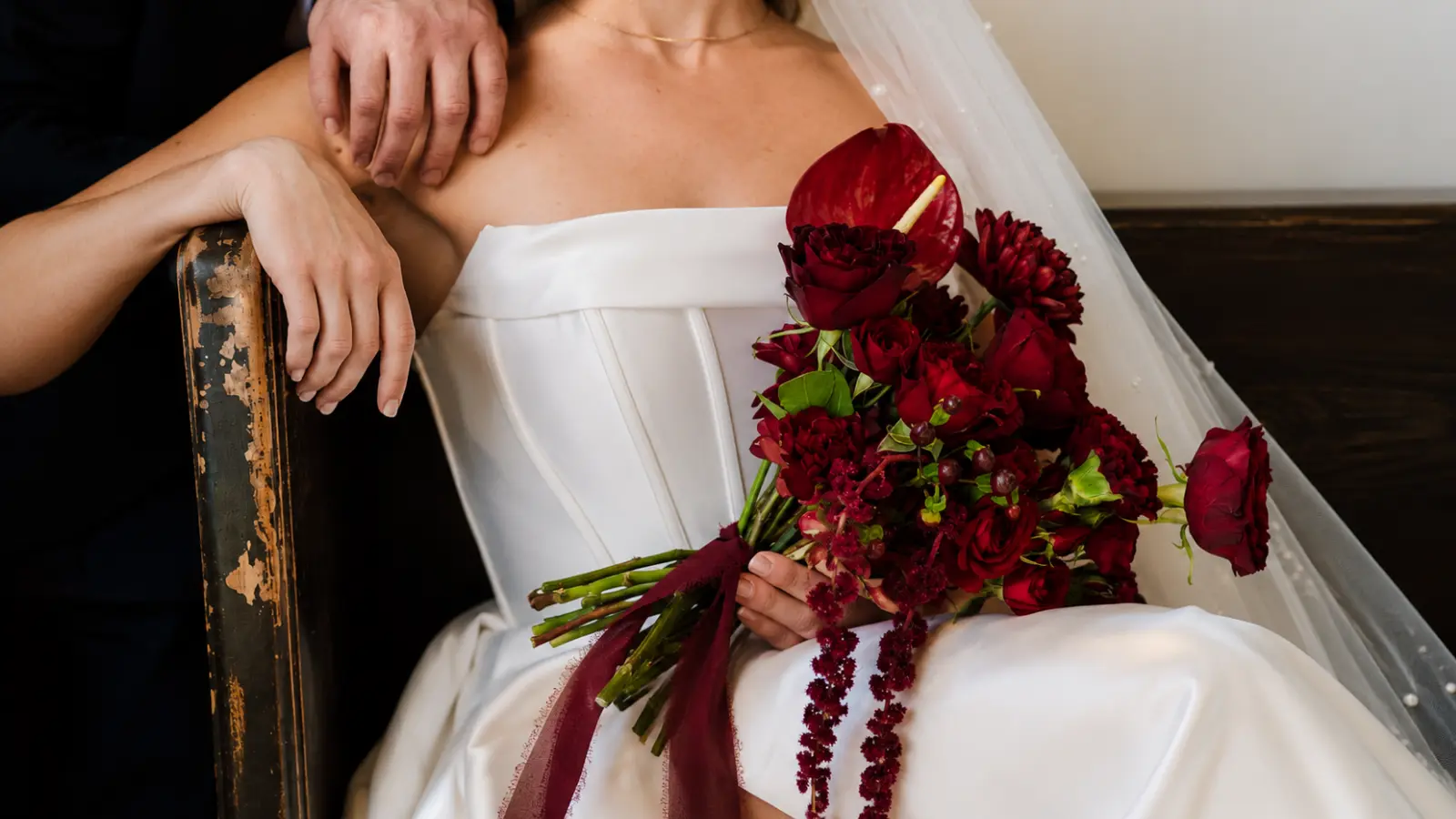
How to preserve a wedding bouquet is one of the first questions many brides ask after the wedding day ends. Whether you want to display your bouquet, turn it into a keepsake, or simply save the flowers that marked such an important moment, acting quickly gives you the best chance of preserving both their beauty and their meaning.
The right preservation method depends on what you want the final result to look like. Some brides prefer to keep the bouquet as a three-dimensional arrangement, while others choose pressed flowers, resin keepsakes, or framed displays that can be enjoyed for years. Each option offers different benefits, costs, and levels of difficulty.
This guide explains how to preserve a wedding bouquet using air drying, pressing, silica gel, resin, and professional freeze-drying, along with display ideas such as shadow boxes. You’ll also learn what to do immediately after the wedding, which flowers preserve best, common mistakes to avoid, and how to choose the preservation method that fits your bouquet and your goals.
Can You Preserve a Wedding Bouquet?
Yes — and more successfully than most people expect, provided you start early. The biggest mistake in wedding bouquet preservation isn’t choosing the wrong method; it’s waiting too long to begin. Flowers start losing moisture and structural integrity within hours of being cut from water. After twenty-four hours at room temperature without care, your options narrow considerably.
Almost any flower can be preserved in some form, though certain methods work better with certain blooms. Roses, lavender, statice, and eucalyptus respond particularly well to air drying. Delicate flowers like sweet peas and ranunculus are better candidates for pressing. Dense, moisture-heavy blooms like peonies and hydrangeas can be trickier across methods and benefit from silica gel or professional freeze-drying. Before choosing your approach, it’s worth knowing what’s in your bouquet — a quick check with your florist before the wedding will tell you which flowers will respond best to which preservation methods.
One more thing worth saying: preserved flowers don’t look exactly like fresh flowers, and any method that promises otherwise is overpromising. What good preservation does is capture a meaningful version of your bouquet — its shape, its color, its essential character — in a form that lasts for years. Adjusting that expectation slightly makes the result far more satisfying.
What to Do With Your Bouquet Right After the Wedding
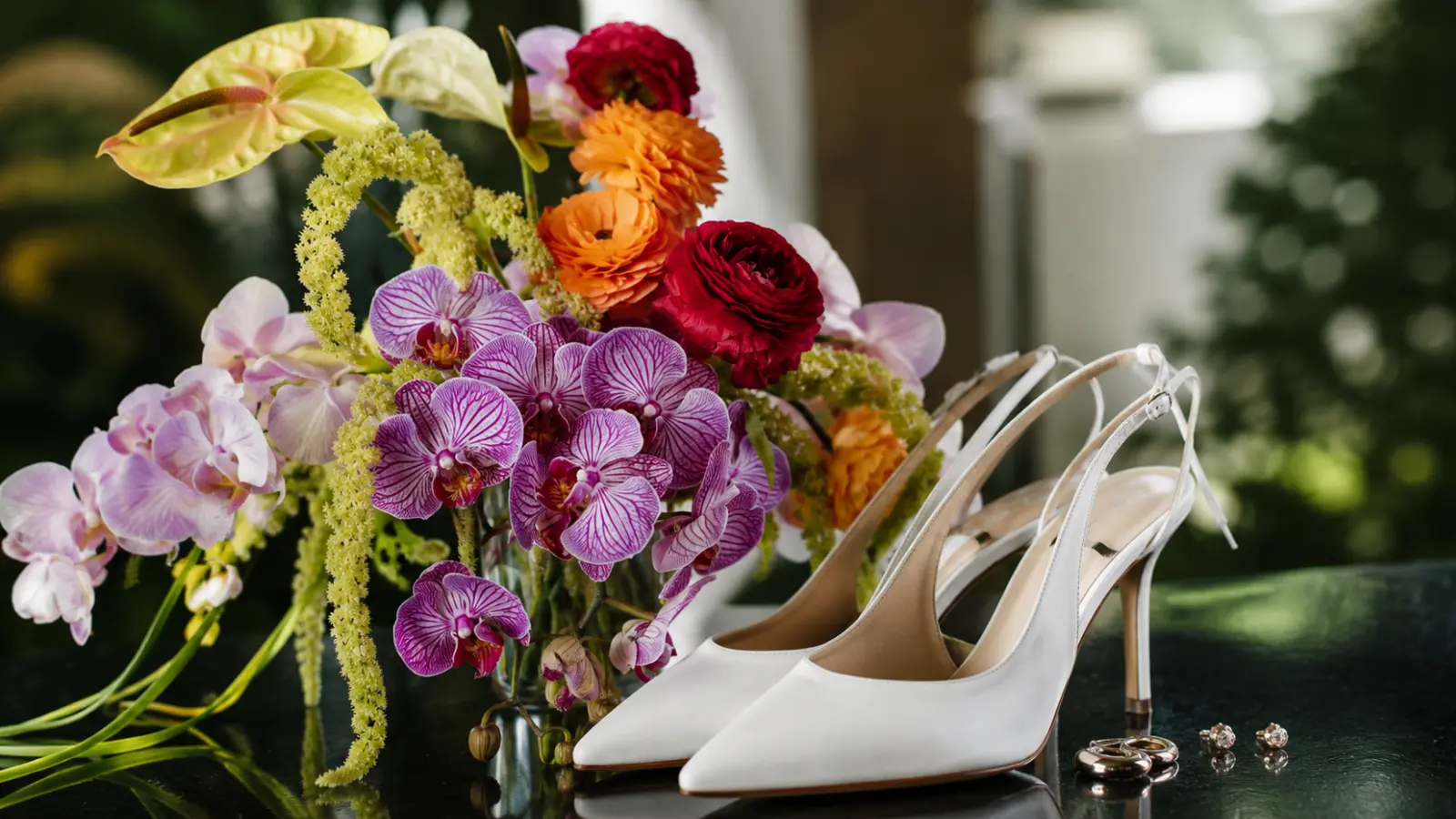
This section is the one most preservation guides skip, and it’s the most important one. What you do in the hours immediately after the ceremony determines how good your preservation result will be, regardless of which method you choose.
During the reception: Keep your bouquet in a vase of cool water whenever you’re not holding it. Designate someone — a bridesmaid, a family member, your day-of coordinator — to be responsible for getting the bouquet into water if you set it down and forget it. Flowers that spend four hours dry on a cocktail table will be significantly more damaged than ones that spent those hours hydrating.
Before you go to bed: This step matters more than people realize. Trim the stems at a 45-degree angle to open up water uptake. Place the bouquet in fresh, clean water. Add a small amount of floral preservative if you have it — the kind that comes in those small packets from grocery store flower purchases works fine. Store it in the coolest room in your hotel or home: a bathroom near the AC, a cool hallway, or anywhere away from heat sources and direct light. Do not put it in a regular refrigerator with fresh produce — ethylene gas from fruit accelerates wilting. A beverage fridge or wine fridge, if available, is fine.
The morning after: Assess the bouquet honestly. Remove any flowers that are already past saving — trying to preserve them will only pull moisture from the blooms that are still in good condition. Decide on your method if you haven’t already, and begin as soon as possible. If you’re shipping to a professional preservation studio, contact them first thing in the morning. Most studios have protocols for overnight or expedited shipping and clear instructions for how to package the bouquet.
If you’re leaving for a honeymoon immediately after the wedding, plan ahead. Either designate someone trustworthy to receive the bouquet and start the process, or look into professional studios that accept fresh bouquets shipped from the wedding venue — some work directly with florists to receive flowers before you even leave the reception.
Best Ways to Preserve a Wedding Bouquet
There are five main preservation methods, each with different results, skill requirements, costs, and timelines. The right one depends on how you plan to display or use the preserved flowers — not on which method is objectively “best.”
| Method | Result | DIY-Friendly | Timeline | Cost Range | Best For |
|---|---|---|---|---|---|
| Air Drying | Dried arrangement, slightly smaller | Yes | 2–4 weeks | Minimal | Traditional dried bouquet display |
| Pressing | Flat flowers for frames, albums | Yes | 3–6 weeks | Minimal | Framed art, albums and flat keepsakes |
| Silica Gel | Dried, 3D shape retained | Yes | 3–7 days | $20–$50 for materials | Preserving flower shape and color |
| Resin | Permanent display object | Possible, but complex | Varies | $100–$400+ professional | Jewelry, ornaments, paperweights and keepsakes |
| Freeze-Drying | Closest to fresh appearance | No — professional only | 4–6 weeks | $200–$600+ | Full bouquet preservation with the closest fresh look |
A useful way to think about this: if you want the bouquet to remain three-dimensional and displayed as an arrangement, air drying, silica gel, or freeze-drying are the right paths. If you want individual flowers incorporated into art, stationery, or framed pieces, pressing makes more sense. If you want a permanent, tactile keepsake object — a paperweight, ornament, or piece of jewelry — resin is the answer. Shadow boxes often combine methods: pressed or dried flowers arranged and displayed behind glass.
Air Drying a Wedding Bouquet
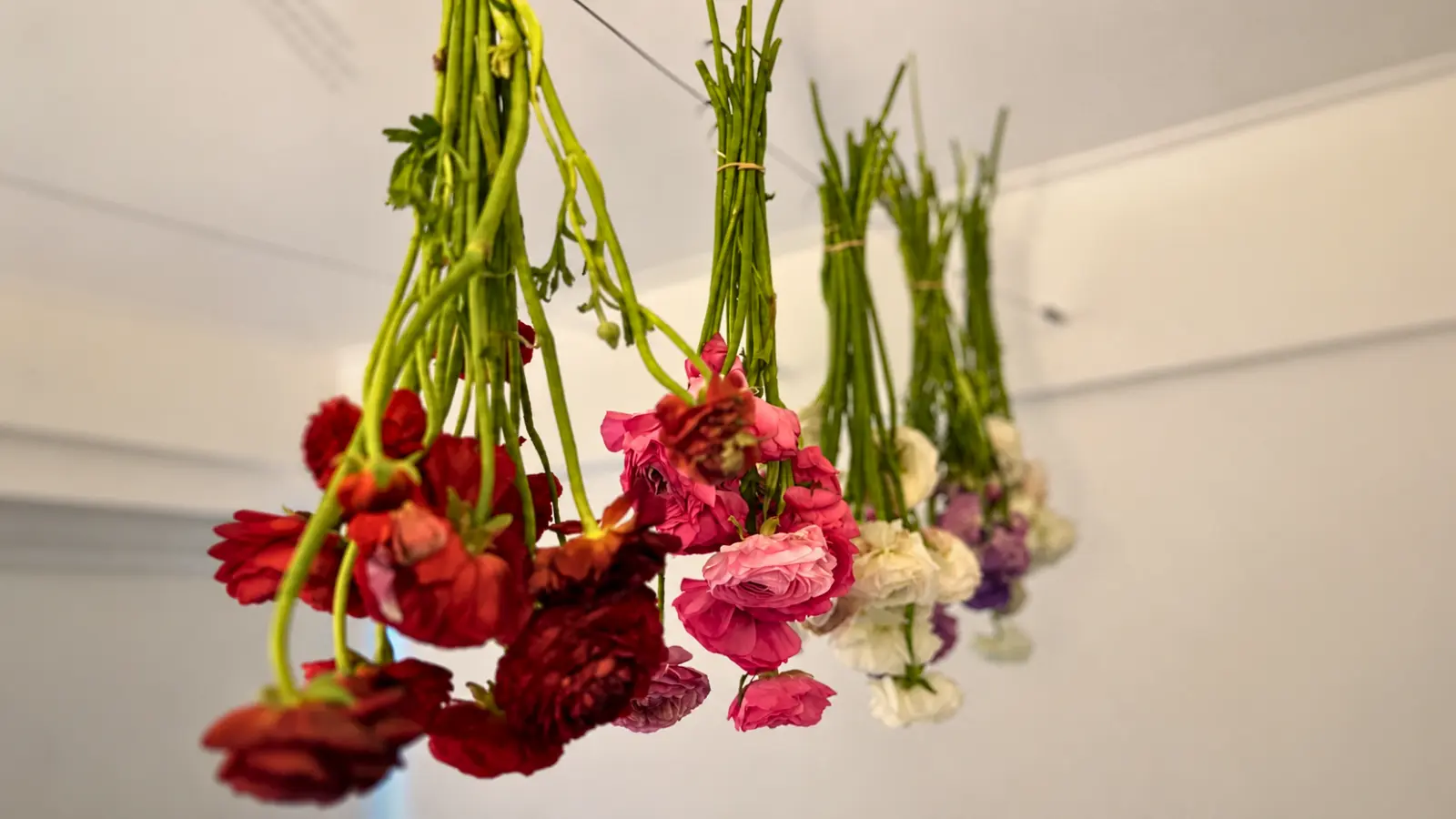
Air drying is the most accessible preservation method and, done correctly, produces results that hold up well for years. It requires no special equipment, no chemicals, and very little skill — mostly just patience and the right conditions.
The basic method is straightforward: remove the bouquet from water, strip any leaves that would sit inside the hanging position (leaves left in place during drying tend to mold rather than dry cleanly), and hang the bouquet upside down in a cool, dark, dry space with good airflow. A closet, a dry basement, or a spare room with the curtains drawn all work well. Avoid anywhere humid — bathrooms, laundry rooms, and kitchens are poor choices. Tie the stems with a rubber band rather than string; stems shrink as they dry, and a rubber band contracts with them to keep the bunch together.
Leave the bouquet undisturbed for two to four weeks, checking periodically for any blooms that are molding rather than drying. A single flower that goes wrong can spread moisture to the rest of the bunch, so remove any problem blooms promptly.
What to expect from the result: air-dried flowers will be slightly smaller and more compact than fresh ones, since they lose water volume. Colors will shift — whites and creams may yellow slightly, blush may deepen, and saturated colors like burgundy and deep purple often hold beautifully. Roses, lavender, statice, baby’s breath, and eucalyptus are among the best flowers for air drying. Peonies can air dry but may lose more shape than other blooms. Delicate flowers like sweet peas and ranunculus rarely survive air drying well.
Once fully dry, the bouquet can be displayed as-is, placed in a vase, or used as the base for a shadow box arrangement. A light coat of unscented hairspray or a clear floral sealant spray can help reduce petal breakage if the dried bouquet will be handled or moved.
Pressing Wedding Bouquet Flowers
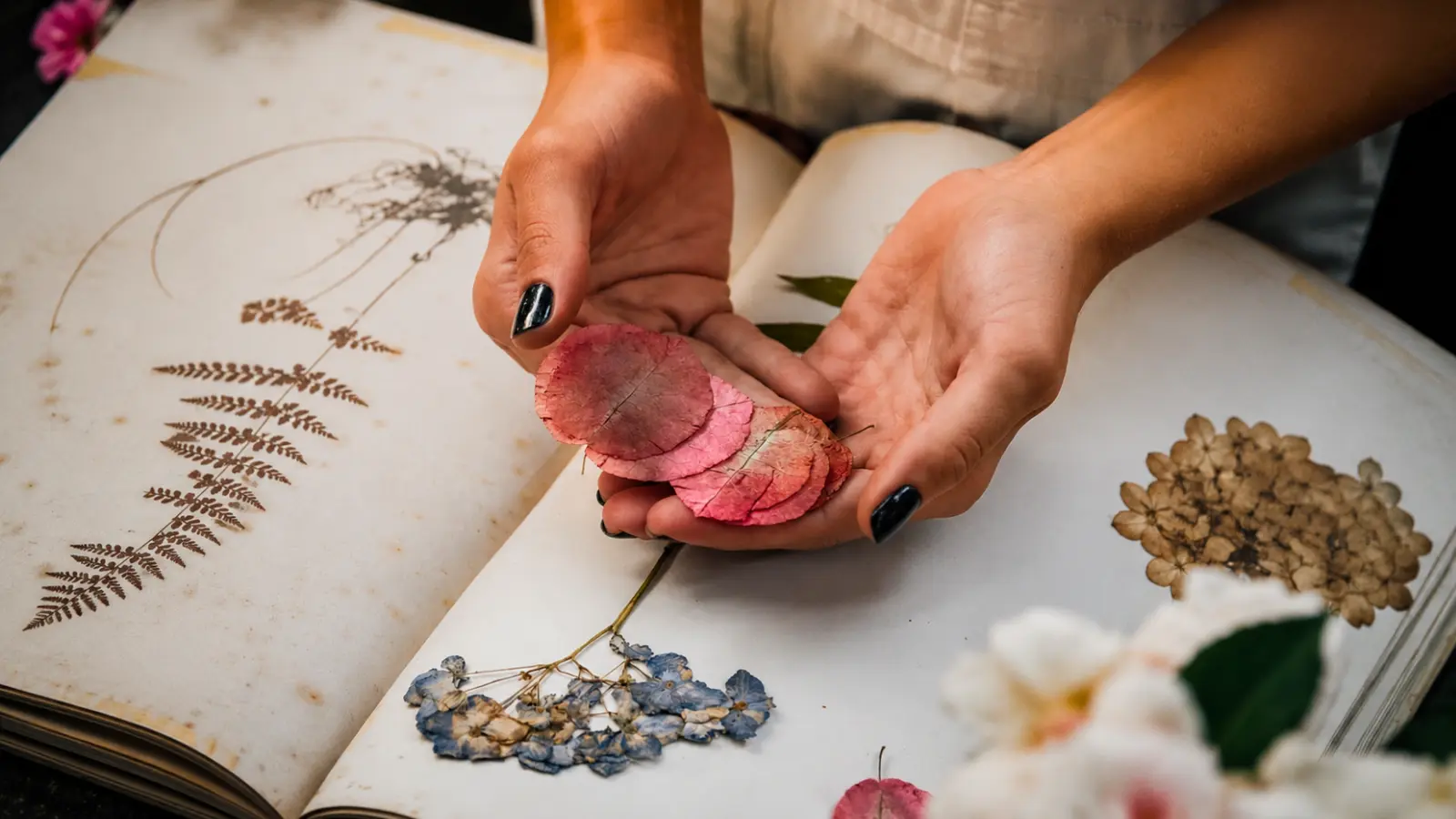
Pressing is ideal when your goal is to incorporate individual flowers into flat artwork, frames, cards, or albums rather than preserve the bouquet as a three-dimensional arrangement. It’s a slow method but an accessible one, and pressed flowers from a wedding bouquet can be genuinely beautiful when displayed thoughtfully.
The traditional method — parchment paper, heavy books, several weeks of patience — still works. Place individual blooms between two sheets of parchment or absorbent paper (blotting paper works well), then stack inside a heavy book or under a weighted board. Change the paper every few days in the first week to absorb moisture and reduce the risk of mold. Most flowers will be fully pressed and dry within three to six weeks.
A flower press (a simple wooden frame with wing nuts available at most craft stores) does the same thing more efficiently and lets you press multiple flowers simultaneously at consistent pressure. If you plan to press your bouquet flowers and use them in any quantity — for thank-you cards, framed artwork, ornaments — a press is worth the small investment.
Some flowers press better than others. Single-layer blooms like pansies, anemones, and daisies press almost perfectly. Layered blooms like roses and peonies require a bit more technique: carefully peel back and press individual petals separately, then reassemble them in the final artwork for a more realistic look. Thick, fleshy flowers don’t press well and tend to mold before they dry.
Pressed flowers can be framed under glass for wall display, incorporated into resin jewelry or ornaments, used in handmade paper, or assembled in shadowboxes with other keepsakes from the wedding. They’re also a lovely inclusion in the thank-you notes you’ll send after the honeymoon — a single pressed bloom tucked into an envelope is a meaningful touch that most guests will keep.
Silica Gel Bouquet Preservation
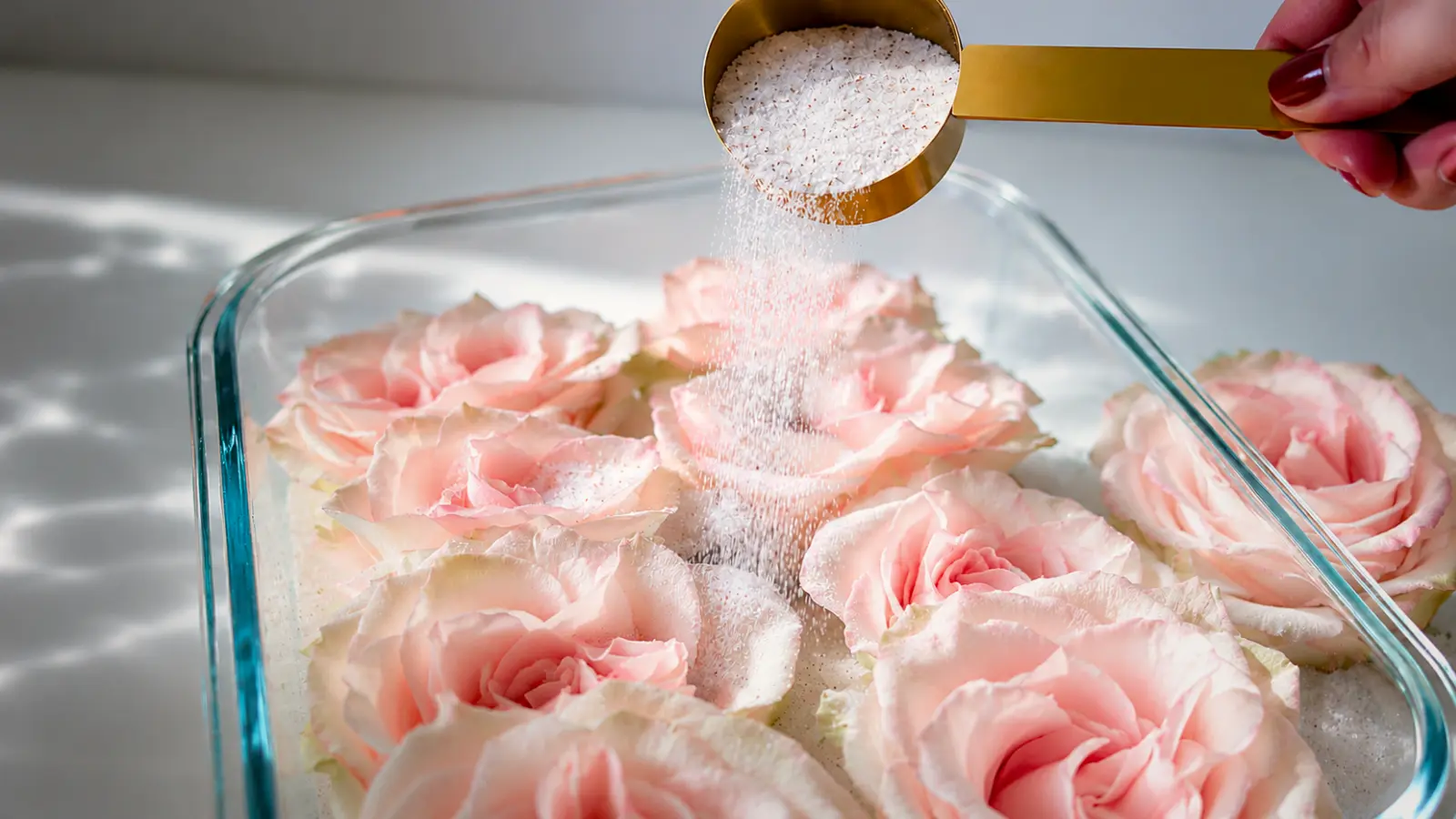
Silica gel is the strongest DIY preservation method for maintaining the three-dimensional shape and color of individual flowers. It works by drawing moisture out of the petals rapidly — in three to seven days rather than the three to four weeks required by air drying — and it’s far more reliable with delicate or moisture-heavy flowers than hanging methods.
Silica gel crystals (available at craft stores and online, typically sold as floral or craft desiccant) are used by completely burying the flowers in a container of the crystals. The process: fill an airtight container — a plastic storage box with a lid works well — with about an inch of silica gel. Place your flowers face-up in the crystals, then carefully pour more silica around and over each bloom, making sure the crystals support the petals from every angle. Seal the container and leave it undisturbed for three to seven days depending on the flower type and size.
Check the flowers gently after three days. They should feel dry and papery rather than soft or damp. If they’re not ready, re-seal and check again in another day or two. When fully dry, remove them carefully using a soft brush to clear any crystals caught in petals.
One practical note: silica gel crystals are reusable. After the flowers are removed, spread the crystals on a baking sheet and dry them in a low oven for about an hour, then store in an airtight container for future use. A single bag of crystals can be used many times.
The result from silica gel preservation is notably better than air drying for shape retention — flowers often look strikingly close to their fresh form, with colors that hold more accurately. The preserved blooms are still fragile, so they’re best displayed in a shadow box, under glass, or inside a display dome rather than handled regularly.
Resin Wedding Bouquet Preservation
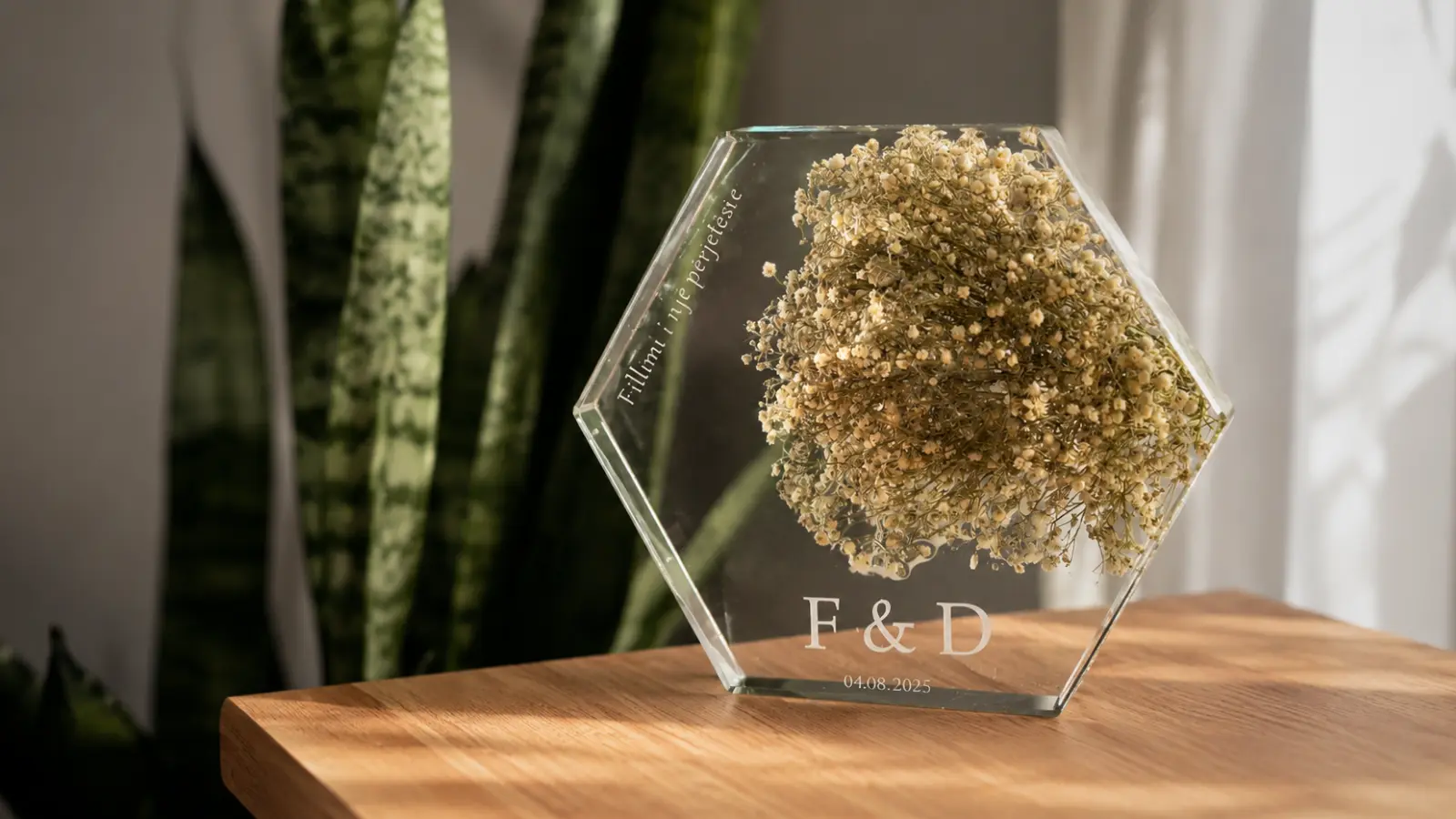
Resin preservation turns your flowers into permanent keepsake objects — paperweights, ornaments, jewelry, coasters, or framed pieces — by encasing dried or pressed blooms in clear epoxy resin. The result is completely different from any other preservation method: the flowers become part of a solid, durable object rather than remaining as flowers in a display.
Resin work requires flowers that are already fully dry — resin curing generates heat, and any remaining moisture in a fresh flower will cause bubbling, discoloration, or mold inside the finished piece. This means that resin preservation is always a two-step process: first drying the flowers (using pressing, silica gel, or air drying), then encasing them in resin.
DIY resin projects are possible — epoxy resin kits are widely available, and the basic technique is learnable with some practice. That said, the margin for error is real. Bubbles, uneven curing, clouding, and incorrect ratios of resin to hardener are common beginner issues, and a mistake means the flowers are permanently affected. For bouquet preservation specifically, most people find that hiring a resin artist produces significantly better results than a first DIY attempt with irreplaceable flowers.
Professional resin artists who specialize in wedding flower preservation can create a range of finished objects from one bouquet: a large display piece, several small ornaments, jewelry pendants, and other keepsakes from the same set of flowers. Prices typically range from around $100 for a small piece to $400 or more for a larger or more complex commission. Many artists book out weeks or months in advance, so if this is the direction you want to go, contact them before the wedding.
The finished pieces are durable, UV-resistant (when treated with a UV-protective resin or finish), and designed to last decades without color fade. They make meaningful anniversary gifts or family heirlooms in a way that a dried bouquet on a shelf might not.
Wedding Bouquet Shadow Boxes
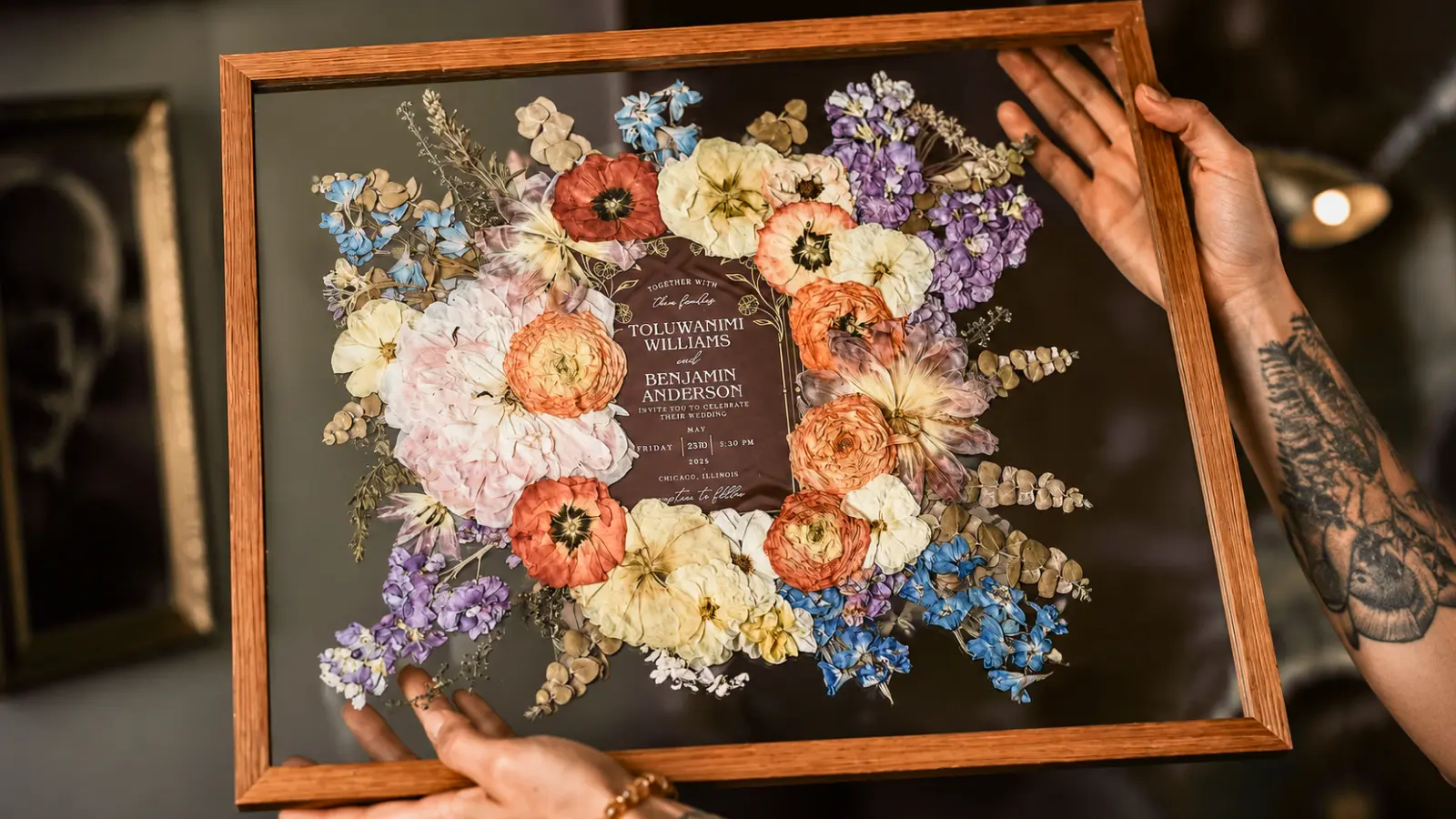
A shadow box is a deep-frame display case — typically glass-fronted with a few inches of depth — that allows you to arrange preserved flowers, along with other keepsakes, into a permanent wall display. It’s one of the most versatile approaches to bouquet preservation because it can incorporate flowers preserved by any method alongside other meaningful objects from the wedding day.
Common elements in a wedding bouquet shadow box include dried or pressed flowers from the bouquet, the wedding invitation or a small card, a photo from the ceremony, ribbon from the bouquet handle, the boutonniere, and other small keepsakes. The composition is personal — there’s no right answer about what to include.
Shadow boxes are widely available at craft stores and online in a range of sizes and frame styles. Standard sizes run from 8×10 to 16×20 inches; deeper boxes with several inches of space allow for more dimensional arrangements, while shallower frames work better for pressed flowers only.
Assembling a shadow box at home is approachable, but it takes time and a clear idea of your composition before you start gluing anything down. A few practical suggestions: arrange everything first without adhesive to finalize the layout, use acid-free materials to prevent yellowing over time, and keep the finished box out of direct sunlight to protect color retention in the flowers.
Professional shadow box services are also available — some preservation studios offer complete shadow box assembly as part of their freeze-drying or silica gel packages, or as a standalone service. If you’re not particularly crafty or don’t have the time, outsourcing the assembly is a reasonable option.
DIY vs. Professional Bouquet Preservation
The decision between DIY and professional preservation mostly comes down to what result you’re trying to achieve and how much you want to invest in getting there. Neither path is inherently better — they serve different needs.
DIY methods — air drying, pressing, and silica gel — are genuinely capable of producing beautiful results with minimal cost. They require time, a bit of care, and realistic expectations. The tradeoff is that the outcome is less predictable, especially with delicate flowers or complex mixed bouquets. If a few blooms don’t make it through the drying process, that’s a loss you live with.
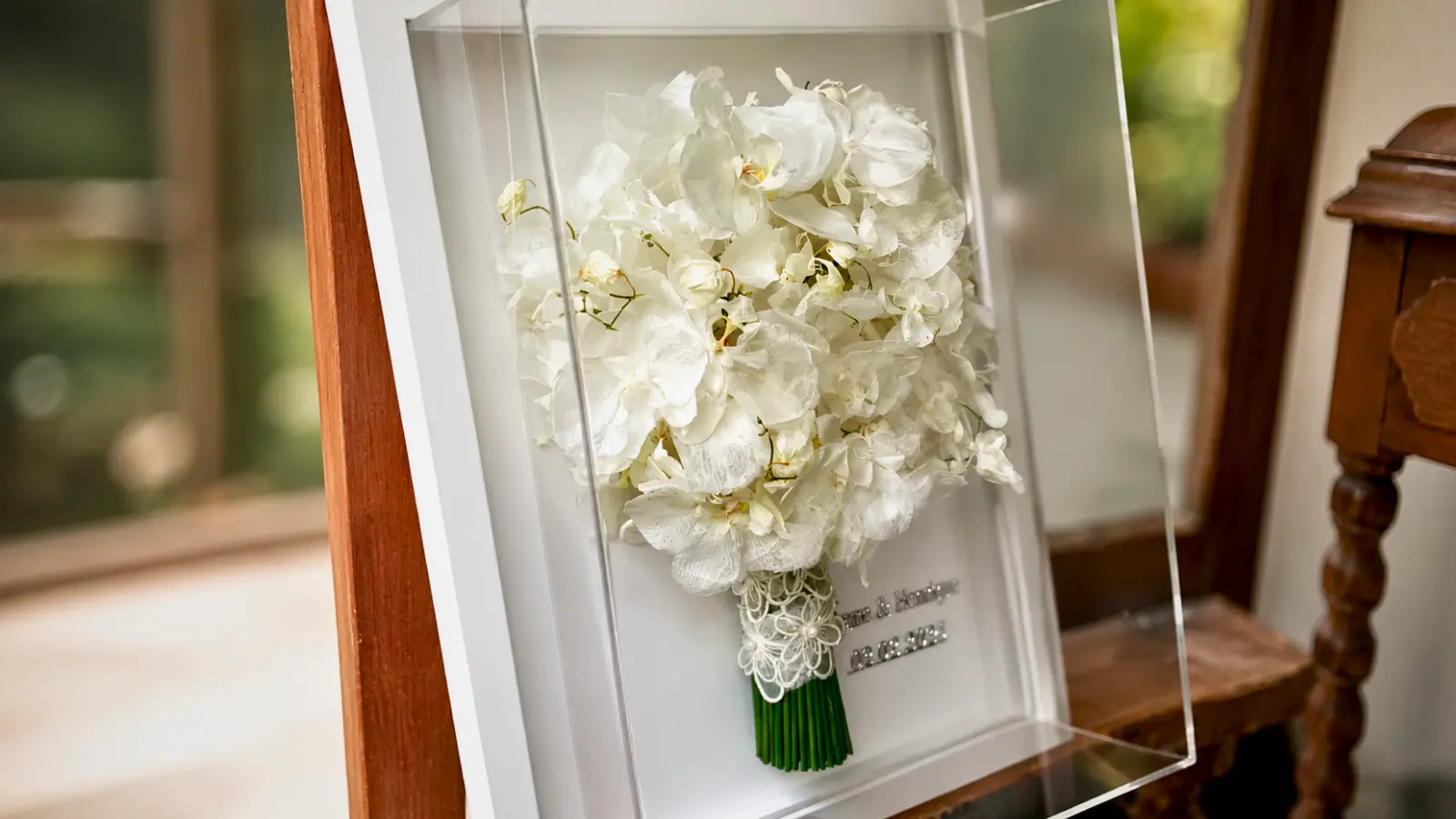
Professional methods — freeze-drying and professional resin work — produce more consistent, high-quality results and are better suited to preserving the full bouquet as a unit rather than individual flowers. Freeze-drying in particular produces results that are closer to the fresh bouquet’s appearance than any other method: the shape, the slight variations in petal texture, and the color are retained with impressive accuracy. The investment is real — freeze-drying typically runs from $200 to $600 or more depending on studio and bouquet size — but for couples who want a specific result and are willing to pay for it, it’s the most reliable path.
How to Decide:
Choose DIY if you want to preserve individual flowers for framed artwork, albums, or simple displays, and you’re comfortable with a result that may vary. Choose professional preservation if you want the full bouquet preserved as an arrangement, if the bouquet includes delicate or moisture-heavy flowers that are harder to preserve at home, or if you want a finished keepsake object like freeze-dried flowers in a display dome or resin pieces. The most important factor in either case is starting quickly — no method compensates for significantly delayed action.
Mistakes to Avoid When Preserving Your Bouquet
Most preservation failures happen for predictable reasons. Knowing them in advance makes the difference between a bouquet that’s beautifully preserved and one that ends up composted.
Waiting too long to start. This is the most common and most consequential mistake. Every hour a bouquet sits at room temperature without hydration or preservation treatment is time lost. If you can’t start the process yourself on the day after the wedding, designate someone who can, or contact a professional studio immediately about receiving the flowers.
Refrigerating with produce. A regular kitchen refrigerator seems like an obvious place to keep flowers fresh overnight, but ethylene gas from fruit significantly accelerates wilting. If refrigeration is necessary, use a beverage fridge, wine fridge, or a drawer separated from fresh produce.
Trying to air dry in a humid environment. Humidity is the enemy of drying. A bathroom, basement with poor ventilation, or kitchen is not a suitable drying space. Mold will develop before moisture can escape the petals, and the bouquet will be lost. A cool, dark, well-ventilated closet or spare room is the right environment.
Preserving the full bouquet as-is without assessing it first. Not all flowers in a mixed bouquet will preserve equally well or respond to the same method. Taking fifteen minutes to separate the bouquet, identify which flowers are in good shape and which aren’t, and choose your method based on what’s actually there will produce a better result than treating the whole thing as one unit.
Using resin without fully drying the flowers first. Any residual moisture in flowers that go into resin will cause bubbling, discoloration, or mold inside the finished piece — and there’s no fixing it once the resin has cured. Patience in the drying stage before resin work is not optional.
Storing dried flowers in sunlight. Once preserved, dried or pressed flowers need to be kept away from direct sunlight. UV exposure fades colors significantly over time. This applies to shadow boxes, framed pressed flowers, and any dried arrangement displayed near windows.
Not removing damaged flowers before drying. A flower that’s already starting to mold or rot will introduce moisture and bacteria to the rest of the bouquet during drying. Remove anything that’s past its point of recovery before starting any preservation process.
Wedding Bouquet Preservation Ideas
Looking for the best way to preserve your wedding bouquet? Explore beautiful bouquet preservation ideas, including air drying, pressed flowers, resin keepsakes, freeze-drying, shadow boxes, and creative ways to turn your wedding flowers into lasting memories.
Preserve the Memories, Not Just the Flowers
Your wedding bouquet represents far more than the flowers you carried down the aisle. It holds memories of the ceremony, the photographs, and the beginning of a new chapter. Choosing the right preservation method allows you to keep a meaningful part of that day in a form you can enjoy for years, whether it’s displayed in your home or transformed into a personal keepsake.
The most important step isn’t choosing between resin, pressing, or freeze-drying—it’s starting the preservation process as soon as possible. With a little planning and the right method, your bouquet can become a lasting reminder of your wedding long after the flowers themselves would have faded.
Frequently asked questions (FAQ)
What is the best way to preserve a wedding bouquet?
The best way to preserve a wedding bouquet depends on how you want to display it. Freeze-drying is best for keeping the bouquet’s shape and color as close to fresh as possible. Pressing works well for framed art, albums, and flat keepsakes. Silica gel is a strong DIY option for preserving flower shape, while resin creates a permanent keepsake object.
What should you do with your bouquet right after the wedding?
Keep your bouquet in cool, clean water during the reception whenever you are not holding it. Before bed, trim the stems at an angle, place them in fresh water, and store the bouquet in a cool room away from heat, direct sunlight, and fruit. The sooner you begin preservation, the better the result will be.
Can you preserve a wedding bouquet yourself?
Yes. Air drying, pressing, and silica gel preservation can all be done at home with simple materials and careful timing. DIY preservation works best when you start quickly and accept that the flowers may change in color, size, or texture. Freeze-drying and high-quality resin preservation usually require a professional.
How long does it take to preserve a wedding bouquet?
The timeline depends on the method. Air drying usually takes two to four weeks, pressing takes three to six weeks, and silica gel can dry many flowers in three to seven days. Professional freeze-drying often takes several weeks, while resin preservation depends on the artist and the size of the project.
How much does wedding bouquet preservation cost?
DIY methods such as air drying and pressing can cost very little, while silica gel usually requires a small materials budget. Professional freeze-drying often costs several hundred dollars depending on bouquet size and studio, and resin preservation can range from smaller affordable pieces to larger custom keepsakes that cost significantly more.
Can all wedding bouquet flowers be preserved?
Most wedding bouquet flowers can be preserved in some form, but not every flower responds well to the same method. Roses, lavender, eucalyptus, and statice often air dry well, while delicate blooms may press better. Moisture-heavy flowers such as peonies and hydrangeas can be more difficult and may need silica gel or professional preservation.
Can you preserve only part of a wedding bouquet?
Yes. Many brides preserve only a few meaningful flowers from the bouquet instead of the entire arrangement. This works especially well if some blooms are damaged after the wedding or if you want to create smaller keepsakes such as framed pressed flowers, resin jewelry, ornaments, or a shadow box.