A fingertip wedding veil is one of the most popular bridal veil lengths because it offers the perfect balance between elegance, versatility, and comfort. Long enough to create a timeless bridal look yet easy to wear throughout the day, it complements a wide variety of dresses, hairstyles, and wedding styles.
Its adaptability makes it a favorite among brides who want a classic veil without the extra length and maintenance of floor-length styles.
This guide explains everything you need to know about fingertip wedding veils, including length, dress pairings, hairstyles, lace options, and how to decide if this versatile style is right for you.
What Is a Fingertip Wedding Veil?
A fingertip veil measures between 36 and 40 inches from the comb at the back of the head. When the bride stands with her arms relaxed at her sides, the hem of the veil falls at roughly the same level as her fingertips — which is where the name comes from. The exact point varies slightly depending on height and comb placement; taller brides may find a 40-inch veil still falls slightly above the fingertips, while a 36-inch veil on a shorter bride may land slightly below. These differences are minor and don’t affect how the veil reads in photos or in person.
In the full spectrum of bridal veil lengths, fingertip sits solidly in the mid-length range — longer than shoulder (20 inches) and elbow (25–30 inches), shorter than waltz (50–60 inches), chapel (85–95 inches), and cathedral (108–120 inches). At this measurement, the veil falls at roughly the mid-back, covering the bodice and the upper portion of the skirt without interacting with the lower half of the dress or the train. That placement is a significant part of what makes the length so compatible with different dress styles. For the full picture of where fingertip sits relative to every other veil length, the wedding veil lengths has measurements and comparisons across the complete range.
Why Fingertip Is Genuinely Versatile
Versatility is easy to claim about any product, but with the fingertip veil, it reflects something specific and real about where the length falls on the body. Understanding why it’s versatile — not just that it is — helps you evaluate whether that versatility actually matters for your particular situation.
The core reason is placement. At 36 to 40 inches, the veil hem lands at mid-back, above the point where most dress trains begin and well clear of the lower skirt. This means it doesn’t end mid-train (a common visual problem with other lengths), doesn’t get tangled in a full skirt’s volume, and doesn’t compete with embellishment at the hem. It frames the bodice and upper back of the dress, then stops — which keeps the dress’s own design as the focal point rather than adding a competing element at the bottom of the look.
A few other reasons the fingertip length adapts as broadly as it does:
- It works across venue formality. A fingertip veil reads as appropriately formal in a traditional church setting and appropriately restrained in a smaller venue, garden ceremony, or hotel ballroom. Unlike cathedral length, it doesn’t require a grand scale to look proportional.
- It doesn’t add management burden. At this length, the veil doesn’t trail behind you, doesn’t require an attendant to arrange it before the processional, and is easy to remove and store at the reception. Management considerations are minimal.
- It accommodates more hairstyles than longer lengths. Long veils worn with loose hair can disappear into the hair at the back. At fingertip length, the veil hem is visible below most hairstyles, including many down styles, which means the edge detail reads clearly regardless of how the hair is worn.
- It works at most price points. Less fabric means the fingertip length is typically available at a wider range of prices than chapel and cathedral options, which matters for brides balancing accessory budgets with other priorities.
None of this means fingertip is the right length for every bride. There are specific situations where a longer or shorter veil is a better fit. But the versatility is genuine, not marketing language — and that’s worth knowing when you’re trying to decide whether to trust it or push toward something more dramatic.
Fingertip vs. Other Veil Lengths
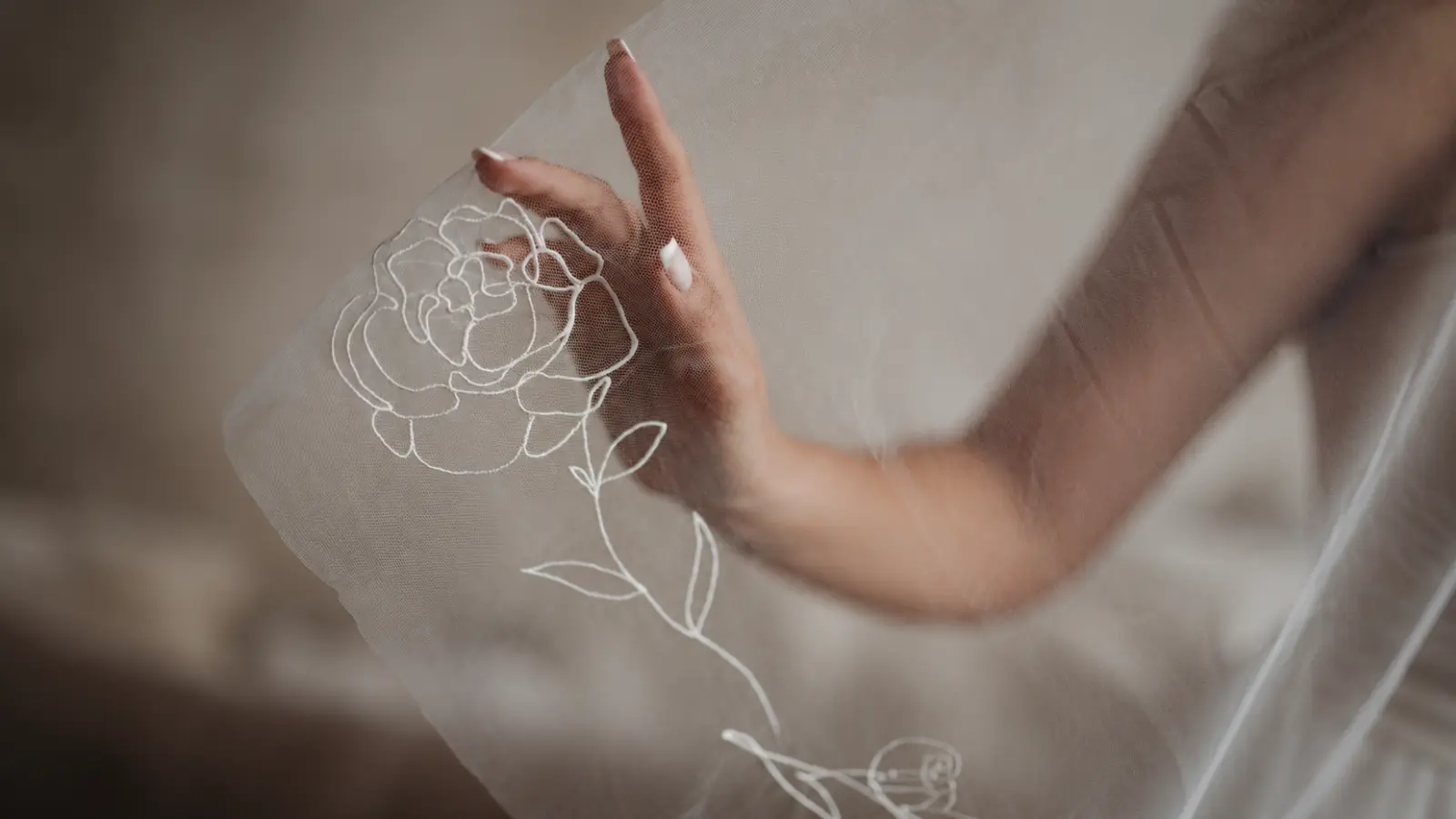
Most brides deciding on fingertip are actually choosing between it and one or two neighboring lengths. The comparison that matters most is usually fingertip versus elbow (shorter and more casual) or fingertip versus chapel (longer and more formal). Here’s how those choices break down in practice.
| Elbow (25–30 in.) | Fingertip (36–40 in.) | Waltz (50–60 in.) | Chapel (85–95 in.) | |
|---|---|---|---|---|
| Where it falls | At the elbows; covers upper back | At the fingertips; mid-back | Between knee and ankle | Sweeps the floor past the hem |
| Formality | Casual to semi-formal | Semi-formal to formal | Formal; mid-weight presence | Formal; full bridal presence |
| Dress train interaction | None; ends above any train | Minimal; ends above most trains | May overlap with sweep trains | Must extend past the train |
| Venue fit | Intimate and outdoor settings | Most indoor and outdoor venues | Most formal venues; less outdoor | Large formal venues; long aisles |
| Hair compatibility | Most styles, including down | Most styles, including many down | Better with updos | Best with updos; disappears in loose hair |
| Management | Minimal | Minimal | Low; slight trail on some surfaces | Requires planning and often an attendant |
| Overall compatibility | High; best for modern or casual looks | Very high; suits most weddings | Moderate; a less common choice | High in the right setting; limited elsewhere |
The clearest way to use this comparison: if you’re drawn toward the elbow, ask whether you want the veil to read as a strong formal statement or as a lighter complement to the dress. Elbow reads lighter; fingertip reads more formally without adding significant management. If you’re drawn toward chapel, ask whether your venue scale and dress train actually need that length — or whether the formal presence of fingertip in your specific setting would accomplish the same thing with less to manage.
Fingertip Veil Works Best With
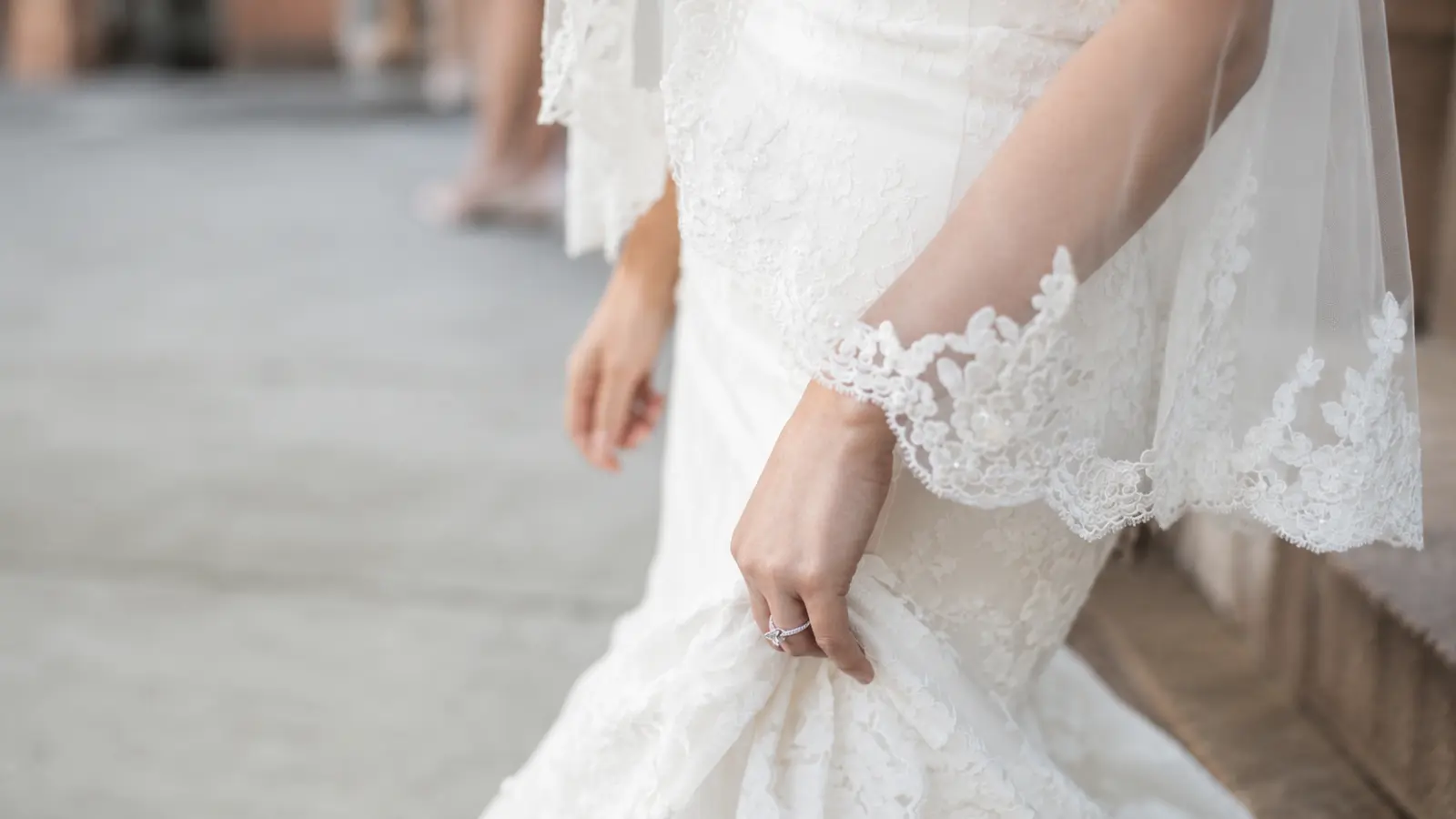
Because the fingertip veil ends well above the lower half of most gowns, it sidesteps many of the pairing complications that arise with longer lengths. The considerations that remain are about proportion, edge detail, and fabric — all of which the following table captures.
| If Your Dress Is… | Fingertip Pairs Well Because… | Edge Detail to Consider |
|---|---|---|
| A-line with minimal detail | The veil adds presence without competing with the clean silhouette | Lace border or satin edge adds interest the dress doesn’t supply |
| A-line with lace or embroidery | The veil frames the bodice and stays clear of hem embellishment | Plain or rolled hem keeps the look from becoming too busy |
| Ballgown with full skirt | The veil sits above the skirt volume and doesn’t compete with the silhouette | Any edge works; scale the detail to the formality of the gown |
| Sheath or column dress | Mid-back placement creates a visual break that suits the streamlined silhouette | Simple rolled or plain hem reads most cohesively with a sleek gown |
| Mermaid or trumpet | Ends before the flare; no awkward mid-skirt overlap | Any edge works; just confirm the veil hem stays above the flare point |
| Short or tea-length dress | Proportionally mid-length veils can overwhelm shorter skirts; elbow may suit better | If using fingertip on a short dress, keep the veil very light and plain |
| Dress with a long cathedral train | Ending mid-train looks unresolved; fingertip may look disconnected | Consider a longer veil that extends past the train, or skip the veil |
The two exceptions worth noting are in that last pair of rows. A short dress and a fingertip veil create a proportion imbalance that tends to read as too heavy at the back — an elbow veil usually sits better there. A gown with a very long train creates a different problem: the veil ending at mid-back while the train extends several feet behind the hem reads as visually incomplete. In those cases, a longer veil that extends past the train, or no veil at all, is a more resolved choice. For a full breakdown of how veil lengths interact with specific dress silhouettes and train lengths, see the wedding dress with veil.
Fingertip Veil and Hairstyle
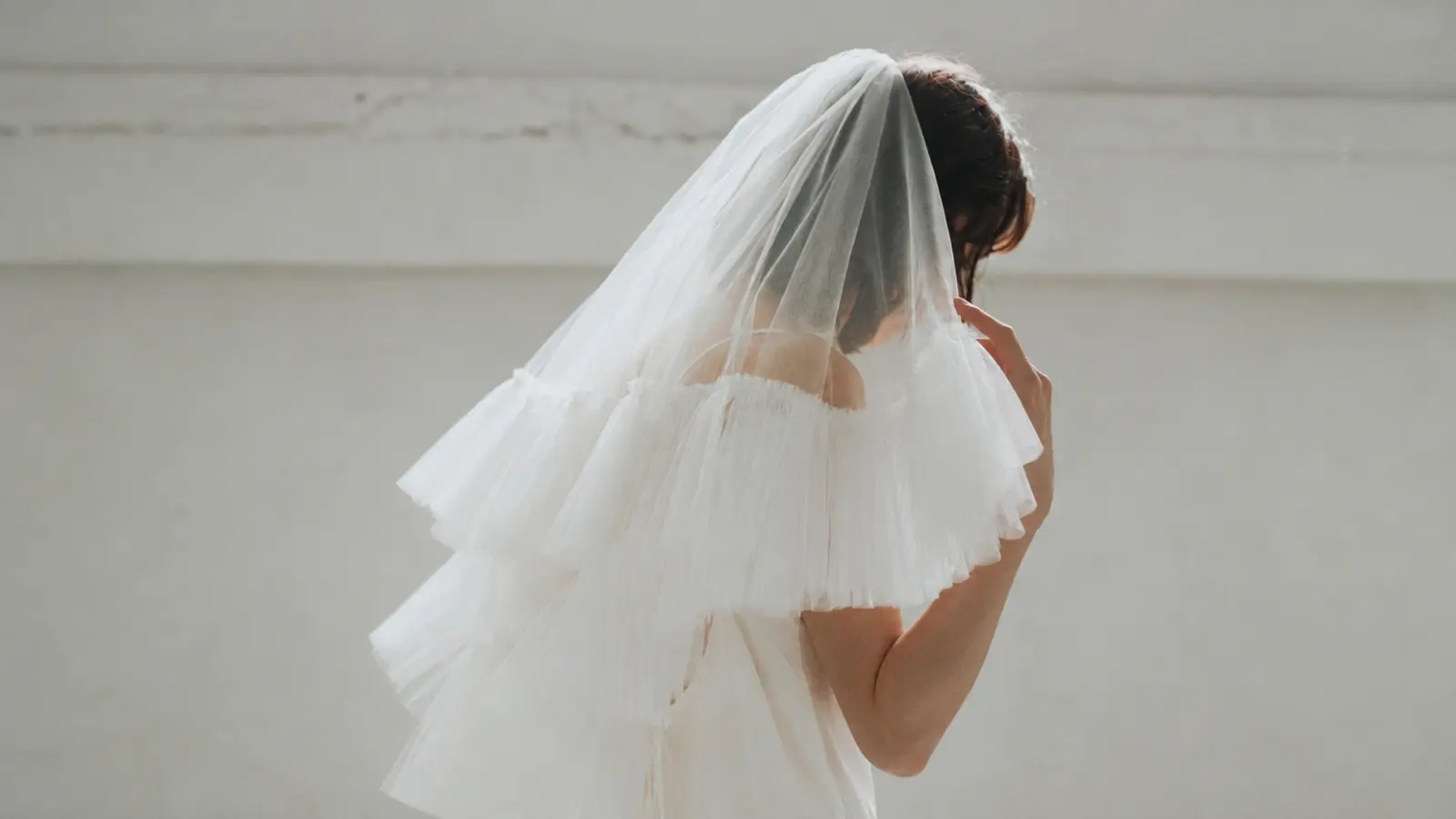
Hairstyle affects the fingertip veil in one specific way that’s worth understanding before your trial: where the veil hem falls relative to the hair. At 36 to 40 inches, the veil hem is usually at or just below the bottom of the hair for brides with long hair worn down, which means the edge detail can get partially absorbed into loose waves or curls.
Updos and Half-Up Styles
Any style that keeps the back of the neck and upper back clear — a low chignon, a French twist, a half-up with the ends pinned — gives the fingertip veil the cleanest visual presentation. The veil falls against the back of the dress rather than against hair, which means the hem and any edge detail it carries reads clearly in photos. For formal weddings, this combination is the most straightforward.
Hair Worn Down
Wearing hair fully down with a fingertip veil works, but the result is layered rather than distinct — the veil and the hair blend at the back rather than separating cleanly. Whether this is a problem or a feature depends on what you’re going for. Some brides love the softness of veil and hair layered together at the back; others find the veil’s edge gets lost. If you want the edge detail to be visible, either opt for a half-up style or choose a veil with a more defined edge trim — a satin ribbon border or a scalloped lace edge — that differentiates itself from the hair even when layered with it.
If you’re planning to wear your hair down and want specific pairing guidance, the wedding hairstyles with veil covers how different hair textures and styles interact with veil lengths in detail.
Fingertip Veil With Lace
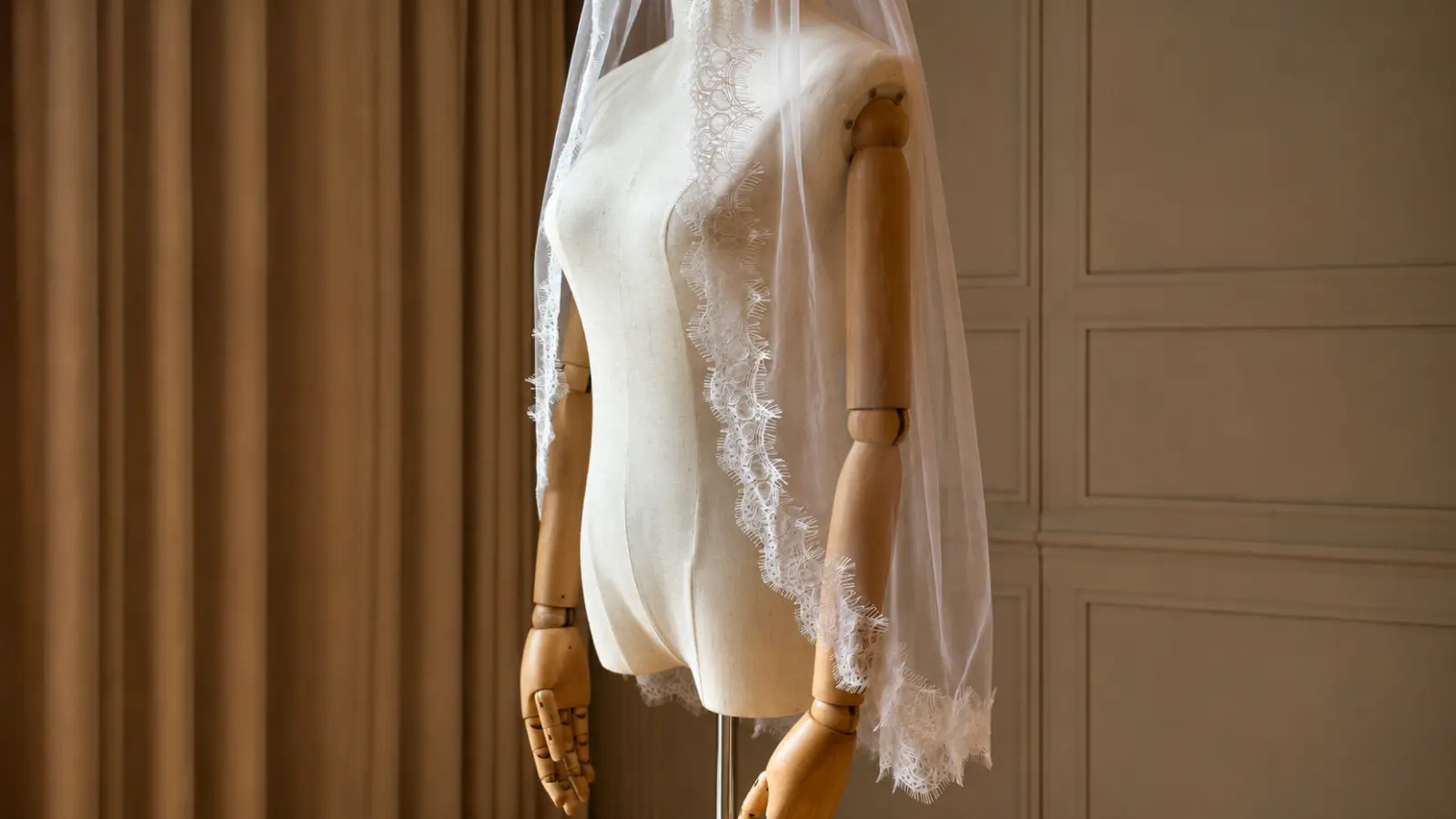
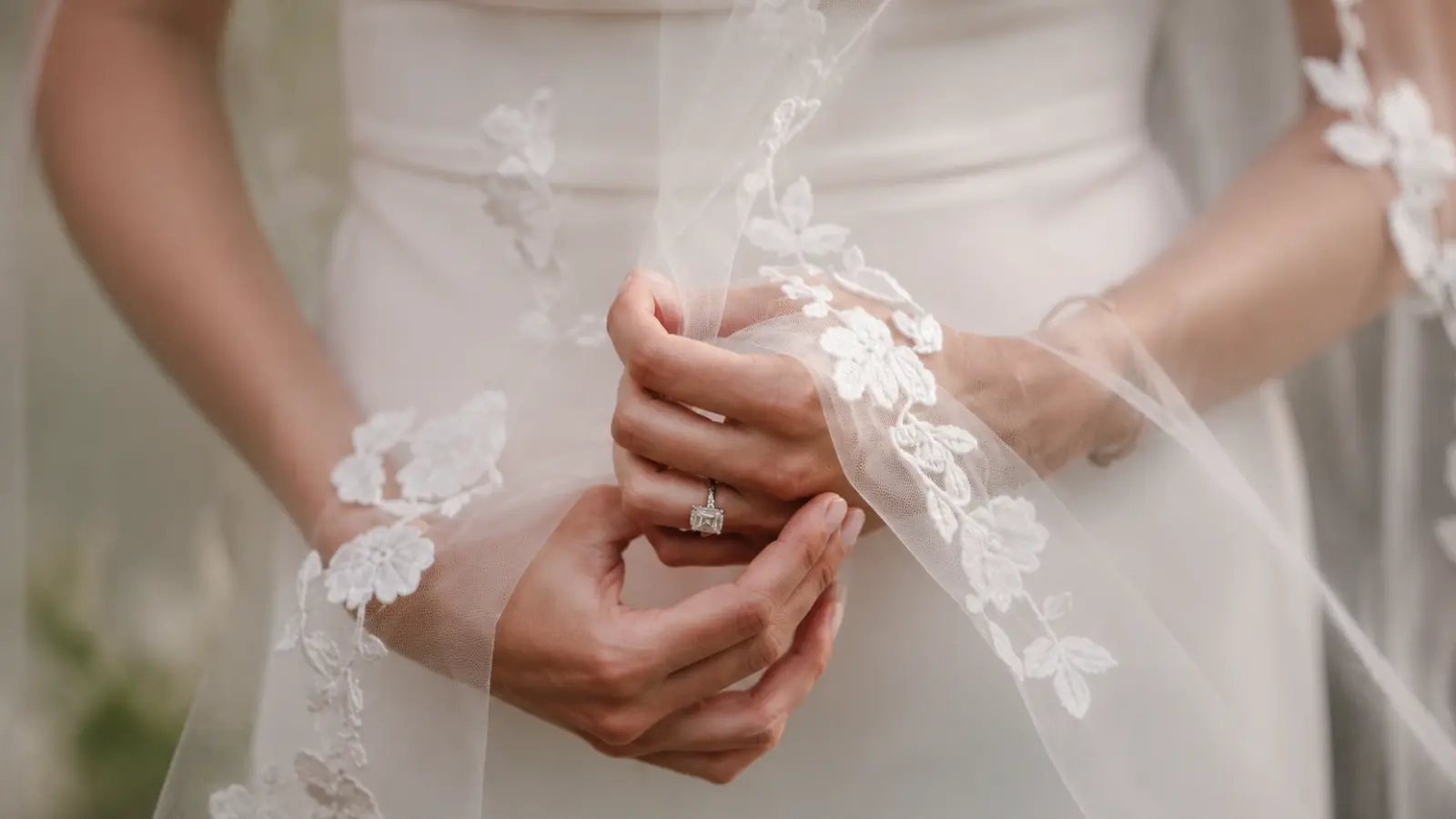
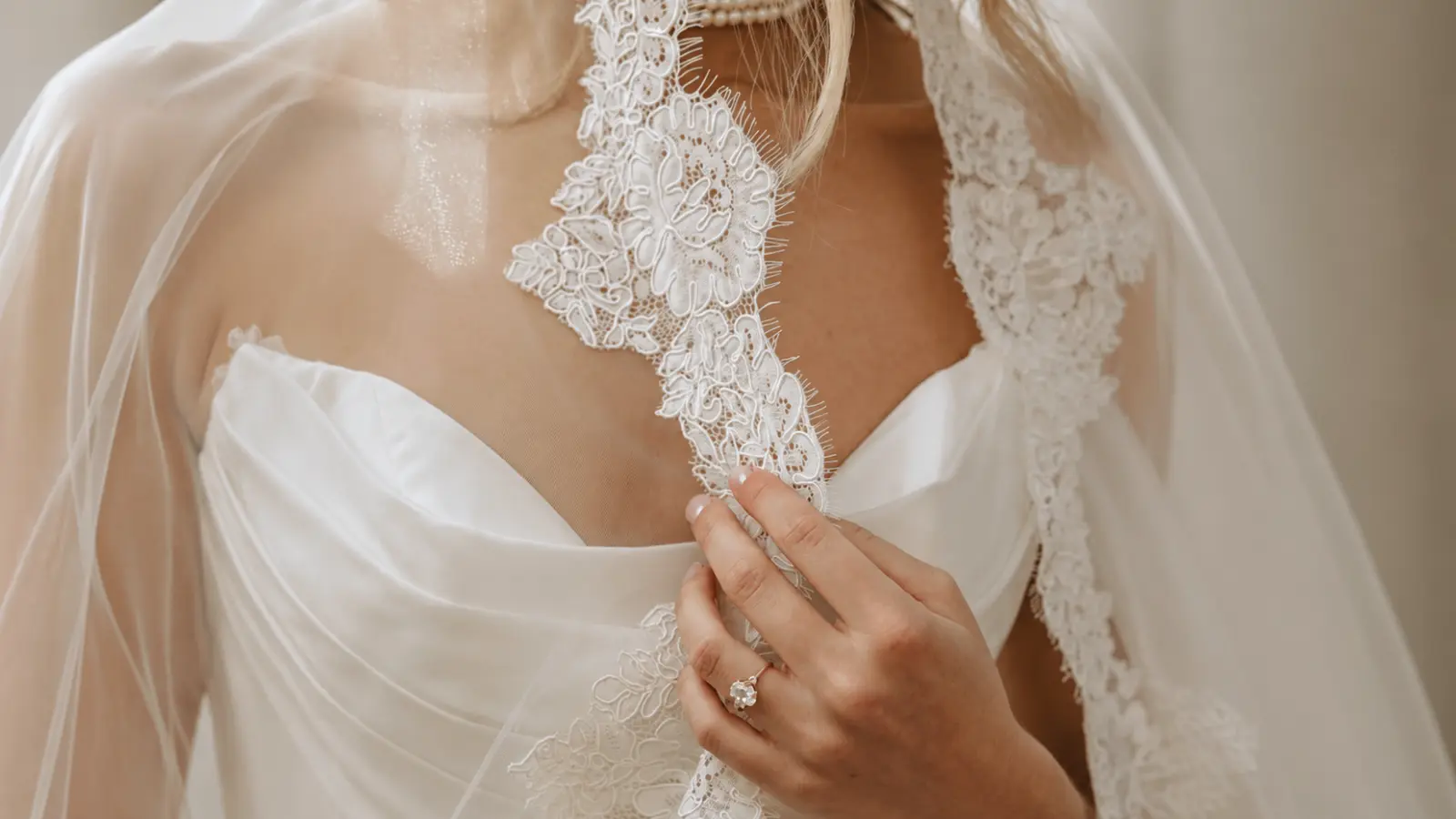
Lace is one of the most common edge treatments for fingertip veils, and it reads well at this length because the hem is positioned where it’s visible — at mid-back, in the frame of most ceremony and portrait shots. A few distinctions worth knowing before you shop:
Narrow lace border (under 2 inches). A delicate, slim lace edge — scalloped Venetian or floral Chantilly — adds detail without heaviness. It reads as refined and works with both simple and embellished gowns. This is usually the safest choice on a heavily detailed dress, because it complements rather than competes.
Wide lace border (2–4 inches or more). A wider lace band at the fingertip hem creates a stronger decorative statement. It works particularly well on plain or minimally detailed gowns, where the veil carries the embellishment the dress doesn’t supply. On a heavily lace-detailed dress, a wide lace border on the veil can push the look into visual overload — this is the combination to try carefully in person before committing.
Full lace veil. A fingertip mantilla or all-lace veil at this length is a different proposition — softer and more draped than a gathered tulle veil with a lace edge, with the lace itself defining the look rather than trimming it. This style is covered in depth in both the lace wedding veil and the mantilla wedding veil.
Fingertip Veil With a Blusher
A blusher is a separate front layer added to any length veil, including fingertip, that covers the face during the processional and is lifted at the altar. Whether to include one at fingertip length is entirely a matter of personal preference and how much ceremony you want built into your processional moment.
At fingertip length, a blusher adds a front layer that typically sits at chin or chest level, while the main veil falls behind at the fingertips. The combination is proportionally balanced — neither layer is dramatically longer or shorter than the other in the way that can happen with a blusher on a very short veil. Visually, the blusher adds fullness at the front of the look during the walk down the aisle, which softens the overall silhouette.
Brides who skip the blusher at fingertip length are choosing a cleaner, more open look from the front — which many prefer because it allows an unobstructed view of the face and the guests throughout the processional. Both approaches look complete at fingertip length; the decision is really about whether you want the blusher moment to be part of your ceremony. For the full picture on what the blusher adds — practically and ceremonially — the blusher veil covers it in detail.
How to Attach a Fingertip Veil
At 36 to 40 inches, a fingertip veil is light enough that attachment is straightforward, but understanding how to wear a wedding veil at the right placement point still matters for how the fabric falls and shapes the overall look.
Comb placement. Fingertip veils typically attach with a comb placed at the crown, the mid-back of the head, or just above the nape, depending on the hairstyle and how much of the upper back you want the veil to cover. A higher crown placement gives the veil a fuller, more traditional fall. A lower mid-back placement creates a more subtle, sleek effect. Both are common; choose based on the hairstyle rather than a general rule.
Securing the comb. The comb slides horizontally into the hair at the placement point, then should be secured with two to three bobby pins pushed through the veil fabric and into the hair beneath the comb. Pushing pins through the fabric rather than only under it keeps the comb from slipping during the processional. For thicker or very smooth hair, a small amount of texture spray applied to the roots at the placement point before inserting the comb can improve grip.
Positioning check. Once attached, check the veil in a full-length mirror at the same distance you’d see yourself in a salon — not right up close. Confirm that the hem is falling evenly on both sides and that the veil lies flat against the back rather than bunching at the attachment point. Small adjustments to comb angle make a visible difference in how evenly the veil hangs.
A full trial with your hairstylist before the wedding day is strongly recommended, particularly if you’re wearing the veil with a complex updo or if you’re planning a blusher layer. Getting the placement right in advance is much less stressful than figuring it out on the morning of.
What to Avoid
A few specific issues come up consistently with fingertip veils. Most are easy to avoid with some advance thought.
- Choosing fingertip on a dress with a very long train without checking the visual relationship. If your gown has a significant cathedral or royal train, a veil ending at mid-back can look visually incomplete — the eye follows the train down the aisle and the veil feels like it stops too soon. Confirm how the hem of the veil sits in relation to where the train begins before committing to this length.
- Assuming the veil edge will be clearly visible with hair worn fully down. At fingertip length, loose long hair and the veil hem overlap at roughly the same level. If the edge detail is important to you — a lace border, a satin ribbon — and you’re wearing your hair down, try the combination in a trial before the wedding to confirm the detail reads the way you’re expecting.
- Pairing a wide, heavily embellished lace border with a heavily detailed dress. This is the combination most likely to read as too busy at this length, because the lace trim sits at a prominent mid-back position in most photos. In a salon appointment, try the plainest veil first, then build upward in edge detail to see where the right stopping point is with your specific dress.
- Choosing the length in isolation from the comb placement. The same 38-inch veil will look different depending on whether the comb is placed at the crown or at mid-back. At the crown, it looks fuller and falls lower; at mid-back, it looks sleeker and ends higher. Confirm the placement as part of the appointment, not as an afterthought.
The common thread in these: fingertip is forgiving across most situations, but the details that do matter — train interaction, edge visibility with loose hair, comb placement — are worth checking specifically rather than assuming they’ll resolve themselves.
Fingertip Wedding Veil Inspiration
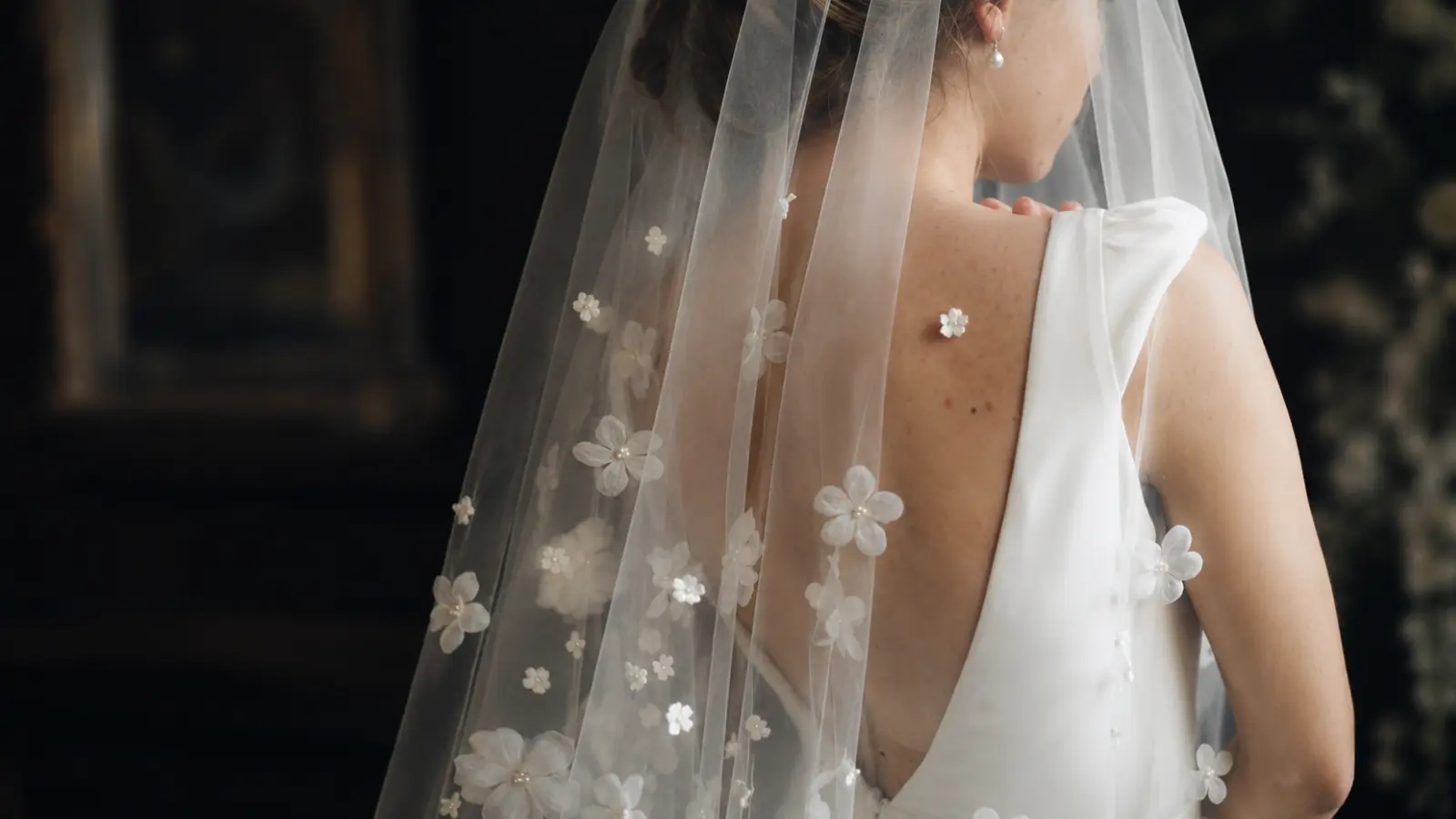
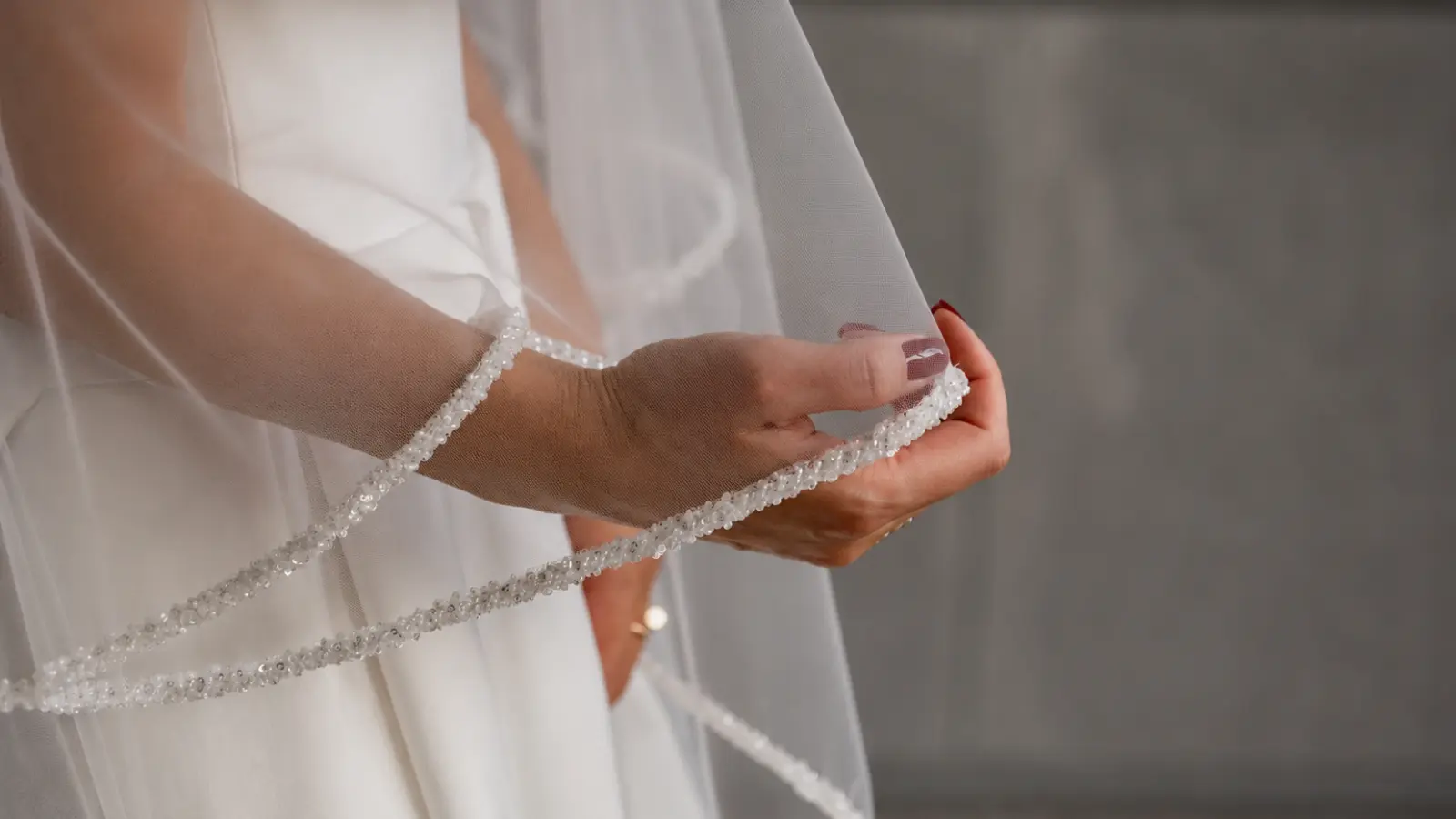
Discover elegant fingertip wedding veil inspiration featuring classic bridal hairstyles, lace-edged veils, modern and romantic wedding dresses, and timeless styling ideas for one of the most versatile veil lengths.
Is a Fingertip Wedding Veil Right for You?
A fingertip wedding veil remains one of the most versatile choices because it adapts beautifully to almost every bridal style. It offers enough length to feel elegant and traditional while remaining comfortable to wear throughout the ceremony, portraits, and reception.
Whether your wedding is classic, modern, romantic, or minimalist, a fingertip veil complements the dress rather than competing with it. For many brides, that balance of beauty, practicality, and timeless style makes it the ideal veil length.
Frequently asked questions (FAQ)
Who should choose a fingertip wedding veil?
A fingertip wedding veil is ideal for brides who want a classic bridal look without the added weight and management of a floor-length veil. It works especially well for weddings where versatility matters, adapting naturally to most dresses, hairstyles, venues, and ceremony styles while keeping the focus on the gown.
How long is a fingertip wedding veil?
A fingertip wedding veil typically measures between 36 and 40 inches from the attachment point. When your arms rest naturally at your sides, the veil falls at or near your fingertips. Small variations depend on your height and where the comb is placed.
What wedding dresses work best with a fingertip veil?
Fingertip veils complement most full-length bridal silhouettes, including A-line, ballgown, sheath, mermaid, trumpet, and column gowns. Because they end above the lower skirt and most trains, they avoid many of the proportion issues associated with longer veil lengths.
Can you wear a fingertip veil with your hair down?
Yes. Fingertip veils work well with loose hair, although the veil and hair often overlap visually at the back. Brides who want the veil edge to stand out more clearly usually achieve better results with a half-up style or an updo.
Is a fingertip veil too common?
No. Fingertip is popular because it adapts well to nearly every bridal style, not because it lacks personality. The final look depends far more on fabric, edge detail, lace, pearls, and blusher than on the length itself.
Should a fingertip veil have a blusher?
A blusher is optional. Adding one creates a traditional ceremony moment when the veil is lifted, while omitting it produces a cleaner and more modern look. Fingertip veils look complete with or without a blusher layer.
How does a fingertip veil compare to elbow and chapel lengths?
Elbow veils feel lighter and more casual, while chapel veils create a longer, more formal silhouette with additional fabric to manage. Fingertip sits comfortably between the two, combining formal presence with everyday practicality and making it one of the most adaptable veil lengths available.