A floral wedding veil is one of the most romantic ways to personalize your bridal look. Whether it features delicate floral embroidery, elegant lace motifs, or dimensional fabric flowers, it adds softness, texture, and character that a plain veil simply cannot create.
The right floral design should complement your dress, wedding style, and venue without overwhelming the overall look. From subtle embroidered hems to dramatic cathedral veils with floral lace, every detail changes the final effect.
This guide explains everything you need to know about floral wedding veils, including embroidery, lace, lengths, dress pairings, styling ideas, and how to choose the perfect design for your wedding day.
Types of Floral Wedding Veils
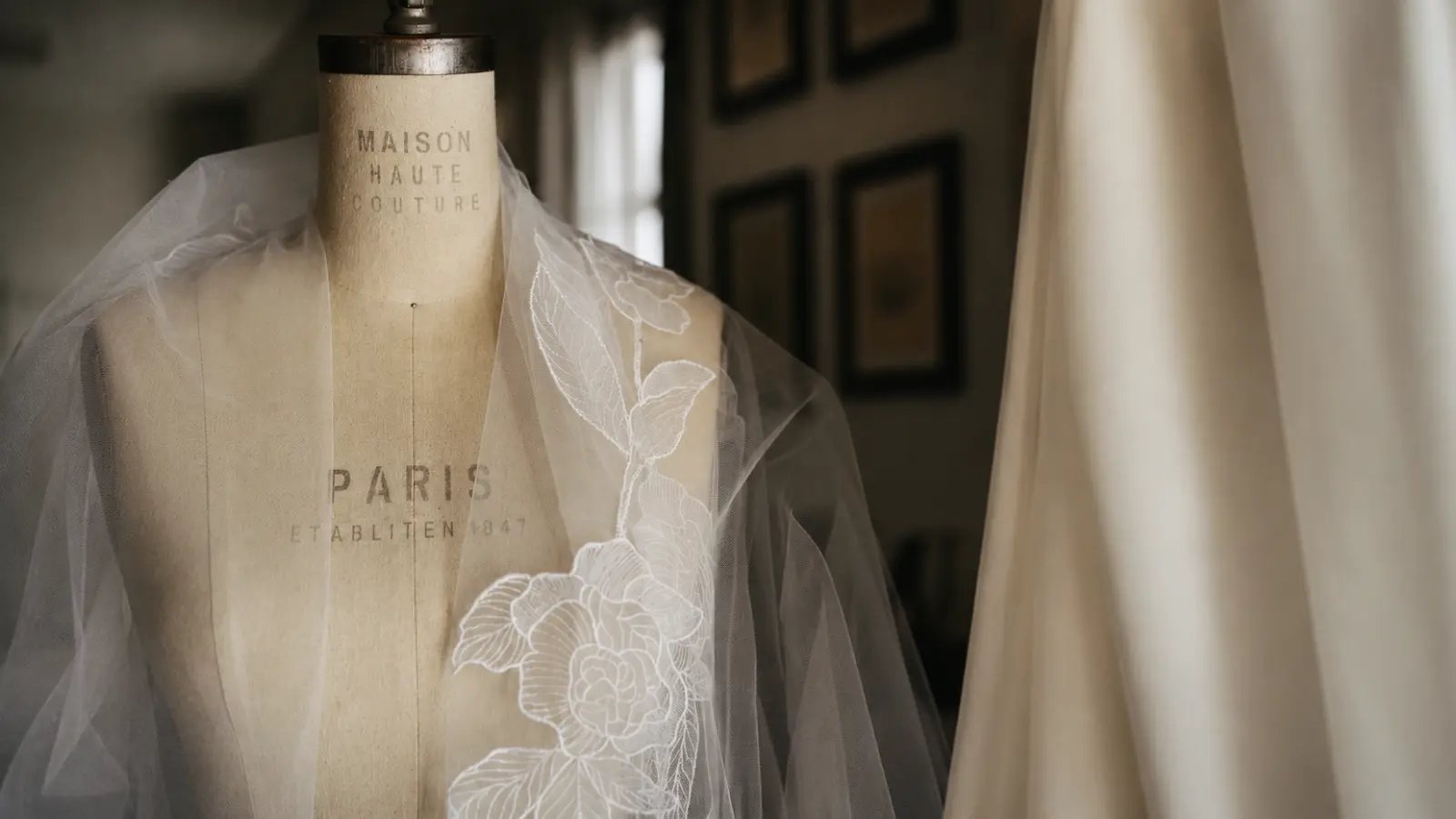
Floral veil is not a single style — it is a category that covers several distinct approaches to incorporating flower-inspired detail. Understanding how each one is constructed helps you know what you’re looking at when you’re in a salon or scrolling through options, and it makes it easier to communicate what you actually want.
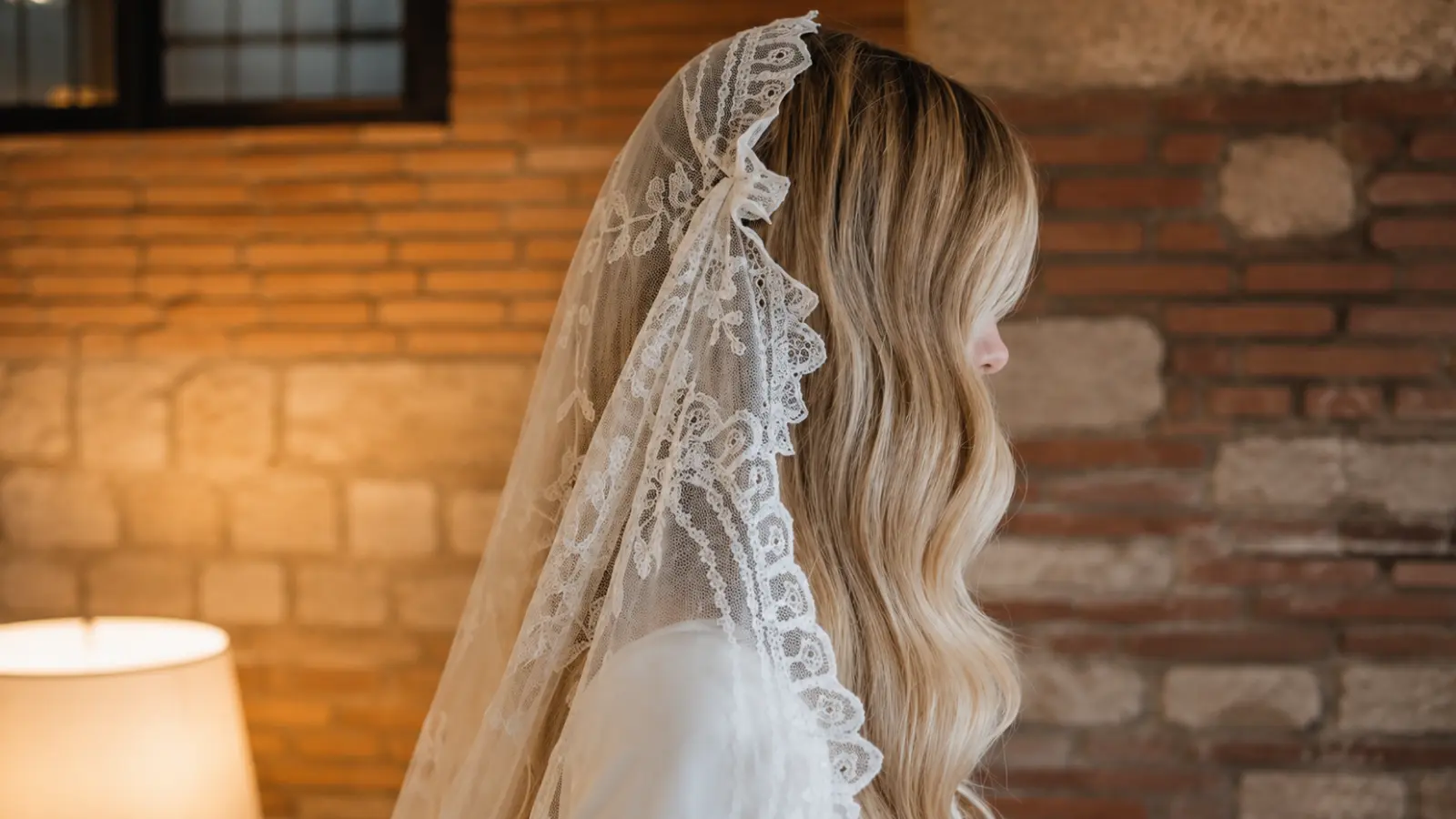
Floral Lace Veils
The most traditional iteration. These veils use lace with floral-patterned motifs — either as an all-over fabric or as an edge trim applied to a tulle base. The lace can be machine-made or handmade, and the pattern can range from small, fine flower shapes to large, graphic blooms with scalloped borders. This style sits in the same visual family as a mantilla veil, though it doesn’t have to be Spanish or worn over the head in the same way. For brides who love the romance of lace without committing to a full mantilla look, a floral lace-edged tulle veil is a natural middle ground.
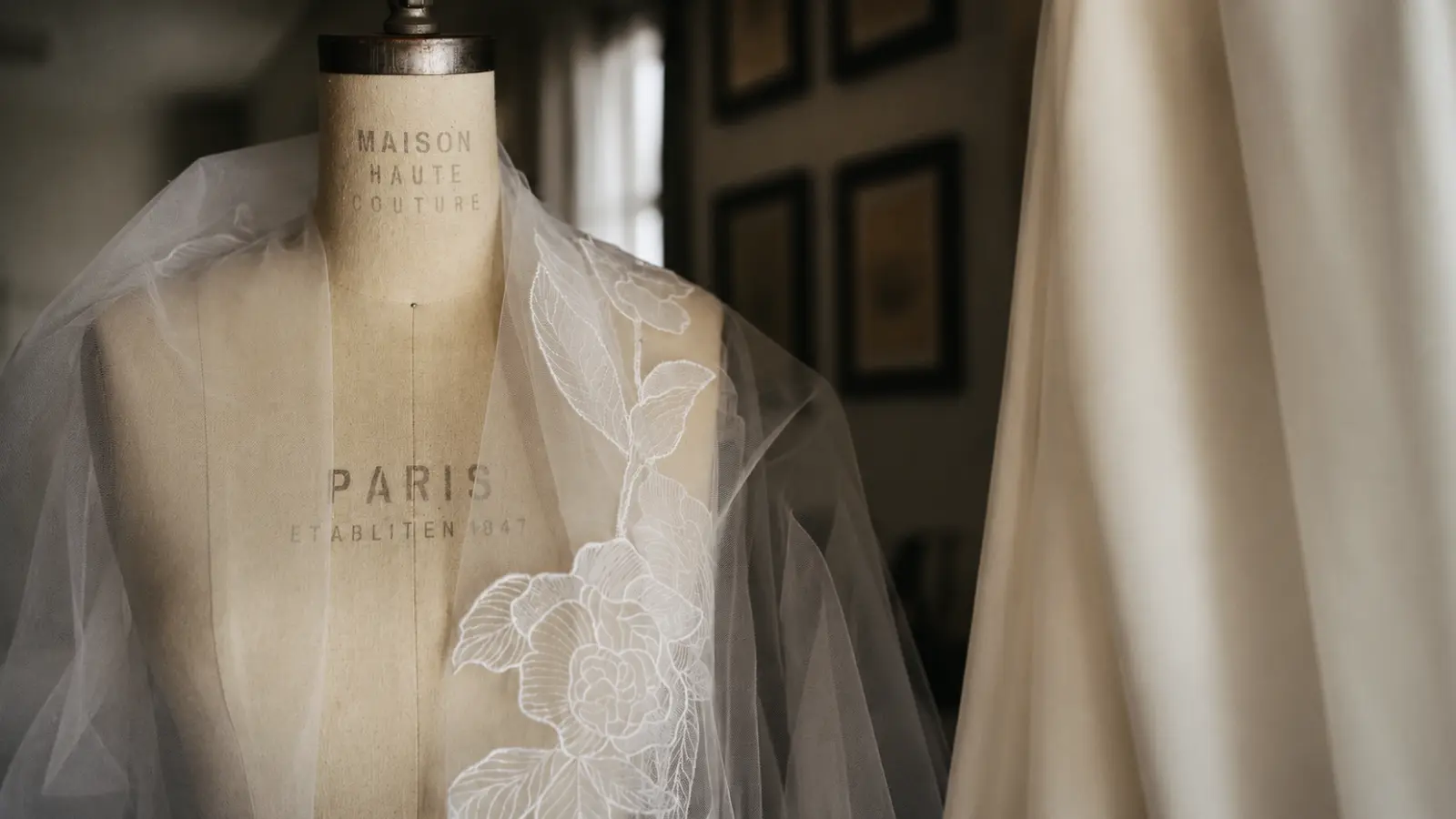
Embroidered Wedding Veils
Floral embroidery stitched directly onto the tulle, using silk thread, metallic thread, seed beads, or a combination. The embroidery can be concentrated at the hem, scattered across the lower portion of the veil, or worked in a vine-like pattern that trails from the attachment point to the hem. This is the version that tends to read as the most romantic and also the most unique, because embroidery patterns vary significantly from one maker to the next.
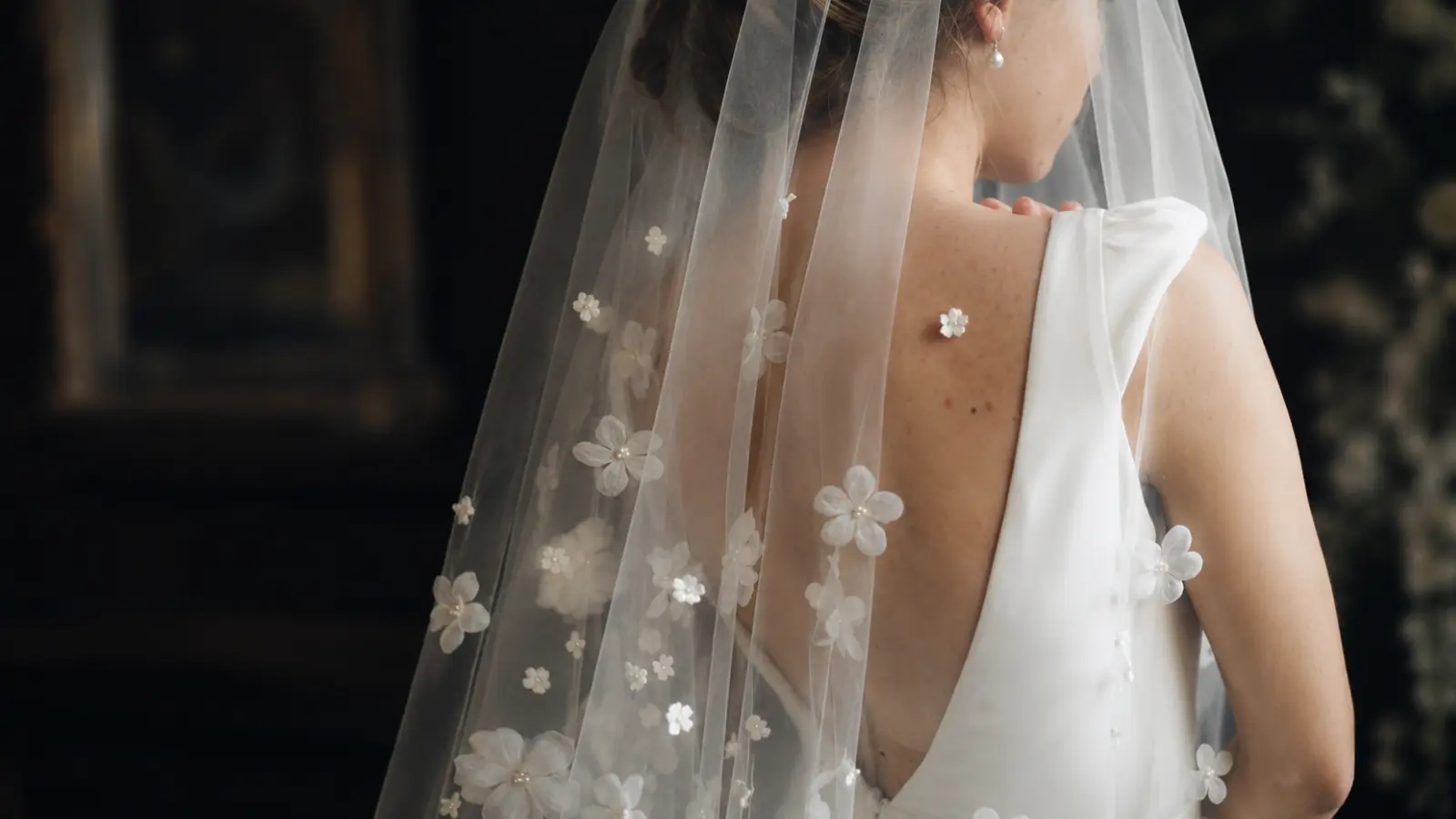
Three-Dimensional Fabric Flower Veils
Applied flowers — made from organza, silk, or other fabric — attached to the veil’s edge or scattered across the surface. This is the most sculptural and visually bold of the three approaches. It’s popular in bohemian and garden-style weddings but requires careful handling because the three-dimensional elements are more fragile and can snag on fabric more easily than flat embroidery or lace.
Combined Approaches
Many veils use two of these techniques together: embroidered flowers with seed bead centers, lace motifs with a small organza flower accent, or a lace hem trim with scattered embroidery above it. When evaluating a combined-detail veil, look at how much visual weight it carries in total, not just individual element by element. The cumulative effect is what you’ll see in photographs.
The Embroidered Wedding Veil
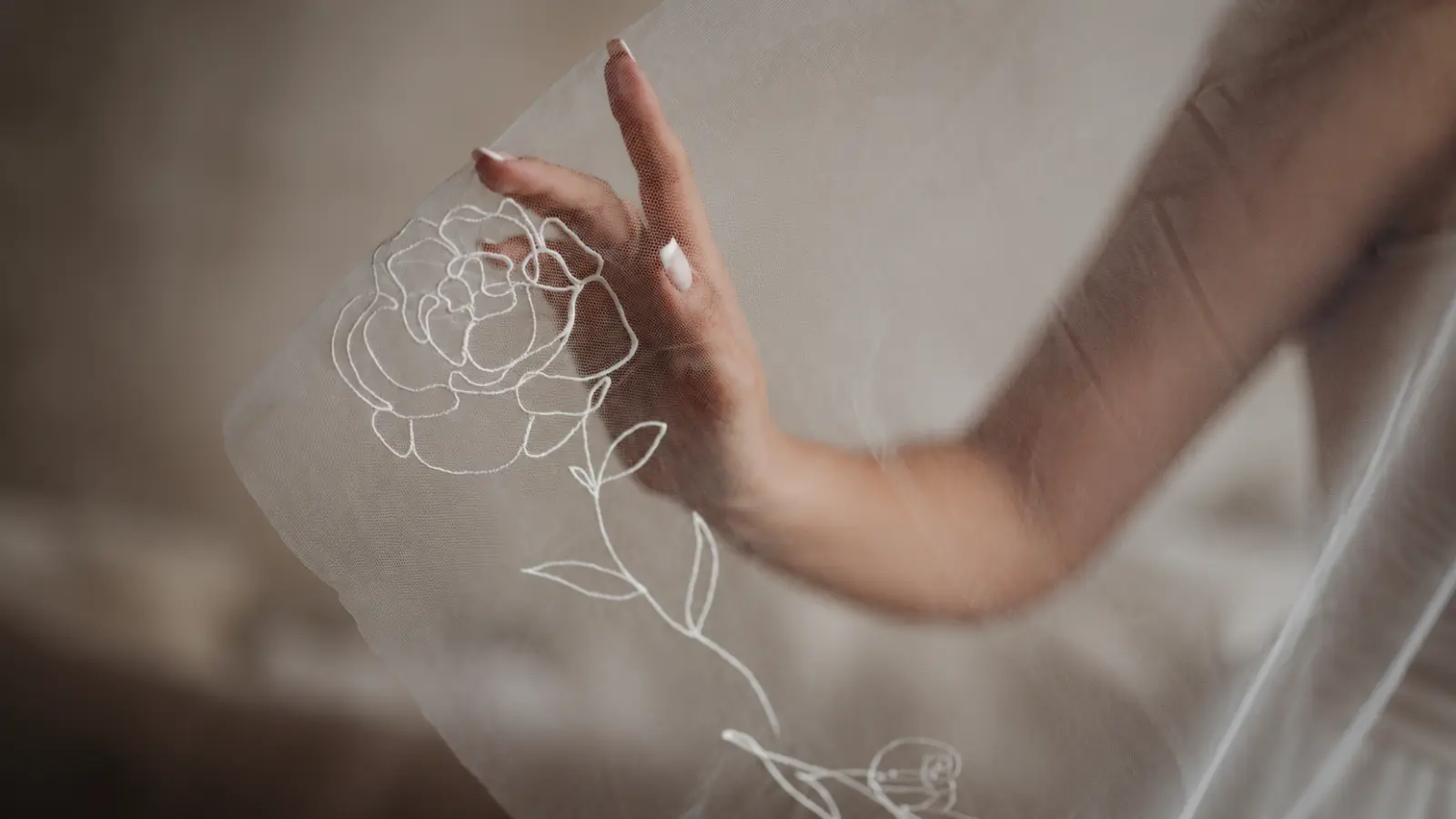
Embroidery on a veil is worth understanding on its own, because it’s the detail type that surprises brides most. In photographs, even subtle floral embroidery at the hem reads beautifully — it catches light differently than plain tulle, creates a visible edge without needing a heavy lace border, and adds texture without adding significant visual bulk. It’s one of the more underused options in the veil category, particularly for brides who want something special but don’t want a full lace veil.
A few considerations to keep in mind when evaluating embroidered veils:
- Thread type matters. Silk thread embroidery tends to read soft and romantic. Metallic thread creates a more formal effect and catches light more dramatically. Bead embroidery adds the most three-dimensionality and weight to the hem.
- Placement affects wearability. All-over embroidery across the full veil surface is heavier and can feel warmer to wear for extended periods. Hem embroidery — concentrated in the bottom 6 to 12 inches — gives you visual impact without the extra weight.
- Pattern scale should match dress scale. Small, fine embroidered flowers work with most dresses. Large, graphic embroidered flowers may compete with a heavily detailed gown or look underwhelming with a dress that needs a stronger visual counterpart.
- Check the back of the fabric. On well-made embroidered veils, the back of the stitching is clean and won’t catch on the dress. Ask to see the back before committing.
Embroidery is also one of the easier details to have added to an existing plain veil, if you find a length and fabric you love but want more character at the edge. Some bridal alterations specialists offer this service, though it depends significantly on the complexity of the design and the wedding veil materials being used.
Floral Lace Veils
The floral lace veil bridges two things that many brides love independently: the softness of lace and the poetry of floral detail. But lace is a category with a lot of variation inside it, and the word “floral” applied to lace can describe anything from a barely-there shadow pattern to a bold, architectural border with large petal shapes. Before falling in love with a veil in a photo, it’s worth understanding what type of lace you’re actually looking at.
Chantilly lace is soft, lightweight, and typically features a fine floral or vine pattern on a net ground. It’s the lace most commonly associated with romantic, traditional bridal looks. Alencon lace has more definition — the motifs are outlined in a satin cord, giving the flowers a crisp, raised edge. Venice lace is the most three-dimensional and graphic, with dense, sculptural flower shapes that have no net background. Each of these behaves differently on a veil and photographs differently, particularly outdoors.
For a full guide to how different lace types work in veils and how to pair them with different dress fabrics, see our lace wedding veil.
Floral Veil Styles by Length
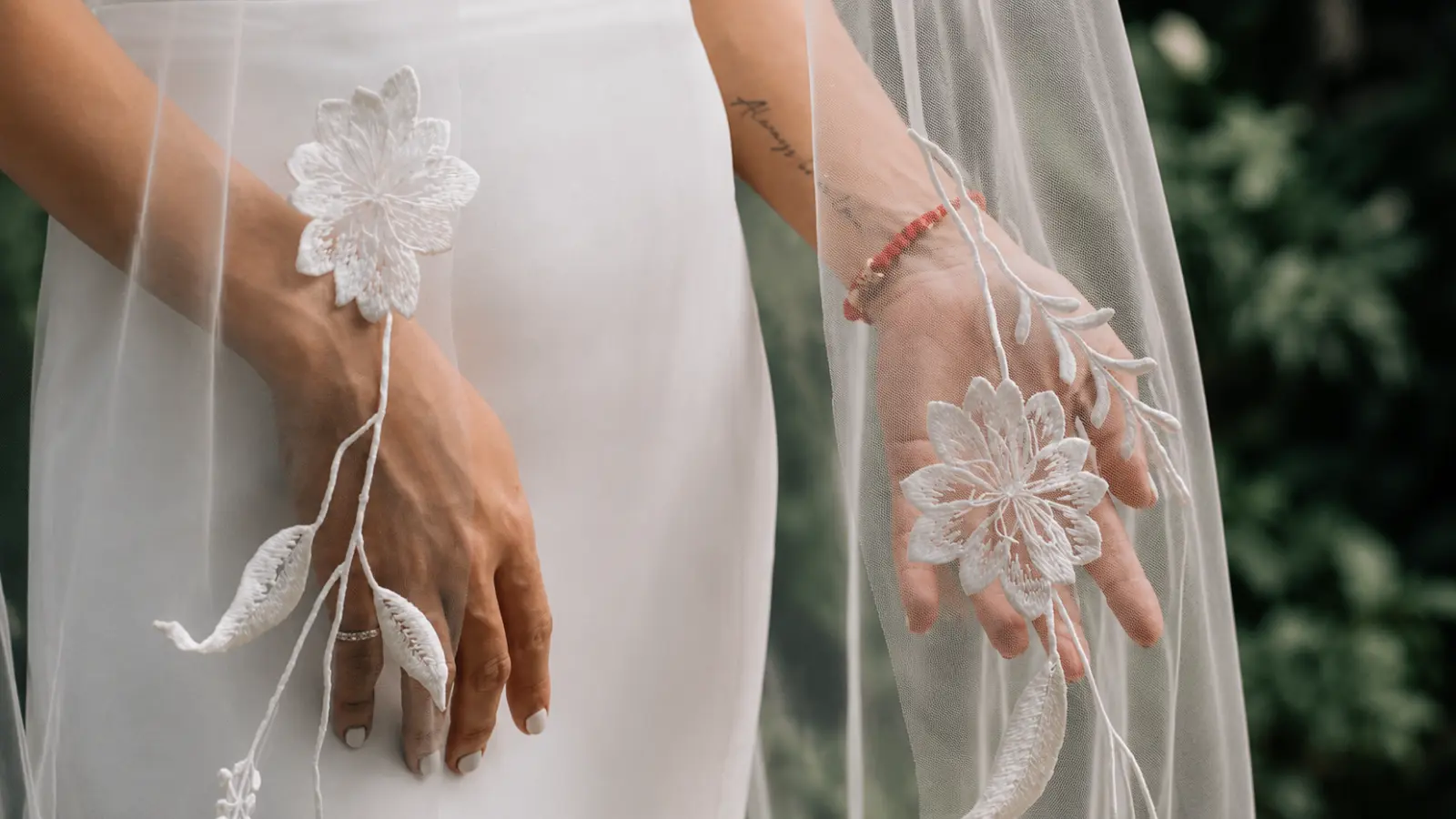
The length of a floral veil significantly changes how much the floral detail reads — and whether it’s the right choice for your ceremony setting. Comparing different wedding veil lengths helps show how floral or embroidered detail changes from one proportion to another.
Fingertip Floral Veil
The most practical of the longer options and arguably the most photographed length in the floral veil category. At fingertip length, embroidery or lace falls right at the hands and waist in portraits, which is exactly where photographers tend to compose the shot. It works equally well for garden ceremonies and more formal settings and is long enough to create movement without requiring as much logistical management as cathedral length.
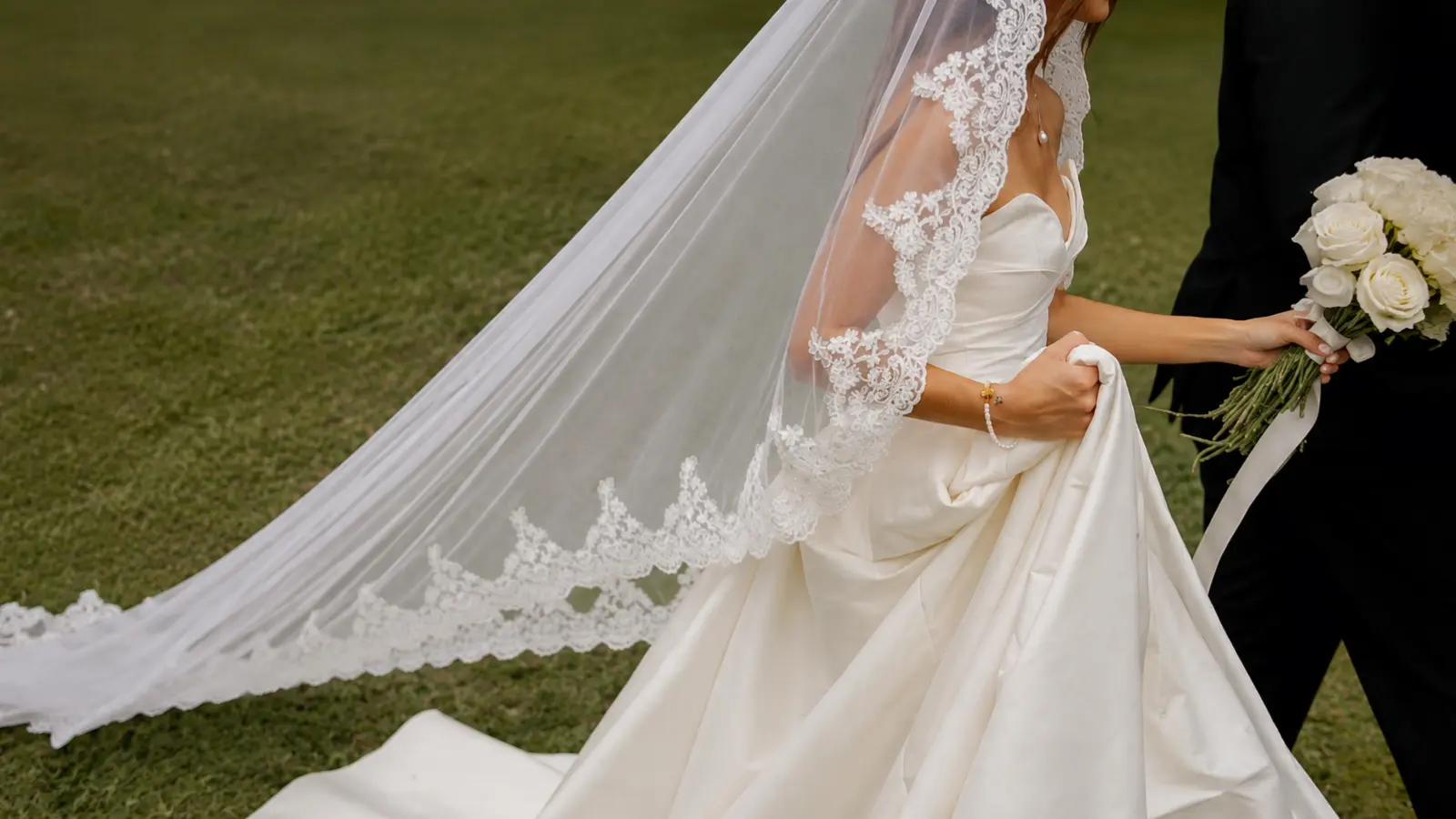
Cathedral Floral Veil
A cathedral-length floral veil is a statement piece. At this length, the scale of the floral detail has to be considered carefully: fine embroidery that reads beautifully on a shorter veil can become almost invisible when spread across 108 to 120 inches of tulle. Cathedral floral veils tend to work best when the lace or embroidery is concentrated at the hem and substantial enough to carry at that scale. This length is particularly stunning in formal church settings and for brides wearing a ballgown or A-line silhouette with a long train. For more on making the most of this length, see our cathedral wedding veil.
Elbow-Length Floral Veil
A good choice for outdoor, garden, or beach weddings where a longer veil would be impractical. Floral lace trim or embroidery at elbow length reads softly and frames the upper body well in photographs. It’s also a natural choice for brides who want floral detail but prefer a less formal overall effect.
Floor-Length or Chapel Floral Veil
A mid-formal option that creates a dramatic silhouette from behind without the logistical commitment of cathedral length. Floral embroidery along the hem of a chapel veil creates a visual border that defines the shape of the veil in ceremony photos — particularly effective if the dress itself has a clean, simple hem.
Floral Veil Style and Wedding Style: A Pairing Guide
One of the most useful ways to think about a floral veil is to match its character to the overall wedding aesthetic. A heavily beaded floral embroidery veil works differently at a garden party wedding than it does at a formal ballroom reception — and neither is wrong, but the choice should be intentional. This table pairs common veil styles with the wedding contexts they tend to suit best.
| Floral Veil Style | Best Wedding Style | Why It Works |
|---|---|---|
| Floral lace edge on tulle (fingertip or chapel) | Formal church, classic ballroom, traditional ceremony | Traditional lace reads formal without adding bohemian softness |
| Delicate floral embroidery, hem only | Garden wedding, spring or summer ceremony, vineyard | Soft and romantic; works with natural light photography |
| All-over embroidered floral pattern | Spring wedding, garden ceremony, romantic estate | Dense floral detail reads beautifully in outdoor settings |
| Cathedral lace veil with floral border | Grand church, formal ballroom, traditional ceremony | Scale of the veil suits large venues; lace border provides definition at a distance |
| Three-dimensional fabric flowers on tulle | Garden party, bohemian or outdoor ceremony, destination wedding | Sculptural and relaxed; less formal than embroidery or lace |
| Silk thread floral embroidery with metallic accent | Black-tie wedding, evening ceremony, formal indoor venue | Metallic thread catches candlelight; elevates the look for evening |
| Soft floral lace edge on elbow veil | Beach ceremony, outdoor summer wedding, casual celebration | Short length is wind-friendly; lace edge adds romance without drama |
| Tone-on-tone embroidery (ivory on ivory) | Almost any setting | Subtle and elegant; adds texture without visual competition |
This is a guide, not a prescription. The most important factor is always the specific combination of your dress, your venue, and what actually feels like you — not which column on a chart you fall into.
Floral Veil With a Simple Dress
This is one of the most effective pairings in bridal styling, and it’s underused. A minimalist or clean-lined dress — crepe, satin, or plain tulle without embellishment — creates the perfect backdrop for a more detailed veil. The veil becomes the statement, and the dress stays out of its way. The two elements don’t compete; they take turns.
When a bride wears a simple gown, the eye travels naturally to what moves, which is always the veil. Floral embroidery at the hem of a fingertip or cathedral veil creates a striking visual anchor without requiring any detail on the dress itself. This approach also photographs particularly well because the contrast between the clean dress and the detailed veil is immediately readable — there’s no visual noise, just two distinct things doing their jobs.
A few things to consider with this pairing:
- Let the veil be the feature. If your dress is simple, there’s room to go bolder with the veil detail than you might with an embellished gown. More embroidery, a larger lace motif, or even three-dimensional flowers are all more wearable here than they would be over a heavily beaded dress.
- Think about the edge finish. On a plain dress, the veil’s edge trim tends to read more clearly. A raw-cut hem has a modern, relaxed quality. A scalloped lace border is more traditional. Choose intentionally based on the overall aesthetic you’re after.
- Consider the fabric weight. A heavily embroidered veil over a lightweight crepe dress will move differently than it does over a structured satin. Try them together — or with a dress of the same fabric — before committing.
For more guidance on matching veil detail levels to specific dress styles and silhouettes, see our wedding dress with veil.
Floral Veil With a Lace Dress
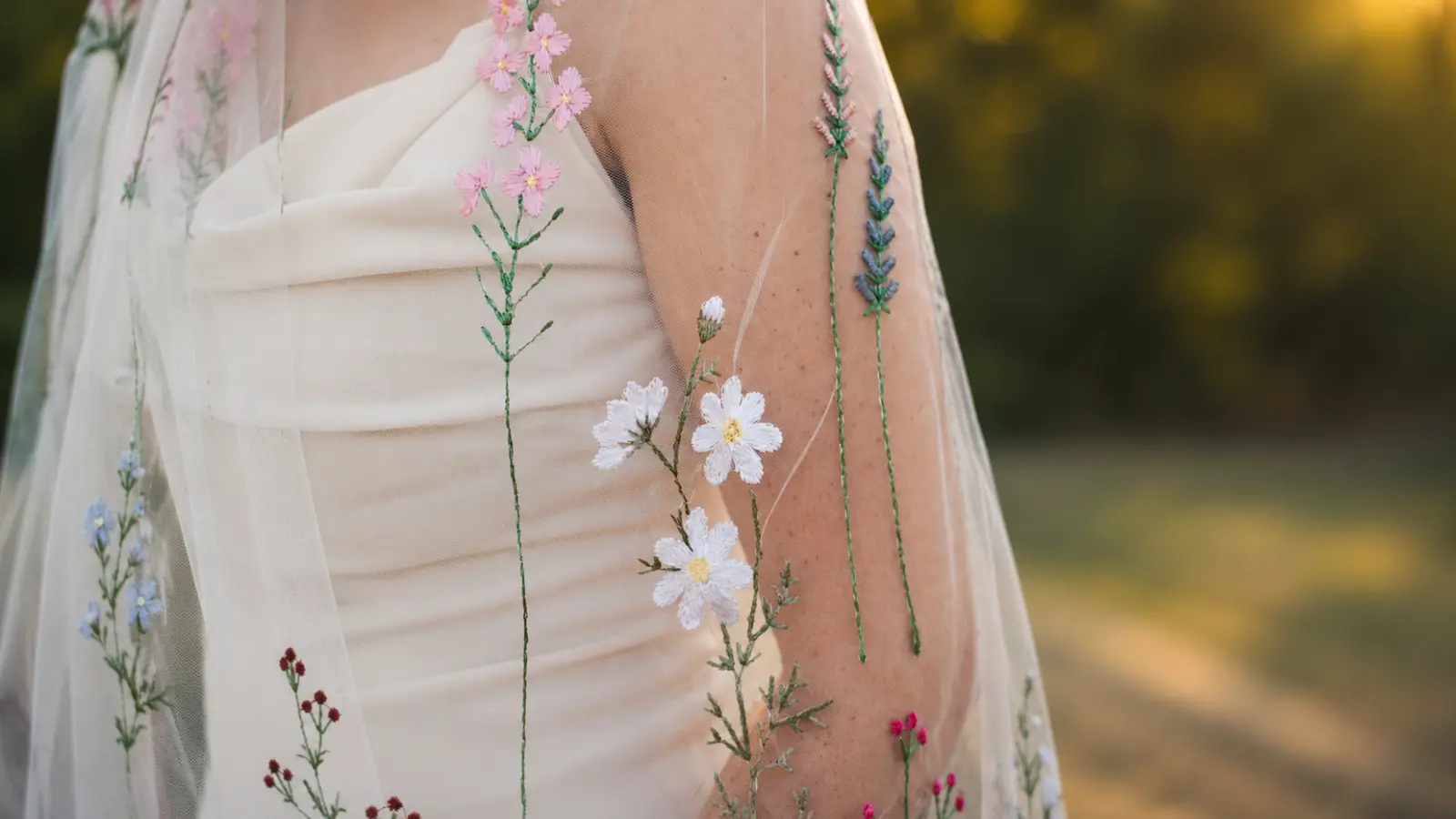
This is the pairing that requires the most attention, because lace on lace can go wrong in ways that are hard to predict without trying it on. The goal is harmony, not repetition — and the difference between the two comes down to whether the veil’s floral lace is clearly distinct from or a continuation of the dress’s lace.
There are two approaches that tend to work well, and one that tends not to.
The first: match the lace closely. If your dress has Chantilly lace, a veil with a Chantilly lace border that uses the same or a very similar pattern reads as intentional — as if the veil is a continuation of the gown. This only works when the lace patterns are genuinely similar, not just both floral. Random lace pairings tend to look mismatched rather than curated.
The second: go plainer on the veil. A lace dress has significant visual weight on its own. A plain or very simply embroidered tulle veil lets the dress be the lace element without competition. This is often the most elegant solution for brides wearing heavily detailed lace gowns.
What tends not to work: two different, prominent floral lace patterns on the same body. If your dress has bold floral lace and your veil also has bold floral lace with a different pattern or scale, the two elements will compete for attention and neither will win. If you love lace and want it on both your dress and your veil, prioritize simplicity on one of the two.
What to Avoid
Floral veils are one of the more forgiving veil categories when it comes to personal taste — but there are a few patterns worth knowing about before you shop.
- Competing floral patterns. If your bouquet, your dress fabric, and your veil all feature different floral motifs at similar scales, the overall look becomes a study in pattern rather than a cohesive bridal look. Aim for one dominant floral statement — usually the veil or the dress, not both at full intensity.
- Three-dimensional flowers on very long veils. Fabric flowers applied to a cathedral-length veil add significant weight and can pull the veil off-center over time, especially if the flowers are concentrated on one side or heavily clustered. Ask how the flowers are secured and how the veil behaves after several hours of wear.
- Choosing the veil before confirming the dress details. Floral veils are more style-dependent than plain ones. A veil that works beautifully with a romantic A-line may overwhelm a minimalist sheath. Always evaluate the veil against your confirmed dress silhouette and embellishment level.
- Heavy embroidery in a very warm venue. Embroidered veils are typically heavier than plain tulle, and that difference becomes more noticeable over the course of a long outdoor ceremony in summer heat. If your wedding is in a warm-weather setting, consider keeping the embroidery to the hem rather than opting for all-over coverage.
- Ignoring how the flowers are attached. On veils with applied lace or 3D flower elements, the attachment method matters. Hand-stitched appliqués tend to lie flatter and last longer than those applied with adhesive. Check the back of the veil for how cleanly the attachment is finished.
Most of these come down to the same principle: evaluate the veil as part of a complete look, not as a standalone piece. In isolation, almost every floral veil looks beautiful. The question is always how it works with everything else in the frame.
Floral Wedding Veil Inspiration
Discover romantic floral wedding veil inspiration featuring embroidered flowers, delicate lace borders, cathedral veils, and elegant bridal looks. Explore beautiful dress pairings, timeless floral details, and dreamy wedding styling ideas to find the perfect floral veil for your celebration.
Is a Floral Wedding Veil Right for You?
A floral wedding veil brings personality, romance, and artistic detail to your bridal look without sacrificing elegance. Whether you choose delicate floral embroidery, timeless lace motifs, or subtle three-dimensional appliqués, the right design should enhance your dress rather than compete with it.
When the floral details, veil length, and wedding style are thoughtfully balanced, your veil becomes more than an accessory—it becomes one of the defining elements of your bridal look and one of the most memorable details in your wedding photographs.
Frequently asked questions (FAQ)
How do you choose the right floral wedding veil?
Choose a floral veil by considering your dress, wedding style, venue, and the amount of detail already present in your bridal look. Minimal dresses allow for bolder floral embroidery or lace, while detailed gowns usually pair better with lighter floral accents. The overall goal is balance rather than matching every floral element exactly.
What is a floral wedding veil?
A floral wedding veil incorporates flower-inspired details through floral lace, embroidered flowers, or three-dimensional fabric flowers applied to the veil. Depending on the design, it can create a subtle romantic accent or become the main decorative feature of the bridal look.
Can you wear a floral veil with a lace wedding dress?
Yes. The key is preventing the floral motifs from competing. Either use a veil with lace that closely matches the gown so it feels like a continuation of the dress, or choose a much simpler floral veil that allows the gown to remain the dominant feature.
What is the difference between floral lace and floral embroidery?
Floral lace uses woven or appliquéd lace motifs that remain relatively flat and traditional. Floral embroidery is stitched directly onto the tulle using thread, beads, or metallic accents, creating more texture and dimensional detail. Some veils successfully combine both techniques.
What wedding styles work best with a floral veil?
Floral veils are particularly suited to romantic, garden, vineyard, spring, and outdoor weddings, but they can also work beautifully in formal church ceremonies when the floral details are elegant and refined. The formality depends more on the execution than on the floral motif itself.
How do you keep a floral veil from looking overdone?
Limit the floral details to the edge or lower portion of the veil, use tone-on-tone embroidery, and avoid combining multiple strong floral patterns across the dress, veil, bouquet, and accessories. One floral focal point is usually enough.
What veil length works best for floral details?
Fingertip veils offer the greatest versatility because floral details appear naturally in portraits. Cathedral veils create dramatic visual impact but require larger-scale embroidery or lace to remain visible from a distance. Elbow and chapel lengths provide a practical balance for many weddings.