A cathedral wedding veil is one of the most iconic bridal accessories, creating an elegant train that transforms your walk down the aisle into an unforgettable moment. Its dramatic length, graceful movement, and timeless beauty have made it a favorite choice for formal weddings around the world.
Choosing a cathedral veil, however, involves much more than simply selecting the longest option available. Your dress, venue, hairstyle, photography plans, and even the ceremony logistics all influence whether this breathtaking style is the right fit.
This guide explains everything you need to know about cathedral wedding veils, including measurements, styling ideas, dress pairings, movement, photography, and how this dramatic style fits into choosing the perfect wedding veil for your wedding day.
What a Cathedral Veil Is and What It Measures
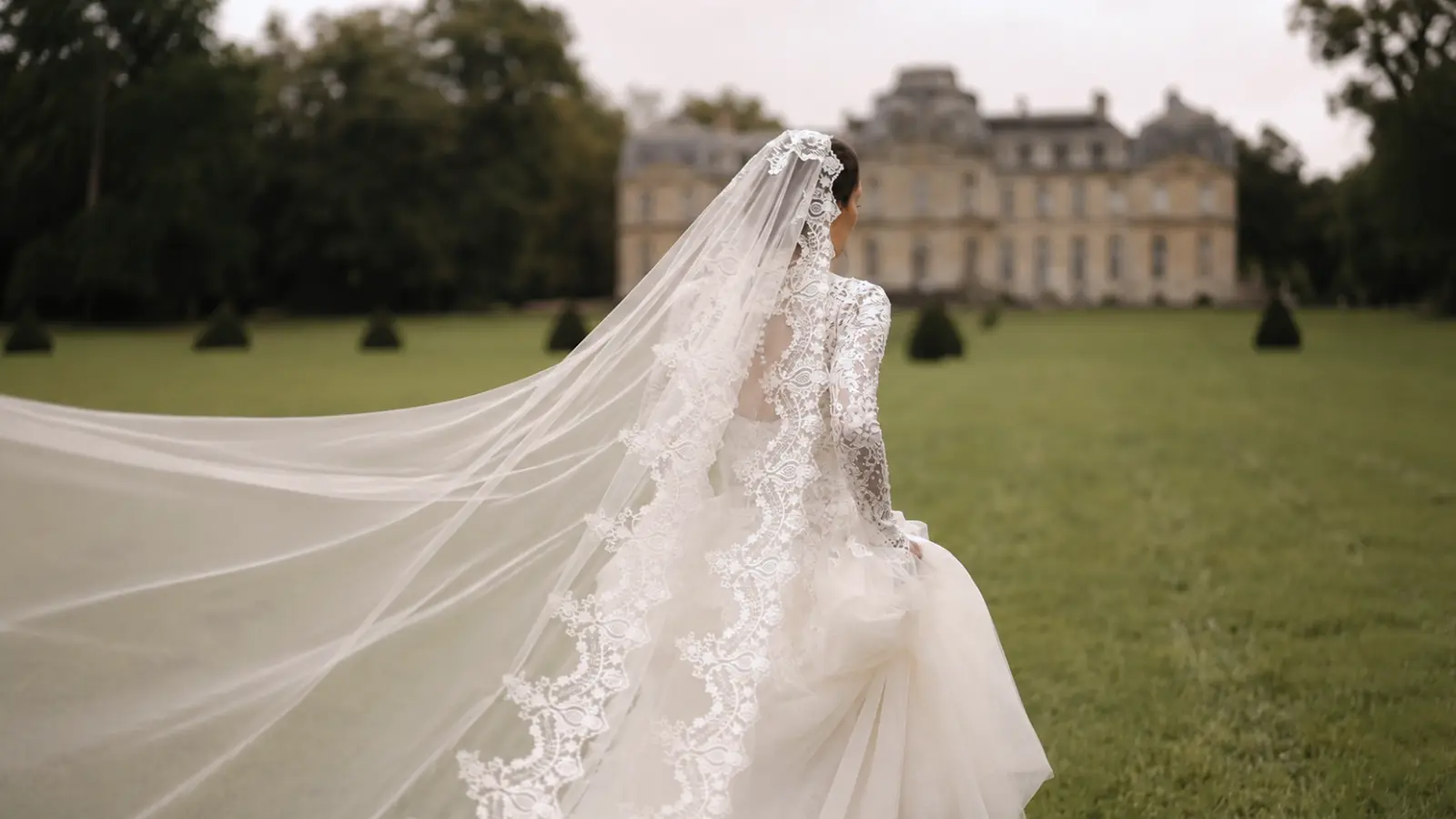
A cathedral veil is defined by its length: typically 108 to 120 inches, measured from the comb or clip at the back of the head to the veil’s bottom edge. At that measurement, the veil extends approximately 2 to 4 feet beyond the hem of a standard floor-length gown, creating a visible train that trails behind the bride as she walks.
The name refers to the kind of space the veil was historically designed for: large, formal settings with long aisles where the full length could be appreciated. In a small chapel with a 20-foot aisle, a cathedral veil barely has room to settle. In a grand church or ballroom with a procession of 60 feet or more, it does exactly what it was designed to do.
It’s worth noting that some designers extend the measurement further — up to 144 inches — which is sometimes labeled an extended cathedral or a royal veil. The distinction matters if you’re shopping with a specific length in mind, so it’s worth confirming the actual measurement rather than relying on the name alone. For a full comparison of all bridal veil lengths with measurements, see the wedding veil lengths.
Cathedral vs. Chapel Veil
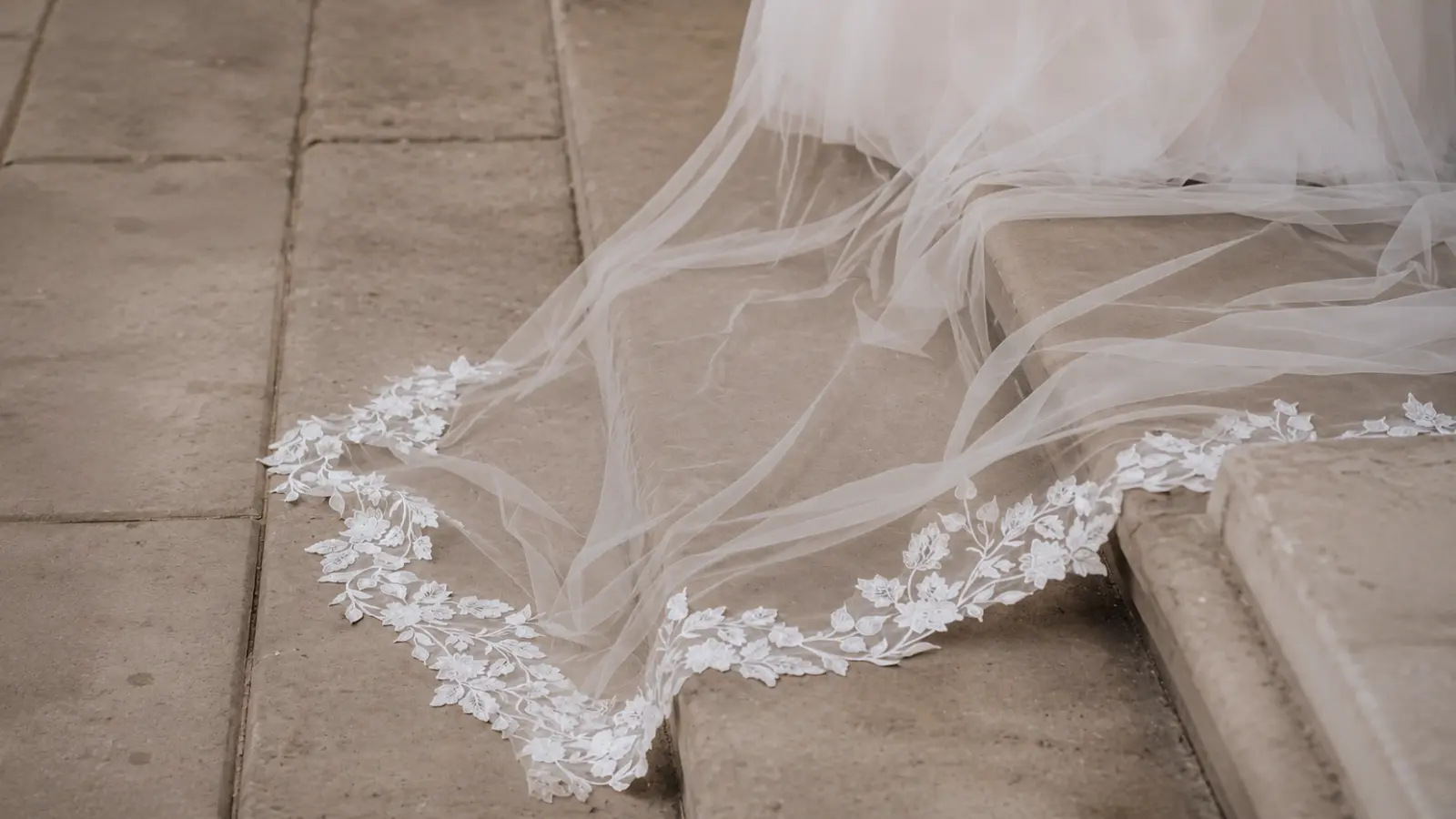
These two lengths are the ones brides most often confuse, and it’s easy to see why: both are formal, both are floor-length or longer, and the names sound more similar than the reality. The table below breaks down what actually separates them.
| Chapel Veil | Cathedral Veil | |
|---|---|---|
| Typical Length | 85–95 inches | 108–120 inches |
| Where It Falls | Sweeps the floor; just at or past the gown’s hem | Extends 2–4 feet beyond the gown’s hem |
| Train Effect | Minimal to moderate | Significant; visible train behind the bride |
| Venue Requirement | Works in medium to large venues | Best in large venues with a long aisle |
| Formality Level | Formal | Very formal to ceremonial |
| Movement Management | Moderate; needs attention on stairs and turns | High; requires pre-walk arrangement |
| Photography Impact | Strong; reads well in portraits | Very strong; often the focal point of the shot |
| Best For | Formal ceremonies without a very long aisle | Grand churches, estate venues, long processionals |
In practice, the chapel veil is the more forgiving of the two: it delivers most of the visual drama with fewer logistical requirements. The cathedral veil is the right choice when you want the train to be undeniably part of the look — not just a graceful extension of the hem, but a deliberate statement. If you’re undecided between the two, a honest question is: does the aisle actually give the cathedral length room to breathe? If the answer is uncertain, the chapel veil is usually the smarter call.
When to Choose a Cathedral Veil
The cathedral veil earns its place under a specific set of conditions. It’s not inherently better than other lengths — it’s the right choice when those conditions line up.
| Cathedral Veil Works Well When… | Reconsider If… |
|---|---|
| Your venue has a long aisle (60+ feet) | The aisle is short or the space is intimate |
| The ceremony is formal or traditional | The ceremony is outdoors, on grass, or on a beach |
| You’re wearing a ballgown, A-line, or fit-and-flare | Your dress is a sheath, column, or minimalist style |
| The processional is a priority moment for you | You’d rather minimize logistics on the day |
| Your hair will be in an updo or half-up style | You’re wearing your hair completely down |
| Photography is a top priority and you love the sweep shot | You’re not planning formal portraits |
| You have someone designated to manage the veil | You don’t have a coordinator or a reliable bridesmaid nearby |
The most important factor is venue scale. A cathedral veil in a venue that can’t accommodate it doesn’t create drama — it creates a management problem. If your ceremony space is intimate or your aisle is short, a chapel-length veil delivers nearly the same visual weight without the complications.
Which Dress Silhouettes Work Best
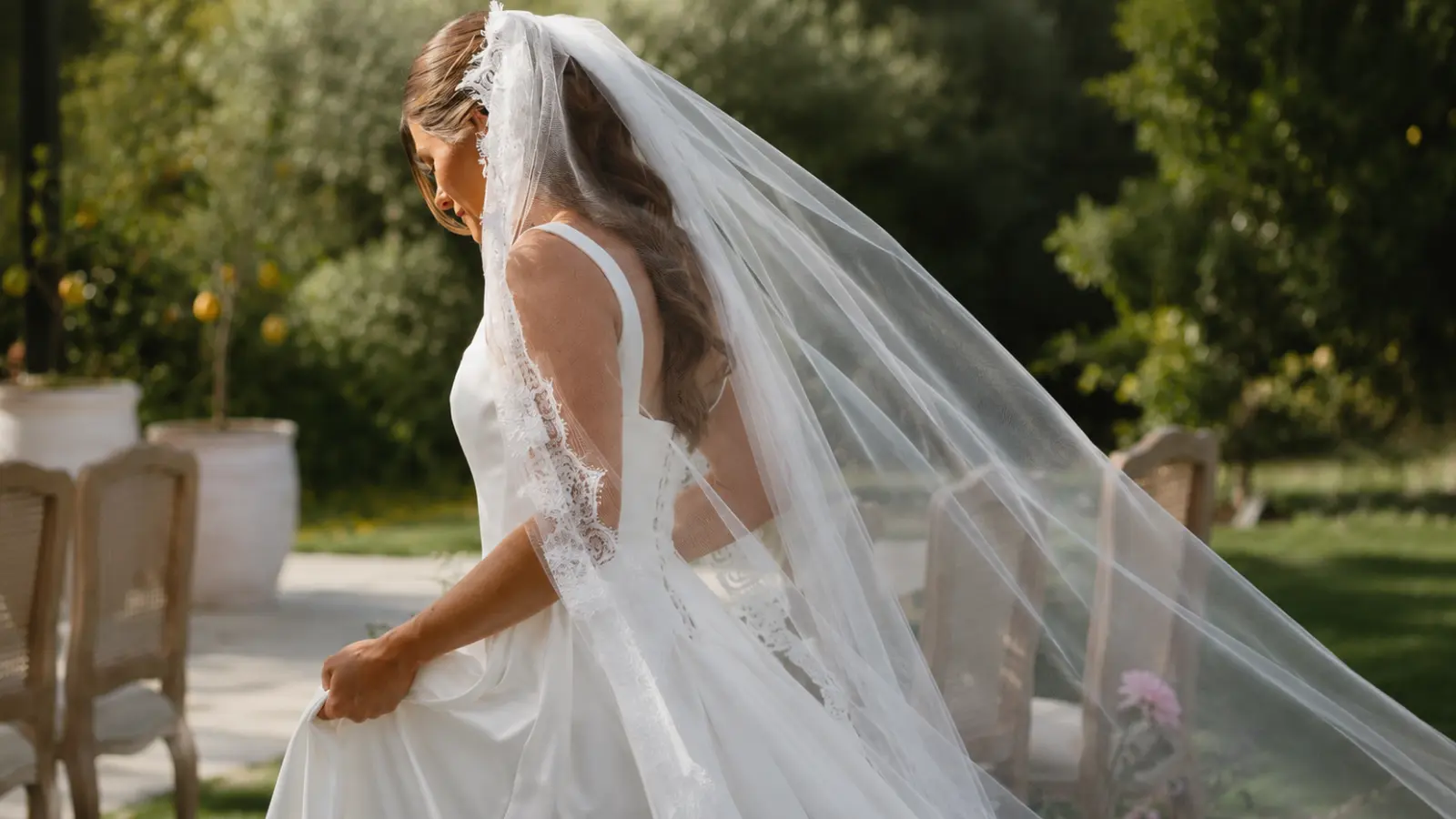
The cathedral veil needs structural balance. Because it adds considerable visual weight behind the bride, it works best with gowns that have their own presence — silhouettes that aren’t overwhelmed by the veil’s scale, but instead complement it.
Ballgown
This is the most natural pairing. The ballgown’s volume creates a proportional counterpart to the cathedral sweep, and the two read as intentional together. A plain or lightly edged cathedral veil attached at the crown or slightly lower tends to work best here, allowing the skirt to remain the focal point of the dress itself.
A-Line
An A-line silhouette is the most veil-versatile of all dress shapes, and cathedral length is no exception. The gradual flare from waist to hem gives the veil a natural release point at the back. Whether you prefer a simple edge or a lace treatment, an A-line handles both without losing its own lines.
Fit-and-Flare or Trumpet
These silhouettes work with a cathedral veil when the veil is attached slightly lower — at the mid-back or lower — to complement the gown’s flare rather than compete with it. A cathedral veil attached high on a trumpet dress can create an awkward break in the visual line where the fabric meets the gown’s flare. Try different placement points at your appointment before deciding.
Sheath or Column
This pairing requires more care. A cathedral veil on a very clean, minimal sheath dress can look stunning if the veil itself has a purposeful edge detail — a delicate lace border or a simple pearl trim — to justify its presence. A plain cathedral veil on a plain sheath can read as unresolved, with neither element giving the other anything to work with. If you love this combination, bring a strong reference image to your stylist so you can evaluate it against your specific dress.
For a broader look at matching veils to dress silhouettes across every length, the wedding dress with veil covers the full picture.
Cathedral Veil With a Blusher
A cathedral veil with a blusher is a two-tier style: a shorter front layer covers the face and is lifted at the altar, while the full cathedral length falls behind. It’s one of the most ceremonially charged combinations in bridal fashion, and for brides who want that specific processional moment, it delivers in a way that no single-tier veil can.
The practical reality of adding a blusher to a cathedral veil is that you’re now managing significantly more fabric — both in weight and volume. The blusher adds a second layer that drapes over the shoulders and chest during the walk, which affects how the veil falls and photographs from the front. It also means the moment of lifting the blusher is visually framed by the cathedral sweep behind you, which is genuinely beautiful but something worth visualizing in advance.
A few things to try at your appointment: ask to see the veil with the blusher flipped back before you walk, and with it down. Some brides prefer to walk with the blusher already pinned back so their face is visible to guests throughout the processional. Others want the full traditional experience of the lift at the altar. Both are valid — it’s a personal choice, not a protocol. For a deeper look at the blusher layer on its own, see the blusher veil.
Cathedral Veils With Lace or Pearls
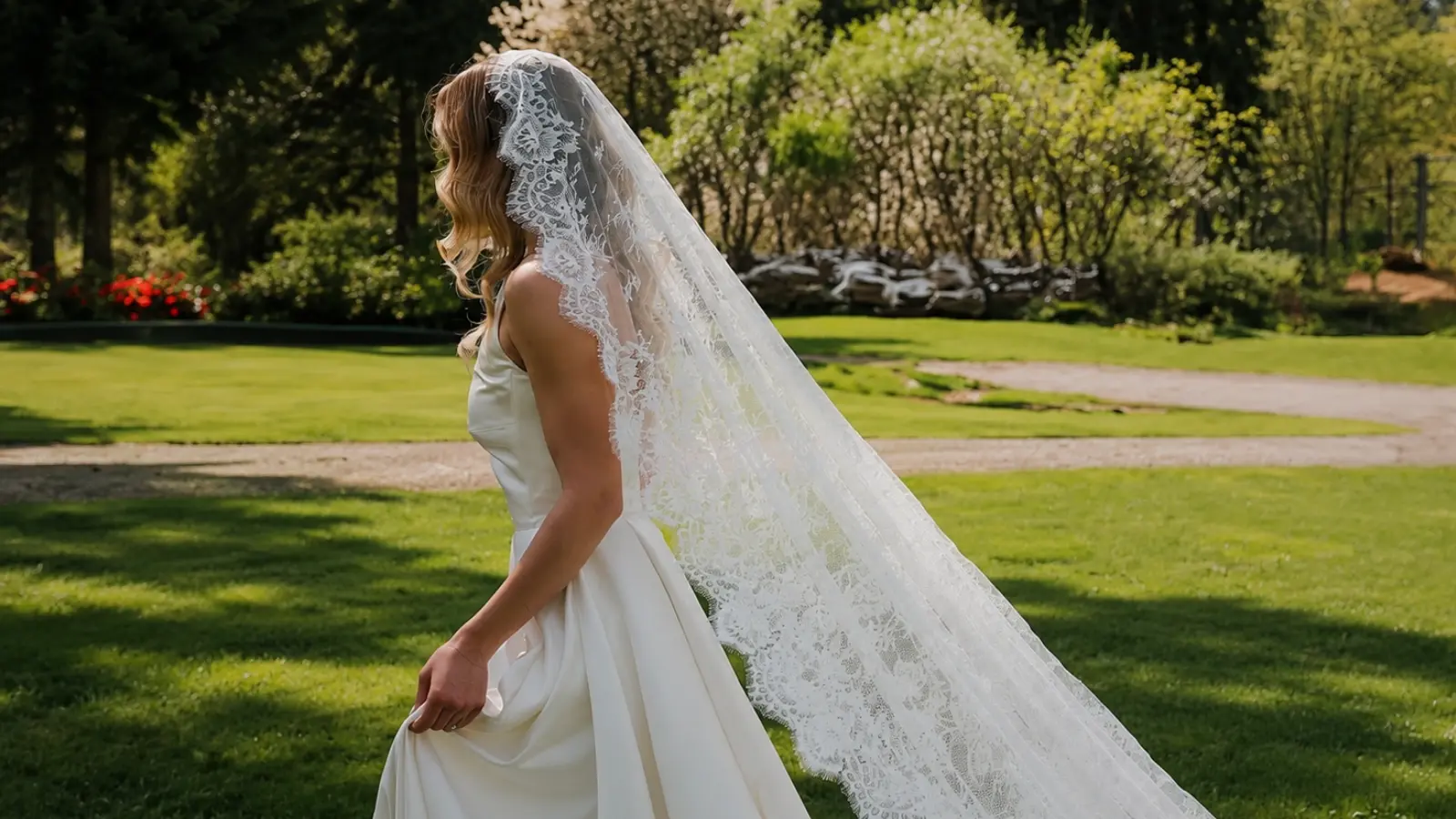
The edge treatment on a cathedral veil has more impact than brides typically expect — and at this length, the choice becomes even more consequential because the edge is visible for several feet of fabric trailing behind you.
Lace Cathedral Veils
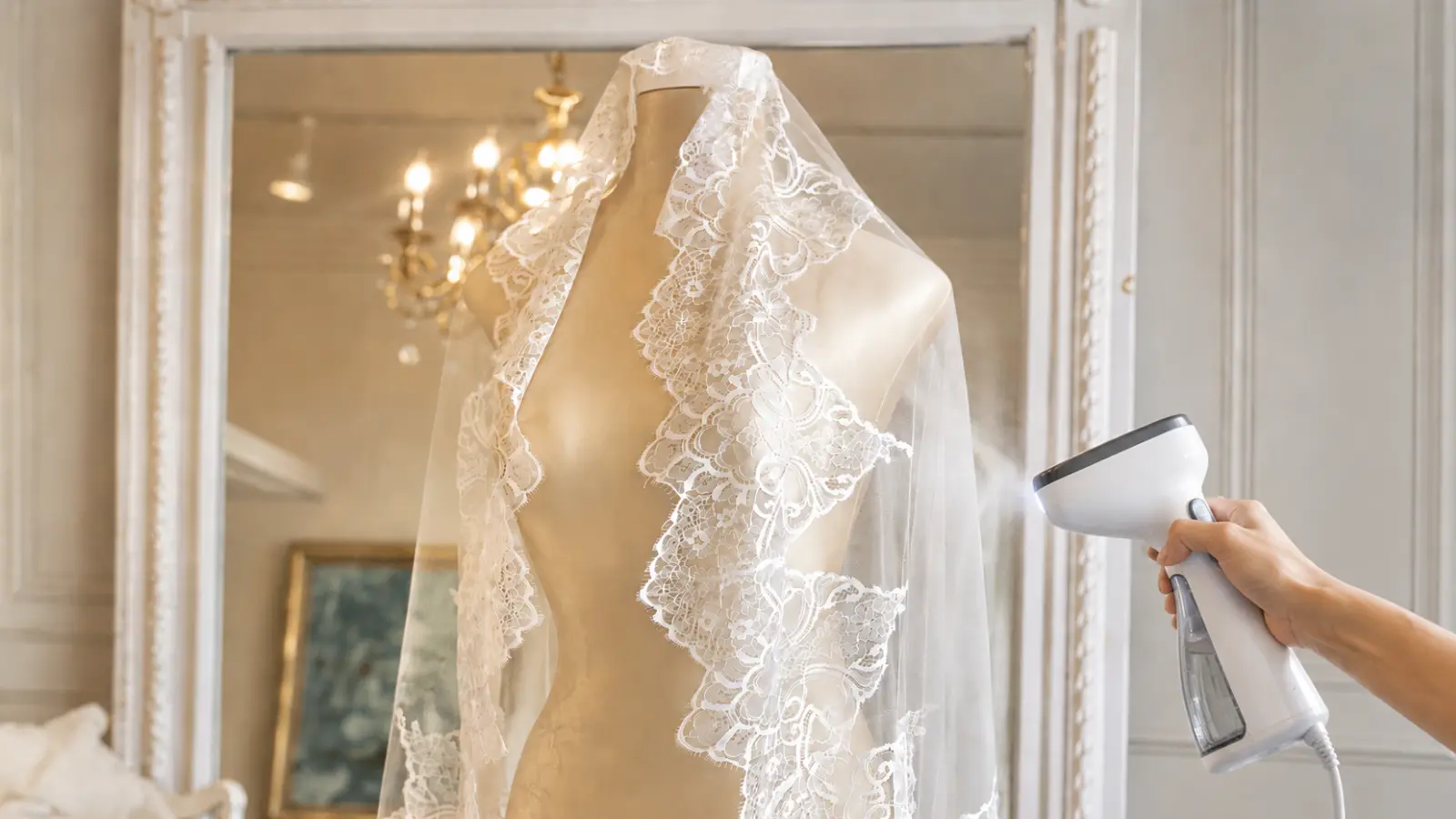
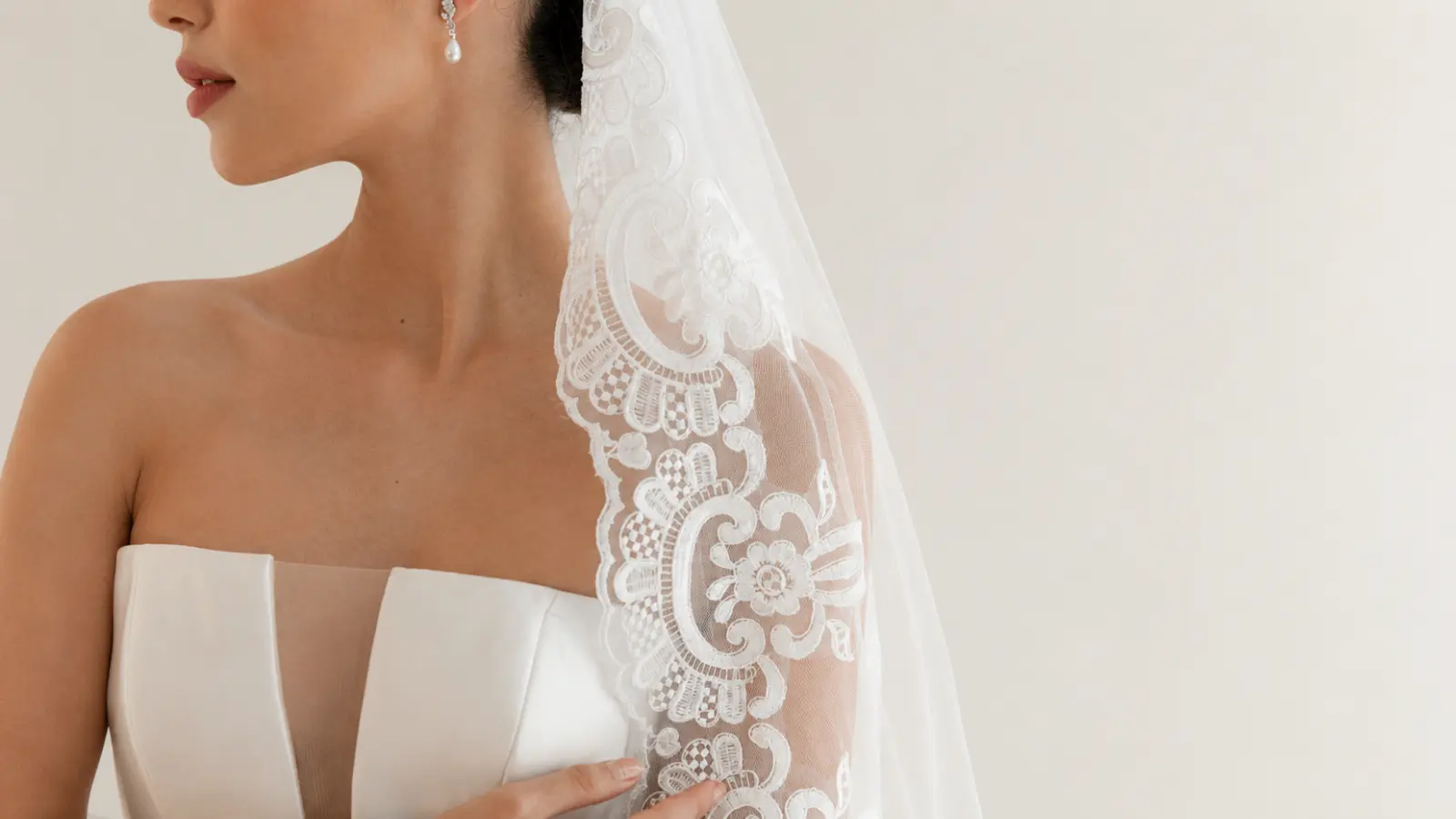
Lace edging on a cathedral veil ranges from a delicate scallop trim just inside the hem to a wide, elaborate border that creates a frame around the entire trailing edge. The weight of the lace matters: a light Chantilly scallop reads as soft and romantic; a heavier guipure or Venetian lace border reads as bold and heavily ornamented. The general rule is that the lace on the veil should either echo lace elements in the dress or deliberately contrast with a plain gown — but it shouldn’t fight with an already embellished skirt. For more on pairing lace veils with different gown types, the lace wedding veil goes into detail.
Pearl Cathedral Veils
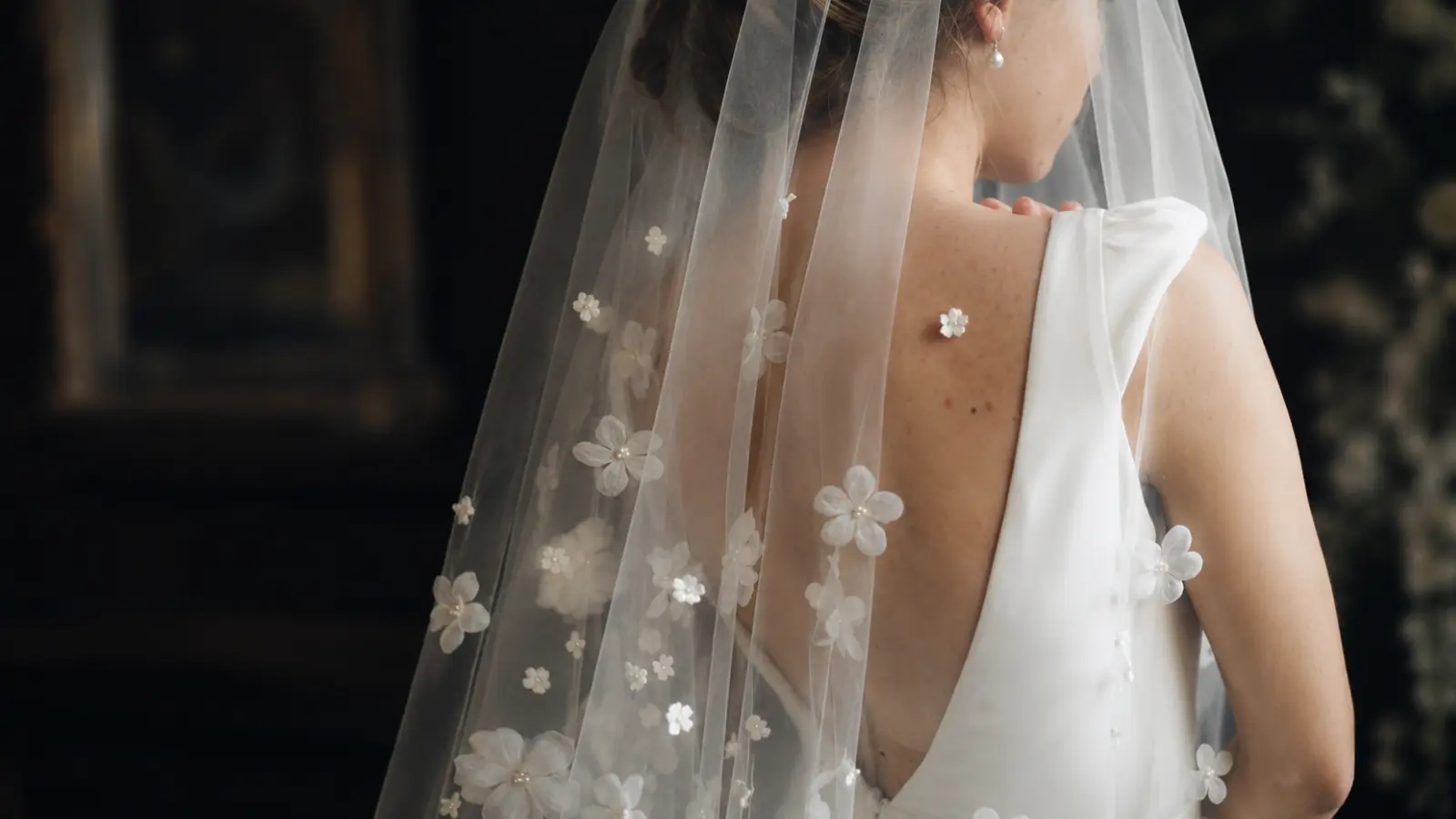
Pearl embellishments are applied either as an edge trim or as scattered details across the veil’s surface. On a cathedral veil, pearl wedding veil details catch the light as the fabric moves and add warmth to the overall look — particularly in natural light and candlelit settings. Surface pearl scatter tends to photograph beautifully overhead, which is worth considering if you’re planning aerial or elevated shots. Pearl details also add weight, which affects how the veil hangs and moves, so it’s worth requesting a weighted sample at your appointment rather than evaluating it on a hanger.
The Case for a Plain Cathedral Veil
It’s worth saying directly: a plain, unhemmed or simply rolled-edge cathedral veil is not the understated option or the budget fallback. It is often the most intentional choice. At this length, the fabric itself does the work. A sweep of soft, unadorned tulle trailing behind a bride in a grand space is genuinely striking — and in many ceremonies, it reads more powerfully than an elaborately edged veil because nothing competes with the movement and the light.
If your dress has significant detail — beading, embroidery, a lace bodice, a textured skirt — a simple wedding veil at cathedral length is almost always the right call. It lets the gown hold its own presence without adding visual noise to the back of the look. The veil becomes a backdrop rather than a second focal point, which is often exactly the effect that photographs best.
Movement and Logistics
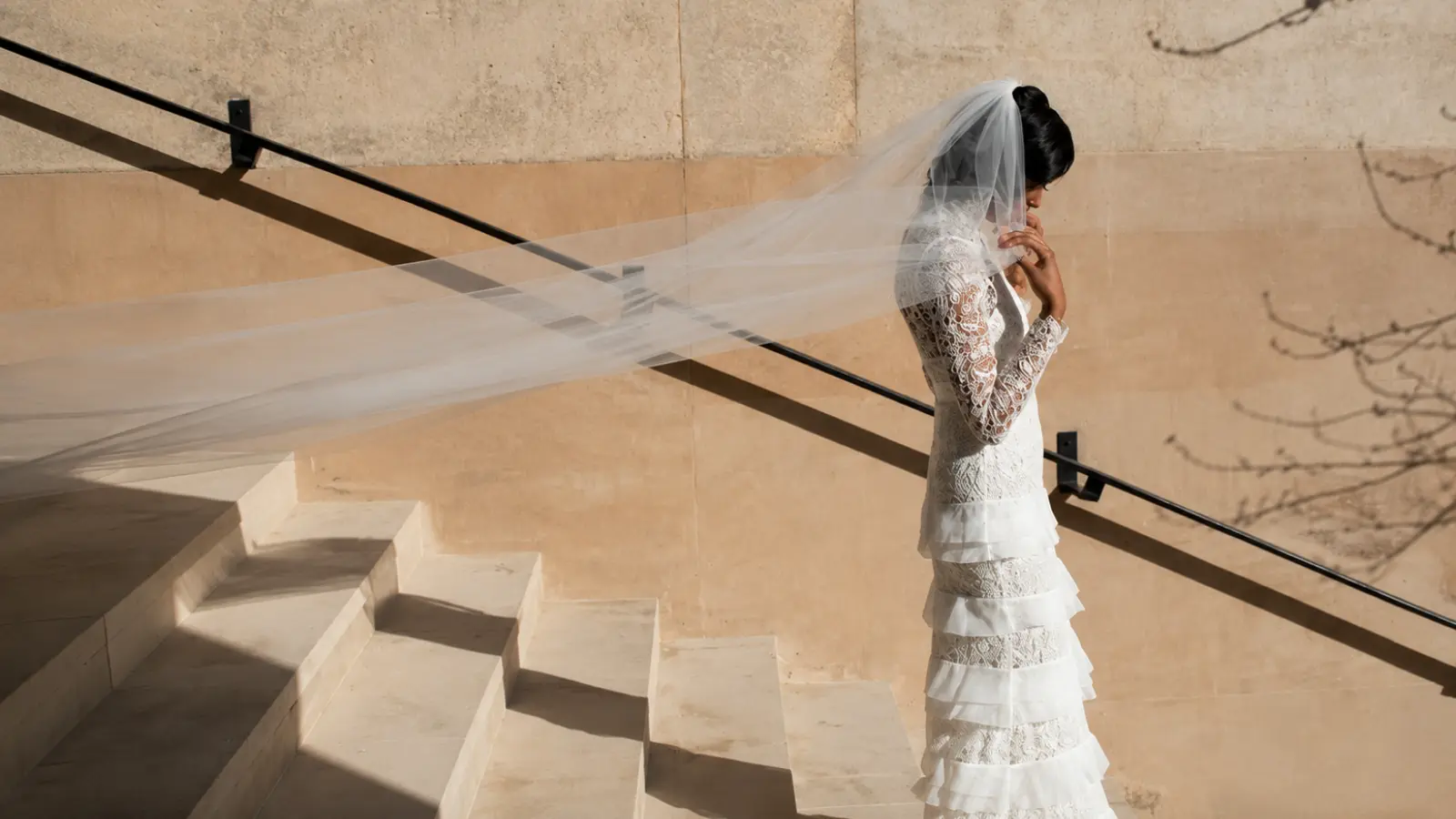
Managing a cathedral veil well on the wedding day is mostly a planning exercise. None of it is complicated, but all of it needs to be decided before the day — not improvised while you’re standing at the back of the aisle.
Before the Processional
Assign one person — ideally a bridesmaid or your venue coordinator — to arrange the veil before you walk. Their job is to lay the fabric flat on the aisle runner, smooth out any folds, and make sure the train is straight behind you. This takes less than a minute when someone knows what to do, and it’s the difference between a cathedral sweep that looks intentional and one that looks like an afterthought. This person should practice the arrangement before the ceremony, not figure it out in the moment.
Navigating Stairs
Stairs are the most common logistical challenge with cathedral veils. The fabric can catch on heels, trip a following bridesmaid, or bunch at the bottom of a staircase. The practical approach: have your veil manager gather the train loosely in their hands as you descend, releasing it at the bottom. Do not try to hold it yourself — you need both hands, and gathering it from behind is easier to execute cleanly. If your ceremony involves stairs in the processional itself, rehearse the descent at the venue walkthrough.
Wind and Outdoor Conditions
A cathedral veil outdoors in any wind is a different accessory than the same veil in a controlled interior. Light fabric — particularly standard bridal tulle — catches wind significantly at this length. The veil may lift, wrap, or simply not lay flat on the grass the way it does on a smooth aisle runner. If your ceremony is outdoors, ask your stylist to show you weighted veil options (heavier fabric or a weighted hem), and plan to have someone hold or pin the train during outdoor portraits if the conditions are unpredictable.
On the Dance Floor
Cathedral veils are not practical during dancing or cocktail hour. This is not a problem — it simply means the veil comes off at a planned moment rather than staying on all night. Most brides wearing cathedral veils remove them after ceremony portraits, before the reception begins. Plan for this transition in advance: who removes the veil, how the comb or clip is taken out without pulling the hair, where the veil is stored, and how it’s folded or rolled to avoid permanent creasing.
How to Photograph a Cathedral Veil
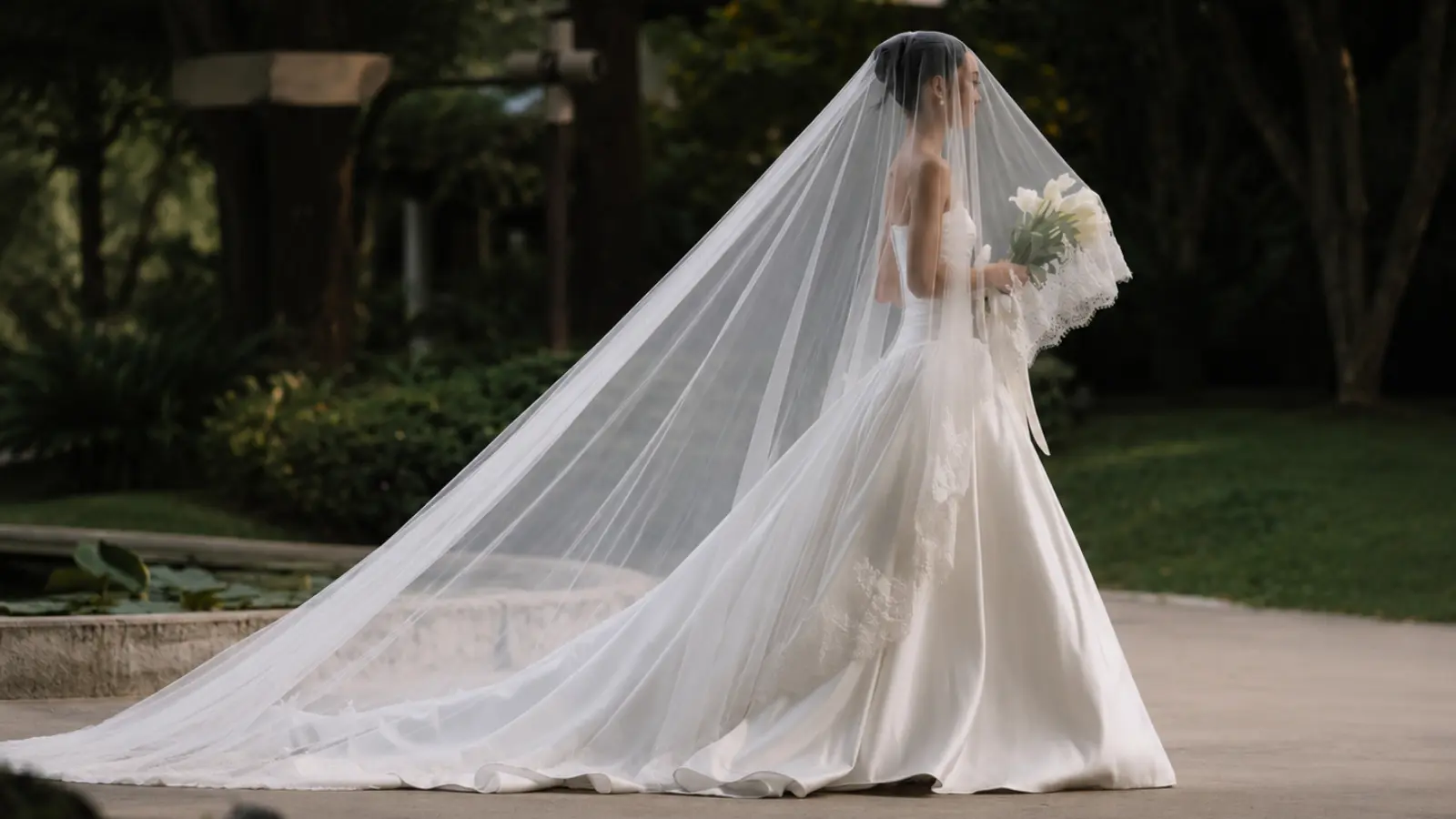
The cathedral veil is, among other things, a photography decision. At this length, it appears prominently in nearly every portrait taken outdoors and in the aisle — which means it’s worth thinking about which shots you actually want and communicating that to your photographer in advance.
The Sweep Shot
The most iconic cathedral veil photograph is taken from above or from behind: the bride standing still or turning slightly, with the full length of the veil laid out across the aisle, a staircase, or an outdoor surface. Getting this shot right requires the veil to be arranged flat by a helper, and your photographer needs to know it’s a priority so they’re positioned and ready before you walk. It typically takes 2 to 3 minutes to set up — factor that into your portrait timeline.
Movement Shots
Cathedral veils photograph beautifully in motion, particularly when there’s a gentle breeze or when the bride turns. If you’re planning outdoor portraits, talk to your photographer about using the natural wind to create movement in the fabric, or ask them to have someone gently lift the edge of the veil for a controlled fan effect. These shots are among the most striking a bride in a cathedral veil can have, but they require deliberate setup rather than a lucky moment.
Lighting Conditions
Backlight is particularly effective with cathedral veils — light from behind the bride causes the fabric to glow and appear almost luminous. This is one of the reasons cathedral veil portraits taken near windows, in open doorways, or in late-afternoon outdoor light tend to be so compelling. Ask your photographer what they recommend for your specific venue and time of ceremony so you can plan accordingly.
What to Tell Your Photographer
Before the wedding day, let your photographer know: the veil length, whether you’ll have a blusher, your priority shots (sweep portrait, aisle shot, movement), and the planned removal time. A photographer who knows the veil is coming off after portraits can build those shots into the timeline with intentionality rather than fitting them in around other things.
When to Remove a Cathedral Veil
The timing question comes up for every long veil, and the cathedral is no exception — it’s just that the practical case for removing it before the reception is especially clear. A cathedral veil trailing behind you during cocktail hour will be stepped on, snagged, and likely damaged. Most brides are significantly more comfortable once it’s off.
The typical approach is to wear the veil through the ceremony, through the wedding party portraits, and sometimes through a first look or bridal portraits if they happen before the ceremony. Once portraits are complete, the veil comes off. Some brides keep it on for the first dance, which gives guests one more view of it in motion before the evening shifts into a different rhythm.
Before the wedding day, confirm three things: who is removing the veil, how they’re removing it (the comb or clip should come out gently, without pulling), and where it’s going afterward. A cathedral veil rolled loosely in a garment bag or laid flat in a box will survive the evening. A cathedral veil draped over a chair in a reception hall will not.
Common Mistakes to Avoid
Most cathedral veil regrets trace back to the same handful of decisions. These are the ones worth knowing in advance.
- Choosing the length without considering the venue. The most common mismatch: a cathedral veil in a space that doesn’t have the aisle to support it. Before committing to this length, know your venue’s aisle length and ask your stylist whether the proportions actually work. If the aisle is short, the cathedral becomes a burden rather than a backdrop.
- Not assigning a veil manager. This is the mistake that causes the most day-of stress. A cathedral veil left to manage itself will fold, bunch, and eventually need emergency attention from whoever happens to be nearby. One person, one job, decided in advance.
- Skipping the movement test. Try walking in the veil at the salon — not just standing and turning, but actually walking a few paces and stopping. The fabric should follow you, not lag awkwardly or pile up behind your heels. If it feels unmanageable in a controlled showroom, it will be more so on the wedding day.
- Pairing heavy lace edge detail with a heavily embellished dress. At cathedral length, a wide lace border adds considerable visual weight. If your gown is already detailed — beaded, embroidered, or patterned — a simple or plain-edged veil typically photographs better and gives each element room to read clearly.
- Wearing your hair completely down. Long, loose hair at this length can swallow the veil’s attachment point and blur where the hair ends and the veil begins. An updo or half-up style gives the veil a clean point of emergence and allows the length to read more distinctly in photos.
- Forgetting the removal plan until the day of. Removing a cathedral veil in the middle of a reception is a production if no one has thought it through. Decide before the wedding who does it, when, and where the veil goes afterward. This takes three minutes to plan and saves a significant amount of stress.
The thread connecting most of these is preparation rather than restriction. A cathedral veil rewards brides who have thought through the details — and tends to create problems for those who haven’t.
Cathedral Wedding Veil Inspiration
Discover breathtaking cathedral wedding veil inspiration featuring timeless bridal looks, dramatic aisle moments, elegant lace and pearl designs, and beautiful dress pairings. Explore romantic ideas, real wedding inspiration, and styling tips to help you choose the perfect cathedral veil for your wedding day.
Is a Cathedral Wedding Veil Right for You?
A cathedral wedding veil isn’t simply the longest veil you can wear—it’s a statement piece designed to create unforgettable moments. When paired with the right dress, venue, and styling, it adds elegance, movement, and a sense of occasion that few bridal accessories can match.
If your wedding day includes a grand ceremony, a beautiful aisle, and the opportunity to showcase this timeless style, a cathedral veil may become one of the most memorable details of your entire bridal look. With thoughtful planning and the right preparation, it can be every bit as practical as it is breathtaking.
Frequently asked questions (FAQ)
Is a cathedral veil right for your wedding?
A cathedral veil is a strong choice when the ceremony is formal, the venue has a long aisle and enough floor space, the dress has sufficient visual presence, and someone can manage the veil before and after the processional. It may be less practical for small venues, beaches, windy outdoor ceremonies, or brides who want minimal day-of logistics. The decision should depend on the full setting, not only on how dramatic the veil looks in photographs.
How long is a cathedral wedding veil?
A cathedral veil generally measures about 108 to 120 inches from the attachment point to the bottom edge. It usually extends several feet beyond the hem of a floor-length gown and creates a separate visible train. Some designers use different measurements or label longer versions as extended cathedral, royal, or monarch, so always confirm the actual length before purchasing.
What is the difference between a cathedral veil and a chapel veil?
A chapel veil usually measures around 85 to 95 inches and reaches the floor or extends slightly beyond the gown. A cathedral veil is generally 108 to 120 inches and creates a much more noticeable train. Chapel length offers formality with easier management, while cathedral length requires more aisle space, preparation, and assistance.
What wedding dresses look best with a cathedral veil?
Cathedral veils pair naturally with ballgowns, A-line dresses, and fit-and-flare silhouettes because those gowns have enough scale to balance the veil. Sheath, column, satin, and minimalist dresses can also work when the veil’s fullness, edge detail, and placement are carefully chosen. The veil should complement the gown’s ornamentation rather than compete with it.
Can you wear a cathedral veil with a blusher?
Yes. A cathedral veil with a blusher is a two-tier design with a shorter layer covering the face and a long layer trailing behind. It creates a traditional processional and veil-lifting moment but adds more fabric, weight, and volume than a single-tier cathedral veil. Try both versions with the dress and hairstyle before deciding.
Can you wear a cathedral veil outdoors?
Yes, but outdoor conditions require additional planning. Wind, grass, sand, uneven ground, and damp surfaces can make the veil difficult to control or keep clean. A weighted edge, heavier fabric, designated veil manager, and backup plan for poor weather can make the length more workable. In exposed or consistently windy settings, chapel or fingertip length may be more practical.
How do you walk with a cathedral veil?
Have someone arrange the veil completely before the processional, making sure it is straight, unfolded, and clear of the shoes and dress train. Walk slowly and steadily so the fabric has time to follow. Do not hold or gather it while walking. Rehearse any stairs, turns, narrow aisles, or doorways in advance.