A chapel length wedding veil offers the elegance of a long bridal veil without the extra length and management required by a cathedral veil. For many brides, it provides the perfect balance between formal style, practicality, and timeless beauty.
While cathedral veils create dramatic trailing trains, chapel veils sweep the floor with just enough length to feel luxurious while remaining easier to wear throughout the day.
This guide explains exactly what a chapel length wedding veil is, how it compares with other veil lengths, which dresses and venues it suits best, and how to decide if it’s the right choice for your wedding.
What Is a Chapel Length Veil?
A chapel length veil typically measures between 85 and 95 inches from the comb at the back of the head. At that measurement, the veil reaches the floor and brushes a few inches past the hem of the gown — enough to sweep, not enough to trail as a separate train. It sits in the longest tier of everyday bridal veil lengths, above waltz and floor-grazing styles, and just below the cathedral veil’s more dramatic extension.
In terms of how it looks: a chapel veil creates the full, long-veil silhouette that most brides picture when they imagine themselves in a formal wedding setting. From the front and sides, it frames the dress completely. In ceremony photos from the back, it creates a clean line of fabric that extends slightly beyond the gown. What it doesn’t do is pool behind you or require staging before you walk. That distinction is worth understanding before you compare it to cathedral.
For a complete reference on how chapel fits among all wedding veil lengths — from shoulder and fingertip to royal — our veil length guide shows every option with measurements side by side.
Chapel vs. Cathedral: The Real Difference
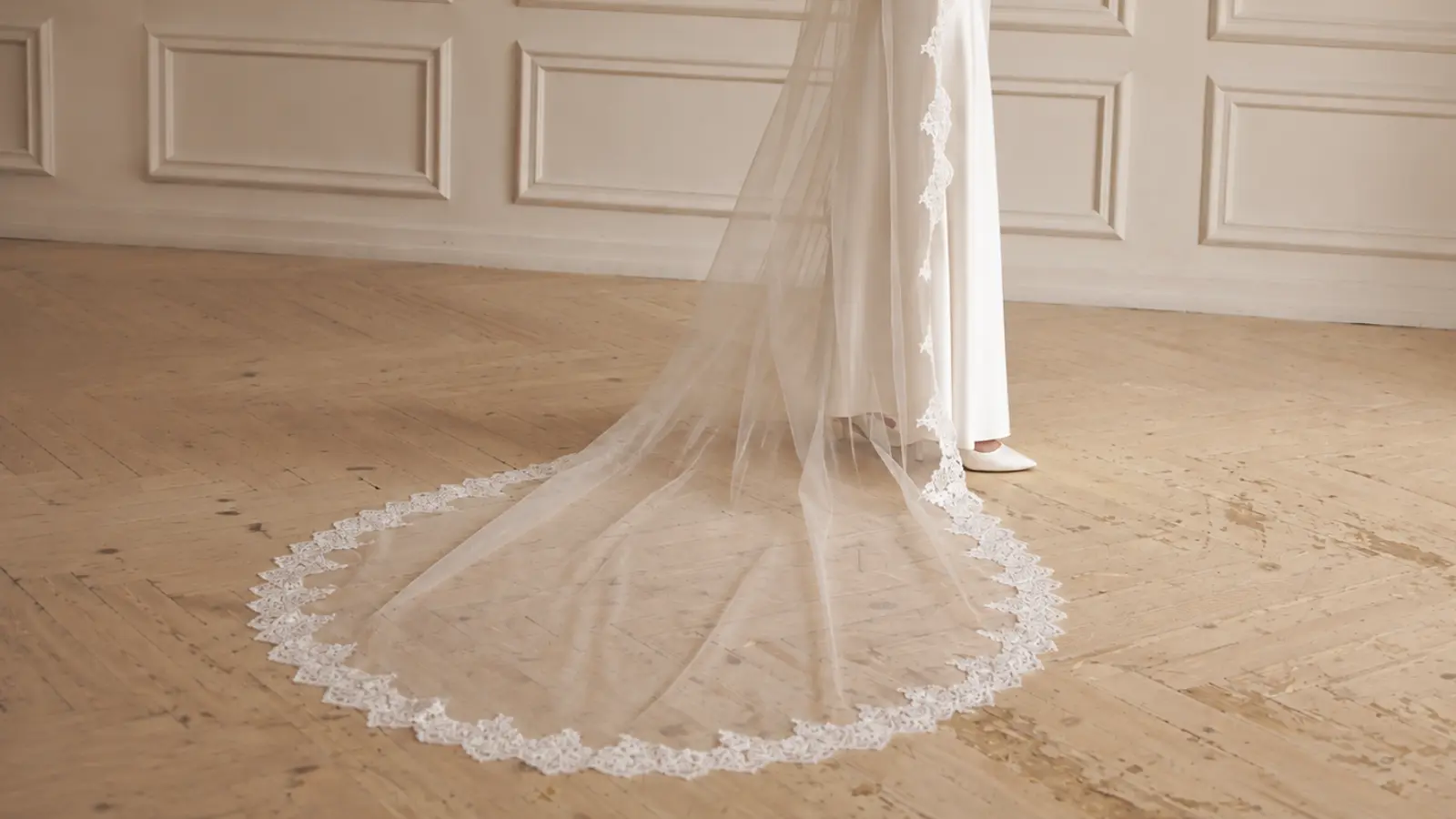
This is the comparison most brides are actually trying to resolve when they search for chapel length. The names are close, the formality is similar, but the experience of wearing them is not the same. Here is what separates them in practice.
| Chapel Length Veil | Cathedral Veil | |
|---|---|---|
| Typical measurement | 85–95 inches | 108–120 inches |
| Where it falls | Sweeps the floor; extends a few inches past the gown hem | Creates a visible train extending several feet behind the bride |
| Visual impact | Formal and elegant; full-length silhouette | Dramatic and grand; maximizes ceremony presence |
| Attendant needed | Typically not required; manageable without help | Usually requires someone to arrange it before the processional |
| Venue fit | Most indoor and some outdoor ceremonies | Best in large churches, ballrooms, or grand venues with long aisles |
| Aisle length needed | Moderate; works in mid-size spaces | Long aisle required to show full train effect |
| Outdoor use | Manageable with planning on clear paths | Challenging; more fabric exposed to wind, ground, and terrain |
| Reception management | Easier to remove and store; less fabric to fold | Requires careful folding and safe storage; more likely to crease |
| Best for | Brides who want formal length without extra management | Brides committed to maximum drama in a grand, formal setting |
The key takeaway from this comparison is that the visual difference between chapel and cathedral is most visible from the back and in processional photos — specifically, whether there is a trailing train behind you as you walk. In front-facing and side portraits, both lengths read as long, formal veils. For many venues and many brides, that distinction is less important than the management difference, which is real and consistent. For a complete look at the cathedral veil specifically — when it’s the right call and how to wear it well — see our cathedral wedding veil.
Chapel vs. Floor Length: Is There a Difference?
This is a terminology question that creates genuine confusion, and it’s worth resolving clearly: in most contexts, chapel length and floor length describe the same thing, or close enough that the difference is negligible.
Some designers use “floor length” to indicate a veil that reaches the floor precisely at the hem — barely touching, with no extension past the gown. In that usage, “chapel length” refers to a veil that extends a few inches beyond the hem, creating a soft sweep. In practice, both fall in the same approximate measurement range of 85 to 95 inches, and the terms are used interchangeably across the industry.
The practical advice: when you see either term while shopping, confirm the actual inch measurement rather than relying on the name. A veil listed as “floor length” at 80 inches and another listed as “chapel length” at 95 inches are meaningfully different, even though both carry floor-level names. The number matters more than the label.
What Dress Silhouettes Work With a Chapel Veil
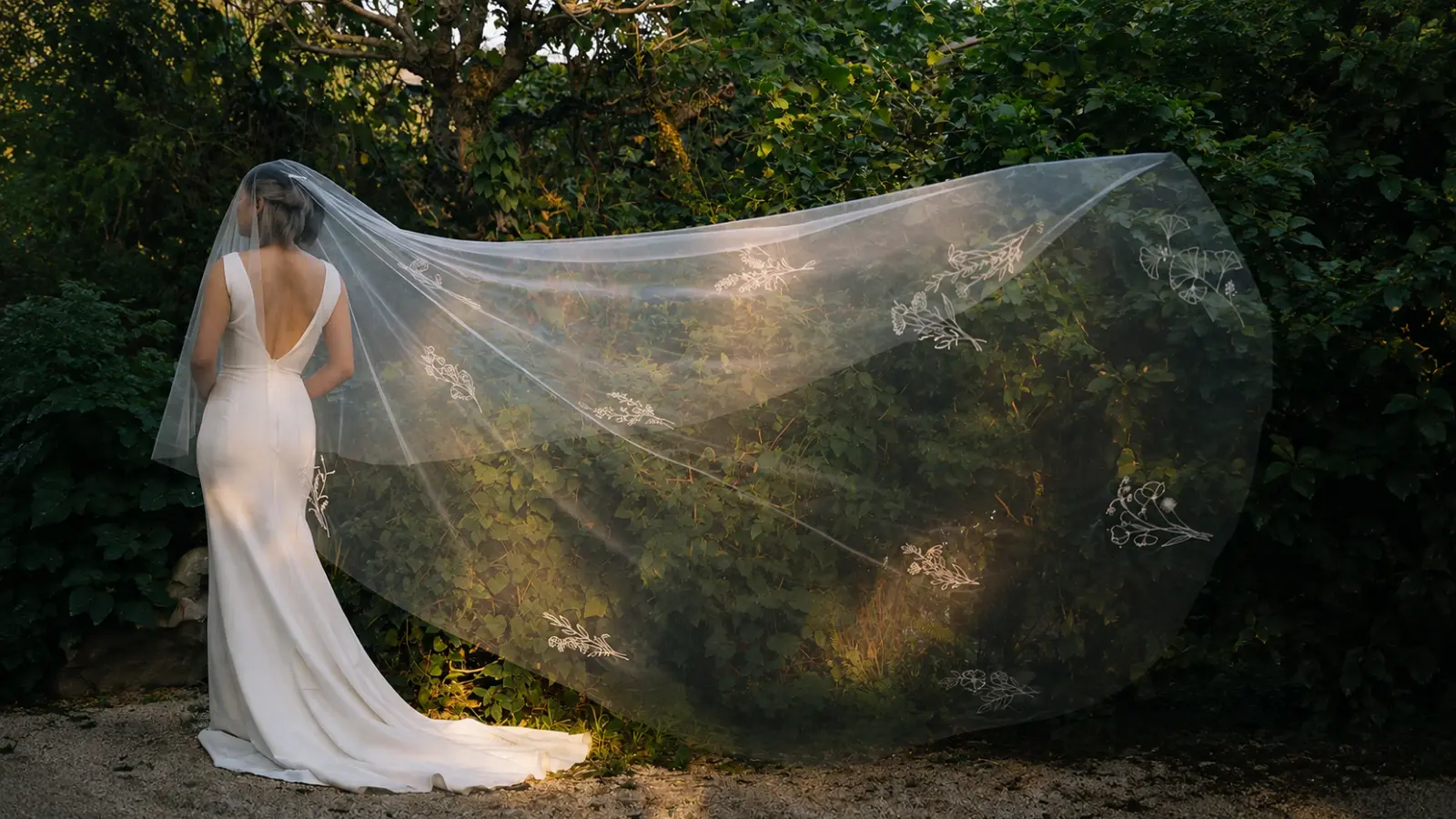
Chapel length is one of the more forgiving veil lengths when it comes to dress pairing. Because it falls at floor level, it works proportionally with almost any full-length gown — which makes the dress train the more important consideration here than the silhouette itself.
The Train Question
The most important relationship to get right with a chapel veil is how it interacts with the dress’s train. A veil that ends mid-train tends to look visually incomplete — the eye follows the fabric down, then stops awkwardly before the dress hem does. For the cleanest result, the veil should either extend slightly past the train or be significantly shorter than it. A chapel veil pairs best with gowns that have no train, a short sweep train, or a detachable train that won’t be worn for the processional.
By Silhouette
Across the main dress shapes, chapel length reads consistently well:
- A-line. The most naturally compatible silhouette. The chapel veil extends the gown’s line cleanly without competing with the skirt’s own shape. Works at every edge detail level.
- Ballgown. A chapel veil on a full-skirted ballgown creates a harmonious, formal look. The veil doesn’t need to match the volume of the skirt — it frames the back of the look from a higher attachment point and the proportions work.
- Sheath and column. A clean chapel veil, particularly a drop-style or plain single-tier, complements the sleek lines of a sheath dress without adding unnecessary volume. A lace-edged version adds interest at floor level where it’s most visible.
- Mermaid and trumpet. These silhouettes typically have fitted skirts that flare below the knee, which means the interaction between the dress and the veil is most visible from the back. A chapel veil that falls just past the flare reads well; one that ends where the skirt begins to widen can look unresolved.
For a full breakdown of how veil lengths and dress silhouettes interact across all length options — not just chapel — the wedding dress with veil covers the full picture.
Chapel Veil and Venue: Where It Works Best
Venue scale is the factor that most directly separates chapel from cathedral in terms of which length looks better in context. Understanding where a chapel veil is genuinely at home helps avoid the disappointment of a length that looks smaller in the actual space than it did in the salon mirror.
Chapel length works naturally in:
- Mid-size churches and chapels. This is the venue type the name reflects — a traditional church setting with a meaningful aisle but not a grand cathedral nave. The chapel veil fills the aisle without overwhelming it or requiring extra staging.
- Hotel ballrooms and event spaces. Indoor venues with defined ceremony areas are well-suited to chapel length, especially when the aisle is 30 to 50 feet. The veil creates the formal processional look without requiring a significantly longer aisle.
- Historic and intimate venues. Smaller historic buildings, libraries, mansion parlors, and boutique event spaces often have moderate aisle lengths where a cathedral veil would feel disproportionate. Chapel length suits these spaces well.
- Outdoor ceremonies with clear, defined aisles. A paved or flat grass aisle in a garden or vineyard setting can work with a chapel veil, provided the ground is even and the path is clear. The veil’s shorter extension compared to cathedral reduces the risk of catching on uneven surfaces.
Where chapel length shows its limits: in very large churches with long center aisles, a chapel veil can appear shorter than intended, because the eye has more distance to cover and the lack of trailing fabric registers more noticeably. In those settings, cathedral length genuinely earns its drama. If your venue falls into that category, it’s worth trying both lengths in the salon before deciding.
Chapel Veil With Lace and Mantilla Styles
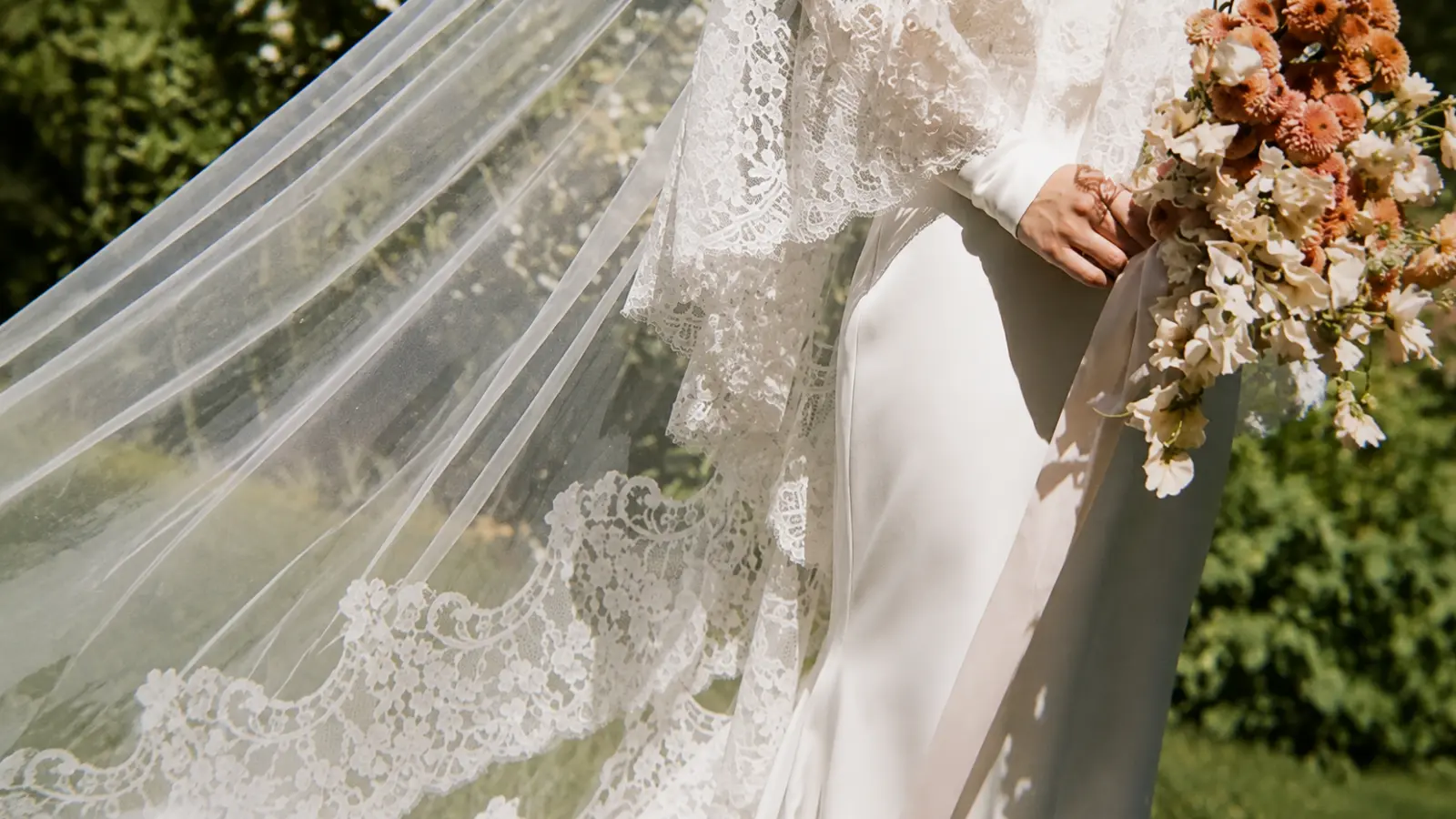
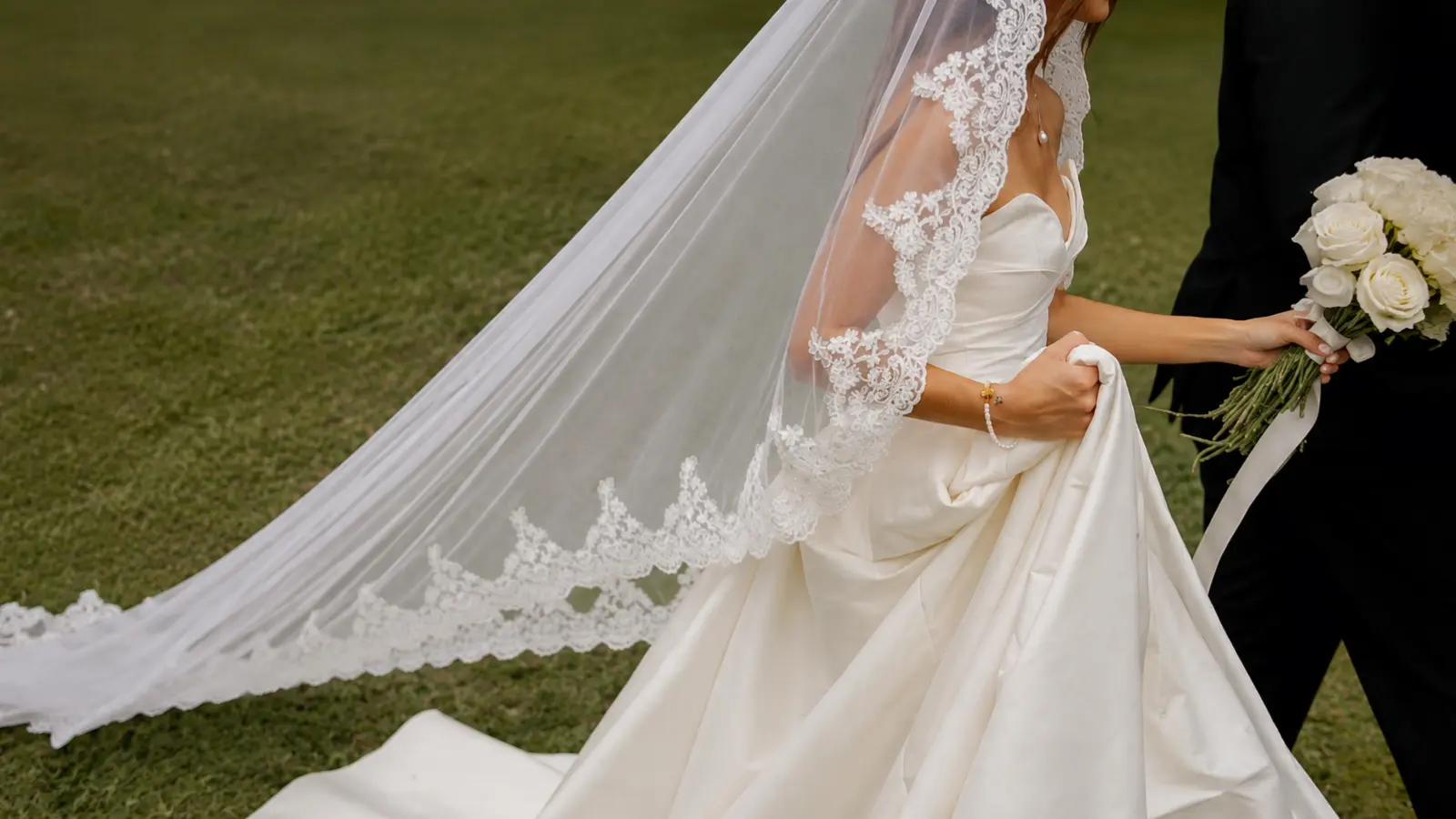
Chapel length is one of the most common lengths for lace-trimmed and full lace mantilla veils, and for good reason: at 85 to 95 inches, a lace edge sits at floor level, where it’s clearly visible from the back during the processional and in seated ceremony shots. The placement works in a way that shorter lace-edged veils can’t quite achieve.
Lace-Edged Chapel Veil
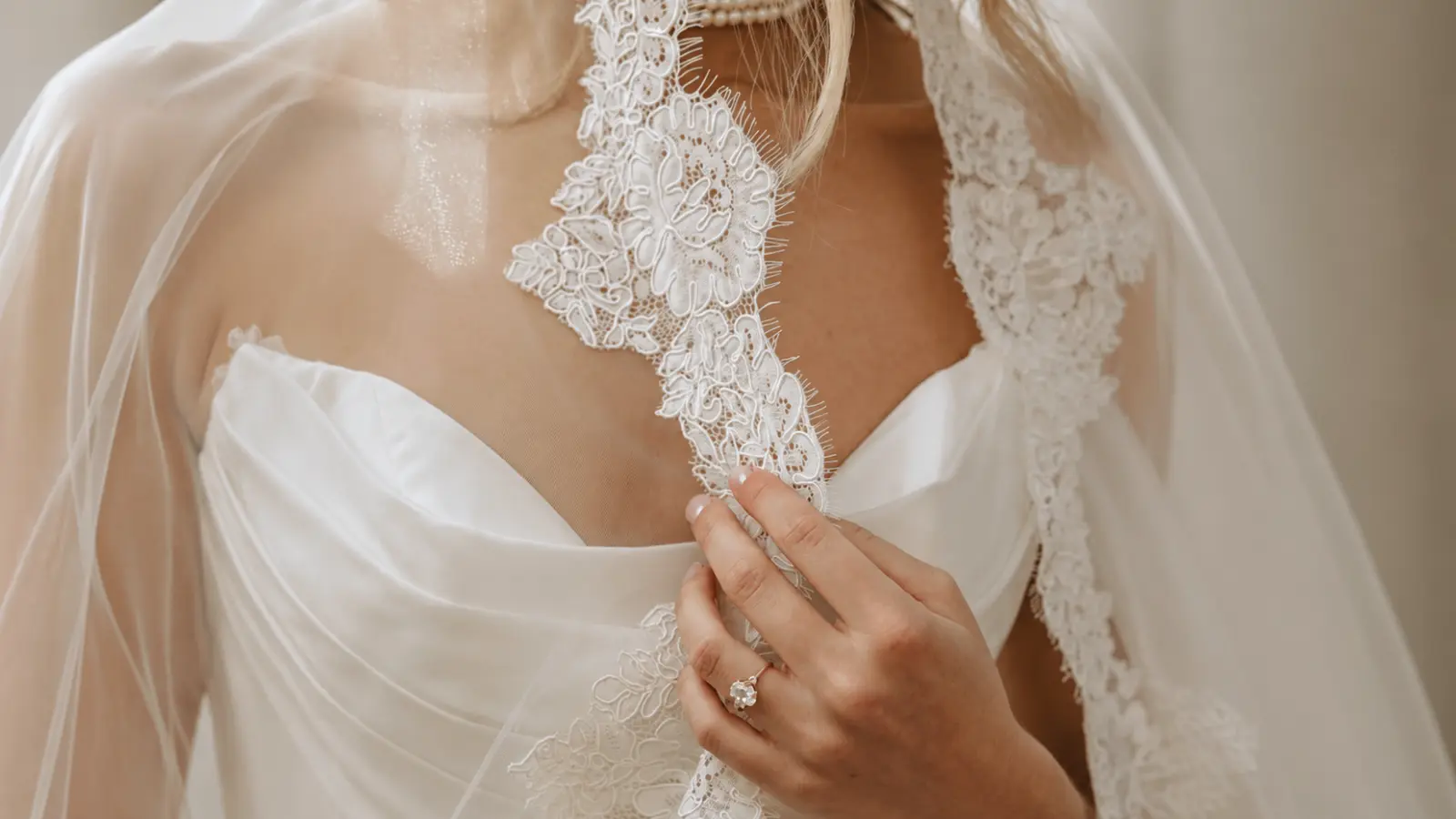
A tulle chapel veil with a lace border — scalloped, floral, or Venetian — works well with both lace and non-lace gowns, provided the balance is right. On a heavily lace-detailed dress, a narrower, simpler lace trim at the veil’s edge keeps the pairing from becoming too busy. On a plain or minimally detailed gown, a wider, more elaborate lace border at chapel length becomes the detail the dress doesn’t provide on its own. The lace reads most clearly at this length in back-view ceremony photos, which is exactly where the veil has the most visual presence.
Chapel Mantilla
A mantilla veil at chapel length is a full oval of lace fabric draped directly over the head, pinned rather than combed, with the lace edge framing the face, falling down the back, and sweeping the floor at chapel measurement. It’s one of the most romantic applications of the chapel length, and one that reads very differently from a gathered tulle chapel veil — softer, more draped, with the lace itself doing most of the visual work. If you’re drawn to the mantilla style, chapel length is typically the most common measurement choice. For the full picture on mantilla styling, attachment, and dress pairing, the mantilla wedding veil covers it in detail. For more on how to match lace at this length with your specific gown, see the lace wedding veil.
How to Attach and Carry a Chapel Length Veil
At 85 to 95 inches, a chapel veil is long enough that placement and attachment require some attention — but not to the degree that a cathedral veil does. Understanding how to wear a wedding veil securely makes those practical decisions much easier at this length.
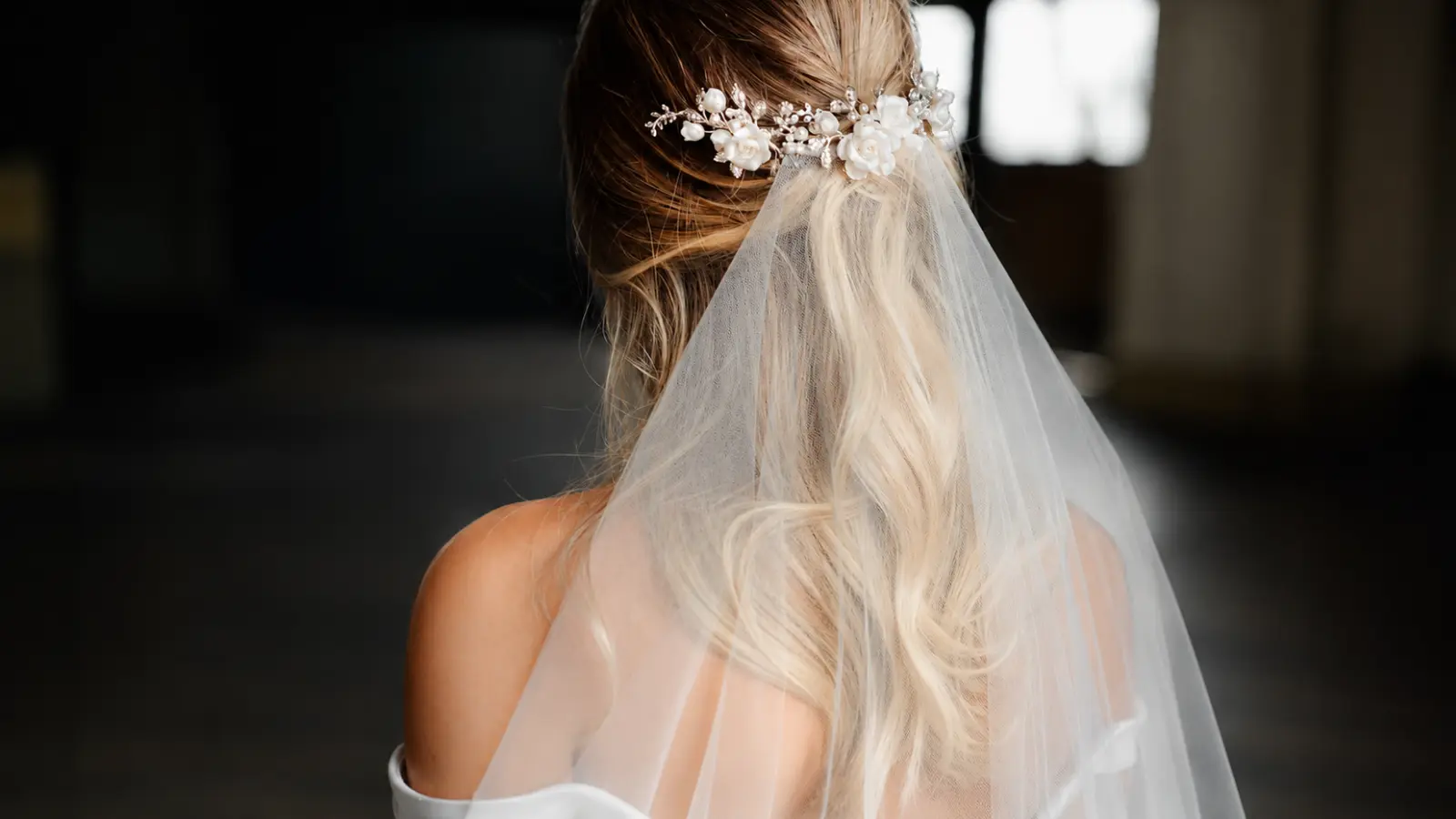
Attachment point. Chapel veils are typically attached with a comb positioned at the crown or the back of the head, depending on the hairstyle. A higher placement at the crown gives the veil maximum fall and shows more length at the back. A lower placement at the nape reads as more intimate and suits simpler or lower-key styles. The comb should be anchored with bobby pins pushed through the veil fabric and into the hair below to prevent shifting during the processional.
Before you walk. Unlike a cathedral veil, a chapel veil generally does not require an attendant to arrange it behind you before the processional. It naturally falls and fans out with a small shake or lift before the doors open. That said, it’s worth checking that the fabric isn’t bunched at the attachment point and that the hem of the veil clears any obstructions at the aisle entrance.
During the reception. Most brides remove their veil at the reception — after bridal portraits and before dancing begins. A chapel veil is easier to remove and store than a cathedral veil because there is significantly less fabric to fold and no train section to manage. Roll the veil loosely rather than folding it flat to minimize creasing, and store it in a clean bag or garment box until it can be properly hung after the wedding.
Outdoor considerations. Wind is the primary challenge with any floor-length veil outdoors. At chapel length, the veil has less surface area exposed than cathedral, which makes it somewhat more manageable. If your ceremony is outdoors and wind is a realistic possibility, test the veil in a light breeze before the day to understand how it moves. A slightly heavier fabric — soft satin-edged tulle, for example — will stay more controlled than very lightweight illusion tulle in moving air.
How a Chapel Veil Photographs
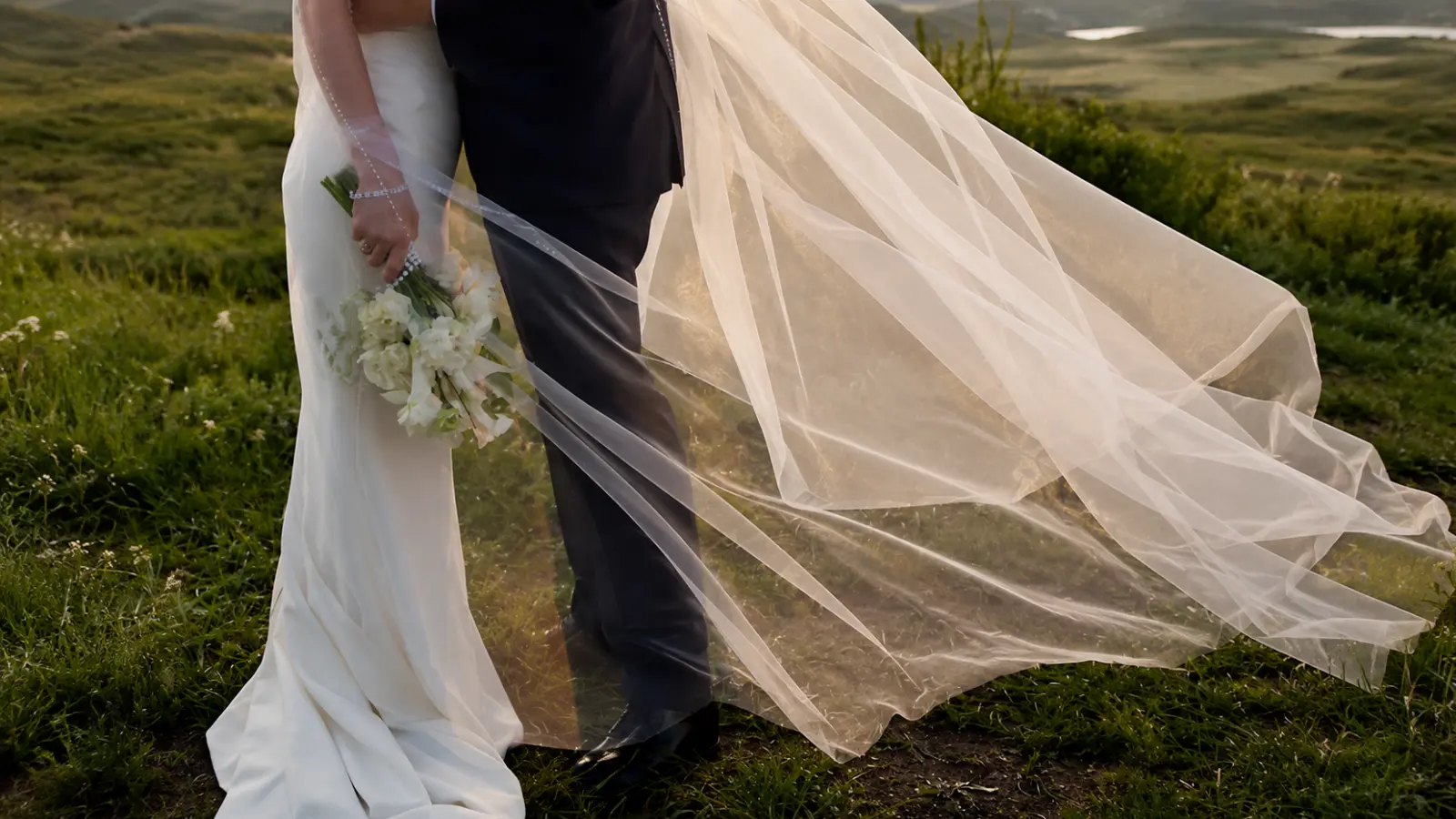
Photography is part of the reason many brides gravitate toward long veil lengths in the first place, so it’s worth understanding specifically how chapel length reads in different kinds of shots.
The moments where a chapel veil is most visible and most effective in photos:
- Processional shots from behind. As the bride walks down the aisle, the veil fans behind the dress and creates the full-length bridal silhouette that most brides picture. At chapel length, this image reads as complete and formal without the separate trailing train of a cathedral veil.
- Back portraits on location. Standing shots from behind, particularly in outdoor settings, show the full drop of the veil against the back of the gown. At chapel length, the veil ends at or just past the hem, creating a clean, finished line.
- Lace edge detail shots. If the veil has a lace border, chapel length puts that edge at floor level — visible in kneeling shots, low-angle portraits, and any photo where the photographer shoots upward or from ground level. This placement is a genuine photographic advantage of the length.
Where chapel length reads differently than cathedral: the trailing train effect — fabric extending beyond the bride and filling the aisle behind her — isn’t present at chapel length. In wide, high-angle ceremony shots, this is the most visible distinction between the two. If that specific image is important to you, cathedral length is the one that creates it. If the formal-veil look matters more than the train effect, chapel delivers that without the logistical requirements. Discussing this honestly with your photographer before the day helps set realistic expectations on both sides.
What to Avoid
A few specific mistakes come up when brides are choosing and wearing a chapel length veil. Most are easy to sidestep with a little advance planning.
- Choosing chapel length without knowing your dress’s train length. The relationship between the veil hem and the dress train is the most important visual pairing at this length. If your gown has a cathedral-length train and you choose a chapel veil, the veil will end mid-train — which looks unfinished. Confirm both measurements before committing to either.
- Assuming “floor length” and “chapel length” are always identical. Sellers use these terms differently, and a veil listed as floor length at 80 inches is meaningfully shorter than one listed at 90. Always confirm the measurement in inches, not just the category name.
- Expecting a chapel veil to fill a very large aisle the way cathedral would. In a grand cathedral or a very long ballroom aisle, the absence of a trailing train becomes more noticeable. If your venue is genuinely grand in scale, try both lengths in the salon before deciding.
- Attaching the veil without a comb-securing plan. A chapel veil has enough weight that an unsecured comb will shift during the processional. Bobby pins through the veil and into the hair, not just into the hair below the comb, are necessary for any veil at this length.
- Leaving the removal plan unassigned. Even though a chapel veil is more manageable than cathedral, 90 inches of tulle still needs a plan for removal and storage. Assign one person — your maid of honor or your day-of coordinator — to handle this specifically, including knowing where it goes after it comes off.
The underlying pattern in all of these is the same: chapel length is more manageable than cathedral, but “more manageable” doesn’t mean “no planning required.” The brides who wear this length most comfortably are the ones who’ve thought through the train interaction, confirmed the measurement, and assigned the removal logistics before the wedding day.
Chapel Length Wedding Veil Inspiration
Discover elegant chapel length wedding veil inspiration featuring timeless bridal gowns, lace-edged veils, romantic processional looks, and sophisticated styling ideas. Explore beautiful dress pairings and classic wedding inspiration for this graceful veil length.
Is a Chapel Length Wedding Veil Right for You?
A chapel length wedding veil offers one of the best balances between elegance and practicality. It delivers the graceful silhouette of a long veil while remaining easier to manage than a cathedral veil throughout the ceremony and reception.
Whether you’re planning a church wedding, a ballroom celebration, or a romantic outdoor ceremony, chapel length creates a timeless bridal look without overwhelming your dress or requiring extensive coordination. For many brides, it is the perfect combination of sophistication, comfort, and effortless beauty.
Frequently asked questions (FAQ)
Who should choose a chapel length wedding veil?
A chapel length veil is ideal for brides who want a long, formal bridal silhouette without the extended train and additional management of a cathedral veil. It works particularly well in mid-size churches, hotel ballrooms, historic venues, and outdoor ceremonies with a clear aisle, and it pairs most naturally with gowns that have no train or a short sweep train.
How long is a chapel length wedding veil?
A chapel length wedding veil typically measures between 85 and 95 inches from the attachment point at the back of the head. It reaches the floor and extends slightly beyond the gown’s hem, creating a soft sweep without forming a separate train behind the bride. Because measurements vary between designers, always confirm the exact length in inches before purchasing.
What is the difference between a chapel veil and a cathedral veil?
A chapel veil usually measures 85 to 95 inches and sweeps just beyond the dress hem, while a cathedral veil typically measures 108 to 120 inches and creates a visible train several feet behind the bride. Both feel formal, but chapel length is easier to walk in, arrange, remove, and store. Cathedral length delivers greater processional drama and works best in grand venues with long aisles.
Is chapel length the same as floor length?
The terms are often used interchangeably, but not every designer applies them in exactly the same way. Some brands use floor length for a veil that ends directly at the dress hem and chapel length for one that extends several inches beyond it. Since the naming is inconsistent, the actual measurement matters more than the product label.
Should a chapel veil extend past the dress train?
Ideally, yes. A chapel veil looks most balanced when it extends slightly beyond a short train or when the gown has no train at all. A veil that ends in the middle of a longer dress train can create an interrupted, unfinished line from the back. Before choosing the veil, compare its exact measurement with the full length of the gown and train.
What wedding dresses work best with a chapel length veil?
Chapel veils work with most full-length silhouettes, including A-line, ballgown, sheath, column, mermaid, and trumpet dresses. The dress train is more important than the silhouette itself. Gowns with no train or a short sweep train are the easiest pairings because the veil can provide the trailing element without ending awkwardly over the dress.
Does a chapel veil work for an outdoor wedding?
Yes, provided the ceremony has a clear and relatively level aisle. Chapel length is easier to manage outdoors than cathedral length because less fabric trails across the ground. However, it can still collect grass, sand, or debris, and lightweight tulle may move considerably in wind. For uneven terrain or consistently windy settings, a shorter veil may be more practical.