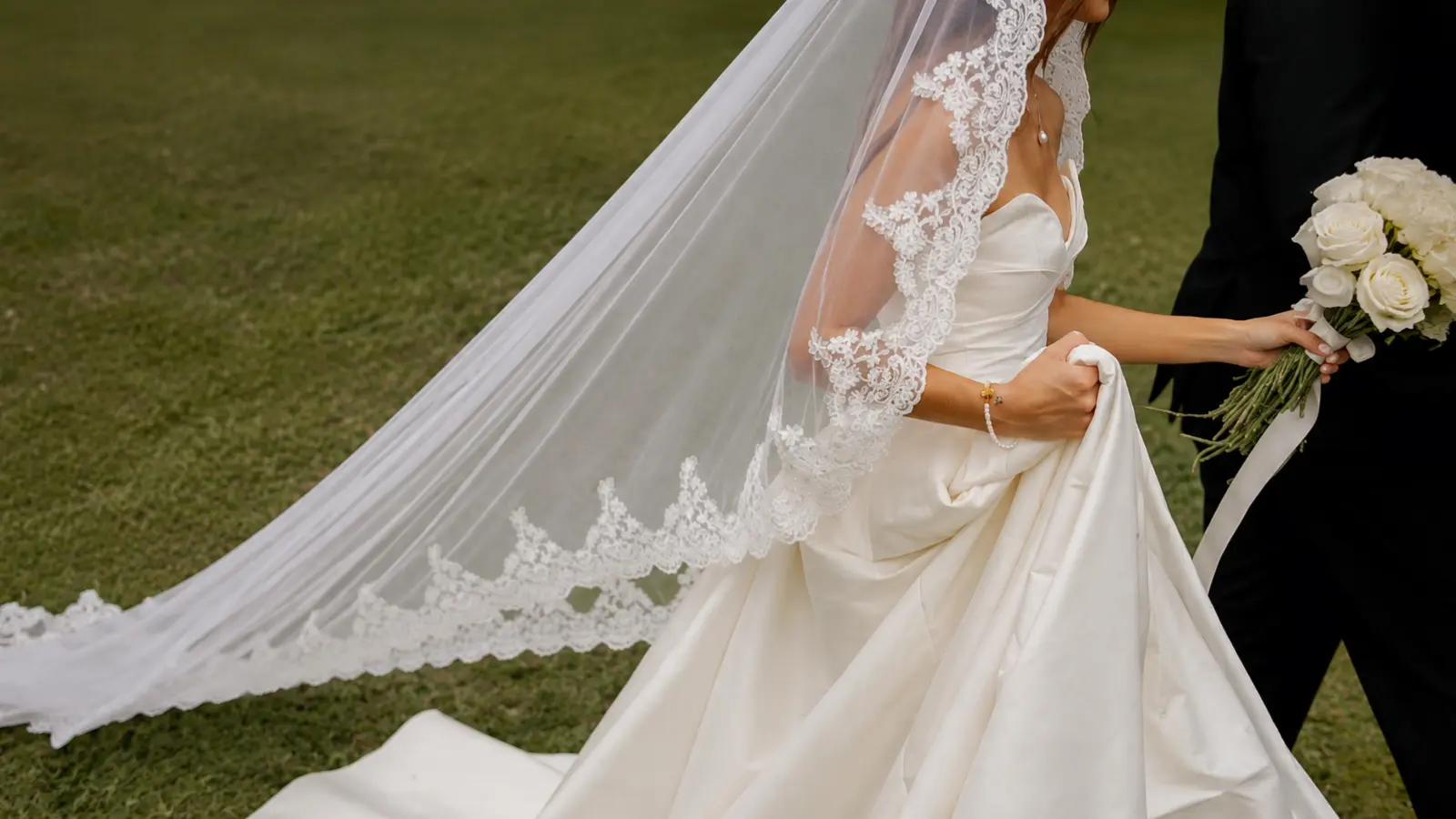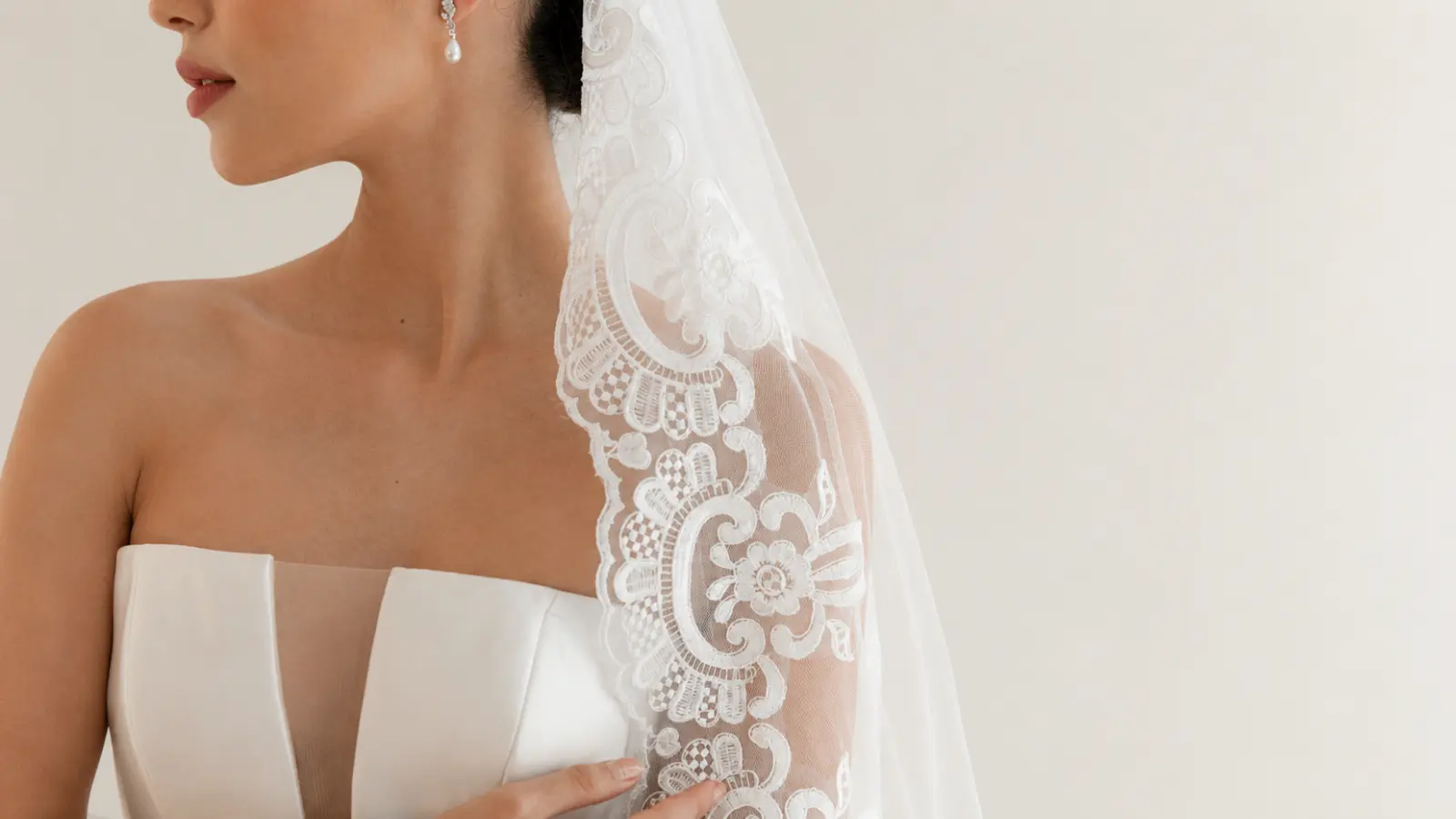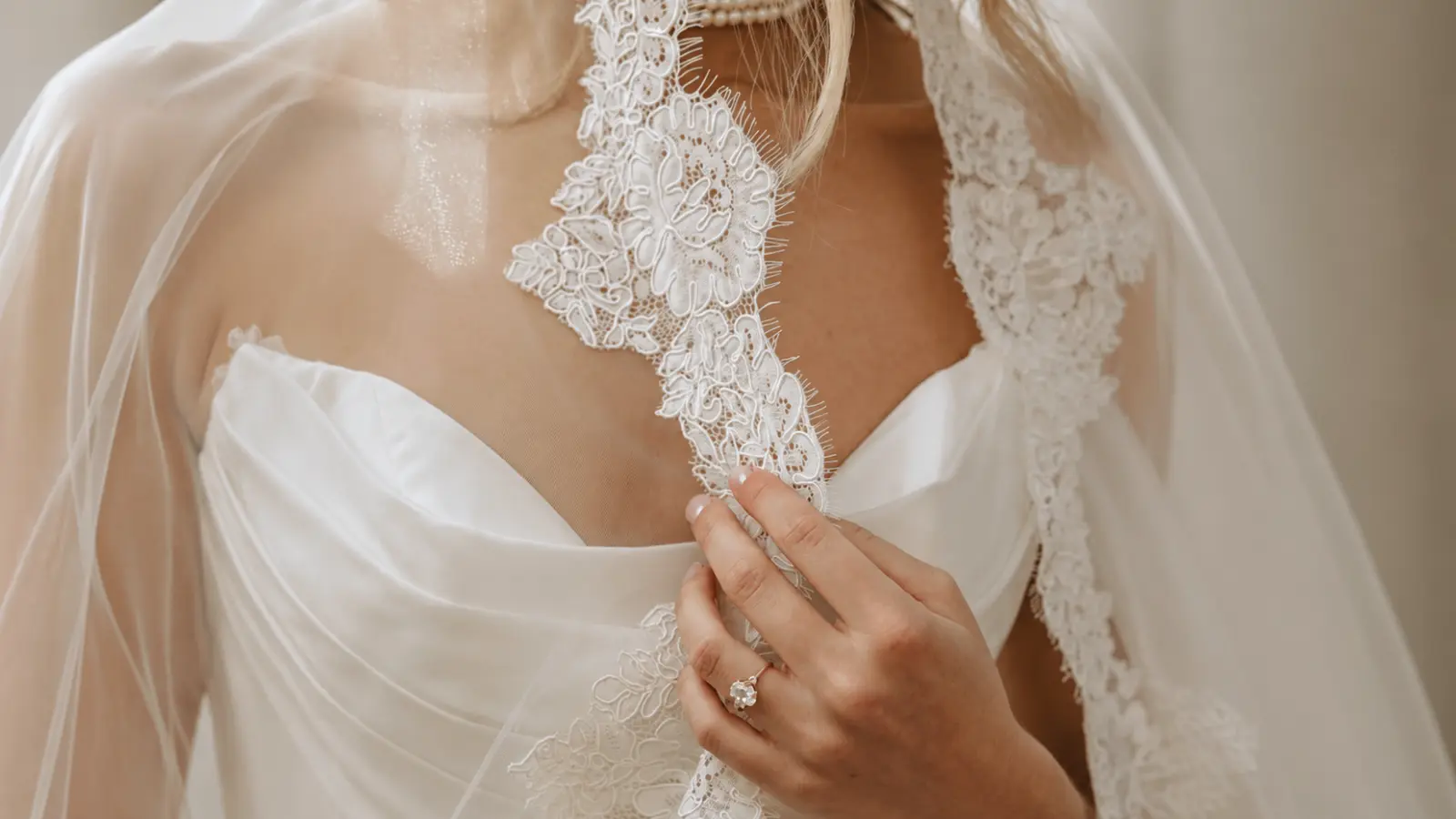
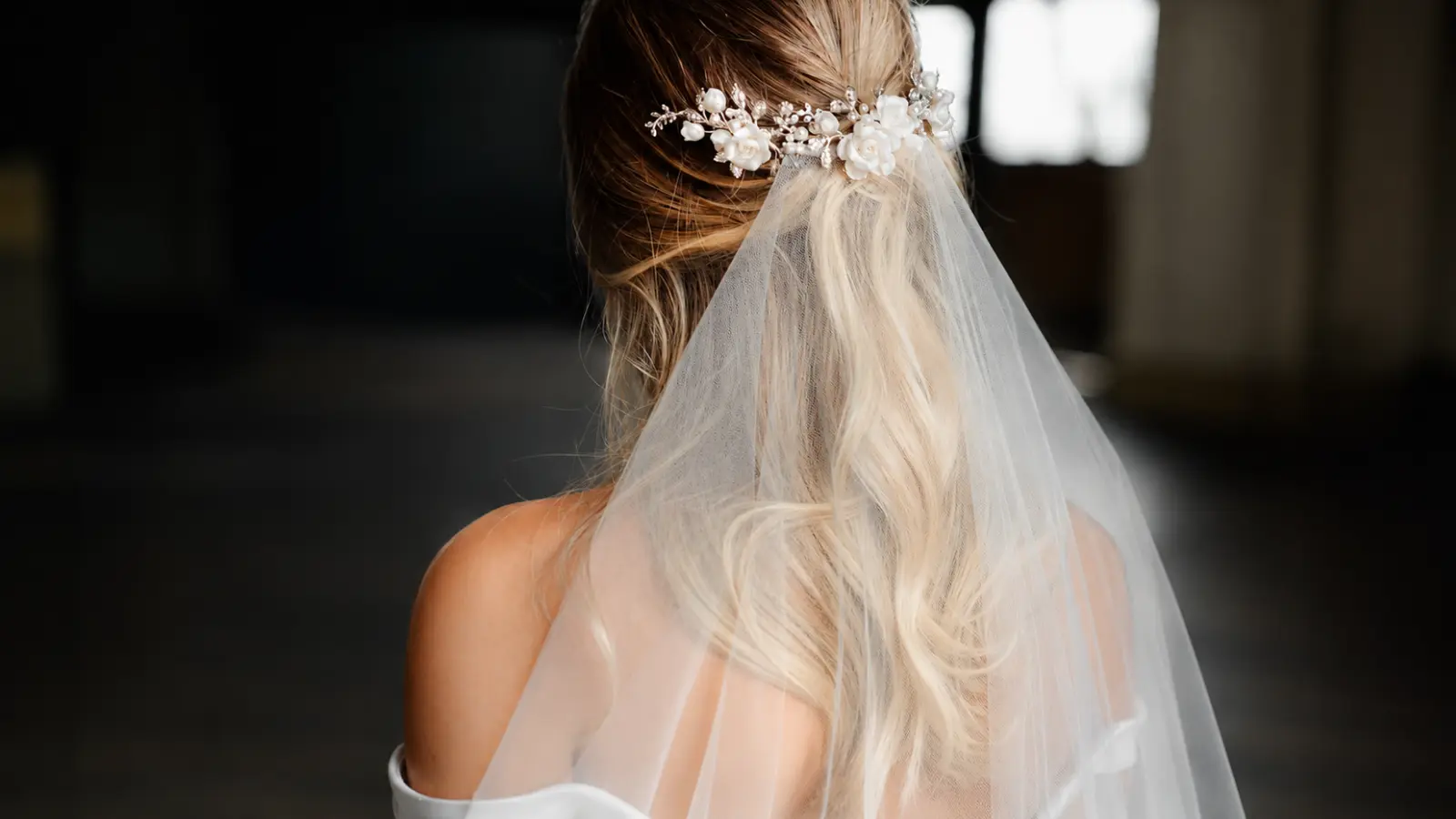
Half up half down wedding hair with veil is one of the most timeless and romantic bridal hairstyle combinations, offering the elegance of an updo while preserving the softness and movement of loose hair. It’s a versatile style that suits almost every wedding theme, dress silhouette, and veil length, making it one of the most popular choices among modern brides.
Although the hairstyle looks effortless, achieving the perfect balance between the veil and the half-up section requires careful planning. The position of the veil comb, the amount of volume at the crown, the weight of the veil, and the hairstyle itself all influence how the final look appears in photographs and how comfortably it lasts throughout the wedding day.
This guide explains everything you need to know about wearing half up half down wedding hair with a veil, including the best veil placement, how to preserve volume, which veil lengths work best, how curls and waves affect the overall look, and the styling techniques that help create a beautiful, secure bridal hairstyle.
Where to Place the Veil
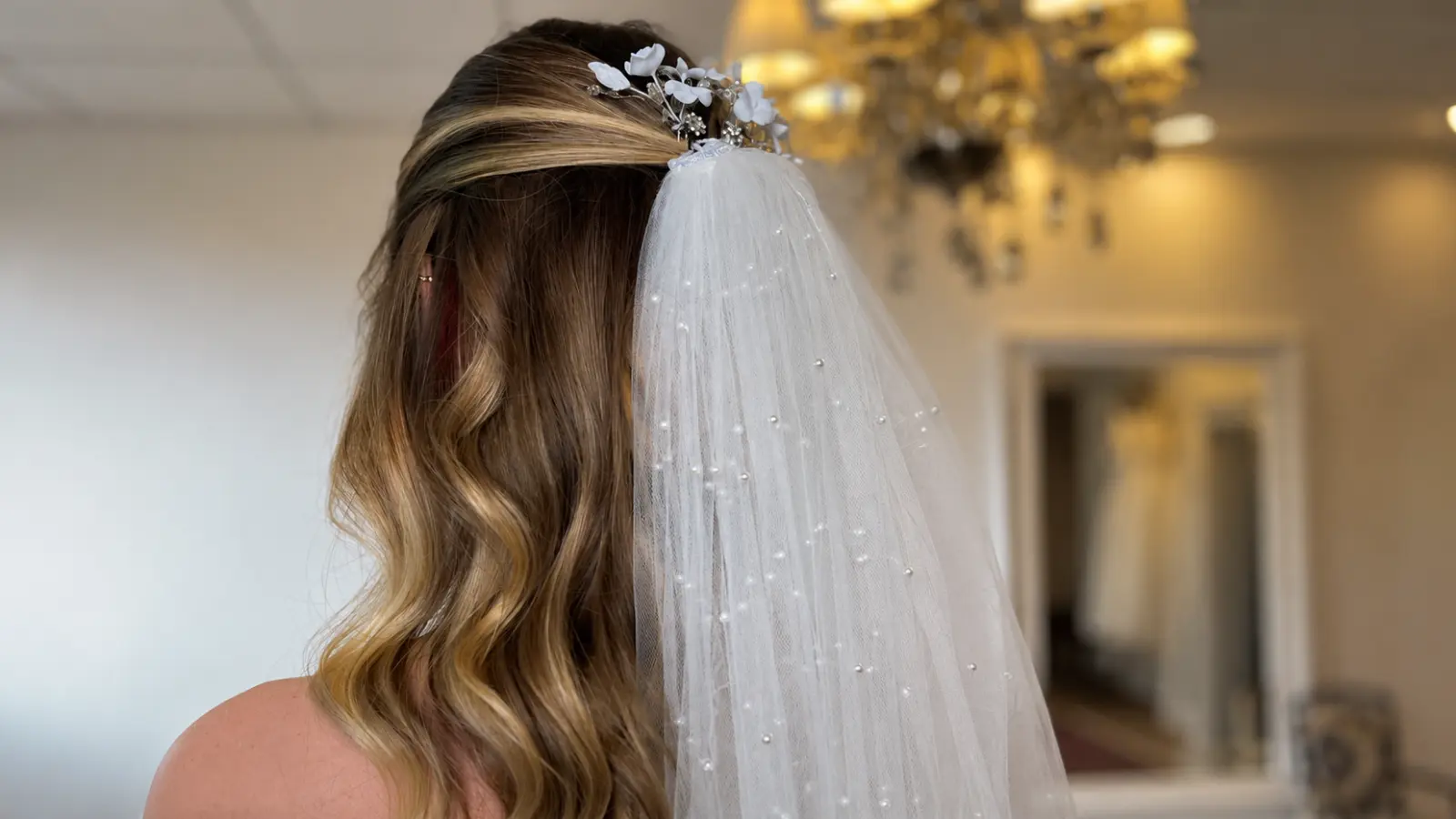
Veil placement matters more with a half up half down style than with almost any other wedding hairstyle with a veil, because this style has defined architecture. The crown section — however it’s structured, whether it’s twisted, pinned, braided, or softly gathered — is the focal point of the look, and the veil’s position relative to that section changes both how the hairstyle reads and how the veil hangs.
At or Above the Crown Section
Placing the comb at the crown itself, or just above it where the pinned section begins, is the most common approach. The veil falls from that point downward, sitting behind the gathered hair rather than through it. From the front, the crown section is visible and uninterrupted. From the back — which is what your guests see during the processional — the veil cascades from behind the style, framing it without hiding it.
This is the placement that reads most naturally as “half up half down with veil” in photographs, and it’s what most brides are picturing when they search for this look. It works across most veil lengths, from elbow to chapel, and handles both smooth and textured crown sections without issue.
Below the Crown Section
Placing the comb at mid-head, below where the crown section ends, is a less common but genuinely useful option. The hair gathered into the half-up portion sits above the veil attachment point, which means the crown structure is completely visible without any fabric around it. The veil falls from below the pinned section and into the loose hair beneath it, creating a softer transition between the two layers.
This placement tends to work better with styles where the crown section is lower or more structured, and it’s a good option when the bride wants the half-up portion to be the clear visual centerpiece rather than something the veil shares space with. The trade-off is that the veil starts lower, which means shorter lengths may not show well, and there’s less hair structure at mid-head to grip the comb securely.
Choosing Between the Two
The simplest way to decide: if you want the veil to be a prominent part of the overall look, place it at the crown. If you want the hairstyle to read first and the veil to complement it, place it below. Neither is more formal or more traditional — they produce different proportions and different back-of-head photographs, and the right choice depends on what you want each image to show.
Placement Options at a Glance
This table covers the main variables for each placement choice. Use it as a reference before your hair trial so you can have a specific conversation with your stylist instead of a vague one.
| Placement Option | Best For | Watch Out For |
|---|---|---|
| At the crown (top of pinned section) | Classic half-up-with-veil silhouette; most veil lengths; brides who want the veil prominently visible from behind | Comb too far forward can compress crown volume; needs good pin anchor beneath it |
| Just above the crown (crown top or slightly higher) | High-set half-up styles; brides adding a blusher; longer veils like chapel or cathedral | Very high placement can look top-heavy with shorter veils; requires secure pinning into the upper crown |
| Below the crown (mid-head) | Brides who want the hairstyle to read before the veil; lower half-up styles; softer, romantic looks | Less structural grip at mid-head; shorter veils may not show well from behind; veil can blend into loose hair below |
One thing worth noting: “crown placement” sounds like a single fixed point, but even a few centimeters make a visible difference in how the combination photographs. Learning how to wear a wedding veil at different placement points helps you compare those positions properly during your hair trial before making the final decision.
Protecting Your Volume
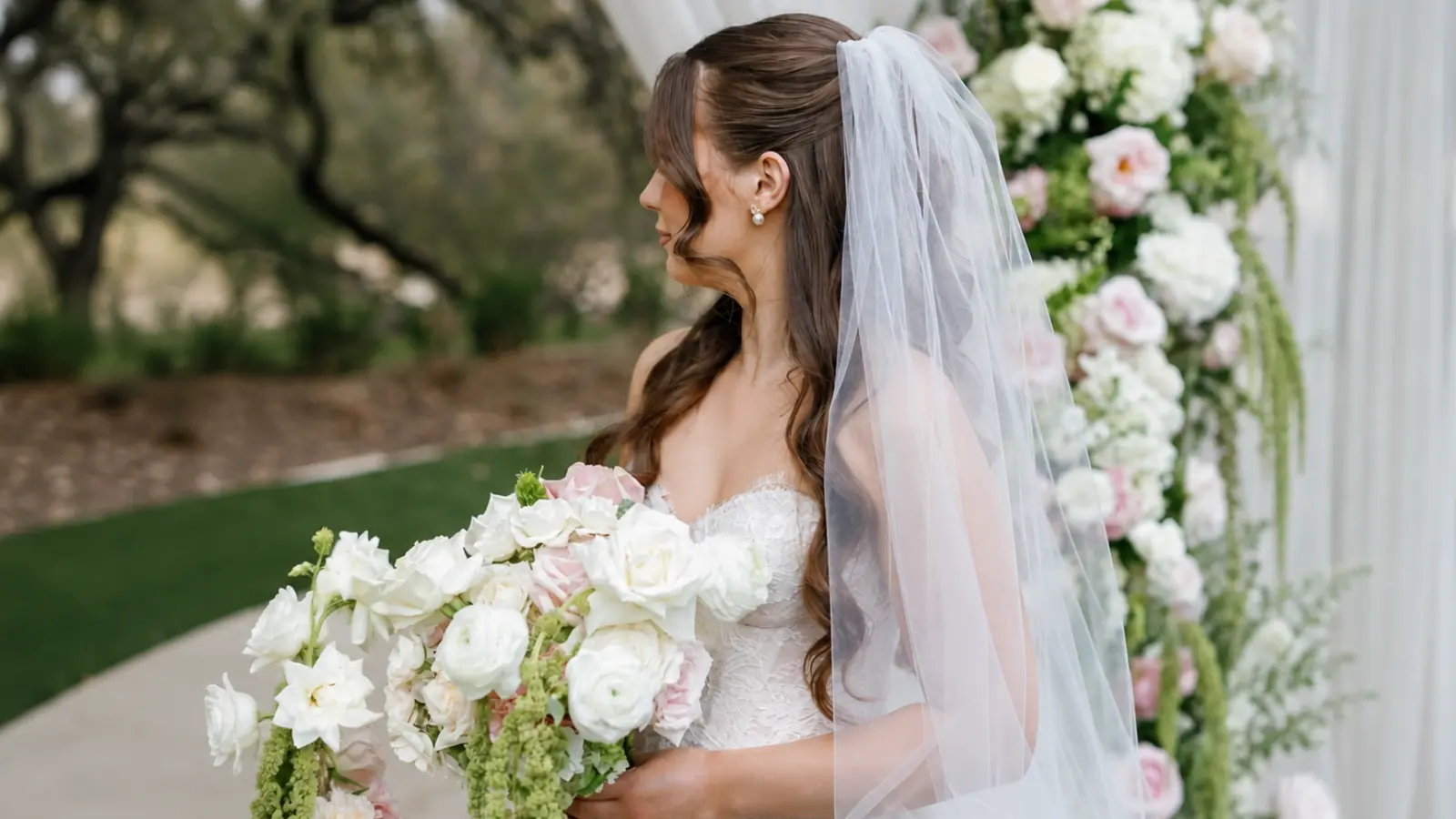
This is the section that most competing articles skip, and it’s the one that matters most for this specific hairstyle. Volume loss is the primary risk of combining a veil with a half up half down style, and it’s almost entirely preventable with the right preparation.
The crown section of a half up half down style typically involves some backcombing, pinning, and product to create and hold its shape. When a veil comb is inserted into that section — even carefully — the pressure from the comb compresses the hair at the attachment point. If there’s no structural preparation underneath, that compression shows. The style goes from full and dimensional to slightly flat at the exact spot where it should look its best.
What Preparation Looks Like
A stylist who is experienced with this combination will build the volume before the veil goes in, not after. That means backcombing or teasing the section at the crown more than the finished look visibly shows, using a light-hold spray or powder to lock in that internal structure, and creating a small area of pinned hair beneath the intended comb placement that acts as an anchor rather than just relying on the comb itself.
After the veil is attached, a good stylist will also assess the crown from behind and from the side. If any compression is visible, they’ll use a fine-tooth comb or a pin to gently lift the hair on either side of the comb, restoring the volume that the insertion displaced. This takes about ninety seconds and completely changes the finished result.
What You Can Do
Before your hair trial, make sure your stylist knows you’re wearing a veil. This sounds obvious, but some brides forget to mention it, and a stylist who preps the style without accounting for a comb will build it differently than one who knows the veil is coming. Bring your actual veil to the trial if it’s in, or ask the salon if they have a similar sample you can use. Seeing the comb go into the hair while the style is in progress is the only reliable way to know whether the placement and preparation are working together the way they should.
Best Veil Lengths for This Style
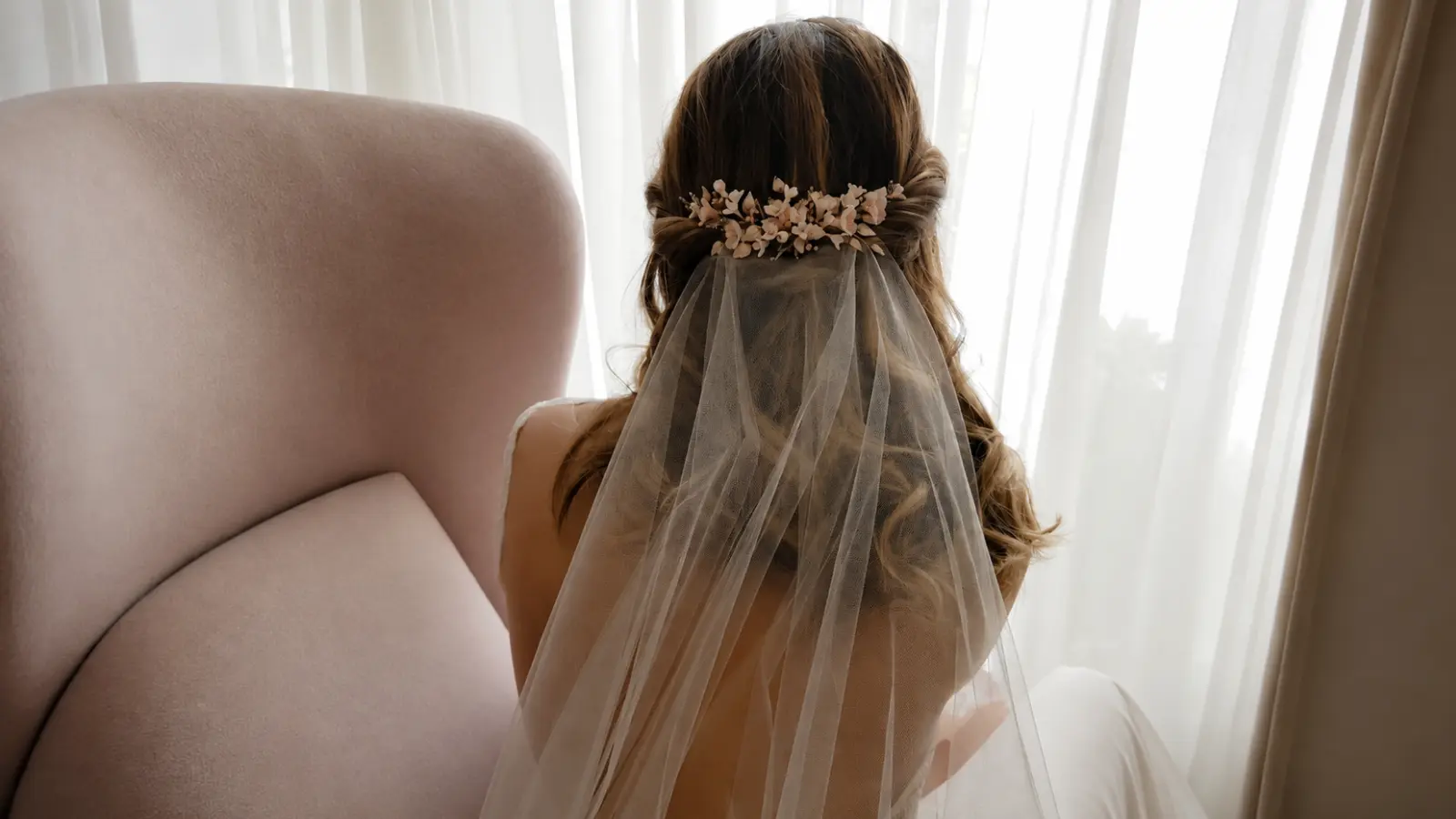
Half up half down hair gives you more veil length flexibility than most brides realize, partly because the attachment point is typically at mid-head or above, which means even moderate lengths have a meaningful amount of visible fabric behind the bride.
Elbow length is the most commonly paired option and for good reason: it’s long enough to photograph clearly, short enough not to compete with the loose hair falling below the crown section, and practical to manage for the full ceremony. Fingertip length adds a bit more visual impact without significantly changing the logistics. For brides who want something more dramatic or whose venue calls for a longer length, waltz and chapel lengths both work well with a high crown placement.
Cathedral length is workable but requires more careful consideration. A cathedral veil attached at the crown of a half up half down style will interact with the loose waves or curls below it, which can look beautiful in still photographs but becomes more complicated in movement. If this is the combination you’re drawn to, discuss it specifically with your stylist and make sure you try it at the hair trial with the actual veil rather than assuming it will work.
For a full breakdown of how wedding veil lengths compare and where each one falls on the body, see our complete veil length guide.
With Curls and Waves
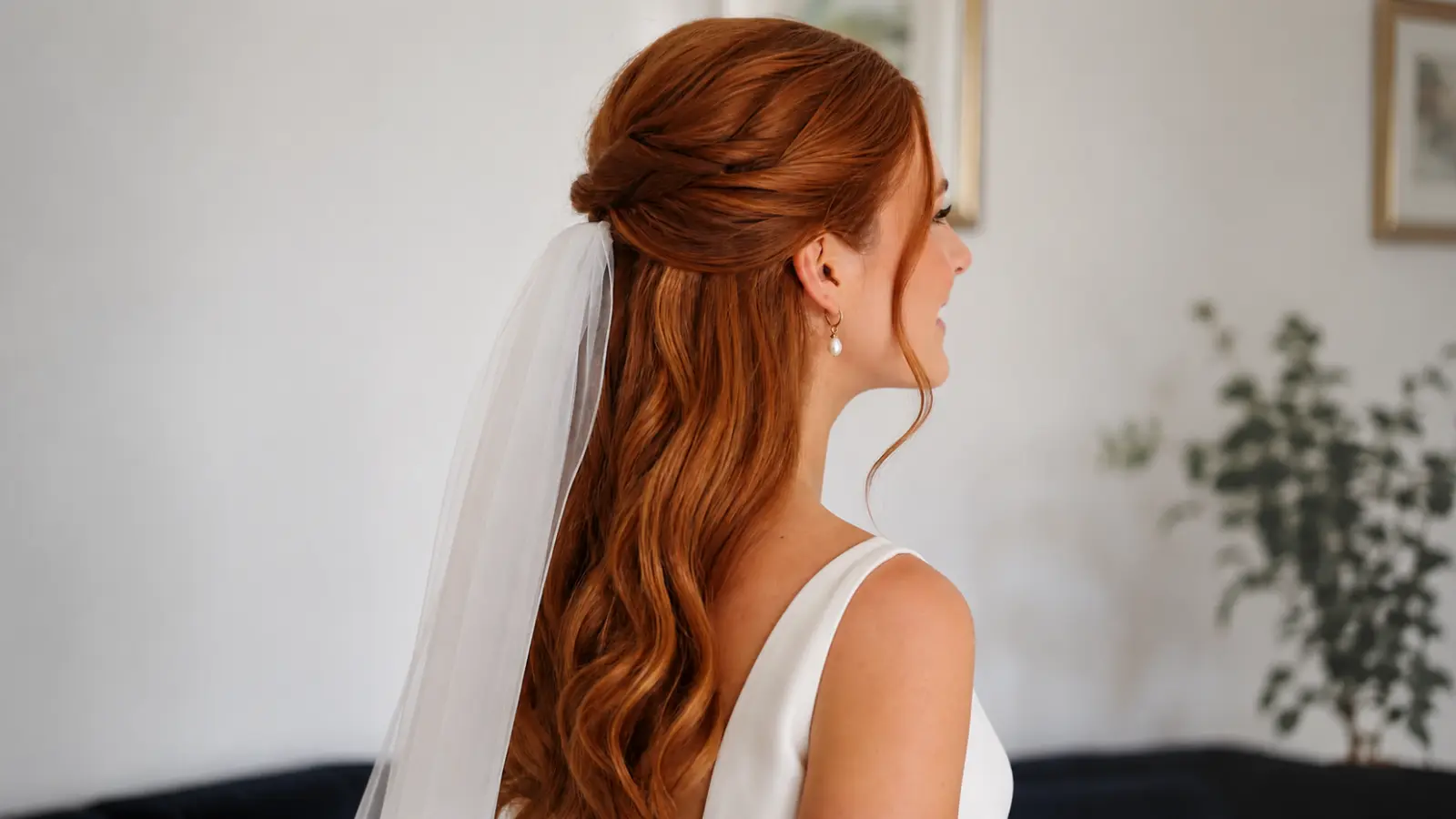
Curls and waves are the most popular texture choice for half up half down bridal styles, and they change a few practical considerations when a veil is added.
The main one is how the veil interacts with the loose hair below the crown. In still photographs, a tulle veil resting lightly against defined curls is one of the most photographed bridal looks in American weddings. In motion — during the processional, during portraits outdoors in any wind — the veil and the curls can catch each other, which means the veil may carry a few hairs when it moves and the curls may not sit as cleanly once the veil has been brushing against them for an hour.
None of this is a reason to avoid the combination. But it is a reason to be thoughtful about wedding veil materials. A lighter, softer tulle tends to interact more gently with textured hair than a stiffer, more structured fabric. If you’re choosing between veil fabrics and you’re wearing curls, bring a sample of each to your hair trial and see how each one sits against your texture before deciding.
For sleek, straight half up styles, the veil interaction is less of a concern, but placement precision matters more. A crisp, straight half-up look is unforgiving of any comb that isn’t centered and level — what reads as barely noticeable with curls reads immediately with smooth hair.
With a Tiara or Headpiece
A tiara, headband, or decorative comb can absolutely work alongside a veil in a half up half down style, but the combination requires more advance planning than most brides anticipate going into the trial.
The workable arrangement in most cases is to position the tiara or headband in front of the veil attachment point — closer to the hairline, sitting across the crown section — while the veil goes in from behind. This creates clear visual separation: the headpiece faces forward and frames the face, the veil frames everything from behind. It’s a classic combination for a reason.
What tends to look cluttered is when the tiara, the veil comb, and the pinned hair all converge in the same two-inch zone at the back of the crown. If you’re planning to wear both, discuss the placement sequence with your stylist before the trial. The order typically matters: most stylists prefer to secure the veil first, then position the tiara or headpiece in front of it, because the tiara can be repositioned more easily than the veil comb once it’s pinned.
For more on combining veils with structured headpieces, see our guide to wearing a wedding veil with a tiara.
How It Photographs
Understanding how this combination reads in photographs helps you make smarter decisions before the hair trial. A few things are worth knowing.
The back-of-head photograph — the one taken from behind the bride during the processional or the vow exchange — is where this style and veil combination either comes together or doesn’t. The crown section, the veil, and the loose hair below all appear in that single frame. Volume at the crown reads as presence and intention; any flattening around the comb reads as something that went slightly wrong. This is why preparation matters so much for this particular style.
Outdoor light tends to be more flattering than indoor flash for this combination because the veil’s sheerness shows more naturally in soft light. If your ceremony is outdoors or in a venue with strong natural light, the veil will likely be more visible in portraits than in a darkly lit chapel with artificial lighting — which is useful to know when you’re deciding on length and fabric weight.
For portrait sessions after the ceremony, longer veils with this hairstyle tend to photograph particularly well from a slight distance, where the full length is visible and the texture of the loose hair below reads in contrast to the smooth fabric above. If you’re planning portraits in an open outdoor setting, a waltz or chapel length can be worth considering even if you were originally drawn to something shorter.
Removing the Veil After the Ceremony
Veil removal with half up half down hair requires more care than removal from an updo, because the comb is anchored in a section of hair that isn’t fully secured. Pull too quickly or in the wrong direction and you risk disturbing the crown section, pulling strands loose from the pinned portion, or catching a comb on the waves below.
The right technique is to remove any additional anchor pins first, then slide the comb out slowly in the same direction it was inserted — usually backward and slightly downward. The person doing this should use one hand to hold the crown section gently in place while the other slides the comb out, which prevents the hair from shifting as the comb comes free.
This is a two-minute process when it’s been practiced. It becomes a five-minute production when the maid of honor is doing it for the first time while wearing heels and holding a bouquet. Walk through the removal at the hair trial with your stylist, and then walk through it again with whoever will be doing it on the wedding day. The style should look exactly the same before and after the veil comes out.
What to Avoid
Most of the problems that come up with this combination are predictable once you know what causes them.
- Inserting the comb through the center of the crown section. This is the most common cause of volume loss. The comb should sit at the back edge of the crown section, not through the middle of it. Inserting it centrally compresses the hair from both sides of the comb and flattens exactly the area you want to look full.
- Skipping the hair trial with the actual veil. A trial without the veil tells you what the hairstyle looks like; it doesn’t tell you how the style and veil interact. Volume loss, placement problems, and security issues only show up when the comb is actually in the hair. Bring your veil, or ask the salon for a comparable sample.
- Choosing a very heavy veil fabric for a textured style. Heavier fabrics like organza or structured tulle sit differently against loose waves and curls than lighter ones. If your loose hair is a big part of the look, a softer fabric that doesn’t pull the curls out of shape tends to work better for a full day of wear.
- Assuming the removal will be easy. It usually is, but only when it’s been planned. Brief whoever is removing your veil on exactly how to do it — which direction the comb slides, whether there are additional pins, how to hold the crown section while it comes out. An unpracticed removal from a half up style can undo an hour of styling in about fifteen seconds.
- Overloading the crown section with accessories. A veil, a tiara, and two decorative pins all placed in the same two-inch zone will look crowded in photos even if it looks manageable in the mirror. If you’re adding multiple elements to this area of the style, test them all together at the trial and ask your photographer’s opinion when you see the images.
These are all fixable at the trial stage. The only expensive mistake is discovering them on the wedding day.
Half Up Half Down Wedding Hair With Veil Inspiration
Discover beautiful half up half down wedding hair with veil inspiration featuring soft waves, romantic curls, elegant twists, braided crown styles, and timeless bridal hairstyles paired with fingertip, chapel, and cathedral veils. Explore graceful veil placement ideas, bridal accessories, and sophisticated combinations that create a naturally elegant wedding look.
Is Half Up Half Down Wedding Hair With a Veil Right for You?
Half up half down wedding hair with a veil continues to be one of the most elegant bridal hairstyle choices because it combines structure with softness, allowing the veil and hairstyle to complement one another beautifully. When the veil is positioned correctly and the crown is prepared properly, the result feels balanced, romantic, and effortless from every angle.
The secret to making this hairstyle truly successful is treating the veil as part of the hairstyle instead of adding it afterward. By testing the placement during your hair trial, choosing a veil that suits your hairstyle and dress, and working closely with your stylist, you’ll create a timeless bridal look that remains beautiful throughout your ceremony, portraits, and celebration.
Frequently asked questions (FAQ)
Can you wear a veil with half up half down wedding hair?
Yes. Half up half down is one of the most versatile hairstyles for wearing a veil because it combines the secure structure of pinned hair with the softness of loose strands. The key is choosing the correct veil placement so the hairstyle keeps its volume while the veil remains stable throughout the ceremony.
Where should a veil be placed with half up half down hair?
The veil is usually attached at or just above the crown section where the upper layers are gathered. This allows the veil to fall naturally behind the hairstyle without covering its shape. Lower placement is also possible when the bride wants the hairstyle itself to remain the primary focal point.
Does a veil flatten half up half down hair?
It can if the comb is inserted directly into the center of the crown section. Proper preparation, backcombing, product, and placing the comb near the back edge of the crown help preserve the hairstyle’s height and structure.
What veil length works best with half up half down hair?
Elbow and fingertip veils are generally the easiest lengths to wear because they balance well with loose hair. Waltz and chapel lengths also work beautifully for more formal weddings, while cathedral veils require extra planning to avoid tangling with the loose hair underneath.
Do curls or waves change how a veil works?
Yes. Loose curls and waves create beautiful texture but also increase interaction between the veil fabric and the hair during movement. Lightweight tulle generally works better than heavier fabrics because it glides over textured hair more easily and helps preserve the hairstyle throughout the day.
Can you wear a tiara with half up half down hair and a veil?
Yes. The tiara is usually positioned in front of the veil attachment point while the veil sits behind the crown section. Trying both accessories together during the hair trial ensures they remain visually balanced.
How do you remove a veil from half up half down hair?
Remove any additional pins first, then slide the comb out slowly in the same direction it was inserted while supporting the crown section with the opposite hand. Practicing this process during the hair trial helps keep the hairstyle intact after the veil is removed.