Wedding veil materials influence far more than appearance—they determine how your veil moves, photographs, feels, and complements your wedding dress. From lightweight tulle to luxurious silk tulle, every fabric creates a completely different bridal look.
Understanding these differences makes choosing a veil much easier. The right material should suit your dress, venue, photography, budget, and the overall atmosphere you want to create.
This guide explains every major wedding veil material, including tulle, silk tulle, organza, chiffon, lace, edge finishes, embellishments, and practical tips to help you choose with confidence.
Veil Fabric Comparison
Before going deeper on any individual material, this overview gives you a quick sense of how the main fabrics compare across the qualities that matter most to brides choosing a veil.
| Material | Look | Movement | Best For |
|---|---|---|---|
| Bridal Illusion Tulle | Clean, sheer, classic | Structured; holds shape with some float | Most dress styles, most venues, most budgets |
| Silk Tulle | Soft, luminous, fluid | Floats and drapes naturally; less structured | Romantic or ethereal looks; couture-level gowns |
| English Net | Textured, open weave, vintage | Stiffer; holds its structure | Birdcage styles, retro aesthetics, short veils |
| Organza | Crisp, bright, structured | Minimal drape; holds volume | Statement veils, indoor formal ceremonies |
| Chiffon | Soft, matte, relaxed | Flows freely; floaty in wind | Boho, casual, or garden ceremonies |
| Lace (all-over) | Romantic, ornate, detailed | Depends on lace weight; generally less fluid | Mantilla veils, lace-bodice gowns, heritage looks |
The right material isn’t the one with the most impressive description — it’s the one that serves your specific dress, your venue, and how you want to move on the day. Use this table as a starting point, then feel each fabric in person before deciding.
Bridal Illusion Tulle
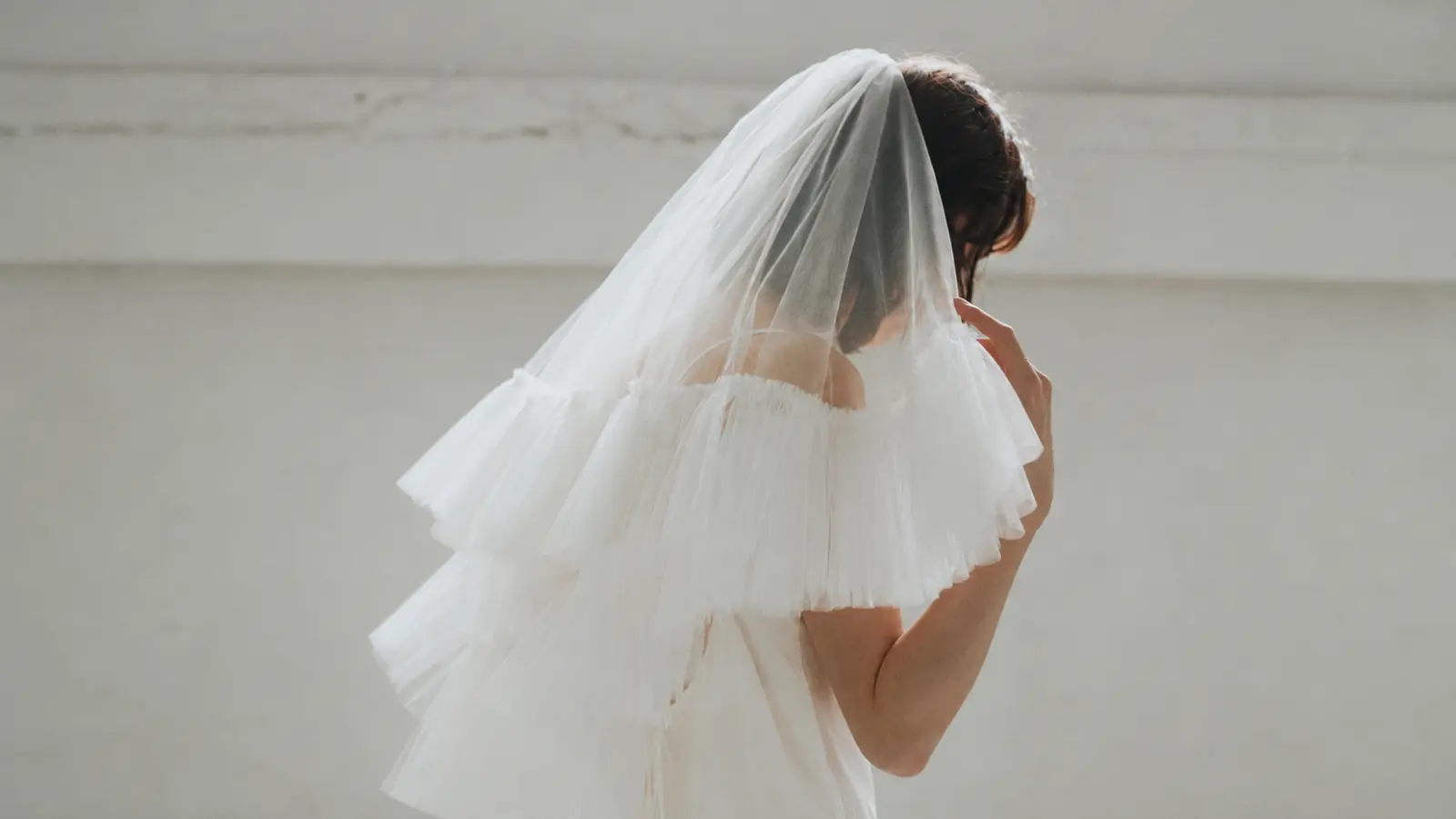
Bridal illusion tulle is the default fabric for wedding veils in the United States, and for good reason. Its fine hexagonal weave is nearly invisible against most skin tones, which gives it a clean, traditional look without overwhelming the dress or the face. It is made from nylon, which makes it durable, relatively wrinkle-resistant, and forgiving under the conditions of a long wedding day.
Illusion tulle holds its shape well enough to maintain a gathered, floaty silhouette without requiring stiffening or additional support. It photographs cleanly in both natural and artificial light — it doesn’t create the bright, reflective surface that organza can, and it doesn’t flatten or cling the way chiffon sometimes does. For most brides, with most dress styles and most venues, illusion tulle is the right material without any further deliberation.
One thing worth noting: tulle quality varies. The weight, weave density, and finish differ between manufacturers, and the difference is noticeable when you hold samples side by side. A denser weave tends to hold its shape better at longer lengths; a finer weave feels more delicate and may require careful handling.
Silk Tulle
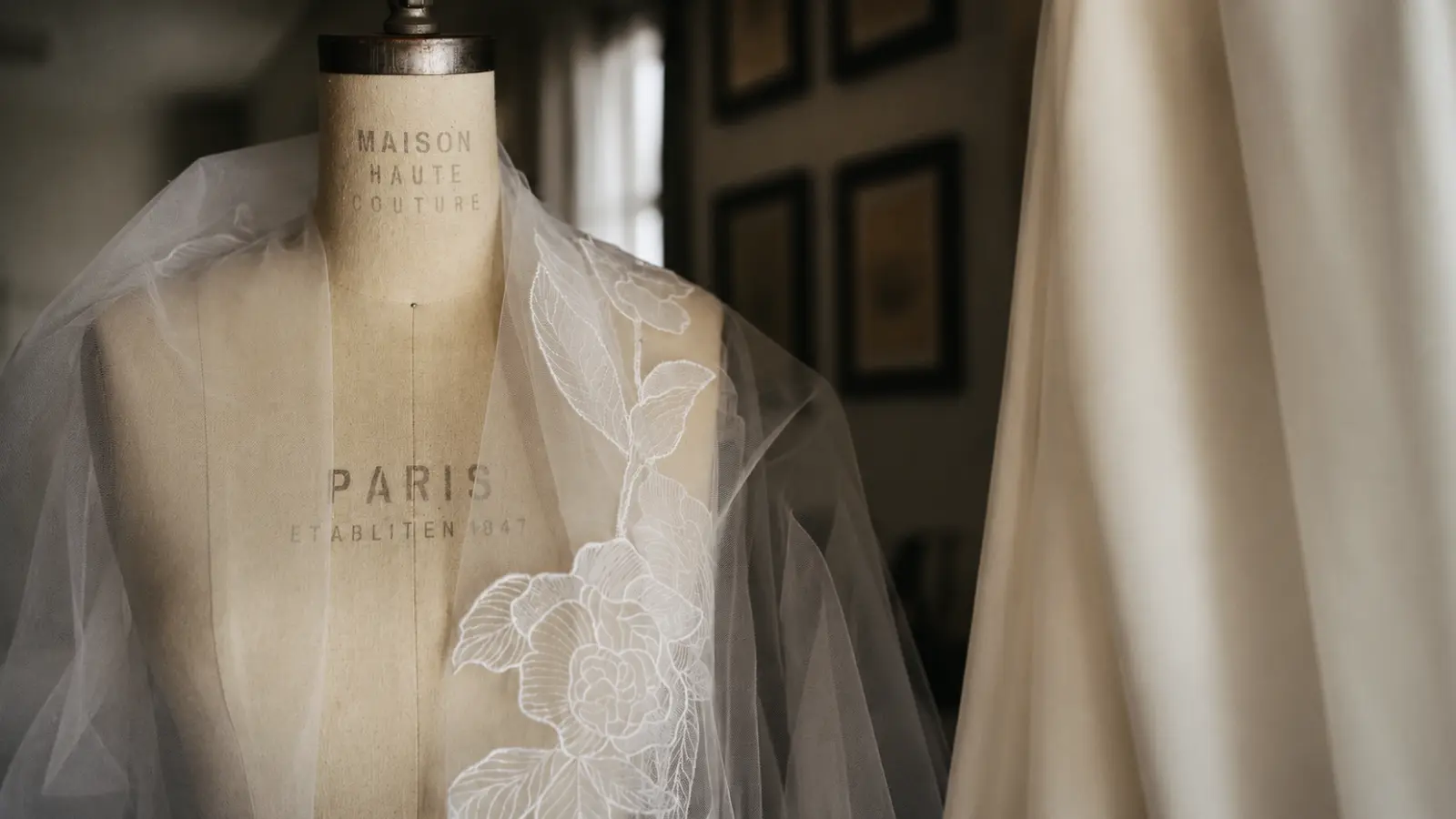
Silk tulle is made from natural silk fiber rather than nylon. The result is a fabric that looks and behaves quite differently from bridal illusion tulle, even though the two share the same basic mesh structure. Silk tulle is softer, lighter, and more fluid. It drapes against the body rather than floating away from it. It catches light with a subtle warmth that nylon cannot replicate.
In photographs, silk tulle reads more luminous and less graphic. The edges look softer, the weight looks more natural, and the overall effect reads as closer to the historical bridal silhouette that many brides are drawn to when they see images from French couture houses or editorial shoots. That quality is not something bridal illusion tulle can fully replicate, no matter how fine the weave.
The tradeoffs are real. Silk tulle is significantly more expensive. It is also more delicate — it snags more easily, wrinkles more readily, and requires careful steaming rather than any direct heat. At very long lengths, like cathedral or royal, the weight of silk tulle can make the veil heavier and more difficult to manage than a tulle equivalent. For brides considering silk tulle, it is worth asking about these practical realities in the salon, not just admiring it in the mirror.
Silk Tulle vs. Regular Tulle
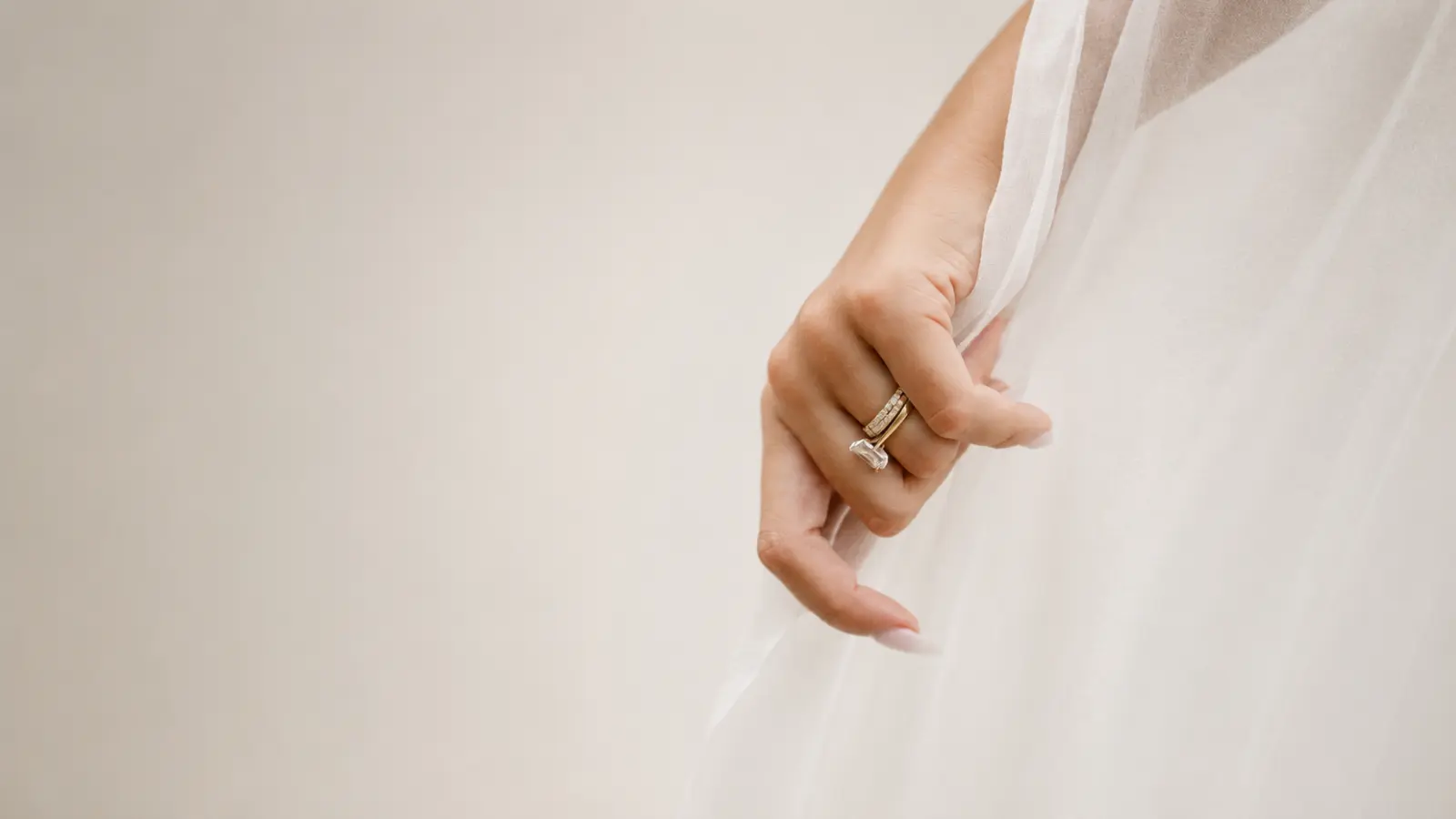
This is one of the most searched comparisons in the veil category, and it deserves a direct answer. Both are tulle — but they behave in ways that are immediately obvious when you hold them together.
| Bridal Illusion Tulle | Silk Tulle | |
|---|---|---|
| Fiber | Nylon (synthetic) | Silk (natural) |
| Feel | Slightly crisp, structured | Soft, fluid, lightweight |
| Movement | Floats; holds gathered shape | Drapes and flows more naturally |
| Light quality | Clean, neutral | Warm, subtly luminous |
| Durability | More forgiving; resists snags | Delicate; snags more easily |
| Wrinkling | Releases easily with steam | More prone to creasing; needs careful handling |
| Price | Accessible range | Significantly higher |
| Best for | Most brides, most settings | Romantic aesthetic; couture or designer gowns |
The practical answer for most brides: if you haven’t seen silk tulle in person, request a sample before deciding. Some brides feel immediately that the extra cost is worth it; others hold both and find that illusion tulle serves them just as well. There is no objectively correct answer — only the one that makes sense for your dress, your budget, and how you want the veil to feel when you walk.
English Net
English net has a more open, hexagonal weave than fine bridal tulle. The individual cells are larger and more visible, giving it a distinctly textured quality that reads as deliberately retro rather than classically bridal. It is stiffer than most tulle varieties and holds its structure with very little movement — which makes it an excellent choice for short veils and a birdcage wedding veil, where the shape itself is the point.
For a bride going for a mid-century aesthetic, a vintage-inspired look, or pairing a veil with a tea-length dress or a tailored suit, English net is a more appropriate choice than fine illusion tulle. In photographs, the visible texture reads as a deliberate design decision rather than a flaw. It does not, however, translate well to long cathedral-length veils, where its rigidity and visible weave tend to look heavy rather than dramatic.
Organza
Organza is a woven fabric rather than a mesh, which means it has a completely different hand than tulle or net. It is crisp, smooth, and structured, with a slight sheen that makes it reflective in bright light. Where tulle floats, organza holds. Where chiffon drapes, organza stands.
For wedding veils, this means organza works best when the look depends on structure over movement. A stiffly shaped statement veil, a formal mantilla edge, or a cathedral length that needs to hold its spread across an aisle can all work well in organza. The same crispness that makes it structurally effective can also make it read stiff or over-bright in outdoor photography, particularly in midday sun. If you are drawn to organza, ask to see it photographed in conditions similar to your ceremony before committing to it.
Chiffon
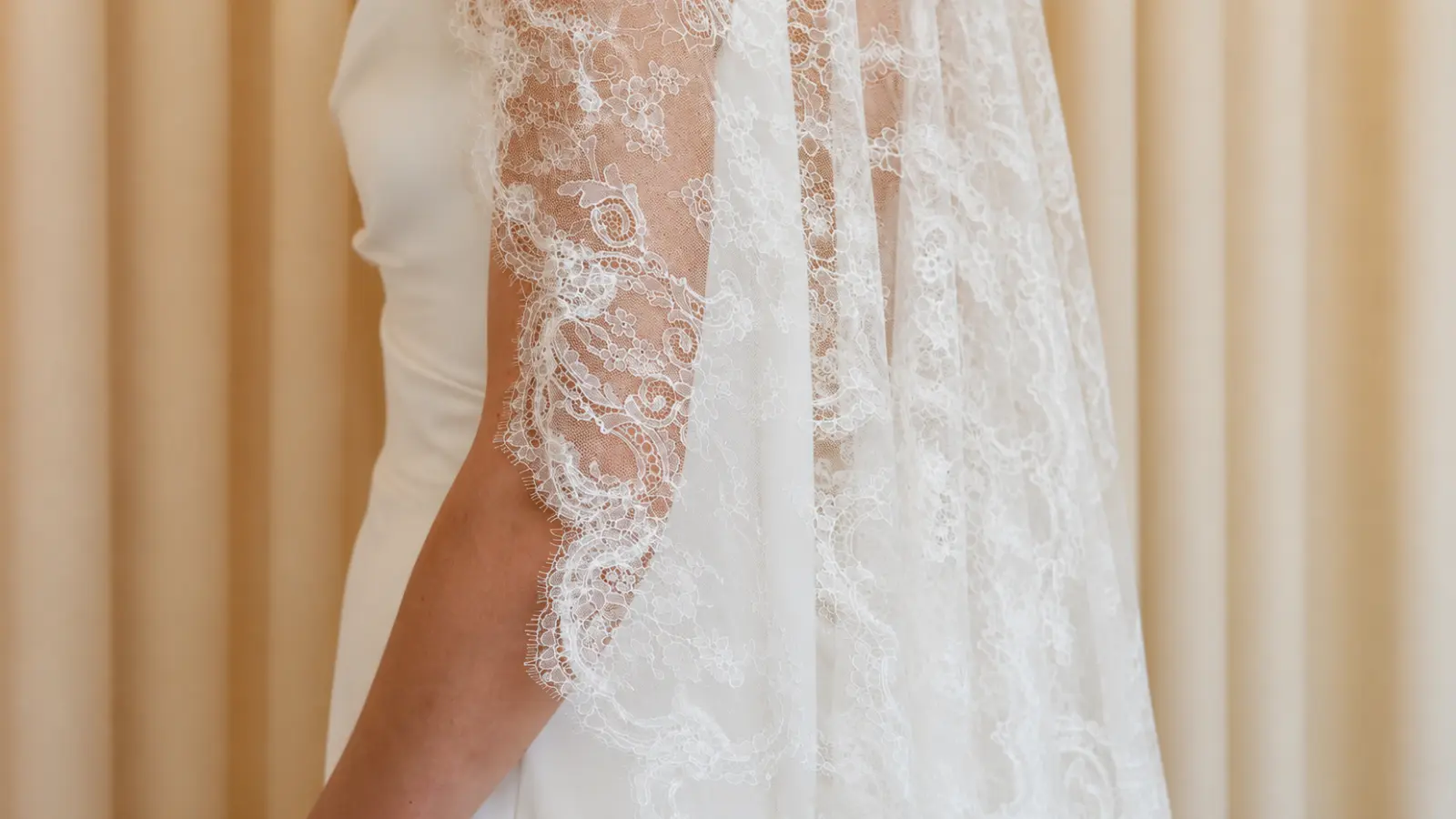
Chiffon is a soft, woven fabric with a matte finish and a natural drape. Unlike tulle or organza, it doesn’t hold a structured silhouette — it follows gravity. A chiffon veil moves with the body and the breeze, creating a relaxed, flowing effect that reads as casual or boho rather than formal or traditional.
This makes chiffon an excellent choice for garden ceremonies, destination weddings, beach settings, and any look where the bride wants the veil to feel part of the overall softness of the day rather than a structured bridal accessory. It is less suited to formal church ceremonies or grand ballrooms, where a more structured fabric tends to read better with the scale of the space. In wind, chiffon can billow significantly, which is something to factor in if your ceremony is outdoors.
Lace
Lace works differently from every other fabric on this list because it serves two distinct roles in veil construction: it can be the entire fabric of the veil, or it can be applied as a trim to a tulle base. Understanding the difference matters.
Lace as an All-Over Fabric
When lace is used across the entire veil surface, the result is a mantilla — a style with deep roots in Spanish and Catholic bridal tradition. The lace lies flat against the head and shoulders, framing the face with an ornate border. The look is romantic, highly detailed, and closely associated with formal and religious ceremonies. It works beautifully when the lace pattern of the veil complements, rather than competes with, lace on the gown. For everything about this approach, see our mantilla wedding veil.
Lace as Edge Trim
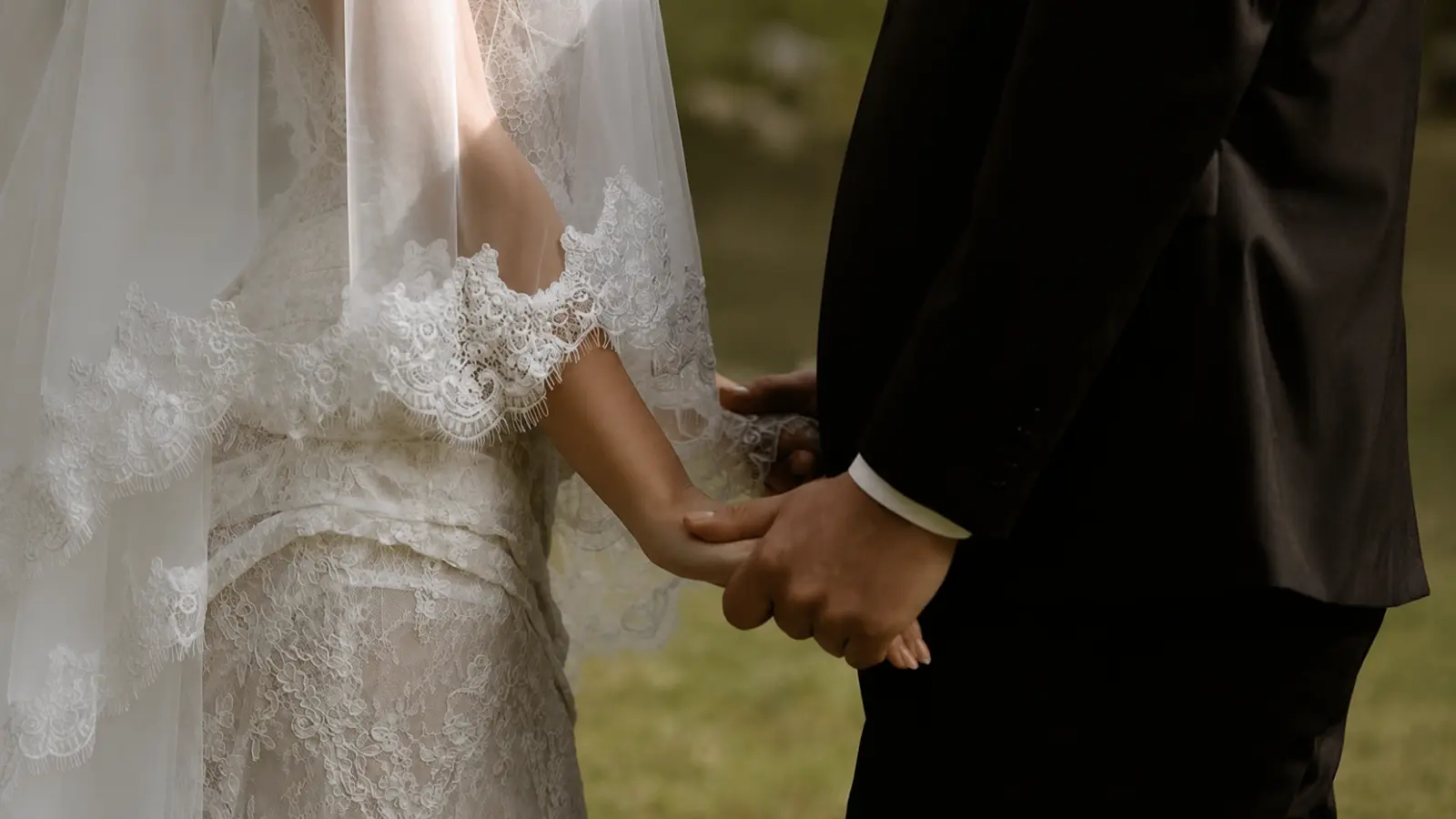
Most brides who want lace on a non-mantilla veil are choosing lace as an edge trim on a tulle base. The trim frames the perimeter of the veil and becomes a defining visual detail, especially at longer lengths where it sweeps the ground behind the bride. The weight of the lace edge matters significantly: a fine, delicate scallop reads very differently from a heavy, wide Venetian border. Heavier lace adds weight to the veil, which can affect how it hangs and moves. For a detailed guide on pairing lace veils with specific gown styles, see our lace wedding veil.
Veil Edge Finishes
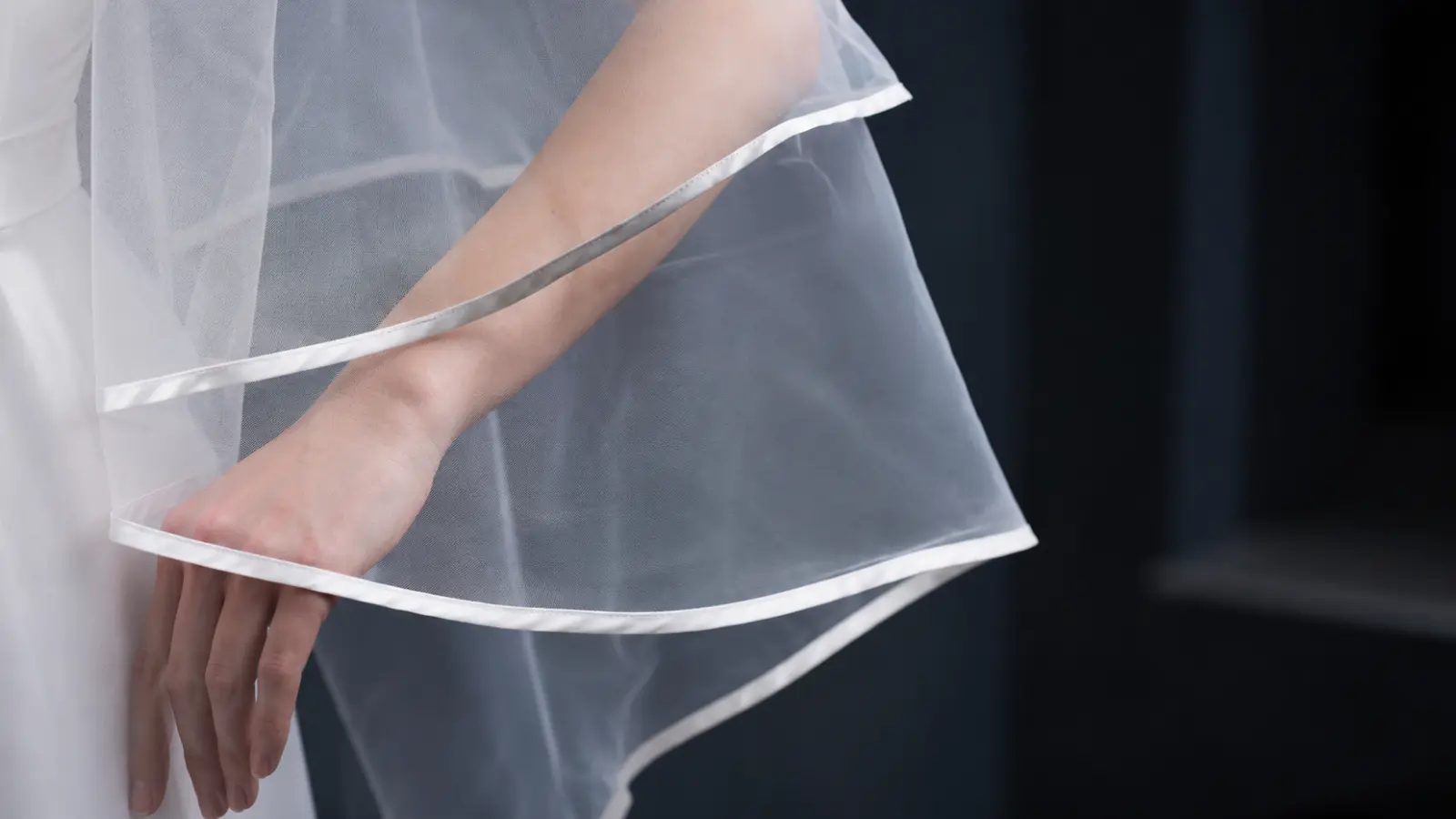
The edge is the veil’s frame — and it is often what reads most clearly in photographs. Many brides spend all their attention on length and material and forget that the edge detail is the first thing a camera catches when the veil trails behind them. Understanding the main options helps you choose with intention.
| Edge Finish | Look | Best For |
|---|---|---|
| Raw / Cut Edge | Minimal, clean, barely-there | Modern, minimal dresses; brides who want the veil to disappear |
| Pencil-Rolled / Satin-Rolled | Narrow stitched hem; classic and clean | Traditional looks; most dress styles |
| Ribbon Edge | Satin ribbon border; defined and tailored | Structured, formal looks; clean dress silhouettes |
| Horsehair Edge | Stiff, shaped border that curves outward | Veils where shape and volume are important; ballroom settings |
| Scallop Lace Trim | Delicate lace scallop along the perimeter | Romantic, soft looks; pairs with lace or floral gowns |
| Wide Lace Trim | Bold, ornate lace border | Heritage looks, mantilla-adjacent styles, high-detail gowns with a plain bodice |
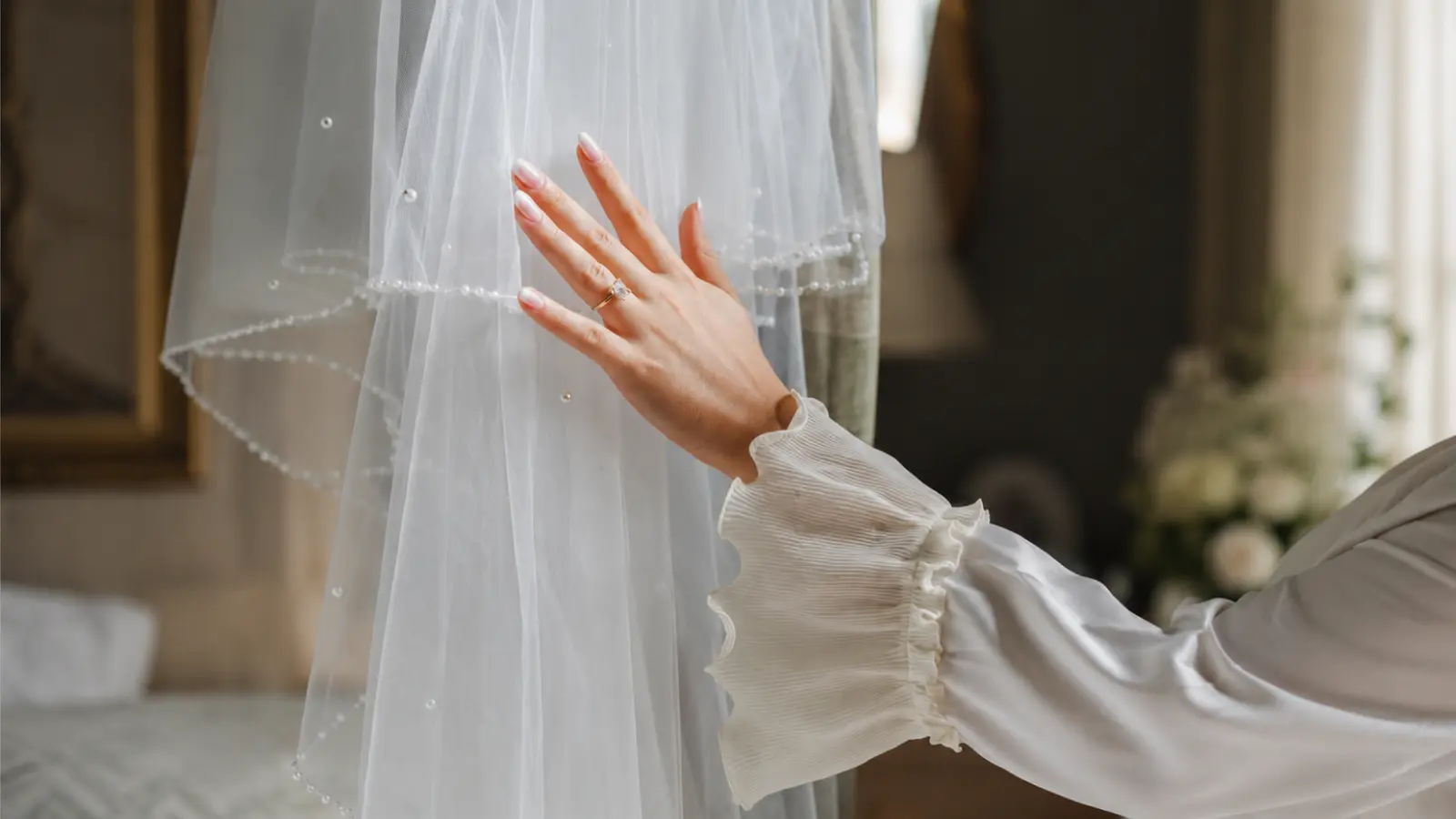
| Pearl Trim | Pearl beads along the edge; romantic and luminous | Formal ceremonies; pairs with pearl-detailed gowns and jewelry |
| Crystal / Rhinestone Edge | Sparkle along the perimeter; high-impact | Evening ceremonies, black-tie settings, gowns with crystal embellishment |
A general principle: the edge detail works best when it echoes something in the dress, rather than introducing a new element entirely. A dress with a lace bodice pairs naturally with a lace-trimmed veil. A minimalist crepe gown often looks best with a raw or rolled edge that doesn’t interrupt the clean line. When the edge fights the dress, both lose.
Beading, Crystals, and Embellishments
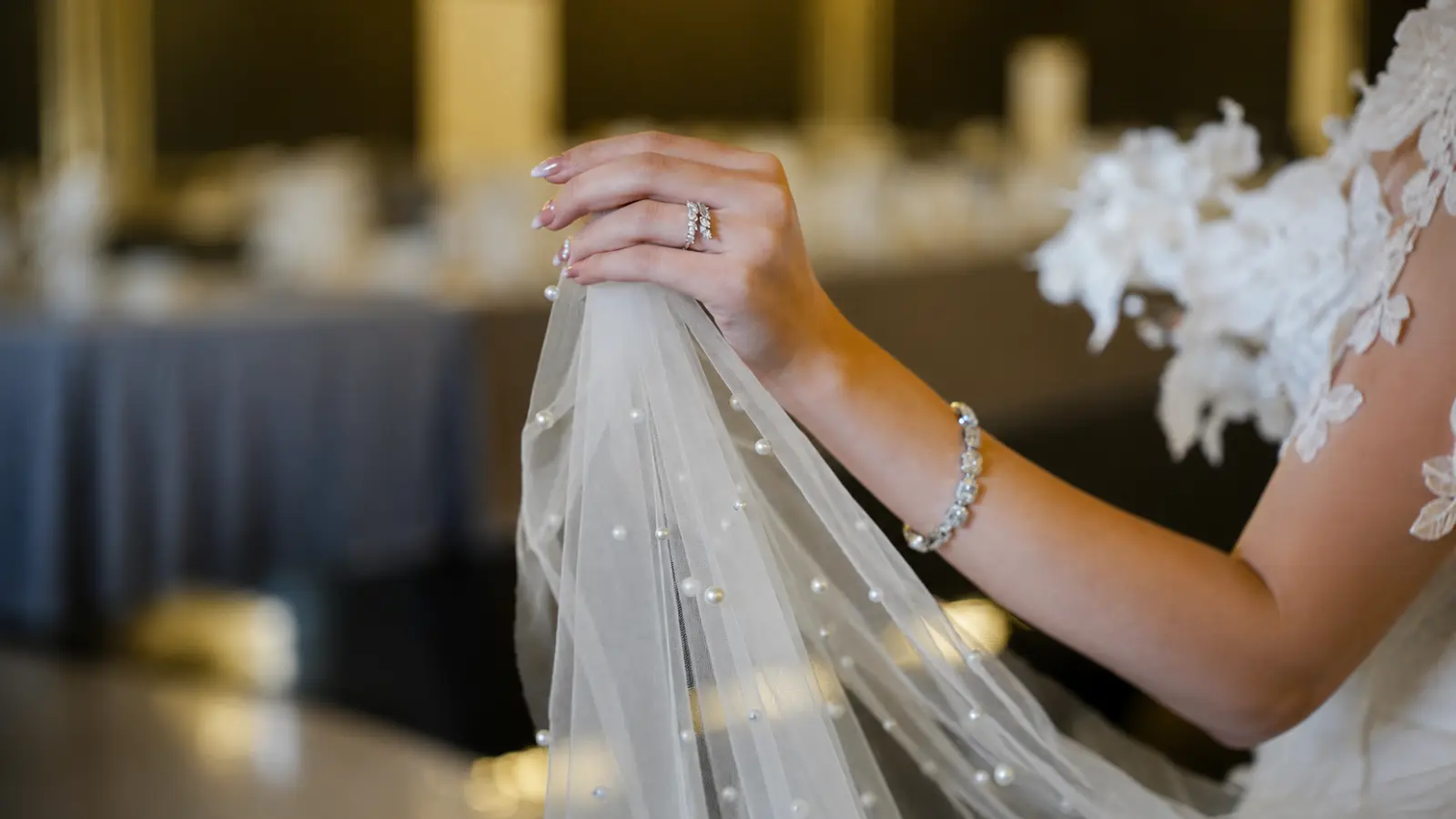
Embellishments on veils — scattered crystals, rhinestone clusters, pearl details, floral appliqués, or overall embroidery — add weight, texture, and light-catching interest. They can be extraordinary in the right setting. They also come with a few practical realities worth understanding before you decide.
Weight is the most important consideration. Crystals, beads, and heavy embroidery add measurable weight to the veil, and that weight increases with length. A heavily embellished cathedral veil can become genuinely difficult to wear through a long ceremony. At shorter lengths — elbow or fingertip — the same level of embellishment feels manageable and photographs beautifully. If you love the look of a heavily decorated veil, ask to try it on for at least ten minutes in the salon, not just for a quick photo, so you have a realistic sense of how it feels.
Light behavior is the second consideration. Crystals and rhinestones catch indoor light beautifully in controlled settings. In direct outdoor sunlight, they can create glare that photographs as blown-out white spots rather than sparkle. Pearl wedding veil embellishments tend to photograph more reliably across different lighting conditions because their finish is softer and less reflective than cut crystal.
If embellishments are scattered across the veil body rather than confined to the edge, the effect in motion is dramatic — particularly in a video walk-down-the-aisle moment. If they are concentrated at the edge, they tend to read more cleanly in still photography. Neither approach is wrong; it depends on which kind of visual record matters more to you.
How to Choose Your Veil Fabric
The right fabric isn’t determined by the material alone — it is determined by the combination of material, dress, venue, and how much you want the veil itself to be a focal point. A few questions that help narrow the decision:
How formal is your ceremony? Grand churches, historic ballrooms, and formal evening receptions tend to reward structured fabrics — bridal illusion tulle, organza, heavily embellished veils — that can hold their presence in a large space. Garden ceremonies, destination weddings, and intimate settings are more forgiving of fluid, relaxed fabrics like chiffon or silk tulle.
How detailed is your gown? A highly embellished dress — heavy beading, intricate lace, structured detail — generally reads best with a simpler veil that doesn’t compete. A more minimal dress can carry a more elaborate edge or embellishment without losing its line. The veil’s job is to complete the look, not to repeat it.
Is your ceremony indoors or outdoors? Wind, direct sunlight, and uneven terrain affect certain fabrics more than others. Bridal illusion tulle is the most practical all-weather choice. Silk tulle is beautiful outdoors but can be difficult to manage in wind. Crystal embellishments can glare in midday sun. Chiffon billows, which can be either romantic or logistically inconvenient depending on conditions.
What is your budget? Fabric is one of the main cost drivers in veil pricing, alongside length and embellishment. Silk tulle veils typically cost significantly more than comparable nylon tulle versions. If the silk-tulle look appeals to you but the price point doesn’t, ask to see high-quality illusion tulle samples — the difference in a fine, well-made tulle versus a heavy-handed silk alternative is sometimes smaller than expected.
For how these fabric considerations interact with the specific dress styles and silhouettes you’re considering, see our guide to matching a wedding dress with a veil.
Wrinkles, Steam, and Storage
Most veil fabrics develop some light creasing during storage or transport — and most of those wrinkles come out easily with the right approach. This isn’t a topic that needs a full article, but a few basics are worth knowing before the wedding day.
For bridal illusion tulle: light steaming from a distance is the standard approach. Hold a steamer at least six inches from the fabric and work in slow passes, allowing the fabric to relax rather than forcing it. Never press a hot iron directly on tulle — the nylon will melt or stiffen. Hanging a tulle veil loosely in a steamy bathroom for twenty to thirty minutes can release minor wrinkles without any direct contact at all.
Silk tulle requires more care. The temperature threshold for damage is lower, and the fabric reacts badly to rough handling. A professional steaming by your dressmaker or seamstress the day before the wedding is the safest approach for a silk veil. If doing it yourself, use the lowest steam setting and keep the steamer moving constantly.
Lace-trimmed veils need attention around the edge detail, where the lace can flatten or distort if steamed too aggressively. Learning how to steam and store a wedding veil properly helps prevent flattened lace and permanent crease lines, so roll it loosely in acid-free tissue rather than folding it.
For the day itself: assign someone specific to manage the veil. For more on timing and removal, see our guide to how to wear a wedding veil.
What to Avoid
A few material-related mistakes come up consistently when brides are buying veils. Most of them are easy to sidestep once you know what to look for.
Choosing fabric based on photos alone. Veil fabrics look different on a screen than they do in person, and they look different in person than they do on your body in your dress. What reads as soft and romantic in an editorial image may look flat or stiff in your specific salon light. Always request to hold samples before deciding — the tactile difference between silk tulle and fine illusion tulle is impossible to fully judge from images.
Ignoring weight at long lengths. A heavily embellished veil or a silk tulle cathedral veil may feel manageable for a two-minute try-on. Wearing it through a forty-minute ceremony is a different experience. If you’re choosing something with significant weight — heavy lace, crystal scatter, silk at cathedral length — wear it in the salon long enough to get a realistic sense of how it sits on your head and pulls at your hair.
Matching the veil fabric to the dress fabric too literally. A common instinct is to find the veil that uses the same fabric as the dress. In practice, a veil made of the exact same lace as a heavily lace-covered gown can overwhelm the look and create visual noise rather than harmony. The better goal is for the veil to complement the dress — meaning it picks up on a texture, level of detail, or tone without becoming a direct mirror of it.
Assuming crispness reads as quality. Stiffer, crisper fabrics aren’t inherently better or more formal than fluid ones. Organza is crisper than silk tulle but isn’t a premium choice — it’s a different choice, suited to different looks. The quality of a veil fabric is measured by the evenness of the weave, the consistency of the edge finish, and how it behaves over time, not by how structured it feels in your hand.
Wedding Veil Material Inspiration
Discover beautiful wedding veil material inspiration featuring soft tulle, luxurious silk tulle, romantic lace, elegant organza, and flowing chiffon. Explore different fabrics, edge finishes, and bridal styling ideas to find the perfect veil material for your dress, venue, and wedding style.
Choosing the Right Wedding Veil Material
The material of your wedding veil shapes far more than its appearance—it influences how it moves, catches the light, photographs, and feels throughout your wedding day. Choosing the right fabric ensures your veil complements your dress naturally instead of competing with it.
Whether you’re drawn to the timeless versatility of bridal tulle, the softness of silk tulle, the romance of lace, or the structure of organza, the best choice is the one that fits your style, your venue, and the experience you want on your wedding day. Understanding the fabric first makes every other veil decision much easier.
Frequently asked questions (FAQ)
How do you choose the best material for a wedding veil?
Choose the material based on your dress, venue, ceremony style, desired movement, and lighting conditions. Bridal illusion tulle suits most weddings because it balances structure, durability, and versatility. Silk tulle offers a softer couture look, while organza, chiffon, lace, and English net each create distinct visual effects that work better in specific situations.
What is the most common material used for wedding veils?
Bridal illusion tulle is the standard fabric for most wedding veils. It is lightweight, durable, photographs consistently, and works with almost every veil length and dress style. Because it balances structure and softness, it remains the most versatile option for the majority of brides.
What is the difference between silk tulle and regular tulle?
Regular bridal tulle is made from nylon and holds a slightly crisper shape. Silk tulle is made from natural silk, drapes more fluidly, reflects light more softly, and creates a couture appearance. Silk is also more delicate, wrinkles more easily, and costs considerably more.
Does veil fabric affect photographs?
Yes. Different materials reflect and diffuse light differently. Silk tulle creates a softer glow, bridal tulle remains neutral, organza can appear brighter, chiffon may lose definition in strong light, and embellishments such as crystals or rhinestones can create reflections outdoors. Lighting conditions should always be considered before choosing a material.
What veil material works best for outdoor weddings?
Bridal illusion tulle is usually the safest outdoor option because it balances movement and stability. Silk tulle is beautiful but reacts more to wind. Chiffon flows dramatically in breezes, while organza and heavily embellished veils often perform better indoors where conditions are more controlled.
What is English net, and when should you choose it?
English net has a larger open weave and a more structured vintage appearance than bridal tulle. It is particularly suitable for birdcage veils, tea-length dresses, retro styling, and brides intentionally seeking a period-inspired aesthetic rather than a classic floating veil.
Can wedding veils wrinkle?
Yes. Most fabrics can develop creases during storage or transport. Bridal tulle generally releases wrinkles easily with gentle steaming, while silk tulle requires much more delicate handling. Proper storage and careful steaming before the ceremony help restore the fabric safely.