Short wedding veils are a timeless choice for brides who want elegance without the drama of a floor-length veil. Whether you love the vintage charm of a birdcage veil, the clean lines of a shoulder-length style, or the versatility of an elbow-length veil, shorter veils can create a polished bridal look while remaining comfortable to wear throughout the day.
Although many brides immediately picture cathedral or chapel veils, shorter styles offer advantages that longer veils simply cannot. They highlight intricate necklines and detailed backs, pair beautifully with modern and minimalist dresses, and are especially practical for courthouse weddings, outdoor ceremonies, destination weddings, and intimate celebrations where freedom of movement matters.
This guide explains everything you need to know about short wedding veils, including the different styles available, how each length compares, which dresses and hairstyles they complement best, and how to choose the perfect short veil for your wedding style, venue, and personal aesthetic.
What Counts as a Short Veil
In bridal terms, a short veil generally refers to anything that falls at or above the elbow — roughly 30 inches or less. Within the full range of wedding veil lengths, this puts three main short styles in play: the birdcage, the shoulder length, and the elbow length. Some brides also include a short single-tier blusher in this category, which falls just past the chin or to the collarbone and is worn as a standalone veil rather than as the face-covering layer on a longer two-tier style.
What these styles have in common is proportion and presence. They don’t trail. They don’t require a bustle plan or a designated veil handler for the reception. They photograph cleanly alongside the hairstyle rather than filling the frame behind the bride. And they tend to work better in informal and mid-size venues than their longer counterparts, where a cathedral sweep can feel out of scale with the space.
Short veils are also the most practical choice for outdoor weddings. Wind is a real factor with anything beyond the elbow, and grass, sand, and uneven terrain are much more manageable without a veil pulling against them. None of this means short is lesser — it means short has advantages that longer veils don’t.
Short Veil Types Explained
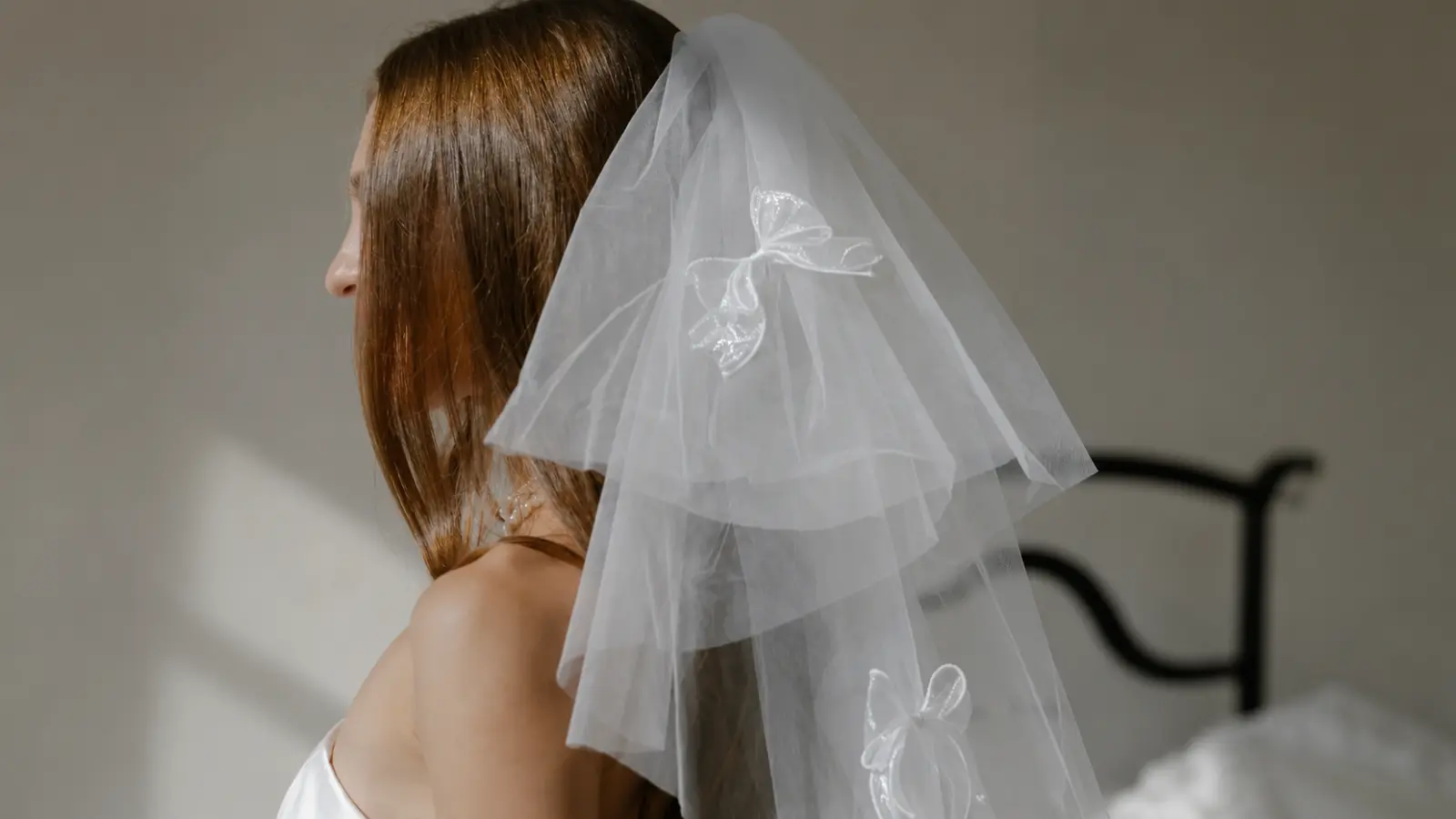
Each short veil type has a distinct silhouette, a specific attachment style, and a slightly different visual register. Understanding those differences before you shop makes the appointment considerably faster.
Birdcage Veil
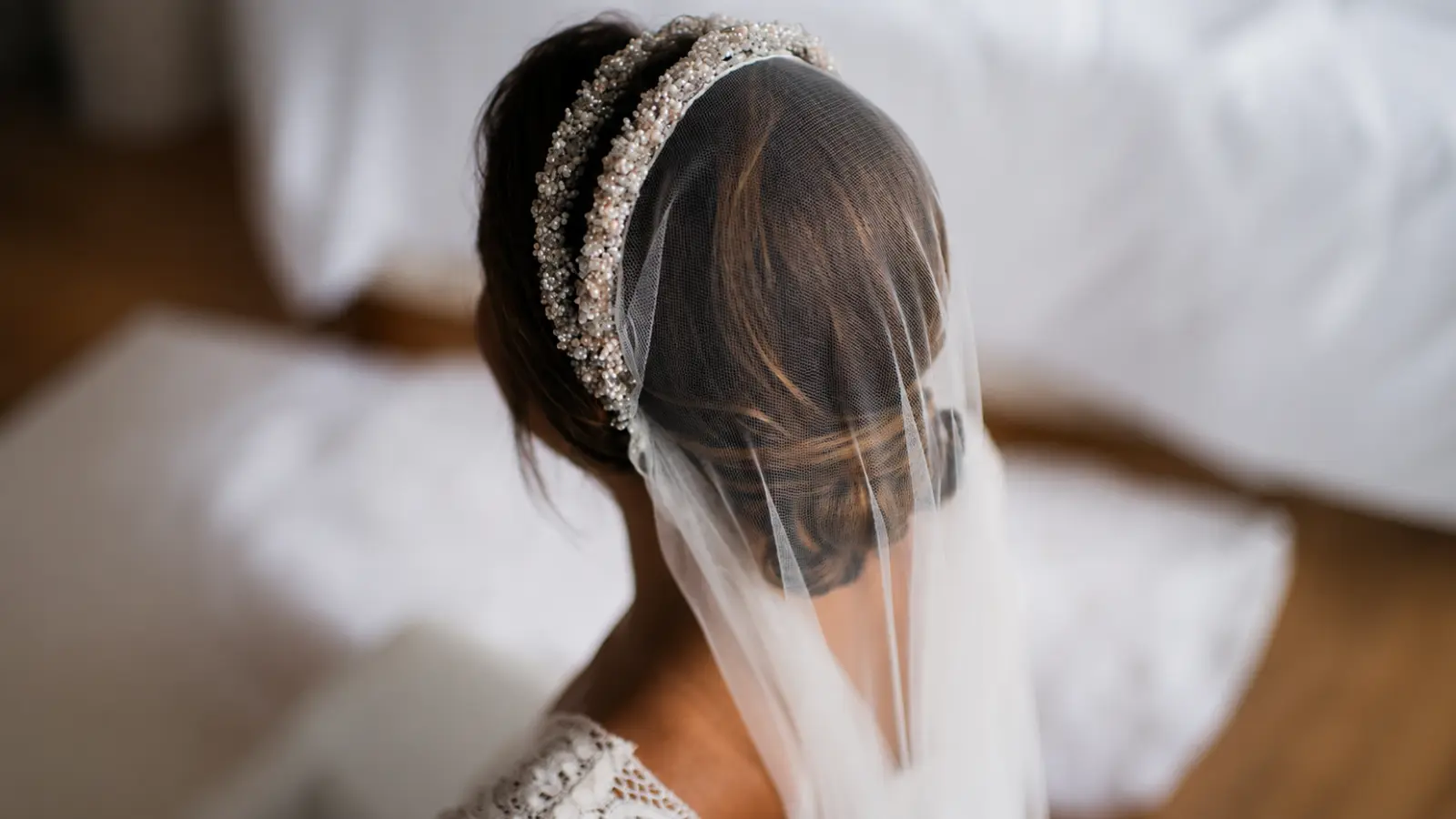
The birdcage veil is structured netting, typically a wide-weave or fine-weave Russian or French netting, worn over part of the face. It usually covers from the eyes to the chin or the bridge of the nose, attaches to a comb or small fascinator base, and sits forward on the head rather than falling behind it. The look is immediately recognizable — mid-century, old-Hollywood, and decidedly vintage. It has almost nothing in common with traditional floor-length bridal veils in feel or silhouette, which is exactly why brides who choose it tend to love it.
The birdcage works best with tea-length and midi dresses, tailored jumpsuits, A-line skirts, and any dress where the silhouette leans toward vintage or fashion-forward rather than princess-formal. It’s also one of the only veils that pairs naturally with a fascinator or a structured hat. Because it sits on the face rather than falling behind the head, it changes the profile portrait significantly — something worth seeing in person before deciding. For an in-depth look at styling, occasion fit, and how to wear one, see our full birdcage veil.
Shoulder Length Veil
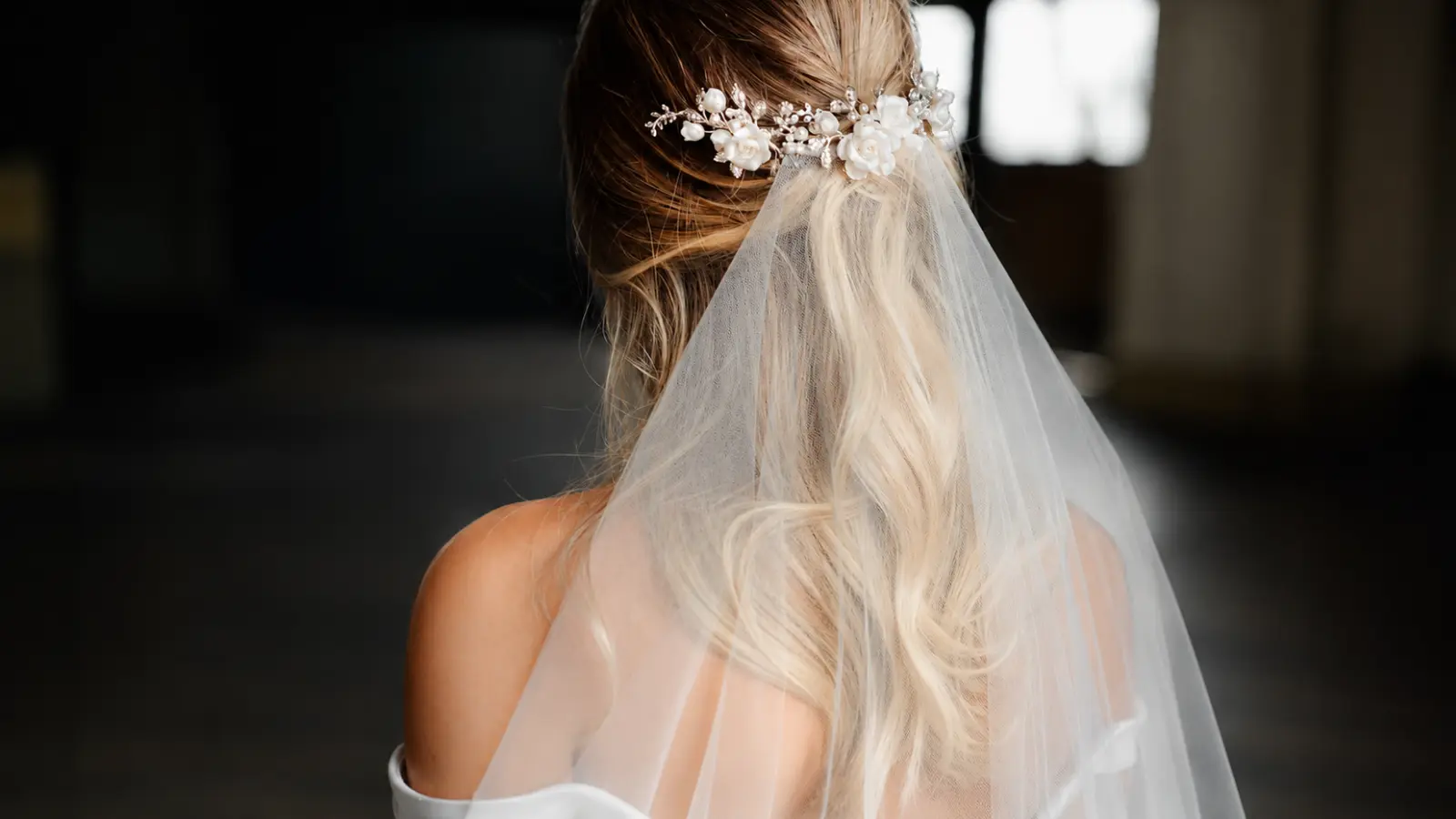
At approximately 20 inches, a shoulder length veil falls just at or slightly past the shoulders. It’s the shortest of the fabric veils that still reads as a traditional single-tier veil (as opposed to the birdcage’s distinct structured look), and it has a notably modern feel. The silhouette is clean and unobtrusive — it frames the back of the head and the neckline without extending far enough to interact much with the dress below.
This length works particularly well when a bride wants the look and feel of a veil without much visual weight. It’s an excellent choice when the back of the dress carries significant detail — buttons, boning, lace, a low-cut back — because the veil stays high enough not to obscure it. It also reads naturally with a wider variety of hairstyles than longer lengths, because it doesn’t create length expectations based on how the hair is worn.
Elbow Length Veil
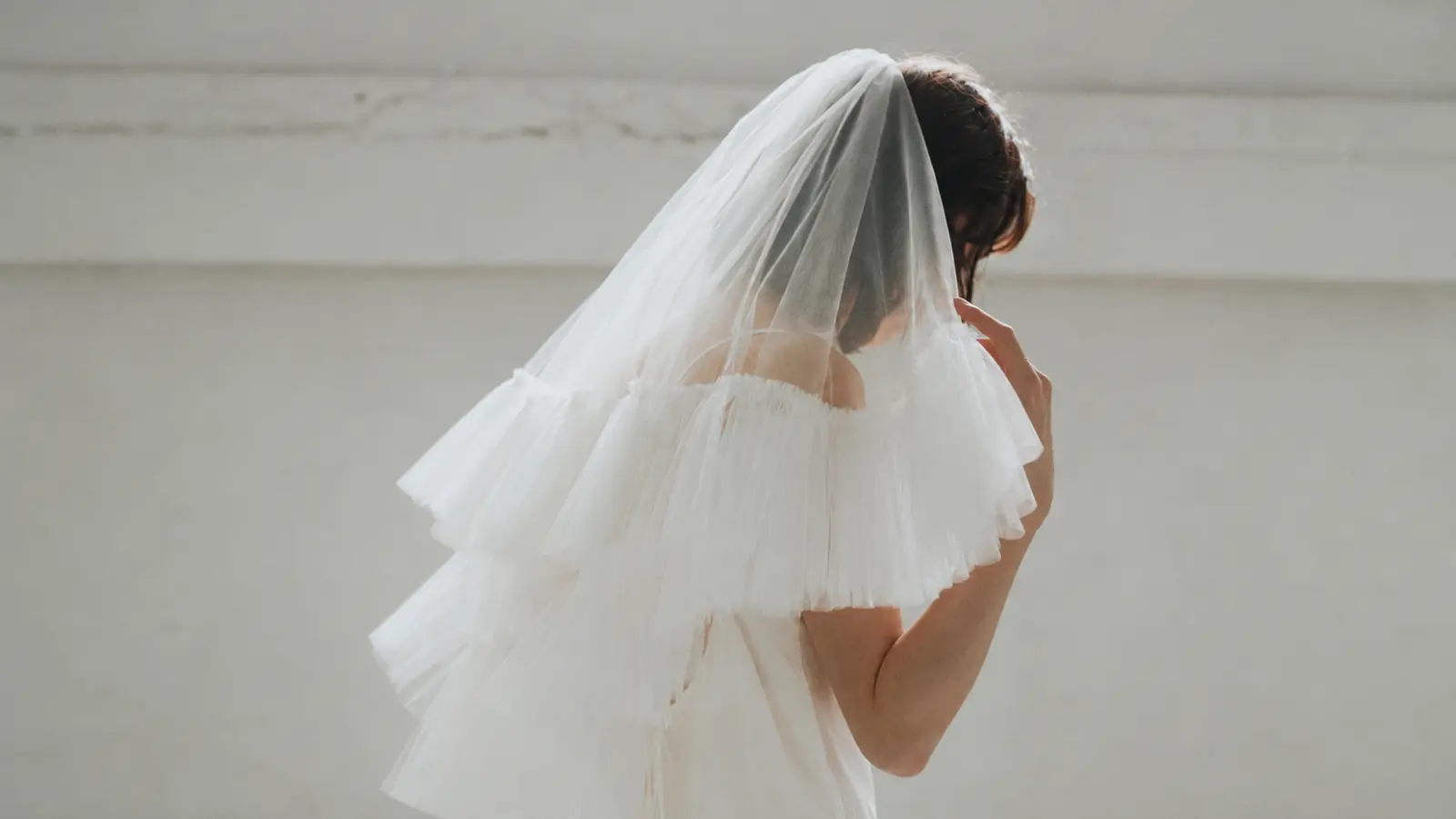
The elbow length veil, typically falling between 25 and 30 inches, is the most versatile short option. It has just enough length to move in photos without requiring the management of a longer veil, and it works with a wider range of dress silhouettes than either the birdcage or the shoulder length. It’s long enough to photograph as a traditional veil, short enough to wear comfortably through an entire ceremony and into cocktail hour without feeling like an accessory you’re managing.
If you’re drawn to the idea of a veil but feel uncertain about committing to something longer, the elbow length is usually where to start trying things on. It’s the short veil that tends to surprise brides most — it looks considerably more bridal than it sounds, and it pairs naturally with almost every dress silhouette from A-line to sheath to ball gown.
Short Blusher (Standalone)
A blusher is typically the front face-covering layer of a two-tier veil, but it can also be worn as a standalone piece — a single short layer that falls to the chin or collarbone, sometimes with a simple rolled or raw edge. When worn alone, it reads as the shortest possible fabric veil: barely there, almost more like a hair accessory than a traditional veil. It’s a good option for brides who want the ceremonial feel of a veil covering the face without any length trailing behind them at all. For a full explanation of how blushers work within a two-tier style, see our blusher veil.
Short Veil Comparison: At a Glance
The differences between these styles matter most when you’re pairing them with a specific dress, hairstyle, and setting. This table is a starting point for that process — not a formula, but a practical framework for narrowing options before your appointment.
| Veil Type | Length | Best For | Dress Match | Occasion Fit |
|---|---|---|---|---|
| Birdcage | 4–9 inches (face only) | Vintage, fashion-forward, statement looks | Tea-length, midi, jumpsuit, tailored separates | Courthouse, elopement, intimate celebration, garden party |
| Shoulder Length | ~20 inches | Modern, minimal, back-detail dresses | Most silhouettes; especially column, sheath, A-line | Informal ceremony, outdoor wedding, second wedding |
| Elbow Length | 25–30 inches | Classic feel without the length commitment | A-line, ball gown, sheath, mermaid — most styles | Most ceremony types; the most versatile short option |
| Short Blusher (standalone) | Chin to collarbone | Ceremonial moment without any trailing length | Simple, minimal dresses; short or midi styles | Courthouse, elopement, micro-wedding |
One thing this table can’t capture is how each of these looks in motion and in photos with a specific dress. Whenever possible, try short veils on with a dress of the same silhouette and neckline before deciding — a shoulder length veil that looks small and understated on a hanger can look completely different once it’s in your hair and framing your neck and shoulders.
Short Veils and Dress Styles
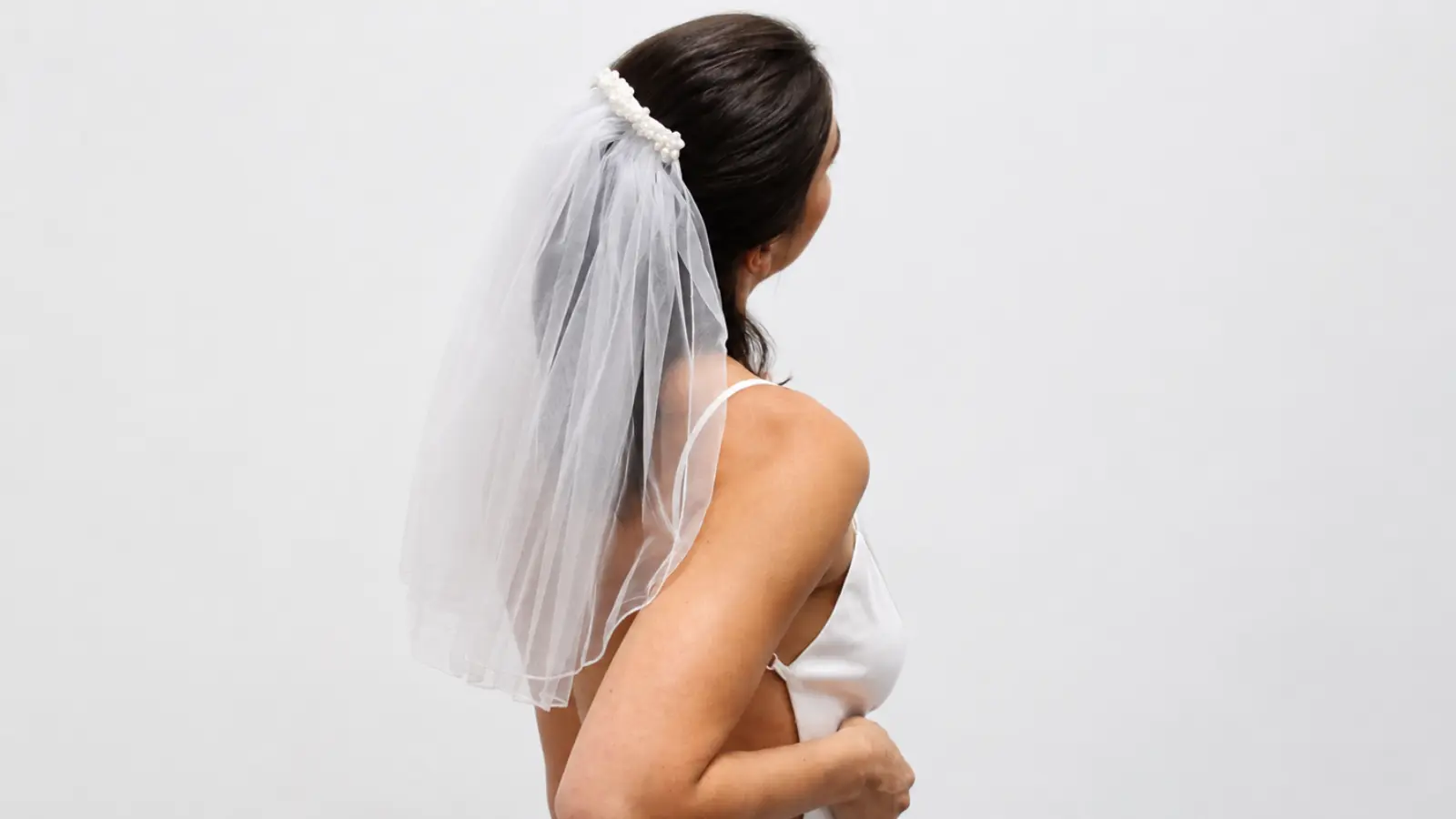
The most common concern brides have about short veils is proportion — specifically, whether a short veil will look out of scale with a long or voluminous dress. In most cases, this concern is larger in theory than in practice. Short veils can work with nearly every dress silhouette; it’s a matter of choosing the right short length and wearing it with intention.
With a Short or Tea-Length Dress
This is where short veils have the clearest natural fit. A shoulder or elbow length veil with a tea-length dress keeps everything in proportion without the awkward mid-hem termination that longer veils can create on shorter skirts. The birdcage works here too, and with a tea-length dress in a vintage-influenced fabric, it can be the best possible combination. A long veil with a short dress tends to look unbalanced; a short veil with a short dress looks considered.
With a Ballgown or Full-Skirt Silhouette
This is the pairing that surprises most brides. A short veil on a ballgown creates a contrast that reads as modern and intentional — the mass of the skirt is offset by the lightness of what’s happening above. A birdcage veil on a ballgown has a genuinely striking vintage quality. A shoulder or elbow length veil on a full skirt keeps attention on the bodice and the face. It doesn’t compete with the dress’s volume; it complements it by pulling focus upward.
With a Sheath, Column, or Minimalist Dress
Clean dresses tend to read well with clean veils, which makes the shoulder and elbow lengths an excellent match here. The lack of visual bulk from either element creates a very modern, editorial bridal look. A short veil with a plain dress also opens space for the hairstyle to carry some of the visual interest, which can be an advantage if you’re planning an elaborate updo or a significant hair accessory.
With a Mermaid or Trumpet Silhouette
Short veils offer an interesting option with fitted, body-conscious silhouettes: they let the dress’s structure speak without adding trailing fabric. A shoulder length veil with a backless mermaid dress, for example, keeps the emphasis on the gown’s lines. An elbow length with lace trim adds just enough detail to feel intentionally accessorized without obscuring the dress’s fit through the hip and thigh.
Choosing by Occasion
Short veils aren’t one-size occasions. The context of the wedding shapes how each style reads — a birdcage at a courthouse is perfect; at a grand church ceremony, it can read as underdressed. Here’s how to match the short style to the setting.
Courthouse Wedding
The birdcage and the shoulder length veil are the most natural fits for a courthouse ceremony. Both feel appropriately scaled — they signal “this is a wedding” without the formality of a long veil in a setting that doesn’t call for it. A standalone short blusher is also worth considering if you want the face-covering moment without any trailing length. The elbow length works here too, particularly if the ceremony is at a courthouse but includes a formal dinner or party afterward.
Garden, Outdoor, or Destination Wedding
This is where the practical advantages of short veils matter most. Wind, grass, uneven ground, and natural light all interact differently with a short veil than with a long one. The elbow length is the sweet spot for most outdoor weddings: long enough to photograph beautifully in the wind, short enough to manage on a lawn. The shoulder length is the easiest to wear in any weather. Birdcage veils are structurally resilient — the netting doesn’t blow in the wind the way fabric does — which makes them a surprisingly good outdoor option when the aesthetic fits.
Second Wedding
Short veils are a natural choice for second weddings, not because of tradition but because they tend to match the scale and tone of what many second-time brides plan. More intimate ceremonies, more relaxed venues, and a personal aesthetic that often leans toward modern rather than formal — all of these work well with short veil styles. The elbow length and the shoulder length are both good starting points; the birdcage is worth considering for brides who want something with a clear bridal signature without the full traditional vocabulary.
Small or Micro-Wedding
In a very small ceremony — a handful of guests, a private venue, or a family gathering — the scale of the space matters. A cathedral veil in a living room is out of proportion. A short veil, on the other hand, feels exactly right: personal, deliberate, and appropriate to the intimacy of the setting. Any of the short styles works here; the choice is purely about what feels right with the specific dress and setting.
Short Veils and Hair
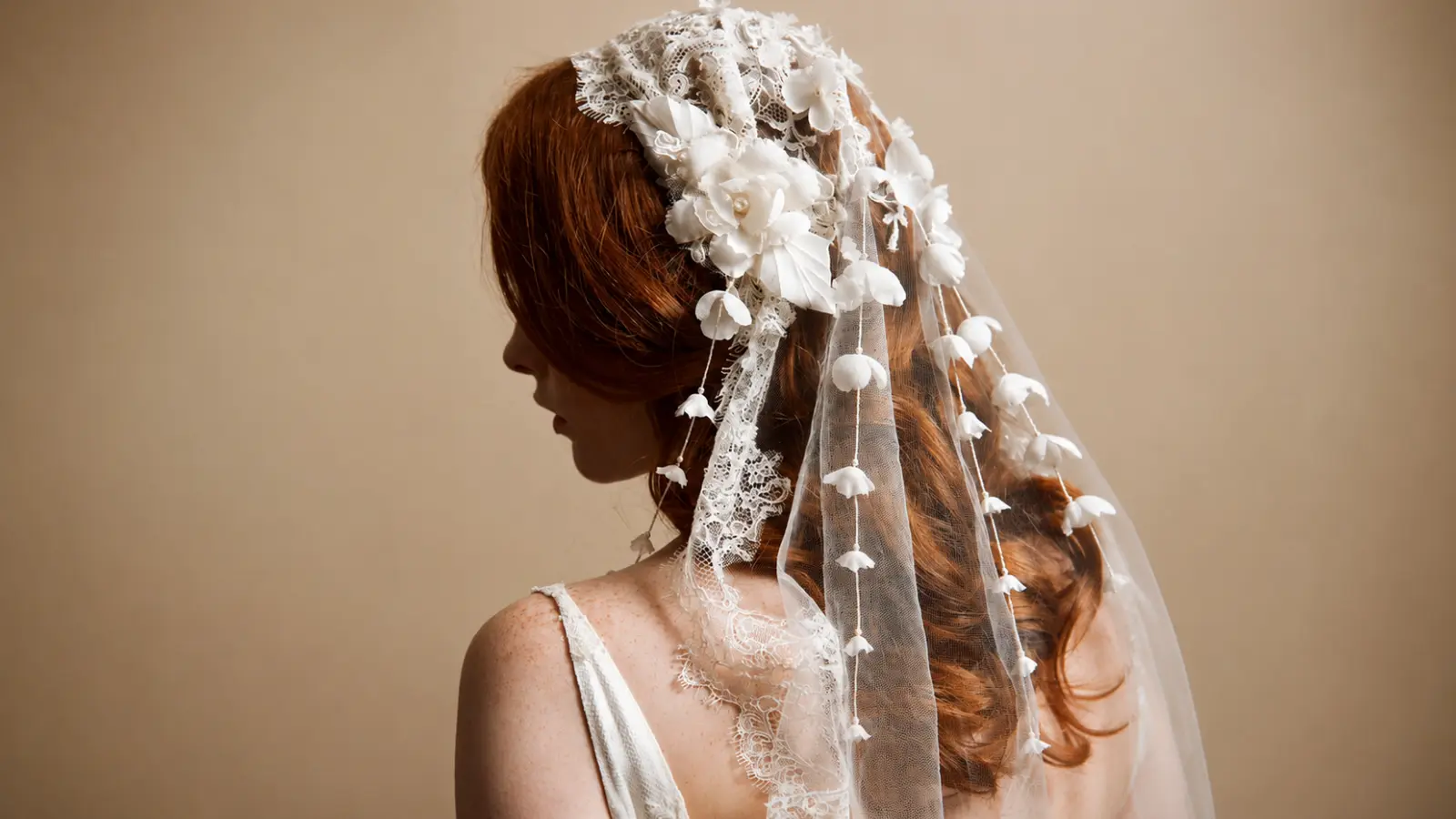
The relationship between a short veil and the hairstyle is closer and more visible than with longer veils, because with a short veil, neither the hair nor the veil disappears into the other. They’re side by side, which means the pairing matters more.
Short veils generally attach with a small comb, which slides into the hair above or below whatever structure the hairstyle creates. Understanding how to wear a wedding veil at different placement points helps you decide whether a higher crown position or a lower attachment creates the effect you want. The right placement depends on both the hairstyle and the veil length.
- Updo or French twist: Any short veil length works well here. The comb slides cleanly into the gathered hair at the back or crown, and the veil falls away without tangling with loose strands. This is the most controlled pairing, and it tends to photograph very cleanly.
- Half-up, half-down: Shoulder and elbow veils can look beautiful here, but comb placement needs thought. The veil should attach above the point where the hair is gathered — not below it, where it will tangle with the loose lower section. A birdcage can work too, sitting forward on the head rather than behind it.
- Hair fully down: This is the trickiest pairing for short fabric veils. A shoulder length veil worn over loose, flowing hair can get lost in it, especially if the hair and the veil are similar in color. An elbow length can work if the comb is placed high enough to let the veil hang clear of the hair’s body. A birdcage is often the strongest short veil option for hair worn down, because it sits forward and doesn’t compete with the hair’s movement behind the head.
For a detailed look at comb placement, specific hairstyle and veil pairings, and how to prep the hair for a secure attachment, see our wedding hairstyles with veil.
Short Veils with a Headpiece
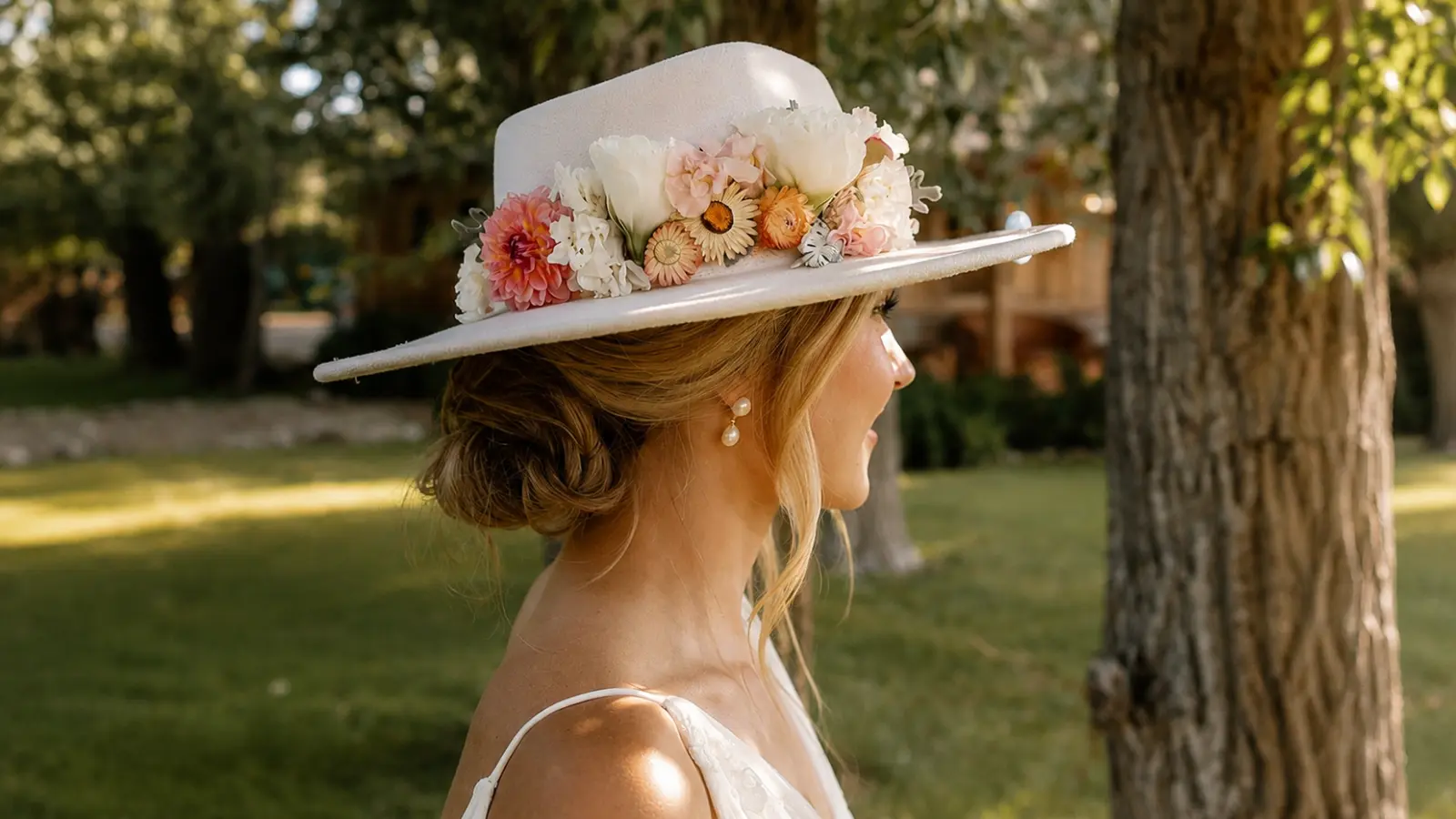
Short veils pair particularly well with headpieces because both elements are visible at once — unlike with a long veil, where the headpiece can get absorbed into the overall silhouette. When the veil is short, the headpiece and the veil share the frame equally, which means they need to work together rather than just coexist.
A few combinations that consistently work: an elbow or shoulder length plain tulle veil worn just below a delicate floral crown or a small cluster of fresh flowers. A birdcage veil with a fascinator or a structured bow, since the birdcage is already architectural and the headpiece builds on that language. A shoulder length veil with pearl-tipped pins threaded through an updo — the pins become part of the headpiece.
What to avoid: a heavy, structured tiara with a birdcage veil (the two structural elements compete rather than combine), and a very elaborate floral crown with a lace-trimmed veil (too much detail in a small space). When combining a headpiece with any short veil, bring both elements to the same appointment and try them together. What works separately doesn’t always work in combination.
Short Veils with Lace Detail
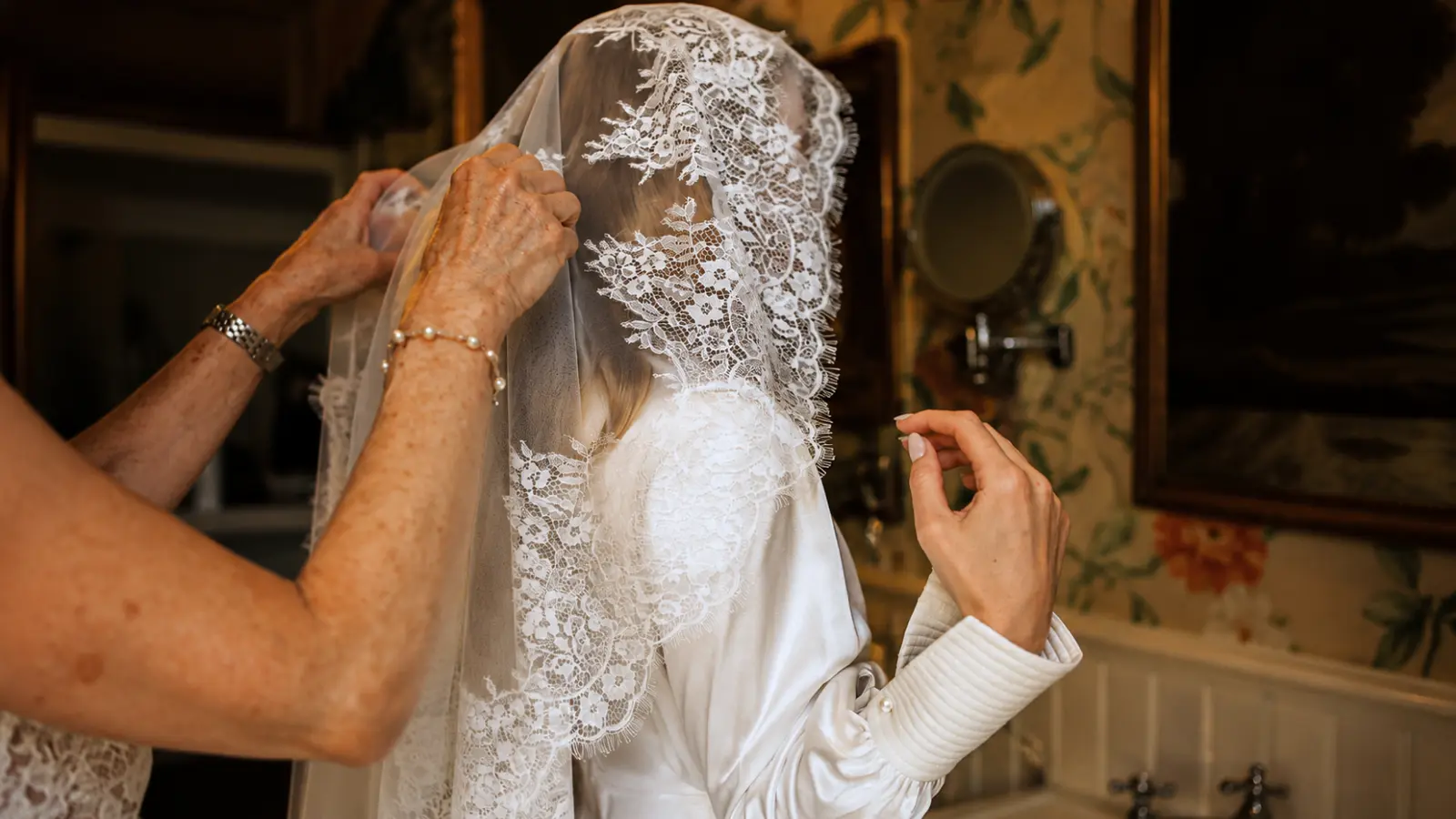
A short veil with a lace edge or lace-paneled detail behaves differently than a plain tulle veil of the same length. The lace adds weight and visual texture, which can make even a shoulder length veil feel more formal and intentionally bridal. It also adds structure to the edge, so the veil holds its shape more than a plain raw-edge style.
Lace on a short veil pairs most naturally with dresses that have lace somewhere in their design — a lace bodice, a lace overlay, or a lace hem. The laces don’t need to be identical; what matters is that they’re in the same tonal and structural family (both delicate, or both substantial). A heavy guipure lace veil edge on a dress with a fine Chantilly lace bodice can feel mismatched even if both are technically “lace.” For more on combining lace in a bridal look, see our lace wedding veil.
A short lace veil also works with a plain dress — arguably, this is where it reads most beautifully, because the lace edge is fully visible at the short length and the plain dress gives it room to register as the focal point.
What to Avoid
A few mistakes come up often when brides are choosing short veils. Most of them are easy to sidestep once you know to look for them.
- Treating short as a fallback. The most common issue with short veil choices is the hesitation behind them. If you’re going short because you can’t decide on a length, you’ll often end up with something that reads uncertain in photos. Go short because it’s right for the look — not because longer felt like too much commitment.
- Choosing a veil length without testing it with your dress silhouette. This matters more with short veils than long ones because the proportion relationship between a short veil and the dress is more immediate. A shoulder length veil that looks balanced with a sheath can look barely visible with a full-volume ball gown. Try the actual pairing, or as close to it as possible.
- Ignoring the back of the dress. Short veils sit high on the back of the head, which means the upper back and neckline of the dress are framed rather than covered by the veil. If the dress has a heavily embellished upper back or a dramatic neckline, make sure the veil’s attachment point doesn’t cover the most important detail.
- Underestimating the birdcage’s visual weight. Because a birdcage is small and sits on the face, it reads as a very strong stylistic statement. It can absolutely work with a simple, minimal dress — but it shapes the entire look around the face. Make sure the rest of the bridal look (makeup, hair, earrings) is built in conversation with the birdcage, not developed separately and then combined.
- Choosing a color match that reads too literal. Short veils are close to the face, which means any tonal mismatch between the veil and the dress is more visible than it would be with a long veil. A pure white veil with a warm ivory dress can look slightly off in certain lighting. If possible, bring a fabric swatch from the dress or a clear photo of the dress color to your veil appointment.
Short Wedding Veil Inspiration
Discover beautiful short wedding veil inspiration featuring birdcage, shoulder, elbow, and modern bridal veil styles for every type of wedding. Explore elegant ideas paired with minimalist gowns, vintage-inspired dresses, courthouse wedding outfits, romantic garden ceremonies, and contemporary bridal hairstyles to help you find the perfect short veil for your wedding day.
Are Short Wedding Veils Right for You?
Short wedding veils prove that elegance isn’t defined by length. Whether you choose a vintage birdcage veil, a clean shoulder-length style, or a timeless elbow-length design, the right short veil enhances your dress, complements your hairstyle, and creates a bridal look that feels intentional from every angle.
The best choice is the one that reflects both your personal style and the atmosphere of your wedding. By considering your dress silhouette, venue, hairstyle, and the level of formality you want to achieve, you’ll be able to choose a short wedding veil that feels effortless, balanced, and beautifully suited to your celebration.
Frequently asked questions (FAQ)
Who should choose a short wedding veil?
A short wedding veil is ideal for brides who want a modern, intentional bridal look without the formality of a long trailing veil. It works especially well for courthouse ceremonies, outdoor weddings, second weddings, tea-length dresses, minimalist gowns, and brides who want comfort without sacrificing bridal style.
What types of short wedding veils are available?
The most common short wedding veils include the birdcage, shoulder length, elbow length, and standalone blusher. Each creates a different visual effect, from vintage elegance to modern simplicity, making the choice more about personal style than about length alone.
What is the difference between a shoulder length and elbow length wedding veil?
A shoulder length veil falls around the shoulders at approximately 20 inches and creates a clean, modern silhouette. An elbow length veil measures about 25 to 30 inches and offers a slightly more traditional appearance while remaining easy to wear. Both are considered short veils, but elbow length generally feels more versatile.
Can you wear a short veil with a long wedding dress?
Yes. A short veil with a full-length gown is a deliberate styling choice that draws attention to the dress instead of competing with it. This combination works particularly well with detailed bodices, structured silhouettes, and brides looking for a contemporary bridal look.
What is the best short wedding veil for a courthouse wedding?
Birdcage and shoulder length veils are usually the strongest choices for courthouse weddings because they match the intimate scale of the ceremony while still feeling distinctly bridal. A standalone blusher is another elegant option for brides who want a traditional veil moment without added length.
Is a short wedding veil appropriate for a second wedding?
Yes. Short veils naturally suit many second weddings because they complement smaller ceremonies and modern bridal styling. There are no rules requiring a shorter veil, but many brides appreciate the relaxed elegance these styles create.
How do you attach a short wedding veil?
Most short veils attach with a small comb positioned at the crown or back of the head. Birdcage veils may also use clips or fascinator bases. A bridal hair trial helps determine the most secure placement based on your hairstyle and veil style.