A birdcage wedding veil is one of the most distinctive bridal accessories, instantly creating a vintage, old-Hollywood look unlike any traditional veil. Rather than flowing behind the bride, it frames the face with structured netting, making it as much a fashion statement as a bridal accessory.
Its unique design means it doesn’t suit every wedding style, dress, or hairstyle—but when paired intentionally, it creates one of the most memorable bridal looks possible.
This guide explains the different types of birdcage wedding veils, how to wear them, the best hairstyles and dresses to pair with them, and when this iconic vintage style makes the most sense.
What Is a Birdcage Veil?
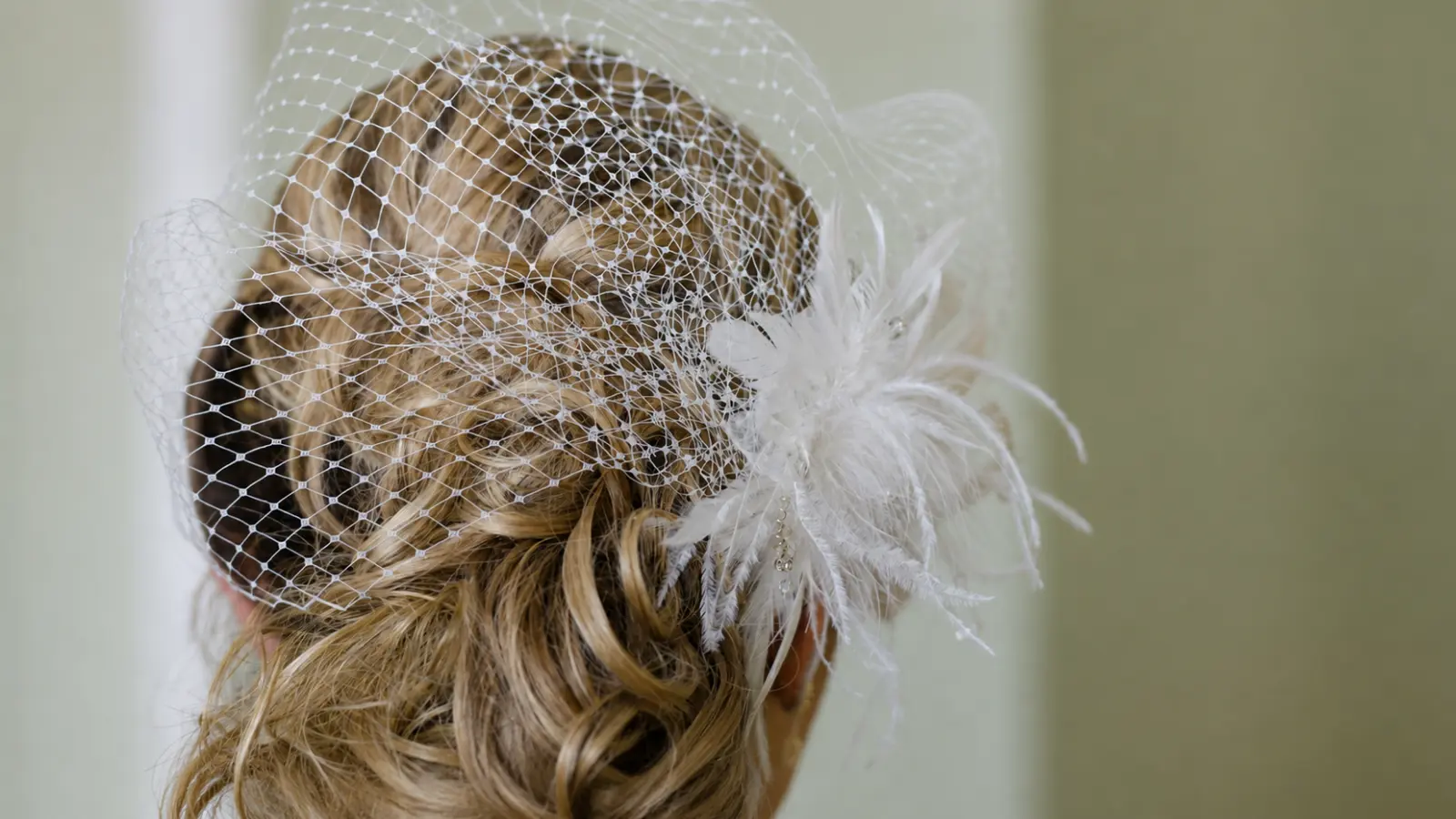
A birdcage veil is made from Russian veiling or French veiling — a wide-weave, diamond-patterned netting with an open mesh structure that allows the face to show through while still covering it. These wedding veil materials behave very differently from traditional fine tulle, giving the birdcage its coarser, more graphic, and structured appearance. It holds its shape on its own rather than draping softly, which is part of what gives it that sharp, old-Hollywood quality.
In terms of size, most birdcage veils fall somewhere between four and nine inches, covering the face from the forehead or eyes down to the chin, nose, or cheekbones depending on the specific style. They attach to the hair with a comb or clip, often mounted on a small decorative base — a fabric-covered disc, a vintage brooch, or a simple headband.
The style peaked in American bridal fashion in the 1940s and 1950s and never entirely went away. It has had several visible revivals since, each time associated with brides who are leaning into a specific aesthetic rather than following a mainstream trend. For a broader look at where birdcage fits among all veil styles and lengths, the wedding veils guide covers every option side by side.
Types of Birdcage Veils
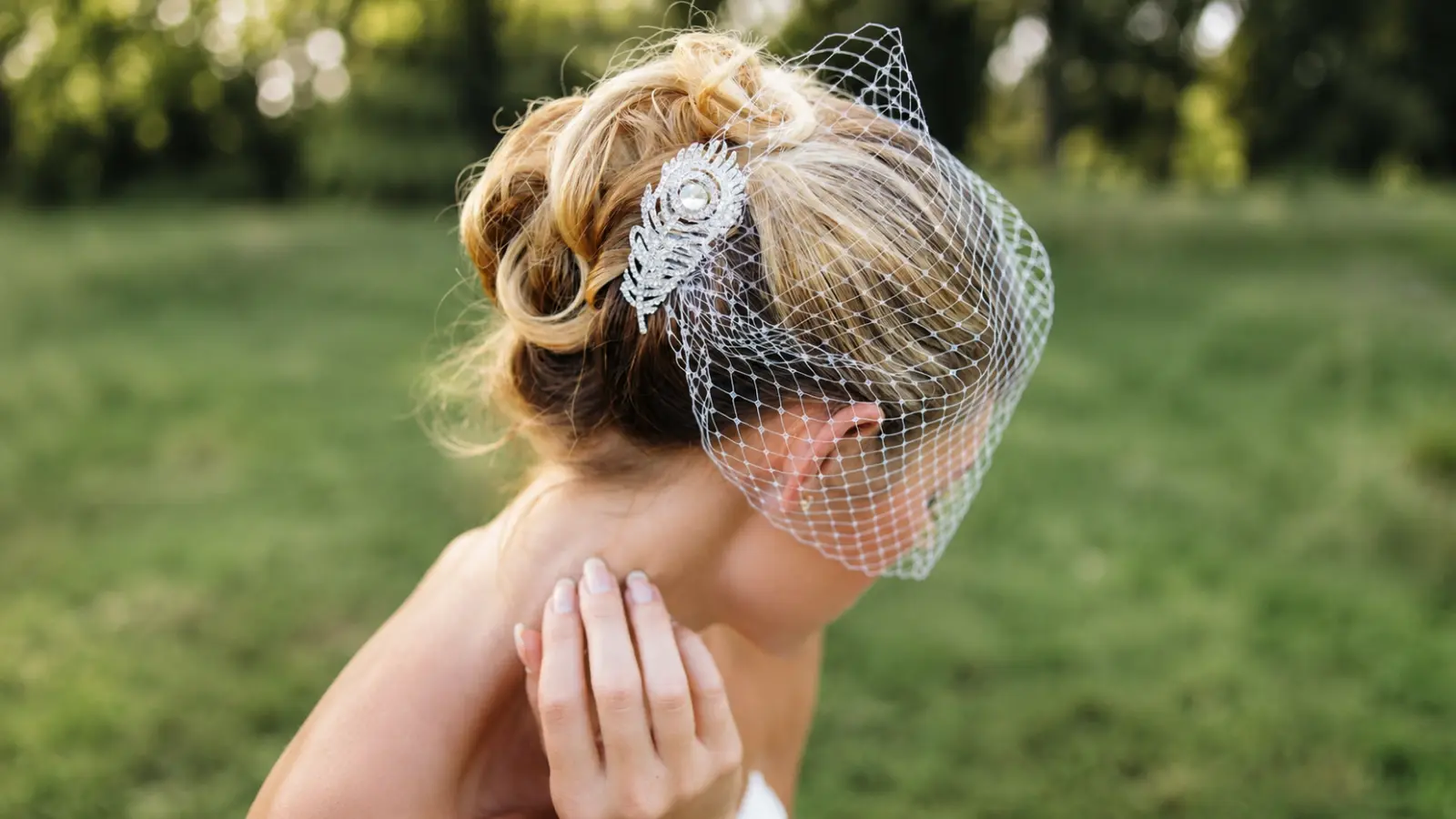
The term birdcage veil covers a few distinct shapes, and which one you choose affects how it sits, how it photographs, and which hairstyles and dresses it works with. They aren’t interchangeable, so it’s worth knowing the differences before you start shopping or styling.
Visor Birdcage Veil
The visor style extends forward from the attachment point, projecting the netting outward across the face the way a hat brim would. It typically covers the eyes and the upper portion of the face and sits slightly angled, giving it a decidedly fashion-forward, editorial quality. The visor is the lightest version of the birdcage and the most versatile in terms of hairstyle — because it attaches at the side and angles forward, it doesn’t require as much hair to secure and stays put with fewer pins. It’s also the most photographed version of the style, partly because the face remains relatively visible beneath the netting.
Bandeau Birdcage Veil
The bandeau wraps around the full perimeter of the head, covering the face from forehead to chin and often extending to the sides and back of the head as well. It’s more enveloping than the visor and reads as a more complete, immersive look — closer to a full hat than to a veil. Because it surrounds the head rather than sitting in one spot, a bandeau birdcage requires more hair volume or structure underneath to hold its shape evenly. It pairs most naturally with a French twist, a structured updo, or a shorter hairstyle that fills the inner circumference of the band. The bandeau is the most dramatic of the three birdcage styles.
Full Birdcage Veil
A full birdcage veil covers the entire face and sometimes the back of the head as well, falling all the way around rather than stopping at the chin. This is the rarest version and the most theatrical — very much a vintage showpiece rather than a practical accessory. It’s the version most closely associated with 1950s bride imagery and requires a specific, deliberate commitment to the aesthetic. If you’re considering this style, treat it as a costume piece in the best sense: it needs to be the center of the look, not one element among several.
A Styling Piece, Not a Traditional Veil
The most useful way to think about a birdcage veil is to stop thinking of it as a veil. Traditional veils — fingertip, chapel, cathedral — function as a backdrop. They extend behind the bride, adding movement and scale to the overall silhouette while staying secondary to the dress. Short wedding veils such as a birdcage do the opposite: they keep the visual focus close to the face and upper body.
This is why choosing a birdcage is a styling decision first. The question isn’t just “does it go with my dress?” but “does this kind of statement fit the wedding I’m having and the version of myself I want to present?” Brides who wear a birdcage well have usually made a deliberate aesthetic choice — they know what they’re going for, and the veil confirms it. Brides who try a birdcage without that clarity often end up feeling like the accessory is wearing them rather than the other way around.
That’s not a reason to avoid it. It’s a reason to be honest with yourself about whether the vintage, fashion-forward framing is genuinely you — or whether it’s just a style you love in photos on someone else.
Best Hairstyles for a Birdcage Veil
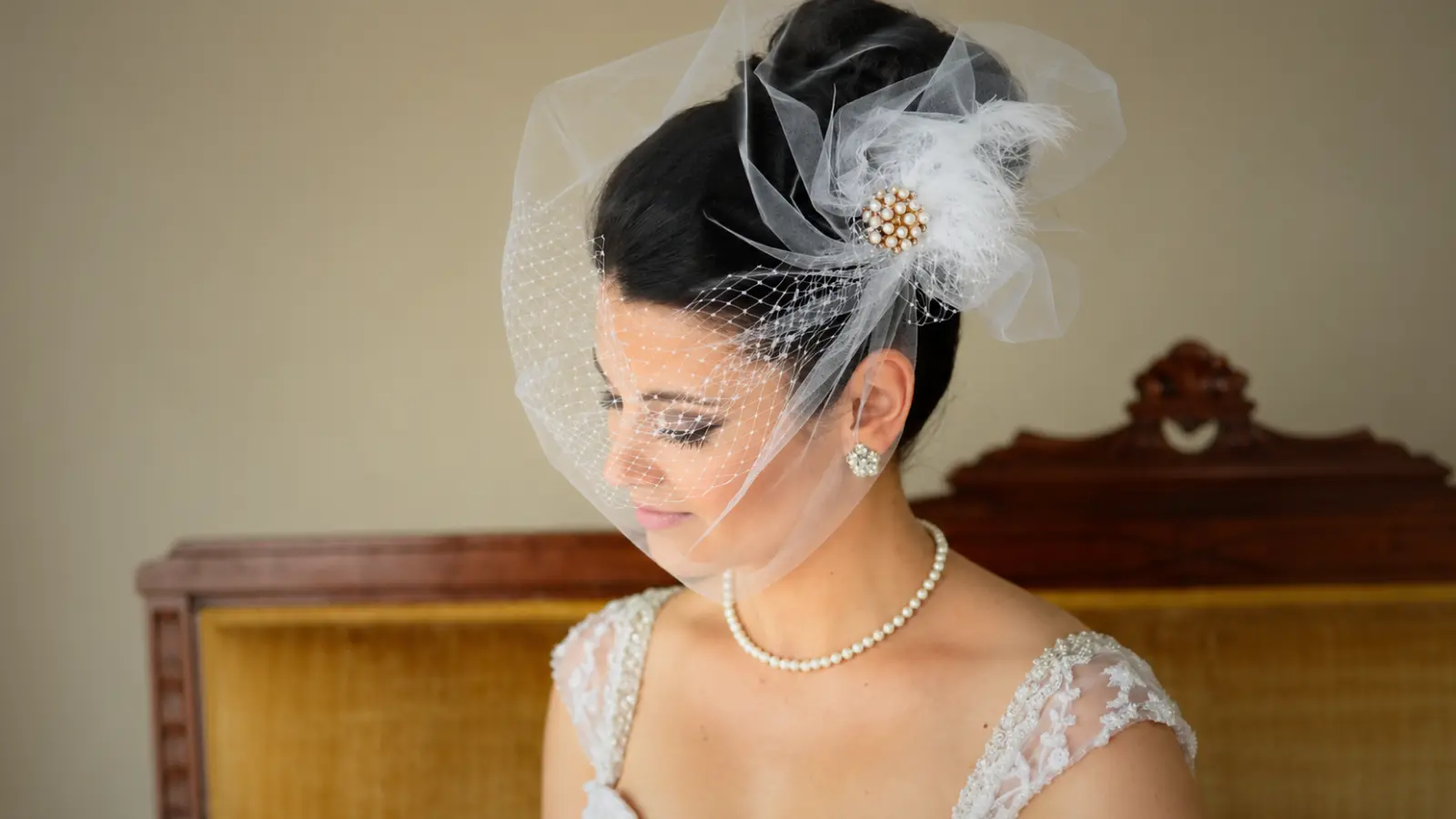
Hairstyle matters more with a birdcage veil than with almost any other accessory, because the netting is structured and relatively unforgiving. If the hair underneath is soft, loose, or very voluminous, the netting will sit unevenly, push outward, and lose its shape. If the hair is controlled and defined, the veil lays flat and photographs cleanly. The hairstyle isn’t just a backdrop here — it’s part of the structure.
The styles that work most consistently with a birdcage veil:
- Low chignon or low bun. Clean, classic, and the most common pairing. The netting rests on a smooth base, sits evenly, and doesn’t compete with the face. Works with every birdcage type.
- French twist. A natural complement to the mid-century aesthetic of the birdcage. The structured shape at the back of the head balances the graphic element at the front.
- Finger waves or sculpted waves. For brides fully committed to the vintage look, finger waves worn close to the head create an authentic 1940s reference that makes the birdcage feel at home.
- Sleek, pinned-back style. Hair pulled smoothly back from the face and secured at the nape works well because it keeps the face clear and lets the netting read against the skin rather than getting lost in loose strands.
- Short hair. Birdcage veils are one of the few bridal accessories that look genuinely intentional on very short hair — a bob, a pixie, or a cropped style. The veil adds a bridal element without requiring length.
Hairstyles that typically don’t work: loose, very curly, or very voluminous blowouts tend to push the netting up and out, distorting the veil’s shape. Very long hair worn completely down can interfere with the attachment point. If you have one of these textures or lengths and love the birdcage, talk with your hairstylist before committing — a few strategic pins or a subtle blowout technique can often make it work. For a comprehensive look at how different hairstyles interact with all veil types, the wedding hairstyles with veil is worth reading alongside this one.
Best Dress Styles to Pair With a Birdcage Veil
Because the birdcage draws so much visual attention to the face and upper body, the dress needs to work with that concentration of detail — not add more competing elements. The pairings that consistently look most cohesive:
- Tea-length and midi dresses. The proportional match here is natural. A tea-length dress and a face-framing veil share the same vintage-leaning register, and neither overwhelms the other.
- Column and sheath dresses. Clean, linear silhouettes let the birdcage be the event without any competing volume. A sleek column dress with a visor birdcage and minimal jewelry is a strong, modern vintage look.
- Jumpsuits and bridal separates. The birdcage signals “bridal” without requiring a gown. For brides wearing non-traditional silhouettes, the veil bridges the gap between “dressed up” and “bride.”
- Short dresses. A knee-length or above-the-knee dress with a birdcage veil is one of the most cohesive looks in the repertoire — both are scaled proportionally, both lean toward modern or retro aesthetics, and neither needs the other to be formal.
- A-line dresses with minimal embellishment. A simple A-line lets the birdcage hold its statement role. Where the dress has heavy lace, beading, or embroidery, the veil tends to read as competing detail rather than complementary accessory.
Ballgowns and full princess silhouettes are the most challenging pairing. The contrast in scale is significant — a voluminous skirt and a small face-covering accessory can look intentionally editorial, but it can also look simply mismatched. If you’re drawn to both, try it with the actual dress and get an honest second opinion before committing. For a full breakdown of how veil style and dress silhouette interact across all veil types, see our guide to matching your wedding dress with your veil.
Birdcage Veil: Works Best With / Avoid If
The table below is a practical reference for the most common situations brides ask about. It reflects consistent patterns, not absolute rules — there are always exceptions, and the best test is trying the combination in person.
| A Birdcage Veil Works Best With | Consider a Different Veil If |
|---|---|
| Tea-length, midi, or short dresses | Your dress is a full ballgown or heavily embellished princess silhouette |
| Column, sheath, or A-line silhouettes | Your dress already has strong facial or neckline embellishment |
| Jumpsuits, bridal separates, or non-traditional looks | You want a veil that reads as classic or formal bridal |
| Vintage, retro, or old-Hollywood aesthetics | Your wedding aesthetic is garden romantic, soft bohemian, or very traditional |
| Courthouse weddings, civil ceremonies, and elopements | You’re having a large formal church wedding with a long processional |
| Structured hairstyles: chignon, French twist, short hair | You plan to wear very loose, curly, or voluminous hair |
| Intimate venues, art deco spaces, city ceremonies | Your venue is very large and requires scale in the bridal silhouette |
| Minimal or single-element accessories | You’re planning to layer multiple bold accessories (earrings, headband, etc.) |
The through-line in both columns is the same: the birdcage veil works when everything else is edited around it, and it struggles when it’s one element competing among many. If you’re building your look from the birdcage outward — choosing the dress, the hair, the earrings all in relation to the veil — you’ll end up in a much better place than if you try to fit the veil into a look that was already finished without it.
How to Attach and Wear a Birdcage Veil
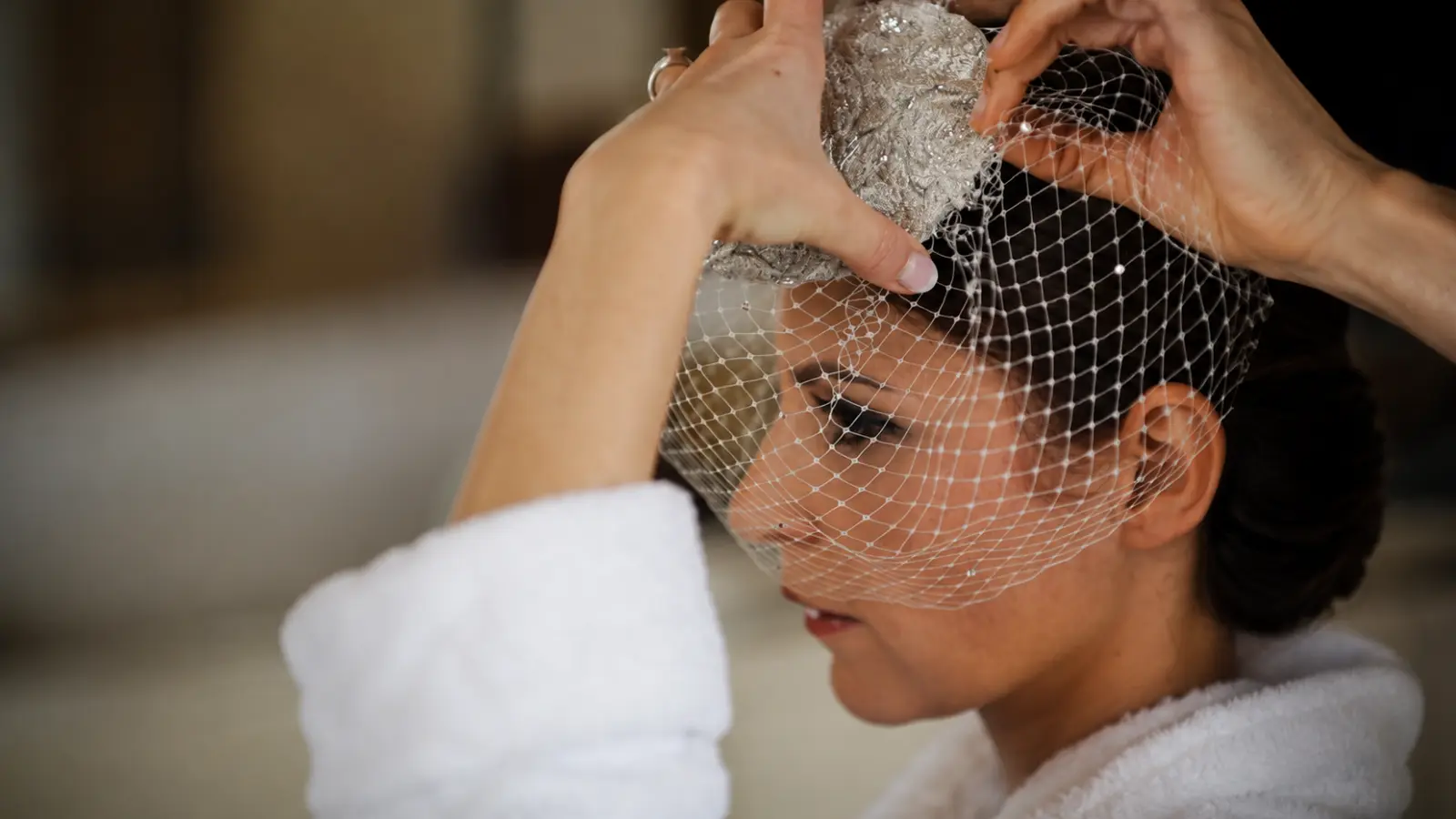
Attachment is one of the most practical concerns with birdcage veils, and understanding how to wear a wedding veil securely is worth working through with your hairstylist before the wedding day rather than figuring it out solo in a hotel mirror.
Most birdcage veils attach with a small comb built into the base of the netting or sewn onto a decorative mount. The comb slides horizontally into the hair at the side of the head, usually above or just behind the ear, and is then secured with bobby pins pushed through the netting at the base. The number of pins needed depends on how heavy the veil is and how much movement it will experience during the day.
Placement varies by veil type. A visor birdcage typically attaches at the side of the head, angled to project the netting forward across the face. A bandeau sits higher and may have attachment points at both sides. A full birdcage often attaches at the top of the head and is pinned at multiple points around the hairline. In all cases, it helps to:
- Do a full trial with your actual hairstyle before the wedding, not just a test in unset hair
- Push bobby pins through the netting and into the hair, not just through the hair alone — this keeps the netting anchored rather than sliding
- Check the front position in a mirror at face level, not just from above — even small shifts in the attachment point change how the netting falls across the face
- Have a few extra bobby pins matching your hair color with you on the day, in case the veil needs a small adjustment after you arrive at the venue
Some birdcage veils come pre-mounted on a headband rather than a comb, which can simplify placement but offers less control over the exact position. If you’re between the two, a comb-based veil gives you more flexibility during the trial process.
Birdcage Veil With a Headpiece
The birdcage veil is one of the few veil styles that integrates naturally with a decorative headpiece — in many cases, the headpiece is part of the birdcage’s overall design rather than a separate accessory.
Several combinations that work well:
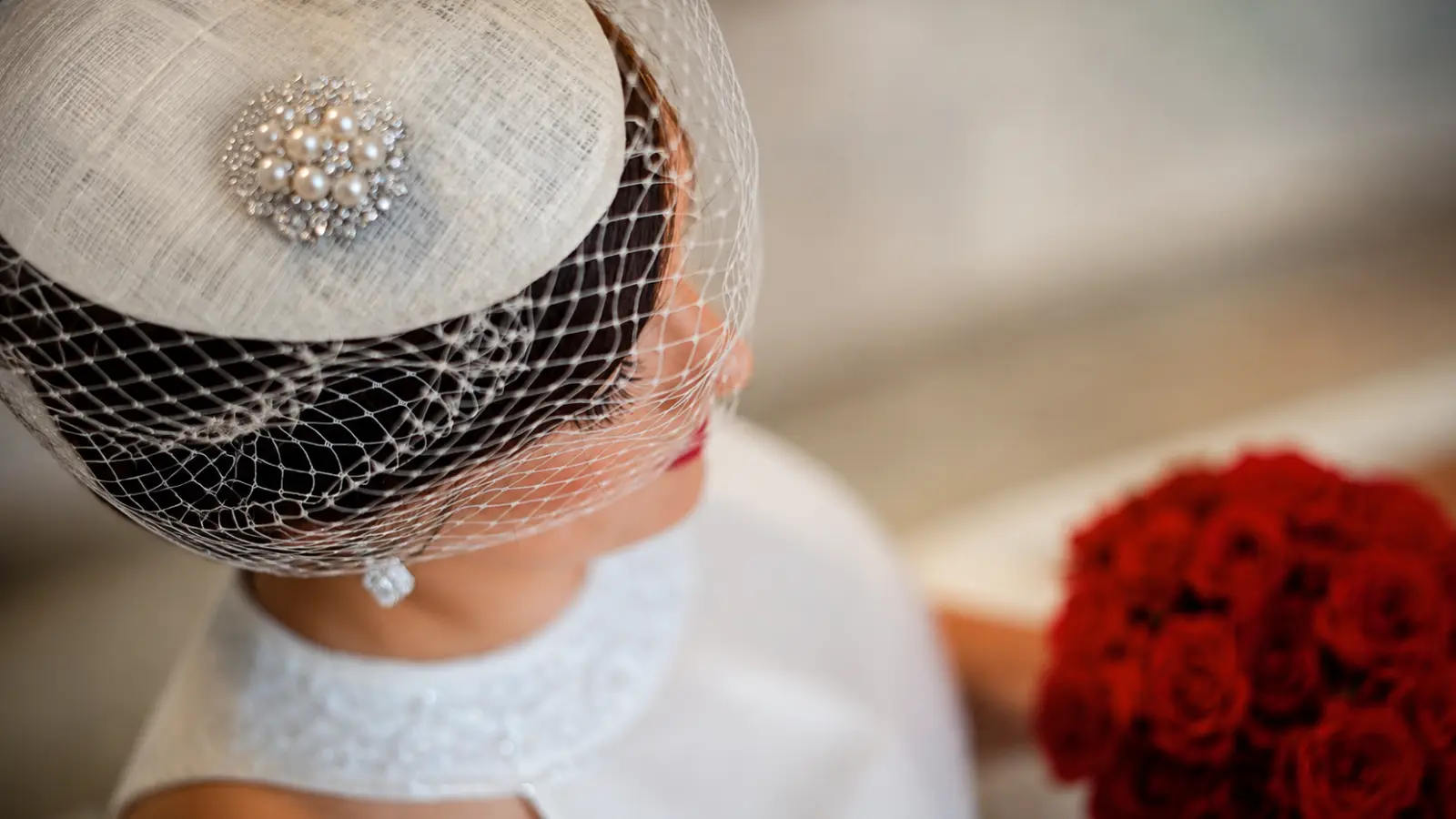
- Birdcage on a fascinator base. Many birdcage veils are sold mounted on a small fabric-covered disc or tilted fascinator platform. This combination reads as a single, complete accessory and is the most cohesive version of the look. The fascinator adds a millinery quality that reinforces the vintage aesthetic.
- Birdcage with a decorative comb. A rhinestone, pearl, or floral comb behind the attachment point adds a decorative element visible in side and back photos without competing with the netting in front. Keep the comb proportional — nothing too large or elaborate.
- Birdcage with a simple headband. A thin satin or metal headband positioned just behind the attachment point can help anchor the veil and add a clean, structured element. Works best with updos where the band sits neatly across the head.
- Birdcage with a hat. A small cocktail hat — a pillbox, a sinamay base, a structured tilt hat — with birdcage netting attached to the brim is a fully considered vintage look. This leans toward formal vintage or editorial territory, but executed well, it’s genuinely striking.
What to avoid: a birdcage veil with a tiara, a floral crown, or any headpiece that requires a clean center-top placement. The birdcage’s attachment and the geometry of most headpieces compete for the same space. If you want a birdcage and a second hair element, keep the second piece small, positioned away from the front of the head, and do a full trial with both in place before committing to the combination.
When a Birdcage Veil Makes Sense
It can help to think about this in terms of the specific wedding contexts where the birdcage is genuinely at home — not as a rule, but as a signal that the style is pulling in the same direction as the rest of your plans.
Vintage Weddings
The birdcage is the most authentic veil option for a wedding that leans toward mid-century Americana, art deco, Great Gatsby-era elegance, or 1950s charm. It doesn’t just evoke the period — it’s actually from it. If the rest of your wedding is pulling from that visual register, the birdcage feels inevitable rather than deliberate. Pair it with finger waves or a structured updo, a column or tea-length dress, and restrained jewelry for the clearest vintage impact.
Courthouse Weddings and Civil Ceremonies
For a courthouse wedding or civil ceremony, the birdcage does something no other veil style does quite as well: it adds a clear bridal element without any of the pageantry of a full veil. You can walk into a registrar’s office or a small ceremony room looking unmistakably bridal and still completely appropriate for the setting. It photographs beautifully in smaller, less formal spaces and doesn’t require a long aisle, an attendant to arrange it, or any special management. If your ceremony is intimate by design, the birdcage scales to that perfectly.
City and Art Deco Venues
The birdcage’s architectural quality sharp edges, graphic netting, structured form reads extremely well in urban and art deco environments. Think rooftop terraces, jazz clubs, boutique hotel ballrooms, or any venue where the aesthetic is sleek and considered rather than soft and floral. In these spaces, the birdcage feels like it belongs there. A full tulle veil in the same setting often reads as formally out of place.
Elopements
Elopements often bring a styling challenge that the birdcage solves neatly: how to feel bridal in a setting — a city street, a beach, a mountain overlook — that doesn’t call for a formal processional look. The birdcage is portable, weather-resilient compared to long tulle veils, and distinctive enough in photos that it reads clearly as a wedding moment even without a traditional backdrop.
Birdcage Wedding Veil Inspiration
Discover elegant birdcage wedding veil inspiration featuring vintage bridal hairstyles, old Hollywood glamour, chic courthouse wedding looks, fascinators, and timeless face-framing veil styling ideas.
Is a Birdcage Wedding Veil Right for You?
A birdcage wedding veil is one of the most distinctive bridal accessories you can choose. Its vintage charm, structured silhouette, and face-framing design create a look that feels intentional, elegant, and full of personality.
Whether you’re planning a courthouse ceremony, an intimate celebration, or a glamorous vintage-inspired wedding, the key is pairing the birdcage with the right hairstyle, dress, and accessories. When every element works together, this small veil becomes one of the most memorable details of your entire bridal look.
Frequently asked questions (FAQ)
Who should choose a birdcage wedding veil?
A birdcage veil is ideal for brides who want a vintage, old-Hollywood, or editorial look rather than a traditional bridal silhouette. It works especially well for courthouse weddings, intimate ceremonies, city weddings, tea-length dresses, and minimalist bridal fashion where the veil becomes a statement accessory instead of a flowing backdrop.
What is a birdcage wedding veil?
A birdcage wedding veil is a short piece of structured Russian or French veiling that covers part of the face instead of falling behind the head. Attached with a comb, clip, or decorative headpiece, it creates a distinctive vintage-inspired bridal look unlike traditional tulle veils.
What is the difference between a visor, bandeau, and full birdcage veil?
A visor birdcage extends forward across the face from one side of the head, creating a light editorial look. A bandeau wraps around the head for fuller coverage, while a full birdcage surrounds the entire face and sometimes the back of the head, making it the most dramatic version.
What hairstyles work best with a birdcage veil?
Structured hairstyles such as low chignons, French twists, sleek buns, finger waves, and short hairstyles provide the smooth foundation needed for the netting to sit evenly. Loose, very curly, or voluminous hairstyles may distort the shape of the veil.
What wedding dresses look best with a birdcage veil?
Birdcage veils pair naturally with tea-length dresses, column gowns, sheath silhouettes, jumpsuits, bridal separates, and minimalist A-line dresses. They can work with ballgowns, but only when the contrast in scale is an intentional part of the styling.
Is a birdcage veil suitable for a courthouse wedding?
Yes. It is one of the best veil choices for courthouse weddings, civil ceremonies, and elopements because it feels unmistakably bridal without the formality or size of a traditional veil.
How do you attach a birdcage veil?
Most birdcage veils attach with a small comb secured into the hairstyle using bobby pins. Exact placement depends on the style, so testing the veil during a bridal hair trial is highly recommended to achieve the best fit and photography.