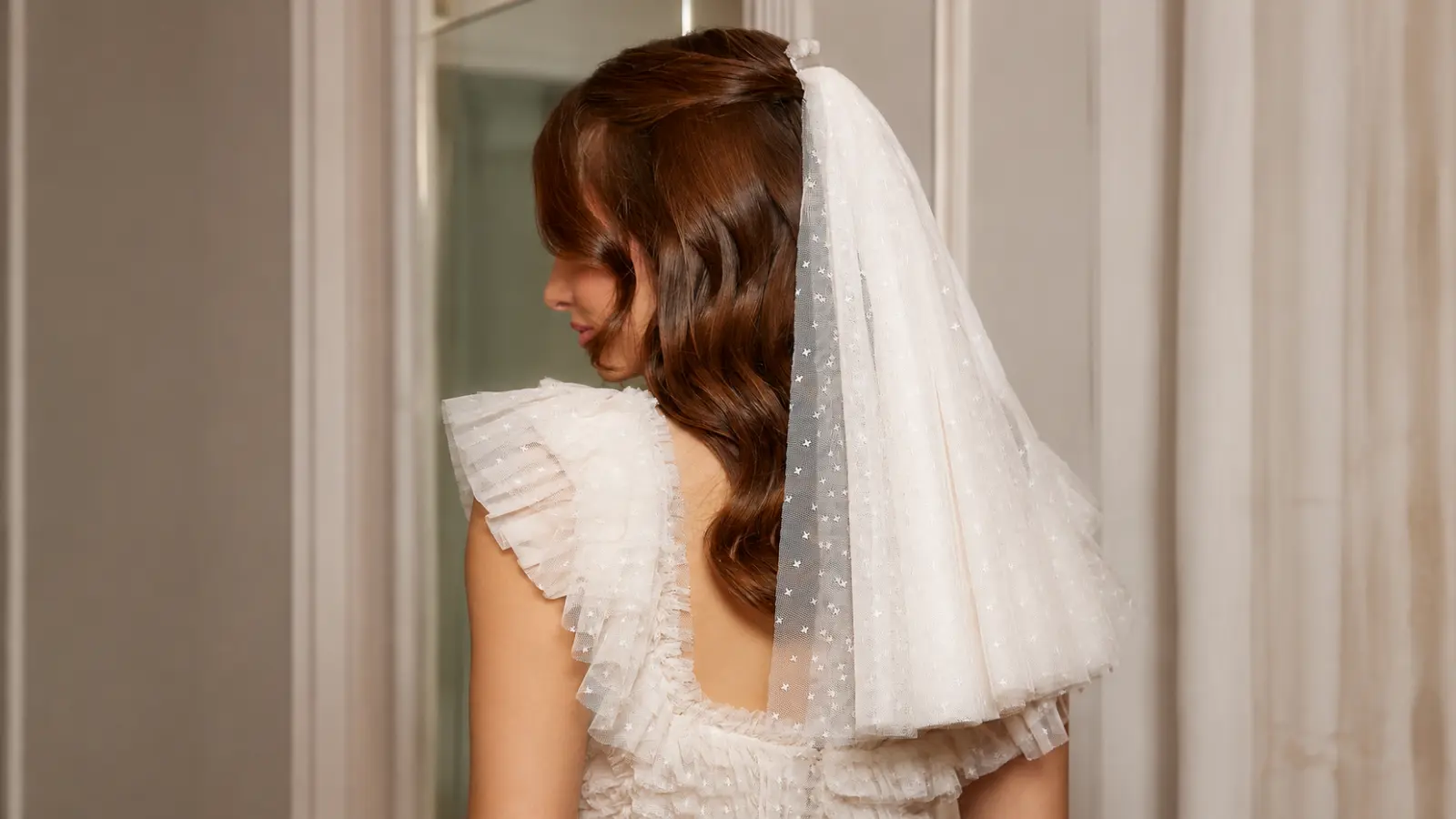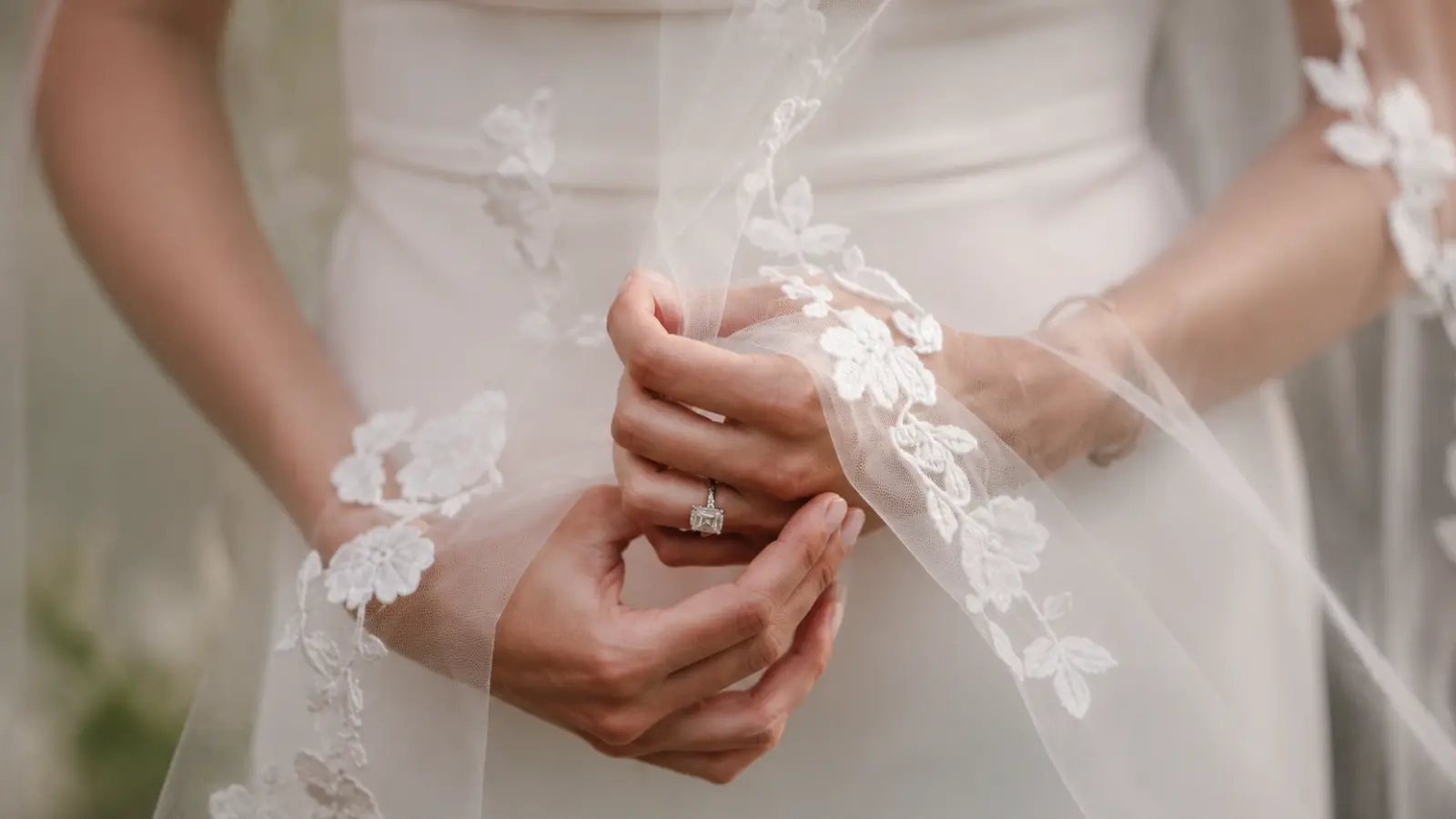
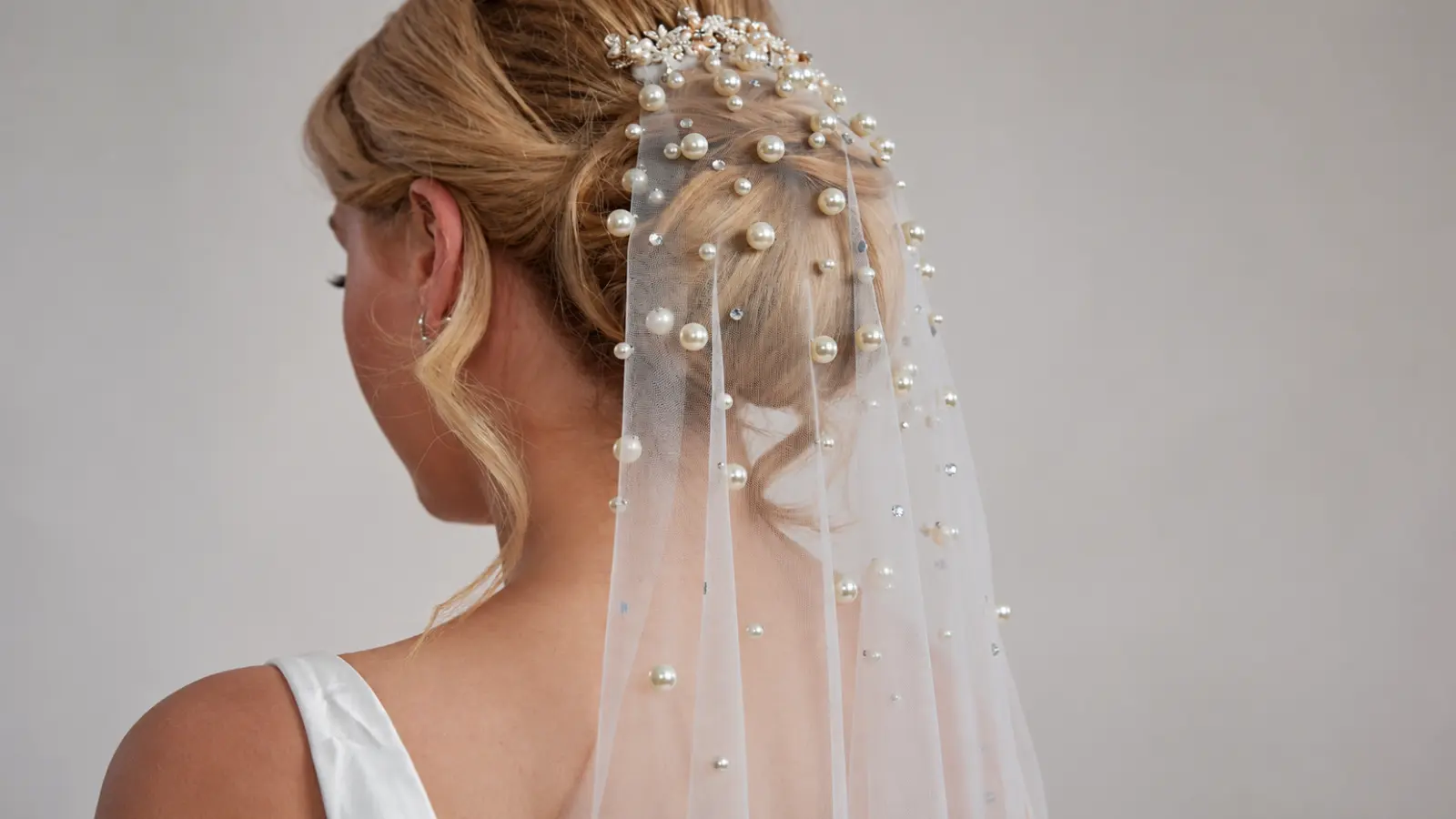
A pearl wedding veil is one of the most elegant ways to add texture, softness, and timeless detail to your bridal look. Unlike crystal embellishments, pearls reflect light gently, creating a luminous effect that feels romantic rather than dramatic.
From delicate pearl edge trims to fully scattered pearl designs, each style creates a different visual impact. Choosing the right pearl placement, veil length, and dress pairing helps create a bridal look that feels balanced and effortlessly elegant.
This guide explains everything you need to know about pearl wedding veils, including styling ideas, dress pairings, hairstyles, photography, and practical tips before making your final choice.
Scattered Pearls vs. Pearl Edge
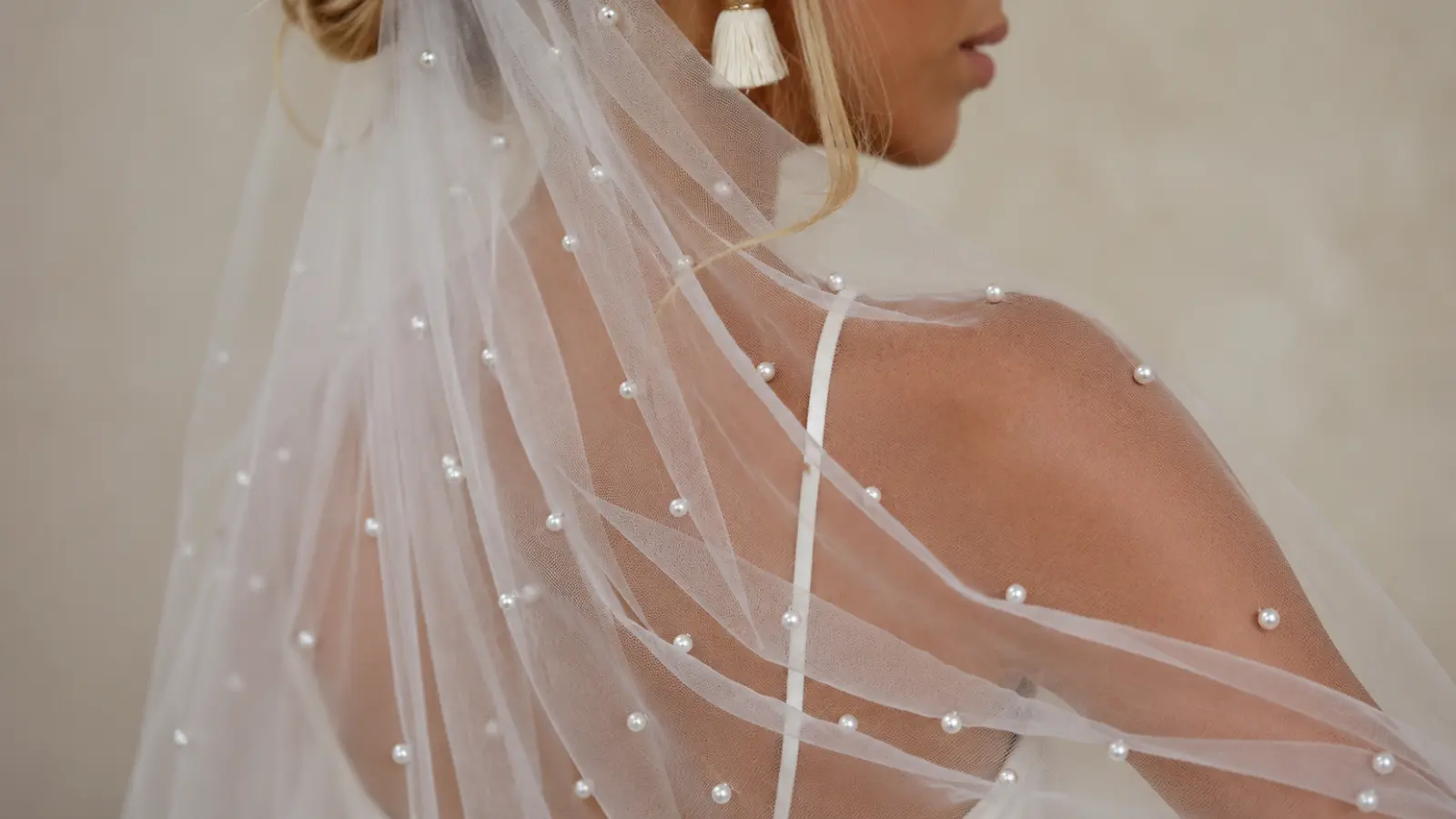
This is the first distinction that matters when choosing a pearl veil, because the two treatments create very different visual effects — and suit different dress styles. The terms are sometimes used loosely in bridal retail, so understanding what each one actually means helps you shop more precisely.
Scattered Pearls
Scattered pearls are applied across the body of the veil fabric — distributed randomly or in a deliberate pattern, often denser near the comb and lighter toward the hem, or evenly spread across the full surface. When the bride walks or the veil moves, the pearls catch light at different angles, creating a dimensional shimmer that reads as soft and romantic rather than sparkly. At longer lengths, particularly cathedral, a scattered pearl veil creates a significant visual effect from behind — the kind of image that shows up across bridal Instagram because it photographs beautifully in motion.
Pearl Edge Trim
A pearl edge is a trim applied only to the perimeter of the veil — a defined border of pearls that frames the fabric rather than covering it. The effect is more graphic and structured than scattered pearls: the eye follows the outline of the veil, which makes the shape itself more prominent. A pearl edge reads particularly well in still photographs and works naturally with brides who want a defined, polished look rather than an all-over shimmer. It also adds less weight than a full scatter, which makes it a practical consideration for longer lengths.
Both treatments can appear on the same veil — pearls at the edge plus a light scatter across the body is a common combination. The key question is always how much visual detail the overall look can carry without feeling overworked.
Pearl Veil Pairing Guide
Pearl veils are versatile, but they don’t suit every dress or aesthetic equally. The table below is a starting point for understanding where a pearl veil reads as intentional and where it risks competing with the wrong elements.
| Pearl Veil Works Best With | Approach With Care |
|---|---|
| Simple, minimalist gowns (crepe, satin, plain tulle) | Heavily crystal-beaded gowns — pearl and crystal together can conflict |
| Dresses with pearl detail on the bodice or belt | Dresses with dense rhinestone or sequin embellishment across the skirt |
| Lace gowns with organic, floral motifs | Geometric, structured lace where pearl scatter can look unrelated |
| Romantic, soft aesthetics (garden, ballroom, candlelit) | Very modern, architectural looks where embellishment reads as out of place |
| Ivory and warm white gowns, where pearl tone reads naturally | Stark bright white gowns, where warm-toned pearls can read as off |
| Low and updo hairstyles that don’t compete with the pearl detail | Very full, textured hair worn down — scatter may not read clearly against it |
These are considerations, not rules. The deciding factor in any pairing is always whether the combined look has a clear focal point or whether the eye has to work to make sense of it. When in doubt, bring a reference image of the dress to the veil appointment and hold the two together — what reads as too much in the abstract often becomes obvious in person, and what seemed potentially overdone sometimes resolves beautifully.
Pearl Veil With a Simple Dress
A plain or minimally detailed gown is where a pearl veil does its best work. When the dress doesn’t carry its own embellishment, the veil becomes the detail — and a pearl veil gives the overall look the texture and light-catching interest that a plain dress intentionally holds back. The visual logic is clean: the dress is the canvas, the veil is the accent.
This pairing works particularly well with crepe, satin, and plain silk gowns, where the fabric’s smoothness provides a strong contrast to the dimensional pearls. In photographs, the effect is especially clear from behind, where the pearl veil floats against a clean dress silhouette without visual noise. The back-of-dress shot that dominates so many wedding galleries reads better when the dress and veil each occupy their own lane.
A scattered pearl cathedral veil on a sleek crepe gown is one of the most photographically striking combinations available without any dress embellishment at all. The length carries the drama; the pearls carry the detail; the dress carries the silhouette. For brides who chose a minimal gown specifically to let the veil speak, this is the version that pays off most clearly.
Pearl Veil With an Embellished Dress
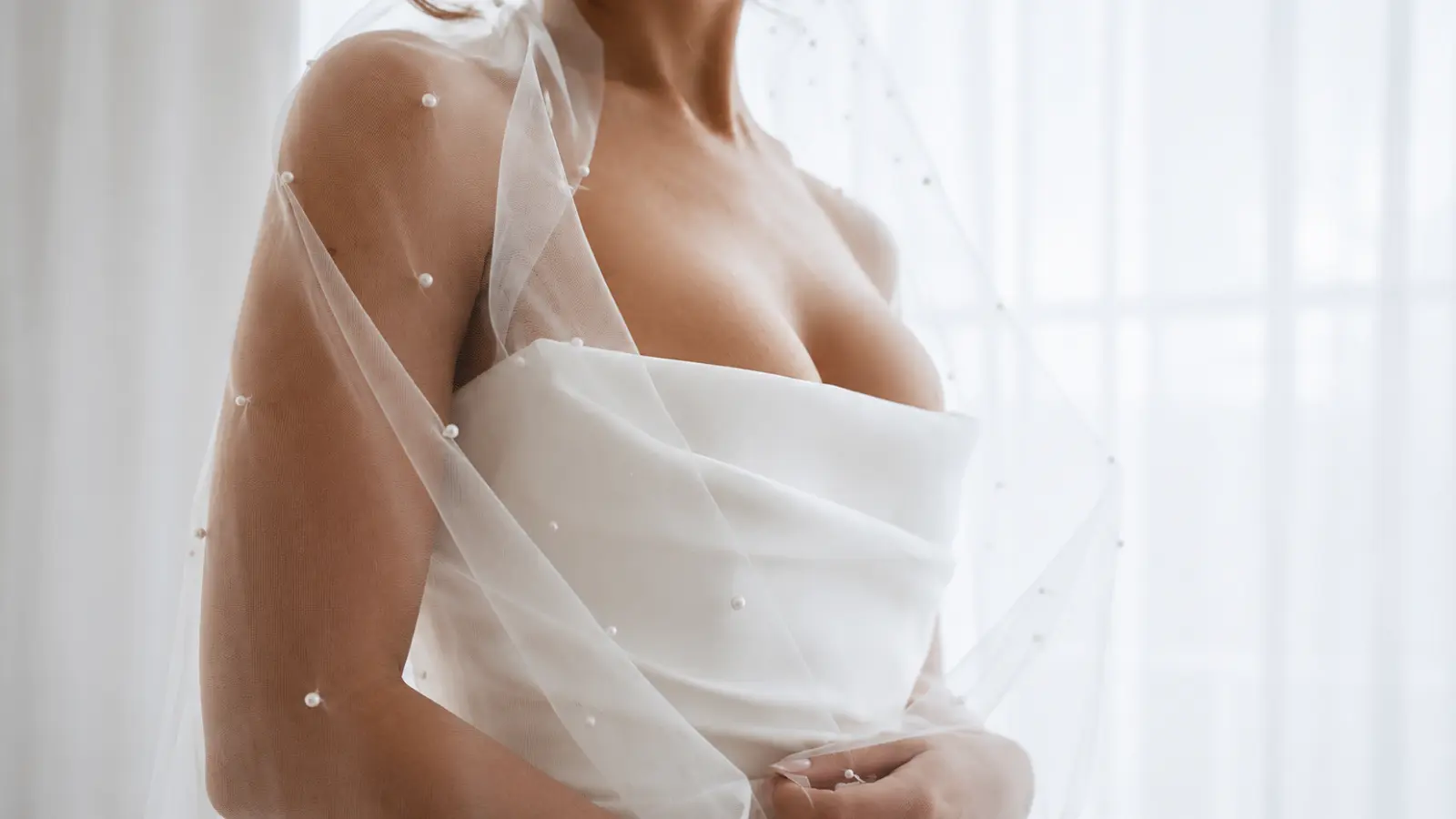
This pairing requires more deliberate thinking. An embellished gown — one with beading, embroidery, or significant lace patterning — already has visual complexity built into it, and adding an equally detailed veil risks competing rather than complementing. The question isn’t whether pearls work with an embellished dress; it’s about the density and placement of the pearls relative to the density of the embellishment.
The principle that holds across most combinations: one element leads, the other follows. If the dress is the lead — heavily embroidered, boldly beaded, or covered in ornate lace — the veil’s job is to support the dress without repeating it. A plain or lightly pearl-edged veil tends to do that better than a fully scattered pearl surface. Conversely, if the dress has pearl detail specifically — a pearl-beaded bodice, a pearl-trimmed waist — a veil that picks up on that same element can feel deliberately coordinated rather than accidental.
Where pearl veils tend to conflict most visibly is with crystal or rhinestone-heavy gowns. Pearls and cut crystals are different in both tone and light behavior: pearls are warm and soft; crystals are bright and sharp. Wearing both in significant quantity on the same look can feel unresolved, as if two different aesthetics are competing for the same space. A crystal-heavy dress tends to read more cleanly with a plain veil or a very light pearl edge trim rather than a full scattered pearl surface. For a deeper look at how to balance a veil against specific dress details, see our guide to matching your wedding dress with a veil.
Pearl Veil by Length
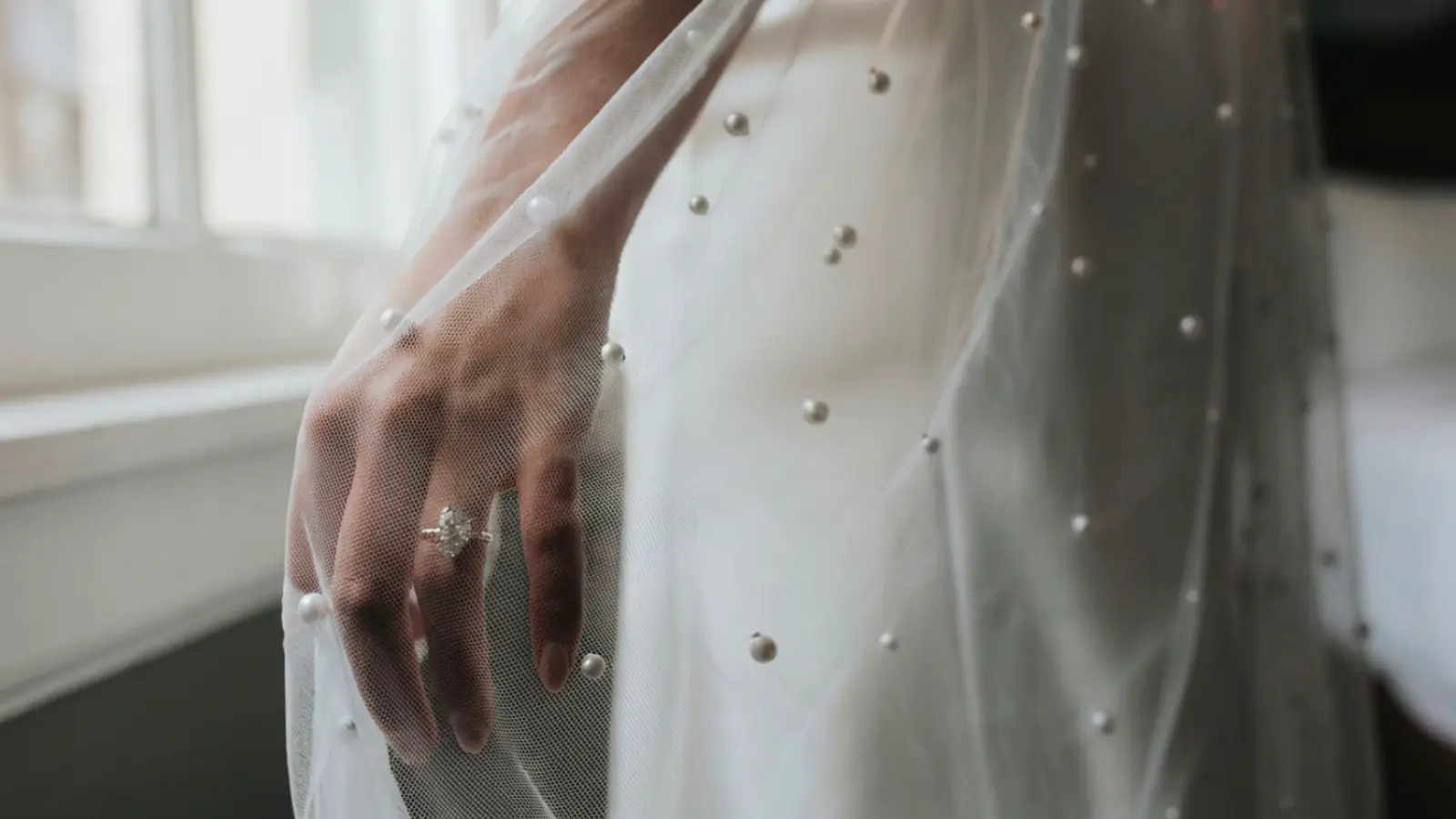
The length of the veil changes how pearl embellishment reads significantly. A pearl scatter on a fingertip veil creates a focused, contained effect; the same scatter on a cathedral length becomes a statement that fills the frame in every photograph. Understanding how different wedding veil lengths interact with pearl density helps you calibrate the look before committing to it.
Fingertip and Elbow Pearl Veils
At shorter lengths, pearl embellishment works well in both scattered and edge treatments. The total surface area is smaller, which means even a denser pearl scatter doesn’t overwhelm the look. A pearl-edged elbow veil is a clean, polished choice that works for a wide range of dress styles and wedding aesthetics. At fingertip length, a scattered pearl veil reads as romantic without being heavy. These lengths are also more practical for outdoor ceremonies, where management concerns matter and the pearl embellishment is less likely to collect debris or drag on uneven ground.
Cathedral Pearl Veils
The scattered pearl cathedral veil is the version that most frequently appears in bridal editorial and on inspiration boards, and it earns that visibility. At 108 to 120 inches, a cathedral veil with scattered pearls creates an effect that is almost impossible to replicate at shorter lengths: as the bride walks, the pearls catch light in waves, creating a trail of soft shimmer behind the dress. In motion, particularly in video, this is one of the most visually striking effects available in bridal accessories.
The practical considerations at this length are real, though. Pearl embellishment adds weight, and cathedral length already asks the most of the comb attachment and the hairstyle. A heavily pearl-embroidered cathedral veil requires a secure updo or low bun with strong pin support. It also benefits from someone positioned at the back of the aisle to spread and arrange the veil before the processional begins. For everything about wearing this length well, see our cathedral wedding veil.
Hairstyles That Work With Pearl Veils
The hairstyle affects how pearl embellishment reads in photographs more than most brides anticipate. Pearls need visual breathing room to register — if the veil is resting against thick, textured hair, the detail gets absorbed rather than displayed.
Low buns and chignons are the most natural pairing. They create a clean surface behind the head, which allows the pearl scatter to read against the tulle rather than against hair. The transition from hair to veil is clear and deliberate, which photographs well from behind. High updos work equally well for the same reason — the veil falls freely without competing with the hair’s texture.
Half-up styles can work if the pearl scatter is concentrated in the lower portion of the veil or along the edge, rather than across the full surface near the comb. When the pearl detail is primarily where the loose hair ends and the veil continues, the two elements read in their own zones rather than fighting each other.
Hair worn fully down is the most challenging pairing, particularly for scattered pearl veils at longer lengths. The pearls closest to the comb can sit against the loose hair rather than against the tulle, which obscures part of the embellishment. At fingertip lengths with a pearl edge — rather than a scatter — hair down is workable and can look soft and romantic. For a fuller breakdown of how different hairstyles interact with veil types, see our wedding hairstyles with veil.
How Pearl Veils Photograph
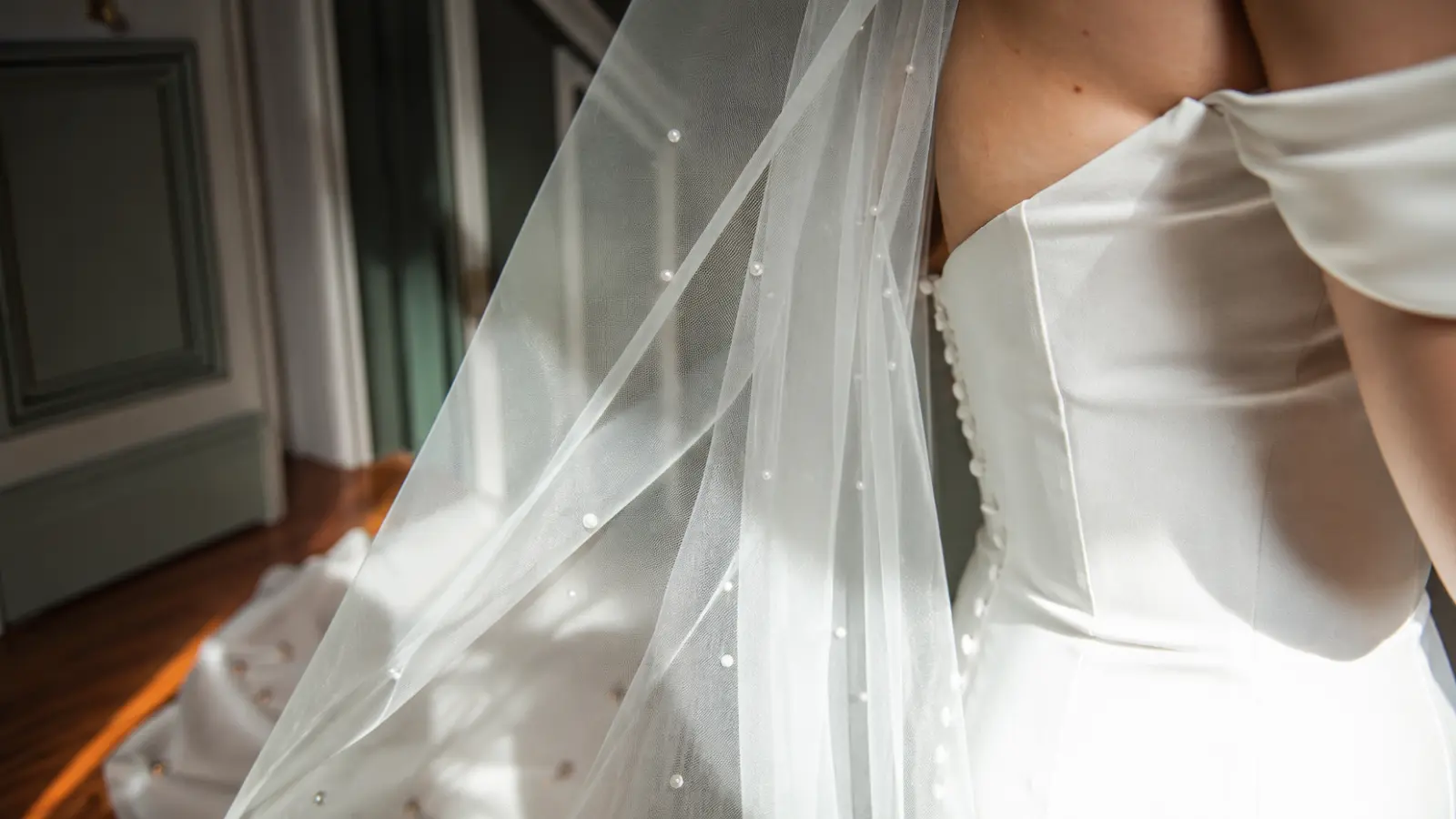
Pearl embellishment is unusually consistent across different lighting conditions, which is part of what makes it a reliable choice. Unlike cut crystals or rhinestones, which can produce sharp glare in direct sunlight and appear flat in dim light, pearls catch light softly in almost every setting. In natural outdoor light, they create gentle highlights. In candlelit or warm indoor light, they glow warmly without flaring.
Video is where pearl veils show their best quality. The movement of the veil during the processional activates the pearl scatter in a way that still photography can only partially capture. If you’re having videography at your wedding, a scattered pearl veil at any length will photograph more dynamically on video than it appears in the fitting room.
One consideration worth discussing with your photographer in advance: the tone of the pearls relative to the gown. Warm-toned (ivory or cream) pearls read naturally against ivory and off-white gowns. Against a bright white gown, they can appear slightly yellowed in photographs under certain lighting. If your gown is a true stark white, look for white pearl embellishment rather than ivory — or ask to see a sample photograph in similar light conditions before committing.
What to Avoid
A few consistent pairing mistakes come up with pearl veils. Most are straightforward to avoid once you know what to look for.
Pairing a dense pearl scatter with a heavily embellished dress. This is the most common version of the pearl veil going wrong. When the dress already has significant embellishment — beading, embroidery, ornate lace — a densely pearled veil creates visual competition rather than coordination. The eye moves between the two elements without settling on either. The fix is simple: when the dress has a lot happening, the veil should have less.
Mixing pearl and crystal embellishment in significant quantities. A pearl veil with a crystal-heavy gown, or a pearl-and-crystal veil with a dress that already mixes both, tends to read as unresolved. The two materials behave differently in light and carry different aesthetic associations. Choose one as the lead embellishment in the overall look.
Choosing a very long, heavily pearled veil without testing the weight. Pearl embellishment adds weight that increases proportionally with veil length. A cathedral-length veil with dense pearl scatter is a genuinely heavy accessory. Try it on for at least fifteen minutes in the salon — standing, walking, and sitting — before deciding. A veil that feels impressive for a two-minute try-on can feel very different after an hour-long ceremony.
Assuming pearl tone is universal. Pearl veils come in warm ivory, cream, and white tones that do not automatically match every gown. Bring the dress details — or a fabric swatch if possible — to the veil appointment, and ask to see the pearl tone against your specific dress color rather than deciding from samples alone.
Pearl Wedding Veil Inspiration
Discover beautiful pearl wedding veil inspiration featuring delicate pearl edge veils, scattered pearl cathedral styles, romantic bridal hairstyles, and elegant wedding dress pairings. Explore timeless bridal looks, soft luminous details, and sophisticated styling ideas to find the perfect pearl veil for your wedding day.
Is a Pearl Wedding Veil Right for You?
A pearl wedding veil adds elegance without overwhelming your bridal look. Its soft luminosity, timeless appeal, and delicate texture create beautiful movement while complementing a wide range of wedding dresses and hairstyles.
Whether you prefer a subtle pearl edge or a dramatic scattered pearl cathedral veil, the best choice is the one that enhances your dress rather than competing with it. With thoughtful styling and the right balance of detail, a pearl veil becomes one of the most memorable elements of your wedding day.
Frequently asked questions (FAQ)
How do you choose the right pearl wedding veil?
Choose a pearl veil by considering your dress, hairstyle, veil length, and the amount of embellishment already present in your bridal look. Minimal dresses usually pair beautifully with scattered pearls, while more detailed gowns often benefit from a lighter pearl edge. The goal is to let either the dress or the veil lead visually rather than having both compete.
What is a pearl wedding veil?
A pearl wedding veil is a bridal veil decorated with pearls placed across the fabric, along the edge, or around the comb attachment. Most use a tulle base with faux or freshwater pearls individually attached. The overall effect depends on pearl size, spacing, and veil length.
Does a pearl veil work with an embellished wedding dress?
Yes, but balance is essential. Dresses with heavy beading, embroidery, or crystal embellishments generally pair better with a subtle pearl edge or light pearl scatter. If the gown already includes pearl detailing, a veil that echoes those pearls without matching their density usually creates the most harmonious look.
What is the difference between scattered pearls and a pearl edge?
Scattered pearls are distributed across the veil’s surface, creating soft shimmer and movement. A pearl edge places the pearls only around the perimeter, emphasizing the outline of the veil. Scattered pearls create an all-over luminous effect, while a pearl edge produces a cleaner, more structured appearance.
What hairstyles work best with a pearl veil?
Low buns, chignons, and soft updos allow the pearl embellishments to remain clearly visible. Half-up hairstyles work well when the pearl details are concentrated lower on the veil. Hair worn completely down is generally more suitable for pearl-edge veils than heavily scattered pearl designs.
Do pearls make a wedding veil heavier?
Yes, depending on the quantity of pearls and the veil length. A few pearls on a fingertip veil add very little weight, while dense pearl embellishment on a cathedral veil can noticeably affect comfort, attachment, and movement throughout the ceremony.
How do pearl veils photograph?
Pearls reflect light softly and consistently, producing a warm glow rather than sharp sparkle. They perform especially well in natural light, candlelit ceremonies, and wedding videos because the movement of the veil enhances the subtle shimmer without creating distracting glare.