Wedding hair down with veil is one of the most romantic bridal looks, combining soft movement with timeless elegance. While wearing your hair loose creates a natural and effortless appearance, it also raises practical questions about where the veil should sit, how to keep it secure, and which veil length creates the most balanced result.
Unlike an updo, loose hair doesn’t provide a built-in anchor for the veil comb. That means placement, hair preparation, veil weight, and fabric all play an important role in keeping the veil comfortable, secure, and visually beautiful throughout the ceremony and wedding day.
This guide explains everything you need to know about wearing a wedding veil with your hair down, including the best comb placement, how to protect volume, the veil lengths that work best with loose hair, common mistakes to avoid, and expert styling advice to help you achieve a polished bridal look.
Where to Place the Veil With Hair Down
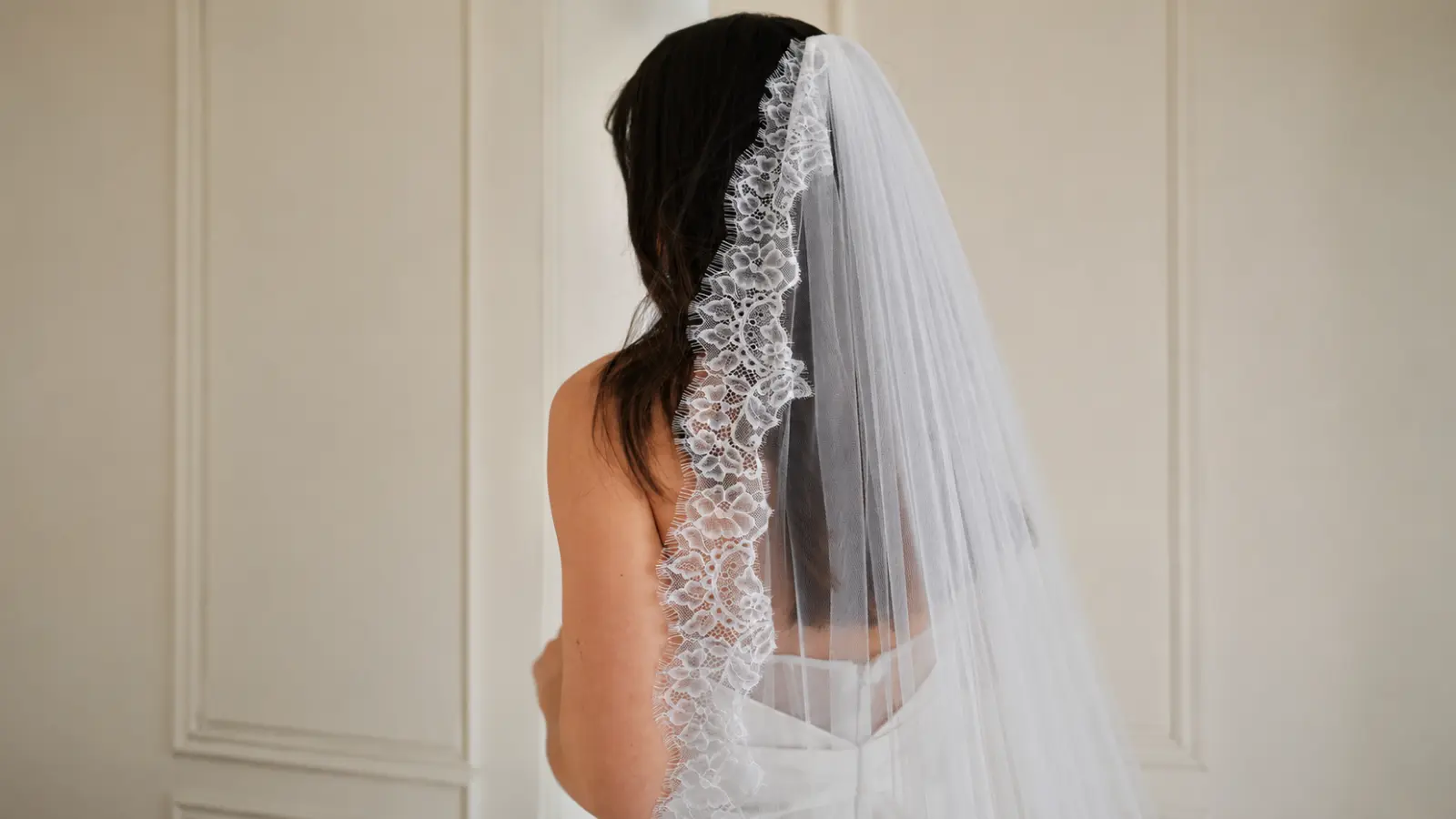
Comb placement is the first and most consequential decision when wearing a veil with hair down. Different wedding hairstyles with veil placement create different attachment conditions: an updo provides a natural anchor, while loose hair requires you to create that structure yourself through placement and preparation.
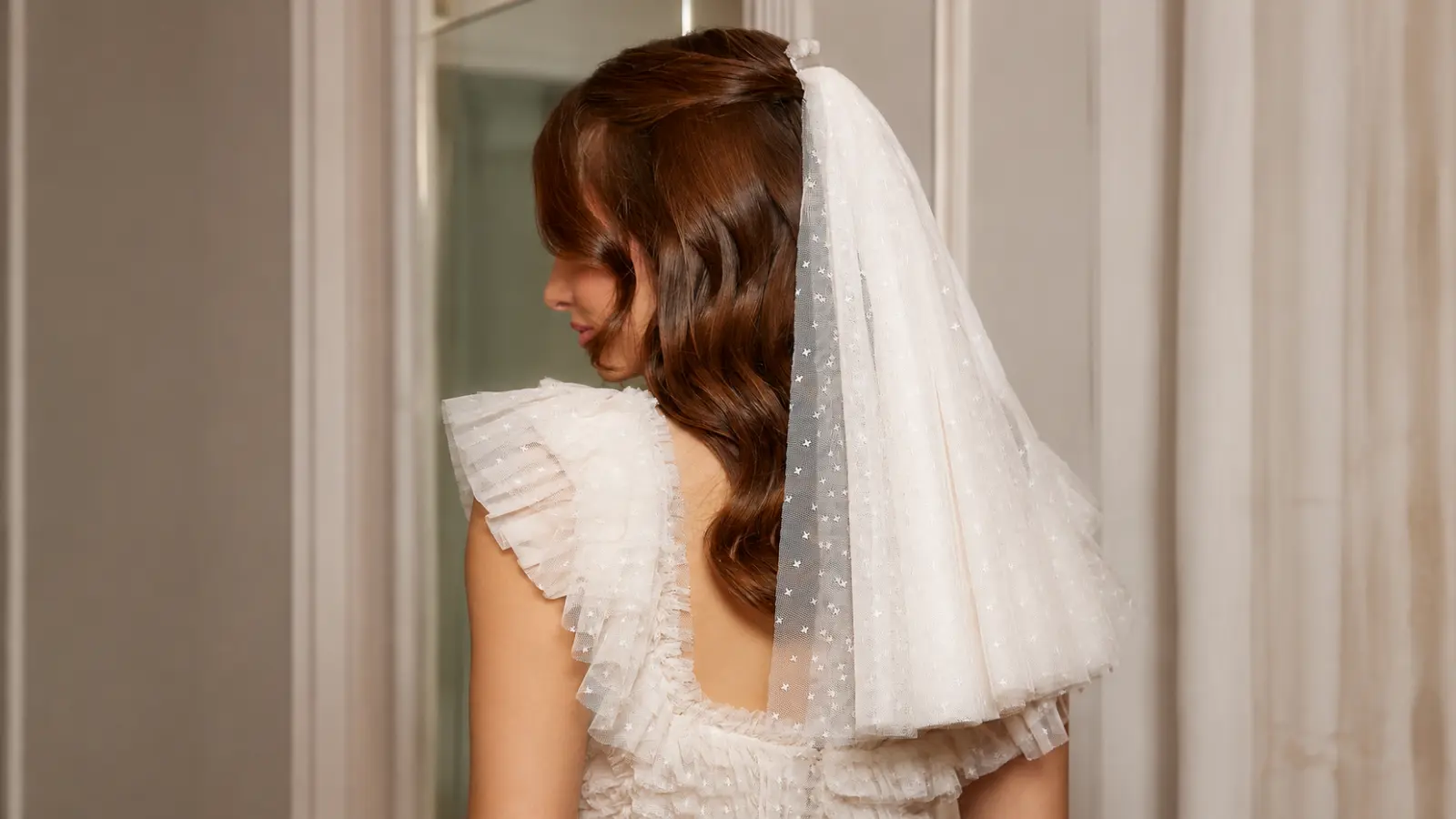
The crown — the highest, roundest point at the back of the head — is where most veils sit most securely with hair down. There are two reasons for this. First, it is where the hair is densest and where the comb has the most to grip. Second, it is where the veil launches most cleanly from the hair, allowing the fabric to fall away from the loose strands rather than resting on top of them or blending into them.
Lower placements — mid-head or near the nape — look beautiful in some editorial photos, but they introduce two real problems:
- Stability: The lower the comb, the more it competes with the weight and movement of the hair around it. Combs placed near the nape have almost no solid anchor.
- Visual clarity: A low comb means the veil emerges from underneath all that loose hair, leaving it partially obscured — the veil and the hair end up sharing the same space rather than each reading distinctly.
The one exception is the drop veil, which is designed to lie flat and smooth against the head from a low placement. If you are specifically planning a drop veil with hair down, mid-head placement can work well — but this is a deliberate styling choice that should be tried and confirmed at the hair trial, not improvised on the wedding morning.
How to Keep a Veil Secure With Hair Down
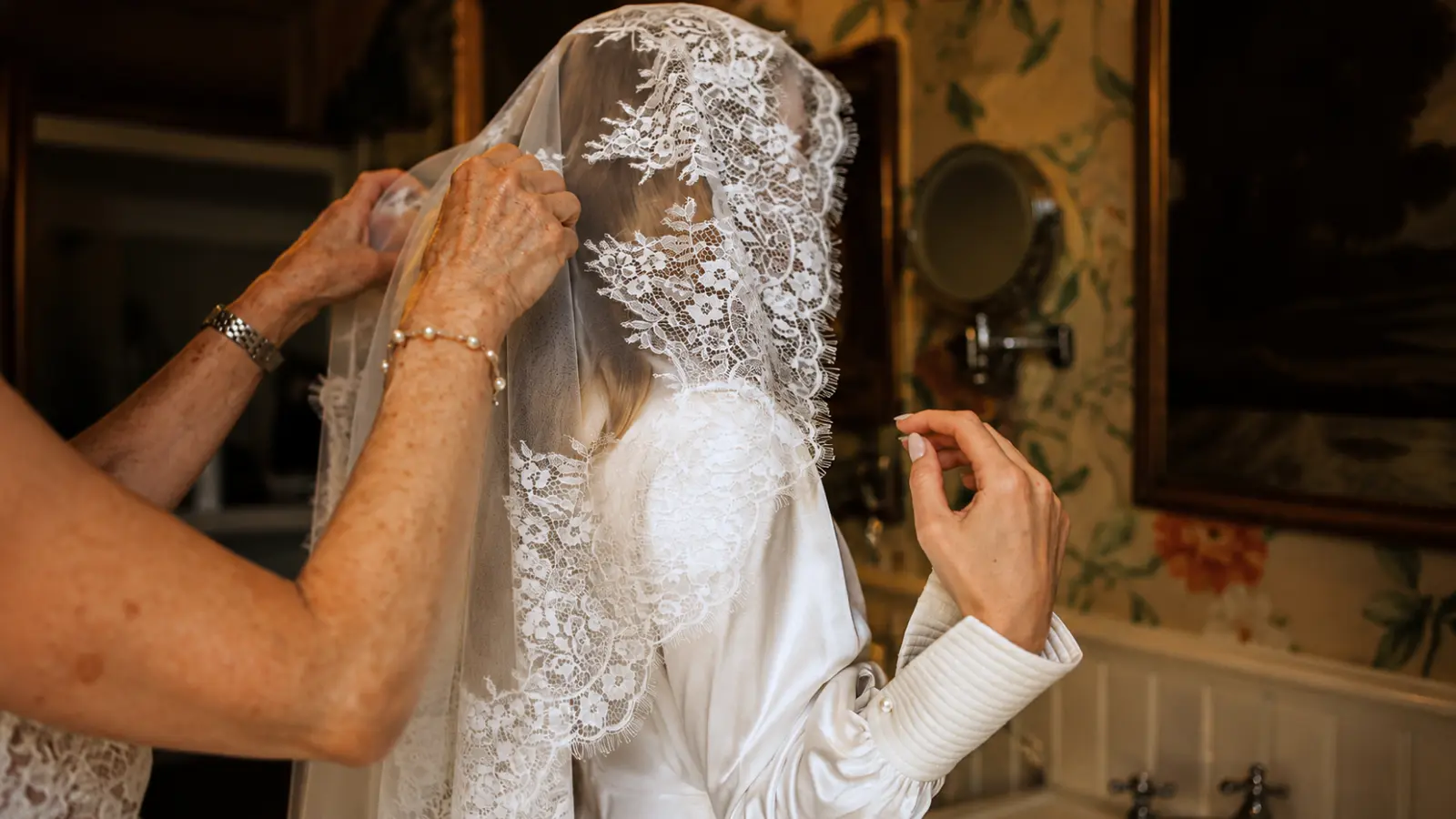
A veil comb designed for an updo may not hold reliably in loose hair without additional help. The good news is that there are simple, proven techniques for making it work — all of which should be practiced at the hair trial rather than figured out on the day.
Prep the Hair Before the Comb Goes In
The single most effective thing you can do is create a small amount of texture at the attachment point before inserting the comb. Light teasing — just a few strokes of a fine-tooth comb back toward the scalp — creates a compact, textured base that the comb’s teeth can grip. You do not need a lot; a small section about two inches wide at the crown is enough. The goal is grip, not volume. Lightly mist the section with a holding spray before teasing, then smooth the top layer back down over it so the texture is hidden.
Insert the Comb at the Right Angle
Most combs slip because they are inserted straight down into the hair, which means the teeth are resting on top of the hair rather than anchoring beneath it. Understanding how to wear a wedding veil securely starts with inserting the comb at a slight downward angle toward the scalp, then pivoting it flat so it anchors beneath the hair rather than sitting on the surface.
Add Bobby Pins
Once the comb is in, place two or three bobby pins parallel to the comb on each side, going through the comb and into the hair below it. This turns a single point of attachment into a distributed anchor. Use pins that match your hair color so they disappear into the look. For heavier veils — cathedral length, heavily embellished, or full gathered styles — consider adding a fourth and fifth pin rather than relying on three.
The Hidden Elastic Method
For very long, fine, or slippery hair that tends to resist combs regardless of prep, a small clear or hair-colored elastic can be used as a secondary anchor. Before the comb goes in, section out a small amount of hair at the attachment point and tie a loose ponytail with the elastic. The comb then goes into that ponytail knot rather than into free-hanging hair, giving it something structural to grip. The loose hair around it falls over and hides the elastic entirely. This is worth asking your stylist about specifically if you have found in the past that accessories slip from your hair.
Protecting Volume at the Attachment Point
The second concern most brides have about wearing a veil with hair down is whether the comb will flatten or compress the hair at the crown, disrupting the volume they worked to build. This is a real risk with certain veil types, and it is worth understanding before the appointment.
The main culprit is veil weight at the attachment point. A heavily gathered veil creates significant density at the comb — all that bunched fabric pulls downward. A veil with heavy embellishment near the top adds physical weight. Both compress the hair underneath.
There are three practical approaches to protecting volume:
- Choose a lighter veil style. A drop veil — one with no gather at the comb — has essentially no weight at the attachment point. The fabric falls straight from where it is attached without compressing the hair above it. If volume is a priority, this is the most reliable structural solution.
- Place the comb slightly forward of where the hair is fullest. Instead of placing the comb at the exact center of the crown, position it just slightly toward the front hairline. The visual fullness of the crown sits behind the attachment point and is unaffected by the comb’s compression.
- Use a lighter fabric. Bridal illusion tulle is significantly lighter than organza and puts less downward pressure on the hair. Silk tulle is even lighter, though more expensive. If you are comparing two veils of the same style and your hair is fine, the weight difference between fabrics can matter.
Discuss this specifically with your stylist when you arrive at the hair trial with the actual veil. The hair trial is the right moment to compare how different wedding veil materials affect weight, compression, and volume before the wedding day.
Best Veil Lengths for Hair Down
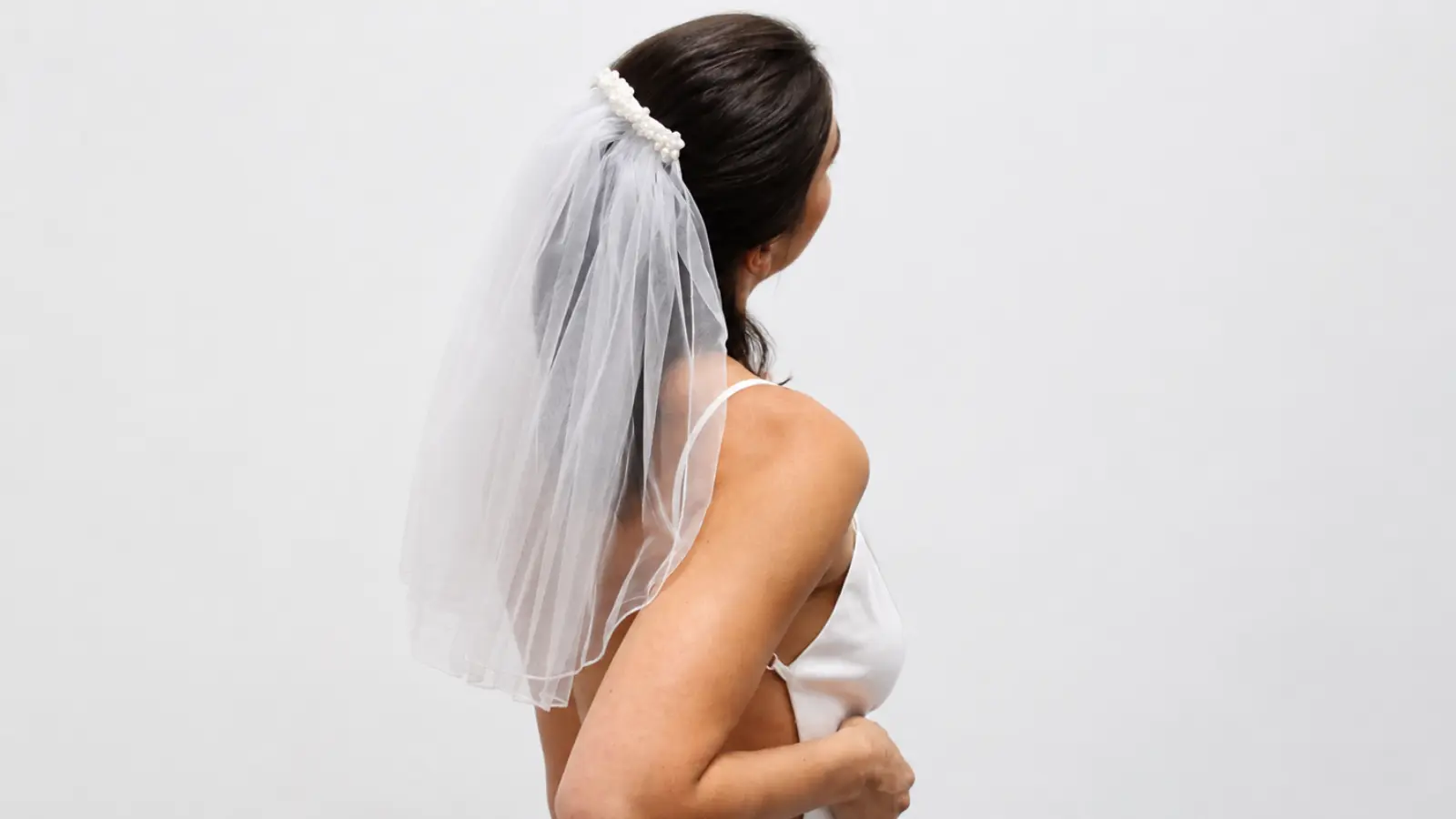
Length is where the hair-down combination gets most visually complicated. With an updo, the veil launches from a clean anchor point, and almost any length reads clearly. With hair down, the veil shares the frame with the hair itself — which means the length needs to extend far enough past the hair to have its own visual presence, or the two elements blur together.
The core principle: the veil should end distinctly past the ends of your hair, or be significantly shorter than it. A veil that terminates at the same length as your hair — or slightly shorter — is the most visually problematic combination. It creates the impression of a blurred, indistinct edge where the veil fabric and the hair merge and neither reads clearly.
- Elbow length works well for brides with shorter hair (above the shoulder or just past it). For long hair, this length tends to fall around or above the hair’s natural endpoint, which creates the merging problem.
- Fingertip length is the most reliable starting point for most hair-down brides. At 36 to 40 inches, it extends clearly past the ends of most mid-length and long hair, giving the veil its own visual bottom edge. This is where to start trying veils on.
- Floor length (chapel) works well with very long hair, particularly because at that length the veil creates a defined cascade that is independent of how long the hair is. The visual separation is built into the scale of the veil itself.
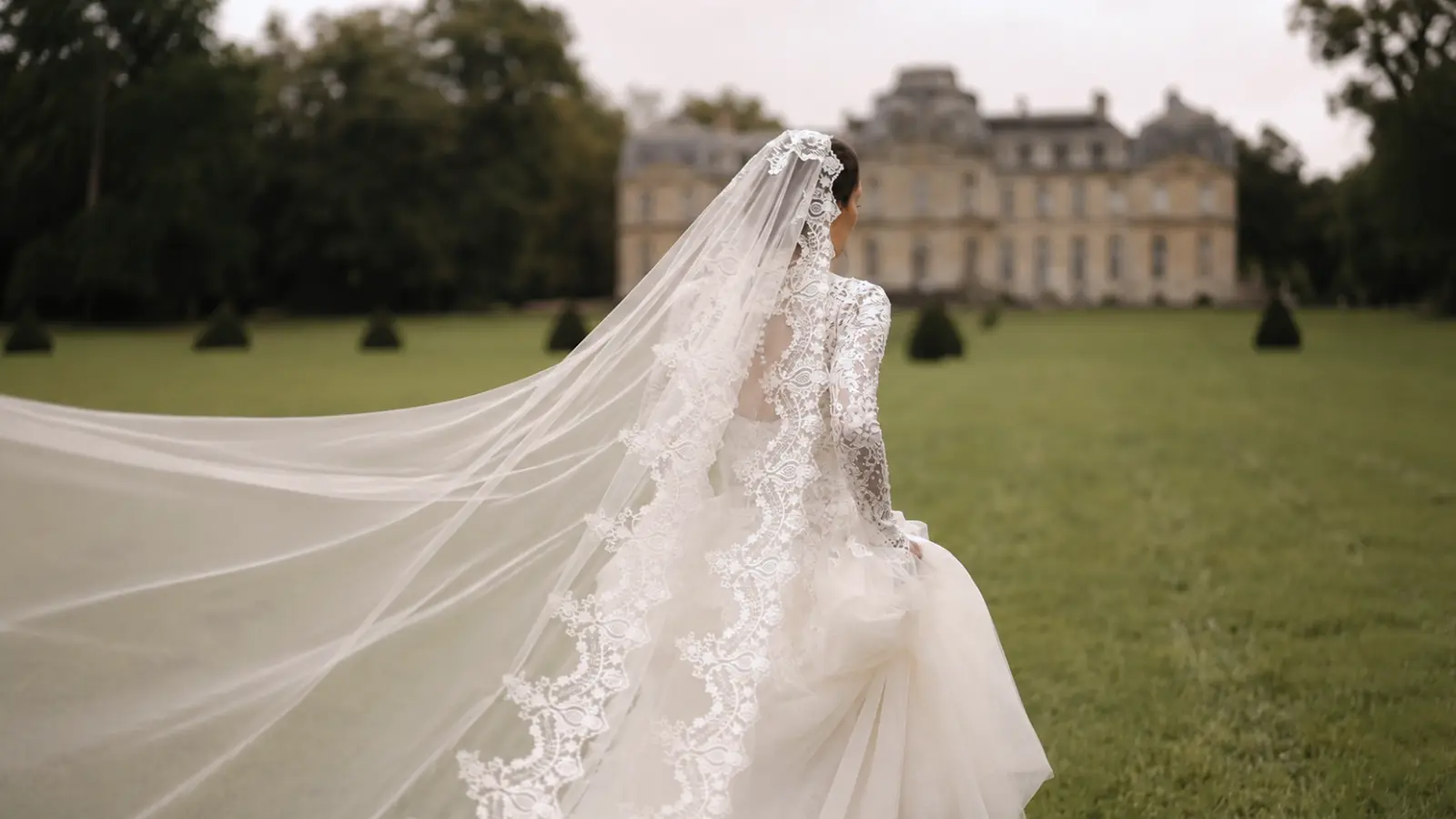
- Cathedral length is dramatic with hair down — the sheer scale of the veil means it completely overrides the question of visual separation. That said, a cathedral veil with loose hair can look very full and layered in photos; whether that reads as romantic or busy depends on the dress and setting.
- Shoulder length is the most difficult length to wear with hair down. It ends right where the hair begins to have its most significant volume, which often means the veil fabric sits on top of the hair rather than distinguishing itself from it. It is not impossible, but it requires a very specific styling approach and should be tested carefully.
For a full breakdown of every length with measurements and occasion guidance, see our wedding veil lengths.
Placement by Hair Type
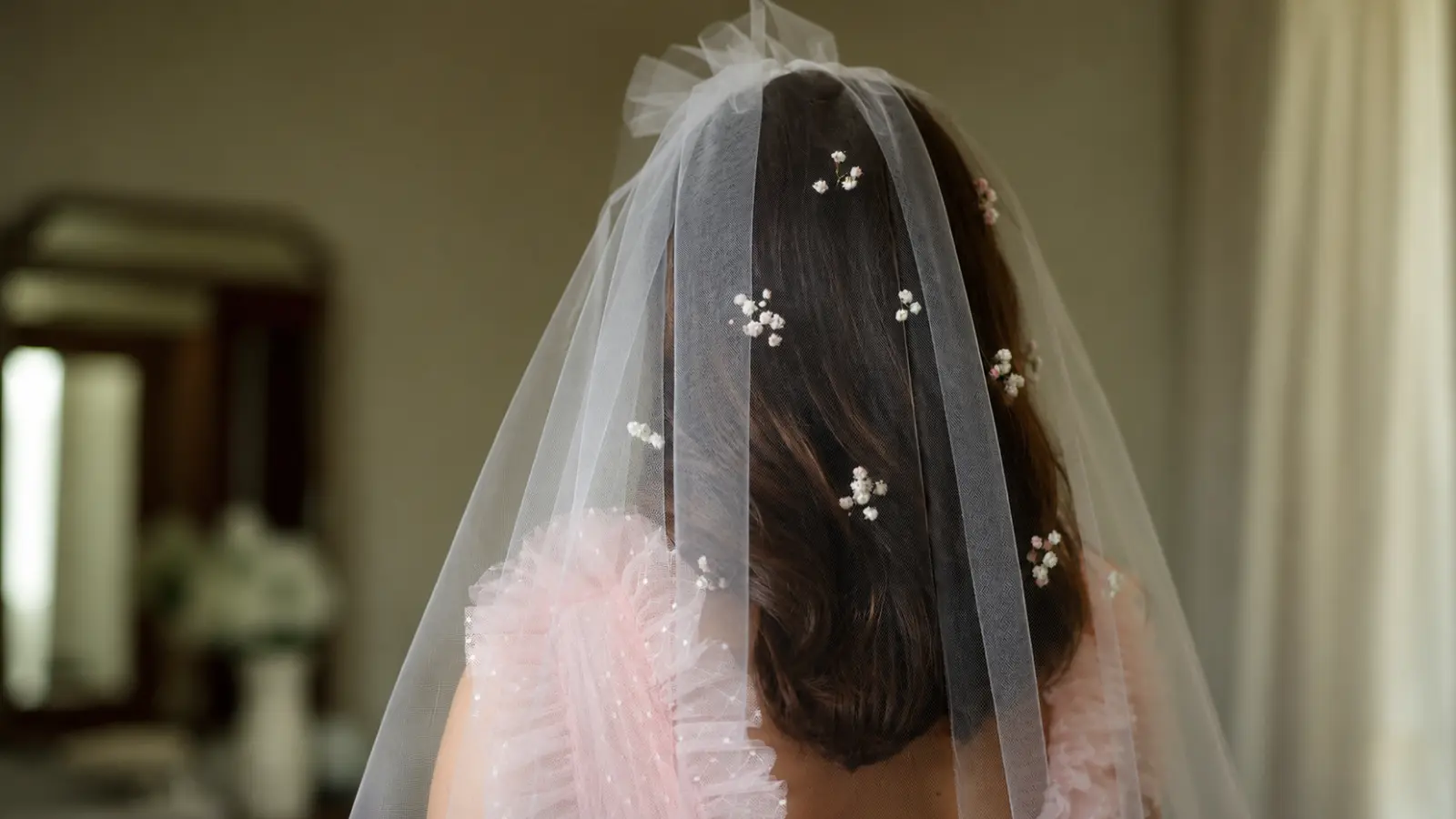
Straight, wavy, curly, and very long hair all present slightly different challenges with veil placement. Understanding those differences before the appointment helps you ask the right questions and narrow the options faster.
Straight Hair Down
Straight hair is the most visually clean pairing with a veil, because the veil fabric and the hair both fall in the same direction without visual competition. The challenge is that straight hair, particularly fine straight hair, gives a comb the least to grip. Prep is especially important here — teasing a small section at the crown and using supplemental pins is more essential with straight fine hair than with any other hair type. A drop veil tends to read particularly beautifully with straight hair because both elements share the same smooth, linear quality.
Wavy Hair Down
Soft waves are one of the most popular bridal hair-down looks, and they generally pair well with veils. The natural texture of waves gives the comb a bit more to grip than straight hair, and the movement of the waves tends to distinguish itself visually from the veil fabric. The main consideration is volume: if the waves are voluminous at the crown, a heavily gathered veil can compress them. The crown placement with a light tease still applies; a medium-weight veil in bridal illusion tulle is usually the sweet spot.
Curly Hair Down
Curly hair offers excellent comb grip because the texture holds accessories naturally, but it creates a specific visual challenge: the veil fabric needs to emerge clearly from the curls rather than seeming to grow out of them. Crown placement is especially important here — placing the comb lower means the veil gets progressively more tangled in the curl pattern as it falls. A comb placed high at the crown lets the veil fall in a clean sheet behind the hair, with the curls framing either side of the veil’s width rather than absorbing it.
Length also matters more with curly hair. Very long curly hair adds significant visual mass to the silhouette; a fingertip or floor-length veil in a fine, lightweight fabric tends to complement that mass better than a shorter veil, which can look proportionally small against a full head of long curls.
Very Long Hair Down
Hair past the mid-back creates the most challenging veil-visibility situation. The longer the hair, the more veil length you need to extend past it for the veil to have its own presence. If your hair reaches your waist, an elbow or fingertip veil will disappear into it. A floor-length or cathedral-length veil is typically the right call for very long hair worn completely down — the scale of the veil needs to match or exceed the scale of the hair. An alternative is to loosely pull the front sections back or add a half-twist at the crown, which separates the hair’s volume from the veil’s fall without technically being an updo.
Hair Down Style and Veil Placement: At a Glance
This table brings together the placement and length guidance above for a quick reference before your styling appointment. Use it to go in with specific questions rather than starting from scratch in the chair.
| Hair Down Style | Best Veil Placement | Recommended Length | Key Consideration |
|---|---|---|---|
| Straight, fine hair | Crown; tease well before inserting | Fingertip or floor length | Needs the most prep and pinning for grip |
| Soft waves, medium length | Crown | Elbow or fingertip | Lightweight fabric protects wave volume |
| Soft waves, long hair | Crown | Fingertip or floor length | Veil must extend past hair ends to read clearly |
| Curly hair, any length | Crown (high); avoid mid-head | Fingertip or longer | High placement keeps veil distinct from curl pattern |
| Very long hair (past mid-back) | Crown | Floor length or cathedral | Shorter veils get absorbed; veil scale must match hair scale |
| Loose, slightly pinned back | Below the pin or twist | Fingertip or floor length | Creates a natural break point between pinned and loose sections |
These are starting points, not rules. The right placement for your specific hair — its density, texture, and cut — is something your stylist will refine. What this table gives you is a framework for the conversation, so you are not starting from zero at the appointment.
The Blusher Moment With Hair Down
If you are considering a two-tier veil with a blusher, wearing your hair down changes how that moment works. With an updo or a half-up style, the hair is swept back from the face before the processional, and lifting the blusher creates a clean, unobstructed reveal. With hair down, the hair is already falling on both sides of the face throughout the walk — the blusher adds a layer in front of that, but the overall face-framing picture is different.
There are two common approaches brides with hair down take with a blusher. The first is to wear it as intended — forward over the face for the processional — and have it lifted at the altar in the traditional way. The hair hangs on either side of the blusher and reads as part of the full ceremonial look. The second, increasingly common approach is to fold the blusher back before walking, essentially wearing only the back layer of the two-tier veil and skipping the face-covering moment entirely. This avoids the potential tangle when the blusher is lifted into loose hair, and it simplifies the look.
Neither is wrong. The choice comes down to how central that ceremony moment is to you. If it matters, plan the blusher lift carefully with your stylist — specifically how the blusher will be folded back so it does not catch in the loose hair. If it feels like more complexity than it is worth, a single-tier veil gives you the same visual impact without the mechanics. For more on how the blusher works in general, see our blusher veil.
Adding a Headpiece or Tiara
A veil worn with hair down leaves the front and crown of the hair fully visible, which is exactly the space where a headpiece lives. This makes hair-down looks particularly well-suited to adding a second accessory — and it also means the veil and the headpiece need to be chosen and positioned together rather than separately.
The standard placement relationship with hair down is: headpiece in front, veil behind. A floral crown, a delicate wire headband, a tiara, or a cluster of pins all sit toward the front of the crown, while the veil comb sits just behind the headpiece at the same horizontal level or slightly lower. This separates the two elements visually and prevents them from overlapping in a way that looks crowded.
Some pairings work particularly well with loose hair:
- A thin wire headband or delicate headpiece with a fingertip veil in soft tulle
- Fresh flowers pinned individually through the hair, with a floor-length veil flowing behind them
- A simple pearl or crystal comb sitting just ahead of an elbow-length veil
Heavier pieces — a full tiara with crystals, a very structured crown — tend to read more naturally with an updo because the combined visual weight of the tiara and the loose hair can become a lot. For detailed guidance on combining veils and tiaras specifically, see our wedding veil with tiara.
The critical rule: always try both elements together at the same appointment. A headpiece and a veil that look good separately may compete for the same visual space when combined. You need to see them together in the mirror, with your hair styled the way it will be on the day.
What to Avoid
Most of the problems brides encounter with hair-down veil looks are predictable and avoidable. Here is what to watch for.
- Testing the veil only on its own, not with the hairstyle. A veil that sits beautifully when the hair is in a casual loose style may shift, compress volume, or merge with the hair once it is styled in full waves or curls. The hair trial is the right time to find this out, not the morning of the wedding.
- Choosing a veil length that ends where your hair ends. As covered above, this creates visual merging between the veil and the hair. Aim for a veil that clearly extends past your hair, or is significantly shorter — not one that terminates at approximately the same point as your hair’s ends.
- Relying on the comb alone without pins. Veil combs were designed with updos in mind. For loose hair, supplemental pinning is not optional; it is standard practice. A veil that feels secure in the salon may not hold through walking, dancing, or wind if the comb is the only anchor.
- Placing the comb too low. The lower the placement, the more the veil has to negotiate with the volume and movement of the hair around it. Unless a specific low-placement look is intentional and tested, stay near the crown.
- Choosing a very heavy or densely embellished veil without testing it on your hair. Weight compresses. A veil that looks beautiful displayed on a hanger or photographed on an updo may flatten a significant section of your hair at the attachment point. Ask to feel the weight of the veil fabric before committing.
- Not planning for veil removal. Removing a veil from loose hair requires more care than removing one from an updo. The comb is anchored in hair that can tangle or pull. Assign someone specific to do this — your maid of honor, your stylist if she will be on site — and practice the removal at the hair trial so it takes fifteen seconds, not five minutes in the middle of the reception.
Wedding Hair Down With Veil Inspiration
Discover beautiful wedding hair down with veil inspiration featuring soft waves, romantic curls, sleek straight hairstyles, and elegant bridal looks paired with fingertip, chapel, and cathedral veils. Explore timeless hairstyle ideas, veil placement inspiration, and classic combinations designed to create a graceful, effortless bridal style for every type of wedding.
Is Wearing Your Hair Down With a Veil Right for You?
Wearing your hair down with a veil creates one of the most romantic and timeless bridal looks when the hairstyle and veil are planned together. The right placement, fabric, and veil length allow your hair to remain soft and natural while giving the veil enough presence to enhance your overall bridal style instead of competing with it.
A successful hair-down veil look is all about preparation. By testing the placement during your hair trial, choosing a veil that complements your hairstyle, and working with your stylist to secure it properly, you’ll enjoy a bridal look that feels elegant, comfortable, and beautiful from the ceremony to the final photographs.
Frequently asked questions (FAQ)
Can you wear your hair down with a wedding veil?
Yes. Wearing your hair down with a veil is a beautiful and practical option when the veil is positioned correctly and secured properly. Choosing the right placement, veil length, and attachment method allows loose hair and the veil to work together without compromising volume or stability.
Where should you place a veil comb when wearing hair down?
The crown is generally the best placement because it provides the strongest anchor for the comb while allowing the veil to fall naturally behind the hair. Lower placements can work for certain styles, such as drop veils, but usually require additional testing during the hair trial.
Will a veil flatten your hair if you wear it down?
It can, particularly if the veil is heavy or highly gathered. Lightweight fabrics, drop veils, light teasing at the crown, and careful comb placement help preserve volume while keeping the veil secure throughout the ceremony.
What veil length works best with hair down?
Fingertip length is usually the most versatile choice because it extends clearly beyond the ends of most hairstyles. Brides with very long hair often achieve better balance with chapel or cathedral veils, while shoulder length can blend into loose hair and become less visible.
How do you keep a veil from slipping with hair down?
Preparing the crown with light teasing, inserting the comb at the correct angle, reinforcing it with bobby pins, and using a hidden elastic for very fine hair all improve stability. Testing the complete setup during the hair trial is the best way to ensure the veil stays secure.
Can you wear a blusher veil with your hair down?
Yes. Some brides wear the blusher traditionally over the face during the ceremony, while others fold it back before walking down the aisle. Both options work well, but practicing the lift during the hair trial helps prevent the veil from catching in loose hair.
Can you wear a tiara or headpiece with your hair down and a veil?
Absolutely. The most balanced arrangement places the headpiece toward the front of the crown and the veil just behind it. Trying both accessories together during the hair trial ensures they complement each other instead of competing visually.